09
Fortress of the 7 Bastions
Brașov
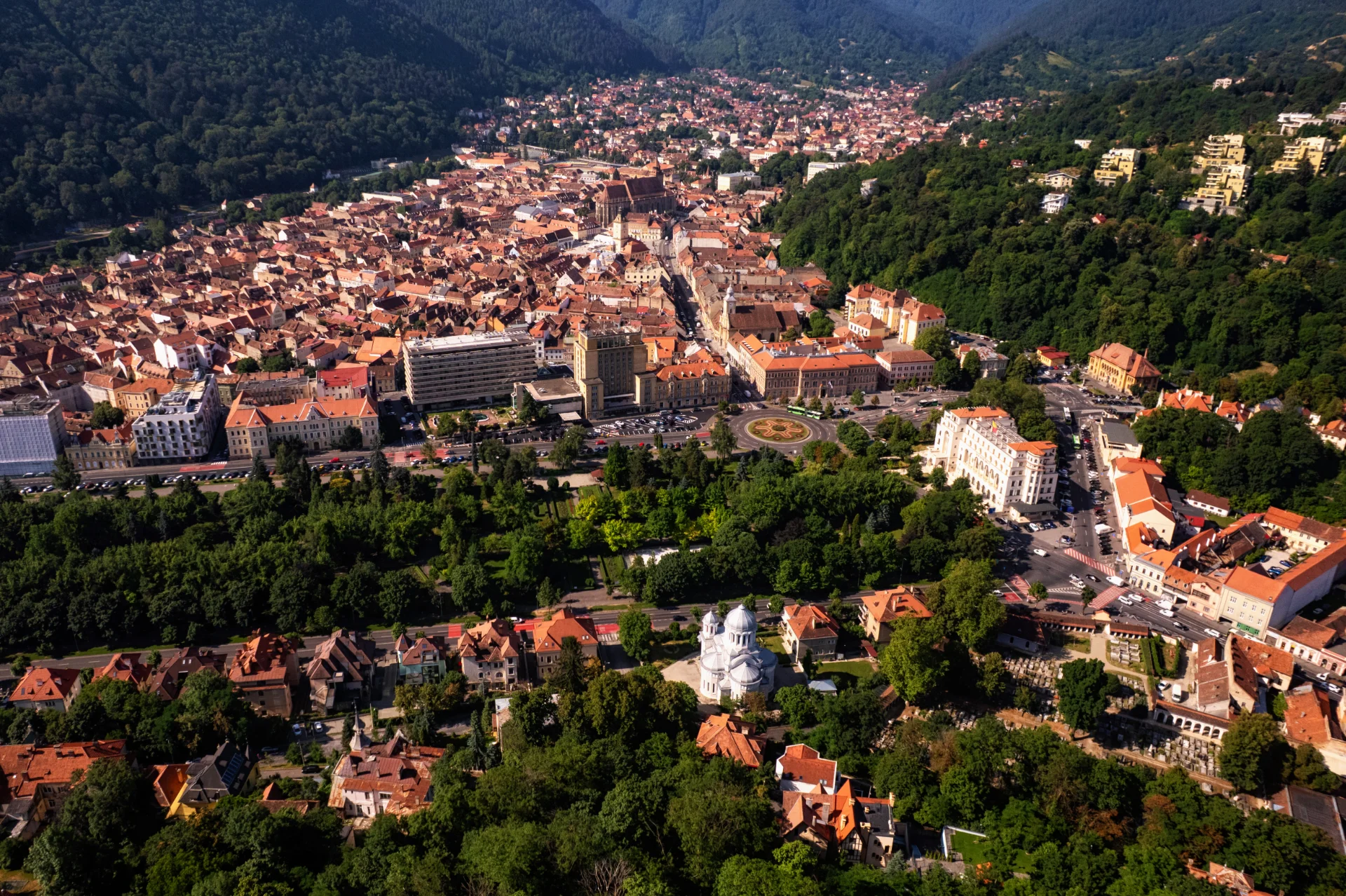
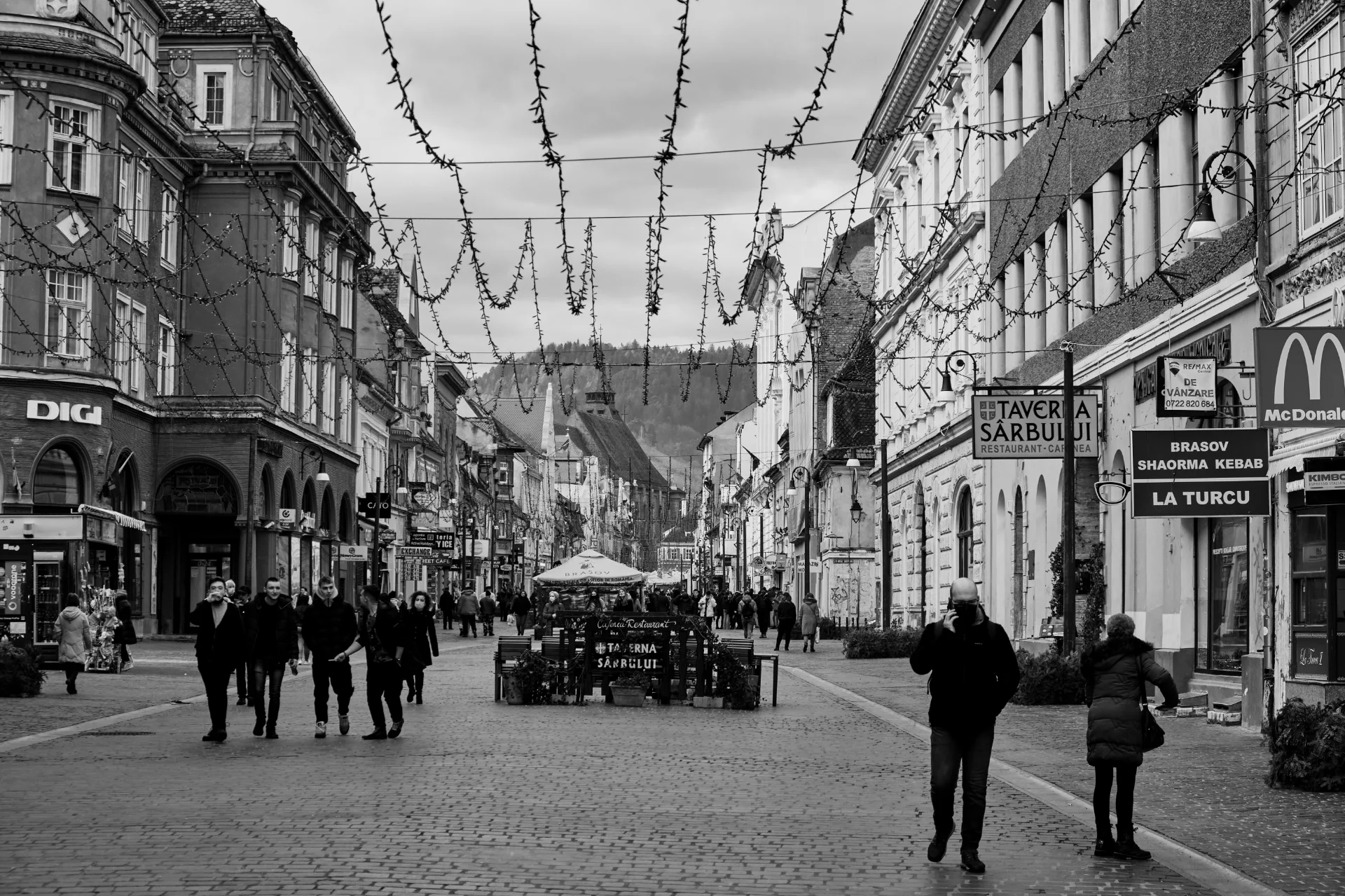
In a harmonious fusion of historical heritage and stunning landscapes, once one of the strongest and most beautiful fortresses of Transylvania, today’s multicultural city reveals itself among medieval walls and towers, elegant streets and alleys full of atmosphere, always ready for adventures to the peaks of the surrounding mountains!
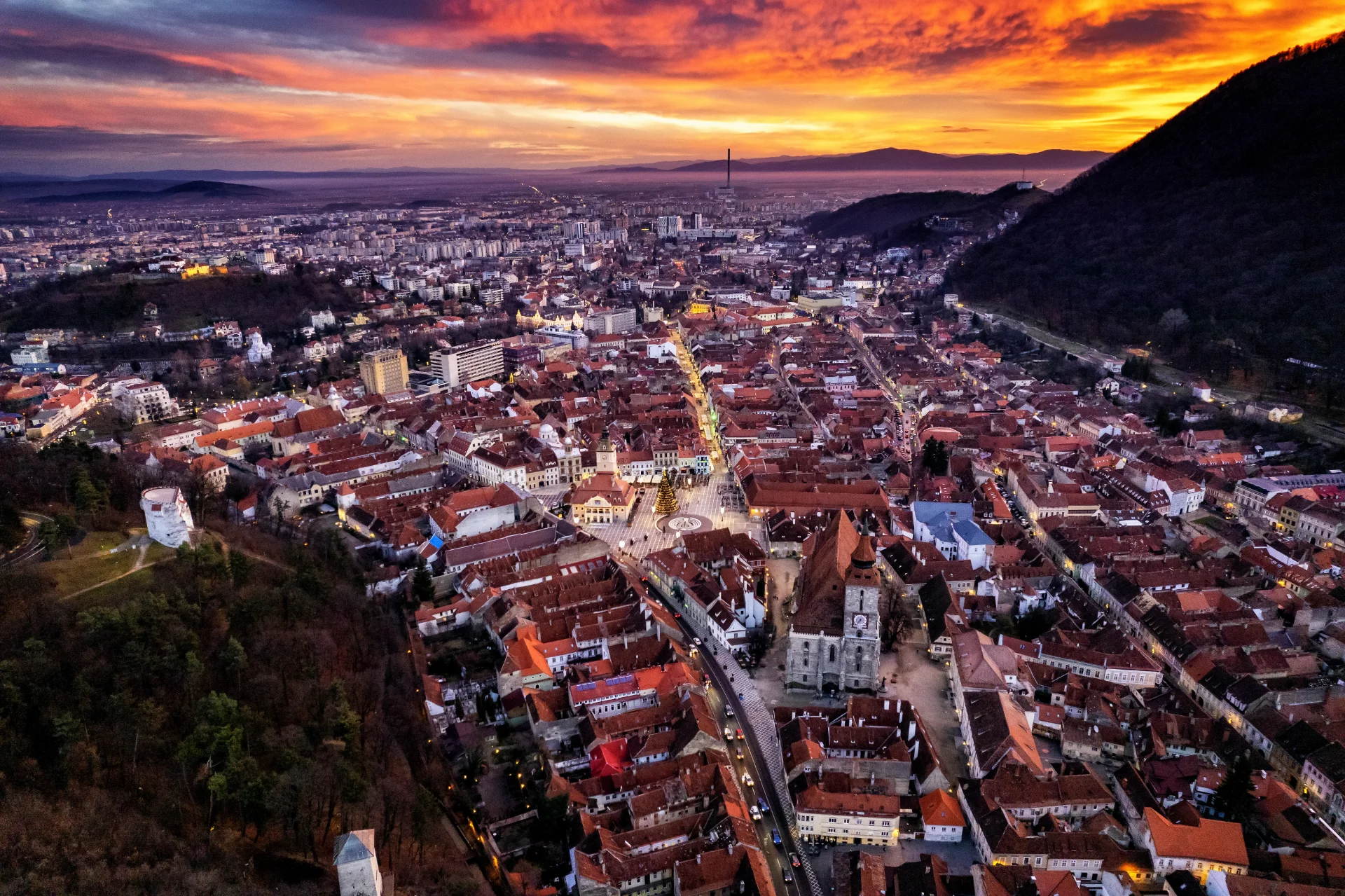
An eternal bridge between the south of the country and Transylvania, Brașov is considered by many to be the tourist capital of Romania, with an impressive number of historical monuments, but also being the starting point for countless memorable mountain hikes. With ancient roots that go back beyond the 13th century, the city was founded by Saxon colonists and Teutonic Knights, around already existing Romanian and Hungarian settlements. In the centuries that followed, it developed into one of the strongest fortresses in Transylvania, being defended by walls with numerous bastions, but also by the forested peaks of the surrounding mountains and hills.
The fortress thus became one of the major commercial and cultural centers of the region, with 43 guilds attested in 1798. Among the most important historical events, the construction of the Church of “Sfânta Maria” (today’s Black Church) lasted approximately 100 years, and the extensive fortifications were erected during the reign of Iancu de Hunedoara, changing the appearance of the medieval city. The fortress at one time had 7 or 8 bastions, 32 defense towers, 4 or 5 gates and two or three systems of walls. On April 21, 1689, a great fire engulfed the entire fortress and destroyed many of the old buildings, the reconstruction lasting over a century.
We can reach Brașov quite easily from any part of the country, the city being connected to both the south of the country and the rest of Transylvania by several important roads. The most popular, but also congested of these is DN1, which passes through the Prahova Valley and continues to the west of the country. Other roads that can be used include DN1A through Cheia, DN73 through the Rucăr-Bran corridor, DN11 from the east or DN13 from the north, to which is added the railway connecting Bucharest to the center of the country. Also, a modern international airport was recently opened near Brașov.
Search for Flights to Romania with Booking.com!
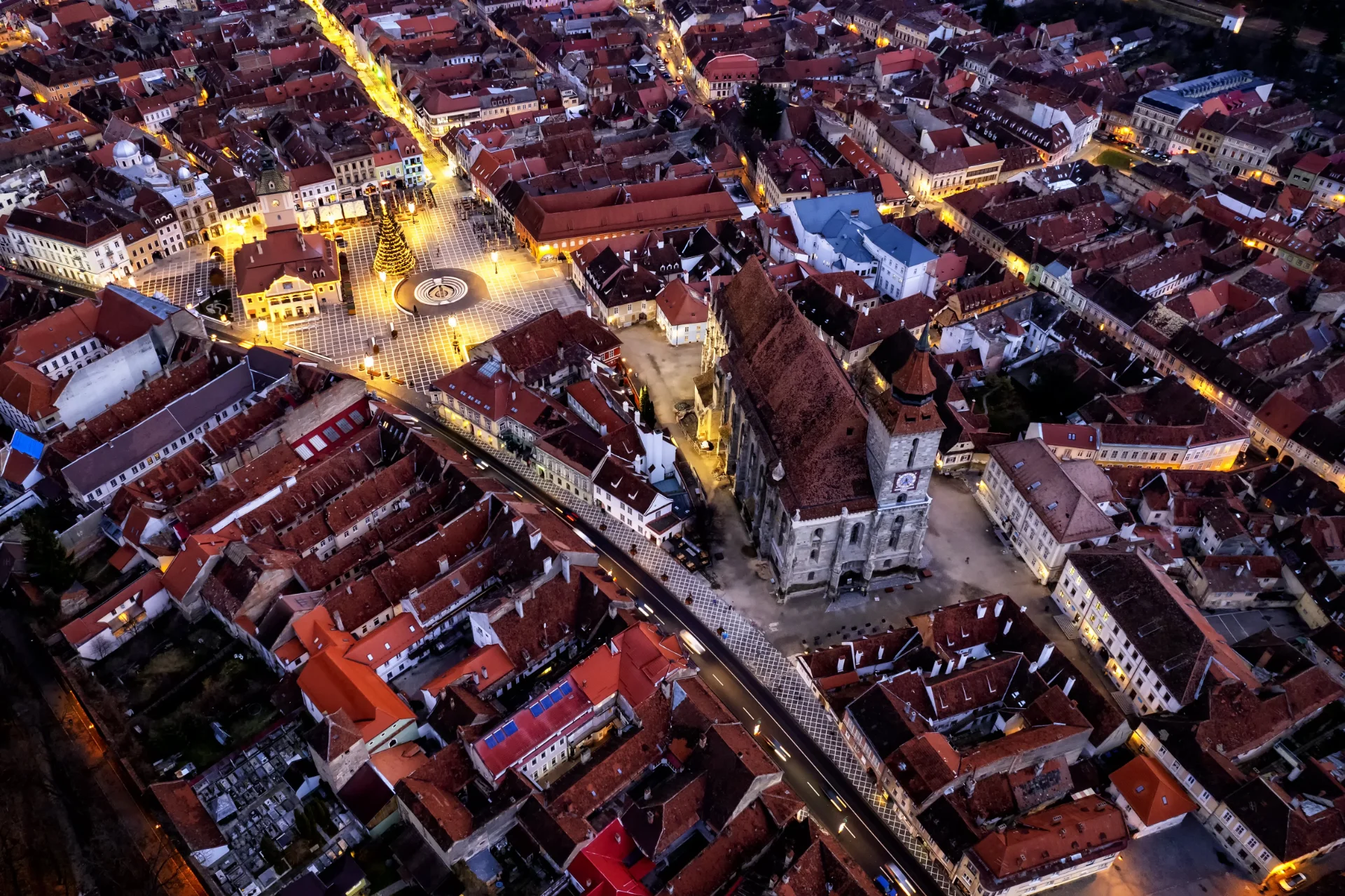
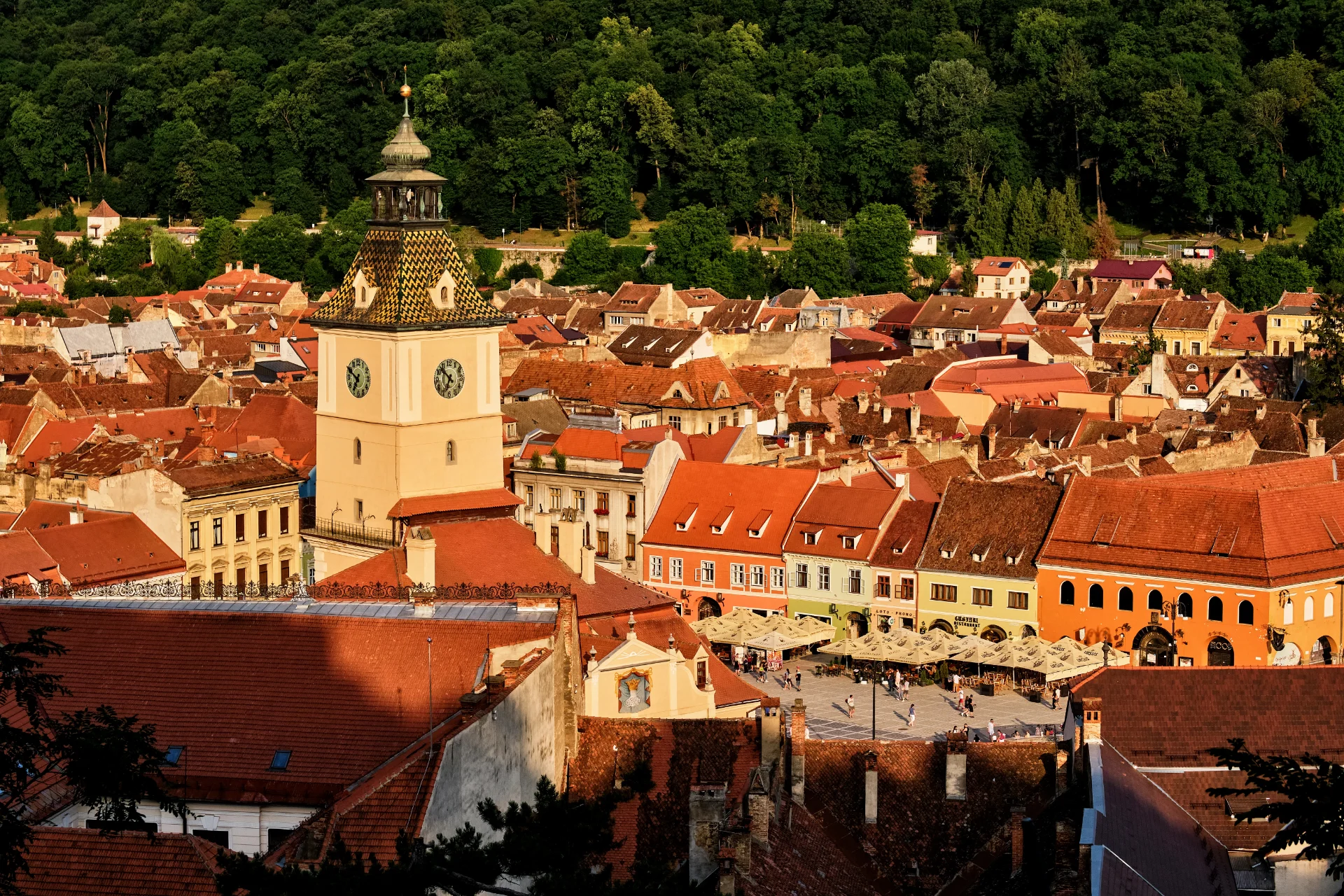
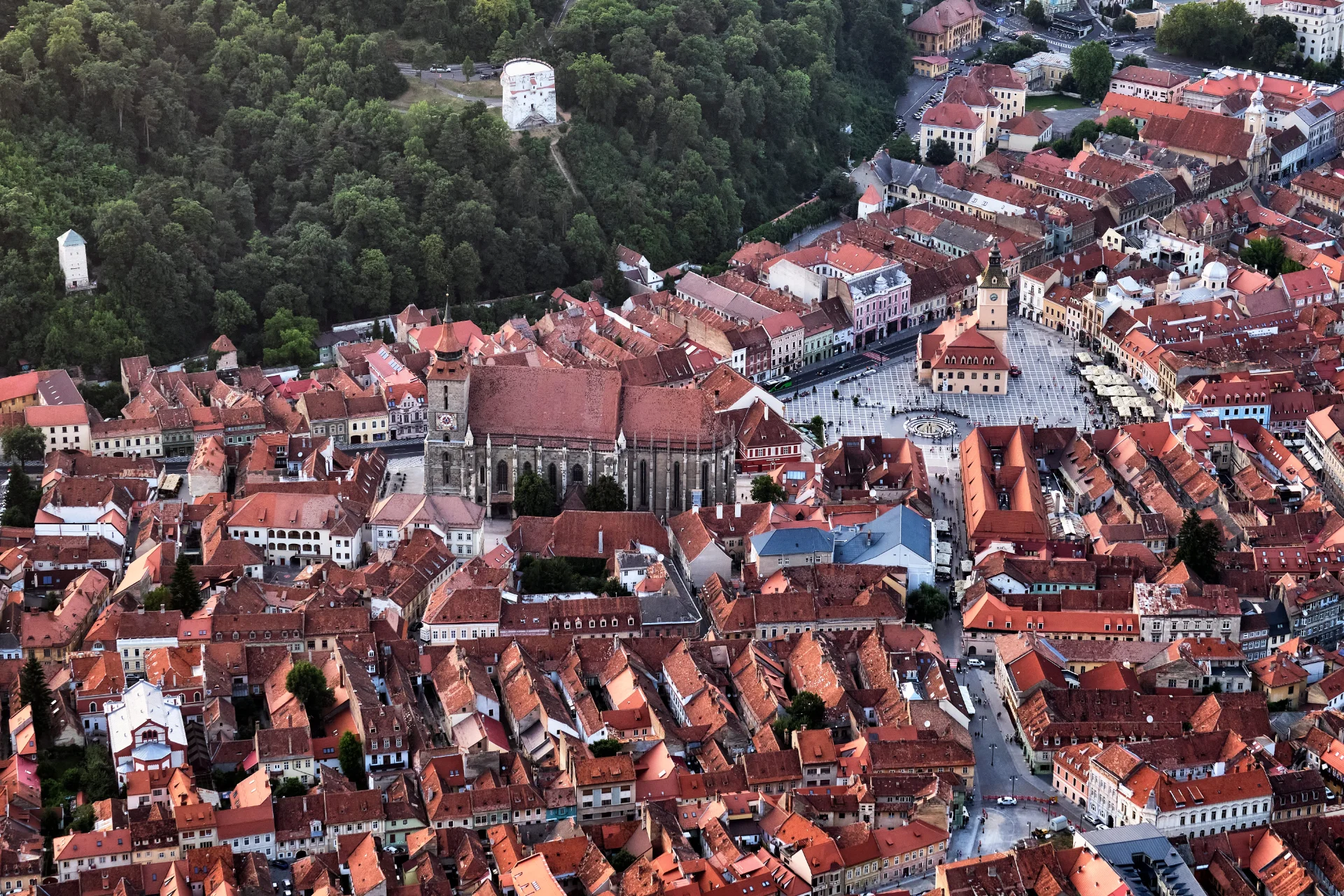
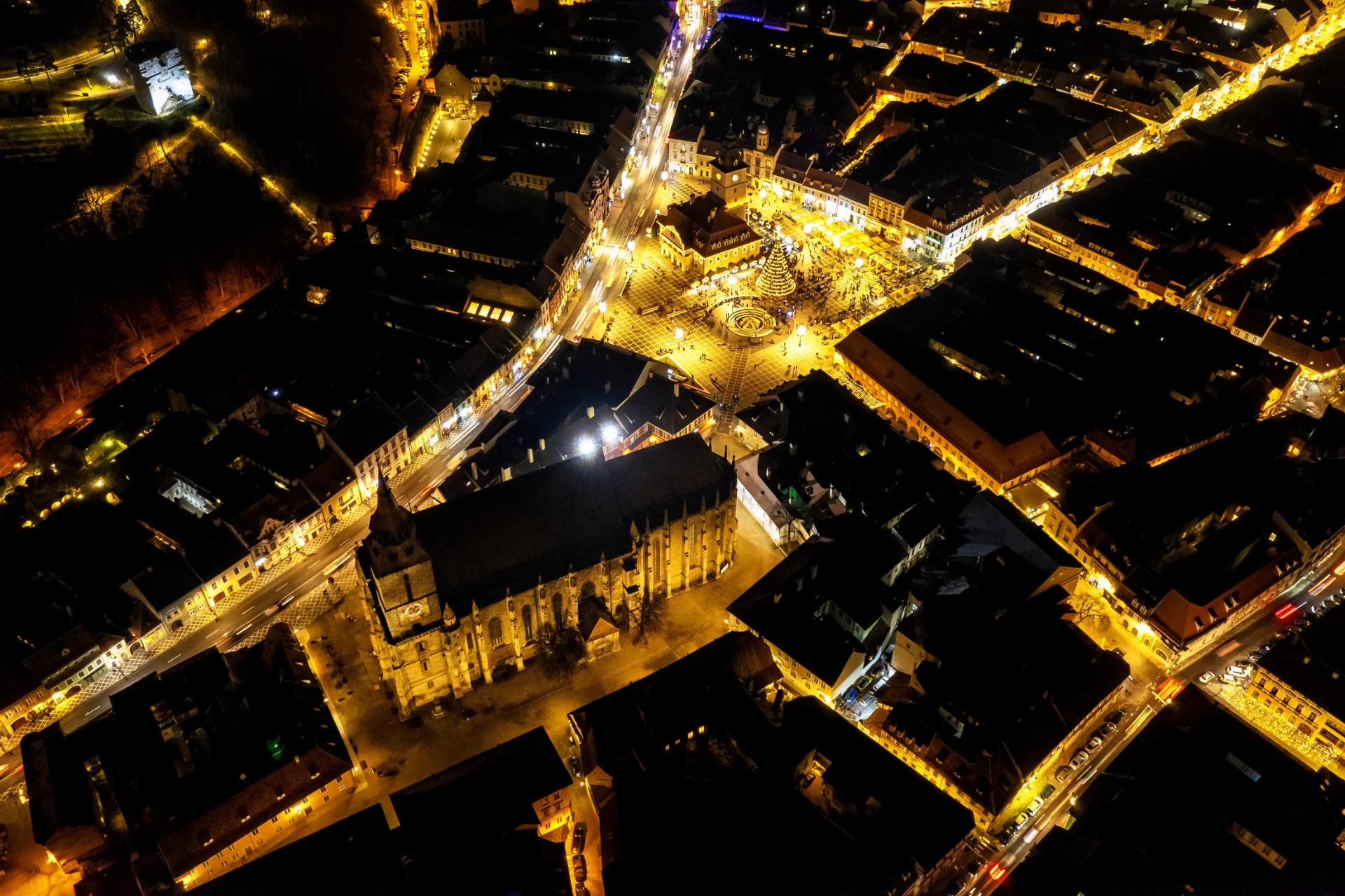
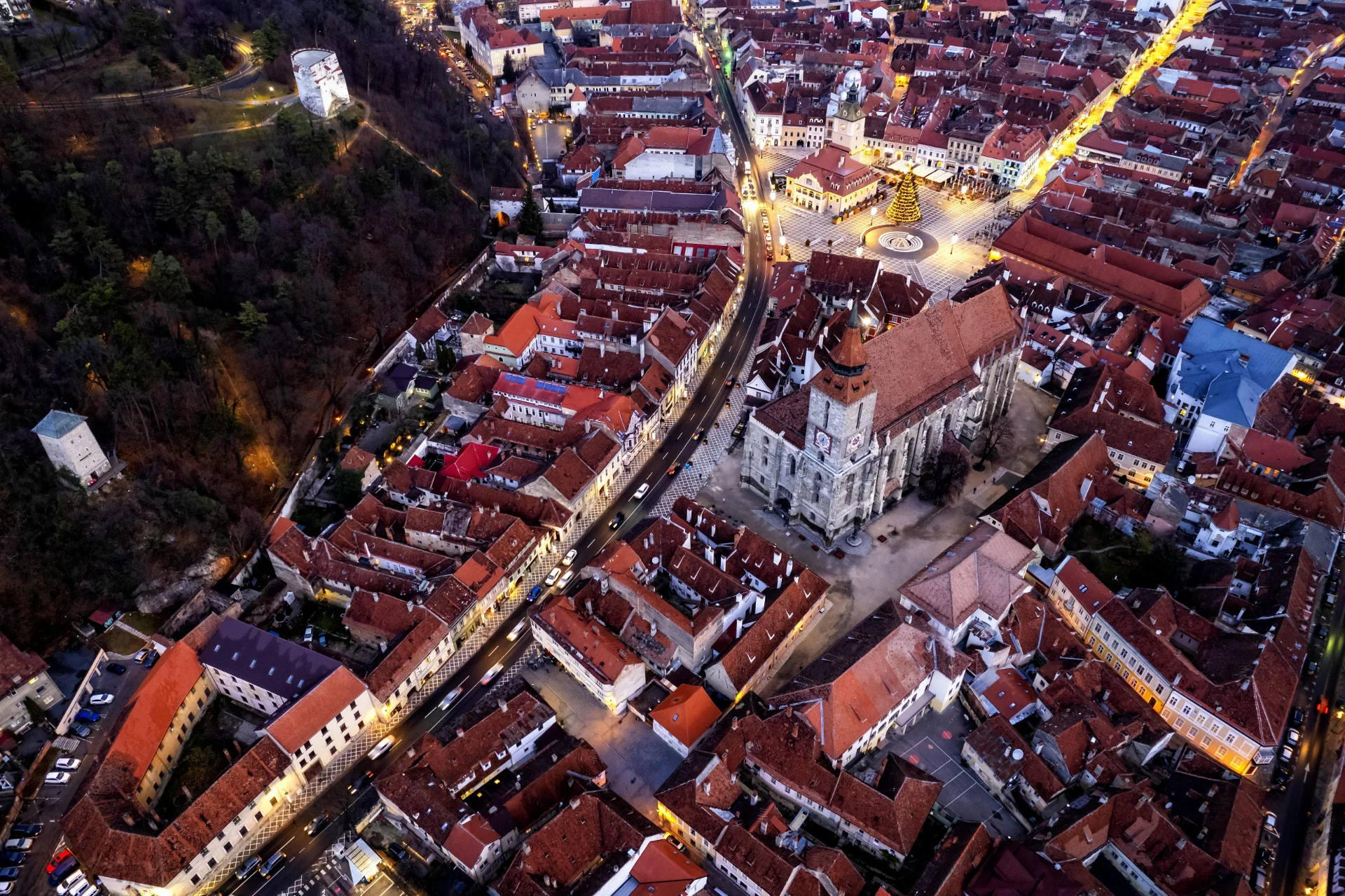
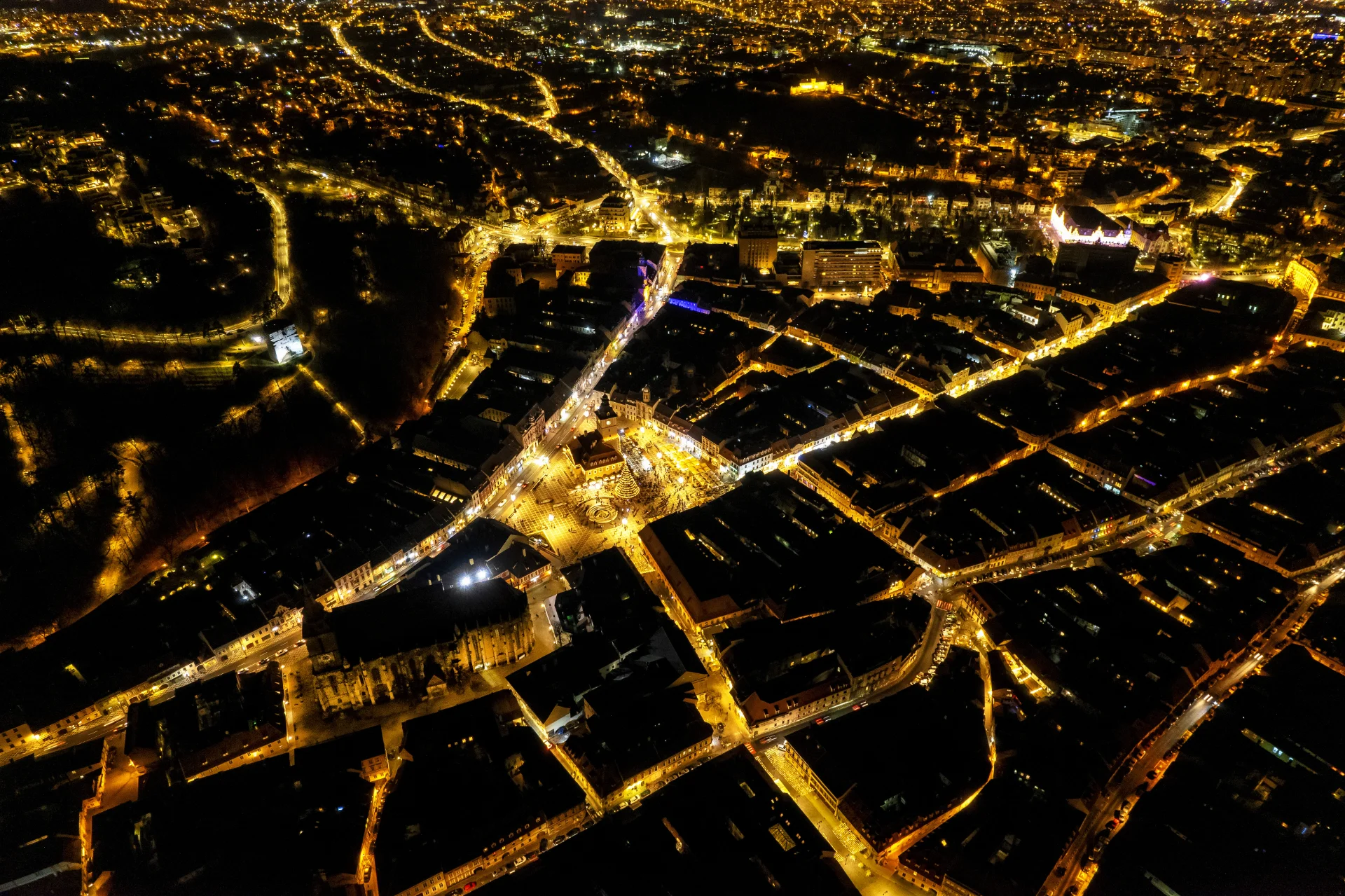
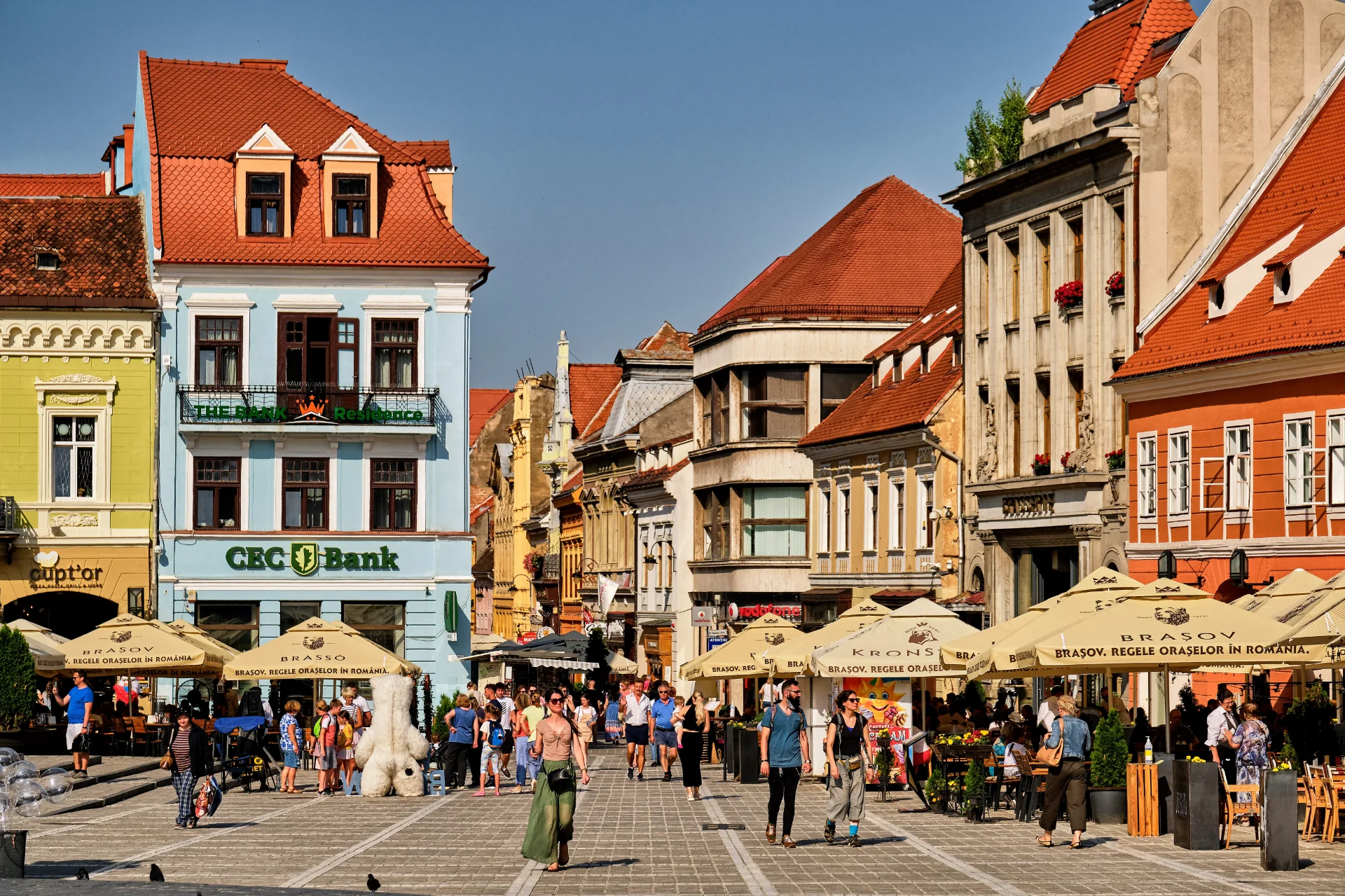
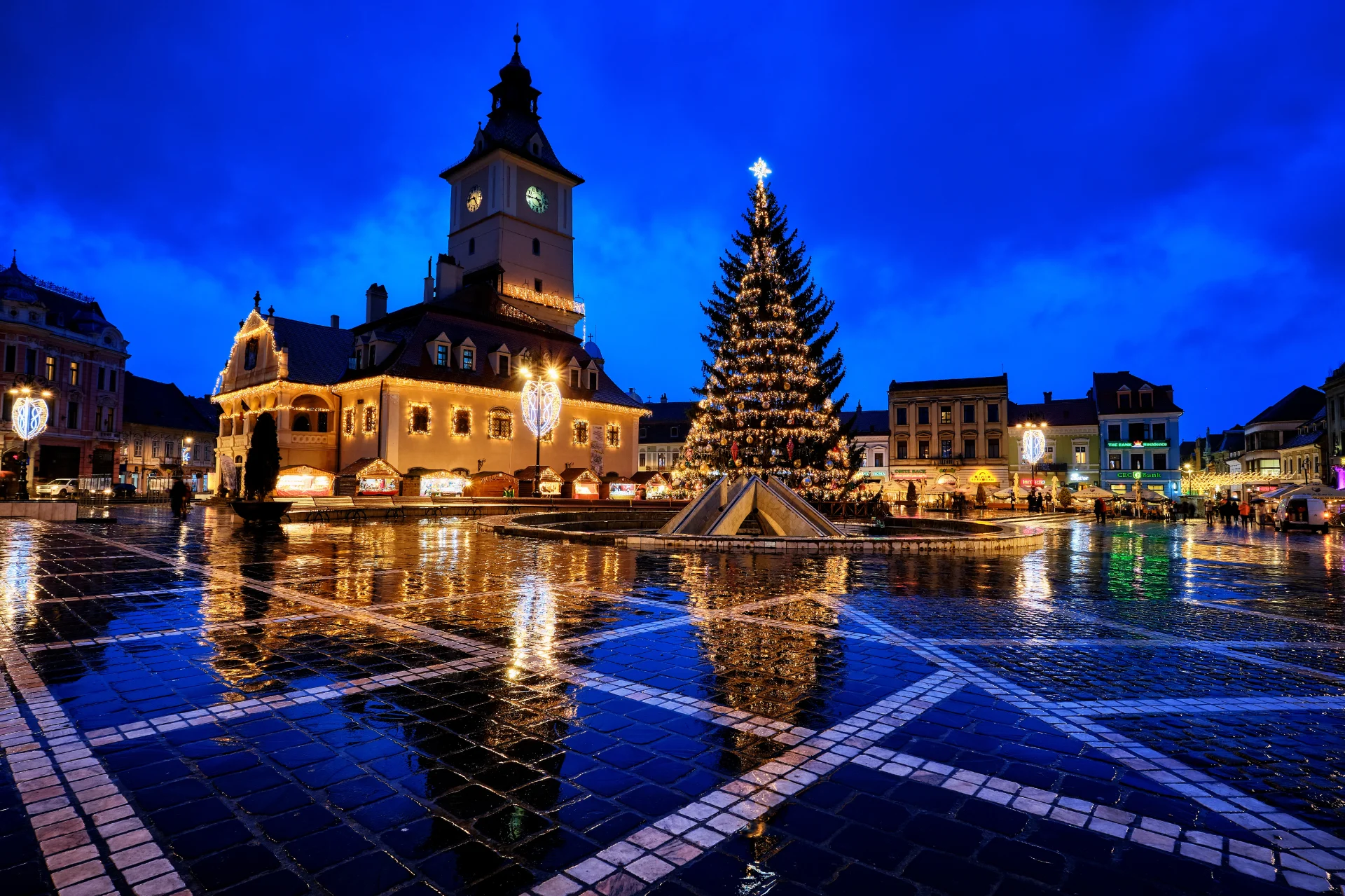
The best place to start exploring Brașov is from the heart of the old citadel, where today’s Council Square is located. In the Middle Ages, the square was the meeting point for merchants and artisans from all over Transylvania and beyond, and over time, it was surrounded by imposing buildings, some of which still bear features of medieval architecture. Approximately 30 buildings in the Council Square have been designated historical monuments, the most interesting including the “Assumption of the Virgin Mary” Church, the Merchants’ House, the Mureșenilor House, the Museum of Urban Civilization and others, but none of them catches our attention like the one located right in the center of the square.
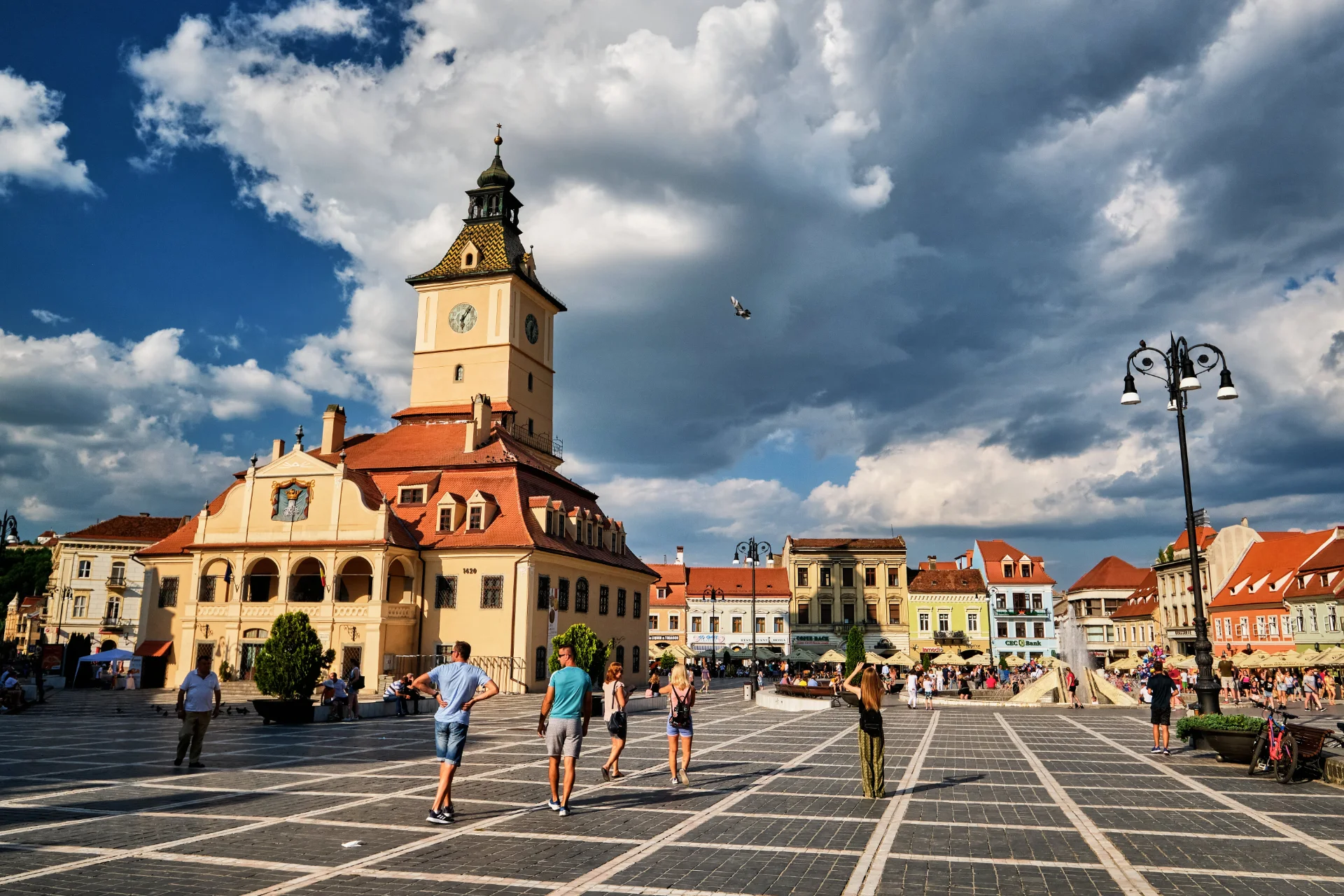
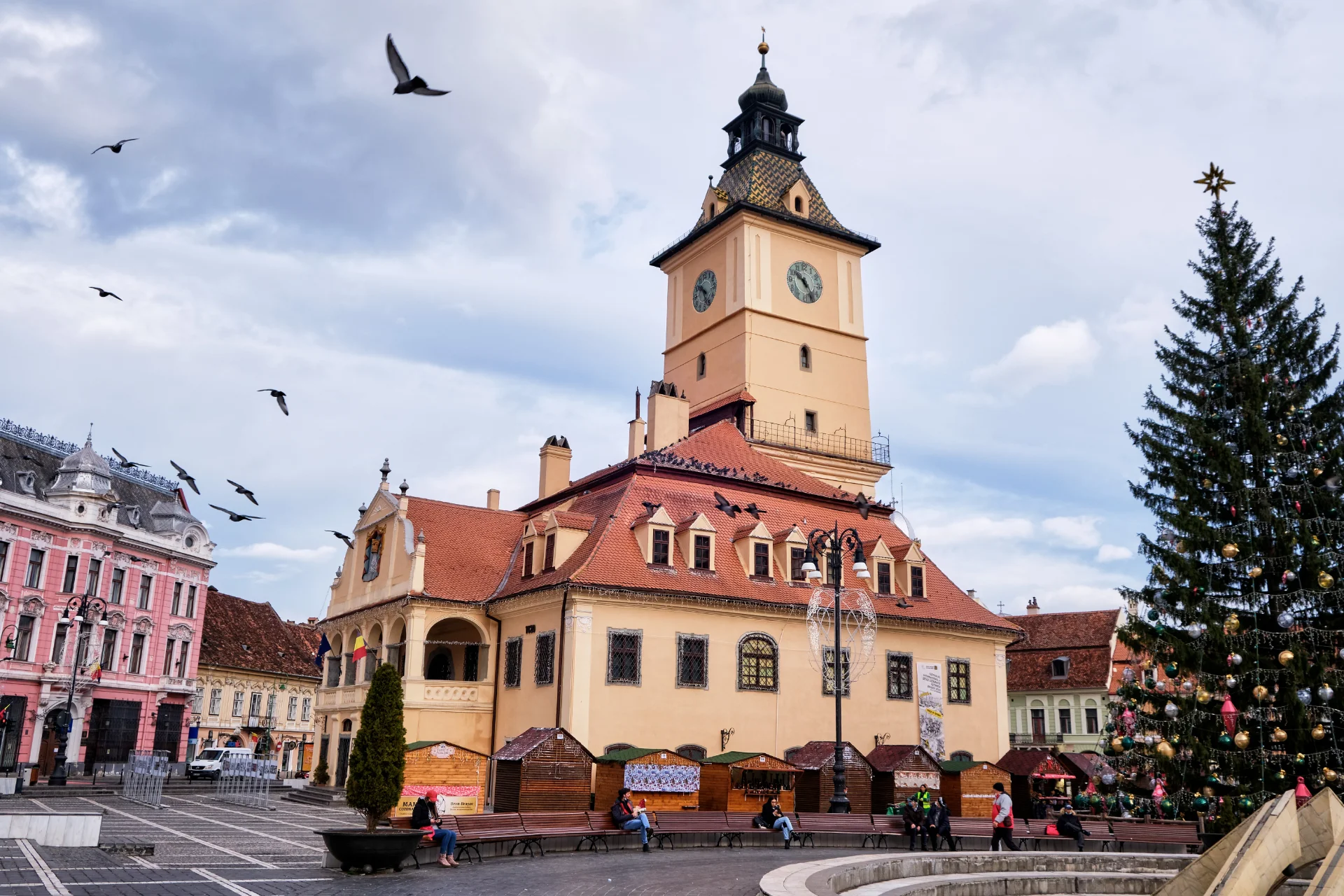
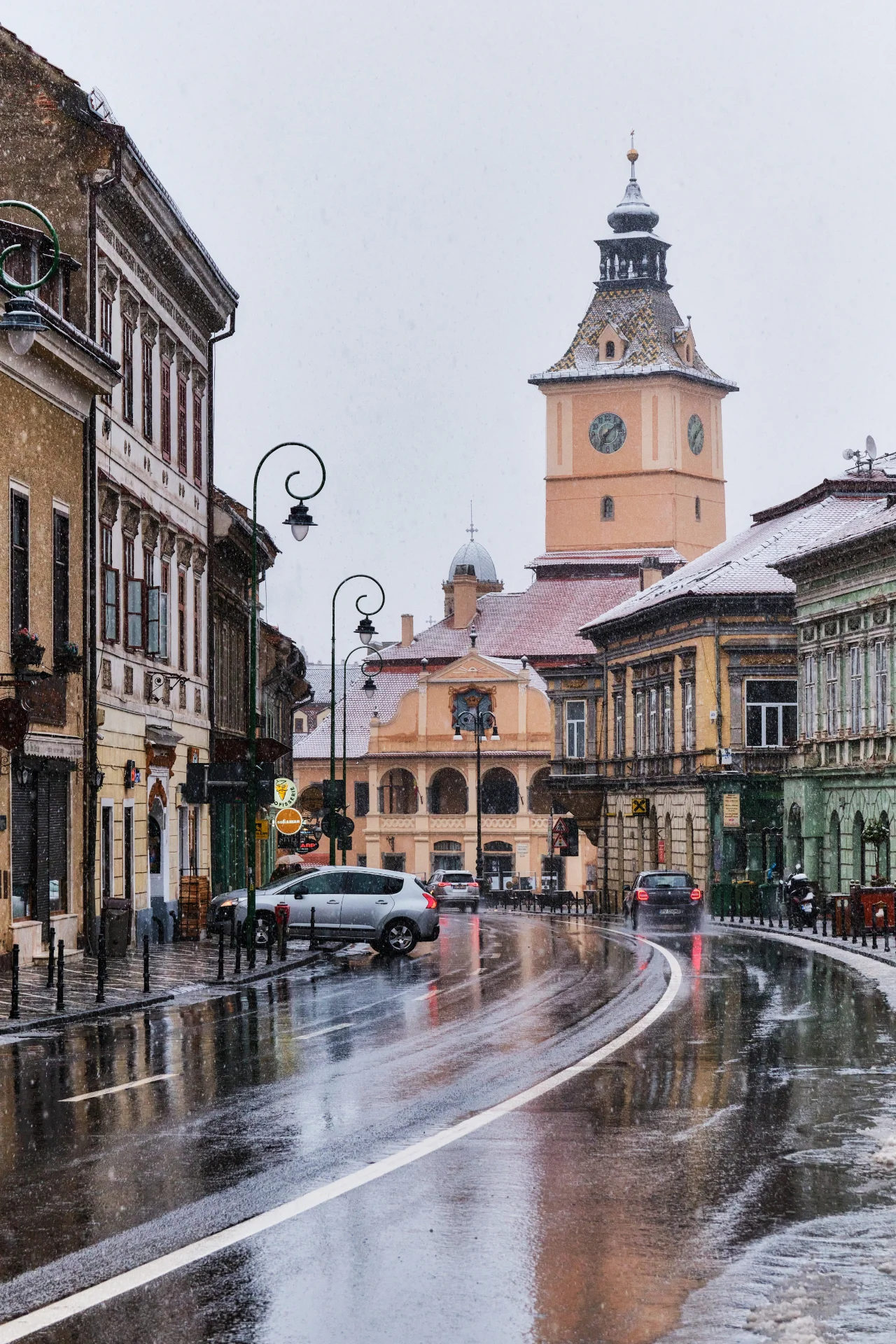
Now known as the Council House, this is actually the old city hall , but was originally built as an observation tower. It is almost six centuries old and has been modified several times in the past, the Baroque style dating back after great fire of 1689. Today, inside we can visit part of the Brașov History Museum, which presents the past of the city and of the land of Bârsa from the most ancient times, passing through the glorious medieval period and the modern era.
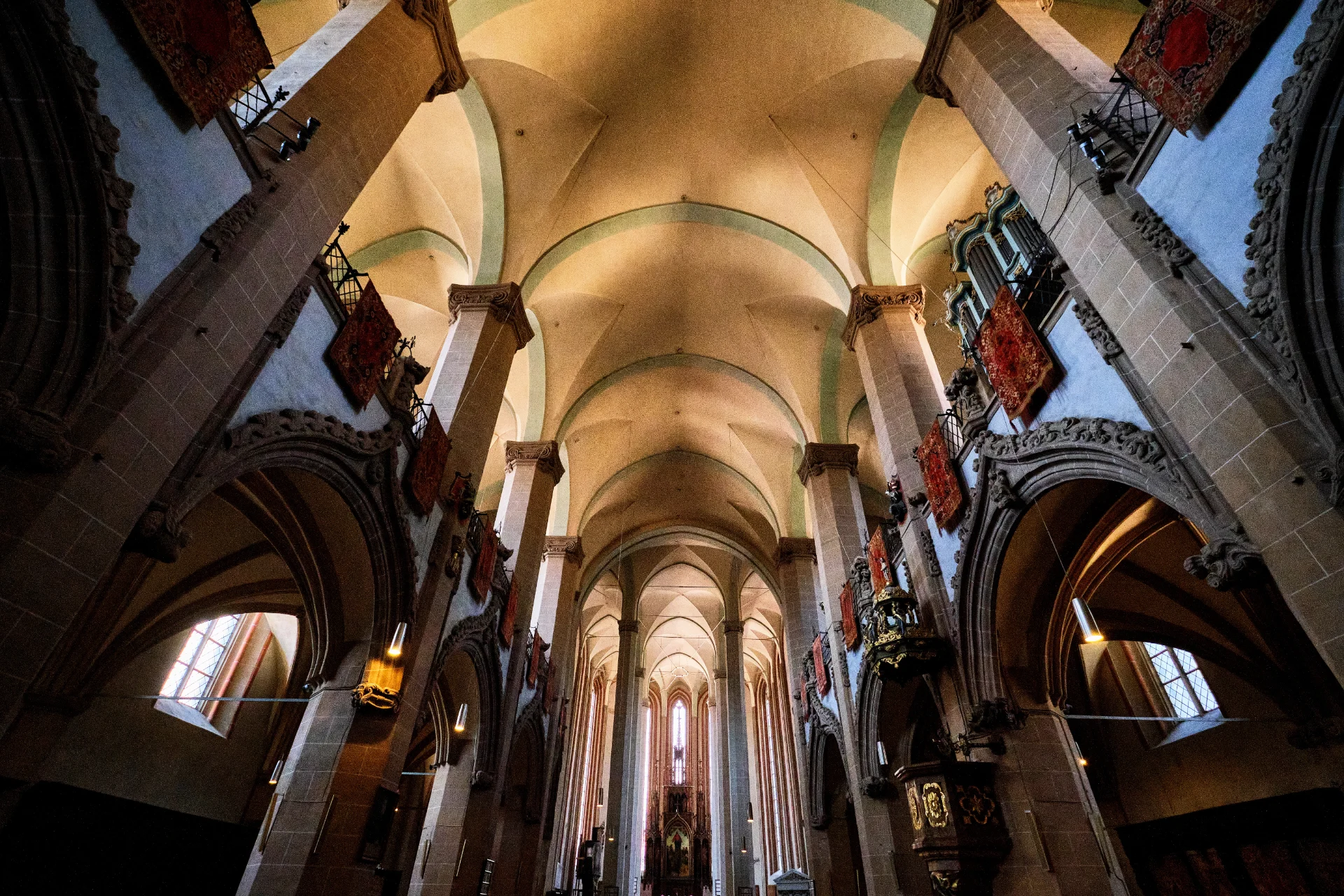
The Black Church houses the second largest collection of oriental carpets in Europe, surpassed only by the Topkapi Museum in Istanbul. Inside, you can admire approximately 110 magnificent carpets, dating mainly from the 15th and 16th centuries!
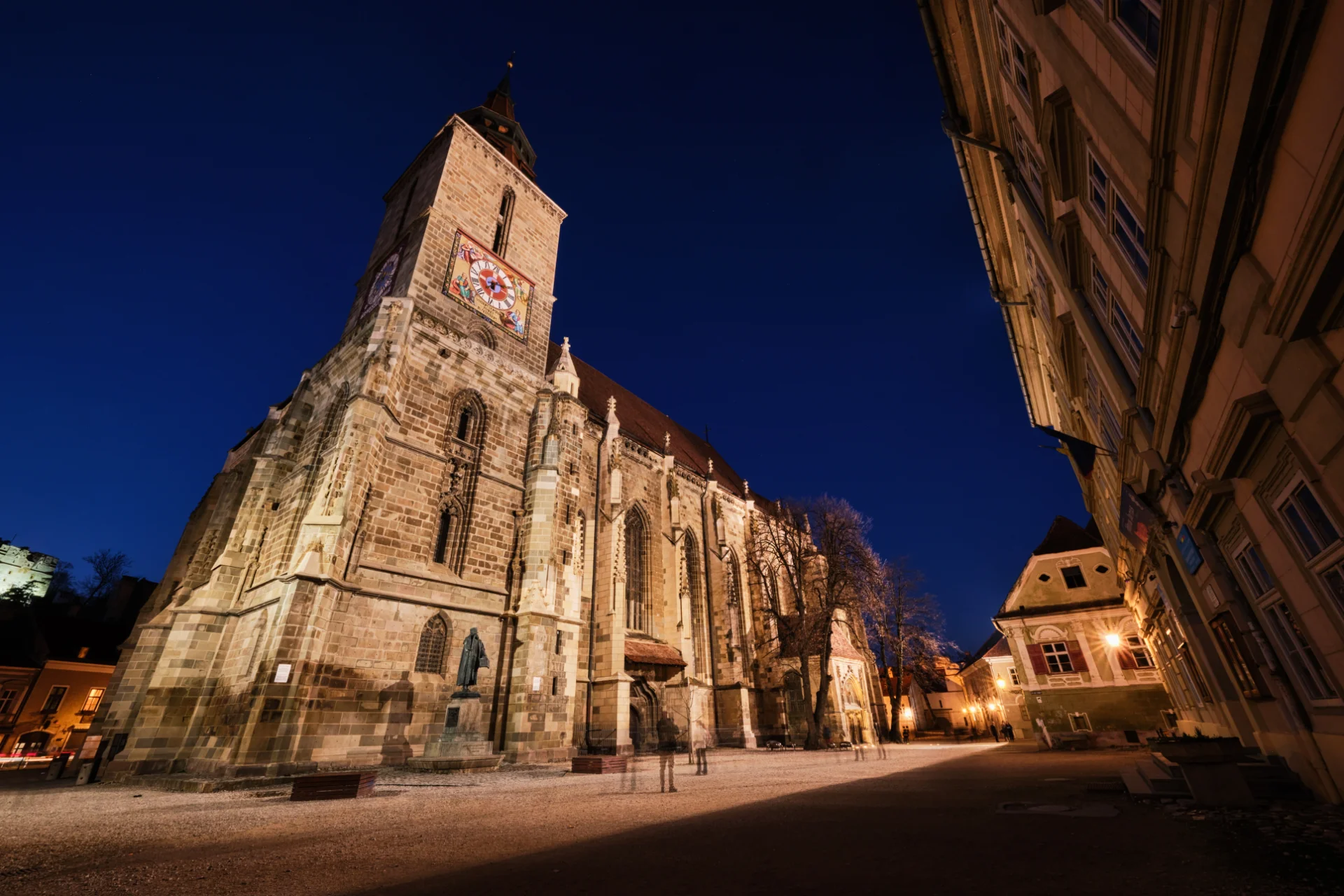
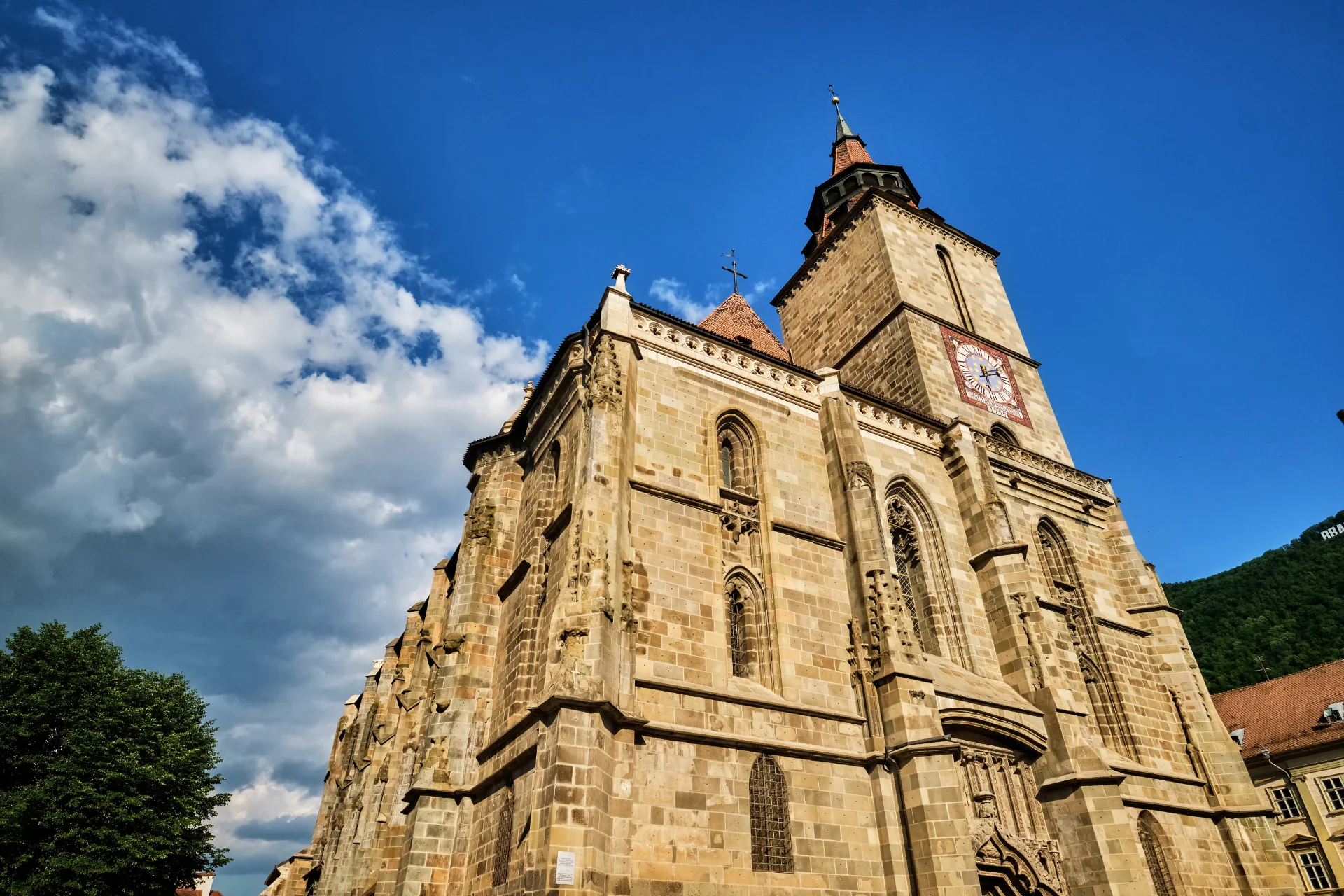
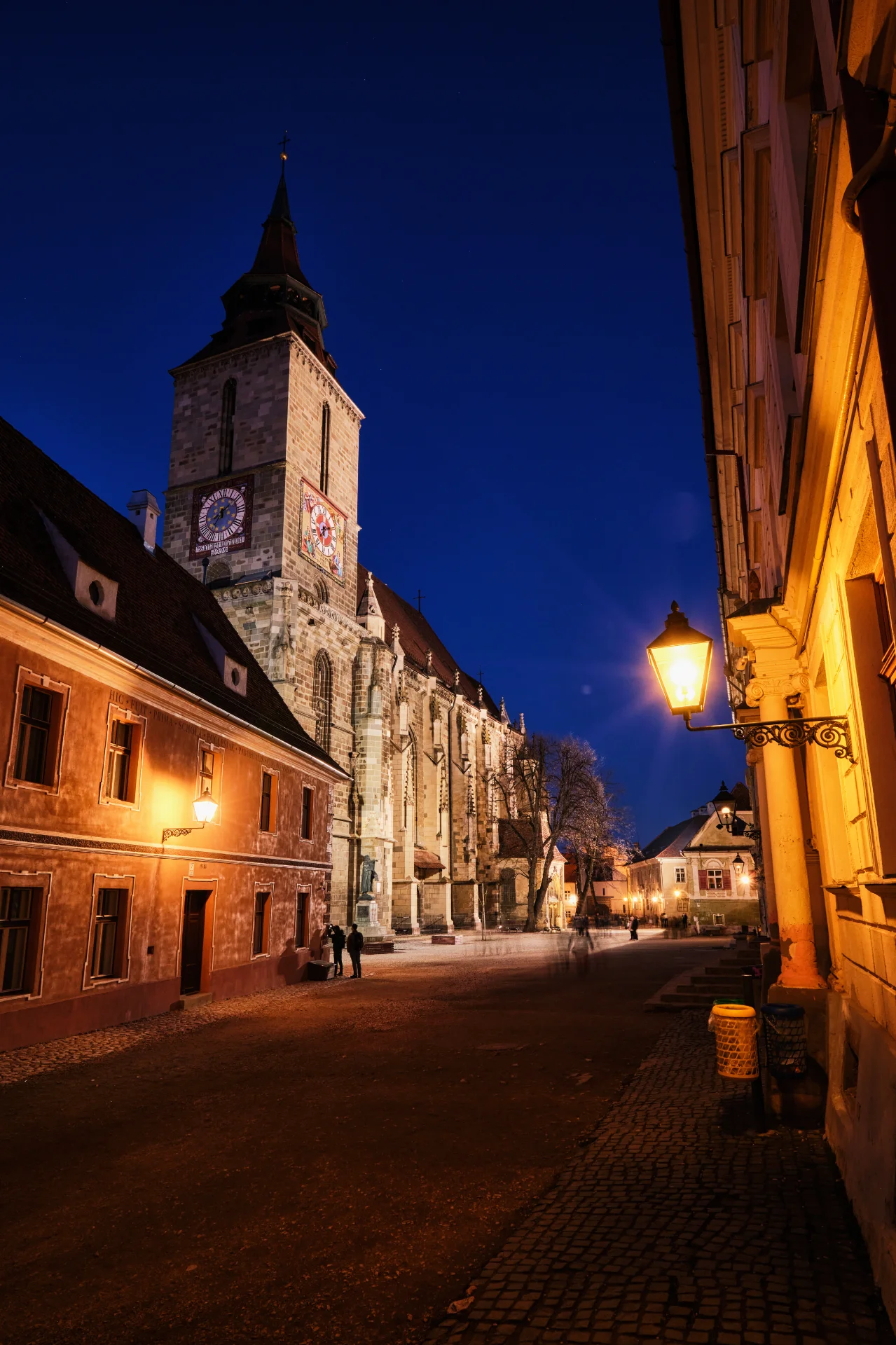
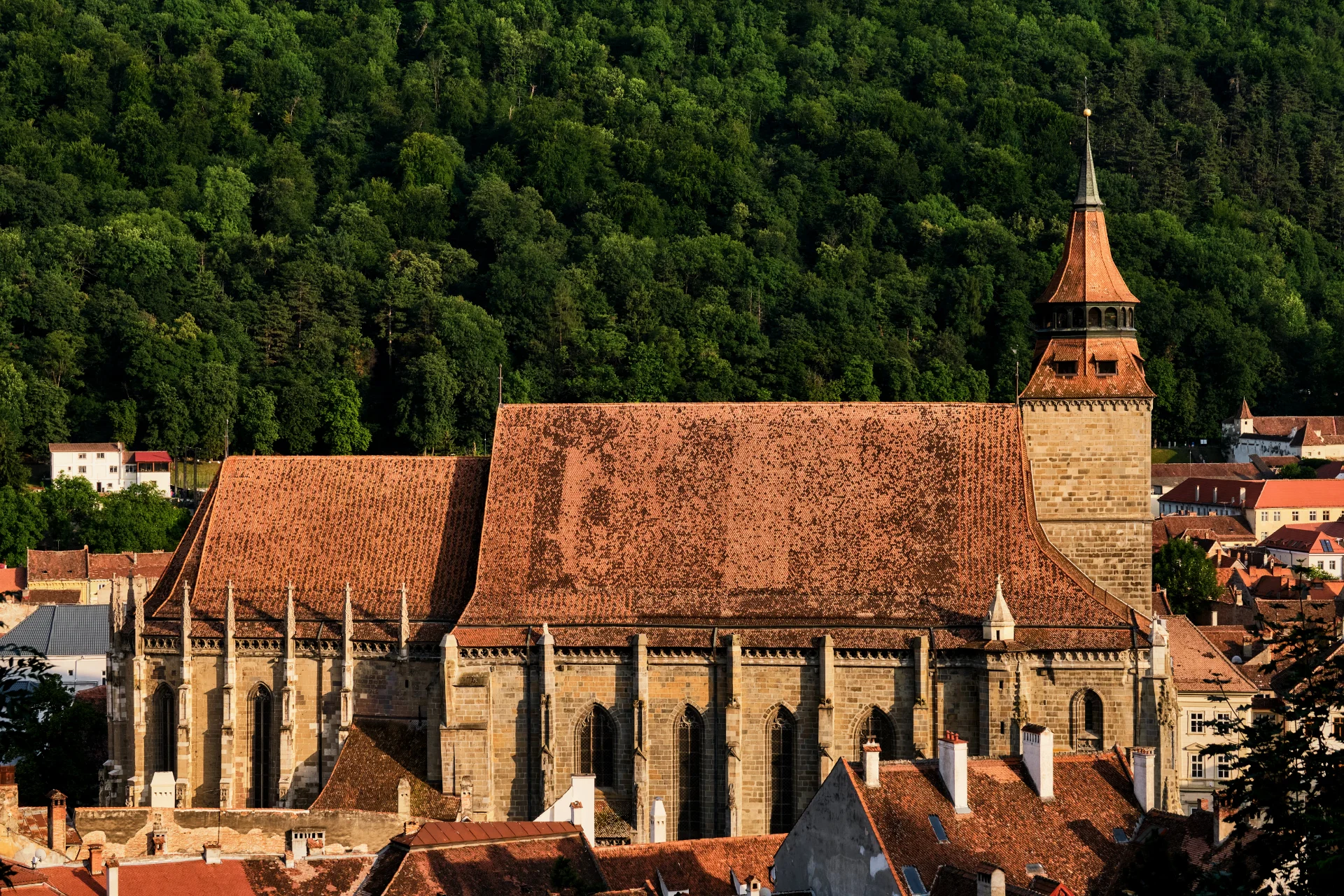
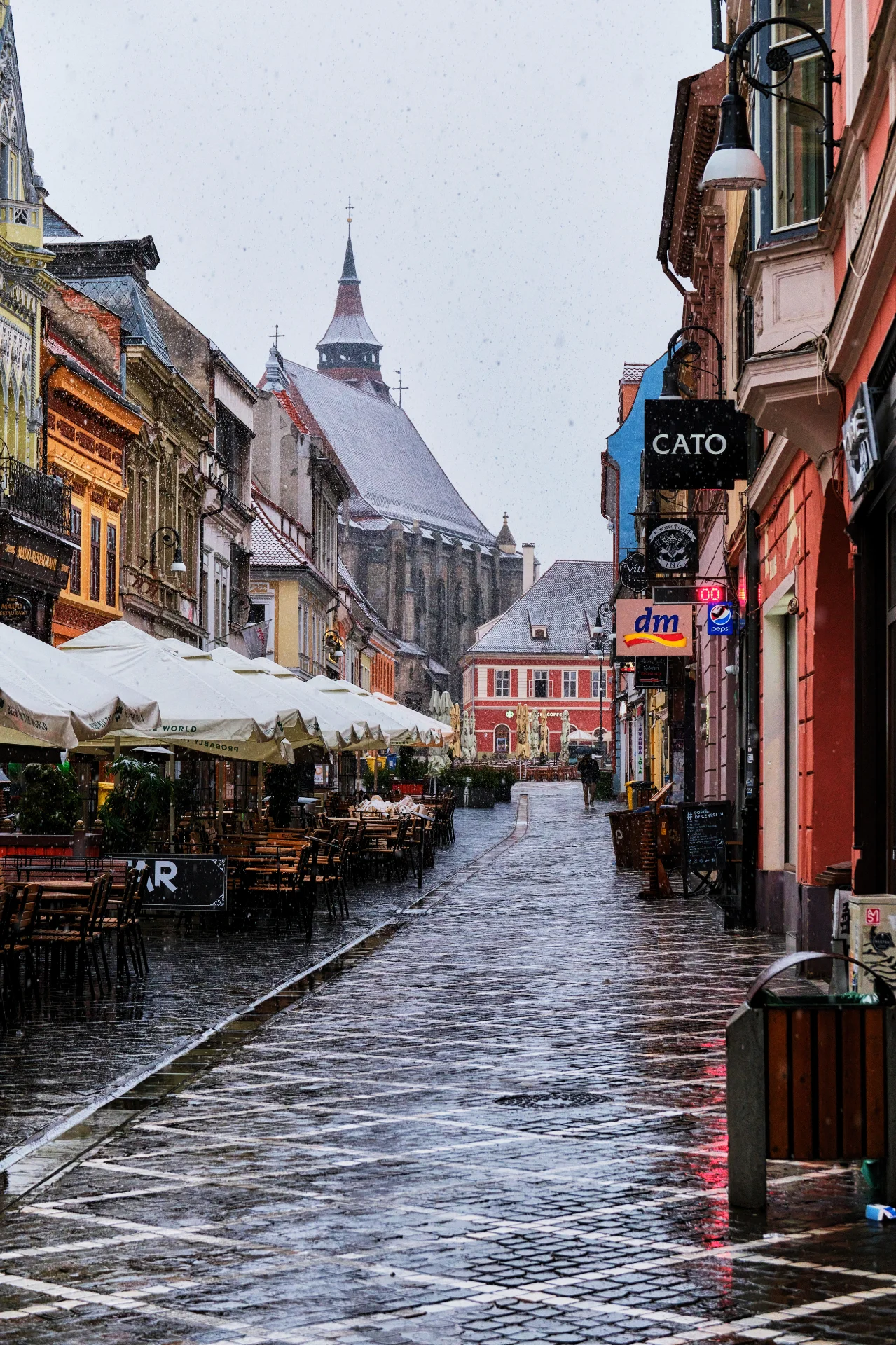
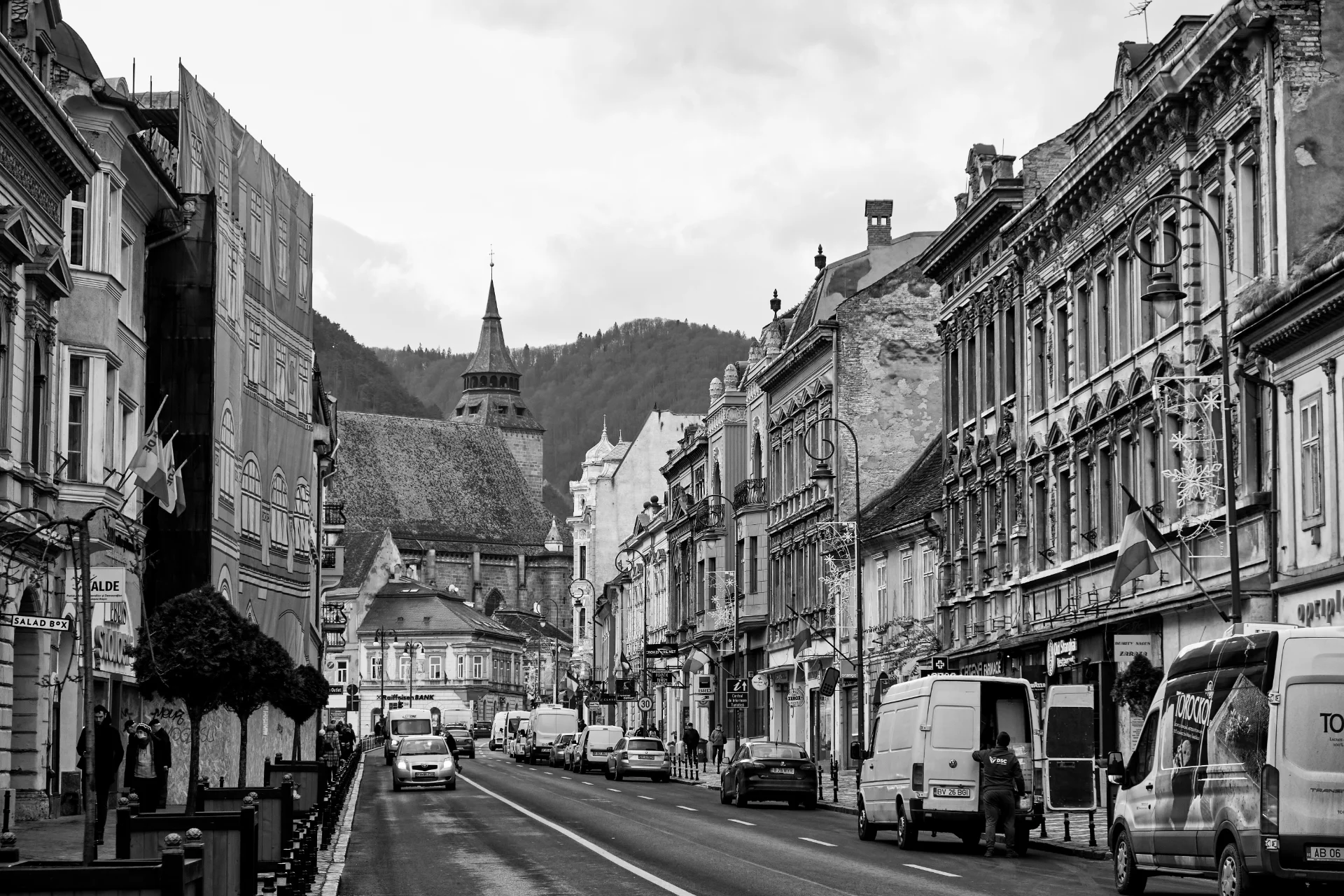
Exploring the square and the surrounding streets, we cannot miss the Black Church and its majestic silhouette, one of the striking symbols of Brașov. It is considered the most important Gothic monument in Romania and the largest Gothic church in southeastern Europe. It is dedicated to the Virgin Mary and was built by the Saxon community over the course of almost 100 years, starting in 1383, over an older Romanesque church. The descriptive name comes from the blackened walls, resulting from a devastating fire. Among the most impressive features, we can admire the Baroque interior with its 200-year-old organ, the beautiful neo-Gothic altar, the priceless collection of oriental carpets, a treasure trove of religious textiles and a 14th-century fresco of the Virgin Mary.
Search for Lodging in Brașov with Booking.com!
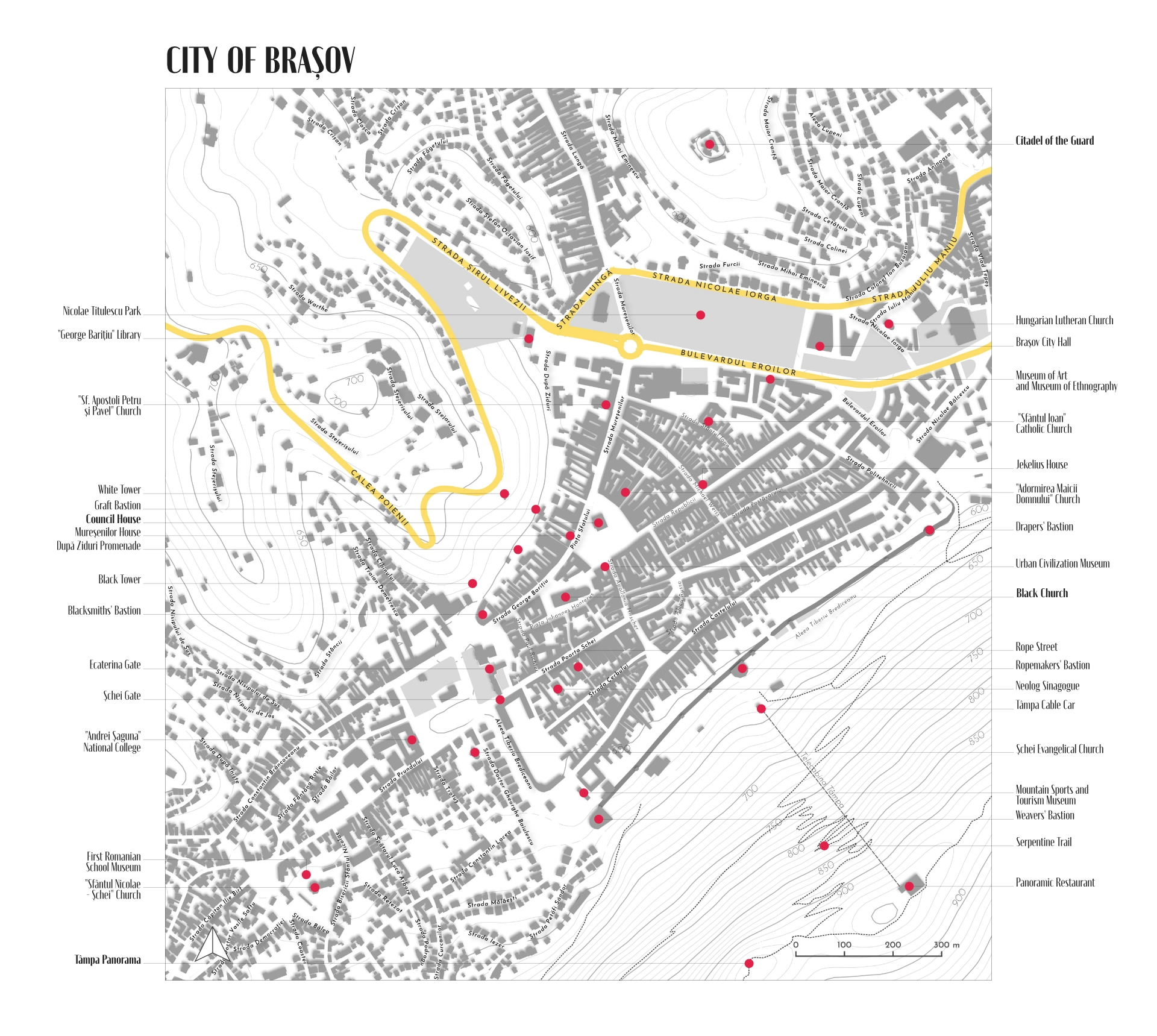
Around the old fortress, we can still discover many of the original medieval fortifications, some of which have been renovated and incorporated into the contemporary urban experience. Most of the massive walls have been preserved in the southern part of the old city, where two of the old entrance gates, several defense towers, as well as some of the fortified bastions that earned it the nickname of the fortress of the seven bastions have withstood the test of time. We can admire all these impressive historical monuments by following a circuit around the old fortress, starting along the recreation area at the foot of Tampa Hill.
The first point of interest is the Weavers’ Bastion, which retains its unique original architecture. From here, following the high wall to the northeast, we come across several towers and two of the old bastions, the Funari and the Postăvari, located in the northeast corner. Continuing northwest, the modern city has covered the traces of the medieval fortifications, their place being taken by the newer buildings erected along Eroilor Boulevard. Reaching the George Barițiu Library, we turn southwest along După Ziduri Street (Behind the Walls), with its bohemian atmosphere, which slips between the old walls and a small stream flowing at the foot of the hill.
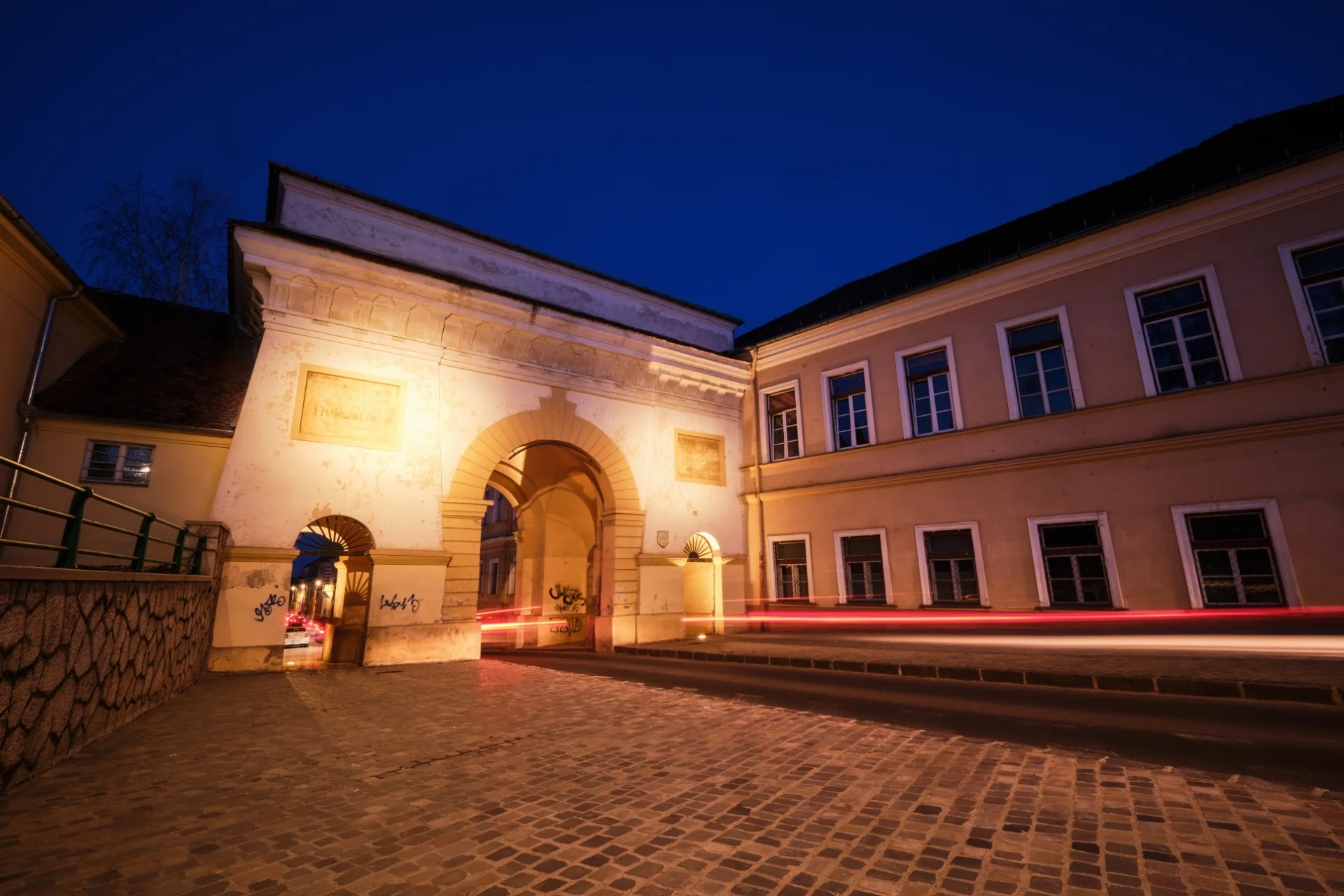
In addition to the Blacksmiths’ and Graft bastions, two impressive towers also rise on the nearby hill. Built at the end of the 15th century, the White Tower and the Black Tower had a dual role in the past, both as defense and observation, while today they offer spectacular panoramas of the old city. Two of the grand entrance gates to the fortress are preserved on the west side, towards the old Romanian quarter of Șchei. The Catherine Gate impresses us with its splendid architecture, being originally much more extensive and fortified. At the beginning of the 19th century, the nearby Șchei Gate was built to cope with the much more intense traffic.
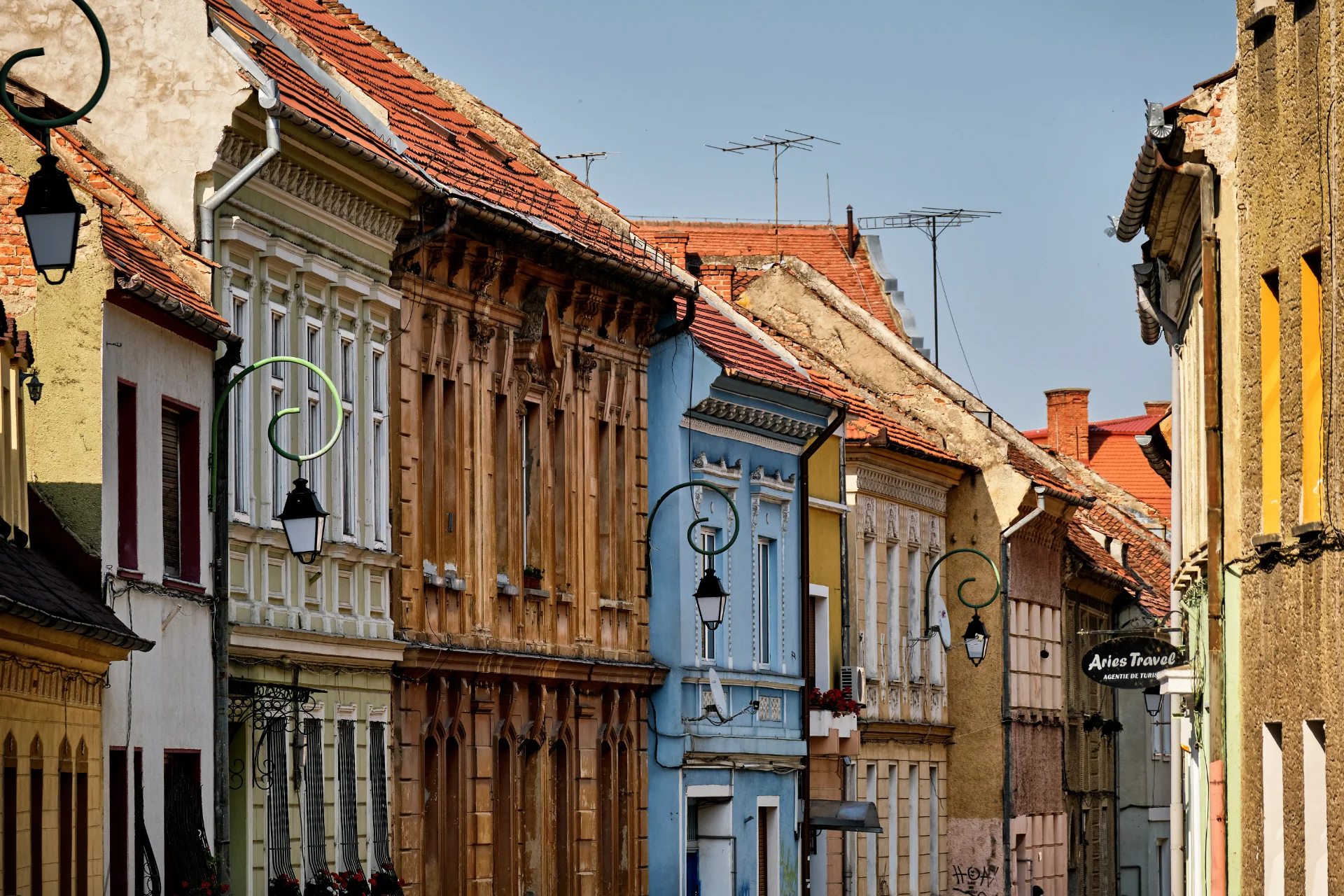
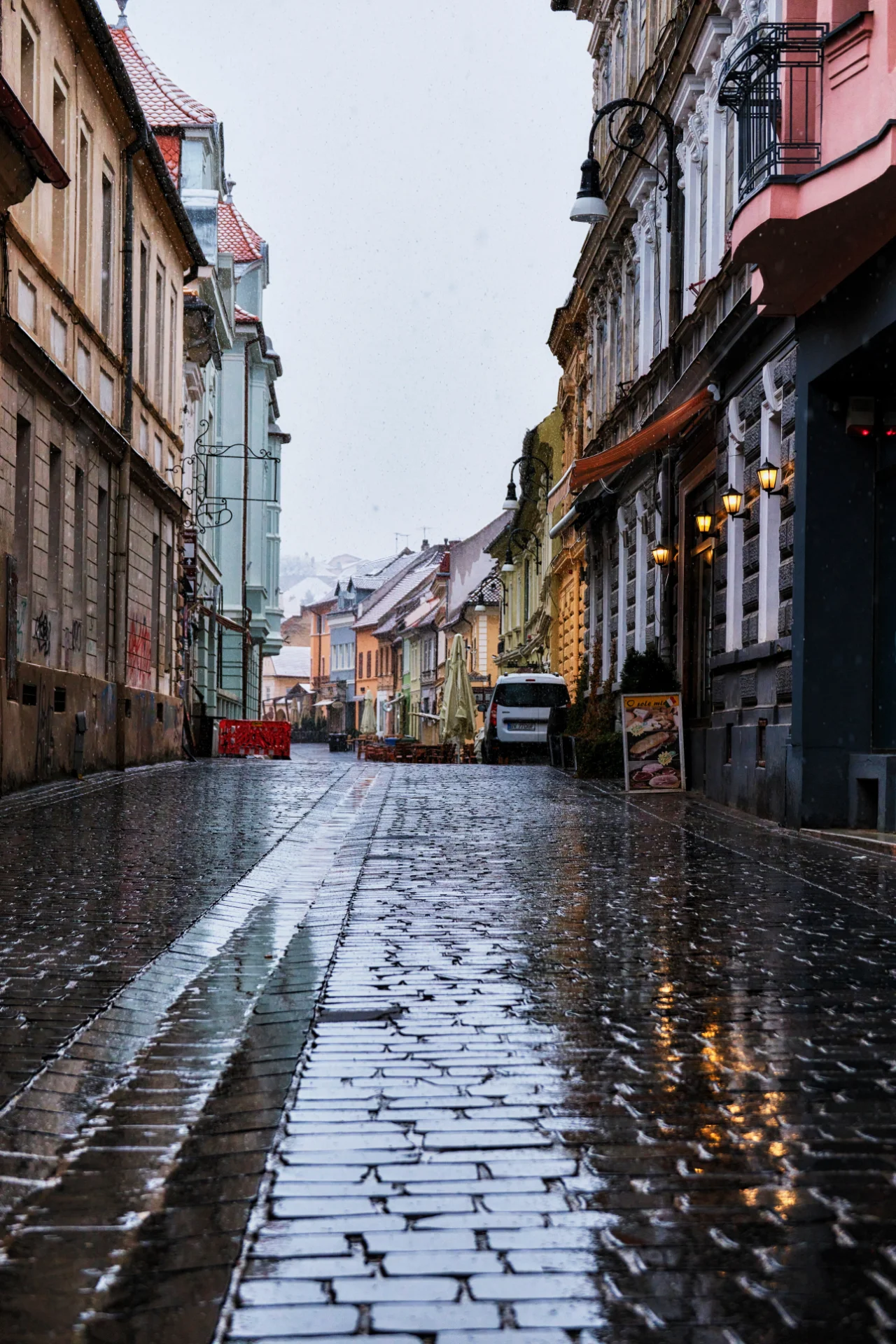
Entering the fortress again, the authentic Saxon architecture still reminds us of the medieval atmosphere, the streets still preserving an amazing number of monuments that we can admire. Although few buildings date back to before 1689, we still find quite a few houses in the provincial Baroque style, similar to cities in Germany and Austria. One of the most fascinating attractions in the fortress is the Rope Street, among the narrowest in Europe, with a width between 111 and 135 centimeters and being built in the 17th century for easier access by firefighters. Other interesting monuments include the Jekelius House, dating back to the 16th century, the Franciscan church and monastery, the church of “Saints Peter and Paul”, with its superb Baroque architecture, the two synagogues and several museums (Art Museum, Ethnography Museum, Museum of Urban Civilization).
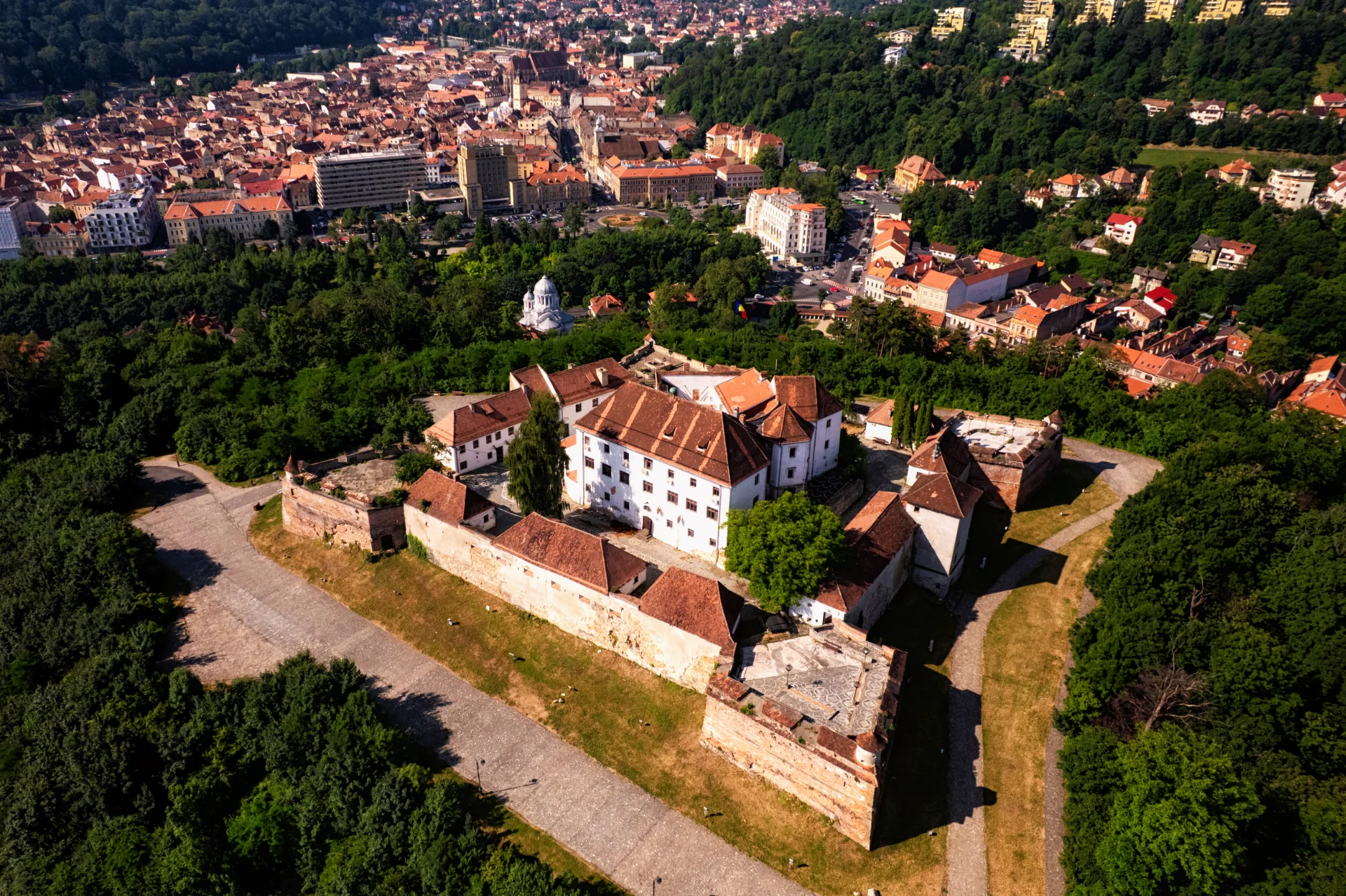
As the city developed, it expanded beyond the medieval fortifications, with some notable monuments being built to the west and east, where the modern center of Brașov is located. These include the Palace of Justice (now the Prefecture and County Council), the Financial Administration (now the City Hall), the Post Office Palace, the Chamber of Commerce and Industry (now the George Barițiu Library), Johannes Honterus High School, Andrei Șaguna College, and others. A little further north of the old center, on a small hill rising above Nicolae Titulescu Park, we see the impressive fortification known as the Citadel of the Strajă Hill, built in the 17th century on top of an older one. It includes a castle-like complex of buildings inside, surrounded by outer walls and strong bastions in each of the four corners.
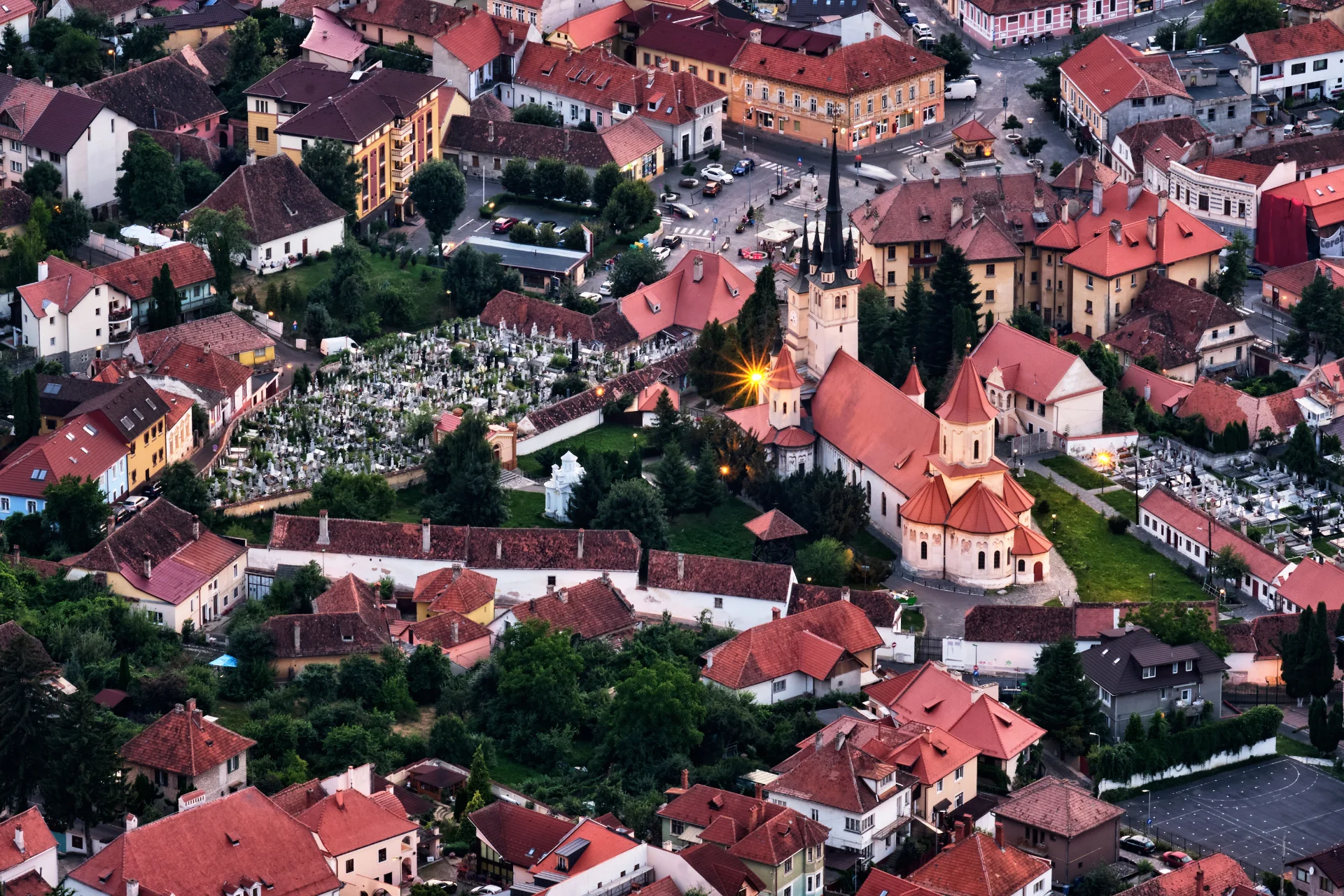
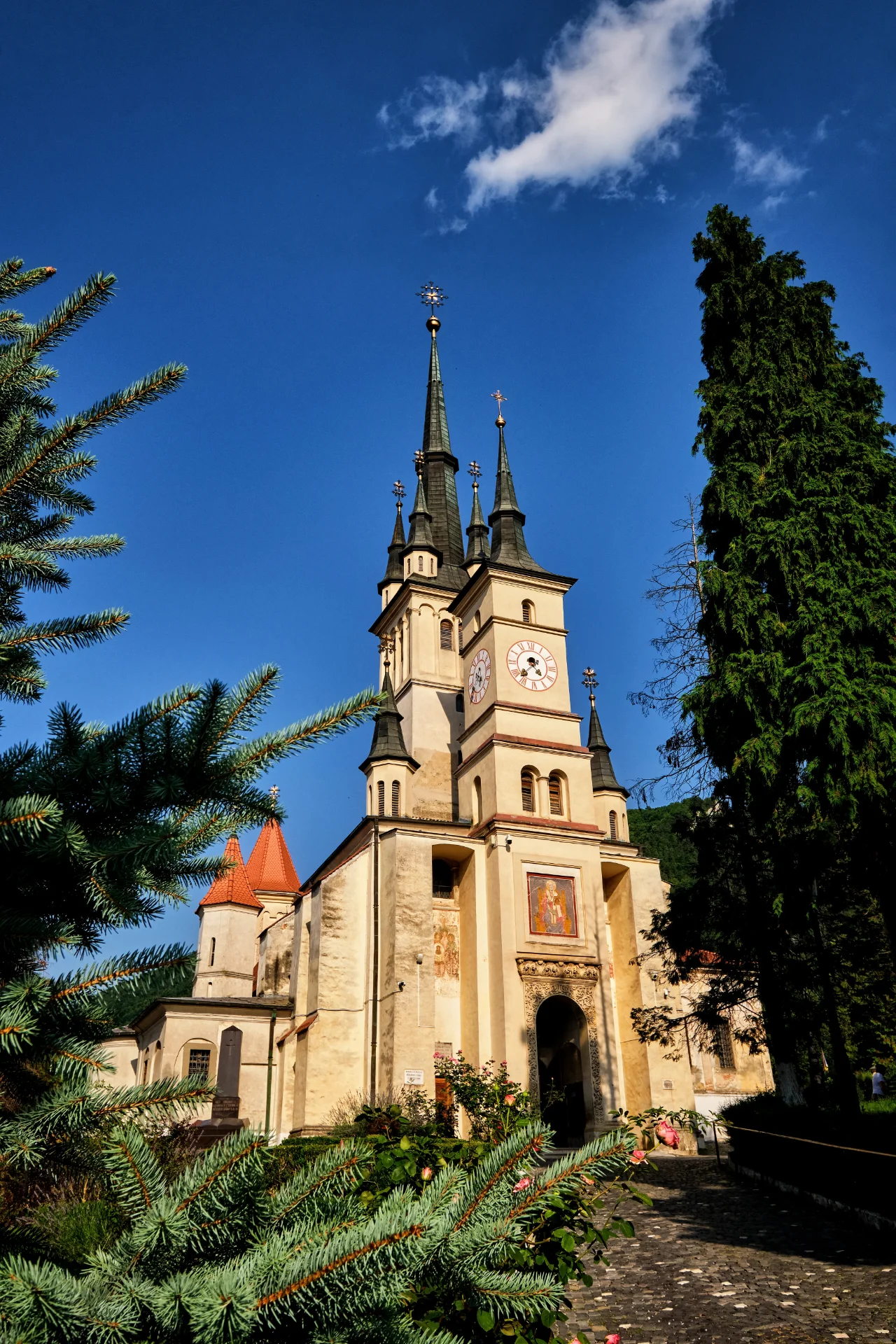
In the southwest part of the medieval fortress we explore the old Romanian quarter, known as Șcheii Brașovului. This area has a unique charm and an almost rustic atmosphere, with smaller houses along narrow streets, surrounded by wooded hills. There has always been a Romanian settlement here, even before the arrival of the Saxons and the construction of the medieval fortifications. We can find the most important monuments around the charming Unirii Square, starting with the “Sfântul Nicolae” Church. This is surrounded by a fortified courtyard and was built with the help of the ruler of Wallachia, starting with 1495, over an older one dating from 1292.
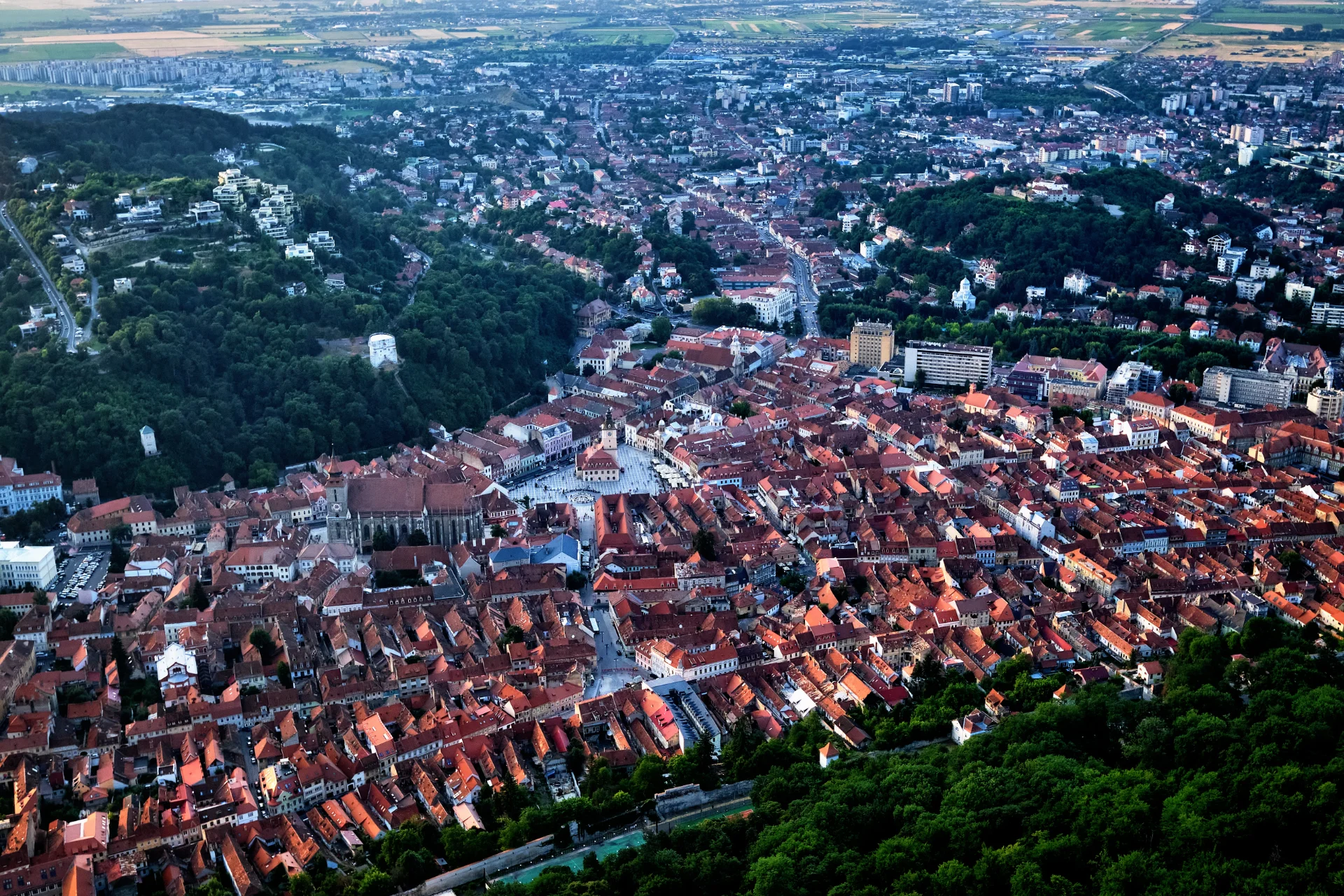
In the courtyard of this complex we can also visit the small First Romanian School museum, housed in a building dating back to 1870, but the first Romanian language classes took place here as early as 1583. The Șcheii Brașovului neighborhood is also known for a unique tradition called Junii Brașovului, in which several groups of young horse riders in traditional costumes parade through the streets on the first Sunday after Easter. We cannot complete the experience of traveling to Brașov without contemplating the famous panorama of the city from the heights of Tâmpa Hill. In the past, there was a fortress known as Brassovia, of which not many vestiges remain, and today the area is a protected natural area. We can reach the top of the hill either by cable car or by climbing a tourist trail that starts near the medieval walls.
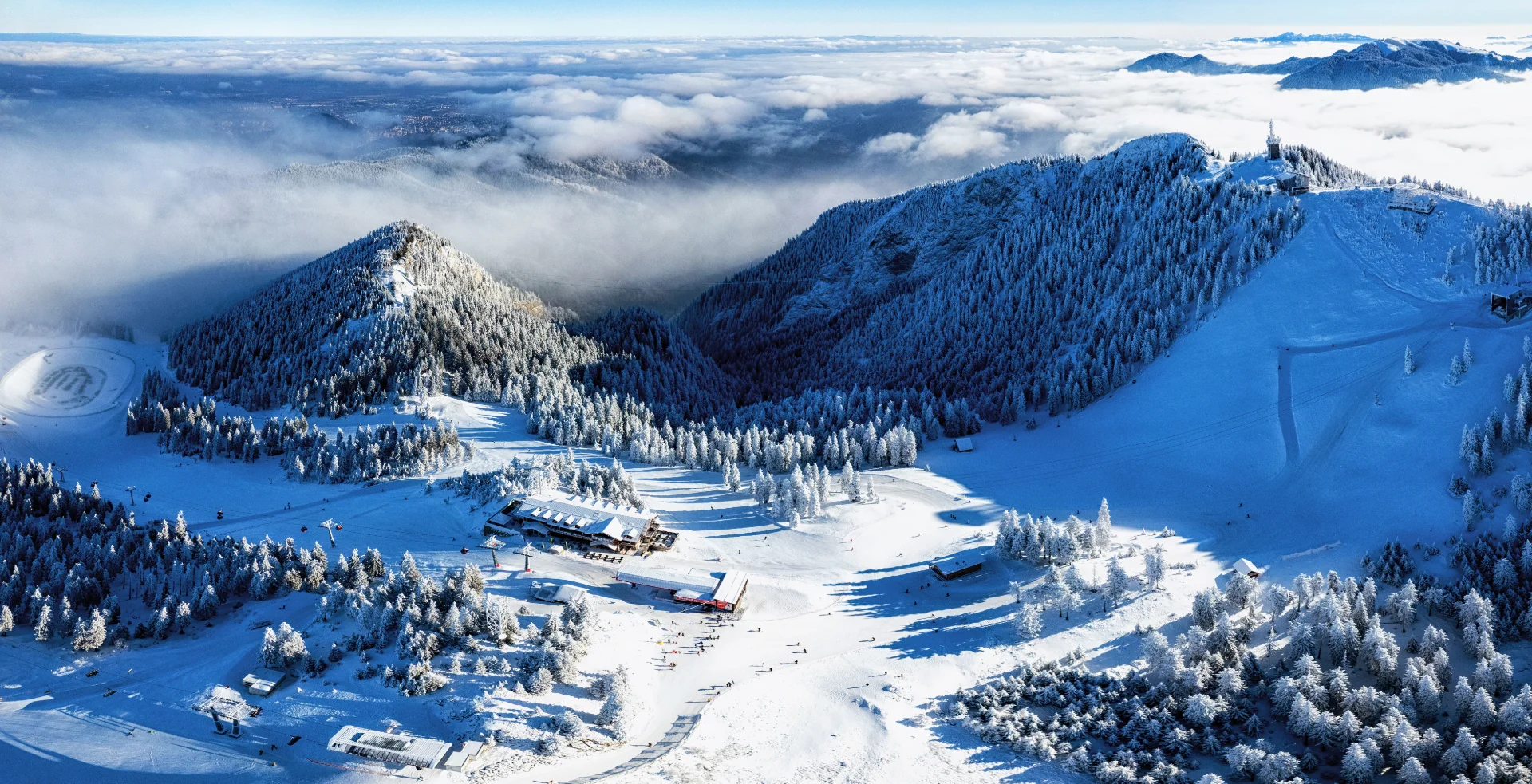
Located about 12 kilometers from the city, on the Postăvaru Massif, the Poiana Brașov resort is one of the most popular and spectacular in Romania, being a fascinating destination both in summer and especially in winter, with numerous splendid hotels, as well as some excellent ski slopes. From the resort we can climb the gondola that takes us close to the Postăvaru Peak (1,799 meters), where we are rewarded with incredible panoramas of the Land of Bârsa area and the surrounding mountains. From the elegant streets of Brașov, we head towards the enchanting paths of the Ciucaș Mountains, where we arrive in less than an hour and which greet us with their spectacular wonders…
Sights and Experiences
Places to See and Things to Do in the city of Brașov
Council Square
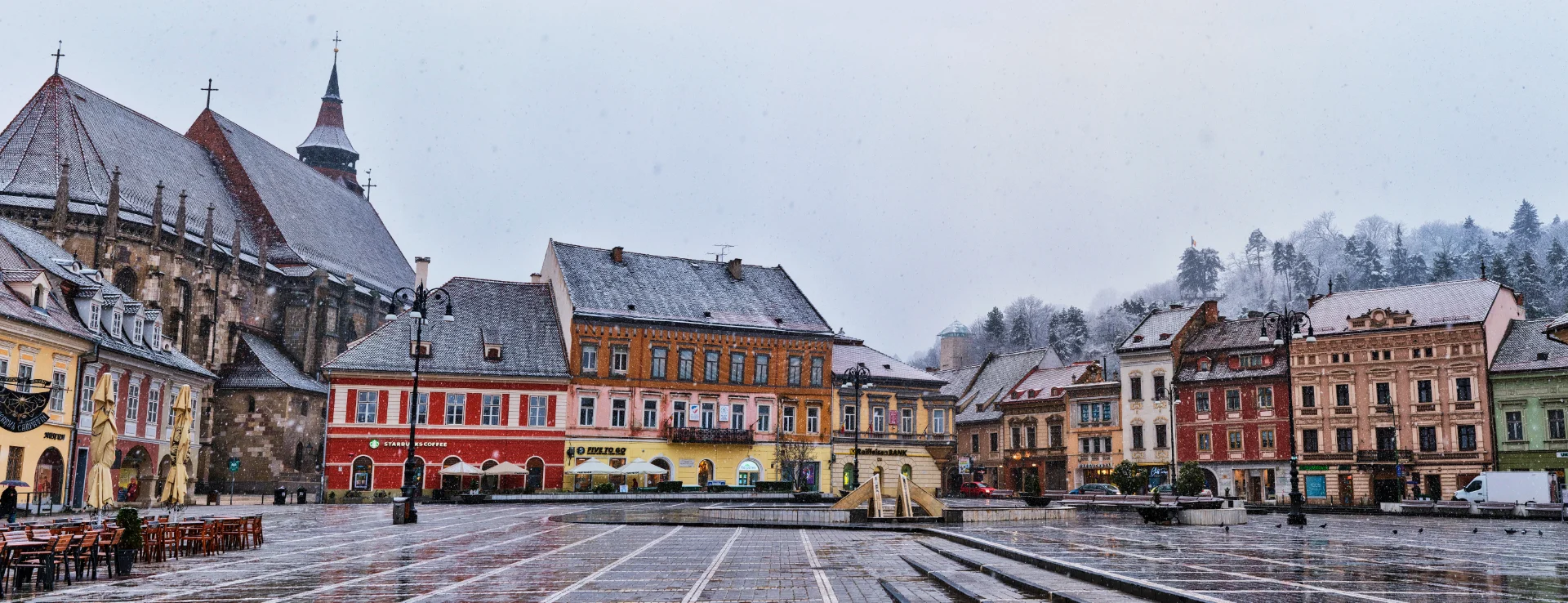
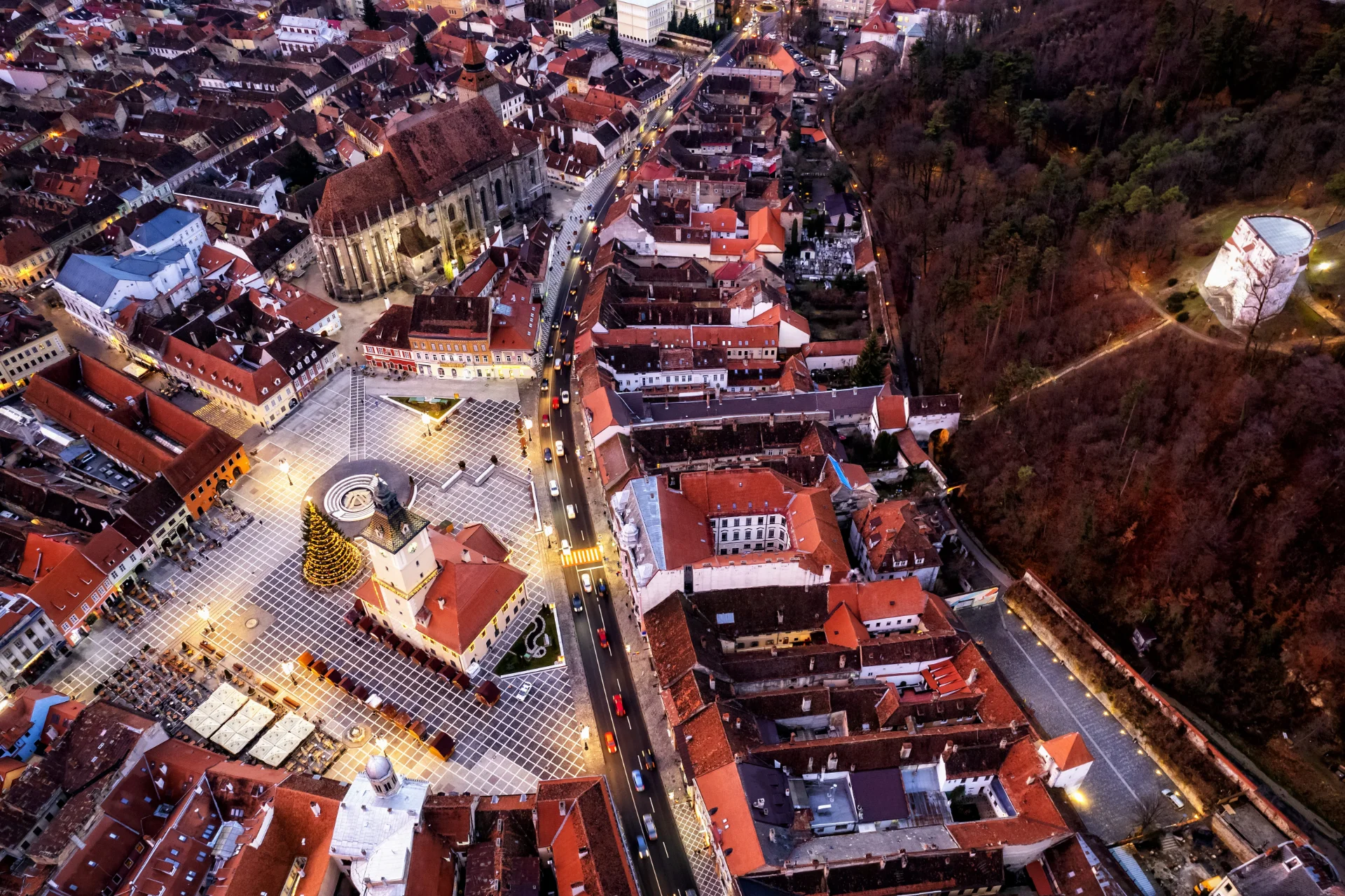
The commercial center of Brașov for over five centuries, Council Square was the meeting place for merchants arriving from all over the country and even from abroad. The city hall also functioned here in the past, being hosted by the current Council House. In the past, the square was a time and place of public executions, with a pillar of infamy, where all causes were tried, including those accused of witchcraft. For the most part, the late medieval appearance of the square has been preserved to this day, many of the multicolored and imposing buildings here being quite little modified over time. Approximately 30 historical monuments are part of this superb architectural ensemble, the most interesting old buildings being the Council House, the Merchants’ House, the Mureșenilor House, the “Assumption of the Virgin” Church. Filstich – Plecker House, Seuler House and others. Currently, Council Square is the venue for the most important events in the life of the city of Brașov, including the Christmas Fair, the “Golden Stag” Festival or the crafts fairs.
The Black Church
Visiting hours: Tuesday-Saturday – 10 – 19 (18 in winter) / Sunday & Monday – 12 – 19 (18 in winter) | Tickets: 25 lei (5€)/adult
A symbol of the city of Brașov, recognized beyond the borders of Romania, this imposing church of the Evangelical Lutheran community “owes” its name to the great fire of 1689, when its walls turned black. Considered among the most representative Gothic monuments in the country, it was built over a long period between the 14th and 15th centuries. It is also the largest Gothic building in Southeastern Europe and the second largest church in Romania, with a length of almost 90 meters, a height of over 40 meters and a capacity of approximately 5,000 people. Originally a Roman Catholic church built on the site of a Romanesque basilica, it is dedicated to “Saint Mary” and presents numerous impressive and unique architectural features. The superb interior is in Baroque style, having been completed at the beginning of the 18th century, after the destruction caused by the great fire. The spectacular organ was made by a German firm between 1836-1839, while the splendid neo-Gothic altar dates from 1866. Among the very valuable religious art objects of the church are the Feldioara Altar (15th century), the bronze baptismal font (1472), the Fresco of Mary (14th century), the Gothic portals, the pulpit and others. An amazing collection of very valuable carpets is also kept here, over 100 of which are exhibited inside the church. The preserved heritage is much larger, including the largest collection of oriental carpets in Europe, after those in the Topkapi Palace in Istanbul. The church frequently organizes delightful organ concerts, moments when the visits are interrupted.
History Museum
Visiting hours: Tuesday-Sunday – 9 – 17 | Tickets: 12 lei (2-3€)/adult
The Brașov County History Museum is housed in the Council House, the magnificent building in the center of Council Square. In the past, the city hall functioned here, the building being damaged by the great fire of 1689 and renovated in the following century. During the medieval period, it was also known as the “Trumpet Tower” and served as a prison. After the city hall was moved to a newer and larger building, it served to store the archive, and was then saved from demolition by the city community. The representative tower has seven floors and a height of 58 meters, and is also equipped with a clock brought from Germany in 1892. Currently, it houses the history section of the county museum, featuring fascinating exhibitions about the history of the city and the Land of Bârsa from ancient times. The cultural experience organized in the museum’s halls is truly memorable. This museum also includes several other spaces where various exhibitions are organized, these being the Graft Bastion, the Weavers Bastion and the Olimpia building.
The Bastions
Also known as the “city of seven bastions” due to the impressive fortifications that surrounded the medieval citadel, Brașov still retains many of its strong fortifications. The medieval bastions and towers create a fascinating cultural experience, introducing travelers to the atmosphere of centuries gone by. Most of these imposing structures can be admired around the historic center of the city, starting with the Weavers’ Bastion, located in the southwest and dating in its current massive form from 1750. The Graft Bastion was built in the north at the beginning of the 16th century, being maintained by the saddlers’ guild and ensuring the connection to the White Tower. The Bastion of the Postăvari is located in the southeast corner of the fortifications and was originally built by the goldsmiths’ guild in the mid-15th century. Nearby there was also the Bastion of the Cojocarilor (Red Tanners), but this was preserved in the northwest part of the fortress by the Bastion of the Blacksmiths, an impressive monument where the city archives are now kept. The oldest bastion in Brașov is believed to have been that of the Funarilor, located in the middle of the walls on the southern side. Other bastions lost over the centuries included those of the Belters and the Goldsmiths. Between these, the strong walls were defended by numerous towers, some of which are preserved to this day.
White Tower & Black Tower
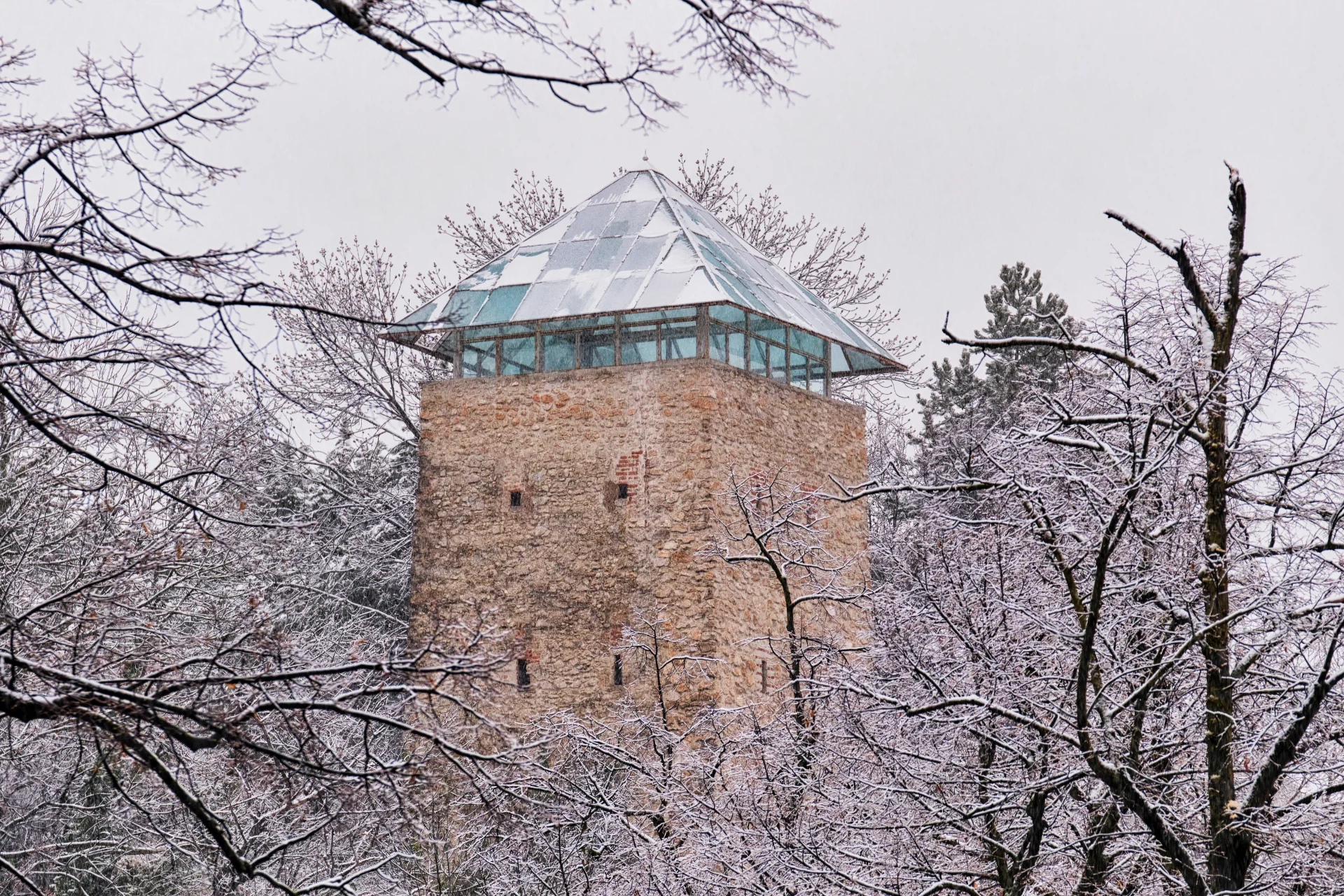
Of the many towers that defended the medieval fortress of Brașov, two are more interesting, due to their position outside the walls and their special architecture. They also offer unique views of the historic center, being built above the city on the Romurilor Hill. The White Tower was built in the second half of the 15th century, also having an observation role, the hill being deforested during the medieval period. The connection with the lower fortifications was made through a drawbridge to the Graft bastion. Just a few hundred meters away is the Black Tower, today surrounded by forest. It owes its name to its blackened appearance in the past, having been struck several times by lightning and set on fire. Both can be visited very easily along stairs and paths that climb the hill starting from După Ziduri Street.
First Romanian School
Visiting hours: Wednesday-Friday – 10am – 5pm / Saturday & Sunday – 11am – 5pm | Tickets: 20 lei (4€)/adult
Attested since 1497, but probably somewhat older, a Romanian-language school operated in the courtyard of the “Sfântul Nicolae” church in the Şchei neighborhood. The current building, declared a historical monument, dates back to the end of the 16th century, but before that, deacon Coresi printed the first books in Romanian here. The first Romanian grammar was also written here and the first folk books were translated. Anton Pann also arrived here, and it is considered that the “Sfântul Nicolae” church is the birthplace of the national anthem. The museum organized in the former school includes both spaces reproduced according to past eras, but also thousands of historical objects, including old and very rare books. The “Sfântul Nicolae” church in the same courtyard is in turn a very interesting sight, being the oldest Orthodox church in Brașov and the cultural center of the Romanians in the Land of Bârsa for several centuries. It was built starting in the 16th century, being constantly expanded and enriched with the help of the rulers of Wallachia and Moldavia. Among the special features, the valuable old painting stands out.
Fortress of the Strajă Hill
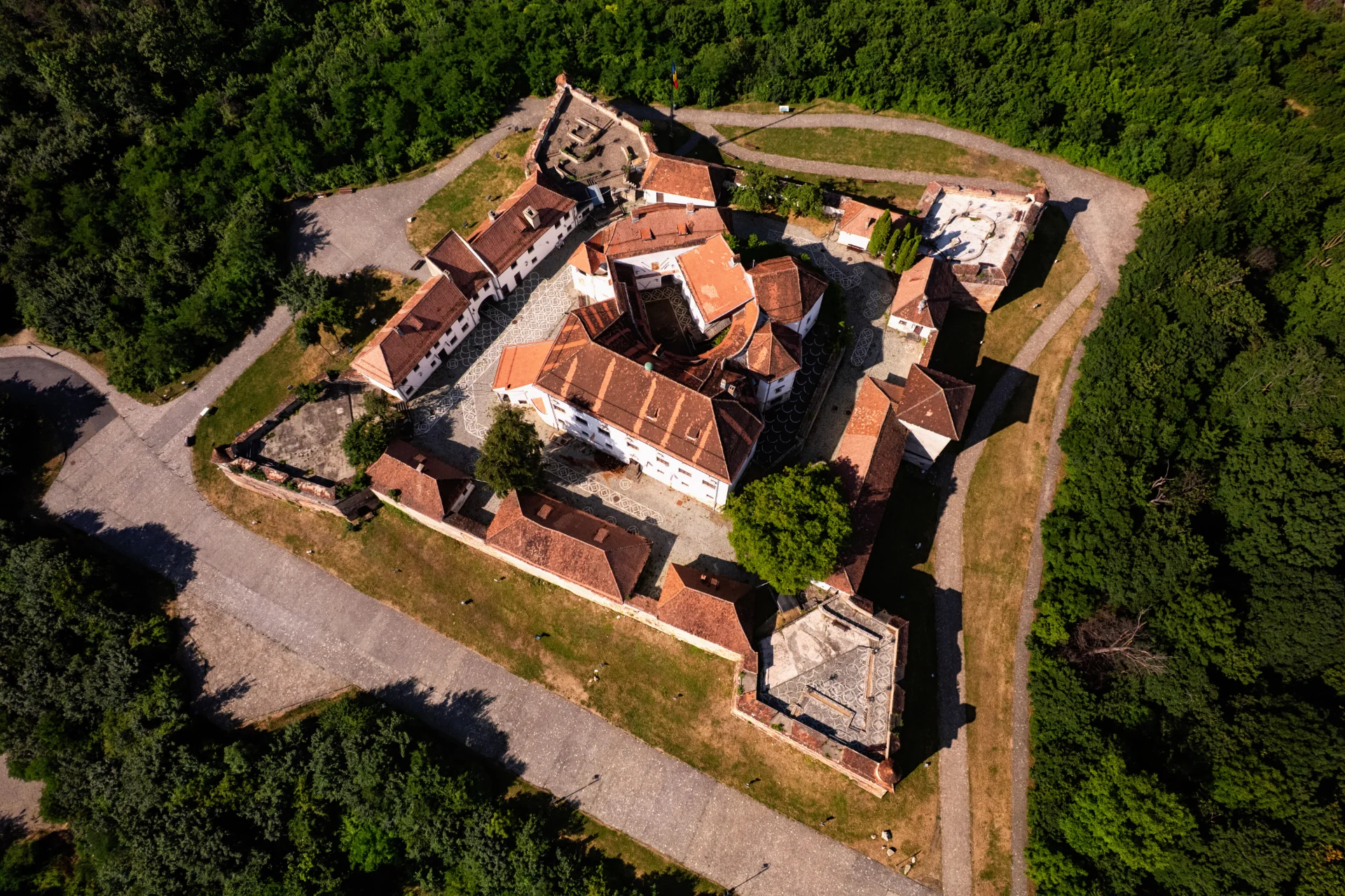
This impressive fortification was built starting in 1524 to protect the Brașov citadel and the roads leading there, Straja Hill being an important strategic point. Originally made of wood, the citadel was rebuilt in the early 17th century by Prince Gabriel Bethlen. Over time, it has also served as a warehouse, prison, and even a restaurant in modern times. The fortified complex includes a central horseshoe-shaped keep with three floors, surrounded by massive Italian-style bastions, arranged in the four corners and united by strong walls. Today, the citadel is in the process of restoration, and is about to be introduced into the tourist circuit.
Tâmpa Hill
Tâmpa Cable Car | Schedule: Monday – 12.30 – 21.30 / Tuesday-Thursday & Sunday – 10.30 – 21.30 / Friday & Saturday – 10.30 – 22.30 | Tickets: 30 lei (6€)/adult/one way – 45 lei (9€)/adult/round-trip
Part of the Postăvaru massif, Tâmpa Hill dominates the historic center of Brașov to the south, rising to a height of almost 1,000 meters, 400 meters above the buildings in the city. In addition to the special landscape interest that the unique views from the top create, the hill is also a protected nature reserve, containing an impressive biodiversity. However, the place is better known for the giant letters that announce the name of the city. Also from there you can admire the memorable panorama of the medieval fortress that unfolds at the northern foot of the hill. To get to the top, the easiest option is the Tâmpa Cable Car, which starts near the city fortifications and climbs in about 3 minutes to the top of the hill, near the Panoramic restaurant. In addition, there are several hiking trails that climb the sometimes steep slopes.
Hiking from Brașov
Being almost entirely surrounded by mountains, Brașov is not only an exceptional cultural destination, but also a center for tourism and leisure activities. Some thematic and hiking trails start right near the historic center of the city and head mainly towards the nearby hills. The most famous itinerary is the Serpentine Trail, which connects the city center (near the cable car station) with the top of Tâmpa Hill (red triangle / 2-3 km / +300 meters / 1 hour). The Gabony Steps route (yellow triangle) has the same destination and characteristics, but another itinerary that starts from the eastern side of the hill. There is also a route that goes around the hill to the west and passes by the ruins of the former Brassovia fortress. Other hiking trails start from Pietrele lui Solomon, an interesting rock formation located in a valley west of the Șchei neighborhood. From here, travelers can climb to the Poiana Brașov resort and Postăvaru peak on the old Poiana road or through Poiana Nisipului.
Poiana Brașov
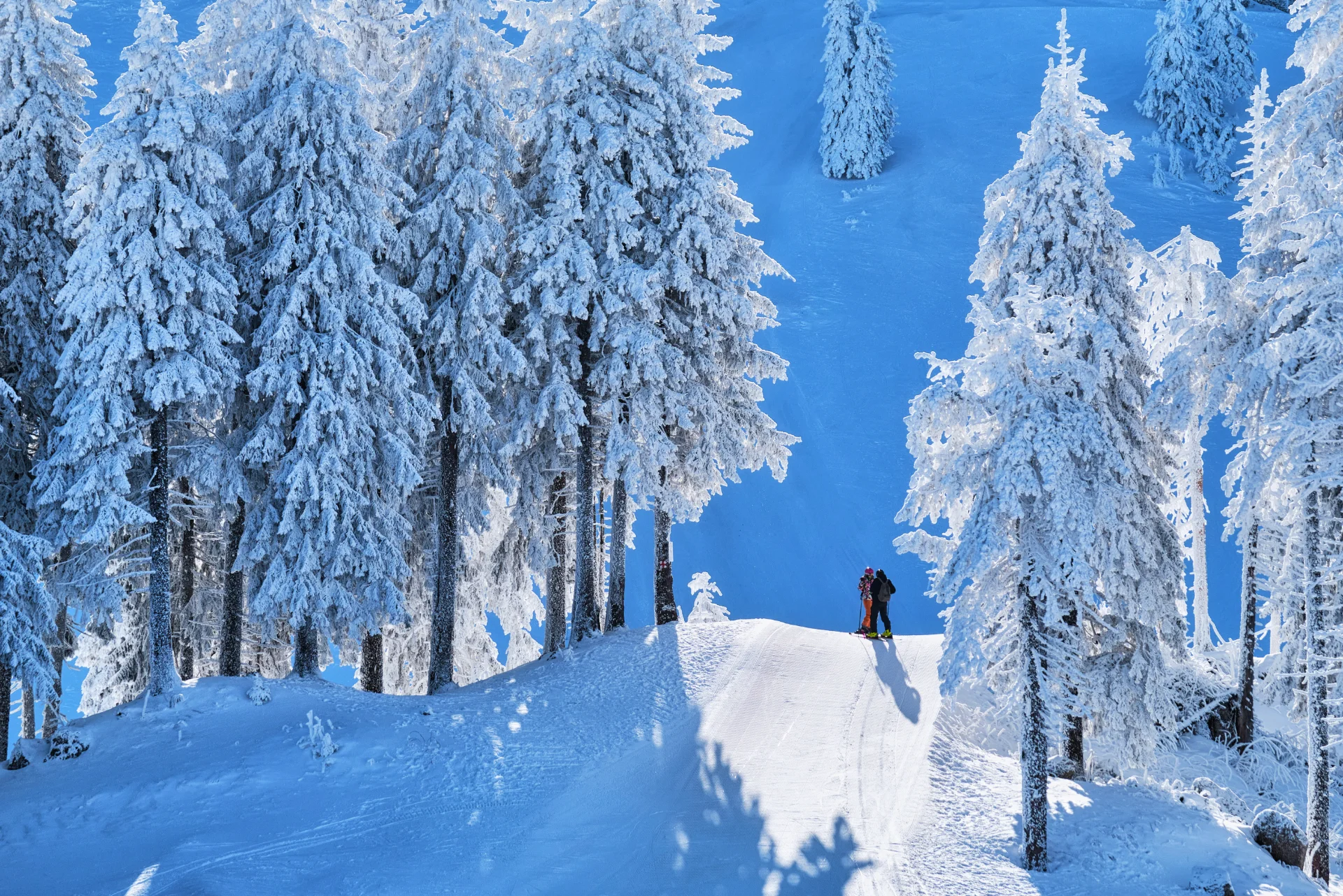
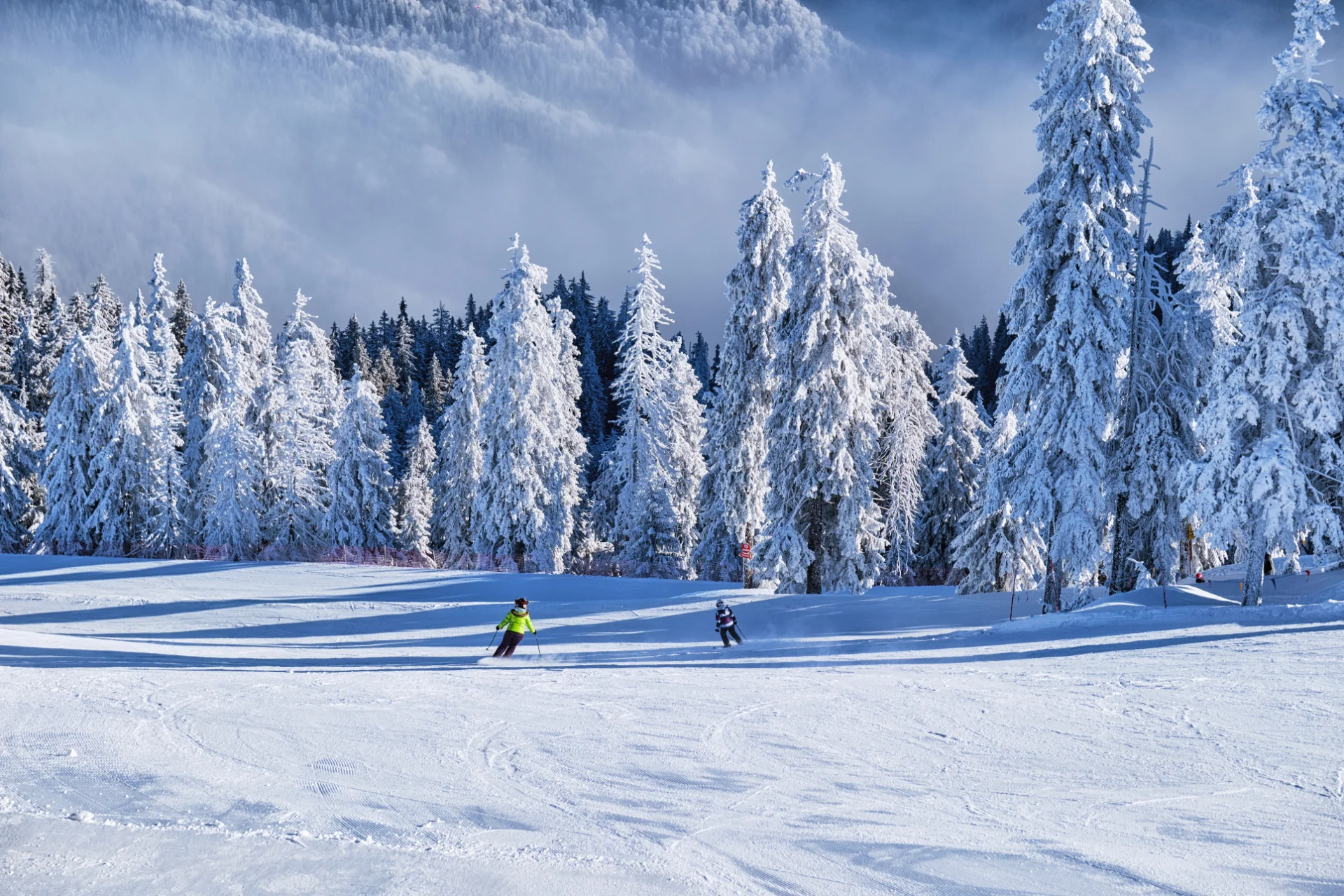
One of the oldest tourist resorts in Romania, Poiana Brașov has been hosting passionate skiers for over a century, even though its true development to today’s grandeur has taken place mainly in the last decades. Benefiting from its privileged location and modern infrastructure, the Poiana Brașov ski area is constantly developing, adding new slopes and services to the already complex offer. The resort offers 10 approved slopes, all of which are equipped with various cable transport facilities and artificial snow (the Bradul slope has night snow).
The Lupului (black) slope is 2,600 meters long and is intended only for experienced skiers, with an appreciable difference in level (over 700 meters) and technical sectors. The SubTeleferic slope is also of advanced level (black) with a length of 2,200 meters and a difference in level of over 600 meters. Another difficult slope is Kanzel, with a length of only 300 meters, but a difference in level over 100 meters. The Drumul Roșu slope is the longest in the resort, with almost 5 kilometers in total length (difference in level 700 meters) and an intermediate level (blue).
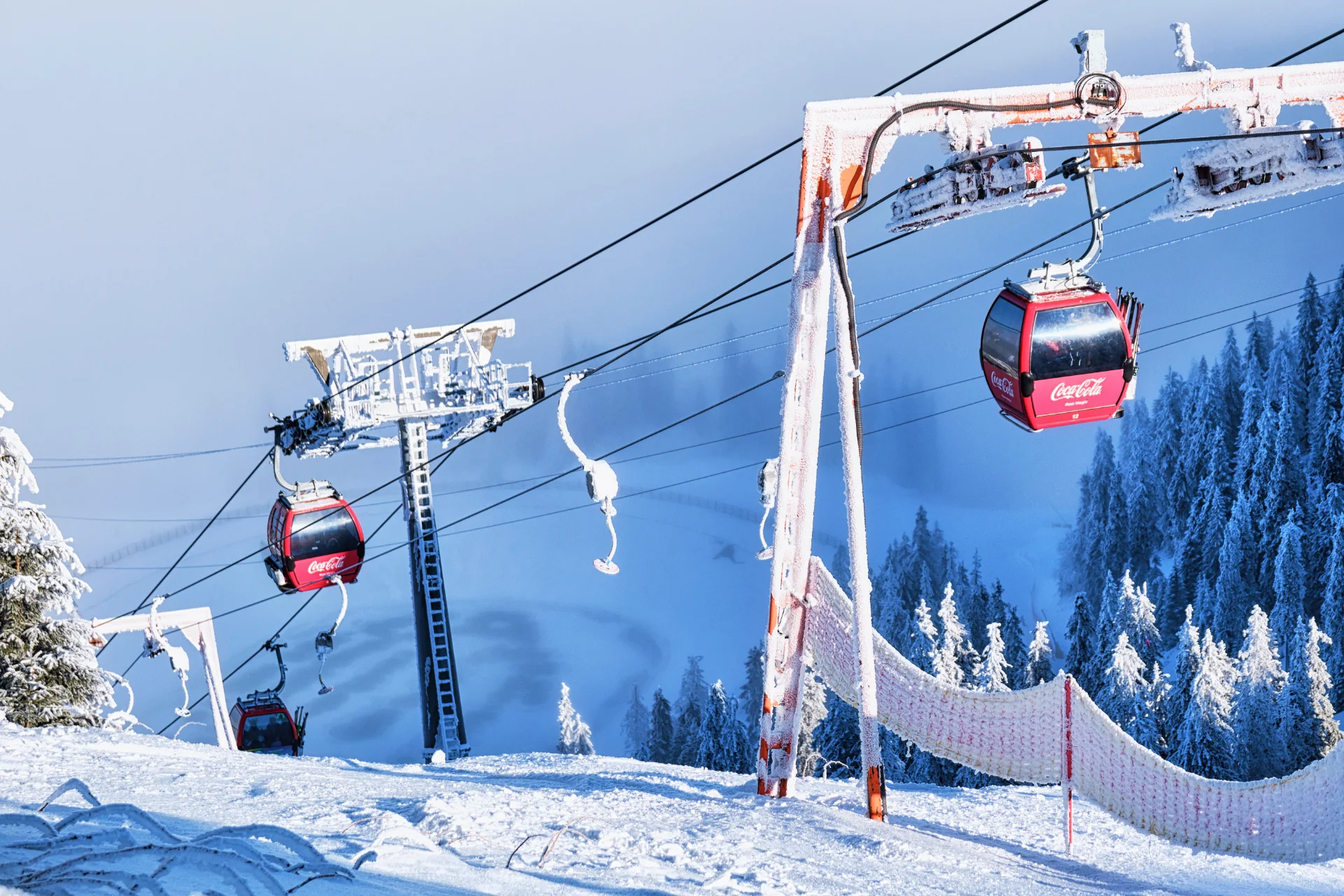
A little more difficult is the Sulinar slope (red), with a length of over 2,800 meters and a difference in level over 600 meters. Some of these slopes also have connection options or common sections with others. Skiers are transported by several modern transport facilities. The Capra Neagră cable car starts near the Bradul slope, in the eastern part of the resort and climbs to near the Postăvaru peak, where the Kanzel, Sulinar and Drumul Roșu slopes begin.
The Kanzel cable car starts from the resort (near Teleferic Grand Hotel) and goes up to the ridge of the massif, providing access to the Sulinar and Drumul Roșu slopes. The Postăvarul Express gondola starts from the same place and stops before the ridge, near Cabana Yager, providing access to most of the slopes. There are two more chairlifts (Lupului and Ruia) and several ski lift installations in the resort. The Bradul (480 meters) and Stadion (300 meters) slopes are located right in the resort and are dedicated mainly to beginners (blue), being served by ski lift installations.
Other Interesting Discoveries
Lesser known places and activities in the city of Brașov
Rope Street
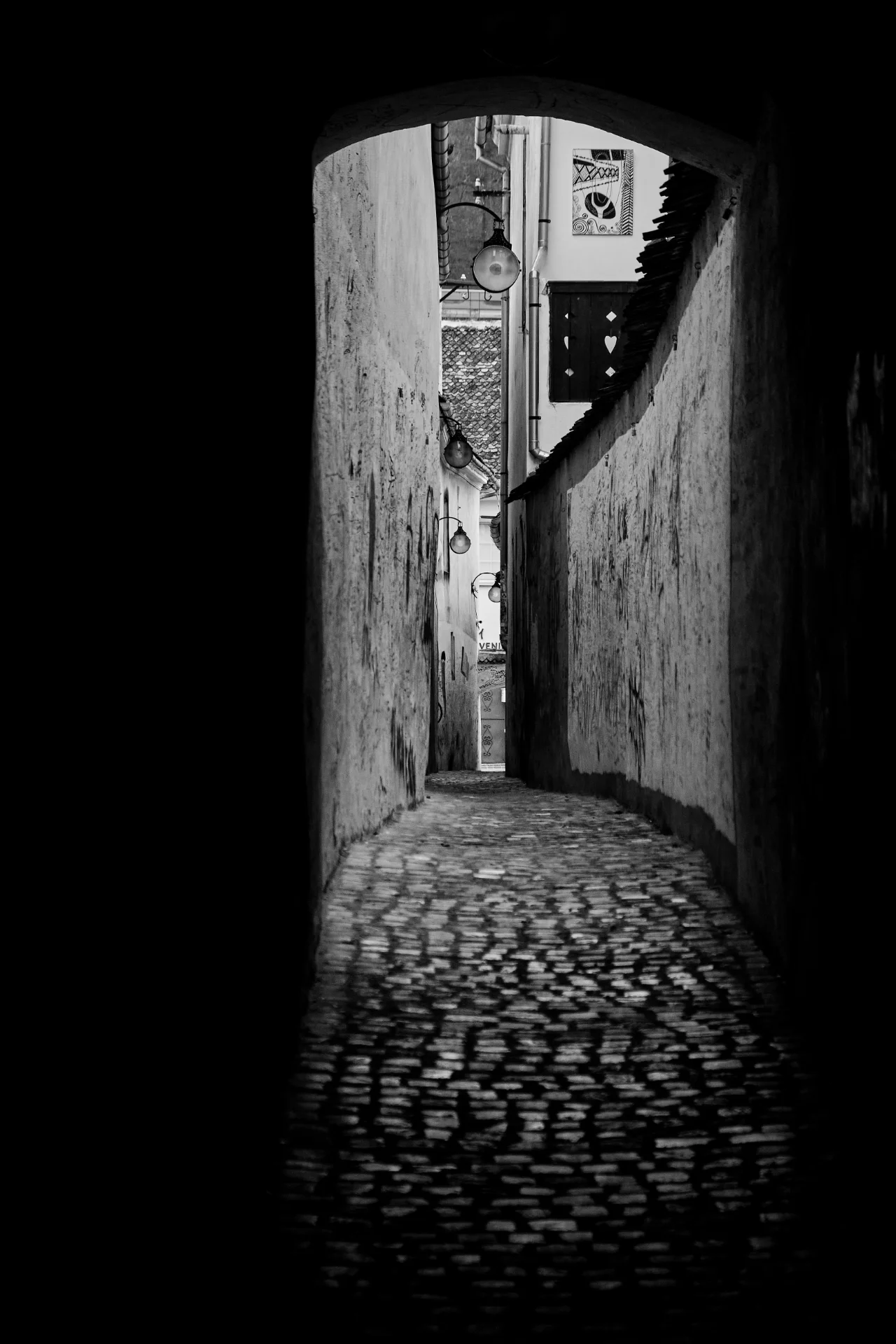
Representing an old corridor that delimited two areas of the medieval fortress and was used by the city’s firefighters in interventions, Rope Street is considered among the narrowest in Europe. Its width varies between 111 and 135 centimeters, and today it represents a unique attraction of Brașov, with lanterns that reproduce the atmosphere of the past, but also more or less artistic murals. It can be found between Poarta Șchei Street and Cerbului Street, approximately opposite the Black Church to the south.
Urban Civilization Museum
One of the newest and most exciting museum spaces in Brașov, it opened in 2009. The museum is located inside a historic building, an architectural monument located right in the Council Square. The medieval house has been restored and now houses fascinating exhibitions about the evolution of urban civilization in Brașov, with specific aspects of the life and occupations of the city’s inhabitants, starting with the 17th century and continuing until the 19th century. Among other things, the museum includes a commercial space, a Saxon bourgeois salon, an embroidery workshop and a photography studio, all perfectly recreated with authentic objects from the respective eras.
Opening hours: Wednesday-Sunday – 10 – 18 (summer) / 9 – 17 | Tickets: 20 lei (4€)/adult
Mureșenilor House
Located right in the Council Square in the historic center of Brașov, the building that houses the museum is a splendid architectural monument. It belonged to the Mureșianu family of intellectuals and was donated to the Romanian state for the organization of a museum space. At the center of the collection inside is the family’s invaluable archive, which includes over 25,000 documents covering many decades of the life of the city and the country. In addition to other furniture and works of art, here you can also admire documents related to the creation of the national anthem “Deșeaptă-te Române!”, created by Andrei Mureșanu.
Opening hours: Tuesday-Saturday – 9 – 17 / Monday – 11 – 17 / Sunday – closed | Tickets: 8 lei (2€)/adult
Junii Brașovului
A unique and fascinating tradition of Brașov is represented by the Junii Brașoveni, a very old custom from the Romanian neighborhood of Șchei that continues to this day. They are represented by groups of riders who have a ceremonial function, but are also legally organized to preserve and promote traditional customs. Although they also carry out other activities, the most famous event is the Descent into the Citadel. On the first Sunday after Orthodox Easter, groups of riders in traditional costumes take to the streets of the city, starting from Șcheii Brașovului, then through the old citadel and back, stopping at Pietrele lui Solomon, where a traditional celebration takes place. Following a pre-established order, the column parades through the streets and stops several times along the way, inviting onlookers to the final celebration. The seven groups of Brașov juni are the Young, the Old, the Curcani, the Dorobanti, the Brașovecheni, the Roșiori and the Albiori.
Brașov Visit Ticket
Travelers arriving in Brașov and wishing to visit as many cultural sites in the city and its surroundings as possible have the option of purchasing a single ticket now valid for 12 museums and museum spaces. Its price is much lower than the individual value of separate visits and is valid for 90 days from the moment of purchase. The experiences included are the Black Church, the History Museum (including the Weavers’ Bastion), the Art Museum, the ethnographic museums of Brașov, Săcele and Rupea, the Mureșenilor House, the Museum of Urban Civilization, the First Romanian School Museum and the Museum of Sports and Mountain Tourism. The ticket price at the beginning of 2026 is approximately 60 lei (12€).
Art Museum
Housed in a historic neo-baroque building on Eroilor Boulevard, near the city hall, the Brasov Art Museum is a fascinating experience. With an impressive heritage of over 4,500 works of art and other objects, it offers an introduction to the city’s cultural landscape, from 18th-century Transylvanian painters to 20th-century Romanian art. Temporary exhibitions and other cultural events are frequently held on the ground floor of the building. Upstairs, visitors can admire approximately 150 works of art arranged in six rooms, including masterpieces by renowned Romanian painters such as Nicolae Grigorescu, Ion Andreescu, Ștefan Luchian, Nicolae Tonitza and others.
Opening hours: Tuesday-Sunday – 10 am – 6 pm (summer) / 9 am – 5 pm | Tickets: 12 lei (2-3€)/adult
Museum of Ethnography
Housed in the same building as the city’s art museum, this interesting museum presents the ethnographic features of southeastern Transylvania. It contains a valuable and varied heritage of objects that illustrate the life and occupations of the inhabitants of the ethnographic areas of the region. Among the interesting exhibits are the superb traditional folk costumes, as well as old icons on glass. This museum also includes the section dedicated to urban civilization, as well as the local ethnographic museums in Săcele and Rupea.
Opening hours: Wednesday-Sunday – 10 – 18 (summer) / 9 – 17 | Tickets: 12 lei (2-3€)/adult
Ecaterina Gate
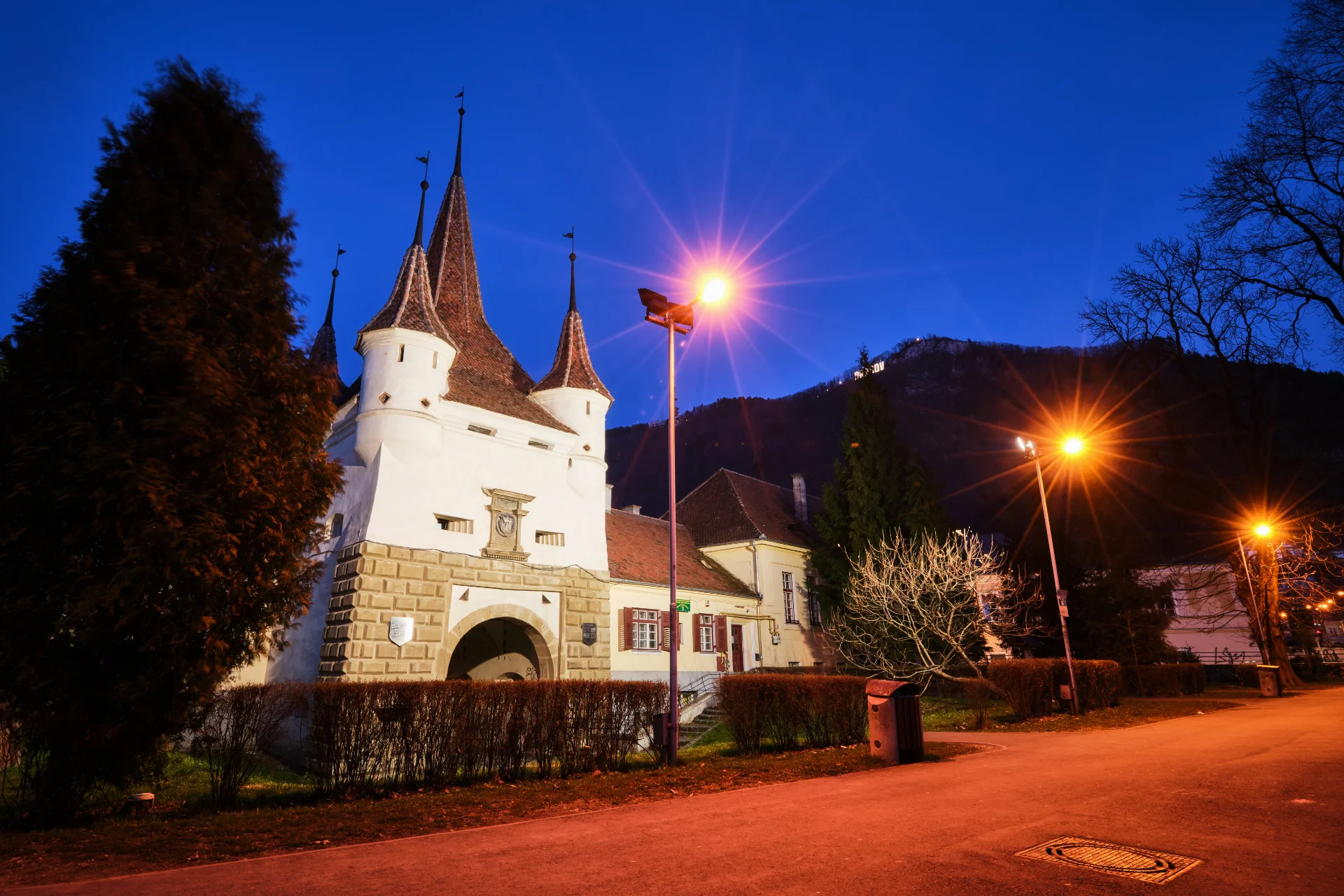
One of the most impressive and beautiful monuments of the medieval fortifications in Brașov, the gate was most likely built at the same time as the defensive walls, but was later rebuilt after being destroyed by floods. The name comes from the nunnery that existed here and in the medieval period occupied a much larger area, being defended by the tailors’ guild. Of the former fortifications that defended it, only the outer gate tower, built around 1559, is preserved. The current specific Renaissance appearance comes from subsequent renovations and modifications. The rest of the structures were demolished in 1827, and in their place the buildings that can be admired today were erected.
Museum of Sports and Mountain Tourism
This unique museum is housed in the Olimpia building, which dates back to 1894 and is representative of Brașov. With a predominantly wooden structure and a superb facade, it has been recently renovated. Inside, you can now discover the museum dedicated to mountain sports and tourism, an activity characteristic of the city of Brașov. The exhibitions include several sports activities in the mountain environment and span a period of approximately two hundred years, from the mid-19th century to the communist period.
Opening hours: Tuesday-Sunday – 9 am – 5 pm | Tickets: 10 lei (2€)/adult
St. Bartholomew Church
The oldest historical monument in Brașov is not located in the old fortified citadel under Tampa Hill, but a few kilometers to the north, in the Brașovechi neighborhood. Overlooked by most travelers arriving in the city, the Evangelical Church of “Saint Bartholomew” was built in 1223, in the early Gothic style. Most of the important changes to the monument’s architecture come from the 15th century, but the massive medieval structure has remained largely intact. Among the most interesting features are the interior painting with Romanesque and Gothic motifs, the classicist altar from the 19th century, the authentic furniture from the 17th and 18th centuries, as well as the small ethnographic museum.
Accommodation Recommendations
The best lodging options in Brașov
Rating 9.2 from 2.162 reviews!
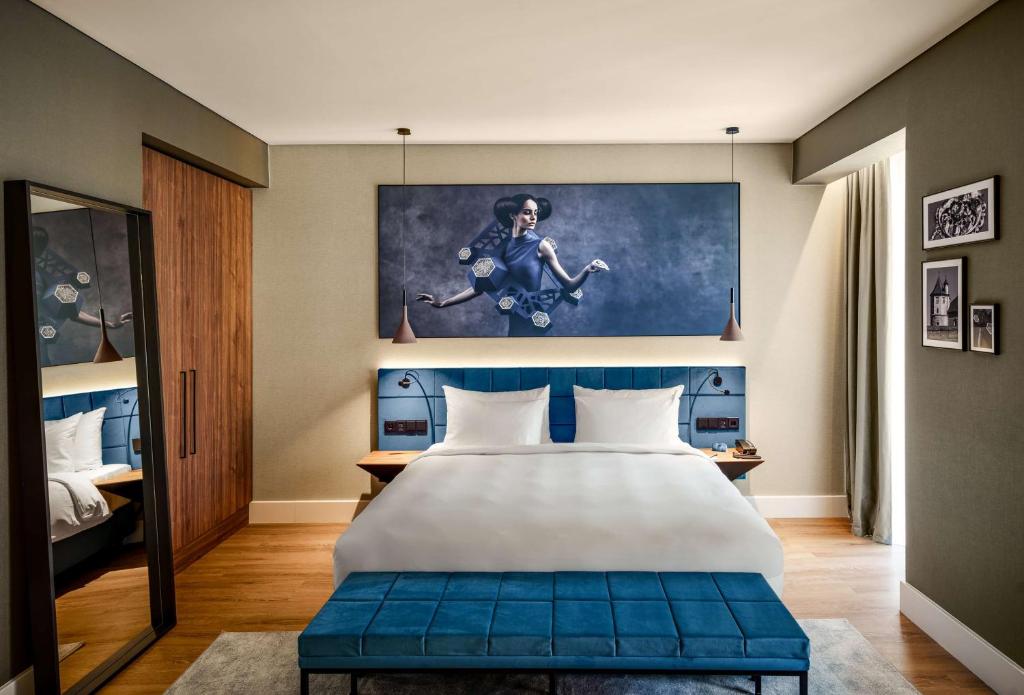
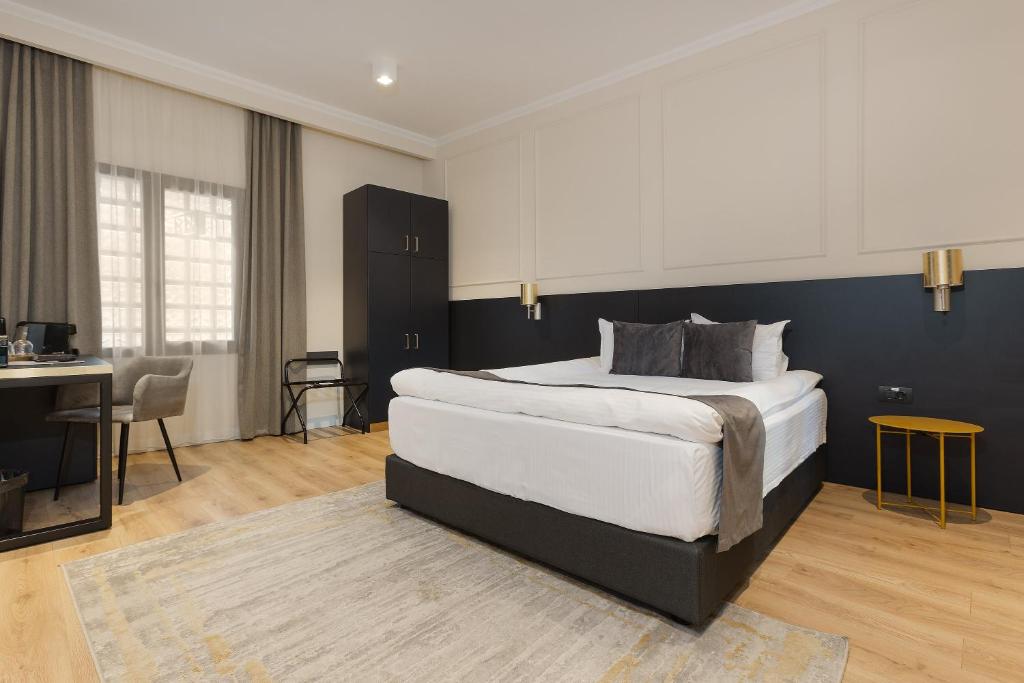
Located right in the tourist center of the city, next to N. Titulescu Park, this luxury hotel offers an extraordinary experience, in superb rooms with all the amenities, but also a modern restaurant with a rooftop terrace!
Eroilor Bd, no.23
Rating 9.7 from 1.815 reviews!
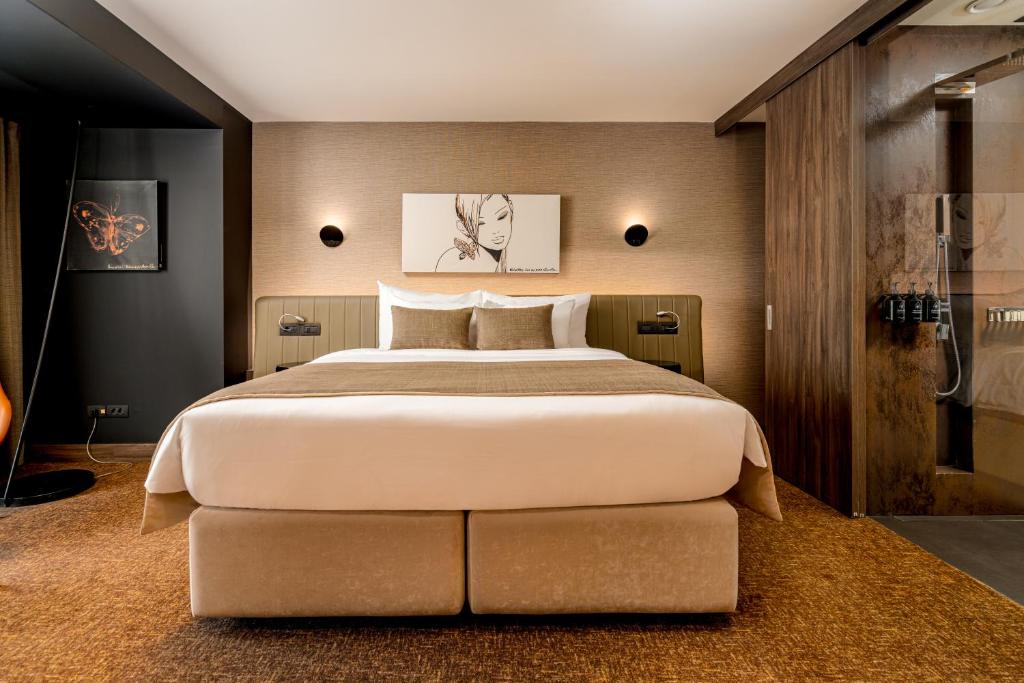
Located near the central train station in Brașov, just a few kilometers from the historic center, this prestigious hotel is highly appreciated for its exceptional facilities and services, including a restaurant and a spa center!
Gării Bd, nr. 7
Rating 9.7 from 983 reviews!
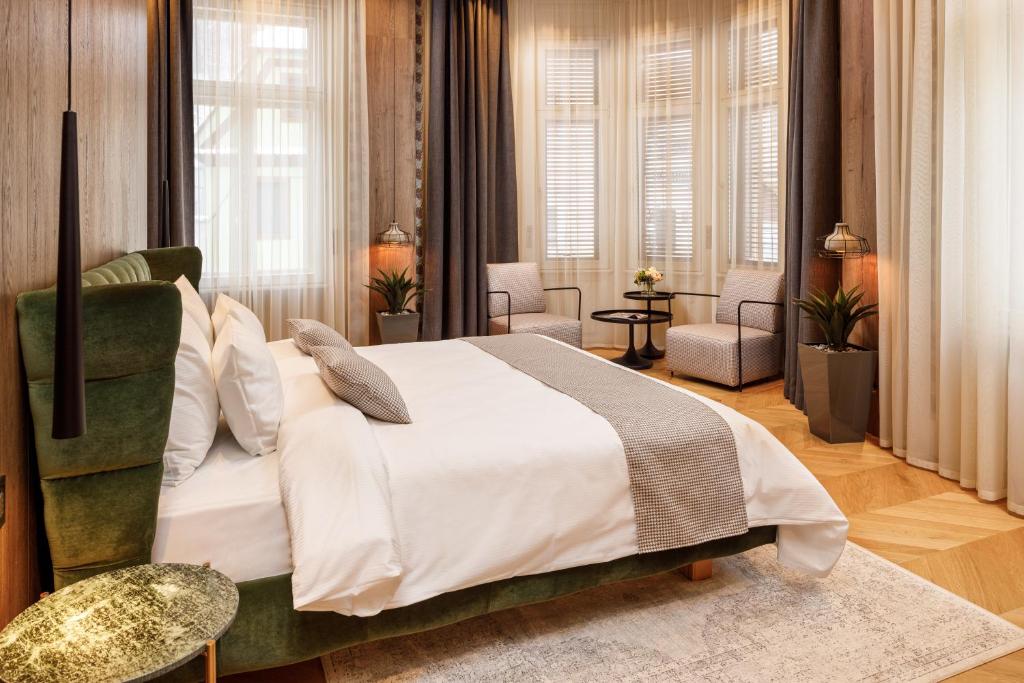
Located right in the historic center, a few minutes from Council Square, this superb guesthouse is housed in a historic building, offering spacious and welcoming rooms, breakfast, wellness center and more!
Peneș Curcanul St.
Rating 9.3 from 1.599 reviews!
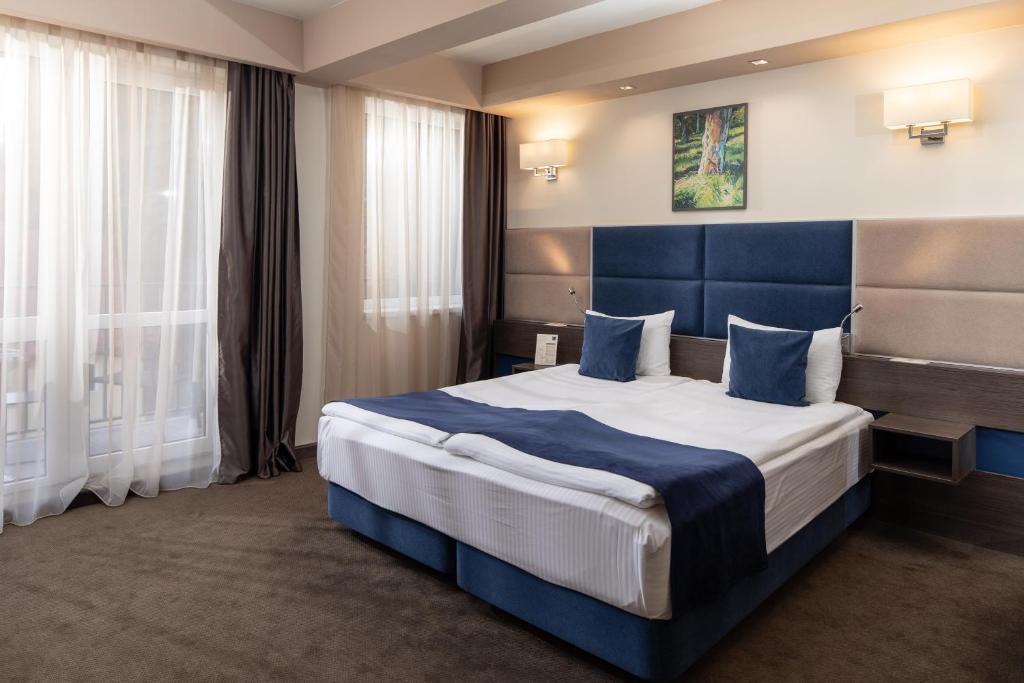
Located just a few steps from the old center of Brașov, in a quieter area, this special hotel stands out for its modern rooms with all utilities, breakfast and parking!
Dobrogeanu Gherea St., no.4C
Rating 9.3 from 714 reviews!
Located right in the historic center of the city, a few minutes from Council Square, the highly rated hotel has spacious rooms, equipped with all utilities and breakfast!
Valentin Wagner St., no.5
Rating 8.5 from 2.456 reviews!
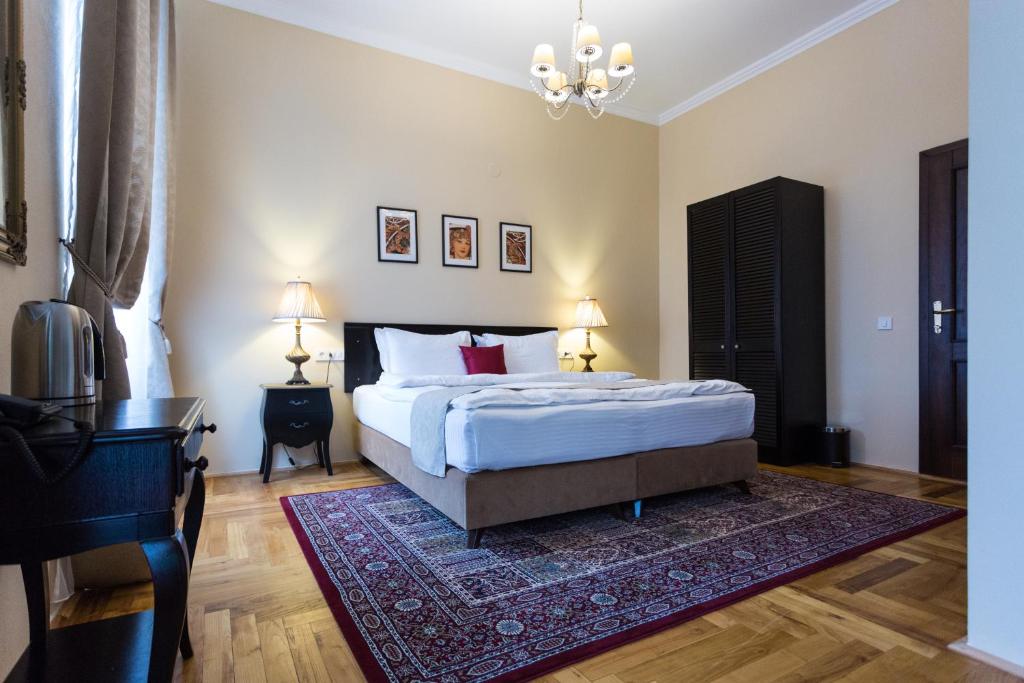
Housed in a historic 19th-century building, right inside the Brașov citadel, this charming guesthouse offers accommodation in rooms with a special ambiance!
Nicolae Bălcescu St., no.12