11
LIttle Transilvania
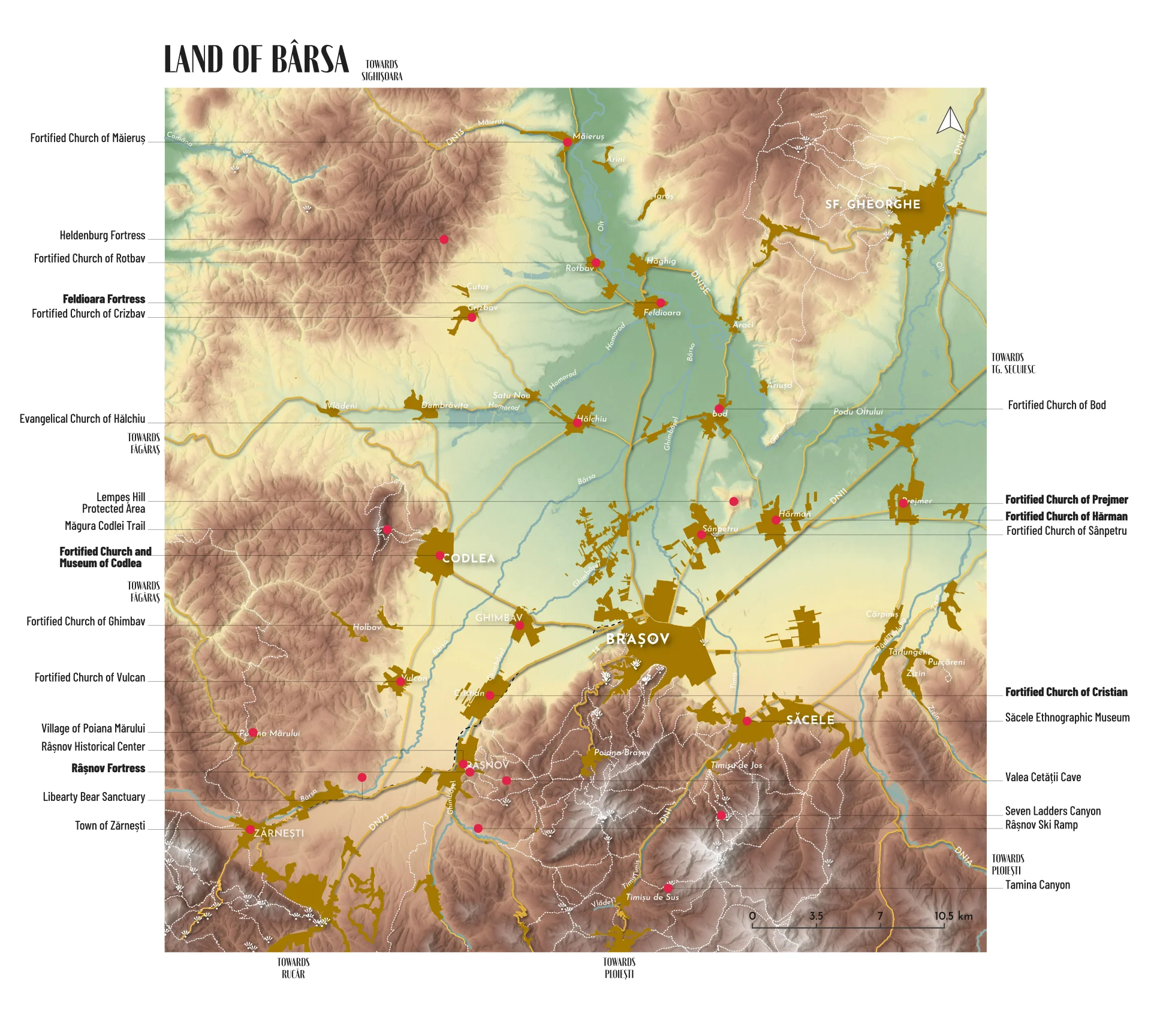
Land of Bârsa
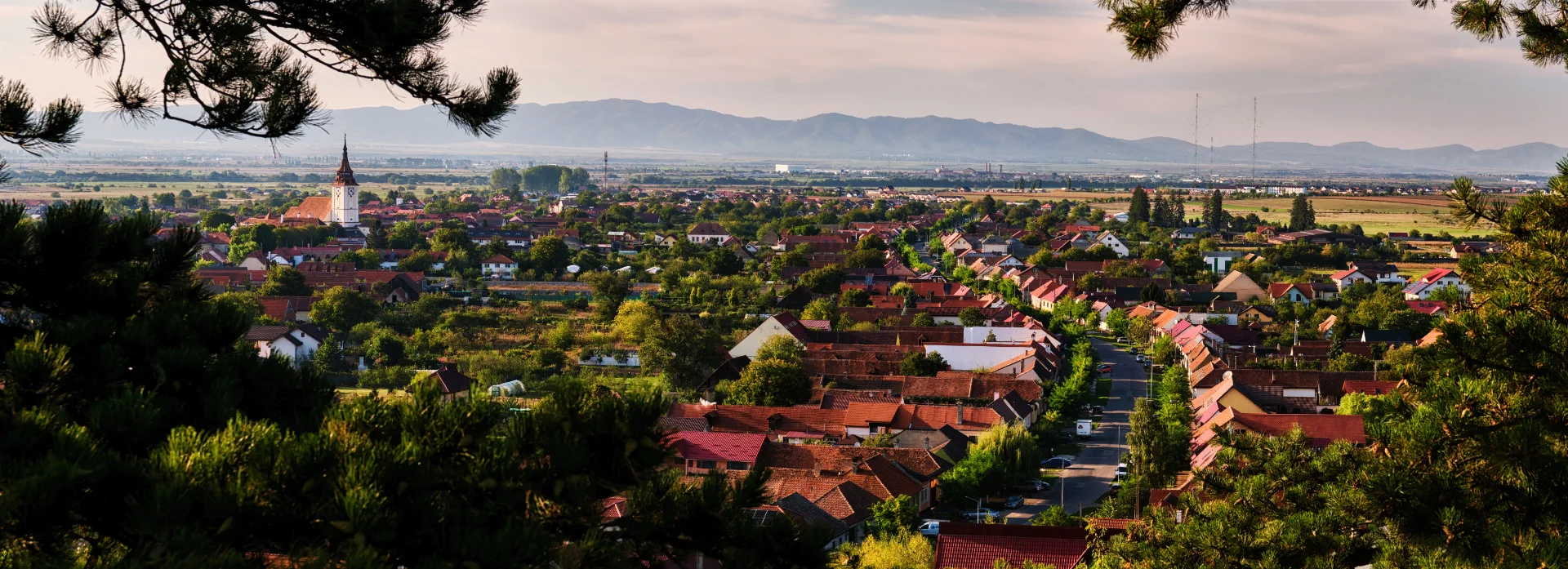
A crossroads of ideas and events for countless centuries, cultures and civilizations have met here, giving rise to legendary places. In a true natural amphitheater, surrounded by high mountains and vast forests, dozens and hundreds of fascinating stories from ancient times are staged, but always looking to the future!
Since ancient times, around the great fortress of Brașov there have been countless other settlements that gravitated around it, rising from place to place in the shadow of the Carpathians. Coming down from the mountains through Zărnești, the Bârsa gathers the rapid streams and soon joins the Olt river, together with the nearby valleys of Homorod, Măieruș, Ghimbașeșel, Timiș or Tărlung, forming a depression of particular beauty. Inhabited since ancient times, the Land of Bârsa has often received the nickname of “Little Transylvania”, representing on a smaller scale the natural and cultural essence of the entire region. In addition to the city of Brașov, it also includes several other nearby cities and villages, the population density being very high.
The Land of Bârsa is first mentioned in the early 13th century, when the King of Hungary donated the region to the Teutonic Knights for border defense. Even though they only held out for a few decades, they laid the foundations of several defensive fortresses, which were later developed by the Saxon colonists who arrived here in large numbers. Considering the size of the Brașov fortress and the large number of other fortified fortresses and churches, the Land of Bârsa has always been one of the most important and developed regions of Transylvania.
It is located between the Perşani, Bodoc-Baraolt, Vrancei, Ciucaş, Bârsei, Bucegi and Piatra Craiului mountains, and also includes several more important hills (Măgura Codlei, Lempeș). In addition to Brașov, Land of Bârsa also includes the cities of Codlea, Săcele, Ghimbav, Zărnești and the communes of Apața, Bod, Bran, Cristian, Crizbav, Dumbrăvița, Feldioara, Hălchiu, Hărman, Măieruș, Prejmer, Sânpetru and Vulcan. Although historically it also includes the commune of Șercaia, geographically it is included in the Land of Făgăraș. On the eastern peaks of the Perşani mountains we also find the idyllic villages of Poiana Mărului and Holbav, which can be easily visited from the Land of Bârsa.
Search for Flights to Romania with Booking.com!
We can easily reach this fascinating destination from any corner of the country, the access being excellent and very diversified. There are several European and national roads arriving here from all directions (DN1, E60, E68, DN1A, DN73, DN13, DN11), as well as an important railway line connecting this region to Bucharest and the rest of Transylvania. North of Ghimbav, the Brașov international airport was also opened recently, with tourist traffic in the area being intense throughout the year. Starting from Brașov, old villages and former fortresses stretch towards the horizon to the foothills of the surrounding mountains, and from place to place the tall church spires call us with stories and unsuspected treasures.
We begin our exploration in the village of Prejmer, one of the oldest settlements in the Bârsa region. In addition to the traditional Saxon architecture, in the center of the village we discover the imposing fortified church of Prejmer, which was started by the Teutonic Knights around 1218 and developed in the following centuries. Characterized by a beautiful late Gothic style and the only one in Transylvania with a Greek cross structure, it is the largest and best preserved fortified medieval church in Eastern Europe. The defensive structures were built starting in the 15th century, with walls 12 meters high and 3-4 meters thick, surrounding the church and including dozens of rooms inside.
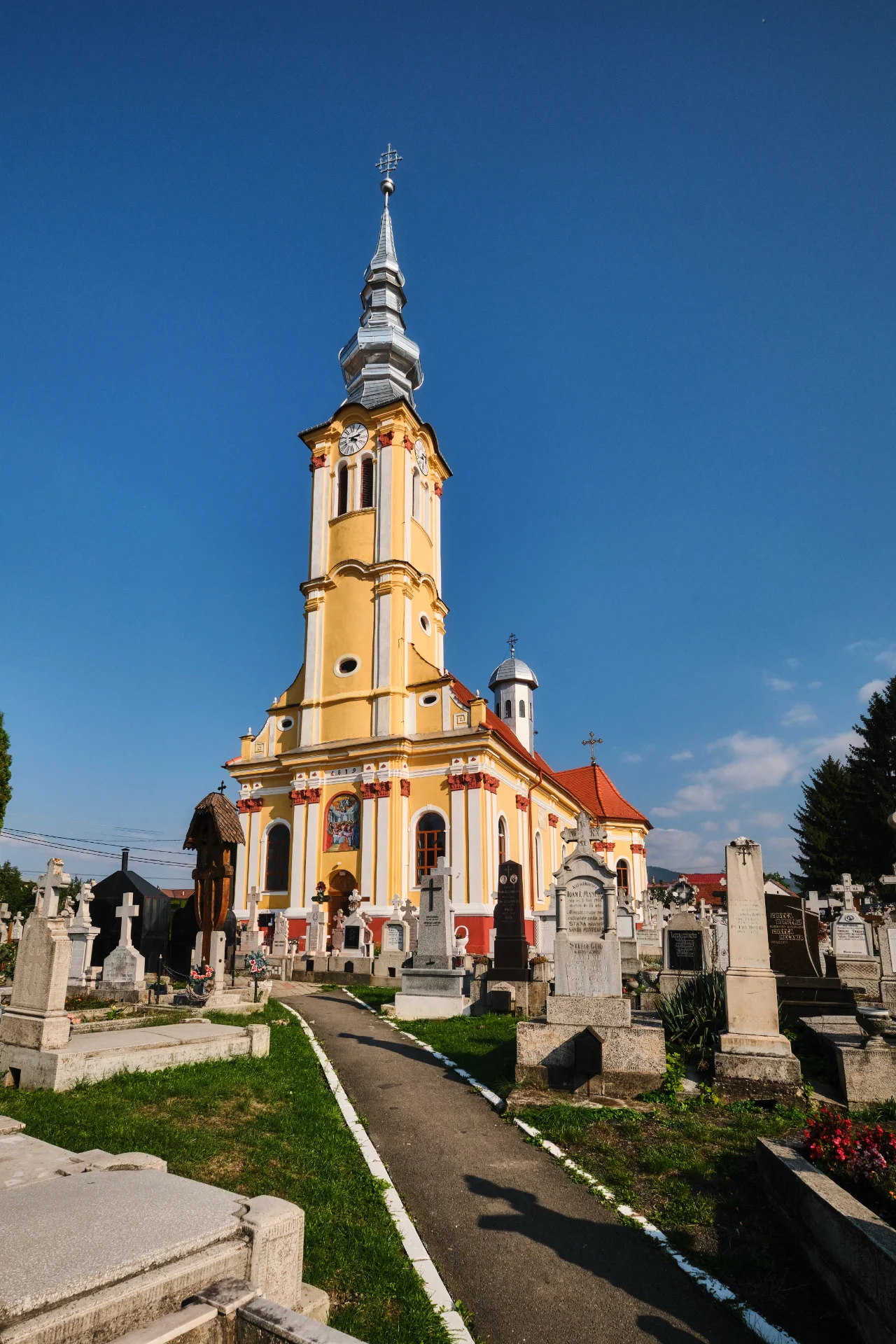
The fortifications are truly exceptional, withstanding no less than 50 Ottoman attacks. The spaces inside the walls, which are developed on four overlapping levels, were used in the past for living and storage, being inherited by the families in the community. Many rooms are still perfectly preserved and offer us an illustrative image of the village life of the past. Inside the church, we can admire the impressive altar, with superb paintings dating back to around 1450. In the village we also discover the Orthodox church “Saints Peter and Paul”, a historical monument from 1769, which still preserves murals over 200 years old.
Search for Lodging in the Land of Bârsa with Booking.com!
Just a few kilometers to the west, we stop in the village of Hărman, another old settlement in the region, mentioned since the 13th century. The fortified church of Hărman, even if it is not included in the UNESCO heritage, is one of the most interesting in Transylvania. The Romanesque basilica was defended in the past by 7 towers, a moat with water and defensive walls, the inner one being 12 meters high. The church was fortified since 1290, when the bell tower was also built. It was modified in Gothic style two centuries later, when living or storage spaces were created in the southern part of the church. Although it is no longer preserved, the outer wall also had storage spaces.
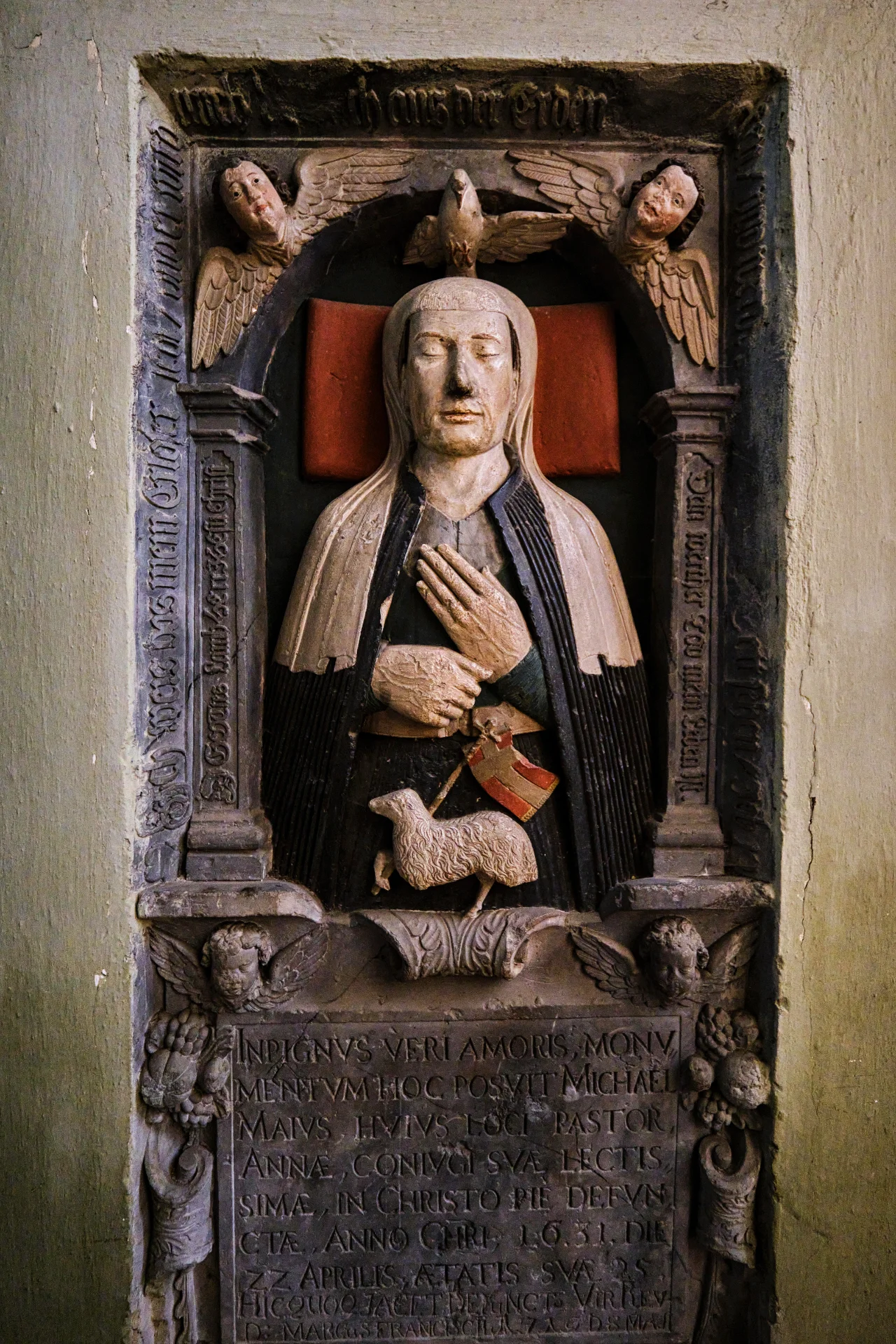
Near the villages of Prejmer and Hărman there are also two protected natural areas, eutrophic marshes with a multitude of specific plants, including some rare and endemic. A little further west and only 10 kilometers north of Brașov, the village of Sânpetru has been documented since 1240, having an extremely turbulent history. In its center we find the fortified church of Sânpetru, an impressive architectural complex. The evangelical church was built in 1794, over a much older one, whose spire collapsed. The surrounding fortifications were built starting in the 15th century, including the inner wall, the funerary chapel with interesting frescoes and remains of the two rows of outer walls.
The inner defensive wall is preserved in its entirety, with 5 towers and bastions that contain the old warehouses. The school and the old town hall of Sânpetru were later integrated into it. In the village we can also admire the Orthodox church “Saint Nicholas”, built in the 18th century and featuring interesting frescoes inspired by Brancove. Between the villages of Sânpetru and Hărman, a little further north, rises the Lempeș Hill, declared a botanical natural reserve. With a height of 704 meters, it is a pleasant location for walks and offers spectacular panoramas of the region.
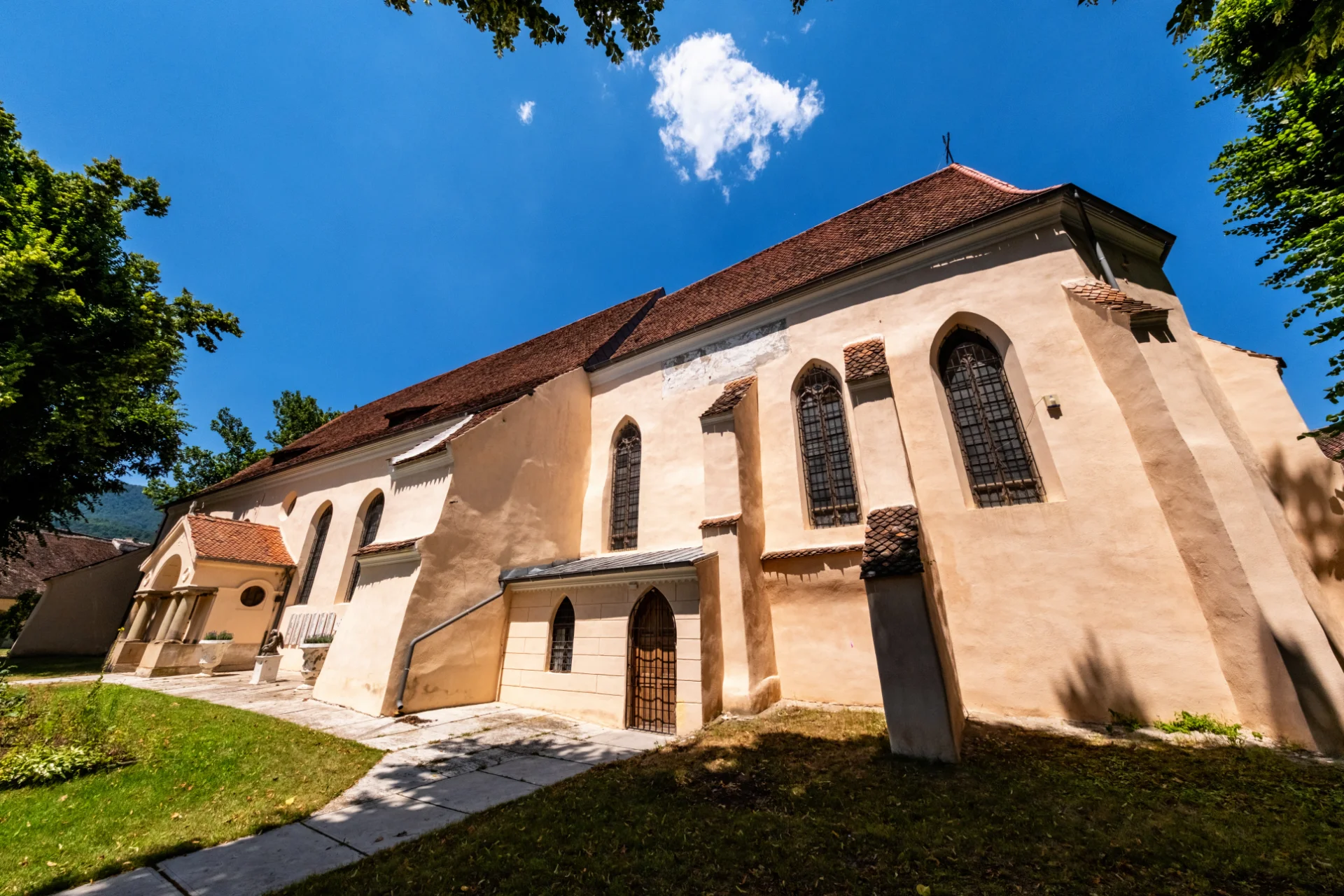
Continuing north, we can make a short stop in the villages of Bod and Hălchiu, which preserve two interesting historical monuments. The fortified church of Bod was built in the 18th century, over the ruins of the medieval church, which collapsed and was destroyed several times. Of the old building, only a Gothic baptistery from the 15th century and the bell tower remain. Inside we can admire a superb ensemble consisting of the altar and the organ dating back to the 19th century.
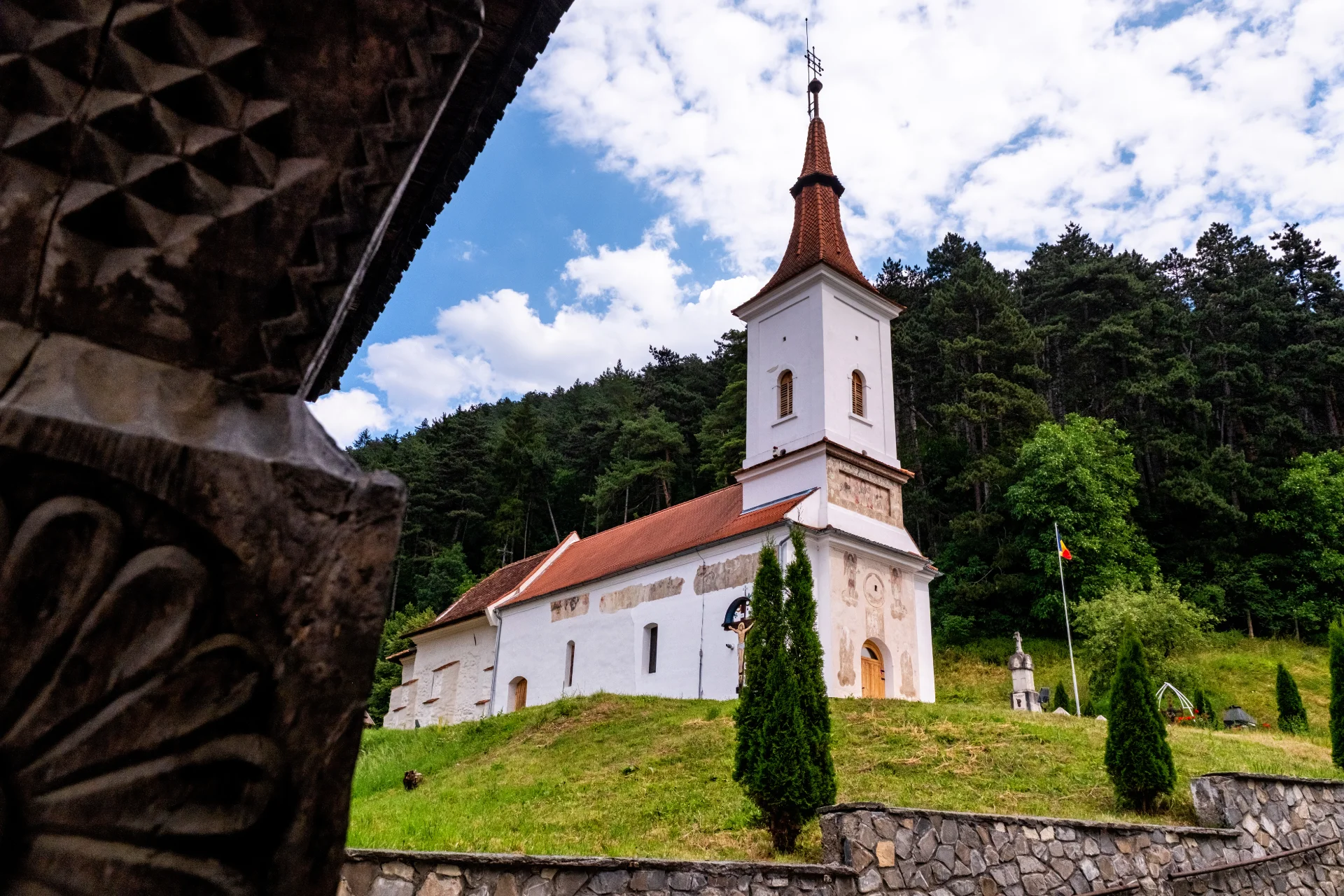
The Evangelical Church of Hălchiu was originally built in the 13th century, being defended in the past by a square bastion with four strong towers, demolished in 1894. The church was rebuilt in the 15th century and at the beginning of the 19th century, still preserving some impressive treasures. In addition to the oldest bell in the land of Bârsa (1434), here we can also admire the polyptych with Renaissance paintings, the choir and the organ, as well as the largest medieval altar in Transylvania, decorated with brightly colored paintings. Also in Hălchiu we find the Orthodox church “Sfinții Arhangheli”, which is over 200 years old.
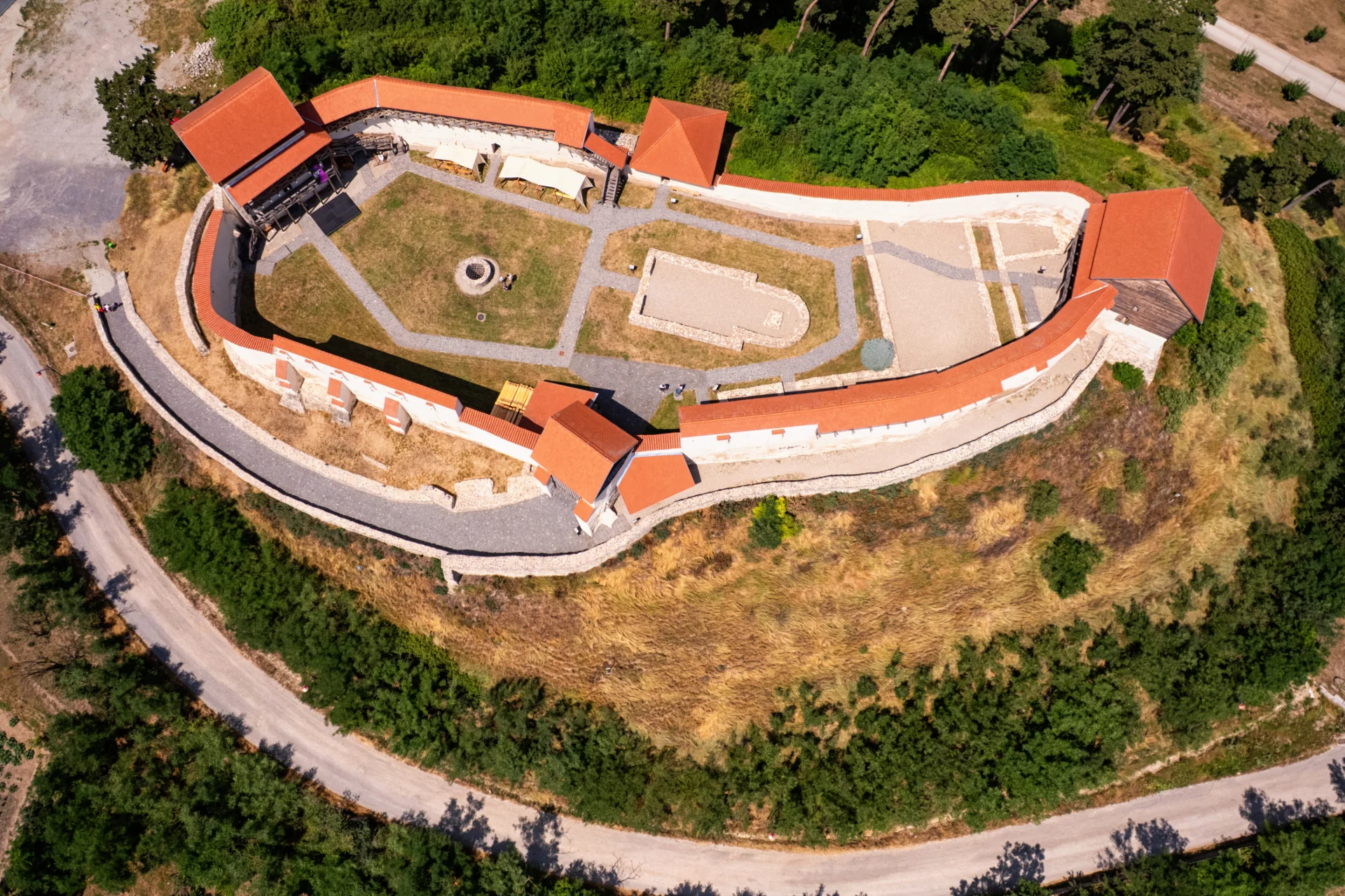
A little further north, near the confluence of the Bârsa and Olt rivers, we reach the town of Feldioara, whose history begins sometime before the 12th century, when the first Saxon settlers settled here, followed by the Teutonic Knights. The German name of the town also comes from the knights, Marienburg meaning “Saint Mary’s Fortress”. Over the following centuries, after the Teutons left, Feldioara was one of the most important fairs in the region, but it also went through many tragic events. The Feldioara Fortress, built on the hill east of the village, was first built with dirt and wood, later fortified by the Teutonic Knights, but not many elements from those times have been preserved. Only a few buildings that existed at that time are known, namely the Knight’s Hall and the Romanesque Chapel, the latter probably being included in the later Cistercian church.
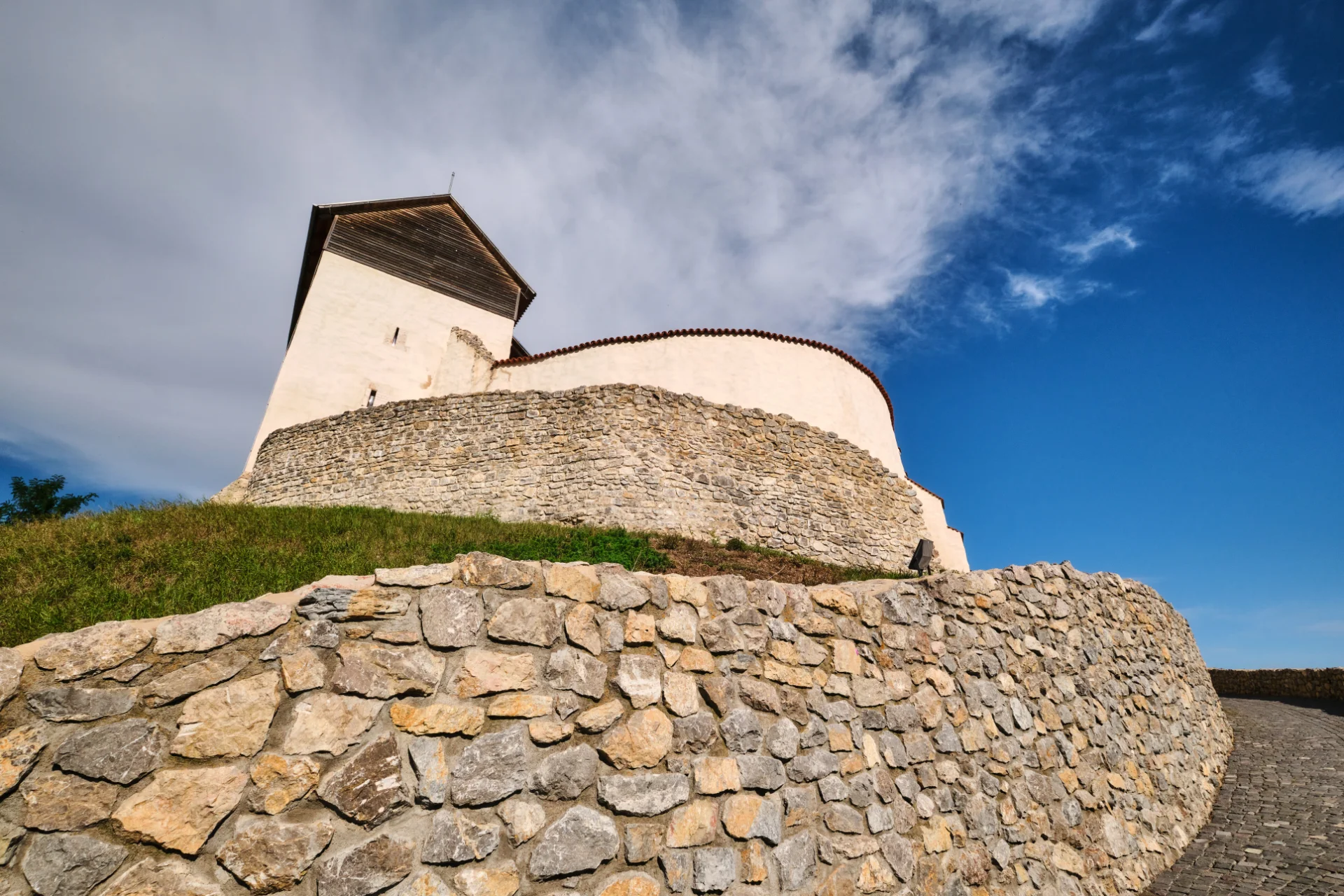
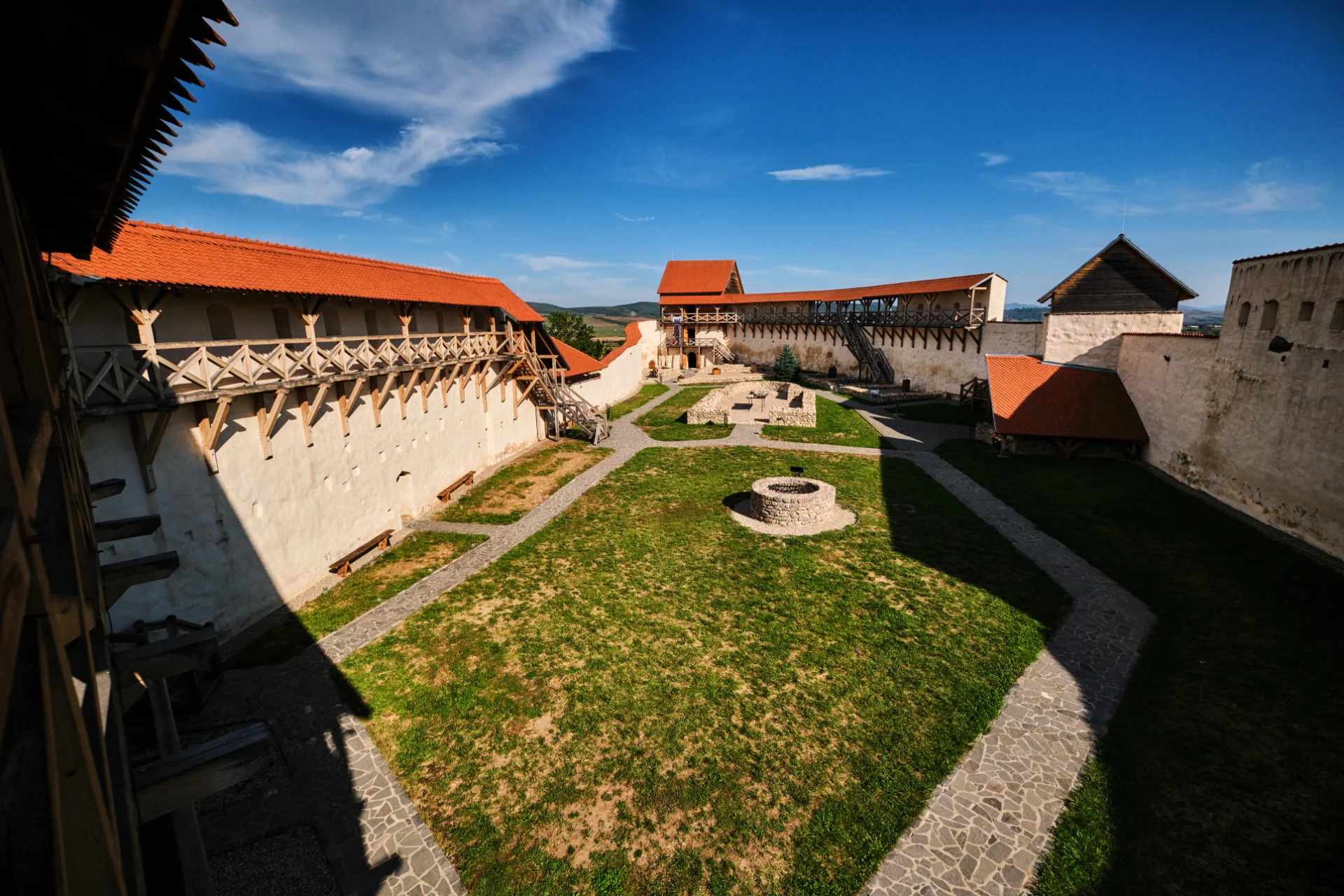
In the centuries that followed, the Saxon community rebuilt the peasant fortress several times, with strong walls and defense towers. The Feldioara Fortress that we are currently visiting is the result of a long and complex restoration process carried out between 2013 and 2017, before which only the ruins of some old walls existed. Thus, the monument was brought back to life, aiming to restore the fortified complex as it looked in the 17th century. Here we can admire the stronghold walls and several defense towers developed on several floors, as well as the foundations of various structures that existed inside, including a well with an estimated depth of 70 meters. Climbing the guard wall, we can admire the enchanting panorama of the surrounding region, while inside the towers we discover small historical and ethnographic exhibitions.
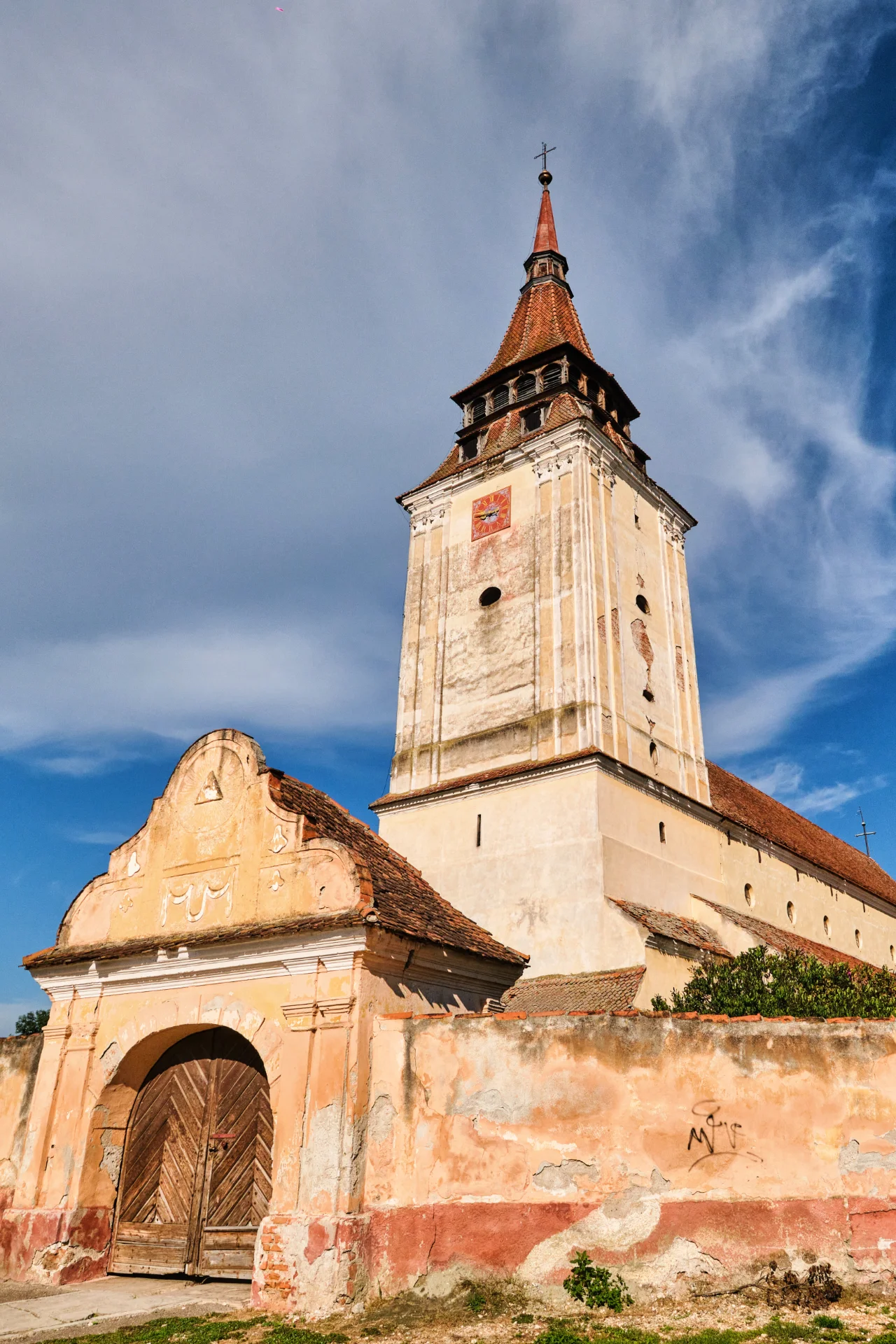
Going down to the village, just a few hundred meters away we find the Evangelical Church of “St. Mary”, built in Gothic style starting in the 13th century, on the foundation of the Teutonic Basilica and rebuilt several times over the following centuries. Other monuments in Feldioara include the Church of “St. John the Baptist” from 1788 and the Monument of the Saxon Students. The village of Rotbav is also part of the Feldioara commune, where we pass by the fortified church of Rotbav, one of the oldest in the region, dating back to around 1300. It was fortified in the 15th century, the defensive walls being relatively well preserved. Over time, numerous modifications and renovations have been made to the ensemble, but in 2016 the 60-meter-high bell tower collapsed.
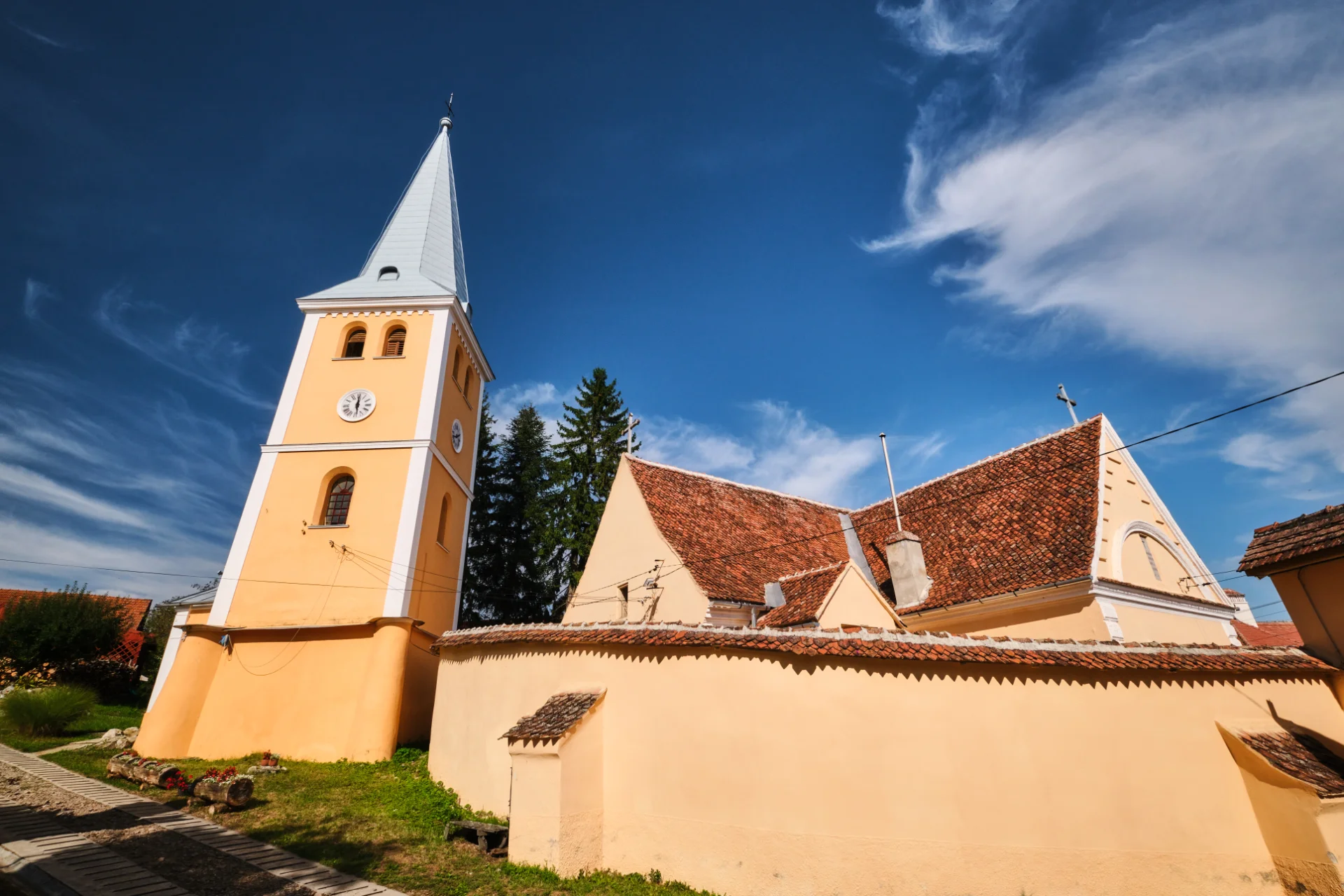
The fortified church of Măieruș is another stop in the land of Bârsa, built in the 14th century and once surrounded by high walls, of which only a few ruins remain. After a fire, the church was rebuilt in Gothic style in 1573, with some interesting architectural details. Also in the town of Măieruș is the Orthodox church of the Assumption of the Virgin Mary, founded in 1787 by two Greek merchants from Brașov. In the northern extremity of the regions, at the foot of the Perșani Mountains, we also stop at the fortified church of Apața, originally built in 1427 and partially destroyed several times, until 1794, when only the defensive walls remained. A few years later, the church we admire today was built, the bell tower being located outside the fortified enclosure.
Although not part of the historical region of the land of Bârsa, crossing the Olt River we can also visit several interesting places nearby, such as the fortified church in Aita Mare, the fortified Unitarian church in Belin or the Reformed church in Hăghig. Another charming destination is the Bogata Forest, a natural area of special avifaunistic protection, with numerous bird species protected at European level. A few kilometers south, we stop in the village of Crizbav, where in addition to the evangelical church from 1850, the slightly older Orthodox church and the archaeological site, we can also visit the Heldenburg Fortress. Located on the peak of the Perșani Mountains, approximately 4 kilometers from the village and at an altitude of 1,100 meters, it was founded by the Hungarian king Ladislau the Holy at the beginning of the 11th century. Although currently only part of the donjon walls remain, the hike is worth the effort for the superb views.
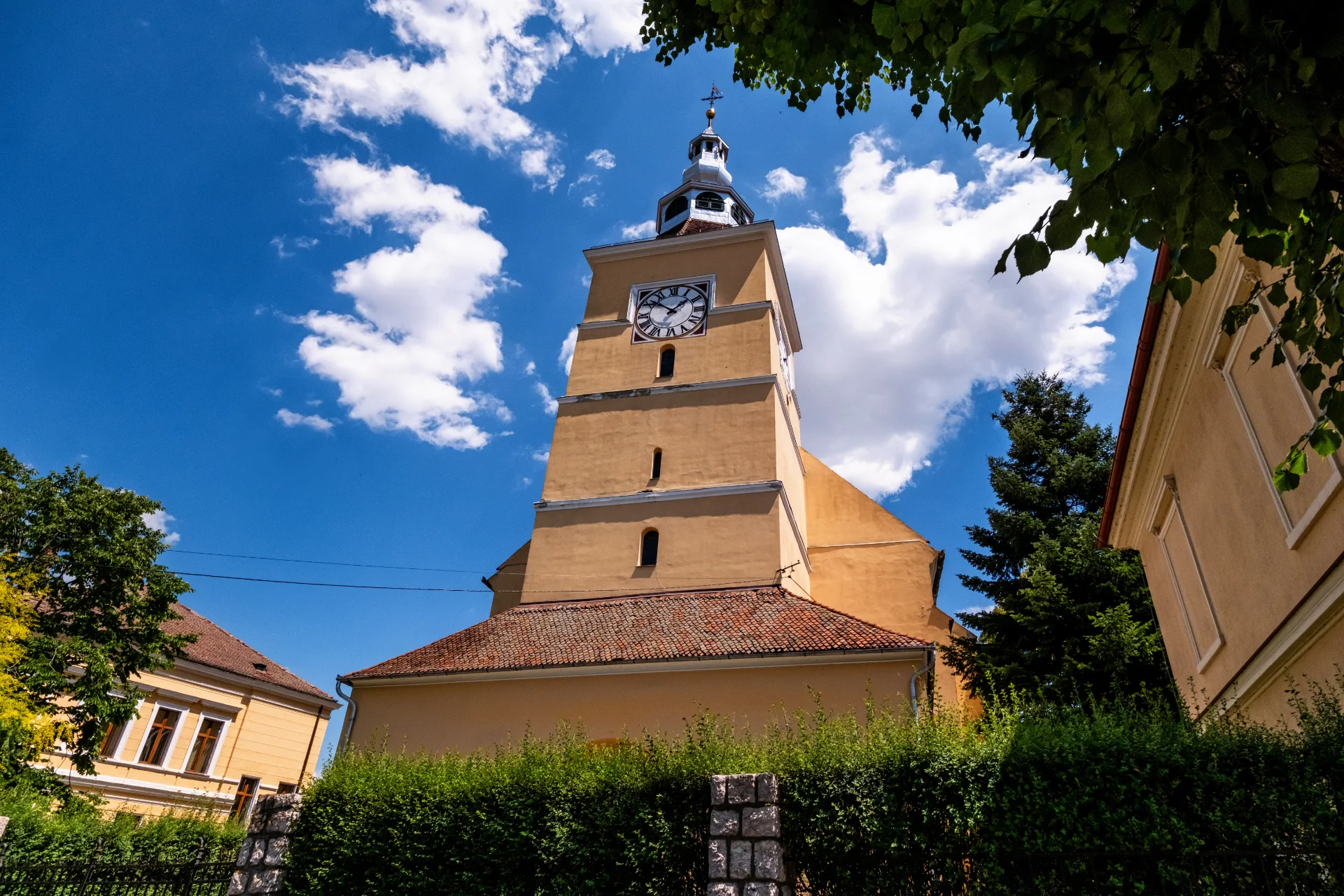
Even though we are surrounded on all sides by high mountains, our gaze is often drawn to a lonely peak rising to the west, above the lower hills that are part of the Perşani Mountains. Măgura Codlei reaches almost 1,300 meters and is the highest peak in these mountains, there are several tourist routes that can take us to its summit, most of them starting from the municipality of Codlea. The settlement was one of the important localities in the land of Bârsa since the medieval era, as proven by the fortified church of Codlea, dating from the 13th century, initially built in Romanesque style. By the 15th century, it was transformed into a Gothic church, at the same time being fortified by erecting a wall up to 10 meters high, equipped with defense towers.
The church’s bell tower, 65 meters high, is located a short distance from it, adjacent to which is the old town hall building. Inside the church, we can admire the painted coffers on the ceiling, the neo-Gothic altar and the impressive organ from 1738. Other monuments that we can discover in Codlea include the recently rehabilitated historic center, the Orthodox church from 1783 and the museum of Codlea traditions. A few kilometers south of Codlea, we visit the fortified church of Vulcan, which was first built as a Romanesque basilica in the 13th century, of which only a small part remains, and rebuilt in Gothic style, two centuries later. In the 17th century, the church, the fortifications, as well as much of the town were rebuilt after the almost complete destruction in 1611.
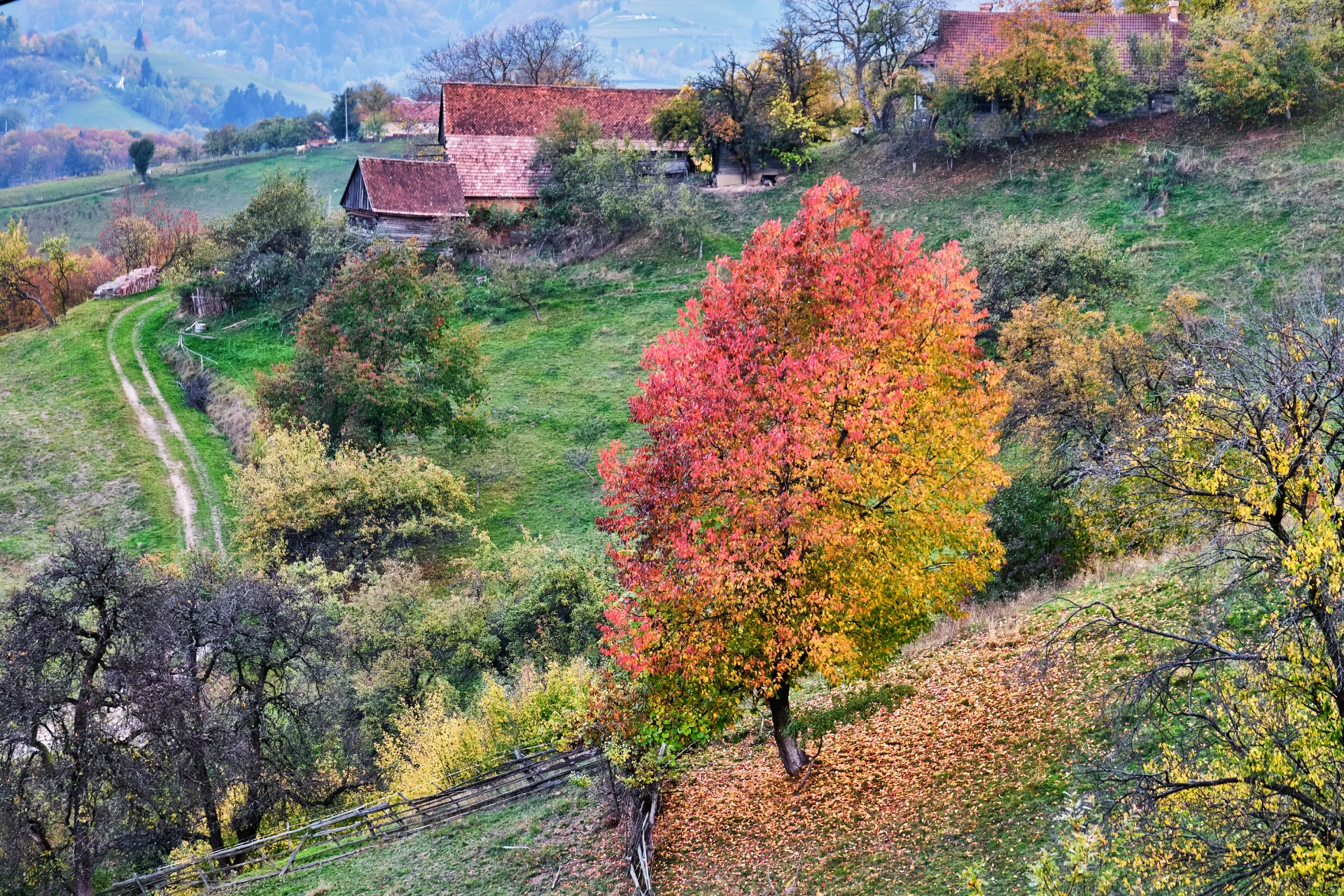
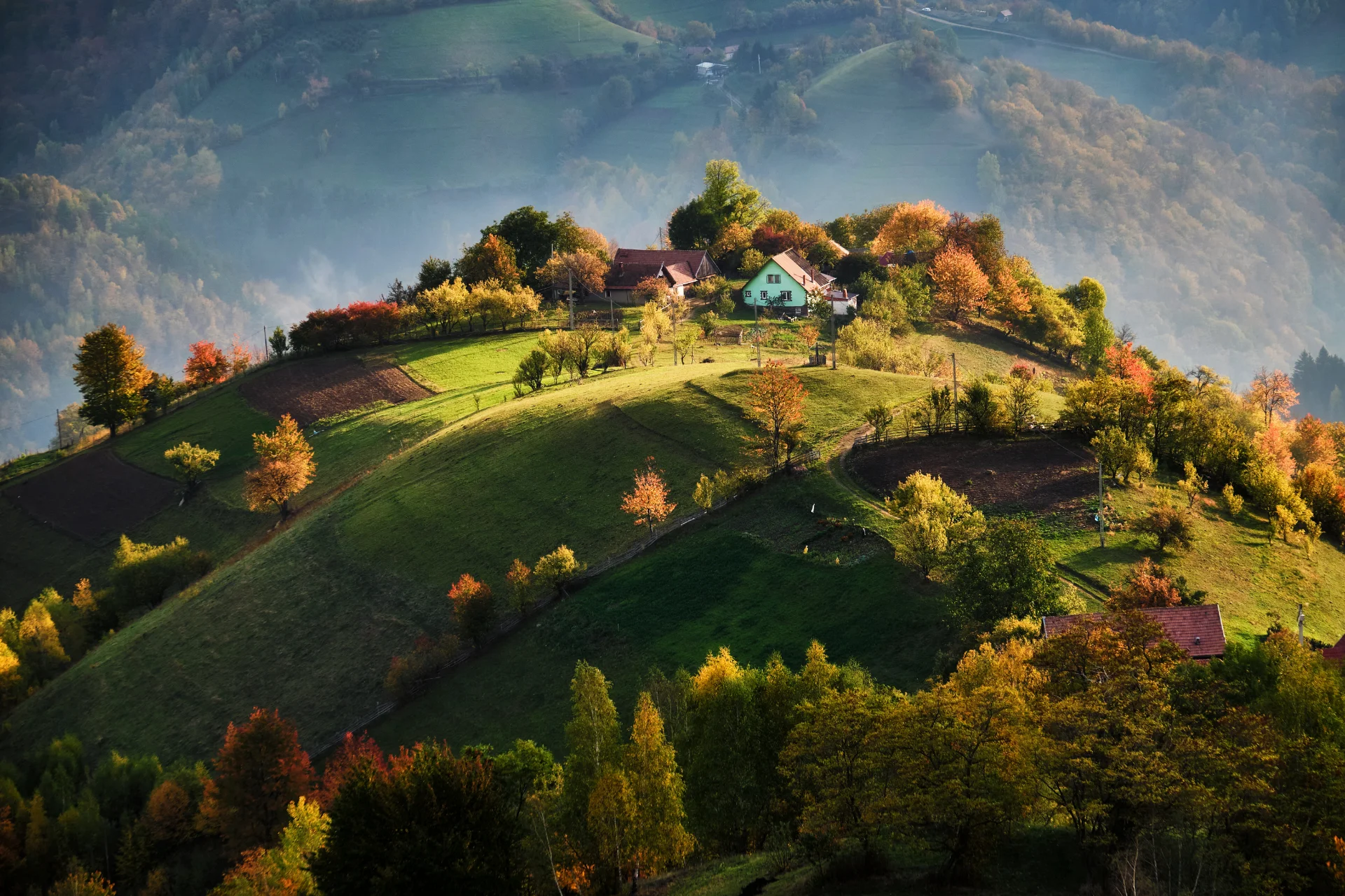
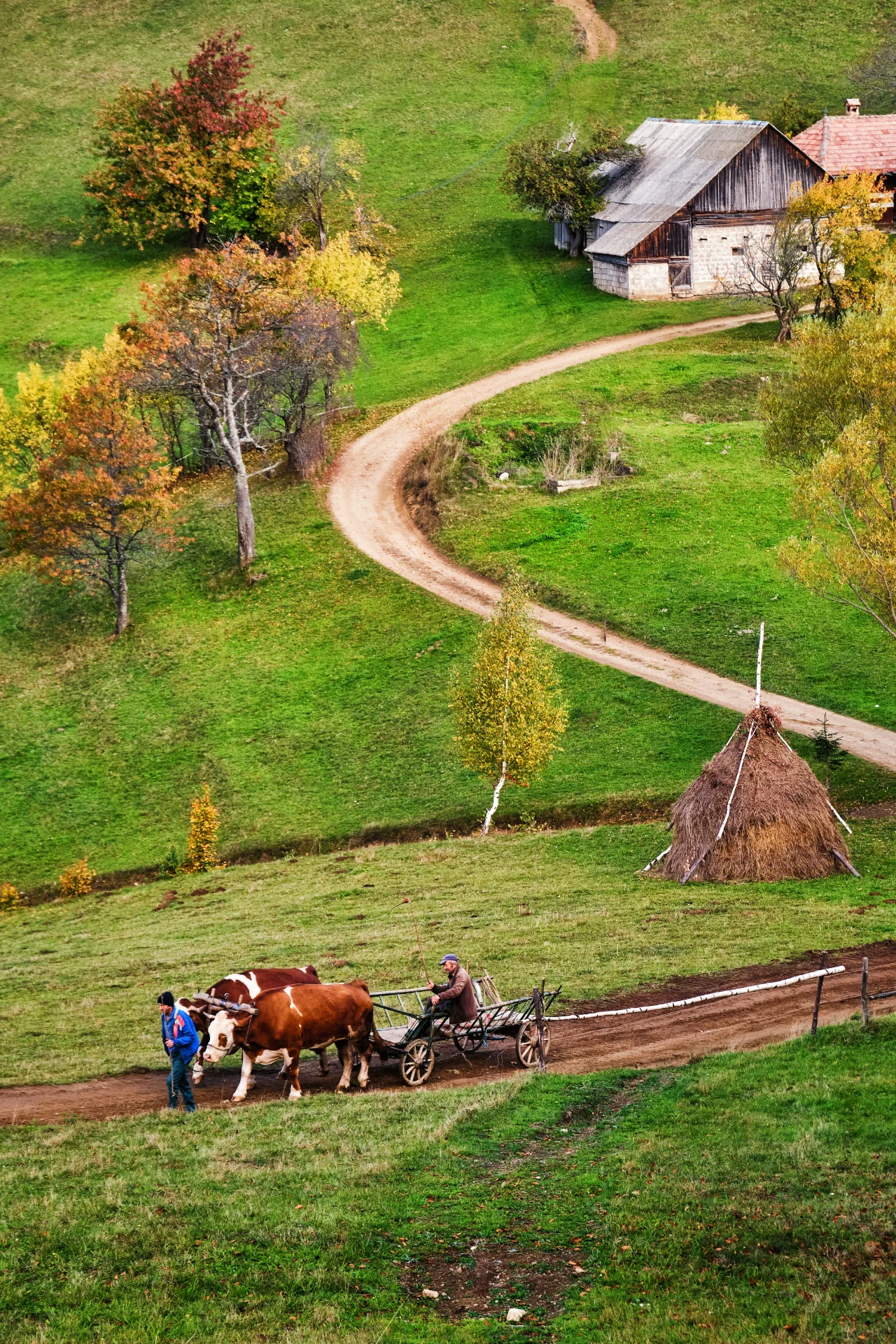
Trapped between the peaks of the Carpathians, the city of Zărnești is the gateway to the Piatra Craiului National Park, with a multitude of hiking trails that climb to the spectacular ridge rising to the south. In the city we explore the splendid historic center, which includes several buildings from the late 19th century, and visit the “Sfântul Nicolae” church, founded in 1515 by Prince Neagoe Basarab. Here we can admire the impressive painting and the collection of icons and old church objects. From Zărnești and Vulcan we can explore the hills that are part of the Perșani mountains, where spectacular landscapes are revealed to us. The villages of Poiana Mărului and Holbav, located above the Bârsa country, are worth visiting for their specific rural atmosphere and exceptional natural beauty. Traditional houses are spread over valleys and hilltops, being connected by paths that pass through idyllic meadows and forests.
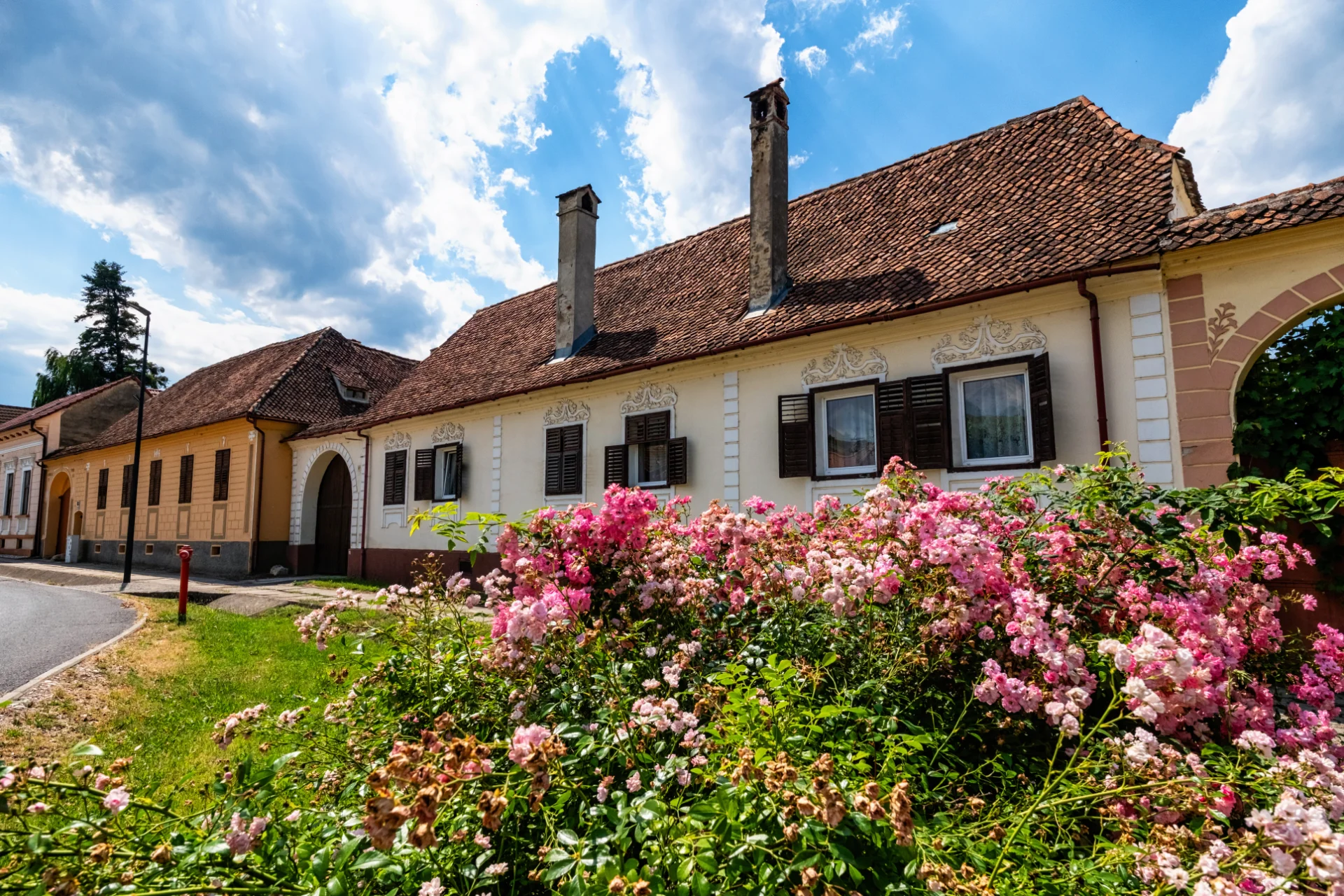
From Zărnești we turn east and just a few kilometers west of Brașov, we pass through two other charming towns. We stop first at the fortified church of Ghimbav, rebuilt in 1658, in its original older form. It was fortified starting in the 15th century with a defensive wall equipped with five towers, a zwinger and a moat with water. Inside the church we admire the ornamental painting unique in Transylvania, dating back to 1902. A little further, the village of Cristian looks more like a small town, with splendid traditional Saxon houses, many of which are declared historical architectural monuments.
In the center of the village we discover the fortified church of Cristian, originally built as a Roman Catholic church in the 13th century and modified in Gothic style towards the end of the 15th century. In 1500, the church was transformed into a real fortress, being surrounded by a double enclosure with strong walls and defense towers. A little later, the large octagonal tower was also built, probably on the basis of an older chapel. We can admire the unique panoramas of the village and further towards the land of Bârsa from the 63-meter-high bell tower. Another important objective in Cristian is the Orthodox church “Assumption of the Virgin Mary”, built in neo-Gothic style in 1795. Inside, we notice the superb murals and old icons. In the southern part of the village, we can make a stop to visit the secular oak forest, protected for trees up to 400 years old.
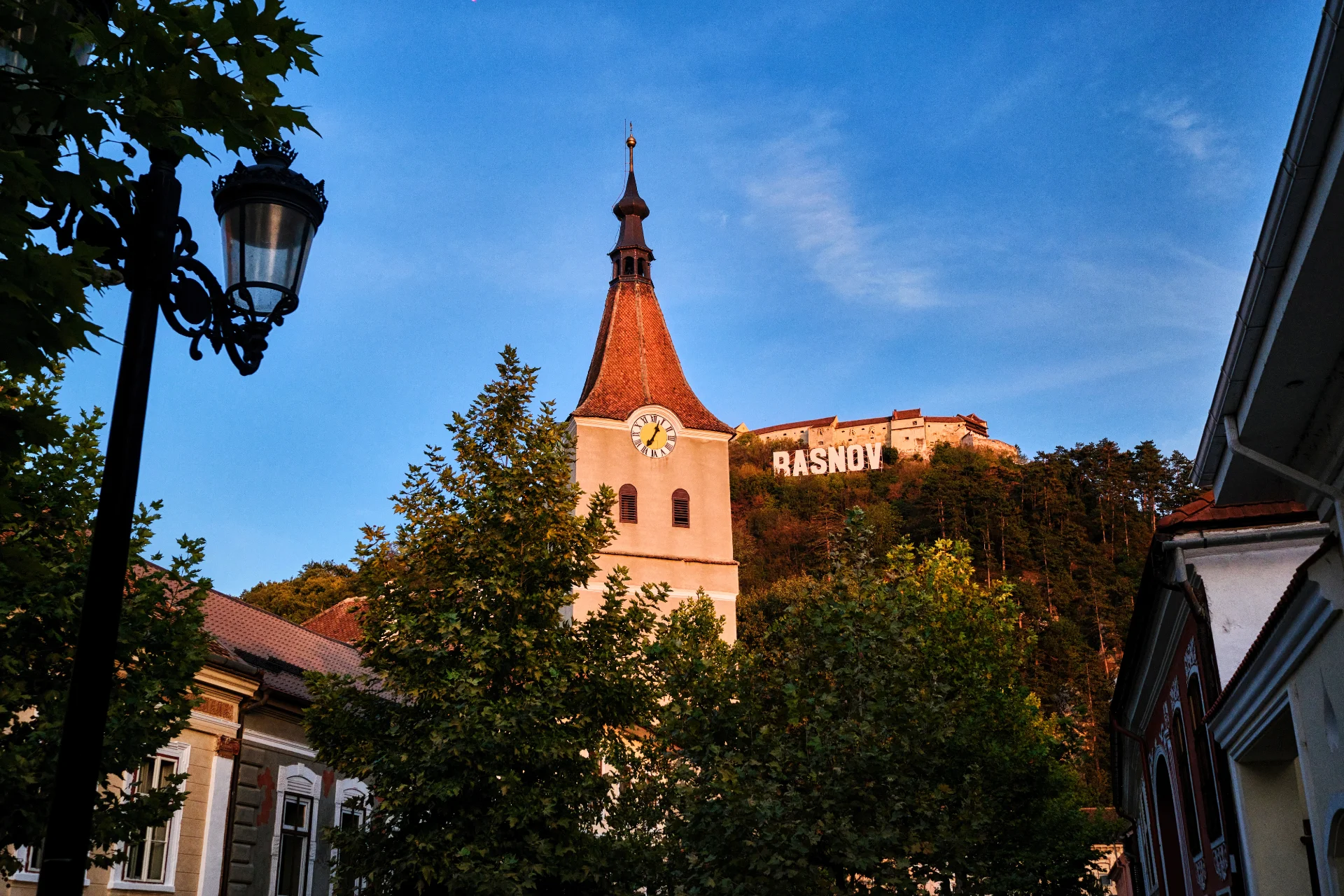
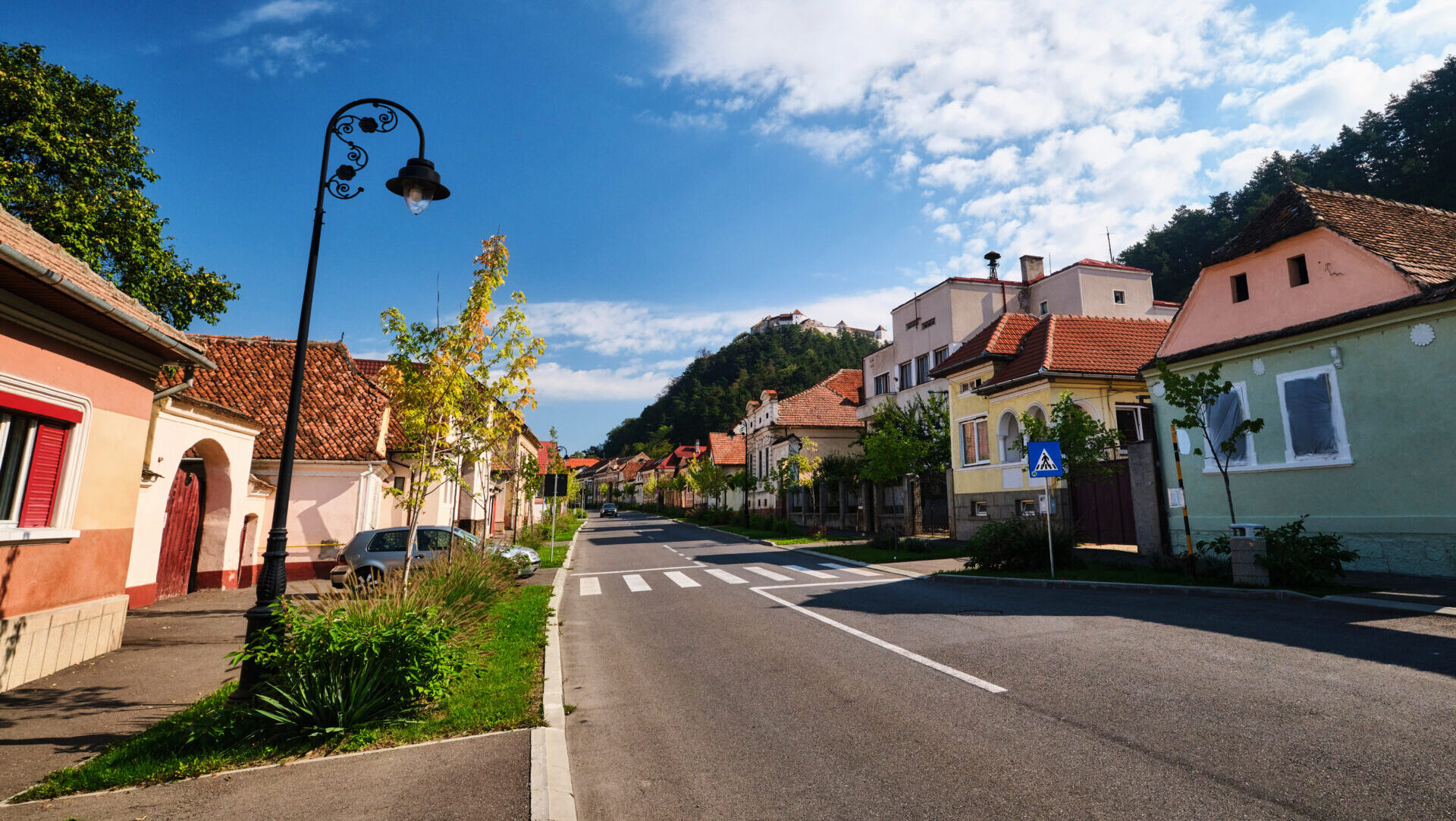
Just a few kilometers to the south, we enter the town of Râșnov, one of the oldest settlements in this part of the country, first mentioned in 1331. Emperor Sigismund of Luxembourg visited the town in 1427 and granted it the title of fair, becoming an important commercial and craft center, with several attested guilds. Due to its location, Râșnov was often attacked by the Turks and Tatars who passed to Transylvania through the Rucăr-Bran corridor, so the inhabitants decided to build a fortress starting with the 14th century, with several surrounding villages contributing as well.
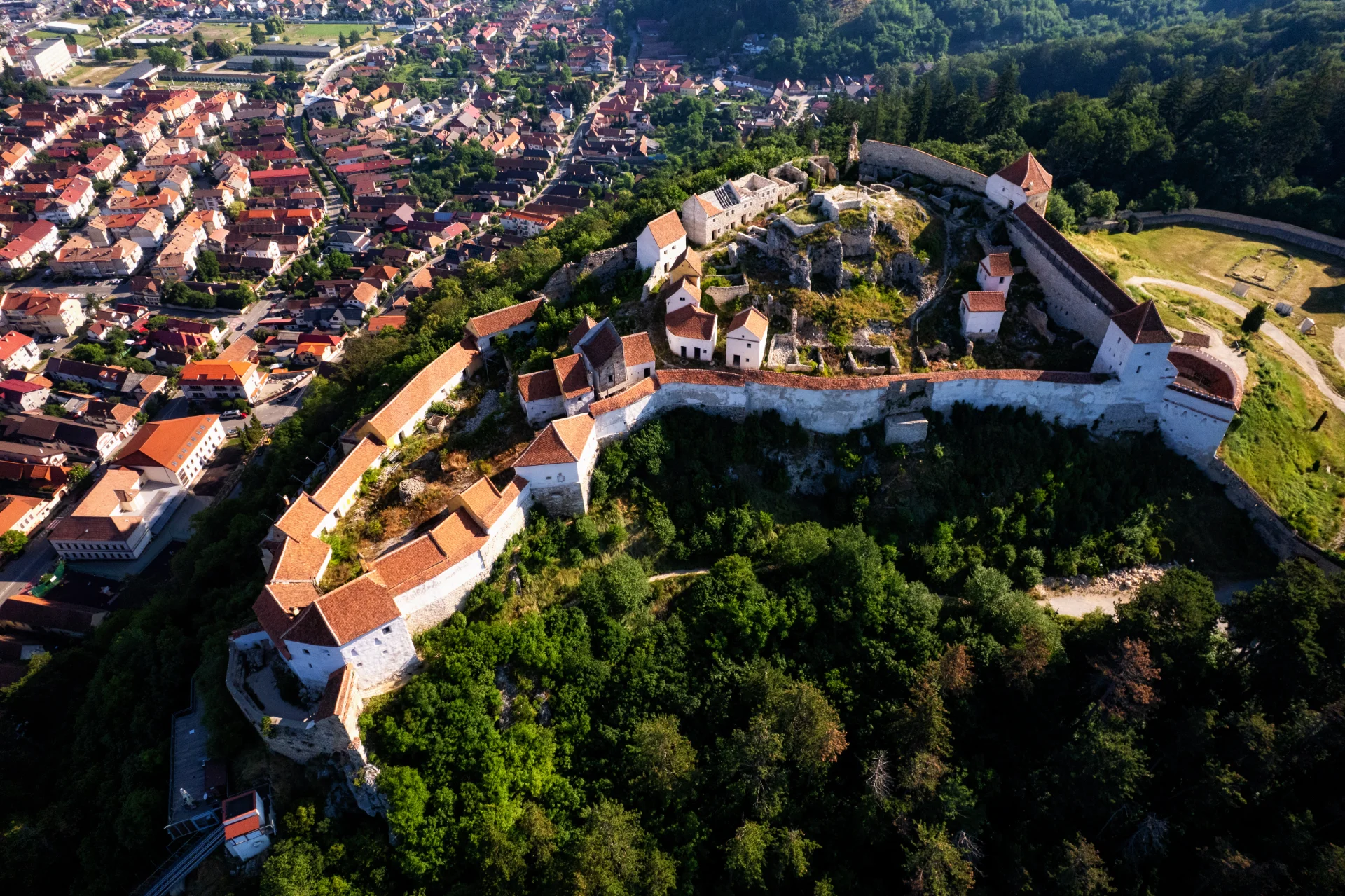
The Râșnov Fortress is located on a rocky, wooded hill at the foot of the Postăvaru massif, being the largest and best preserved peasant fortress in Transylvania, with an area of approximately 3,500 square meters. It has withstood numerous attacks and sieges, being occupied only once in 1612, when the defenders surrendered it without a fight to the Prince of Transylvania, Gabriel Bathory, only to be redeemed a year later by the Saxon inhabitants of the area. A refuge for centuries, the fortress benefited from its strategic position at the top of the steep hill, the only way in being from the east.
From the same direction we enter the fortress today, passing under the Bathory Tower to the outer courtyard, where cattle were once kept in case of danger, being surrounded by a thick stone wall up to 5 meters high. The fortress can also be reached using the inclined plane elevator that leaves from the city center. This courtyard included the old Gothic church, the ruins of which can be seen near the large gate. From here, we climb to the inner courtyard, also known as the upper fortress, where we enter by passing through the Great Barbican, located in front of the Arms Tower.
The fortress was defended by 9 towers, of which we can still admire the Pentagonal, Gothic and Triangular towers. In this courtyard were the houses and buildings where the inhabitants of the market took shelter during sieges, being built mainly of brick. A walk through the old and narrow alleys allows us to discover other amazing places, such as the old chapel and the school in the fortress, which proved the complexity of the site, as well as the well with a depth of almost 100 meters, dug during two decades of the 17th century. Another fascinating place is the panoramic platform, which delights us with impressive panoramas to the west and north.
A guard and refuge in troubled times, the fortress built by the ancestors of the peasants from the land of Bârsa has endured the centuries and still stands proudly on the rock at the foot of the mountains, with the old walls and towers embracing the medieval cottages and workshops inside!
The fortress is undergoing a long renovation process, with parts of the defensive walls and some of the ruined buildings being rebuilt, at the end of which it will probably regain some of its former glory. Near the fortress, we can stop at Dino Parc Râșnov, an open-air museum and theme park that includes an impressive number of over 120 life-size dinosaurs, as well as other interesting leisure facilities. After a few kilometers to the west along the valley, we find the Valea Cetății Cave, with a total length of almost 1,000 meters and having several interesting features, including a huge hall, impressive stalactites and stalagmites or perfect acoustics.
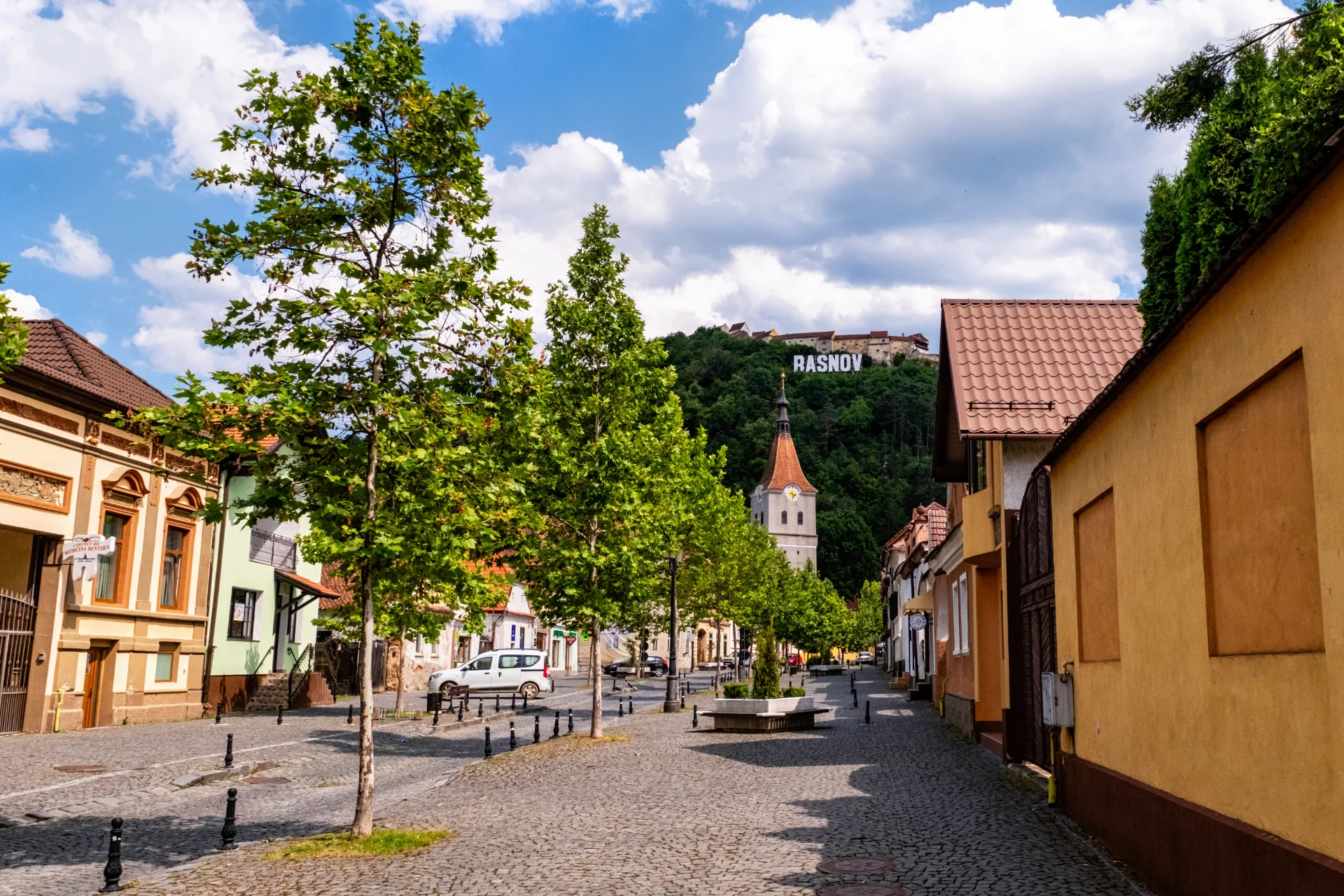
Back in the city, the old center of Râșnov still preserves some of the traditional Saxon architecture, including the Evangelical Church of “Saint Matthias”, which was built starting in the 14th century and rebuilt several times over the years. Another interesting monument is the Old Church of “Saint Nicholas”, originally built starting in 1394 by the ruler of Wallachia, Radu I, and rebuilt several times, the last time in the 19th century. Very close to the city, in the Cârbunării valley, a modern winter sports center was opened several years ago, including cross-country skiing, biathlon and ski jumping slopes. Other interesting places near Râșnov include the Râșnoavei Gorges, the Râșnoavei Cave and the Pagan Church rock.
Passing through Brașov, just a few kilometers to the east we enter the municipality of Săcele, created in the 1950s by uniting several villages spread over the hills at the foot of the Ciucaș and Piatra Mare mountains. In the past, the four villages of the current municipality and three others located further east formed an ensemble known as the Seven Romanian Villages, famous for their large population of Mocani and Csangai shepherds. In Săcele we can visit the Ethnographic Museum, housed in a building attested since 1543, as well as several superb Orthodox churches, all declared historical monuments. Heading south along the Timiș valley, we have the opportunity to discover other charming places, hidden in the wooded valleys of the Piatra Mare massif.
A narrow and steep gorge, the Seven Ladders Canyon offers a unique experience, climbing the 160-meter route and passing by or over swirling waterfalls, along a series of stairs and metal walkways. Nearby is the longest zip line in the country, with several routes totaling 4 kilometers. A few kilometers south, the Tamina Canyon and Waterfall is an equally exciting adventure. It can be easily traversed when the water level is low, and the sometimes torrential waterfall flows right under the metal stairs arranged here. Piatra Mare also offers other interesting hikes, including trails to the top of Piatra Mare, from where we are rewarded with impressive views of the Bucegi Mountains. At the end of the journey through Țara Bârsei, we return to Râșnov and after just a few kilometers we stop at the entrance gate to the fascinating Rucăr-Bran corridor, guarded for centuries by Bran Castle, with its stone walls rising to the sky…
Sights and Experiences
Places to See and Things to Do in the Land of Bârsa
Râșnov Fortress
Hours: only the exterior of the fortress can be visited at present
Elevator Hours: 9-17 (daily) | Rates: 30lei/adult (round trip)
The impressive fortress that rises on a cliff above the town of Râșnov in the land of Bârsa is the result of centuries of continuous development, starting with the wooden fortification erected by the Teutonic Knights in the early 13th century. It used to defend the strategic road through the Carpathians that once connected the fortress of Brașov to the capital of Wallachia at Câmpulung Muscel. Throughout the medieval period, this fortification defended the inhabitants of the Râșnov fair and nearby villages in case of attacks, often resisting sieges by the Turks and Tatars. The only time the defenders were forced to surrender the fortress was in 1612, when the Transylvanian prince Gabriel Bathory besieged the fortress and blocked the inhabitants’ access to the hidden spring nearby. Later, a well was dug in the fortress, which took 17 years to complete. Over time, small houses for the inhabitants of Râșnov were built in the inner courtyard, as well as warehouses, a school and a chapel. This main courtyard was protected by strong walls, equipped with seven defensive towers. In the eastern part, from where the only entrance to the fortress was made, there was another outer courtyard, also fortified and intended for cattle. The fortress was abandoned in the second half of the 19th century, being partially restored much later. Most of the structures built in the medieval period have been preserved to the present day, and now the entire fortress is in a long process of renovation and reconstruction.
Town of Râșnov
Located 15 kilometers southwest of Brașov, the city of Râșnov is located at the foot of the Postăvaru massif, on the Ghimbașel River valley. The town was declared a fair town in 1427, when Emperor Sigismund of Luxembourg himself visited the Râșnov fortress. The importance of the settlement grew over time, although it often had a cruel fate, being attacked and almost destroyed several times, the inhabitants taking refuge in the fortress above. They rebuilt the lower city each time, although there are still a few old monuments that have resisted the destruction of the medieval period. In addition to the fortress, the city of Râșnov also offers several interesting attractions, starting with the historic center, where numerous old buildings are preserved, among which the Evangelical Church of Saint Matthias stands out. It was built at the beginning of the 14th century, with the walls and tower being built much later. The Baroque transformations date from the end of the 18th century, and inside you can admire some old frescoes. In the southern part of the town, the Orthodox Church “Saint Nicholas” – Old is also preserved, built at the end of the 14th century by Radu I, the ruler of Wallachia. It is considered the first foundation of the Basarabians in Transylvania. It was rebuilt several times over the centuries, including by Michael the Brave, the current appearance dating from the 19th century. Next to this magnificent church, a new, larger church with the same patron saint was built.
Fortified Church of Prejmer
Hours: 9-17.30 (summer) / 9-16 (winter) | Tickets: 20 lei/adult
This impressive monument was built starting in the 13th century, the then Roman Catholic church being built on the foundations of an older Romanesque basilica. Built in Gothic style, it was modified and repaired many times over time, the current appearance close to the original coming from the restorations in the 20th century. The enclosure wall was built in the 15th century to defend the town after frequent attacks. It is 3-4 meters thick and 10-12 meters high, being equipped with two bastions, two towers and a gate tower. Around the enclosure there was a guard road equipped with fire holes, and a wide ditch with a drawbridge was dug around the fortress. Among the many interesting elements that visitors can discover here are the oldest triptych in Transylvania (1450-1460), the altar from 1804, the pulpit and old pews, as well as the spaces arranged in the old living rooms and storerooms surrounding the inner courtyard on 3-4 levels.
Fortified Church of Hărman
Orar: 9-18 (vara) / 10-16 (iarna) | Bilete: 20 lei/adult
It is one of the largest and best preserved fortified churches in the Bârsa Land and even the whole of Transylvania. Its beginnings are linked to the order of the Teutonic Knights and the arrival of Saxon settlers at the beginning of the 13th century. The original church, a Romanesque basilica whose architectural features can still be seen in today’s church, also dates back to that time. Its most important transformation is the inclusion of the massive bell tower in the body of the church and its elevation in the 15th century, thus becoming the tallest in the Bârsa Land. The fortifications surrounding the “Saint Nicholas” church also date back to that period. These were formed by a complex of three concentric walls and a moat with water, to which are added the seven towers connected by a guard road. The structure that includes the narrow entrance corridor dates back to the 17th century, being similar to the one at Prejmer. After the fortifications lost their defensive role, the rooms inside were used as storage spaces in the following centuries, which also allowed them to be preserved in very good condition. Among the impressive elements of the monument, travelers can admire the unique mural painting of the chapel, the superb Baroque altar from 1787, the pulpit from the late 17th century, the neo-Gothic baptismal font and the old wooden furniture. Also, some rooms within the fortifications contain small exhibitions of historical and ethnographic objects.
Feldioara Fortress
Hours: 9-19 (summer) / 9-17 (winter) | Tickets: 20 lei/adult
Like the entire town, the Feldioara (Marienburg) fortress owes its beginnings to the order of the Teutonic Knights, who settled here at the beginning of the 13th century. Although there are numerous archaeological discoveries attesting to habitation from ancient times, the Teutons turned Feldioara into their residence in the Land of Bârsei and built their most important fortress here. Originally built of earth and wood, the Teutonic fortification was almost completely replaced by the medieval fortress built by the Saxon inhabitants after the great Tatar invasion. Many of the old structures were incorporated into the new fortifications that followed the contour of the hill that rises above the Homorod valley. In the following centuries, the peasant fortress at Feldioara was destroyed several times, being rebuilt each time. Almost completely ruined in the 20th century, it was completely restored a decade ago, when the walls and towers were rebuilt, the remains of the Cistercian chapel and the fountain were marked, and all the structures now present interesting information about their history and characteristics.
Saven Ladders Canyon
Canyon Hours: 10-17.30 | Prices: 25 lei/adult
Zipline Hours: 10-16.30 | Prices: 125 lei/adult/full section
One of the most popular and spectacular attractions in Țara Bârsei is located at the foot of the Piatra Mare massif, at the end of an easy trail through the forest that starts from Dâmbu Morii. Following the arranged and signposted path through the forest (approximately 1 hour), tourists can reach the 7 Ladders Canyon, located at an altitude of 948 meters. It was created by the erosion of Jurassic limestones by the Șipoaia stream, a tributary of the Timiș River. Following the ruptures of the slope, an extremely wild area resulted, the canyon being very narrow and with a large difference in level. In recent years, numerous bridges and metal stairs have been arranged that allow its safe exploration, the adventure lasting approximately 30-45 minutes. If the water level is sufficient, several impressive waterfalls are also formed along it, which sometimes flow over the stairs. From the upper end of the canyon, you can continue on the trail to the summit of the Piatra Mare massif. Along the access route, a zipline with 37 routes of different lengths was also set up, totaling approximately 4 kilometers.
Zărnești Bear Sanctuary
Schedule: Guided Tours (60 minutes) at pre-arranged times between 9.45-11.15 (details on the website) | Prices: 90-95 lei/adult
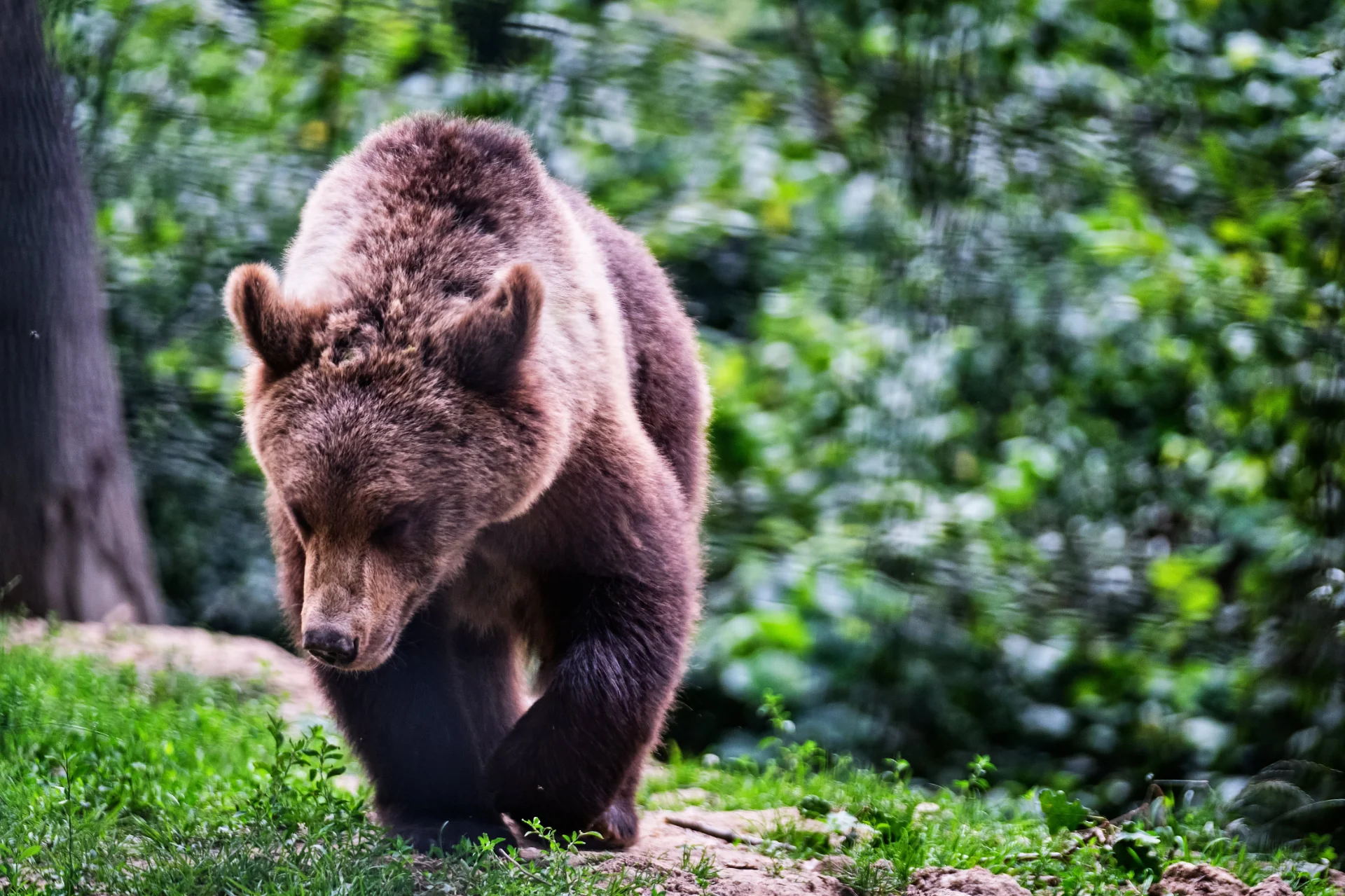
One of the most impressive and fascinating places in the land of Bârsa is located on a hill above the city of Zărnești. Since 2005, the largest brown bear sanctuary in Europe and the largest private project for the protection of wild animals on the continent has developed here. Over the past decades, over 130 bears in critical situations have arrived here, from cubs orphaned in the wild, to old bears exploited in circuses or captive in illegal cages. Their stories are now part of the experience called Libearty Zărnești. In the pens that stretch over almost 70 hectares of forest, they now live in conditions close to natural, although their feeding and care are carried out by the sanctuary employees, exclusively from tickets sold for guided tours and donations.
Other Interesting Discoveries
Lesser known places and activities in the Land of Bârsa
Town of Săcele
One of the most interesting destinations in Țara Bârsa, Săcele today brings together seven villages known in the past as “septem villae valacheles” or seven Romanian villages. In the medieval period, this represented one of the largest mountain communities in Transylvania, to which were added the Csangăi, an ethnic group with unique traditions and dialect. The villages of Baciu, Tucheș, Cernatu, Satulung, Tărlungeni, Purcăreni and Zizin were included over time in the municipality of Săcele, located at the foot of the Piatra Mare massif and just a few kilometers east of Brașov. In the old villages that have now become neighborhoods, several exceptional monuments have been preserved, the most impressive being the 14 old churches (7 Orthodox and 7 Catholic or Protestant). Of these, three are considered historical monuments of national importance, namely the “Assumption of the Virgin Mary” church in Satulung, the “Saint Nicholas” church in Cernatu and the “Assumption of the Virgin Mary” church in Turcheș. Another important object is the Săcele Ethnographic Museum, part of the one in Brașov. It is housed in a historical monument building dating back to 1543 and functioned as a customs house for three centuries. Inside, a fascinating collection of traditional objects of the Mocani and Csangai people of the area is preserved. Including folk costumes, furniture, tools and more.
Museum hours: 10 am – 4 pm (Tuesday-Sunday)
City of Zărnești
Located at the foot of the Piatra Craiului massif, in the southwestern extremity of Țări Bârsea and on the river that gives the region its name, the city of Zărnești has been attested in various forms for many centuries. Although it does not preserve many old monuments, the town is a popular tourist destination, mainly as a starting point for hikes to the Piatra Craiului massif. Among the oldest monuments in the city, the “St. Nicholas” Church dates back to 1515 and is believed to have been built by the ruler of Wallachia, Neagoe Basarab. Enlarged and developed in the following centuries, the church preserves superb interior paintings. The nearby historic center area also includes several interesting buildings from the late 19th century. In other areas of the city, two churches from the 18th century can be admired, while a hiking trail allows access to the Colțul Chiliilor hermitage (15th century). Near the city, you can visit the Libearty bear reserve, the Zărnești Ravines karst area, as well as the Piatra Craiului National Park visitor center, located on the road to the Plaiul Foii recreational area.
Valea Cetății Cave
Also known as the Fundata Cave, it is located just a few kilometers from the city of Râșnov, a short distance from the road leading to Poiana Brașov. With a main gallery of almost 1 kilometer, it has been arranged for tourist visits since 2011, after which it was also declared a natural reserve and a natural monument. Along the route arranged with walkways and modern artificial lighting, visitors can admire numerous interesting karst phenomena, among which the Great Hall stands out, which has a height of up to 20 meters and perfect acoustics.
Opening hours: Daily – 10-19.30 (summer) / 10-17.30 (winter) | Prices: 30 lei/adult (guided visits every 30 minutes)
Lempeș Hill
Also known as the Fortress Hill, it is located in the central-eastern part of the region, between the villages of Sânpetru and Hărman. The area has been declared a protected natural area on an area of over 270 hectares, actually representing an extension of the Baraolt mountains south of the Olt river and having a maximum altitude of 704 meters. Here you can admire a multitude of species of trees and specific plants, but it also offers a charming panorama towards the Brașov depression and the village of Sânpetru. In its center stands the fortified church of Sânpetru, a complex of impressive monuments that once had three rows of fortifications. The inner wall with towers and zwinger is preserved in its entirety, inside the Evangelical church dating from 1794.
Church and Museum of Codlea
Located right in the center of the town, the complex of monuments that make up the fortified church of Codlea was built starting in the 13th century. Of the original old Romanesque basilica, only the west portal has been preserved, itself an impressive architectural element. The Gothic-style hall church built in place of the old one dates back to the 15th century, a period in which the current fortifications were gradually developed. These are made up of an enclosure with walls up to 10 meters high, inside which there are rooms used in the past for living and storage. To these were added two bastions (of the weavers and coopers) and the massive bell tower, transformed in neo-Gothic style at the end of the 19th century. Among the interesting elements of the complex are the coffered ceiling of the church with 252 painted panels, the neo-Gothic altar, the pulpit and the very valuable old organ. The complex now includes the old town hall building, built between 1828 and 1830. It now houses the Codlea Traditions Museum, which includes interesting collections about the history and traditions of the area, as well as art exhibitions or interactive modern projects.
Opening hours: 9-17 (Tuesday-Friday) / 12.30-16.30 (Sunday) | Prices: free admission
Fortified Church of Cristian
Located in the center of the village, on the road between Râșnov and Brașov, the fortified evangelical church of Cristian dates back to the 13th century, when it was built as a Roman Catholic basilica. It was transformed into a Gothic church with three naves at the end of the 15th century, at the same time as the defensive structures were developed. These were made up of two enclosures with strong walls and towers. The large octagonal tower was built in 1580, probably being an old converted chapel. Among the special elements that can be admired are the superb altar from 1890, the chandelier of the heroes, the impressive organ, the unique tombstone behind the altar or the old furniture.
Opening hours: like most of the less visited fortified churches, you can call the custodian of the monument
Dino Parc Râșnov
Opened in 2025 as the largest dinosaur park in Southeastern Europe and a unique open-air museum, it is a fascinating destination. Located right next to the Râșnov fortress, on 3.5 hectares of forest, visitors can discover over 100 prehistoric dinosaurs, recreated in life-size and arranged along a charming thematic trail. Beyond the impressive dinosaur models, the park also includes other features, including an interactive volcano, interactive cinemas, adventure trails and other leisure activities.
Opening hours: Daily – 10am-5pm (Monday-Thursday) / 10am-5.30pm (Friday-Sunday) | Prices: 60 lei/adult / 40 lei/child
Hiking in the Land of Bârsa
Better known for its medieval churches and fortresses, Țara Bârsei is surrounded by mountains and offers some excellent opportunities for pleasant hiking. A trail of about 5 kilometers (red triangle. 2-3 hours) starts from the town of Codlea and climbs to Măgura Codlei, the highest point in the Perșani Mountains. The hike offers some unique views of the Brașov depression, and a secondary trail leads to the Black Citadel, where a fortification of the Teutonic Knights once stood. A little further north, from the town of Crizbav, you can climb to the ruins of the Heldenburg fortress, located on a steep cliff above the village. Even though only the ruins of a tower remain, the area offers exceptional panoramas of Țara Bârsei. The Piatra Mare massif offers several interesting trails, among which the one to the peak of the same name (1844 m) stands out, a hike (red band, 9 km) that also passes by the Seven Stairs Canyon. Another trail (blue band, 2-3 km) that starts from Timișu de Sus climbs to the canyon and the Tamina waterfall. In fact, a series of several superb waterfalls, these can be admired along a narrow canyon equipped with metal stairs. Near the city of Râșnov there are several tourist trails that allow hikers to pass by the Râșnoava Cave (exploration is dangerous) and reach an interesting rock formation known as the Pagan Church. Other charming and fairly easy trails explore the hills on which the villages of Poiana Mărului and Holbav lie.
Accommodation Recommendations
The best lodging options in the Land of Bârsa
Rating 9.5 from 1.490 reviews!
Located just 400 meters from the Râșnov Citadel, this prestigious and highly rated hotel offers superb superior rooms, a Mediterranean restaurant, and a garden!
Ion Creangă St., no.2, Râșnov
Rating 9.8 from 78 reviews!
This gorgeous holiday home is located in Săcele, 10 km from Brașov and offers two bedrooms, a living room, fully equipped kitchen, garden and private parking!
Canalului St., no.51, Săcele
Rating 9.7 from 124 reviews!
This popular guesthouse in Prejmer offers spacious and welcoming rooms, a shared kitchen, a garden, a terrace, a lounge and free bikes!
Sportului St., no.30, Prejmer
Rating 9.4 from 251 reviews!
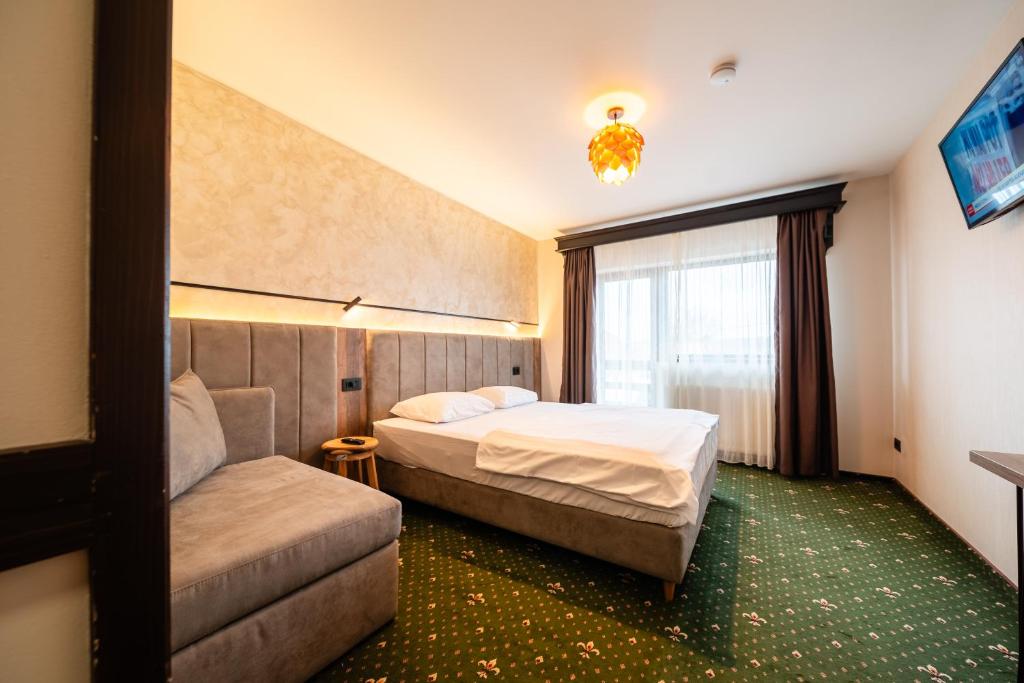
Situatla 10 km de Brașov, acest hotel cu servicii superioare oferă camere familiale cu balcon și vedere la munte, restaurant, bar și terasă!
Lungă St., no.215, Cristian
Rating 9.6 from 210 reviews!
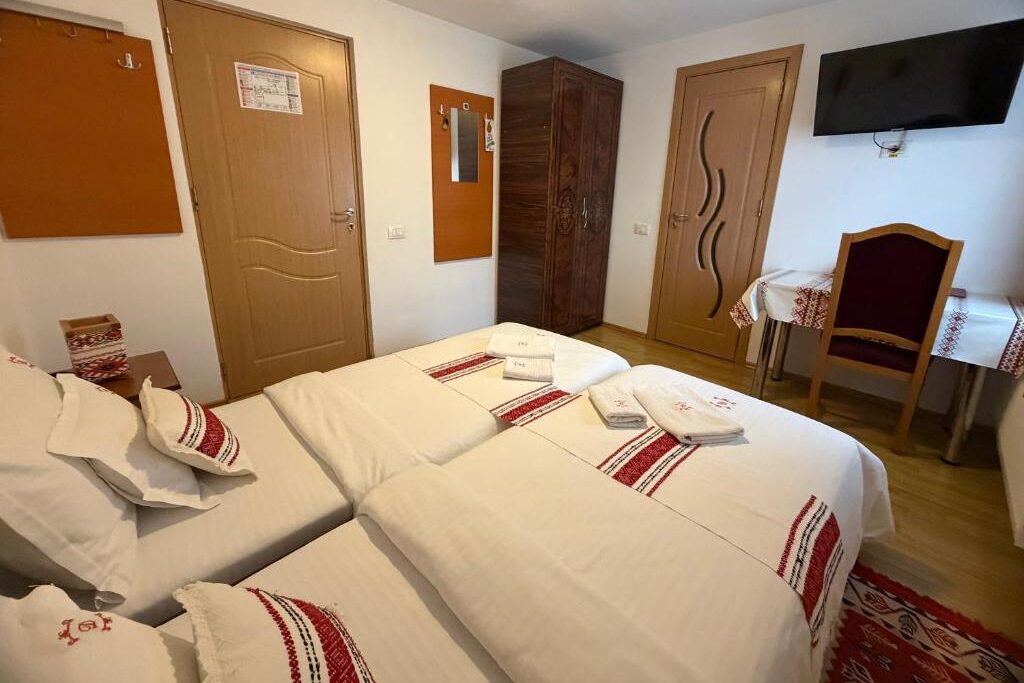
Located near the center of Râșnov, this guesthouse with a rustic ambiance offers welcoming rooms with all amenities, as well as a garden!
Teilor St., no.44B, Râșnov
Rating 9.2 from 434 reviews!
Nestled at the foot of the Piatra Craiului Mountains, this superb guesthouse offers spacious rooms with views, a traditional restaurant, terrace and garden!
Râului St., nr.34-36, Zărnești