14
Rucăr - Bran
Corridor
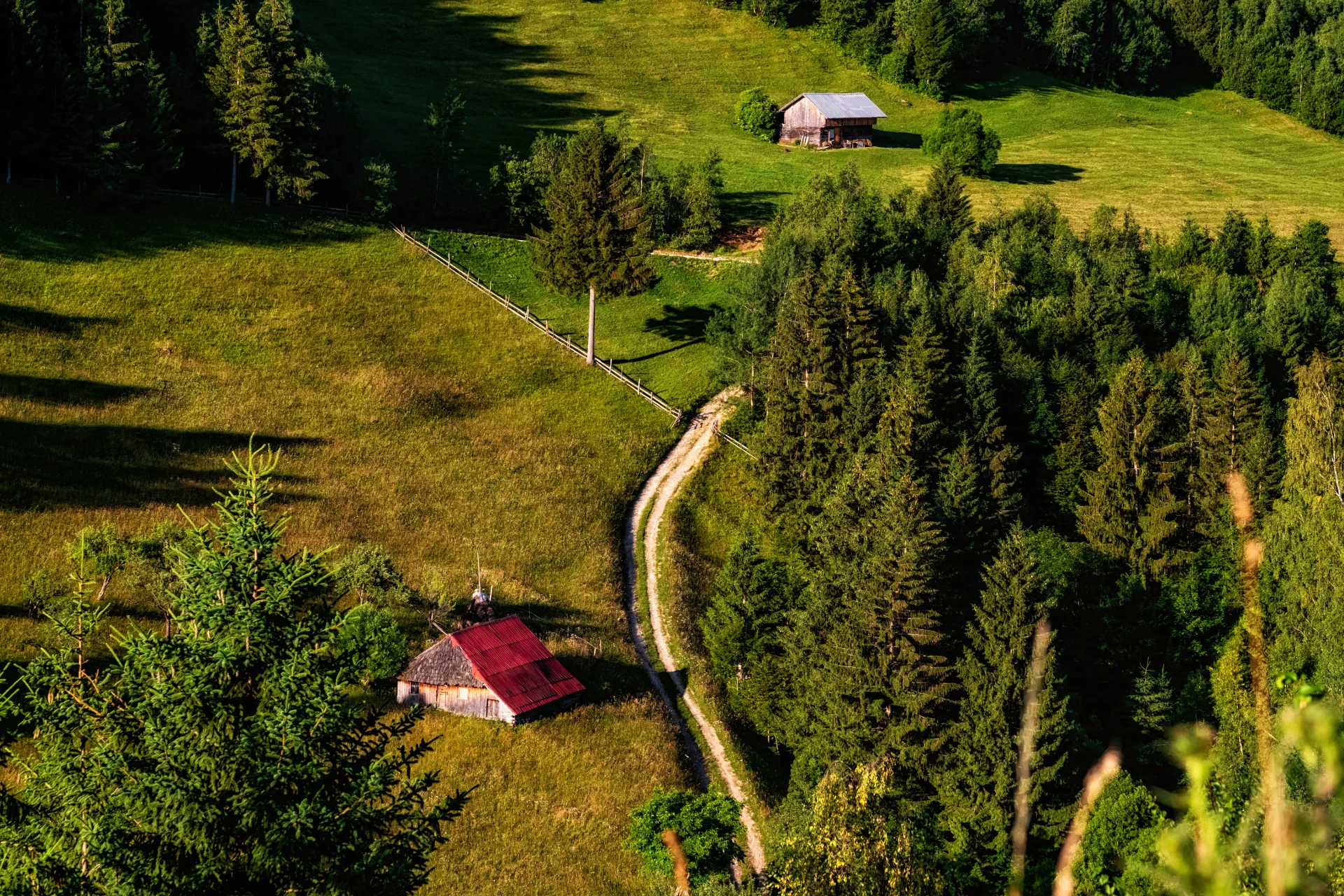
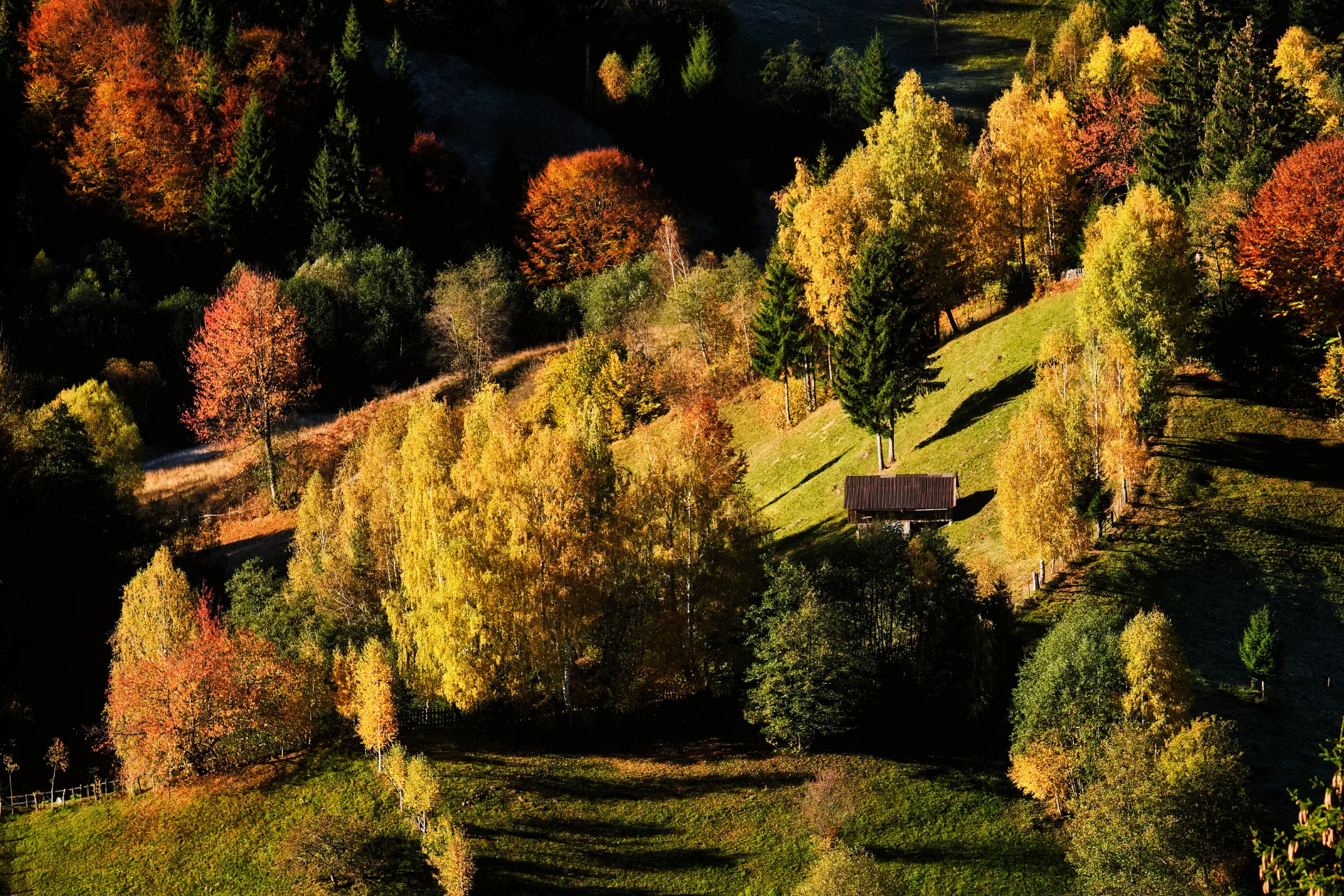
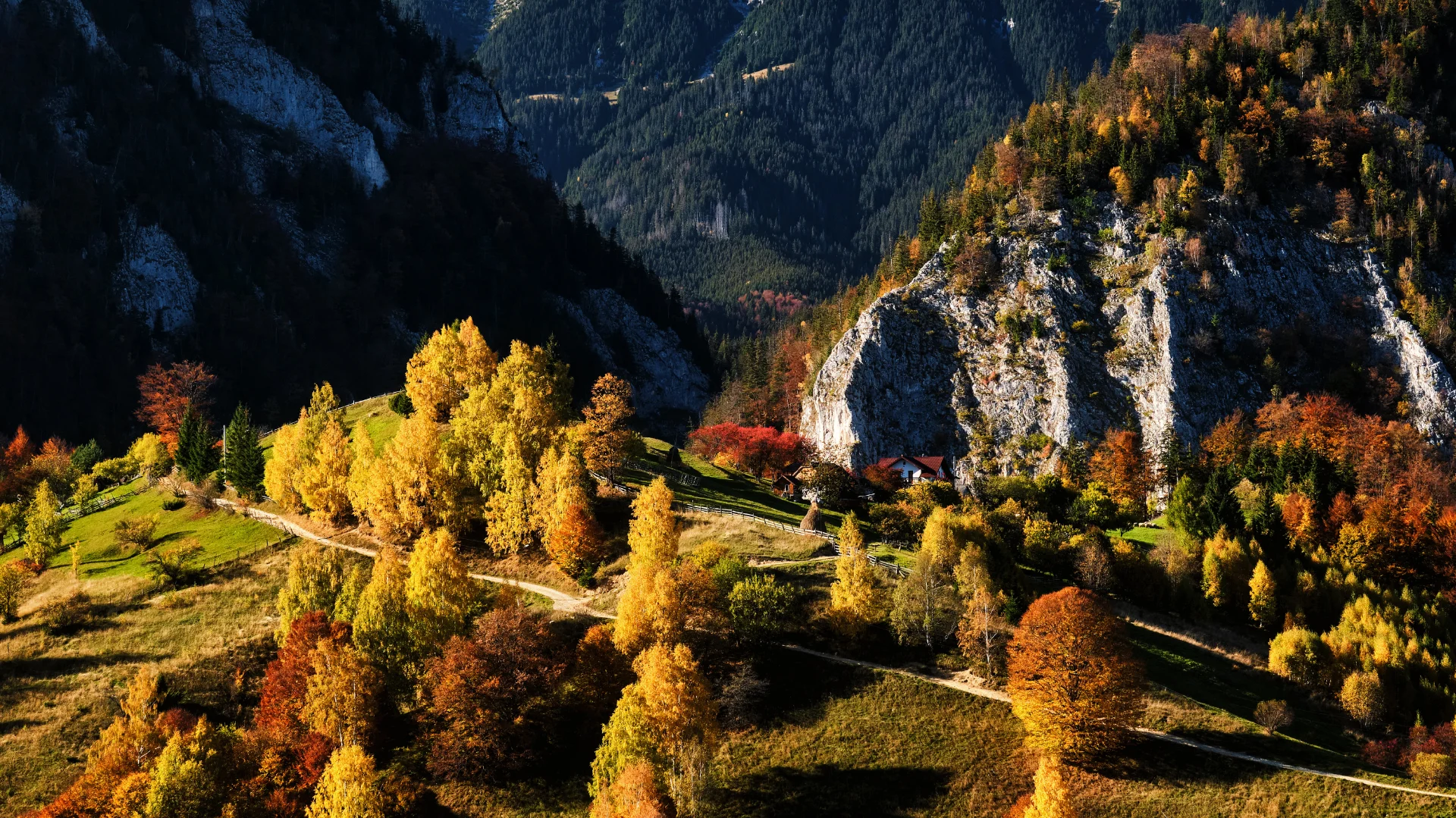
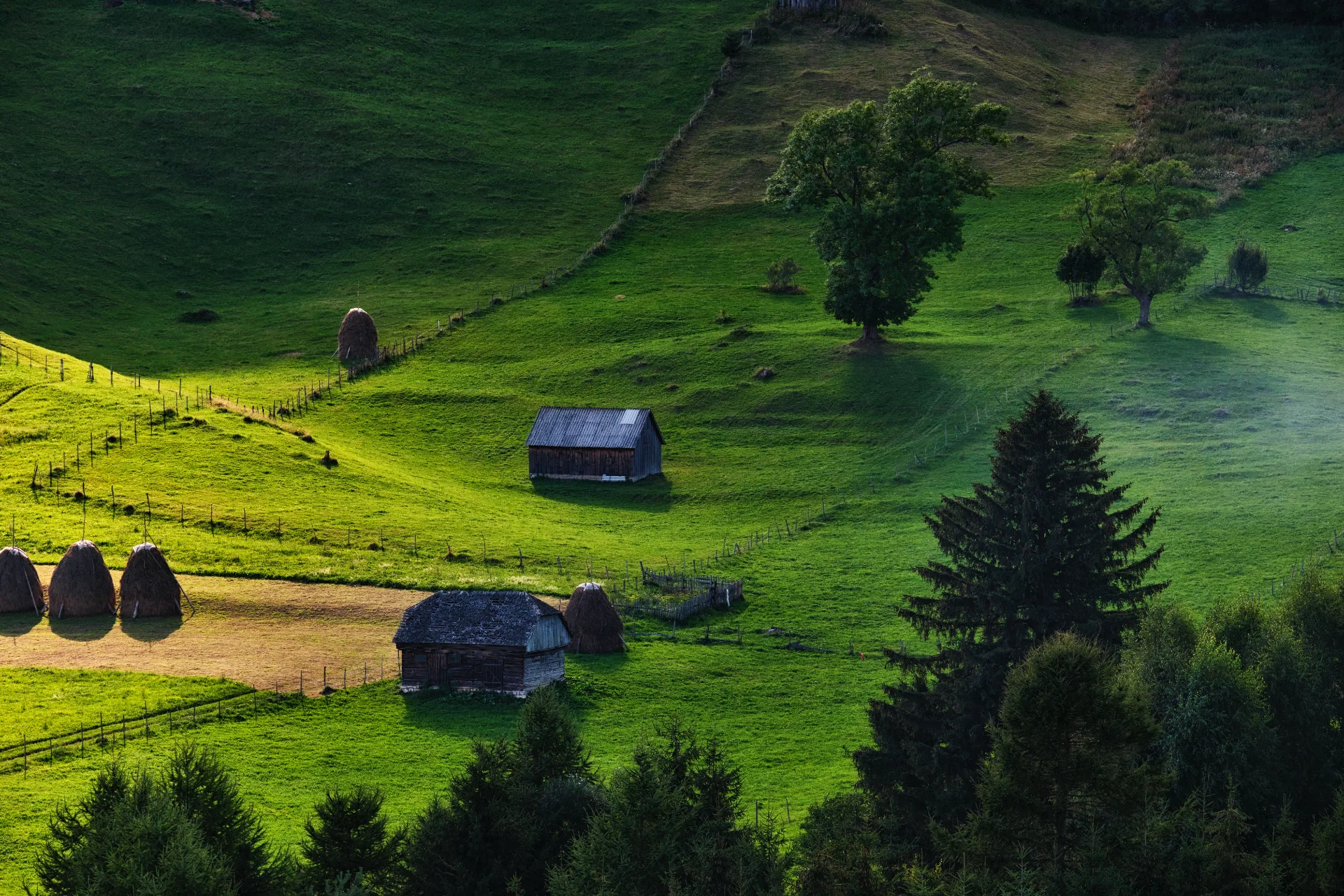
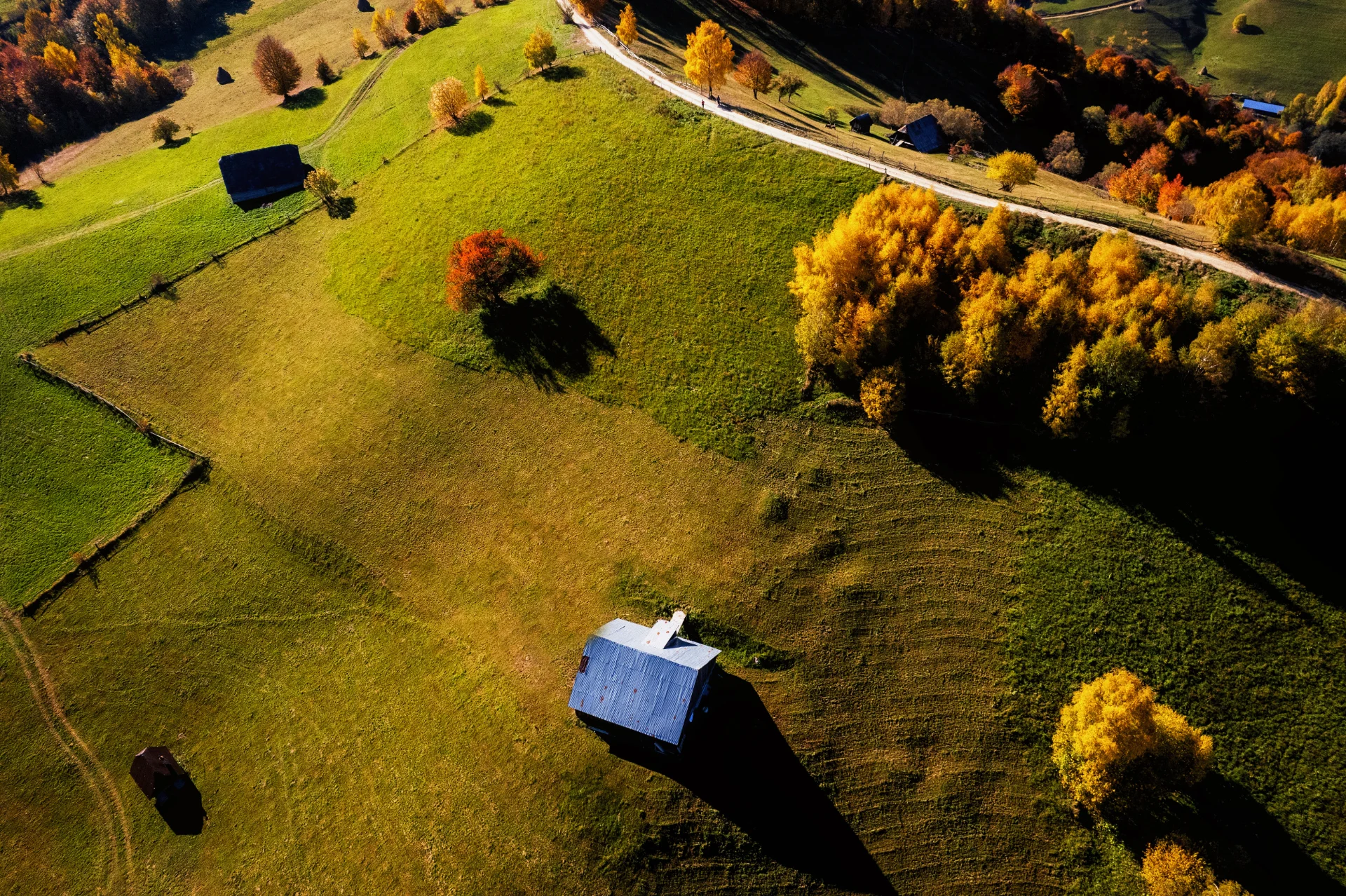
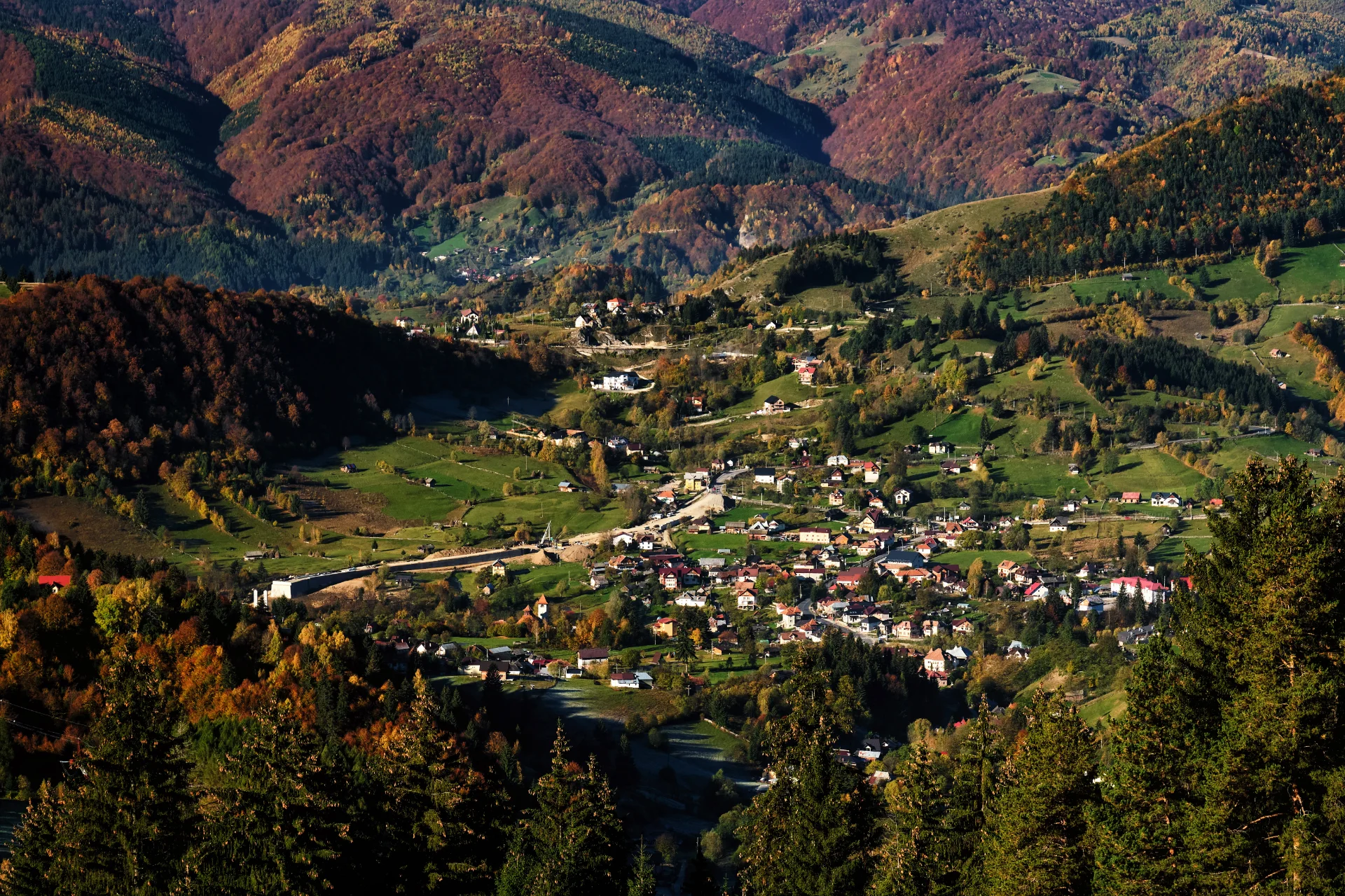
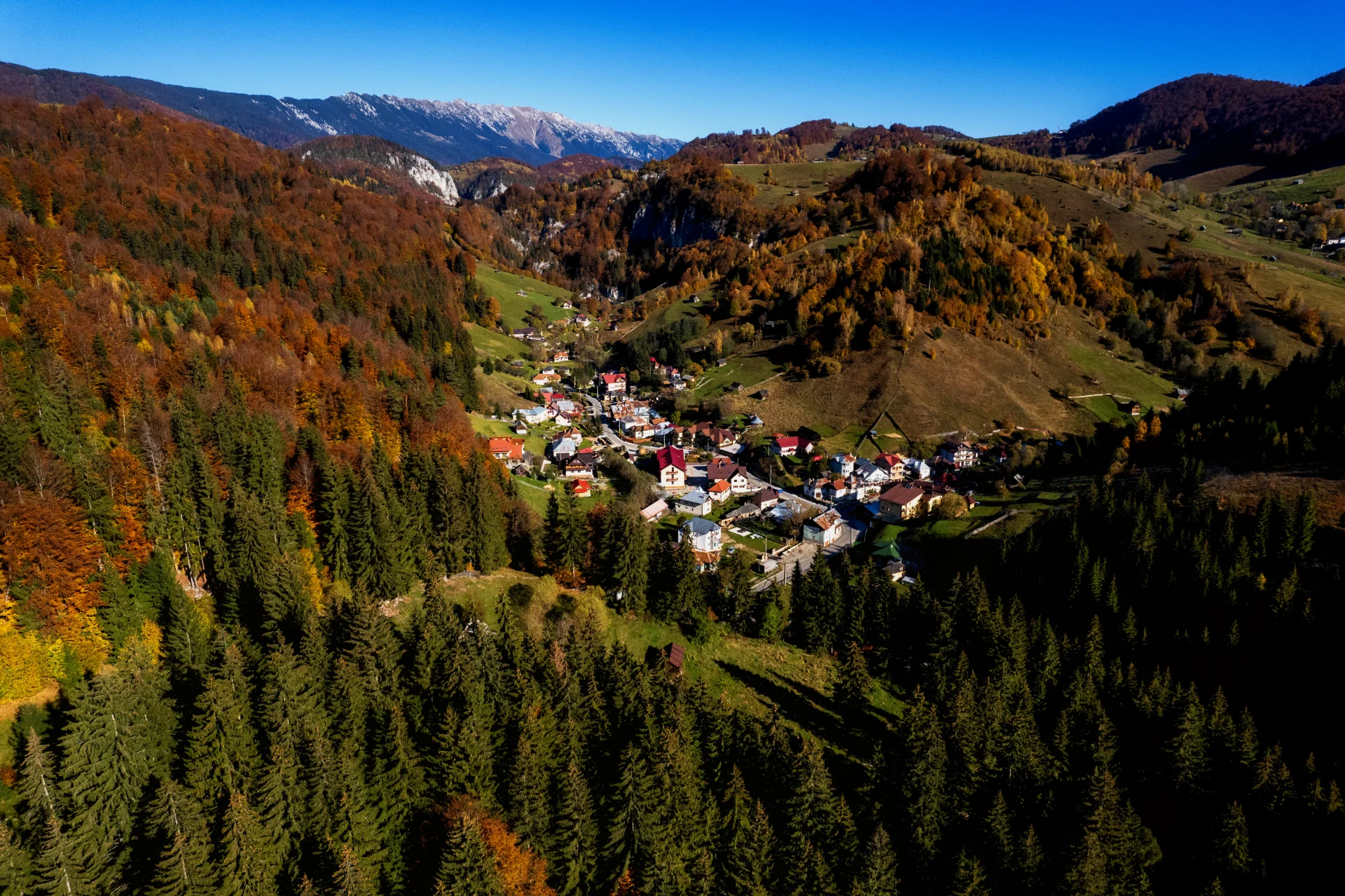
Each new season completely changes the landscape of this bucolic paradise, hidden between the stone fortresses of the Bucegi and Piatra Craiului Mountains. Idyllic villages rise from the hills that seem to stretch endlessly, like the waves of a multicolored ocean, creating an atmosphere of calm and harmony!
One of the most spectacular gateways of the Carpathians, which has united Romanians across the mountains for centuries, this charming corridor allows us to visit some of the most picturesque rural settlements in the country, spread through the valleys and over the hills between the mountains. If in the past it was more frequented by merchants traveling between Brașov and Câmpulung Muscel, the Rucăr-Bran corridor has today transformed into one of the most popular and fascinating rural and ecotourism destinations in Romania. After conquering the legendary Bran Castle and the dizzying heights of Piatra Craiului, we enter a fascinating realm, where each new place seems to have been taken from the pages of a tourist guide.
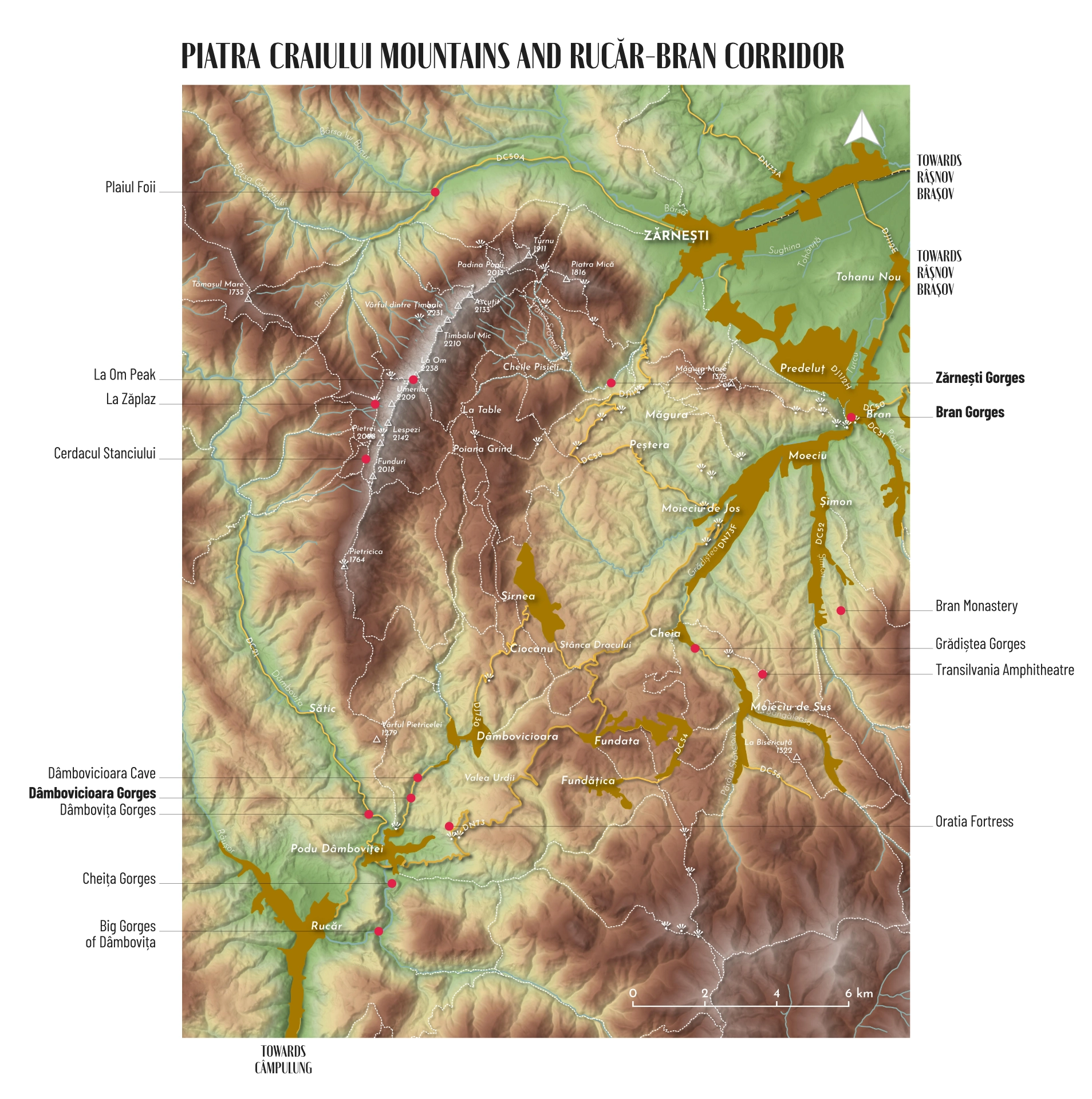
Unlike other well-known and appreciated destinations, here we cannot talk about one or a few spectacular attractions that stand out, the profound experience of discovery and exploration being more important. Whatever road or path we follow through villages or over hills, the views change at every step and at every moment of a day or year. The Rucăr-Bran corridor is one of the oldest and most frequented Carpathian crossing routes between Wallachia and Transylvania, being located between the Piatra Craiului massif and the Iezer-Păpușa mountains to the west, and the Bucegi and Leaota mountains to the east. Connecting the localities of Rucăr in Argeș County and Bran in Brașov County, the corridor is very easy to visit along the national road 73 (E574), while other local roads and tourist routes lead us through the charming villages at the foot of the mountains.
Search for Flights to Romania with Booking.com!
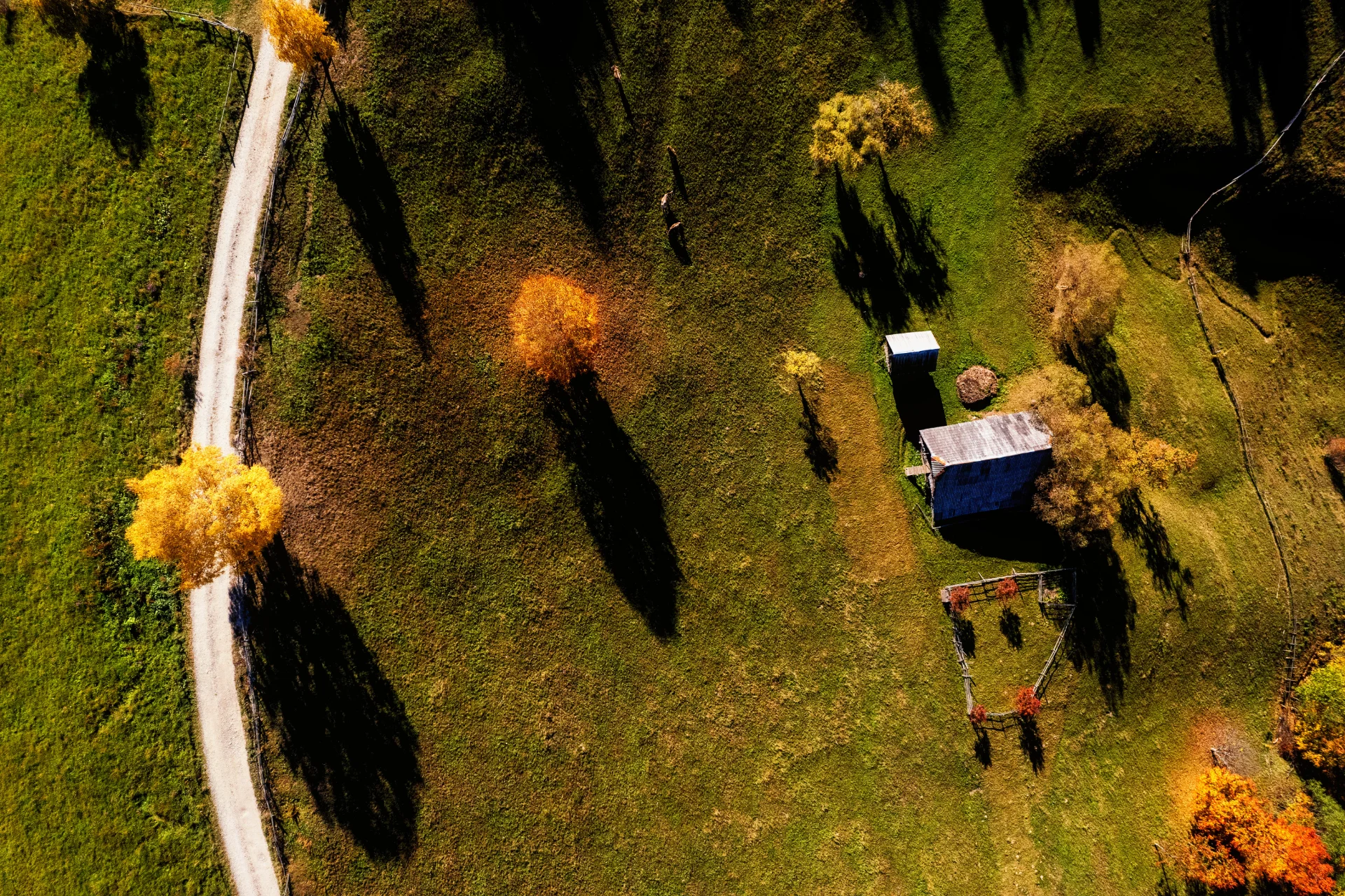
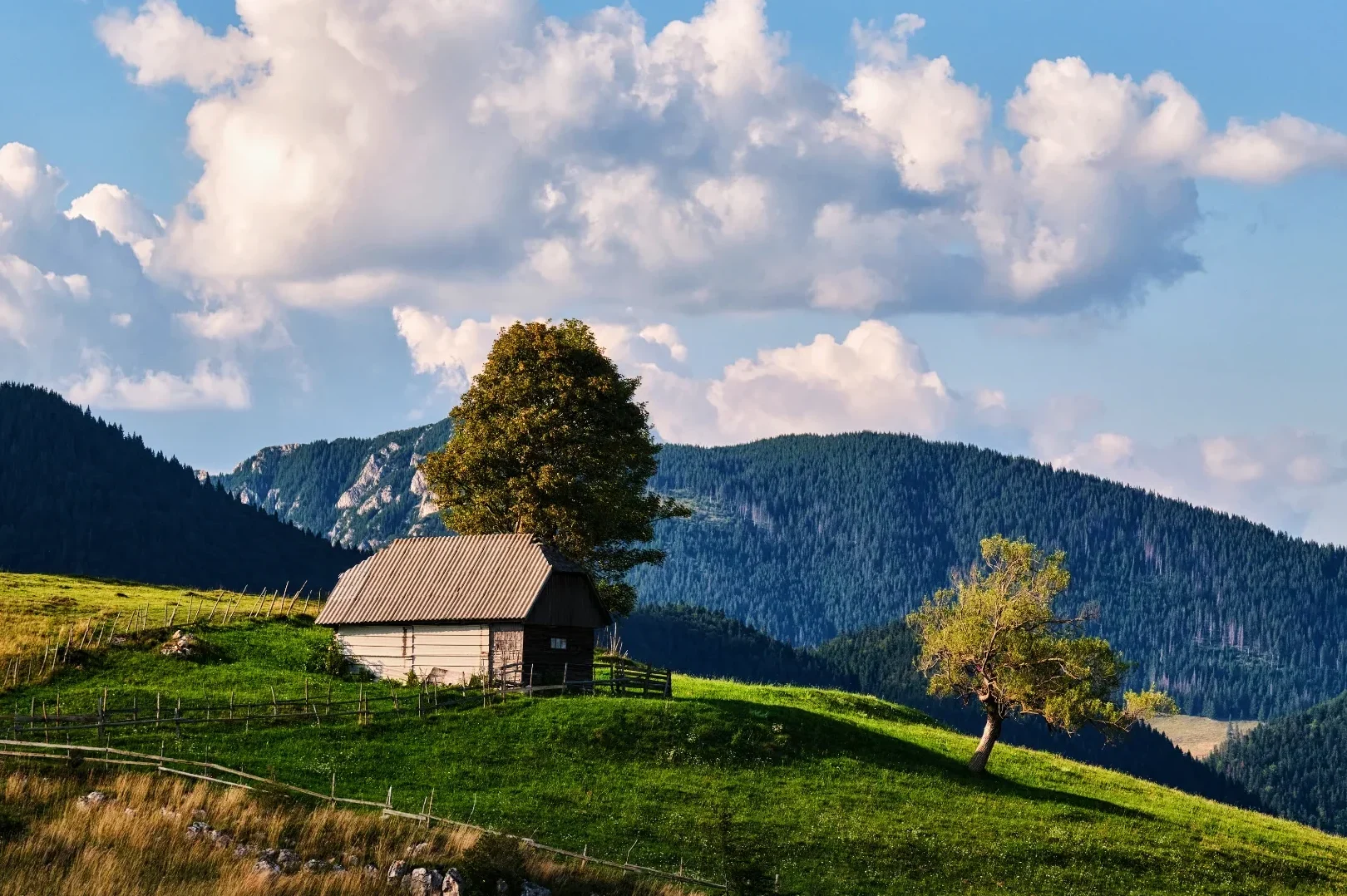
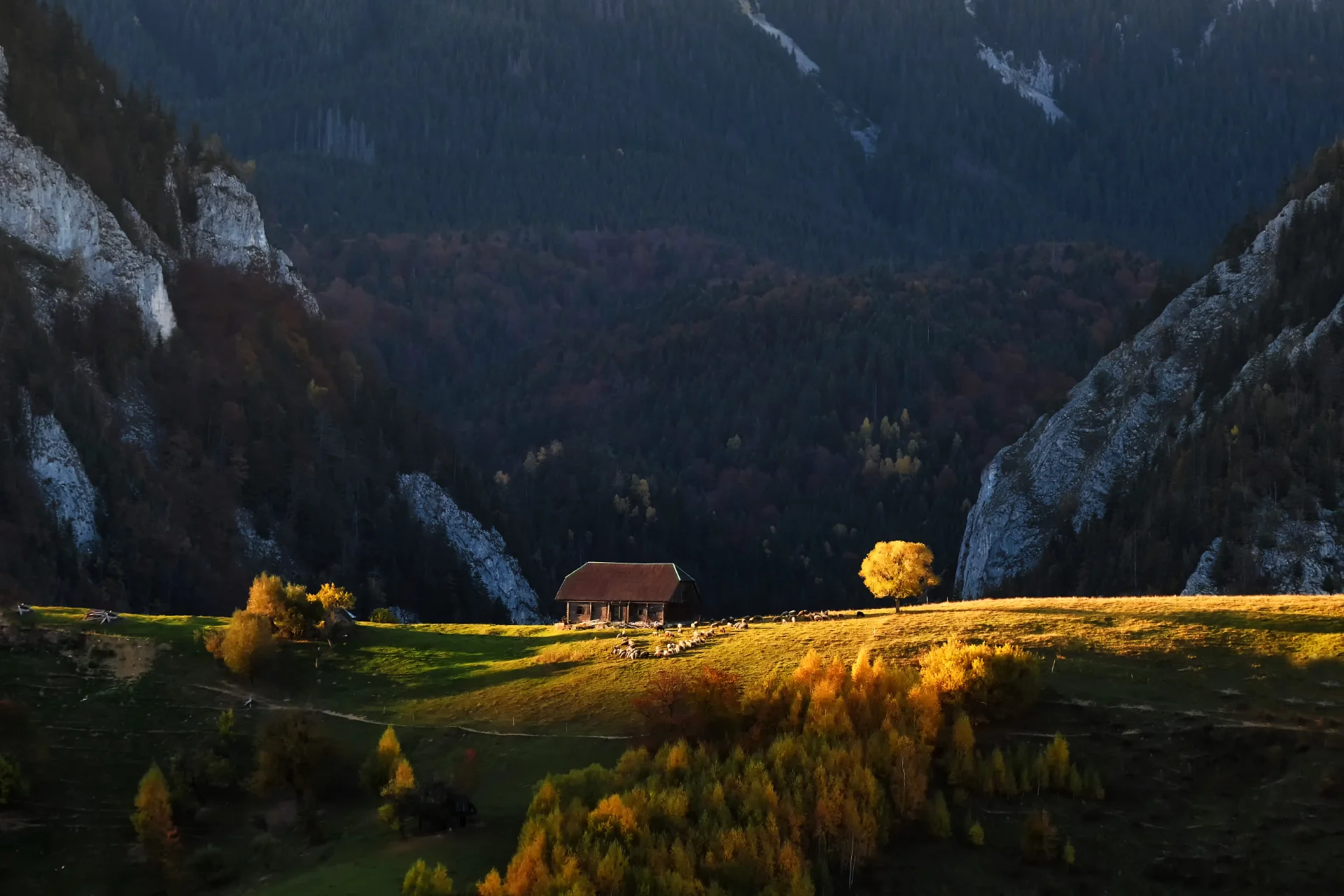
From the main road, we turn towards the streets of the villages of Bran and Șimon, spread over the endless hills at the foot of the Bucegi Mountains. Old settlements that for centuries constituted the border between Wallachia and Transylvania, these have today become a symbol of rural tourism in the area, offering numerous hiking trails and other leisure activities. While most of the houses are located along the valleys, the true rustic atmosphere is discovered by wandering the surrounding hills, with old wooden shelters and meadows where the locals’ flocks graze peacefully. A road that climbs above the village of Șimon leads us to Bran Monastery, a relatively new settlement, but located in a place that seems blessed, with grandiose panoramas of the surrounding lands.
Continuing on the main road, we enter the village of Moieciu de Jos, the main settlement of the Moieciu commune, which includes most of the villages in the Rucăr-Bran corridor. From here, we begin exploring the surrounding hills, starting with the road to the village of Moieciu de Sus, which also passes through Cheia. Moieciu de Sus runs along an idyllic valley, surrounded by forested hills that descend from the rocky peaks of the Bucegi Mountains, where we can reach it by following several charming hiking trails. For one of the most beautiful panoramas in the area, we climb to the Transylvania Amphitheater, a superb tourist complex located above the village.
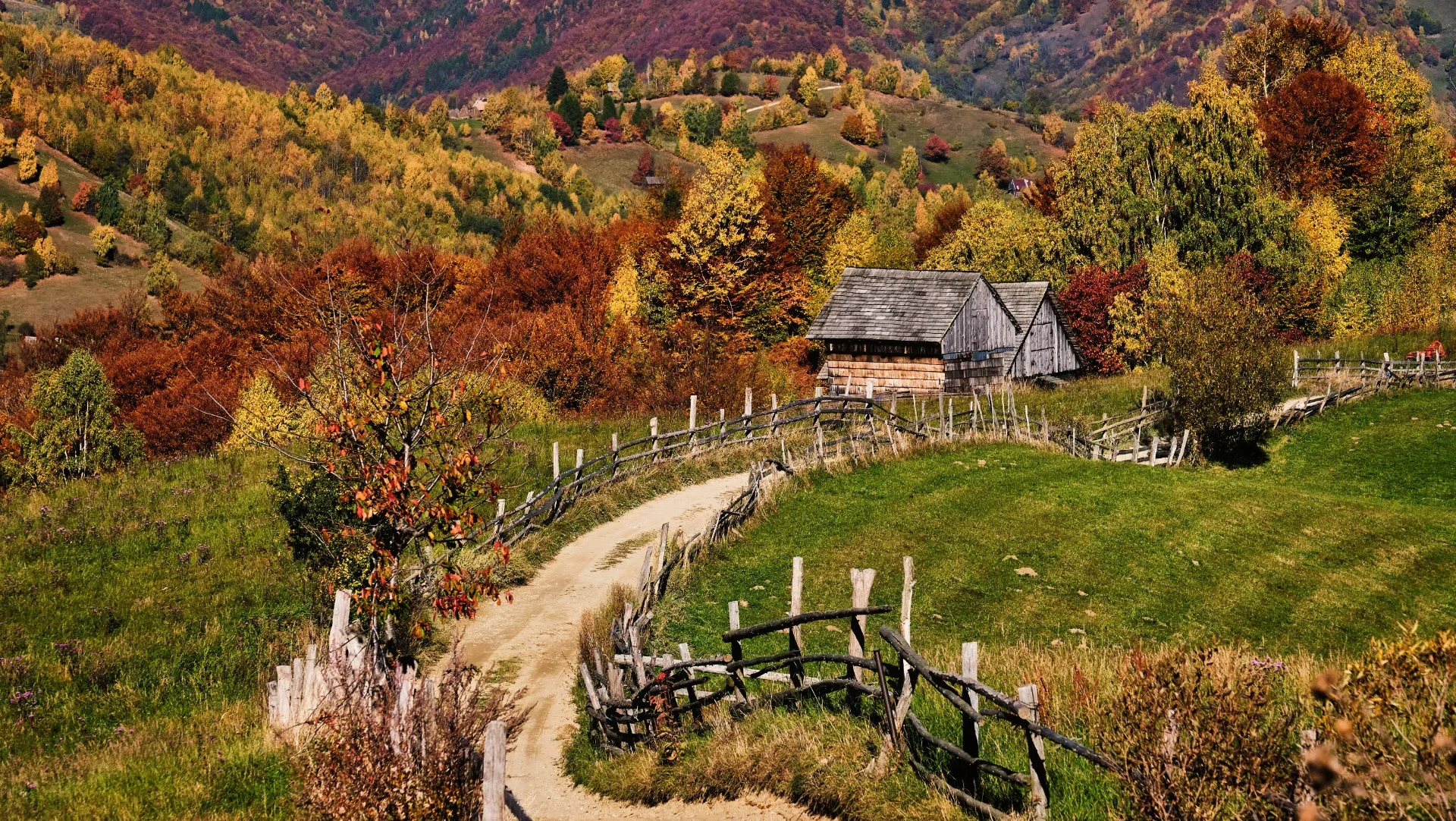
To the west, at the foot of the rocky wall of Piatra Craiului, we climb towards the villages of Măgura and Peștera, hanging as if in the shadow of the stone giant. From every peak and through every hidden valley, old cottages, stables, small sheepfolds or enchanting meadows rise, decorated with haystacks and flocks of sheep. There are several routes that cross the winding streets of the villages, offering us the chance to foray into the authentic rural world, even if it sometimes seems eclipsed by the appearance of countless modern guesthouses. The view from the hilltops is incredible, especially in autumn, when the clusters of trees are painted in incredible shades.
Search for Lodging in Rucăr-Bran Corridor with Booking.com!
A little further south we discover the village of Şirnea, the first certified tourist village in Romania, and further on the villages of Ciocanu and Dâmbovicioara. Located at an altitude of approximately 1,200 meters, Şirnea retains an archaic atmosphere in places, being the starting point of exciting routes that climb to the summit, but also offering travelers numerous interesting activities, in addition to picturesque landscapes. We are fascinated by the isolated houses and shelters on the slopes and ridges of the hills in the distance, surrounded by meadows and multicolored forests. If some villages in the area still preserve ancestral pastoral traditions, many of the houses in the valleys have now been transformed into tourist guesthouses.
Back on the main road, heading east, we enter the villages of Fundata and Fundăţica, located at the foot of the Bucegi Mountains, at an altitude of almost 1,400 meters, Fundata being considered the highest rural settlement in the country. Here we breathe the cleanest air in Romania, and a walk along the old paths reveals new enchanted places, small cottages or traditional sheepfolds that rise from the middle of the pastures. In Fundata there is also the only cross-country skiing and biathlon complex in Romania, developed in the Grădiștei Gorges, where there are also numerous accommodation options, just like in every village in the Rucăr-Bran Corridor. The main road begins to climb sharply towards Giuvala Pass (1,262 meters), from where we look for the last time at the exciting panorama of the corridor, with long rows of hills stretching against the backdrop of the rocky peaks that encompass them.
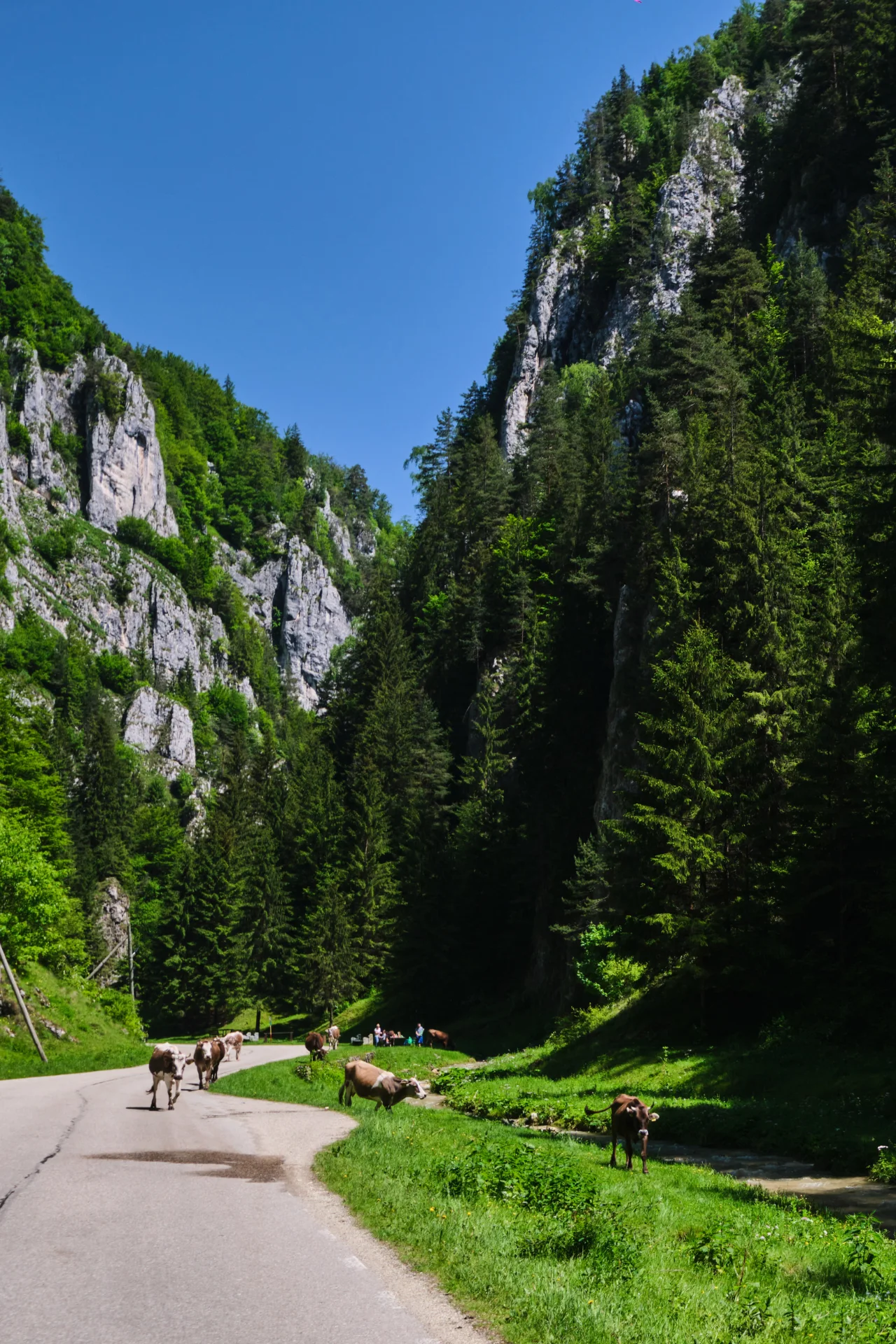
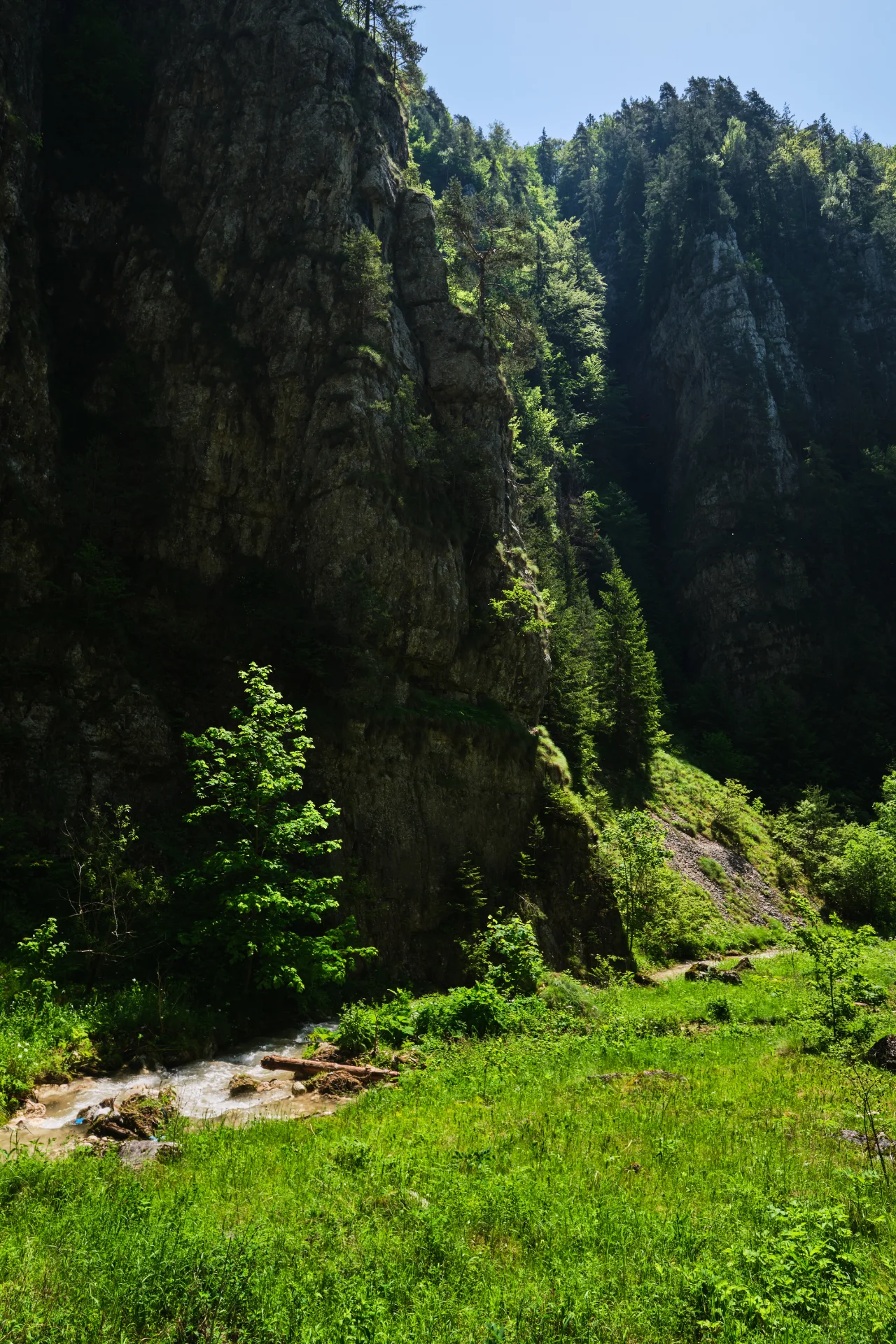
We then descend to the village of Podu Dâmboviței, located in a small spectacular depression, and from here we can enter a secondary road that passes through the Dâmbovicioara Gorges, a spectacular natural reserve, where the high rocky walls seem to collapse over the narrow road. Part of a larger limestone area, located in the southern part of the Piatra Craiului mountains, these are approximately 2 kilometers long and are characterized by sharp ridges, towers, caves and waterfalls. Nearby we can also discover the lesser-known and wilder Dâmboviței, Dâmboviței, Brusturet and Ghimbav Gorges. We can also enter the Dâmbovicioara Cave for a few minutes, which although does not have many interesting speleological formations, can give us an idea of the process of formation of these spectacular landforms.
On Dealul Sasului, near the village of Podu Dâmboviței, we can also admire the ruins of the Orația (Oratea) fortress, whose origins are still debated by historians, but it certainly defended the old road between Brașov and Câmpulung. Further on, we cross another hill, from where we can admire the splendid view of the last settlement in this wonderful destination, the village of Rucăr being located in another depression surrounded by hills and high peaks. First mentioned in 1418, Rucăr was once a place of refuge for Vlad Țepeș and the site of some important battles, today being more recognized for its ethnographic and pastoral traditions. Coming out of the mountains, we arrive at the small town of Câmpulung, the first medieval capital of Wallachia, surrounded by the enchanting hills of Muscel and several legendary monasteries…
Sights and Experiences
Places to See and Things to Do in Rucăr-Bran Corridor
Tourist Trails
The picturesque villages of this fascinating destination offer extraordinary travel experiences, and the unique landscapes can be discovered along tourist routes created over time. In addition to the mountain hikes to Bucegi and Piatra Craiului that start from here, numerous thematic ecotourism routes have also been arranged that explore the hills between the villages of the Rucăr-Bran corridor. The 8 routes accessible to almost any tourist traverse the villages of Șirnea, Moieciu de Sus, Fundata and Fundățica, and in addition to the unforgettable views, they also offer an emotional image of the authentic villages and traditions here. Another route adapted for cyclists also connects the villages of Măgura and Peștera, exploring the steep hills at the foot of Piatra Craiului. Also from these villages, several hiking trails start that first descend to the Zărnești Ravines or to the valleys at the foot of the majestic ridge, to then climb steeply to the heights. On the other side of the corridor, other long but charming hikes follow the Bucegi valleys to the western peaks of these mountains.
Dâmbovicioara Gorges and Cave
Cave visiting hours: 9-17 | Prices: 25 lei/adult
One of the most interesting and popular attractions in the Rucăr – Bran corridor, the Dâmbovicioara Gorges are part of the Piatra Craiului National Park and are located between the villages of Podu Dâmboviței in the south and Dâmbovicioara in the north. With a length of approximately 2,400 meters, they can be easily traveled along the narrow, but paved road. The gorges were formed by the action of the waters of the Dâmbovicioara River, both on the surface and underground, on limestone rocks that are interspersed with sections of conglomerate rocks. Along the gorges, spectacular landscapes can be admired, with steep walls that sometimes reach 200 meters in height, but also the numerous karst formations that appear on the slopes. Although there are many caves in this area, only the Dâmbovicioara Cave is open for visits, being located approximately 1 kilometer north of the village of the same name. The route through the cave is quite short (250 meters) and there are no spectacular cave formations, but the visit allows you to discover how they were formed. Continuing up the valley, you enter the Brusturet Gorges, with several other interesting sectors, but less impressive than those of Dâmbovicioara. Here you can also admire a splendid waterfall (Izvoarele din Plai) where water springs from under the rocks, and the rural landscapes are charming.
Dâmbovița Gorges
At the confluence of the Dâmbovița and Dâmbovicioara rivers lies the village of Podu Dâmboviței, a starting point for a multitude of mountain adventures. Although the Dâmbovicioara Gorges are better known, Dâmbovița has also created several impressive gorge sectors that are worth exploring. Heading north, just outside the village, you will find the Small Dâmbovița Gorges (Plaiul Mare Gorges), approximately 1.5 kilometers long and featuring wild landscapes. Here is also the Bear Cave or Surpat Corner Cave, where numerous cave bear fossils have been discovered and which contains numerous superb speleological formations. It has been declared a nature reserve and can be easily visited in any season. In the southern part of the village of Podu Dâmboviței, several spectacular gorge sectors have formed, both on the main river (Cheile Mari ale Dâmboviței) and on its tributaries (Cheile Ghimbavu, Cheile Cheița). With a length of several kilometers, in which several narrow sections follow each other where high rocky walls approach menacingly, but also small enchanting waterfalls, these can be crossed by water in drier periods.
Cheile Grădiștei Complex
One of the most developed tourist complexes in the country, it is located between the villages of Cheia and Fundata, near the national road that passes through the Rucăr-Bran corridor. Over the past decades, a variety of tourist and sports locations and services have been built and developed here, all functioning as a complete destination. From numerous accommodation units, hotels and superb villas, to ski slopes, an Olympic ice rink or a base for cross-country skiing and biathlon, there are countless things to experience in the Cheile Grădiștei – Fundata complex. The three ski slopes are equipped with ski lifts and artificial snow facilities, the ice rink is of Olympic dimensions, and the biathlon arena has even hosted international competitions. In addition to these, there is a multi-purpose hall, football and tennis courts, a spa center and more. Here you can also admire the spectacular landscapes of the Grădiștei Gorges, with portions where the river has created true narrow canyons among the high cliffs.
Other Interesting Discoveries
Lesser known places and activities in Rucăr-Bran Corridor
Bran Monastery
Set in an idyllic spot on Balaban Hill, above the village of Şimon, this spiritual destination has a fairly short history, having been founded as a hermitage in 2006. It became a monastery a few years later, and now includes a magnificent new church and several other buildings. The charm of the location is unique, offering sweeping views of the surrounding mountains and hills.
Amfiteatrul Transilvania
The tourist complex is located on the top of a hill in the village of Moieciu de Sus, at an altitude of approximately 1,200 meters. Tourists can reach it either by car on a local road in the village, or on a few short tourist trails. Most people come to the Transylvanian Amphitheater for the memorable views over the villages in and on the valley, but also towards the peaks of the Bucegi and Piatra Craiului mountains. In addition, the complex includes unique accommodation, an excellent restaurant and various leisure activities.
Oratia Fortress
Among the most enigmatic historical monuments in the Rucăr – Bran corridor is located on a hill in the western part of the village of Podu Dâmboviței, close to the national road. The Oratia Fortress (also known as Orația, Oratea, Cetatea Neamțului, a Dâmboviței or Castelul Piatra Craiului) has still uncertain origins, but it was most likely built in the 13th century by the Teutonic Knights. Other researchers believe that the fortification was built by mountain leaders on the ruins of a former Roman fort. Having small dimensions, the fortress guarded the road connecting Wallachia to Țara Bârsei from the top of a steep hill. For a long time, only the ruins of some walls reminded of its existence, but there are projects to reconstruct the monument and include it in the tourist circuit.
Casa Castorului
A unique facility was recently built in the village of Rucăr, representing a visitor center dedicated to an animal that is less known in Romania, but very important for ecosystems. A project of the Conservation Carpathia foundation, this Beaver House includes an interesting exhibition about the unseen world of these animals and their role in nature. Another attraction is the interesting architecture of the location, a construction that combines local traditions in woodworking with the appearance of a beaver shelter in the wild.
Opening hours: 10-17 | Prices: 10 lei/adult
Dragoslavele Hermitage
Just a few kilometers south of Rucăr, in the village of Dragoslavele, an impressive historical and religious monument can be visited. The Dragoslavele monks’ hermitage includes the splendid wooden church “Sfântul Gheorghe”, originally built at the beginning of the 18th century in the village of Luna de Sus in Cluj County. After being moved for a while to Predeal, it was finally brought here, and the Dragoslavele hermitage developed around it. Inside, you can admire the old naive painting, and the complex also includes the patriarchal residence with several buildings and a small park.
Accommodation Recommendations
The best lodging options in Rucăr-Bran Corridor
Rating 9.8 from 116 reviews!
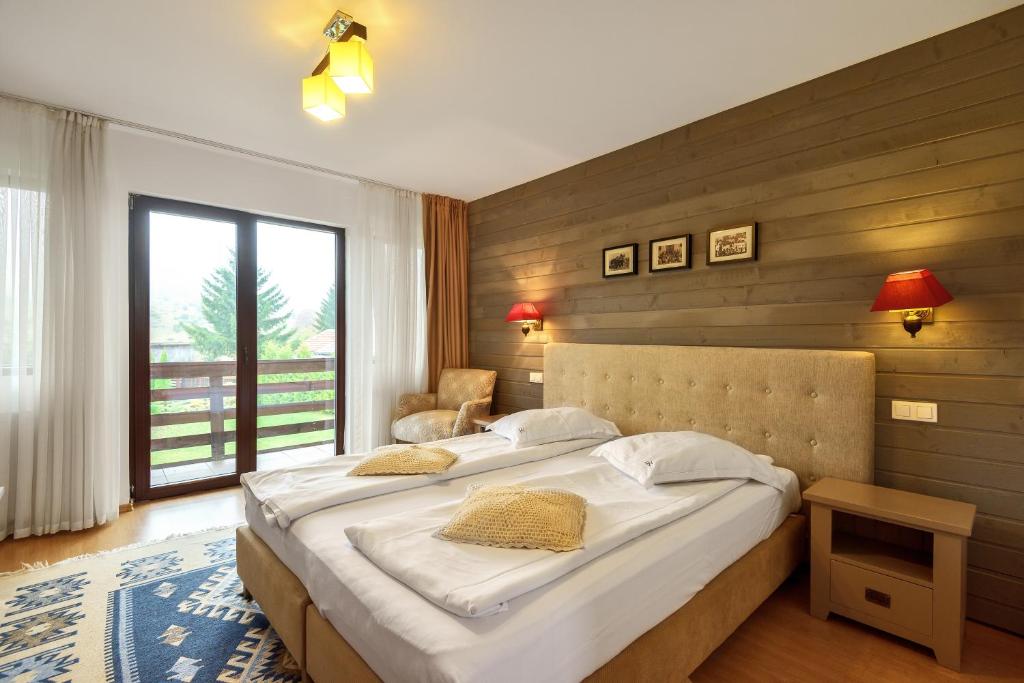
A gorgeous traditional guesthouse in the village of Măgura, it offers cozy rooms with rustic décor, a shared lounge, garden, and private parking!
Village of Măgura, 167A
Rating 9.1 from 319 reviews!
A unique and complete accommodation experience, the guesthouse offers accommodation for adults in superb rooms, a wellness and spa center, a restaurant and other activities!
Village of Peștera, 187
Rating 9.8 from 20 reviews!
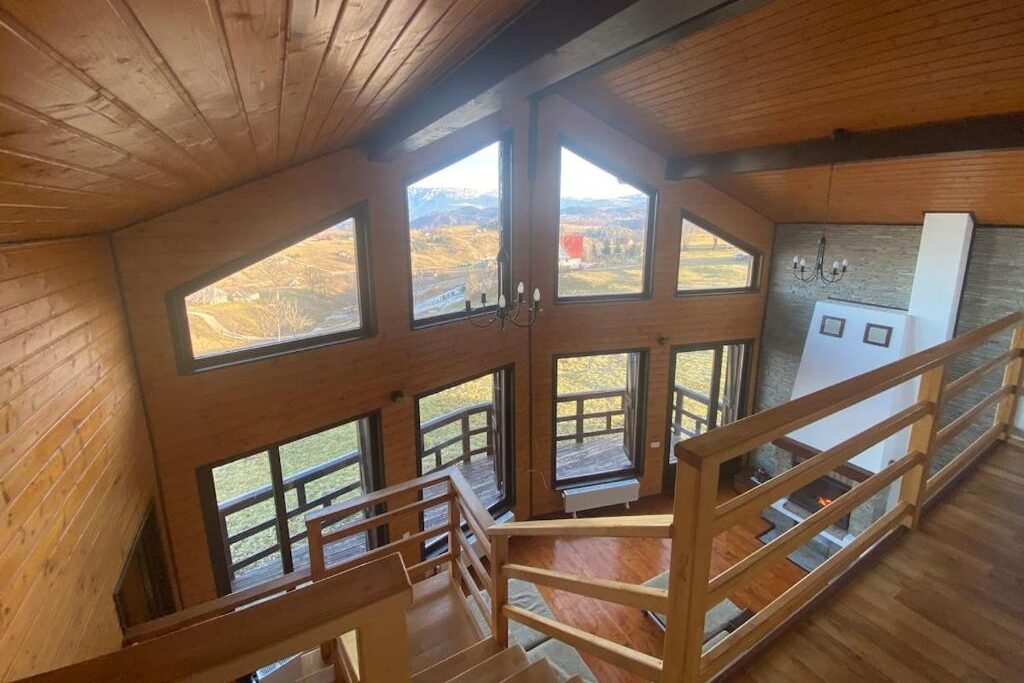
Located in a quiet area of Şirnea village, this traditional cottage has a gorgeous panoramic view, two bedrooms, a spacious living room and parking!
Village of Șirnea, 245C
Rating 8.3 from 531 reviews!
Part of the Cheile Grădiștei tourist complex, this hotel offers spacious rooms with all amenities, a traditional restaurant, spa center and other activities!
Village of Moieciu de Jos, no.32
Rating 9.0 from 381 reviews!
Located in the center of Fundata village, this popular guesthouse offers accommodation in very welcoming rooms, a traditional restaurant, garden and terrace!
Village of Fundata, 45
Rating 9.8 from 413 reviews!
Located in the village of Şimon, approximately 6 km from Bran Castle, this guesthouse, highly appreciated by guests, offers rooms with a rustic ambiance and superior services!
Iancu Gonțea St., village of Șimon