16

Curtea de Argeș

Monastery and Town

The church’s refined stone ornaments have been shining under the sun’s rays for many centuries, in perfect harmony with the feeling of tranquility offered by this masterpiece of Romanian cultural heritage that carries the memory of great leaders, kings and saints!

Curtea de Argeș Monastery and Town - 100 Destinations of Romania
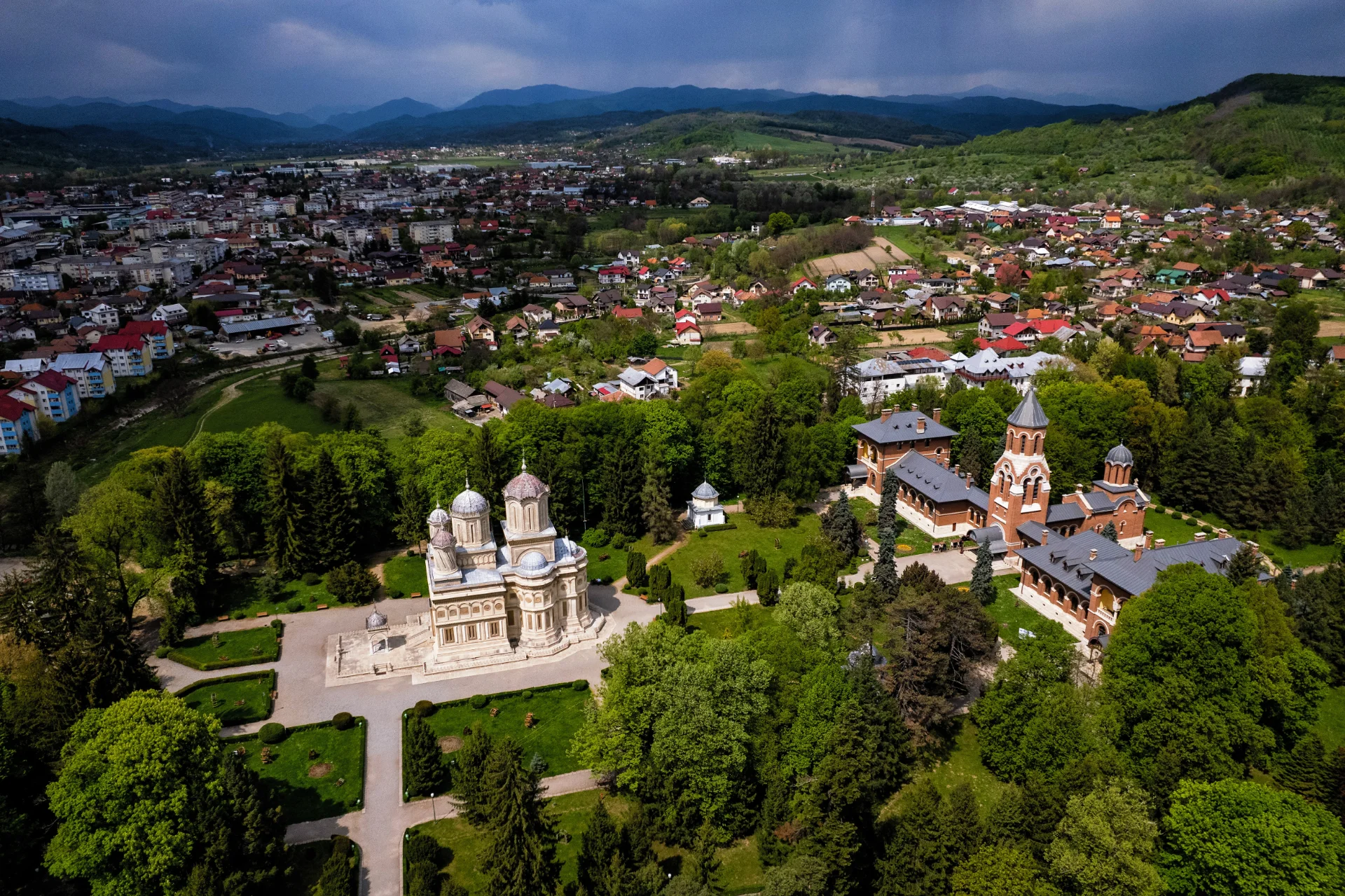
Curtea de Argeș Monastery Ⓒ Silviu-Florin Salomia

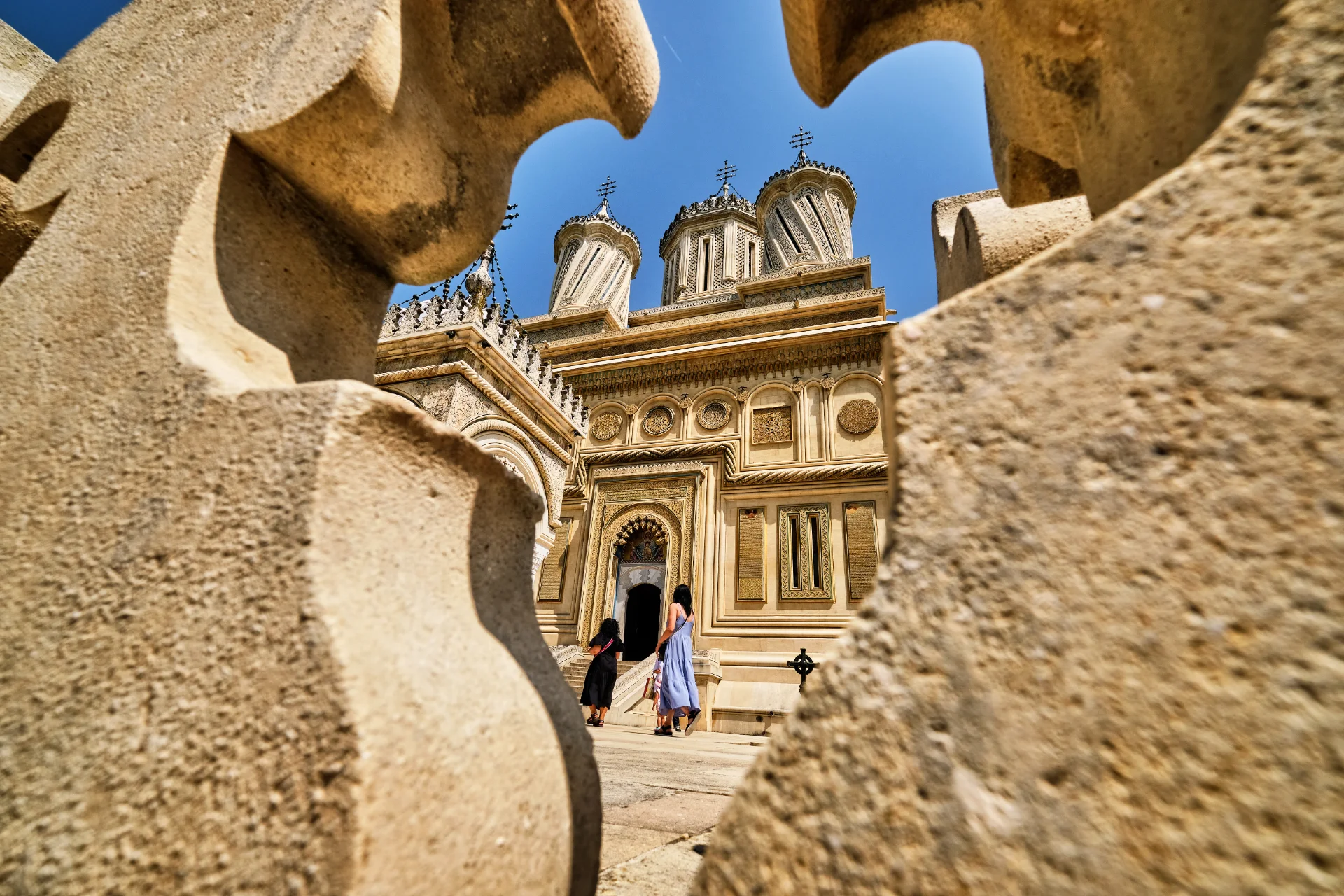
Before ascending again into the kingdom of the wild mountains, we stop on the banks of the Argeș River to contemplate the perfection of a monument that has delighted and inspired entire generations of travelers and pilgrims. There are many places that are imprinted on our souls from the first encounter, but few have such a profound impact as the stone masterpiece of Curtea de Argeș. Following in the footsteps of the rulers, kings and queens who have worshipped here throughout the centuries, we discover an architectural jewel that adorns a small provincial town at the foot of the Carpathians.

Considered one of the most beautiful and important monuments in Romania, the Curtea de Argeș Monastery has a history of over five centuries, being admired for its unique and valuable cultural heritage. The small town of Curtea de Argeș was much more important in the medieval period and is linked to the beginnings of Wallachia as an organized state. It was the capital during the reign of Basarab I “the Founder” and continued to have a central role for several more centuries. Curtea de Argeș Monastery was founded by ruler Neagoe Basarab and was built between 1515 and 1517, with the interior paintings being completed ten years later by the famous Dobromir of Târgoviște.

Over time, the monastery has also gone through tragic events, including wars, attacks, earthquakes and fires. After two fires affected several nearby buildings, the complex was renovated by the famous French architect Andre Lecomte du Nouy, ​​between 1875 and 1886. Although the works brought some improvements, they also changed many of the original authentic features. The royal palace complex on the eastern side began to be built in 1886, later being transformed into an episcopal palace. The monastery is also a necropolis for former rulers of Wallachia, as well as for the royal family of Romania.

Search for Flights to Romania with Booking.com!

Curtea de Argeș Monastery and Town - 100 Destinations of Romania
Curtea de Argeș Monastery Ⓒ Silviu-Florin Salomia
Curtea de Argeș Monastery and Town - 100 Destinations of Romania
Curtea de Argeș Monastery Ⓒ Silviu-Florin Salomia
Curtea de Argeș Monastery and Town - 100 Destinations of Romania
Curtea de Argeș Monastery Ⓒ Silviu-Florin Salomia
Curtea de Argeș Monastery and Town - 100 Destinations of Romania
Curtea de Argeș Monastery Ⓒ Silviu-Florin Salomia

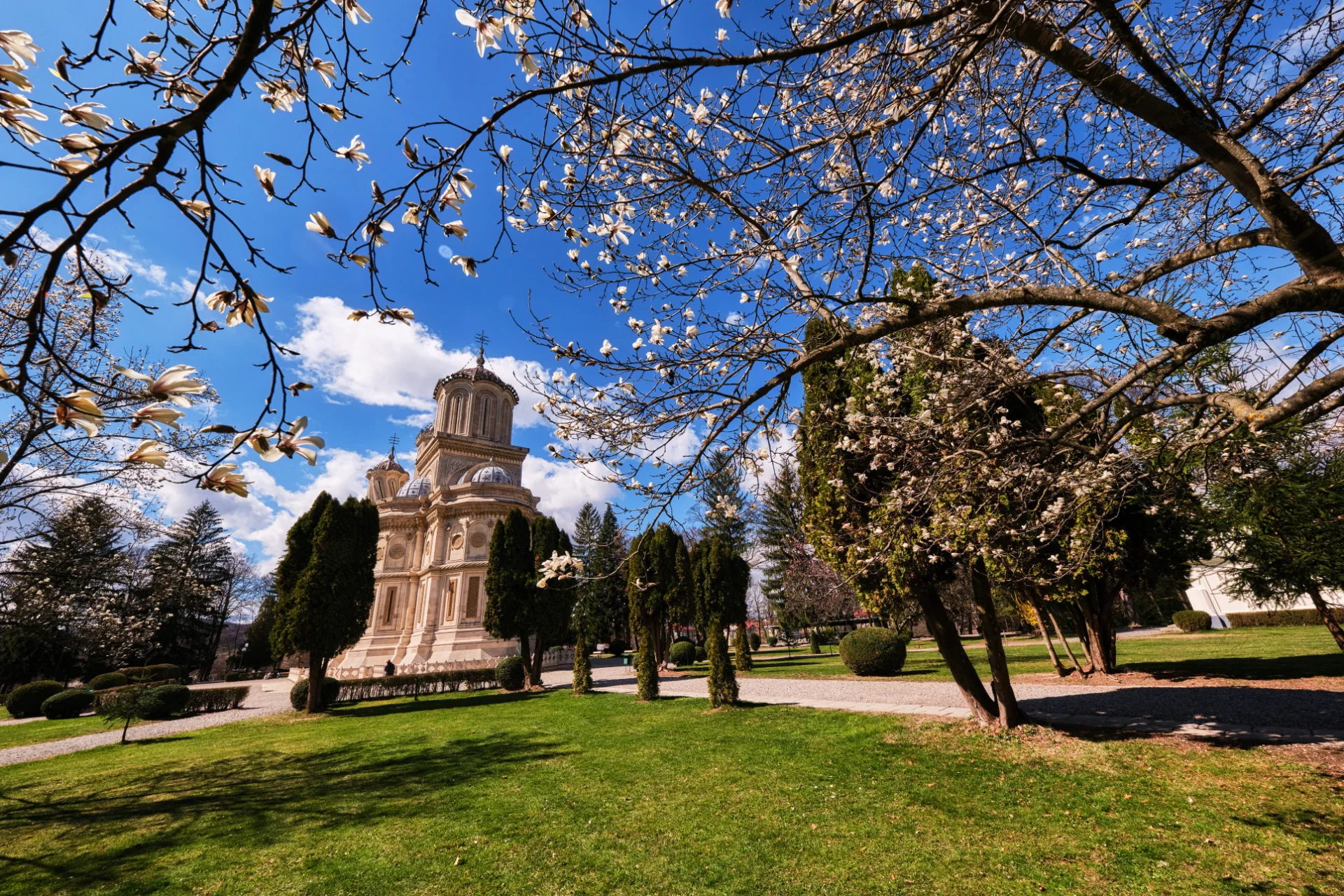
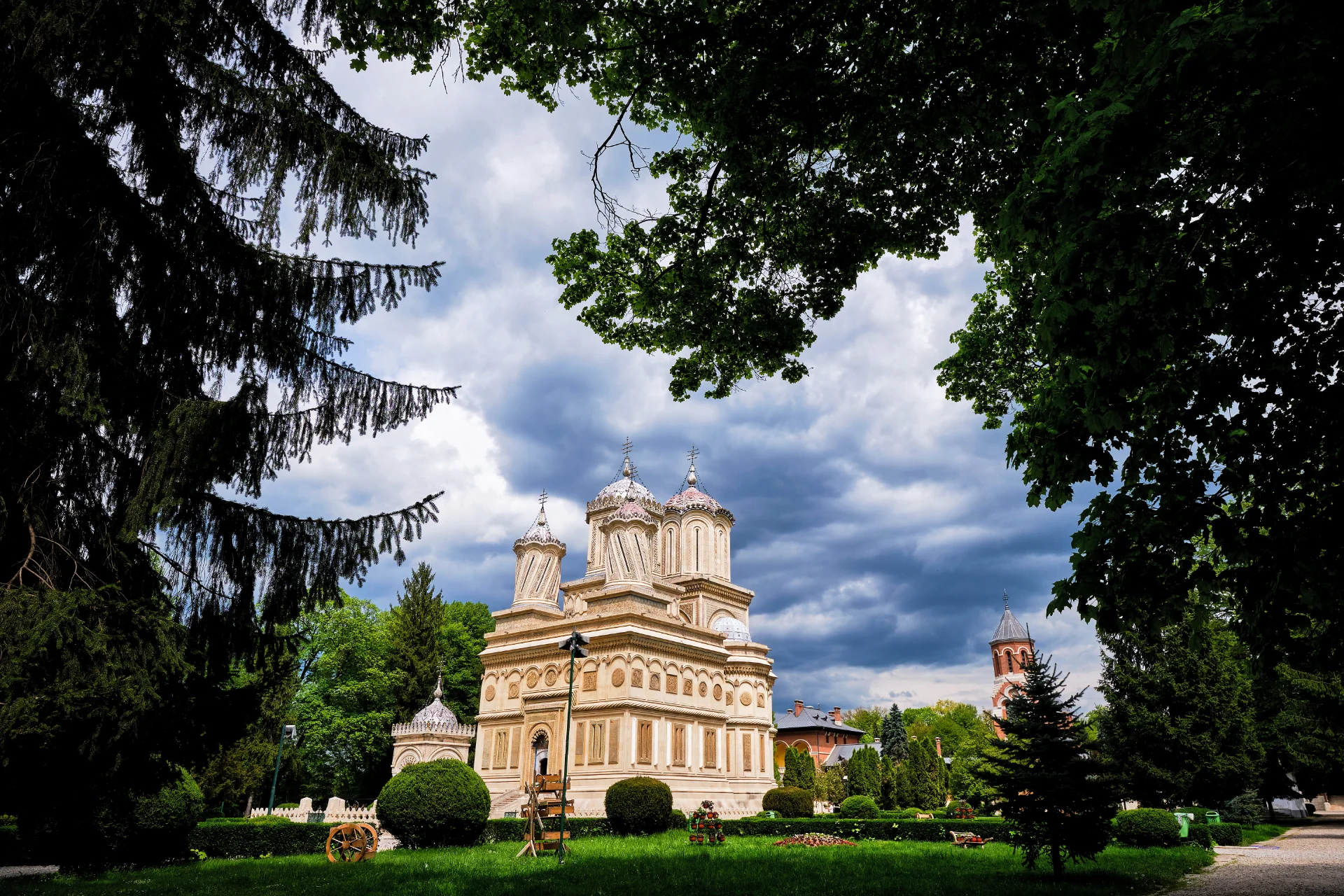
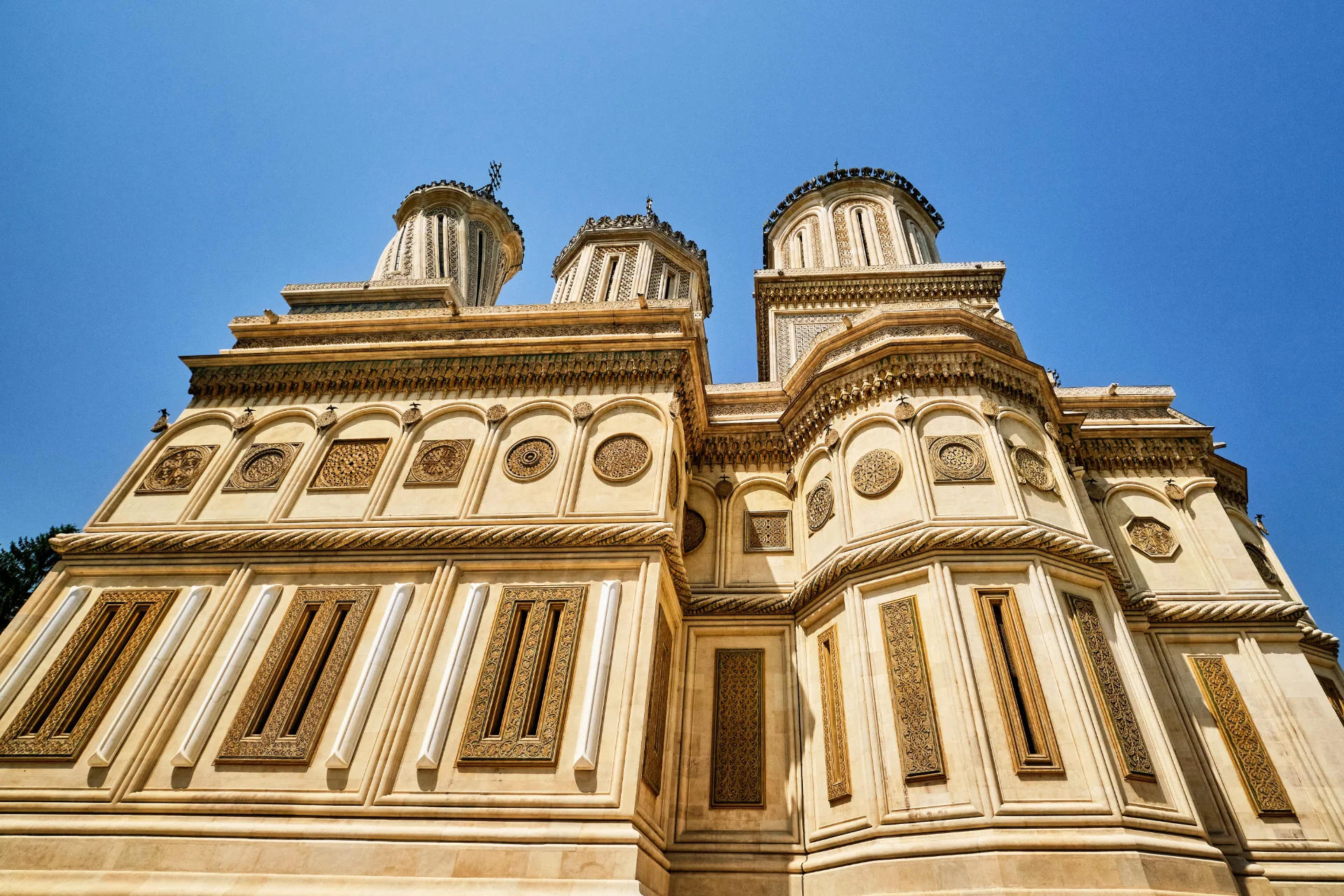
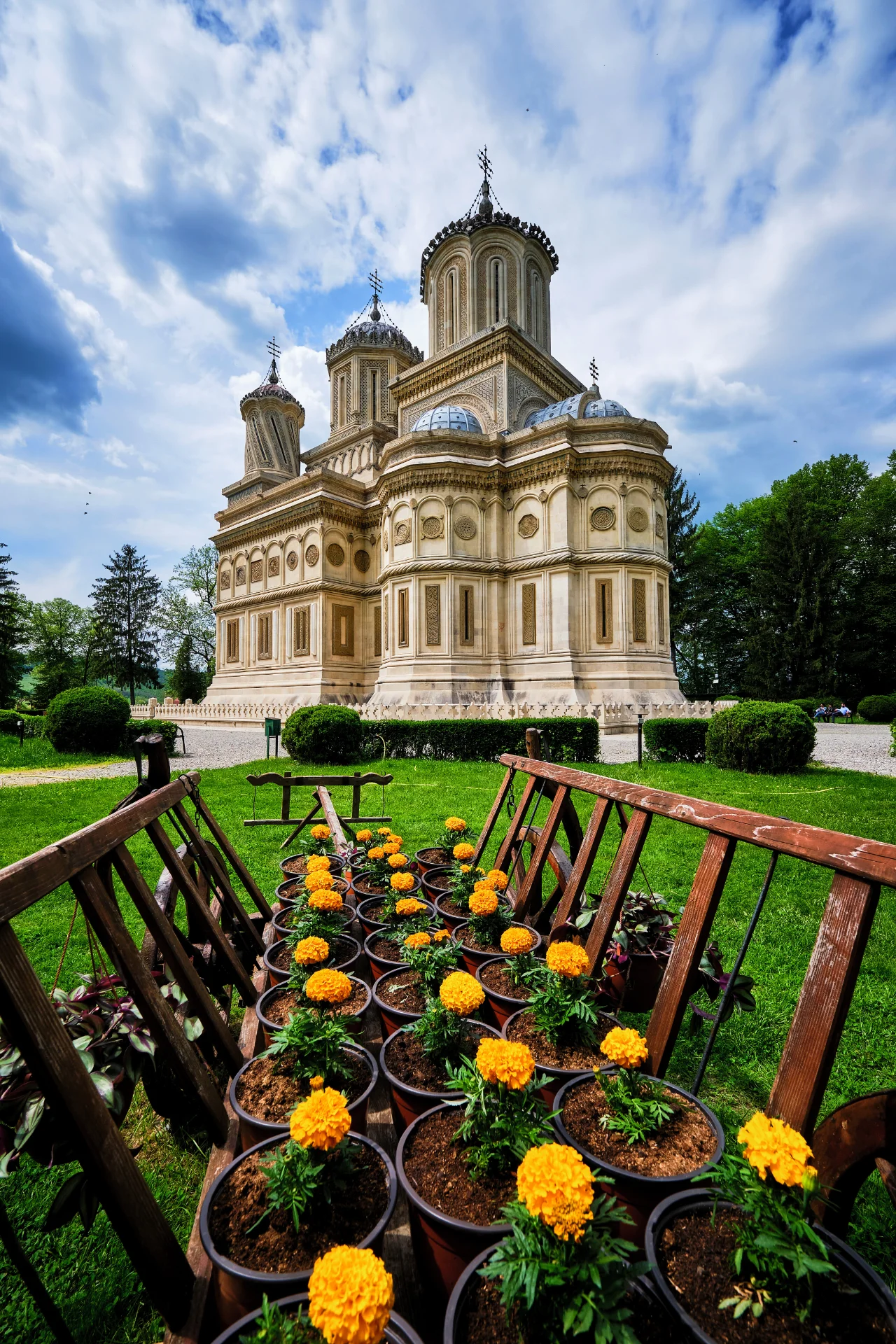
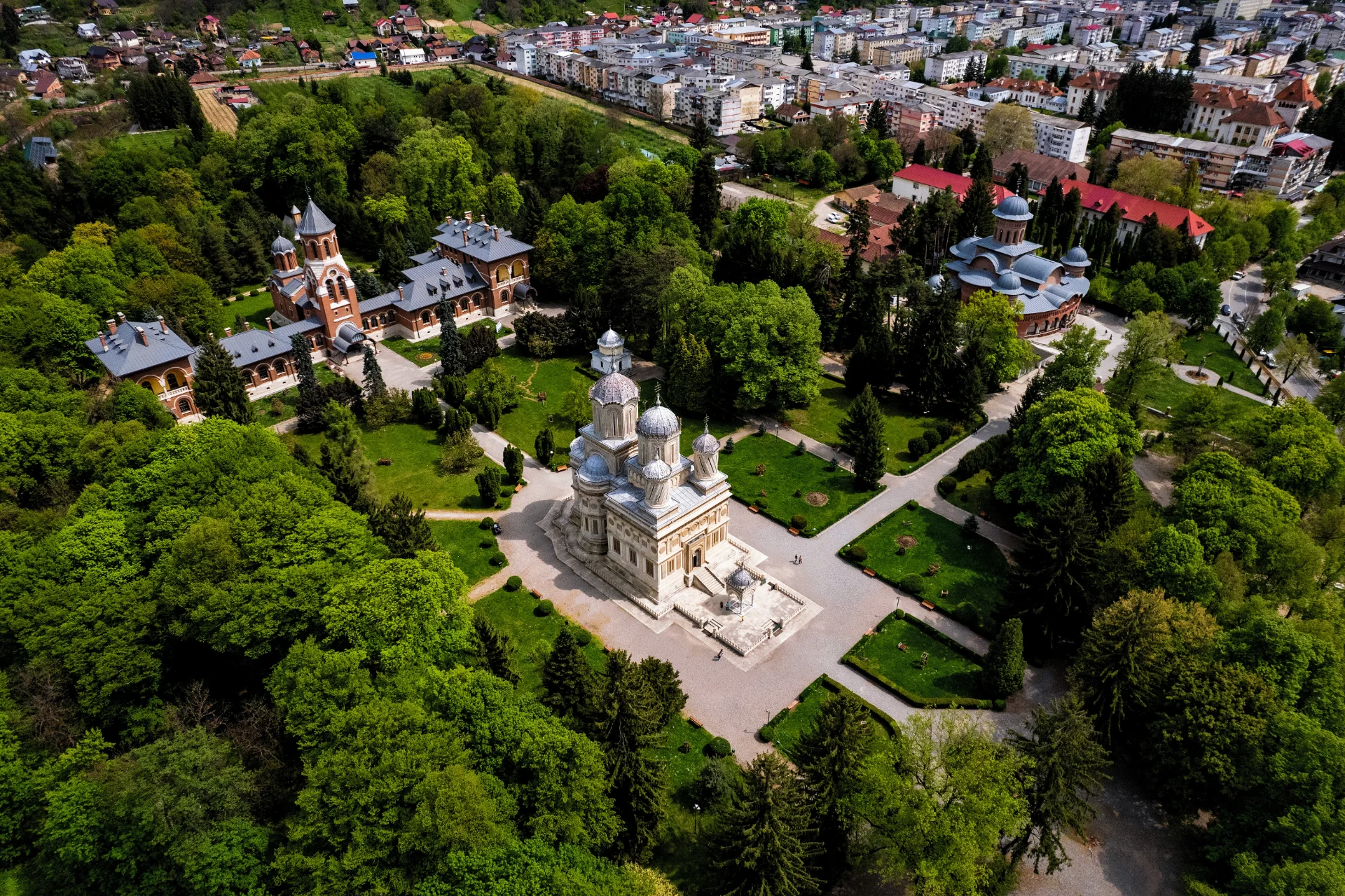
We find the city hidden between the hills of the Argeș Valley, at the intersection of the roads connecting Bucharest to Transylvania (A1 and DN7C highways) and Câmpulung to Râmnicu Vâlcea (DN73C). The amazing complex of monuments of the Curtea de Argeș Monastery is located in the northern part of the city and can be visited every day. We begin the memorable experience with the majestic Episcopal Church, whose shining silhouette rises in the center of a vast courtyard. Admired by travelers since the beginning, it is first noted for its harmonious shape and proportions, constituting a delight from any angle we look at it.

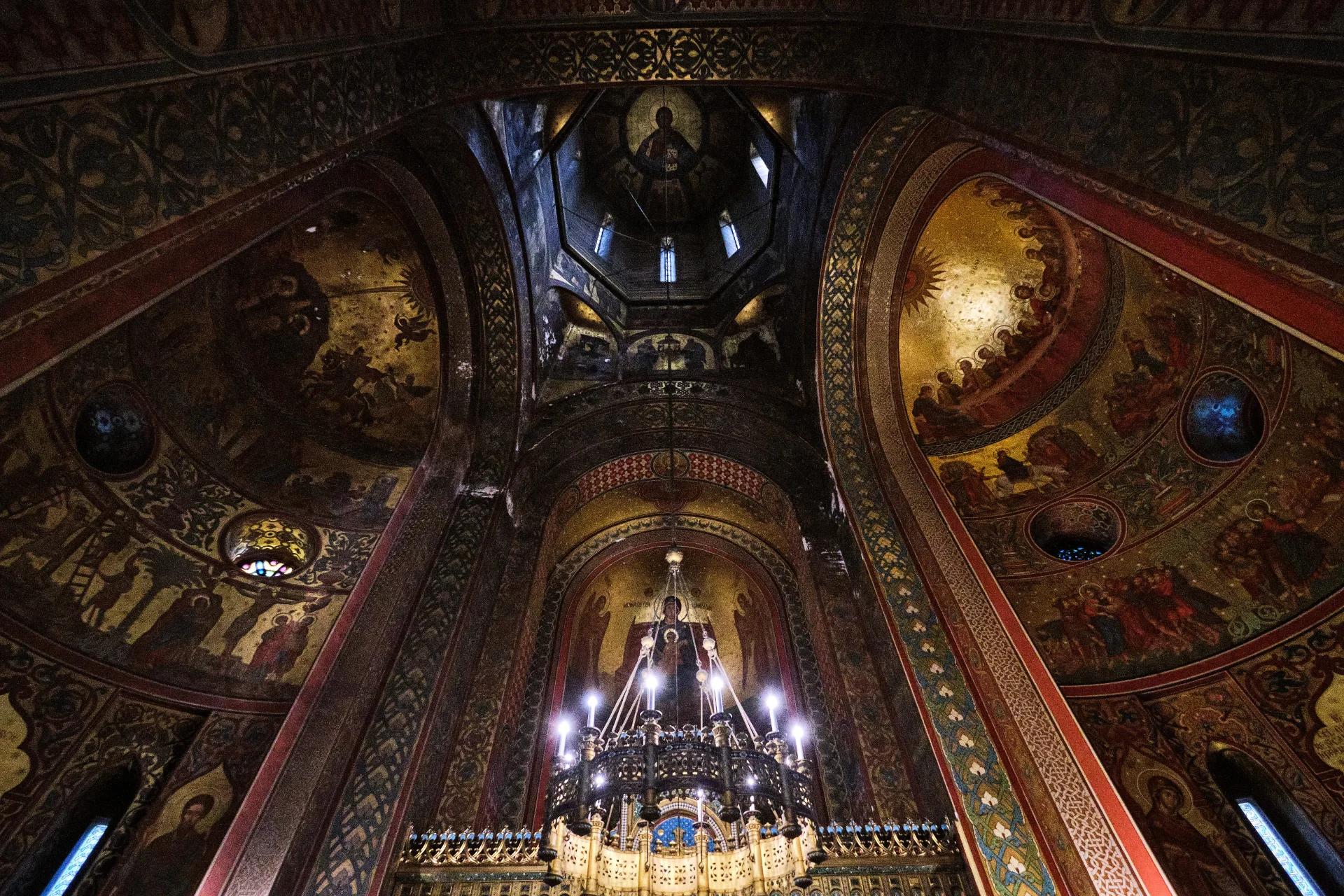
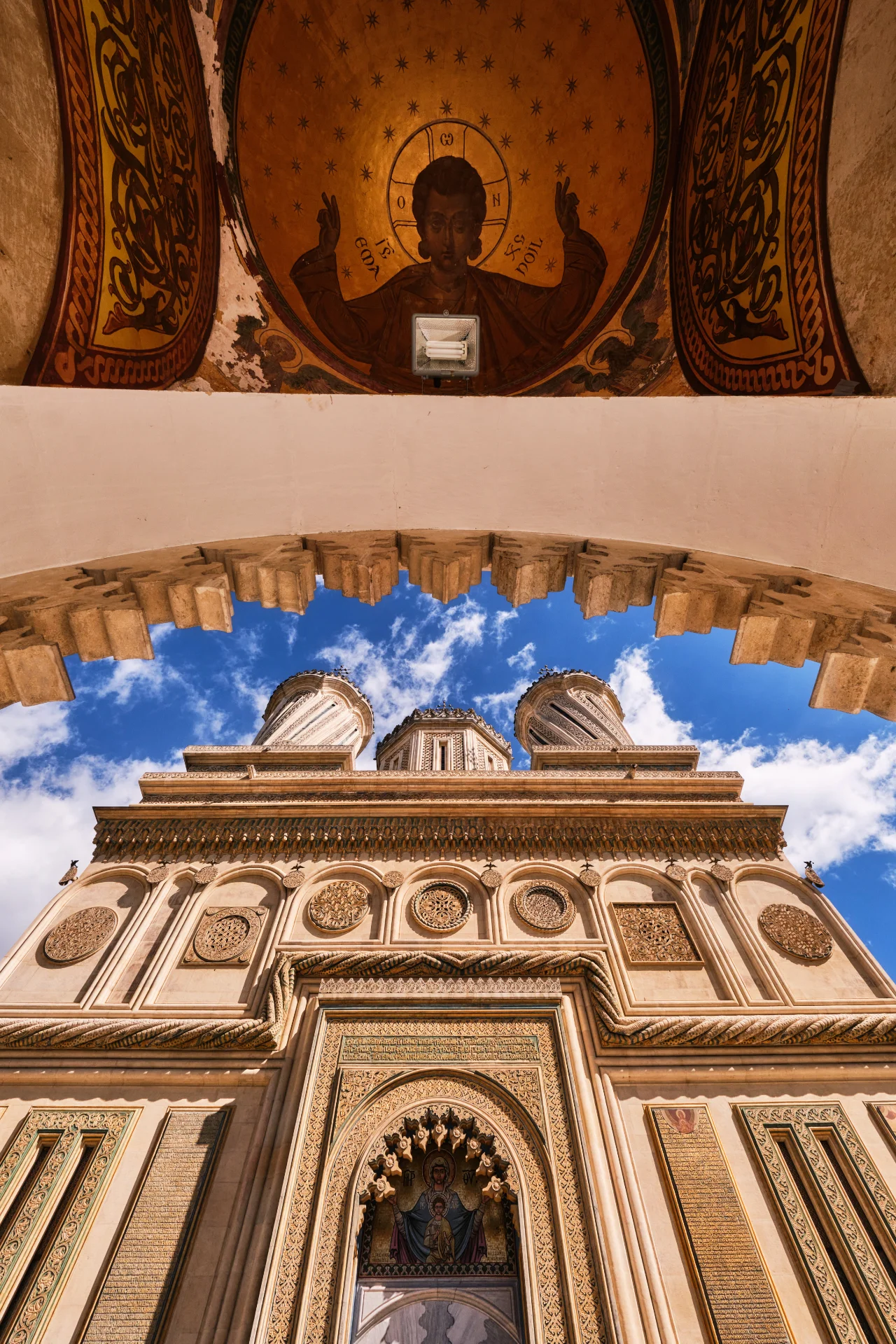
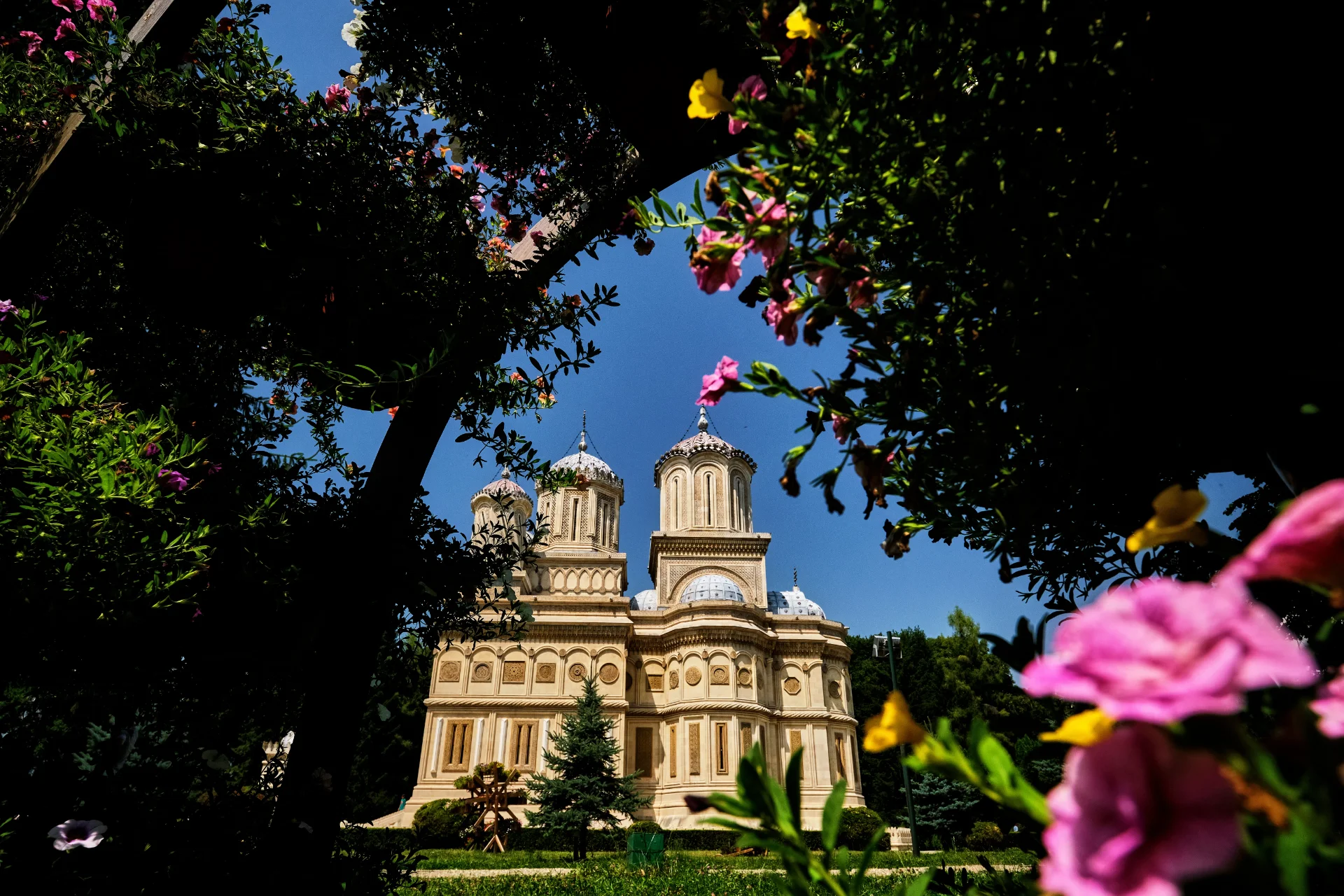
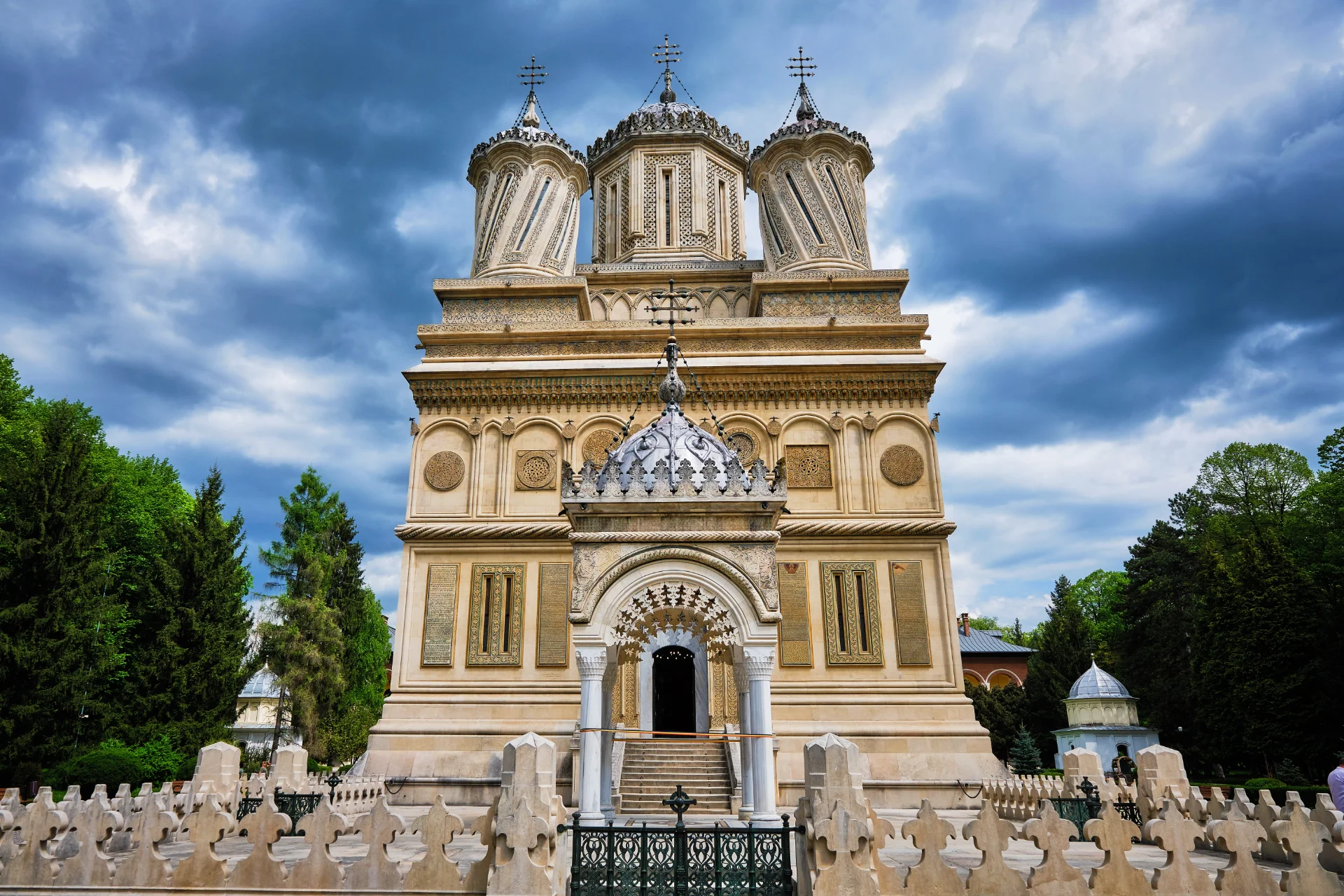
Erected on a stone platform, the church is made of yellowish limestone in a superb Byzantine style, being richly ornamented and having many unique features. These include the Caucasian and Islamic motifs of the decorations, the slender twisted spires or the small doves that decorate the facade. Right in front of the entrance is a splendid aghiasmatar gazebo, with marble columns, ornaments and beautiful paintings. Entering the church, we first admire the wide narthex that was used as a necropolis, supported by 12 ornate columns. Together with the nave and altar, this space completes the cross shape of the church. Inside we admire other treasures, including paintings by French and Romanian artists, old icons and the perfect iconostasis. Some of the tombs of the old rulers are still in the church, including that of the founder Neagoe Basarab.

Search for Lodging in Curtea de Argeș with Booking.com!

Curtea de Argeș Monastery and Town - 100 Destinations of Romania
New Episcopal Cathedral Ⓒ Silviu-Florin Salomia
Curtea de Argeș Monastery and Town - 100 Destinations of Romania
Episcopal Palace Ⓒ Silviu-Florin Salomia
Curtea de Argeș Monastery and Town - 100 Destinations of Romania
Curtea de Argeș Monastery Ⓒ Silviu-Florin Salomia
Curtea de Argeș Monastery and Town - 100 Destinations of Romania
Curtea de Argeș Monastery Ⓒ Silviu-Florin Salomia

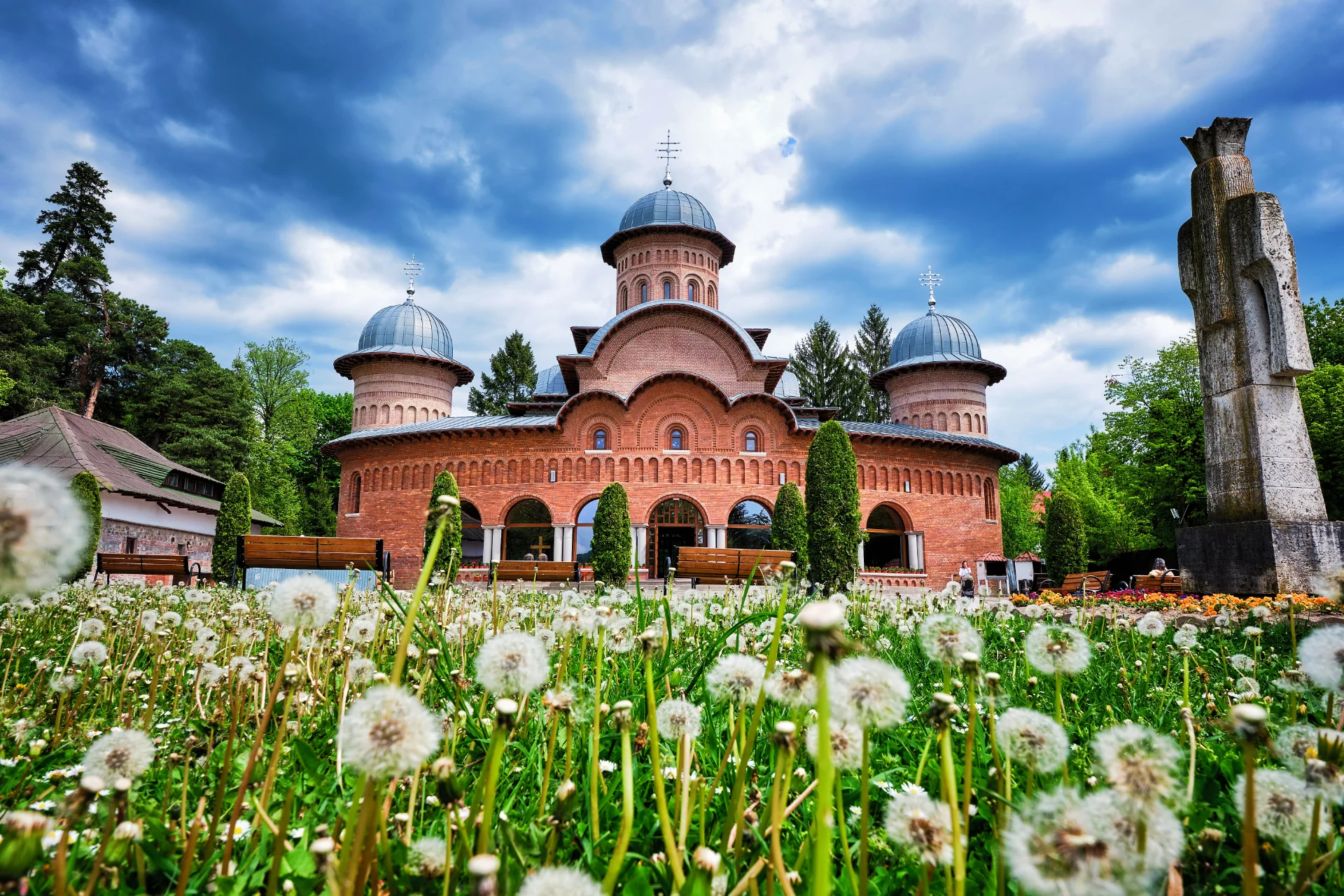
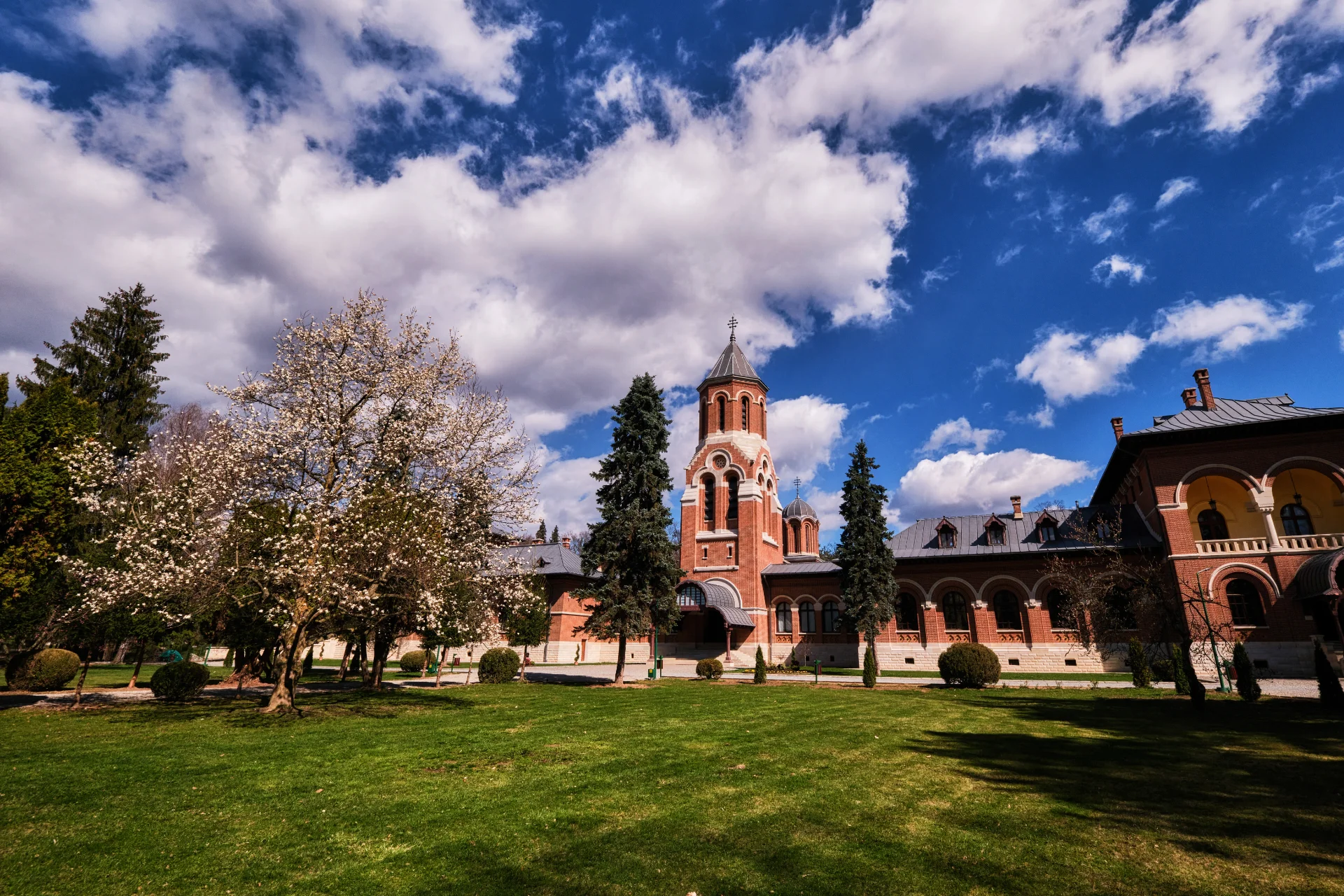
A short distance behind the church, we arrive in front of the impressive Episcopal Palace, used in the past as a royal summer residence. Today, it houses a beautiful chapel with the relics of Saint Filofteia, a tall bell tower, a splendid fresco telling the Legend of the Craftsman Manole and other spaces. Between 2009 and 2018, a new episcopal church and royal necropolis was built south of the old church, containing the tombs of the kings and queens of Romania, as well as two small chapels. The Curtea de Argeș monastery complex also contains a chapel built by King Carol II, a wooden church dating from the 18th century and the Manole Fountain.

The most famous legend surrounding the Curtea de Argeș Monastery is that of the craftsman Manole, who had to sacrifice his wife Ana to complete the masterpiece. Not wanting the craftsmen to create another place as beautiful as this one, the ruler abandoned them on the roof of the church. Manole and the other craftsmen tried to forge wings from shingles, but they collapsed nearby, and a spring appeared in that place that now bears his name!

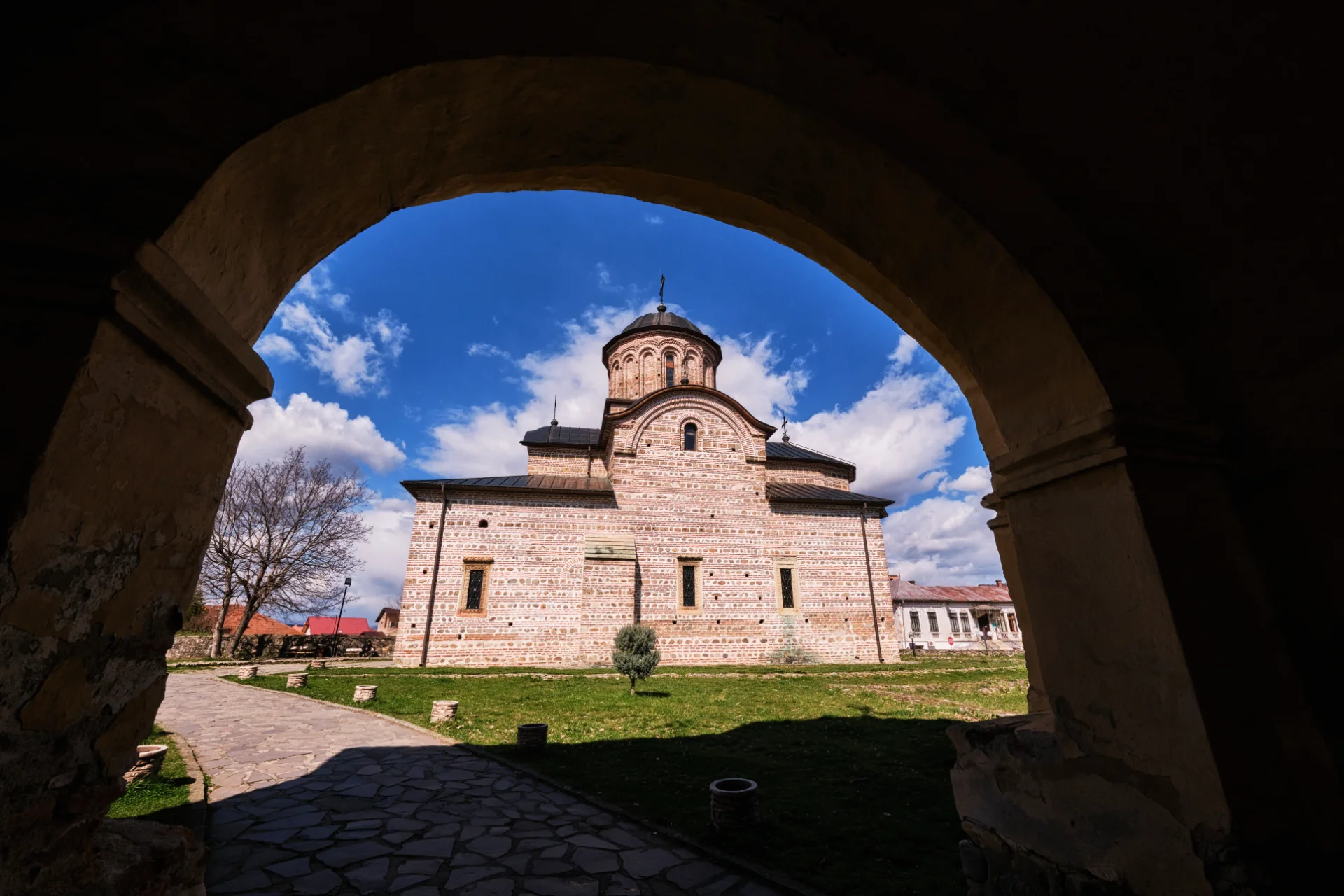
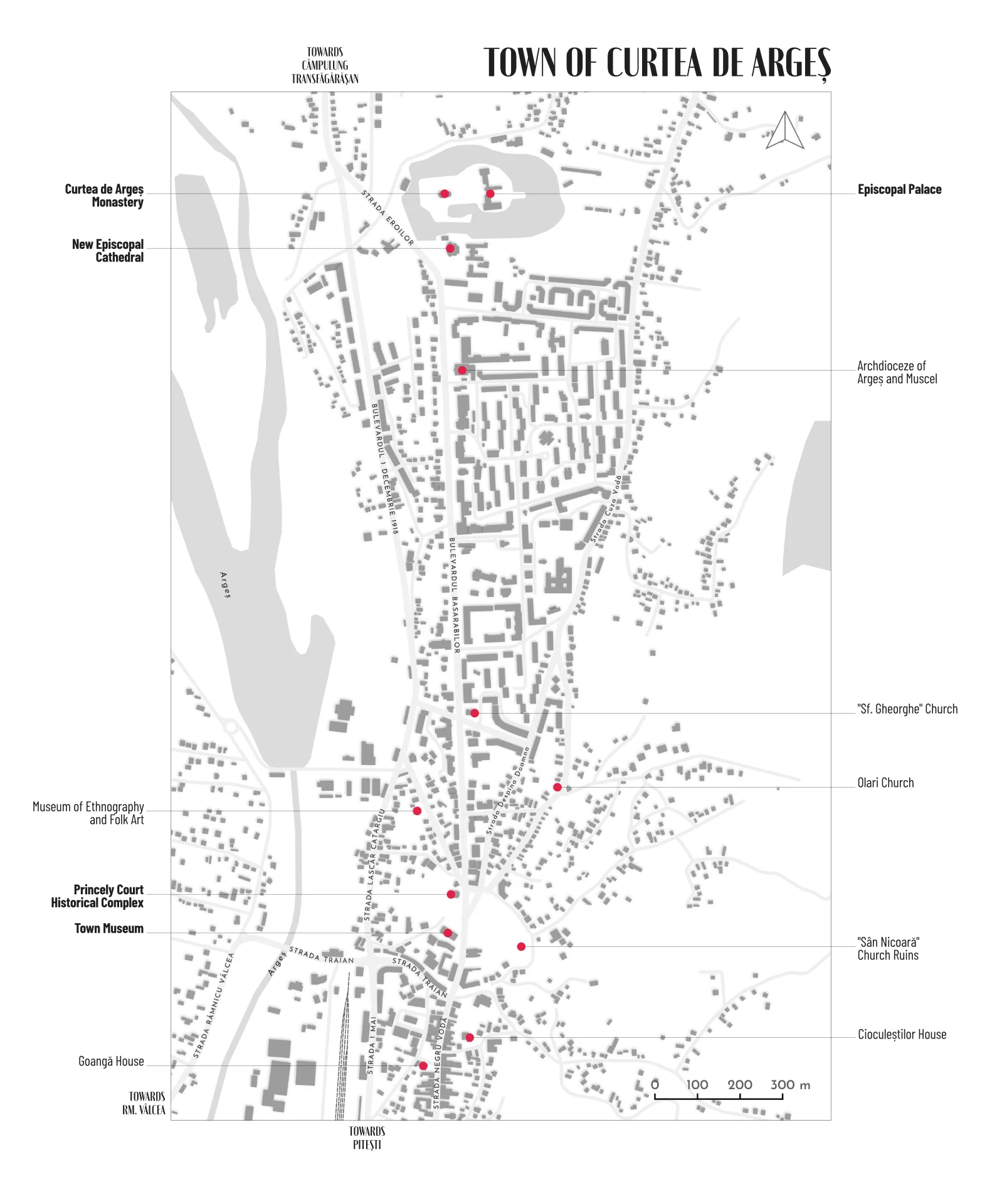
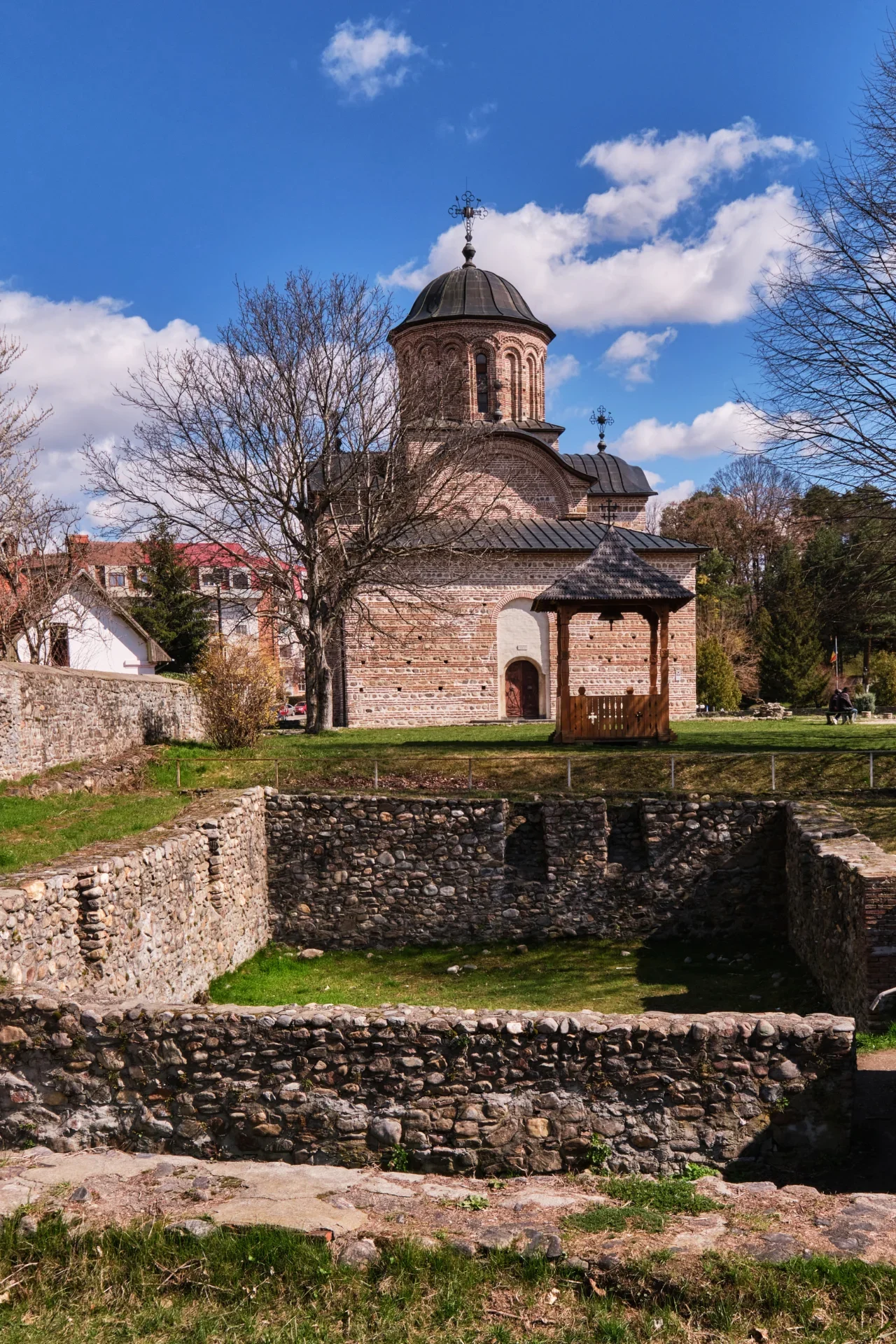
Even though many of the city’s old monuments have been lost over time, it still preserves a few treasures that remind us of the flourishing times of the medieval market. A little further south of the monastery we discover the vestiges of the Princely Court, which includes the ruins of the old houses of the rulers, of some towers and defensive walls, but also the “Saint Nicholas” Royal Church, a superb example of Romanian medieval architecture. It represents the oldest church founded by a voivode of Wallachia, the impressive interior paintings dating back to the mid-14th century.

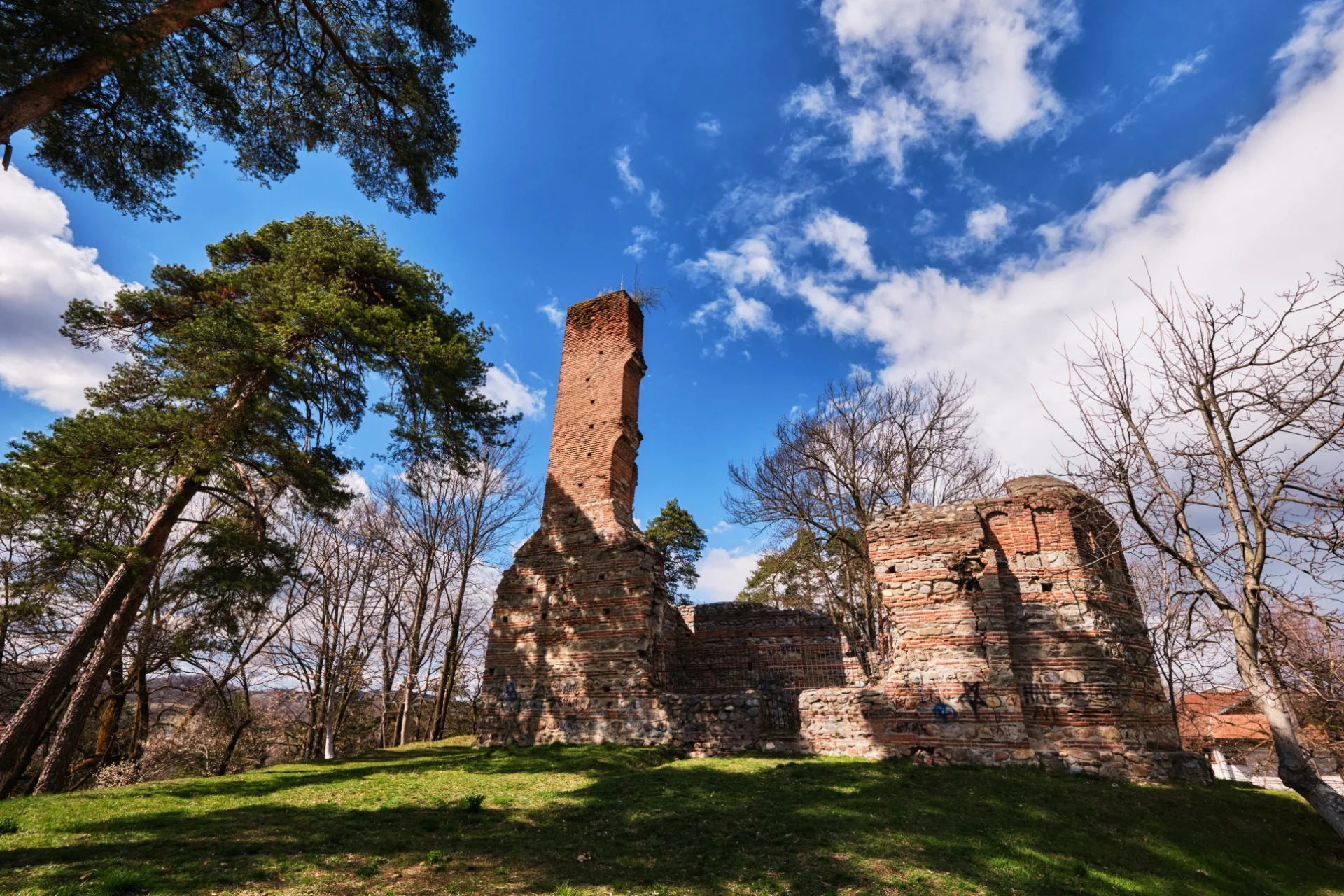
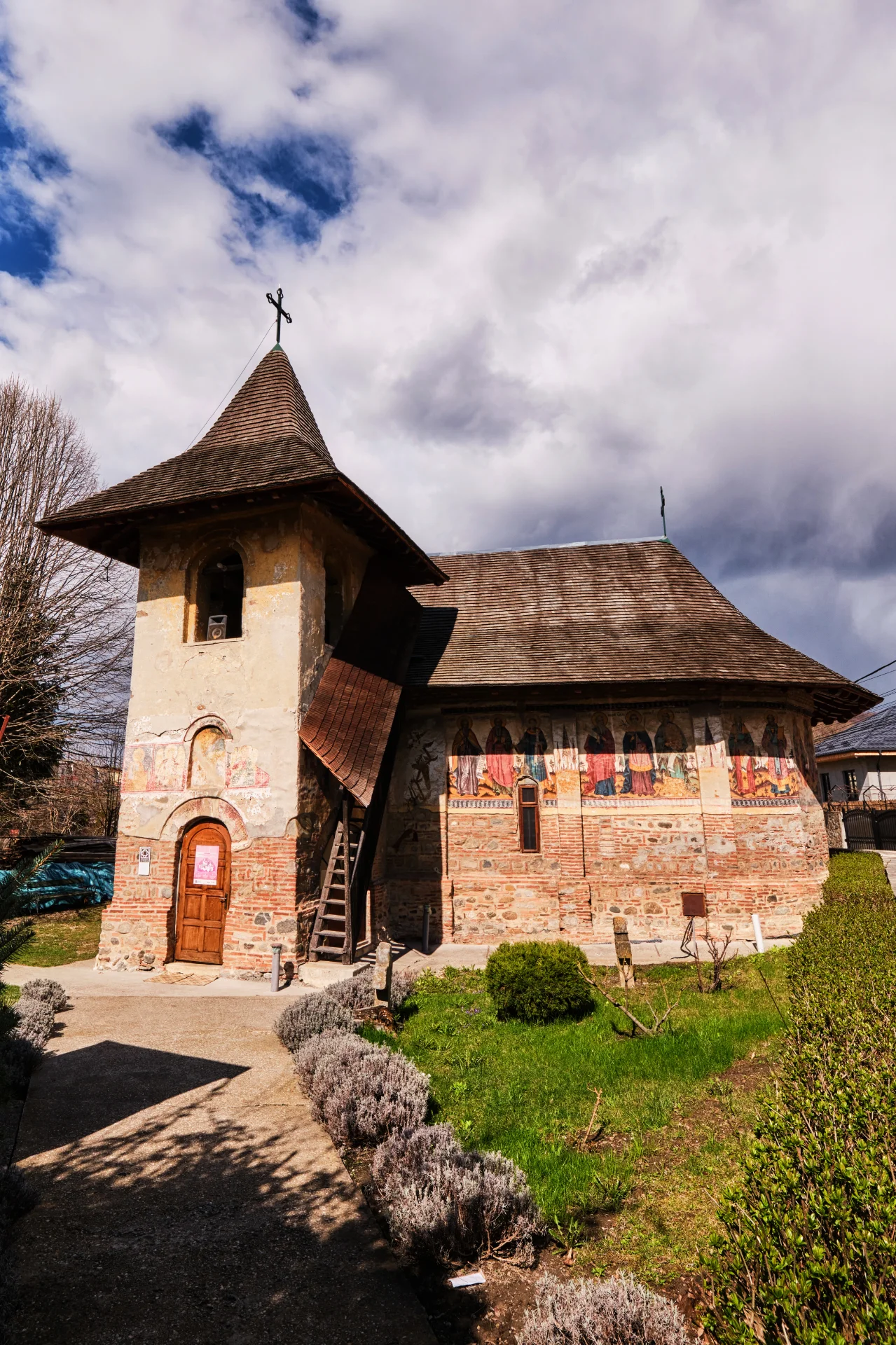
Right next to this ensemble we can also visit the Municipal Museum, which contains thousands of fascinating exhibits about the history of the settlement over time. Across the road from the Princely Court, in the center of a park, the ruins of the “Sân Nicoară” Church are still preserved, a place surrounded by amazing legends. Other interesting monuments in Curtea de Argeș include the Olari Church ensemble, a very old monument about whose origins little is known, but impresses with the special beauty of the painting, as well as other charming historical houses and buildings. We leave behind the almost unreal impression of the monastery and set off on a magnificent adventure along one of the most beautiful roads in the world, the Transfăgărășan

Curtea de Argeș Monastery and Town - 100 Destinations of Romania
Curtea de Argeș Monastery Ⓒ Silviu-Florin Salomia
Curtea de Argeș Monastery and Town - 100 Destinations of Romania
Curtea de Argeș Monastery Ⓒ Silviu-Florin Salomia

Sights and Experiences

Places to See and Things to Do in Curtea de Argeș
Curtea de Argeș Monastery

Considered one of the most beautiful and important monuments in Romania, the Curtea de Argeș Monastery has a history of over five centuries, being admired for its unique cultural heritage. The monastery was founded by Prince Neagoe Basarab and built between 1515 and 1517, with the interior paintings being completed ten years later by the famous Dobromir of Târgoviște. Over time, the monastery has also gone through tragic events, including wars, attacks, earthquakes and fires. After two fires affected several nearby buildings, the complex was renovated by the famous French architect Andre Lecomte du Nouy, ​​between 1875 and 1886. Although the works brought some improvements, they also changed many of the original authentic features.

The royal palace complex on the eastern side began to be built in 1886, later being transformed into an episcopal palace. The monastery is also a necropolis for former rulers of Wallachia, as well as for the royal family of Romania. At the center of the monument complex rises the majestic episcopal church. Admired by travelers since the beginning, it is first noted for its harmonious shape and proportions. Built on a stone platform, the church is made of yellowish limestone in a superb Byzantine style, being richly ornamented and having many unique features. These include the Caucasian and Islamic motifs of the decorations, the slender twisted spires or the small doves that decorate the facade.

Right in front of the entrance is a splendid aghiasmatar, with marble columns, ornaments and beautiful paintings. Inside, the first thing to notice is the wide narthex, used in the past as a necropolis and supported by 12 ornate columns. Together with the nave and altar, this space completes the cross shape of the church. Inside are other treasures, including paintings by French and Romanian artists, old icons, and a perfect iconostasis. Some of the tombs of the ancient rulers are still in the church, including that of the founder Neagoe Basarab. A short distance behind the church, the impressive Episcopal Palace was built, also used as a royal summer residence in the past.

Today, it houses a beautiful chapel with the relics of Saint Filofteia, a tall bell tower, a splendid fresco telling the Legend of the Master Manole, and other spaces. Between 2009 and 2018, a new episcopal church and royal necropolis was built south of the old church, containing the tombs of the kings and queens of Romania, as well as two small chapels. The Curtea de Argeș monastery complex also contains a chapel built by King Carol II, a wooden church dating from the 18th century, and Manole’s Fountain.
Curtea de Argeș Monastery and Town - 100 Destinations of Romania
Curtea de Argeș Monastery Ⓒ Silviu-Florin Salomia
Curtea de Argeș Monastery and Town - 100 Destinations of Romania
Curtea de Argeș Monastery Ⓒ Silviu-Florin Salomia
Town of Curtea de Argeș

Located in the northeastern part of Argeș County, approximately 50 kilometers from Pitești and along the national road 7C (Transfăgărășanul), the city on the Argeș Valley is surrounded by the Muscel hills. The small town of Curtea de Argeș was much more important in the medieval period and is linked to the beginnings of Wallachia as an organized state. It was the capital during the reign of Basarab I “the Founder” and continued to have a central role for several more centuries. Several of the most important rulers of Wallachia were born here, among whom Neagoe Basarab or Mircea the Elder stand out. After the capital was moved to Târgoviște, its importance began to decline, but it came back to light after the monastery was designated as a royal necropolis at the end of the 19th century. In addition to the monastery complex, Curtea de Argeș also preserves the ensemble of the princely court from the 13th-14th centuries.

Originally built by Voivode Seneslau, it was expanded and developed in the following centuries by Basarab I and Neagoe Basarab. Only a small part of the former domain has been preserved from the medieval period, the best preserved monument being the princely church “Saint Nicholas”. One of the oldest churches in the country, it was built in the Byzantine style during the reigns of the first three Romanian voivodes. Of exceptional value is the original painting of the church, made in the 14th century, but also some more recent fresco fragments. Other nearby structures include the gate tower, the ruins of two princely houses and the enclosure wall. Also belonging to the medieval princely court are the ruins of the Sân Nicoară church, located in the park on the other side of the boulevard. Nearby is the Municipal Museum, which presents the rich history of these places. Other interesting attractions in Curtea de Argeș include the Olari Church with its impressive exterior paintings, but also a lot of buildings declared historical monuments.

Curtea de Argeș Monastery and Town - 100 Destinations of Romania - Old Princely Church
Princely Court Ⓒ Silviu-Florin Salomia
Curtea de Argeș Monastery and Town - 100 Destinations of Romania
Traditional House Ⓒ Silviu-Florin Salomia

Other Interesting Discoveries

Lesser known places and activities in Curtea de Argeș
City Museum

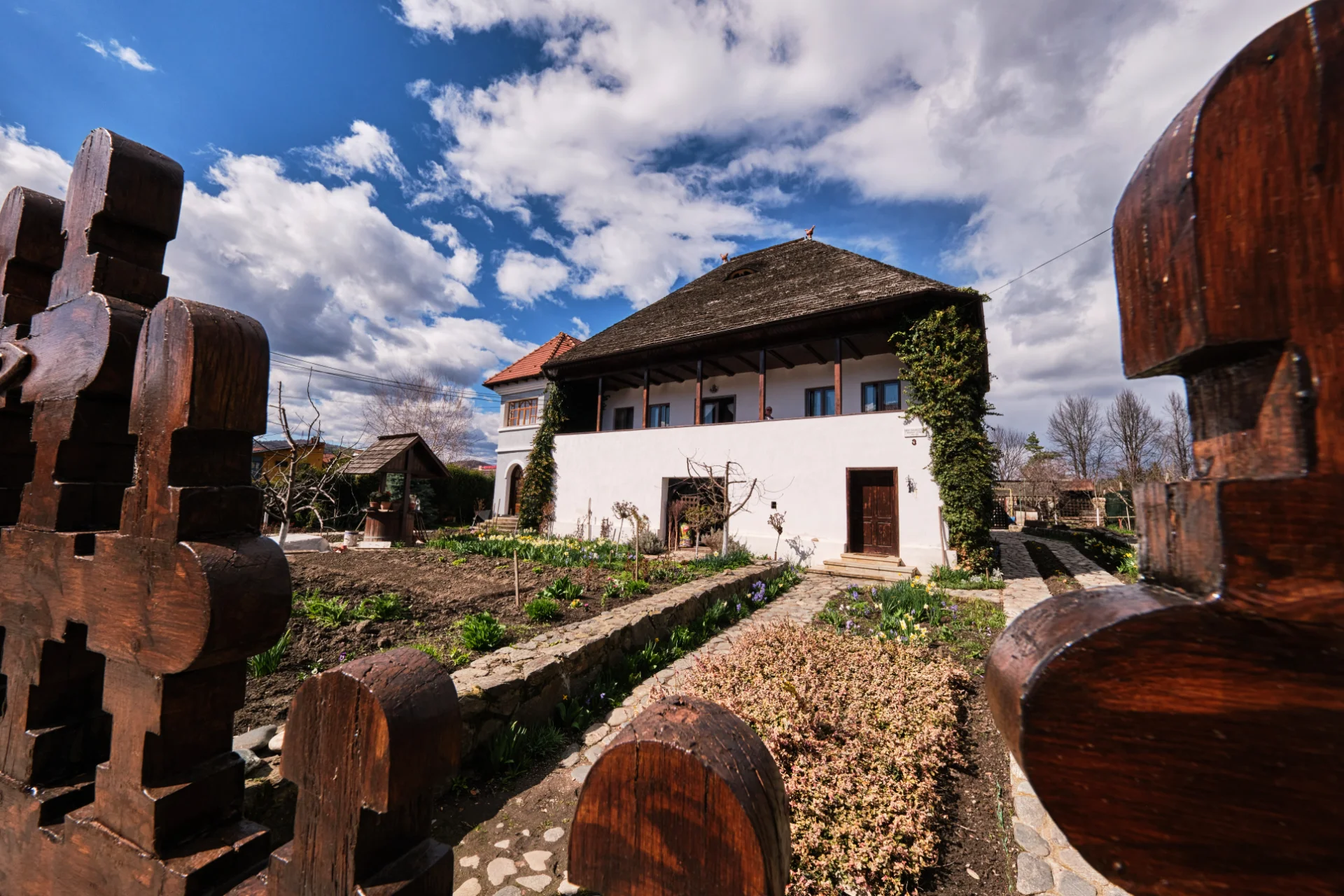
The history section of the city museum is housed in a historic building next to the old princely court complex, having been inaugurated since 1969. Inside, visitors can discover a rich and interesting heritage made up of over 14,000 objects from all historical eras, including ancient coins, medieval documents, old weapons and much more. Among the most valuable pieces are the two stone coats of arms of the voivodes Vlad Dracul and Neagoe Basarab or the coin hoard of Carol Robert. Passing through the seven halls of the museum, an image of the past of the old capital of Wallachia is formed. A few minutes away, another historical monument (Casa Norocea) houses the ethnography and folk art collection of the Curtea de Argeș Museum. Visitors can discover an authentic interior of an Argeș dwelling, folk costumes, ceramics and other traditional objects from the region. Inside, many paintings by the painter Dumiru Norocea, who lived here, are also exhibited

Opening hours: 9am-5pm | Fees: 12 lei (2-3€)/adult/museum

Olari Church

One of the most fascinating and unique historical monuments in Curtea de Argeș is the Church of the Assumption of the Virgin Mary, better known as the Olari Church. Located on a small street near the old voivode’s courtyard, the small church was most likely built at the end of the 17th century, although the exact date or builders are unknown. The ensemble consisting of the church, the enclosure wall and several old crosses has several exceptional elements, among which the vibrant frescoes made by a local painter in 1869, including a unique representation of death on the eastern wall, stand out. It also has a plan specific to Moldavian churches, is covered with shingles and has an external wooden staircase to the bell tower.

Curtea de Argeș Monastery and Town - 100 Destinations of Romania - Old Princely Court
Princely Court Ⓒ Silviu-Florin Salomia
Curtea de Argeș Monastery and Town - 100 Destinations of Romania - Sân Nicoară Church
Sân Nicoară Church Ⓒ Silviu-Florin Salomia
Curtea de Argeș Monastery and Town - 100 Destinations of Romania - Olari Church
Olari Church Ⓒ Silviu-Florin Salomia
Curtea de Argeș Monastery and Town - 100 Destinations of Romania
Curtea de Argeș Monastery Ⓒ Silviu-Florin Salomia

Accommodation Recommendations

The best lodging options in Curtea de Argeș
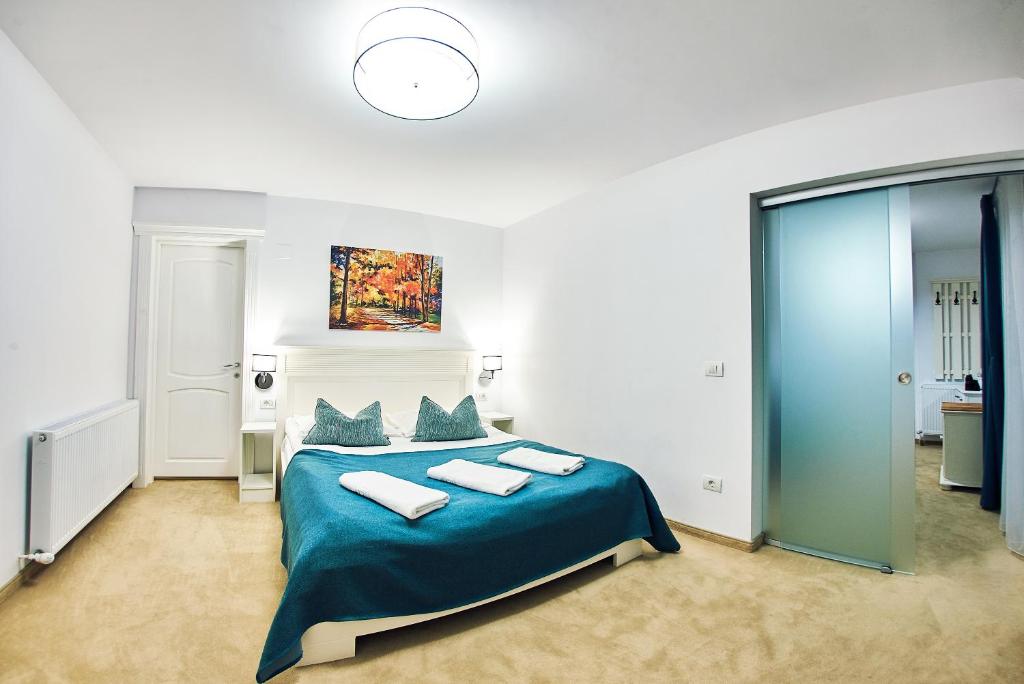
Accommodation in Curtea de Arges - Boutique Hotel Casa Medievala

Rating 9.5 from 529 recenzii!

Located a few kilometers north of the monastery, this guesthouse offers family rooms with all amenities, a bar, a garden, a playground and private parking!

Albești St, no.6

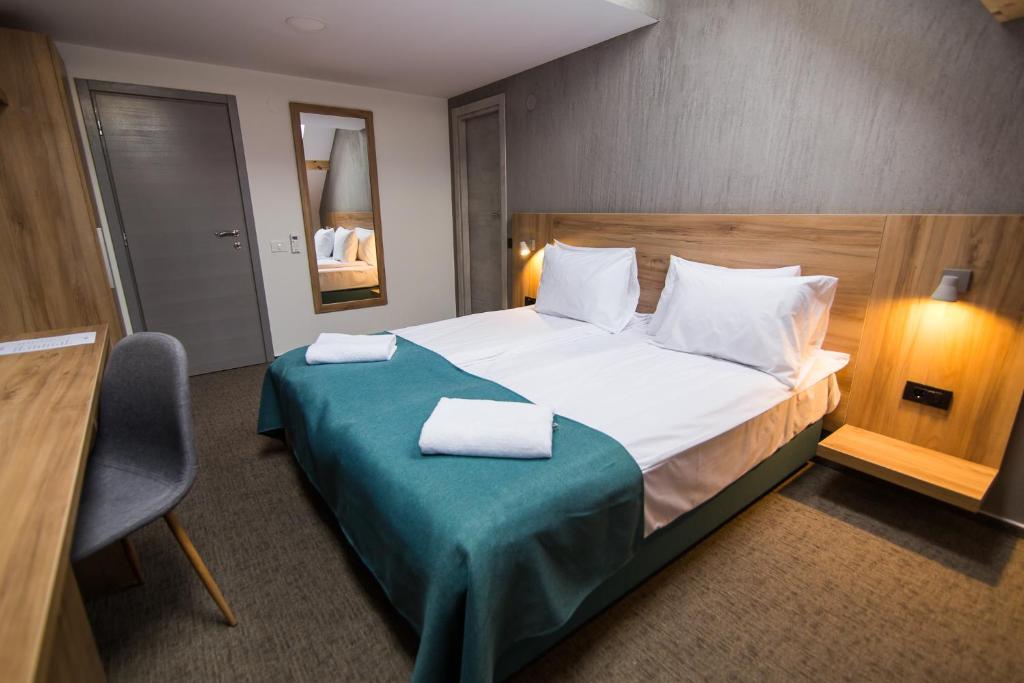
Accommodation in Curtea de Arges - Hotel Subcarpati

Rating 9.0 from 1.026 recenzii!

Located near the city center, this superb hotel offers accommodation in welcoming and spacious rooms, an international restaurant, spa facilities, garden!

Cuza Vodă St, 75e

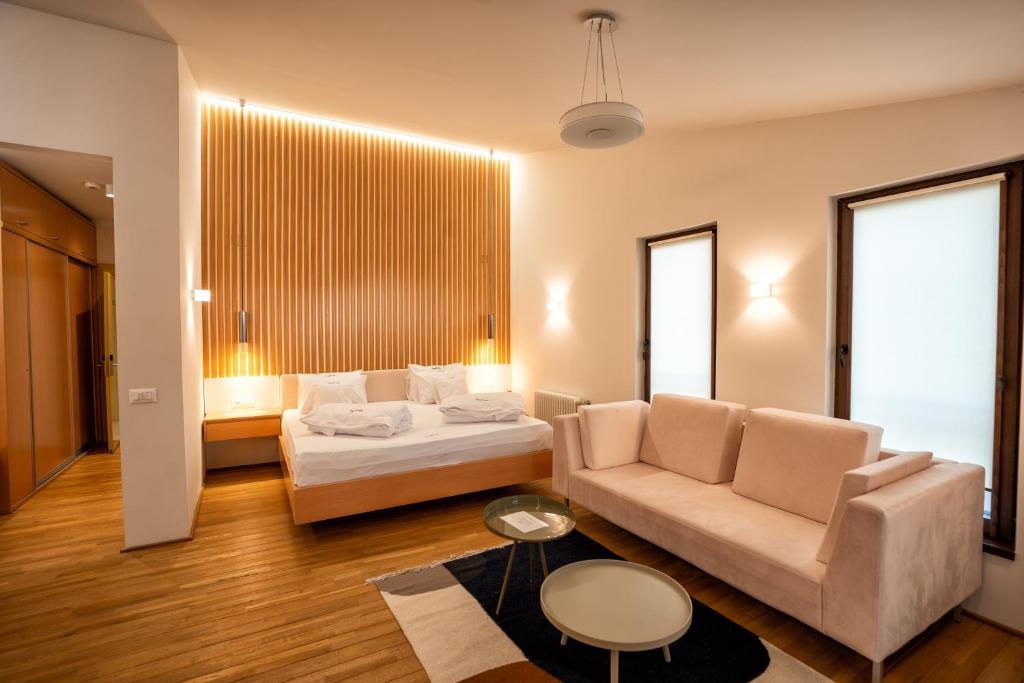
Accommodation in Curtea de Arges - Hotel Curtea Veche

Rating 9.2 from 206 recenzii!

Located near the old royal court, the hotel offers comfortable rooms with modern amenities, a restaurant, sunny terrace, bar and more!

Basarabilor Bd, 121

Scroll to Top