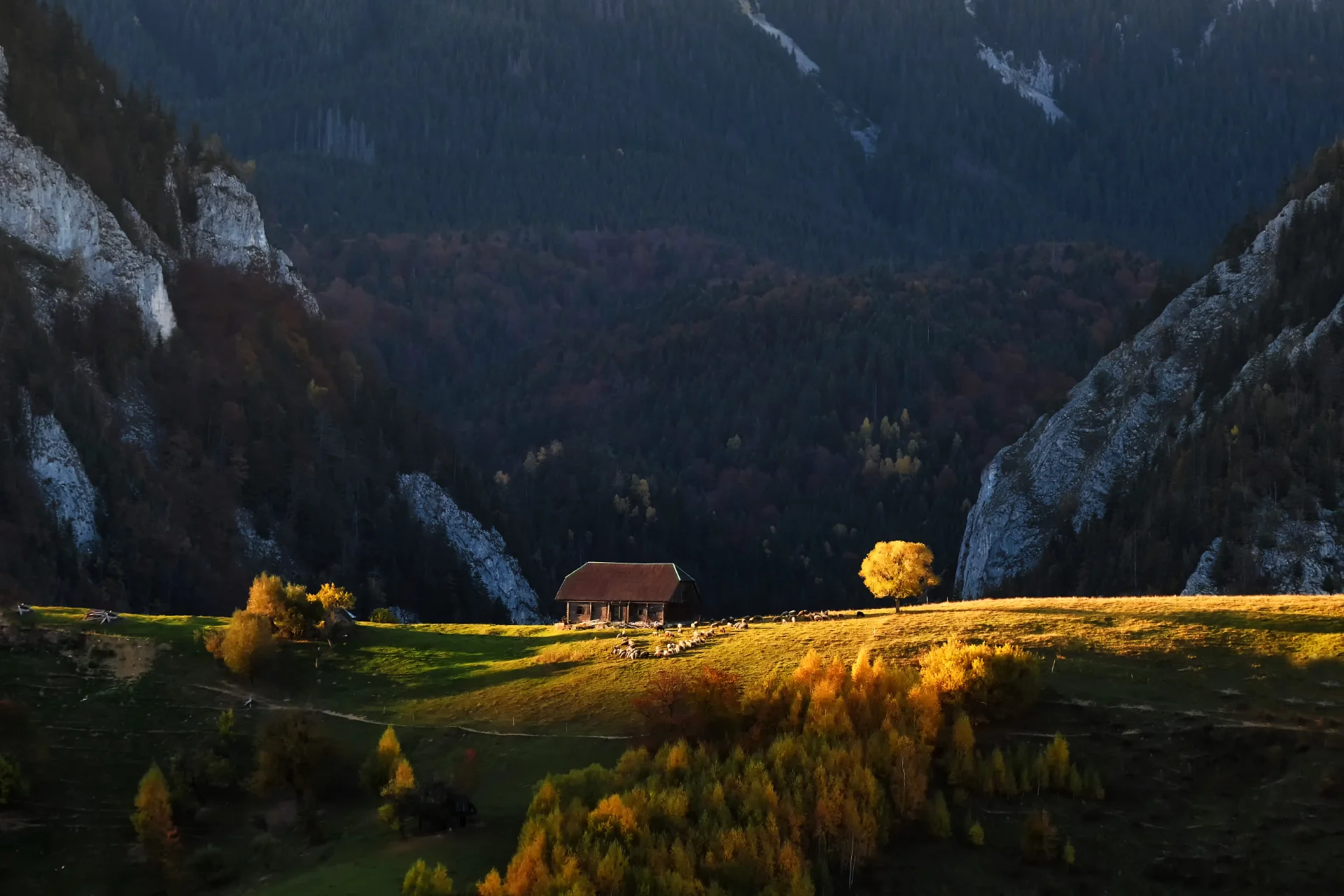
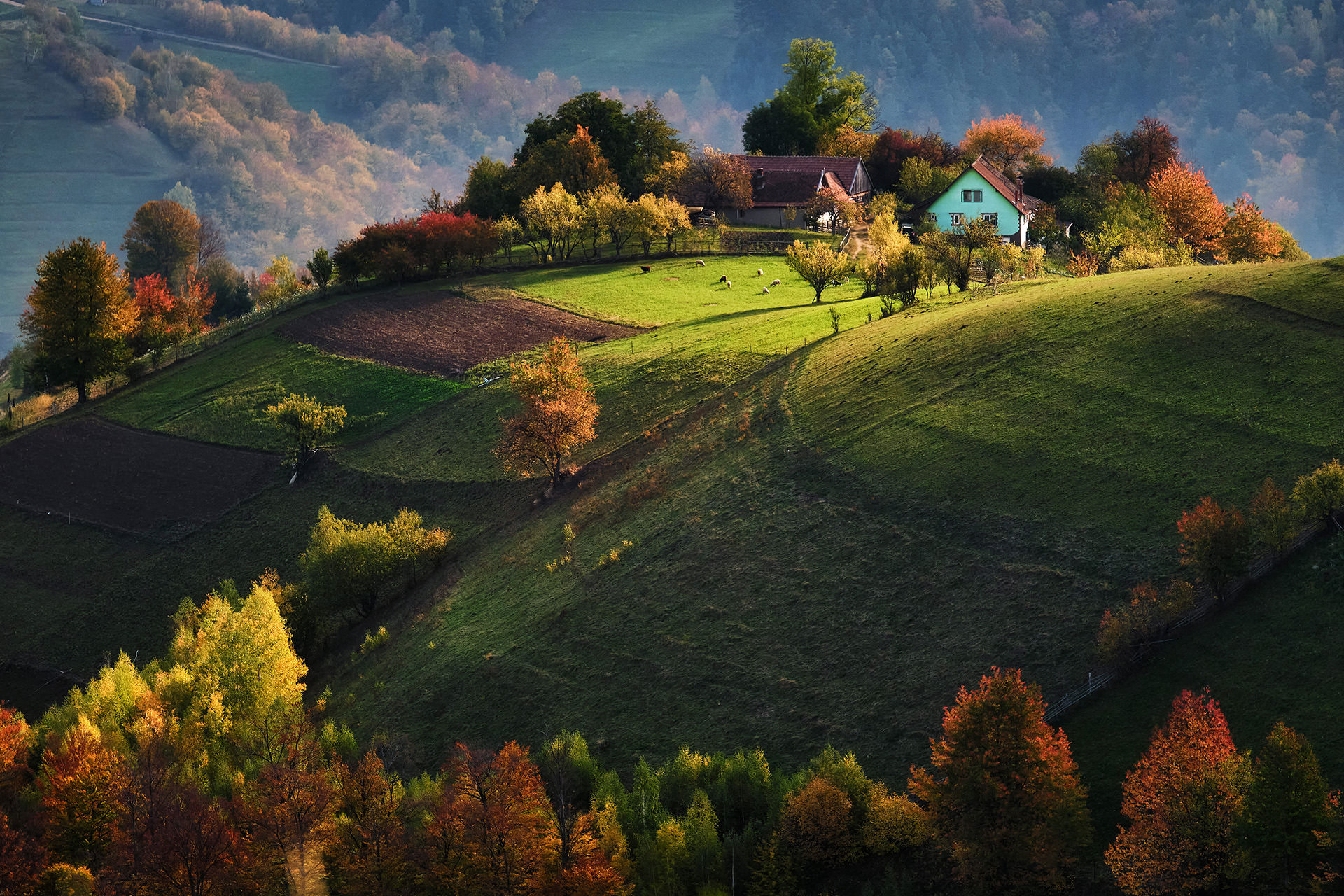
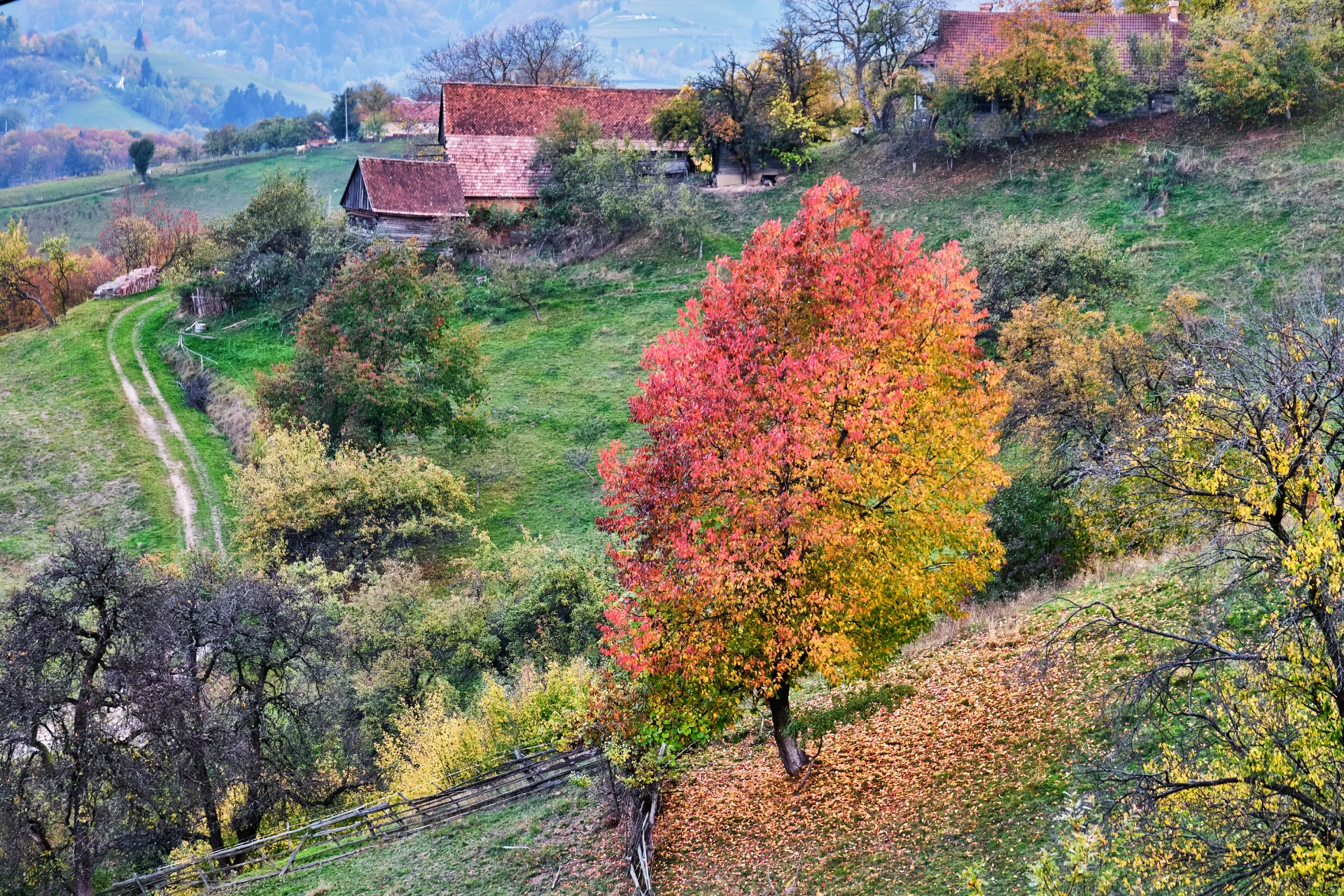
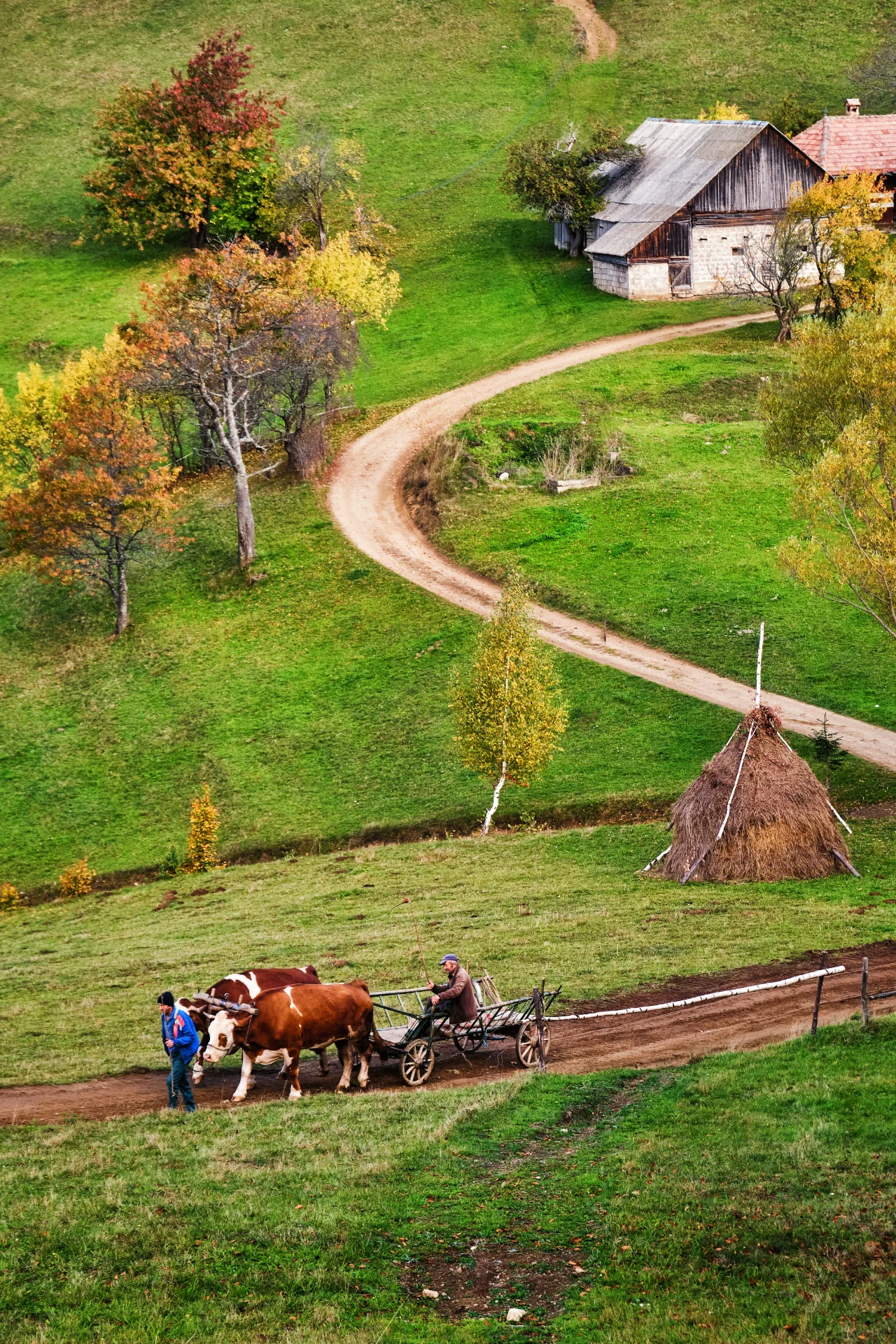
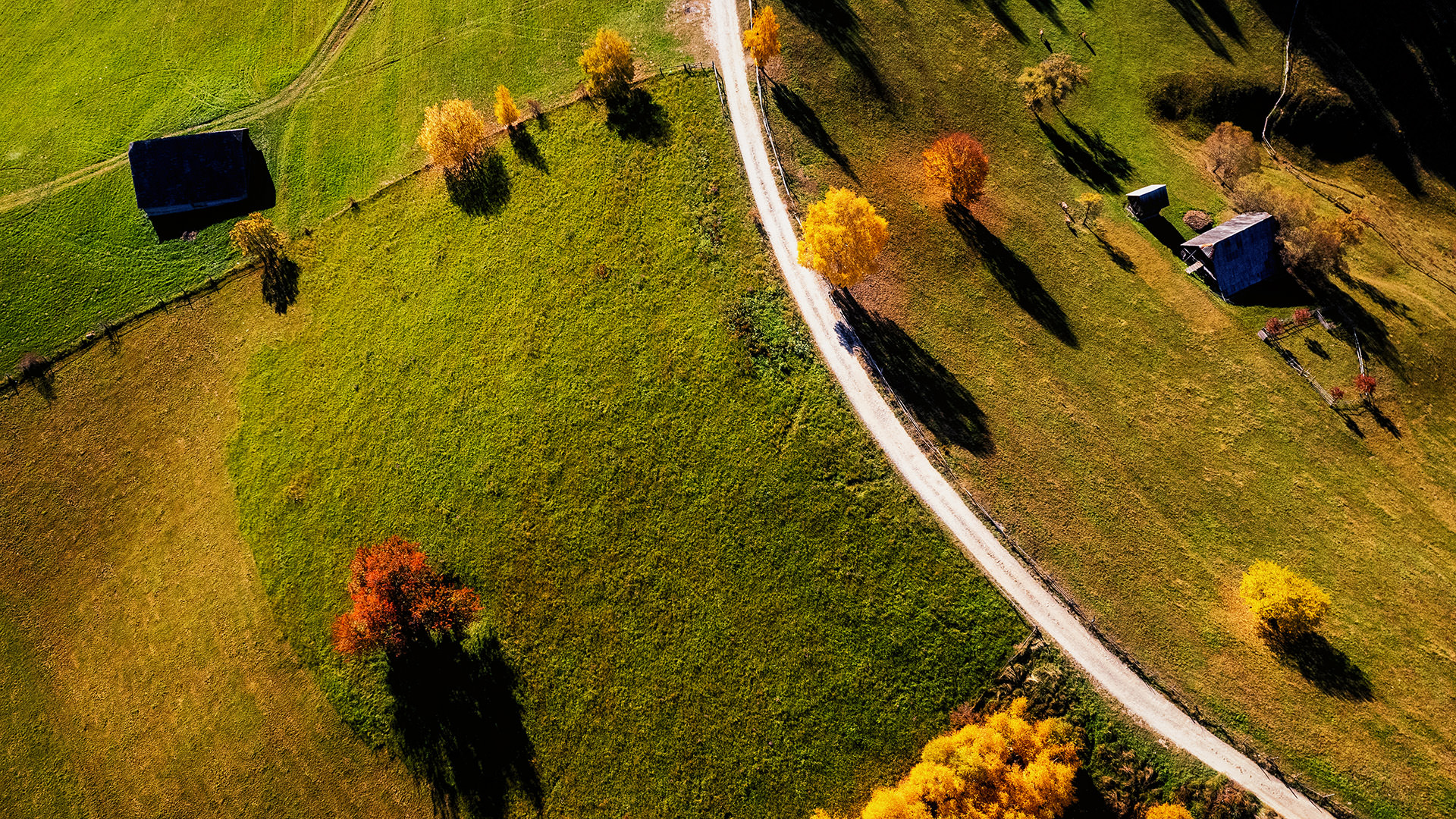
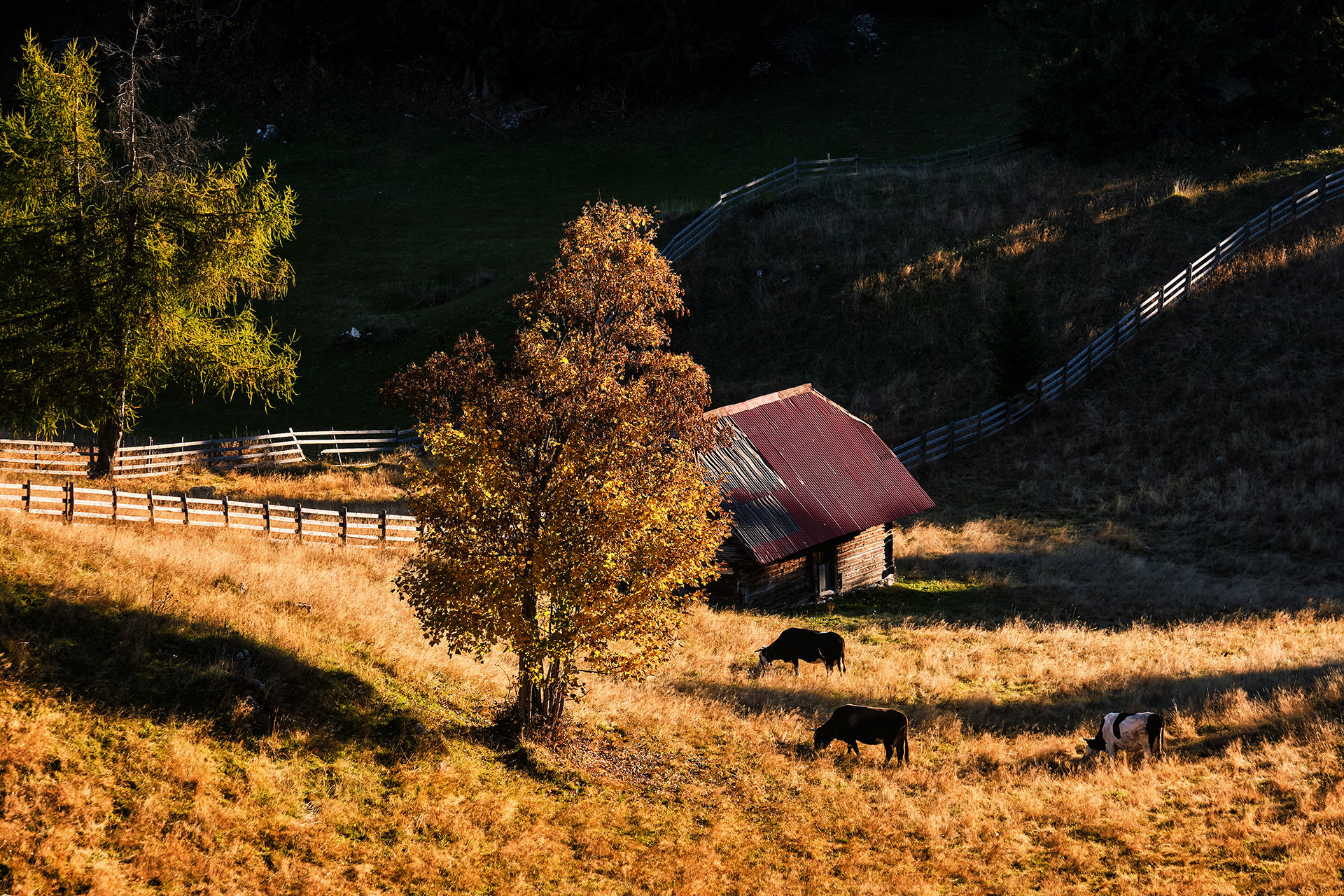
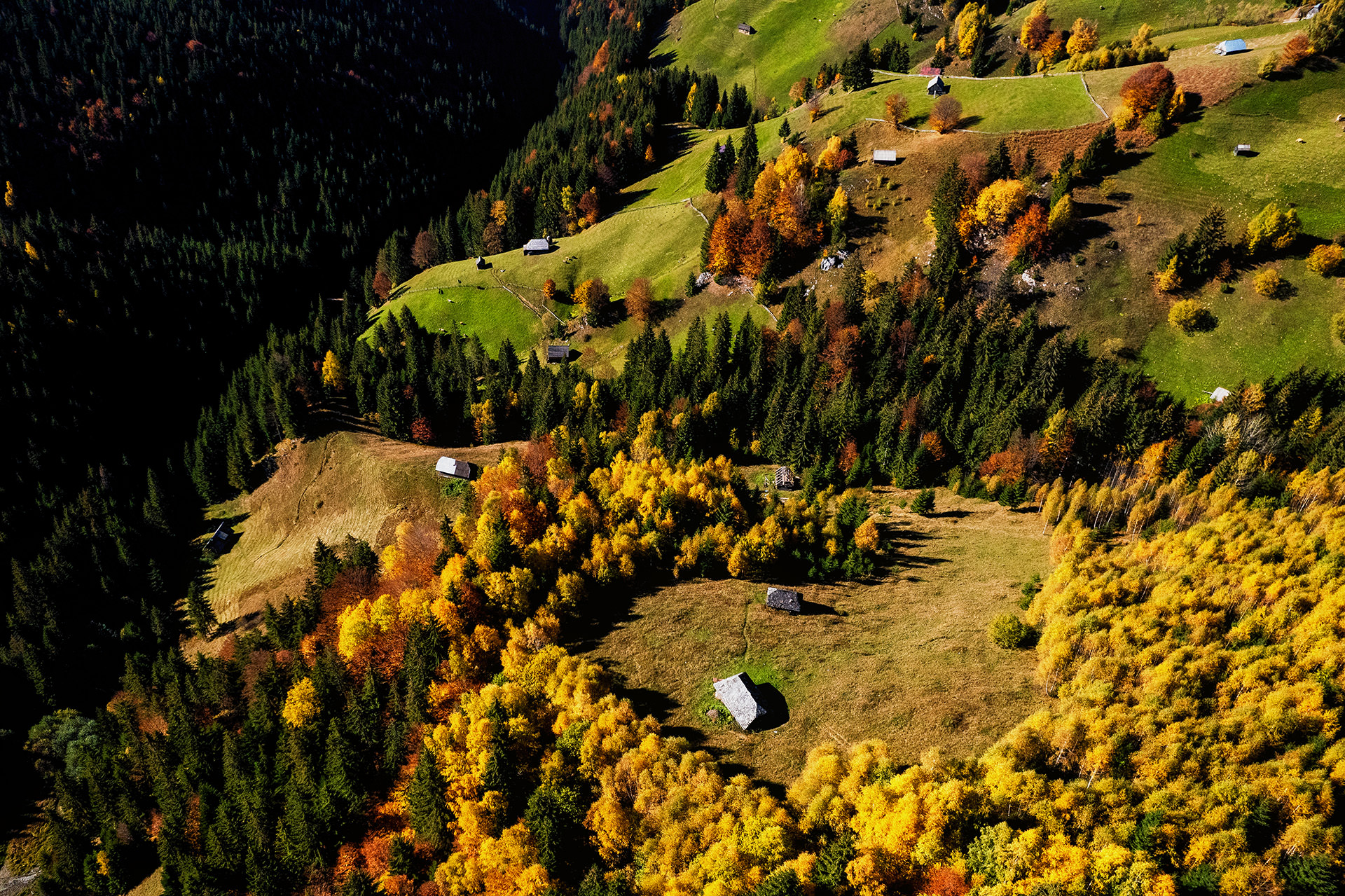
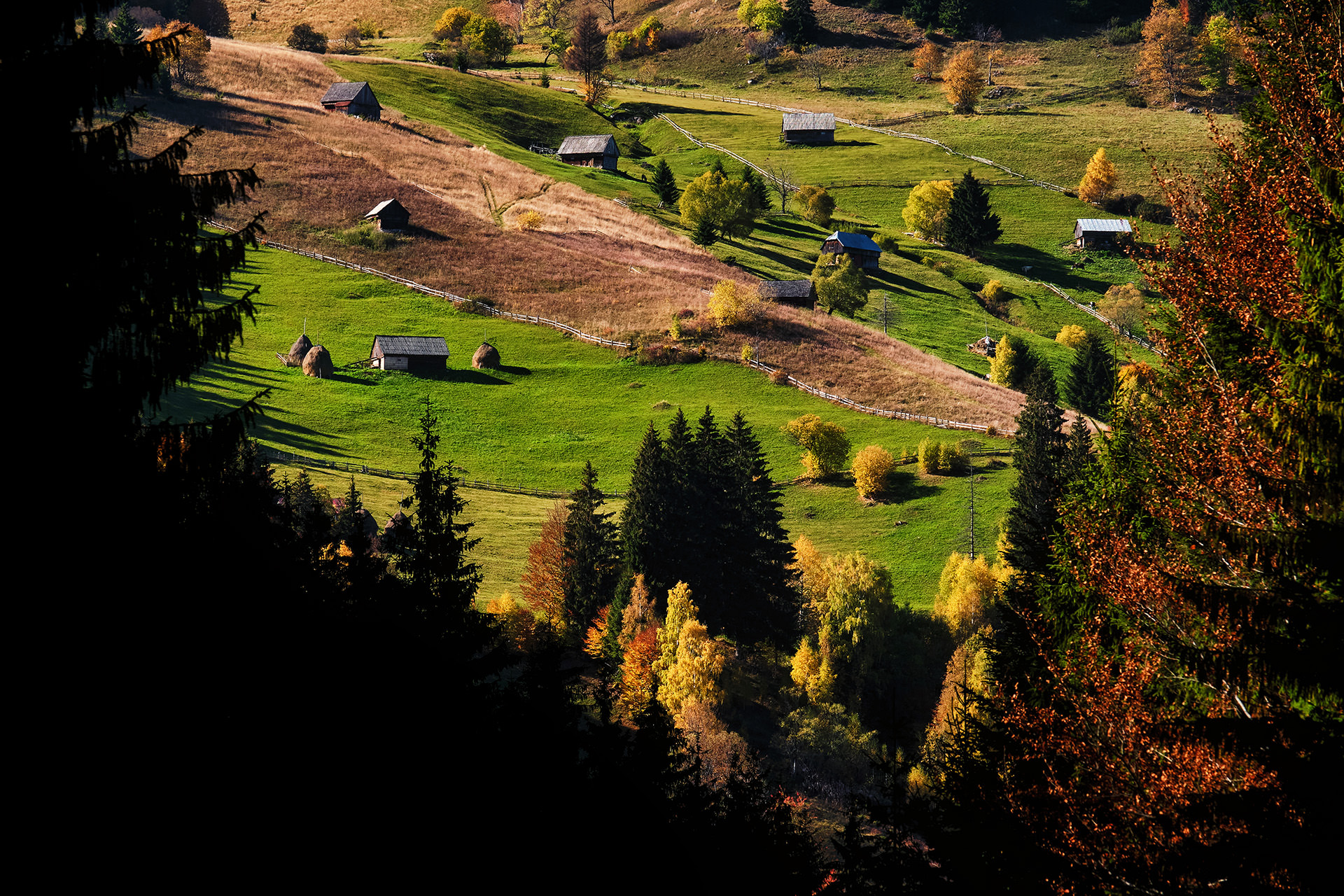
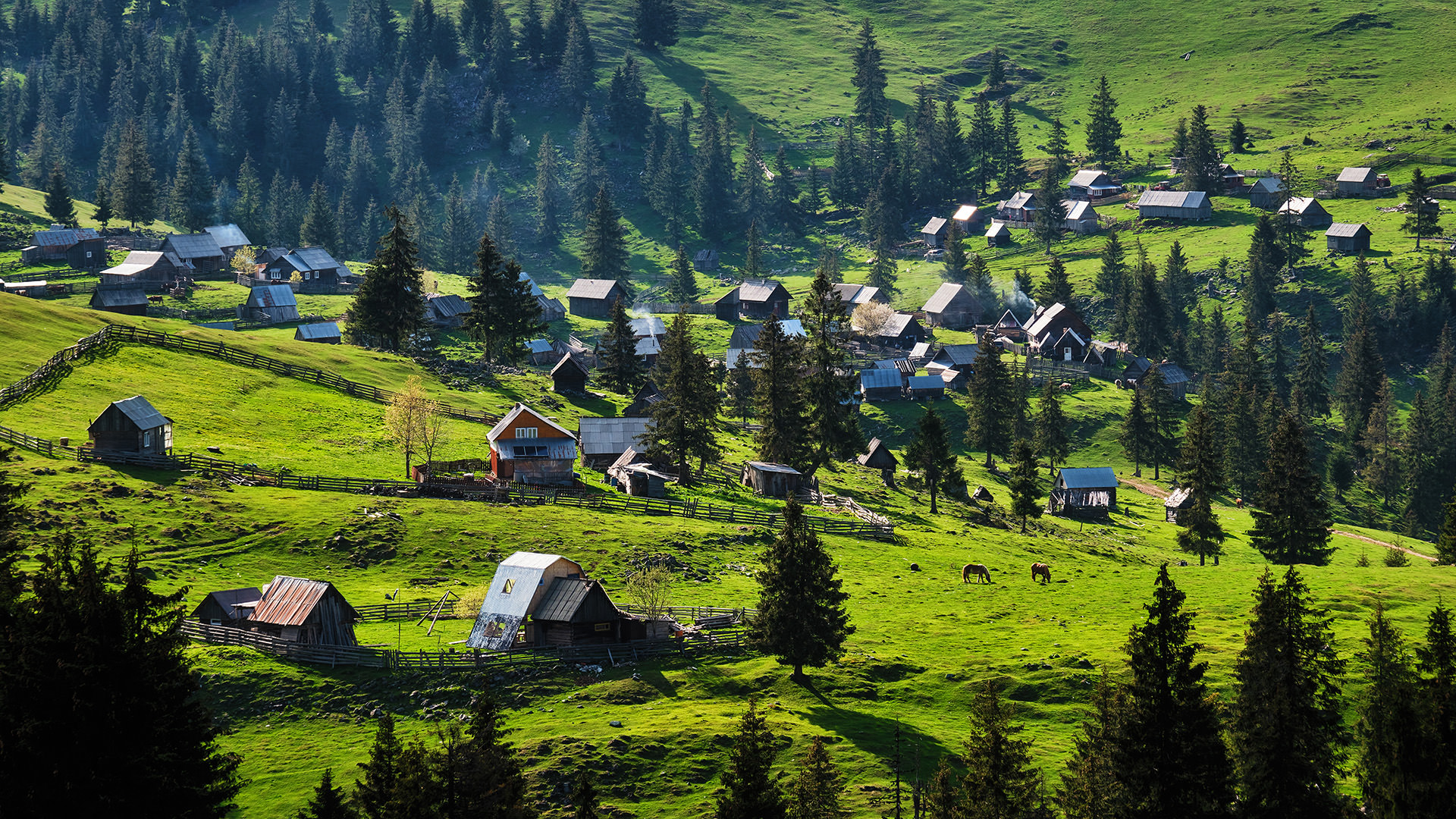
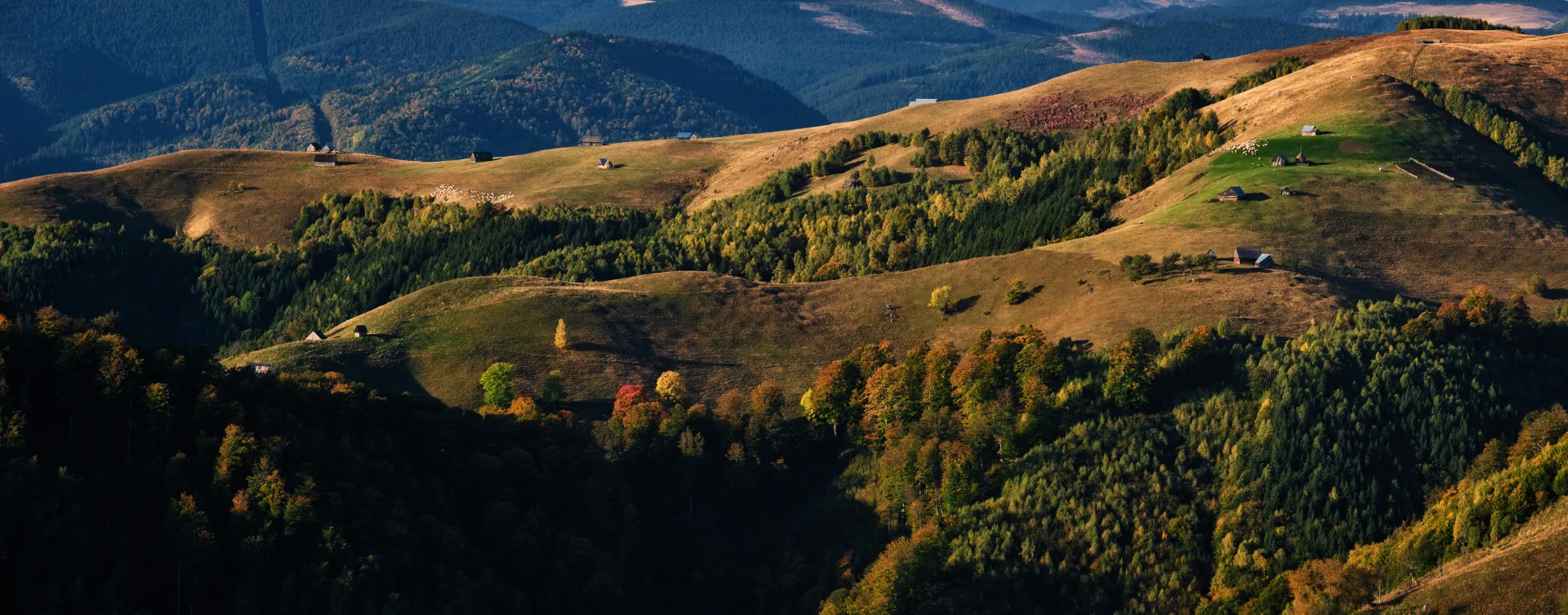
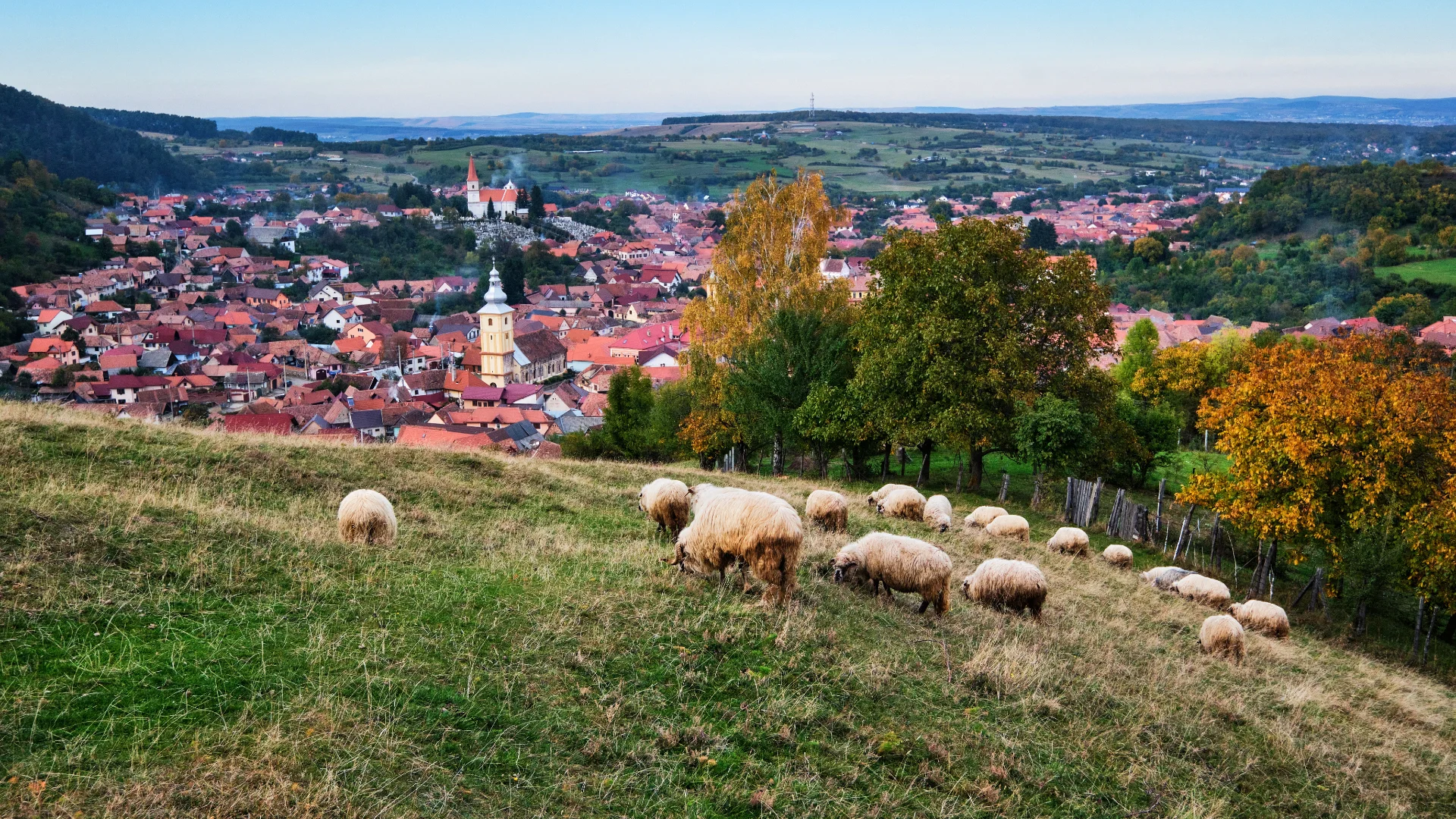
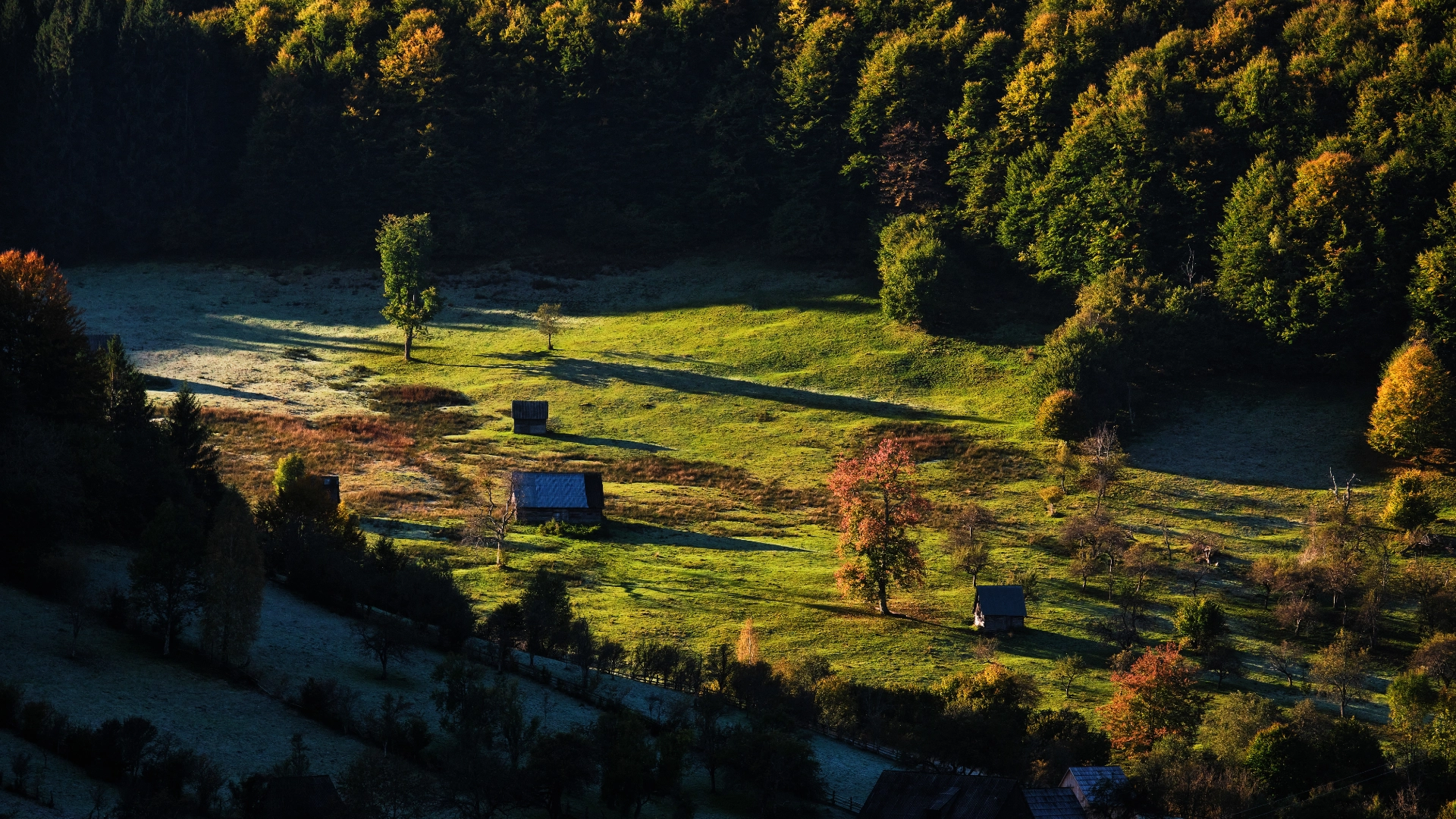
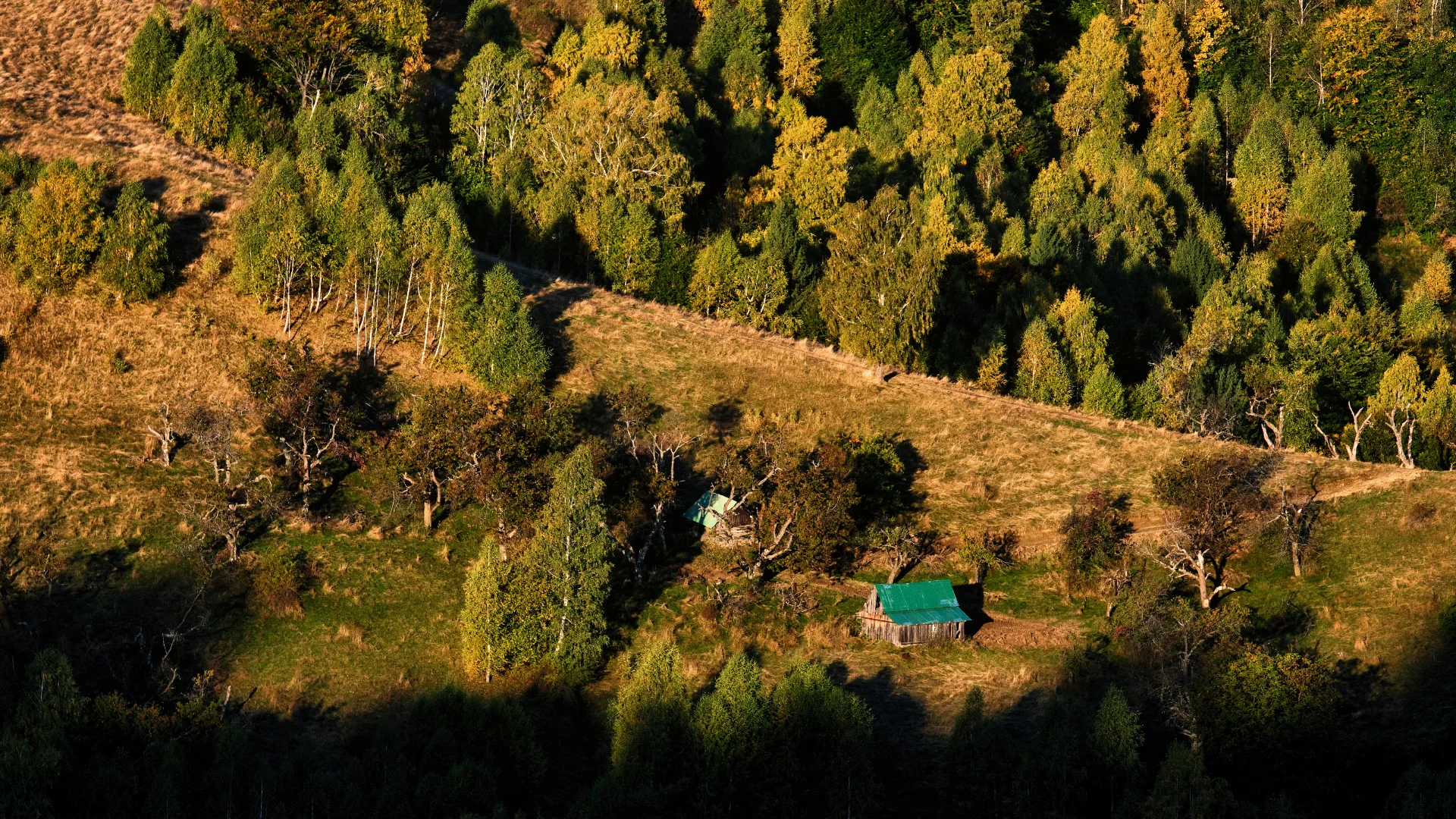
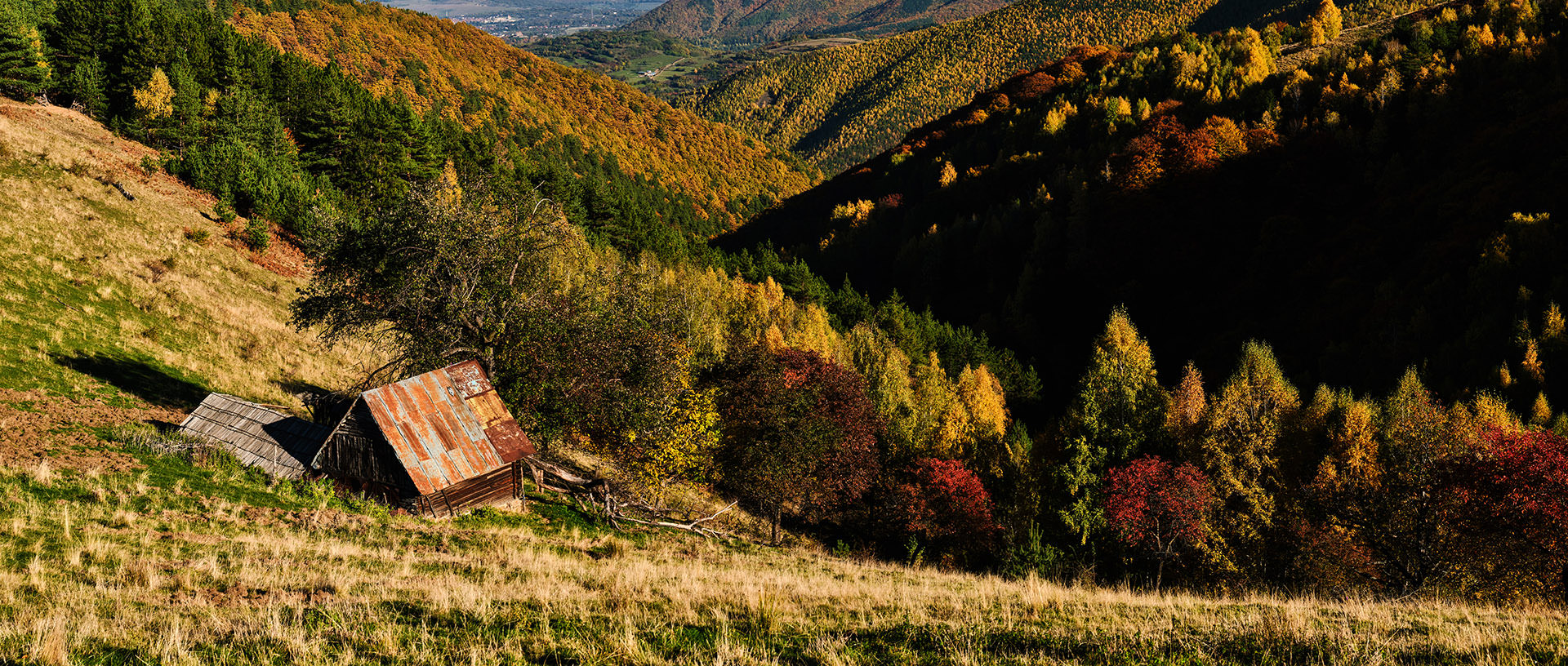
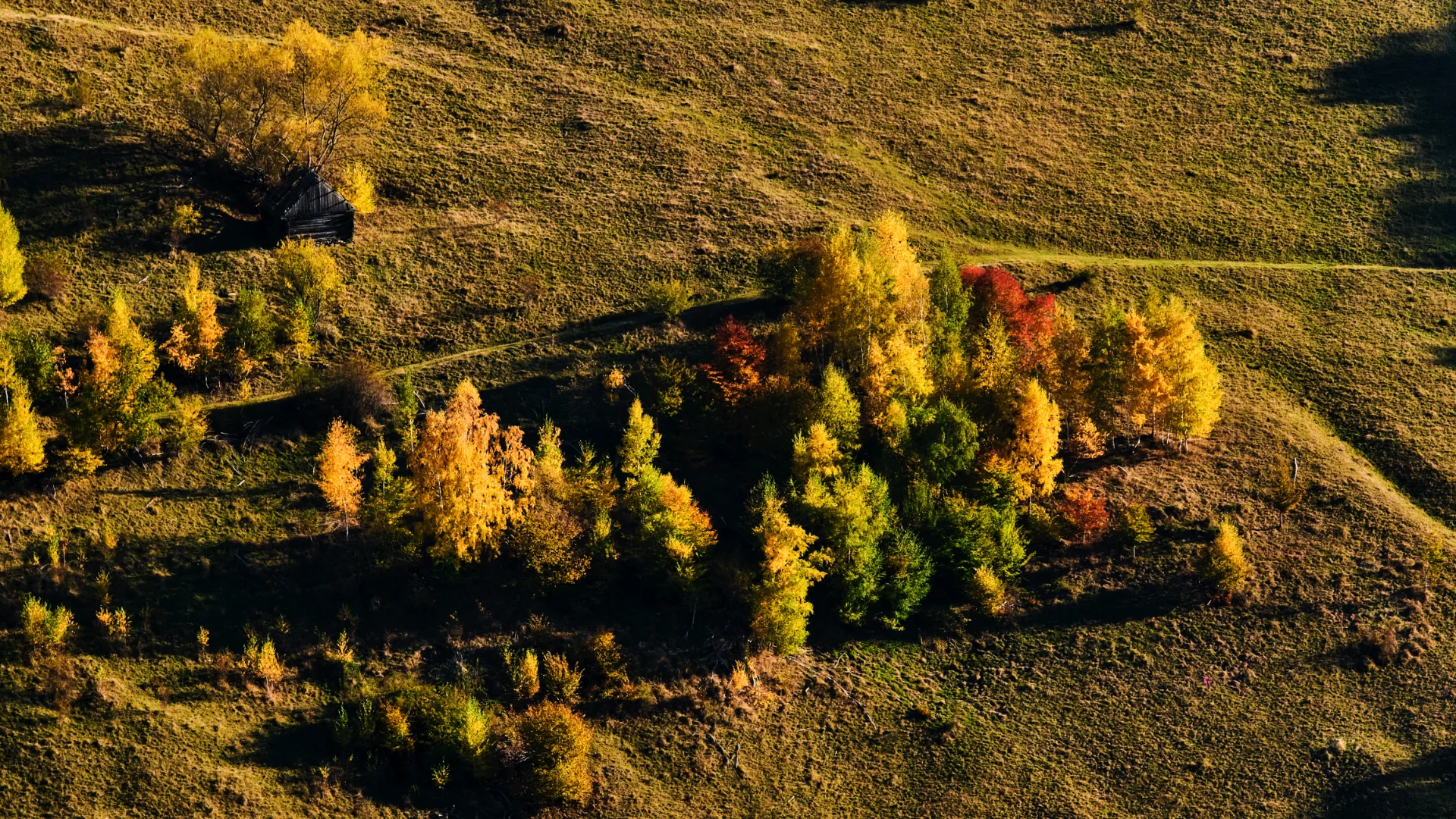
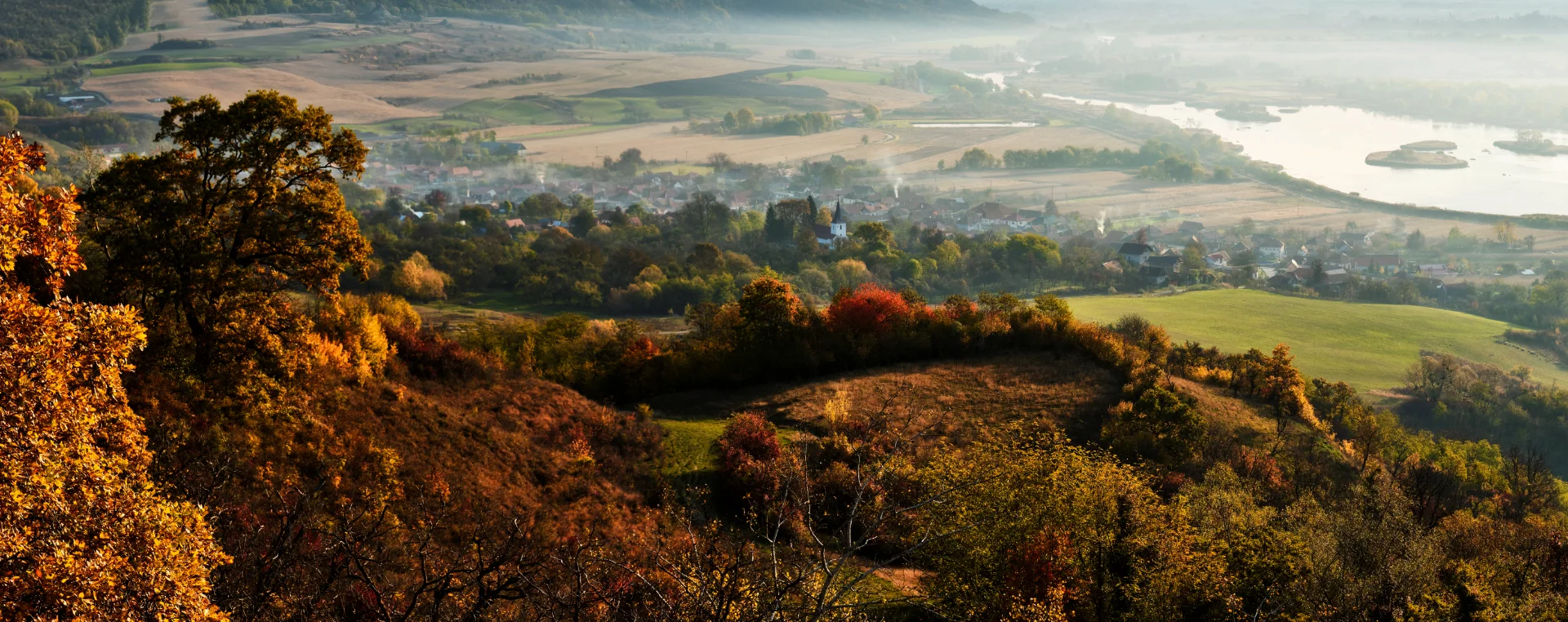
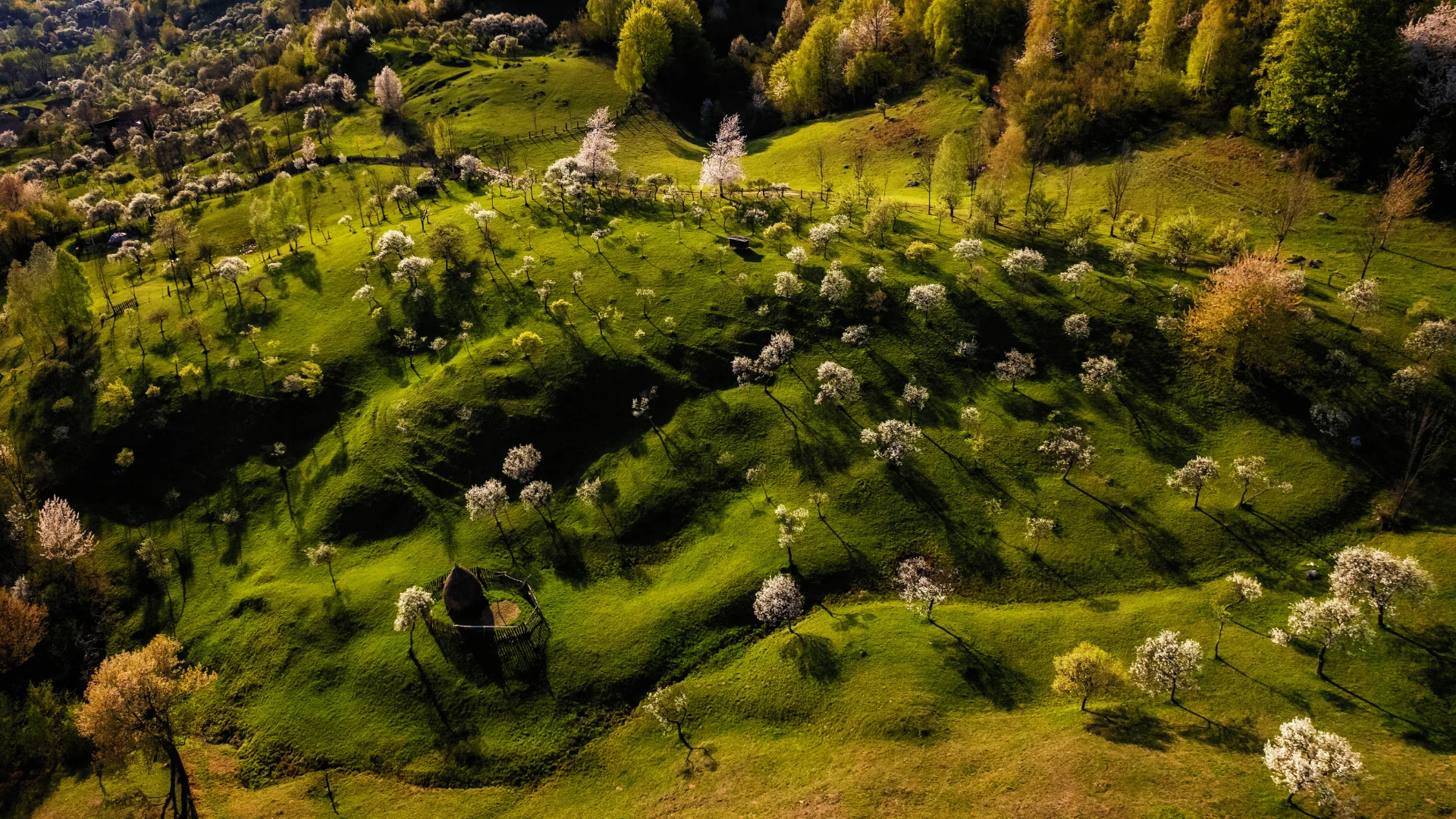
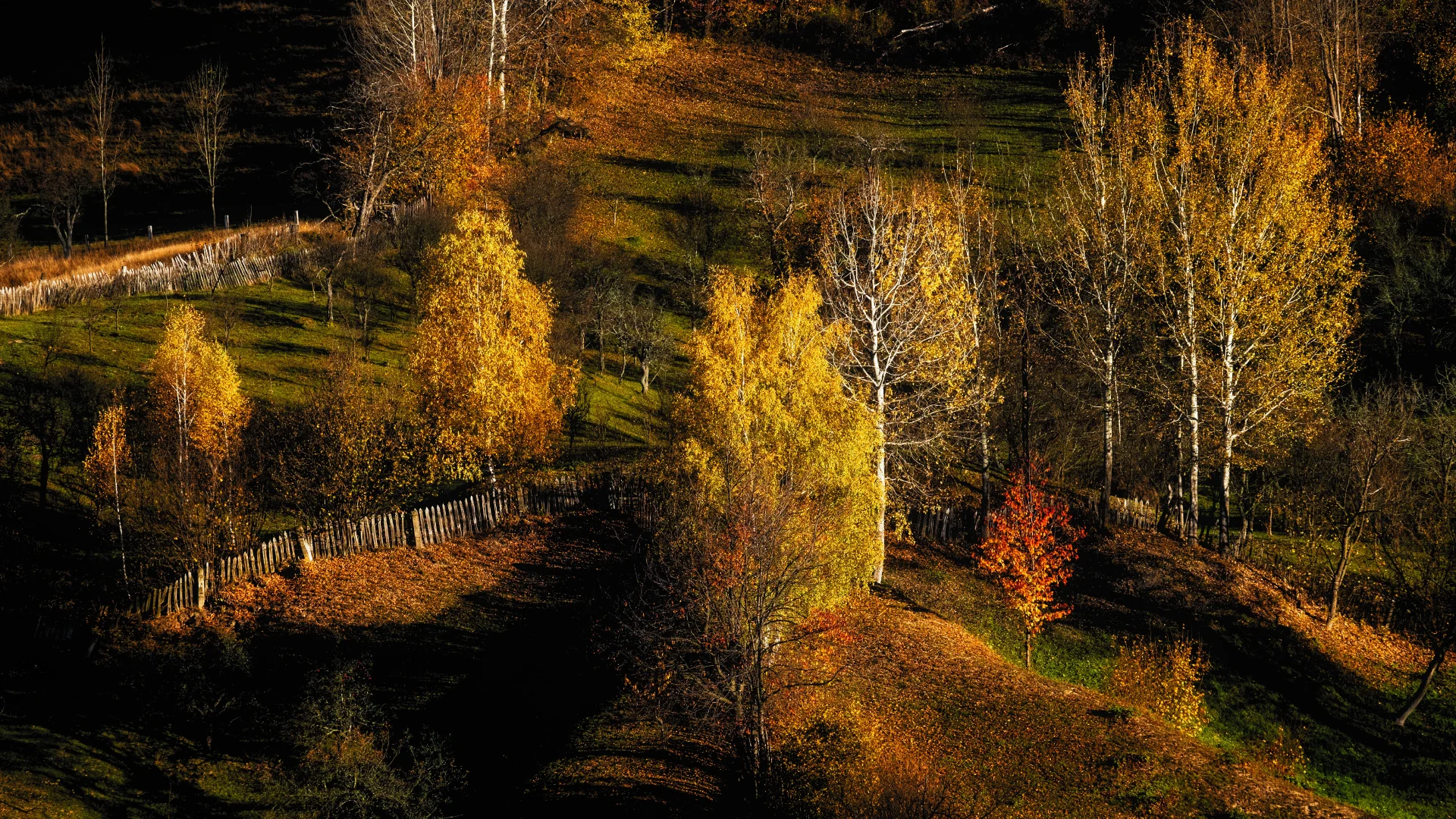
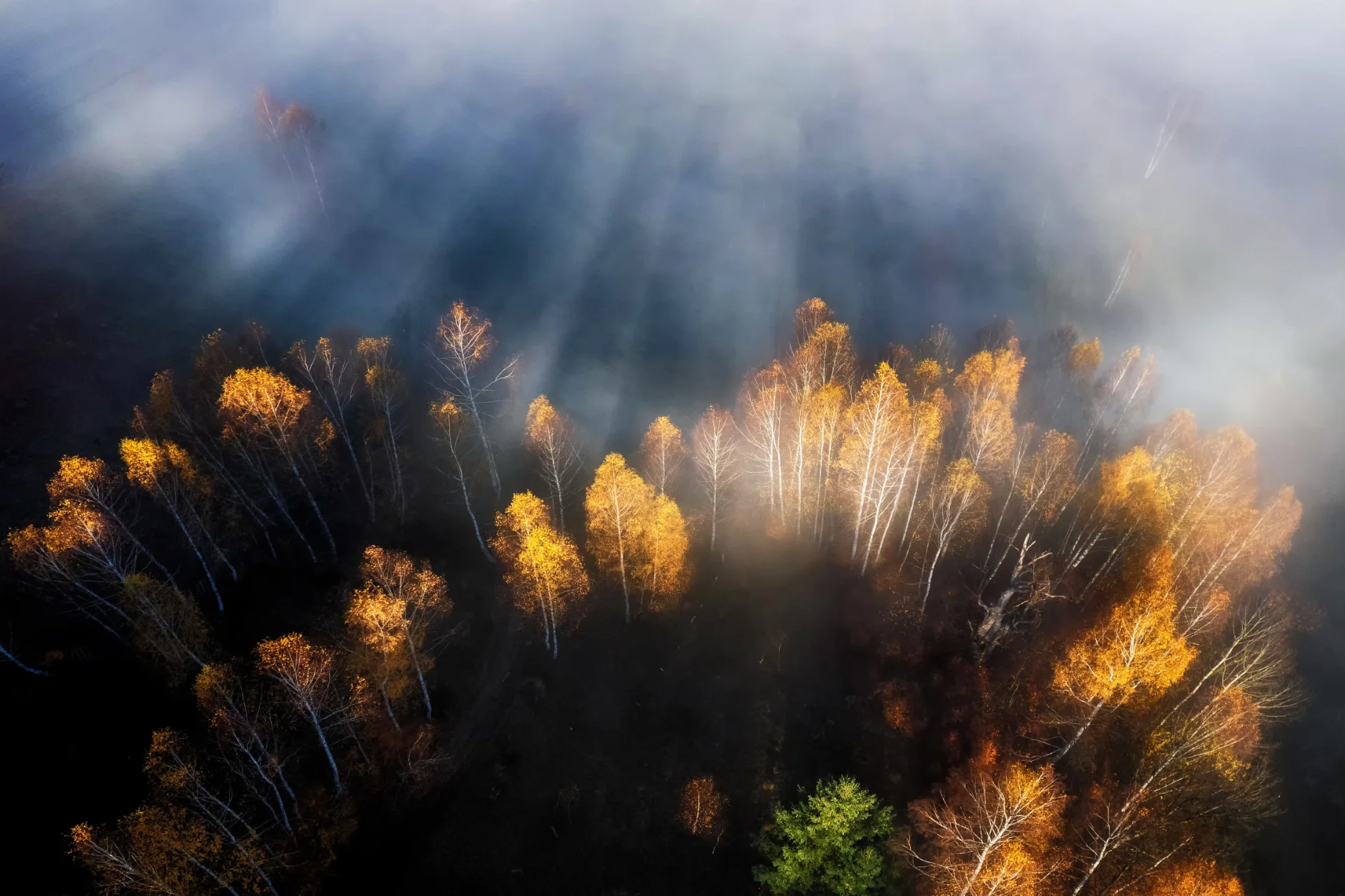
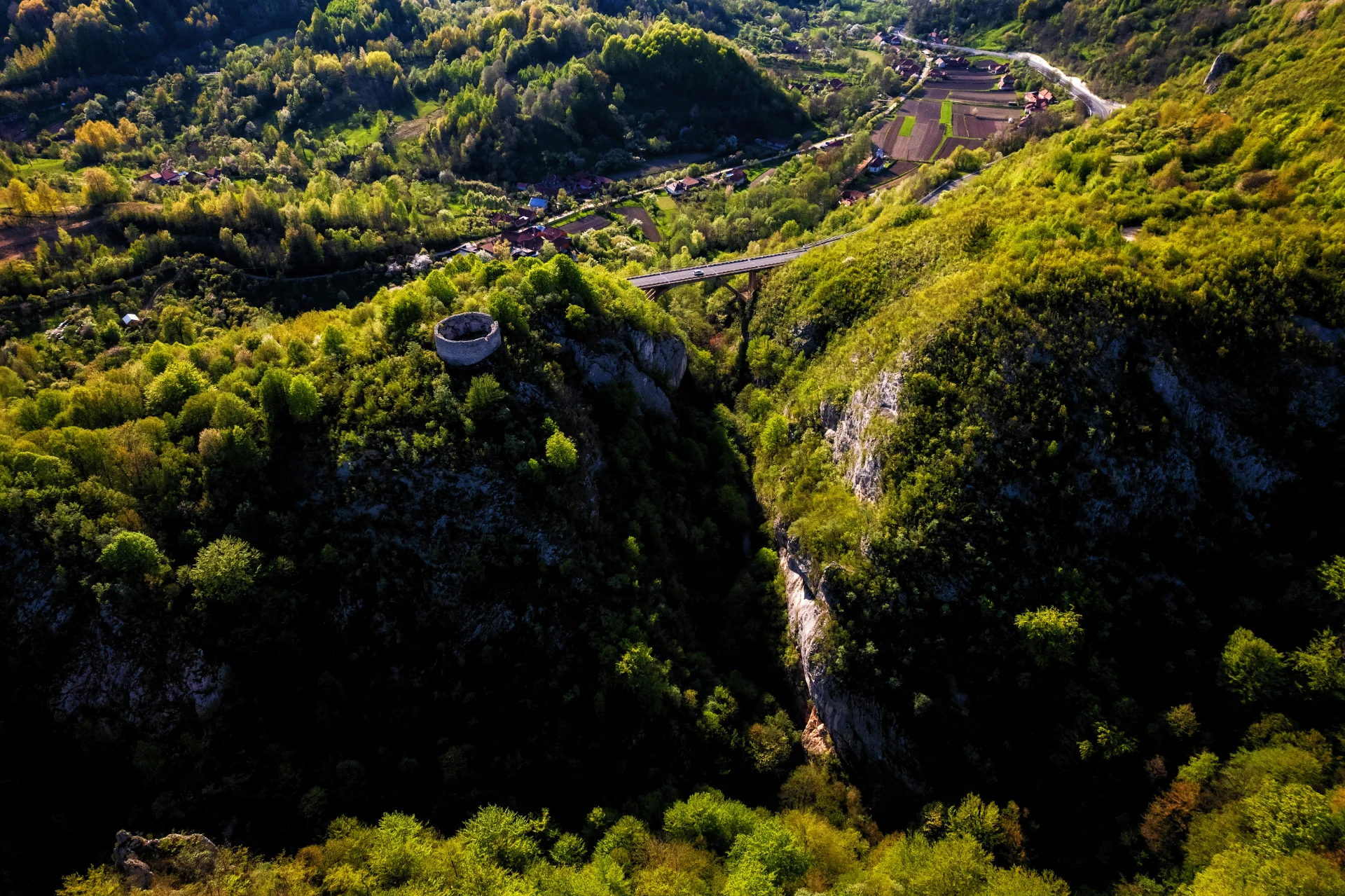
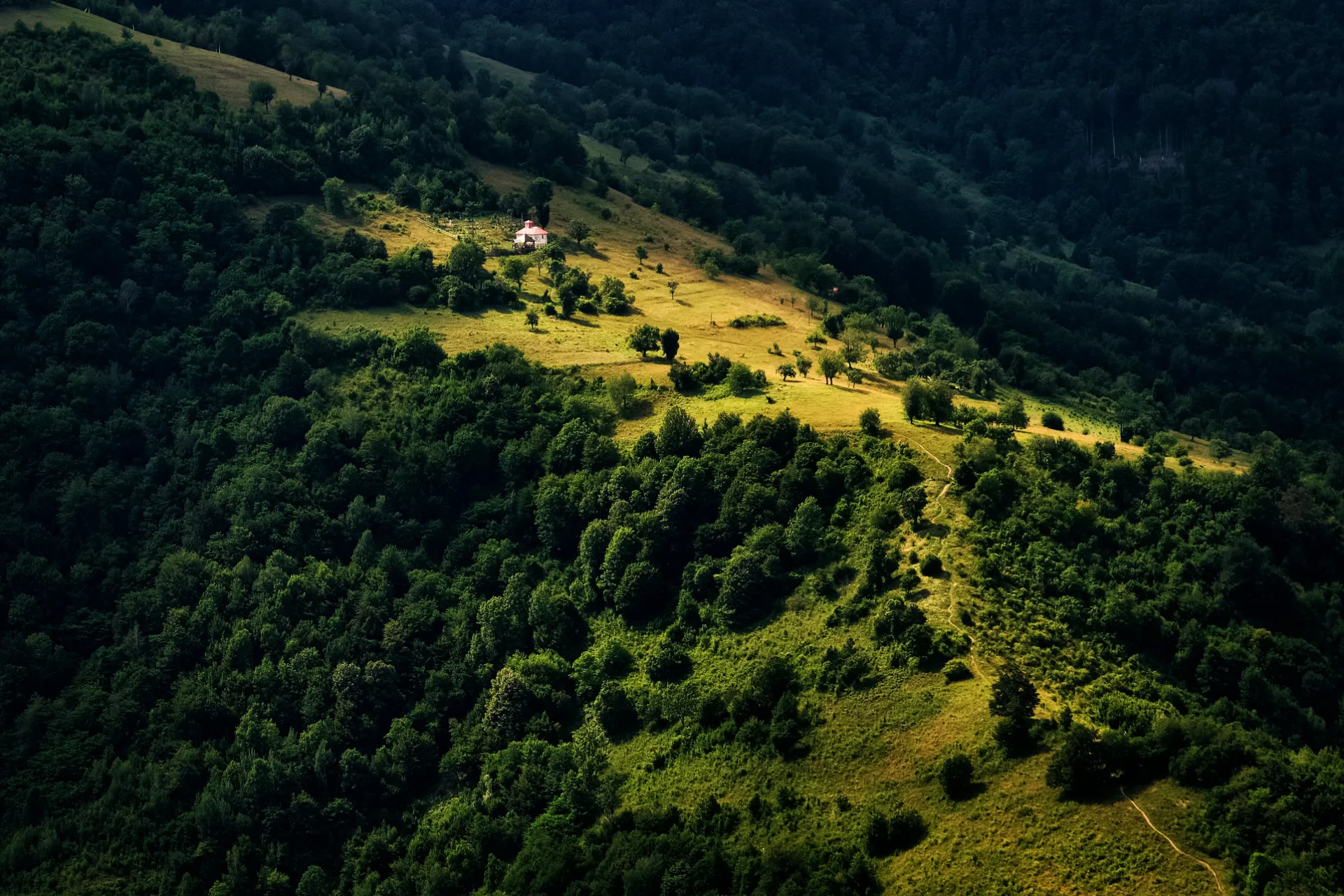
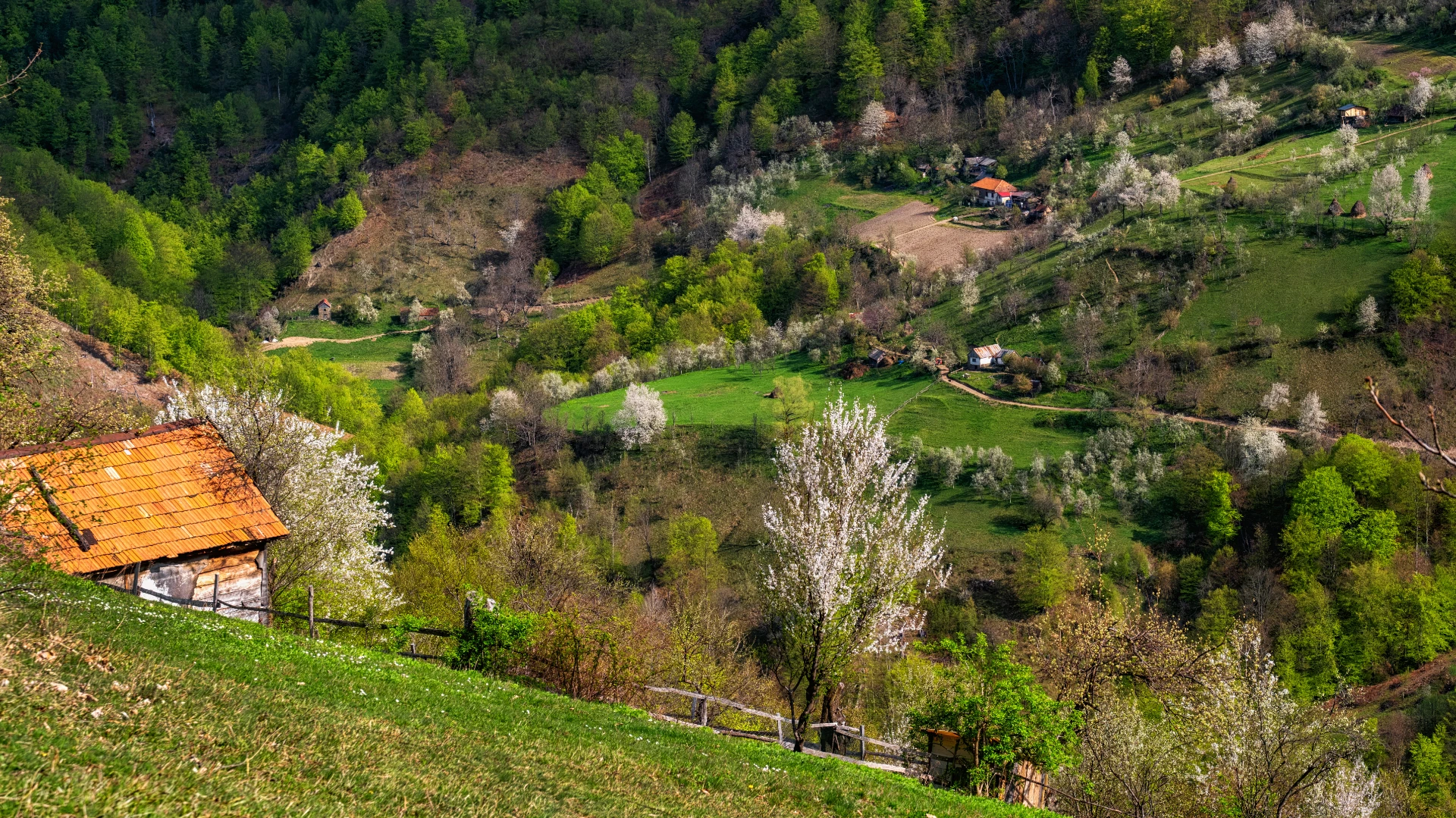
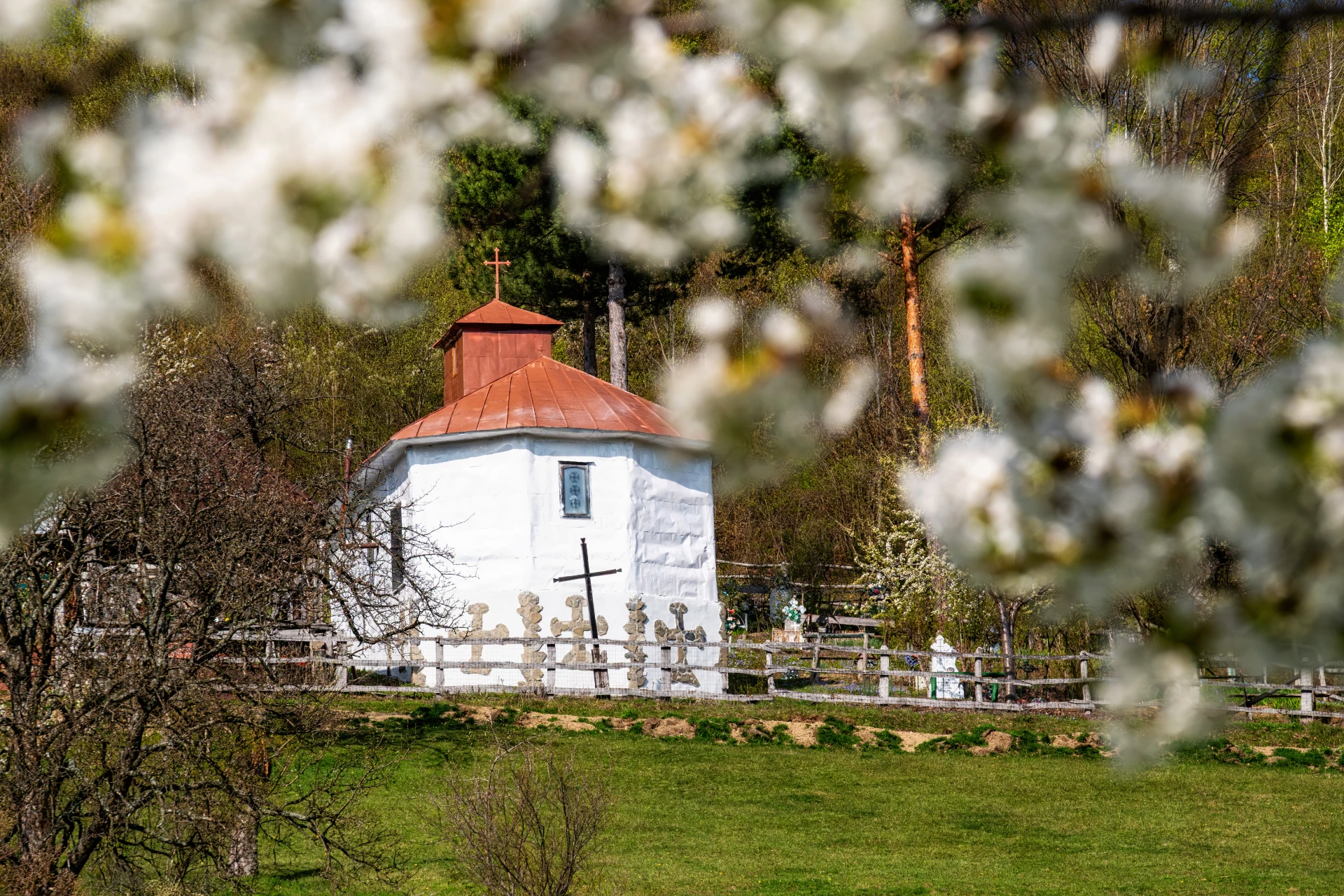
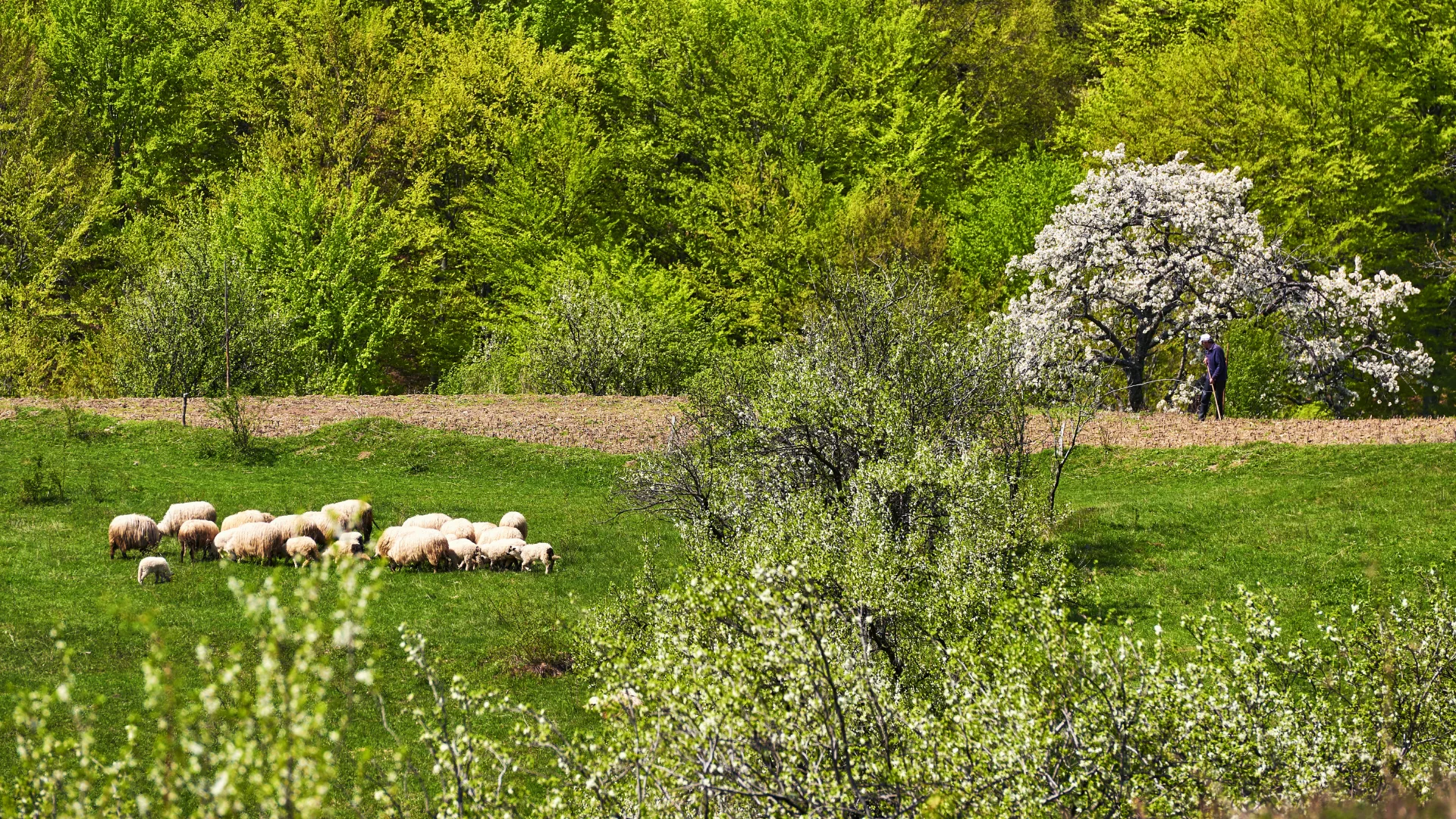
While in other places on earth the rural landscape has slowly lost all traces of traditional life, Romania still preserves many such amazing authentic villages, but this is changing rapidly right before our eyes. Young people leave in search of a better life in the cities or often through who knows what horizons, while only the few old people left among memories try to preserve these archaic treasures. I have wandered the hills and valleys looking for some such amazing places, such as Fundătura Ponorului, Dumești, Poiana Călineasa, Peștera, Șirnea, Fundata, Breb, Poiana Mărului, Viscri, Ineleț, and many others, always seeking to preserve a part of their soul, of that special atmosphere… I hope that this is just the beginning, and that my travels will continue to take me through such unique and authentic places!
Hamlet of
Fundătura Ponorului
On the gentle ridges and through the shady valleys of the Șureanu Mountains, we can still discover places untouched by modern civilization, where the whispers of the ancestors can still be heard in the breeze, where people still live in perfect harmony with nature. One such place is Fundătura Ponorului, a remote hamlet of almost surreal beauty. Nicknamed the “Palm of God”, it was discovered relatively recently by travelers and has quickly become a popular destination, maybe even hurting its authentic and peaceful atmosphere. A lazy creek flows along a lush long valley, passing through pastures and courtyards, before finally disappearing in the depths of the Earth, under a tall rock. On the surrounding hills, we find remote houses or lonely shelters, some of them long deserted. Proudly called manors by the locals, these seasonal homes are usually inhabited from early spring to late autumn by old people from faraway villages that still respect these ancestral traditions. Sometimes, on the idyllic pathways, we encounter villagers on horseback, following an oxen cart or leading a flock of sheep or cows. The sublime charm of these places is hard to put into words and life here is certainly tough, but so pure and beautiful, worthy of the last descendants of the Dacians…
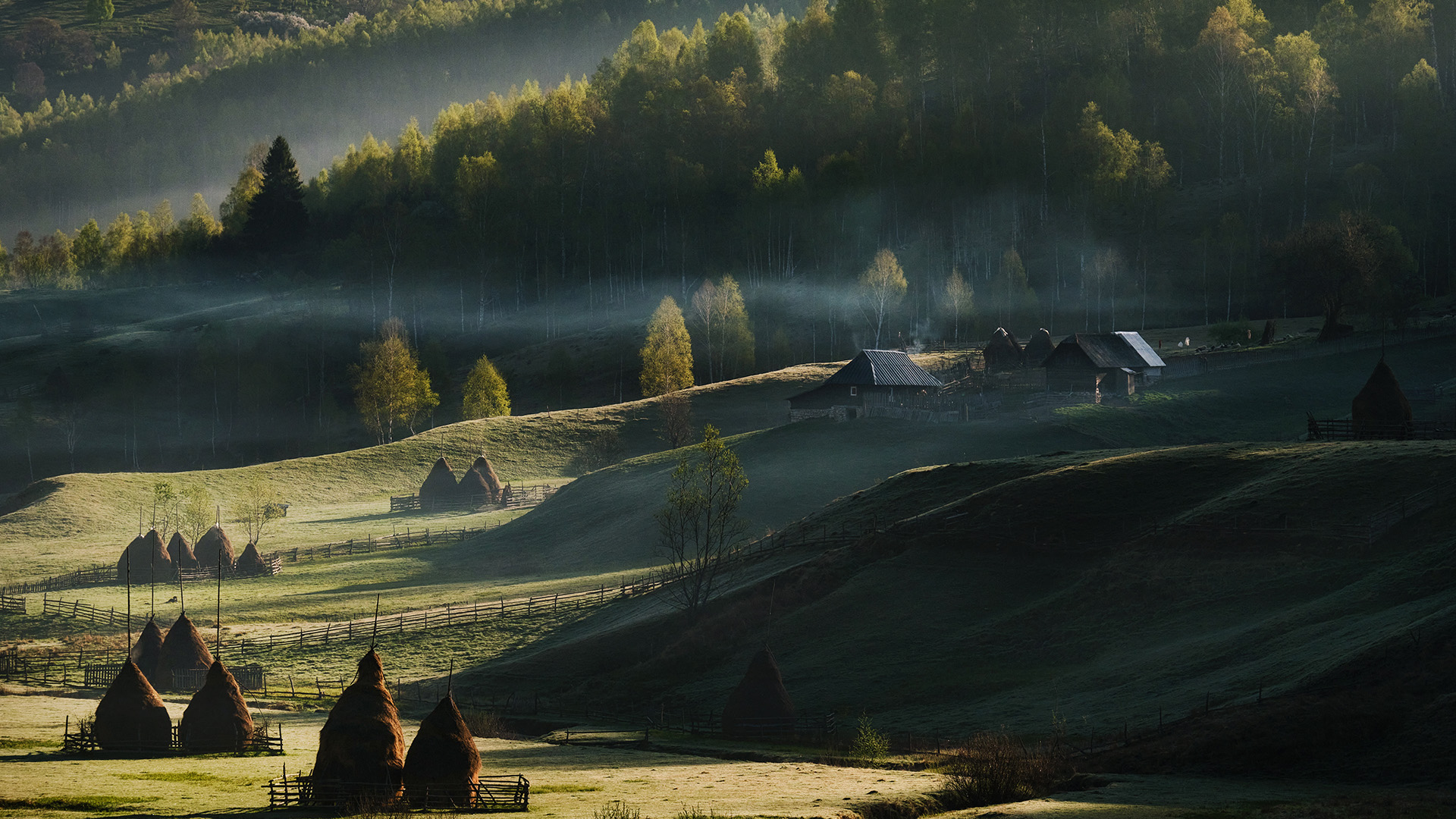
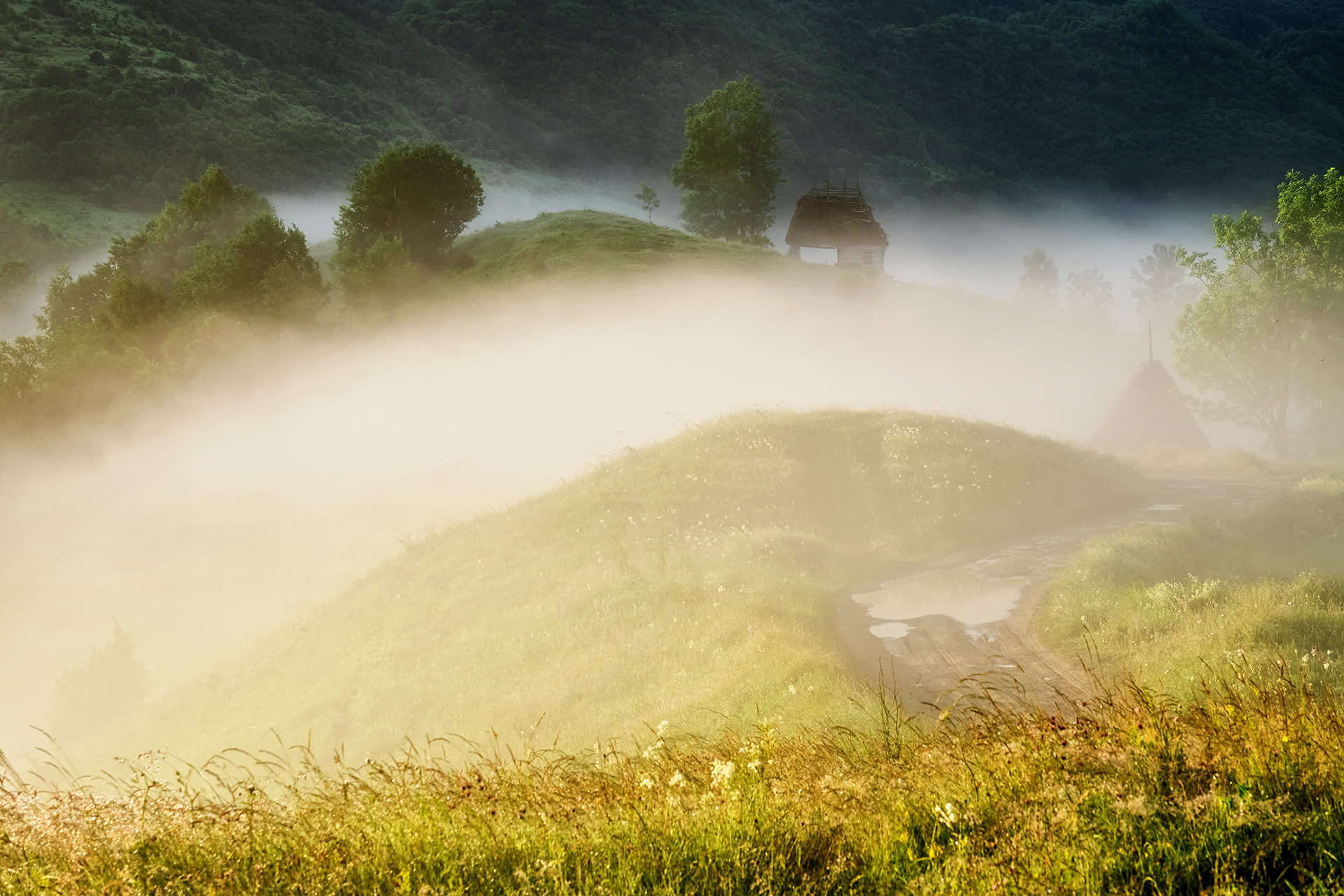
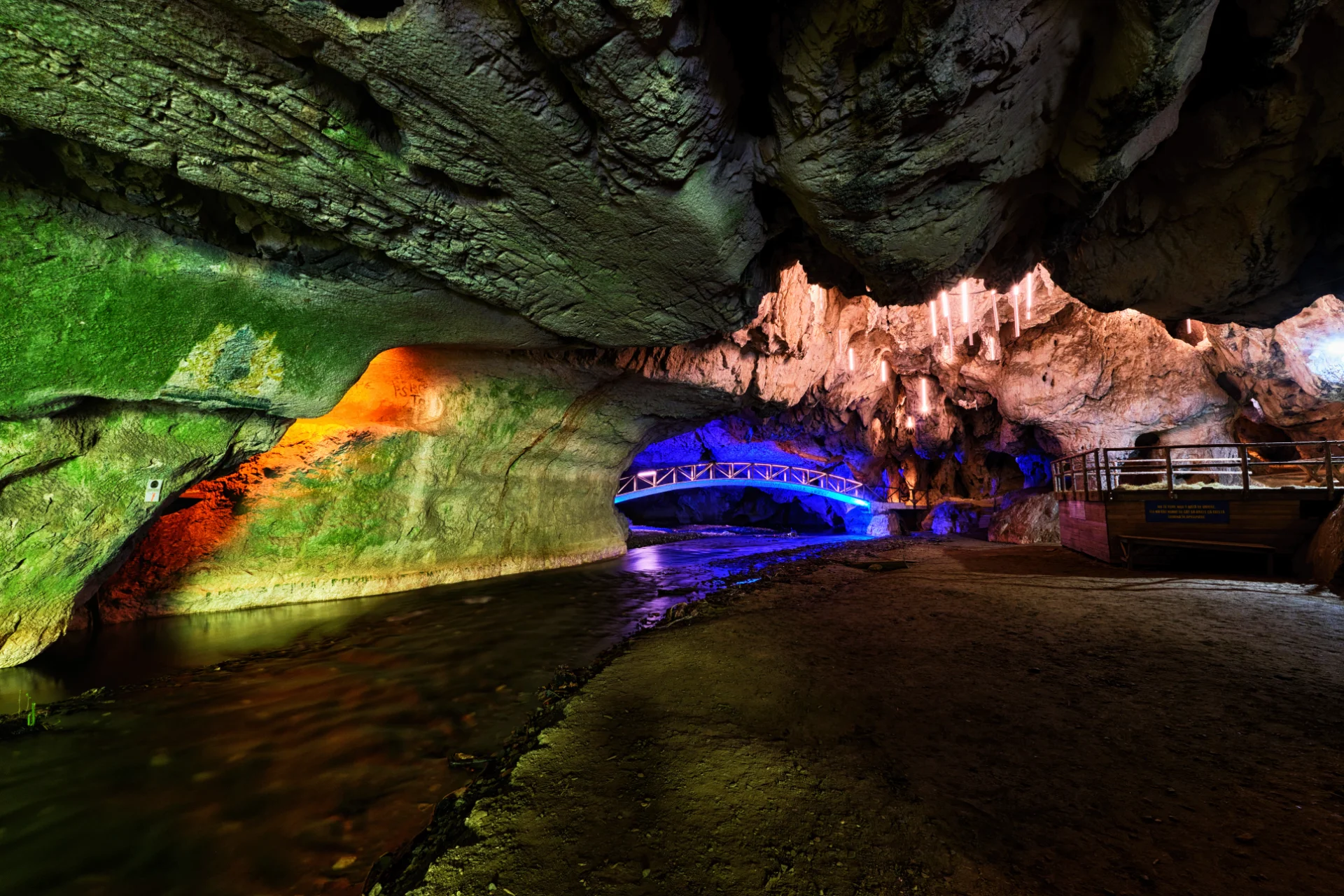
Spears of light breach the thick mist of the morning that often covers the valleys of the Trascău Mountains. From place to place, old cottages and shelters with hay roofs rest silently on the gentle ridges around, surrounded by stray clumps of birch and oak trees. We step slowly over the meadows filled with flowers and butterflies, as to not disturb this bucolic atmosphere of a special fragility. We are in the land of the Mocan people, old inhabitants of these mountains and renowned shepherds. Climbing from Sălciua de Jos over the southern ridges towards the hamlet of Dumești and further to Vânătările Ponorului, we discover a unique world, where the water has created a fascinating scenery. We admire the greatness of nature in front of the spectacular waterfall that gathers the rivers of this small hollow, the water tumbling down into the abyss below. Deep in the bowels of earth, it created the mysterious labyrinth of the Huda lui Papară cave, reaching the light again further down, at the end of the Sub Piatră village. The turmoil and riddles of the depths are somewhat in contrast with the harmony and calmness of the ridges around, each step revealing new pieces of authentic rural life, harder and harder to find in our days. Just a few of the old hay covered cottages are still used by the locals that ascend here to tend to their livestock…
For centuries on end, the corridor that pierces through the mountains in central Romania between the settlements of Rucăr and Bran has been the main link between the people on each side of the Carpathians. An old commercial road follows this pass and reaches some of the most picturesque villages one could imagine. Spread over the rolling hills at the foot of the mighty Piatra Craiului Mountains, the villages of Șirnea, Peștera and Măgura seem to be caught in the spell of long gone times, when life was simpler. Although most roads that dare to ascend the steep hills are often filled with travelers, there are still many hidden places, little corners of heaven where the profoundly rustic atmosphere can still be felt. Wandering around Măgura, Peștera or Șirnea, we are often gifted with some unbelievable and almost surreal landscapes, from the dizzying wall of Piatra Craiului that seems to cover us to the rocky mass of Bucegi in the distance and from small flocks of sheep gathered around an ageless shelter to the lush gardens surrounded by wooden fences and adorned with hay stacks…
Rising in the shadow of the mighty ridge of Piatra Craiului, the gentle hills of the Southern Perșani Mountains shelter two villages whose sublime beauty has long been hidden from the world. Poiana Mărului and Holbav are two settlements with deep roots in the history of this area in the heart of Romania, two villages blessed with a natural setting that seems to break away straight from fairytales. If the core of the villages is nestled together in the valley below, the true charm is revealed upwards, where a fascinating network of trails and pathways leads our footsteps towards some isolated home or a new rustic painting that imprints in our memory. In the villages of Holbav and Poiana Mărului, we have to let our imagination wander around, because wherever we go and look, there are marvelous landscapes and authentic rural scenes! From the imposing ridge of Piatra Craiului o the faraway peaks of Bucegi and from the isolated sheds surrounded by green pastures to the patches of trees that come alive in late autumn or early spring, these two charming villages offer countless moments of excitement…
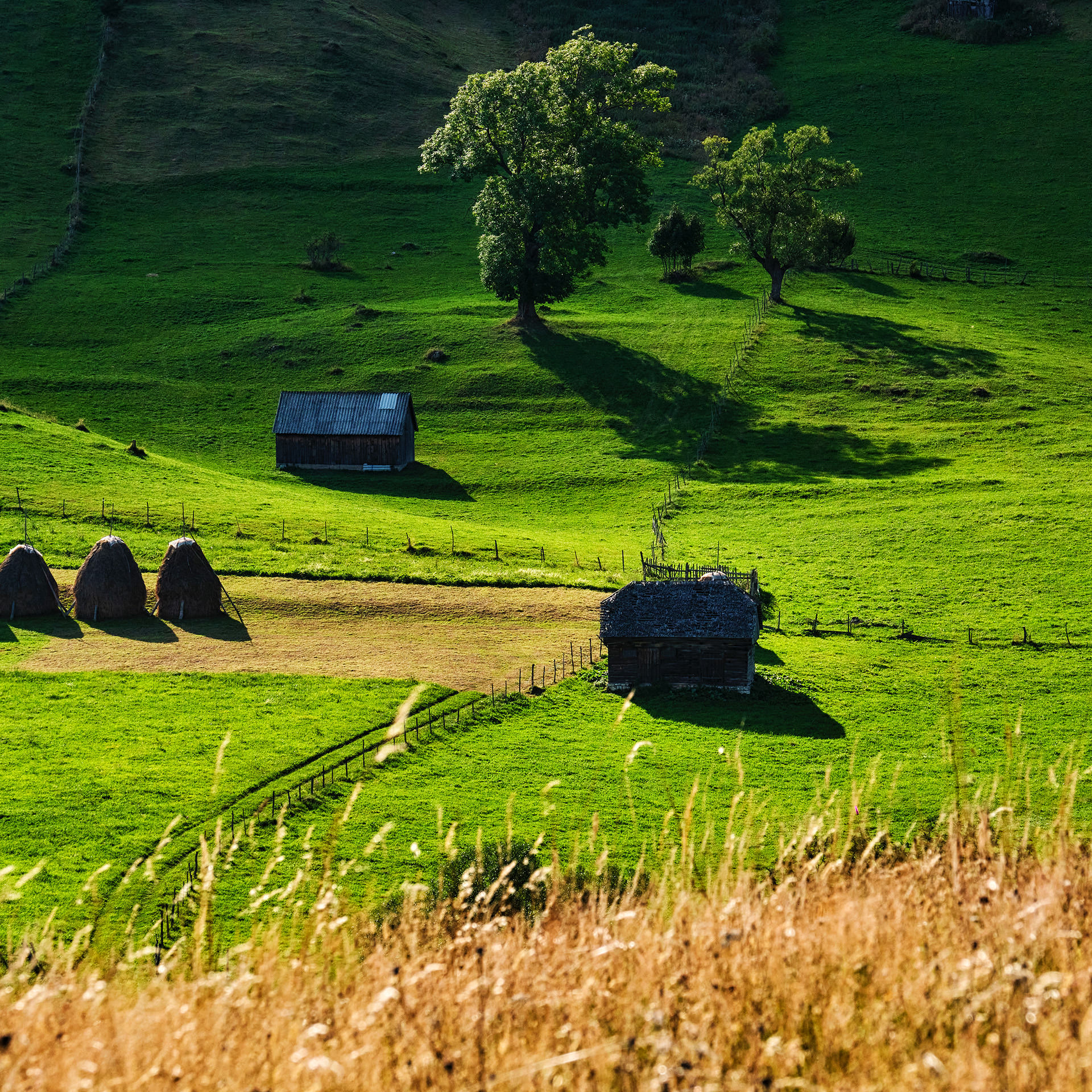
At the foot of the stone fortress of Bucegi Mountains, a row of gentle and long ridges hide between them several deep valleys where the rays of sun are long awaited. Along these valleys, villages like Fundata, Moieciu or Șimon have become a true paradise for travelers searching for splendid rustic landscapes. Even if these places have embraced modern tourism for a long time, transforming into veritable rural resorts with hundreds of guesthouses, we can still uncover glimpses of traditional and authentic village life, while the panoramas that open up from the ridges are truly astounding. Behind most houses in the valleys, there are marvelous gardens that go upwards on the steep slopes, many still preserving the charm of the past, with old wooden shelters surrounded by pastures and haystacks. The true authentic atmosphere can be found once we leave the main roads and climb the surrounding idyllic hills. Magnificent places like the Transylvania Amphitheater, the Gorges of Grădiște or Bran Monastery greatly increase the attraction of these unique Romanian villages. Each new season completely changes the scenery over the hills at the foot of the Bucegi Mountains, from the colorful explosion of spring flowers to the deep green of the summer pastures and from the pastel symphony of the fall to the pure and silent infinity of winter…
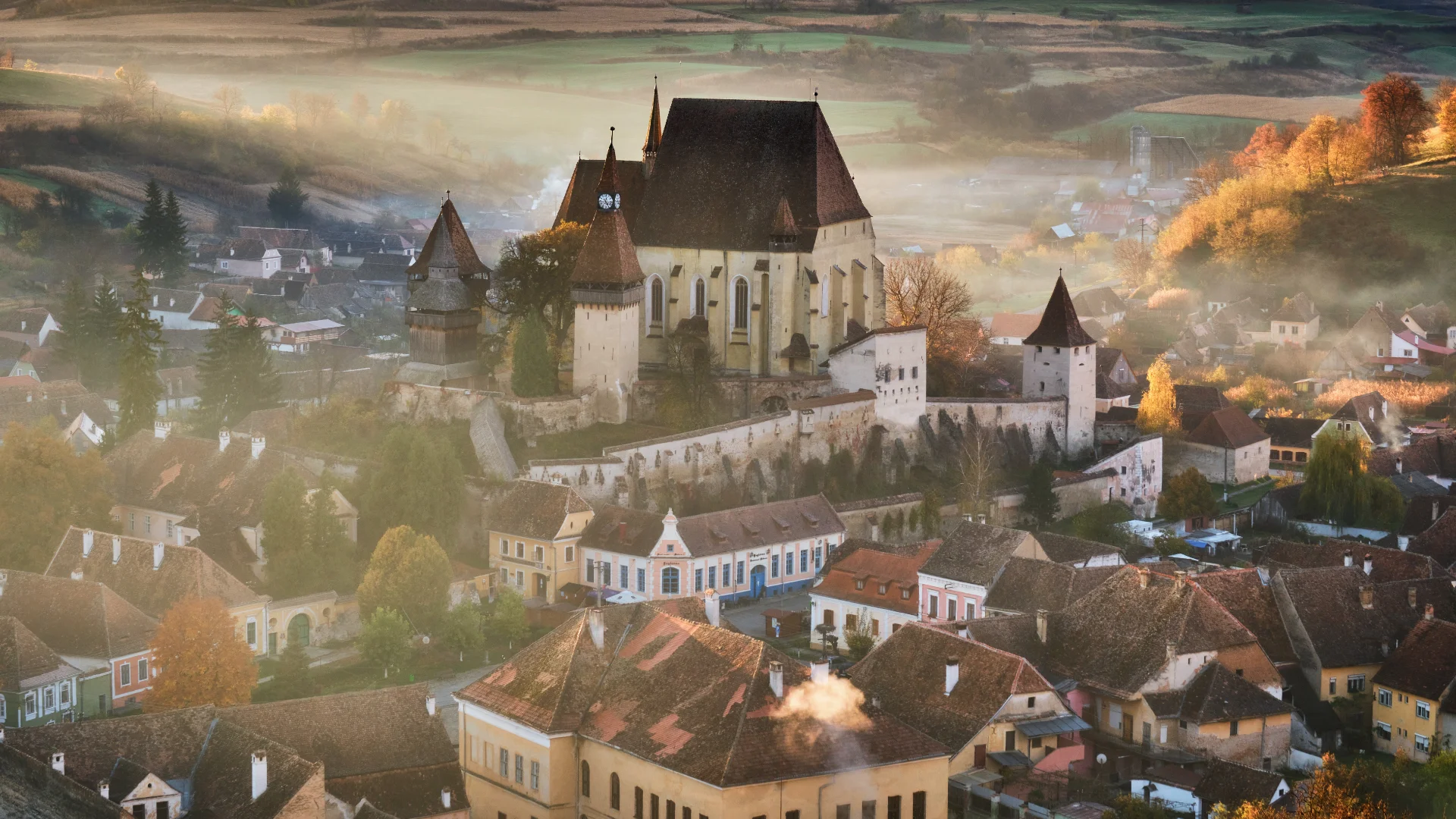
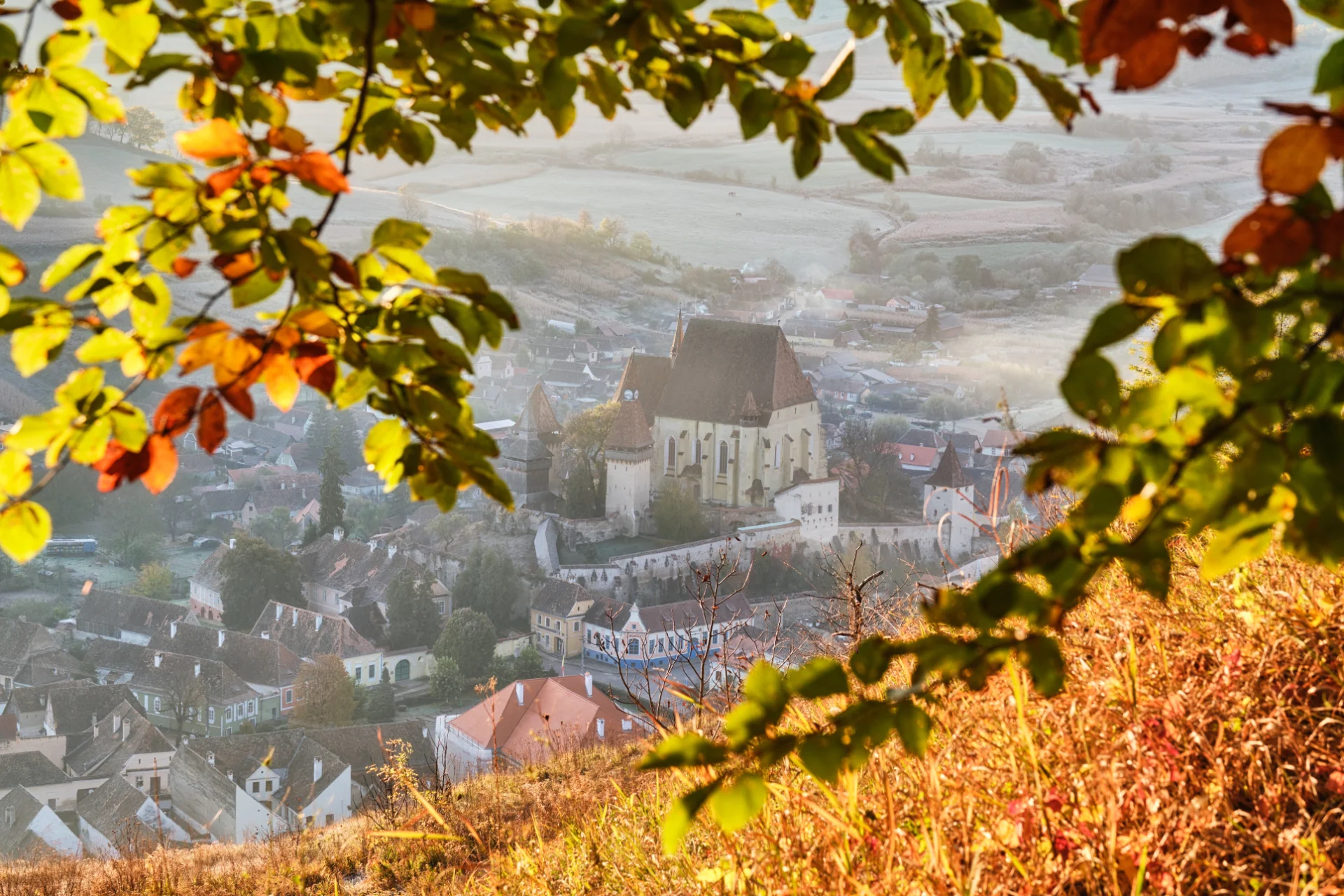
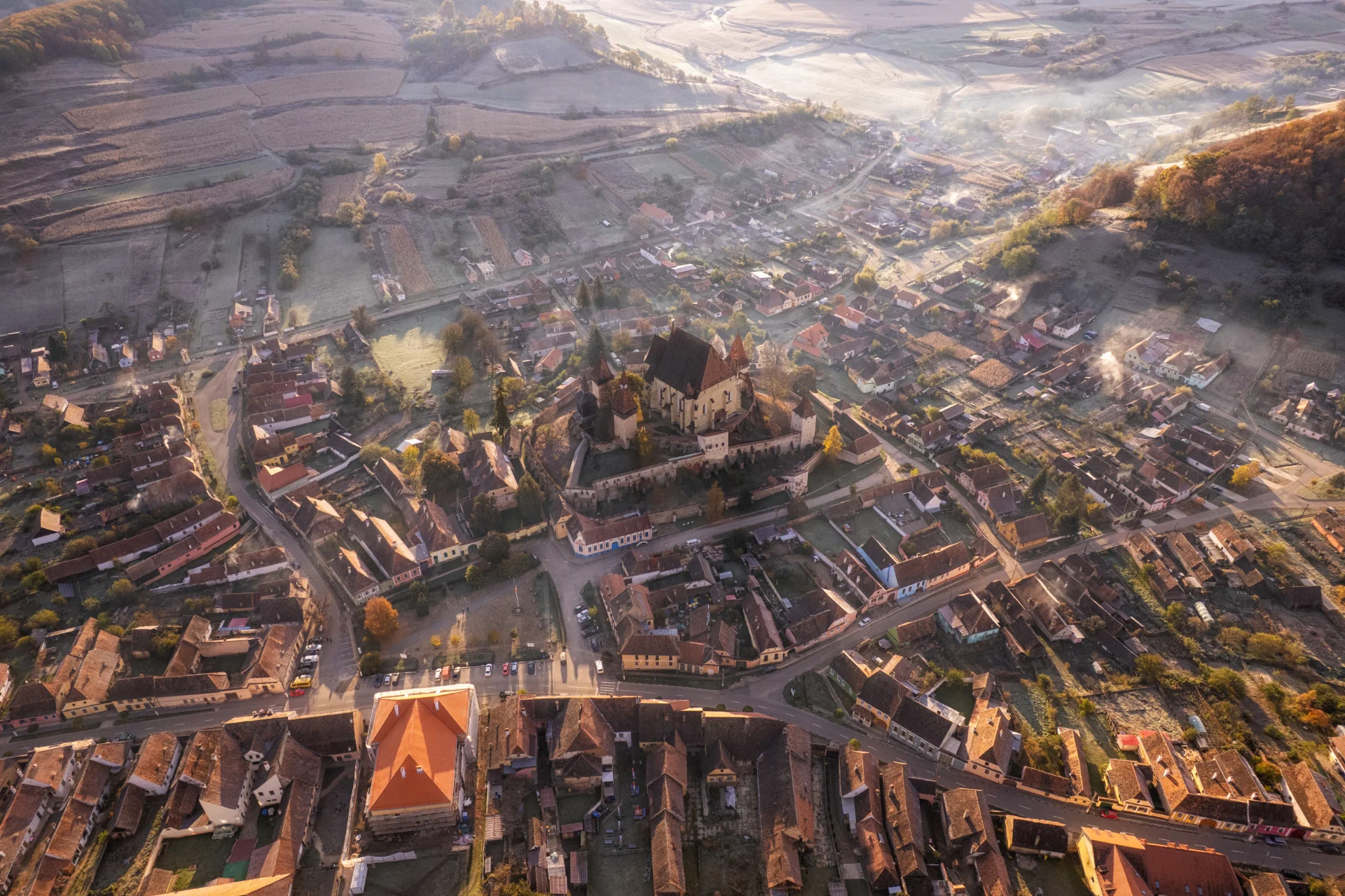
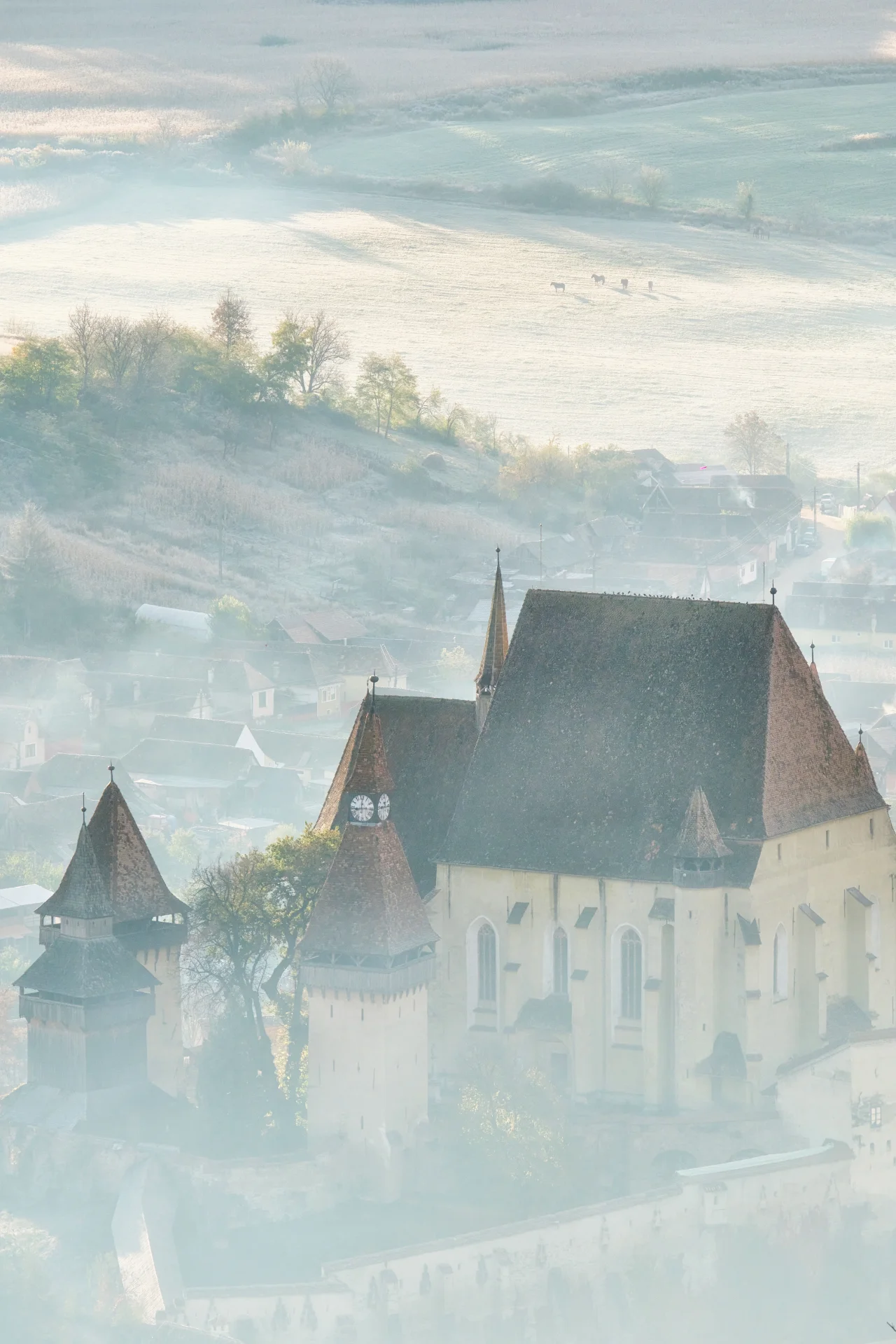
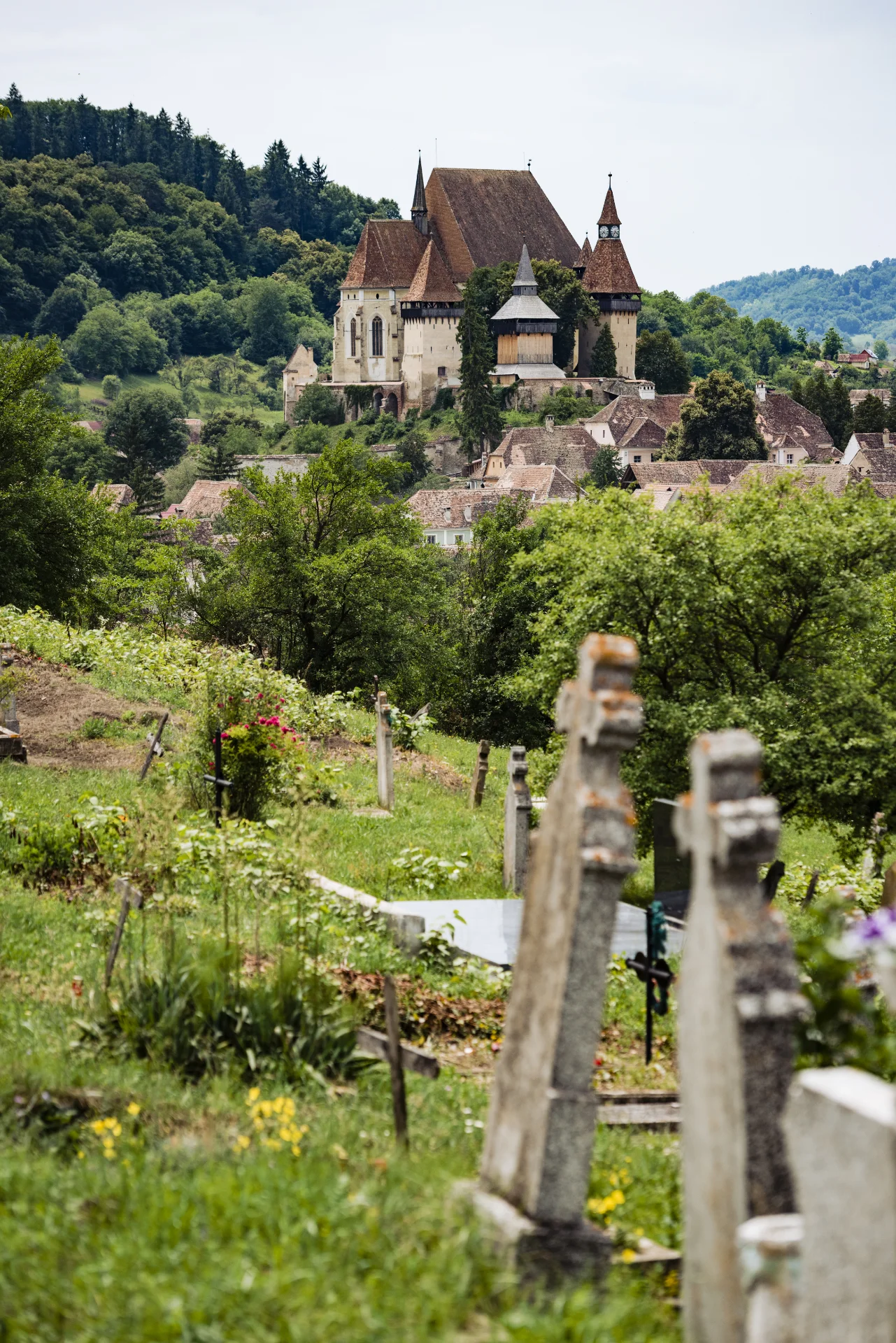
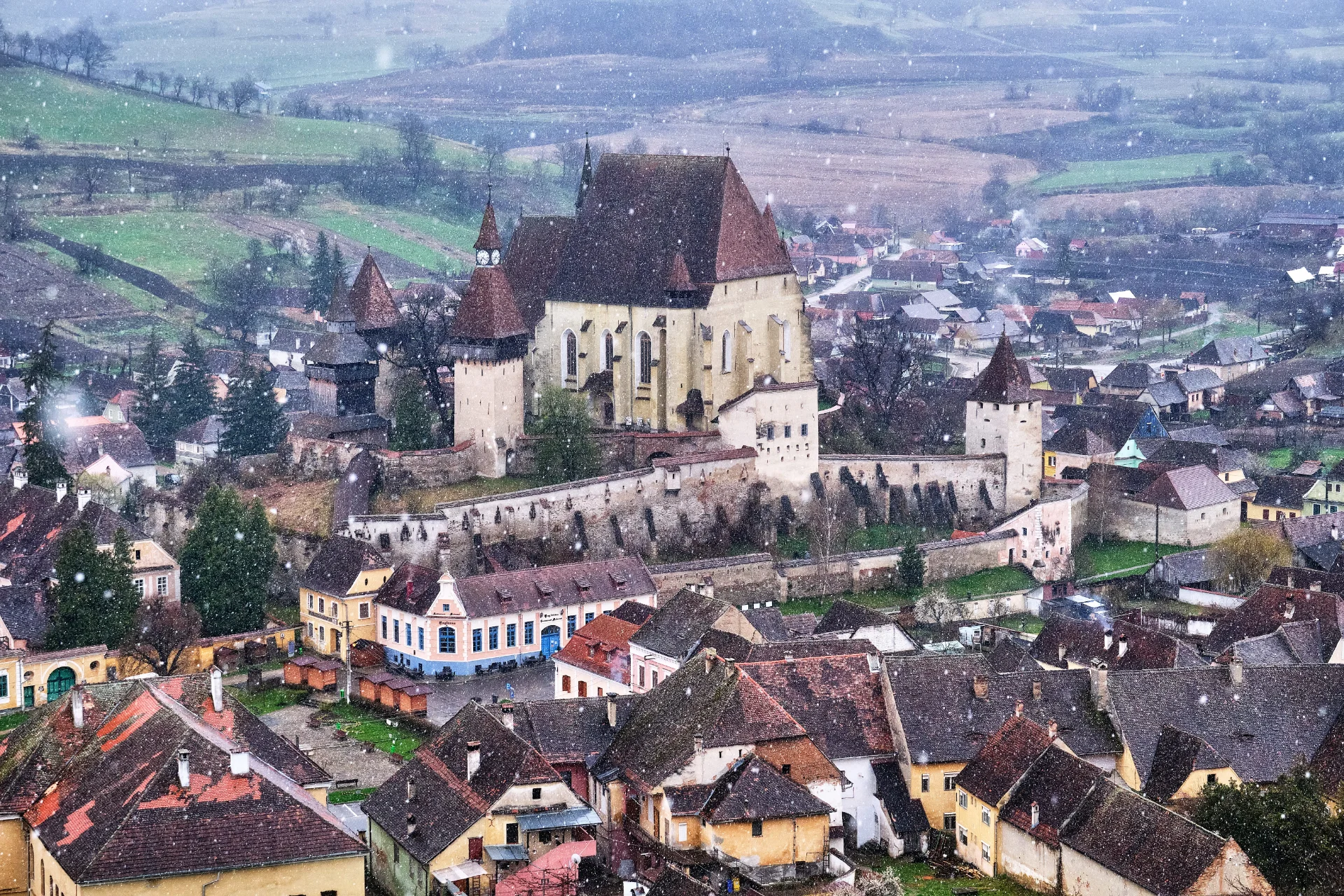
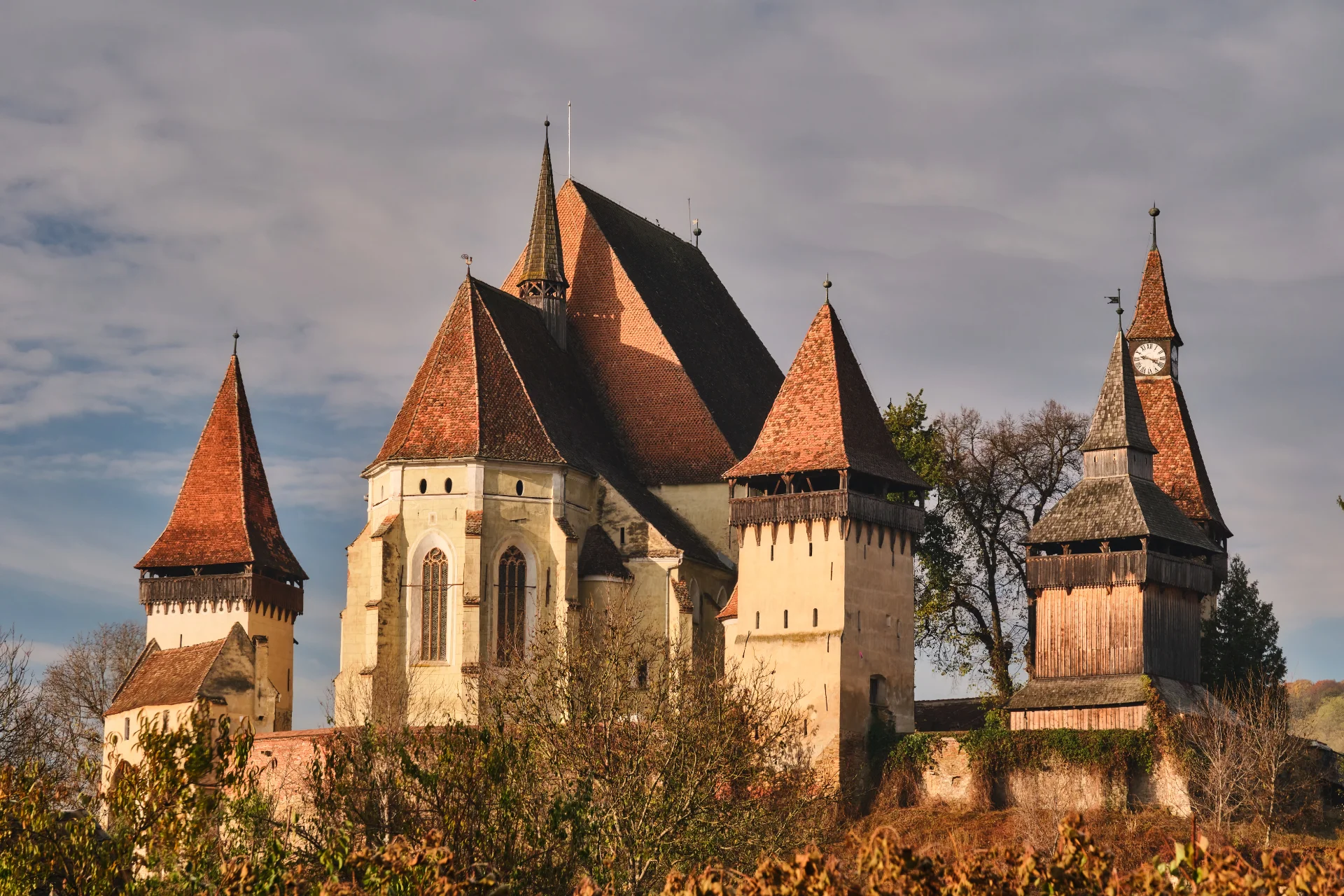
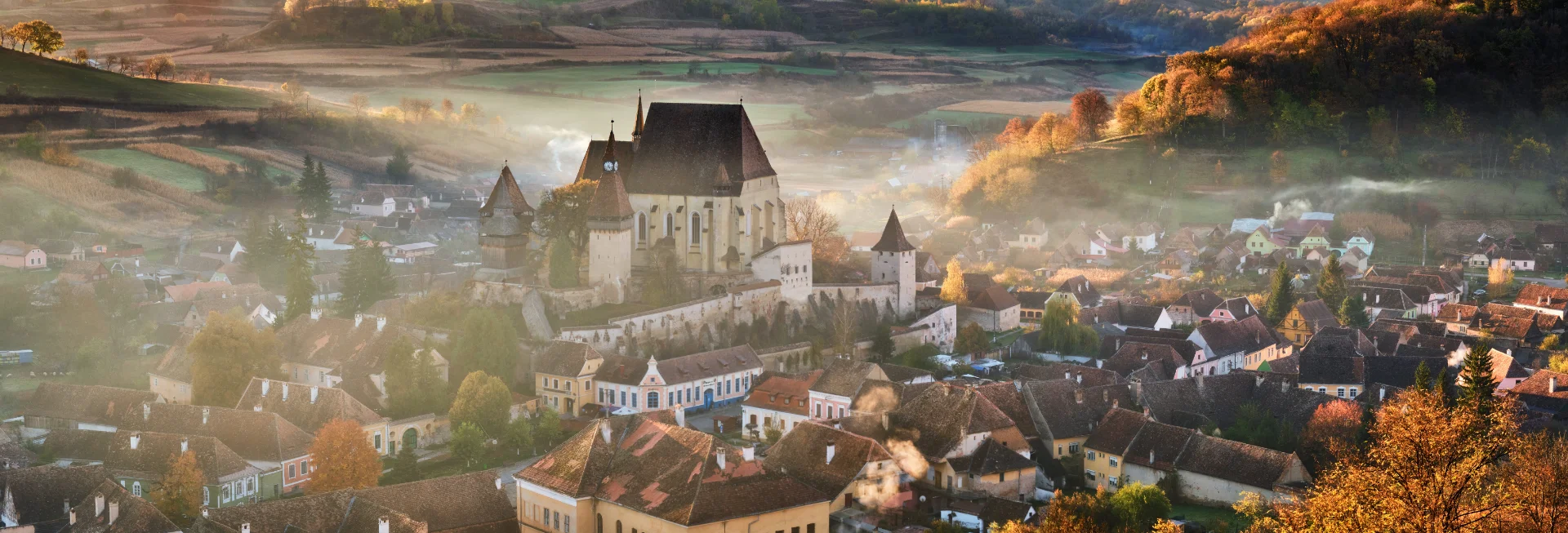
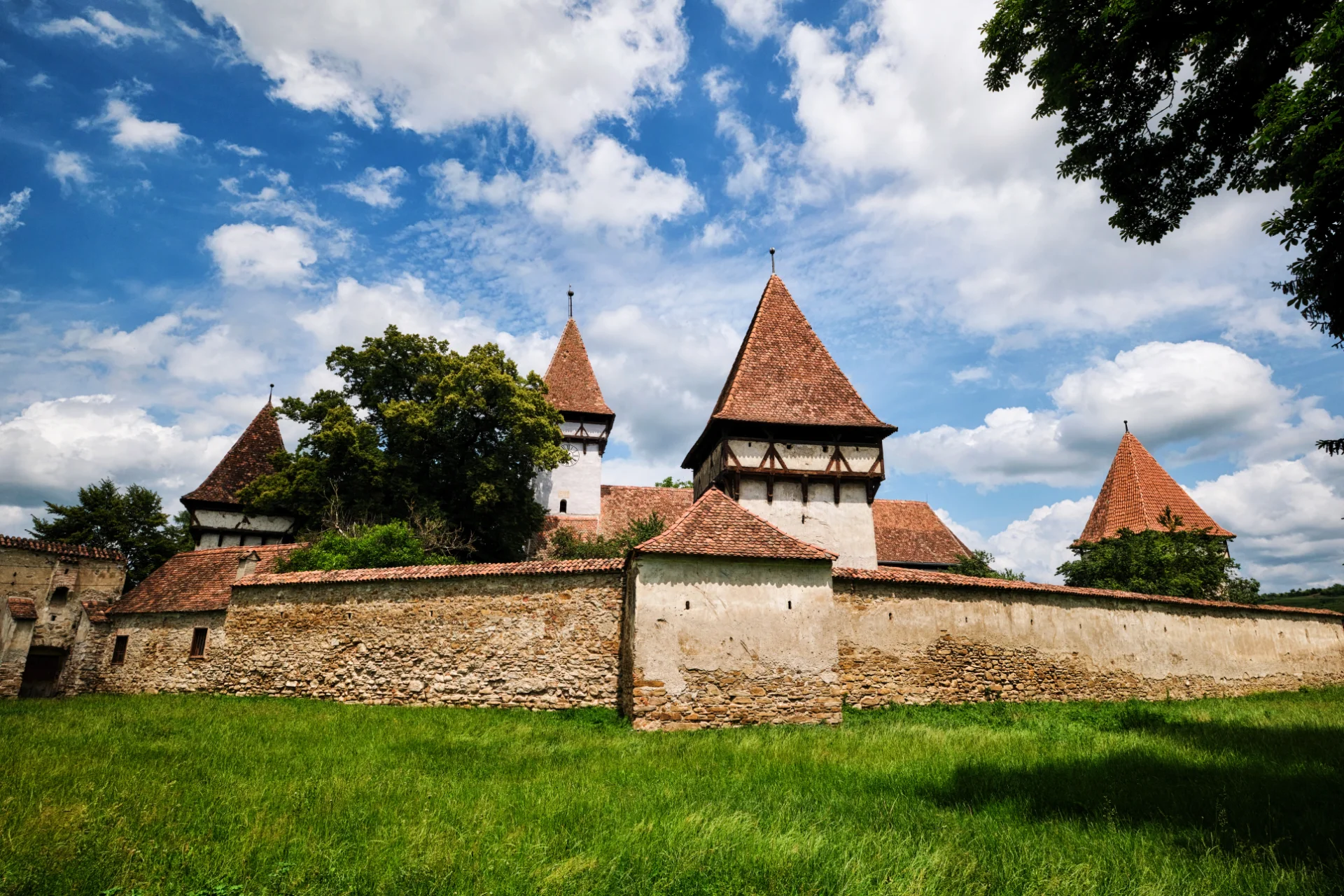
Looking ahead, the gentle hills resemble the waves of an endless ocean that changes its shades each season, while the majestic towers of the fortified churches rise towards the sky like the masts of old ships, marking the old Saxon villages of central Transylvania. Arguably the most impressive and renowned of them all can be found hidden between the hills south of Sighișoara and Mediaș. The now seemingly dormant village of Biertan was once a flourishing medieval settlement, the magnificent center of the Saxon culture in Transylvania. The core of Biertan’s heritage rises majestically on a small hilltop in the center of the village, at times resembling a floating island above the morning mists. For more than five centuries, the fortified church of Biertan has stood witness to the coming and passing of seasons over the village below, a testament in stone and wood to the greatness and ingenuity of the Transylvanian Saxons. With its towers and walls that protect its three inner courtyards, it reminds more of a stronghold. During grim times, this space provided refuge and protection for the villagers, beyond its usual role as a cultural heart for the community. Today, travelers breach the defensive structures with ease, quickly conquering the top of the hill, where the massive church still stands, guarding some of its past treasures. Throughout the village below, there’s still a hint of that medieval authentic atmosphere, though many of the Saxon families have long left Biertan and the highlands of Transylvania. Their legacy is still preserved through the exceptional architecture that can still be admired in Biertan and elsewhere…
Surrounded by the captivating melody of the cowbells that enliven the valleys and pastures, life in the wild heart of the Apuseni Mountains follows its endless thread for ages. If the land of the Moți people had a secret that laid hidden for centuries, this has to be the marvelous pastoral universe enveloped inside the Poiana Călineasa hamlet, a place that both amazes and enthralls, where the core essence of the Apuseni Mountains and its unique inhabitants is enclosed in a perfectly idyllic painting. For generations on end, shepherds from the surrounding villages return here each spring to their seasonal homesteads, a seasonal cycle inherited from their forefathers. Hundreds of wooden cottages and shacks rise in this seemingly infinite pasture, creating an authentic community that comes to life with the first signs of spring, when shepherds from three counties arrive together with their beloved herds. Surrounded by dark woodlands and the mysterious world hidden in the depths of these mountains, Poiana Călineasa lies at the crossroad between the counties of Alba, Cluj and Bihor, with pastoral trails arriving from the valleys around. The best way to find this fascinating place is by either traveling from the settlement of Gârda de Sus, along the Ordâncușii Valley, or by crossing over the hills through the picturesque villages of Munună, Ghețari and Ocoale. Known until recently only to locals, this exceptional rural destination gives us the ever so rare opportunity to discover and admire the authentic life of the Romanian peasant…
Mărginimea Sibiului, this enticing and fascinating area of Romania that stretches at the feet of the Cindrel Mountains is a veritable pastoral paradise, perfectly blending idyllic landscapes with traditional architecture and ancient ethnographic traditions. An oasis of authentic Romanian civilization with special traits, often resulting from the influence of the Saxon culture that arrived in these lands starting with the 14th century, it gathers 18 villages and little towns south of Sibiu. Crammed tightly where two small creeks escape the mountains, the village of Rășinari welcomes us from afar with its church bell towers, watching over the red shingle rooftops. The green ridges of the mountains abruptly drop off at the edge of Rășinari, resembling a stormy ocean that was suddenly petrified. Beyond its monumental churches, Rășinari is also the birthplace of two important personalities of Romanian culture, the philosopher Emil Cioran and poet Octavian Goga. We briefly pass along their memorial houses, as well as many other beautiful traditional houses that partly make the village so famous. In a valley right across the mountains south of Rășinari, a crystal clear creek slowly flows among the wooded ridges of the mountains. On each side of the river, older and newer homesteads lay their idyllic gardens up the steep spines of the mountains. Between orchards and haystacks, herds of cows and sheep graze peacefully, often watched by lazy dogs. Unknown trails lead us through the forest towards the gentle ridges above the village, where dozens of lonely cottages silently wait for their flocks and shepherds. Many abandoned through the ages, these archaic wooden shelters are a lasting testimony of the pastoral traditions in this area, locally known as the Land of Cottages…
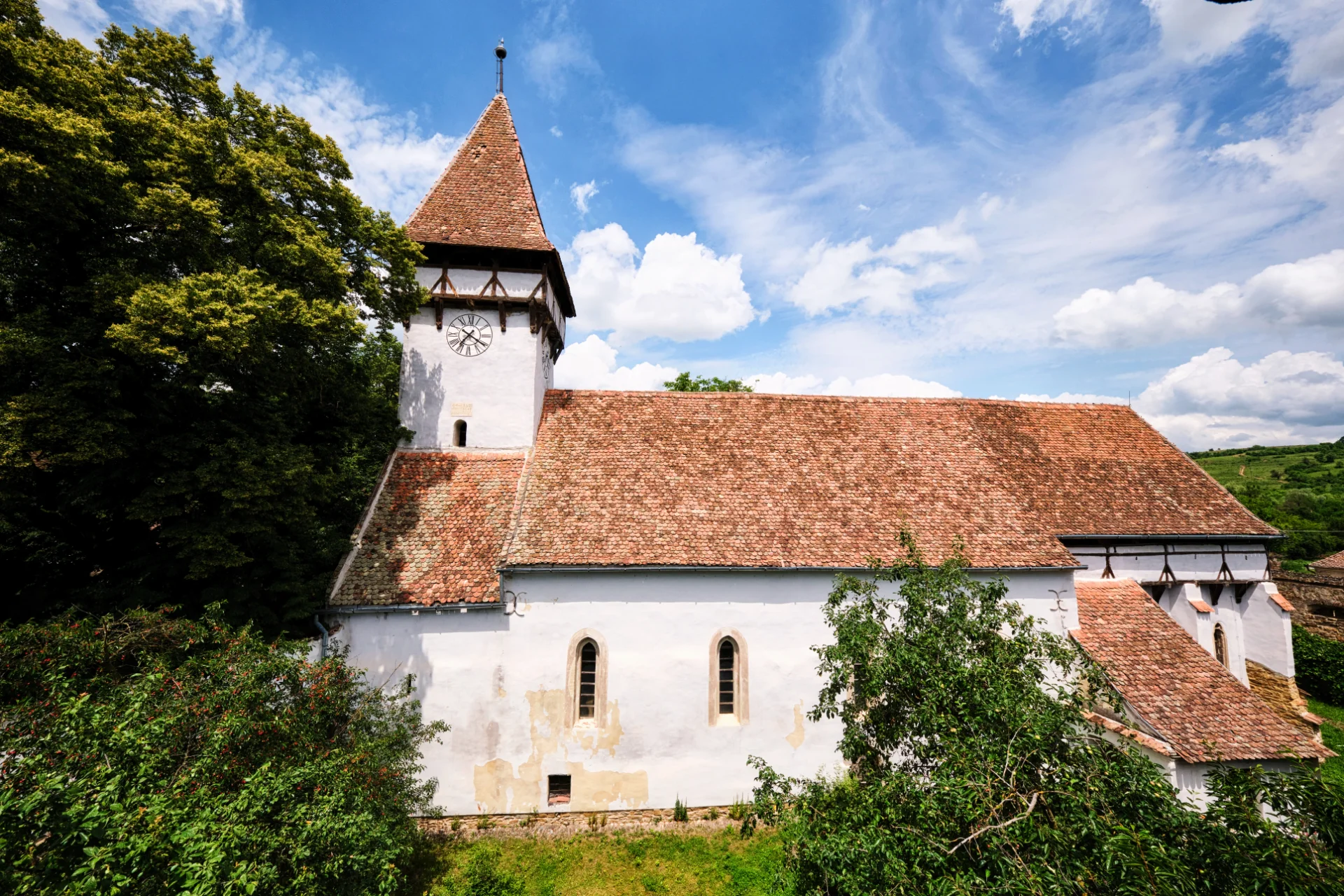
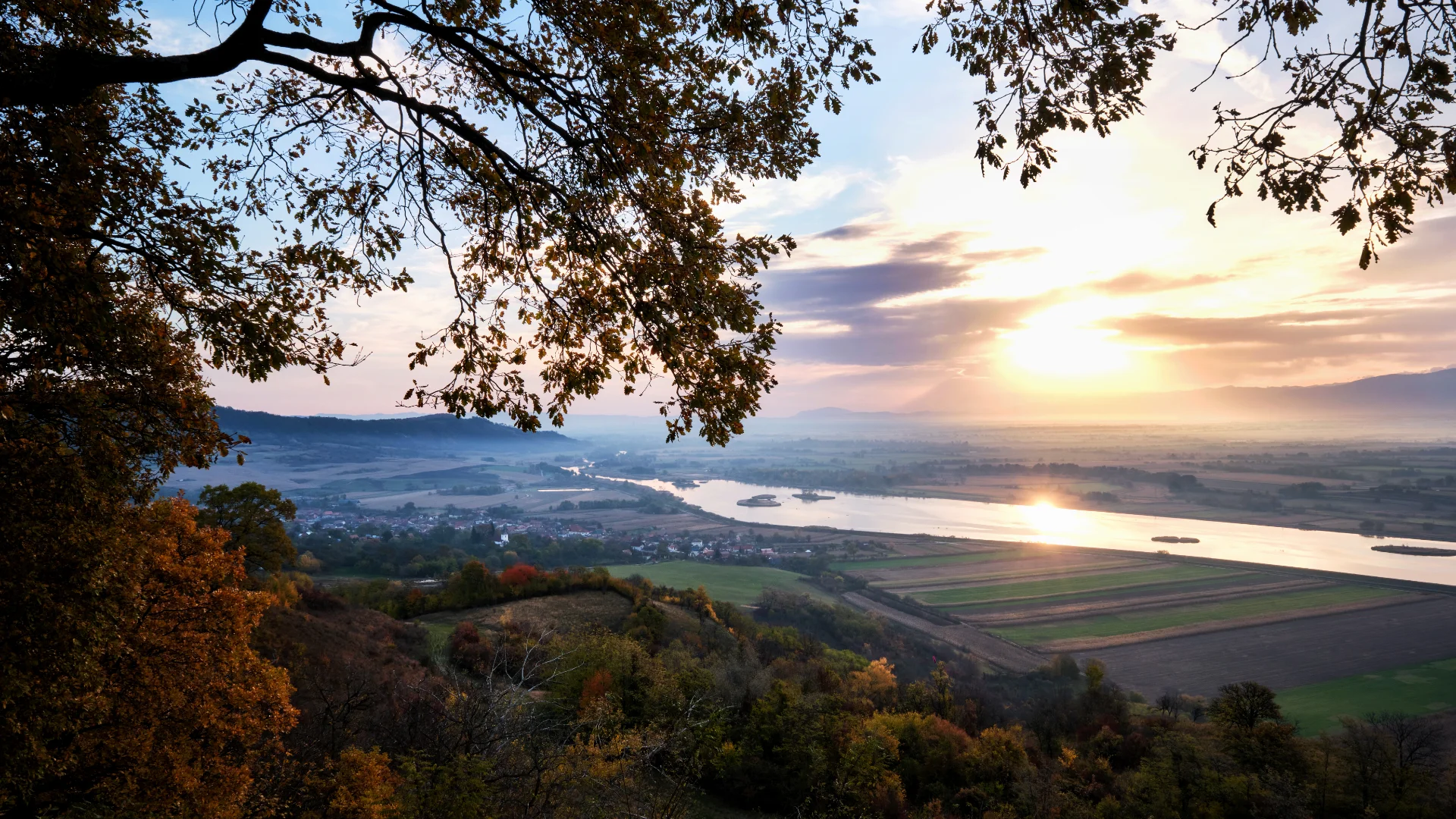
The village still sleeps soundly, watched over by the old Olt that flows quietly at the foot of the Transylvanian hills and the dark peaks of the Făgăraș Mountains. We stop under one of the archaic oaks that cling to the hillside above, where the community has set up a memorable lookout point. We wait in silence for the first rays of a new day over the Land of Făgăraș and soon enouh the sky is set ablaze by the reddish explosion before sunrise. The fiery disk slowly rises from behind the majestic ridges and is reflected in the waters of the Olt, sending golden spears towards the enchanted lands below. We are enveloped in the warm light of a pleasant October morning, looking towards the village of Rucăr that is slowly waking up to life. A few herds leave the surrounding sheepfolds behind, heading for the meadows on the hills, while the river banks tremble with the dance of the morning birds. In the village below, authentic old traditions are still preserved and travelers can experience traditional life by wandering its streets. Going over the hill and through the forest to the north, we also reach the small village with Saxon roots called Cincșor, also caught between the waters of the Olt River and the Hârtibaci plateau. In the middle of the old houses, hidden from view behind a few venerable oak trees, we discover one of the most beautiful fortified churches in these lands. Over five centuries old, it still carries the memories of a bygone world, its stories being carried forward by the few Saxons remaining in Cincșor…
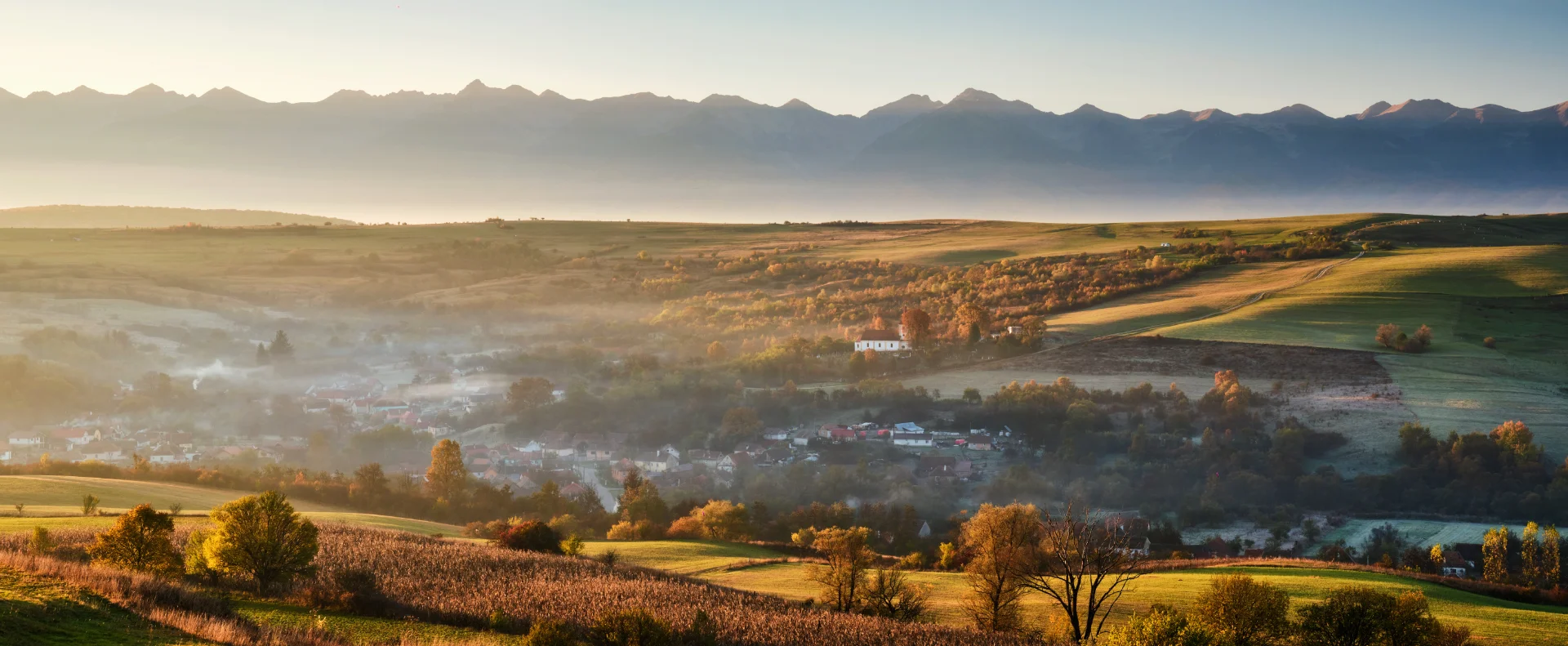
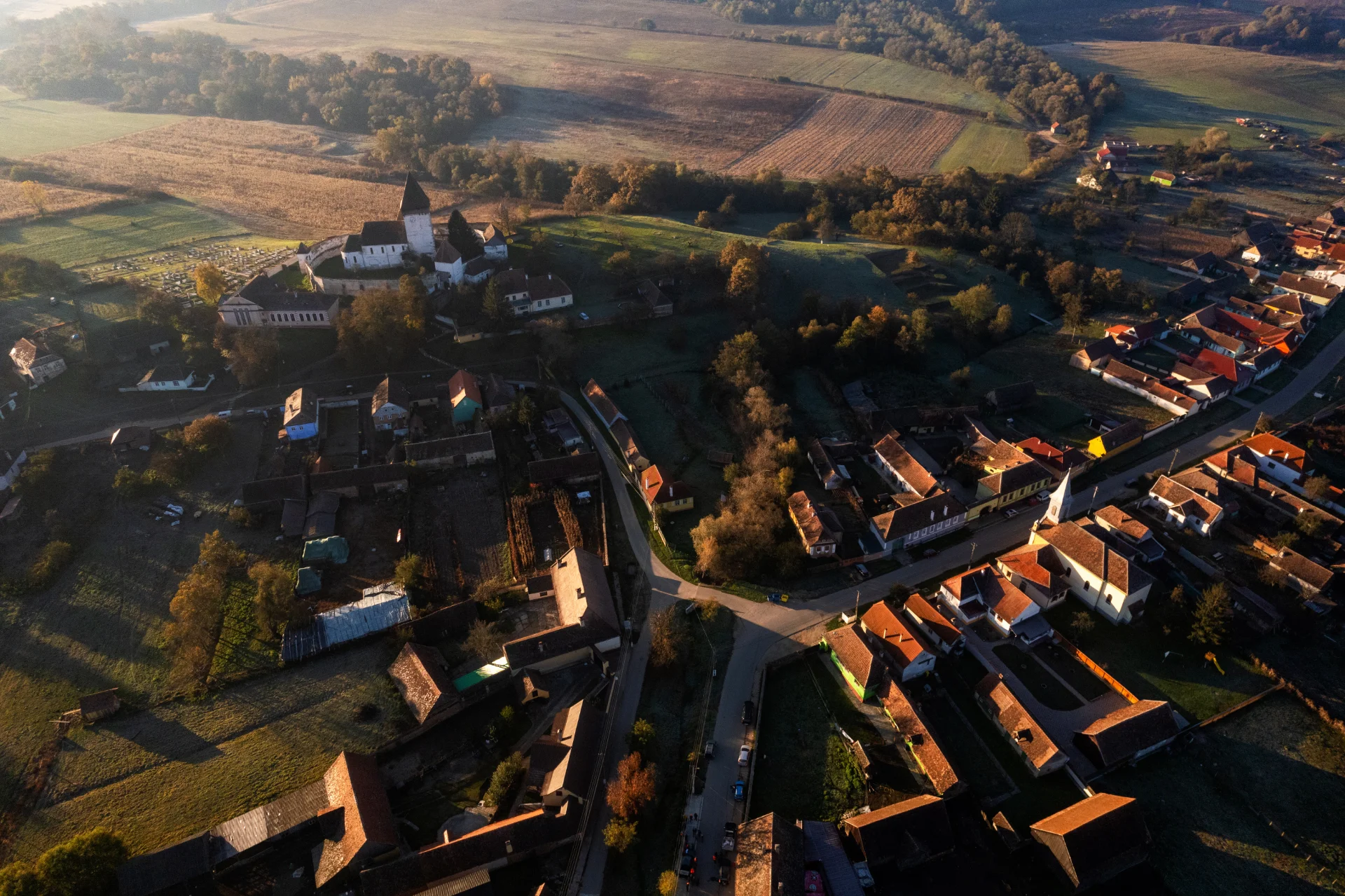
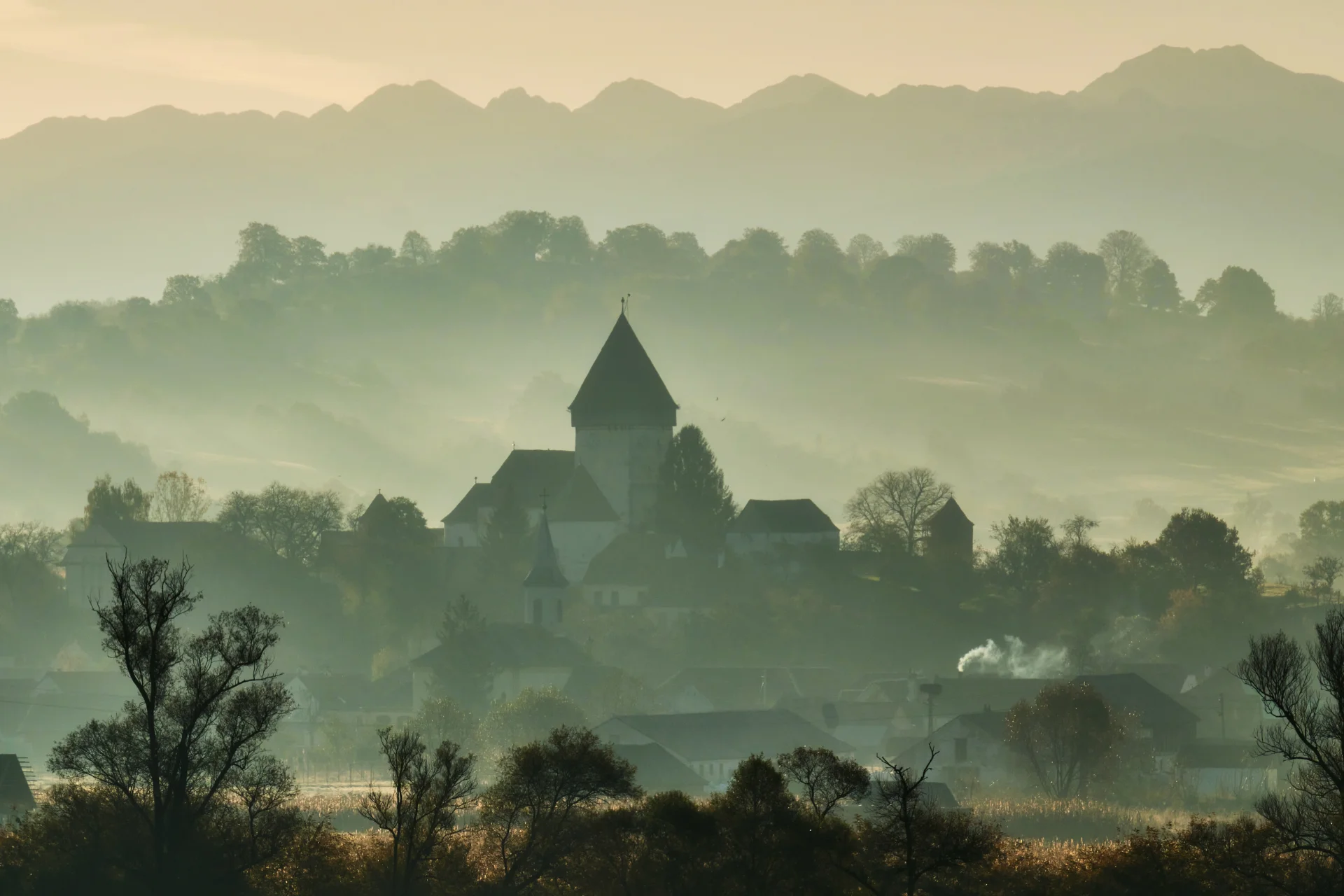
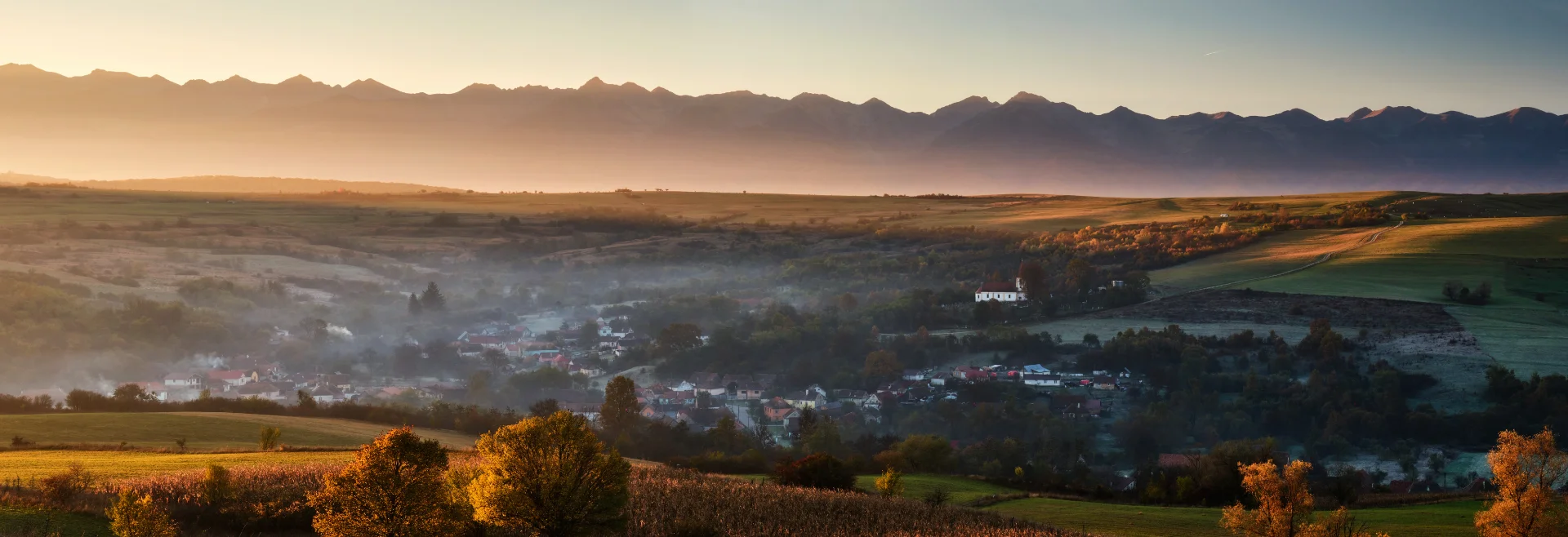
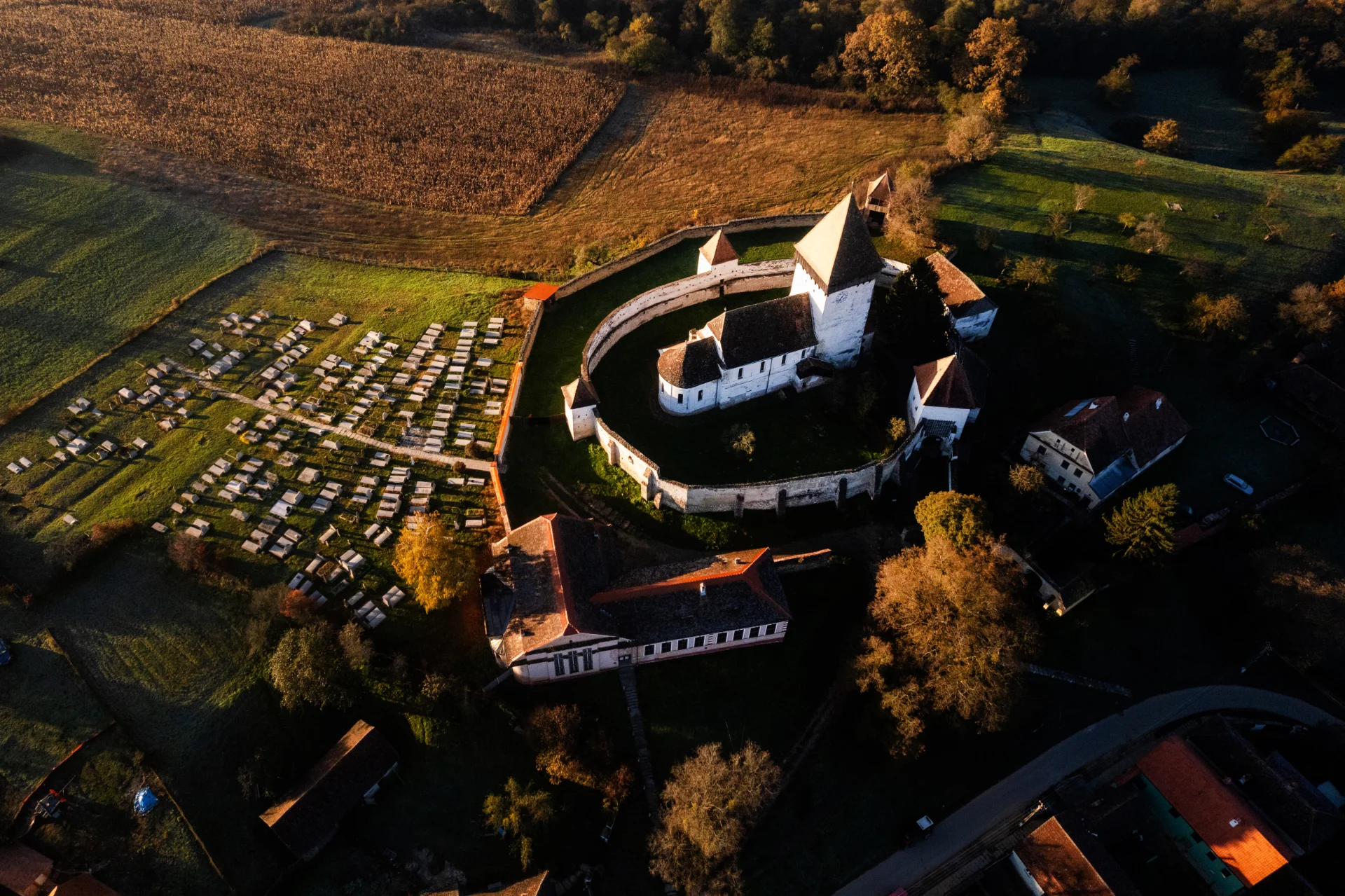
Leaving the city of Sibiu towards the east, we enter the realm of the fortified churches, left behind centuries ago by the Saxon settlers of Transylvania. Time has swept through many of these magical villages, leaving behind only shadows of their former charm and glory. Among the gentle hills, distant silhouettes rise above tile roofs, drawing in the footsteps of inquiring travelers. Often admired from afar for its picturesque setting, the fortified church of Hosman stands out over its dramatic background, its towers and walls replicating the peaks and ridges of the spectacular Făgăraș Mountains. Few people actually make their way into the village itself and fewer still reach the massive Romanesque church that still preserves some of its medieval character. Surrounded by vibrant pastures and forests, Hosman makes for an authentic gateway into the mesmerizing universe of the Transylvanian Highlands. Just a few kilometers further along, another tranquil heaven is almost hidden among the verdant hills. The sleepy village of Fofeldea might not be renowned for its Saxon heritage, yet its almost surreal charm exudes from its stunning location, tucked away in a small valley that is often covered by the mist. Reaching the top of the hills to the north and watching the sun rising up during a cold autumn morning is almost an otherworldly experience. The craggy ridge of Făgăraș is set ablaze by the first spears of light, followed by the surrounding hills already dotted with flocks of sheep and adorned by the small orthodox church, perched above the village…
Before truly leaving the grip of the mountains towards the Land of Hațeg, we meet several picturesque villages spread across the gentle hills at the foot of the Șureanu and Retezat mountains. The road slithers between them, taking us to places that deeply resonate within the conscience of the Romanians. We are at the northern limit of the momârlan people’s lands, the legendary descendants of the Dacians, whose unique and authentic traditions can still be found throughout rural areas of the Jiu Valley. The fascinating villages of Bănița, Merișor and Crivadia are living proof of a lifestyle that is mostly unchanged for centuries, with shepherds and cottages isolated in the mountains, with gardens where the graves of the ancestors lie among flowery orchards. The primitive beauty of these places is created by the sheer feeling of discovering an ancient world that maybe lives its last moments. We are always surrounded by an almost perfect harmony between the natural and the human elements that melts into a collection of splendid impressionist paintings. Wandering around these hills, we can also uncover several small natural masterpieces, like the incredible canyon of Bănița, the mysterious Bolii Cave or the wild gorges of Crivadia guarded by the medieval tower…
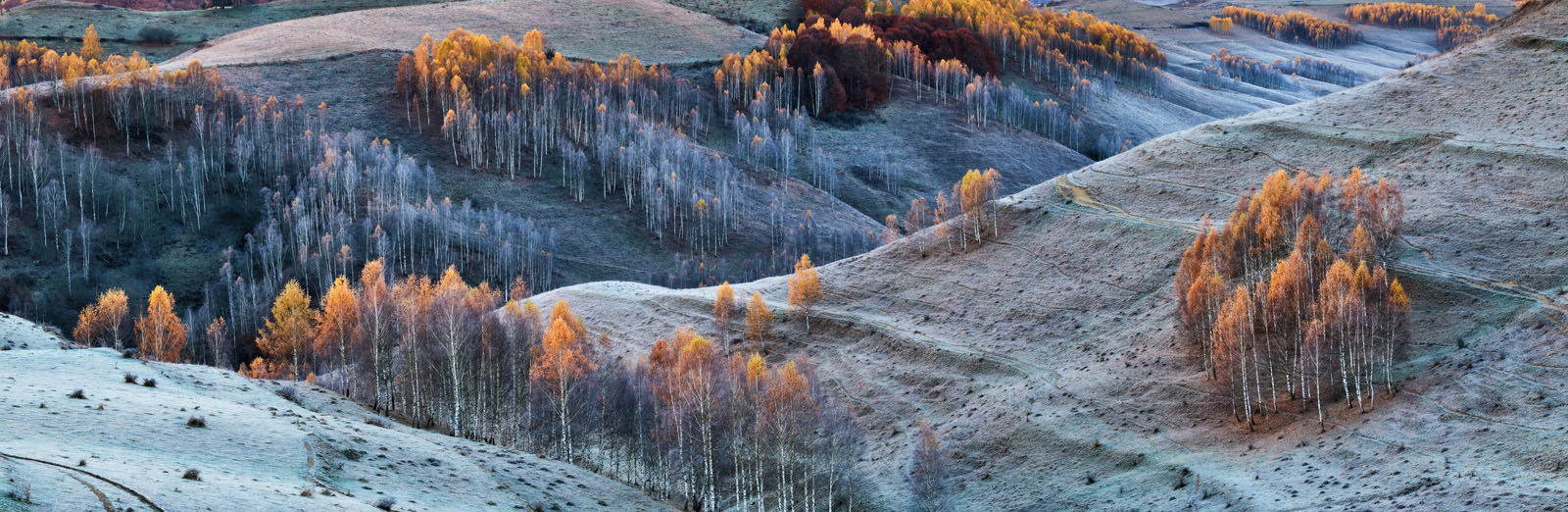
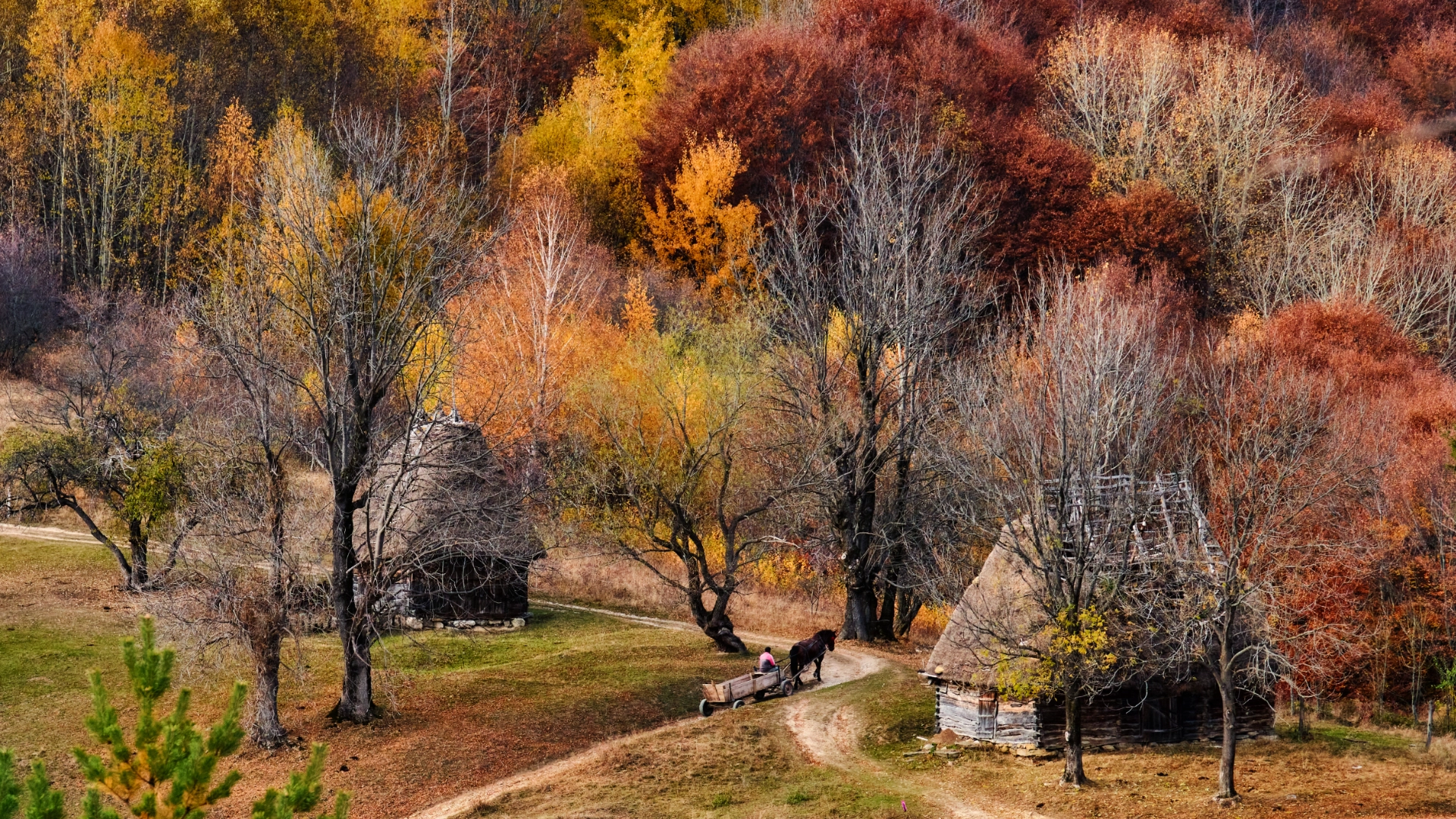
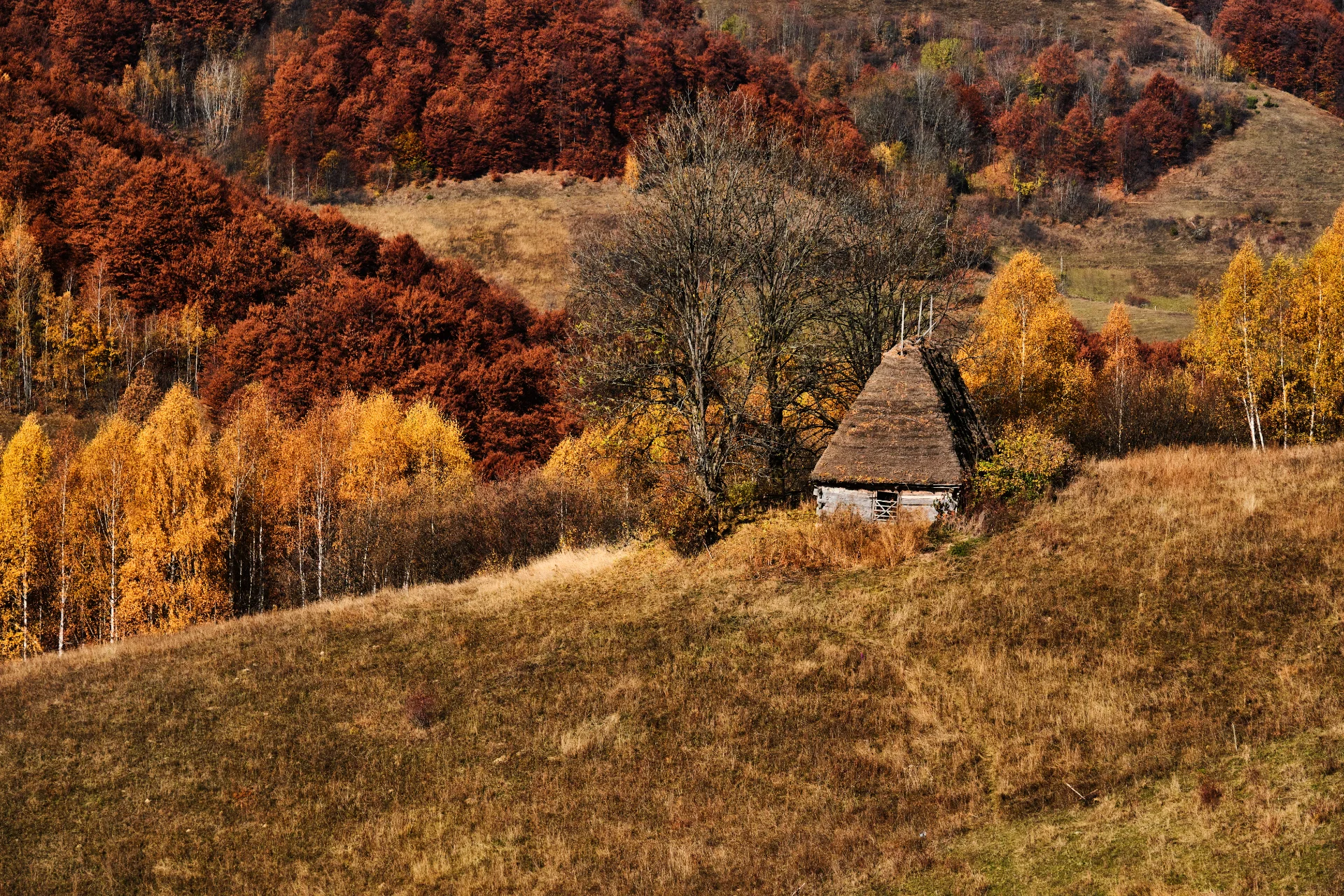
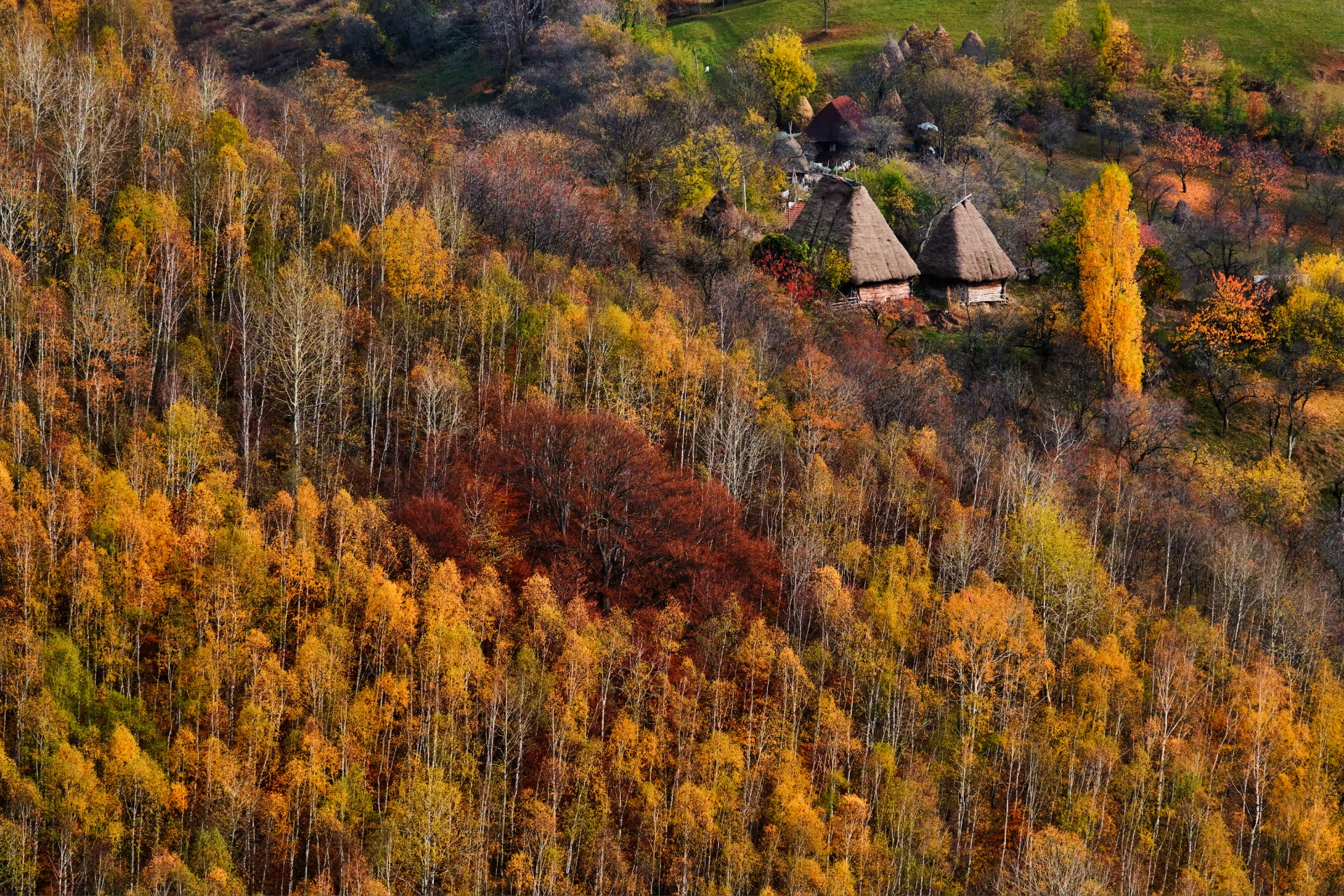
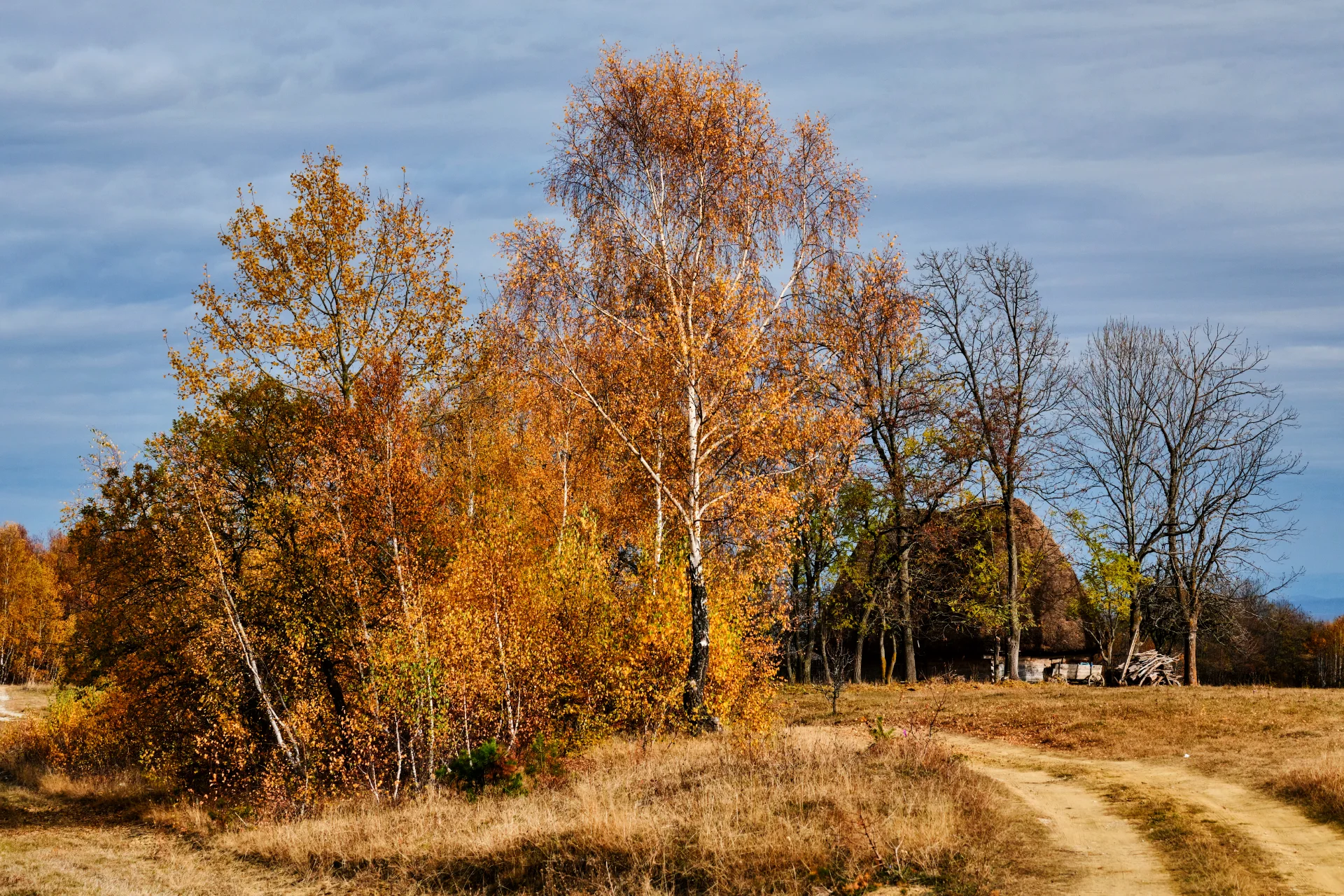
Autumn has already spread its endless shades over the peaks and valleys of Trascău Mountains, transforming this bastion of archaic life into a vibrant spectacle of nature. The picturesque road that opened this idyllic land to the world below now leads us through the charming villages here, recognized and admired for their old thatched-roof houses, true testaments to bygone centuries. Through the villages that have long been hidden from view over the ridges between the Arieș and Ampoi valleys, we still encounter ox carts and isolated huts, still animated by people who live in the ancient rhythm of the seasons. Above the blessed monastery of Râmeț, which has been watching over the wilderness of the Geoagiu Valley for centuries, we discover authentic havens like Valea Uzei, Valea Inzelului, Cotorăști and others like them, where the atmosphere of the dusty trails awakens in our hearts the nostalgia of a childhood gone too soon. In these places, autumn seems to create scenes more intense than in other parts of the country, emotional scenes that seem to have been taken from the paintings of Grigorescu or Andreescu…
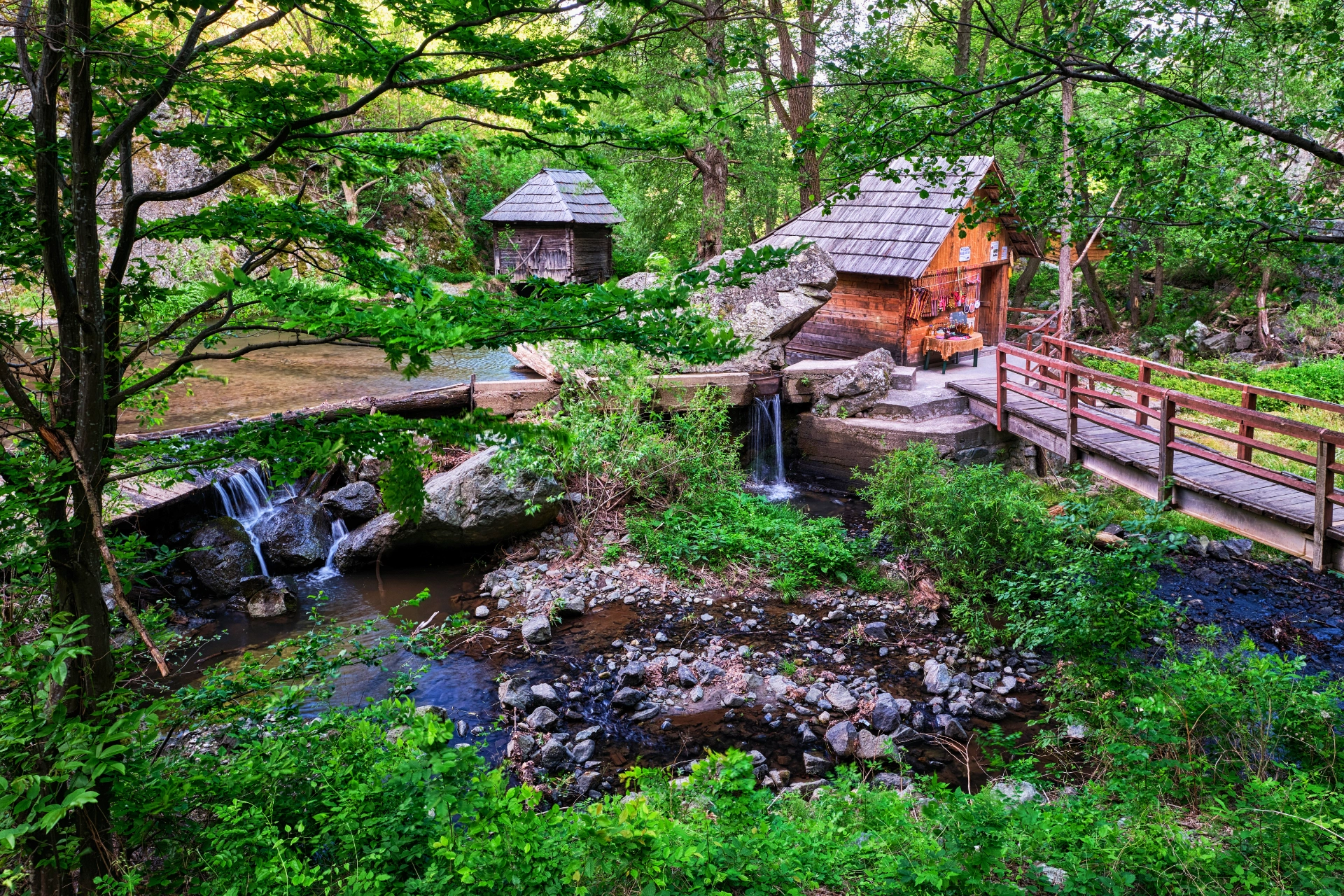
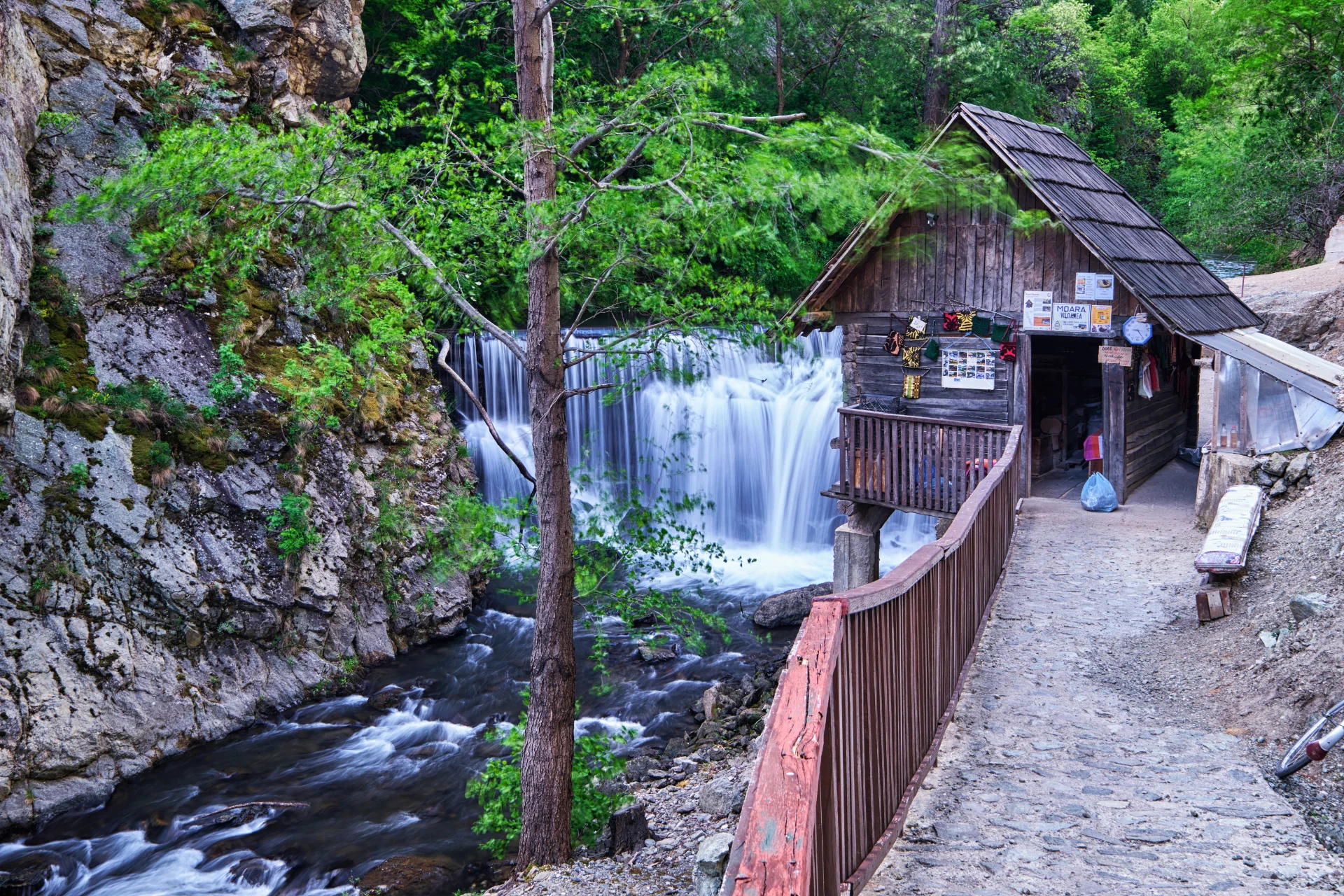
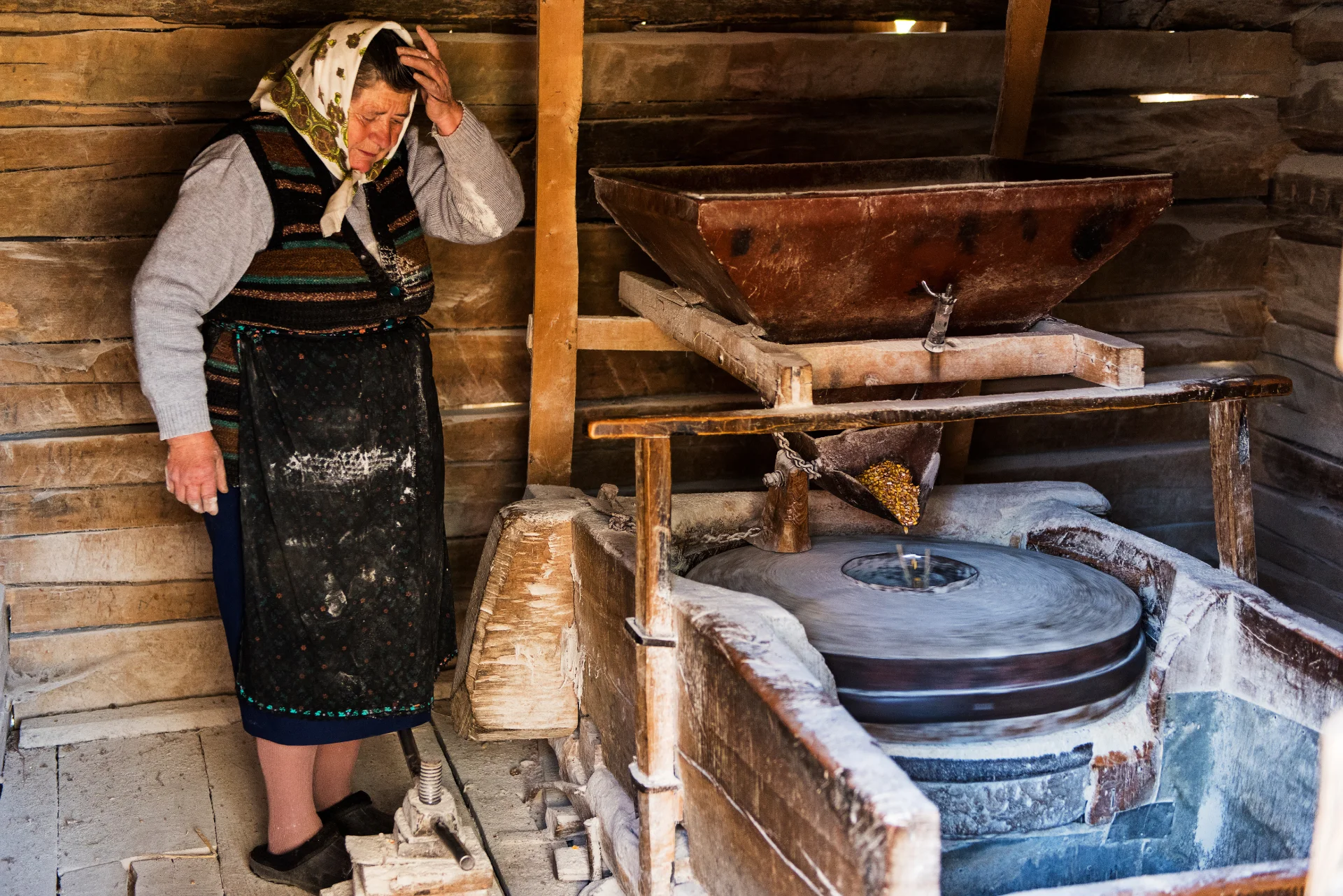
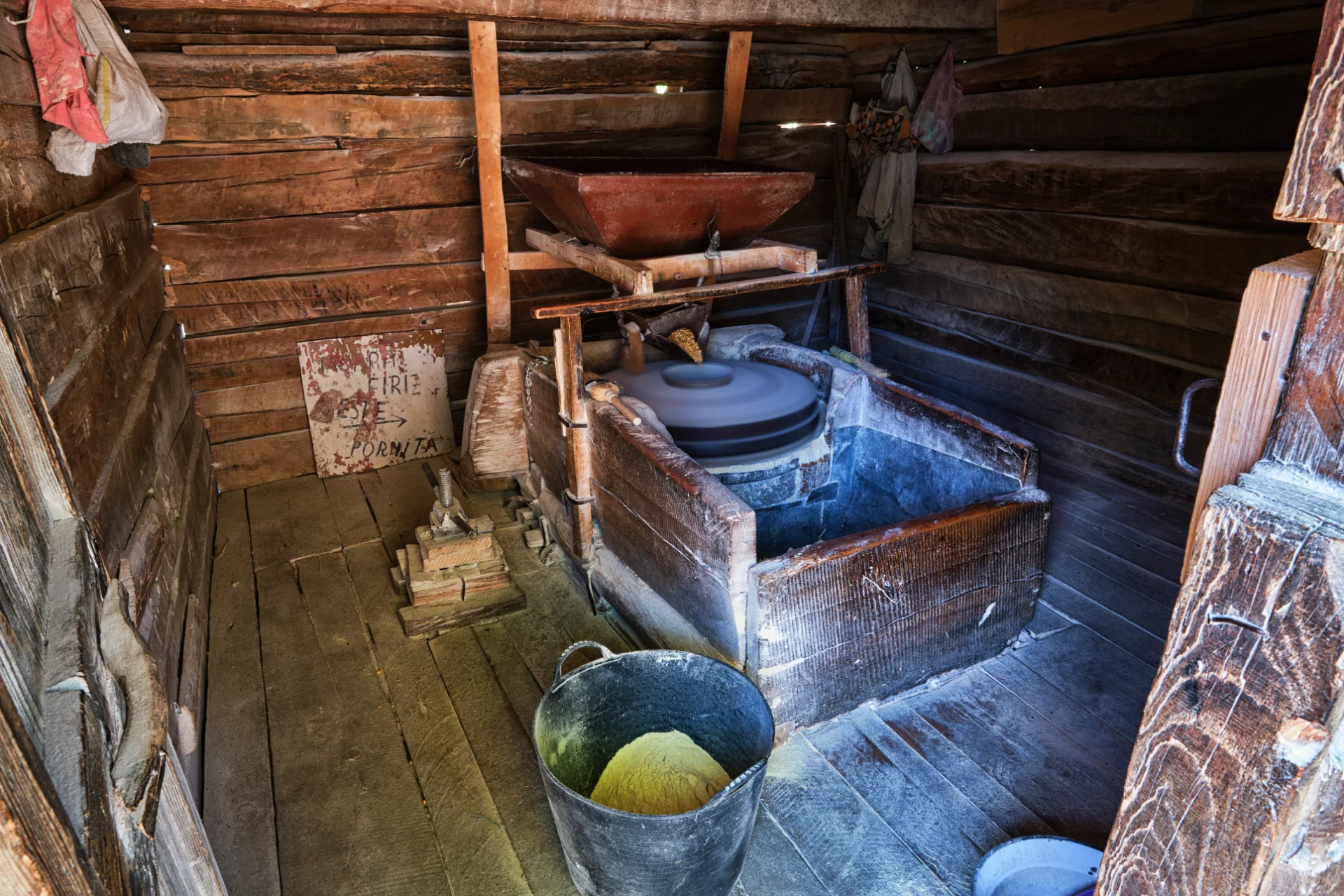
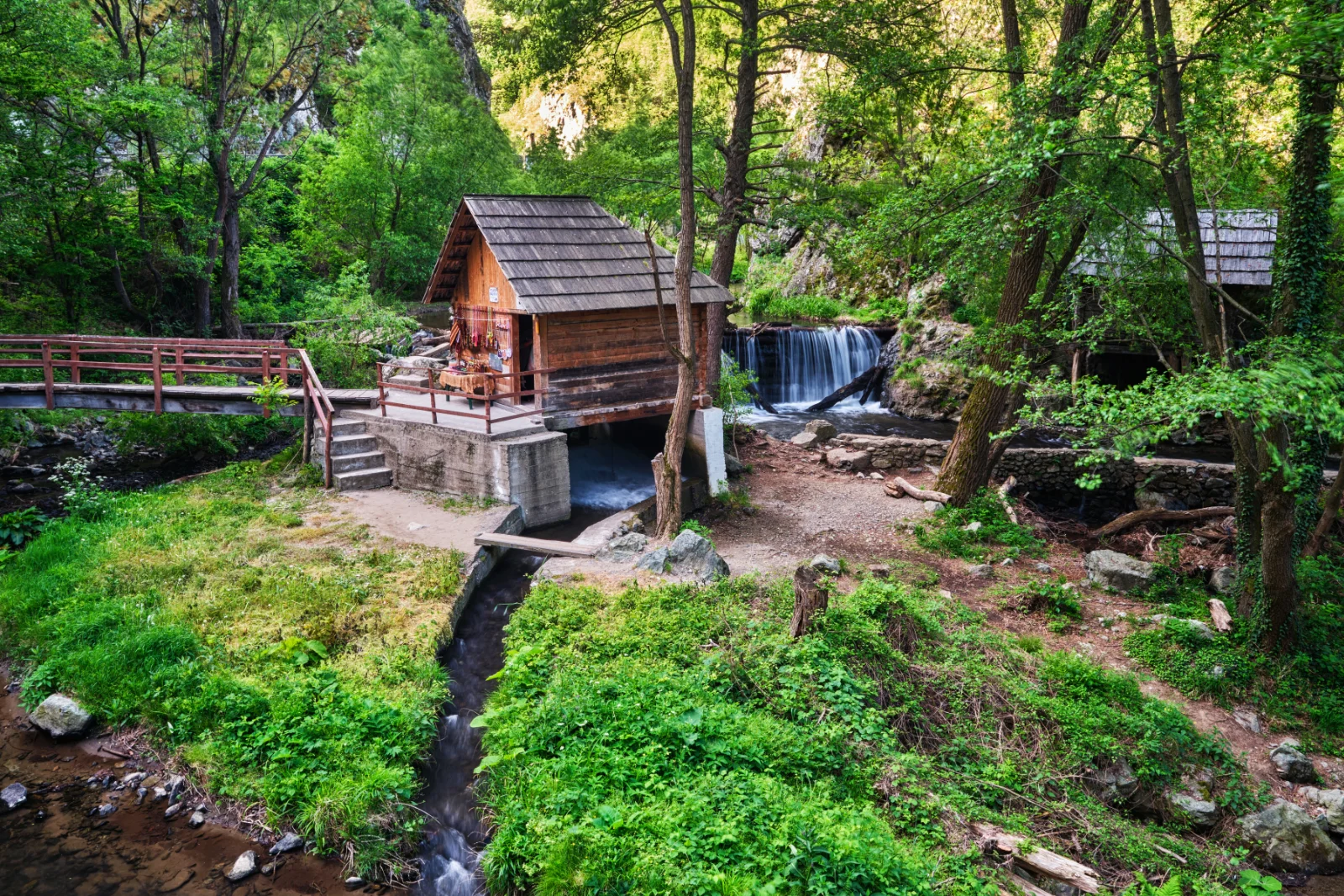
Along the valley of a turbulent stream, in a lost land in the southwest of Romania, people have created a true village of watermills, dozens of such wonders of rural architecture being spread along the river. We find the village of Eftimie Murgu far from the major tourist roads of the country, in the mysterious but so picturesque country of Almaj, trapped in the Banat mountains. Known in the past as Rudăria, after the name of the valley at the mouth of which it spreads, the village of wooden mills has been inhabited since ancient times and once housed up to 50 traditional watermills, built by the local villagers on the banks of the stream that sometimes got angry and their number decreased. Today, we discover about 20 or so of such authentic monuments, spread throughout the village and the narrow valley. Capturing the energy of water, the mills are still often used and we sometimes meet a local who grinds his grain just like his ancestors did in the past. Shrouded in amazing folk legends and some bearing descriptive names, the mills are still true social hubs, meeting places that have become interesting tourist attractions. Along a route of approximately 3 kilometers, which starts right at the entrance to the village, we are taken on a fascinating journey through the largest mill park in southern Europe. During the journey, we meet peasants eager to share this unique treasure of their village and we discover the genius and archaic ingenuity of this impressive system. Through a network of canals, small dams and sometimes tunnels, the water was directed according to the characteristics of the terrain to reach each mill of the village…
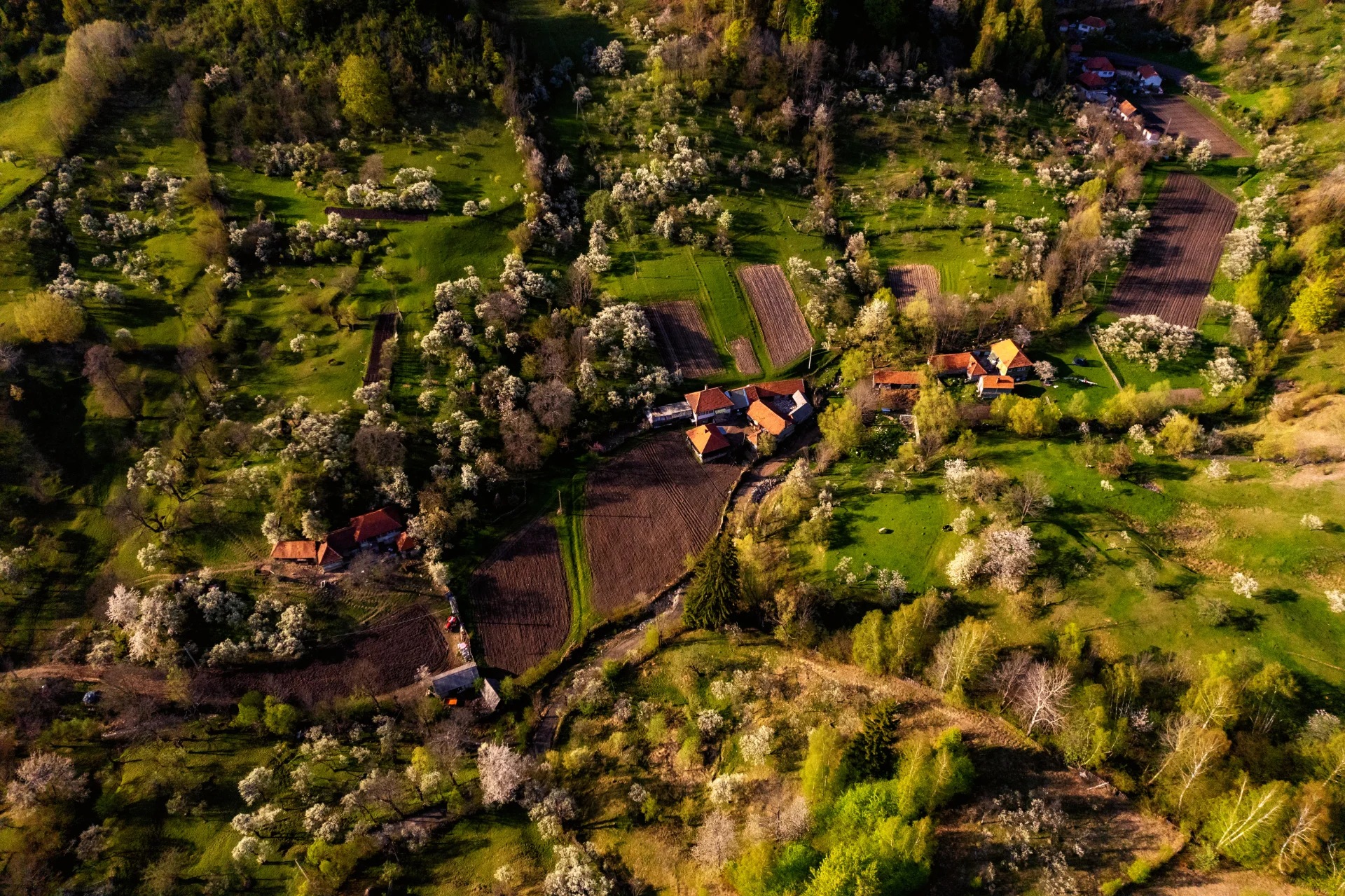
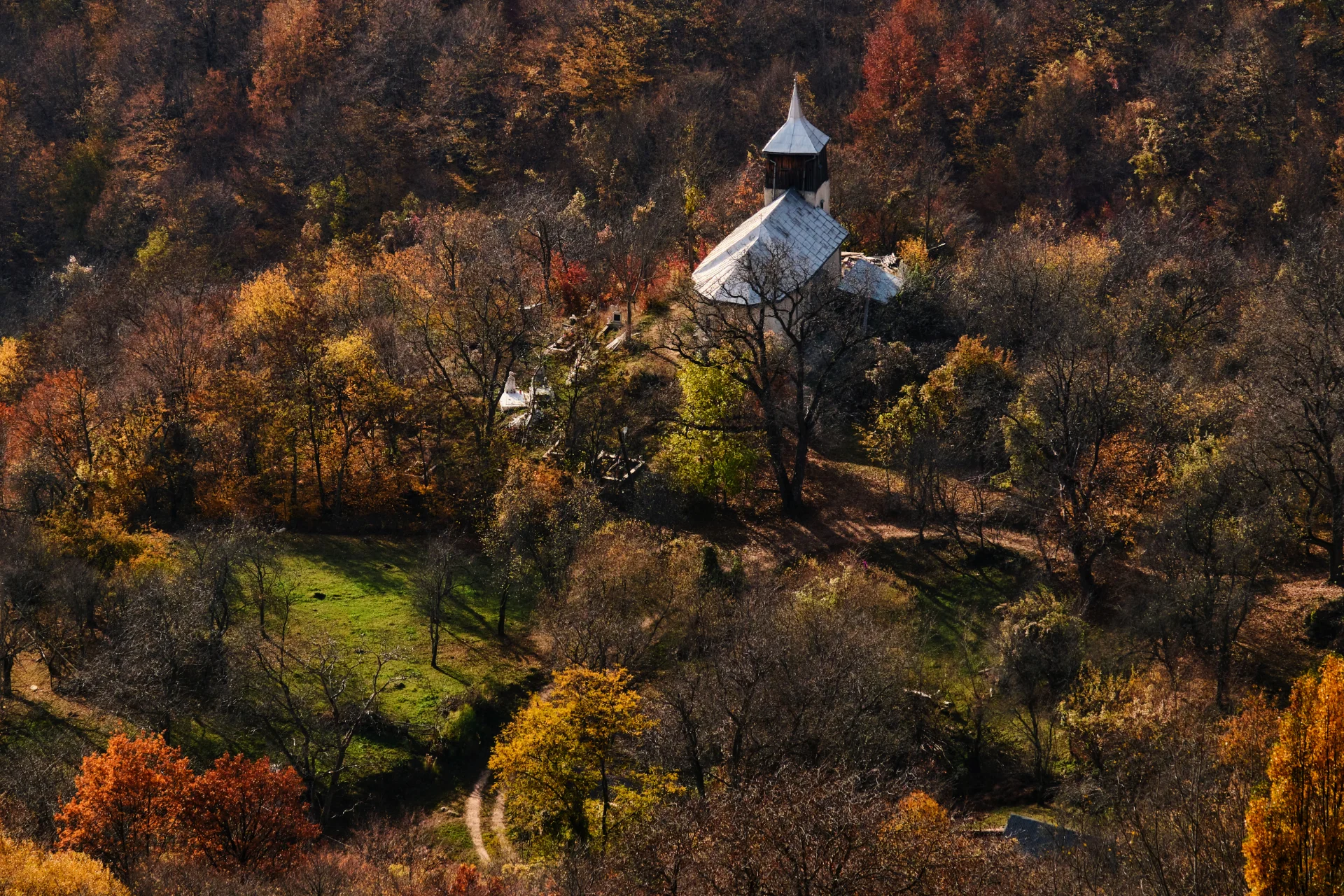
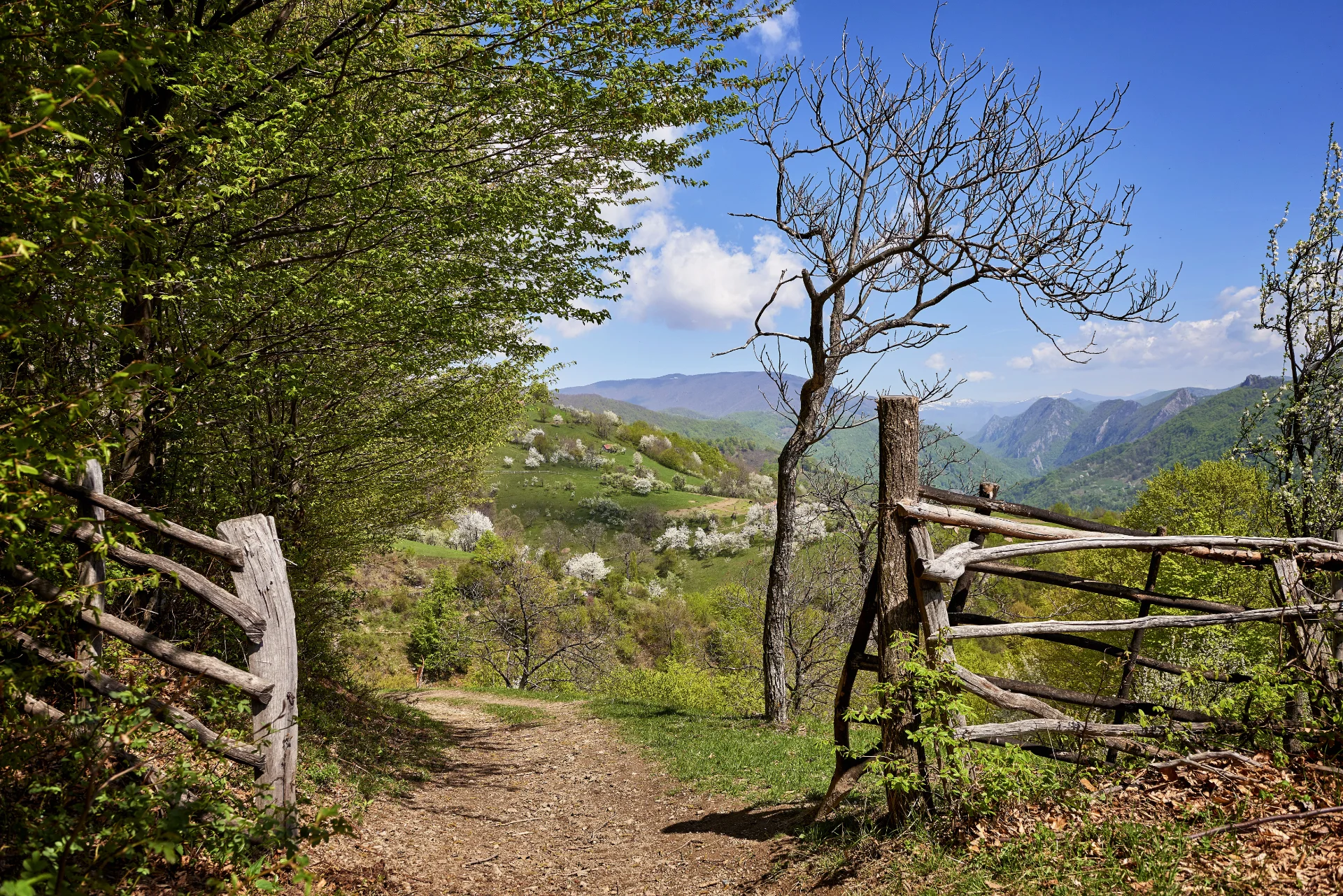
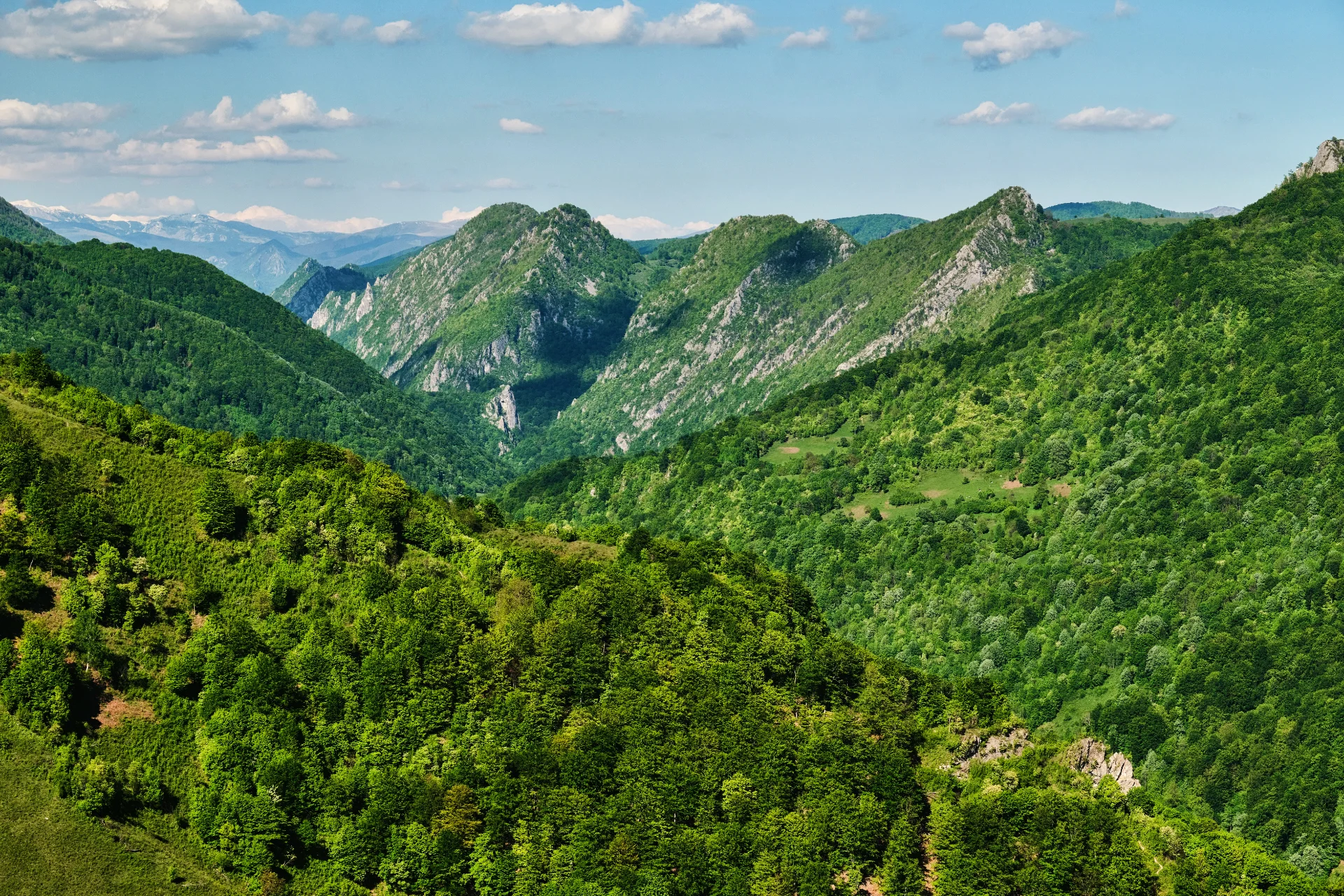
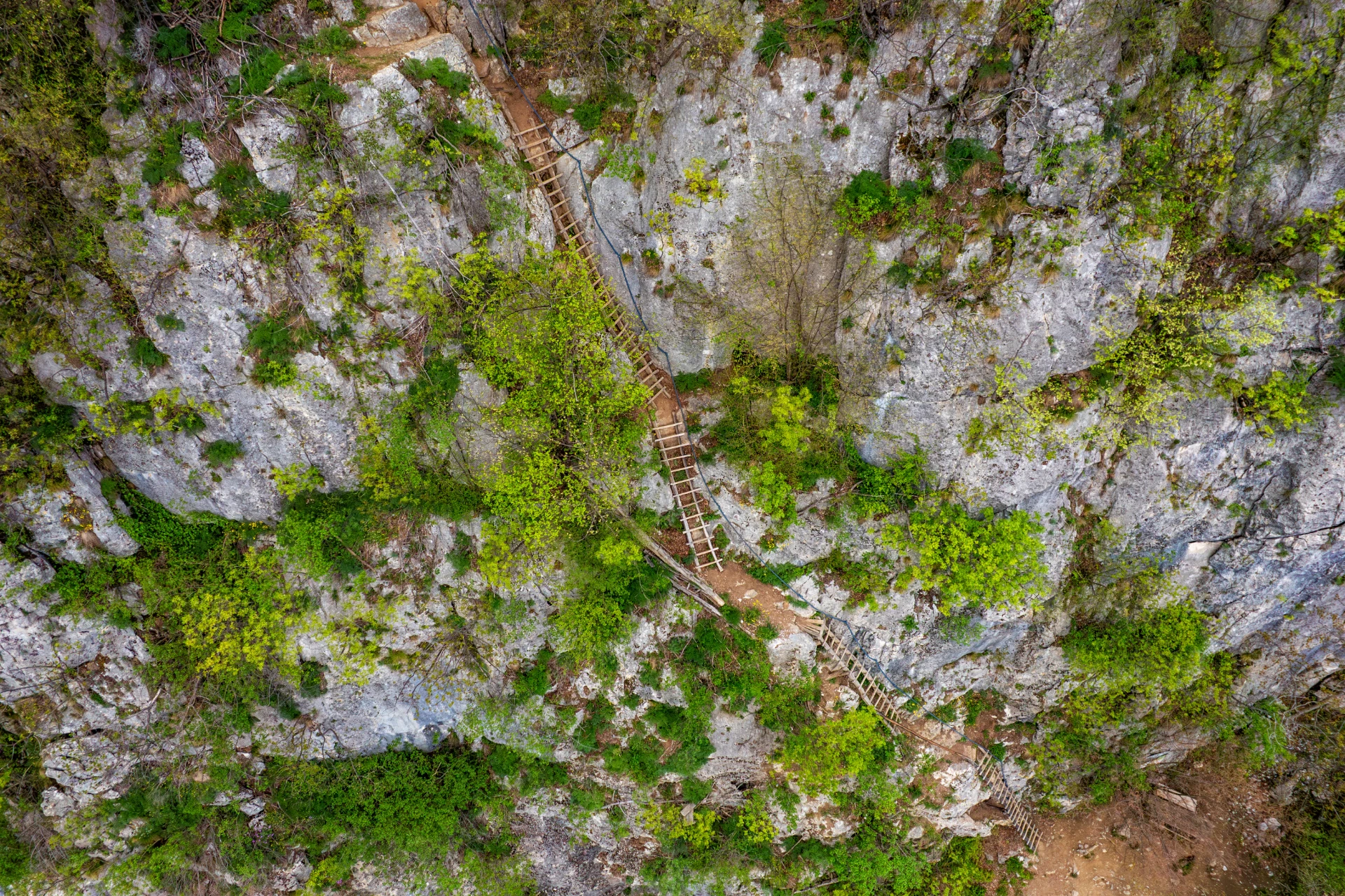
The story of Cerna is a turbulent one, but so wonderful that words often fail to do it justice. The scent of spring has enveloped the Cerna valley in the most vibrant shades of green we have ever encountered, passing through the acacias on the riverbank and over the meadows full of butterflies hidden above. To the west, the peaks of the Cerna mountains shelter several scattered hamlets of the Cornereva commune, many of them with only a few households inhabited by old people who refuse to leave this ancestral paradise. Ineleț, Dobraia and Prisăcina are perhaps the most picturesque of these, hanging above the Cerna valley, closer to the sky than to modern civilization. We cross the bridge over the river and follow the path that climbs for a few minutes, until we encounter a steep limestone cliff that seems impassable. Suspended in a dizzying succession and in a seemingly precarious balance, a series of long, curved wooden stairs hang from the almost vertical wall. We finally manage to conquer the last staircase and continue the climb through the forest and then through the meadows. The path reaches the little church of the village of Ineleț, lost on the mountain ridge, next to its small cemetery that bears the memory of past generations. From here, the view of the valley below is breathtaking, the endless peaks dressed in the raw shades of spring being dotted here and there with small clusters of flowering trees surrounding a small house lost among the beech forests. In its essence, this world has remained almost unchanged for centuries, with people living deeply connected to their lands, to these blessed places that offer them so many hardships, but also countless moments of peace and happiness. The same bucolic atmosphere accompanies us on the paths of Dobraia or Prisăcina, with their farms spread among pastures, orchards and gardens, surrounded by forested peaks and rocky ridges…