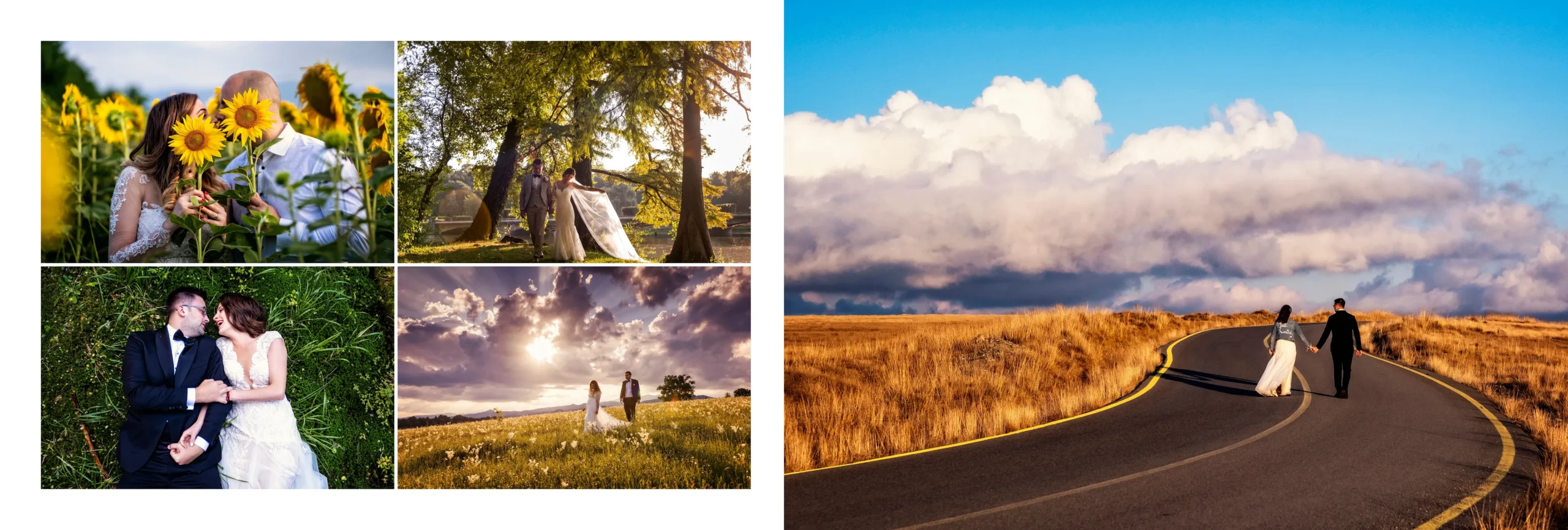
Easy guide to design the perfect wedding album from a wedding photographer
When it comes to the wedding photography business, there are quite a few different things that have to work together in perfect harmony for you to be successful. There’s the actual wedding day and how well you do your job as a photographer, but there is also what comes afterwards. A big part of the actual experience of your clients is what they get from the wedding, and nowadays, most of them are satisfied just to receive their images digitally and share them online. The joy and excitement of holding and keeping a real printed photograph or a photo album is somewhat lost. There are numerous advantages to a printed wedding album, both for the clients and the photographer.
First of all, digital files are often lost and most of the time end up in a corner of your computer or a drive that you forget about. A wedding album is always there, in your library or on your coffee table, always calling to be opened and admired. It usually tells the story of your most precious day in a beautiful and condensed way. You don’t have to browse through thousands of pictures to remember the emotions of that day. It also lasts a lot longer, your children or grand-children will be able to see it and enjoy it in the future. For the photographer, it’s a free and endless promotion channel if you’ve done it right.
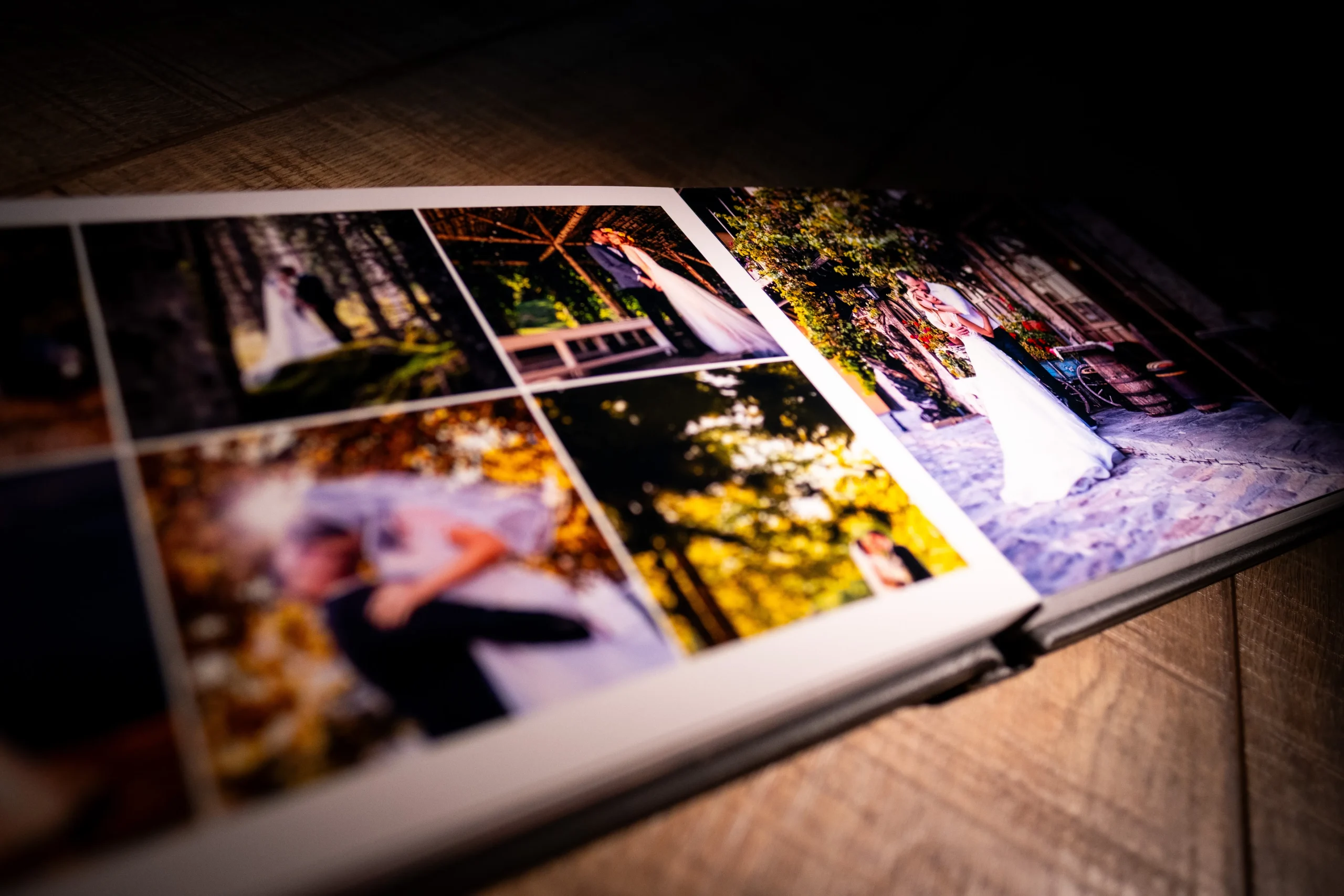
I usually try to include a wedding album in each of my wedding packages and almost all of my couples so far received one or more albums. I’ve come to enjoy crafting and designing the perfect wedding album for each of them, telling their story as beautifully as I can. There are various things I’ve learned along the way and each one made me a better wedding photographer overall. Of course, there are still secrets I’ve yet to uncover and I’m learning something new each time. Nonetheless, if you’re just starting the wedding photography journey, I will try to express my thoughts and process of designing a timeless wedding album for your couples.
Photographing for the wedding album
No matter your skills in designing an awesome wedding album, if the actual pictures from the wedding day are not excellent, the album will be mediocre at best. You have to start thinking about the finished product even before you start pressing the shutter for the first time. Of course, if you’re an amazing photographer, it will be easier to make any kind of masterpiece from your images, but if you’re just starting out, it pays out to shoot for the album. First of all, an album will greatly benefit if you can craft a story, not just some separate moments without anything tying them together. If there’s a certain mood or atmosphere during the wedding, try to reveal it through your photographs.
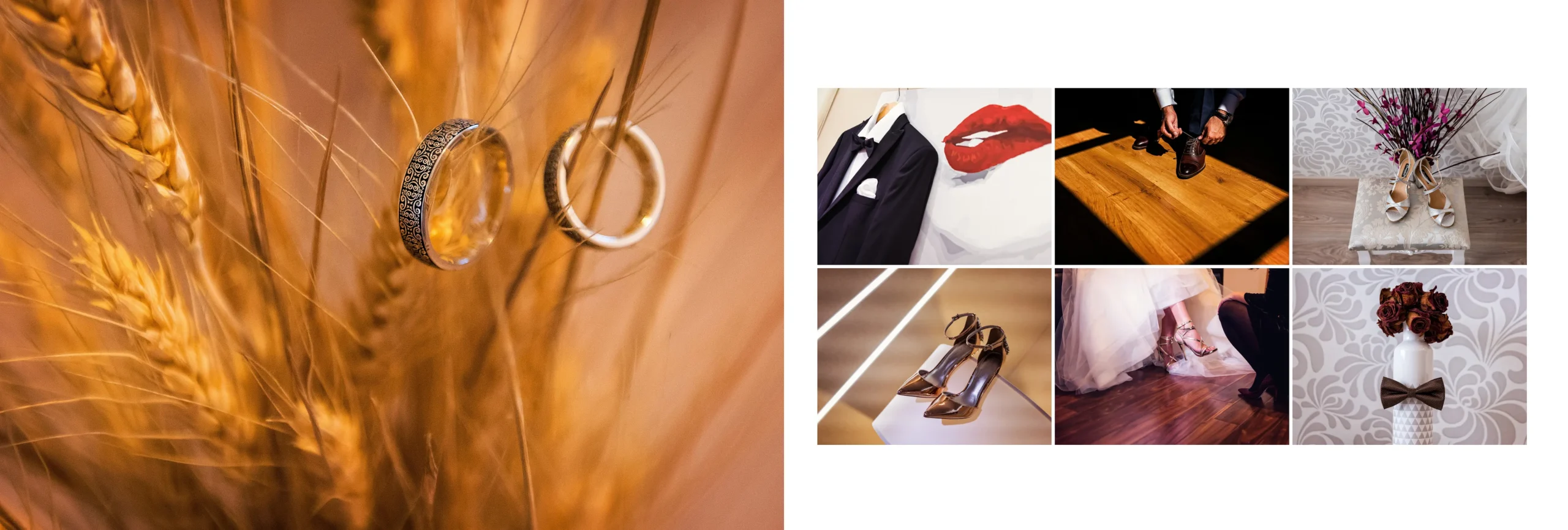
Also, don’t underestimate the importance of family photos, as 99% of the couple will certainly include a few images of their close relatives and friends. It is good to have really creative pictures, but usually, couples will prefer a closeup portrait rather than an extremely conceptual image where they are extremely well or it just shows their silhouette. Lastly, don’t overlook the detail shots, as many brides especially will wish to include some in the album. Of course, all of these also depend on your clients, I’m just speaking from my own experience and more as a general trend!
Editing for the wedding album
If the wedding album is a big part of your brand and you like to have something that speaks about your vision as a photographer, there are certain things you should do right from the editing phase. First of all, I would advise on consistency and that means trying to follow a certain style that represents you in all your photography. If you like certain looks or use specific presets, then try to achieve a homogenous look within the whole event or even throughout larger parts of your career. It’s ok to adjust, update or completely change everything, but try to do it from one season to another, not within the same wedding.
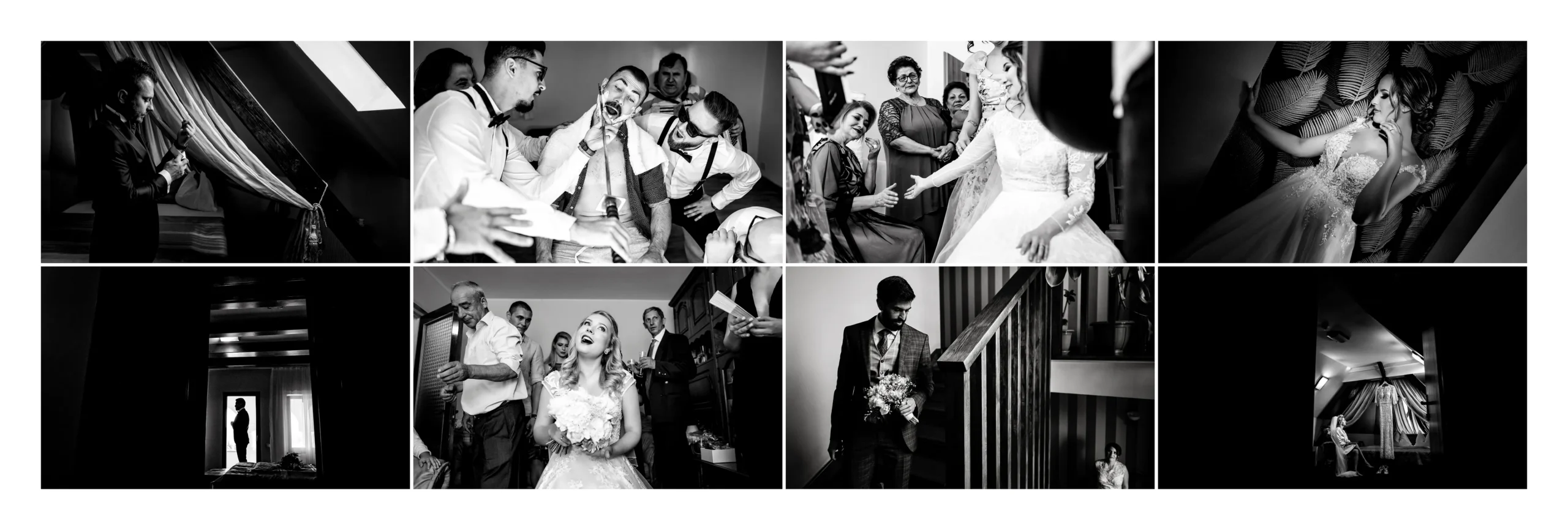
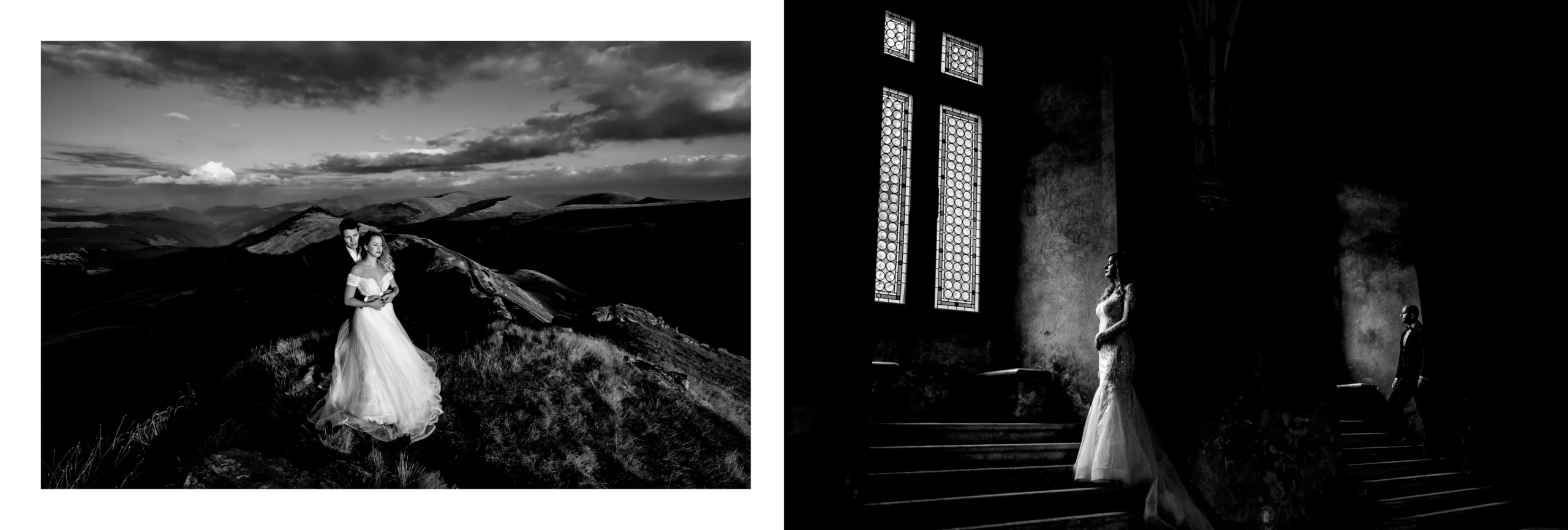
Apart from that, you could try to think about how certain images will look inside an album, so you could adjust the cropping, orientation, exposure, white balance and other options specifically to better fit a printed story. While you can also include a few more conceptual and intricately crafted photos in a wedding album, I would rather advise on crafting a story from more simple and straightforward photos. Lastly, when it comes to black and white, which I love by the way, I usually leave a color version of the photo, or at least make sure there are color photos from a moment, just in case it works best when you design the album!
Choosing the photographs
I know a lot of photographers will not agree with me and it’s perfectly fine, but I like to leave the choice to the couple whether they want to make the selection or I can do it for them. Many times, even if I feel that I could do a better job aesthetically, at the end of the day, they will be the ones enjoying the album for decades and it has to speak to them emotionally. It’s their day, their families, their friends, their memories and not lastly, their money. However, if I make the selection, I usually try to include a few photos from all of the important moments of the day, usually in chronological order. A regular album can contain any number of photos, usually between 50 and 100, but it all depends on the couple, the size and type of album.
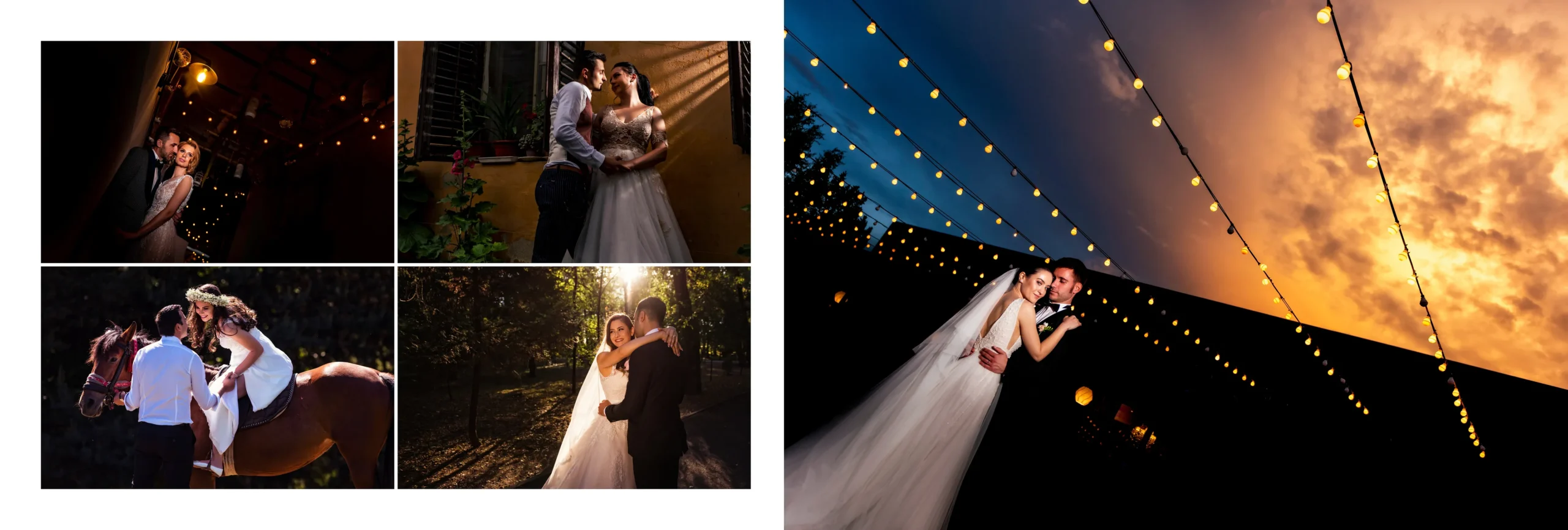
The highlights of the album will always be the creative and candid couple shots, followed by a selection of images from the getting ready, the first look, the ceremony and the party. I always include photos with the family and a large group shot, which I usually make after the religious ceremony. If I feel that the couple would like detail shots, I also include a few of those. Many years ago, I thought that the choices made by the couples were pretty uninspired and I would have done a much better job. With time, I realized that certain frames resonate differently with them than with me and that’s perfectly fine!
Software and apps for album design
When I first started designing wedding albums, more than 12 years ago, there were not many software options to help photographers. For many years, I didn’t even have the money to invest in such programs or applications, so I spent a couple hours creating each spread of the album in Photoshop, painstakingly trying to line everything together. Nowadays, there are plenty of choices and the prices are not so scary anymore, so there’s no reason why you shouldn’t use such them and greatly reduce the time spent designing. Even for starting wedding photographers, there are some free or extremely cheap alternatives you could use online.
However, professional photographers usually choose one of the best known and more advanced software options, excellent programs like Fundy, Pixellu or SmartAlbums. They’re extremely user-friendly and you can practically design an entire album in less than 10 minutes. They usually require you to choose the size and orientation of the album, upload the picture selection and then place a few photos on each spread, easily changing the design of each one. You can either choose a pre-designed layout or come up with completely new ones. If you are in a hurry, there is usually an option to automate the design of the whole album, after which you can make small changes accordingly. Nevertheless, I usually like to follow a certain timeline and separate certain moments on different spreads.
Storytelling with the wedding album
So you have all your photo selection, you have the software program fired up, but don’t know where to start from. The best and most common way is to tell a story in chronological order, as the moments of the day happened. I usually like to start with a cover spread, two of the best photos of the couple, followed by the rest of the story. I’m not always stuck on the chronological thing precisely, as sometimes things happen chaotically and I end up photographing certain things when there’s time, not when they are meant to happen.
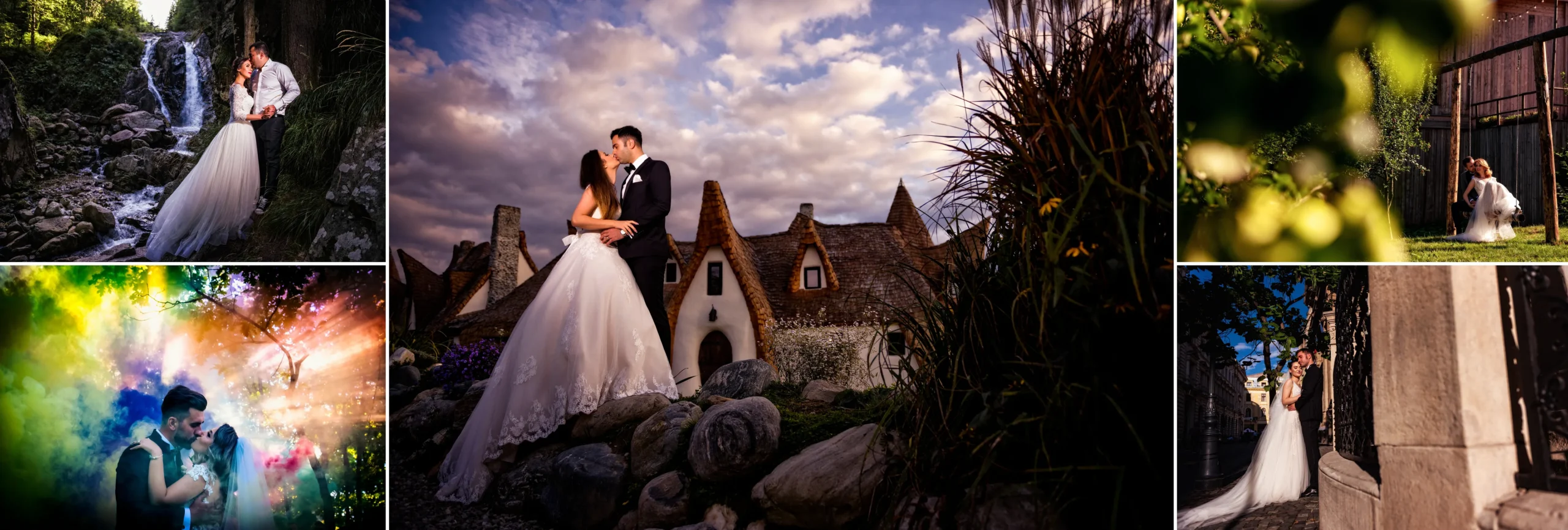
Nonetheless, most of the time, it’s details, followed by the getting ready moment and the family portraits. The story then goes through the ceremony or the photoshoot, whichever happens first, followed by family portraits if I haven’t included them yet. Last comes the party, with all its moments, the grand ending usually being the cake cutting. These are only the most common moments, sprinkled in with some candid photographs I always try to capture throughout the day. On more details about the particular moments of a wedding day and how to capture them, you can read this article!
Album spreads design
As for the individual spreads of the album, there are certain things and tricks you could use to make everything look better, and more importantly, be timeless. For me at least, timelessness is the most important feature of a wedding album. It must look good 10, 20 or even 50 years from the moment you deliver it to the couple. Don’t lean into temporary trends or fashion that next year might be obsolete. A clean, simple, even minimalist design will always top a convoluted, flashy, colorful one. It’s extremely easy to lean into kitsch without even realizing, just by learning from the wrong people or seeing something that one bride might like for the moment, assuming that everyone else will like it indefinitely.
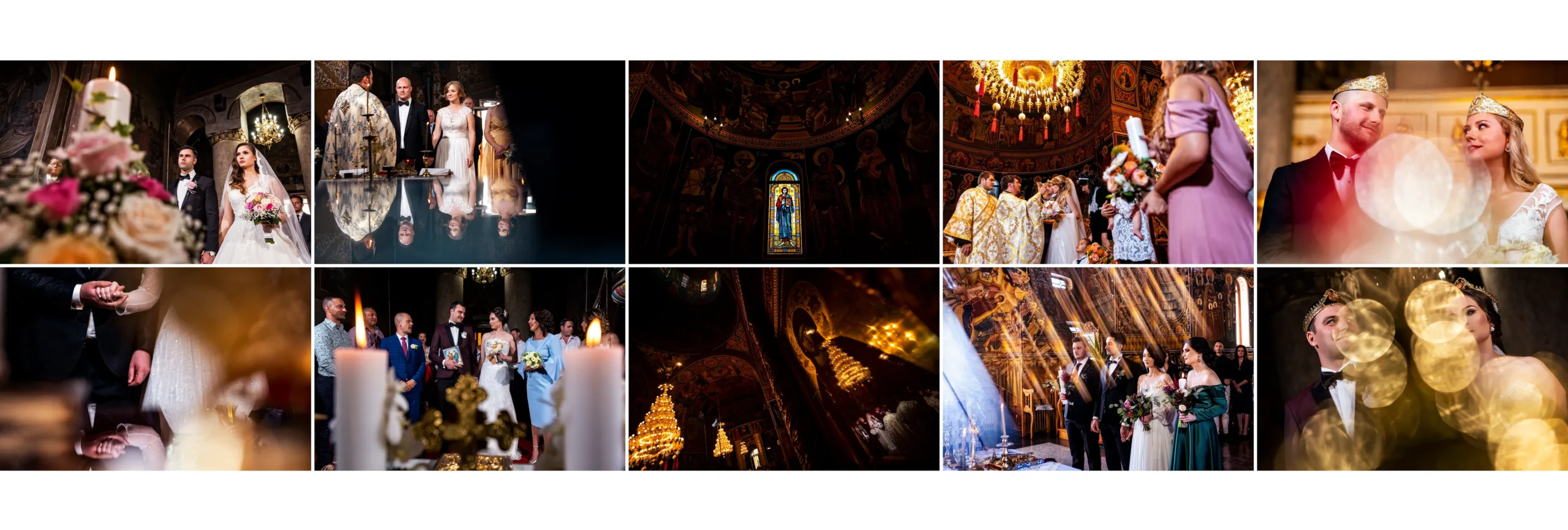
I’m no expert in the field, but here are easy rules I try to follow when designing single spreads of an album. I try to use anywhere between 2 and 8, maximum 10 images for each spread, depending on the moment and story I’m trying to craft. If the pictures are extremely important, then I emphasize them by leaving them on a single page, if they are less important, then I make a collage of smaller ones. I usually stick to just one moment of the wedding day, so I’m usually not mixing photos from the ceremony with photos from the party and so on.
I never, ever, use picture backgrounds or put one picture on top of another. I just use white background and sometimes mix it up with black backgrounds for spreads that I feel work best like that. A small gap between the pictures usually looks best, but you could experiment with negative space in some spreads. I usually try to fill as much of the spread as possible because my clients usually see it as a waste of space, but I do try more progressive designs when I have the chance.
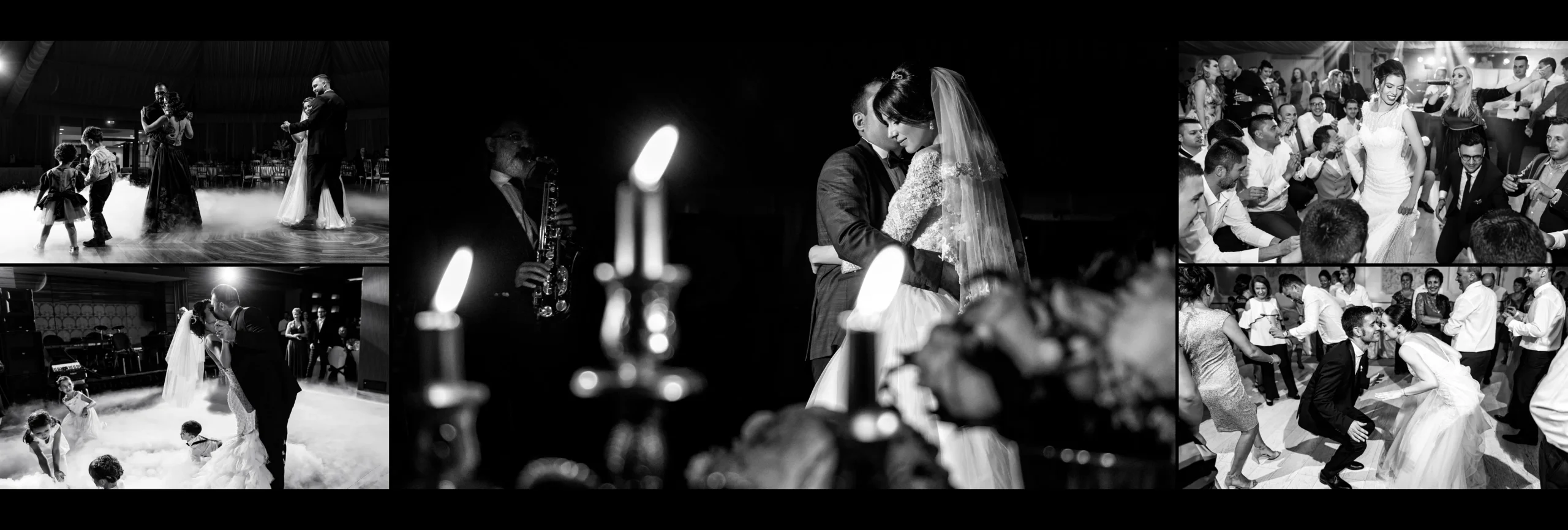
Don’t use other types of shapes than the ones intended for photography, so stick to rectangles and squares. Also, don’t slant pictures at an angle just to make it different…it serves no purposes! I always try to avoid mixing black and white with color photographs in a single spread. While I can’t always do it, I still try to keep things balanced, so I don’t just have one B&W or one color photograph on a spread. Modern album software apps will give you hundreds of choices of spread designs to choose from, but I try to just stick to a few favorites that look and feel best. If each new spread is different, you could lose some of the continuity in your complete story!
Materials and prices
Nowadays, there is an almost infinite number of choices when it comes to the options you get for a wedding album. There are various printing companies, with various sizes and materials available, as well as a plethora of other smaller options. The majority of wedding albums though are made of genuine leather in sizes ranging from 20x30cm to about 30x40cm, usually on a landscape orientation. There are some photographers that prefer square albums, but I usually try to avoid those, as they’re a little more difficult to design without a lot of negative space. I know that in the US and maybe other destinations, photographers sell albums as pieces of art and price them accordingly to clients, sometimes reaching thousands of dollars in album orders from wealthier clients.
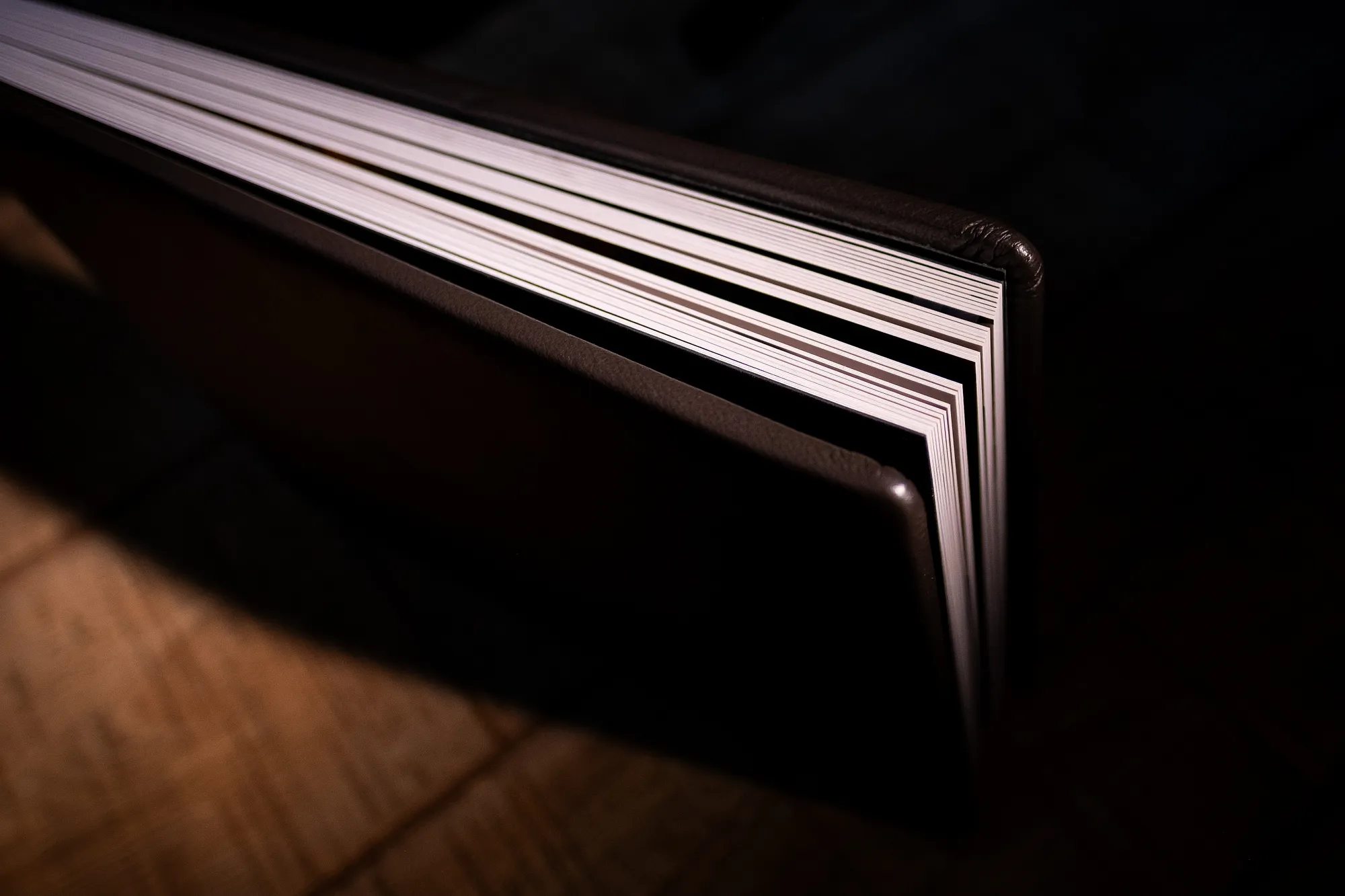
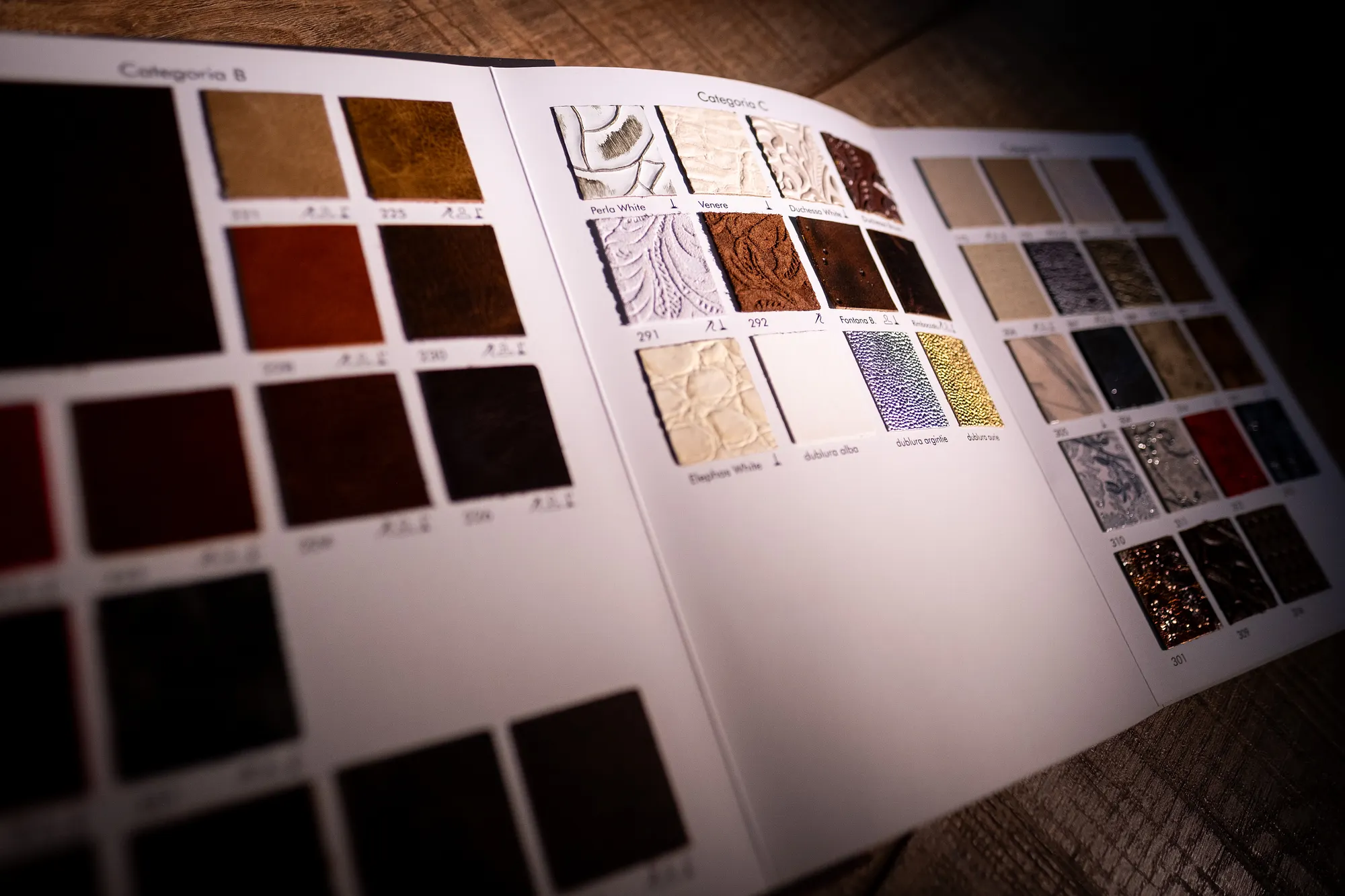
In my case and probably many other countries, albums are more of a side product of the wedding photography business and it’s usually included in the overall package. When it comes to production costs, a regular album in A4 size, with 20 spreads and leather cover is usually around 100–150 Euros. Then it all depends on each photographer to price it accordingly for the client. I usually just add 50–100% to its price for the design client offer. I wouldn’t advise using cheap materials when it comes to wedding albums, they are a sort of a business card that is supposed to look the same in 10 or 20 years time. Genuine leather in natural muted tones usually does the job marvelously!
Closing words
All of these are only my own thoughts on why and how to design a wedding album. There are countless better photographers that might have given better advice. They don’t apply to everyone as each photographer and couple have different tastes and preferences. While aimed at professional photographers, anyone can apply them and design their own album with a little practice. Technology and innovation have come a long way in the last decade. While in the past we used to struggle and hassle for hours to make a decently designed album, nowadays it only takes a few clicks to make something interesting. As always, going the extra mile and investing some time and creativity will take you further than the competition!