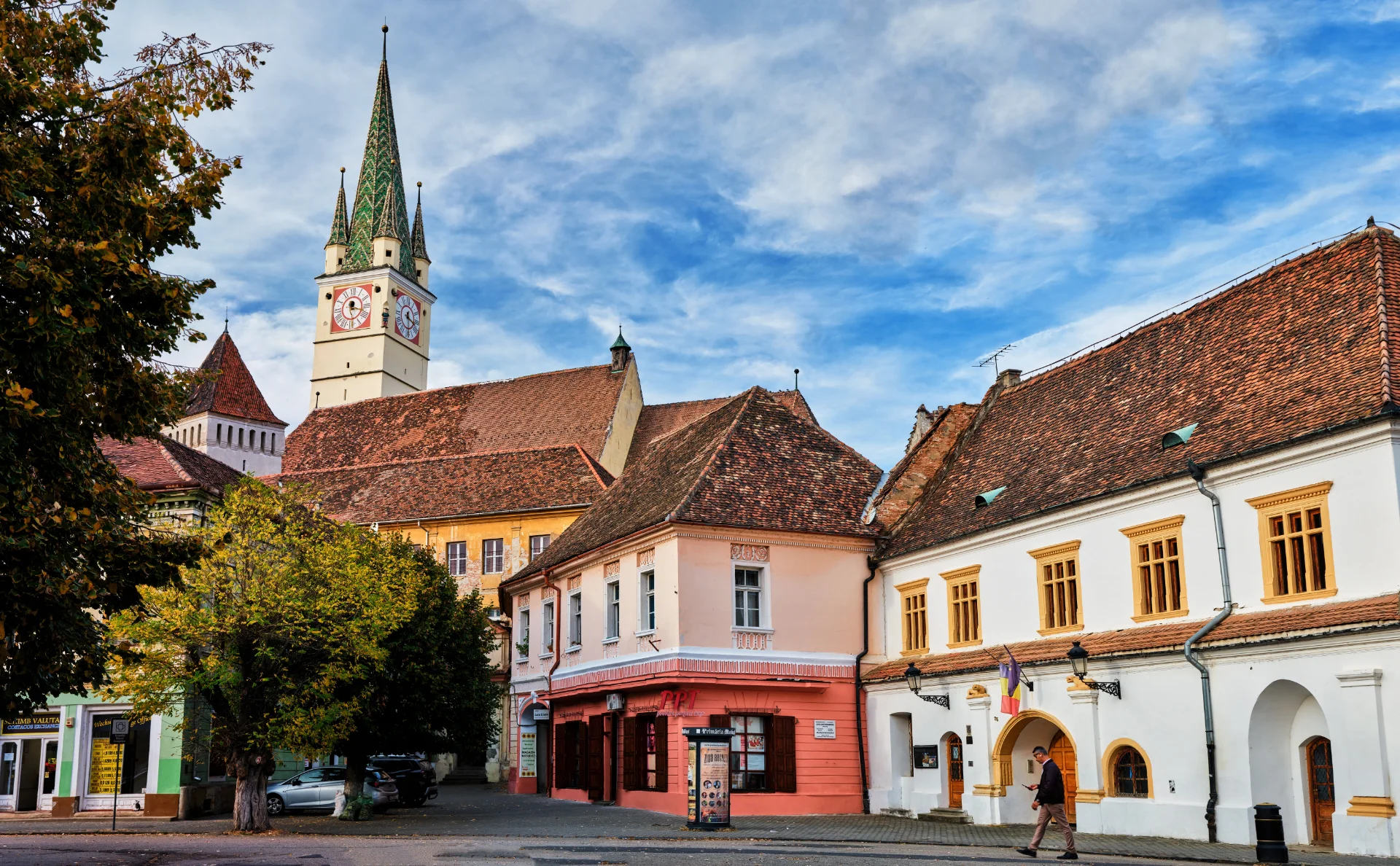
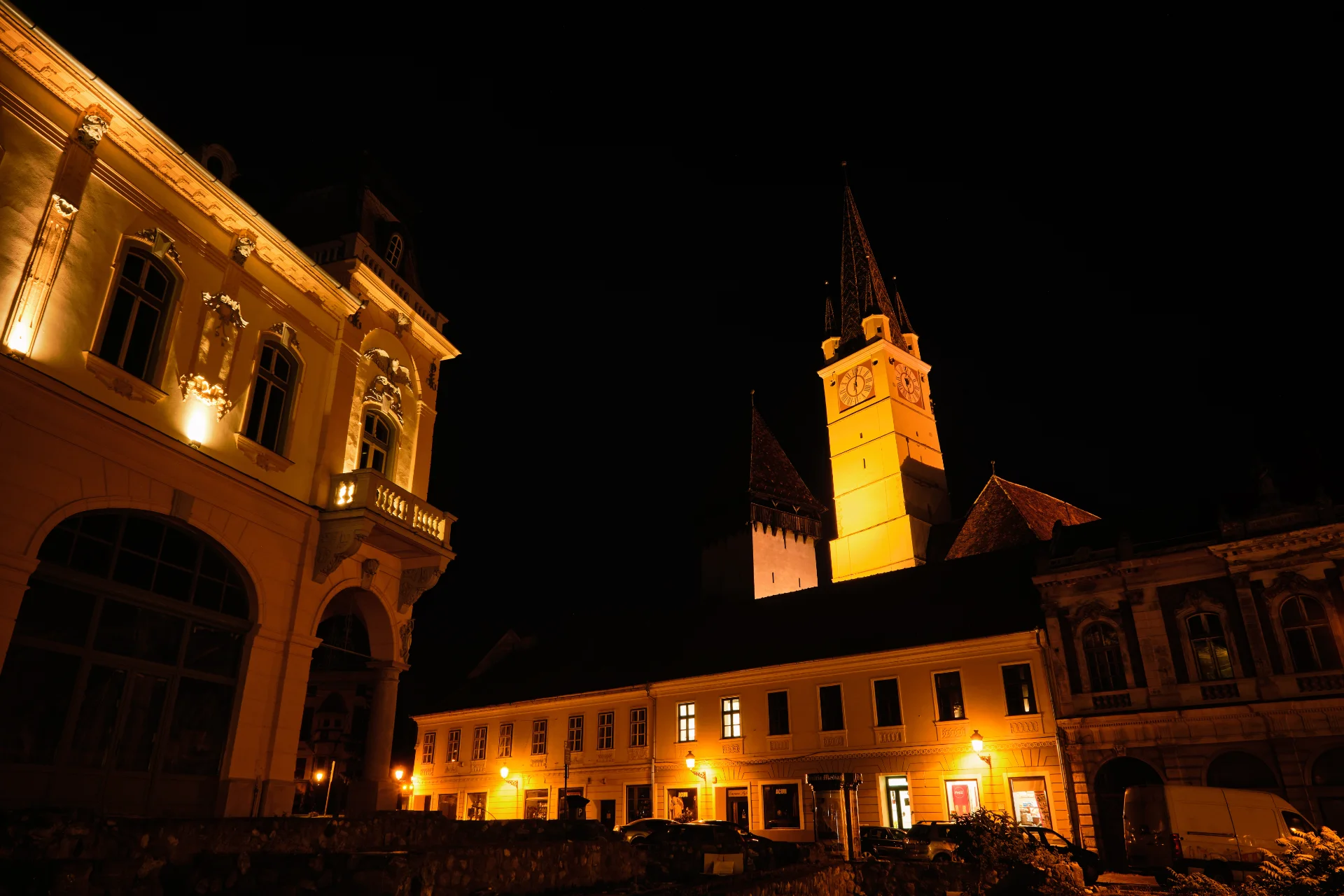
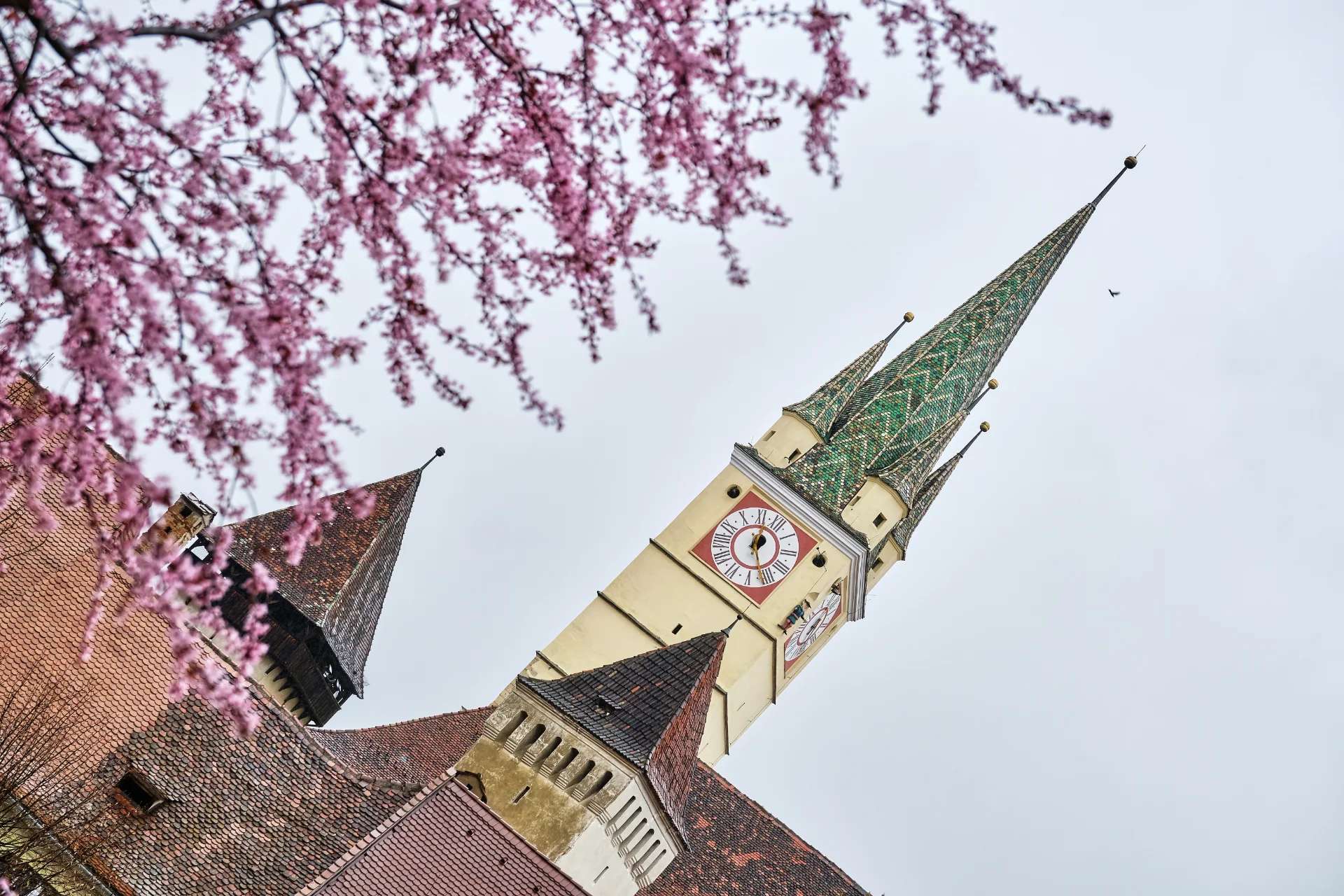
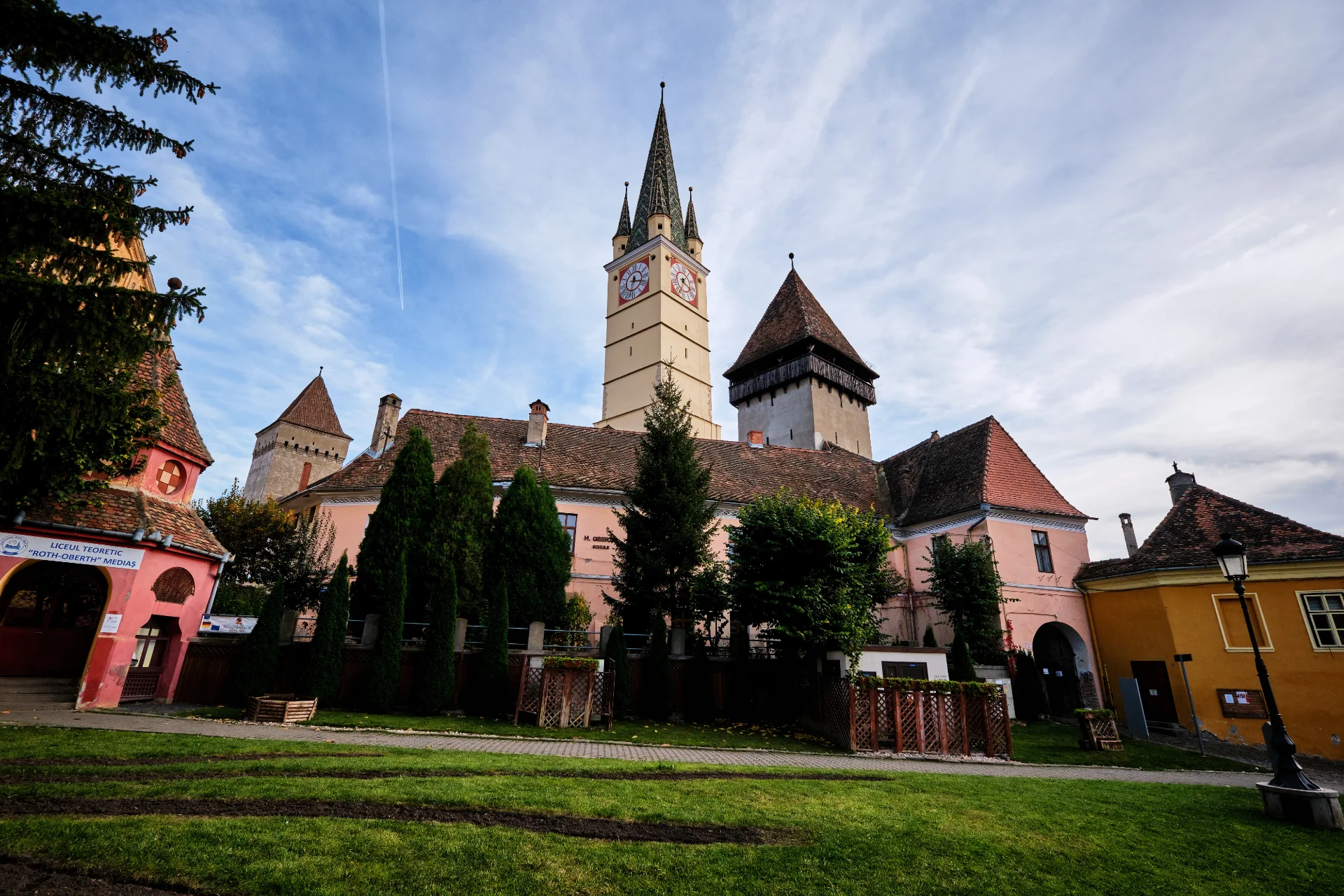
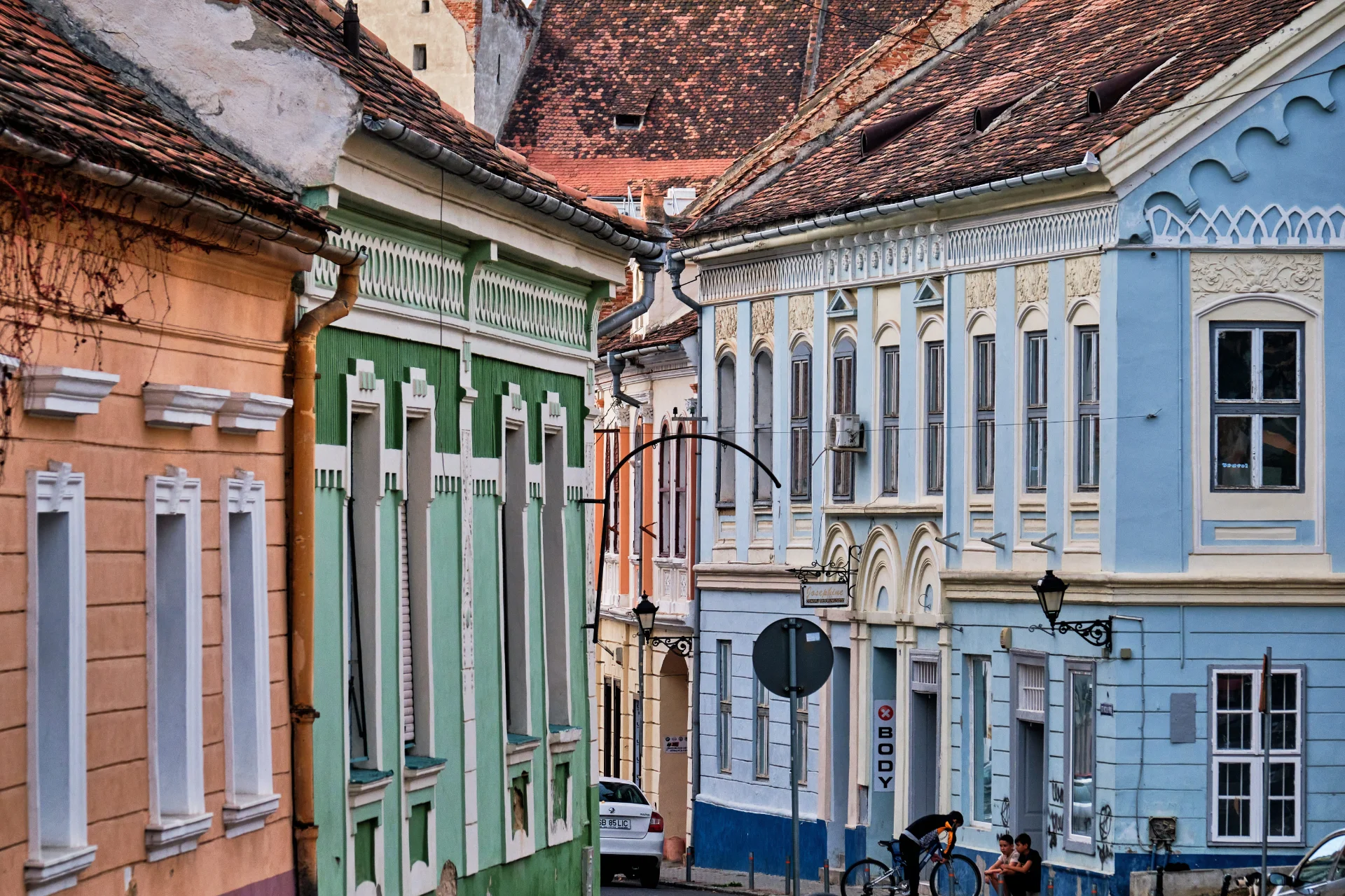
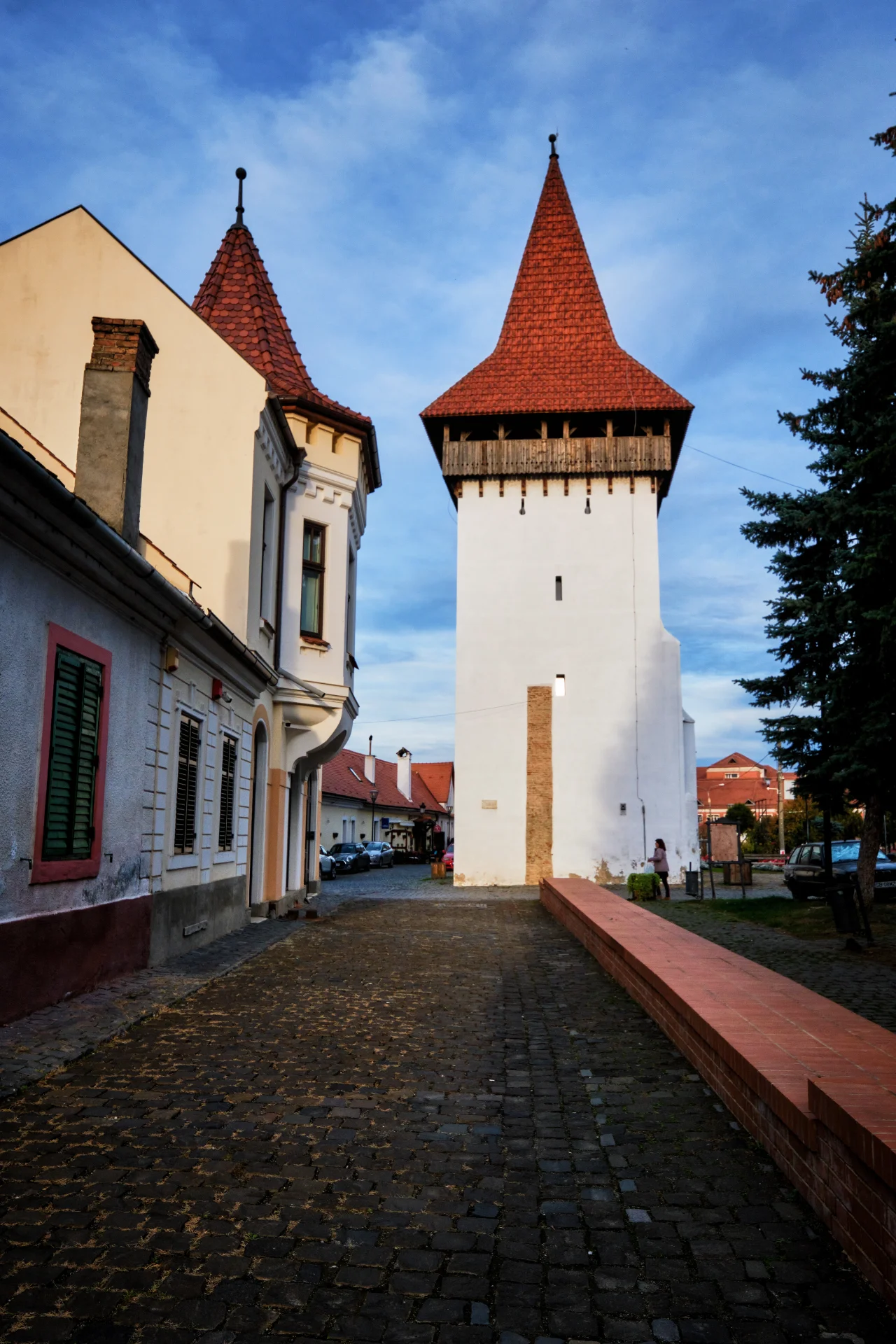
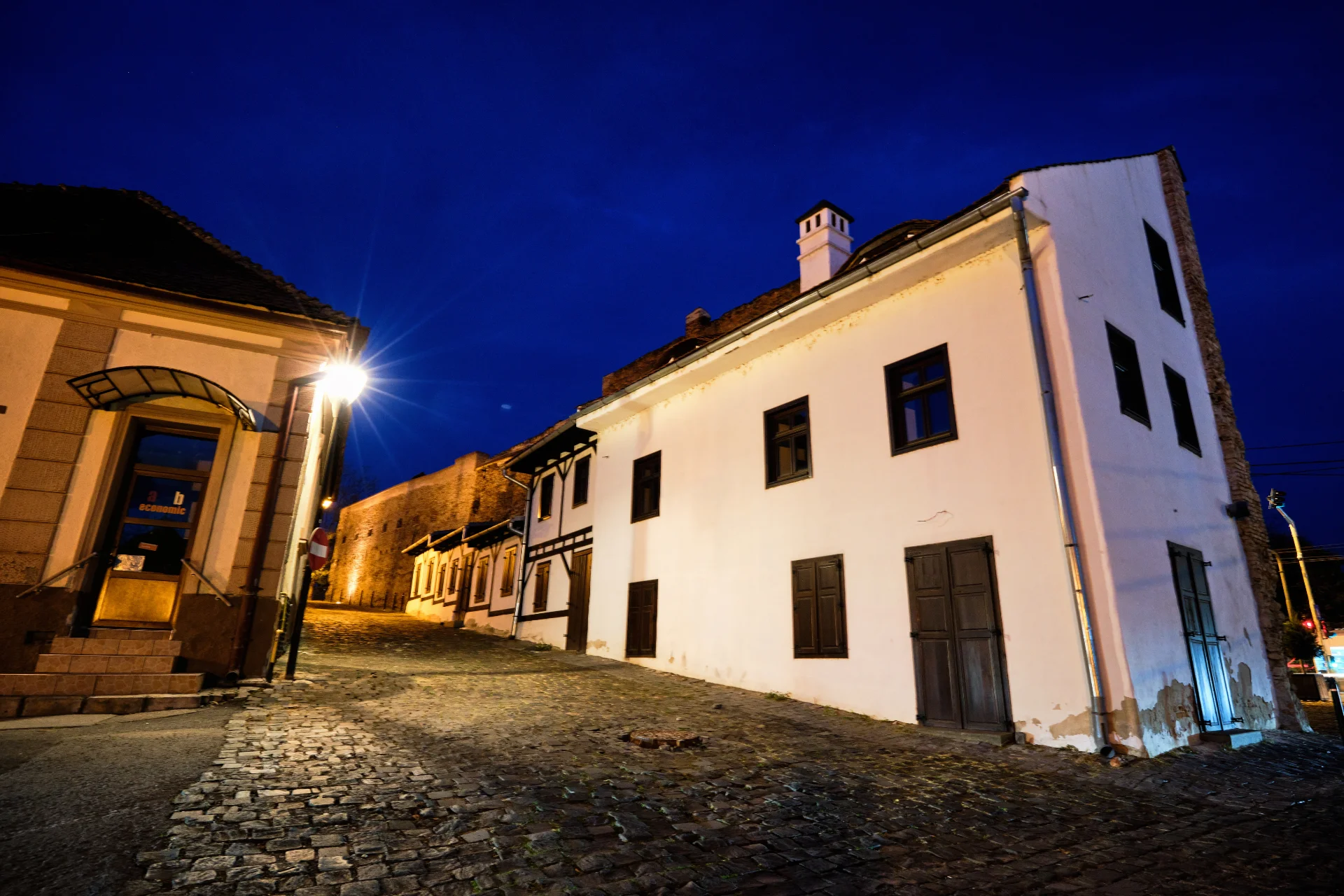
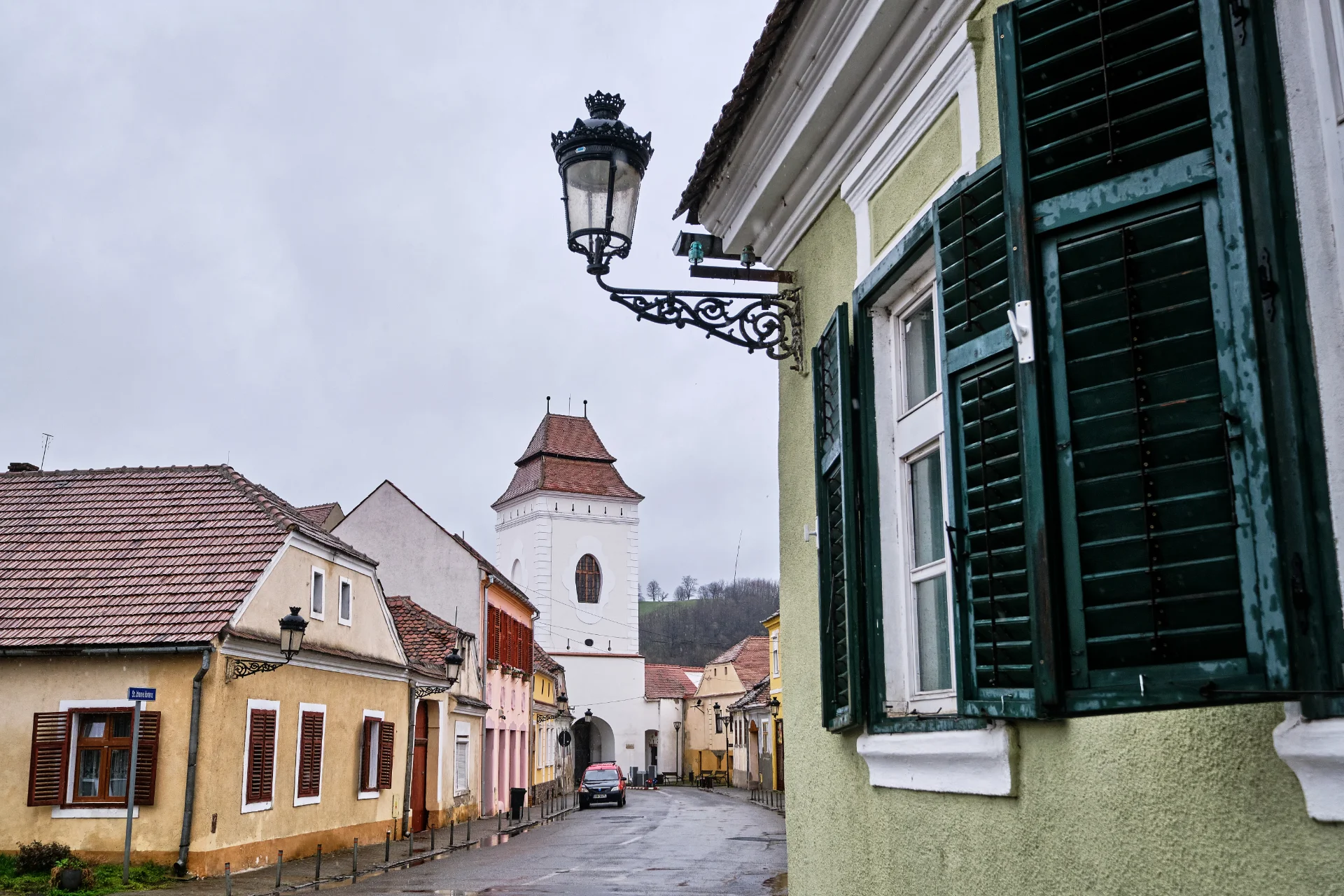
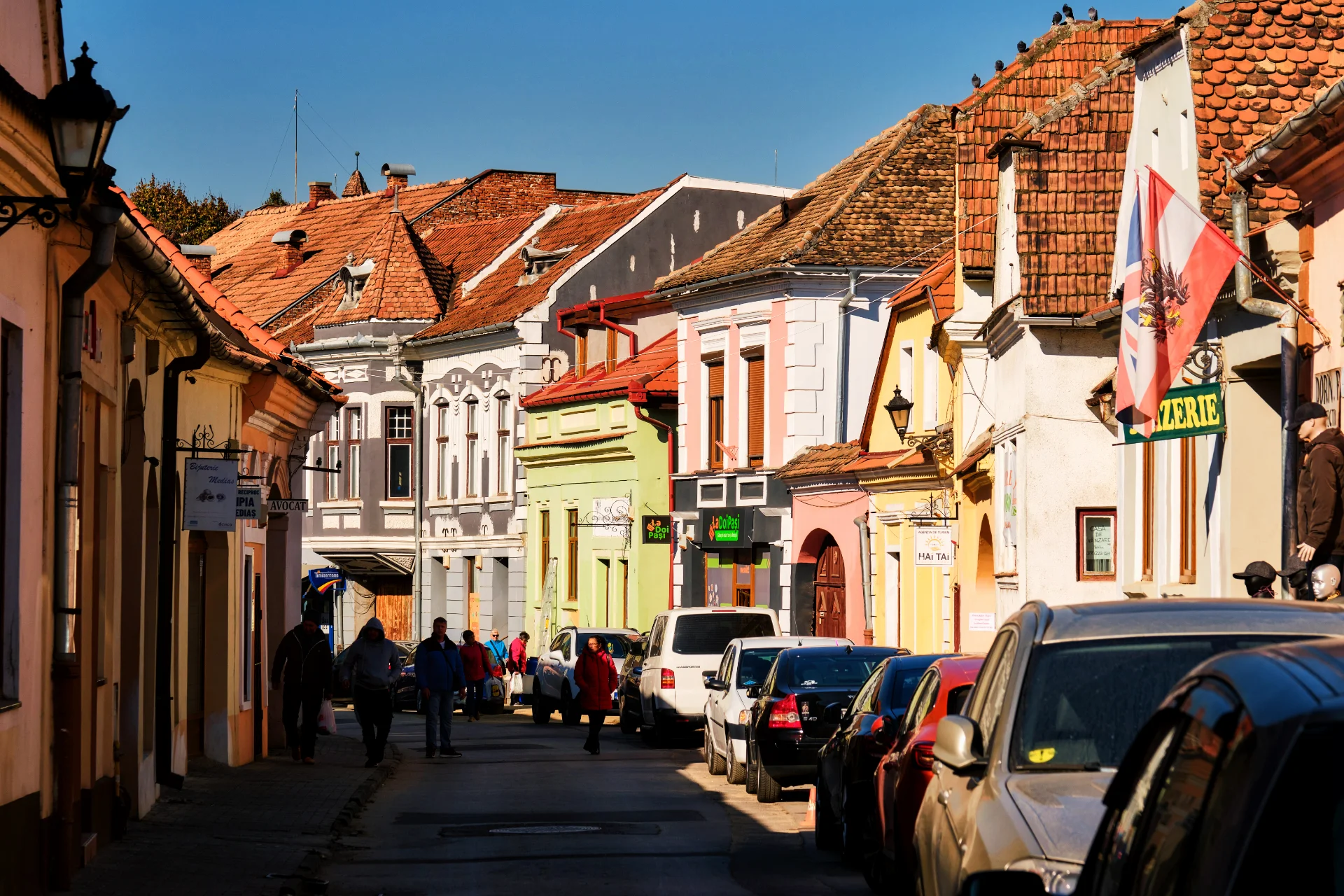
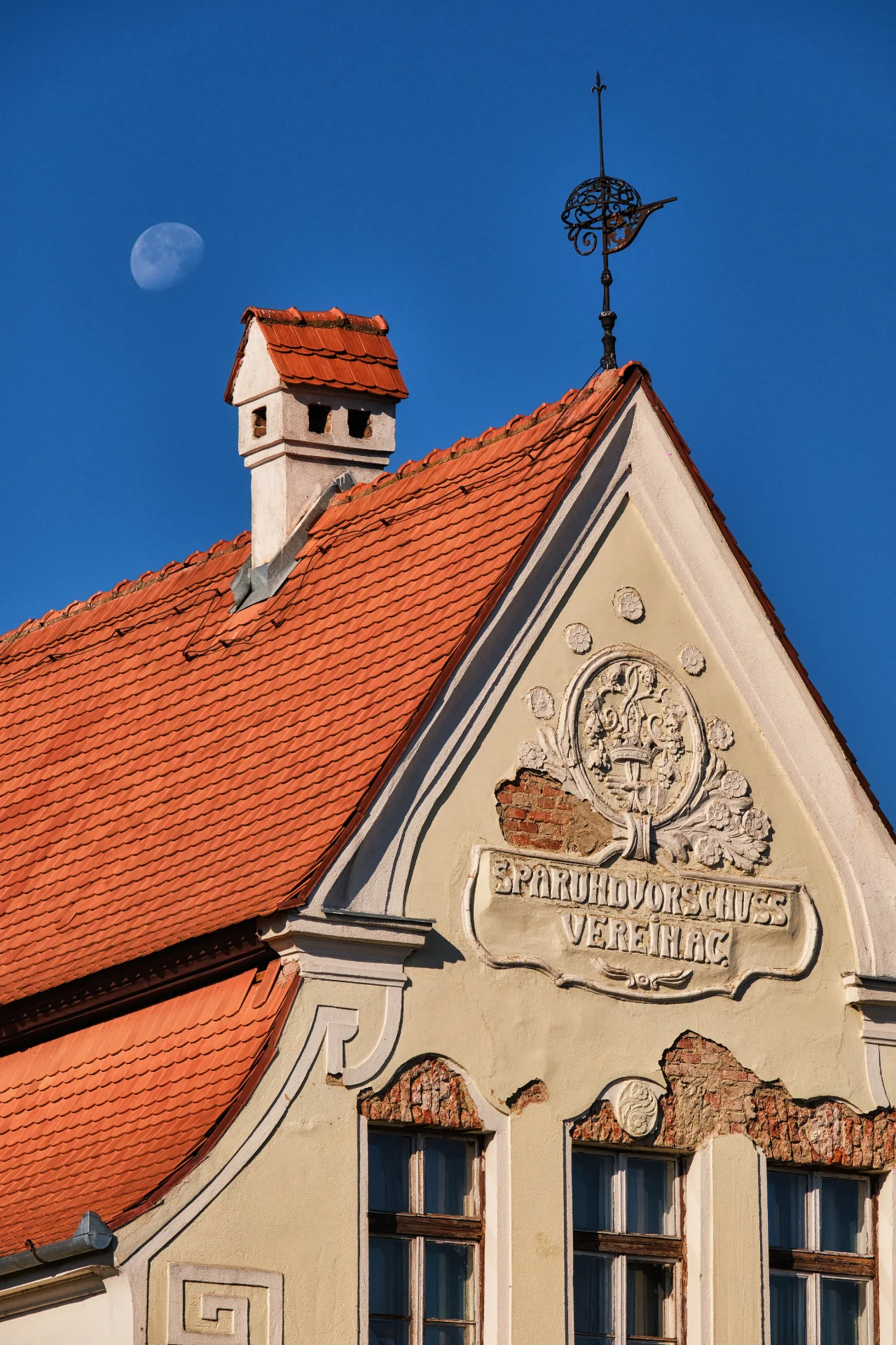
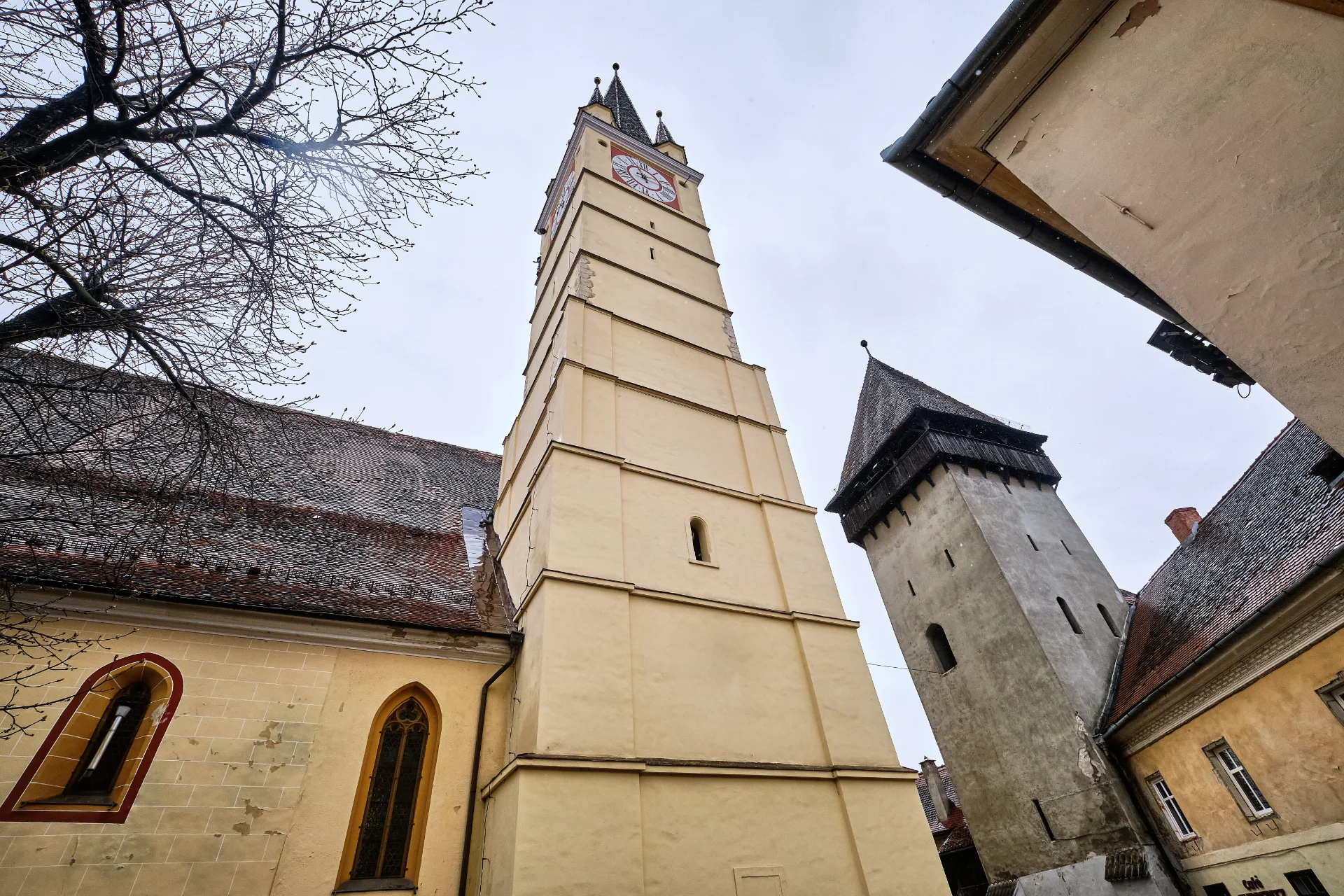
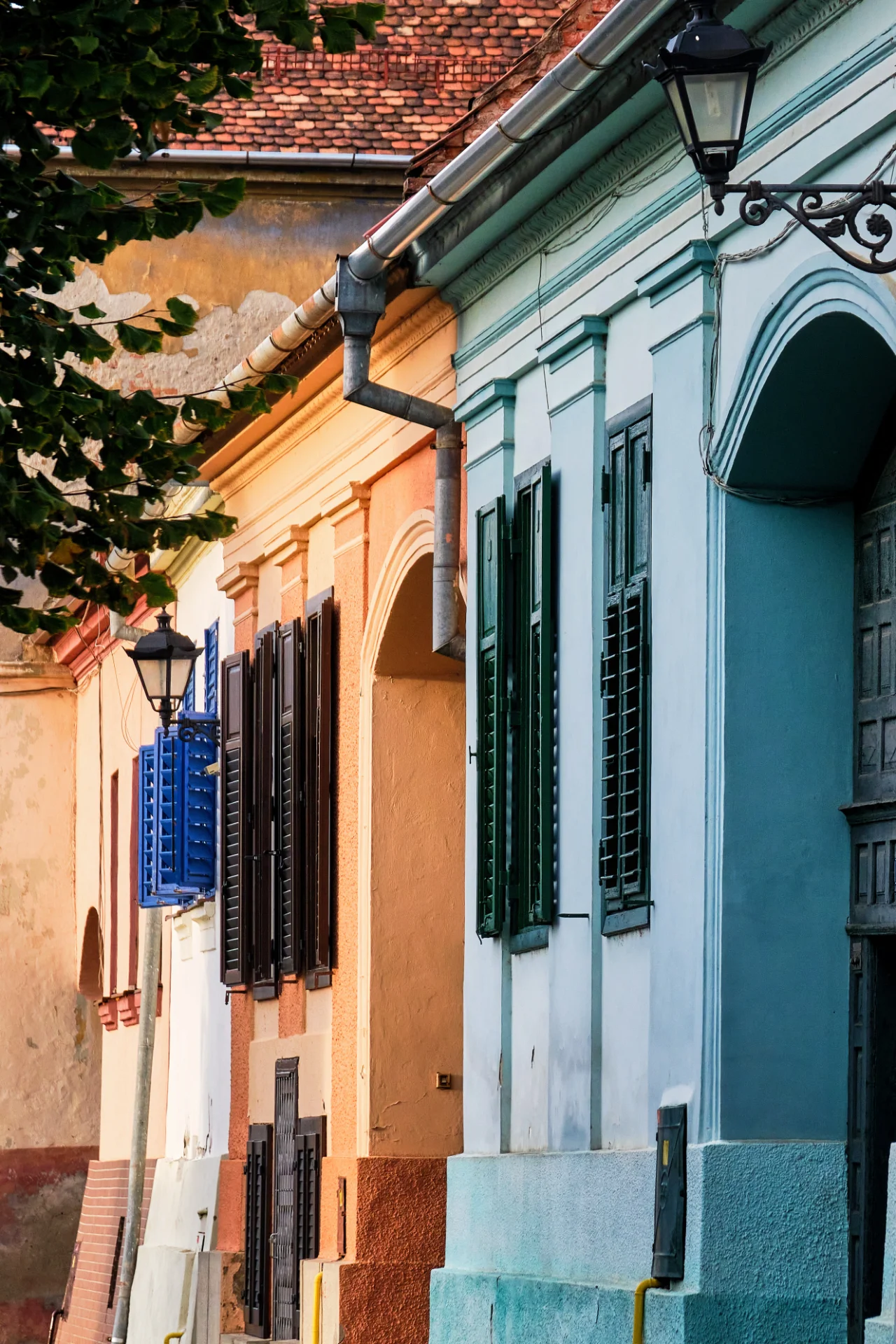
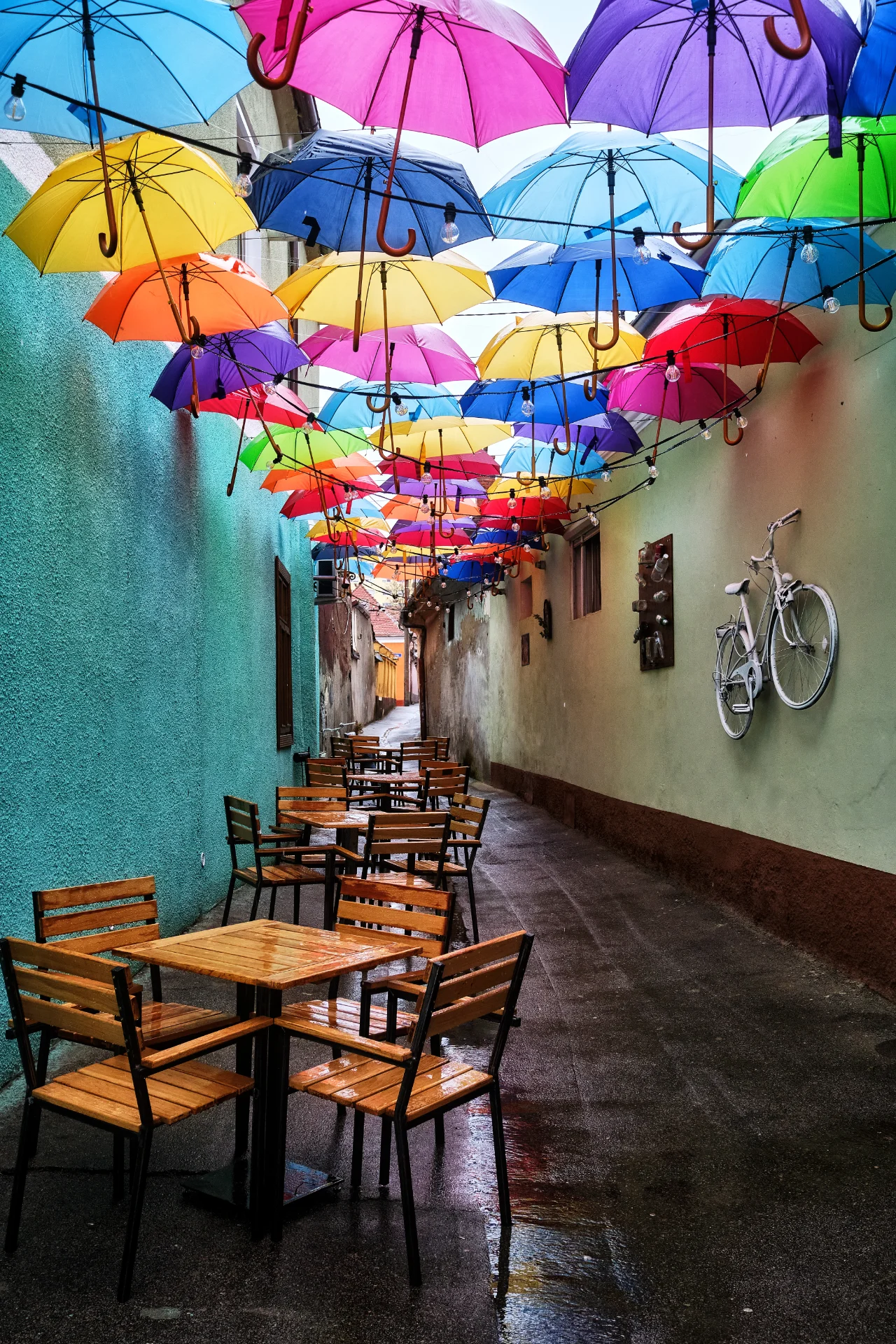
The labyrinth of cobblestone streets is enveloped by the light of lanterns as evening falls over the old fortress, and the shadows of the past slowly descend from the tall church tower, whispering incredible stories and secrets about a city that has existed for centuries in the heart of Transylvania!
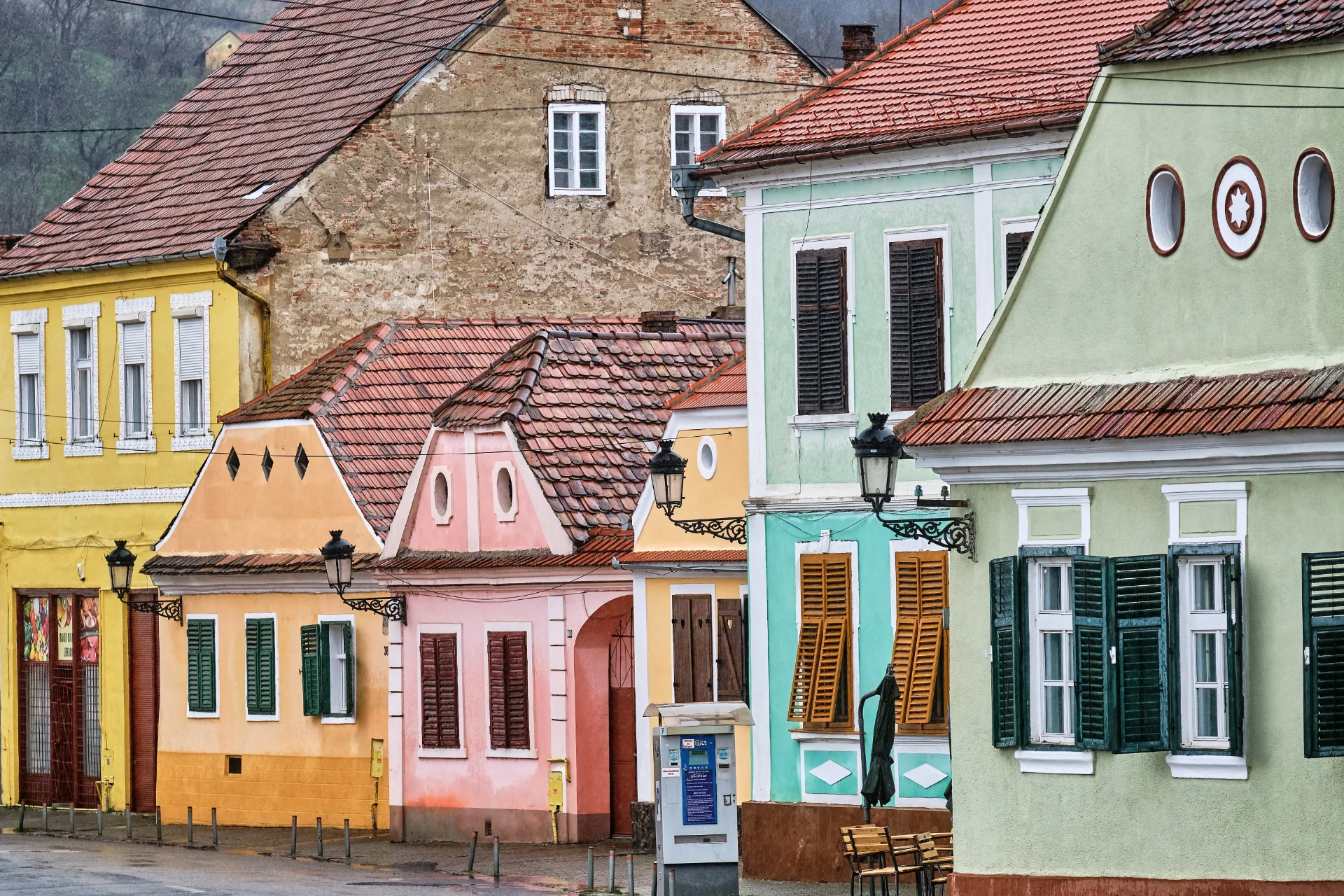
King Ferdinand I Square Ⓒ Silviu-Florin Salomia
Following the Târnava Mare valley from the fortress of Sighișoara westward, we soon stop inside the Wine Country, in another old medieval market town, less known to travelers, but equally rich in monuments and authentic experiences. Hidden on the other side of the river and the road, beyond the newer buildings of the modern city, the old fortress of Mediaș always welcomes us with other fascinating discoveries and an atmosphere full of mystery. Unknown to many, the stories of this place are many and often amazing, keeping alive memories of kings and scholars, but also some priceless treasures.
Mediaș is one of the oldest cities in the country, inhabited since Roman times and first mentioned in 1267. It was also then that Saxon colonists from Germany arrived in Transylvania, many of whom settled here. The importance of the town grew in the following centuries, Mediaș becoming a city in 1359, and two centuries later, the Transylvanian prince Stefan Bathory was elected king of Poland here. The fortified citadel was built starting in the 16th century, and today’s historic center preserves many of the monuments of those times, including some of the towers and defensive walls.
St. Margaret Church Ⓒ Silviu-Florin Salomia
St. Margaret Church Ⓒ Silviu-Florin Salomia
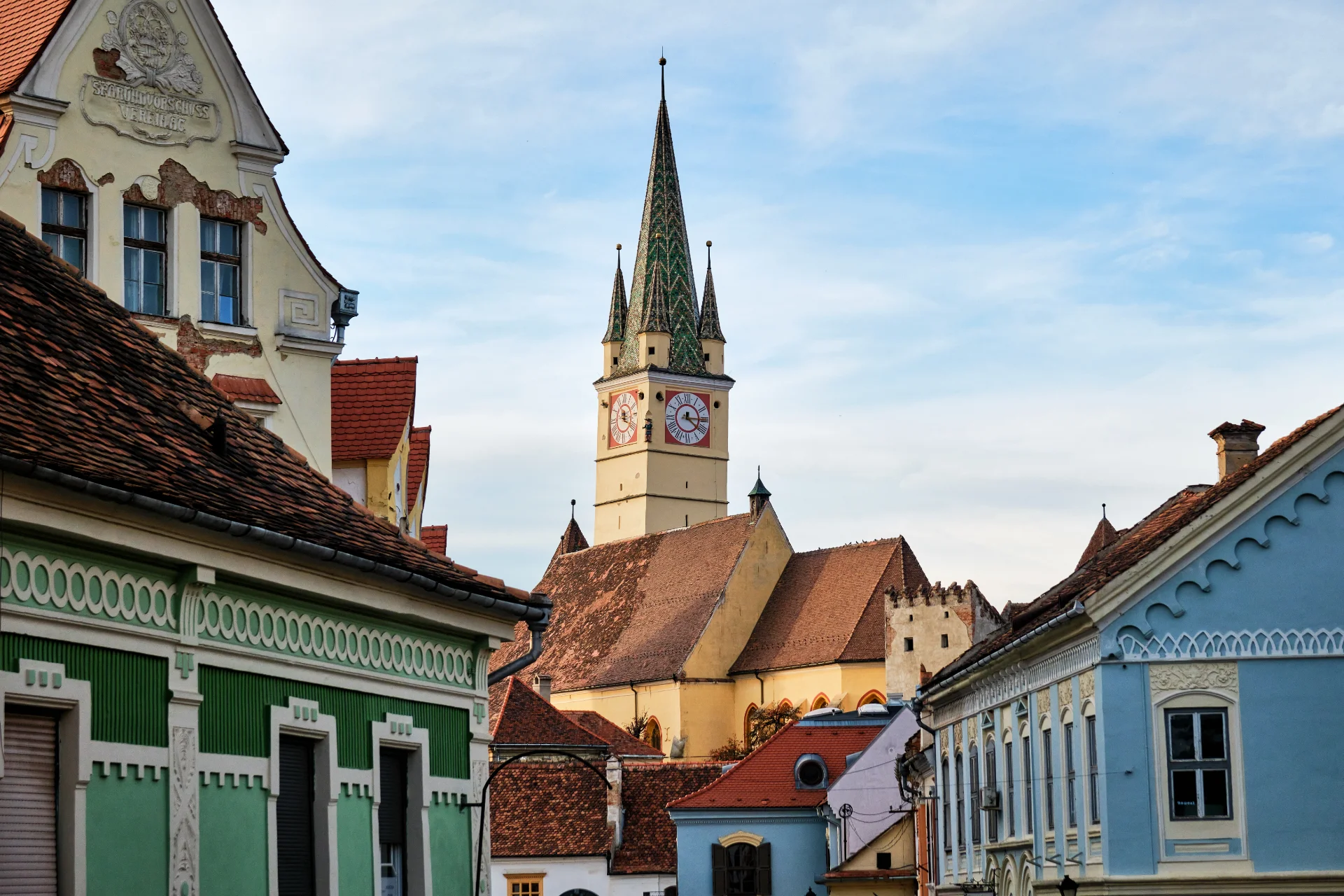
We begin our exploration in the heart of the fortress, where the fortified ensemble of the Evangelical Church of “Saint Margaret” has reigned for over five centuries. Built in a superb late Gothic style, the church is surrounded by a fortified enclosure with several towers (School, Ropemakers, Saint Mary, Tailors) and other structures. The most impressive, however, is the Bell Tower (or Trumpet Tower), brought to a height of almost 70 meters after construction and slightly tilted over time. The tower was used mainly for observation, and Vlad the Impaler was held prisoner here for a period.
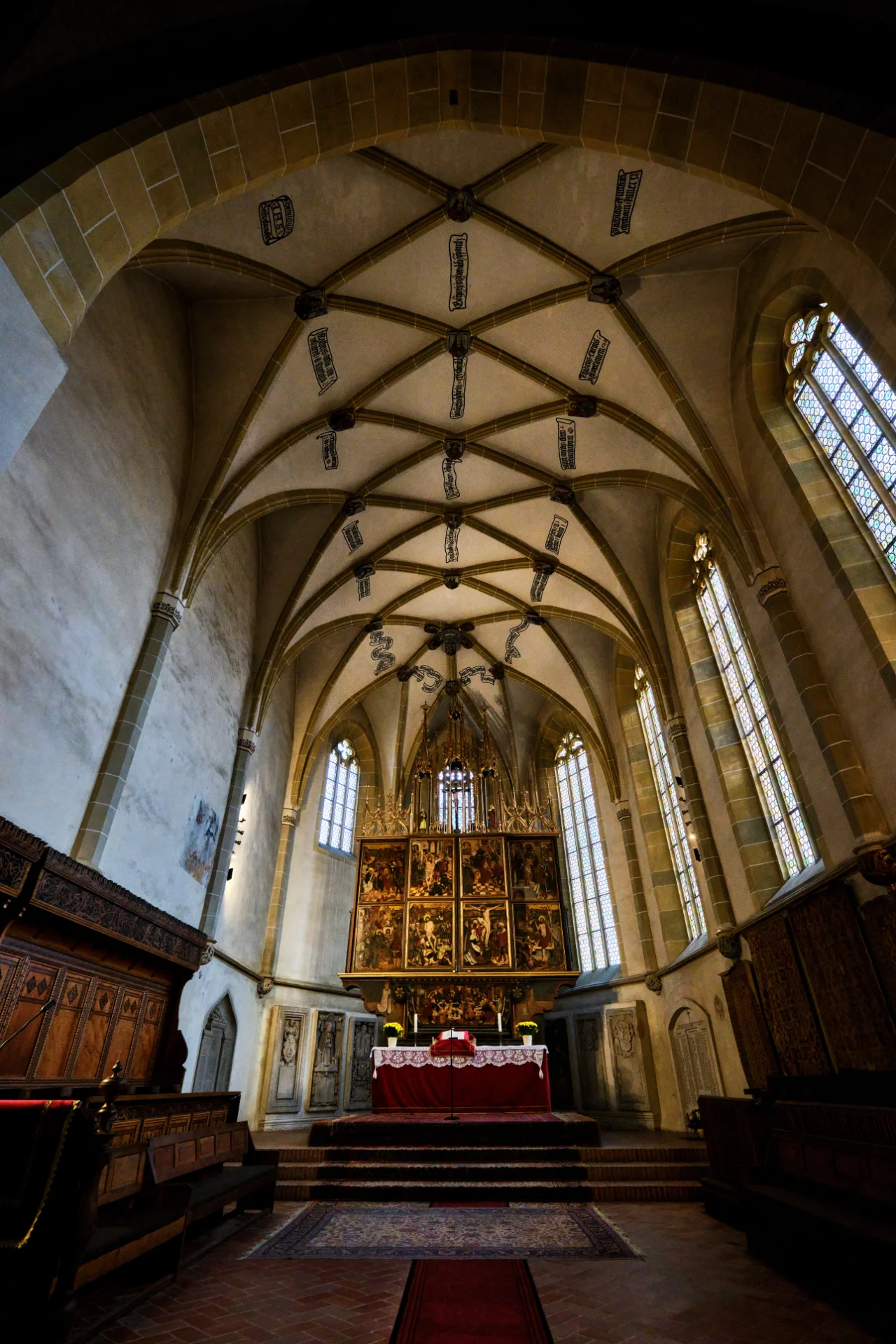
Inside the church, we are amazed by the so-called Mediaș Altar Piece, one of the most important and beautiful in Transylvania, with eight panels featuring excellently executed religious paintings. Other interesting elements include the old organ built by Johannes Hahn, the pulpit canopy, oriental carpets and the oldest bronze baptismal font in the country. Around the church, small streets start in all directions and along them we can discover a true open-air museum, with splendid architectural monuments.
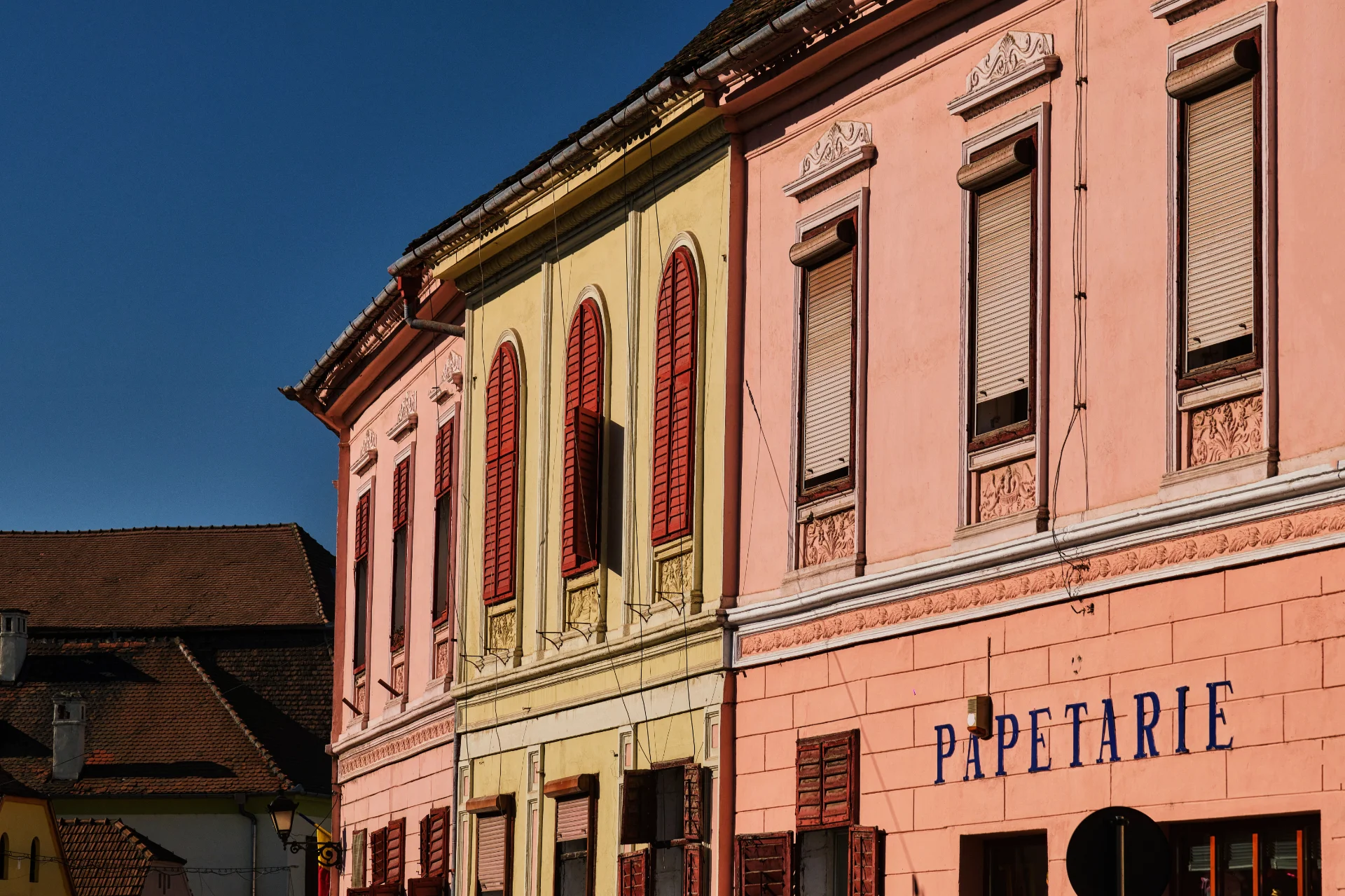
South of the church, King Ferdinand I Square is the civic center of the city, surrounded by multicolored and richly ornamented buildings. Among these, the Schuller House stands out, a famous inn with Renaissance architecture from 1588, the Schuster Dutz House, originally built in 1690 and belonging to an important medieval cultural figure, as well as the Rosenauer House or the Piarist School. Near the Evangelical church complex, we enter George Enescu Square, where the Roth-Oberth High School building attracts our attention, attested since 1604, while the current structure is over 100 years old. Lutheran pastor Stephan Ludwig Roth, one of the prominent figures of Transylvania and the Revolution of 1848, taught here.
The square and Johannes Honterus Street, which starts to the north, contain other impressive monument ensembles, with a lot of houses and buildings that illustrate various architectural styles and contain captivating stories about the city’s past. In the northern part of the fortress, it is worth visiting the Franciscan Monastery and Church, an ensemble originally founded in the first half of the 15th century, abolished a century later and returned to the order in 1721. The interior of the “Immaculate Conception” Church is truly spectacular, housing particularly beautiful and valuable elements, including the 1742 altar in the rococo style, the superb decorations, the treasure from Şeica Mică, the treasure from Panade and others. In the adjacent building, we also visit the Municipal Museum, which contains fascinating collections of history, archaeology, ethnography and natural sciences.
Search for Accommodation in Mediaș on Booking.com!
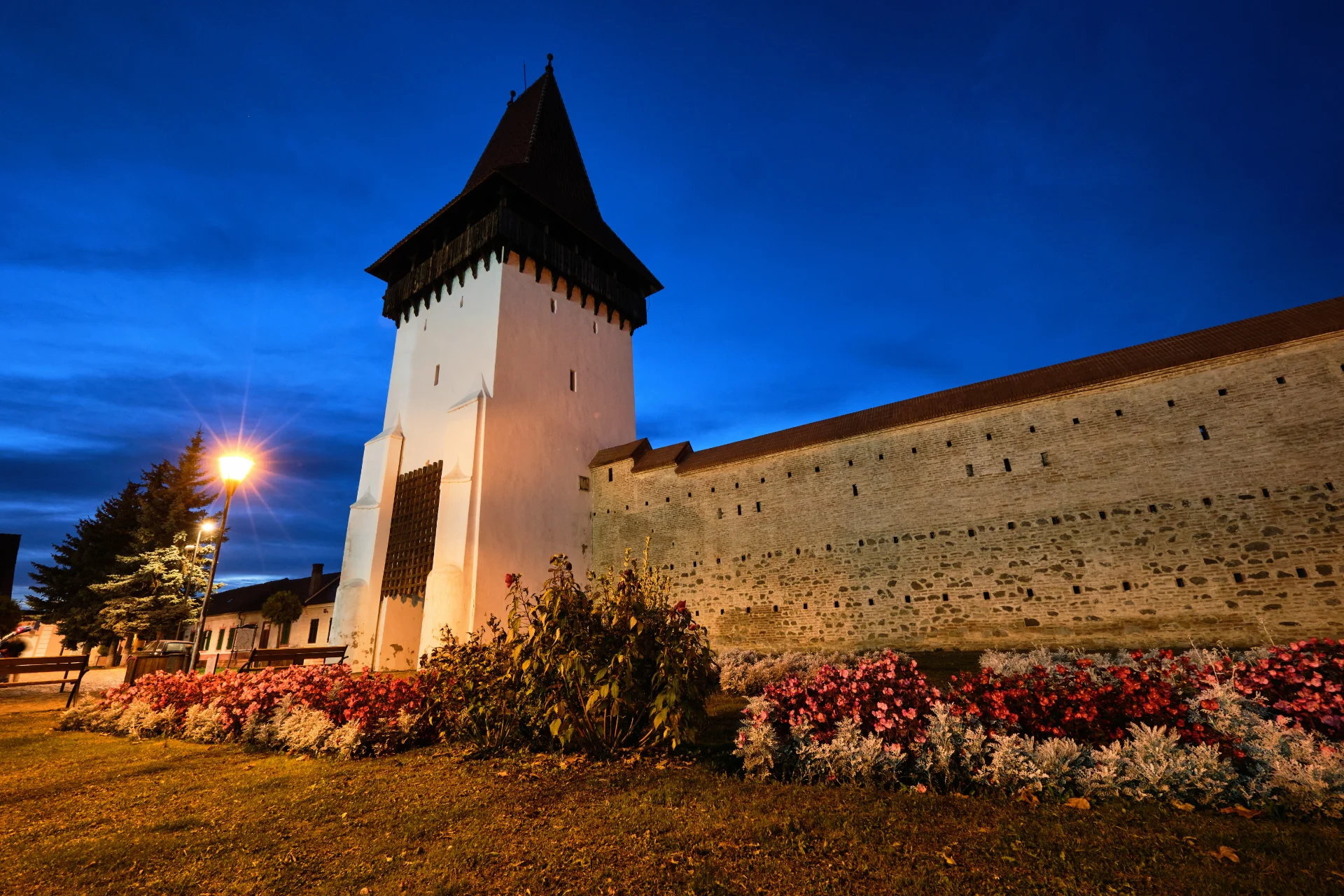
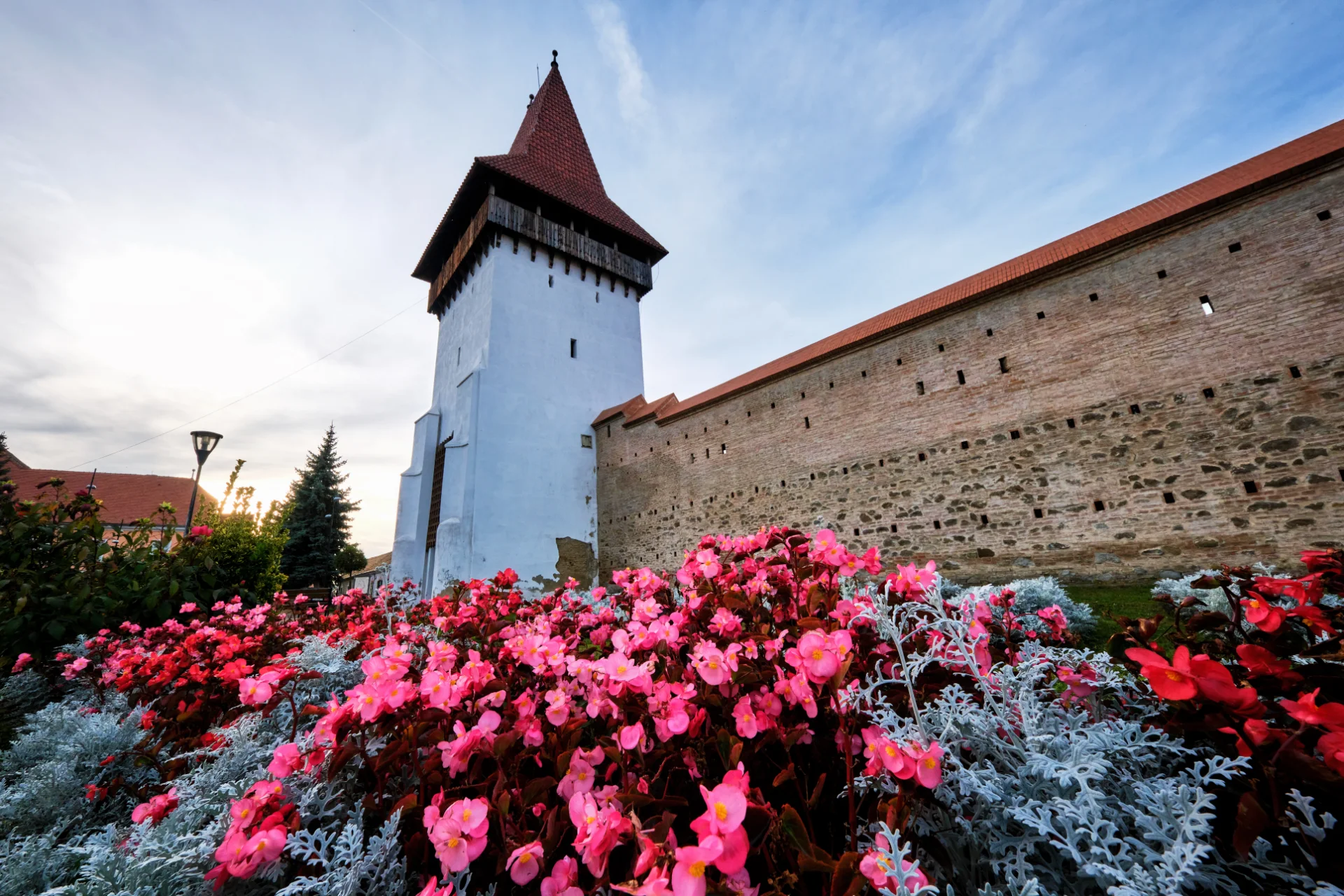
Fortress Wall and Forkesch Tower Ⓒ Silviu-Florin Salomia
Johannes Honterus Street Ⓒ Silviu-Florin Salomia
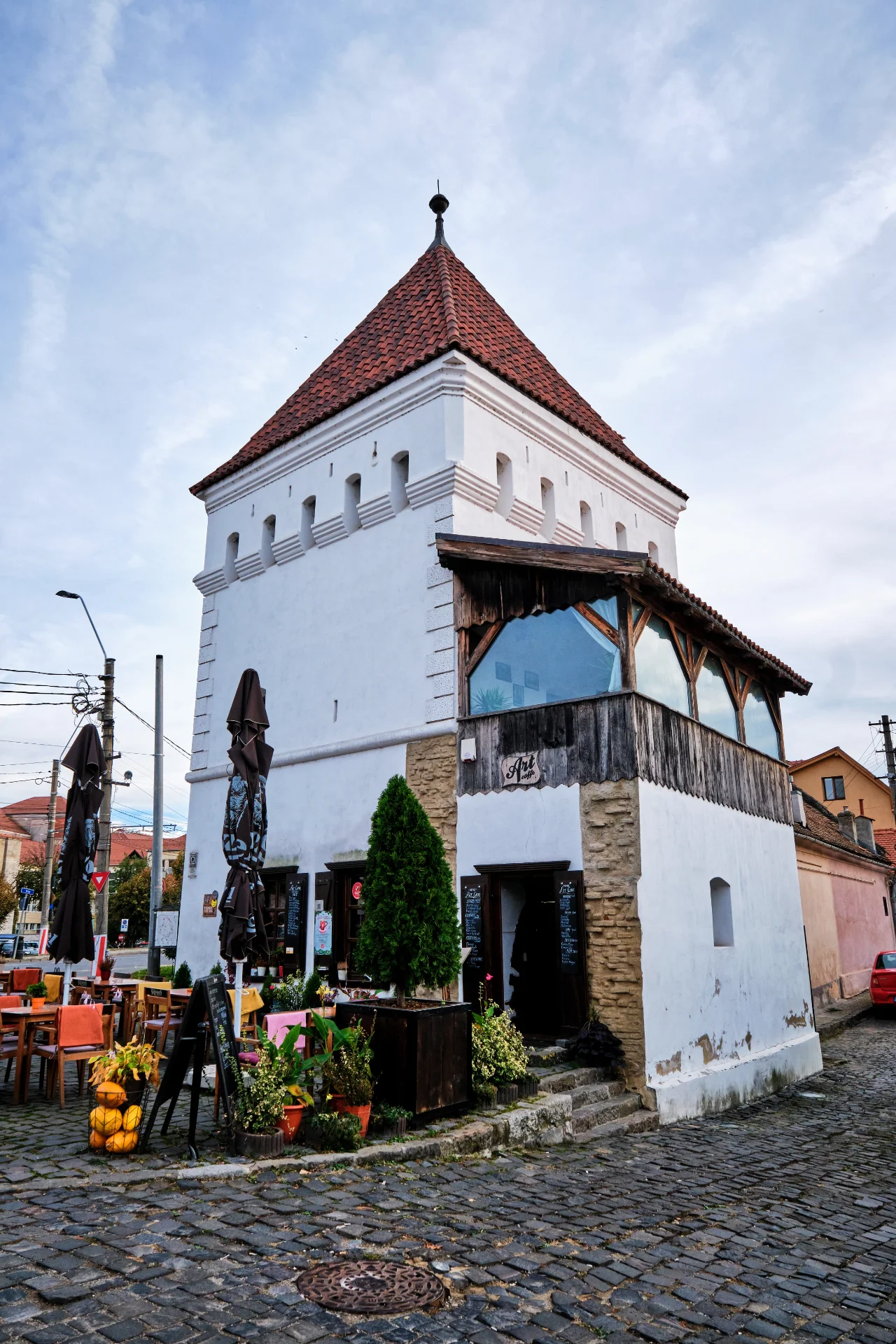
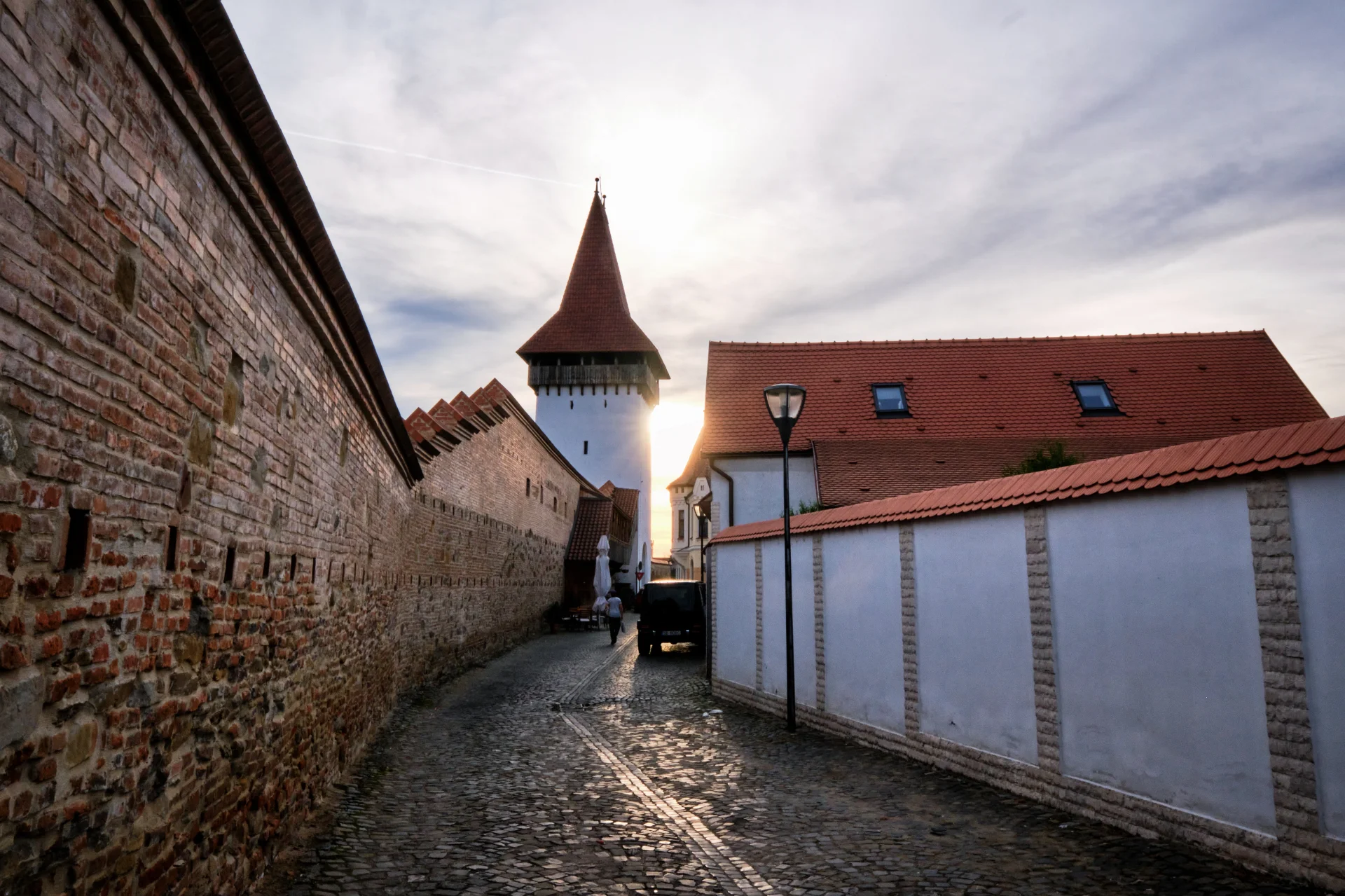
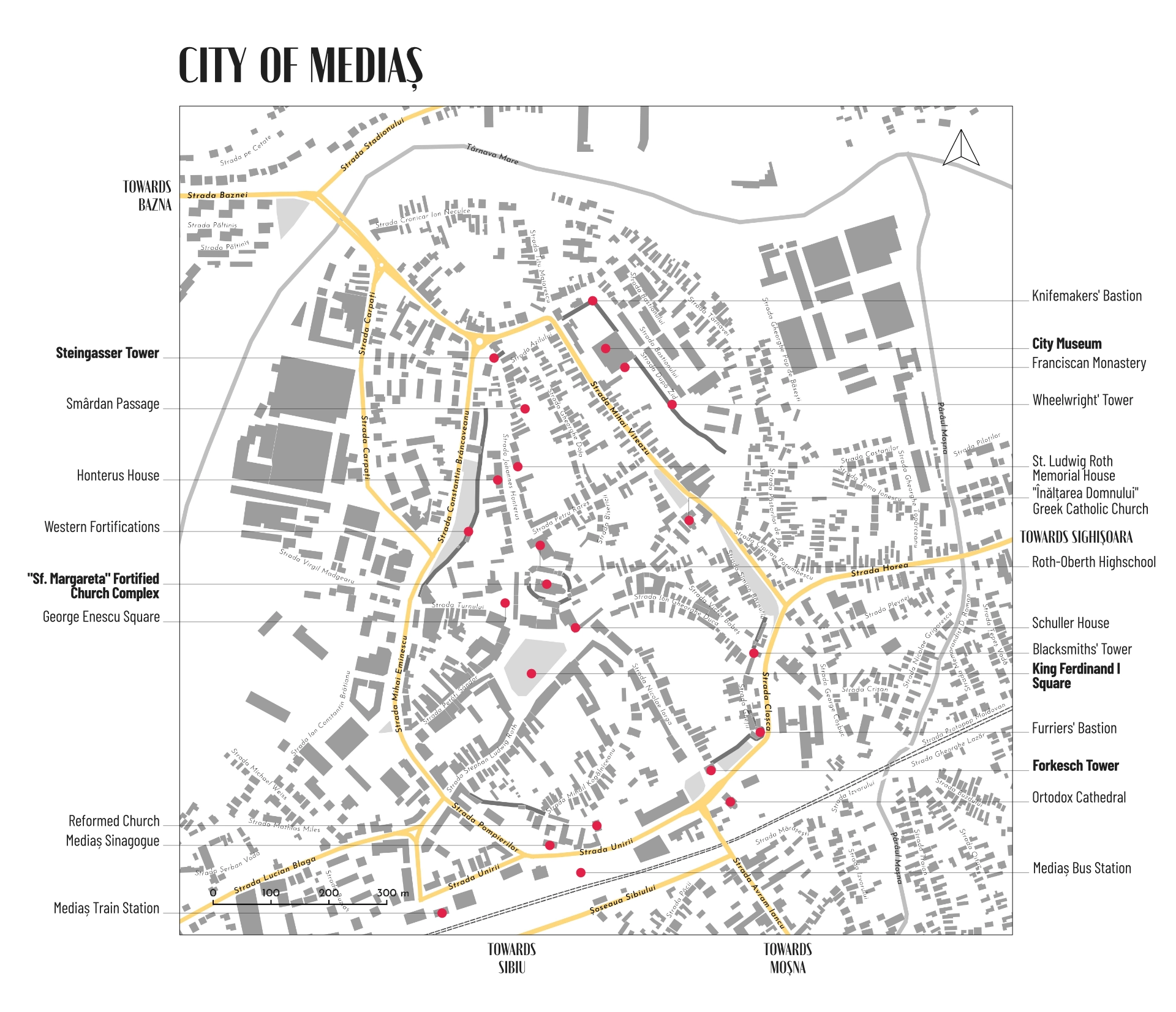
The old fortress was surrounded by impressive medieval fortifications (walls, towers and bastions), some of which have been preserved to this day. Thus, in the southern part of the historic center we find the Forkesch Tower or the Goldsmiths’ Tower, with three floors and built in the early 16th century, and nearby are the Coatmakers’ Bastion and the Blacksmiths’ Tower, built in the 16th century in Baroque style. Along the wall from the east we also find the Wheelmakers’ Tower, followed by the Knifemakers’ Bastion, and in the north is the Steingasser (Stonemasons’) Tower, a former gate of the fortress that was built between 1507 and 1534. We can also discover other fortifications in the western part of the historic center, near the Children’s Park.
Other interesting places in Mediaș include the Cathedral of the Holy Archangels Michael and Gabriel, the Greek Catholic Church of the Ascension of the Lord, the Church of the Holy Apostles Peter and Paul, the Reformed Church, the Synagogue, the Memorial House of the Hermann Oberth, or the Natural Gas Museum. The city is also surrounded by extraordinary legends, and our journey reveals some of the more obvious or hidden symbols of the “City of Light”. From the grapes present on the city’s coat of arms to the Masonic solar symbols, there are many surprising things in Mediaș. Leaving the city, we descend south until the eye-shaped brick roofs of Sibiu, the proud Transylvanian citadel at the foot of the mountains, are revealed to us in the distance…
Steingasser Tower Ⓒ Silviu-Florin Salomia
IG Duca Street Ⓒ Silviu-Florin Salomia
Sights and Experiences
Places to See and Things to Do in the city of Mediaș
A true medieval fortress at one time, the fortified church of “Saint Margaret” in Mediaș represents the central nucleus and symbol of the city of Mediaș, being known locally as “The Castle”. One of the most impressive and well-preserved monuments of its kind in Transylvania, the historical and architectural complex includes many exceptional features. The fortified church was built starting in the 15th century, on the site of other older religious buildings, belonging to the Evangelical Lutheran community starting in 1545. The monument in the late Gothic style is a combination of a basilica and a hall church, and inside it preserves numerous treasures of medieval religious art. Of particular note is the Altar of Mediaș, a true artistic masterpiece created in 1485 and featuring superb religious scenes in the Austrian style. In fact, other such precious altars from other churches in the region are also preserved here.
In addition to the triptych altar, the church also has the oldest bronze baptismal font in Transylvania (14th century), old murals (14th-15th century), the pulpit canopy, oriental carpets and a baroque organ highly appreciated for its acoustics. The church tower was originally built with the church, but was raised by three more levels around 1550, when it also received a clock. Impressive in its height of almost 70 meters, it has tilted over time and is also known as the Trumpet Tower. The Evangelical church is still surrounded by a wall with five defensive towers (St. Mary, Tailors, Bells, Funarilor and School). In the first of these there is a chapel containing splendid frescoes from the pre-Reformation period. The entrance to the fortified complex is made under the Bell Tower in George Enescu Square or through a covered staircase in King Ferdinand I Square. The historical ensemble also includes the parish house, the oldest built dwelling in the fortress, which also includes Gothic elements, as well as other constructions.
Medieval Fortifications
Among the largest, most impressive, and best-preserved medieval fortifications in Transylvania, the Mediaș Fortress was originally completed in the early 16th century, with its outer stone and brick walls measuring nearly 2.4 kilometers long and up to 7 meters high. In the following period, the fortress developed continuously, but it also suffered significant damage. In the 18th century, it had seven entrance gates and was defended by 19 towers and bastions, some of which have survived to this day. Starting from one of the important gates from the north to the west, visitors can admire in turn the Stoners’ Tower (Steingasser), the Knifemakers’ Bastion, the Rotaries’ Tower, the Blacksmiths’ Tower, the Furriers’ Bastion, the Forkesch (Goldsmiths’) Tower and the western fortifications.
Architecture Details Ⓒ Silviu-Florin Salomia
St. Margaret Church Ⓒ Silviu-Florin Salomia
Architecture Details Ⓒ Silviu-Florin Salomia
St. Margaret Church Complex Ⓒ Silviu-Florin Salomia
Housed in the building of the former Franciscan monastery, in the north-eastern part of the Mediaș fortress, the municipal museum offers a fascinating experience to visitors. The museum’s main collections include the archaeology and history, ethnography and art, and natural sciences exhibitions, accumulating an impressive heritage of over 30,000 objects. The archaeology and history exhibition presents the past of the Târnavelor valley region, as well as the valuable objects discovered here over time. The authentic traditions of the area are presented within the ethnography exhibition, including ceramic pieces, authentic folk costumes and others, while the art collection mainly includes works by Romanian painters. The natural sciences exhibition also presents very interesting elements such as an extensive herbarium, an entomology collection with approximately 10 thousand insects, a paleontology collection or mineralogy collections.
Franciscan Church and Monastery
Visiting Hours: 9 – 17
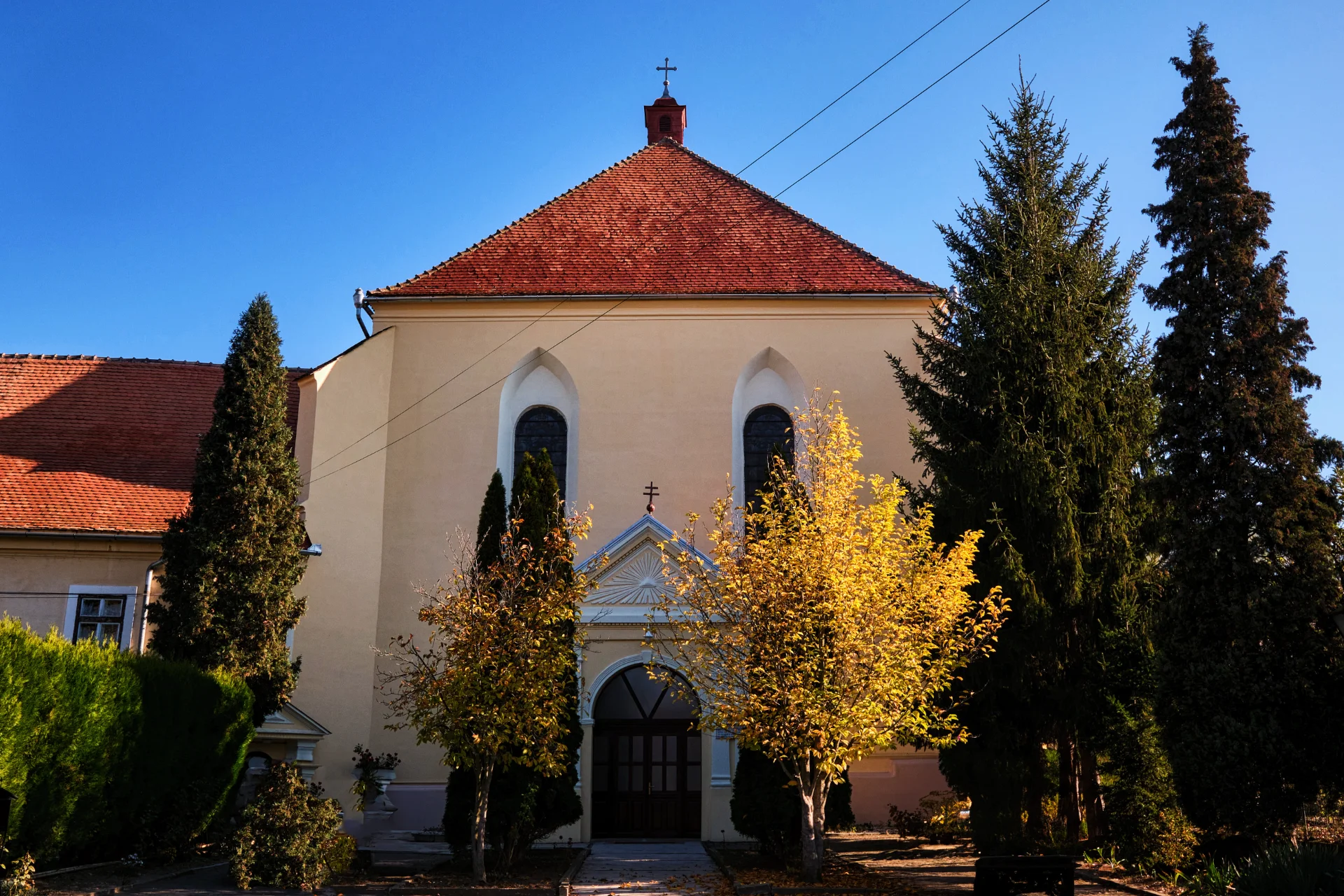
Founded sometime in the mid-15th century, the monastery belonged to the Franciscan order of monks until 1556, when they were expelled from Mediaș. It was then officially returned to the Roman Catholic community after 1721, and today it contains numerous historical treasures, as well as some special artistic elements. The interior of the church is decorated in Gothic and Rococo style, while the exterior is dominated by Baroque architecture. The Şeica Mică treasure, the Panade treasure, and other interesting historical objects are kept here. The church’s bell tower was part of the fortification system of the Mediaș fortress.
Franciscan Monastery Ⓒ Silviu-Florin Salomia
Casa Honterus Ⓒ Silviu-Florin Salomia
Architecture Details Ⓒ Silviu-Florin Salomia
Smârdan Passage Ⓒ Silviu-Florin Salomia
Other Interesting Discoveries
Lesser known places and activities in the city of Mediaș
Other Historical Monuments
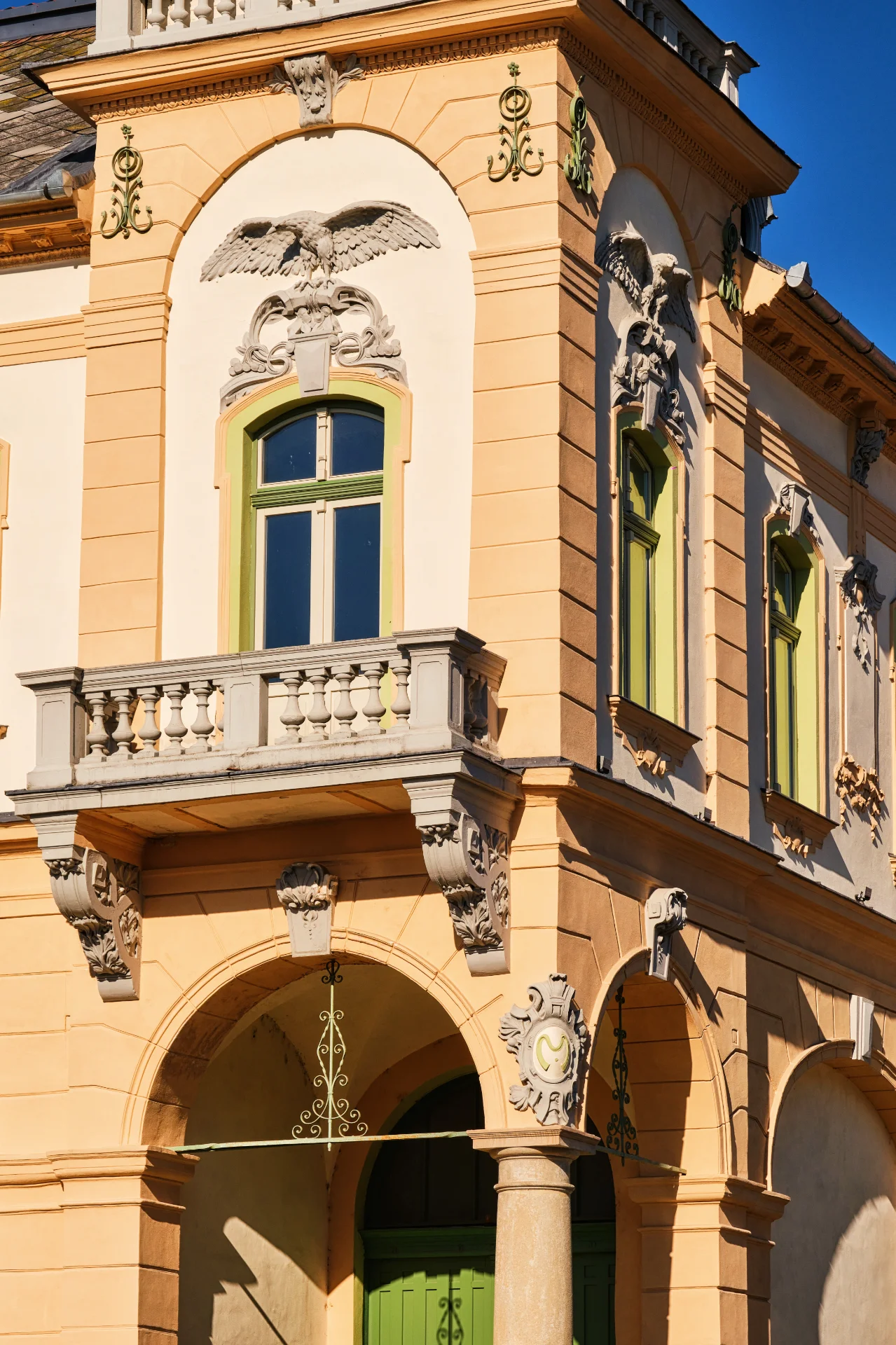
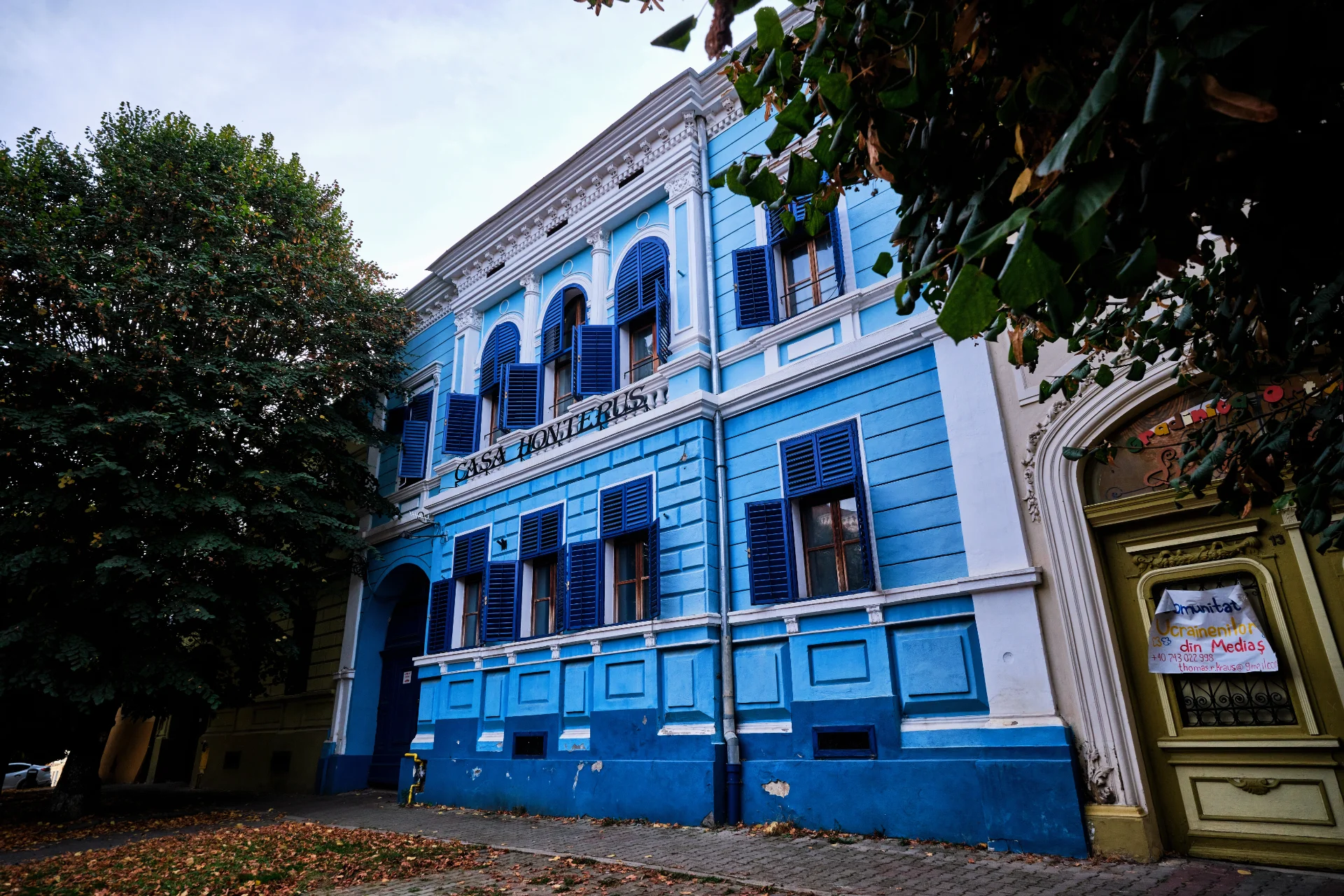
In addition to the impressive ensemble of the Evangelical church, the historic center of Mediaș also includes a significant number of historical and architectural monuments. Many of the old buildings located inside the former walls of the fortress have been excellently preserved and can be admired by visitors. The main areas with a high density of monuments are King Ferdinand I Square, George Enescu Square, Johannes Honterus Street or Nicolae Iorga Street. The most important and interesting of these include the Schuller House, the Schuster House, the Roth-Oberth Theoretical High School, the Honterus House, the Memorial House “St. Ludwig Roth, a former Franciscan monastery, the Rosenauer House, the Greek Catholic Church, the Synagogue, the Reformed Church and others.
Natural Gas Museum
Inaugurated in 2010, this unique and original museum in Romania presents the history and peculiarities of natural gas extraction. Among other things, visitors can admire interactive models, maps, photographs, holograms and other interesting objects.
Visiting hours: 8 am – 3 pm (Monday-Friday)
Bazna Resort
Although geographically it is not located in the Transylvanian Hills, but a few kilometers north of Mediaș and the Târnava Mari valley, the town of Bazna can be noted for its special tourist attractions. Declared a balneoclimatic resort for its mineral waters, sapropelic mud and other characteristics, Bazna includes several tourist complexes that offer both accommodation and curative services. The fortified church in Bazna is impressive in size and characteristics, having been built in the mid-14th century, on the site of an older Romanesque basilica. Of the former fortification system, only the southern tower is preserved, which also serves as a gate tower and bell tower, while the church includes a painted portal from the Romanesque period, as well as other interesting elements. Near the town, you can also admire the fortified evangelical churches in the villages of Boian and Velț.
City Walls and Forkesch Tower Ⓒ Silviu-Florin Salomia
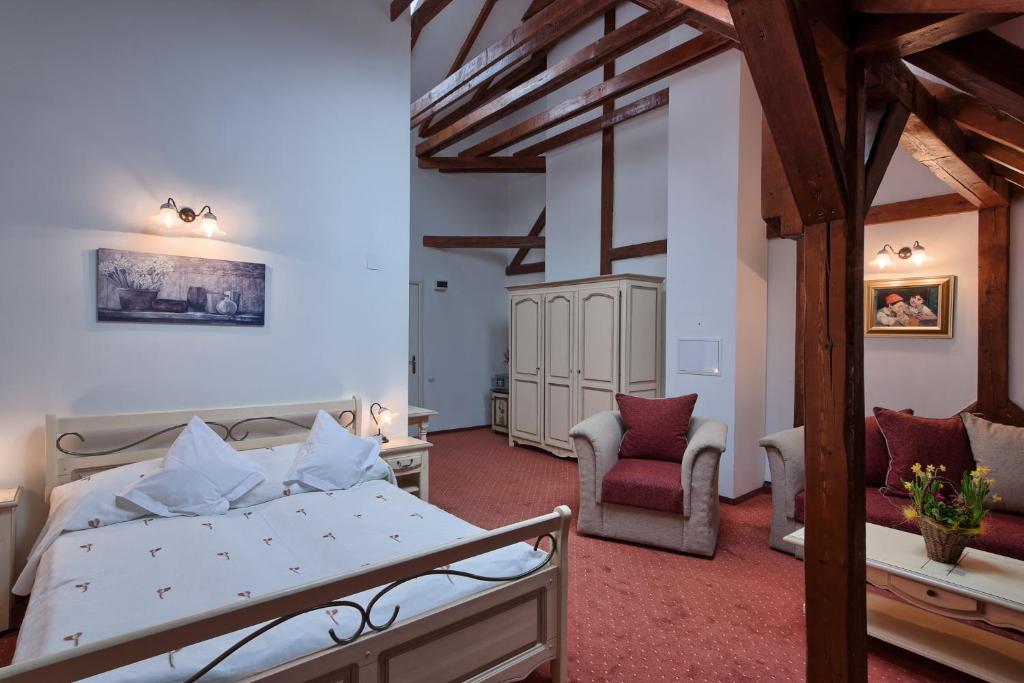
Located right in the historic center of Mediaș, next to the St. Margaret Church, the hotel offers quality accommodation in welcoming rooms with all amenities and has a traditional restaurant in the basement!
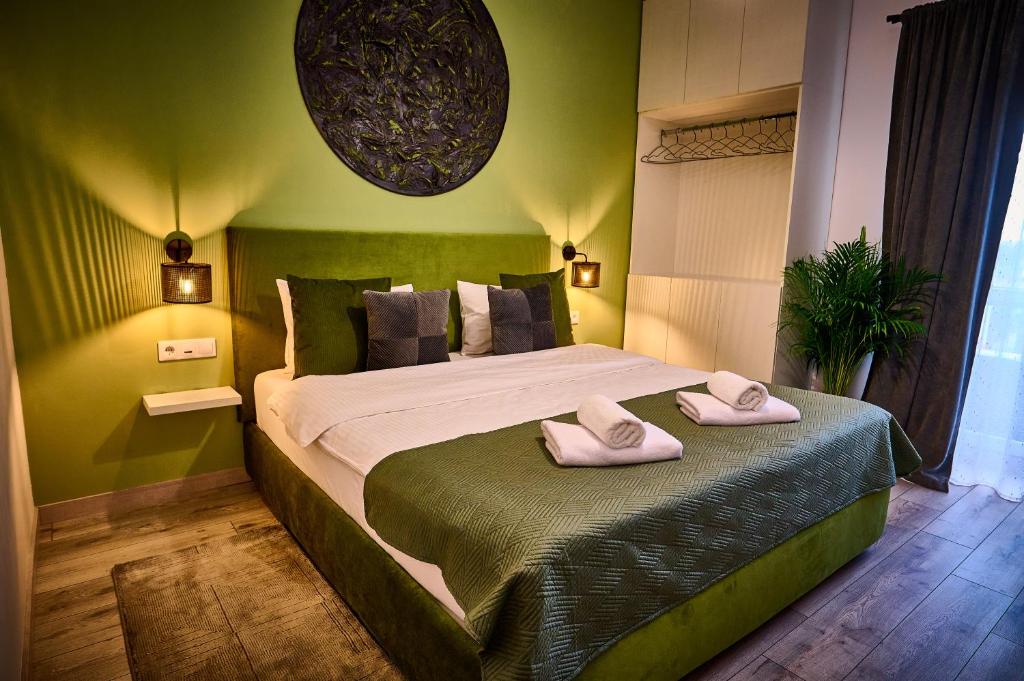
Located at the entrance to Mediaș from Sighișoara, this hotel, highly rated by guests, offers superior rooms with modern decor, a shared lounge, a garden, a terrace and breakfast!
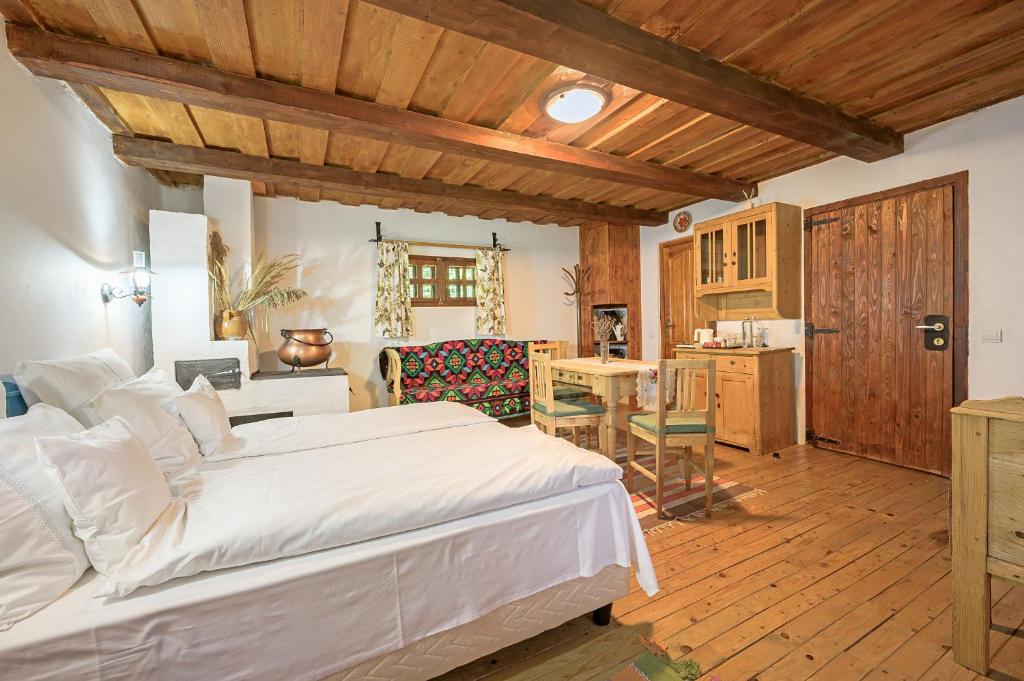
Located a few kilometers from the historic center of Mediaș, this superb complex offers accommodation with a traditional atmosphere in welcoming spaces, with a garden, bar and breakfast available!