15
Câmpulung
the Land of Muscel
From the shadow of the majestic Făgăraș, deep valleys rise, piercing endless hills and hiding places shrouded in ancient legends. This mysterious land hosts the first capitals of medieval Wallachia, but also oases of spirituality that stretch their roots in the mists of history, lost among forests and enchanting orchards!
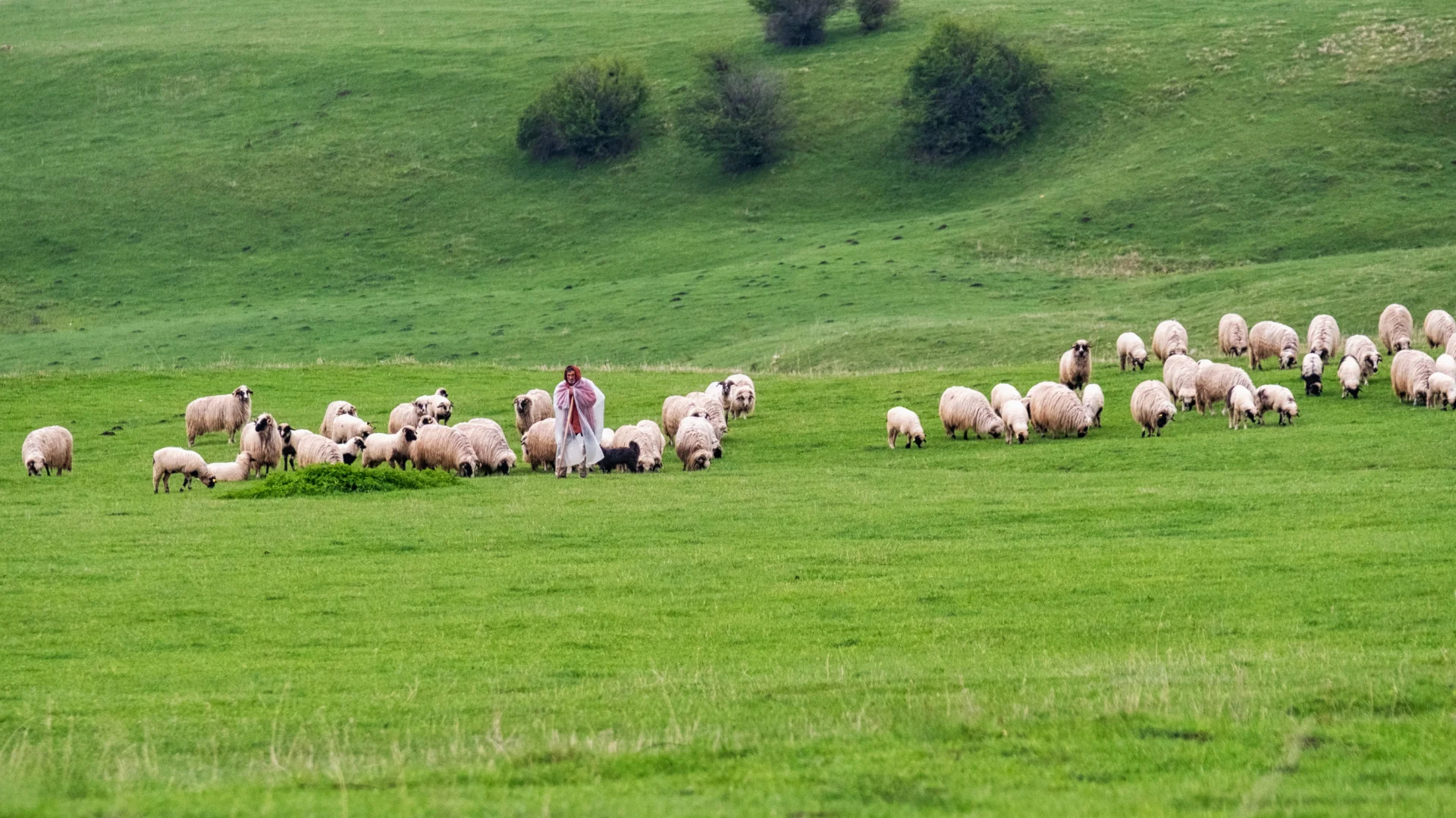
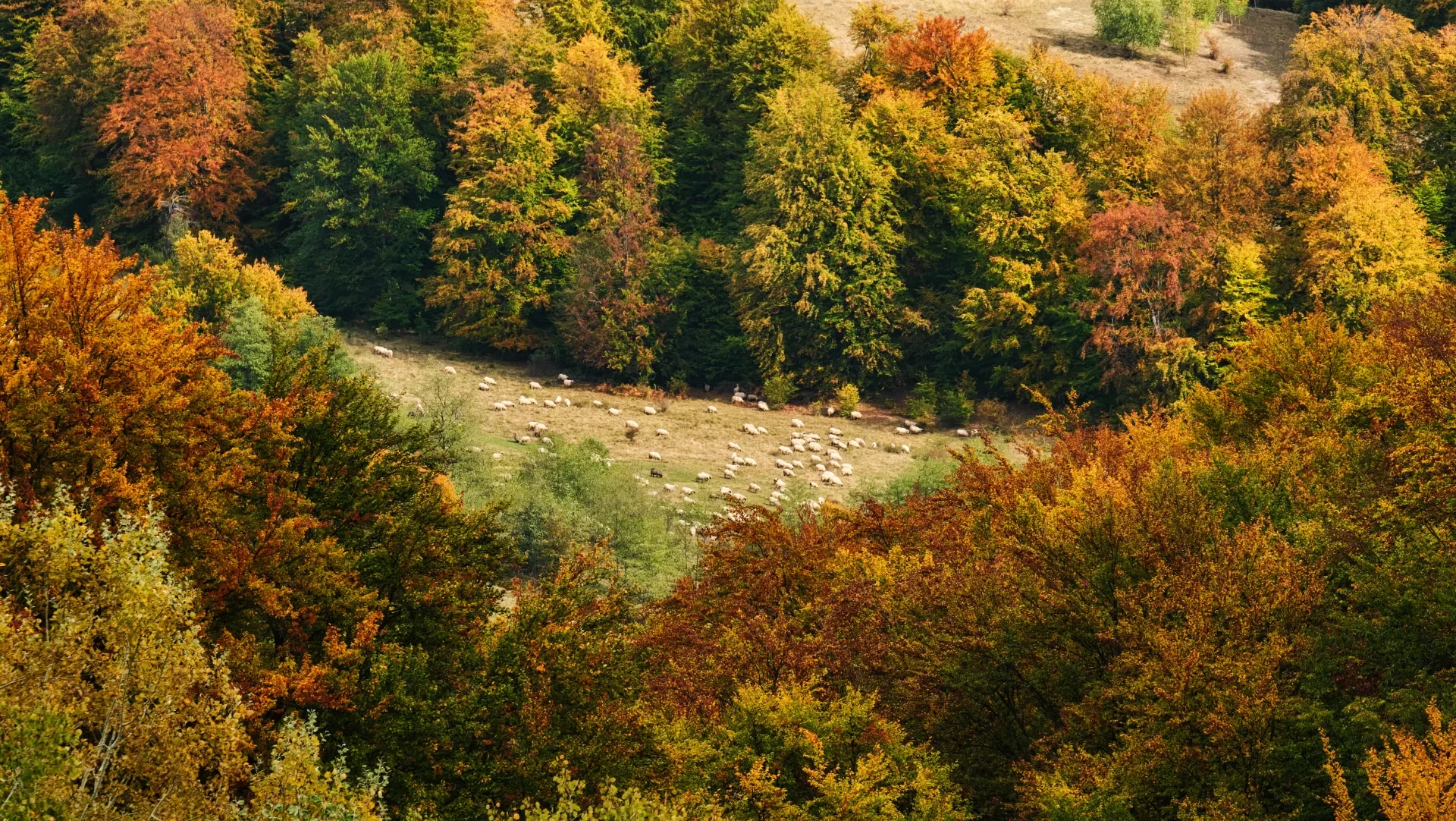
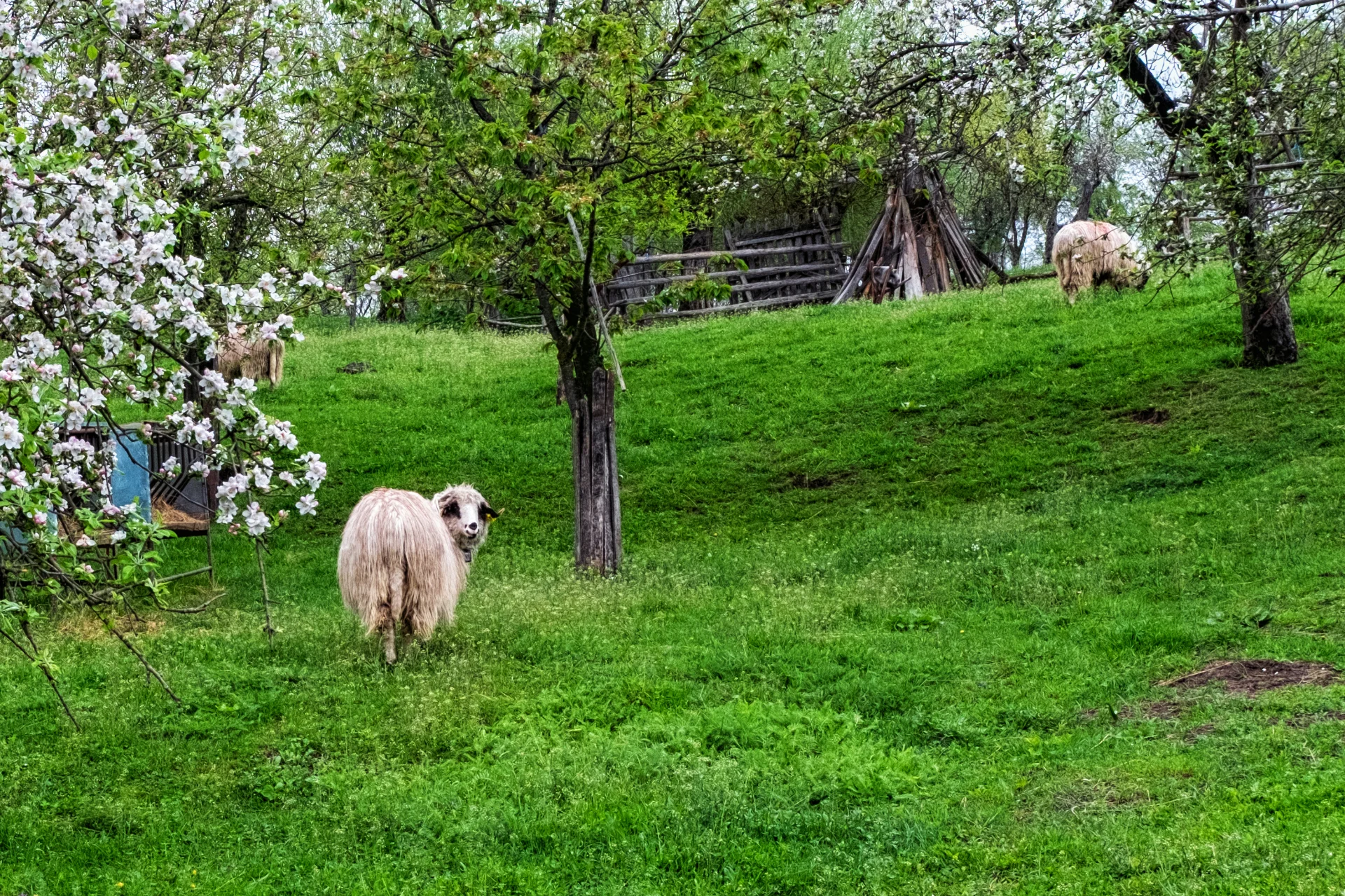
The Muscel region, even if it does not represent a concretely defined geographical or historical unit, has homogeneous and sometimes unique cultural and natural features. It includes the upper valleys of the Dâmbovița, Târgului, Bughea, Bratia, Slănic, Doamnei, Vâlsan, Argeș and Topolog rivers, separated by long and steep hills, known in this region as muscele. Between the high hills covered with orchards and meadows, small depressions develop where old and flourishing settlements lie. Traveling on the road (DN73C) that connects the towns of Câmpulung and Curtea de Argeș, we pass over these charming hills and can climb the idyllic valleys towards the mountains on other local roads, discovering a lot of fascinating places, less known to travelers.
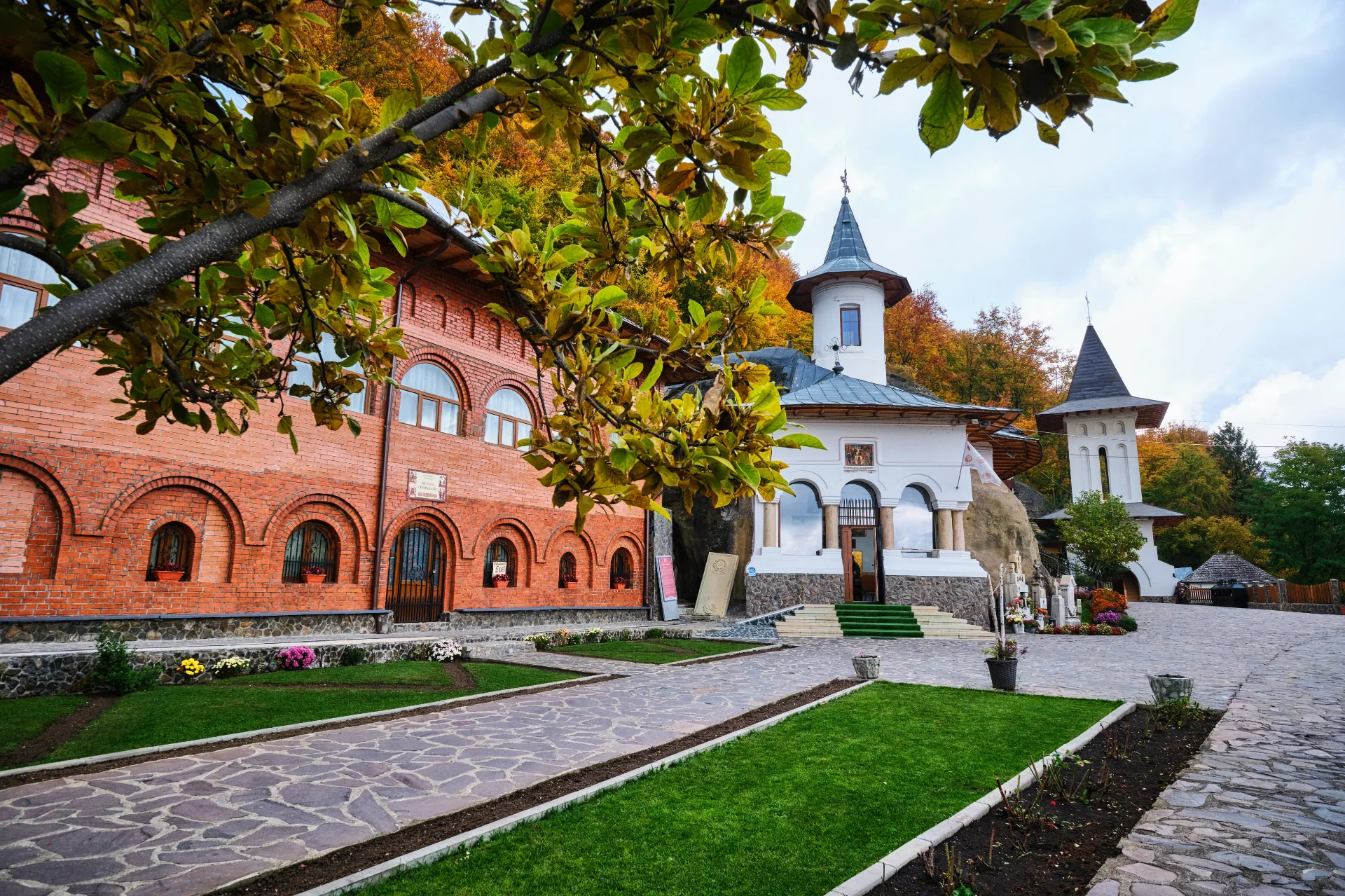
Descending along the Dâmbovița valley from Rucăr, we first stop for a short break at the Mateiaș Mausoleum, dedicated to the heroes of World War I and built between 1928 and 1935, with the material support of the locals. It consists of a mausoleum, a museum, a bas-relief and a cup in which a flame burns permanently in memory of the heroes. The mausoleum is located near the picturesque village of Piatra, which offers other spectacular views of the Dâmbovița valley, right at its exit from the mountains. Nearby we also visit the Nămăiești Monastery, located in the village of the same name and comprising a very old cave church. Several local legends are also linked to the beginnings of this place about the discovery of the icon attributed to the evangelist Luke. This is considered the oldest icon in the country and the most important treasure of the monastery, being framed in silver.
Search for Flights to Romania with Booking.com!
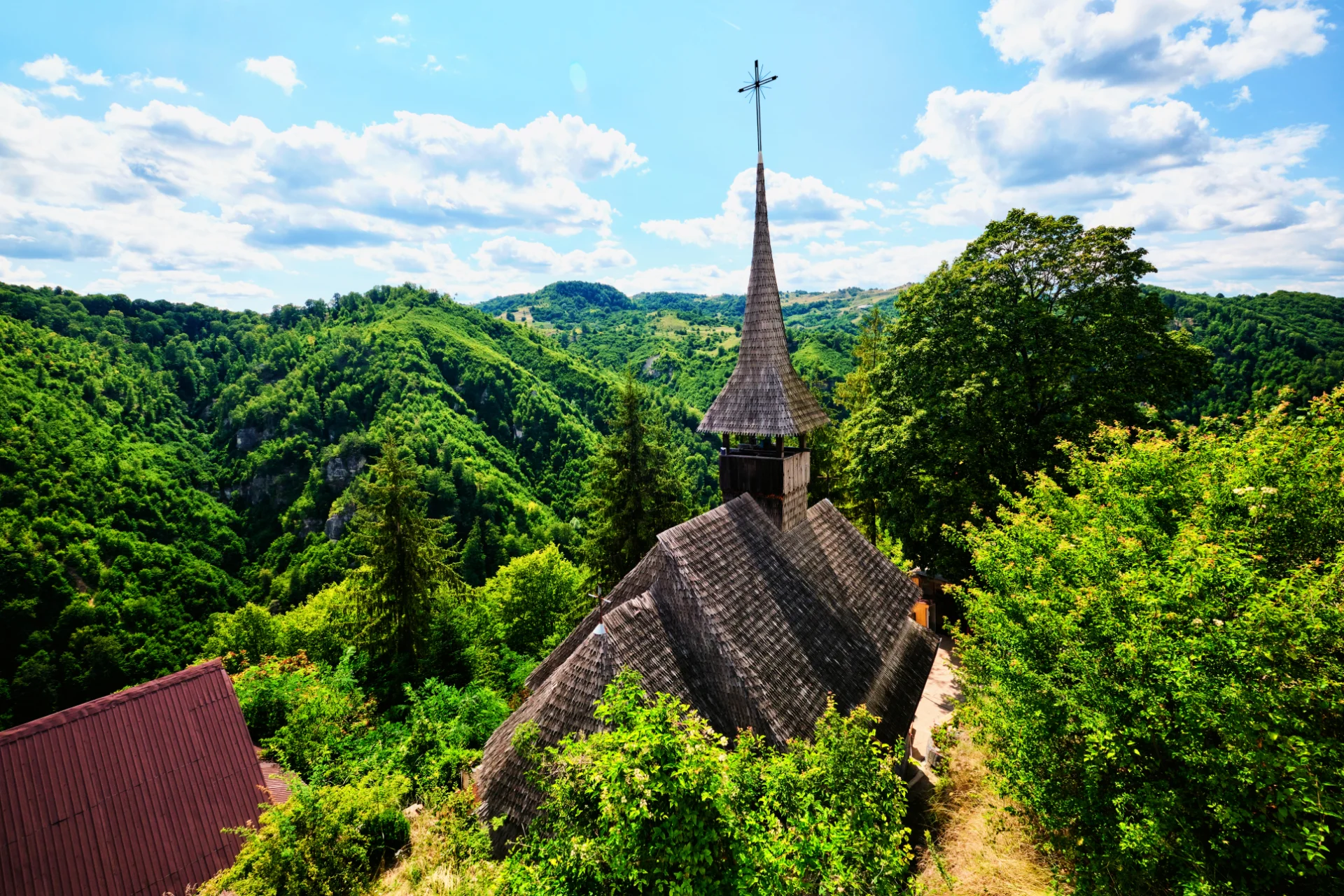
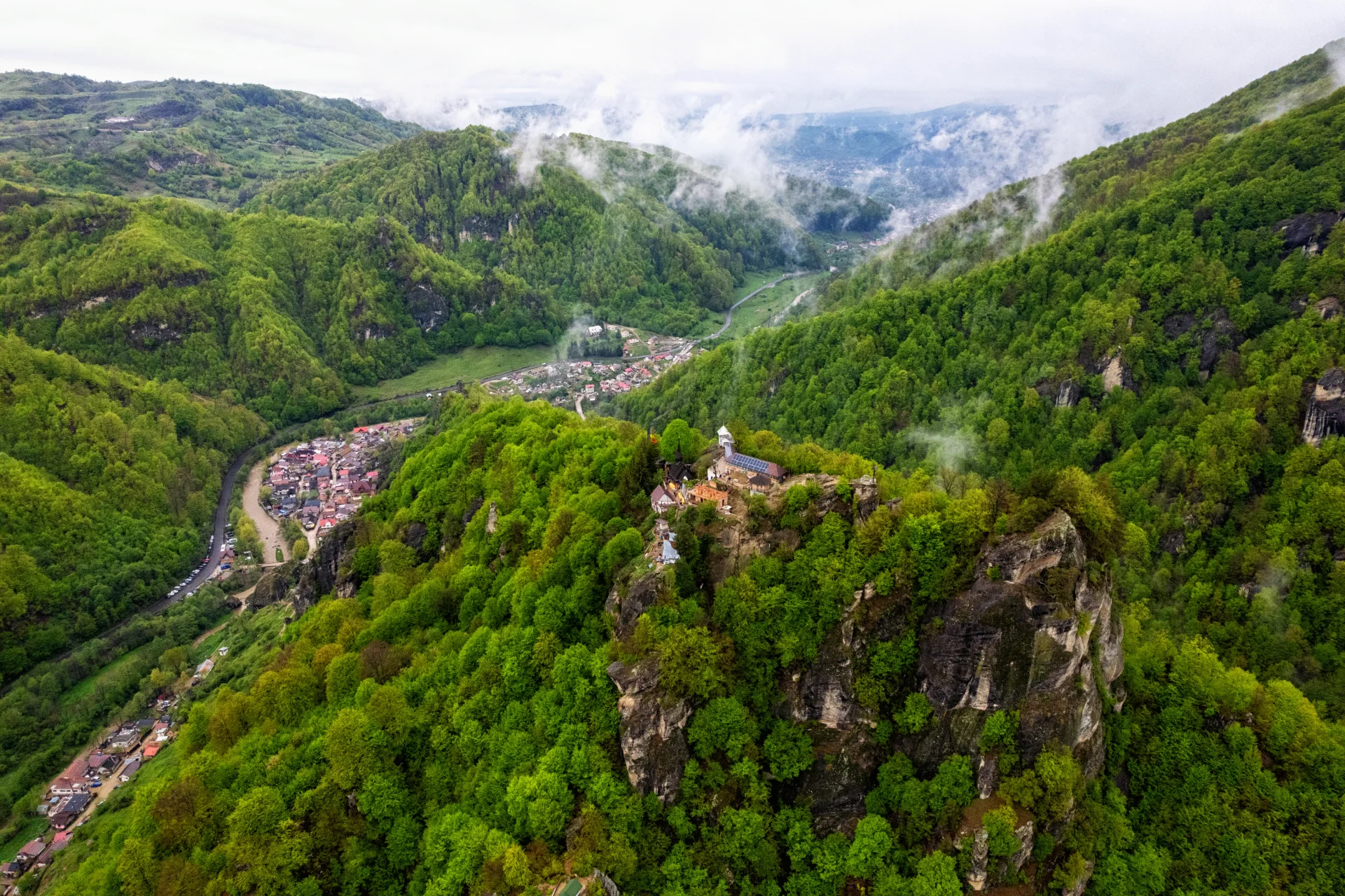
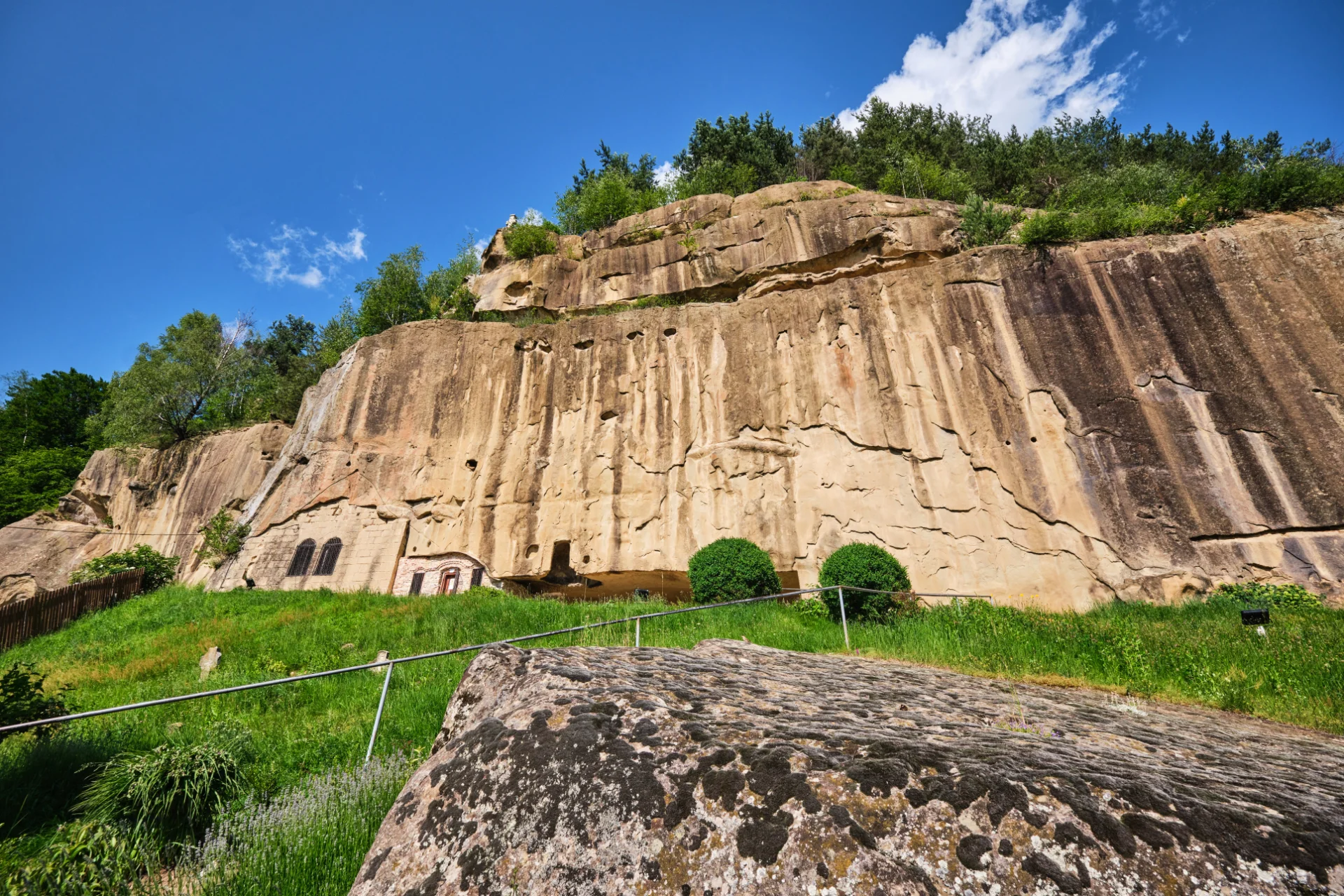
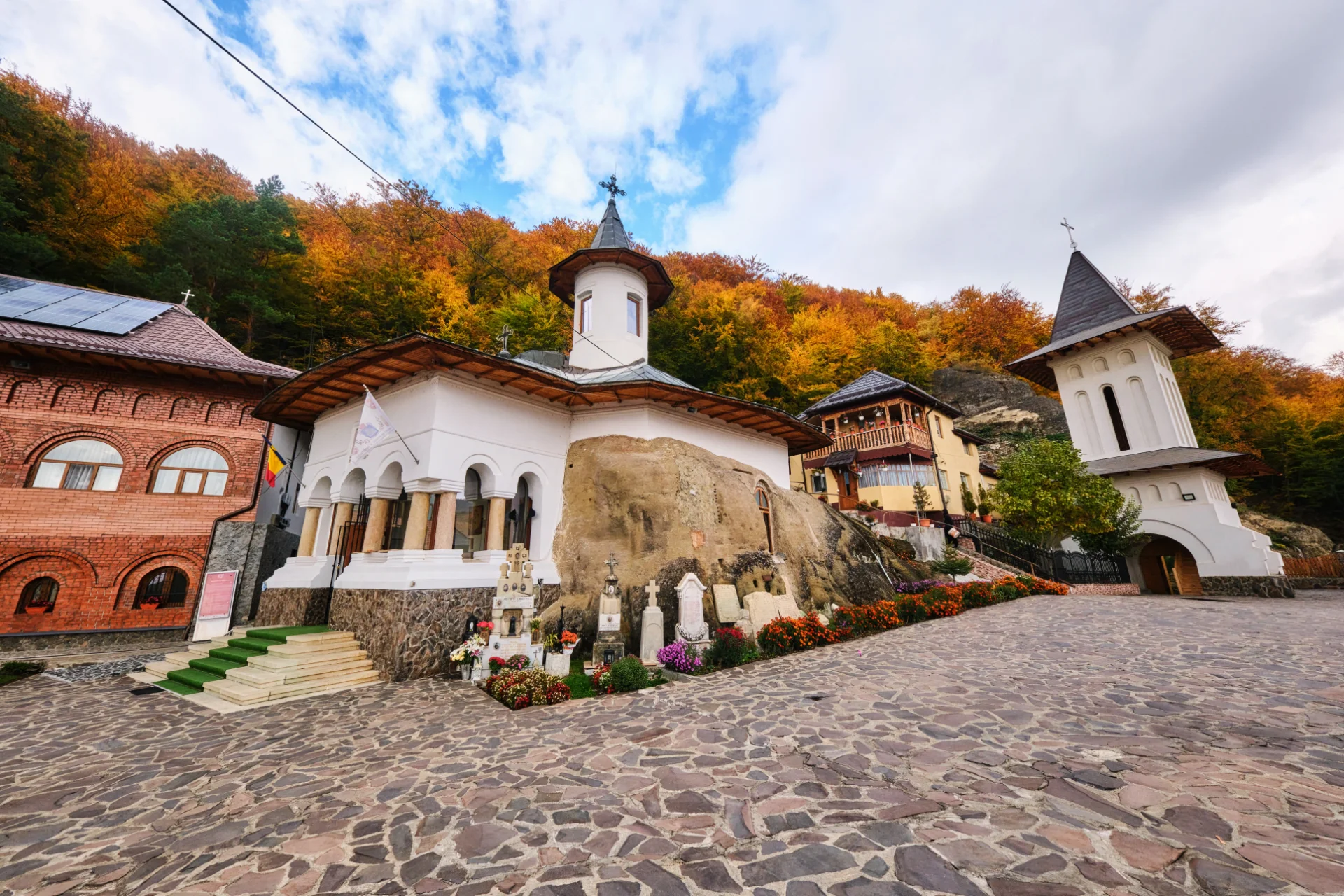
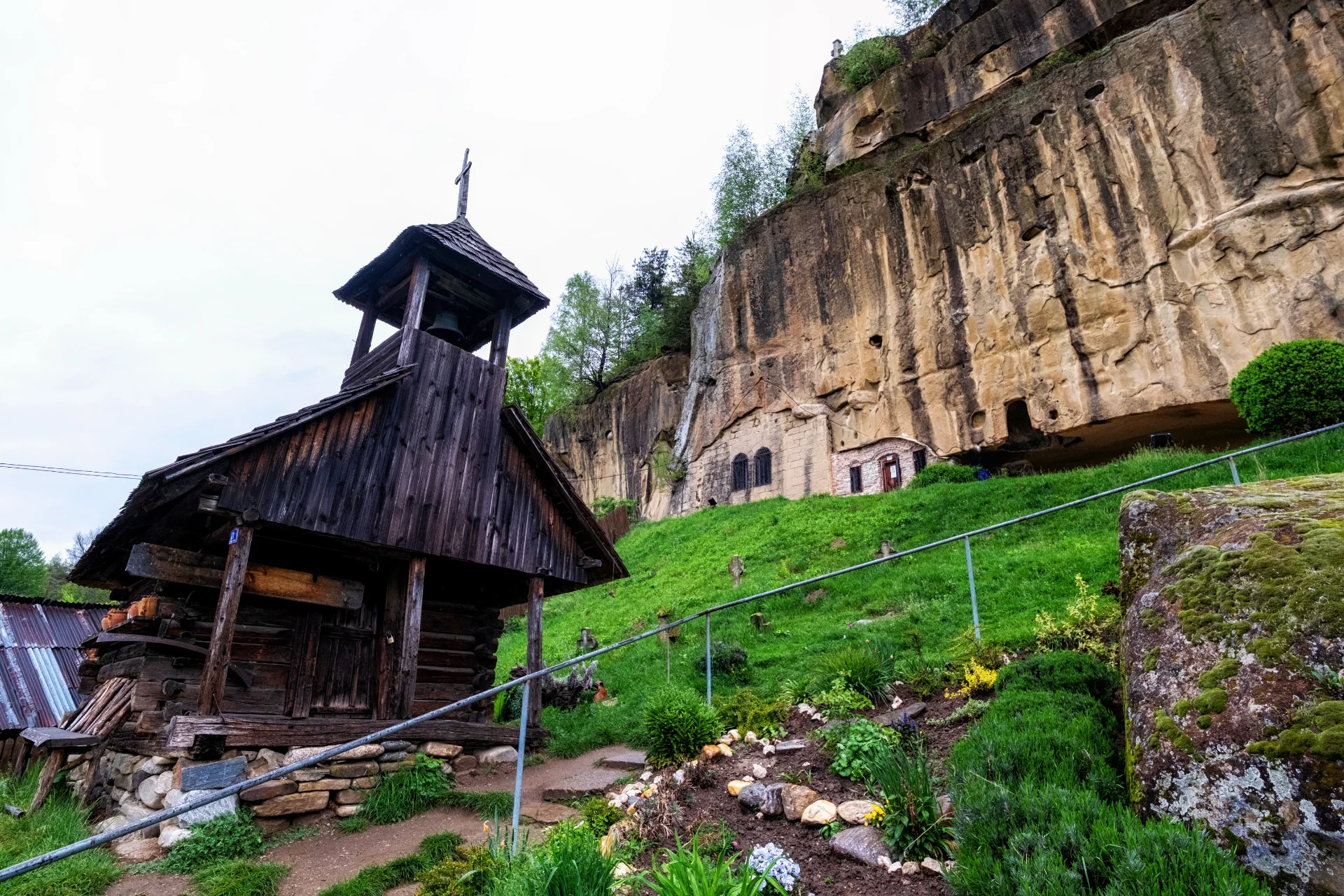
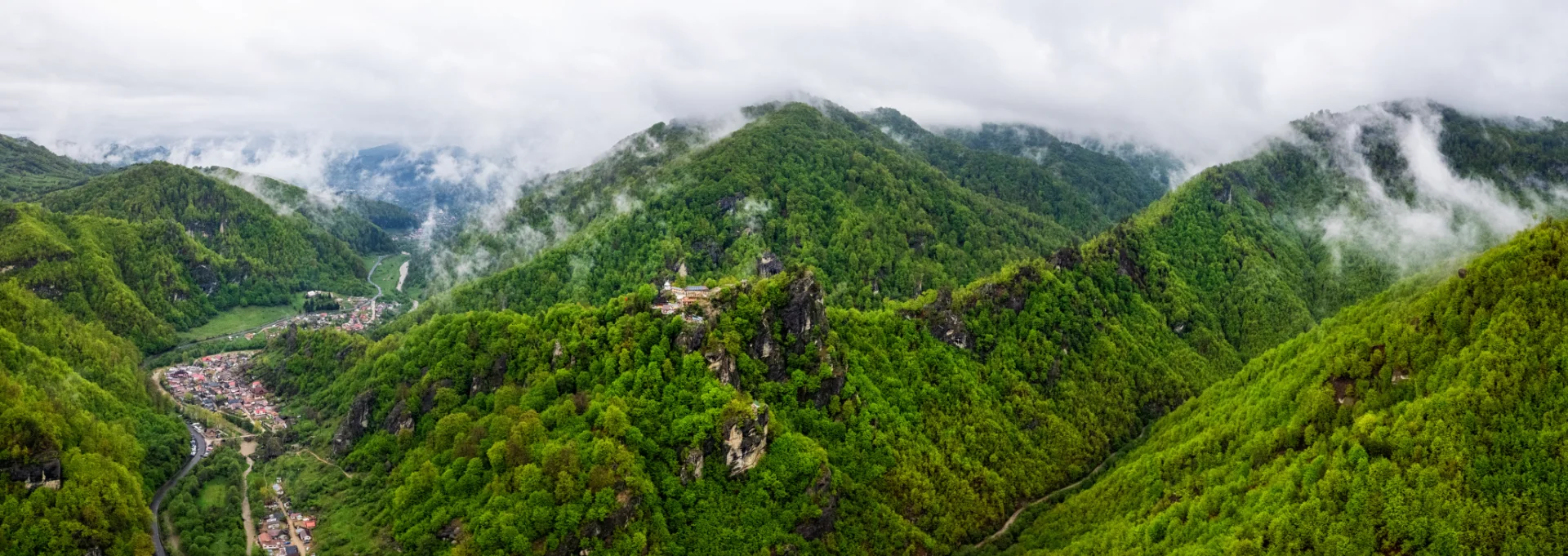
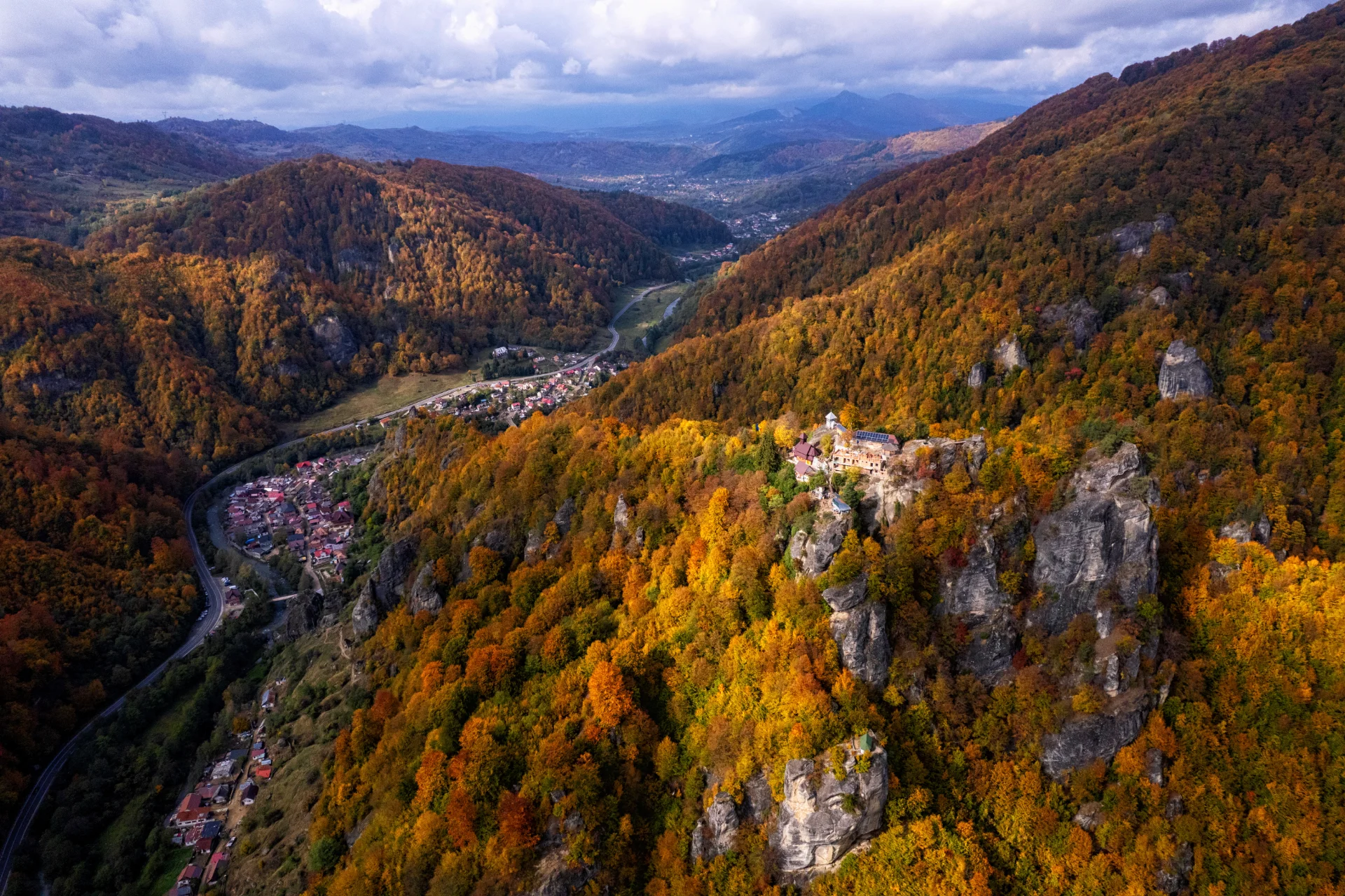
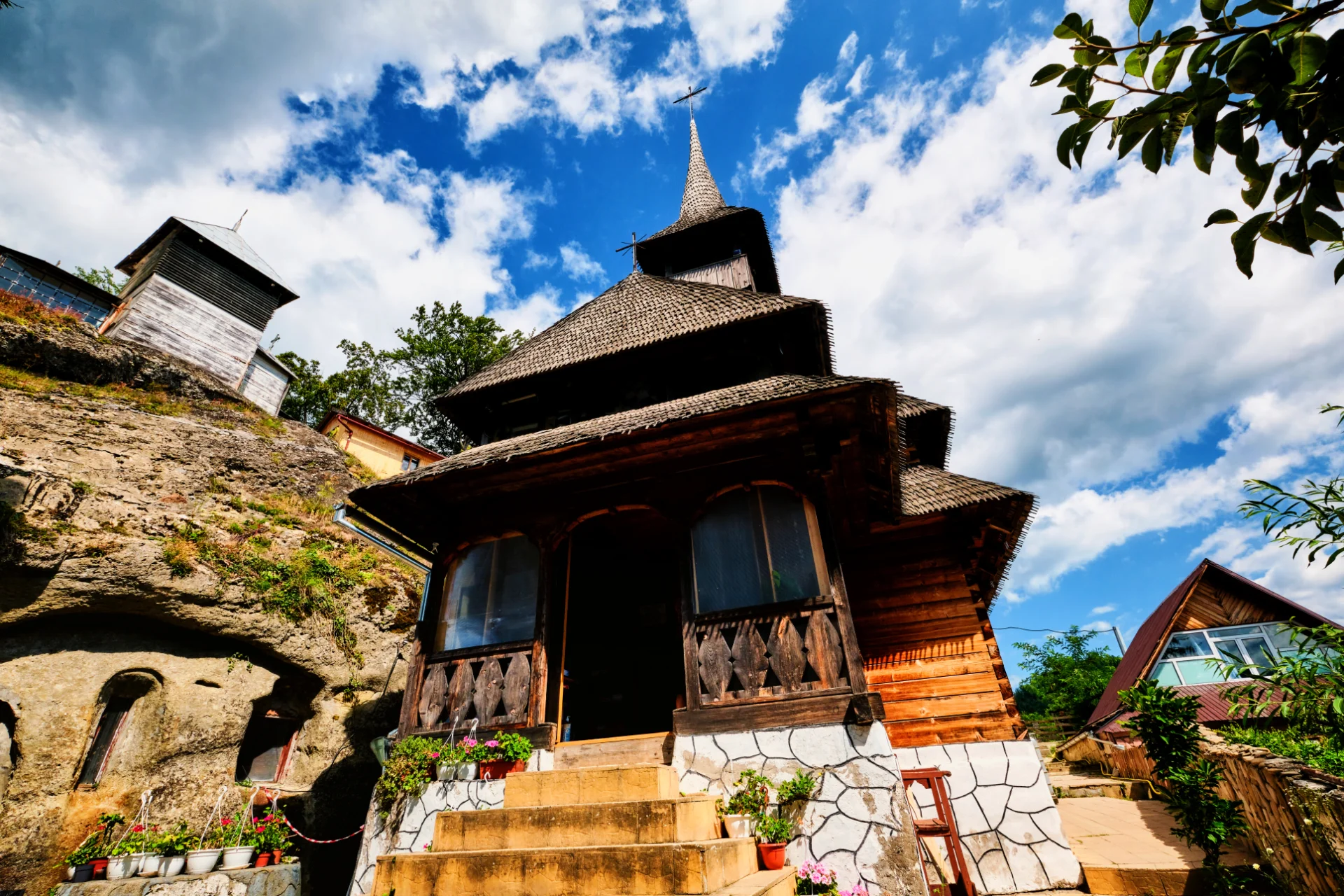
Before entering Câmpulung, we continue along the Dâmbovița valley to the south and after a few kilometers, we pass through a small gorge formed between the localities of Cetățeni and Cotenești. From a high cliff, we are greeted by one of the most picturesque monastic settlements in the country, part of a complex of three amazing cave churches, mysterious vestiges of a distant past in these lands. The Cetățuia Negru Vodă hermitage, also nicknamed the “Meteora of Romania”, is perched on an isolated cliff above the valley, at an altitude of almost 900 meters. Part of a small geological reserve, the cliff is surrounded by other peaks where caves dug by hermits known locally as “those who walk among the clouds” are hidden.
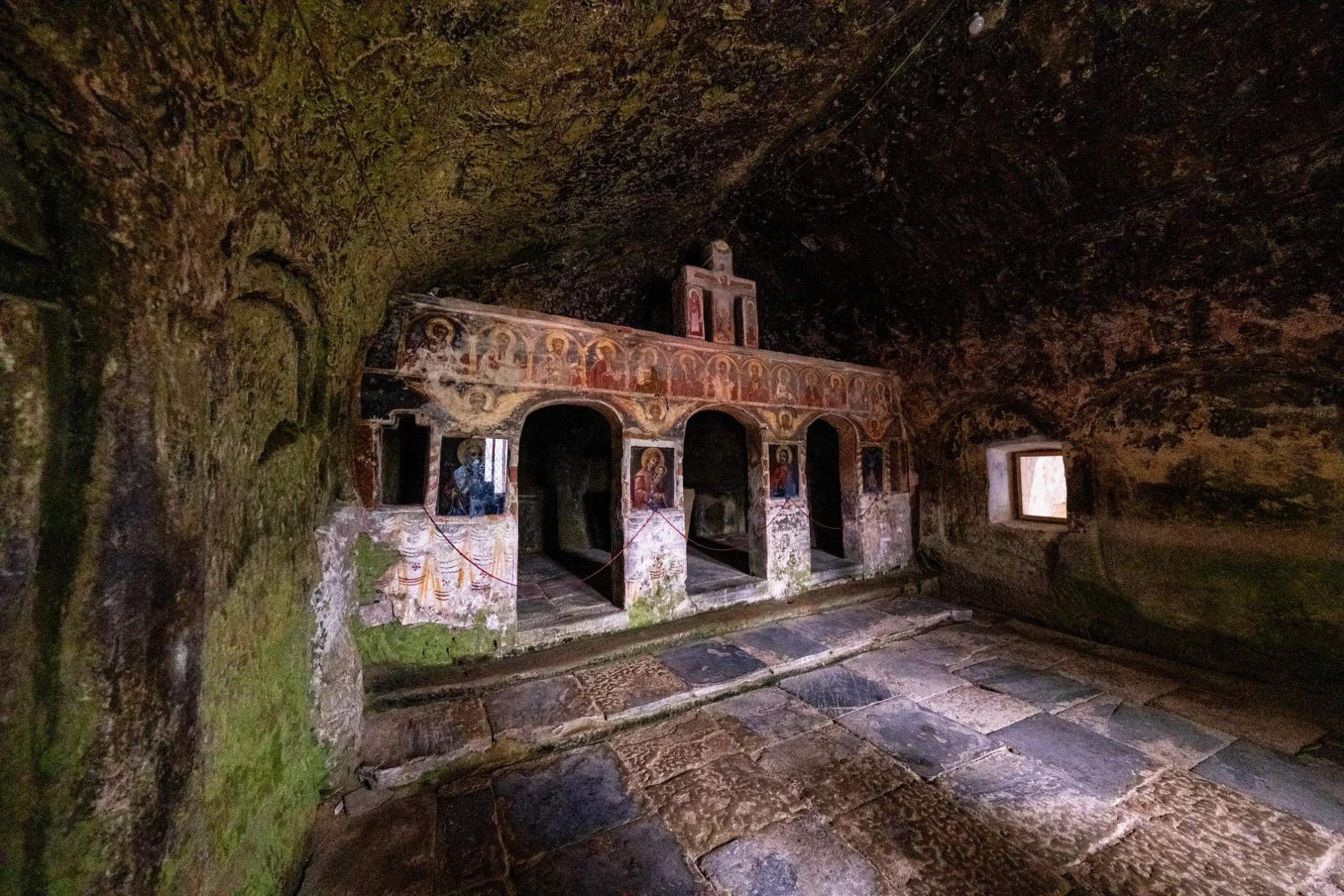
To get to the top, we climb a short but rather steep path, the route being dotted with crosses and icons. It is assumed that there was a Dacian fortification here, followed by an early fortress, which defended the road to the old capital of Câmpulung. Initially an isolated hermitage founded either by Negru Vodă or by his son Basarab I, the monastery includes two churches, the old one being dug directly into the rock, and the newer one being built of wood, in the Maramureș style. Over time, numerous rulers of Wallachia have also found refuge here, including Constantin Șerban, Vlad the Impaler, Michael the Brave, Constantin Brâncoveanu and others. In addition to the two churches and the monks’ cells, several other interesting places can be discovered near the monastery.
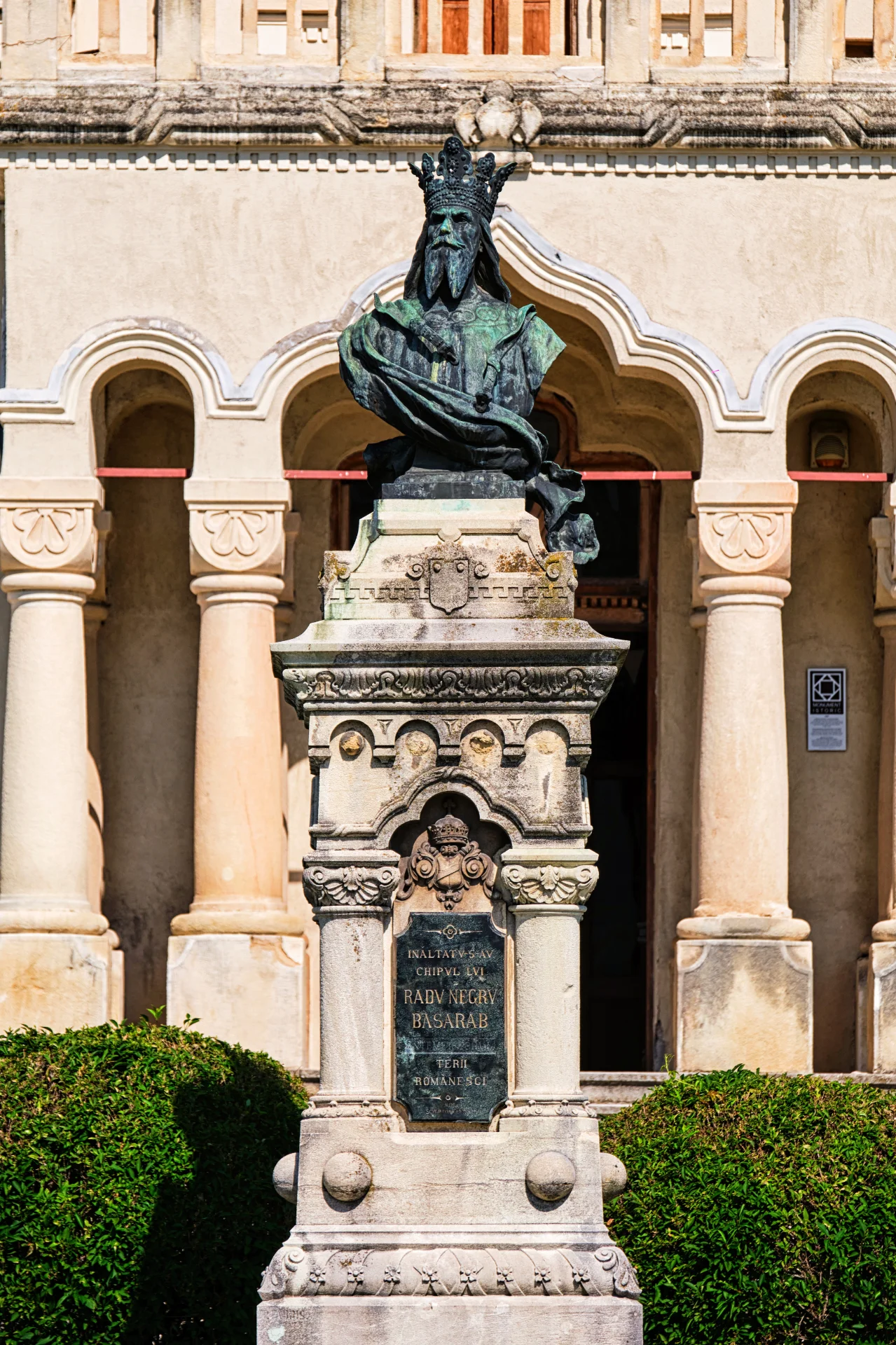
We turn north and enter the town of Câmpulung, a surprisingly interesting, if lesser-known, destination. Located on the Târgului River valley and surrounded by the high hills at the foot of the Iezer-Păpușa massif, Câmpulung has ancient historical roots, becoming a city as early as the 14th century. However, its beginnings are much earlier and are linked to the Saxon colonists who arrived in these lands from Transylvania or even the Teutonic Knights. Starting in 1330, Câmpulung was chosen as the princely residence by Basarab I, the first ruler of Wallachia. It fulfilled this role for approximately 40 years, after which the capital was moved to Curtea de Argeș, but it continued to represent a temporary residence of the rulers in the following centuries.
Archaeological traces of the princely court at Câmpulung were discovered within the Negru Vodă monastery, and the characteristics of the remains demonstrate its development and special importance. The city continued to be an important economic, commercial and cultural center throughout the medieval period, benefiting from its location along the most traveled road between Wallachia and Transylvania, through the Rucăr-Bran corridor. One of the first and most important printing houses in the country operated here, and it was also the site of some of the oldest schools. In the modern era, although it has lost its importance, Câmpulung still preserves historical and architectural treasures from the centuries of its flourishing.
Search for Lodging in Câmpulung and the land of Muscel with Booking.com!
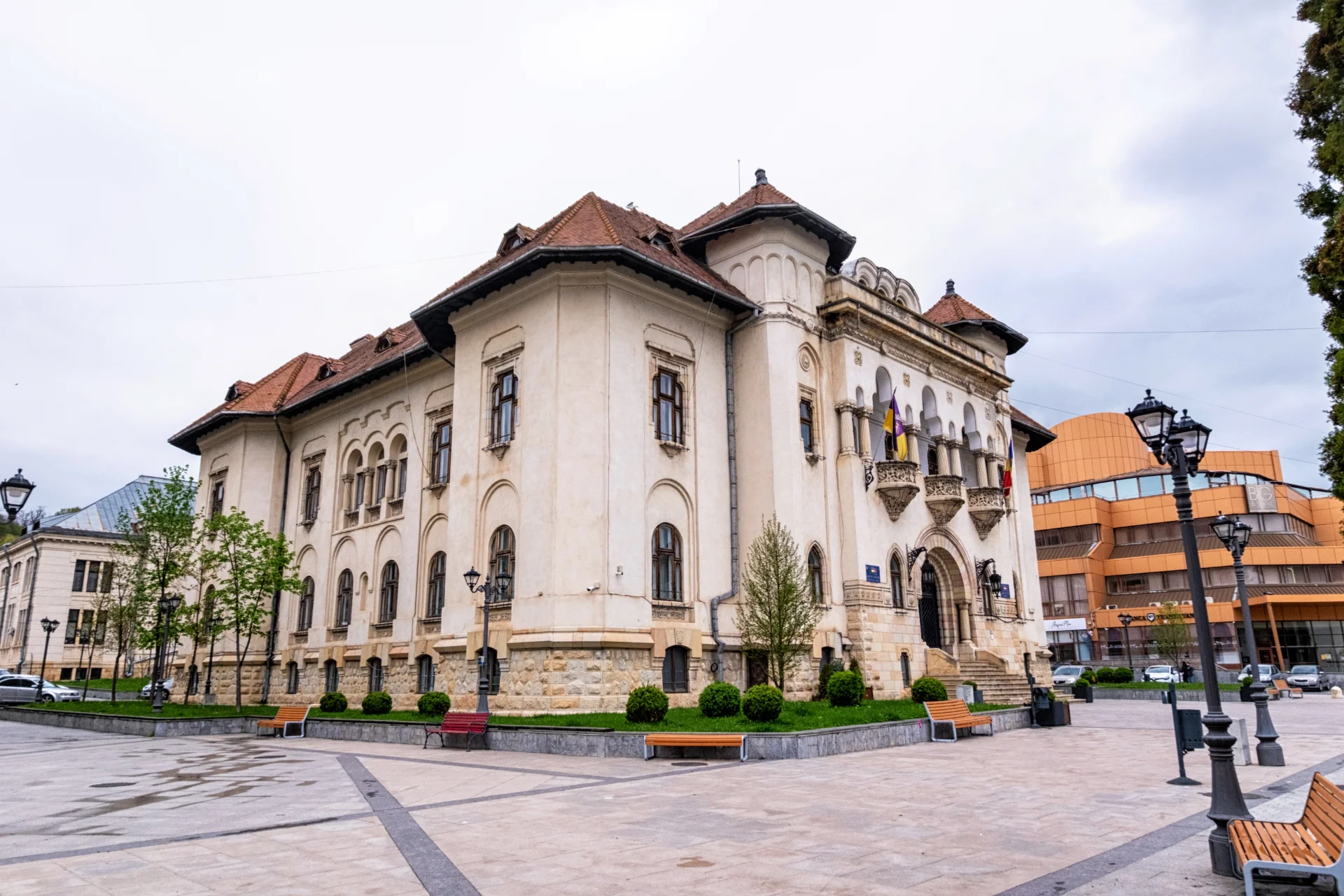
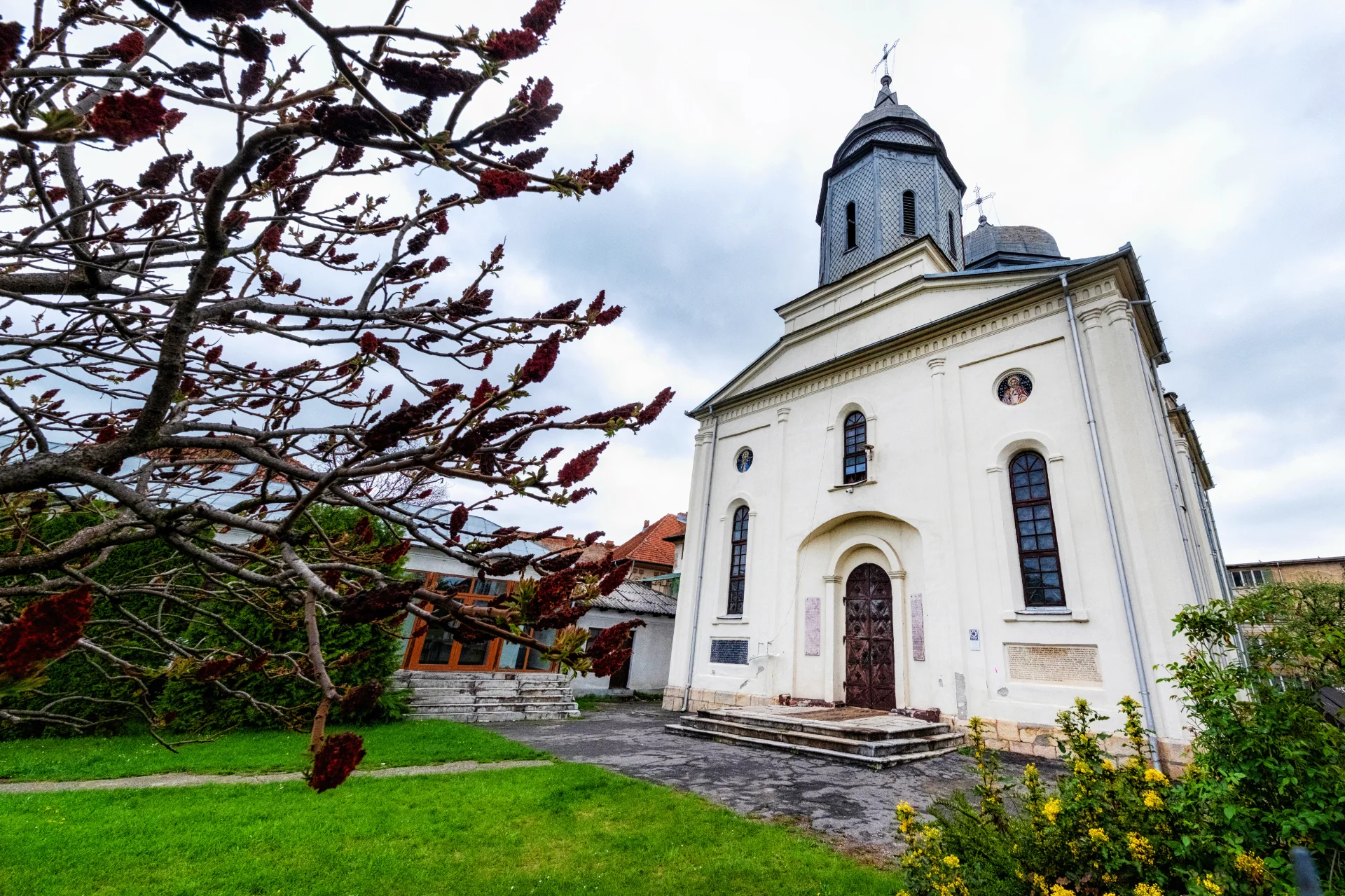
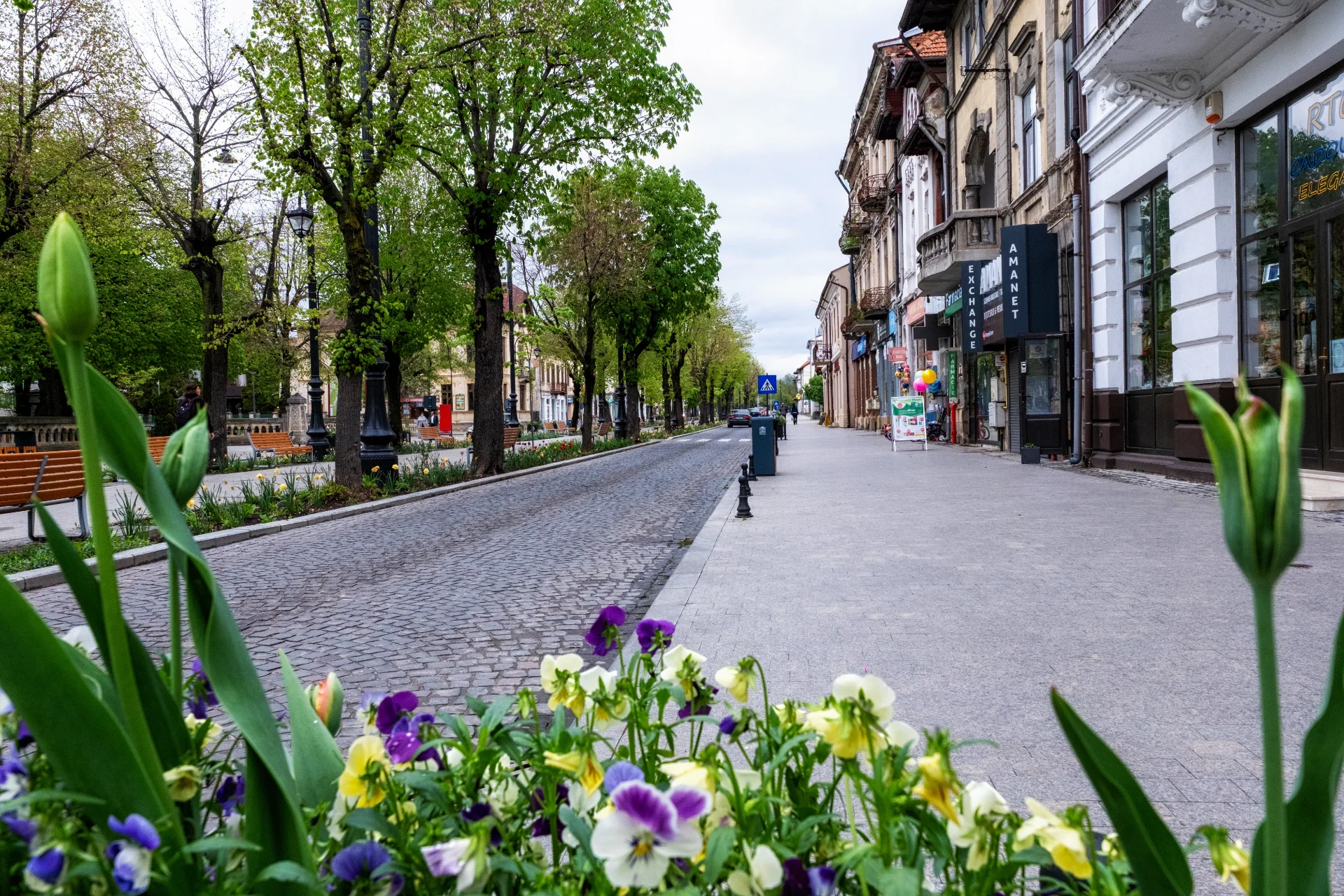
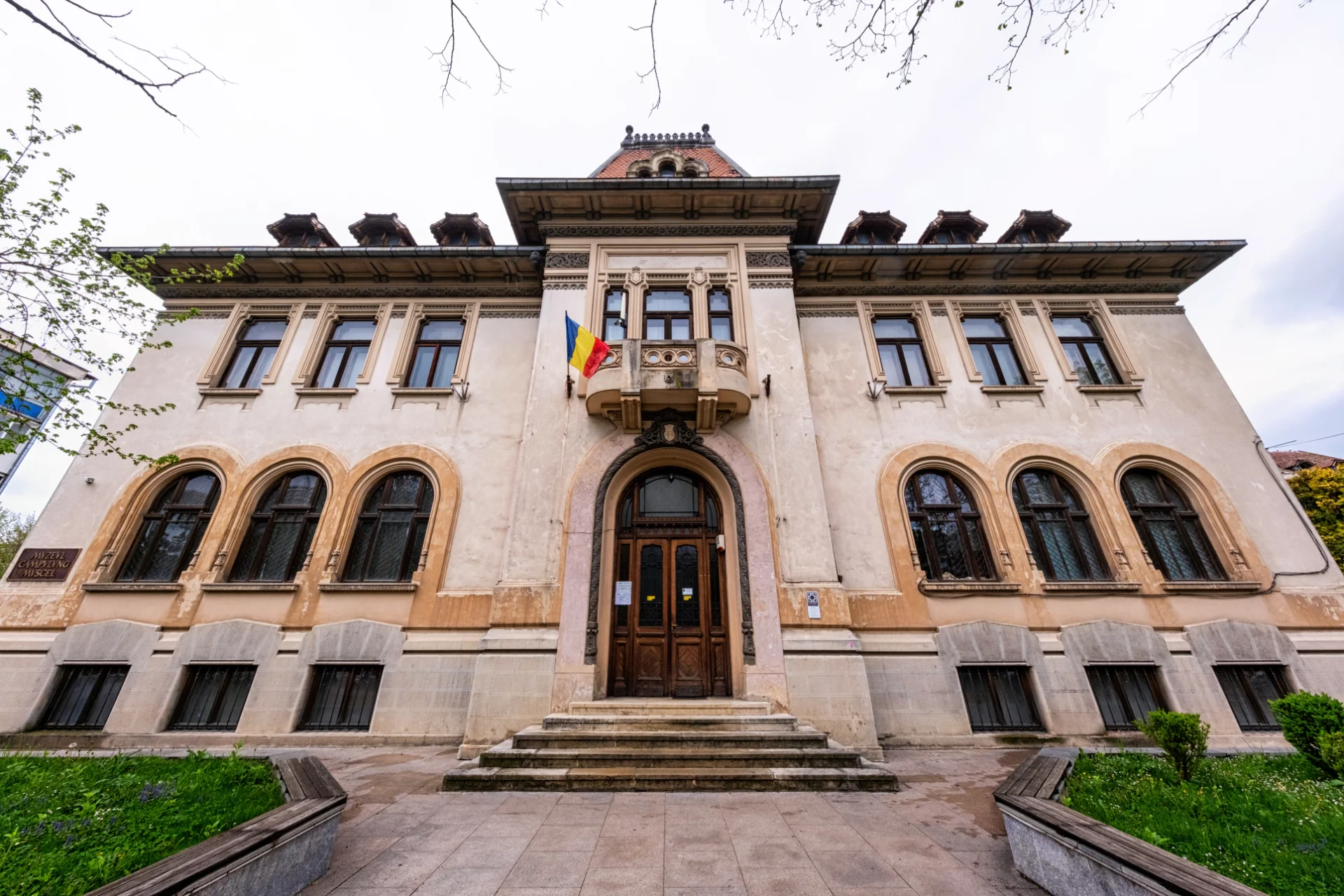
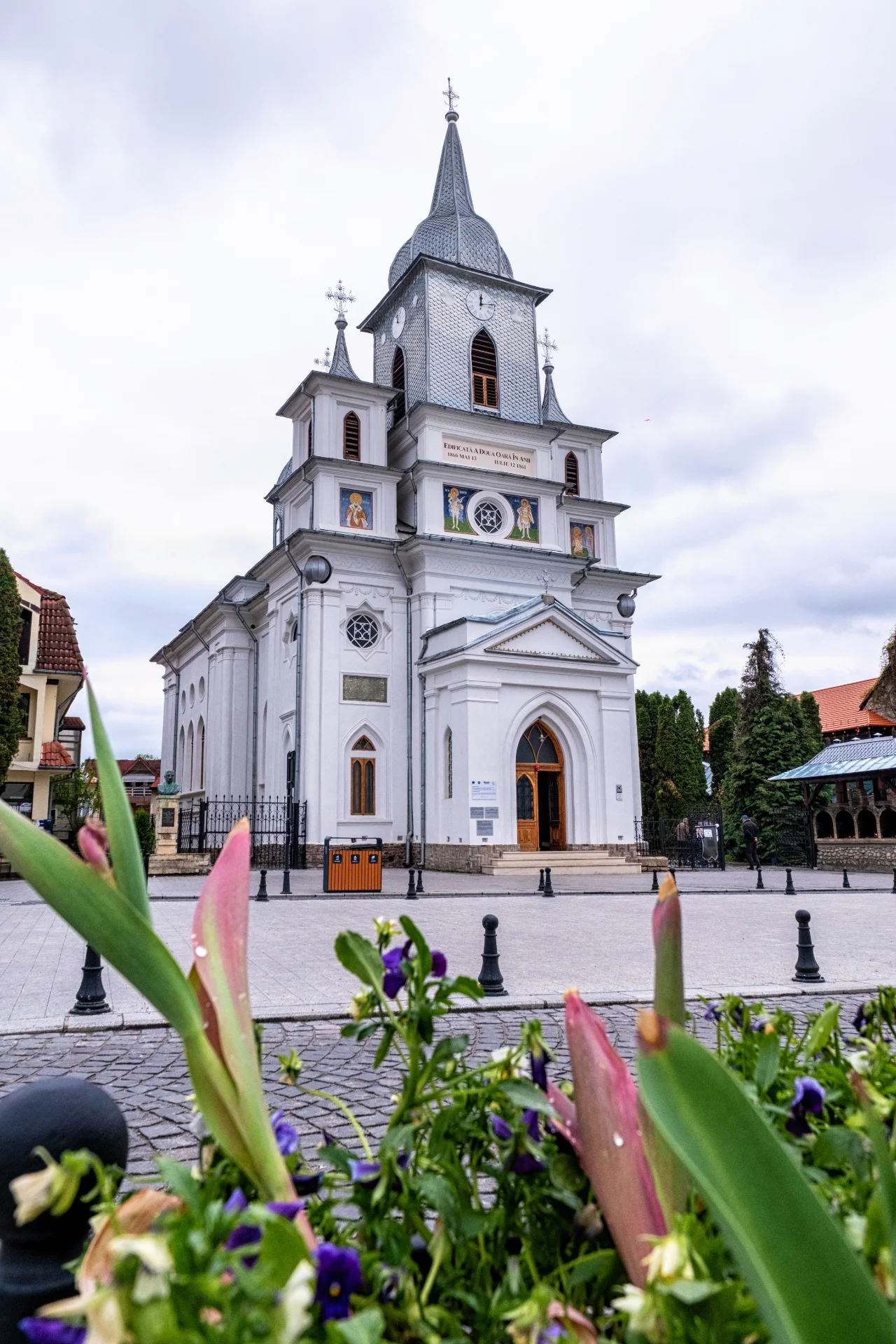
Less well-known as a tourist destination, the town contains an impressive number of monuments, constituting a true urban site of exceptional value, known as the “Historic Town of Campulung”. We begin our exploration of this fascinating place in the center, where we can see the superb building of the City Hall, a neo-Romanian monument from 1934, the former prefecture of the now-defunct Muscel County. Nearby, we can admire the Tribunal building (1900-1906) and visit the History Museum, housed in another neo-Romanian monument. Continuing south along the charming Negru Vodă Street, we encounter other interesting buildings and monuments, including the “Tudor Mușatescu” Cultural House, the “Sfântul Nicolae” Church, the Old Post Office or the Merci Public Garden.
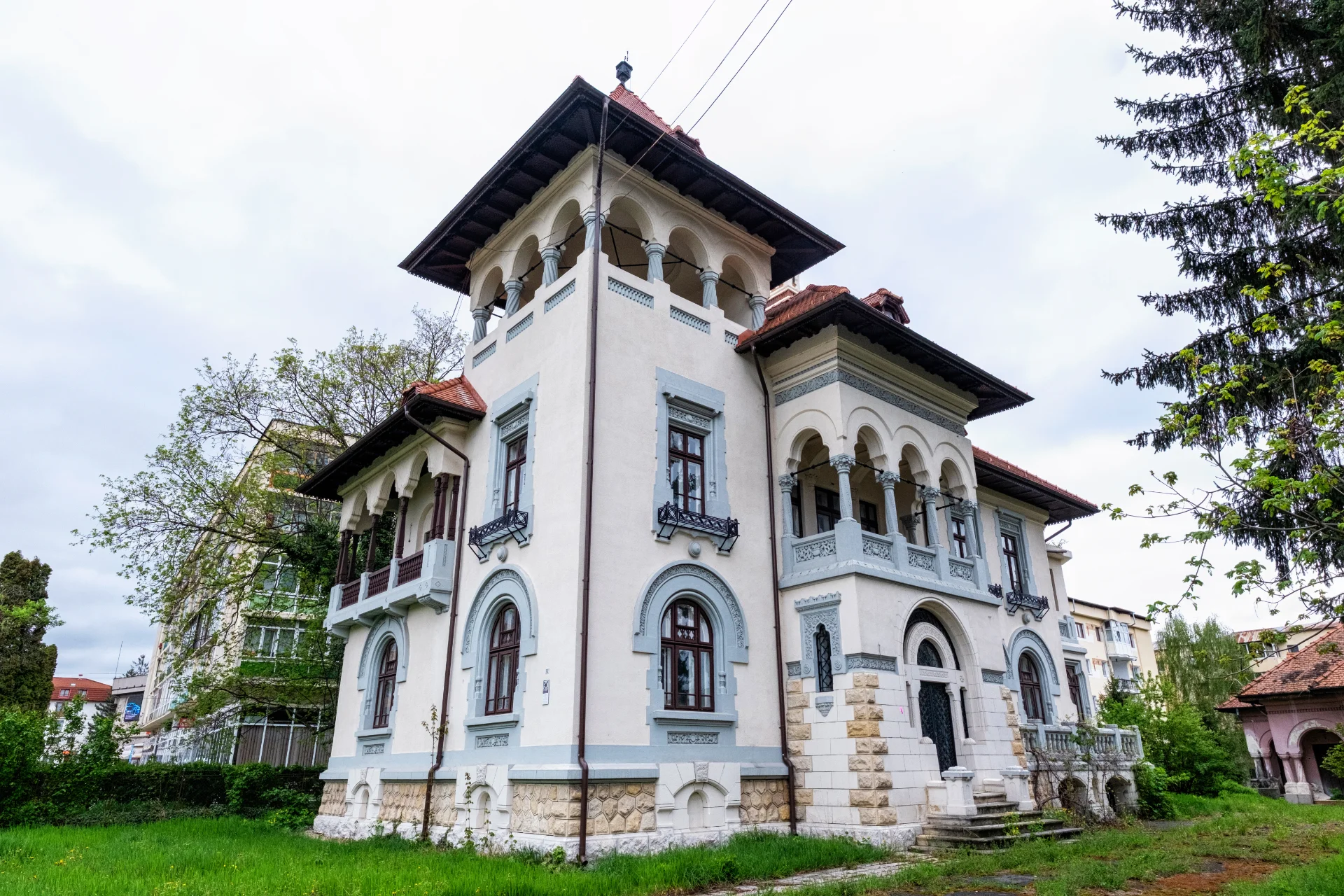
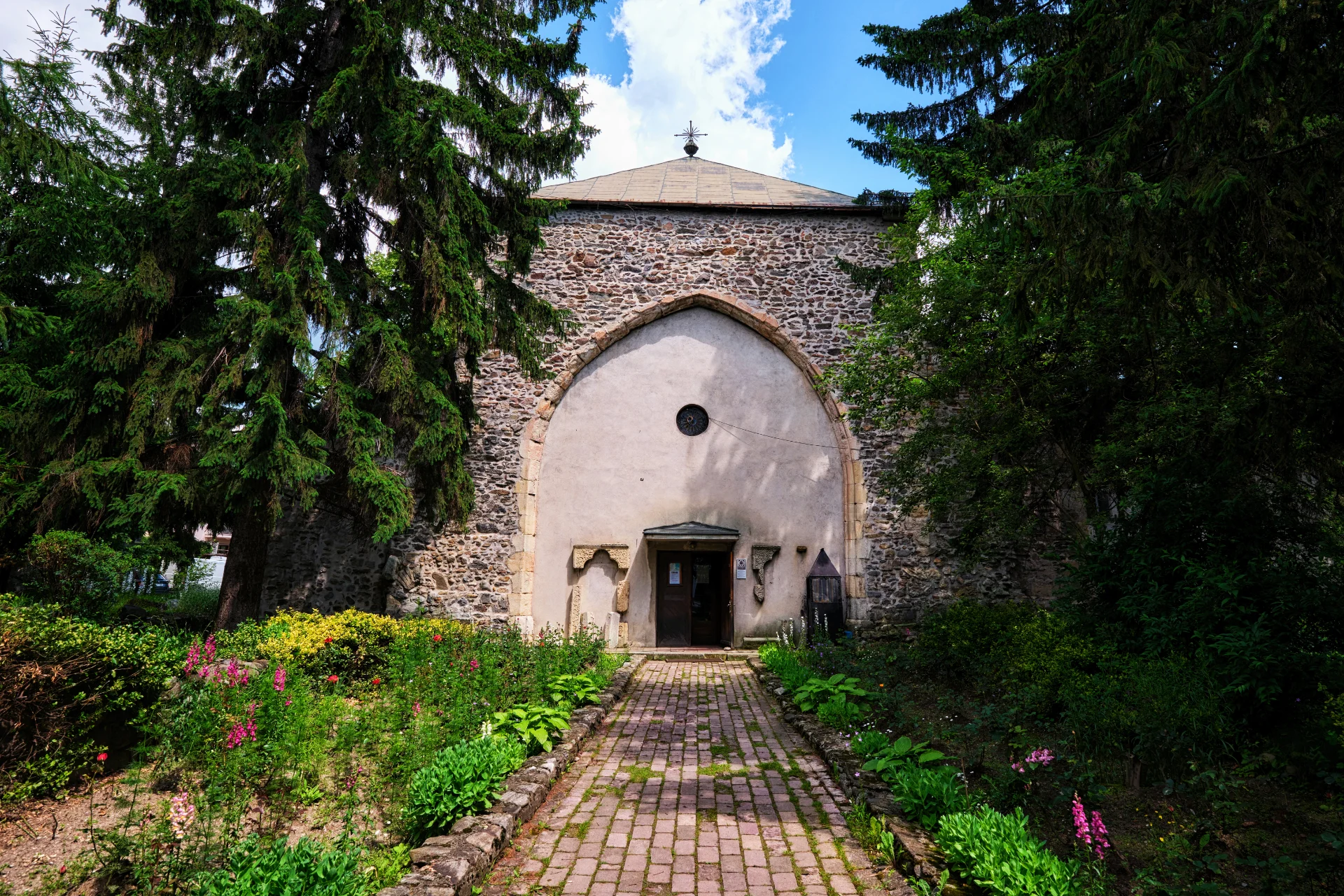
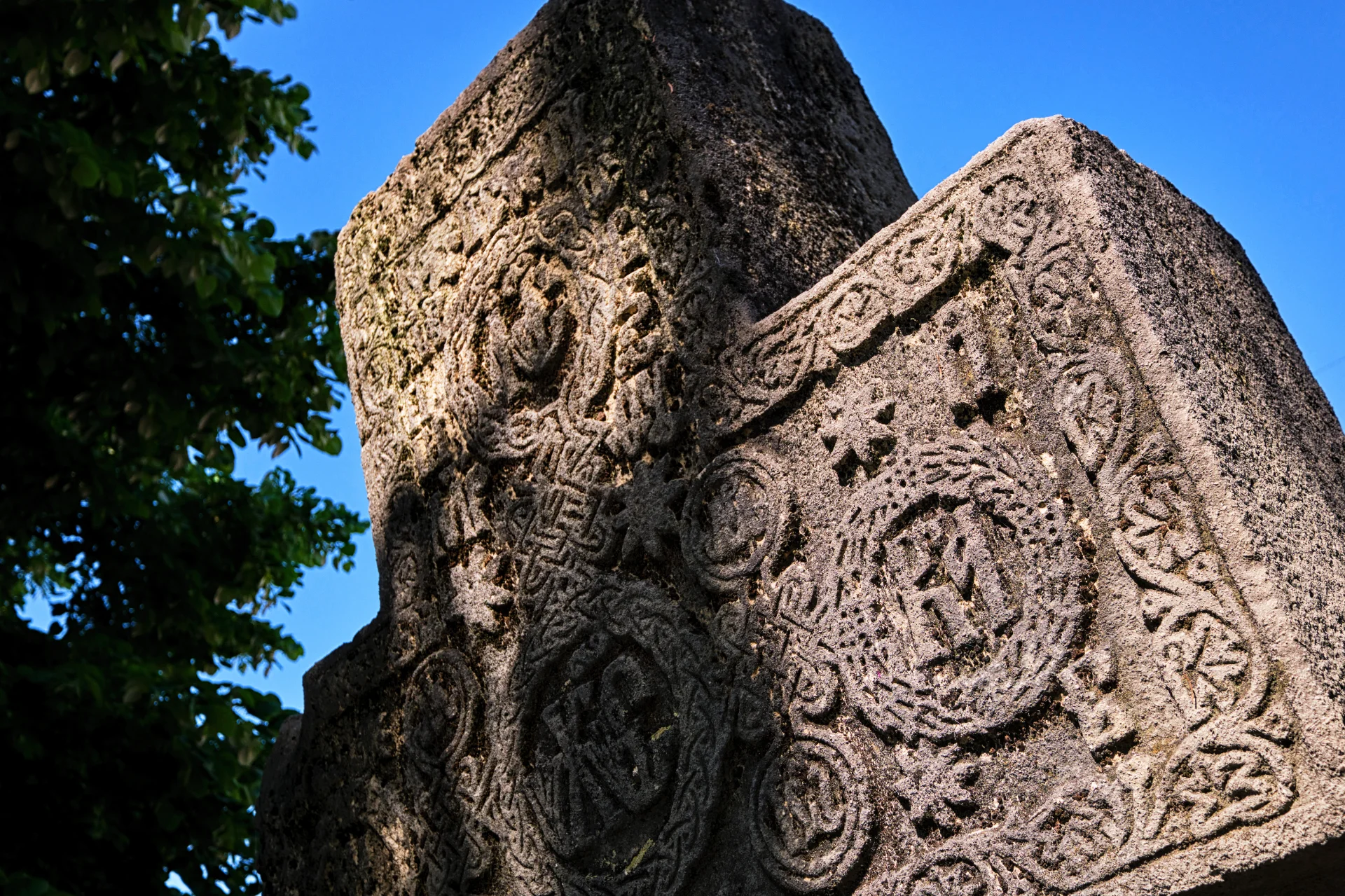
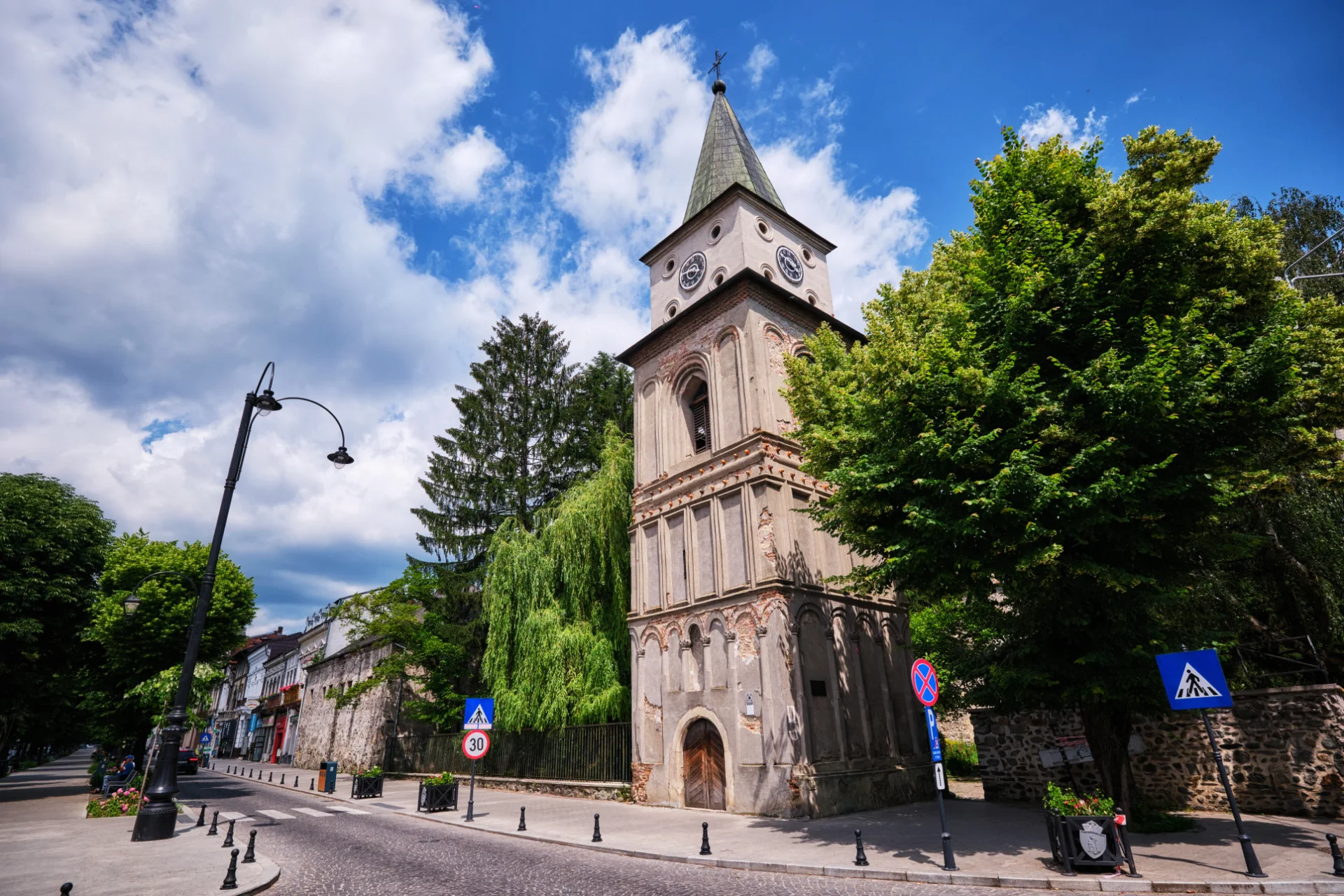
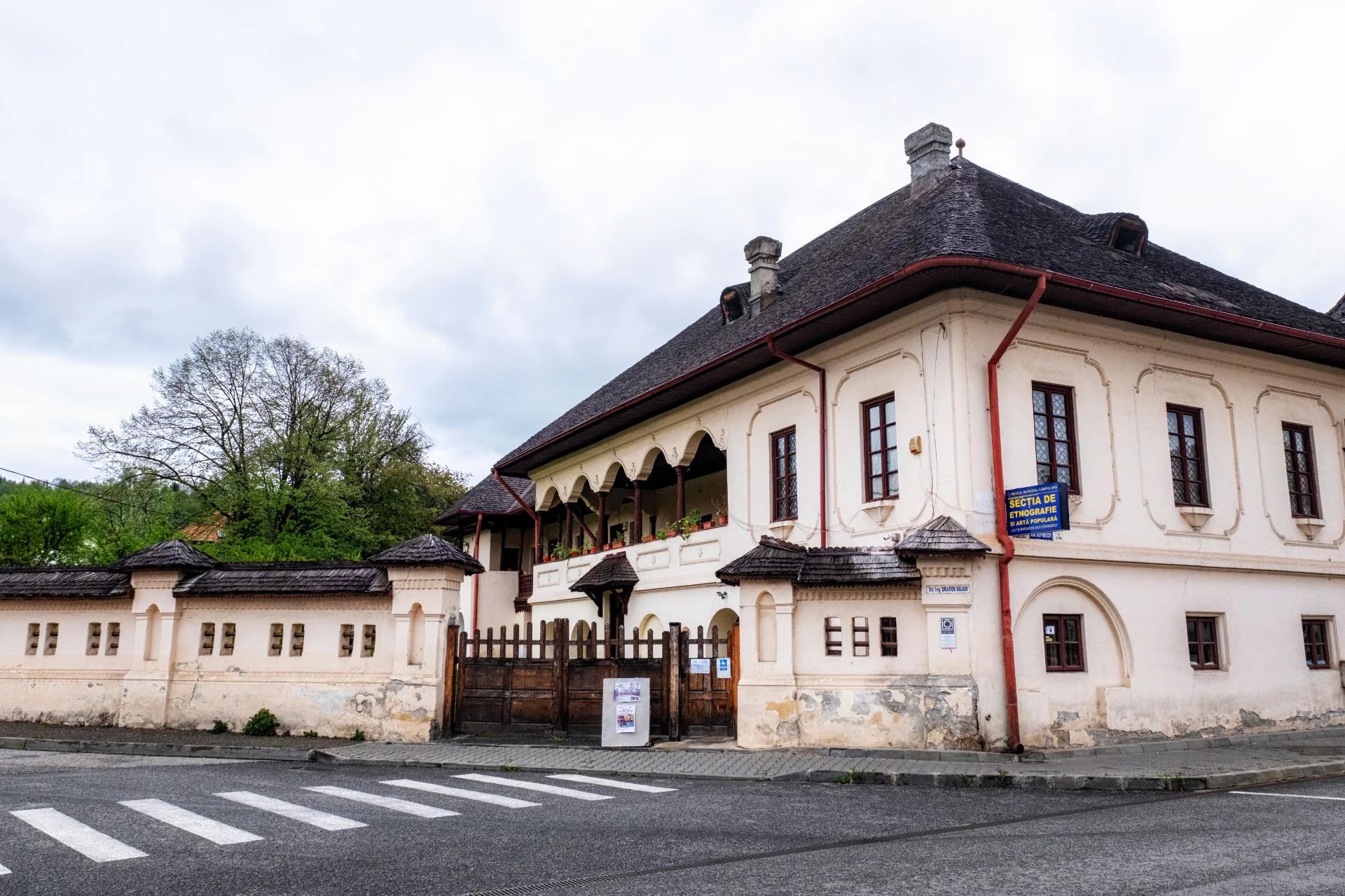
In the town square we discover an old stone cross, known as the Oath Cross, which dates back to 1674 and is a unique monument in its purpose and characteristics. Nearby we also visit the ensemble of the Catholic church “Saint Jacob”, known locally as the Barași Complex. It includes the choir and ruins of the first Gothic church (13th century), as well as the parish house, the bell tower and other structures. The church was built by the first Saxon settlers at the end of the 13th century and contains the tomb of Count Laurențiu, on whose slab is the first mention of the city as Longo Campo, representing the oldest epigraphic document in Latin in Wallachia. Other places we can admire in Câmpulung include the Museum of Ethnography and Folk Art (Gică Ștefănescu villa), the Tribunal, the Athenaeum (today the Protoieria), the Crețulescu baths complex, the Golescu villa complex, the Sandu Rosetti villa, the “Sfântul Ilie” church, the Flămânda (Miresei) church and dozens of other old houses and buildings.
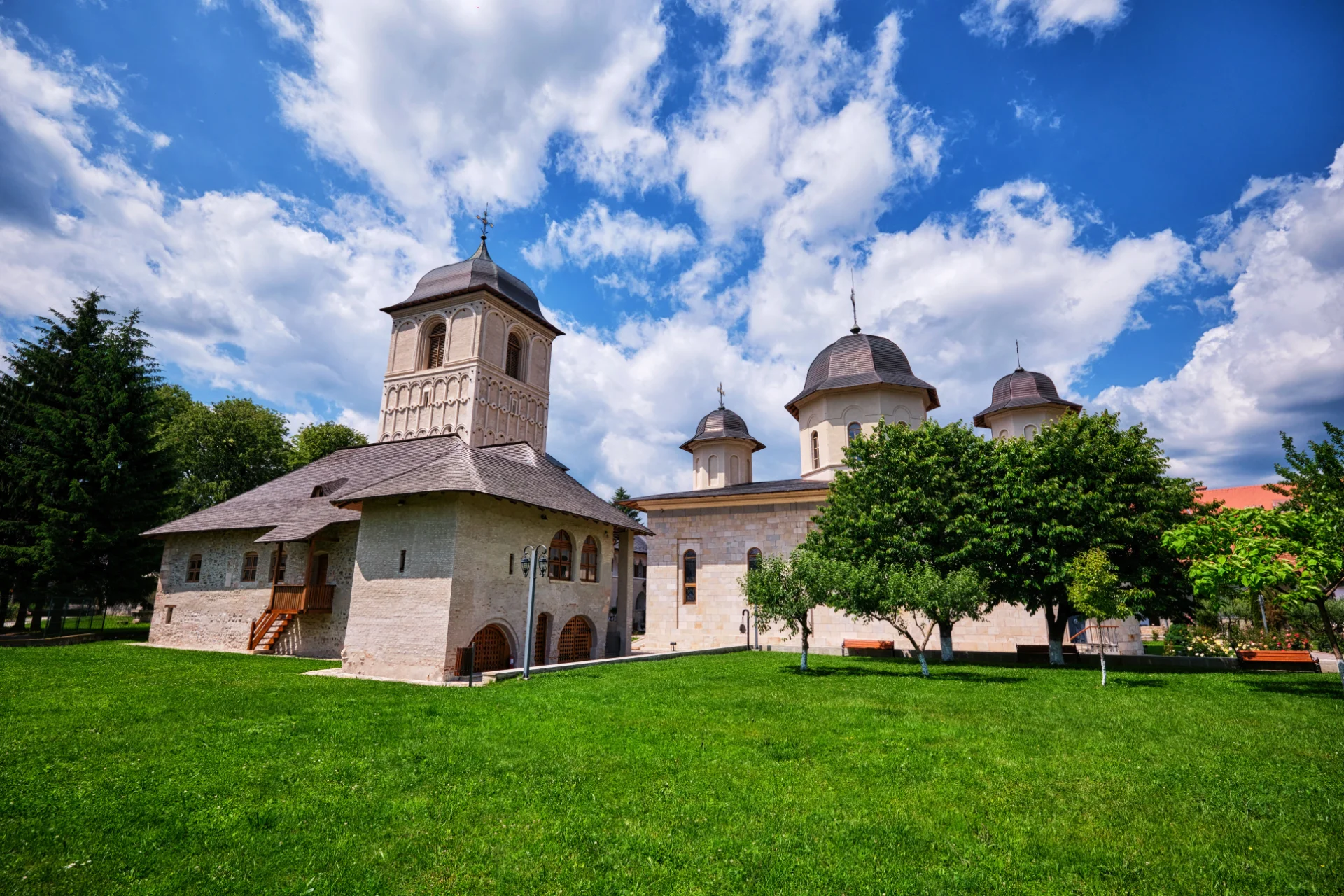
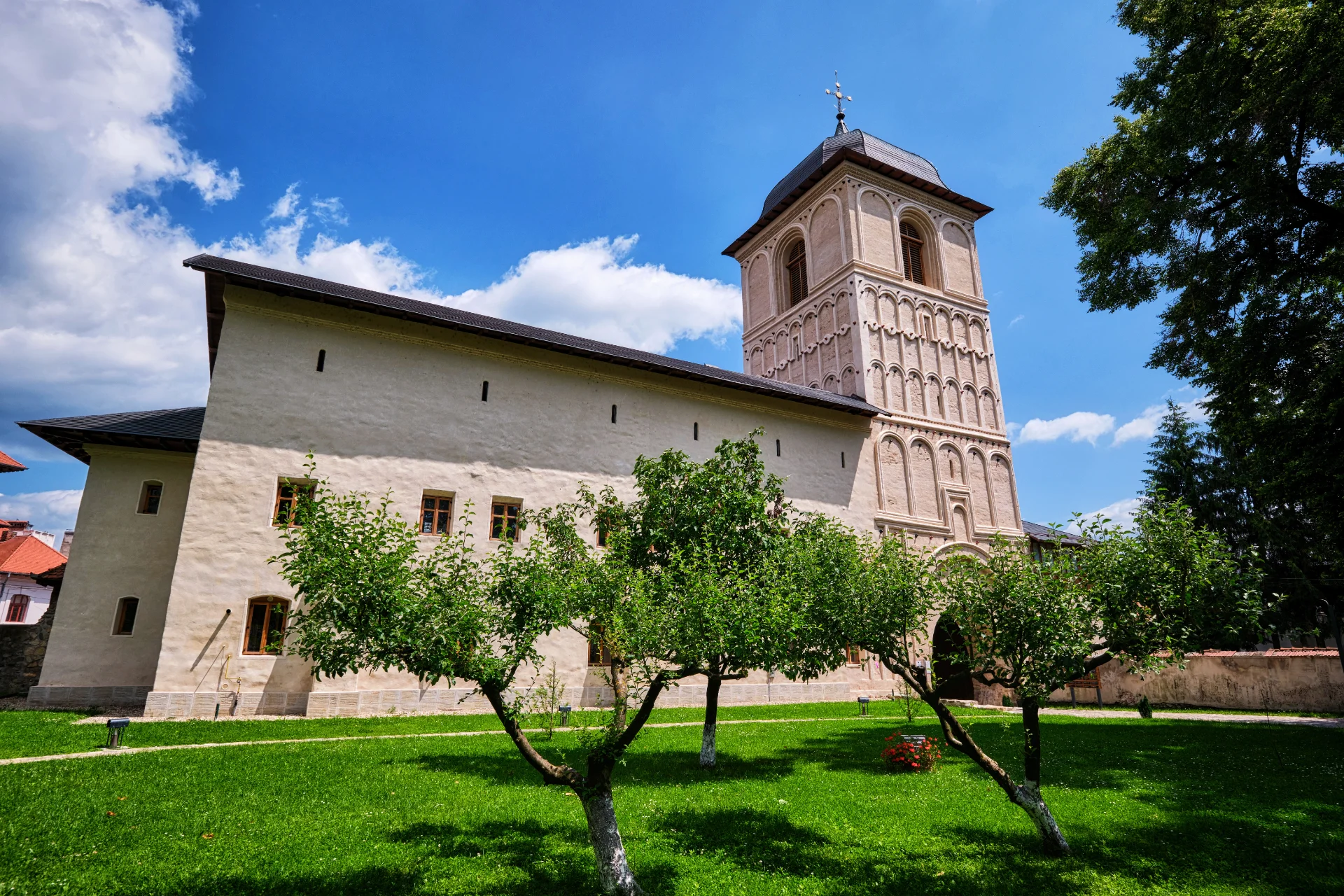
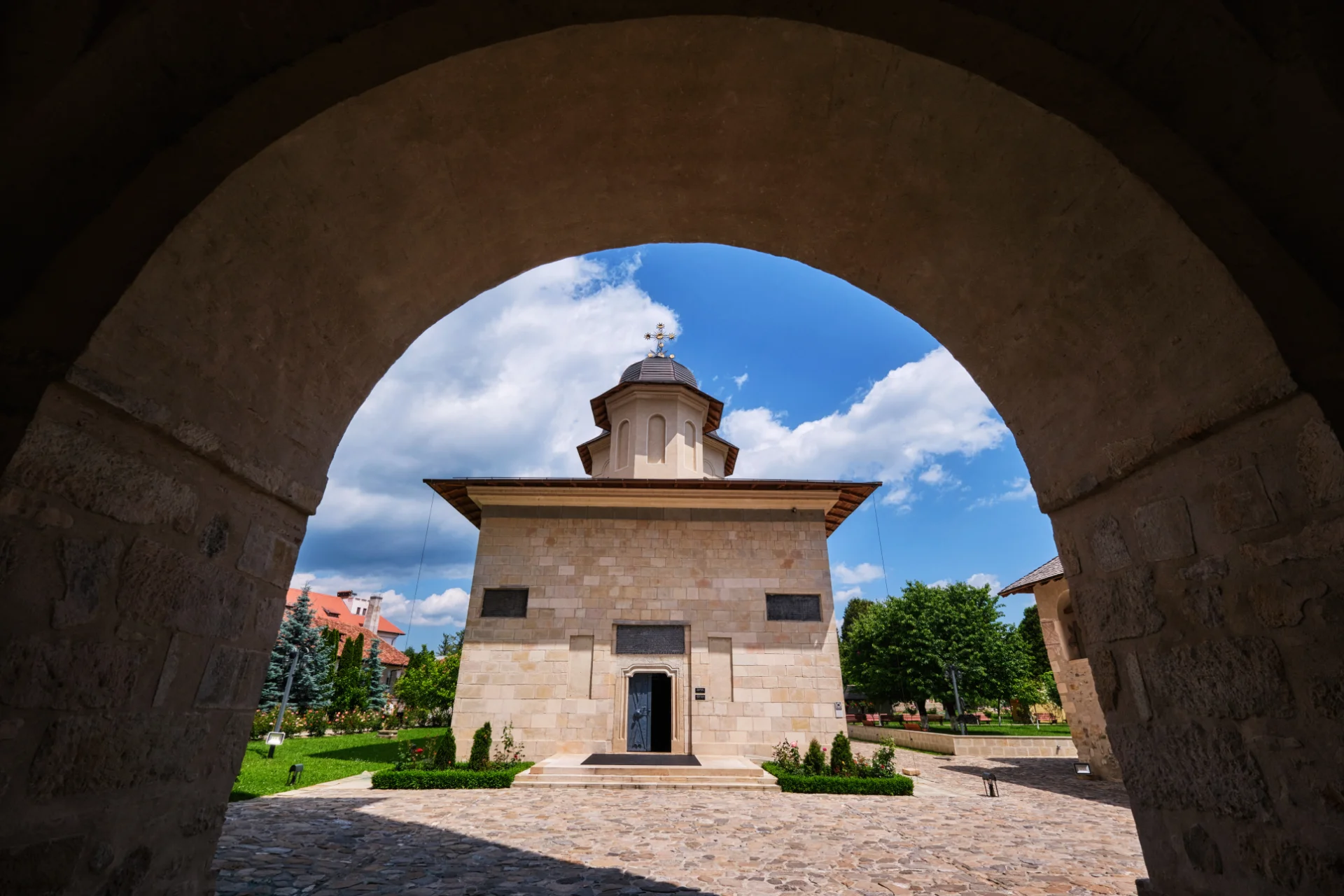
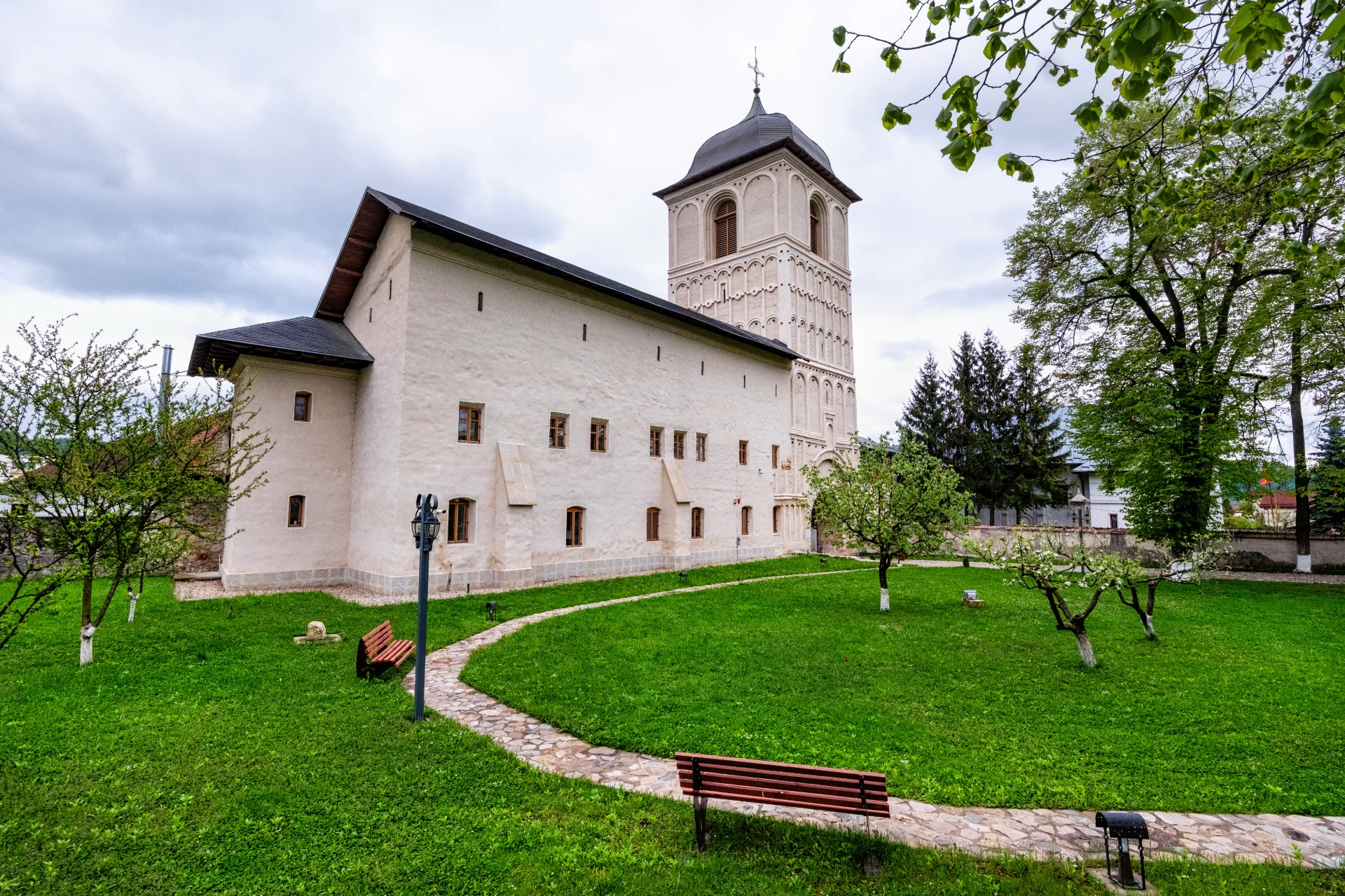
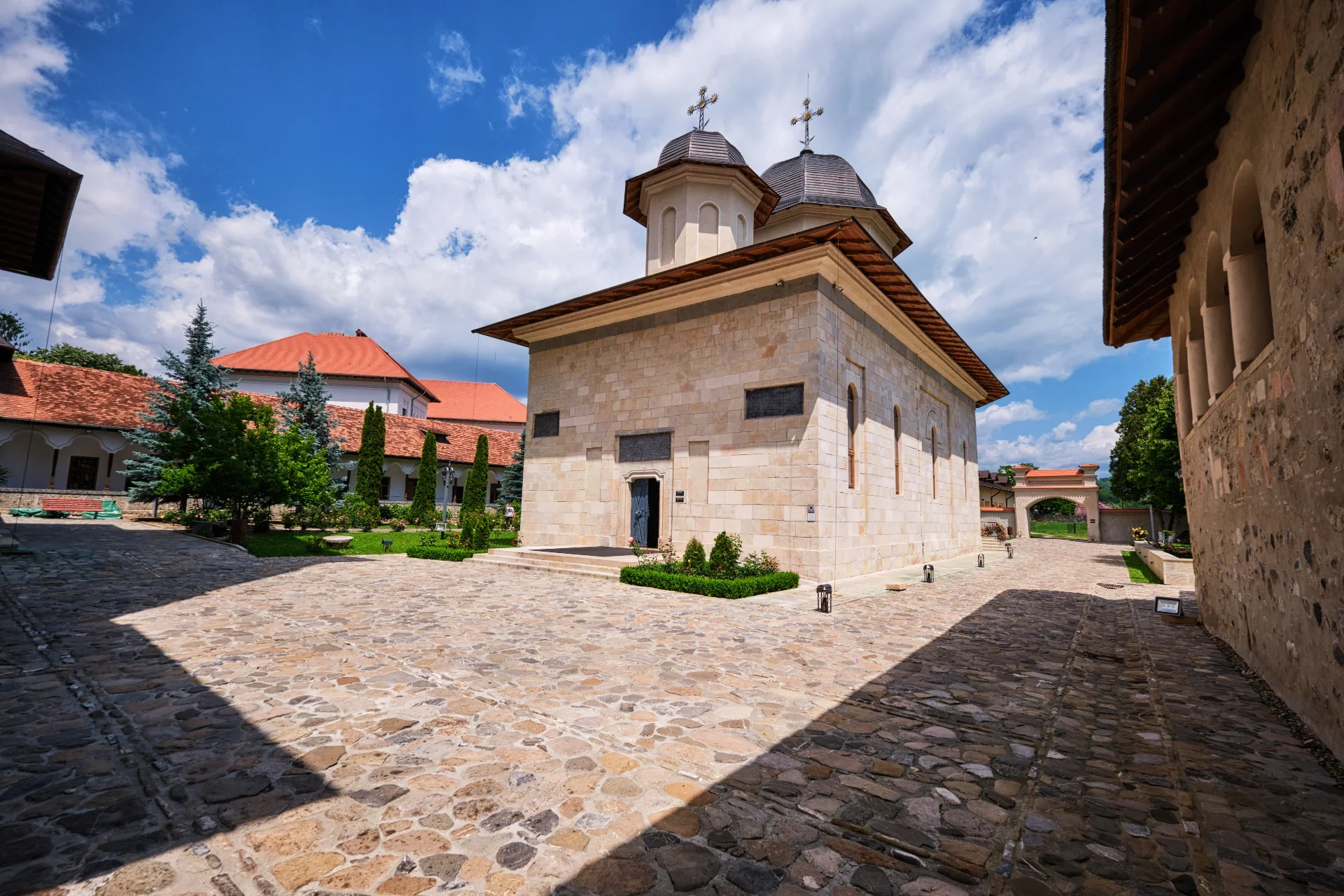
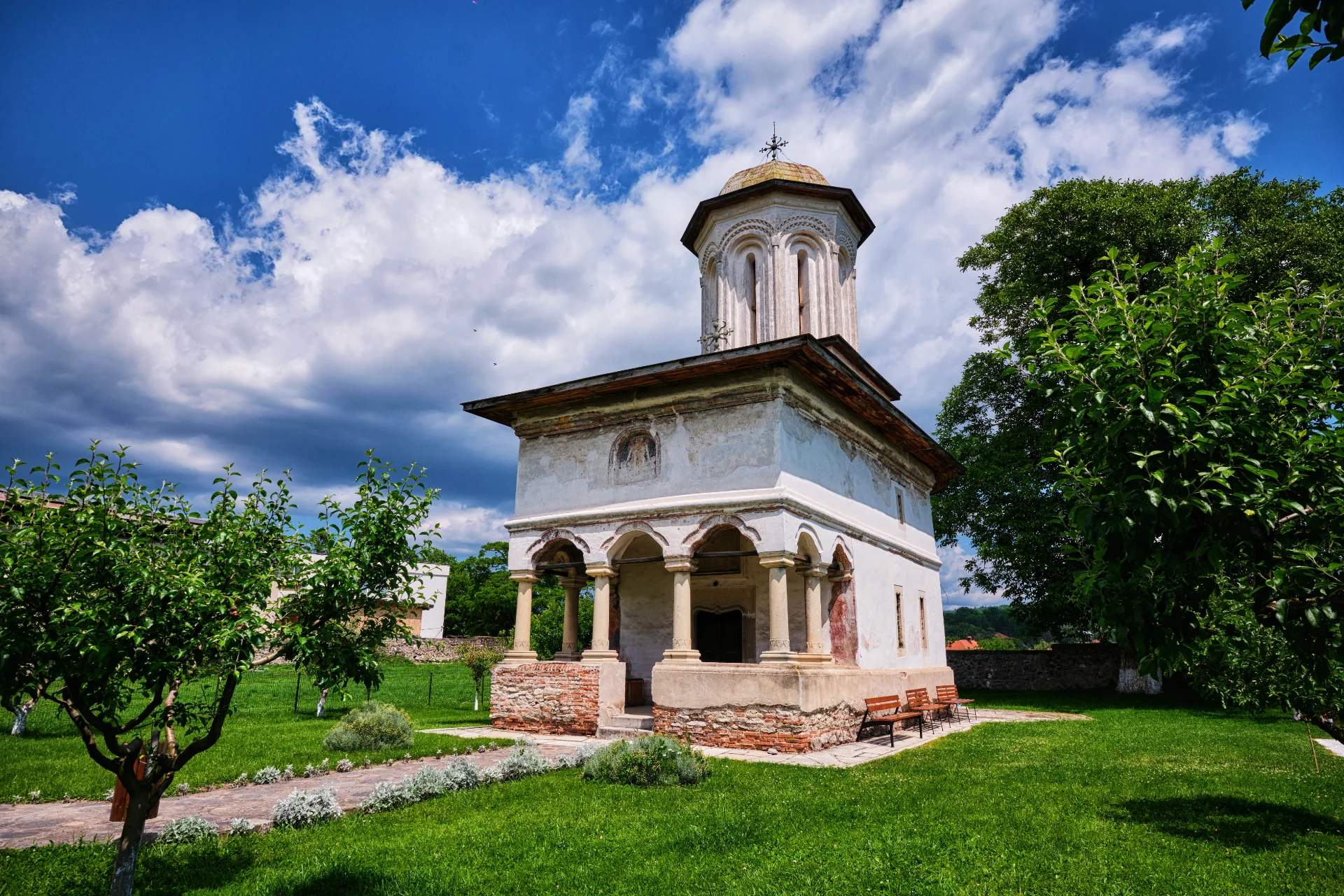
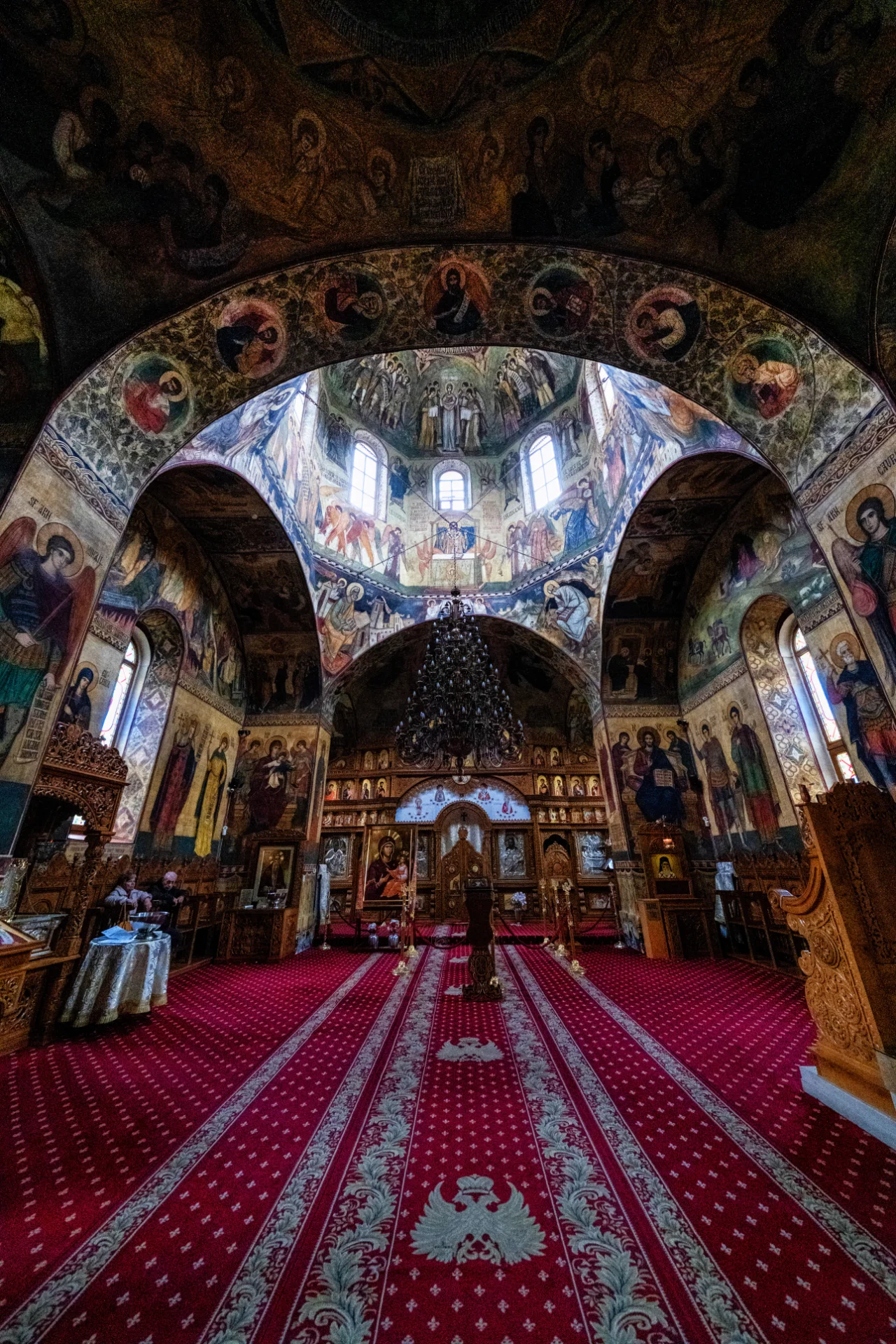
A little further south, our walk through the town of Câmpulung leads us to the Negru Vodă Monastery, certainly the most famous landmark here and a particularly important monument in the history of the entire country. The complex of monuments includes the Royal Church dedicated to the “Assumption of the Virgin Mary”, the Hospital Church, the Royal House, the Abbess’ House, the Bell Tower, the cells and the enclosure walls. These were built starting in the 14th century and restored or rebuilt in the following centuries. According to old legends, the roots of the church are even older, being founded by Negru Vodă Voievod in 1215 and restored several times over the centuries.
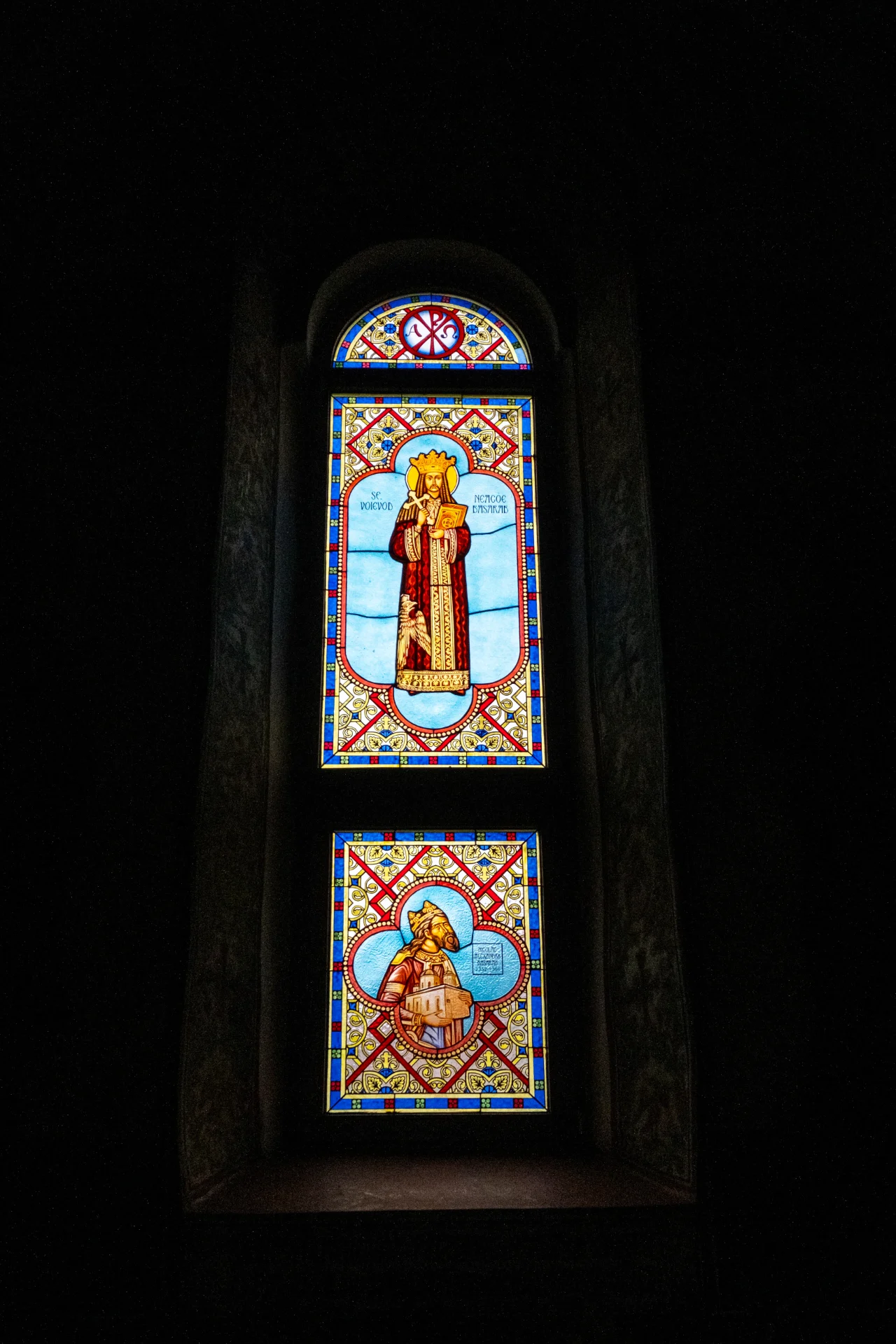
Built of Albești stone, it preserves several portions of old paintings, as well as the oldest tombstone of a Romanian ruler, Nicolae Alexandru Basarab (1364). Matei Basarab was the one who restored the princely house, built the abbot’s house and the 36-meter-high bell tower, one of the most impressive in the country. The hospital church or chapel dates back to 1718, being built on the site of an older wooden church. Over time, the ensemble has suffered numerous disasters and changes, but has always been reborn as one of the most important monasteries in Wallachia. One of the country’s first printing presses also operated here starting in 1643.
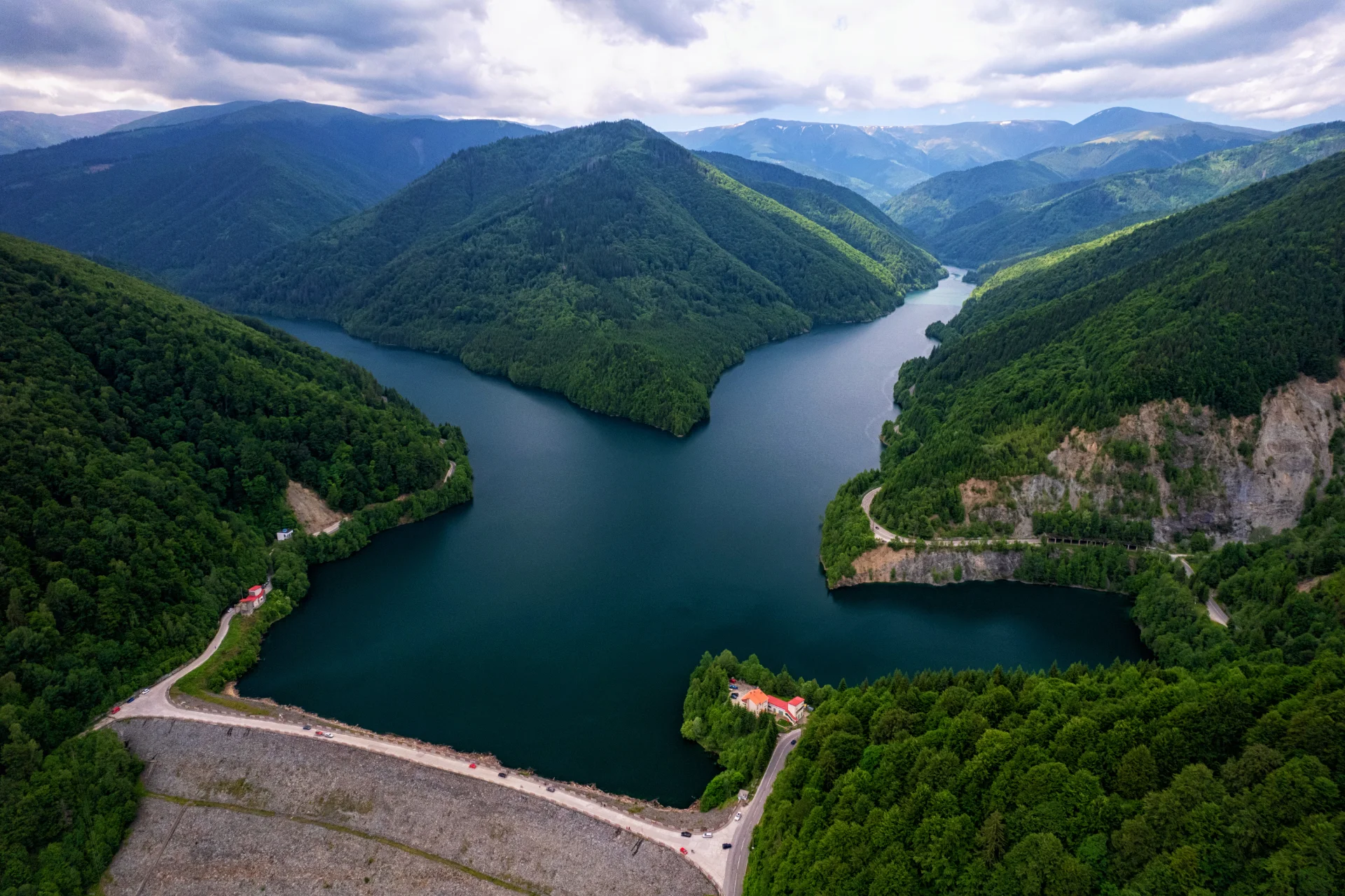
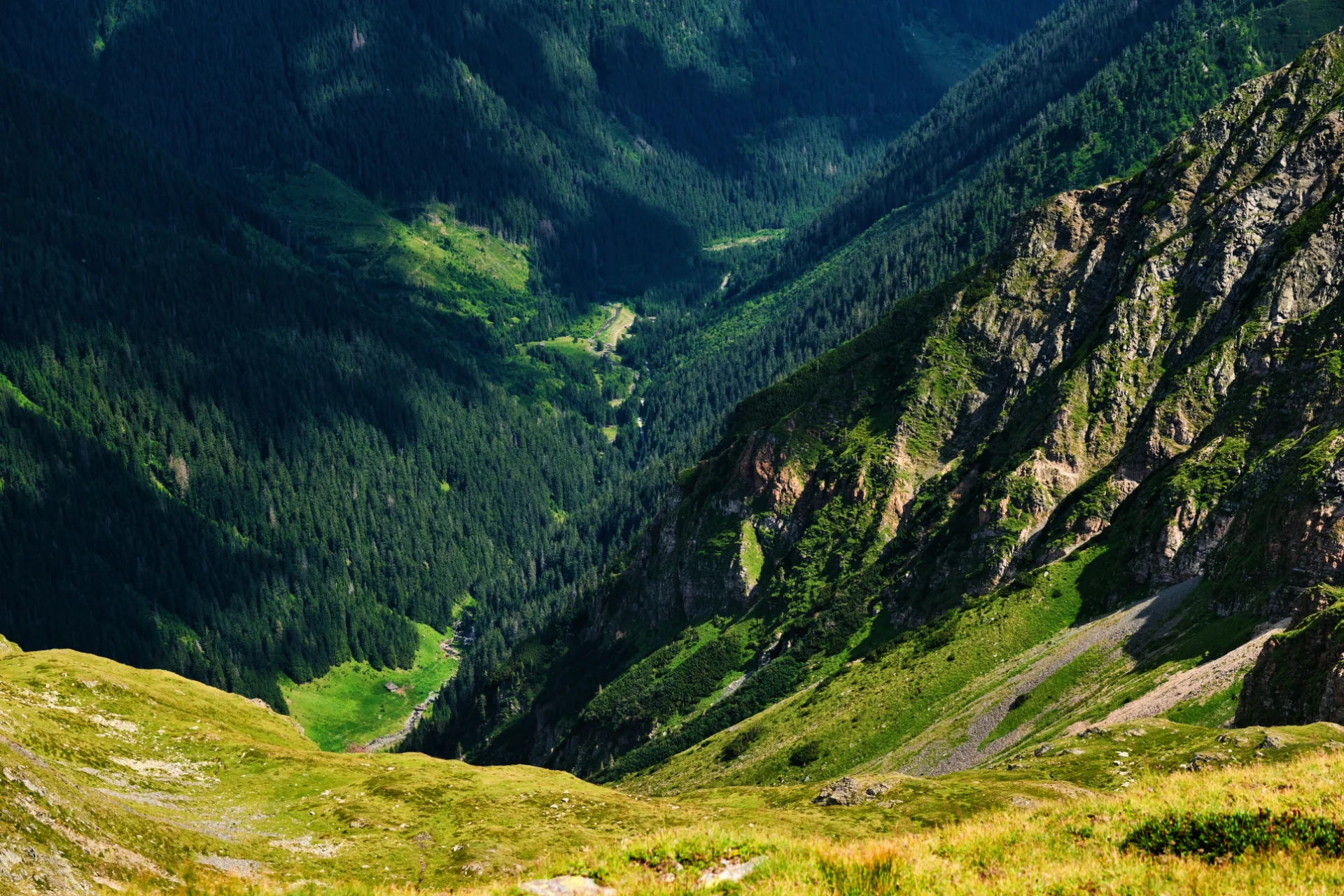
Climbing the Târgului River valley from Câmpulung, after just a few kilometers we reach Râușor Lake, a delightful place located at the foot of the Iezer-Păpușa massif. Formed by Iezerul Mare in the west and Păpușa in the east, separated by the Păpușii Cleft, these mountains have a massive appearance and a long horseshoe-shaped peak. They are located between the Dâmbovița and Râul Mare rivers, being connected to the Făgăraș Mountains by the Mezea-Oticu ridge, in the north. In the southeast, the valleys join the Târgului River, on which the Râușor dam and reservoir were built. The highest point of the massif is the Roșu peak (2,469 meters), the other important peaks are Păpușa (2,391 meters), Iezerul Mare (2,462 meters), Iezerul Mic (2,383 meters) and Bătrâna (2,341 meters). There are also several tourist trails that start around the lake and reach the high ridge, offering numerous superb views, culminating in spectacular panoramas of Făgăraș, Piatra Craiului and the Bucegi Mountains.
Just as we leave Câmpulung to the south, we stop to visit a unique place, the Romanian Automobile Museum, offering us the chance to admire a variety of old cars produced in Romania, as well as other historical objects related to this industry. Just a few kilometers to the south, the Jidova Roman Fort was once the most important fort built by the Romans on the defense line of the Carpathian pass. Of considerable size, it included a defense wall and various buildings with military functions, the ruins of which we can admire inside the site. From Câmpulung, the road takes us west over the hills and through small charming depressions, where the Muscel villages welcome us with their idyllic atmosphere. Among orchards and pastures, we discover a rural destination often overlooked, and if we climb the river valleys towards the mountains we reach places of overwhelming beauty.
Such a destination awaits us in the village of Jgheaburi in the commune of Corbi, on the Râul Doamnei valley. The Corbii de Piatră cave monastery is the oldest in the country and includes the only church with two altars, each with a different patron saint. It also houses the oldest religious painting in Byzantine style, dating back approximately seven centuries. Similar to the cave churches in the Cappadocia region, this one became the first nunnery in Wallachia in 1512. Nearby are two very old stone crosses, as well as other interesting rock formations. The Corbii de Piatră (Stone Ravens) monastery and the surrounding areas are steeped in legends, one considering Corbi the birthplace of the Corvin family, and others mentioning lost Dacian fortresses. Continuing up the valley, a long forest road can lead us to the heart of the Făgăraș Mountains, this being probably the most popular route to climb to the Moldoveanu peak. The Muscel region, in the north of Argeș County, brings together an impressive number of old monasteries and churches that we can visit, many founded by the rulers of the three old capitals of Wallachia.
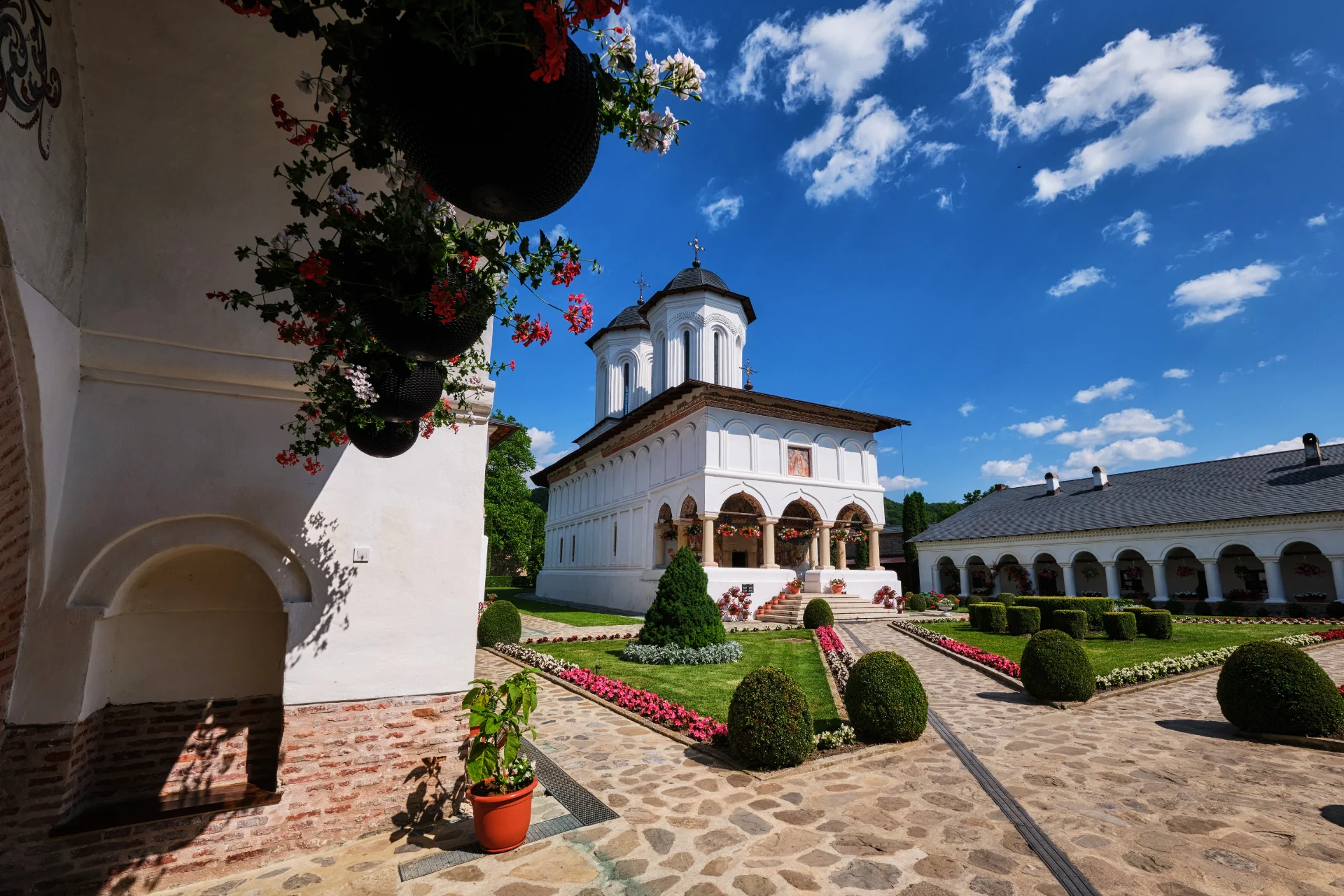
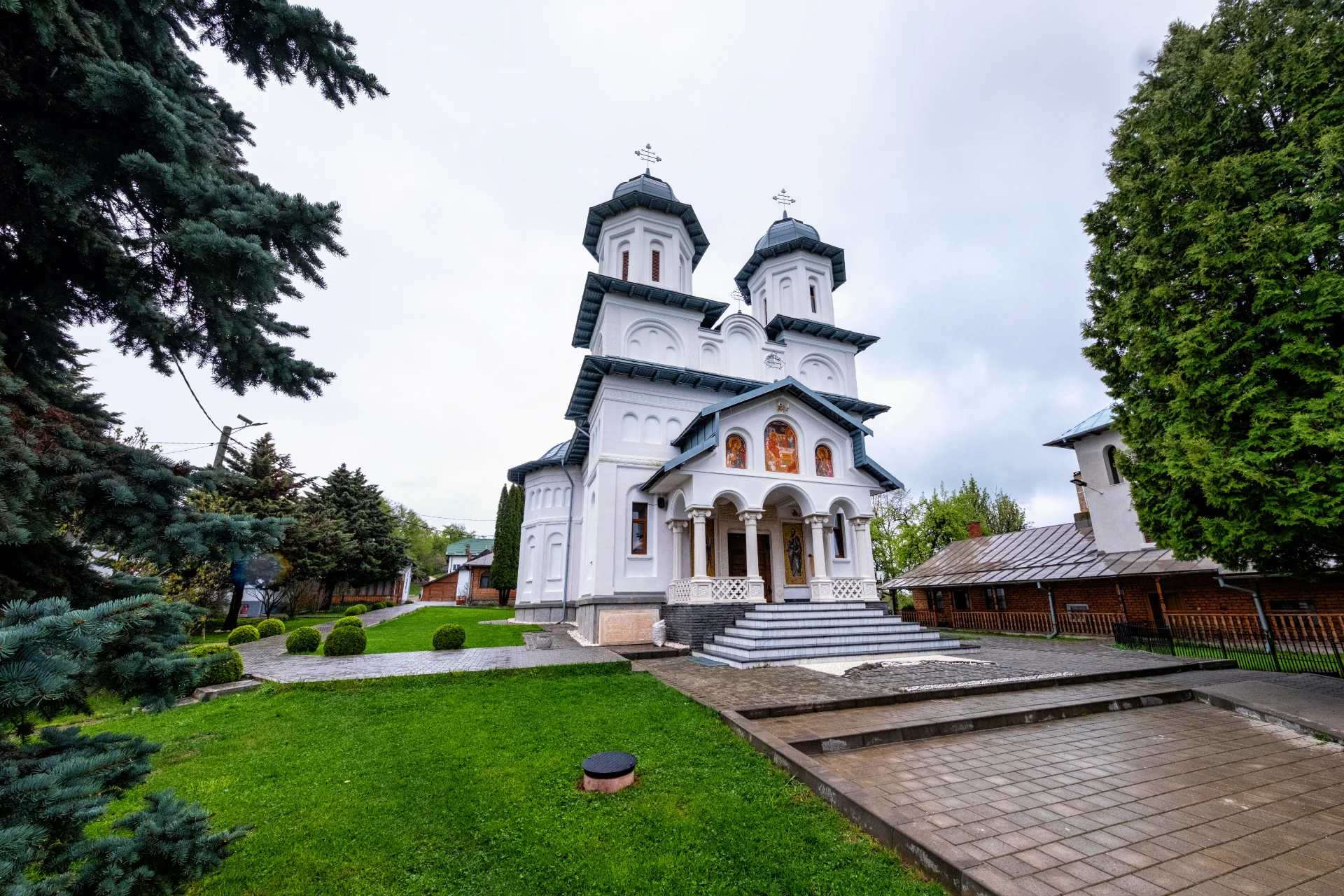
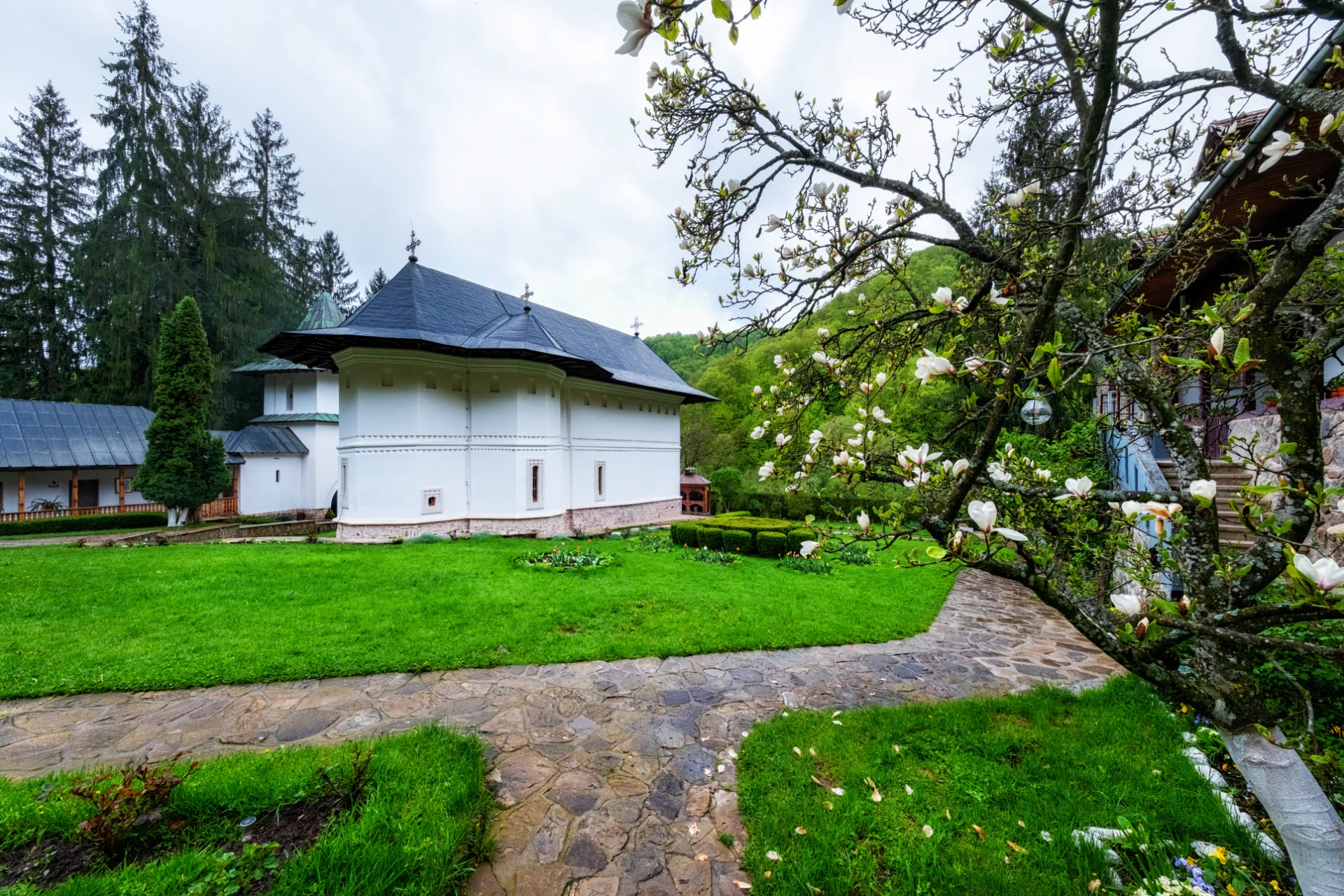
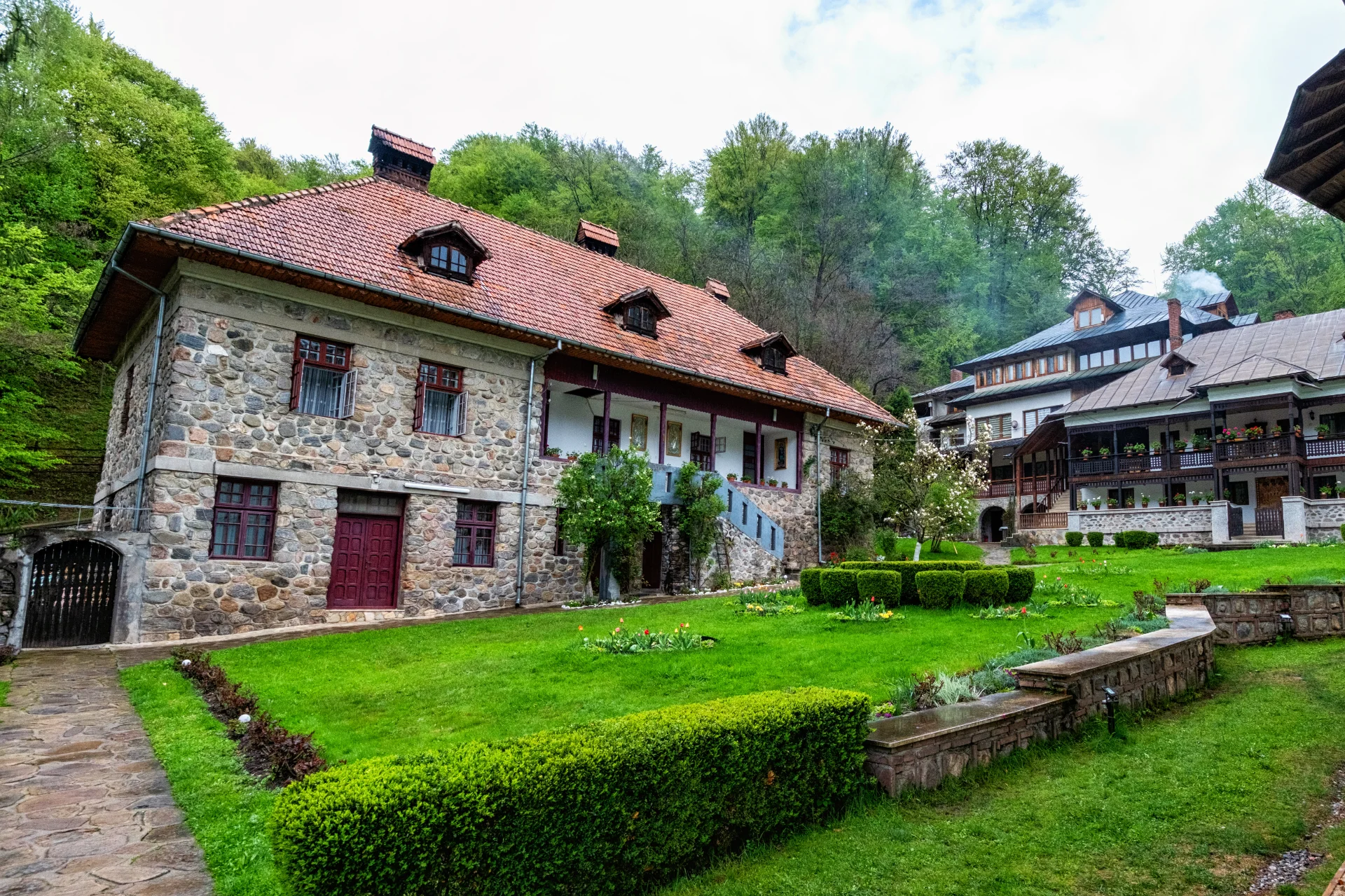
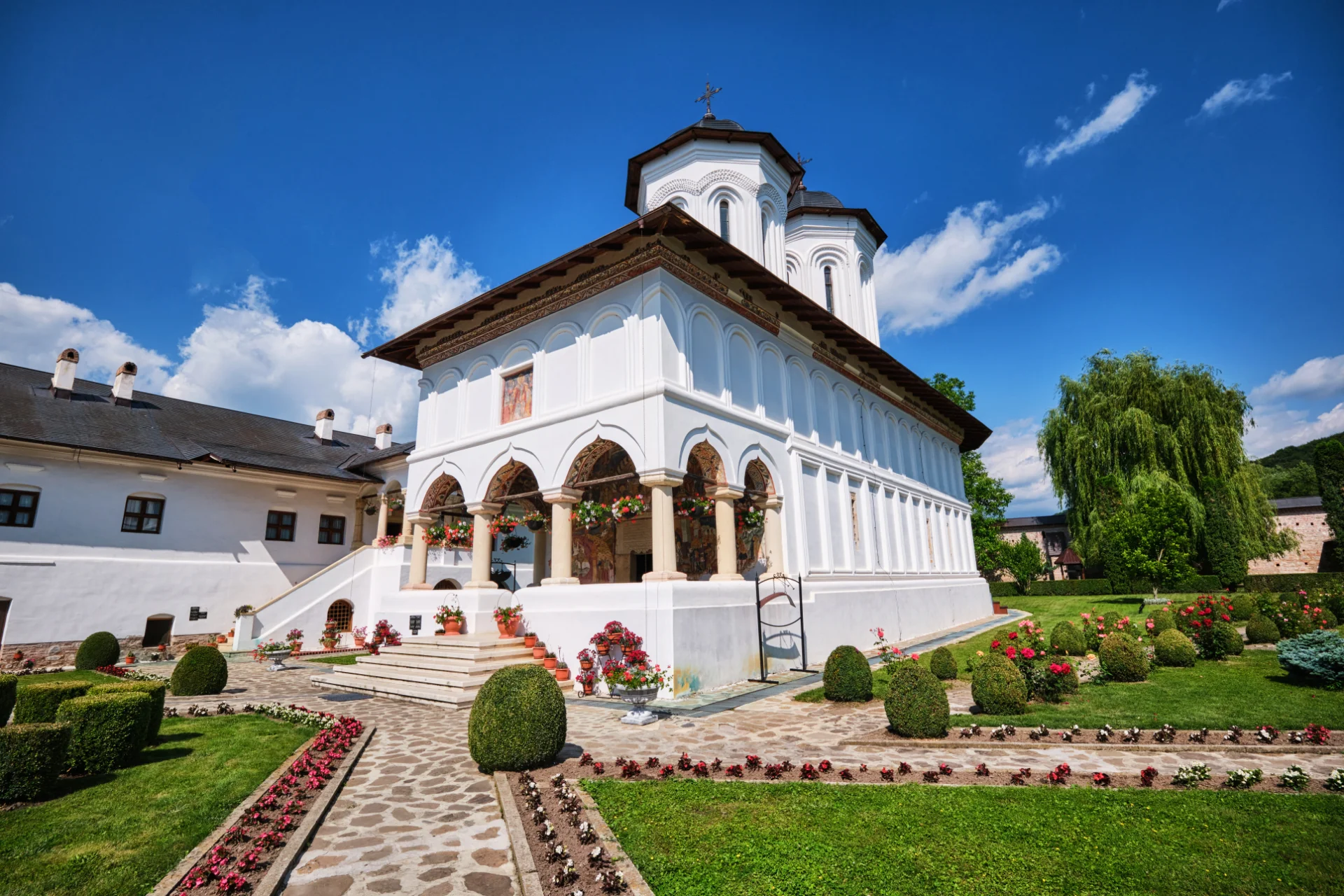
The Aninoasa Monastery dates back to 1677 and was founded by a local boyar, being located in the town of the same name. The ensemble includes the church, the chapel, the cells and the bell tower, all surrounded by high walls. The Brâncovenesc-style church contains valuable paintings, made by the painter Pârvu Mutu from Câmpulung. A few kilometers north, on the top of a hill rises the Slănic Monastery, attested since 1679, but most likely much older. Local legends name the rulers Vlad the Impaler or Neagoe Basarab as its founders. Long abandoned, the monastery was reborn after two monks began the construction of a church in this enchanting setting almost 100 years ago. Since then, the monastery ensemble has been developed and now includes three churches. The Robaia Monastery awaits us in a charming valley near the village of Mușătești, having been attested since the 14th century. The monastery complex consists of the harmonious church, the old abbacy, the new abbacy and the cells. According to legends, this was the place of tragedies, but also of miracles, the nearby spring having healing powers.
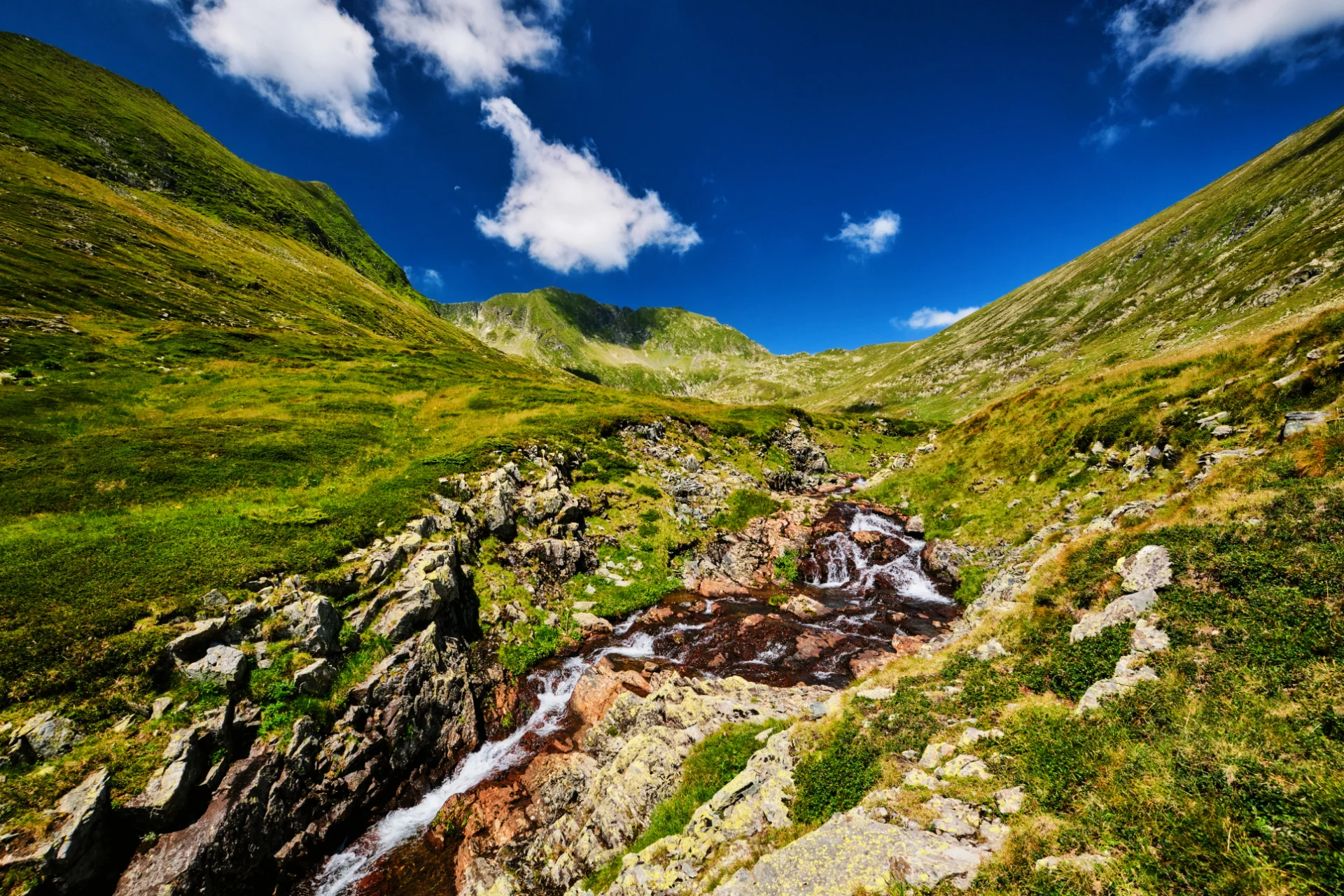
One of the most charming, but little-known, natural destinations in these places is the Vâlsan Valley, a protected area with an area of approximately 100 square kilometers. More scientifically recognized after the discovery of a unique fish species in the world (the asprete), the valley stands out for its fascinating landscapes, with gorge sectors, waterfalls and specific vegetation. The Vâlsan Gorges have several sectors and a length of approximately 15 kilometers, beyond which are the Poienile Vâlsanului, a small reservoir lake, but also a lesser-known path that climbs to the Moldoveanu peak. Starting from Corbi to Sălătrucu in the Topolog Valley, there is a cultural tourist route that connects the villages of this fascinating land, passing through charming places. Called Via Valahia, this itinerary was developed starting in 2020 and will eventually connect Târgoviște to the Olt Valley, bringing together a lot of memorable experiences. We continue our journey with one of the most important and impressive historical and architectural monuments in the country, the Curtea de Argeș Monastery, representing a true symbol of Romanian cultural heritage…
Sights and Experiences
Places to See and Things to Do in Câmpulung and the land of Muscel
Câmpulung Historical Town
A settlement with ancient historical roots, Câmpulung Muscel became a city as early as the 14th century, although its much earlier beginnings are linked to the Teutonic Knights or the Saxon colonists who arrived in these lands. Starting in 1330, Câmpulung was chosen as the princely residence by Basarab I, the first ruler of Wallachia. It fulfilled this role for approximately 40 years, after which the capital was moved to Curtea de Argeș, but it continued to represent a temporary residence of the rulers in the following centuries. Archaeological traces of the princely court at Câmpulung were discovered within the Negru Vodă monastery, and the characteristics of the remains denote its development and special importance. One of the first and most important printing presses in the country operated here, and it was also the site of some of the oldest schools. In the modern era, although it has lost its importance, Câmpulung still preserves historical and architectural treasures from the centuries of its flourishing.
The municipality’s heritage includes an impressive number of over 100 historical monuments, including an urban area protected for its exceptional value, with architecture specific to several periods and styles. In addition to the Negru Vodă monastery complex that also includes the old princely court, the very high concentration of monuments in the urban site “Câmpulung Historical Town” is noteworthy. For a relatively small city, it includes 39 historical monuments of national interest, among which a number of interesting attractions stand out. In the center of the city, travelers can admire the Oath Cross, built since 1674 and unique in its purpose and characteristics.
Nearby, you can visit the ensemble of the Catholic church “Saint Jacob”, known as Bărăția. It includes the choir and ruins of the first Gothic church (13th century), as well as the parish house, the bell tower and other structures. The church was built by the first Saxon settlers at the end of the 13th century and contains the tomb of Count Laurențiu on whose slab is the first mention of the city as Longo Campo, which represents the oldest epigraphic document in Latin in Wallachia. Other charming attractions in the city include the Ethnography Museum (Ghiță Ștefănescu house), the History and Art Museum (neo-Romanian style), the former town hall building, as well as a series of impressive villas, houses and churches.
Câmpulung City Museum
Visiting hours: 9-17 (Tuesday-Sunday) | Prices: 11 lei (2€)/adult
Comprising both the history and archaeology section housed in the building in the city center, and the ethnography and folk art section, housed in the historic building known as the “Gică Ștefănescu” villa, as well as several other interesting locations, the museum reflects the past and unique traditions of the Muscele lands. Among the most interesting exhibits in the museum are the archaeological discoveries made at the Jidova fort and other surrounding locations, old medieval documents, weapons and other historical objects, to which are added traditional costumes and carpets, ceramics or authentic old furniture. In the main building, two small art and natural science exhibitions can also be visited.
Negru Vodă Monastery
The most famous and important tourist attraction in the town of Câmpulung is the Negru Vodă monastery complex, which also includes original elements from the old princely court of Câmpulung. Located in the southern part of the town, the monument complex includes the princely church dedicated to the “Assumption of the Virgin Mary”, the hospital church, the princely house, the abbot’s house, the bell tower, the cells and the enclosure walls. These were built starting in the 14th century and restored or rebuilt in the following centuries. According to old legends, the roots of the church are even older, having been founded by Negru Vodă Voievod in 1215.
The current form dates back to the time of Matei Basarab (17th century), the original church having been affected by an earthquake in 1628, as well as following the restoration in 1832. Built of Albești stone and It preserves several portions of the old painting, but also the oldest funerary slab of a Romanian ruler, Nicolae Alexandru Basarab (1364). Matei Basarab was the one who restored the princely house, erected the abbot’s house and the 36-meter-high bell tower, one of the most impressive in the country. The hospital church or chapel dates back to 1718, being built in place of an older wooden church. Over time, the ensemble suffered numerous disasters and changes, but it was always reborn as one of the most important monasteries in Wallachia. One of the country’s first printing houses also operated here, where four large volumes were printed starting in 1643.
Nămăiești Monastery
Located just 5 kilometers northeast of the town of Câmpulung, the monastery most likely dates back to the early 16th century, although some researchers believe that the cave church dates back to the beginnings of Christianity in Romanian lands. The beginnings of this place are also linked to several local legends about the discovery of the icon attributed to the evangelist Luke. This is considered the oldest icon in the country and the most important treasure of the monastery, being framed in silver. The monastery church was severely damaged during World War I by the German army, destroying the abbot and the cells. All of this was rebuilt between 1917 and 1921, and now includes an interesting ethnographic museum. Near the monastery is also the memorial house of the writer George Topârceanu.
Cetățuia Monastery
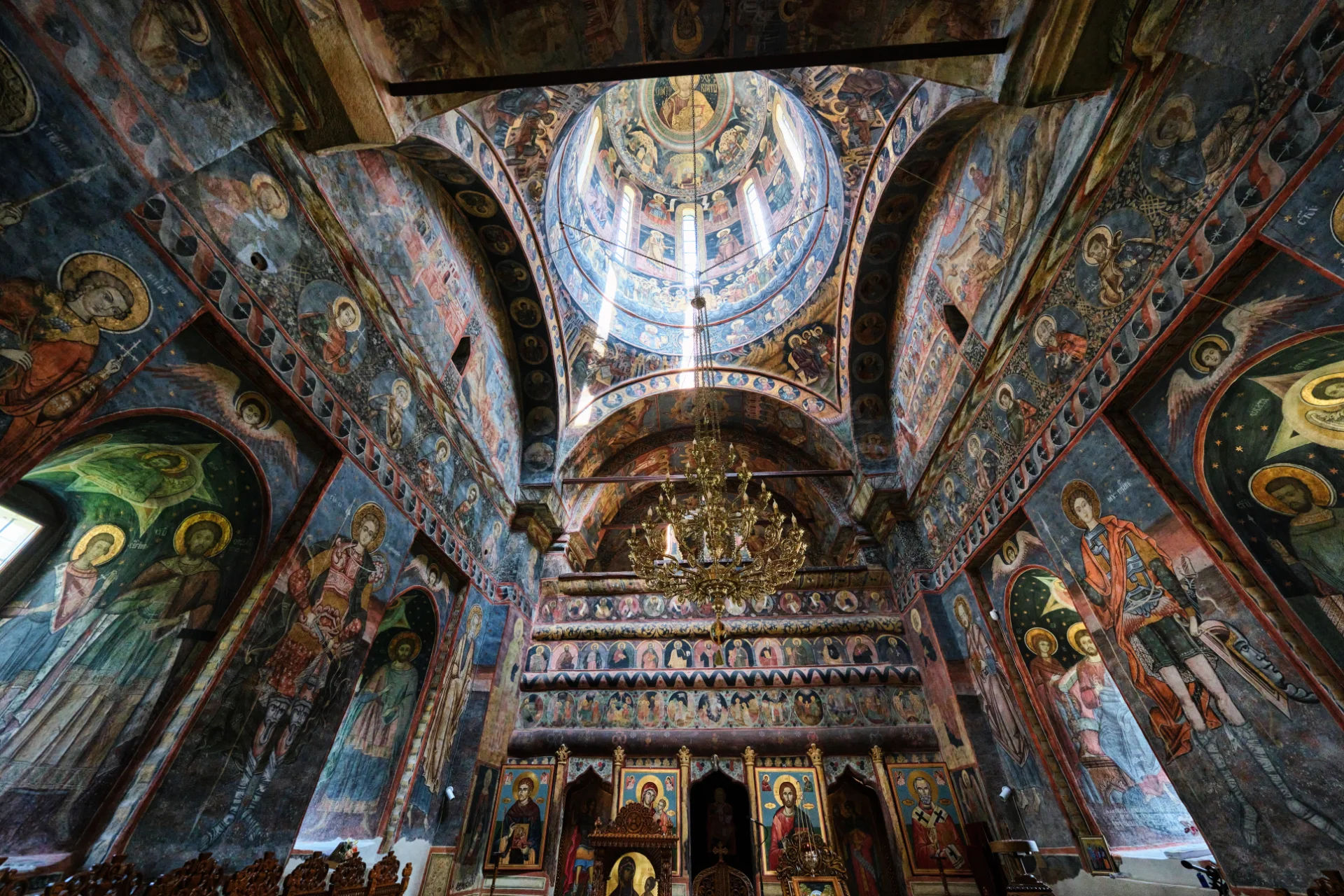
Steeped in history and amazing legends, the monastery perched on a nearly 900-meter-high cliff is also known as the Meteora of Romania. Located in the Dâmbovița Valley, between the villages of Cetățeni and Cotenești, this religious complex is one of the oldest hermitages in the country, its beginnings lost in the mists of time. It is believed that there was a Dacian fortification here, followed by an early fortress that defended the road to the old capital of Câmpulung. Originally an isolated hermitage founded either by Negru Vodă or by the son of Basarab I, the monastery includes two churches. The old one is carved directly into the rock, but has all the characteristics of an Orthodox church, including paintings in three distinct layers.
The new church was built of wood in the Maramures style. Over time, numerous rulers of Wallachia have also found refuge here, including Constantin Șerban, Vlad Țepeș, Michael the Brave, Constantin Brâncoveanu and others. In addition to the two churches and the monks’ cells, several interesting places can be discovered near the monastery, such as the cross attributed to Negru Vodă, an isolated chapel on a bare rock, several cave cells or a mysterious bas-relief known as the Thracian Knight. The path to the monastery is quite steep at times and can be completed in less than an hour, but the views from the top are truly spectacular.
Corbii de Piatră Monastery
The oldest cave monastery in the country is located in the village of Jgheaburi (Corbi commune), on the Doamnei River valley, about halfway between Câmpulung and Curtea de Argeș. The rock-cut church dates back to the 14th century and is the only one in the country with two altars, each with a different patron saint. The oldest religious painting in Byzantine style is also found here, dating back about seven centuries. Similar to the cave churches in the Cappadocia region, this became the first nunnery in Wallachia in 1512. Nearby are two very old stone crosses, as well as other interesting rock formations. The Corbii de Piatră (Stone Ravens) Monastery and the surrounding areas are full of legends, one considering Corbi the birthplace of the Corvinești family, and others mentioning lost Dacian fortresses. Near the monastery there is also an old house with blue walls, which has become famous and known as “Mother Uța’s House”.
Iezer-Păpușa Mountains
Formed by Iezerul Mare in the west and Păpușa in the east, separated by the Spintecătura Păpușii, these mountains have a massive appearance and a 40-kilometer-long horseshoe-shaped peak. They are located between the Dâmbovița and Răul Mare rivers, being connected to the Făgăraș mountains by the Mezea-Oticu ridge, in the north. In the southeast, the valleys join the Răul Târgului River, on which the Răușor dam and reservoir were built. The highest point of the massif is Roșu peak (2,469 meters), the other important peaks being Păpușa (2,391 meters), Iezerul Mare (2,462 meters), Iezerul Mic (2,383 meters) and Bătrâna (2,341 meters). There is a trail (red band) that follows the main ridge of these mountains, offering spectacular views of the surrounding valleys and mountains, including towards Făgăraș and Piatra Craiului. To reach this, one can follow one of the trails that start at the tail of Râușor Lake (Voina hut).
Trails to Moldoveanu Peak
Surrounded by other stone giants and hidden behind the sharp ridges of the Făgăraș Mountains, Moldoveanu Peak exudes an aura of legend and mystery. Equally adored by passionate adventurers and casual tourists, Romania’s highest peak is not so easy to conquer, throwing several obstacles along the way. The highest peak in Romania rises to 2544 meters and is nicknamed the Roof of Romania. It is located in the central-eastern part of the Făgăraș Mountains, surrounded by other high peaks, the most imposing being Viștea Mare – 2527 meri, to which it is connected by a short and steep saddle.
There are numerous routes that climb to this giant, and all of them are long and quite demanding. In addition to the ridge route and the routes that climb the valleys of the Făgăraș depression, there are also several routes that start from the south, on the valleys of the Muscel region. The most famous, frequented and considered accessible is the one that climbs the Valea Rea (red triangle), first following the 35 km forest road that starts from the village of Slatina (Nucșoara commune) and brings tourists to Stâna lui Burnei. From here, a hike of approximately 4-5 hours follows, with a difference in level of over 1,000 meters. There are two more routes on the Valea Vâlsanului or the Valea Buda, but these are much longer and more difficult.
Other Interesting Discoveries
Lesser known places and activities in Câmpulung and the land of Muscel
Jidova Roman Fort
Located just a few kilometers south of the municipality of Câmpulung, right next to the national road, the fort was part of the fortification complex along the Limes Transalutanus. It is the most important and best preserved structure on this strategic Roman line. The archaeological site includes both the ruins of the defensive walls with gates and towers, as well as the vestiges of some internal buildings (command, warehouses). Some of the defensive structures have been partially reconstructed, providing a more edifying image of the initial appearance and dimensions of the complex.
Opening hours: 9-17 | Prices: 20 lei (4€)/adult
Aninoasa Monastery
The Muscel region, in the north of Argeș County, is home to an impressive number of old monasteries and churches, many founded by the rulers of the three old capitals of Wallachia. The Aninoasa Monastery dates back to 1677 and was founded by a local boyar, being located in the locality of the same name. The ensemble includes the church, the chapel, the cells and the bell tower, all surrounded by high walls. The Brancoveanu-style church contains valuable paintings by the painter Pârvu Mutu from Câmpulung.
Slănic Monastery
Situated on a hilltop a few kilometers north of the village of the same name, the monastery has been attested since 1679, and is probably much older. Local legends name the founders as the rulers Vlad Tepes or Neagoe Basarab. Long abandoned, the monastery was reborn after two monks began the construction of a new church in this enchanting setting almost 100 years ago. Since then, the monastery complex has been developed and now includes three churches, as well as a small museum with interesting religious objects.
Robaia Monastery
It is located in a charming valley near the village of Mușătești, having been attested since the 14th century. The monastery complex consists of the harmonious church, the old abbacy, the new abbacy and the cells. According to legends, this was the place of tragedies, but also of miracles, the nearby spring having healing powers.
Romanian Automobile Museum
A unique destination can be discovered just a few kilometers south of Câmpulung, near the Jidova fort. Born from one man’s passion for this field, the museum contains a fascinating collection of over 20 cars produced in Romania. Inside the building, visitors can discover more about the history of this industry, with photos, documents, models and other interesting objects.
Opening hours: 10-18 | Prices: free admission (donation possible)
Vâlsan Valley
One of the most charming, but little-known, natural destinations in the Southern Carpathians is the Vâlsan Valley, a protected area with an area of approximately 100 square kilometers. More scientifically recognized after the discovery of a unique fish species in the world (the asprete), the valley stands out for its fascinating landscapes, with gorges, waterfalls and specific vegetation. The Vâlsan Gorge has several sectors and a length of approximately 15 kilometers, beyond which lies the Vâlsan Glades, a small reservoir lake, but also a lesser-known path that climbs to the Moldoveanu peak.
Mateiaș Mausoleum
Dedicated to the heroes of World War I, the mausoleum is located on a hill near the town of Câmpulung, on the road to Rucăr. It was built between 1928 and 1935 with the material support of the locals and consists of a mausoleum, a museum, a bas-relief and a cup in which a flame burns permanently in memory of the heroes. The crypt of the mausoleum in Mateiaș contains the remains of over 400 soldiers who fell in World War I on these lands, as well as the names of over 2,100 heroes from the Muscel area. The mosaic bas-relief was created between 1979 and 1984, featuring scenes from the battles fought nearby.
Accommodation Recommendations
The best lodging options in Câmpulung and the Land of Muscel
Rating 9.6 from 406 reviews!
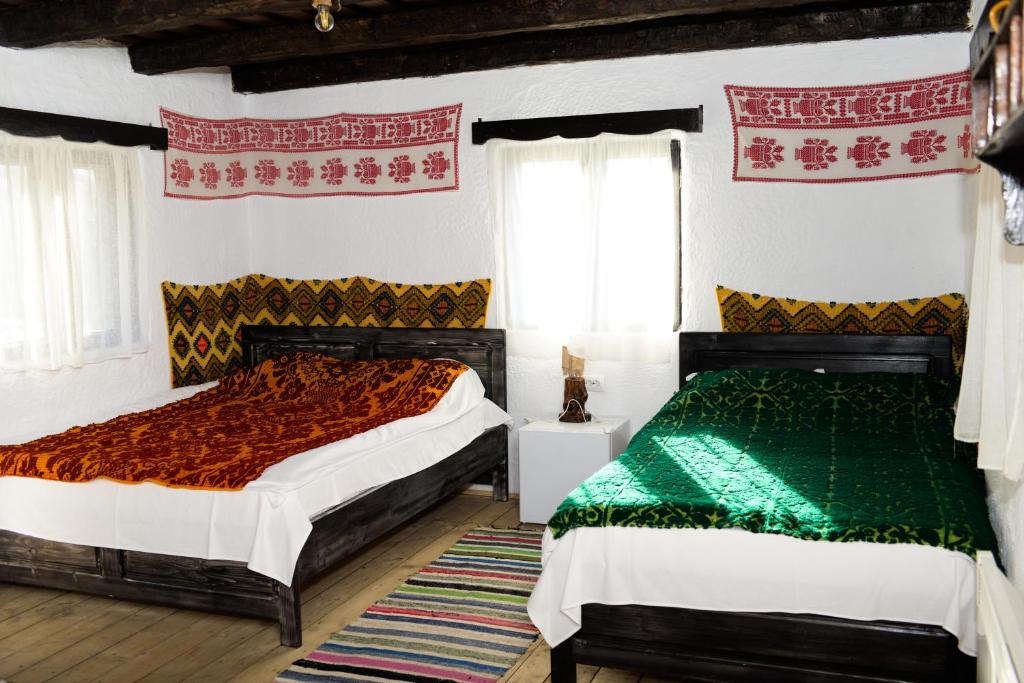
A superb tourist complex located a few kilometers from Câmpulung, offers accommodation in superb traditional rooms, a traditional restaurant and an extensive garden!
Village of Albeștii de Muscel
Rating 9.7 from 89 reviews!
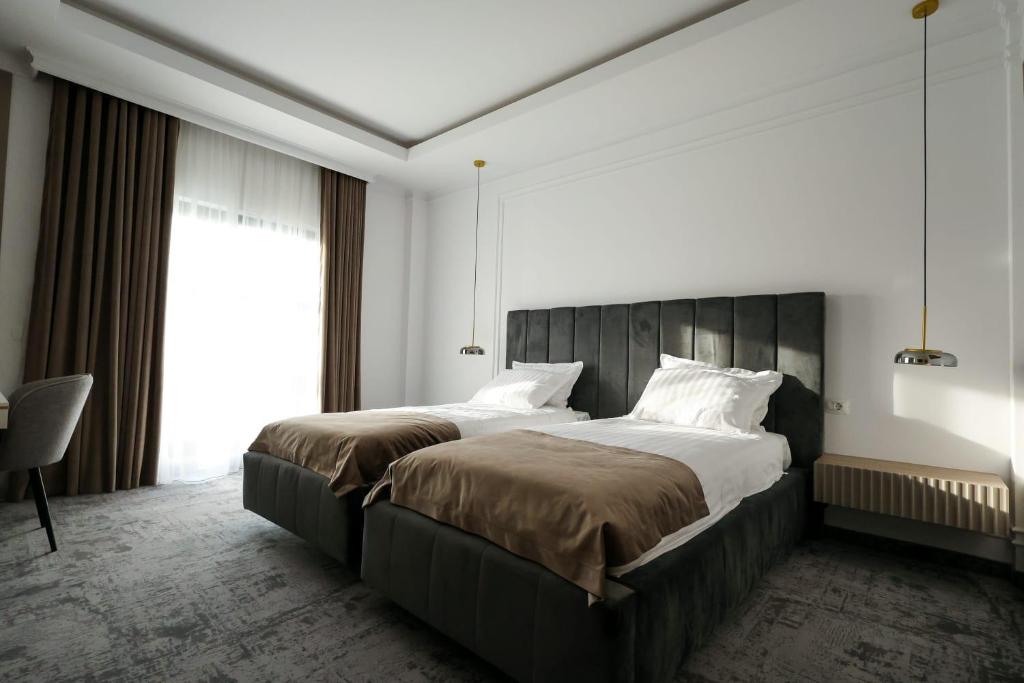
Located right in the center of Câmpulung, this hotel offers spacious rooms with all amenities, breakfast option, garden and terrace!
Negru Vodă St., 202, Câmpulung
Rating 8.7 from 187 reviews!
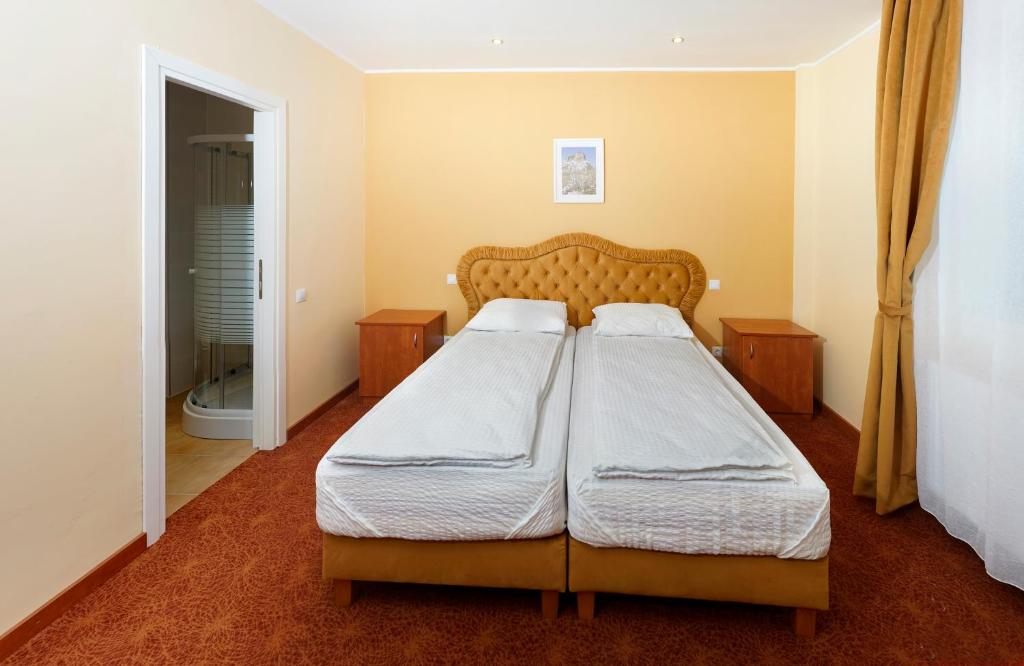
Located at the entrance to Valea Rea, this guesthouse benefits from a superb natural location, offering quality accommodation, a traditional restaurant, terrace and garden!
Village of Nucșoara