19
Land of
Făgăraș
In the shadow of the sharp ridges of the Făgăraș Mountains lies an idyllic land embraced by the waters of the eternal Olt river, a bridge between Romanians on both sides of the Carpathians that has preserved its authenticity and charm throughout the centuries, with traditional villages and impressive monuments!
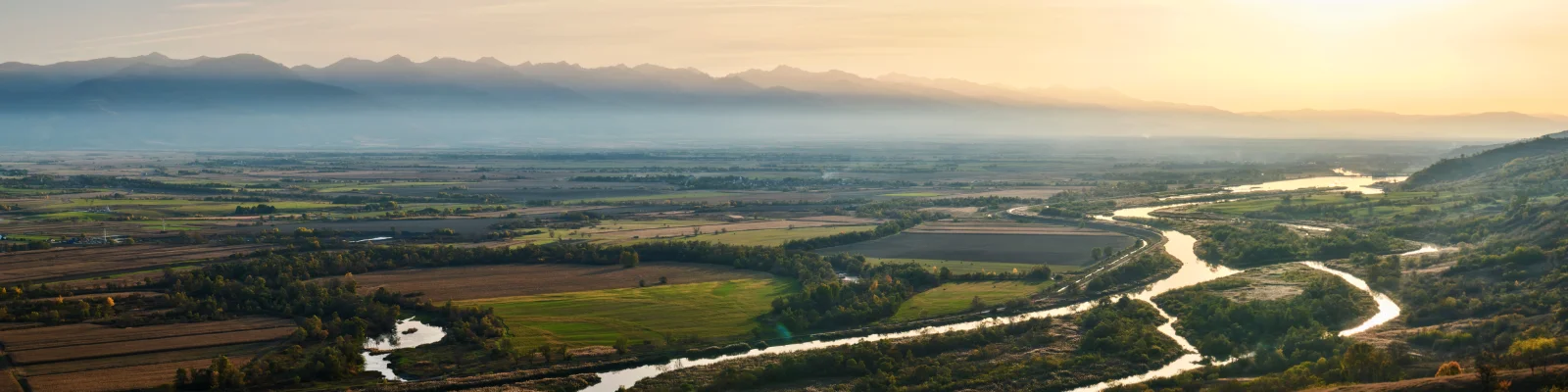
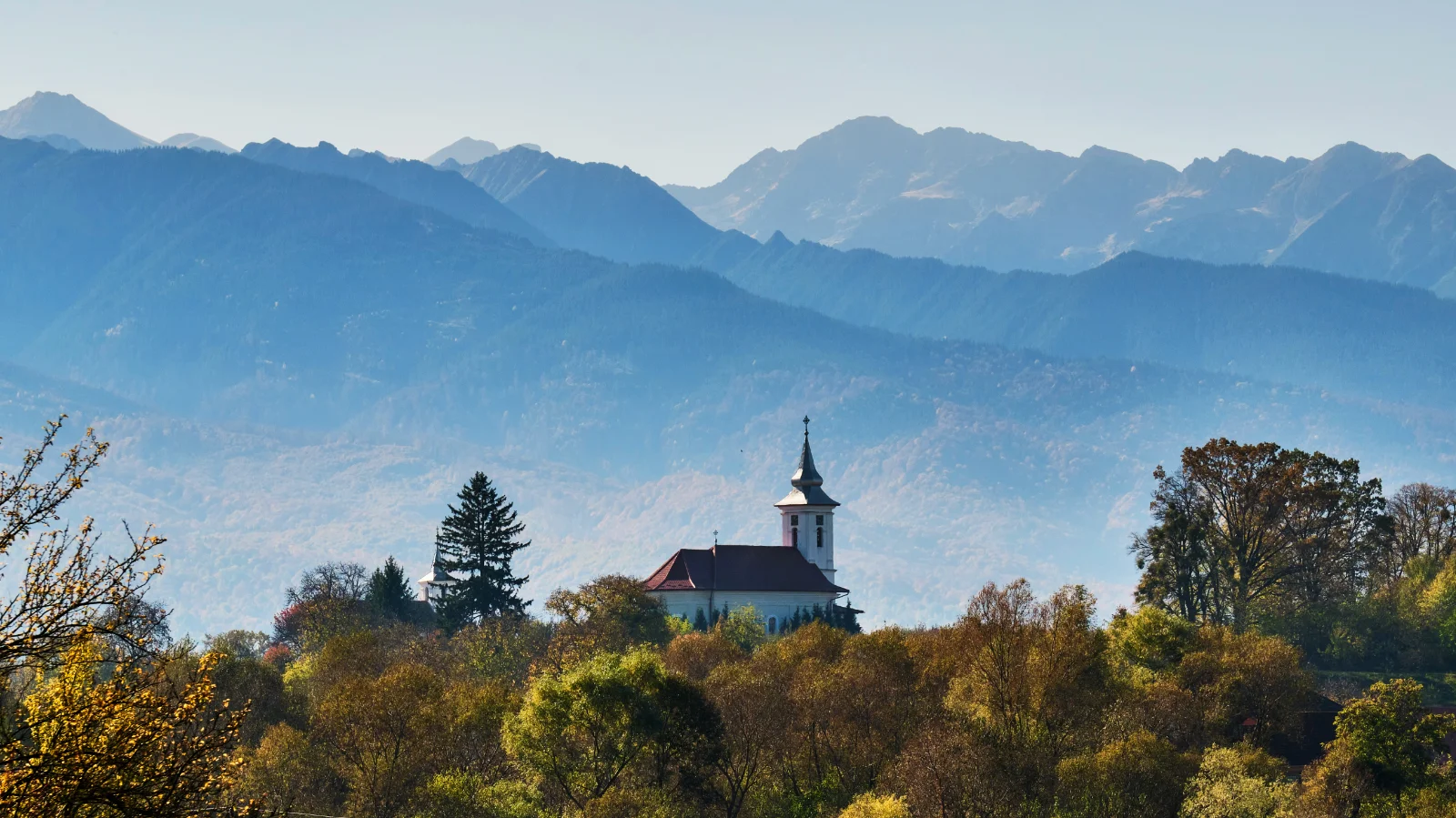
Descending from the bare peaks of the mountains, we follow the valleys of the crystalline streams that head stormily towards the waters of the Olt river, beyond which rise the undulating spines of the Transylvanian hills. We pass from one charming village to another, always with the spectacular view of the green or snowy ridges floating above the endless fields. Mornings are sometimes dramatic in these places, the fiery disk of the sun being hidden behind the ridges and clouds, and deep fogs cover the land at the foot of the mountains. The first rays of sunrise break through the stone teeth of the Făgăraș and pierce the white carpet, transforming the Olt into a ribbon of golden sparkles. From place to place, we can see the faint silhouettes of churches in the distance, and the old villages of the Land of Făgăraș (Țara Făgărașului) come to life, waiting for travelers eager to discover their moving stories.
This fascinating destination is located in the southern part of Transylvania, between the Făgăraș and Perșani mountains to the south, respectively the Olt Valley and the hills of Transylvania to the north, in the past also known as the Olt Country (Altland in German). A homogeneous land inhabited since ancient times, it includes historical Romanian settlements, many documents from the medieval period mentioning these places as the “country of the Romanians“. We can reach this destination very easily from any part of the country, the most important road being DN1 (E68), which connects the city of Brașov to Sibiu and passes through the Land of Făgăraș from east to west. Other important roads are DN7C (Transfăgărășan), DN1S and DN73A, while other local roads allow us to explore the villages at the foot of the mountains.
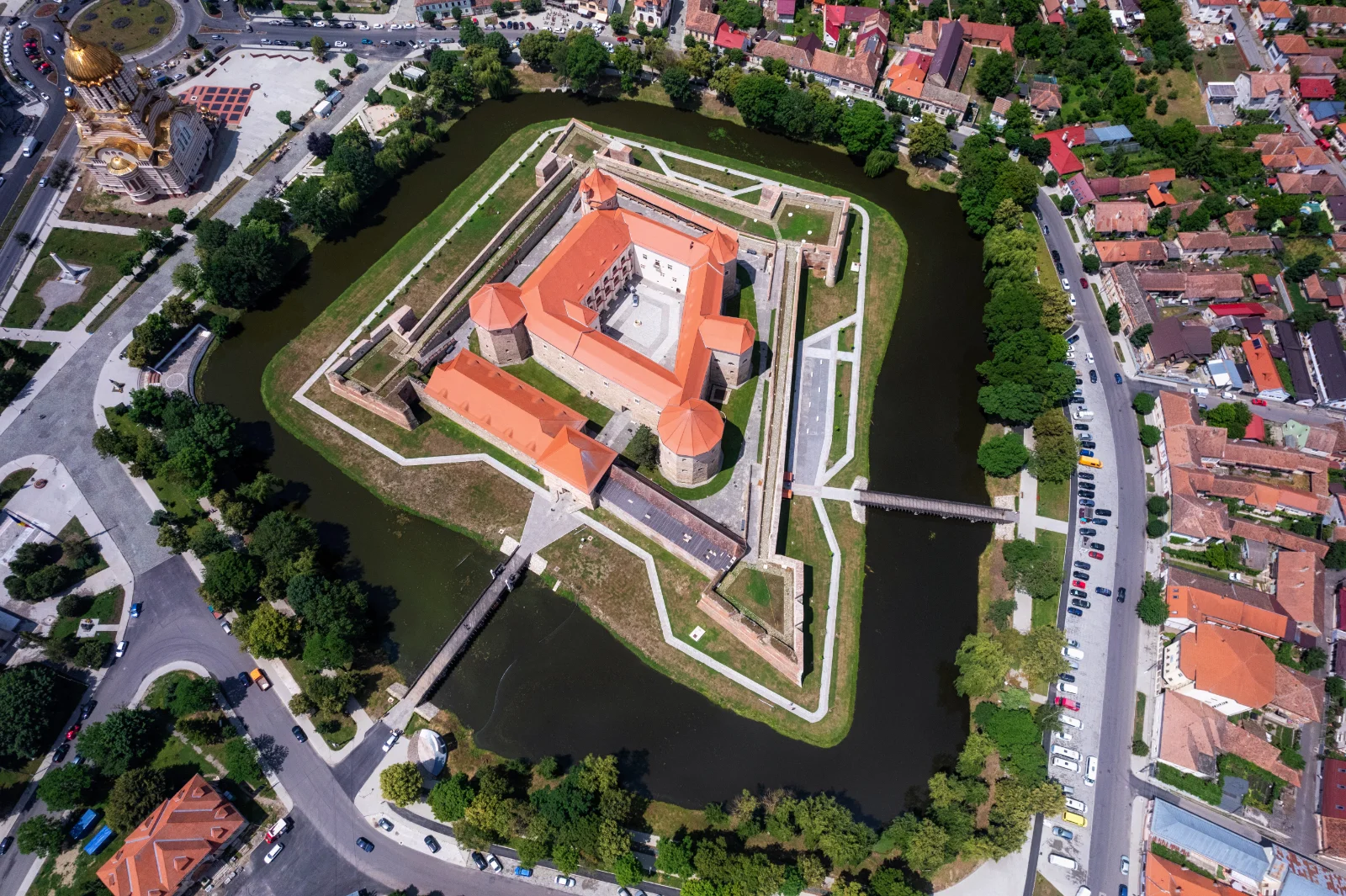
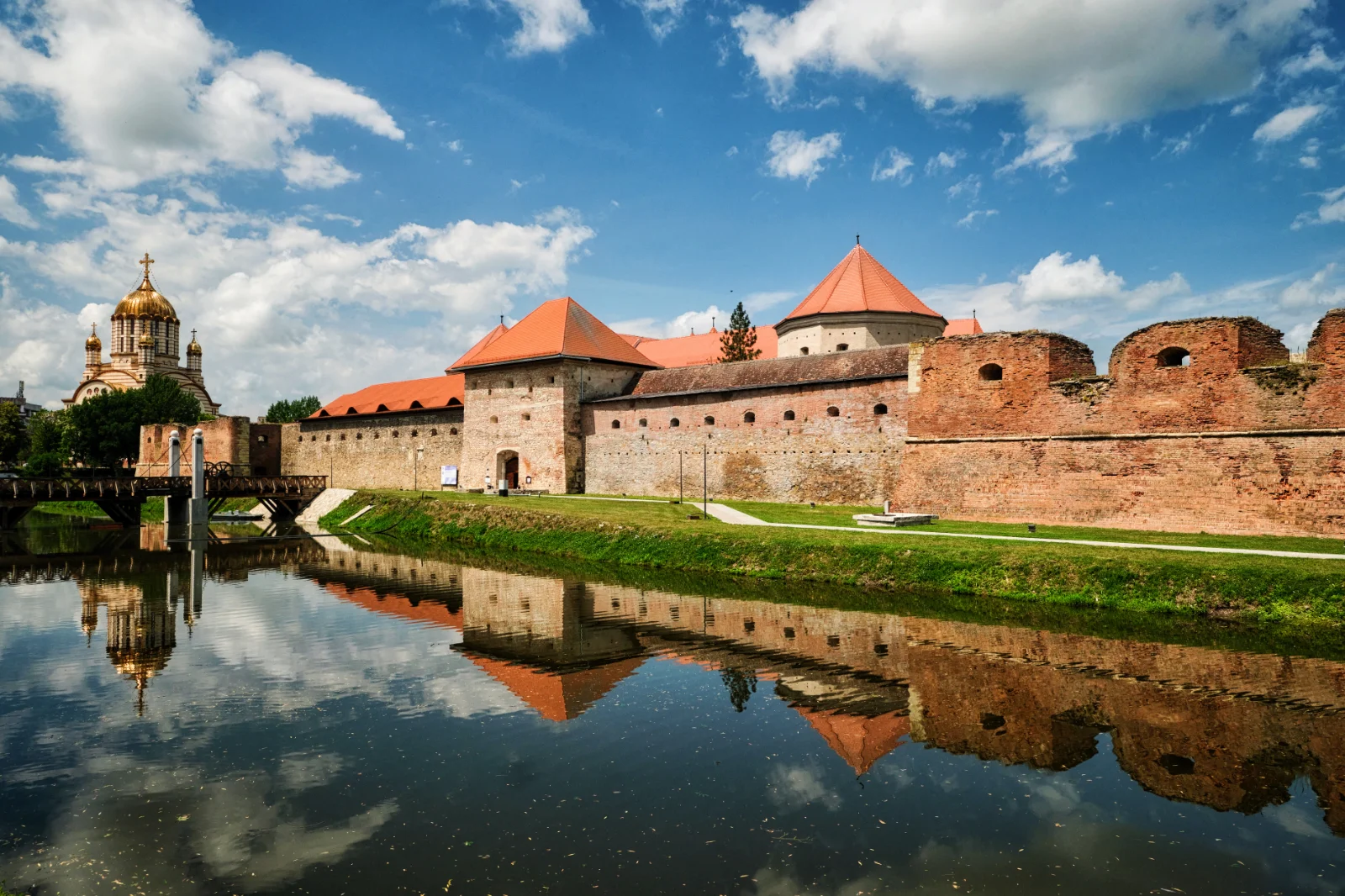
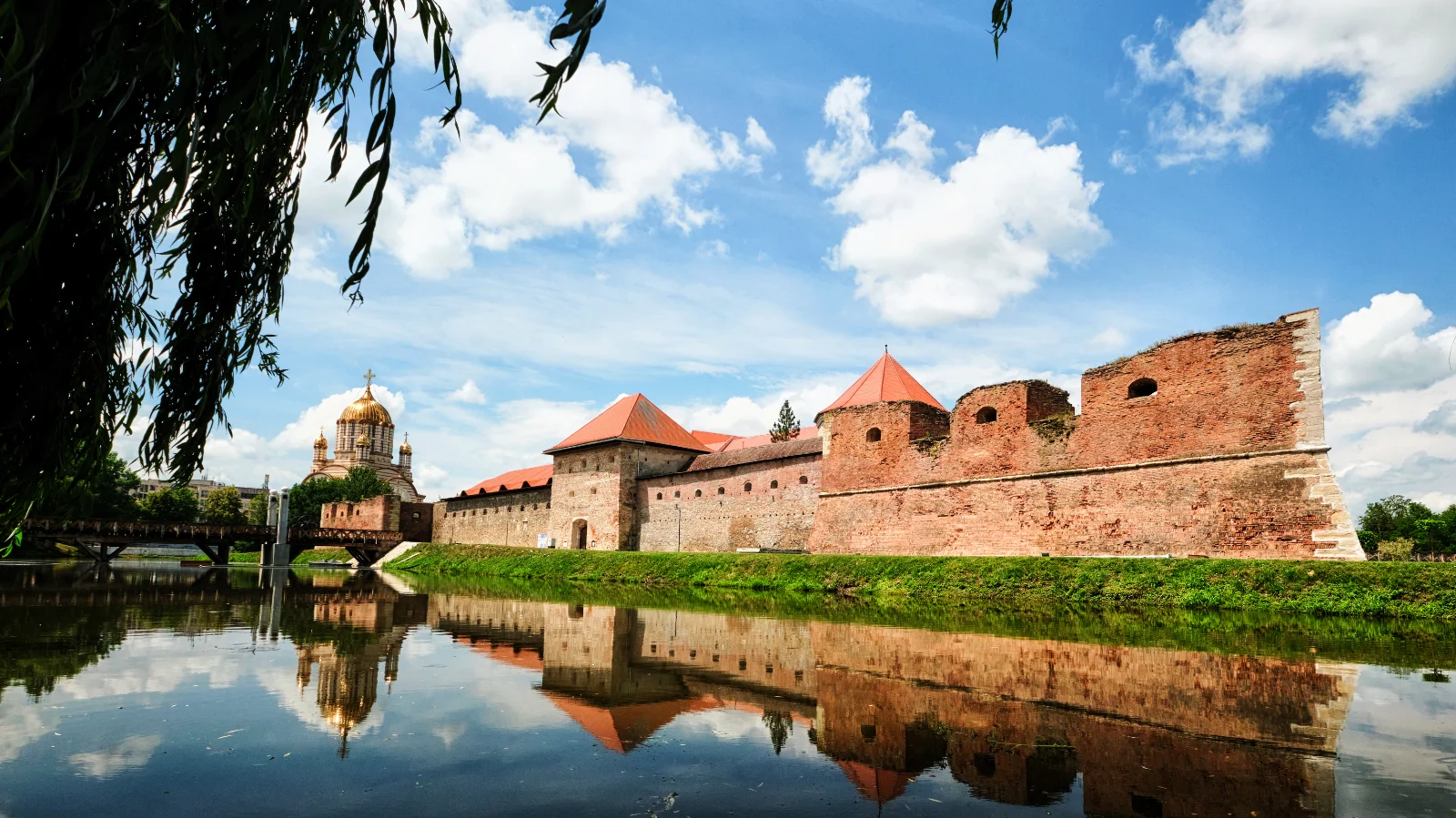
We begin our discovery of the Land of Făgăraș from the small town that it takes its name from, one of the oldest and most important fortresses in Transylvania. Throughout its history, the Făgăraș Fortress belonged to local nobles and rulers, including from Wallachia, and was built starting with 1310, over an older fortification, with the aim of protecting the southern border of Transylvania. In the 17th century, it was the true capital of the Principality of Transylvania, with its rulers having their residence within its walls. Later, it served as a garrison and military prison, the center of the diocese, or a communist prison. Today, the Făgăraș Fortress welcomes us resplendent in the city center on the banks of the Olt River, having been completely renovated in recent years.
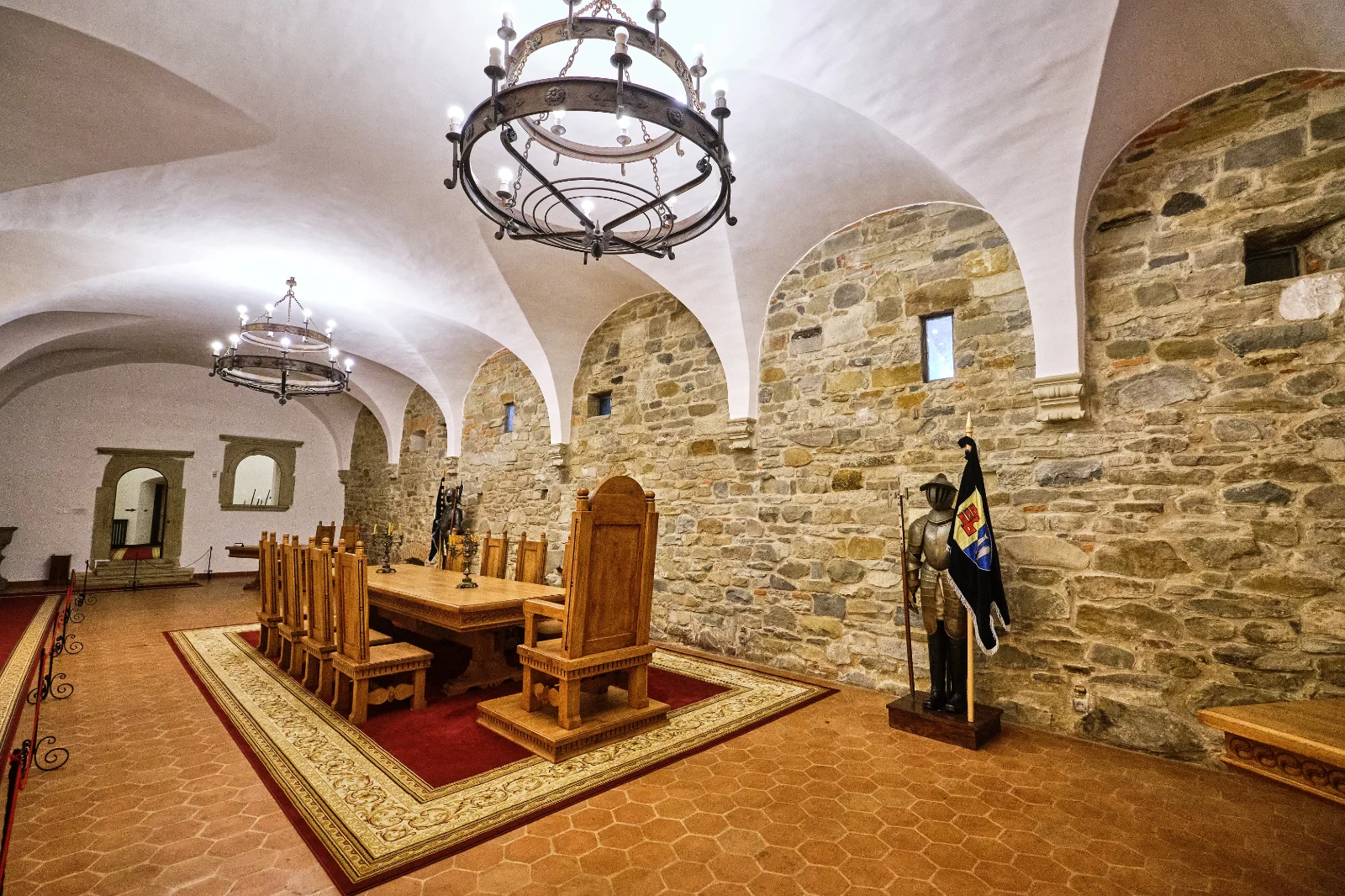
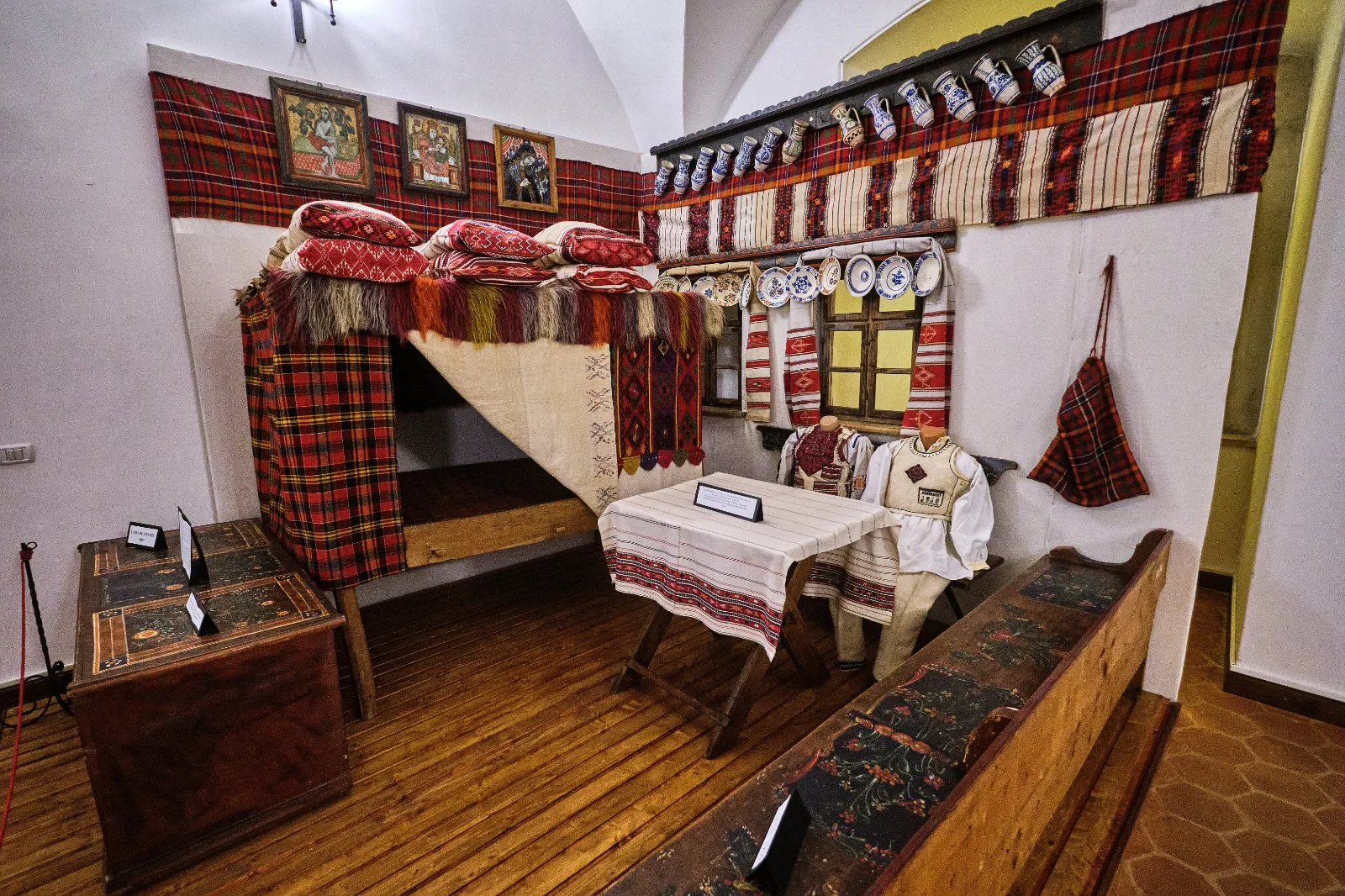
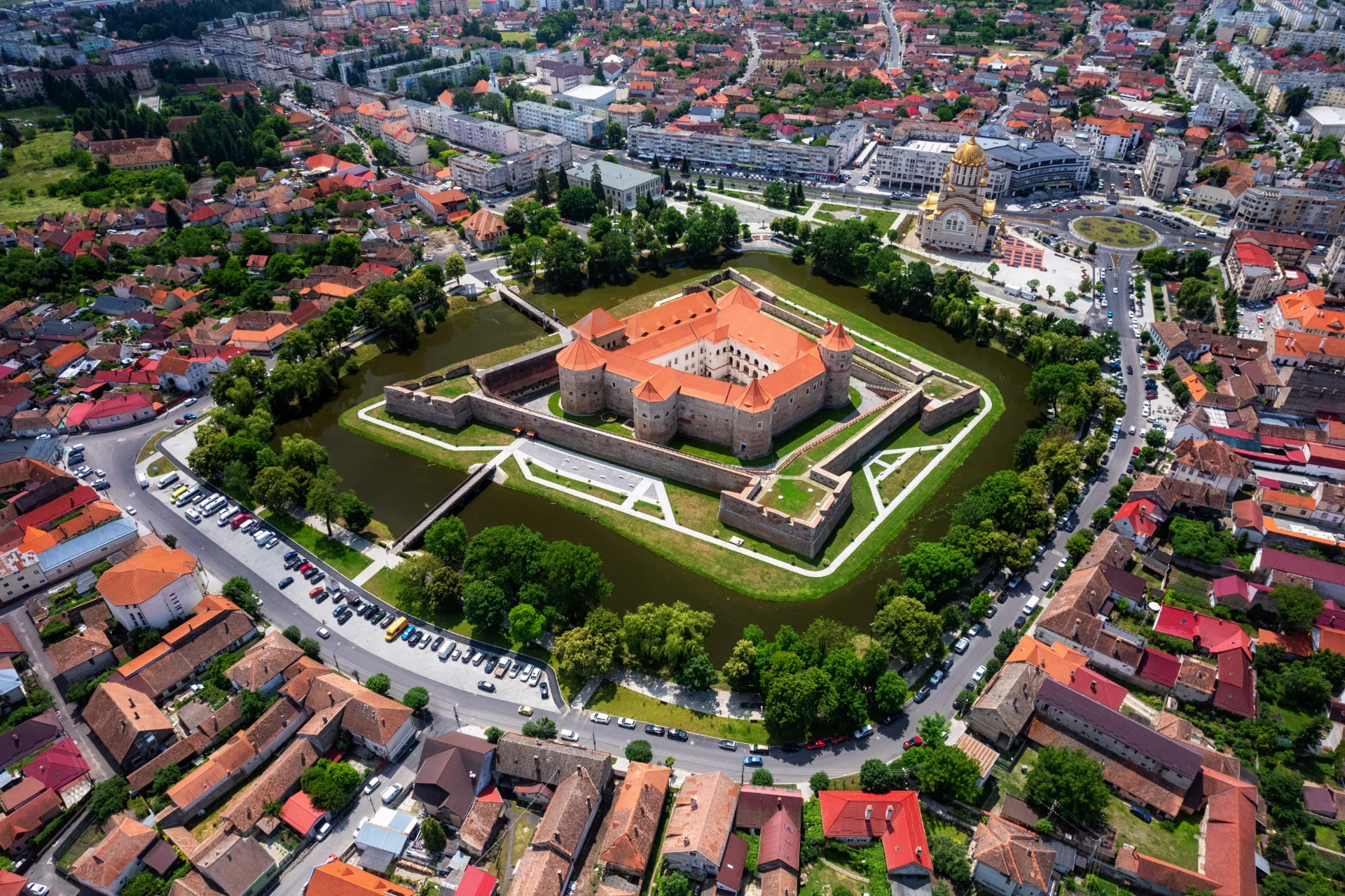
We are greeted by the massive walls and bastions that are reflected in the water that fills the defensive moat around them. We can enter over the two bridges, and in the inner courtyard we find the imposing castle. The current appearance dates mainly from the 17th century, when the princes of Transylvania built, strengthened and expanded most of the structures. The interior complex includes 60 spaces and rooms, many of which now house the Museum of the Land of Făgăraș, with varied and interesting exhibitions that allow us to discover the history and traditions of this fascinating area. During the visit, we can admire the throne room with its spectacular furniture, the collection of medieval weapons and armor, the extensive ethnographic collection, as well as some artistic exhibitions.
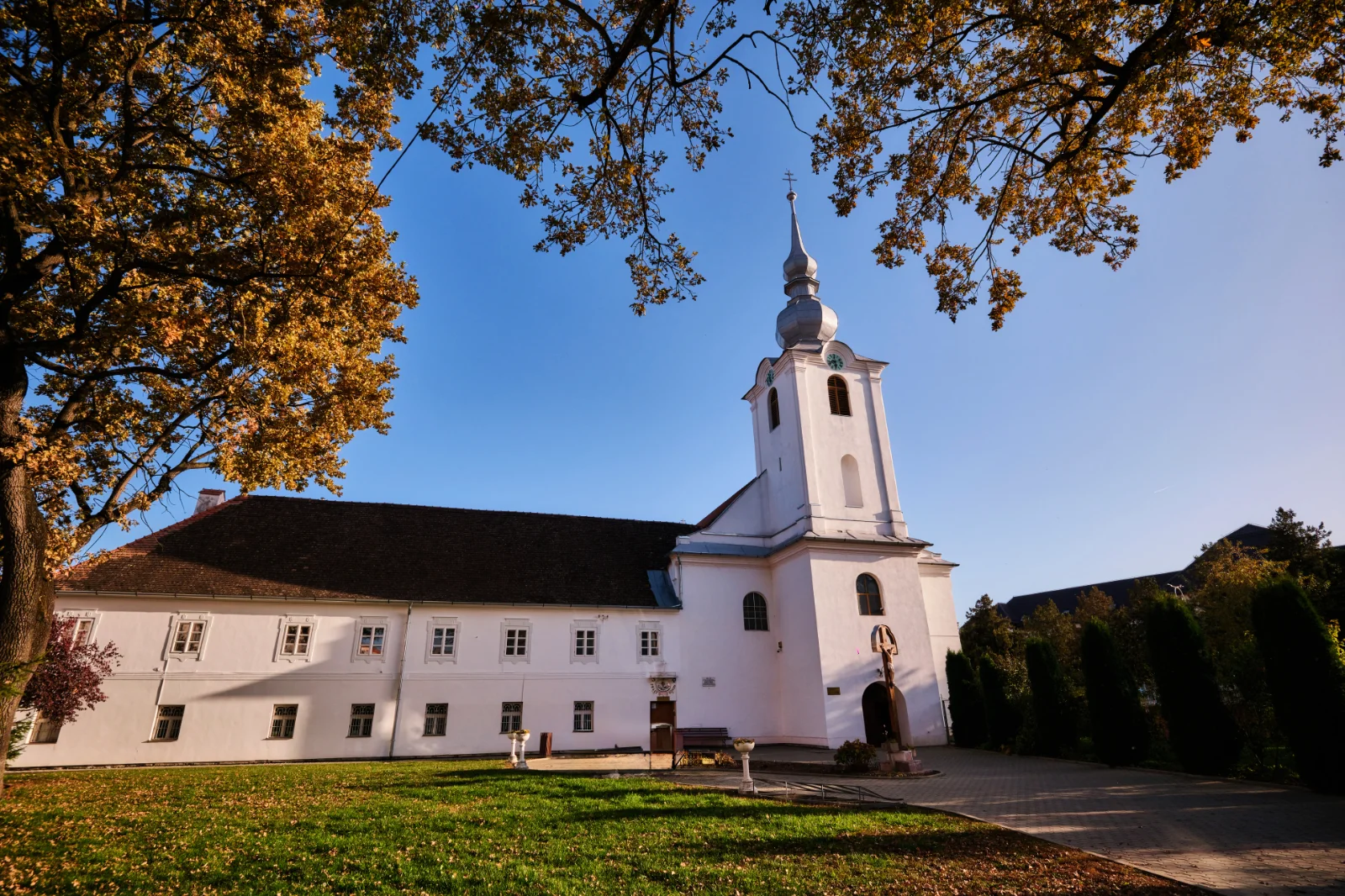
Near the fortress, in recent decades another imposing monument has been erected, the Cathedral of “Saint John the Baptist” with impressive dimensions and several special features, including the gold-plated spires or the interior frescoes. Starting a walk through the small town of Făgăraș, we can discover several other interesting monuments, starting with the Franciscan Church and Monastery, a set of historical and architectural monuments dating back to the 18th century, but also the Church of “St. Nicholas” – Brâncoveanu, the Reformed Church, or several other old buildings. We are in the geographical center of the country, and from Făgăraș the roads open up to us in all directions. Crossing the Olt and climbing the nearby Calbor hill, we can admire a memorable panorama of the region and the peaks of Făgăraș.
Search for Flights to Romania with Booking.com!
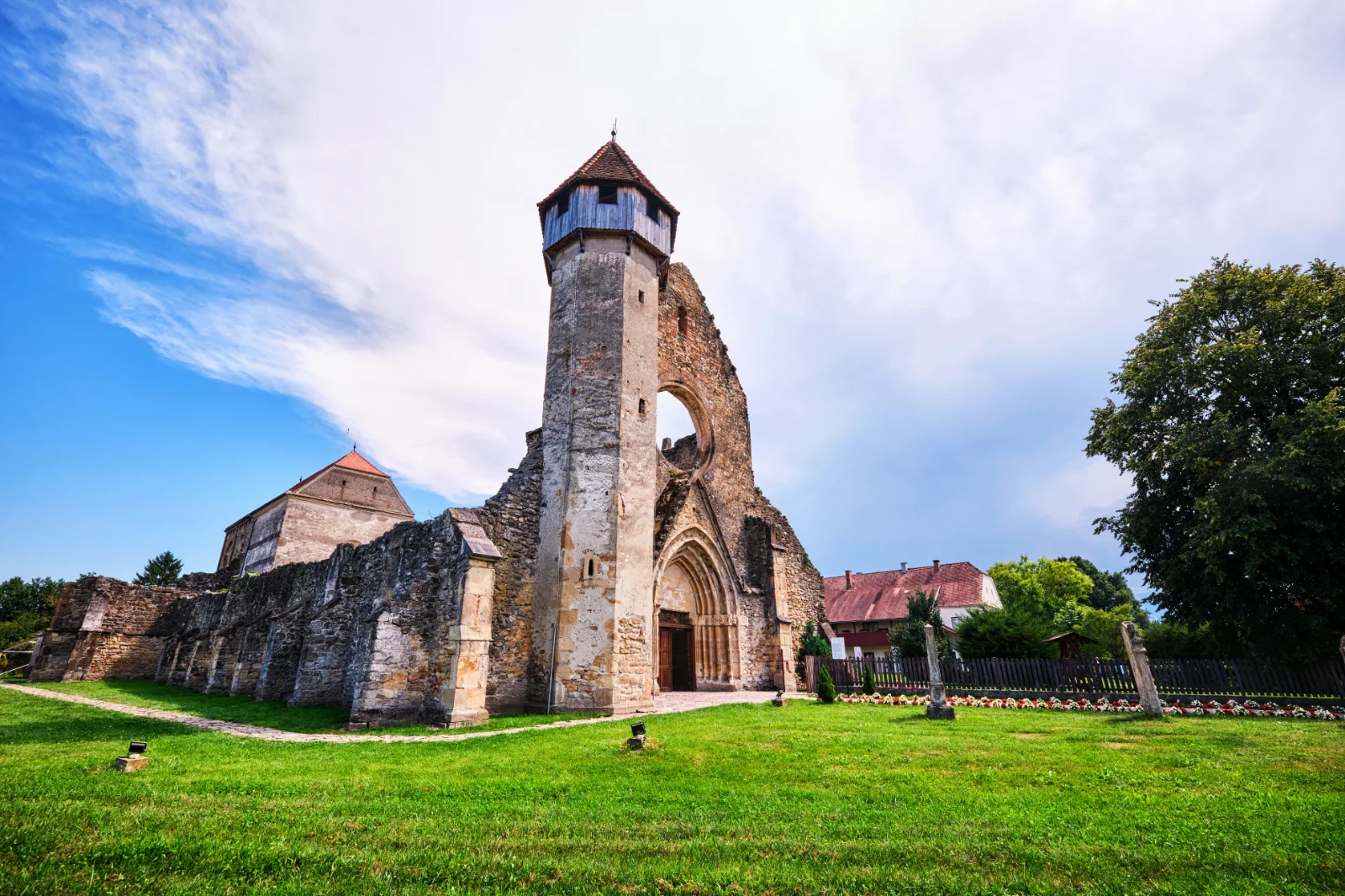
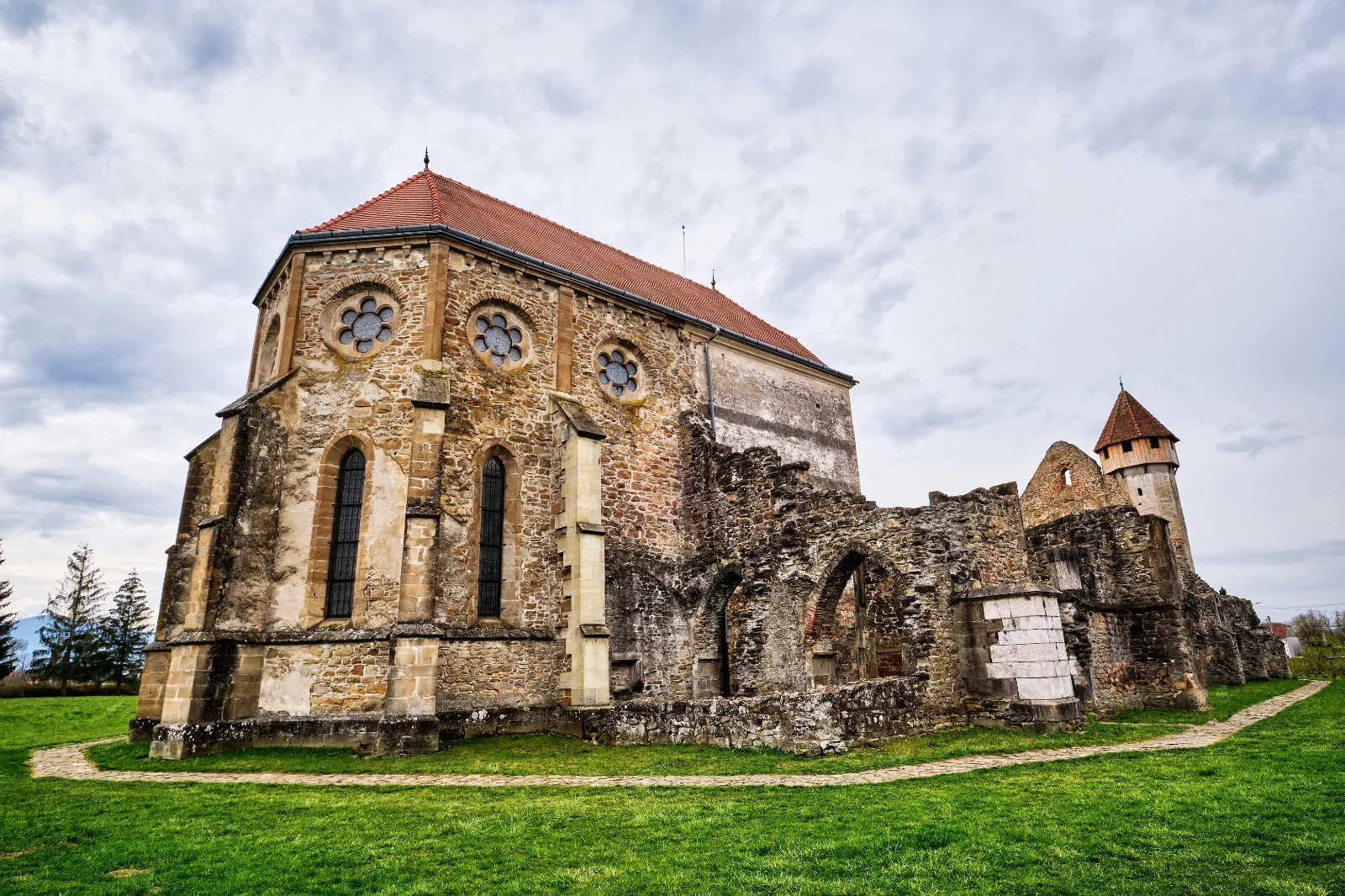
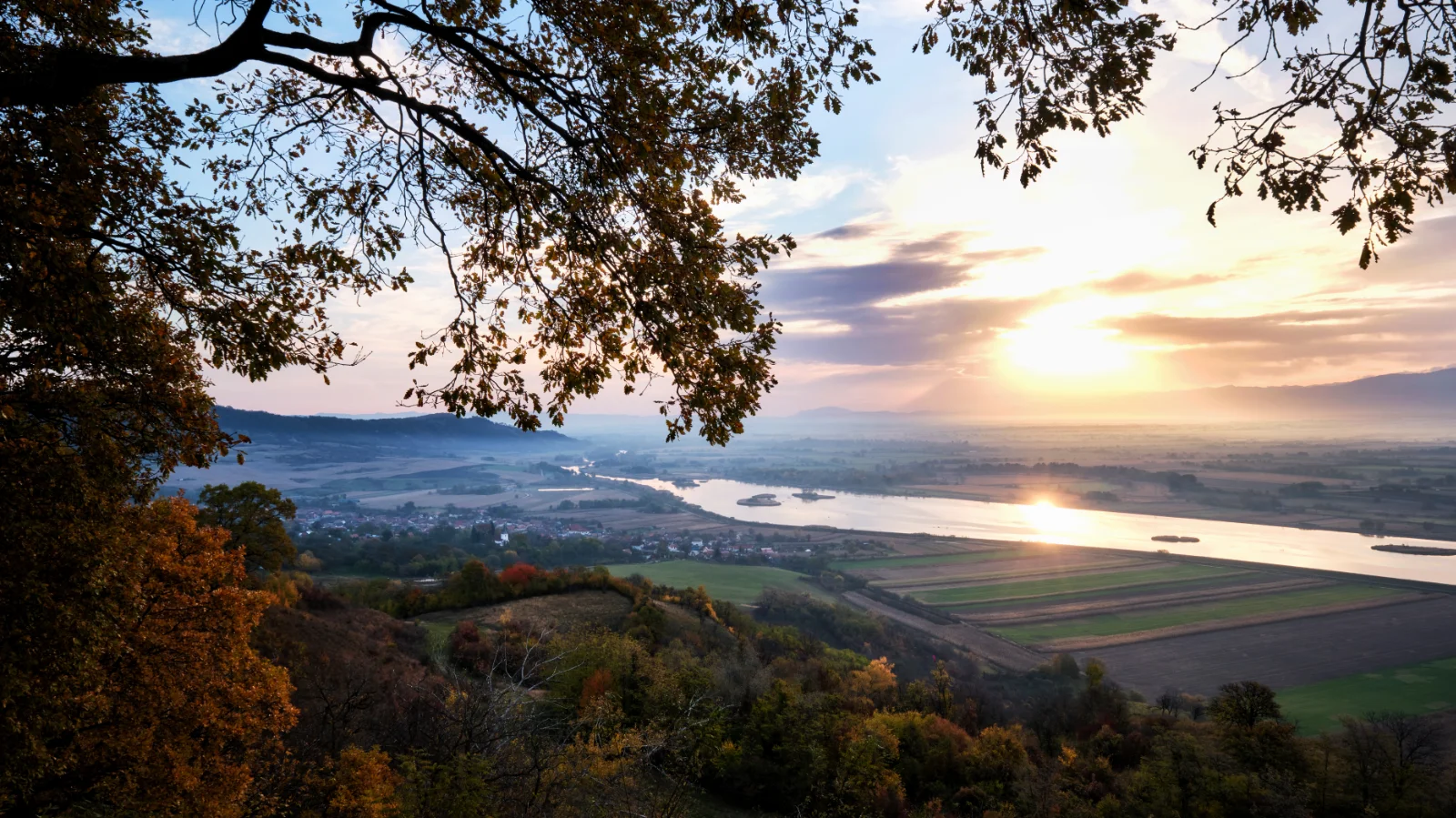
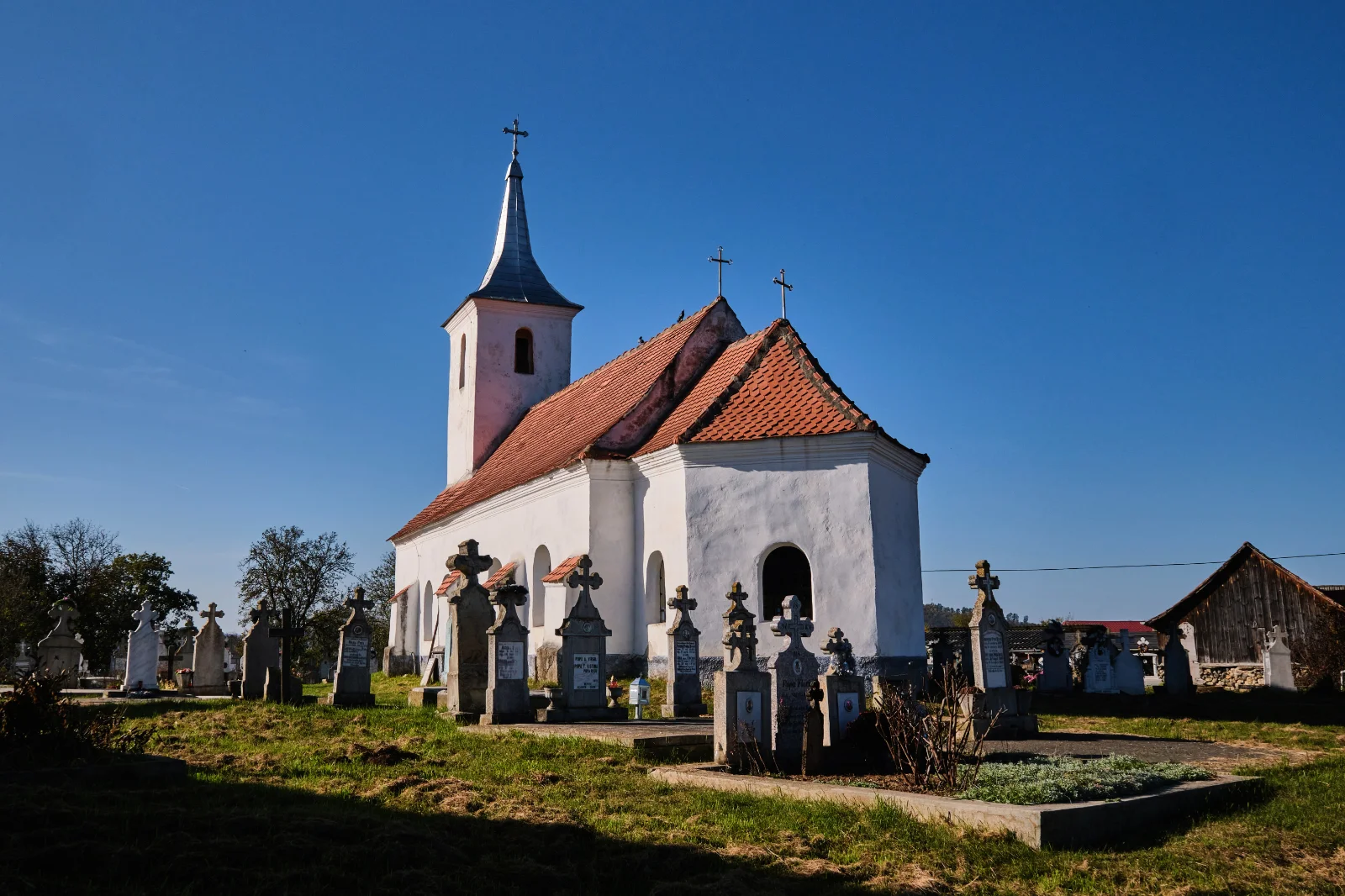
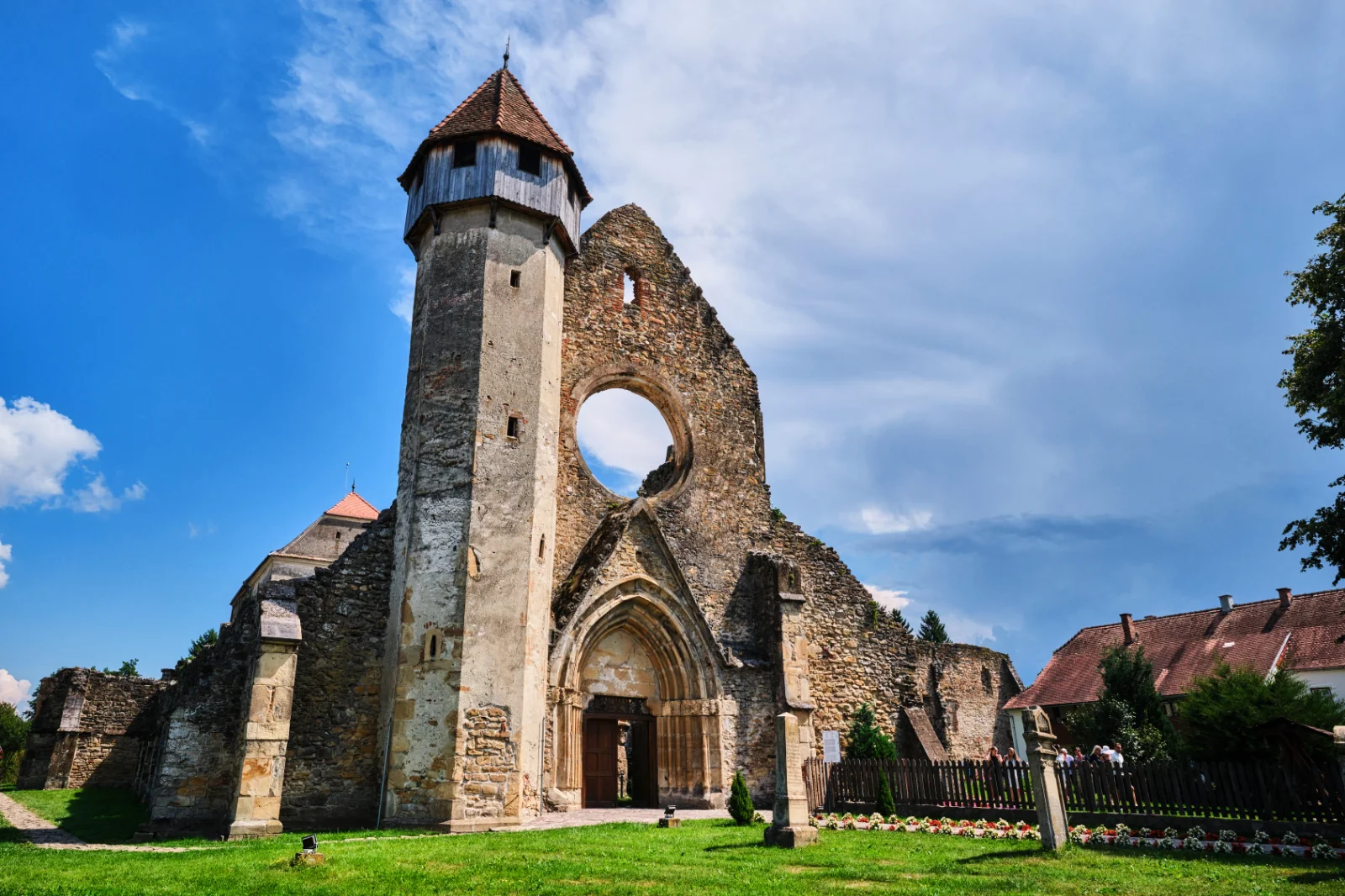
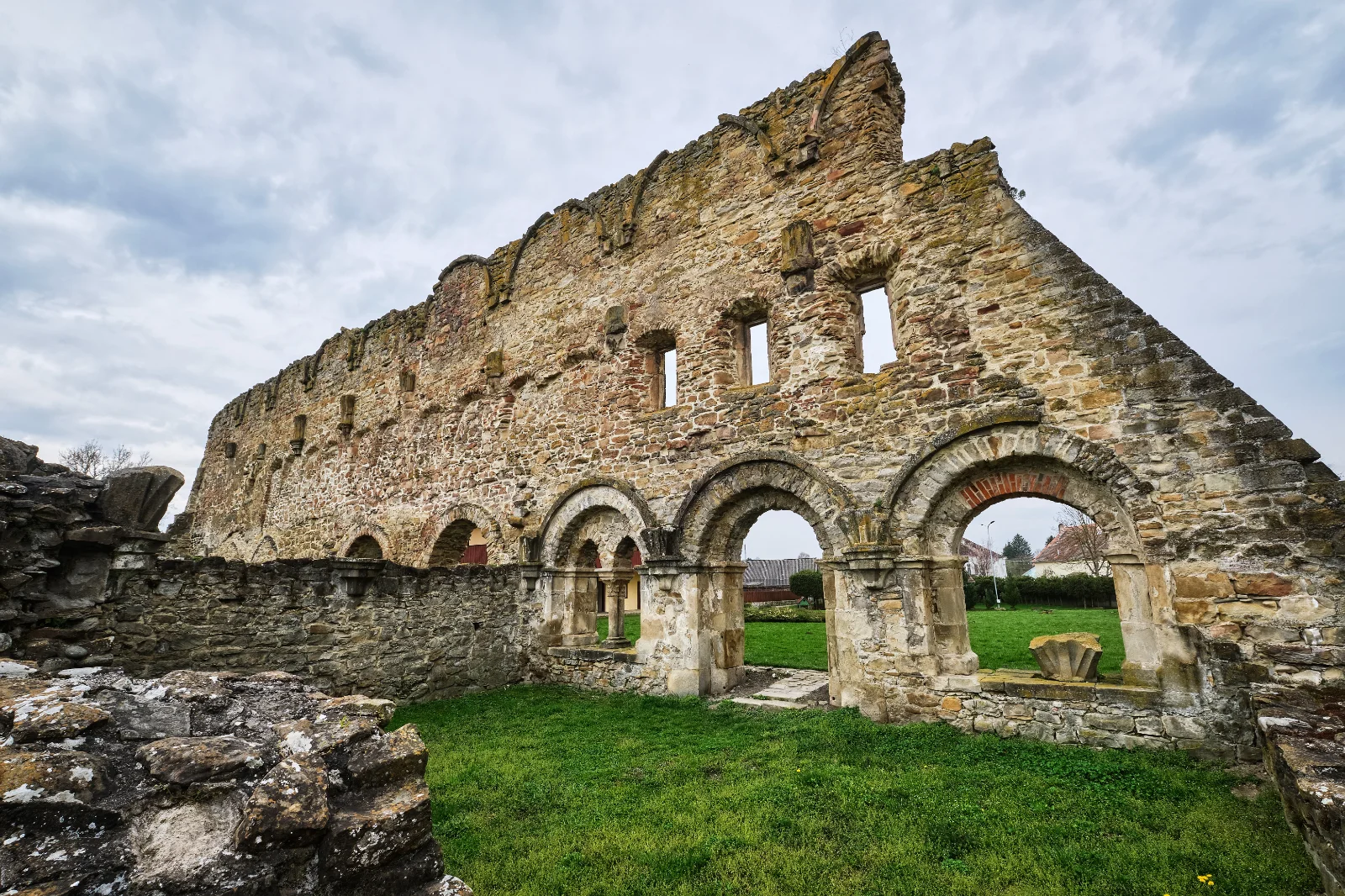
Heading west along the Olt River, we can stop by the charming village of Rucăr, located on the other side of the river. A small hill nearby offers us other captivating views of the lowlands, especially seductive at sunset or sunrise. Halfway between Sibiu and Făgăraș, the Cârța Cistercian Monastery is a silent witness to the centuries that have passed over this ancient settlement, a mysterious memory of almost forgotten times. We thus discover an amazing and rare monument in Romanian lands, being one of the oldest monasteries of its kind in Eastern Europe. It was founded in the early 13th century by King Emeric, being first built as a chapel for Cistercian monks.
One of the legends surrounding the Cârța monastery is that the spirits of former monks still haunt the ruins here, even inspiring a film. The Cistercian order once had very strict rules, with monks fasting for most of the year and sleeping in very harsh conditions, which led to the premature death of many, who were buried on the surrounding grounds!
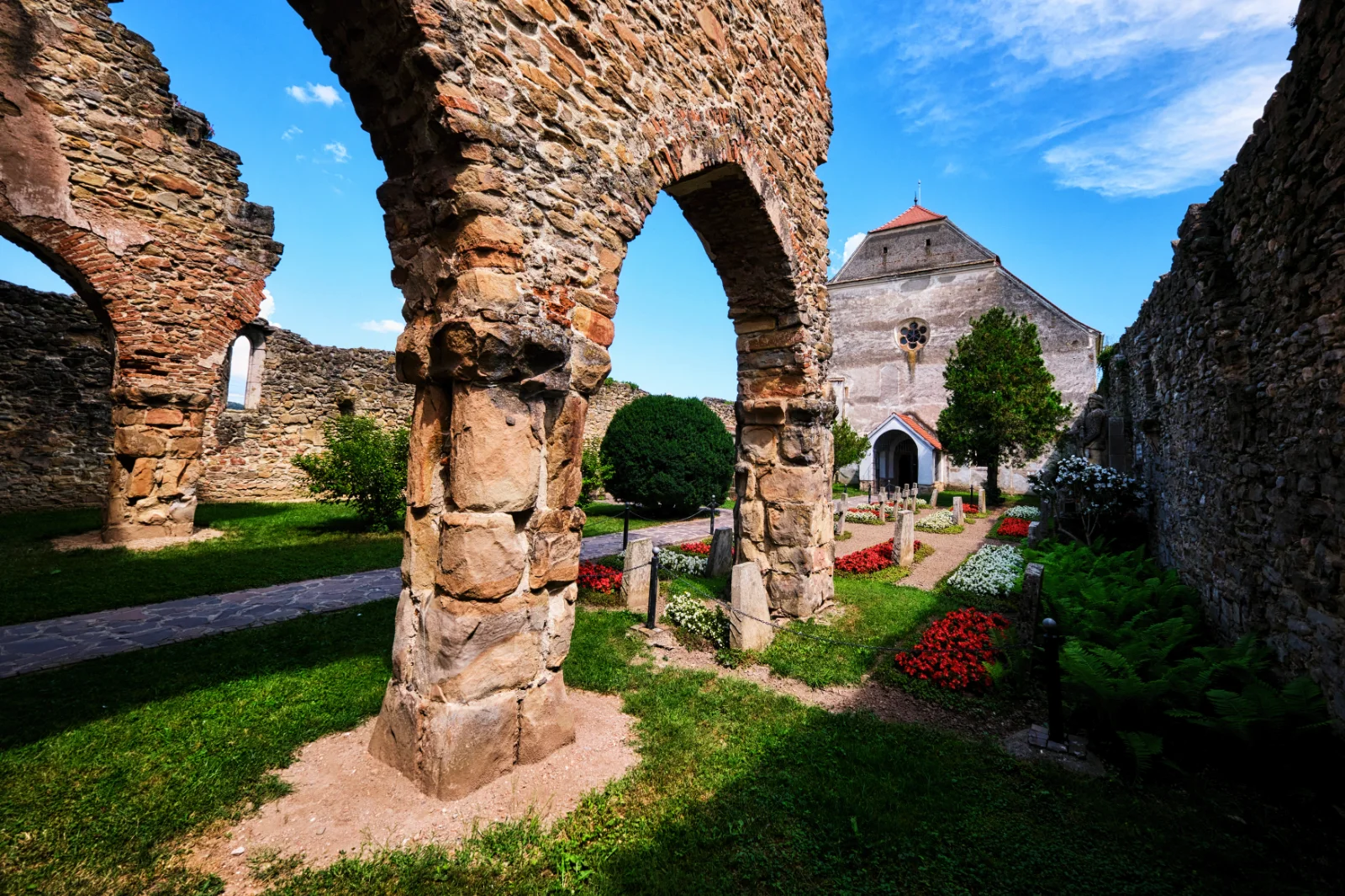
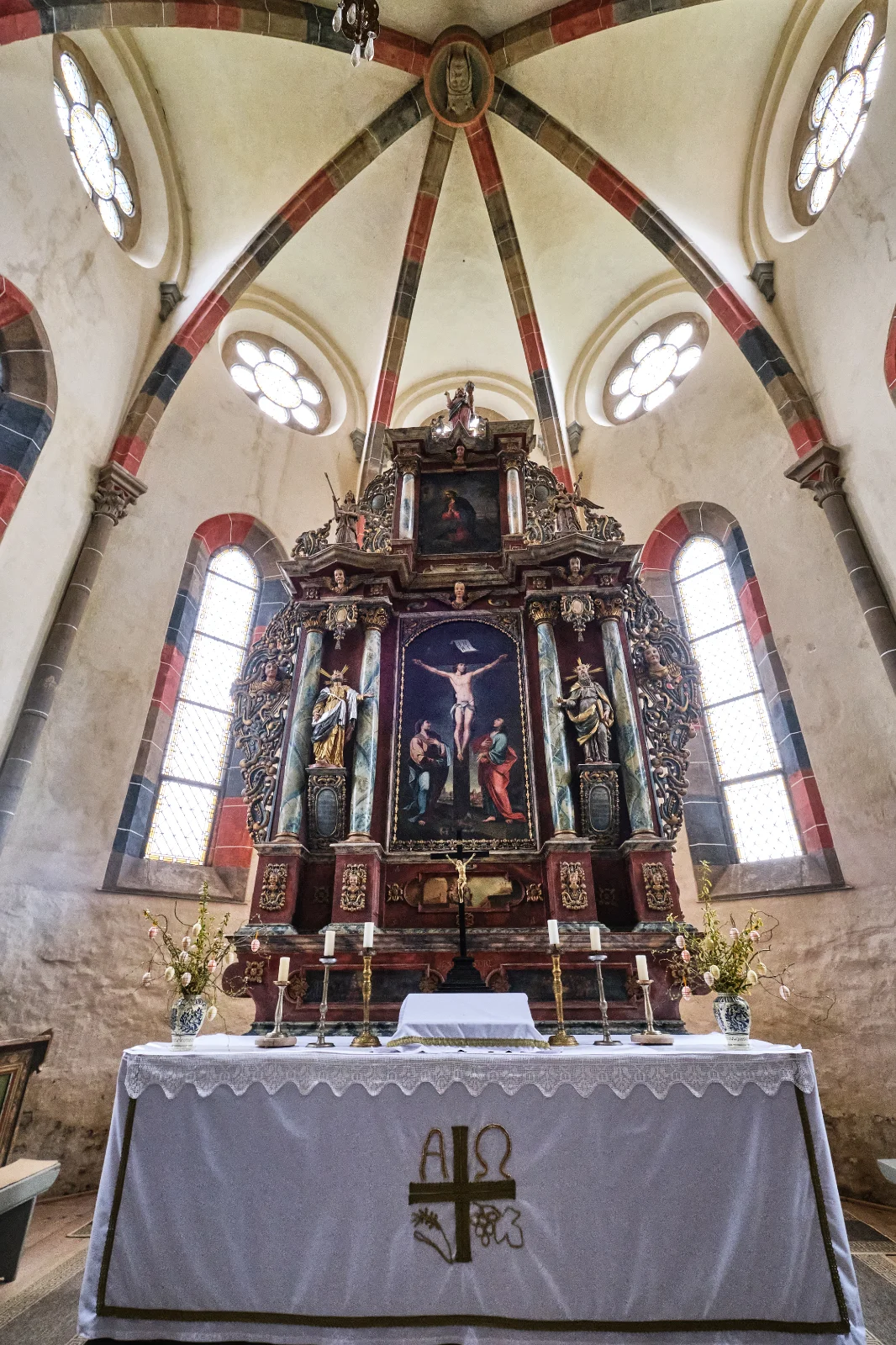
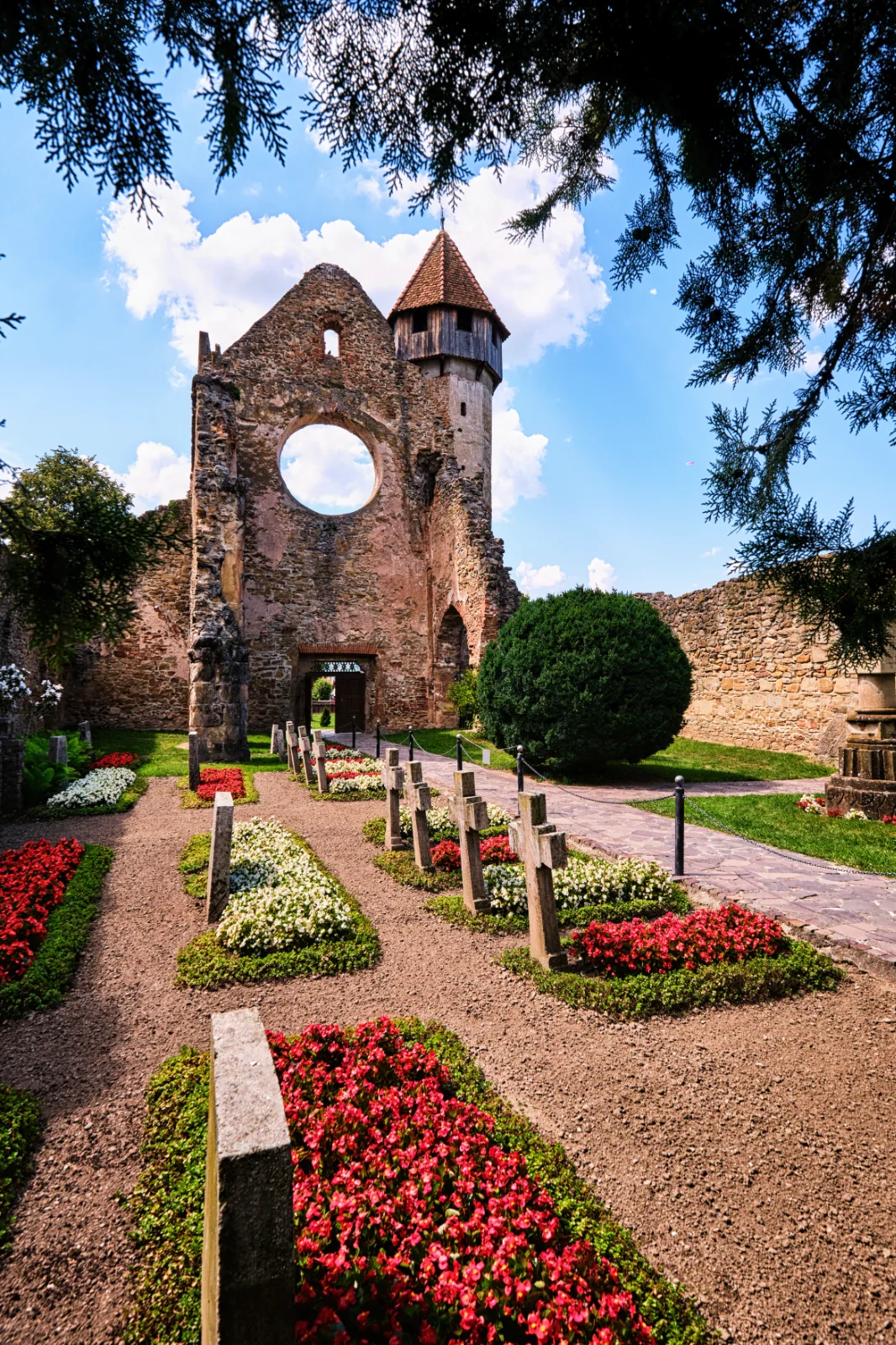
The larger structures appeared later, with construction continuing after the great Tatar invasion of 1241 and completed over a century after its foundation. The monastery was dissolved by King Matthias Corvinus in 1474 and it is a miracle that it still stands today, even if mostly in ruins. However, it still retains signs of its former grandeur and we can imagine the impressive complex in its heyday. Today we can still admire the splendid Gothic architecture of the old monastery, the chapel still intact being used by the village’s evangelical community. We also admire the tall bell tower, part of the main facade and the ruins of the south wing. In the former nave of the cathedral there is a German cemetery, and one of the adjacent buildings houses a small local museum.
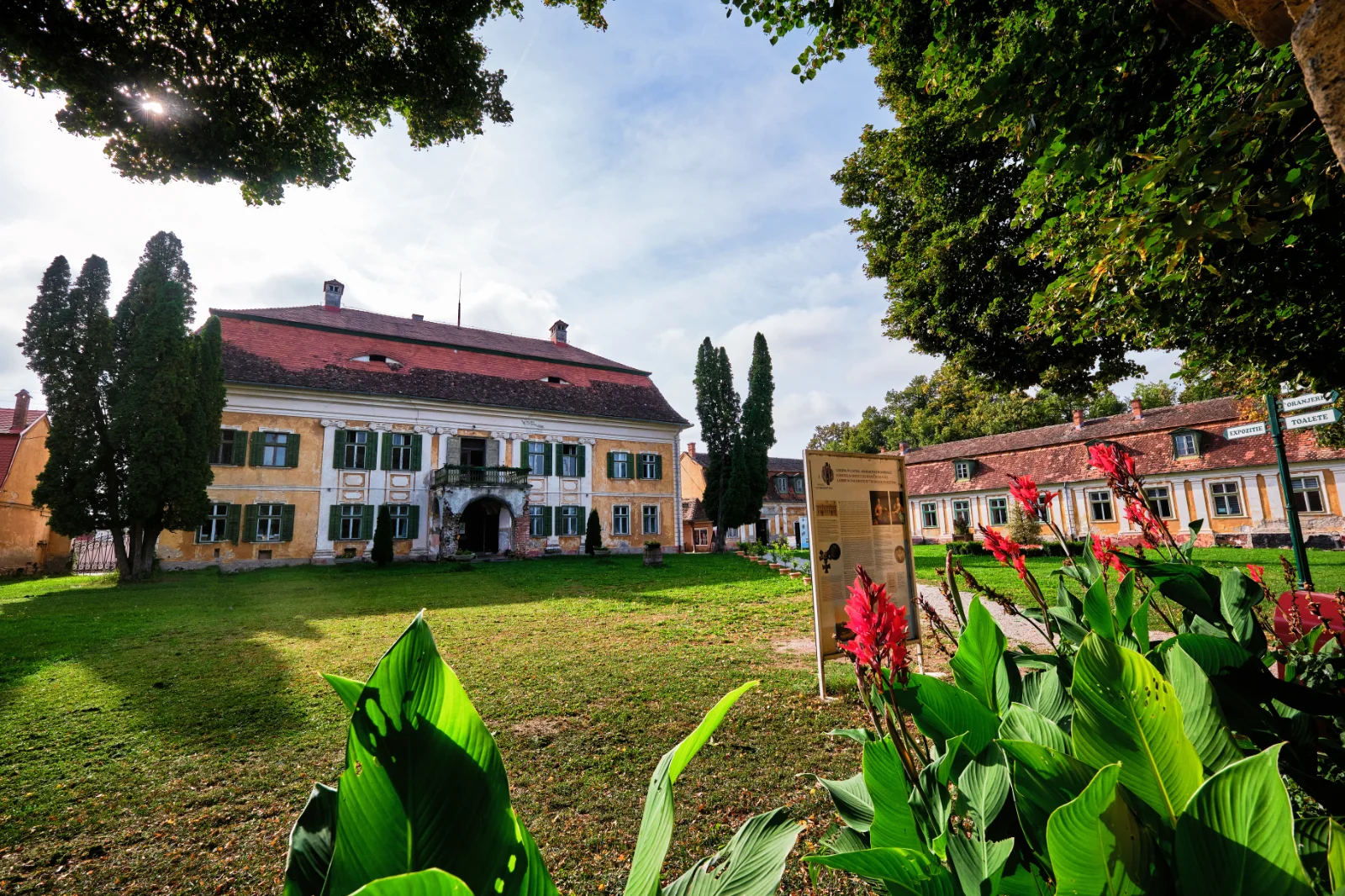
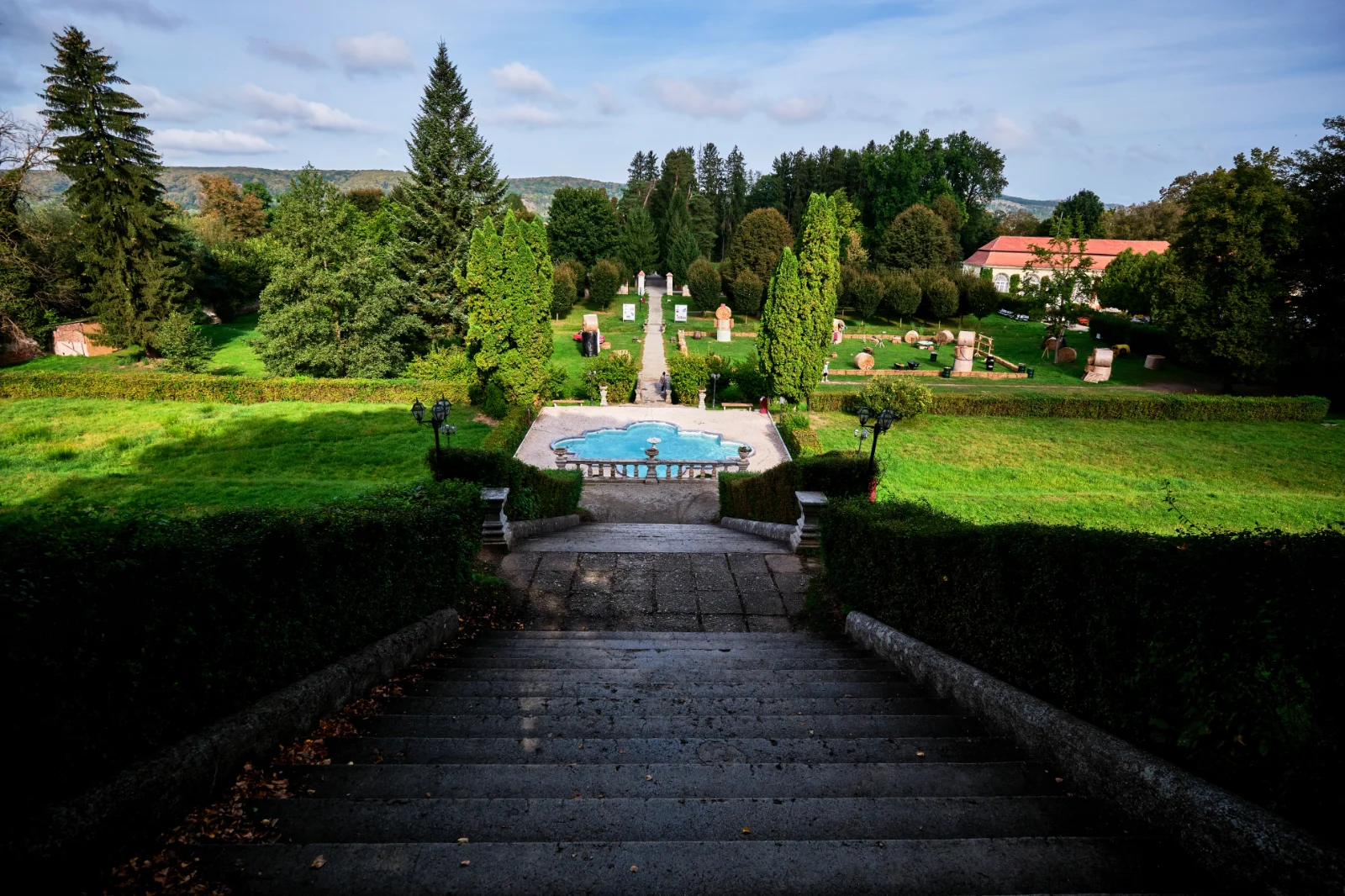
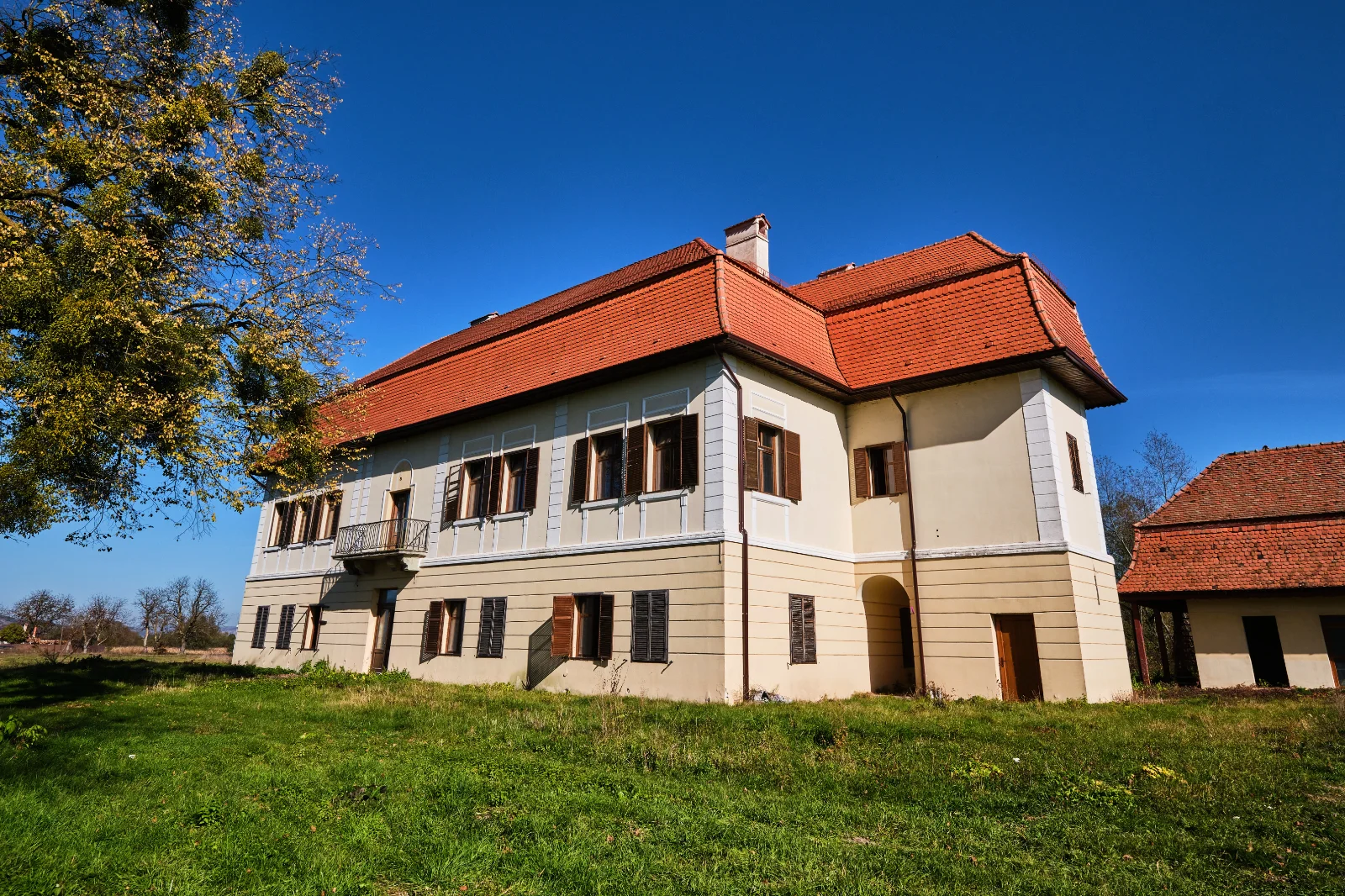
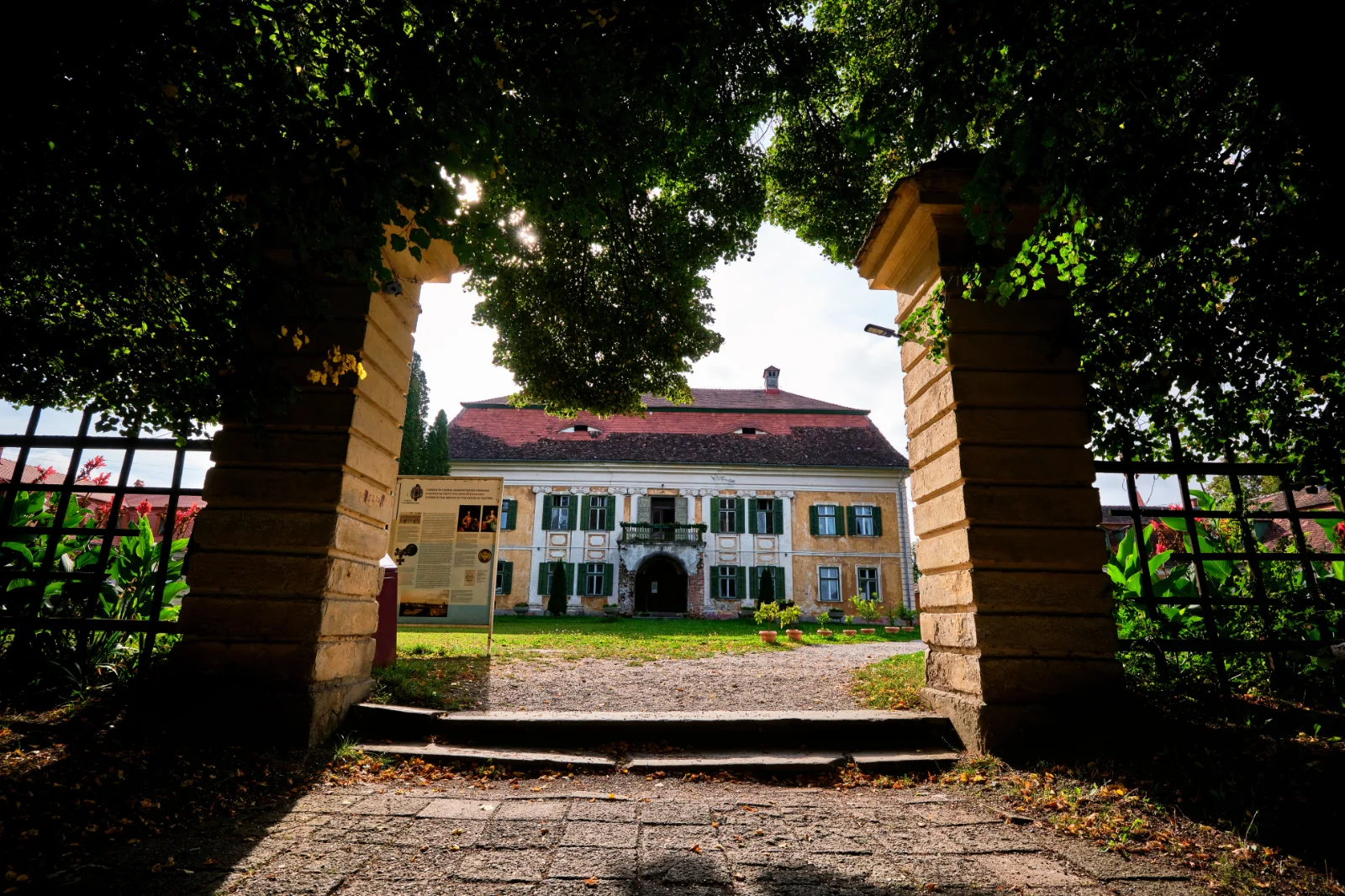
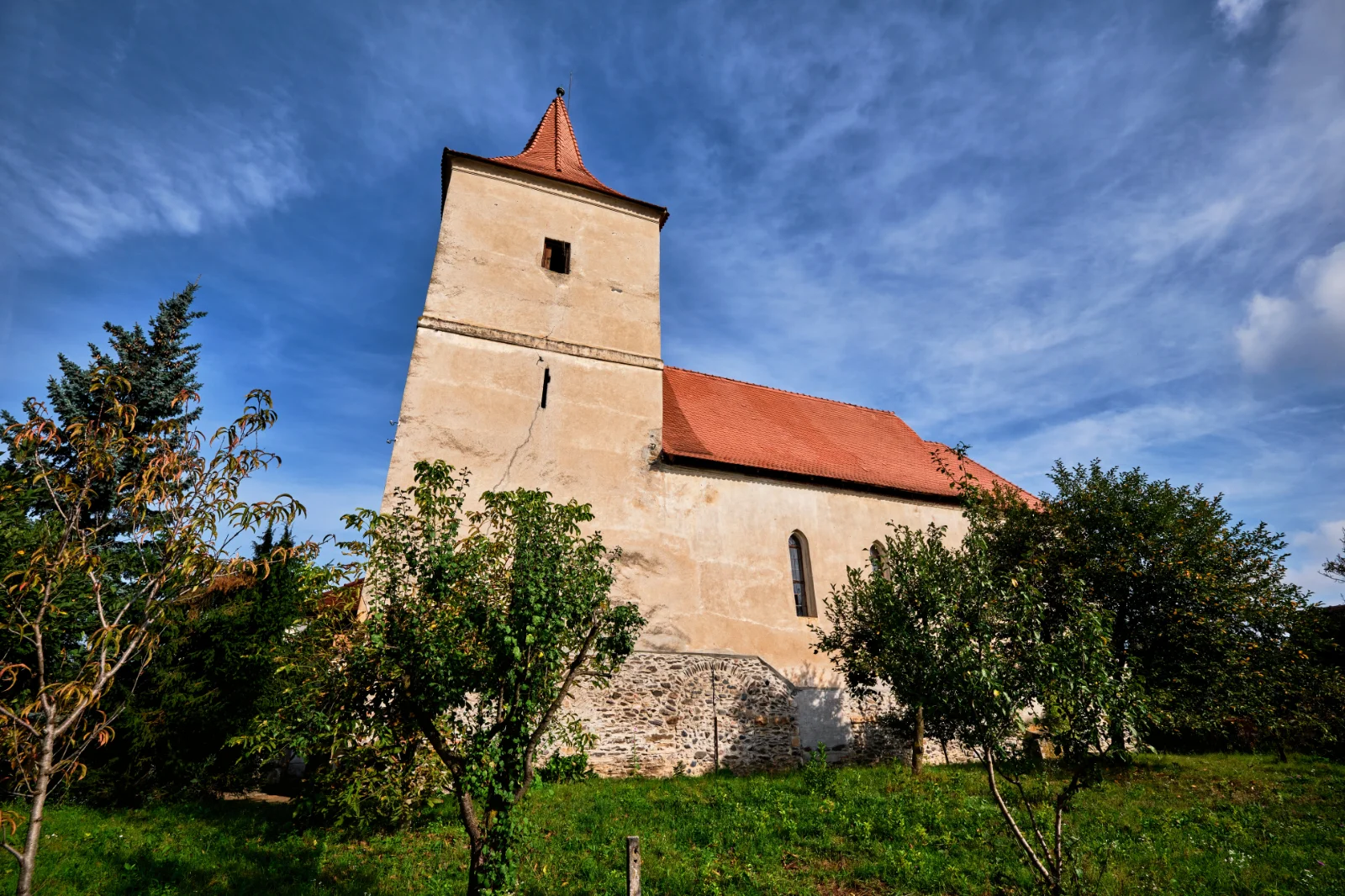
Continuing west, we stop in the small town of Avrig, just a few kilometers from Sibiu, where we visit the summer residence of Baron Samuel von Brukenthal, built starting with 1762. The superb Brukenthal Palace complex at Avrig includes a charming park with an orangery and the elegant palace, consisting of a central body and two smaller wings. Over the years, it has undergone many changes, being transformed into a sanatorium and thermal center for much of the 20th century. Left in disrepair for many years, the complex was renovated after 2011, and now hosts private events and unique accommodation spaces. We can discover the estate to admire the impressive terraced gardens, the central fountain and the baroque architecture of the palace. Also worth visiting is the nearby Evangelical Church, built in the 13th century and fortified a few centuries later. In Avrig there is also an interesting Orthodox church from the 18th century and a small ethnographic museum.
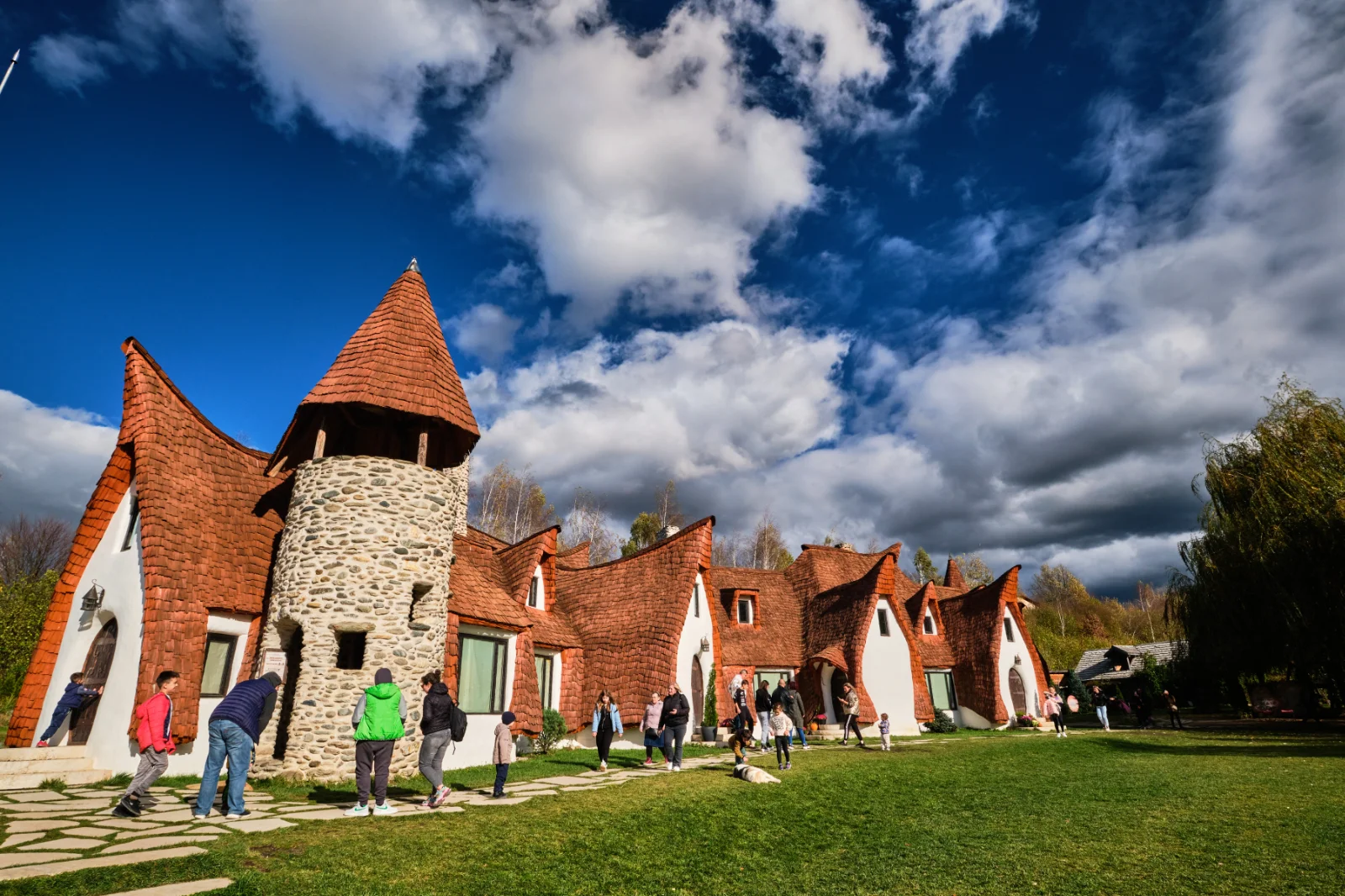
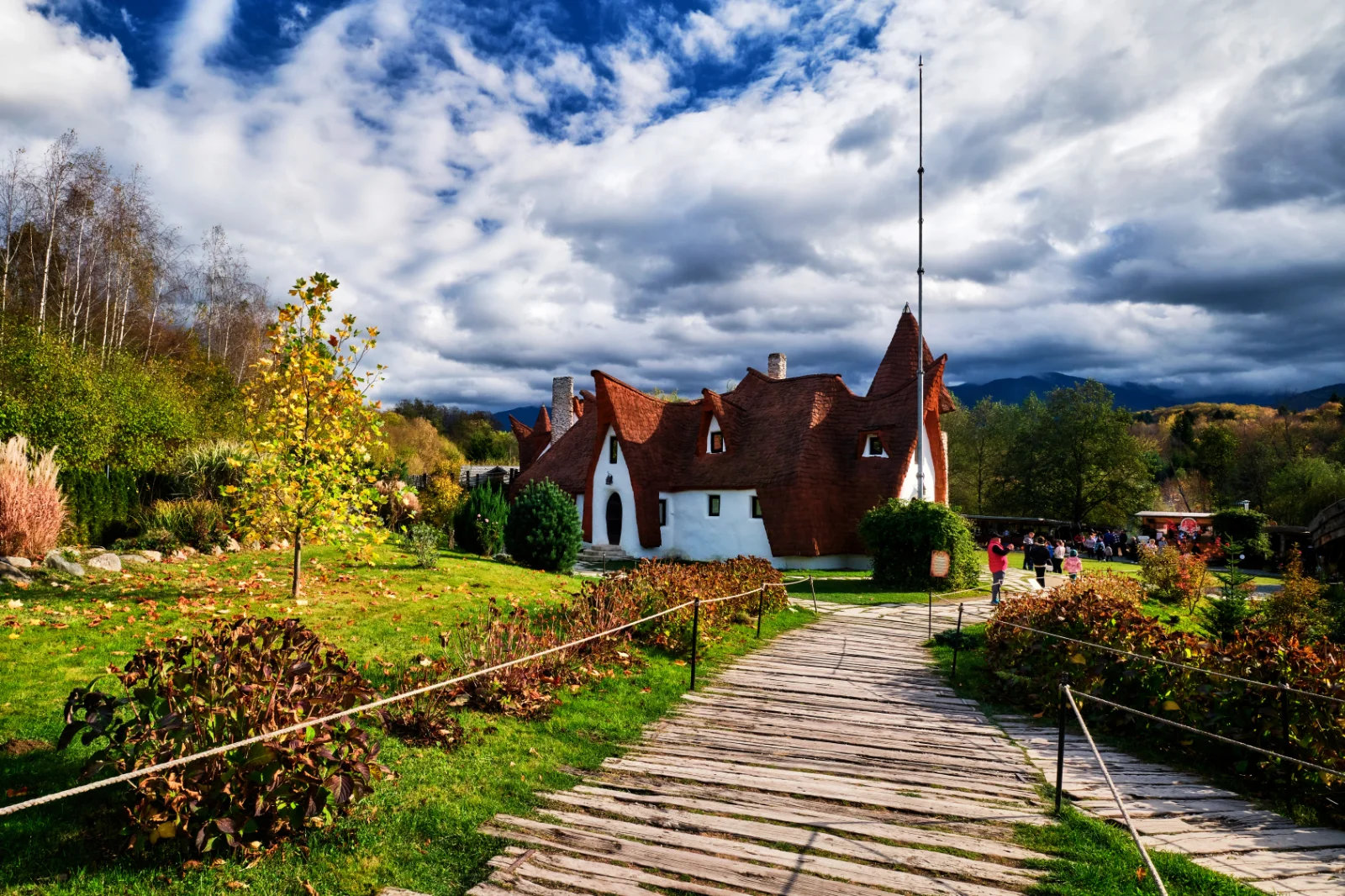
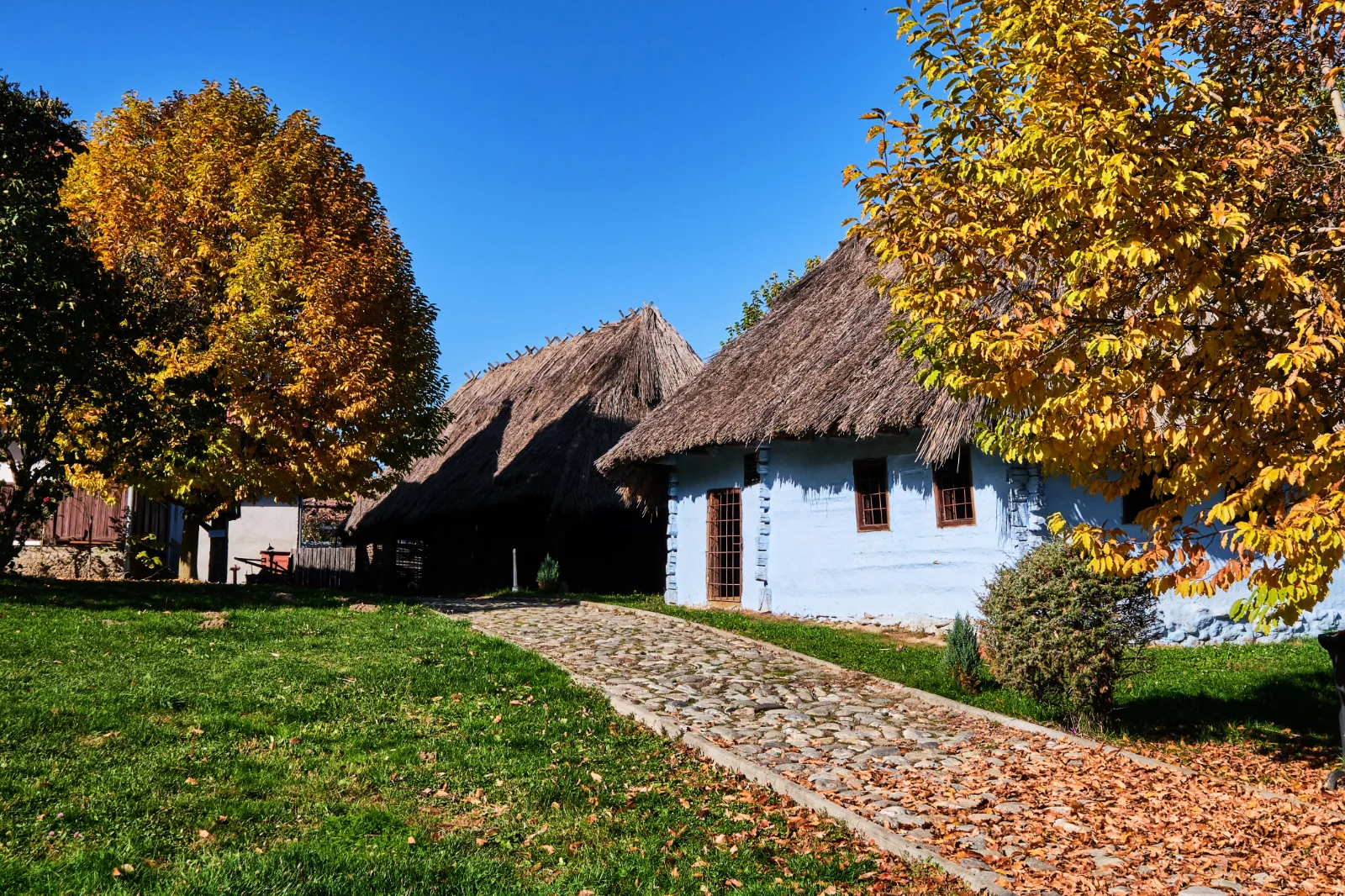
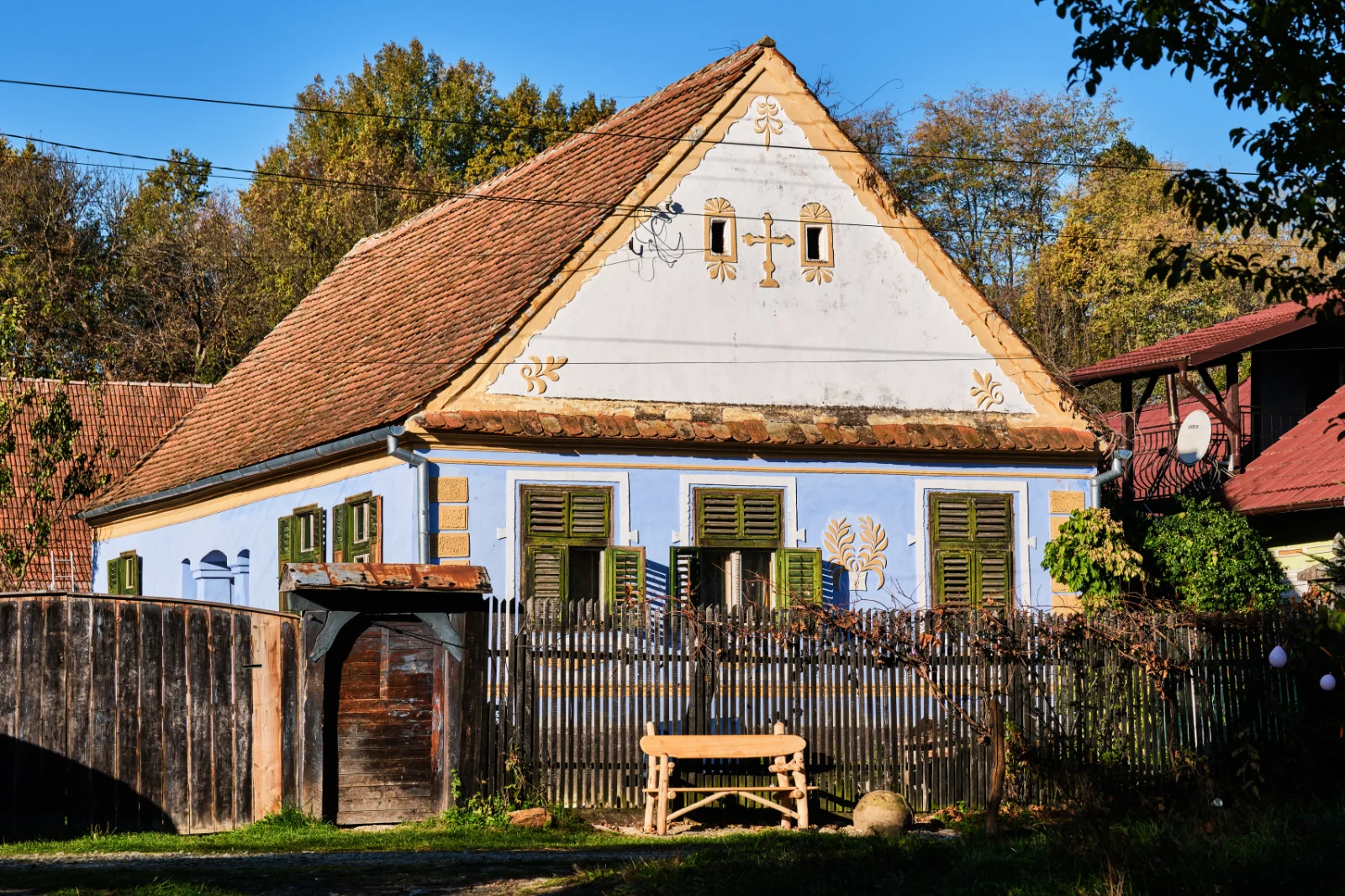
From here we turn east through the settlements at the foot of the mountains, and in the village of Porumbacu de Jos, in addition to the old houses with traditional architecture, in recent years a few more unique places have also appeared, starting with the already famous Clay Castle of the Fairy Valley, created by the vision of a family from Bucharest. Resembling a castle from stories, it was built almost entirely of clay and natural materials, recently turned into a unique accommodation space and restaurant. Further on, picturesque villages line the valleys that descend from the mountains, hiding other treasures of rural architecture or old churches designated as historical monuments, such as those in Cârțișoara, Arpașu de Sus, Arpașu de Jos, Viștea de Sus, Viștea de Jos, Olteț, Sâmbăta de Sus, Voila, Mărgineni, Mândra, Șercăița, Ohaba, Veneția de Sus, Veneția de Jos or Comăna de Jos, among others. In Cârțișoara we can also visit the small museum dedicated to the memory of Badea Cârțan, a simple peasant who fought for the freedom and unification of Romanians everywhere. He also remained in history for the journey he made on foot to Rome, where he wanted to see the monuments that attest to the origins of the Romanian people.
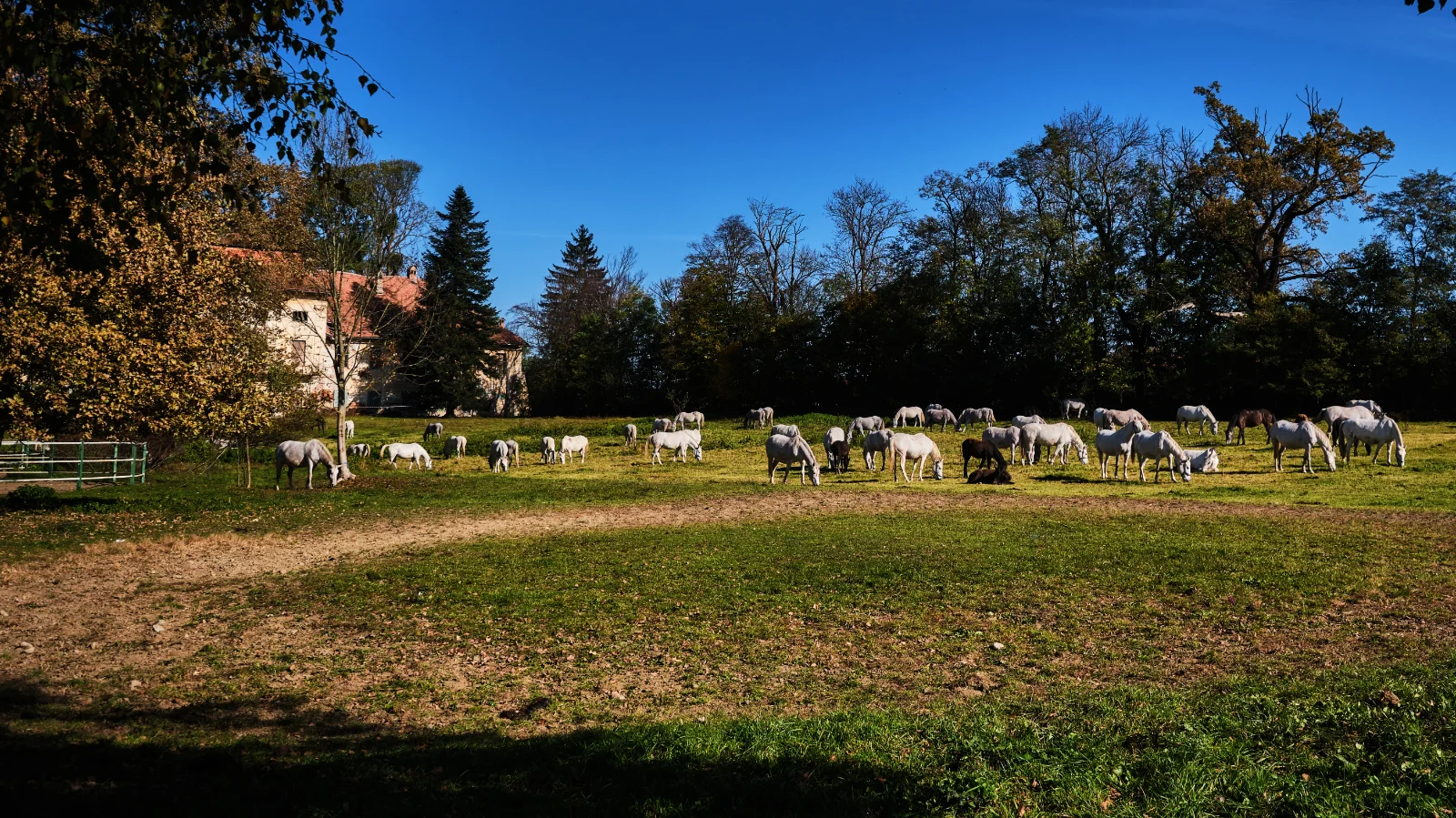
We continue our journey to the Sâmbăta Valley, where the village of Sâmbăta de Sus preserves several exceptional monuments. The Brâncoveanu Palace was built by Grigore Brâncoveanu in the 19th century, on the ruins of the old palace built by the ruler of Wallachia two centuries earlier and demolished at the end of the 18th century. Of the old domain, only the cellars under the current palace and the ruins of the richly ornamented entrance gate remain. A few kilometers north we can visit the Sâmbăta de Jos Stud Farm, where we meet the superb Lipizzan horses, this being the largest stud farm of its kind in the country and one of the most important in Europe. The horses can be admired both in the stables, but also roaming freely on the former domain of the Brukenthal Castle, today almost a ruin.
Search for Lodging in the Land of Făgăraș with Booking.com!
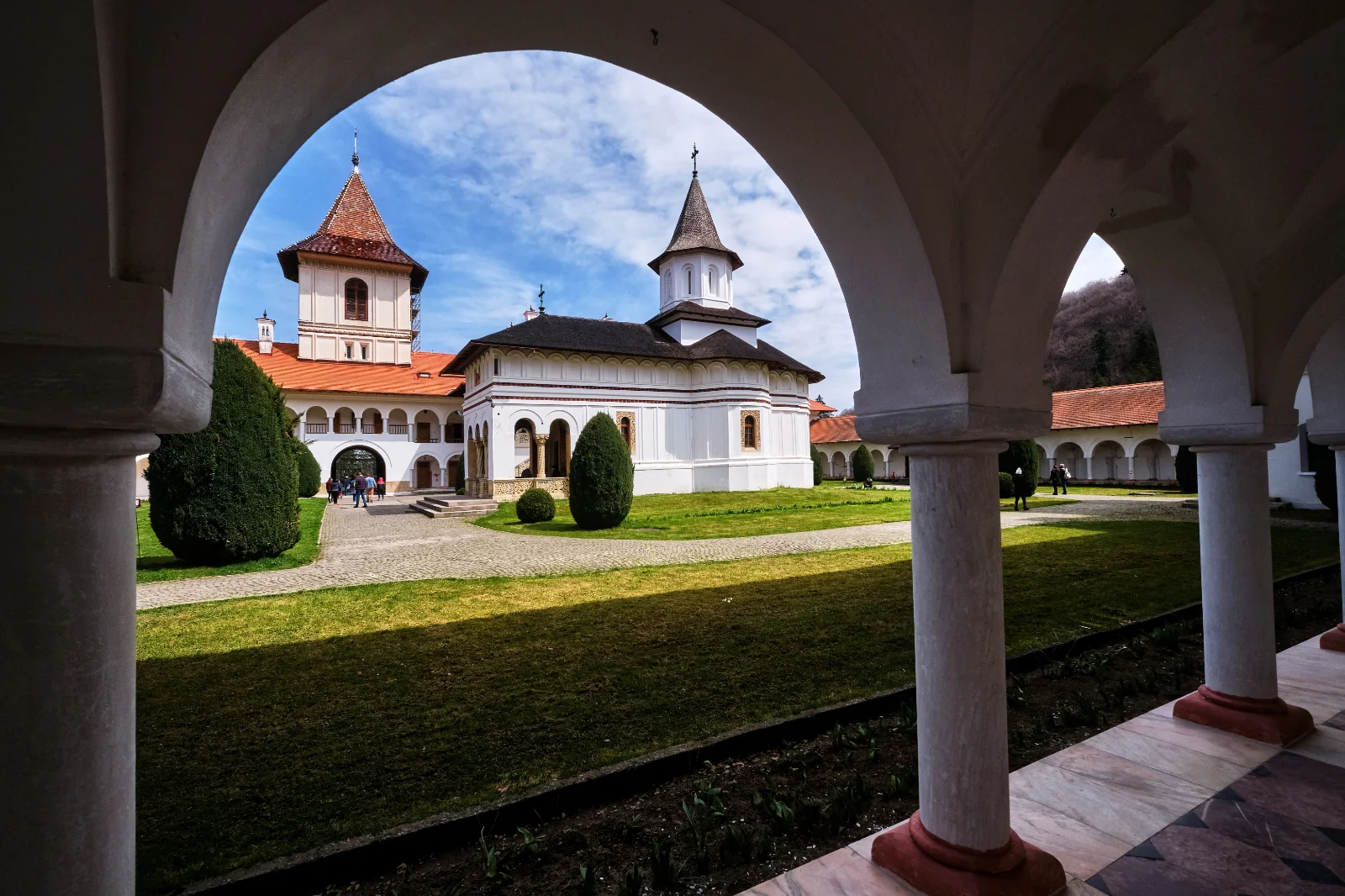
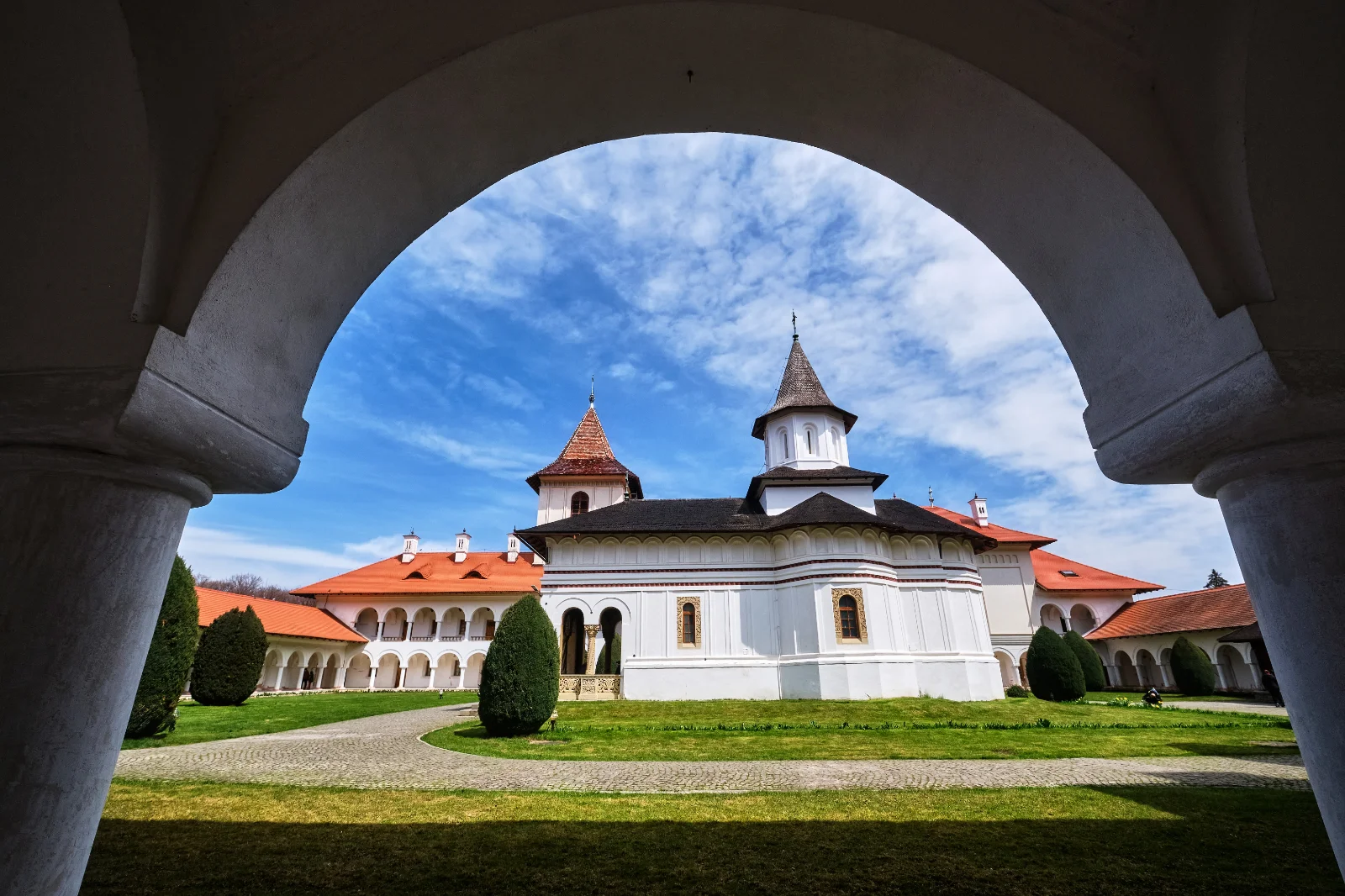
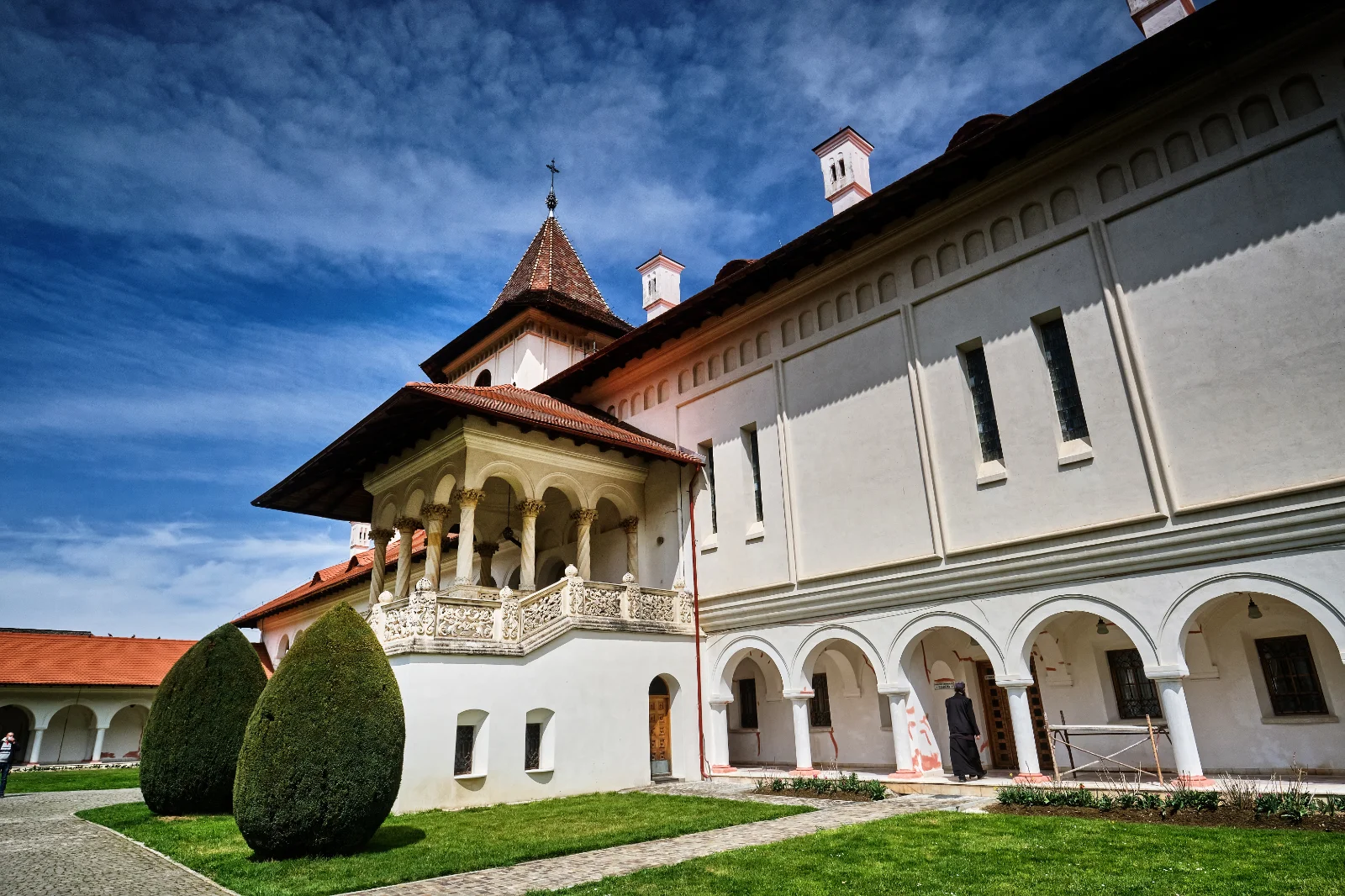
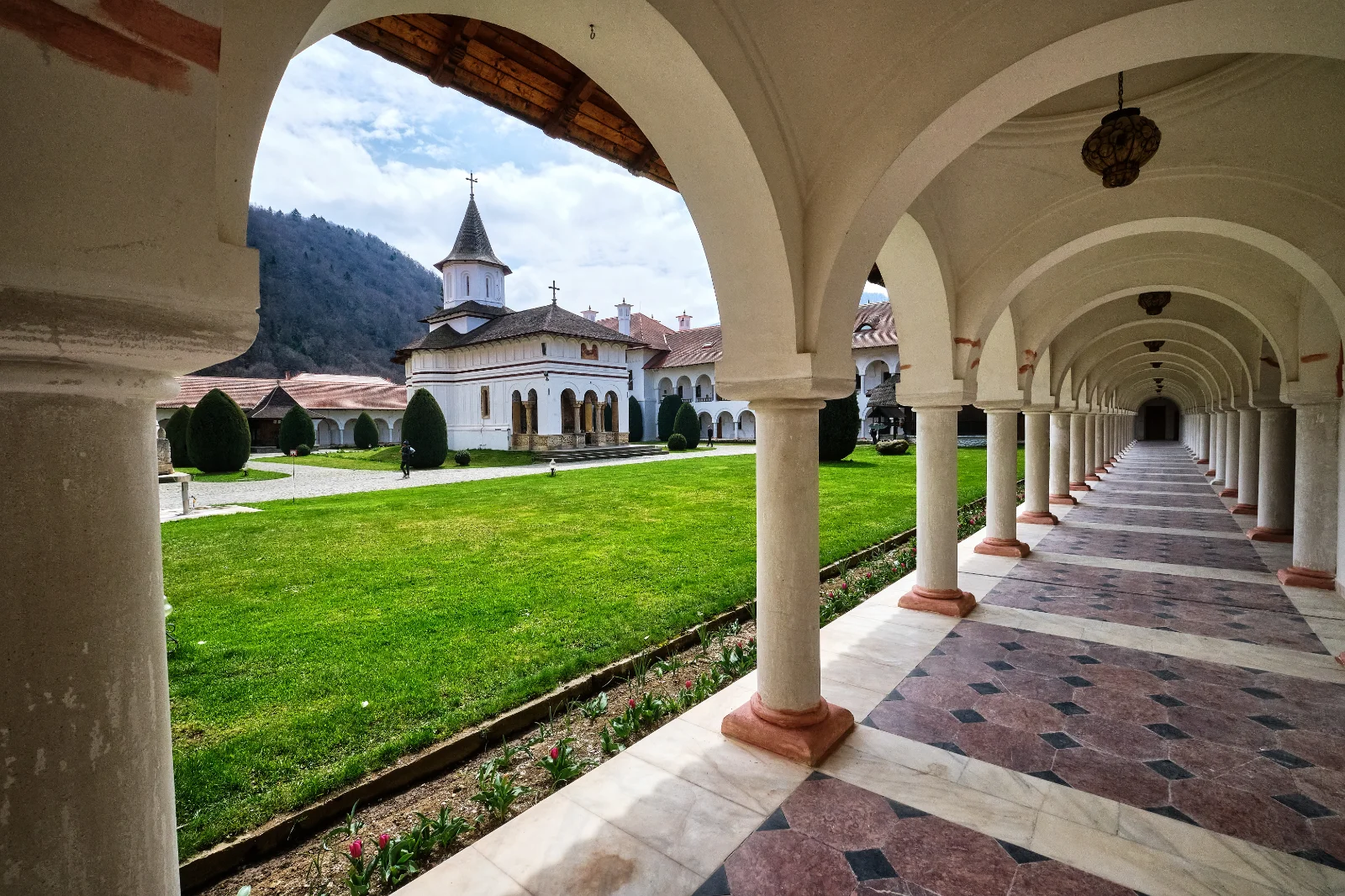
At one of the gateways to the spectacular peaks of the Făgăraș Mountains, which often disappear into the clouds, we find a monastery renowned for its extraordinary beauty and for the spectacular natural setting in which it is located. The Brâncoveanu or Sâmbăta Monastery is located at the edge of the forests and was founded in 1696 by the ruler of Wallachia, Constantin Brâncoveanu. He later became the first martyr of Romanian Orthodoxy, and the monastery followed his tragic destiny over the centuries. It was destroyed along with 150 other monasteries in Transylvania during the Orthodox persecution imposed by the rulers in Vienna. Over the following centuries, there were many attempts to repair the monument, but it was not until 1926 that the restoration of the church began, being consecrated again in 1946 by the second founder, King Michael I.
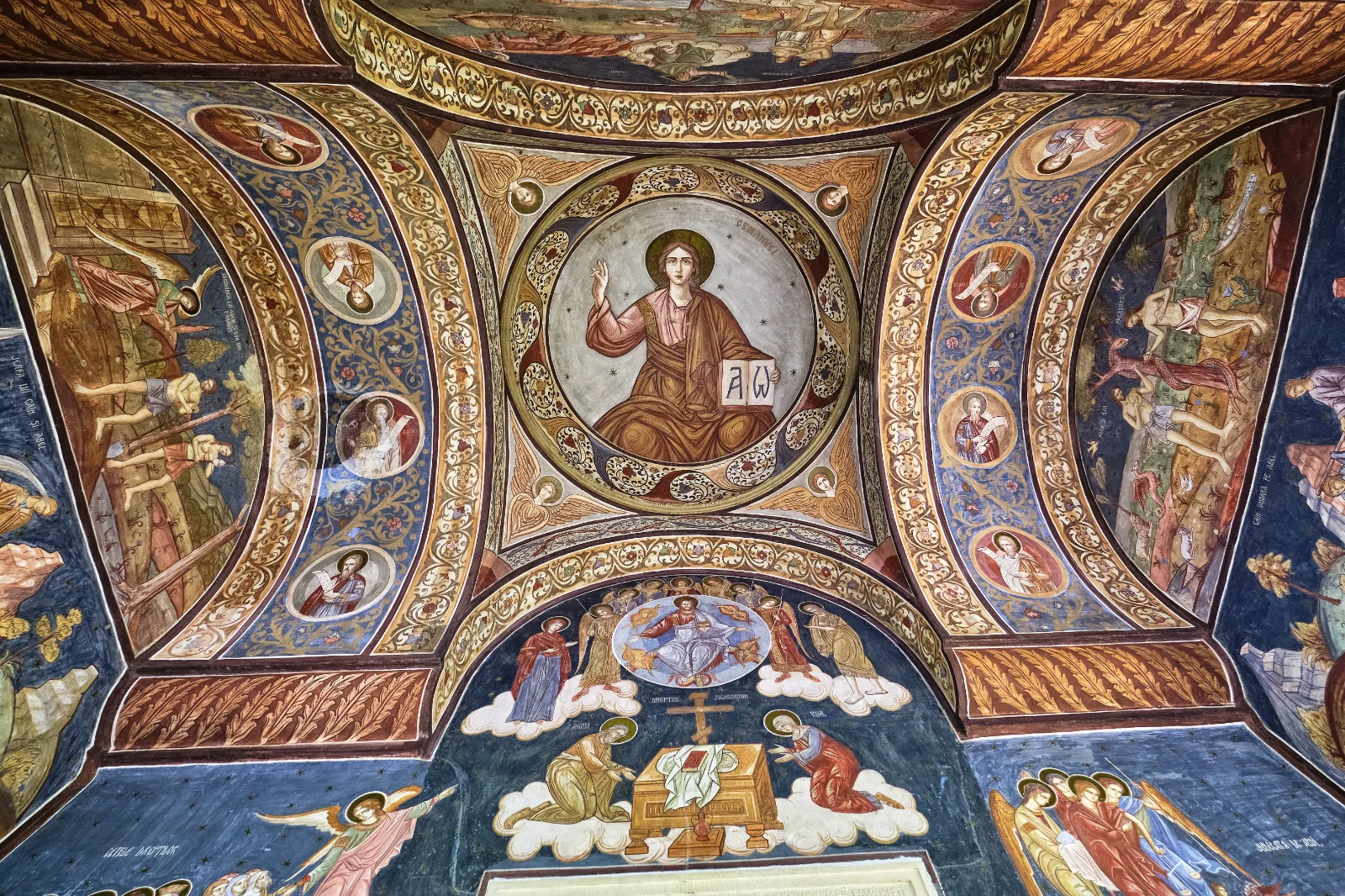
The impressive Brâncovenesc style and interior paintings were preserved during the renovation of the old church, which is now surrounded by a complex of buildings resembling a fortress. These were erected around a superb inner courtyard by the third founder of the monastery, Metropolitan Antonie Plămădeală. Within the complex we can admire the new church dedicated to the Brâncoveanu saints, the small museum with valuable religious objects, the library, the chapel or the monks’ cells. In the outer courtyard, there is also a prestigious theological academy, an icon painting school and other spaces. In the nearby villages we can discover several interesting but lesser-known places, such as the Breaza Fortress, the traditional whirlpools in the village of Lisa, the daffodil meadow in Dumbrava Vadului or the old mill in the village of Ohaba.
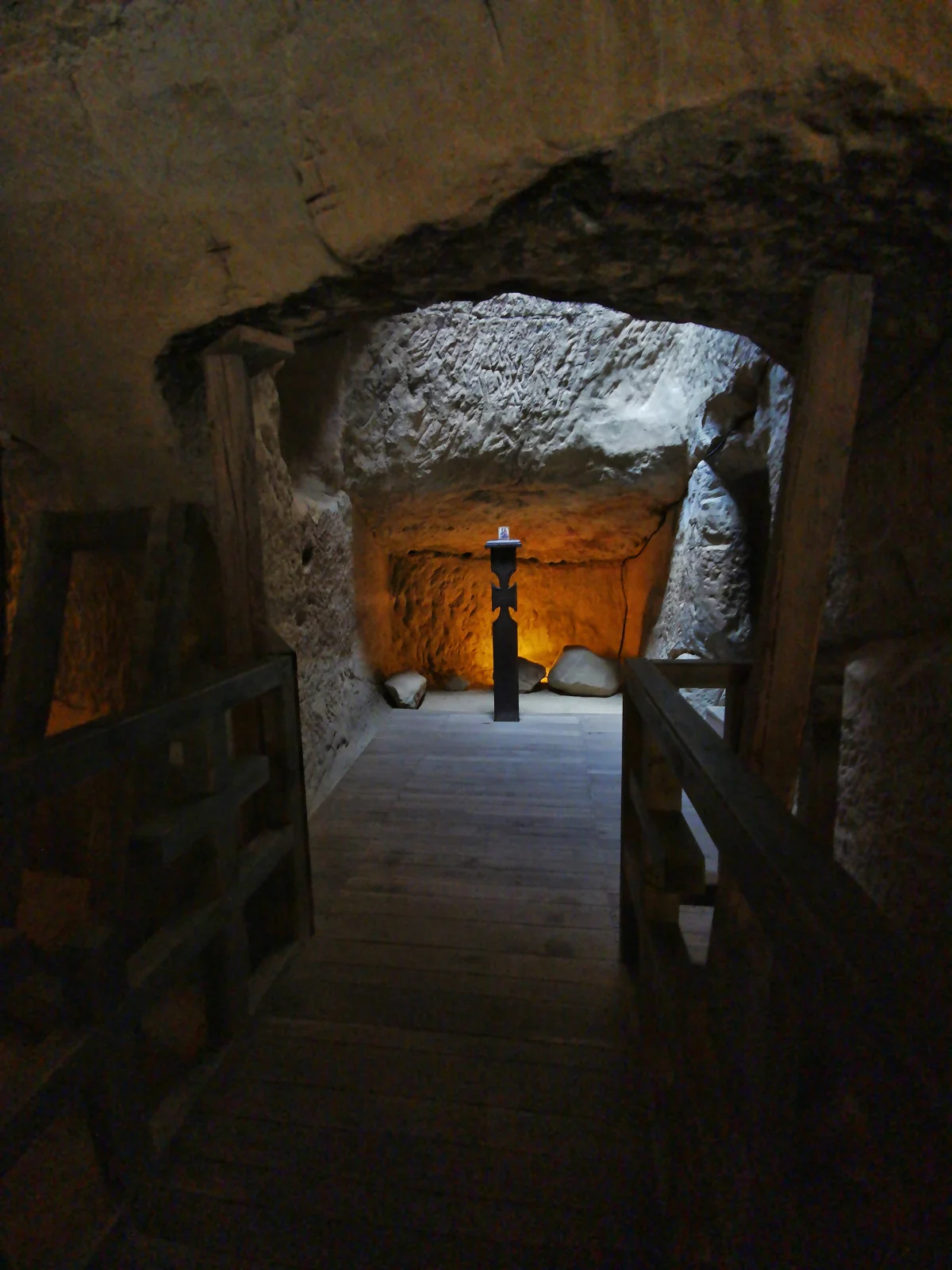
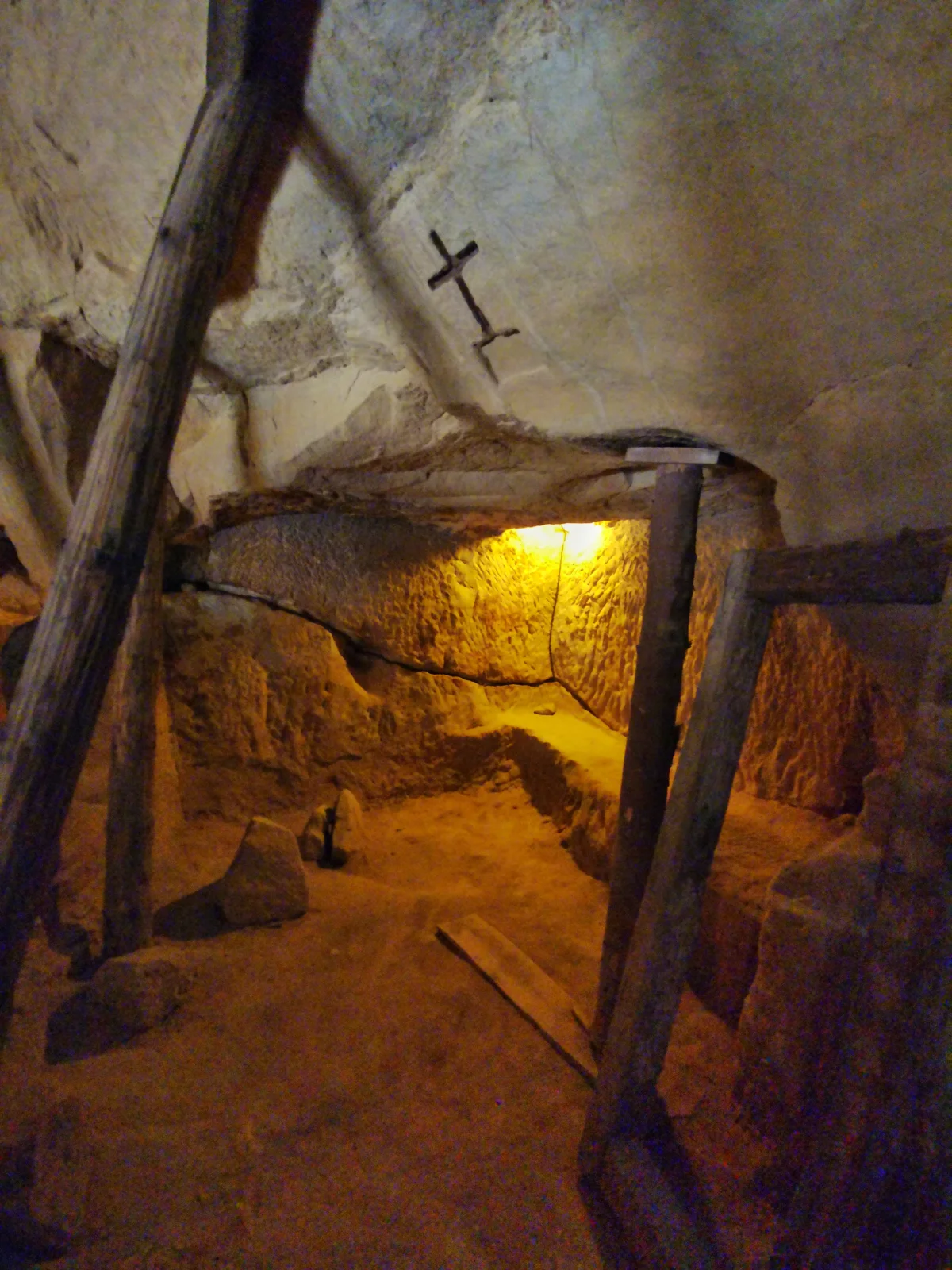
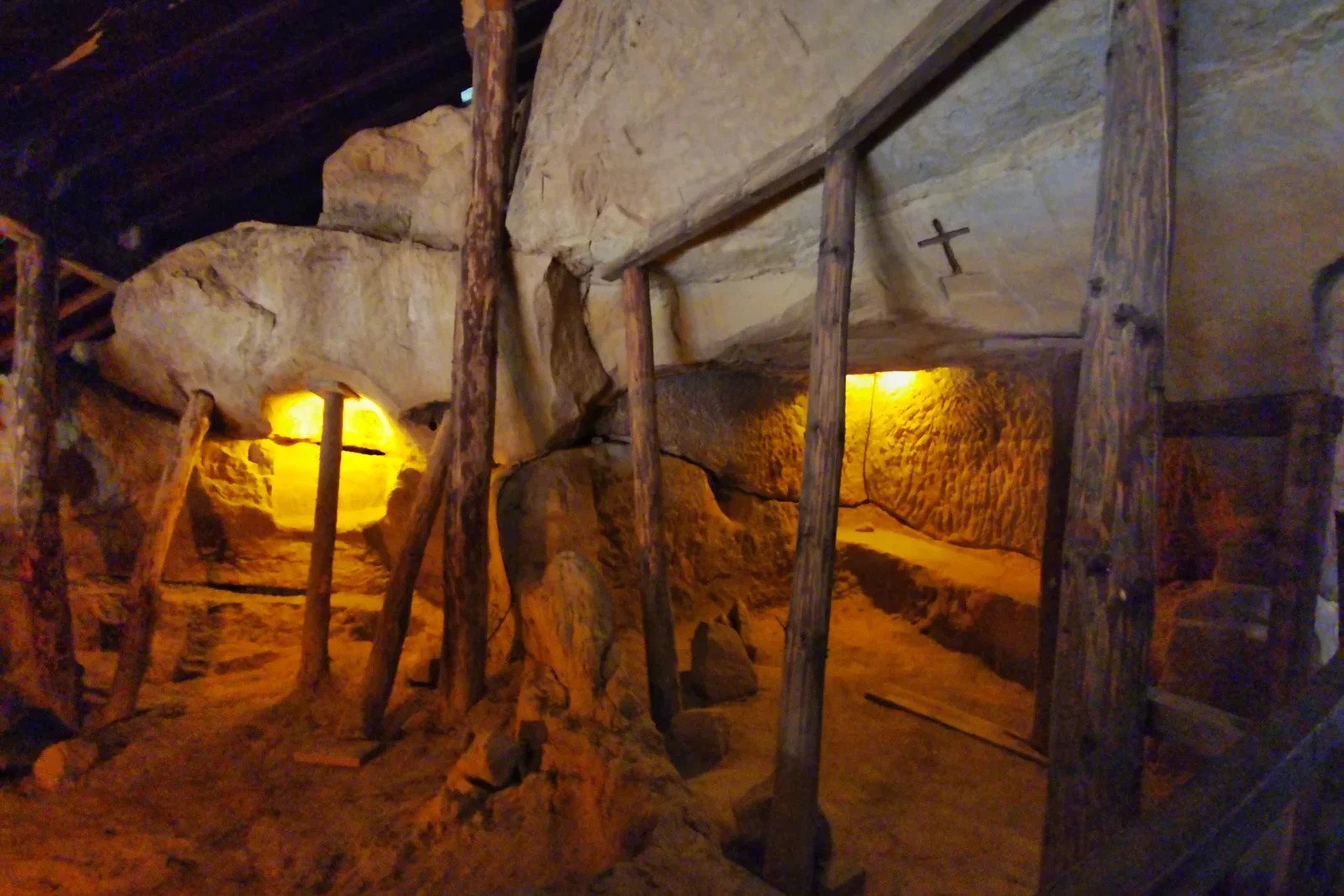
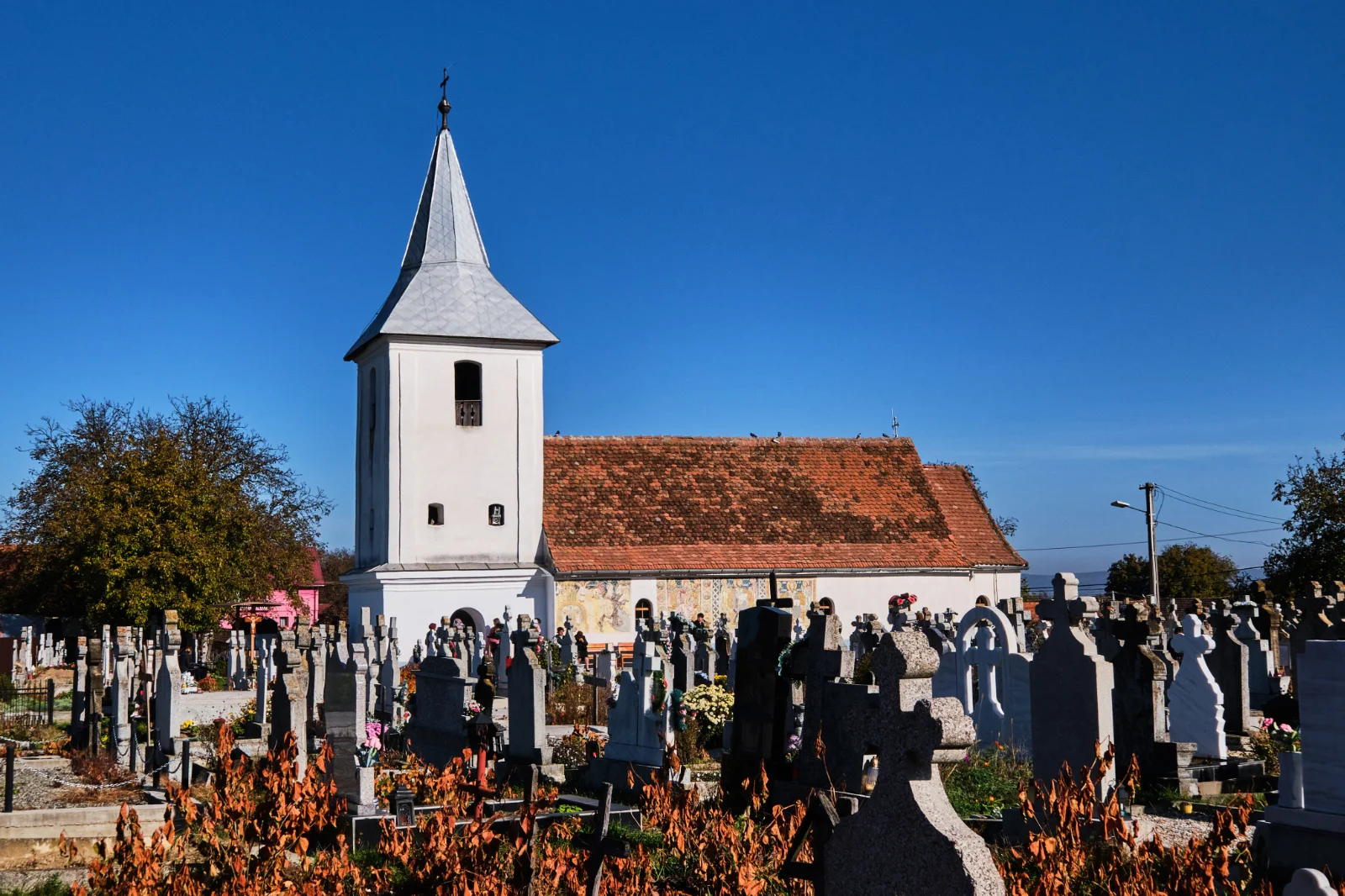
On the southeastern border of the Land of Făgăraș and at the foot of the Țaga Mountains, the Şinca Veche Cave Monastery is one of the most interesting and unique religious monuments in Transylvania, being located in the village of the same name, on the road between Făgăraș and Zărnești. Carved into a rocky hill south of the village, the monastery includes two cave churches, apparently dating back to the mid-18th century, when the Orthodox religion was banned in Transylvania. Archaeologists and researchers have discovered that these temples are actually much older, dating back up to 7 millennia, although their origin, functions and original architecture remain largely a mystery. The underground spaces include larger halls connected by galleries, some of which have collapsed, with strange sculptures and altars illuminated by the sun’s rays that penetrate through cracks in the rock, thus creating a sublime atmosphere. Unfortunately, organized visits to the monuments are recent, and over time, casual tourists or treasure hunters have destroyed much of the original appearance.
The eastern extremity of the Land of Făgăraș also includes several villages located at the foot of the Perșani Mountains, where, in addition to the old churches declared historical monuments, we can find the charming valley of Comăna. This hides several remarkable places, starting with the Comăna Cave, which is protected for its special scientific value and can only be visited in the presence of speleologists. Nearby we can also admire the Basalt Columns from Piatra Cioplită, an impressive natural monument. From the Land of Făgăraș, we follow the Olt valley upwards and stop in the small depressions at the foot of the Perșani Mountains, where we admire the old and majestic fortress of Rupea, but also the ensemble of natural wonders at Racoș, which takes our imagination through distant geological eras…
Sights and Experiences
Places to See and Things to Do in the Land of Făgăraș
Făgăraș Fortress
Visiting hours: Tuesday-Friday – 8-17 / Saturday-Sunday – 9-17 (last entry 16) | Prices: 30 lei/adult
One of the most impressive and important fortresses of Transylvania is located right in the center of the city of Făgăraș in Brașov County, on the southern bank of the Olt River. It was first built of wood and earth at the beginning of the 14th century, but the real development began in the 16th century. The walls were strengthened and new fortification elements were built. The domain was also owned for a period by Michael the Brave. The current structure comes largely from the 17th century, when the fortress became the residence of the princes of Transylvania, a true capital of the region. Gabriel Bethlen and Gheorghe Rackoczi I finalized the appearance of the feudal complex at Făgăraș, adding new administrative or military elements, including the moat with water that still surrounds the fortress today.
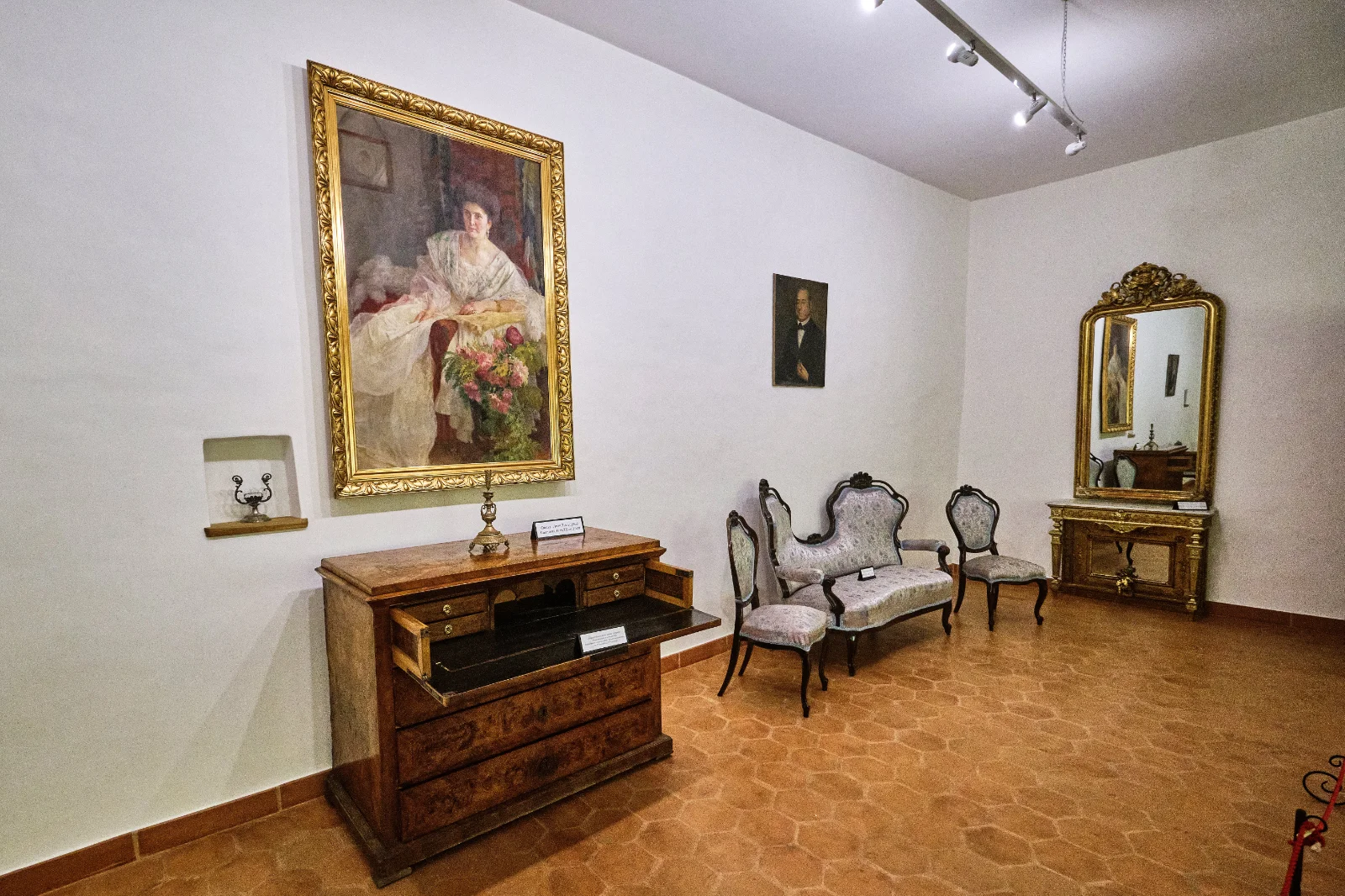
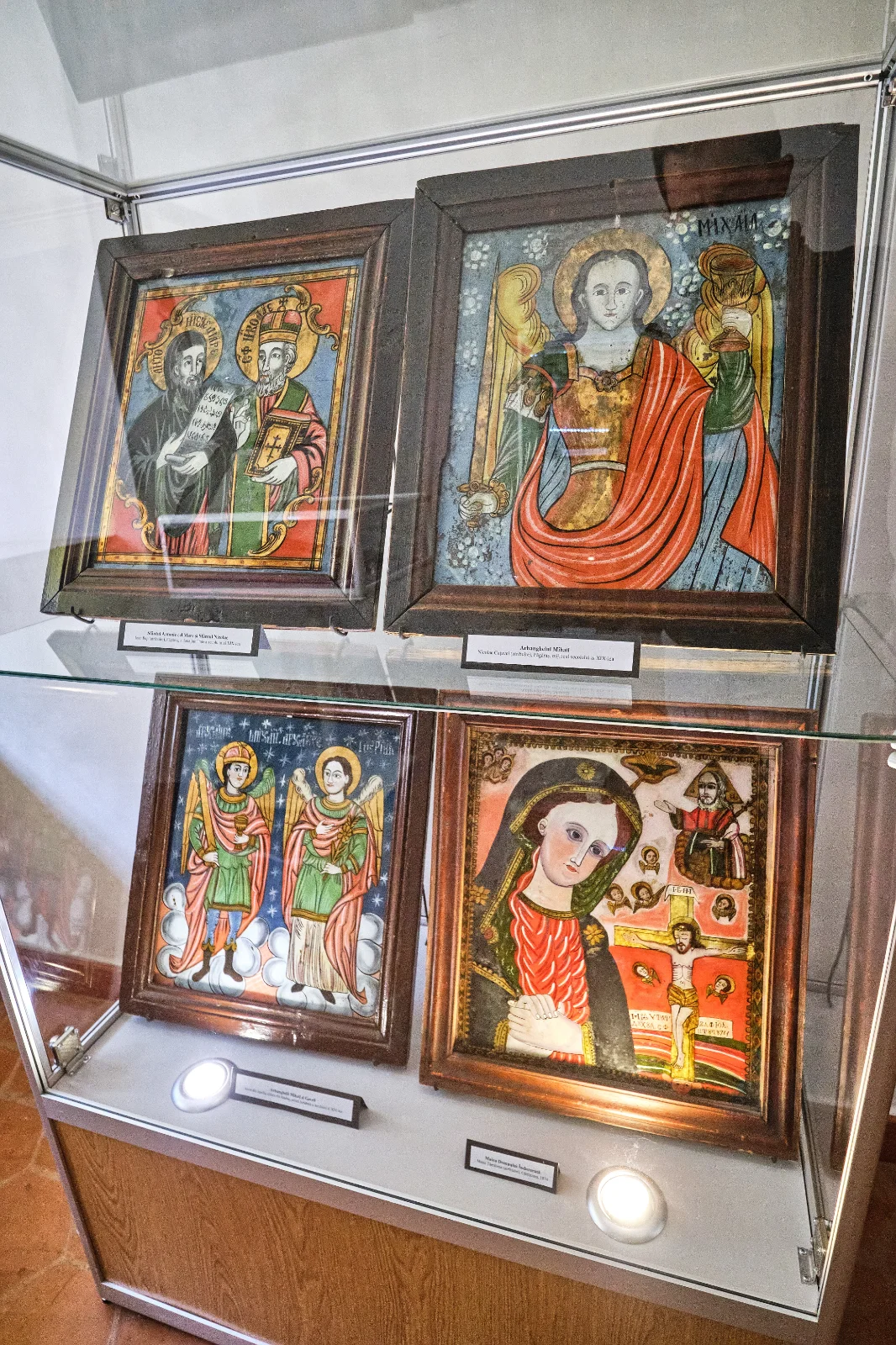
Having the shape of an irregular quadrilateral with strong towers in the corners and an outpost tower to the east, the fortress is also defended by an outer wall equipped with four Italian-style bastions. Next to the outer tower, which now also serves as a gate, the guardhouse was built. The massive fortification inside has now houses the “Valer Literat” Museum of Fagaras Country, offering a fascinating cultural experience. The extremely rich and varied museum comprises three main sections and approximately 20 collections with thousands of exhibits that can be discovered inside the fortress. Thus, visitors can discover the history of the Land of Făgăraș, the authentic ethnography of this destination, but also works of art. The old weapons and books, the icons on glass and the folk costumes or the splendid glass objects are noteworthy.
Cârța Cistercian Monastery
Visiting hours: Daily – 11-20 | Prices: 30 lei/adult
Among the most important historical and architectural monuments in Transylvania, the Cistercian monastery or abbey of Cârța was founded in the early 13th century and developed over the following centuries. The Cistercians were a religious order dependent on the Vatican, and this was their easternmost settlement in Europe. The Cârța monastery belonged to the Cistercian abbey of Igriș, in turn dependent on the Pontigny abbey in the French kingdom. Although it operated for a fairly short period, being abolished by King Matthias Corvinus in 1474, the monastery was quite important in southern Transylvania, even influencing the construction of other monuments in the Gothic style.
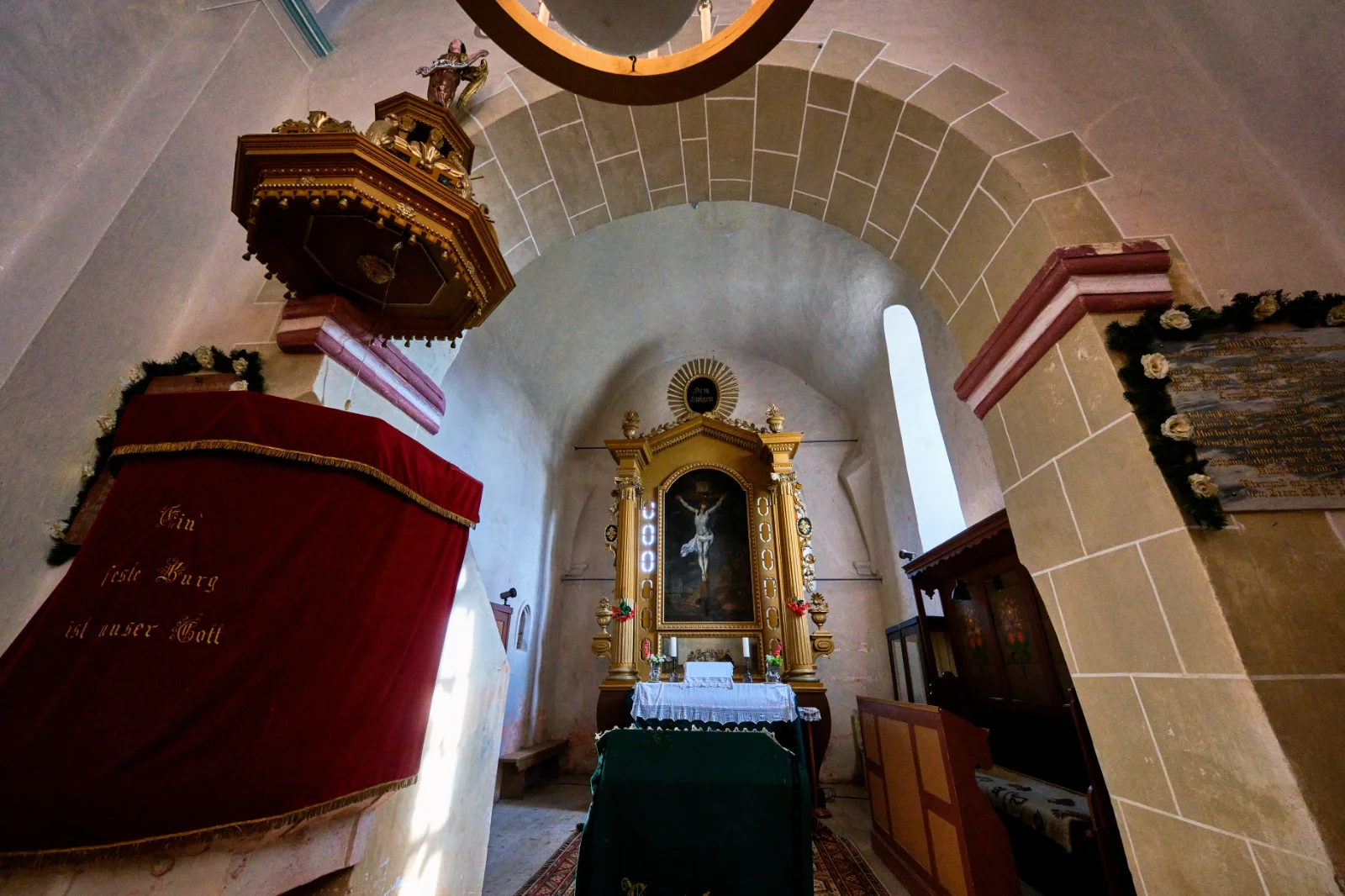
The construction was carried out over a fairly long period, before and after the great Tatar invasion of 1241, and at the time of maximum development, the Cârța abbey complex was truly impressive. This is demonstrated by historical documents, but also by the structures that have been miraculously preserved. In the past, the complex consisted of the church on the north side, a wall on the west side and buildings on the east and south. Of these, today you can still admire the choir of the church that is still used by the Lutheran community, the ruins of the church nave, the chapel on the south side and the ruins of the eastern body. In addition to the monastery complex, a small museum was set up in an annex building that presents the history and traditions of the locality.
Brukenthal Palace of Avrig
The historical and architectural ensemble is located in the northern part of the town of Avrig in Sibiu County. It was built by Baron Samuel von Brukenthal, who became governor of Transylvania in 1777. It was created by the architect Johann Eberhard Blaumann and served as the baron’s summer residence. The complex includes the impressive building of the Baroque palace with three U-shaped wings, being a much smaller scale reproduction of the Schonbrunn Palace in Vienna. On the lower terrace of the palace there is a charming Baroque park, as well as an orangery. In recent decades, after falling into a state of decay, the Avrig palace ensemble has been transformed into a complex destination, the palace now hosting guests in an elegant and refined atmosphere, while the estate is sometimes used for private events. Visitors can also discover an excellent restaurant, small glass museum, a historic café and other attractions, including the old Evangelical church nearby.
Brâncoveanu Monastery
Also known as the Sâmbăta Monastery, it is located in the Sâmbăta health resort belonging to the village of Sâmbăta de Sus. Right at the entrance to the Sâmbeta Valley, with the majestic ridges of the Făgăraș Mountains above, the monastery was originally built in 1657, the church being built 50 years later by Prince Constantin Brâncoveanu. A century later, the entire complex was destroyed with cannons by an Austrian general, along with dozens of other Orthodox monasteries in Transylvania. Its rebirth took place only starting in 1946 at the initiative of Metropolitan Nicolae Bălan and during the reign of King Michael I, whose portrait was painted in the old church. It preserves both the original Brâncovenesc style architecture, but also some of the superb old paintings. The monastic complex at Sâmbăta also includes the bell tower, the Brâncoveanu chapel, the old 16th-century fountain, the Brâncoveanu house, the new cell blocks, the new chapel, a library, a small museum, a religious academic center and much more.
Șinca Veche Cave Monastery
Visiting hours: Monday-Saturday – 9-18 (summer) / Sunday – 12-18 | Prices: free admission
Located near the village of Şinca Veche, in the southeastern part of the Land of Făgăraș and just 20 kilometers south of the city of Făgăraș, this historical and religious site is attracting more and more visitors. A fascinating and rather unusual destination, the cave monastery of Şinca Veche has a long history, but its origins are not fully known. Some believe that they date back to antiquity, originally being Dacian temples or even from the time of an older civilization, while others believe that the beginnings would be somewhere around the 12th century. What is certain is that the inhabitants of the area were using them in the 18th century, when Orthodoxy was banned in Transylvania, which then belonged to the Habsburg Empire. The cave site was carved into the rock below ground level and comprises a total of nine rooms, in which two altars have been identified, something quite unusual. Some theories claim that there were two separate churches, and that the dividing wall collapsed in the meantime. Perhaps the most impressive place is the first altar where there is a chimney of about 20 meters that connects to the outside and allows light to enter. There are many other interesting things that visitors can discover, but also many others that have been lost with time and the destruction caused by occasional visitors in the past.
Sâmbăta de Sus Stud Farm
Visiting hours: Monday-Friday – 9-18 (summer) / 9-16.30 (winter) | Prices: 20 lei/adult
It is considered one of the largest and most important Lipizzaner horse centers in the world, with a tradition spanning over a century. Originally established in 1874 and then again in 1920, the Sâmbăta de Jos Stud Farm is dedicated to breeding Lipizzaner horses, renowned worldwide for their grace, docility, and lively temperament that lends itself to dressage and equestrian sports. It currently houses hundreds of horses from seven genetic lines named after the ancestral stallions that formed the basis of their development. The stud farm complex can be visited to admire the magnificent animals in stables or in the wild, but also to discover information about the history of breeding these fascinating animals. Visitors can also attend or participate in various activities, including carriage rides, riding lessons, equestrian shows, and more. Within the perimeter of the Sâmbăta de Jos stud farm there is also the Brukenthal Castle, which is now in advanced decay. It was built by Count Josef von Brukenthal, brother of the baron who built the palaces in Sibiu and Avrig. An exceptional Baroque monument from the mid-18th century, the castle cannot be visited and it is not known how long it will last before it completely collapses.
Hiking to the Făgăraș Ridge
Some of the most spectacular trails in the Făgăraș Mountains start in the villages of the Făgăraș Depression and then climb the main valleys to the high ridges. One of the most famous and frequented is the route along the Sâmbeta Valley (red triangle) to the Fereastra Mare a Sâmbetei. A fairly long route and steep in the final part, it is usually only followed to the Sâmbăta chalet, with the Arsenie Boca cave cell nearby. Another more popular route is the one to the Negoiu Peak, starting from Porumbacu de Sus (blue triangle) in the Porumbacu valley. Other routes climb from the land of Făgăraș via the Avrig, Arpășel, Ucișoara, Viștea Mare, Pojorta valleys and others.
Other Interesting Discoveries
Lesser known places and activities in the Land of Făgăraș
Badea Cârțan Museum
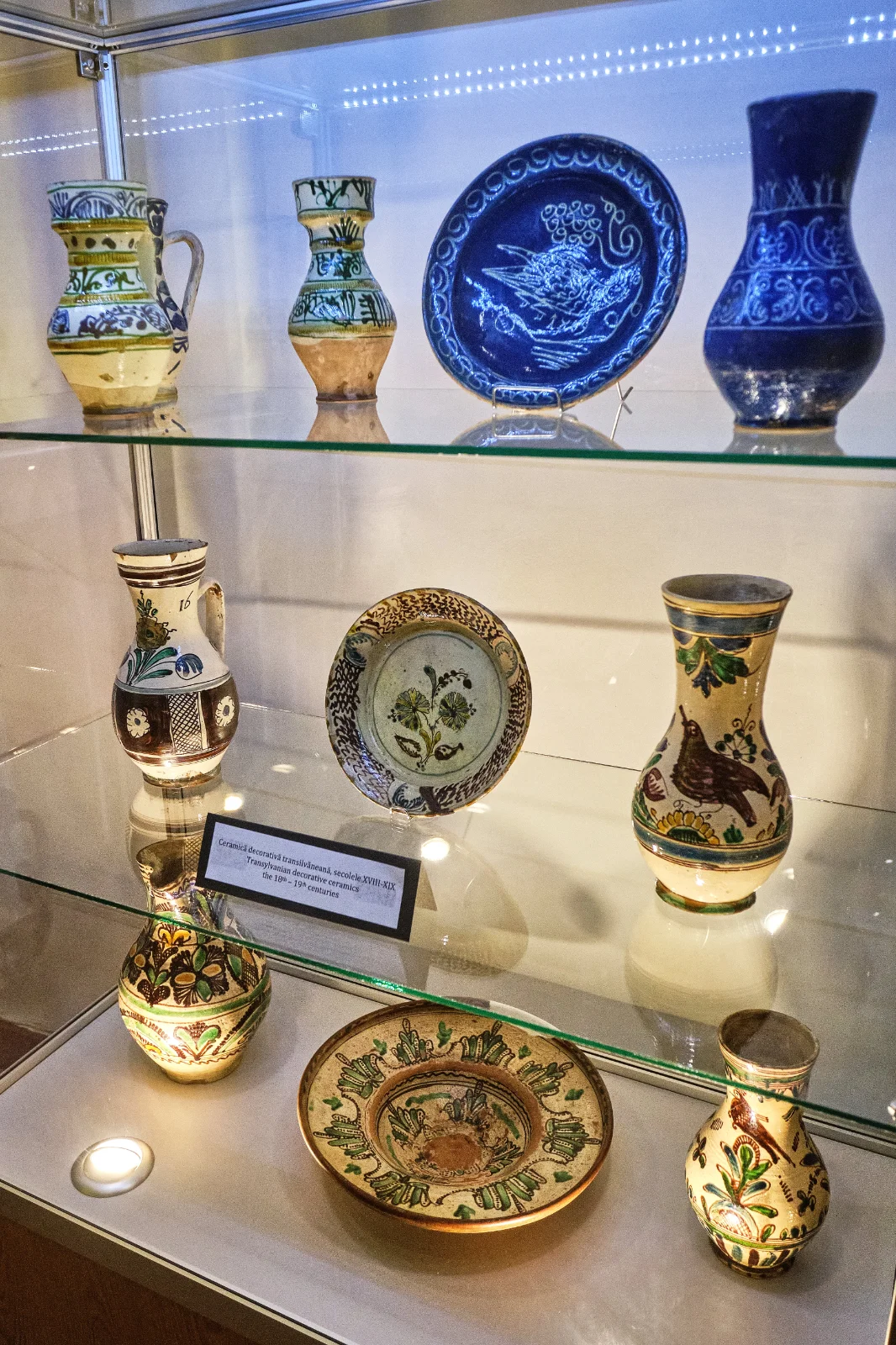
The small museum dedicated to a lesser-known historical figure is located in the center of the village of Cârțișoara, along the road that climbs to the mountain peaks and becomes the Transfăgărășan. Established in 1968, the Badea Cârțan Museum is dedicated to a peasant from the village who remained in history as a permanent fighter for the unification of all Romanians. Born in 1849, he first brought Romanian books from across the mountains, then set off on foot to Rome to discover for himself the history of the Romanian people depicted on Trajan’s Column. He was received by the authorities in the Italian capital and there are photographs of the Dacian peasant who walked to Rome. He continued to travel throughout his life and dream of the great unification of Romanians, but unfortunately he died a few years before his dream was fulfilled. The museum is housed in an authentic 19th century peasant household and contains objects and documents about the life of Gheorghe Cârțan. Visitors can also discover an interesting ethnographic collection, with traditional furniture, icons on glass, ceramics and more.
Visiting hours: Tuesday-Sunday – 9.30-17.30 (summer) / winter – groups by appointment | Rates: 30 lei/adult
Brâncoveanu Palace
An almost forgotten monument in the Land of Făgăraș, known to very few tourists, is located in the village of Sâmbăta de Sus. The original palace was built by Prince Constantin Brâncoveanu in 1708 after the model of those from Mogoșoaia and Potlogi. It was destroyed by the regional authorities at the end of the 18th century, when only the former cellars remained. On this basis, the current monument was erected by Grigore Brâncoveanu in the first half of the 19th century, and after the Second World War it had various destinations. Among the most interesting elements preserved from earlier times, occasional visitors can admire the vestiges of the access gate, with rich ornamentation.
Comăna Valley and Cave
A lesser-known destination in the eastern extremity of the Land of Făgăraș, the Comăna Valley in the commune of the same name contains some very interesting places. The Comăna Cave, also known locally as the Cave in Valea Mănăstirii, is a natural reserve and is protected for its extraordinary scientific value, with numerous and diverse speleological formations hidden in the depths, including giant stalagmites, crystal pools, extensive wall leaks and other rare or spectacular structures. The cave consists of a labyrinth of galleries and rooms arranged on three levels, while inside there is also a colony of bats belonging to a protected species. Nearby, in the same valley, visitors can also admire the Basalt Columns of Piatra Cioplită, another protected area with interesting geological formations, specific to volcanic activity in the Neozoic.
Clay Castle of the Fairy Valley
Once one of the most famous places in the the Land of Făgăraș and even in Transylvania, the Clay Castle in Porumbacu de Sus has transformed in recent years. If it was initially an interesting tourist attraction, now it has become a tourist complex that offers accommodation in unique spaces and a special atmosphere, a refined restaurant, but also other activities. The story of the Clay Castle in the Valley of the Fairies began in 2004, when a private investor began building the main fantasy structure from natural materials, a principle followed in the subsequent development of the location.
Breaza Fortress Ruins
One of the lesser-known places in the Land of Făgăraș is hidden on a mountain foothill, south of the village of Breaza. Surrounded and almost covered by vegetation, the ruins of the Breaza fortress are attributed by some to the first ruler of Wallachia, Radu Negru, who is said to have lived in these lands at the end of the 12th century. Access to the archaeological site is via a fairly short (30 minutes) marked trail through the forest. At the end of the trail, the ruins of the two cylindrical towers and the defensive walls can be discovered. Most likely, there was also a Dacian fortress here originally, defended by earthen waves.
The whirlpools of Lisa
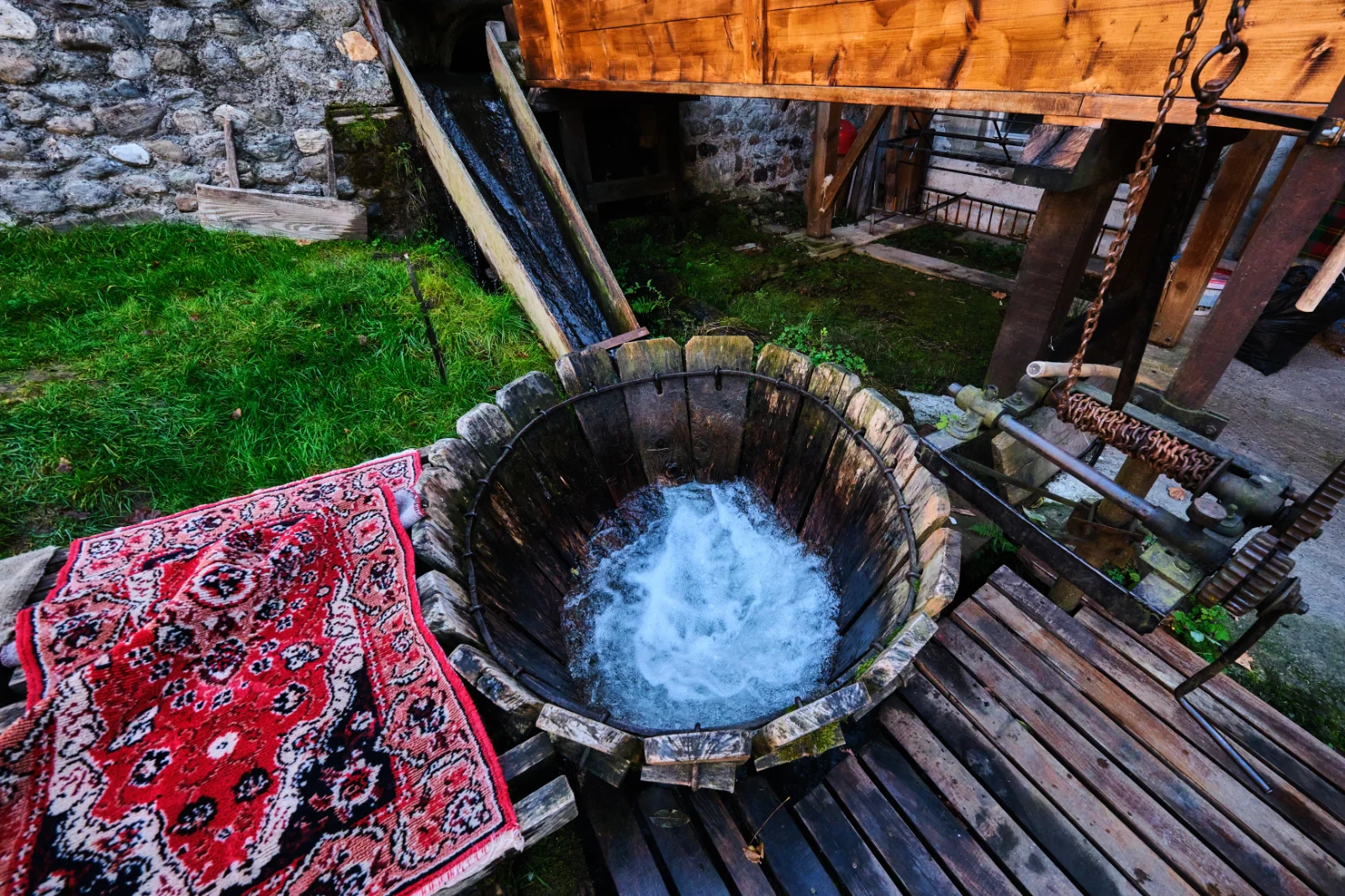
Over 150 years old, the Lisa village waterwheels are considered the oldest traditional hydraulic system in the country, and are now used mostly for tourist demonstrations. The ingenious and unique installations were used in the past for the preparation and cleaning of various traditional fabrics, but the waterwheels also represented meeting places for rural communities.
Panoramas of the Land of Făgăraș
Dominated by the sharp ridges of the Făgăraș Mountains to the south and the endless hills of central Transylvania to the north, this charming region appears as a long, smooth corridor along the middle course of the Olt River. The view of the destination from the heights of the mountains is certainly spectacular, but not all travelers can dare to reach the dizzying peaks. In addition to these, there are several places from where the panorama of the Făgăraș Land stretches uninterrupted, offering memorable moments especially at sunrise or sunset. The most interesting viewpoints towards the Făgăraș Land include the Calbor hill near the city of Făgăraș and the hills near the villages of Rucăr and Săcădate, among others.
Accommodation Recommendations
The best lodging options in the Land of Făgăraș
Rating 9.1 from 1.676 reviews!
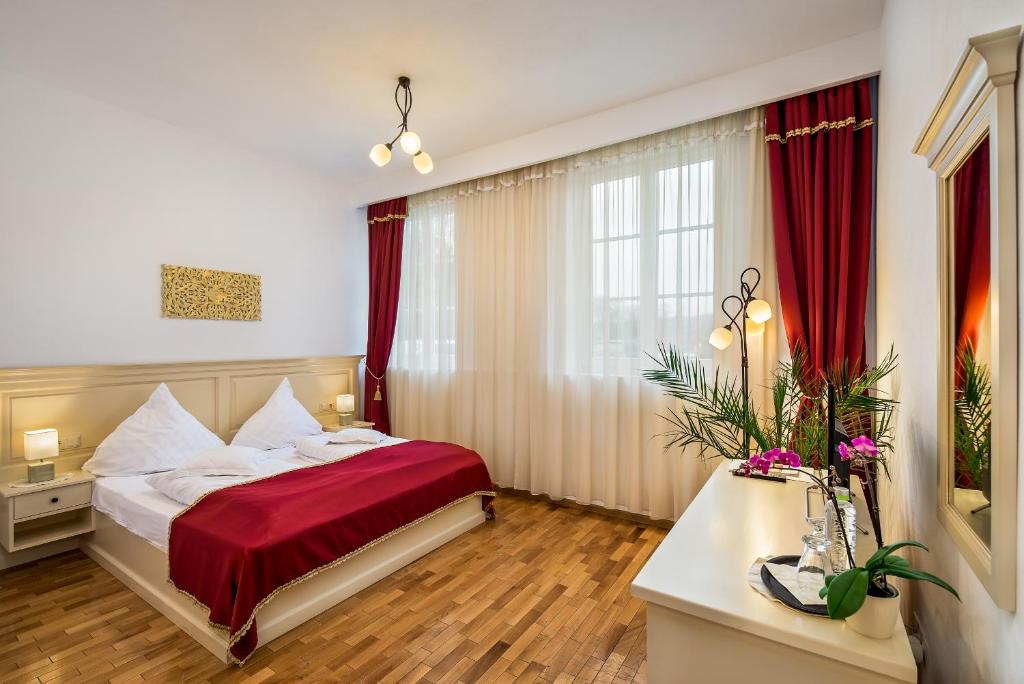
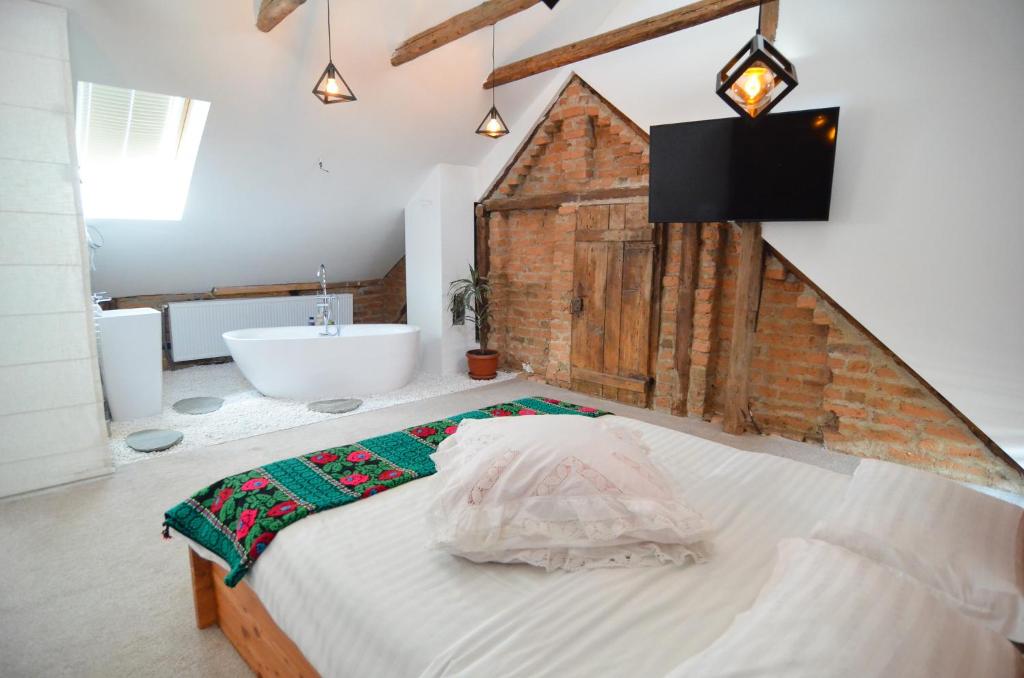
An incredible accommodation experience, Brukenthal Palace offers exceptional accommodation in the former noble residence and in the palace’s annex buildings. The stylishly decorated rooms offer all the amenities, and the grounds include a prestigious restaurant, gorgeous gardens and more!
Ghe. Lazăr St. 39, town of Avrig
Rating 9.7 from 150 reviews!
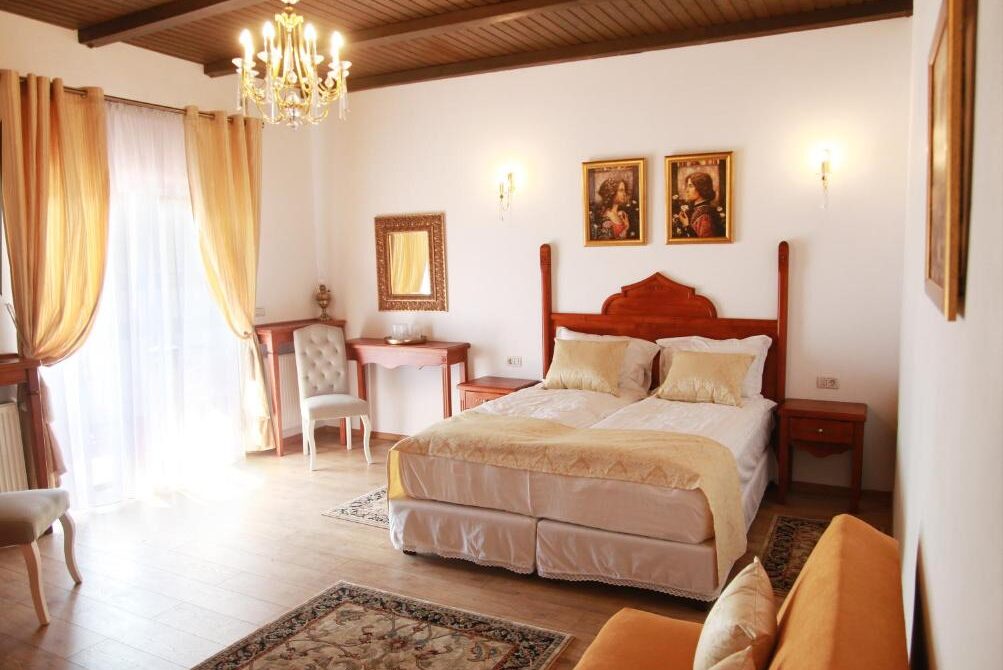
Located near the national road in the village of Sâmbăta de Jos, this highly rated accommodation unit offers high-quality services, spacious rooms with all the necessary utilities, a bar and breakfast option!
Principală St. 26, Sâmbăta de Jos
Rating 9.6 from 258 reviews!
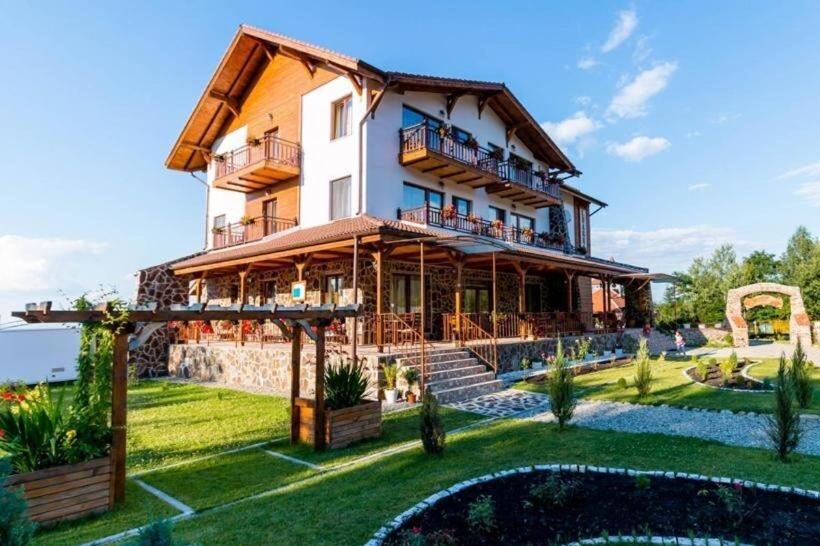
Located in a beautiful area, right at the foot of the Fagaras Mountains, this agrotourism guesthouse offers a relaxed atmosphere, with comfortable rooms with all amenities, a shared lounge, terrace, bar and extensive garden!
Aleea Fagului 1002, village of Drăguș
Rating 9.6 from 234 reviews!
Located in the village of Sebeș, 16 km from the city of Făgăraș, this extraordinary traditional guesthouse offers accommodation in superb traditional rooms with all the necessary amenities, a shared lounge and kitchen, a terrace and a splendid garden!
village of Sebeș 154 / Hîrșeni
Rating 9.3 from 34 reviews!
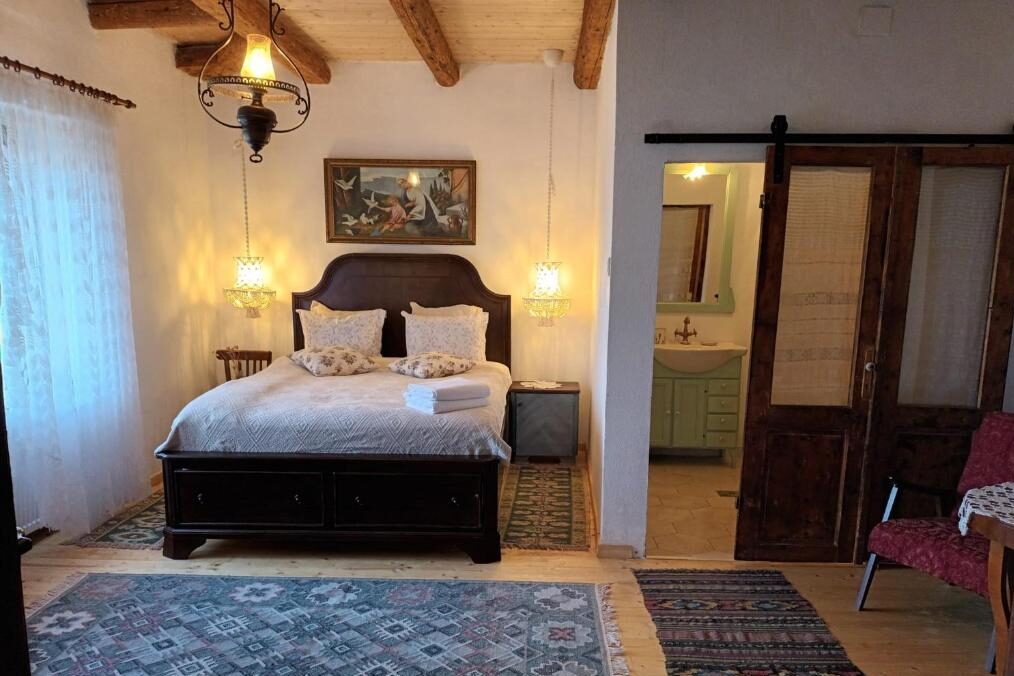
One of the most special accommodation units in Țara Făgărașului, this one offers accommodation in a traditional household, with 4 bedrooms with authentic furniture, a living room and a fully equipped kitchen, garden and other traditional spaces!
Principală St. 453, Porumbacu de Sus
Rating 9.6 from 352 reviews!
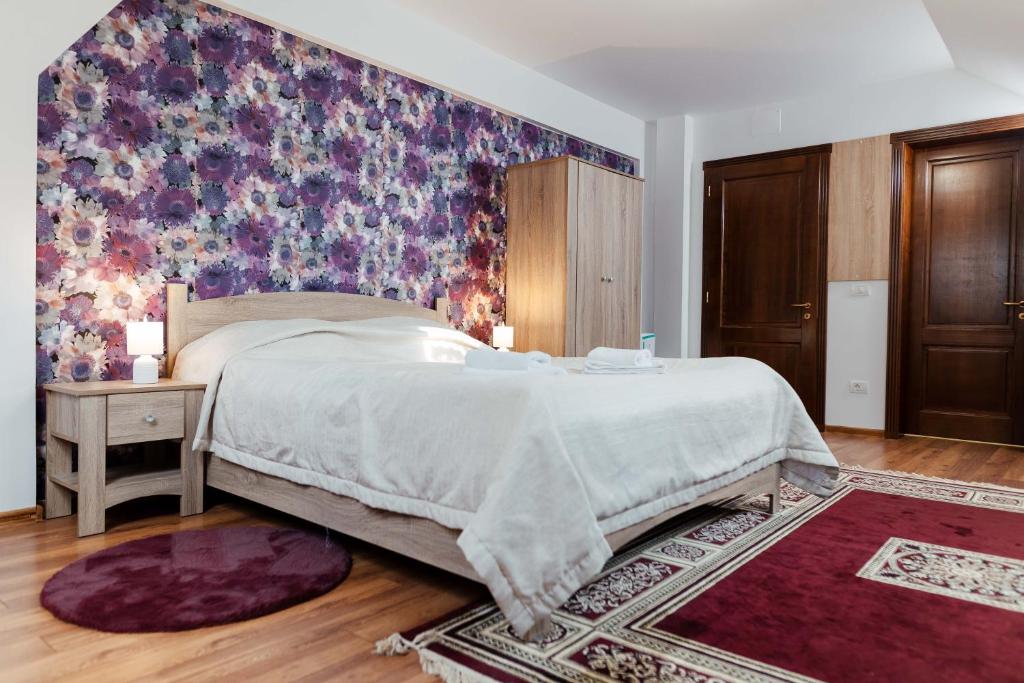
Located in the Sâmbăta de Sus resort, at the foot of the Făgăraș Mountains, this highly rated guesthouse offers superb family rooms with all the amenities and rustic decor, a garden with a playground, a terrace and breakfast!
village of Sâmbăta de Sus