150
Brâncuși
„I would like my works to stand in parks and public gardens, for children to play on them, as if they were playing on stones and monuments born from the earth, for no one to know what they are and who made them, but for everyone to feel their necessity and friendship, as something that is part of the soul of Nature…”
Constantin Brâncuși
Heroes Path
Monumental Complex
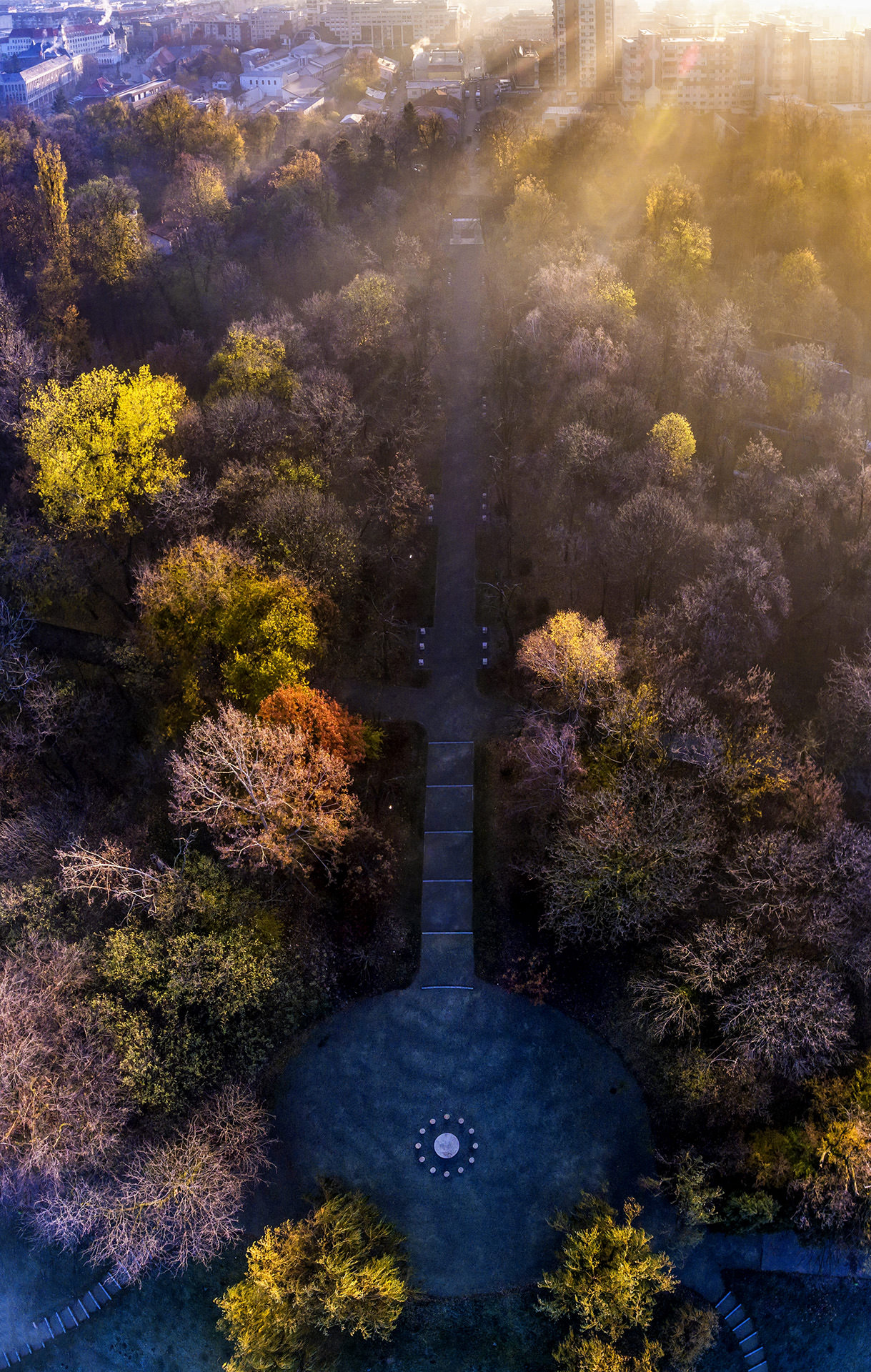
The monumental ensemble bequeathed by the sculptor Constantin Brâncuși to the city of Târgu Jiu is the most important heritage site of these places, otherwise full of memories of the great artist. The sculptural complex was created by Brâncuși as a tribute to the fallen heroes of World War I, but most art critics now agree that it far exceeds its original purpose, being full of philosophical meanings discovered over time. The city of Târgu Jiu is ennobled by this magnificent Axis that transcends time and space. It was the last masterful work of Constantin Brâncuși, created between 1937 and 1938, representing the work of genius of the sculptor and can be joined to the great masterpieces of sculpture and universal art. Starting from the Jiu River and up to the Column Park, there are: the Table of Silence, the Gate of the Kiss, the Endless Column (Column of Infinity), all united by the Heroes’ Path, thus forming the most important monument dedicated to the heroes of the First World War.
Brâncuși had the idea of creating this monumental space since 1935, and the artistic symbols, brought to perfection here, were part of the master’s artistic creation. An important role was also played by the League of Women of Gorj County under the leadership of Arethia Tătărescu, who financed the works. Brâncuși came to Romania and stayed in Târgu Jiu for almost the entire year of 1937, when he worked on his masterpiece, establishing his studio and residence in the Barbu Gănescu House, in the city center. Although his creations have general meanings and are deeply universal, Brâncuși uses forms directly related to Romanian folk art (Epstein, 1940), especially symbols from the fascinating rural world of Gorj. The Endless Column itself could be found on many of the wooden houses of the Gorj county. Brâncuși stylized them and brought them to the stage of universal art. Ignored for more than a quarter of a century, the monumental ensemble in Târgu Jiu was arranged starting in 1964, taking into account Brâncuși’s original plan, and in a short time it became an artistic center and a place of pilgrimage for art lovers, critics and historians. It is considered by many to be the most important monument of contemporary art and compared by some to the great sculptural works of ancient Greece and Egypt or the Renaissance. The works were put into much better value with the works carried out in 1980 and especially in recent years. The Endless Column Park has become a superb place for a stroll and a natural space that highlights the creation of the great artist. Many have tried over the years to penetrate the symbols and spiritual meanings of the ensemble in Târgu Jiu; many will try again in the coming decades. The fact is that Brâncuși’s work, whether analyzed as a whole or separately, is universally valid and has an indisputable timeless quality.
The Table of Silence
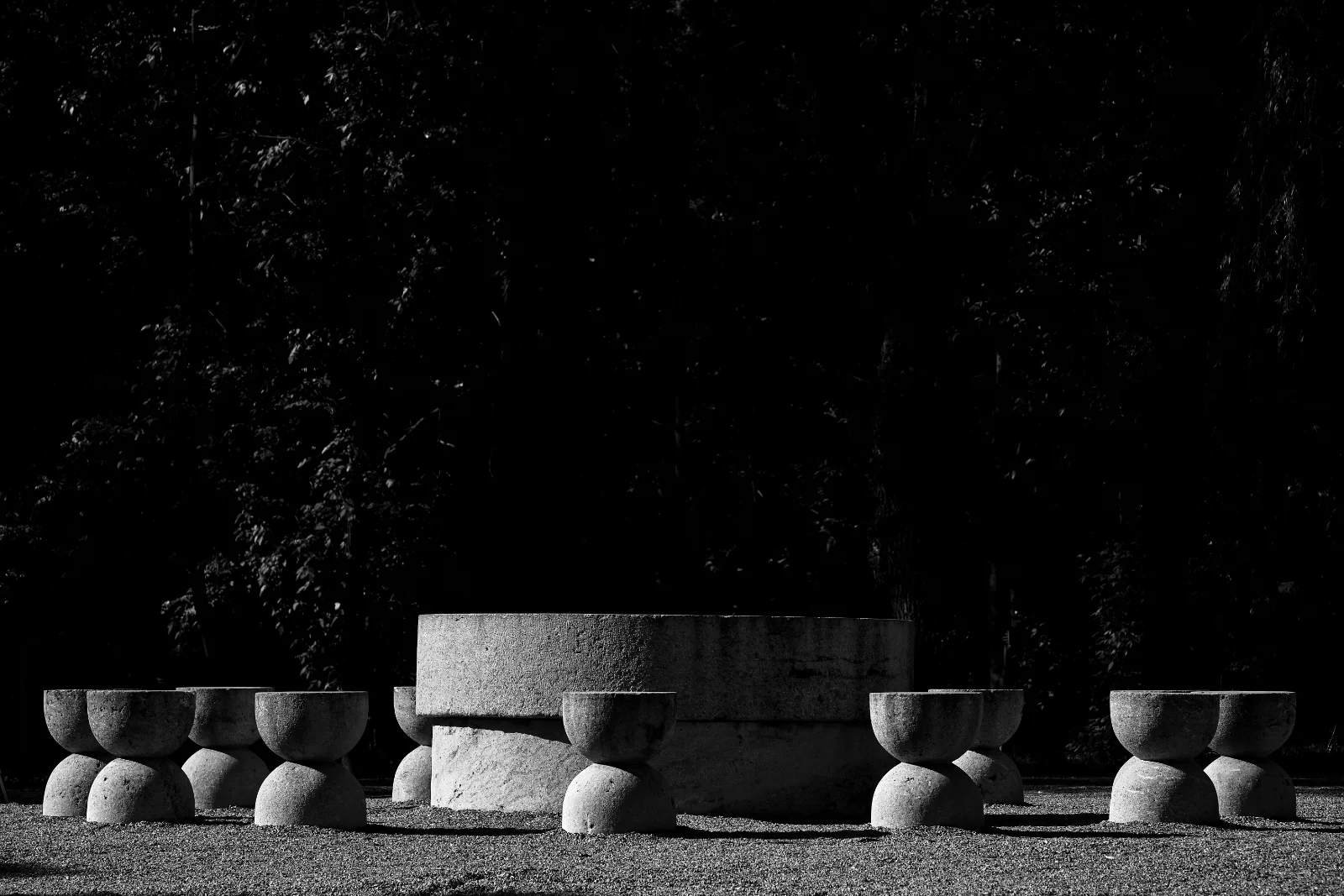
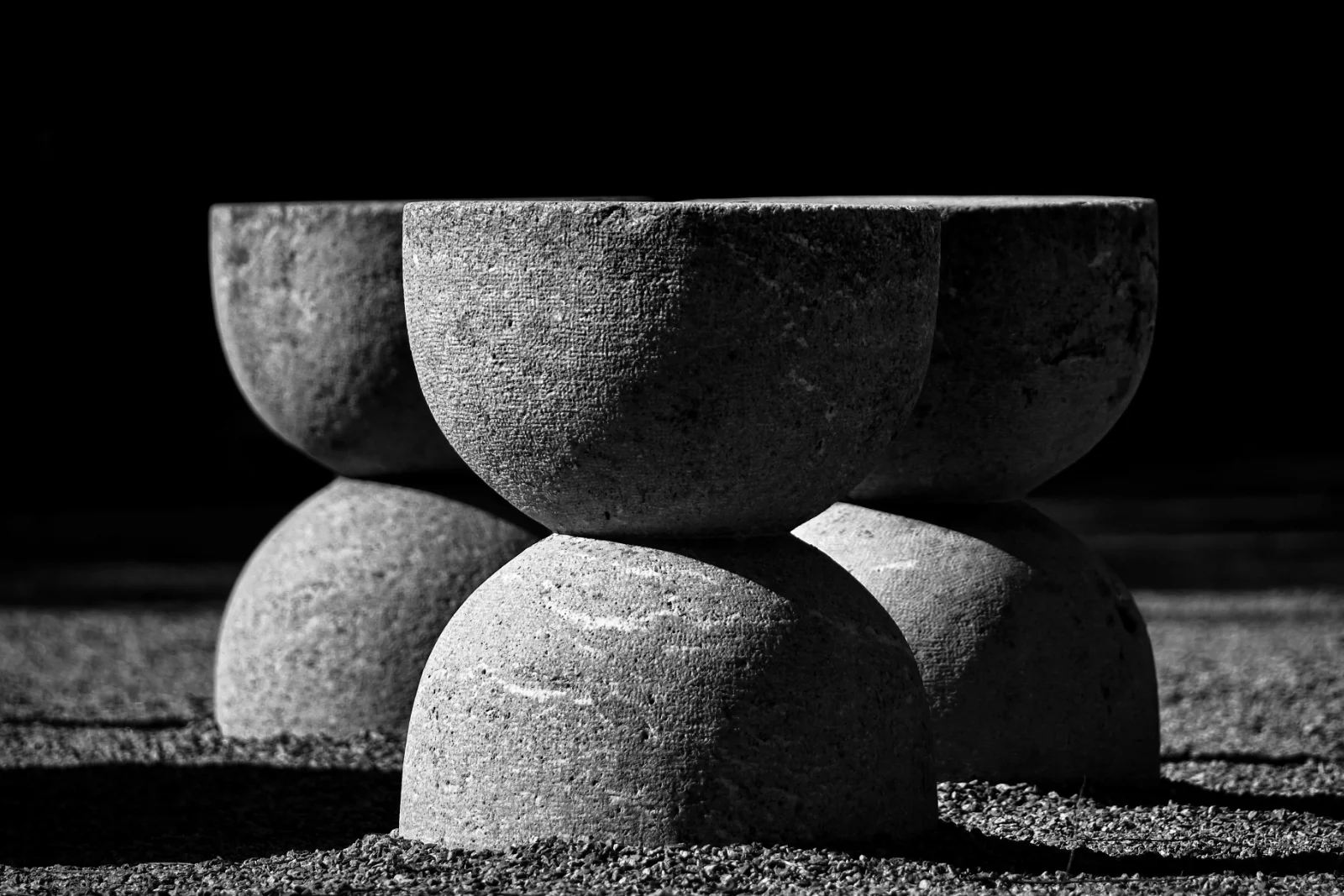
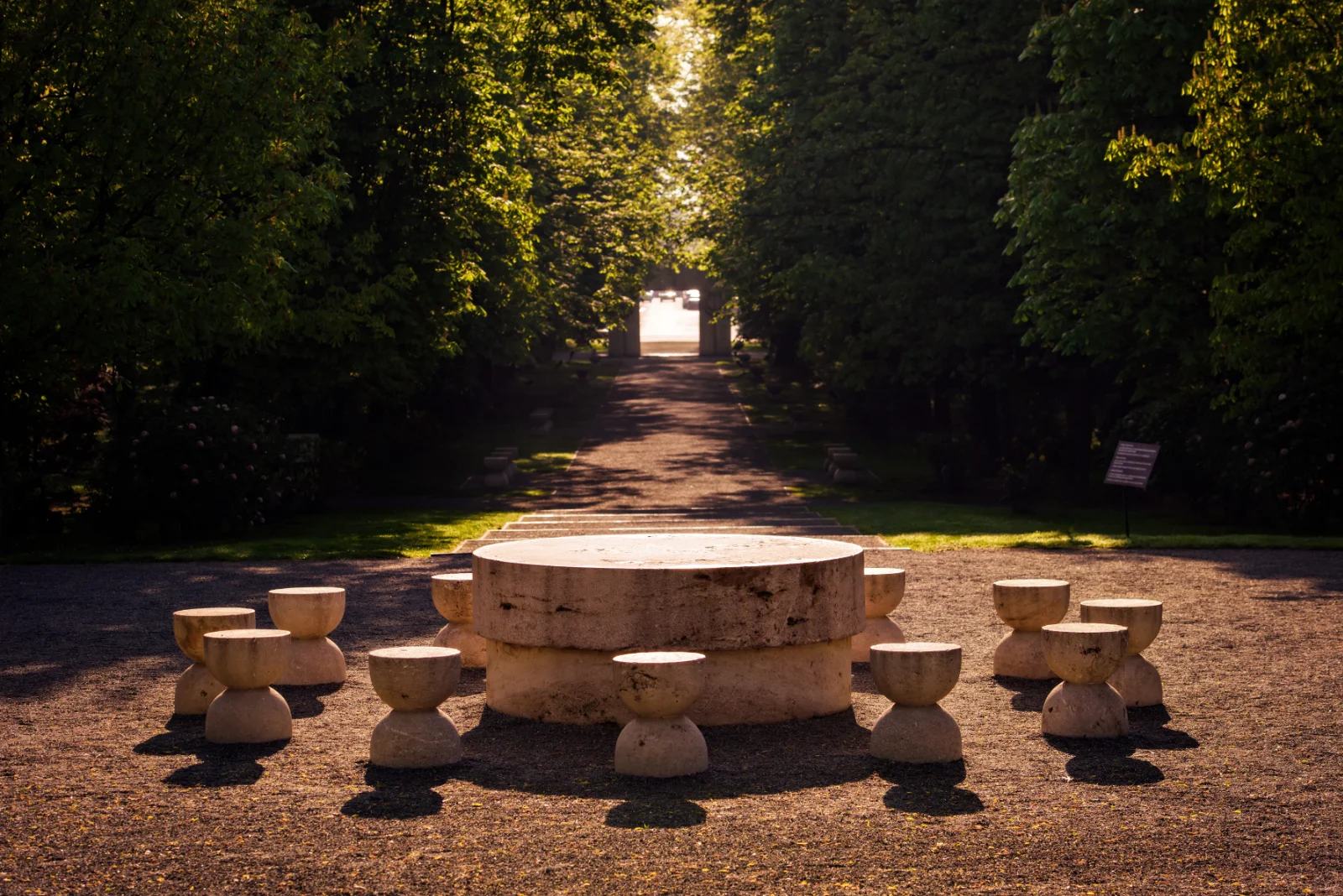
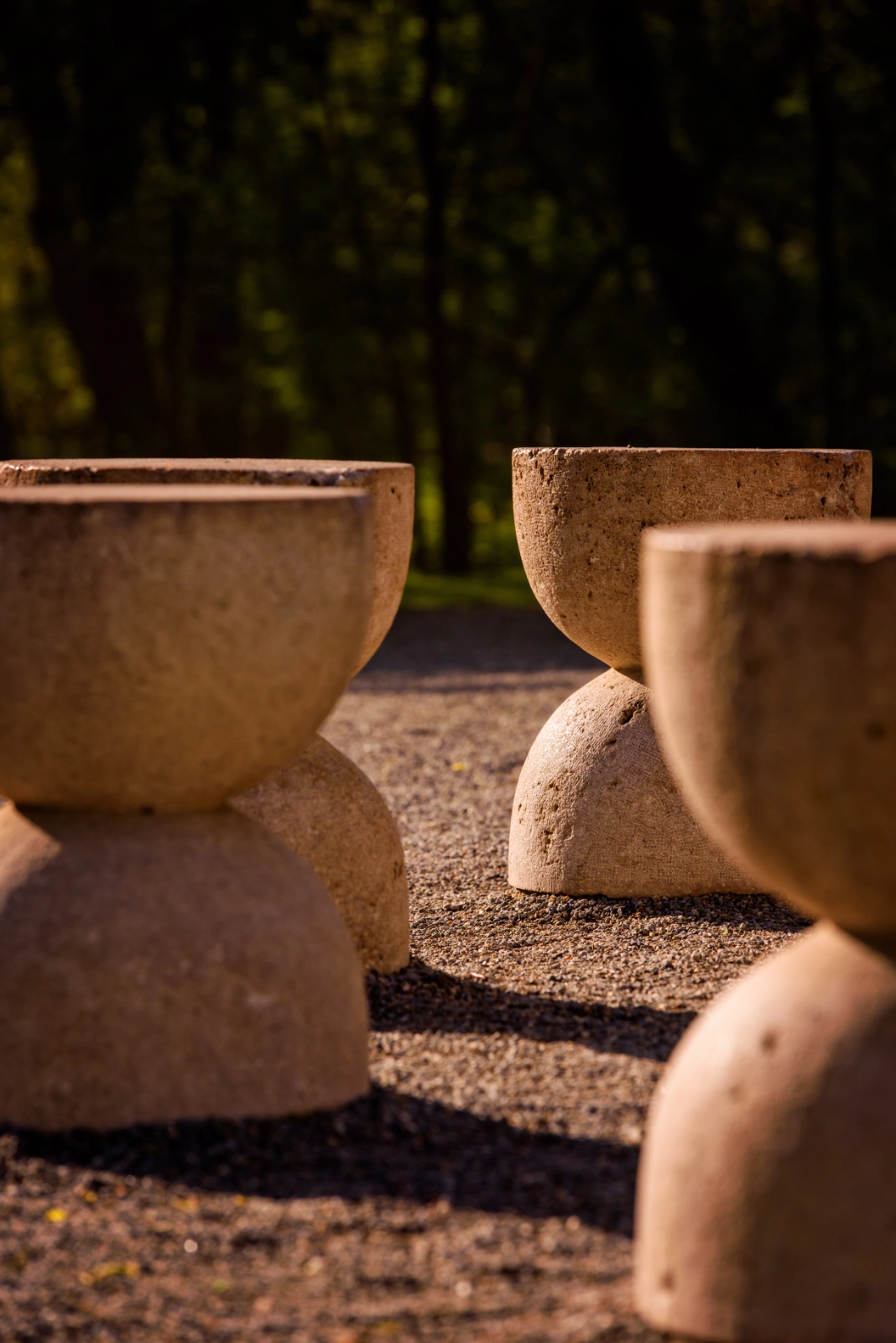
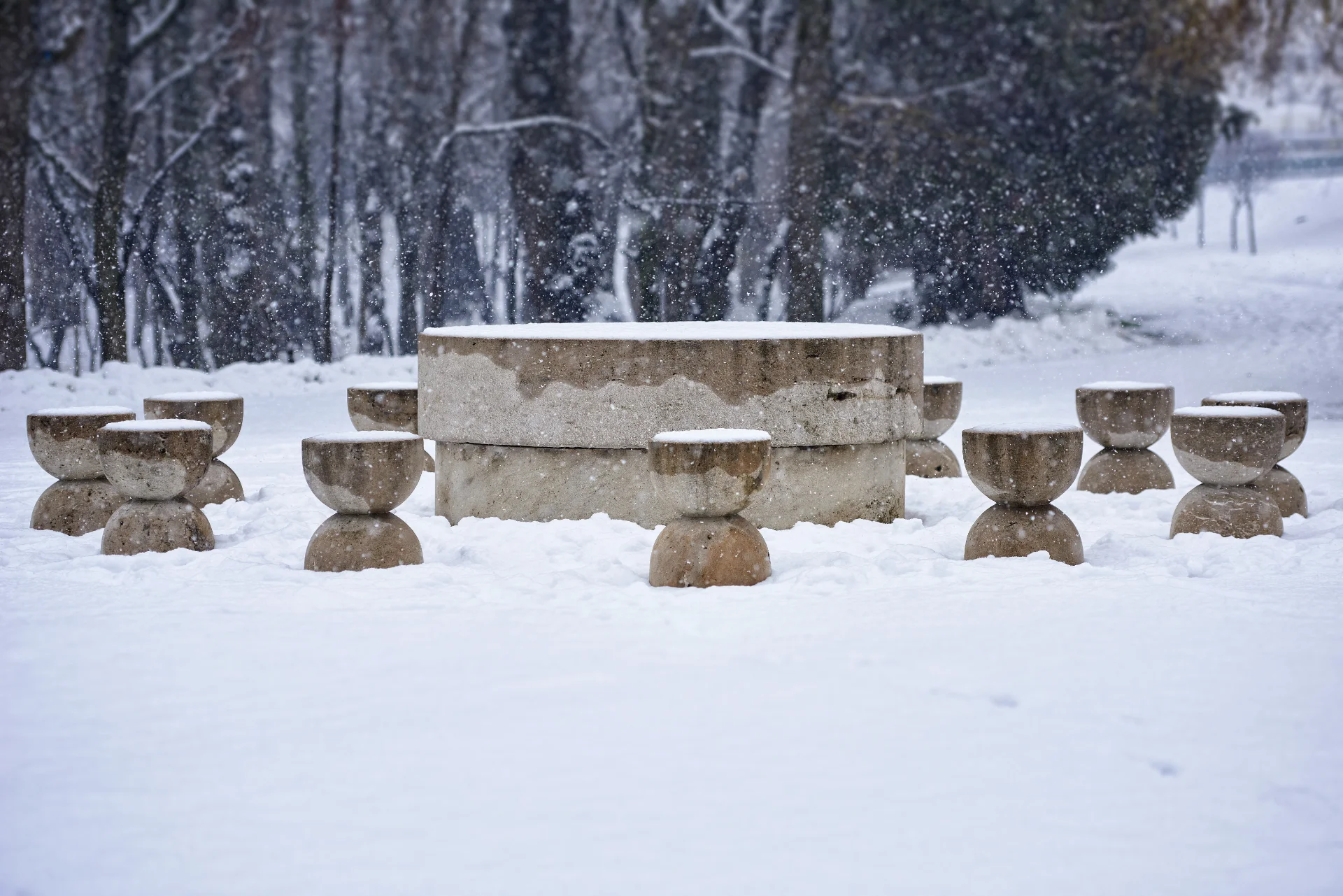
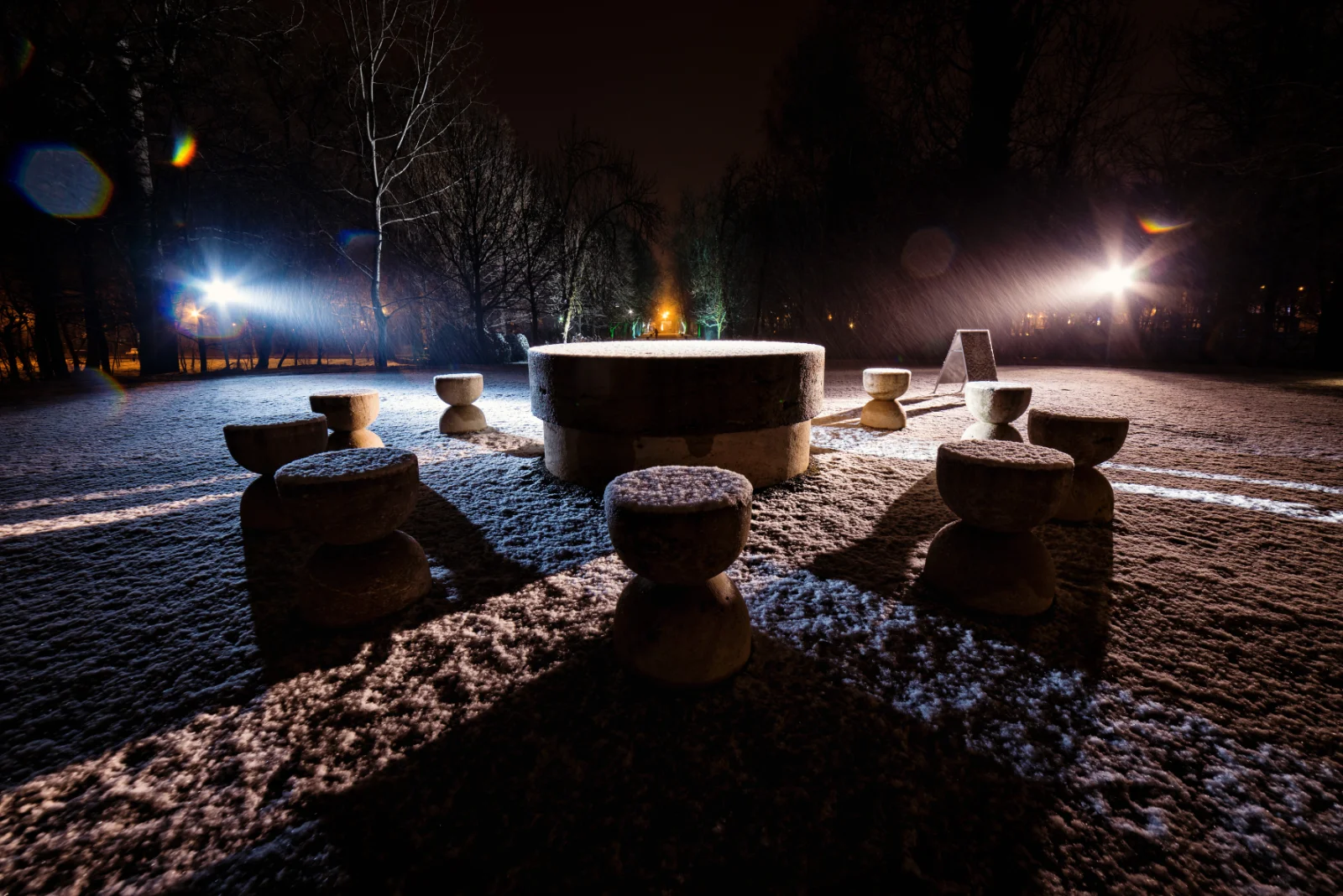
The first monument of the ensemble in Târgu Jiu, starting the journey from the Jiu River, is the Table of Silence. According to many experts, the memorial procession begins and includes the Jiu River itself, which flows quietly a few meters from the Table. In artistic conception, the river signifies the fluidity of life, which passes by impassively. The Table of Silence is a monument of contemplation and deep thought. The perfect symmetry and circularity that characterize the table and chairs offer a perfect balance that is extremely pleasing to the eye. The table is a perfect cylinder, superimposed on another smaller cylinder that forms the base. The 12 chairs are arranged circularly and symmetrically around the table. This creates a space of perfect round shapes, without any angle that would destroy continuity.
“Now in my old age, I see that, in essence, the Table of Silence
is another new Last Supper. The line of the Table of Silence
suggests to you the closed curvature of the circle,
which gathers, unites and brings together.”
Constantin Brâncuși
The Table of Silence underwent several variations until the artist was fully satisfied with the creation. A first version was completed in the fall of 1937. Not being satisfied with its dimensions, the sculptor ordered a new version, along with an order for the chairs that would surround the table, all made of Banpotoc stone at a workshop in Deva. The second version was not placed either and Brâncuși chose a combinatorial variant, using the top of the first version as a leg for the second variant. At his instructions, the hourglass-shaped chairs were placed around the table at equal distances from the table and from each other. Thus was born a monument unique in its absolute simplicity. Brâncuși managed to sculpt silence in a unique way. The Heroes’ Path from Târgu-Jiu continues with the Alley of Chairs, shaded by tall trees and adorned with chairs arranged along it. The hourglass-shaped chairs with a square base are 30 in number, arranged on either side of the alley, in 5 niches of three chairs on each side.
Gate of the Kiss
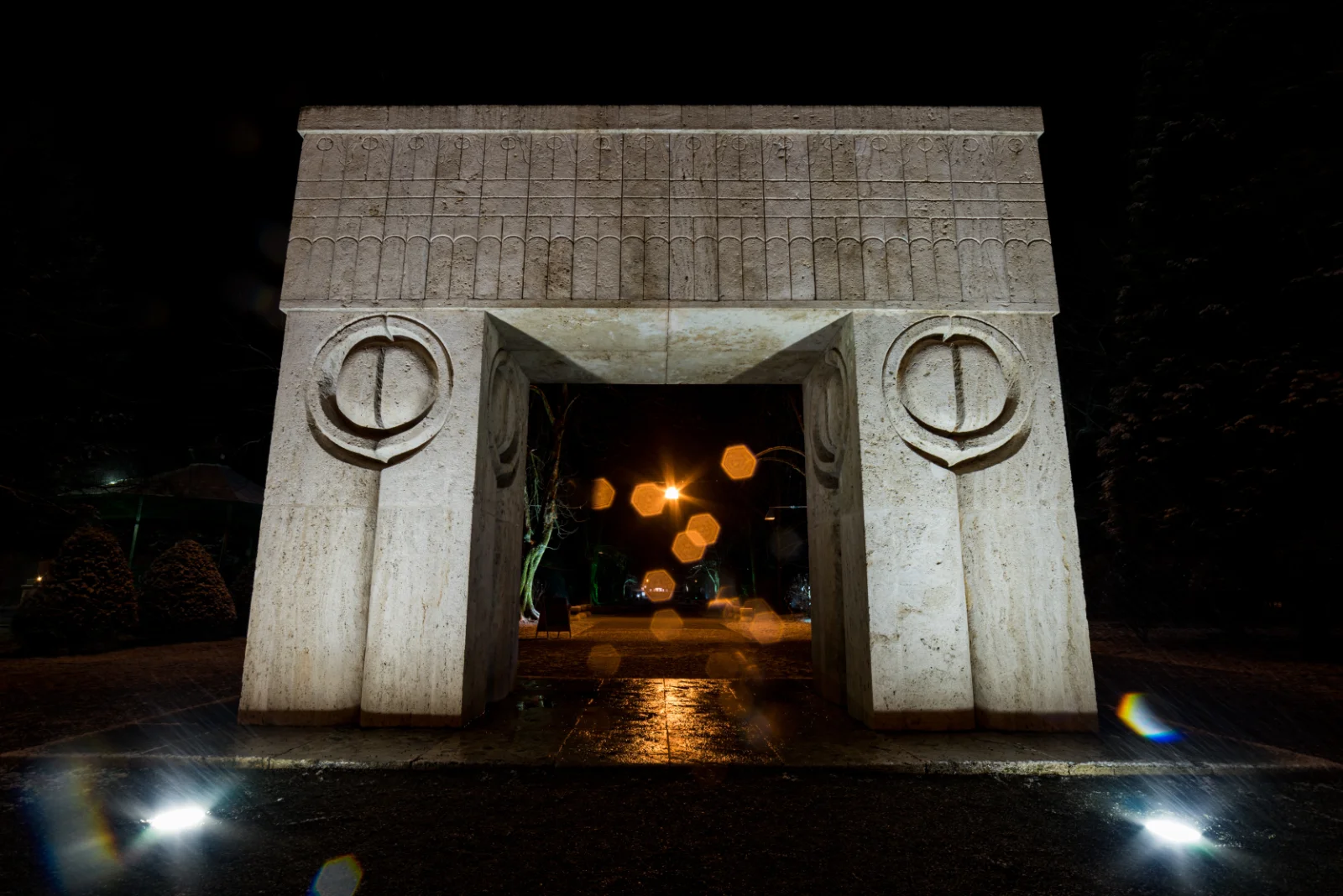
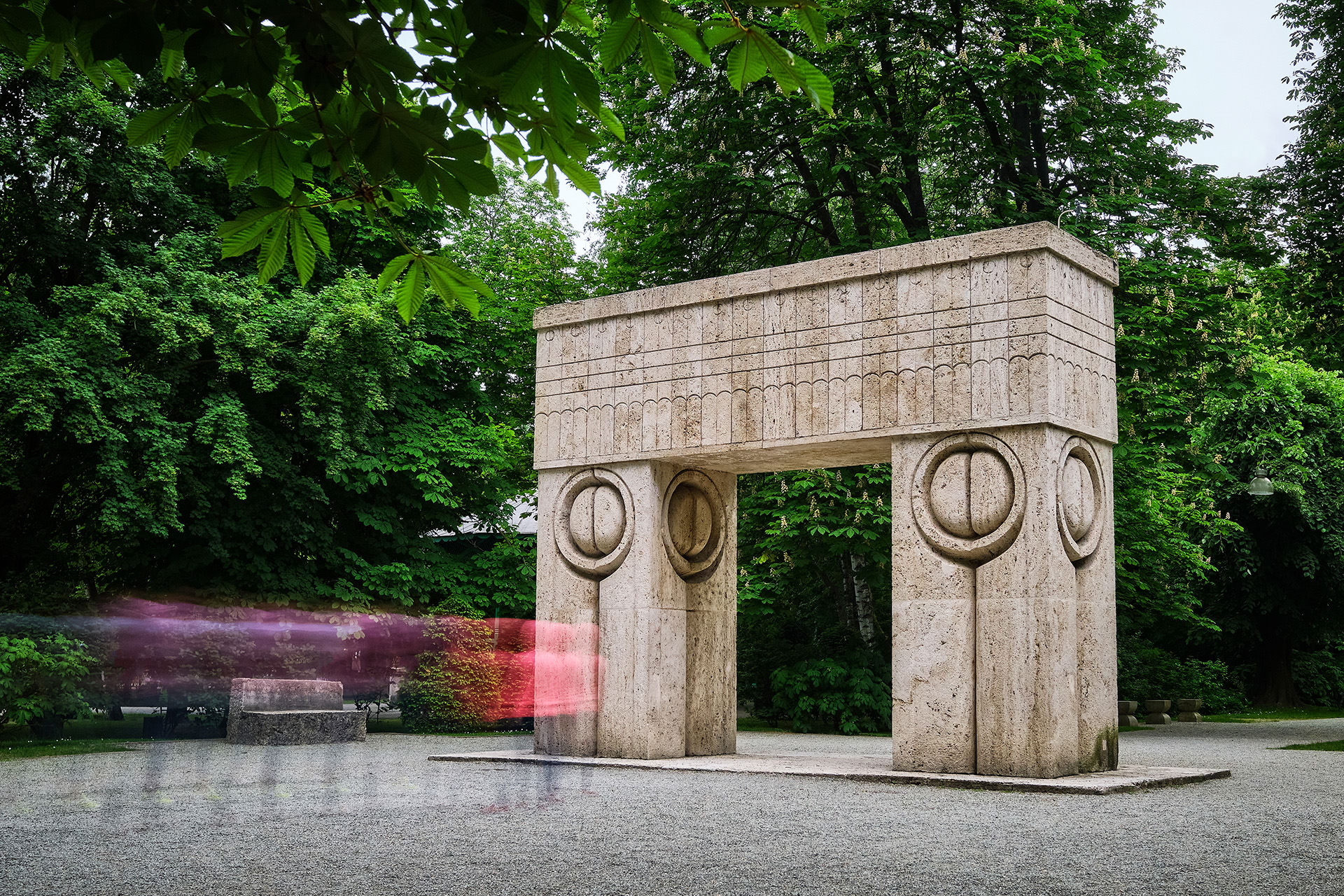
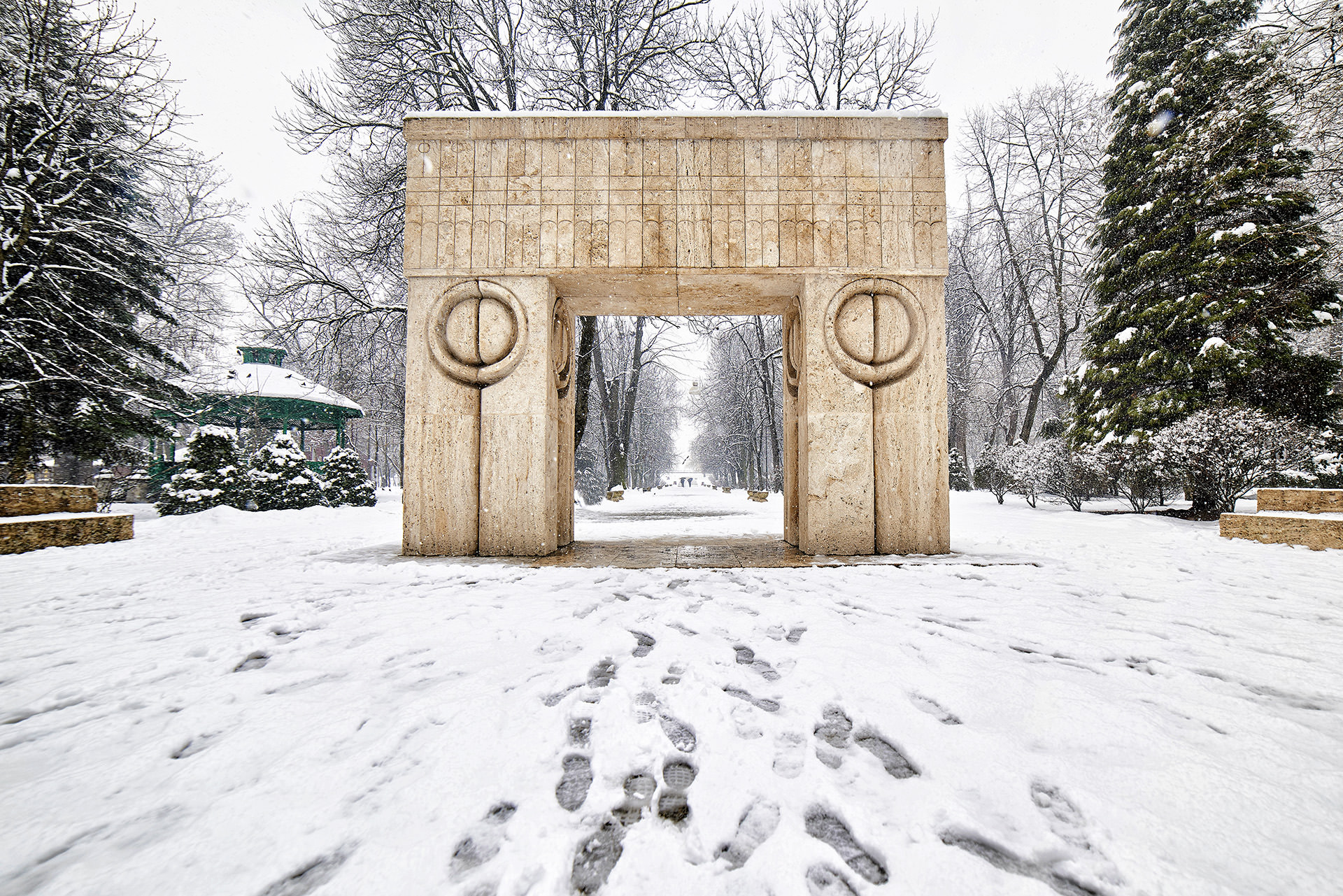
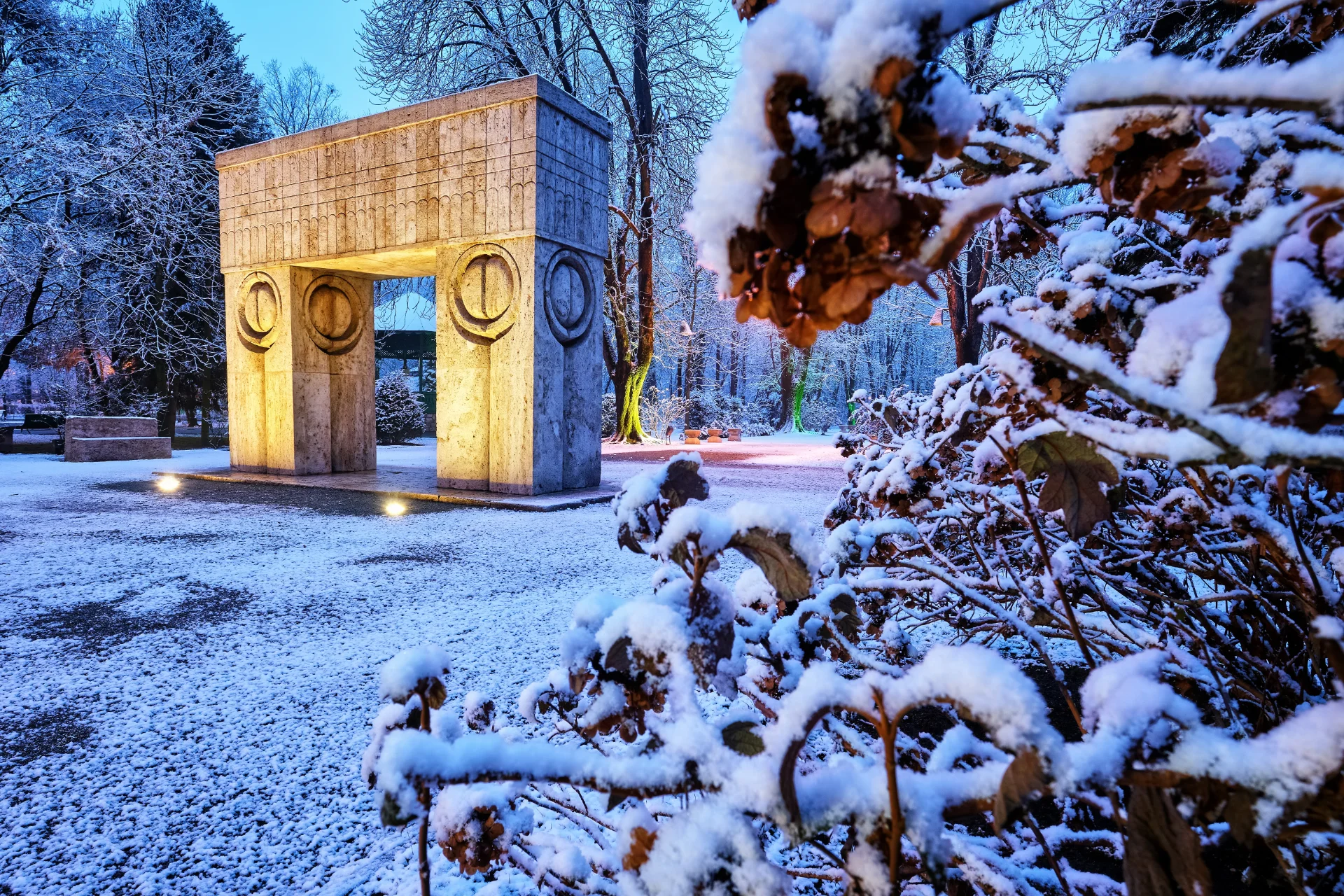
Near the entrance to the municipal park is the Gate of the Kiss, the second monumental element of the ensemble. The symbol of the stylized kiss preoccupied Brâncuși throughout his career, and the Gate of Târgu Jiu represents the crowning of this artistic cycle. For I. Jianu, the gate is “a hymn dedicated to the life and eternity of love…it fits perfectly into the logic of this ensemble that proclaims the artist’s deep faith in life and in the destiny of man“. The extreme stylization of the kiss, a symbol of love, is what makes this gate a masterpiece of universal sculpture. There are hundreds of triumphal arches in cities around the world, but Brâncuși managed to bring the Kiss Gate to spiritual, human proportions. Brâncuși thus manages to create an immortal testament of love in stone.
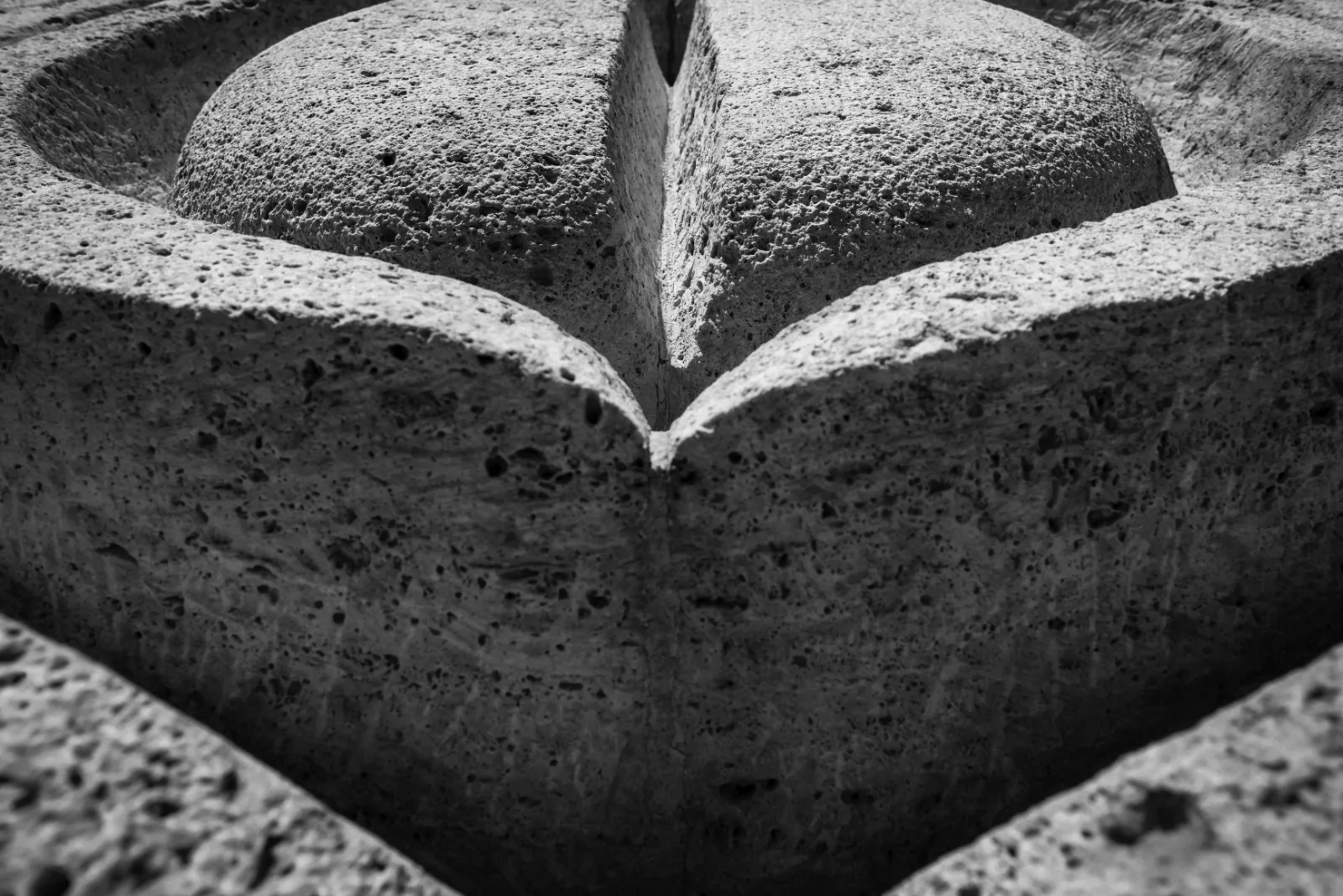
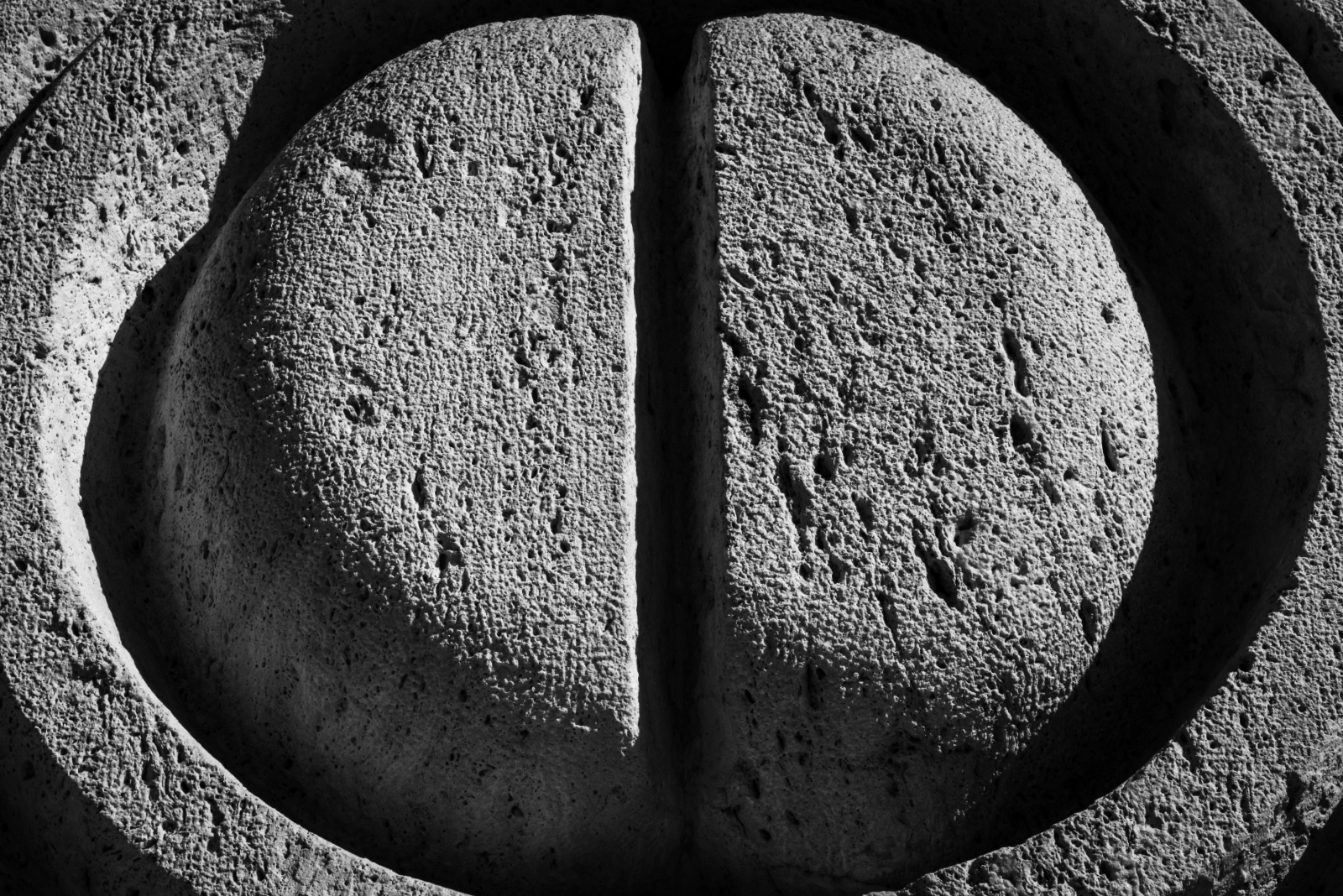
„Don’t you see these eyes?… The profile of these two eyes?…
These hemispheres represent Love.
What remains in the memory of others after death?…
Only the memory of the eyes and the looks with which we
revealed our love, for people and for the world…”
Constantin Brâncuși
From a physical and compositional point of view, the Gate is made up of 2 parts, the two “Columns of the Kiss” united by the architrave likened by many to a “Dowry Chest”. The columns are made up of two superimposed cubes, and the architrave that forms the gate by uniting the columns has the dimensions of four cubes horizontally, with a protective plate on top. Thus, the pillars include the symbol of twinned eyes, and the architrave reproduces the Kiss of Montparnasse. According to William Tucker, the main element of this monument is the volume of empty space, surrounded by the sculpture itself. Thus, the stone embraces the air, giving the gate an impressive vitality, like a work in progress. Those who look at the gate seem irremediably drawn to the passage space between the columns, as if wanting to take part in a ritual of love initiated by Constantin Brâncuși. The sculptor also added two stone benches to the ensemble, placed on either side. Once through the Kissing Gate, the panorama of the city opens up and the final masterpiece is anticipated in the distance.
The Endless Column
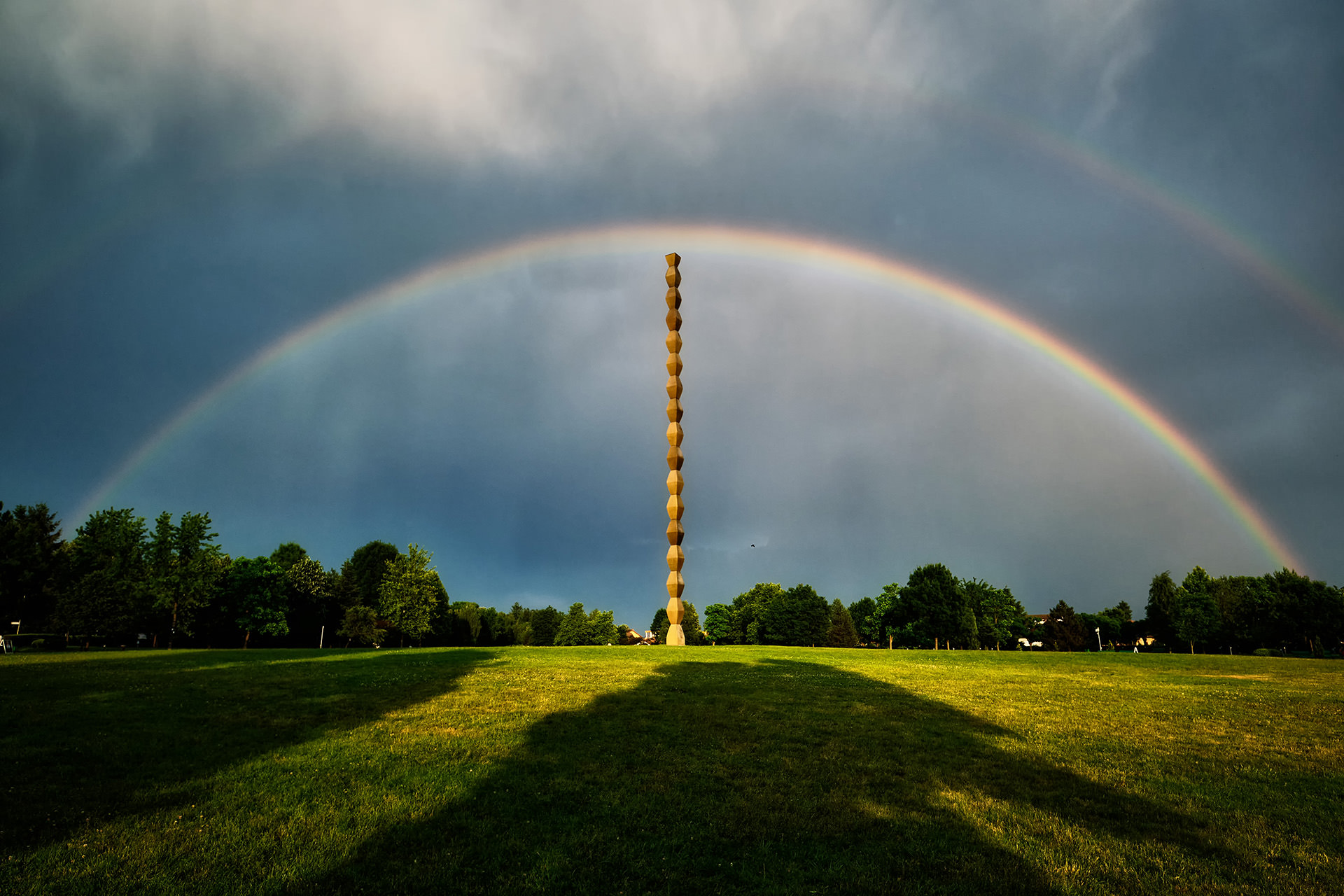
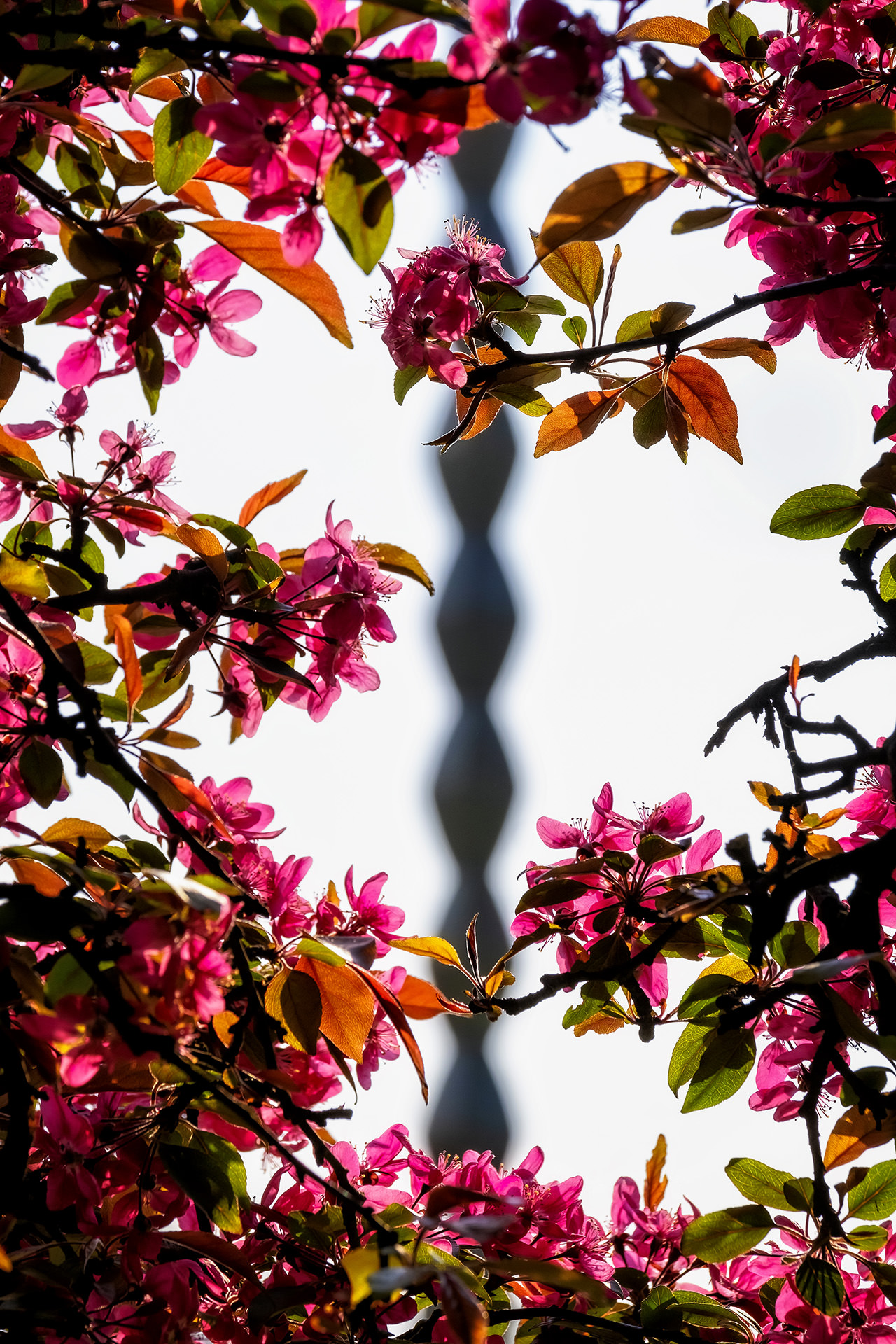
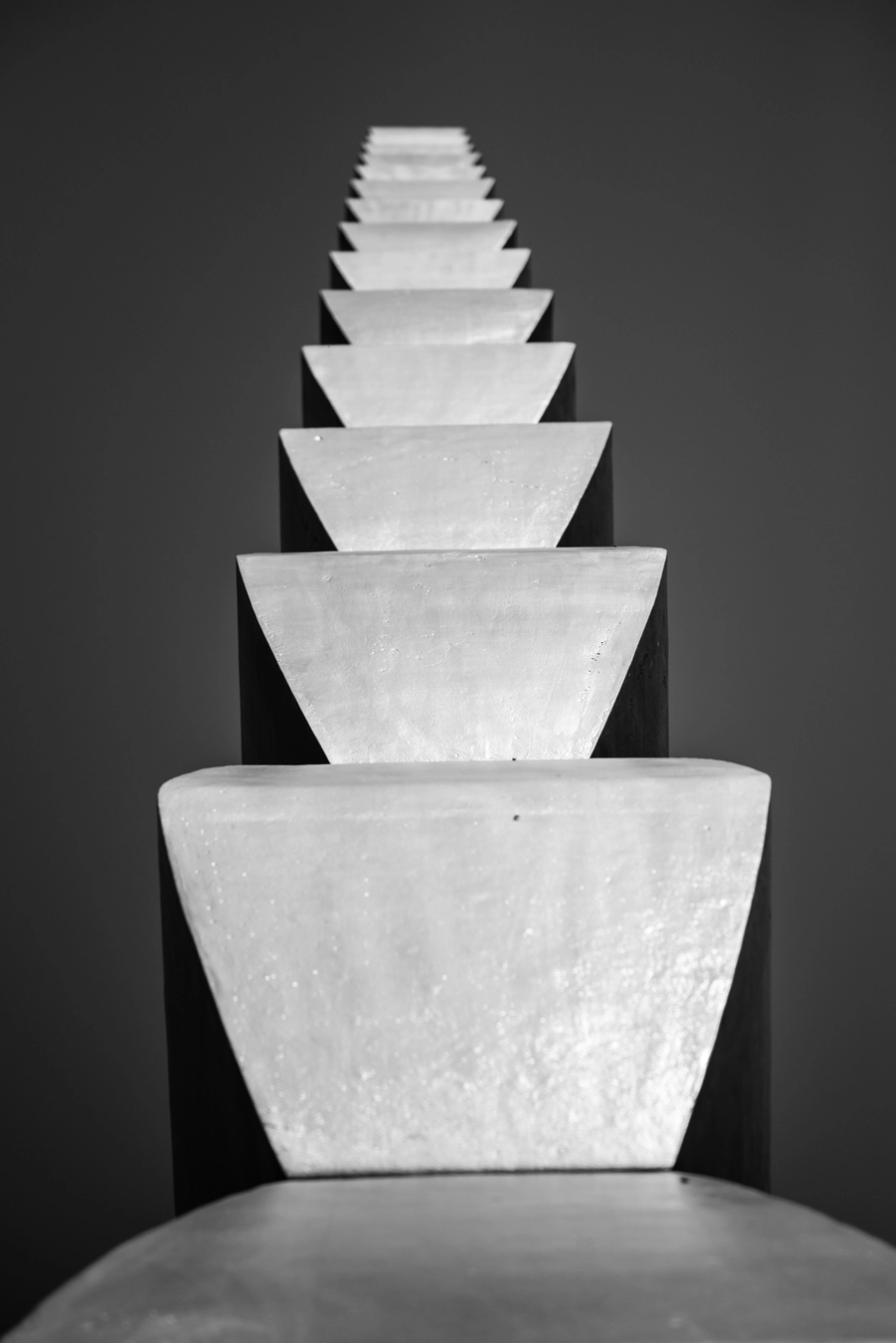
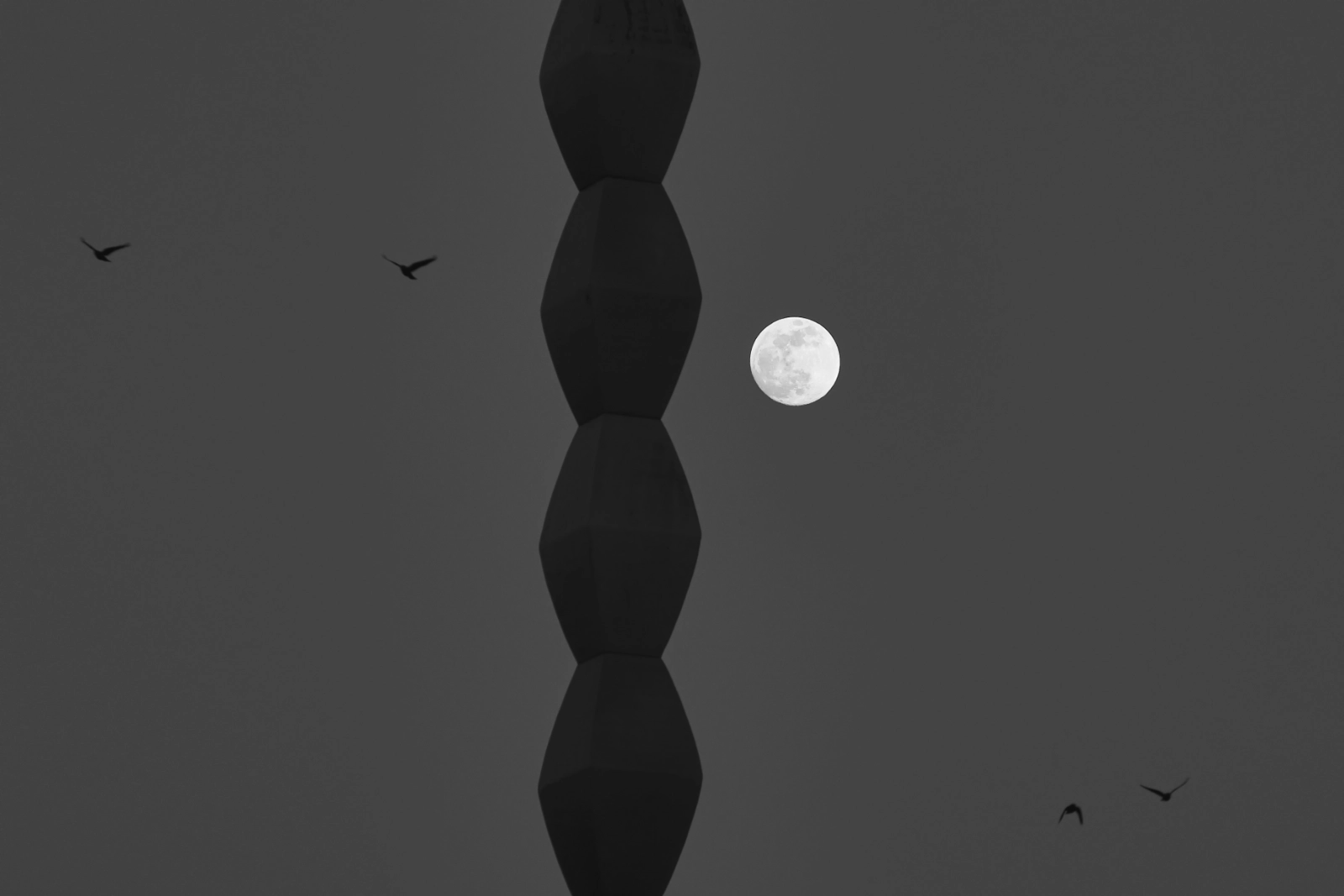
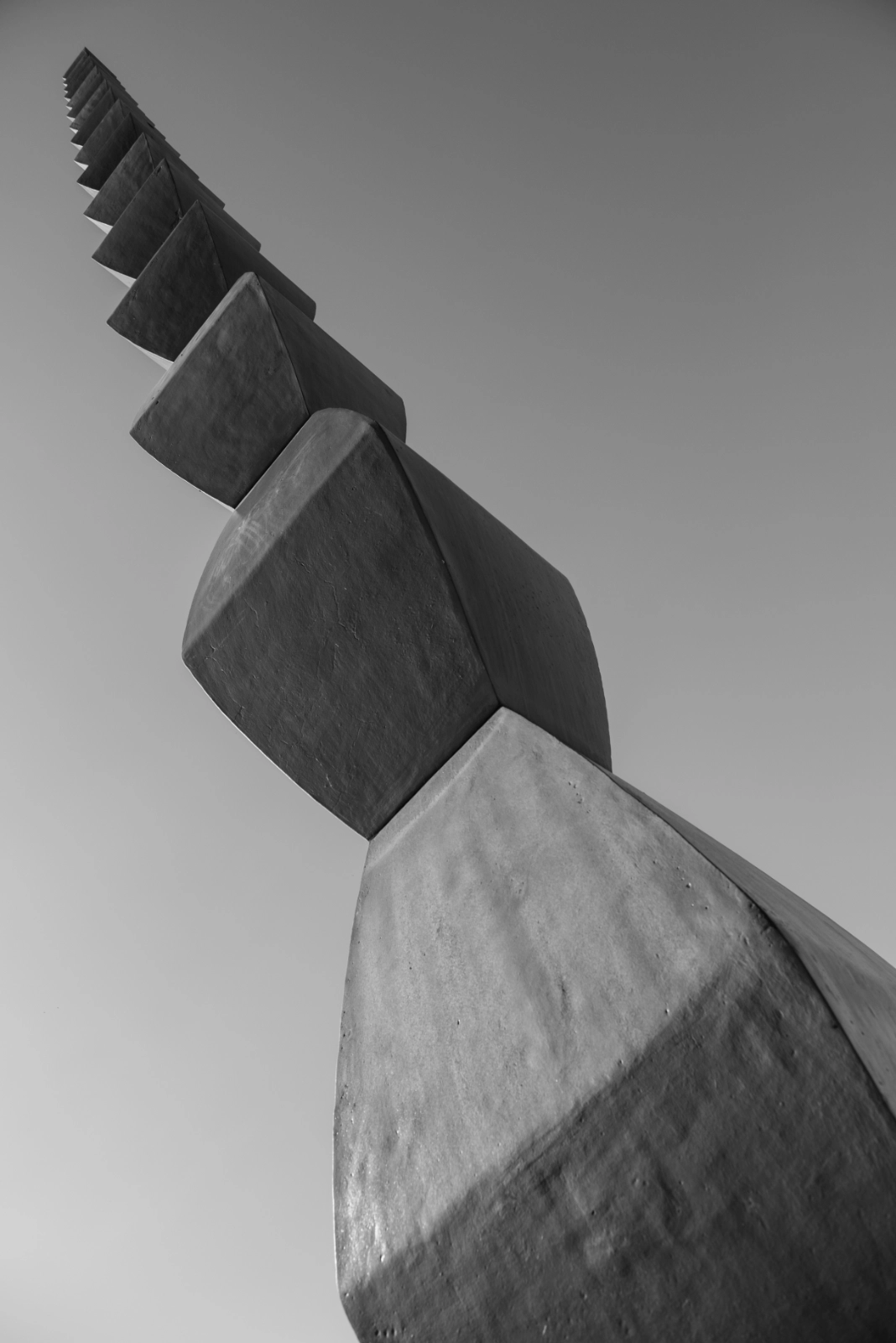
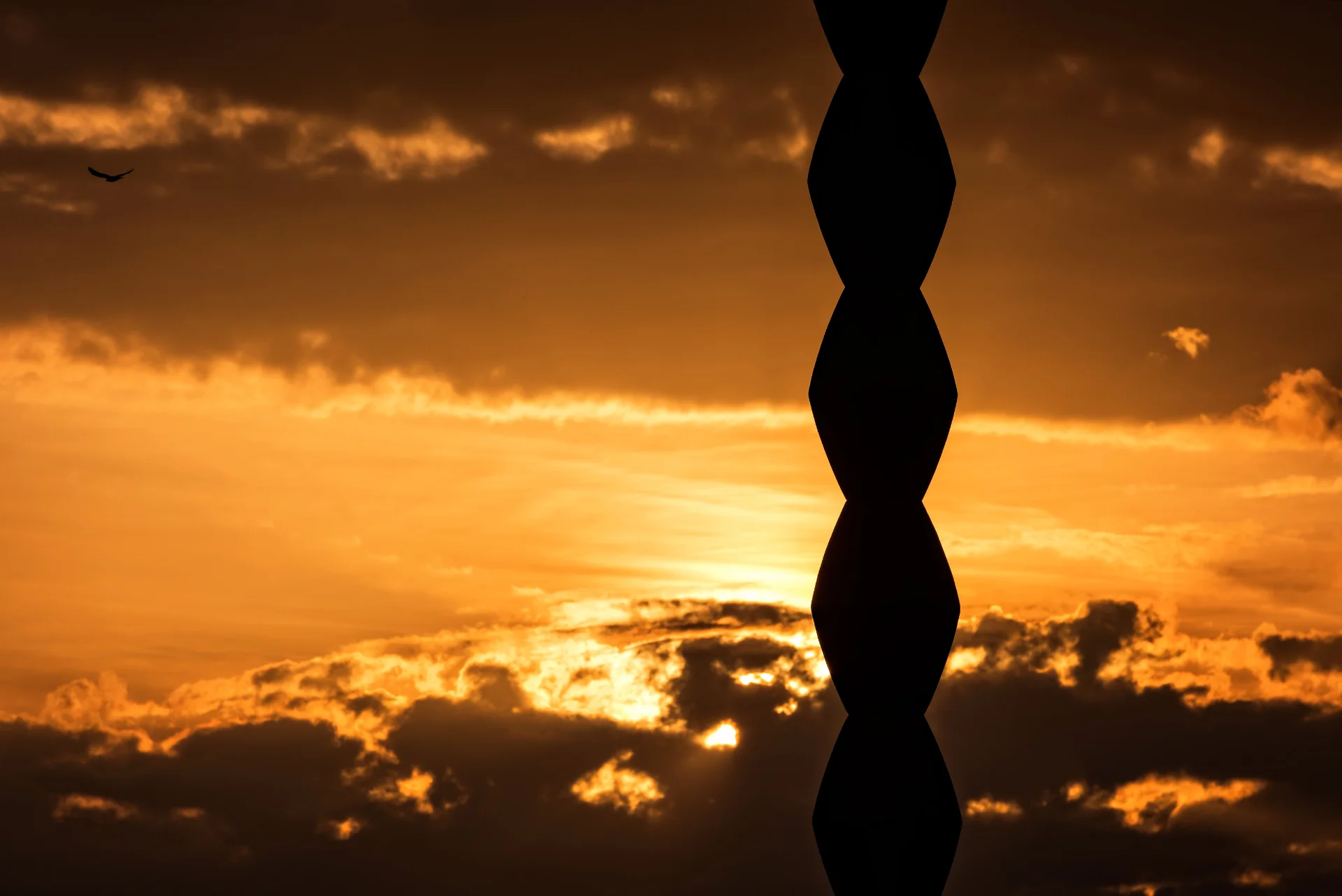
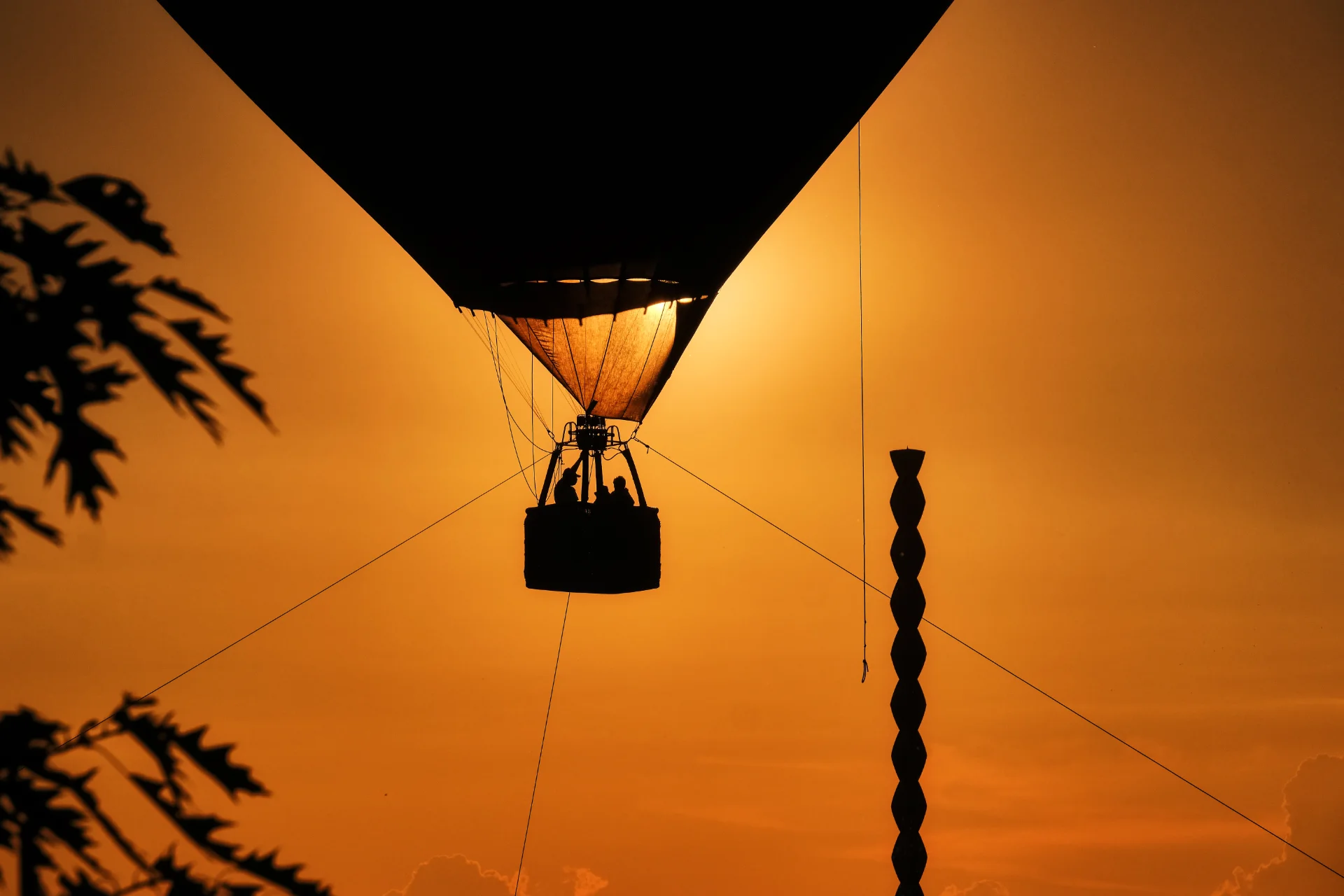
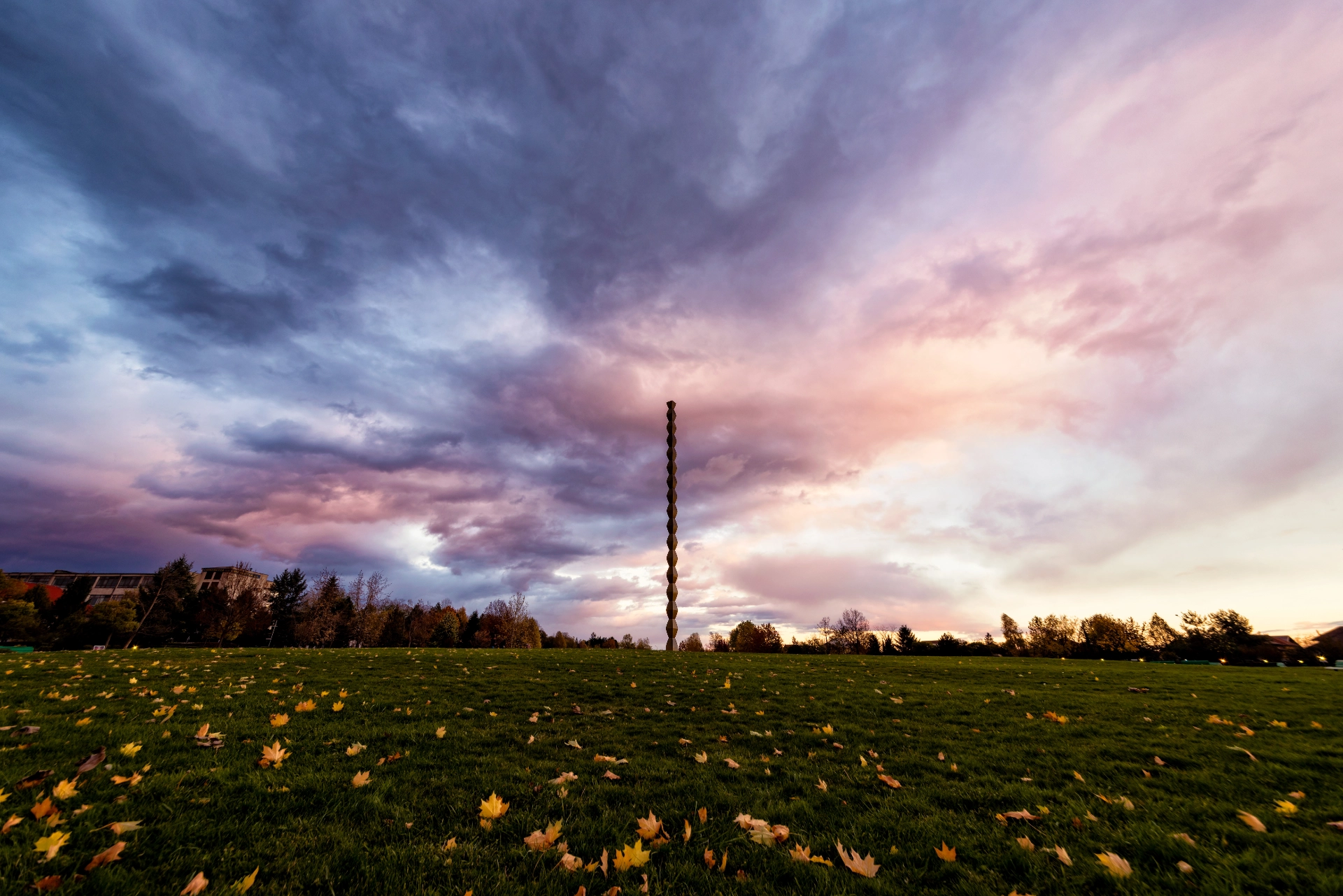
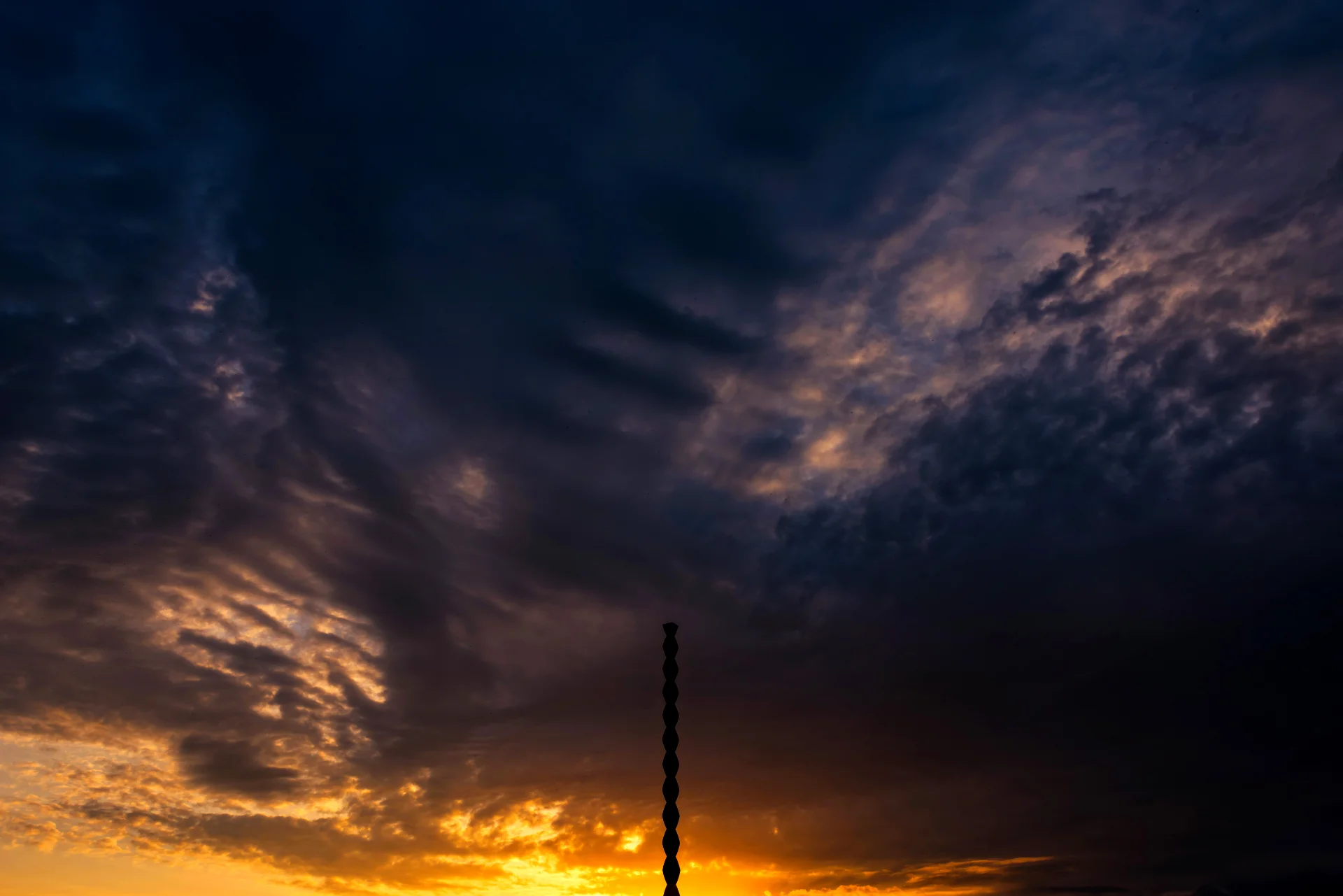
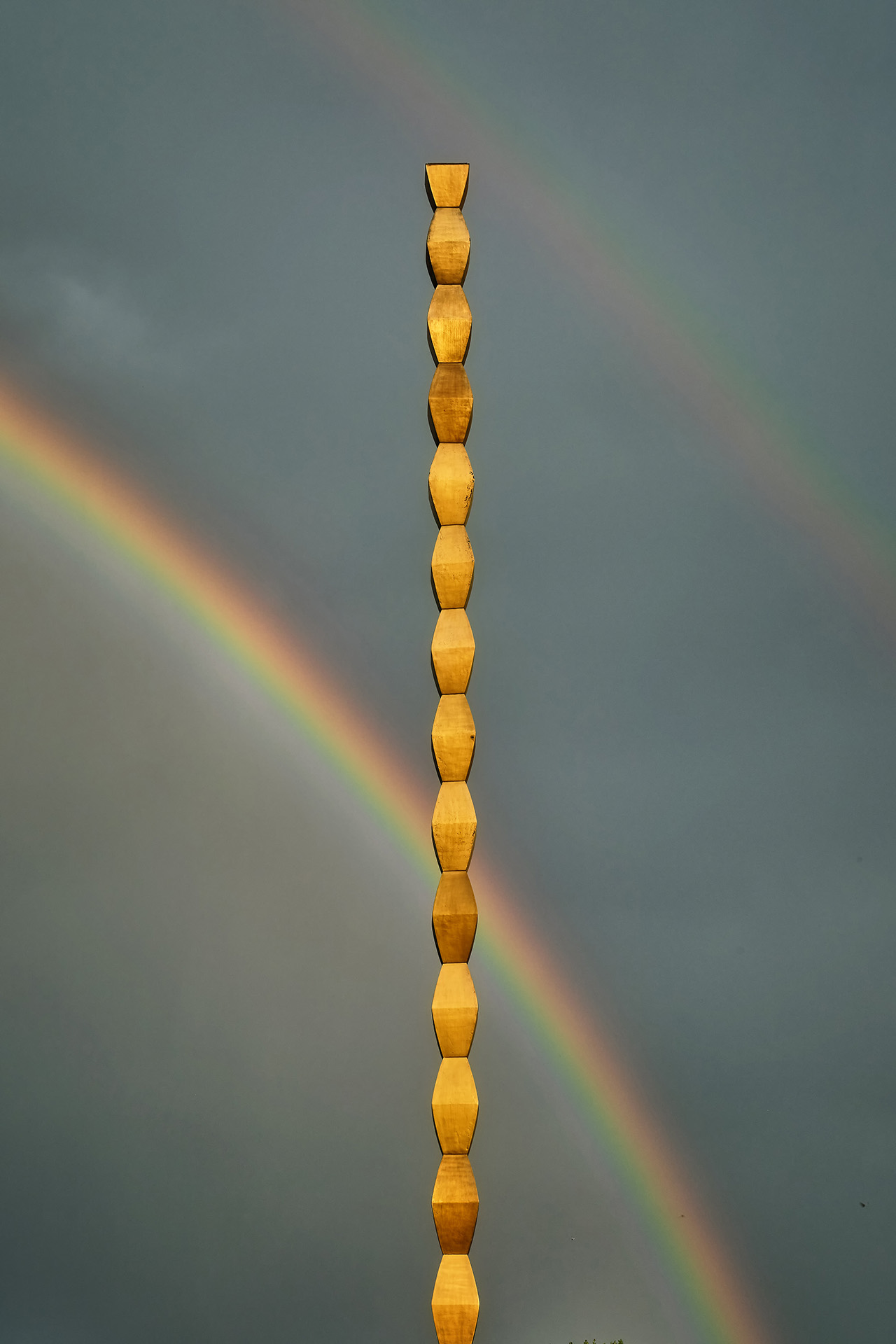
The Endless Column, also known by locals as the Column of Infinity, is located over 1 kilometer away from the other works located in the central park, but it forms a unified ensemble thanks to the artistic genius of Constantin Brâncuși. The column was the only initial order to honor the memory of the heroes, but the sculptor saw everything on a much larger scale, in the form of an ensemble that embraces the entire city, as an integral part of it. The monument is one of the most important of contemporary art, concluding a cycle of columns that Brâncuși had been working on for many years. As for the construction itself, it impresses with its proportionality and simplicity. The Endless Column is made up of 16 hourglass elements, with dimensions of 45:90:180 cm. The height of the Column rises to 29.33 meters, and the weight is approximately 29 tons, being cast in metallic cast iron.
„This is the message of my Pillar, guarded by the Table and the Gate… To burn like a flame… To transform into lightning, connecting heaven and earth.”
Constantin Brâncuși
The hourglass-shaped elements follow each other on an inner metal frame, consisting of 15 whole elements and two halves at the extremities. Thus, a profound connection is created between earth and sky, between the living and the departed, a staircase to heaven for the prayers of those left behind, in memory of the heroes. According to many critics, the shape of the Endless Column is inspired by Romanian folk architectural motifs, with columns carved in this way being found in the homes of the inhabitants of Northern Oltenia. Mircea Eliade gives it a profound meaning, likening it to an axis mundi, a support for the celestial vault, a symbol present in many cultures around the world. Many others have found hidden meanings and symbols in Constantin Brâncuși’s work. The column, viewed from different angles, offers new perspectives each time. What is certain is that the sculptor offered the city of Târgu Jiu a unique and profound monument.

Târgu Jiu
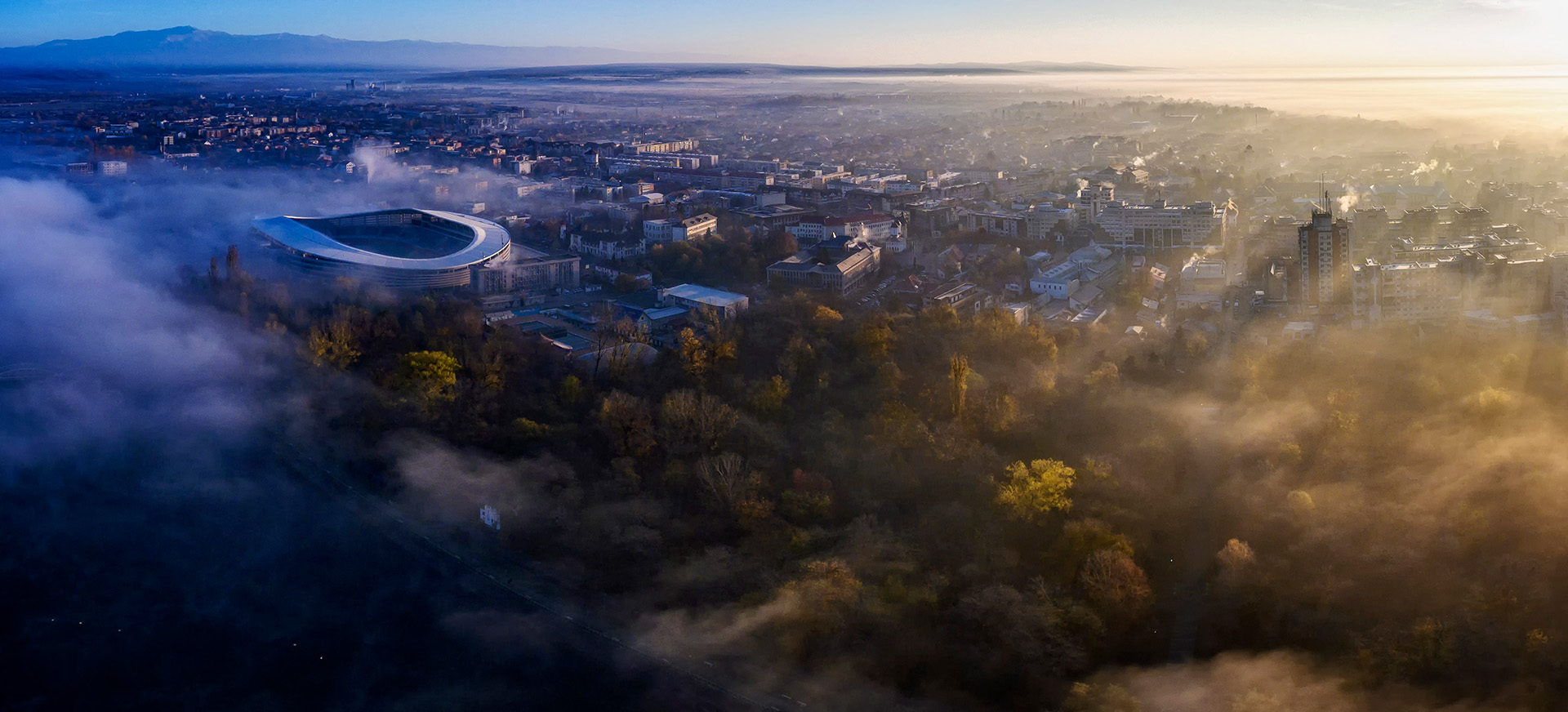
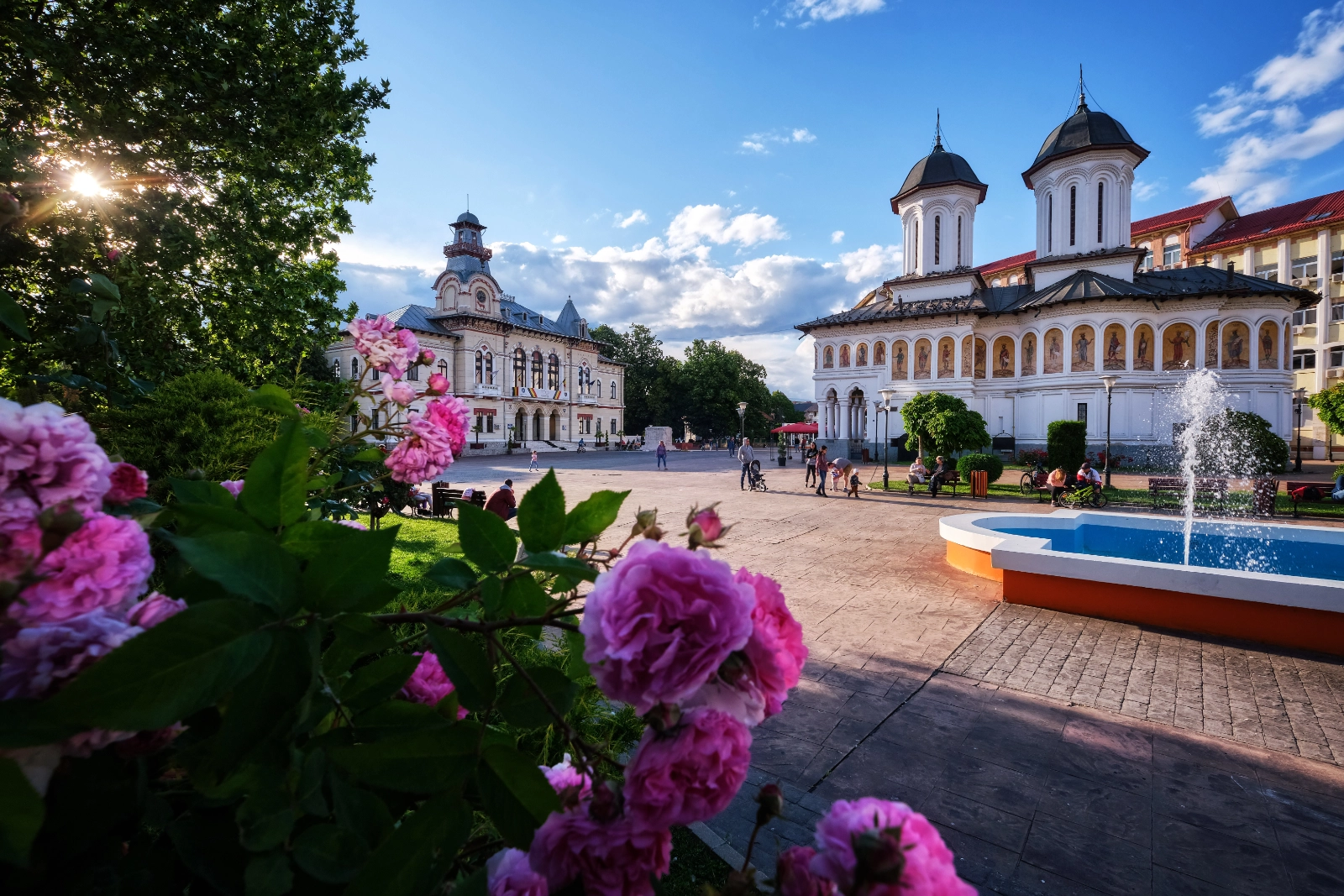
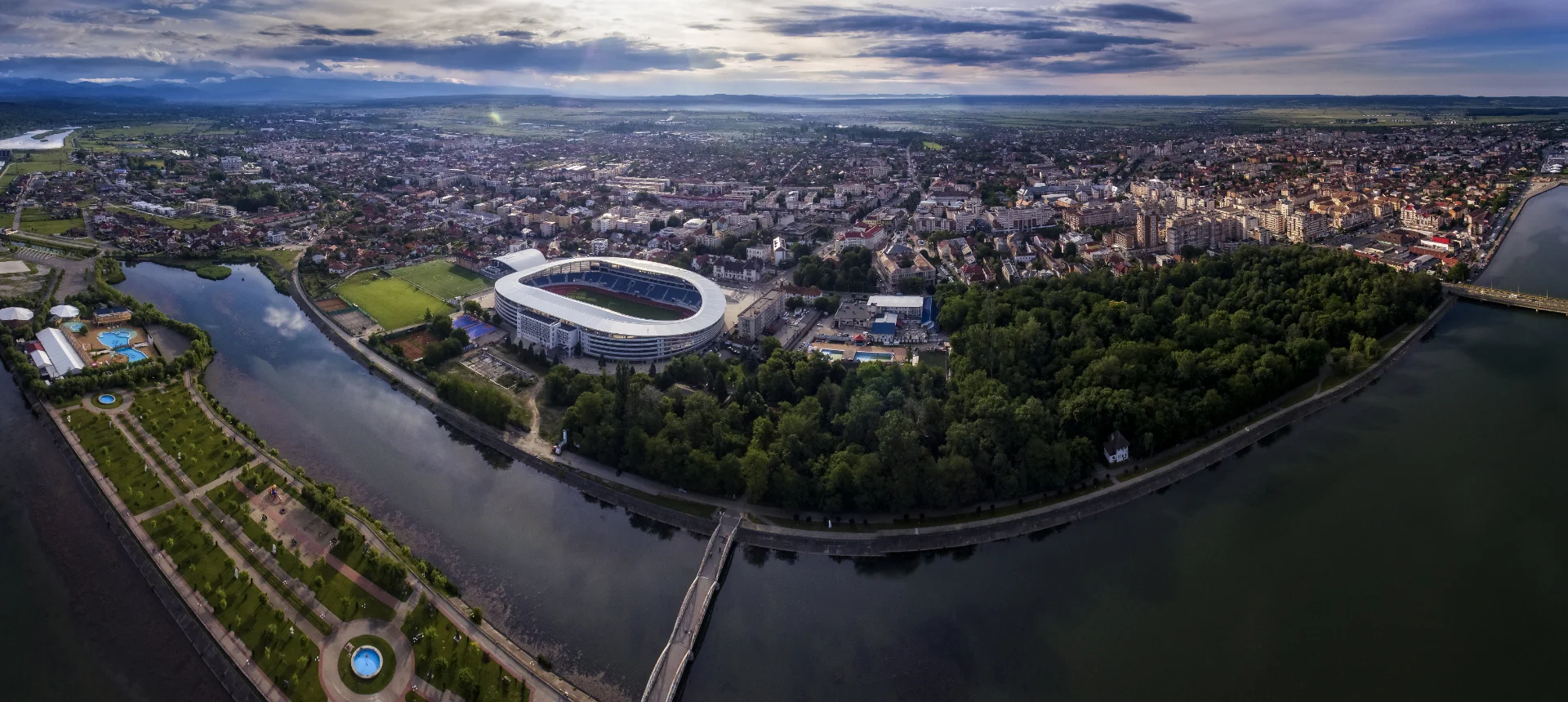
Guarded by the Carpathian peaks and kissed by the Jiu River, the capital of Gorj County, also known as the city of Brancusi, offers a complex cultural experience. Along the Heroes’ Path, among old buildings, museums and parks, Târgu Jiu is a fascinating tourist destination, excellent for a short trip or as a starting point to discover other splendid places in Gorj County. With its charm of a quiet provincial town, it may not be among the most famous and popular places in Romania, but a treasure of universal cultural heritage is protected here. Here, in this provincial city in southwestern Romania, the roots of modern art can be found, as well as universal symbols of love, sacrifice and gratitude!
Constantin Brâncuși
To present the artist and the man Constantin Brâncuși in a few lines is an ephemeral attempt. There is so much to say about the “Colossus of Hobița”, that hundreds of thousands of pages have been written and are still being written. Constantin Brâncuși was born in the village of Hobița in the commune of Peștișani, not far from Târgu Jiu, in February 1876. He was the sixth child of a family of Romanian peasants. The father of modern sculpture carried the consciousness of his birthplace throughout his life, often manifesting his longing and melancholy for his native lands in Hobița. Constantin Brâncuși’s artistic beginnings are lost in his childhood in Gorj, when he was influenced by the nature of his native places, the spirit of the Romanian peasant and archaic folk art. Until 1894, Brâncuși practiced various trades in Oltenia, constantly driven by the desire to know the world. In 1894, after working as a shop boy for several years in Craiova, he enrolled in the School of Trades in the same city. He attended the sculpture section of this school until 1898. From Craiova, he headed to Bucharest, where he began classes at the School of Fine Arts, with financial support from the Epitropia Madona Dudu in Craiova. He graduated from the school in 1901. Already during these studies, Brâncuși formed his own artistic style in sculpture, being more interested in simple, pure forms than in the perfect reproduction of visual forms. He sacrificed a lot for his artistic ideal. For the period from the summer of 1903 and until he arrived in Paris, there is not enough information to create a precise description. Brancusi worked for a while in the country to raise money for his dream of studying abroad.
However, the road to Paris was not easy or direct. He went through numerous hardships and trials, which strengthened his spirit and determination. From his native Gorj, he went to Vienna, and from there, he stopped in Munich. Due to material shortages, the road was extremely difficult, often having to walk long distances. From Munich, he decided that Paris was the only viable option to realize himself as an artist. For financial reasons, he walked most of the way to Paris, having to sell his watch and clothes at one point. He passed through the Swiss cities of Zurich and Basel. Everywhere, he researched museums and the works of great classical artists. He arrived in Paris in the spring of 1904, putting an end to a road that seemed endless. In Paris, Brâncuși would also work in the studio of Auguste Rodin, one of France’s greatest sculptors, but he quickly understood that he could not achieve his artistic ideals by working for someone else. In Paris, one of the greatest sculptors of the modern era would be formed, called by many “the father of modern sculpture”. It was also in Paris that Brâncuși created the masterpieces that would make him recognized throughout the world. Works such as “Miss Pogany”, “Child’s Head”, “Supliciu”, “The Kiss”, “The Sleeping Muse”, “Prayer”, “The Masterful Bird” or “The Bird in the Air” revolutionized sculpture and modern art. The works in the Monumental Ensemble in Târgu Jiu were the sculptor’s gift to his homeland. Constantin Brâncuși passed away on March 16, 1957, with the only great regret being unable to revisit his birthplace of Hobița. Brâncuși’s grave is in the Montparnasse Cemetery in Paris, but his memory and masterpieces are spread throughout the world, being universally appreciated.