47
Băile Herculane
Resort and Town
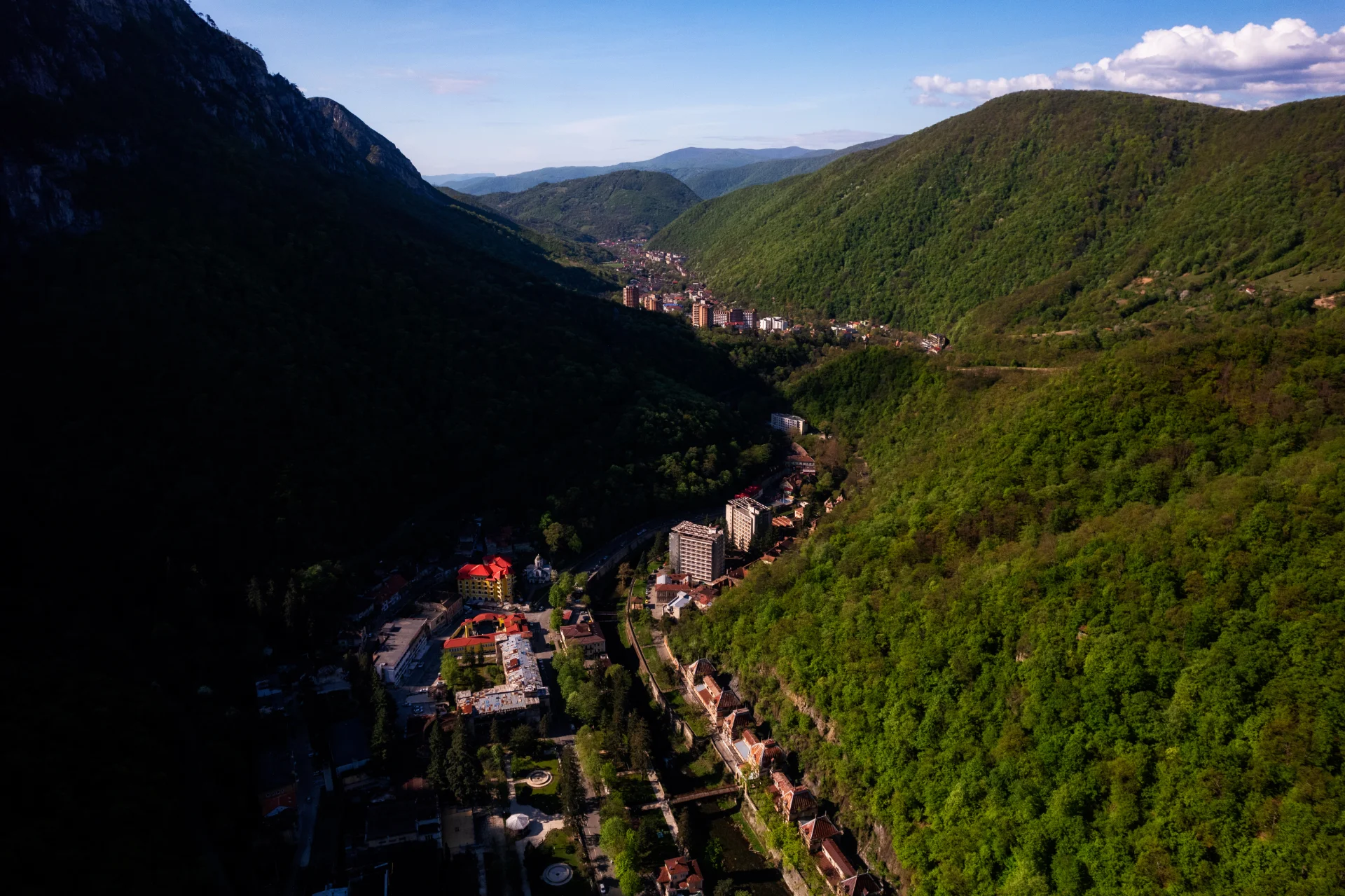
Once considered the most beautiful resort on the continent and the escape place of Europe’s crowned heads, Herculane is timidly awakening from its long sleep, trying to preserve the last treasures it has left, beyond the healing powers of its waters!
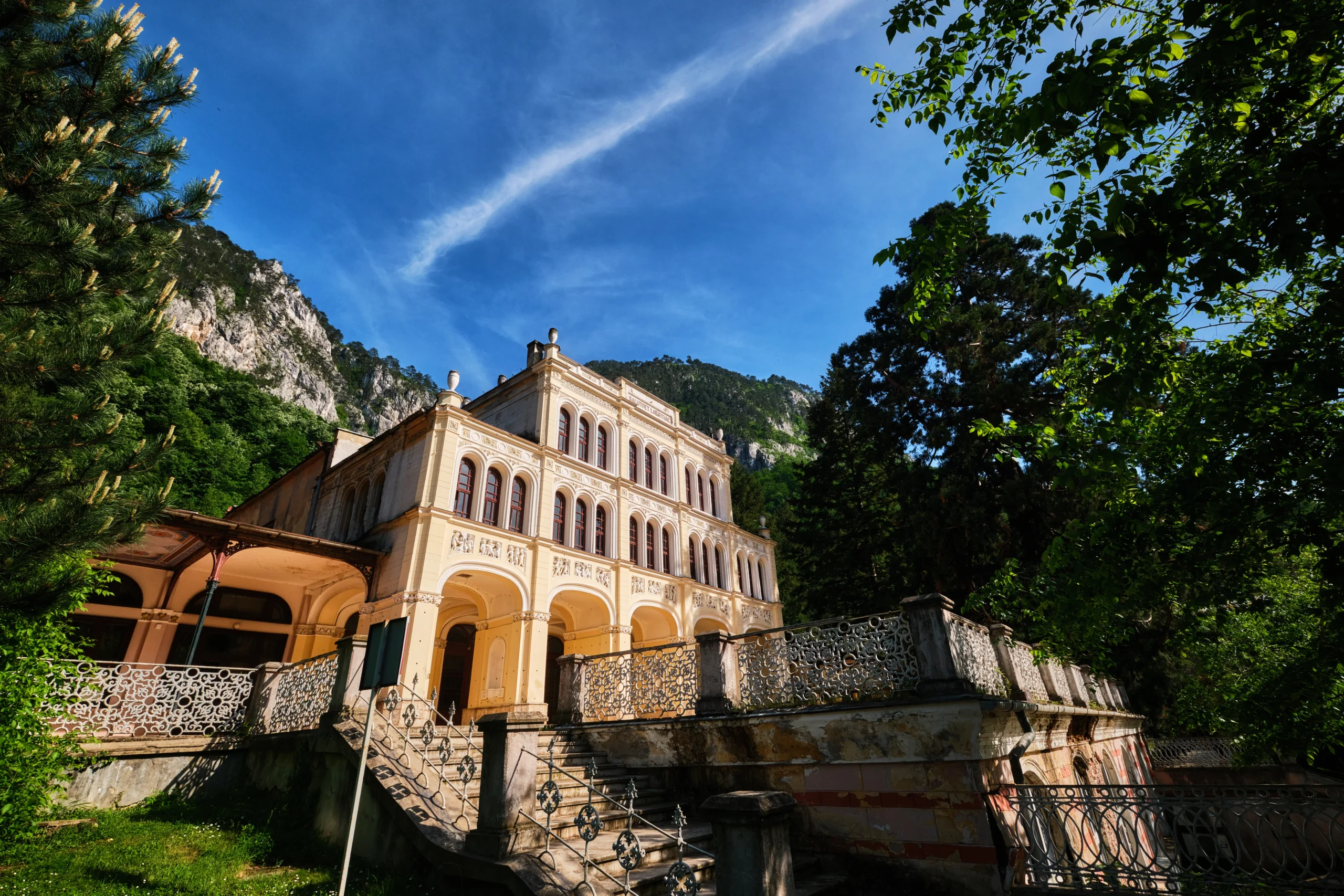
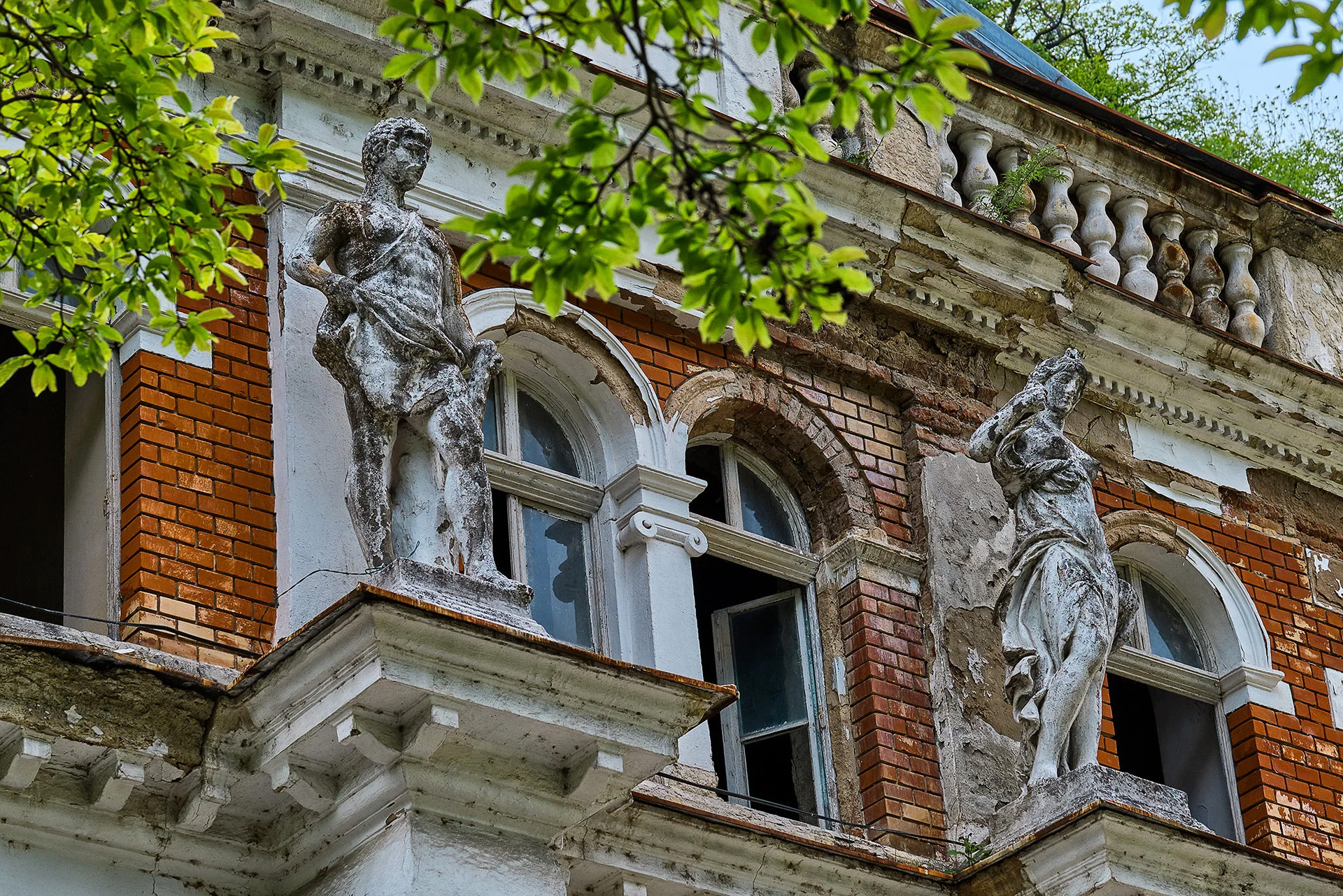
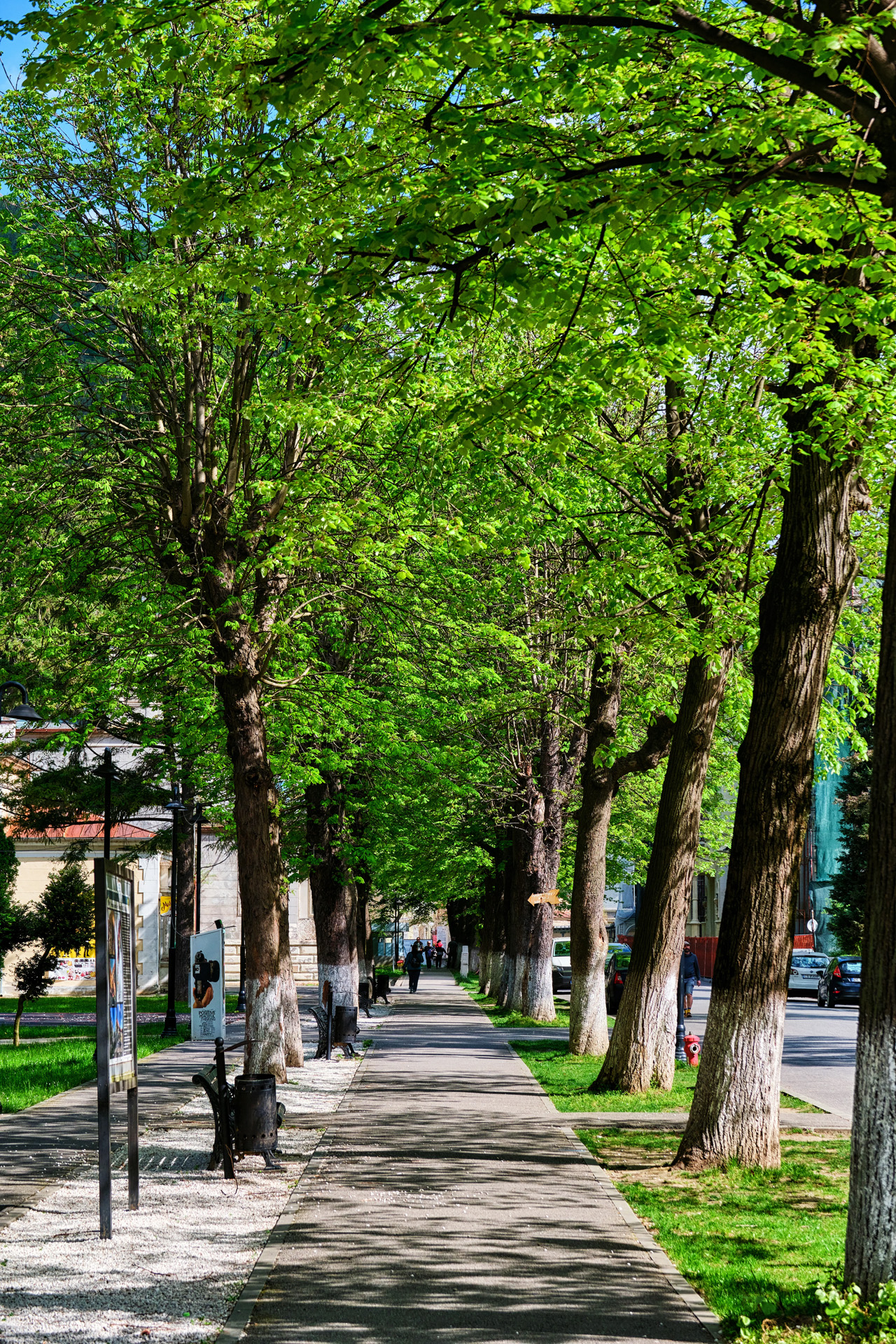
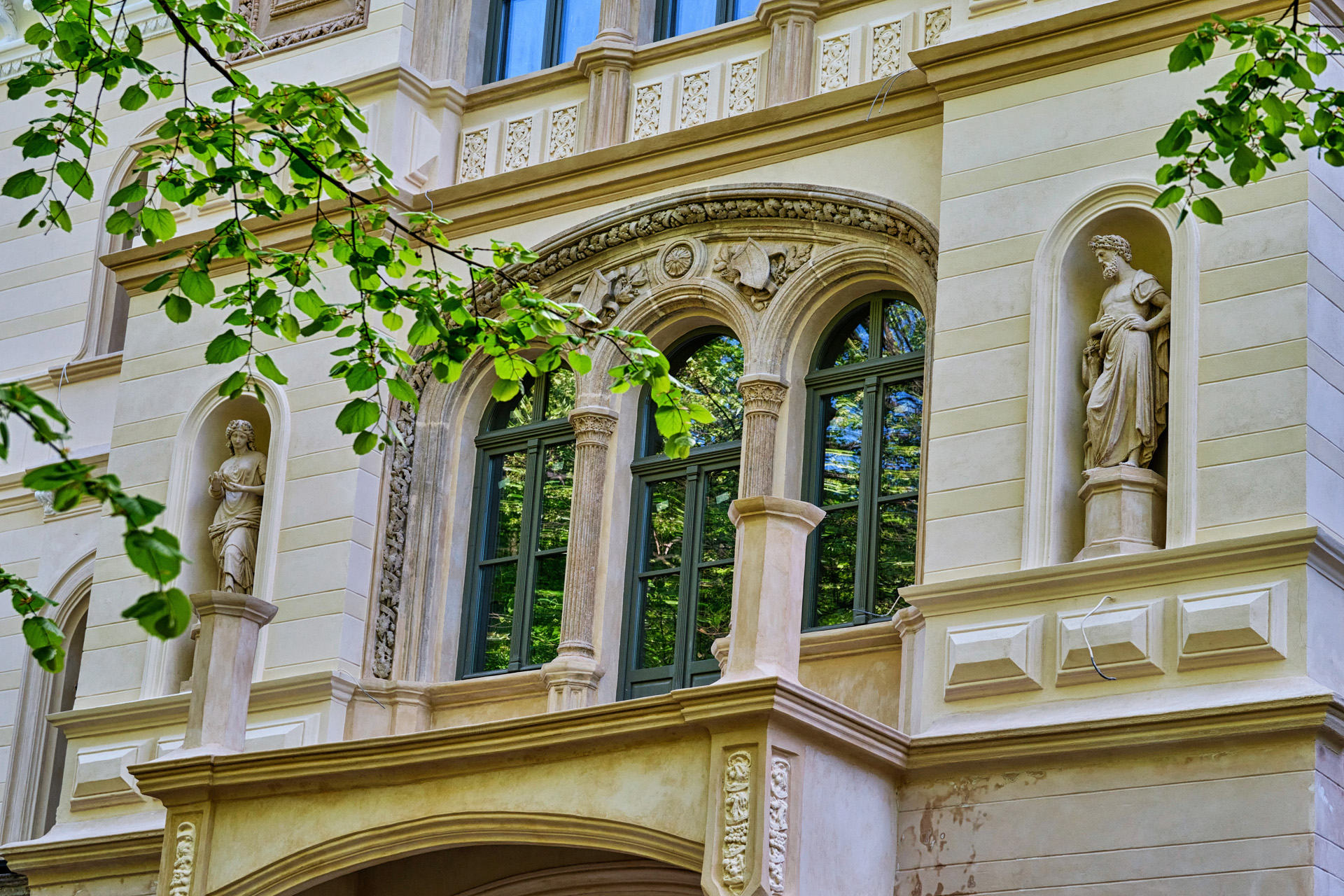
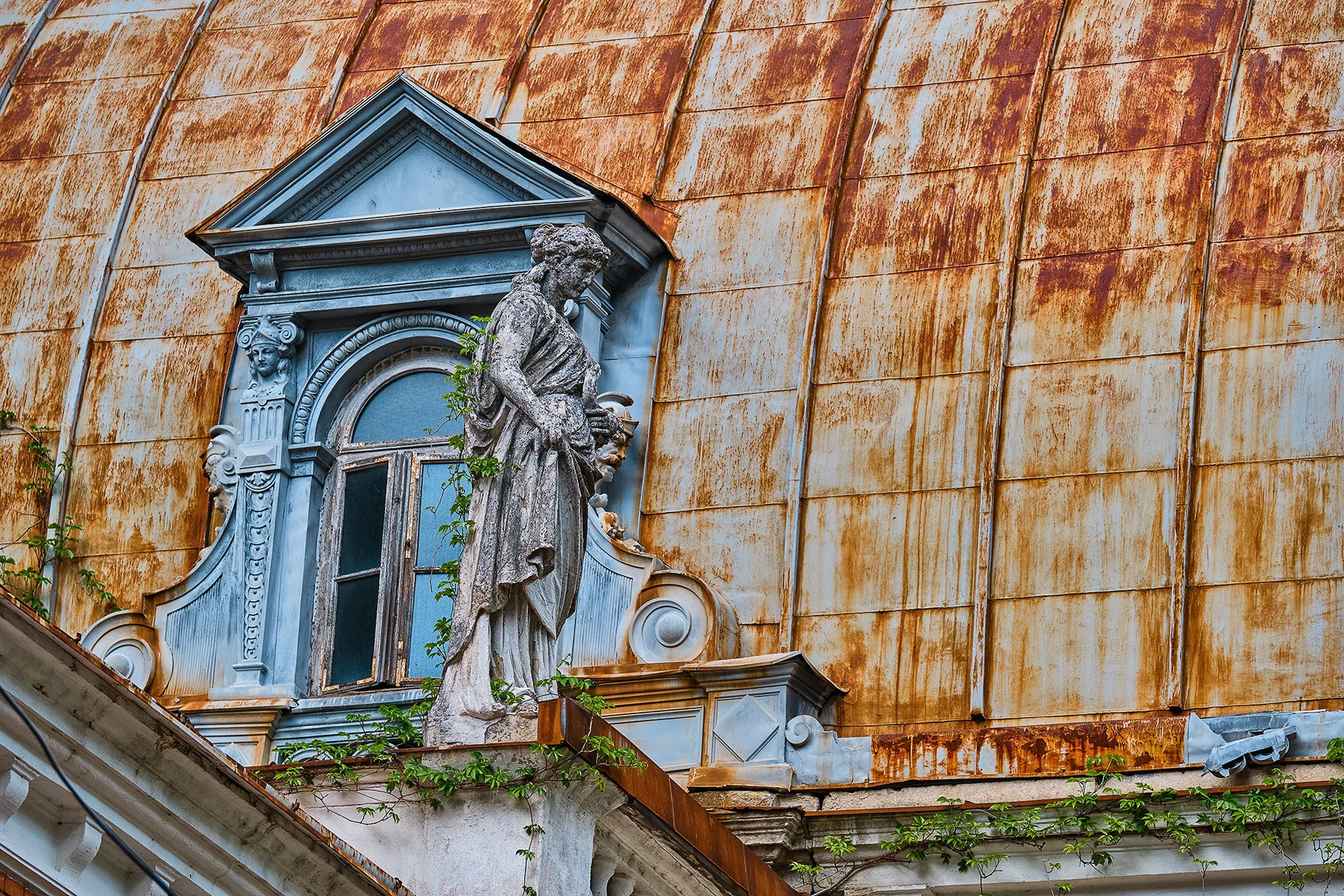
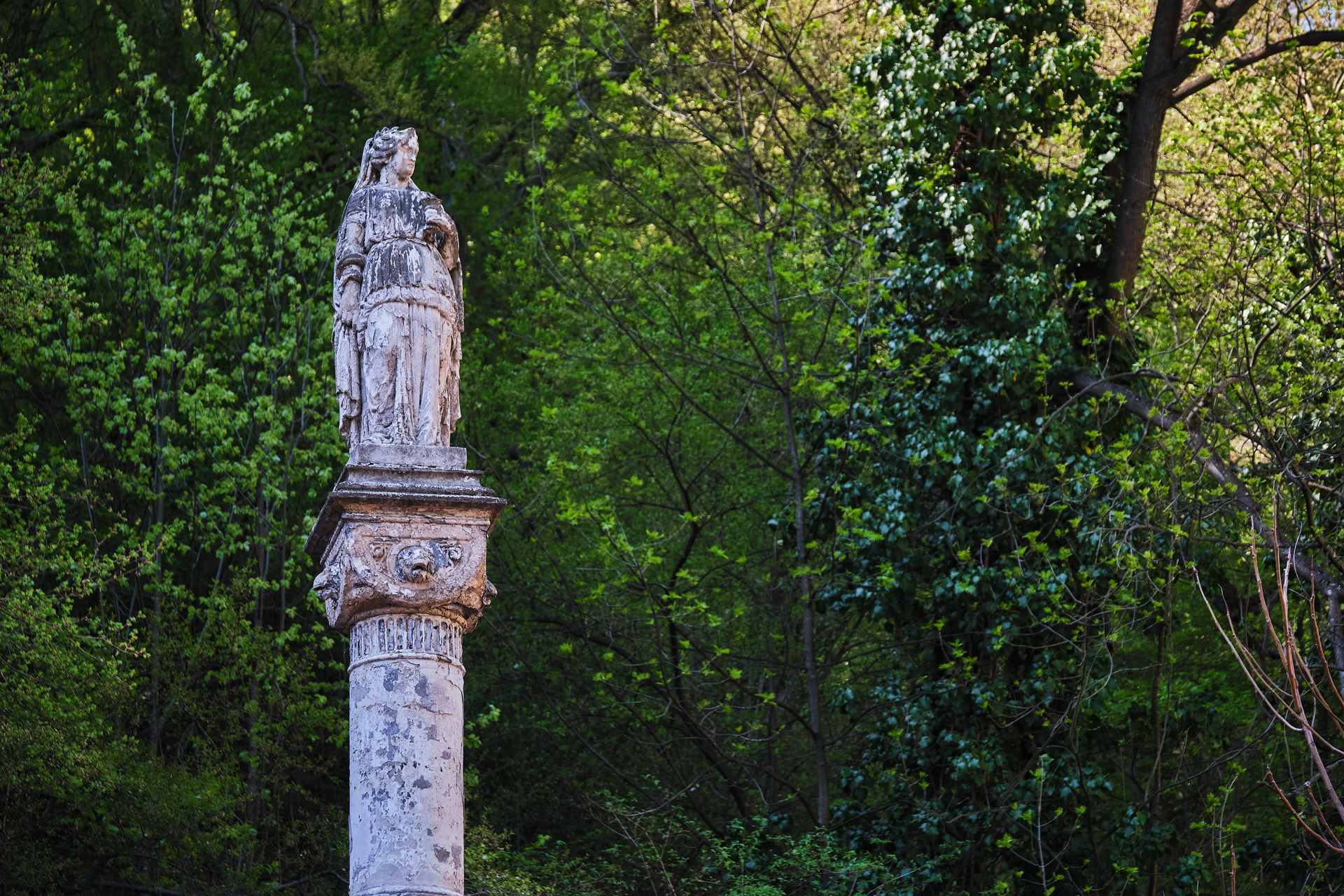
A little further down the wonderful Cerna Valley, we arrive at what could have been one of the most beautiful spa resorts in Europe. After the Romans discovered the healing powers of the mineral and thermal springs of Băile Herculane, the resort in the heart of the Carpathians experienced a period of incredible prosperity in the 19th and early 20th centuries. In a walk along the promenade that accompanies the river, on both sides of it we discover the impressive architectural treasures of the old imperial resort. Baths, pavilions, hotels and other superb buildings recall the sunken glory, some recently restored to their original splendor, while others are still waiting for their salvation. We admire in passing sparkling facades or fossils that are barely standing, small forgotten architectural details or promising attempts to save this priceless heritage.
In front of the small Catholic church under the rocks, around the imposing statue of Hercules, over the old stone bridge, next to the ruins full of memories of the imperial baths or in front of the Casino created by the architect of Peleș Castle, Băile Herculane still awakens in us various strong emotions, even if not always positive. The spa resort of Băile Herculane is located in southwestern Romania, on the Cerna River valley, close to its confluence with the Danube. Surrounded by mountain peaks and benefiting from a climate with sub-Mediterranean influences, the city can be visited from the south or north, along the European road E70 (DN6) and the national road 67D, which follows the Cerna Valley. The city of Băile Herculane is the oldest tourist resort in Romania, first developed by the Romans in the second century, and its name comes from the great hero and god Hercules, patron of thermal waters.
Search for Flights to Romania with Booking.com!
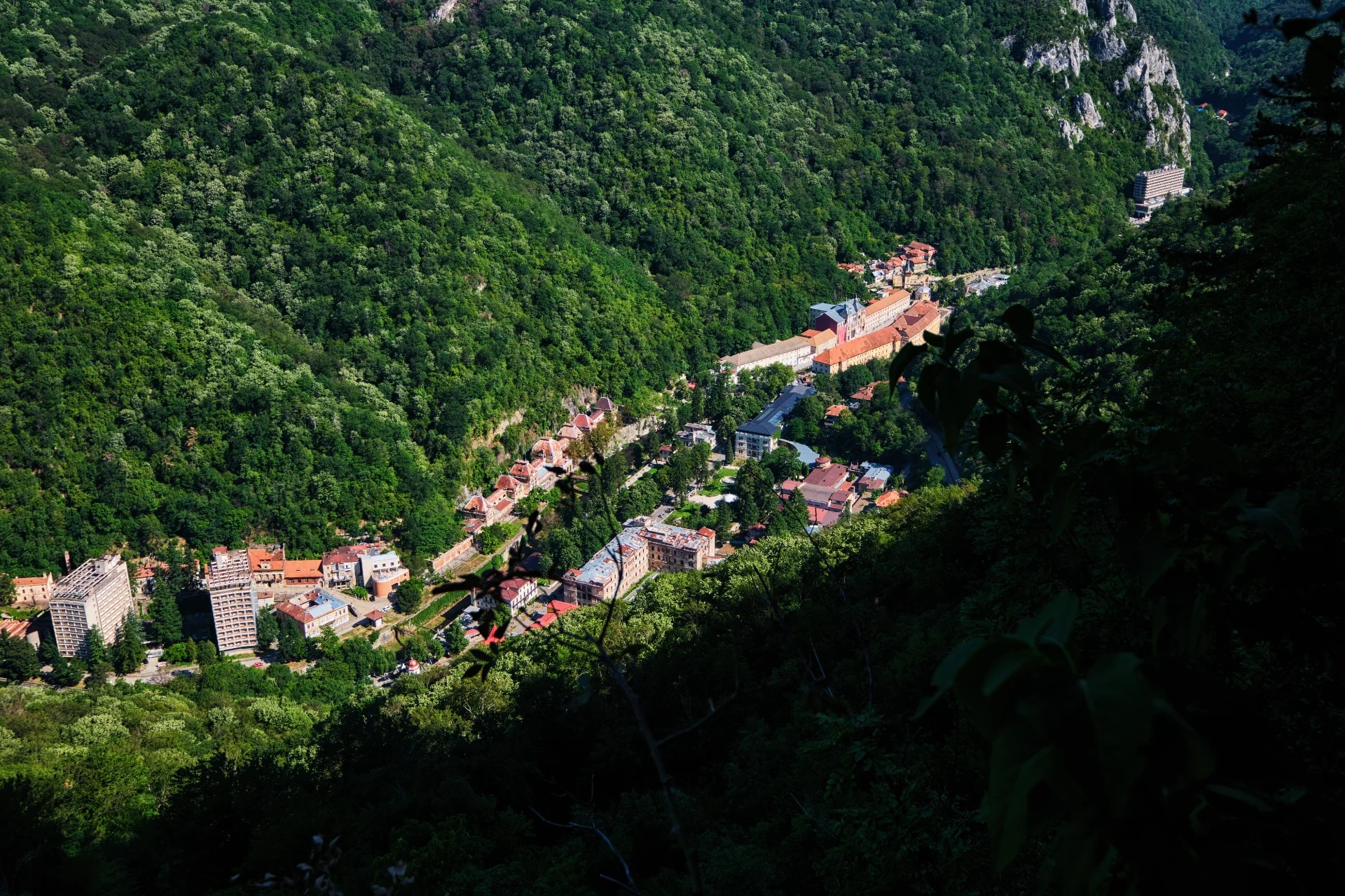
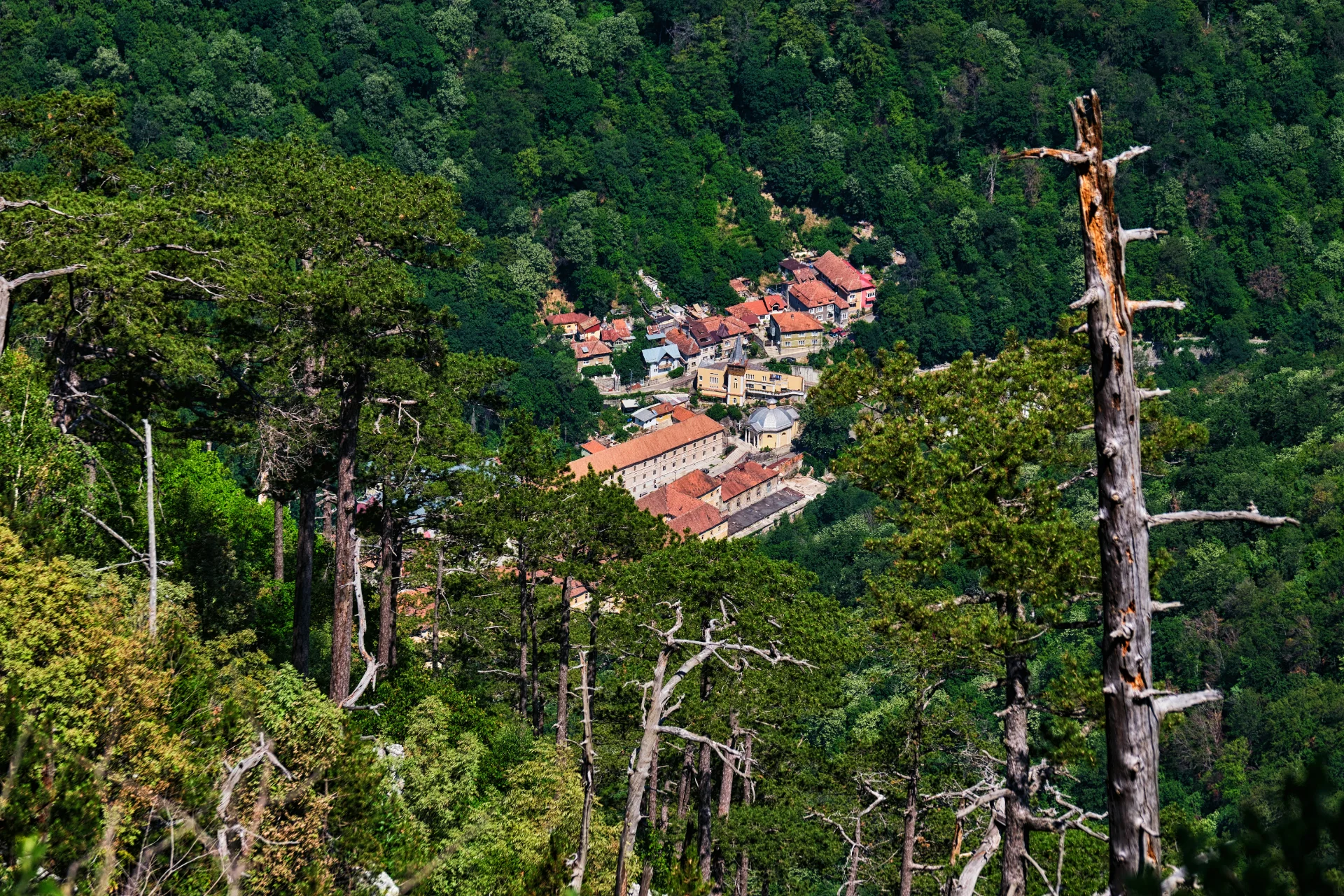
It was first mentioned in 153 AD, and was highly valued by the Roman aristocracy, as evidenced by numerous archaeological finds from that time, including baths, aqueducts, statues, coins and inscriptions. After the Romans left, the resort town was almost abandoned for many centuries, with a second development beginning after the region was included in the Austrian Empire in the mid-18th century. After World War II, the town became part of Romania, but it gradually began to decline in the decades that followed, especially towards the end of the 20th century. Many of its fascinating monuments fell into ruin, some being lost forever. However, there is still much to see in today’s Băile Herculane, with more and more initiatives to save its cultural heritage and revive the lost atmosphere.
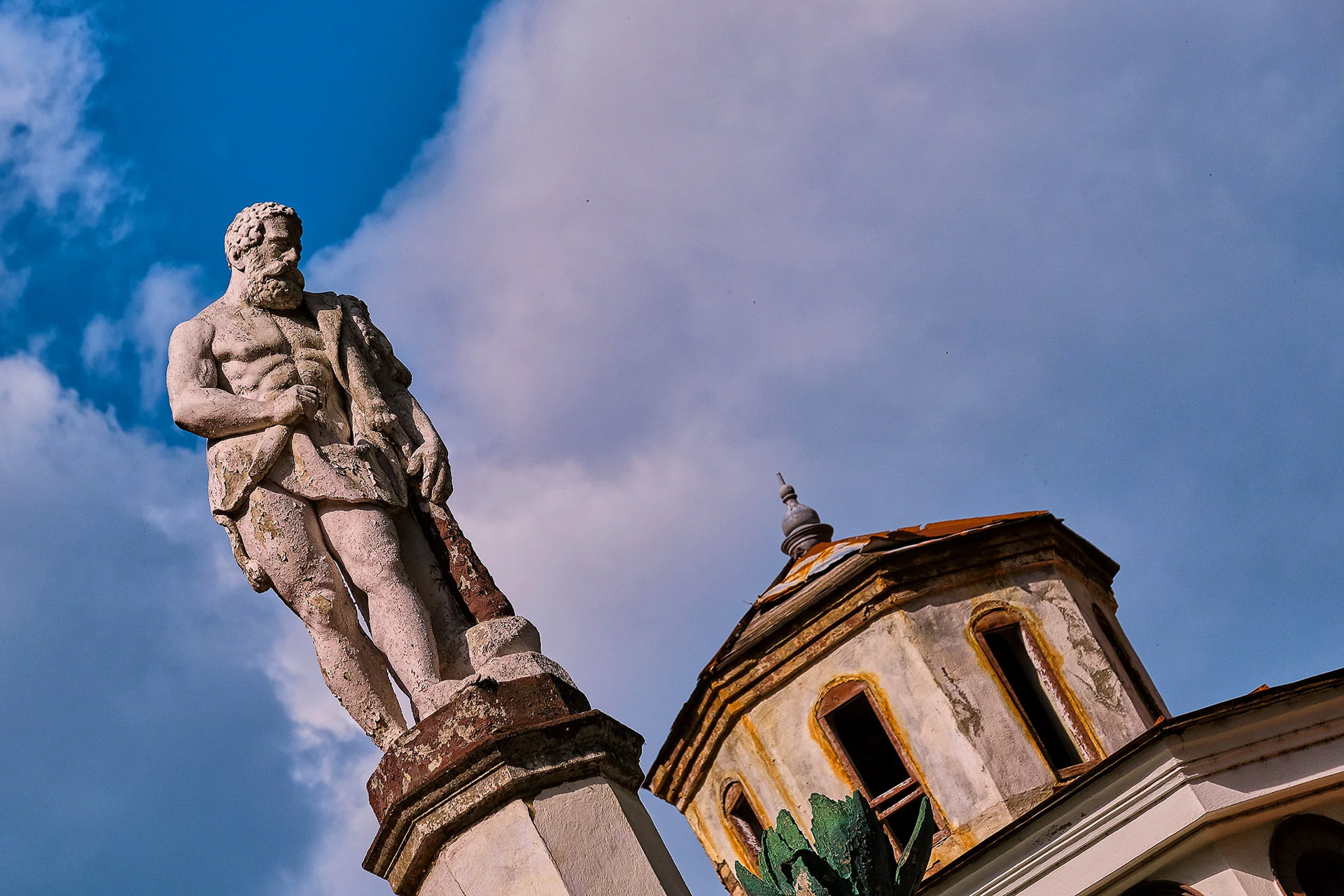
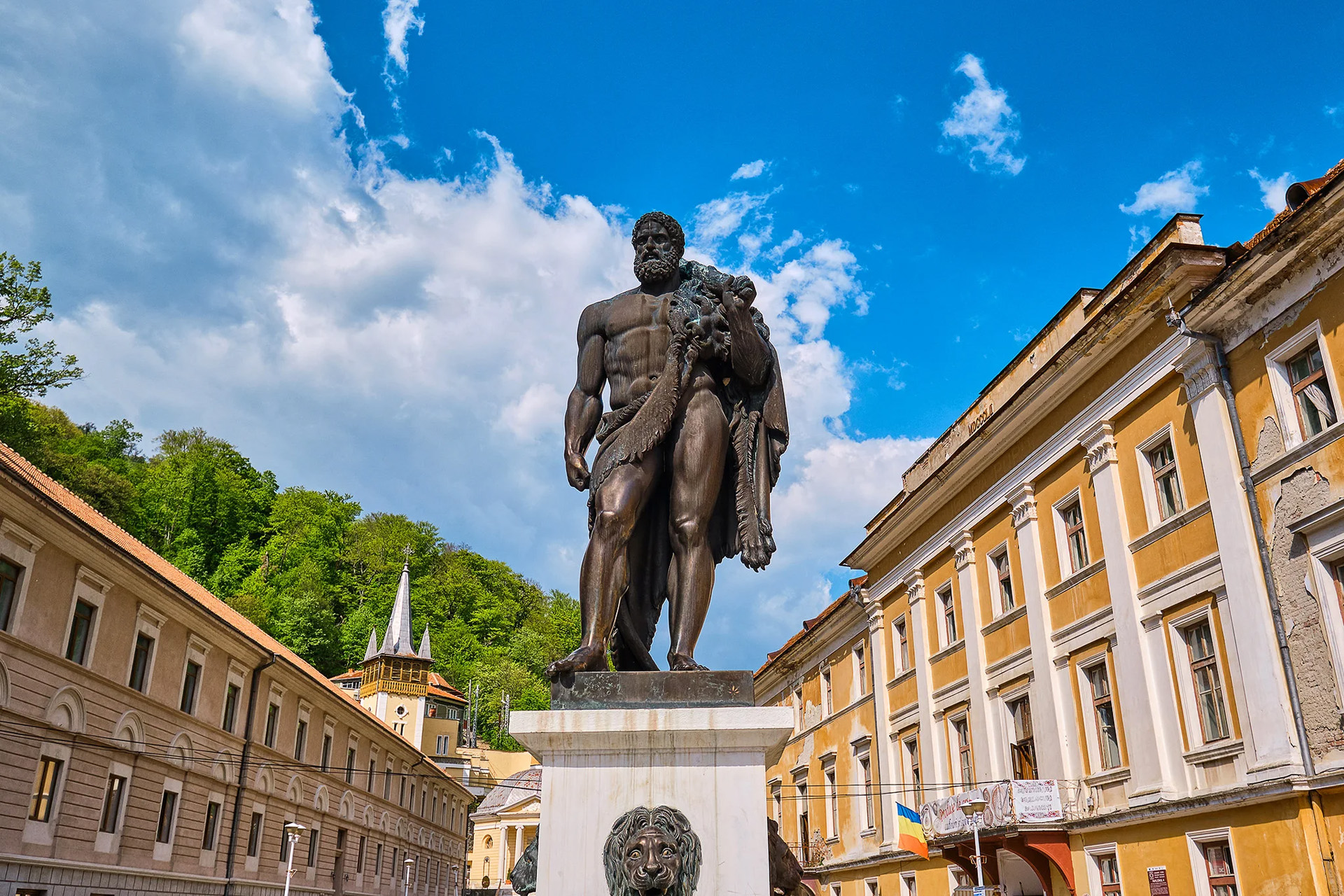
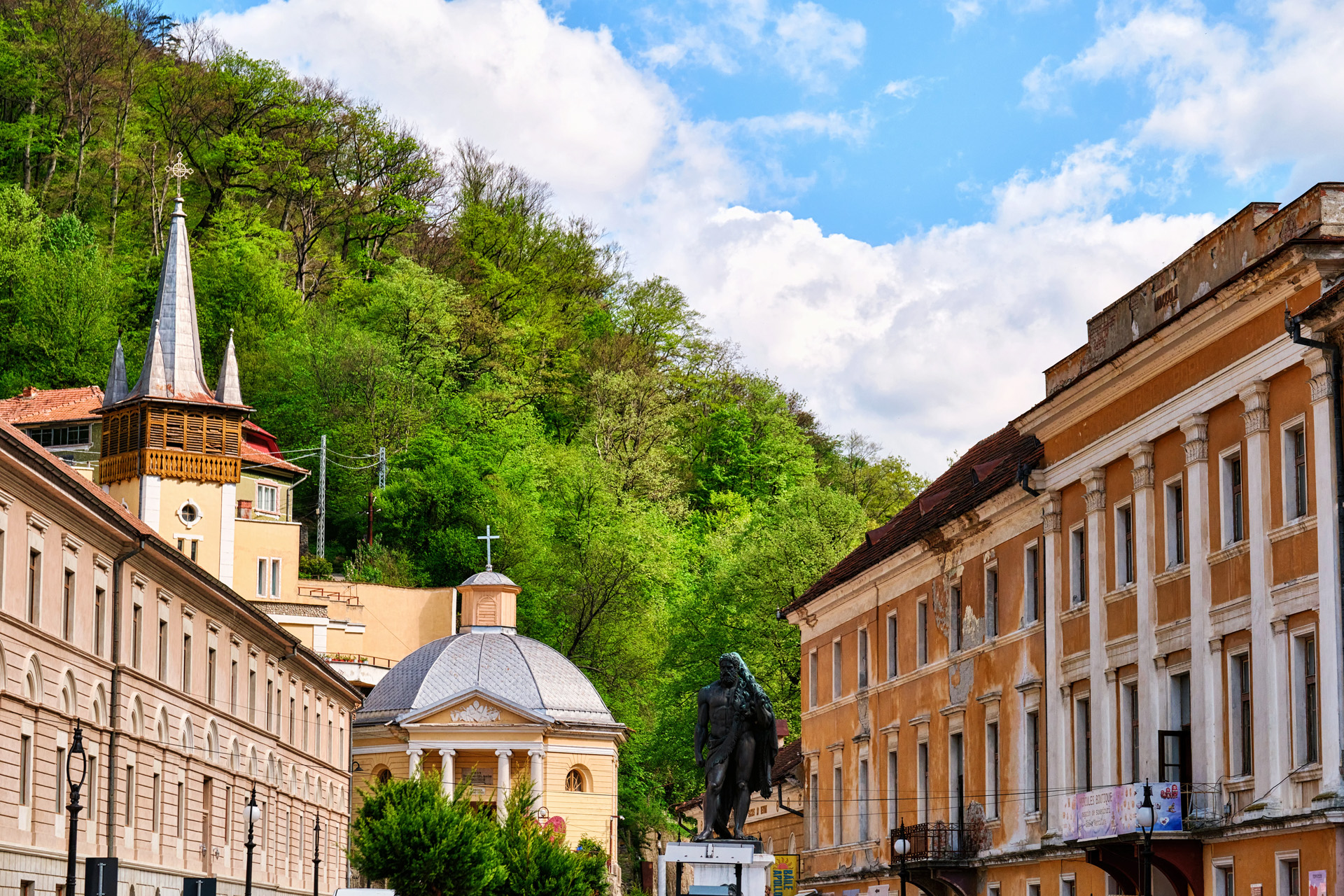
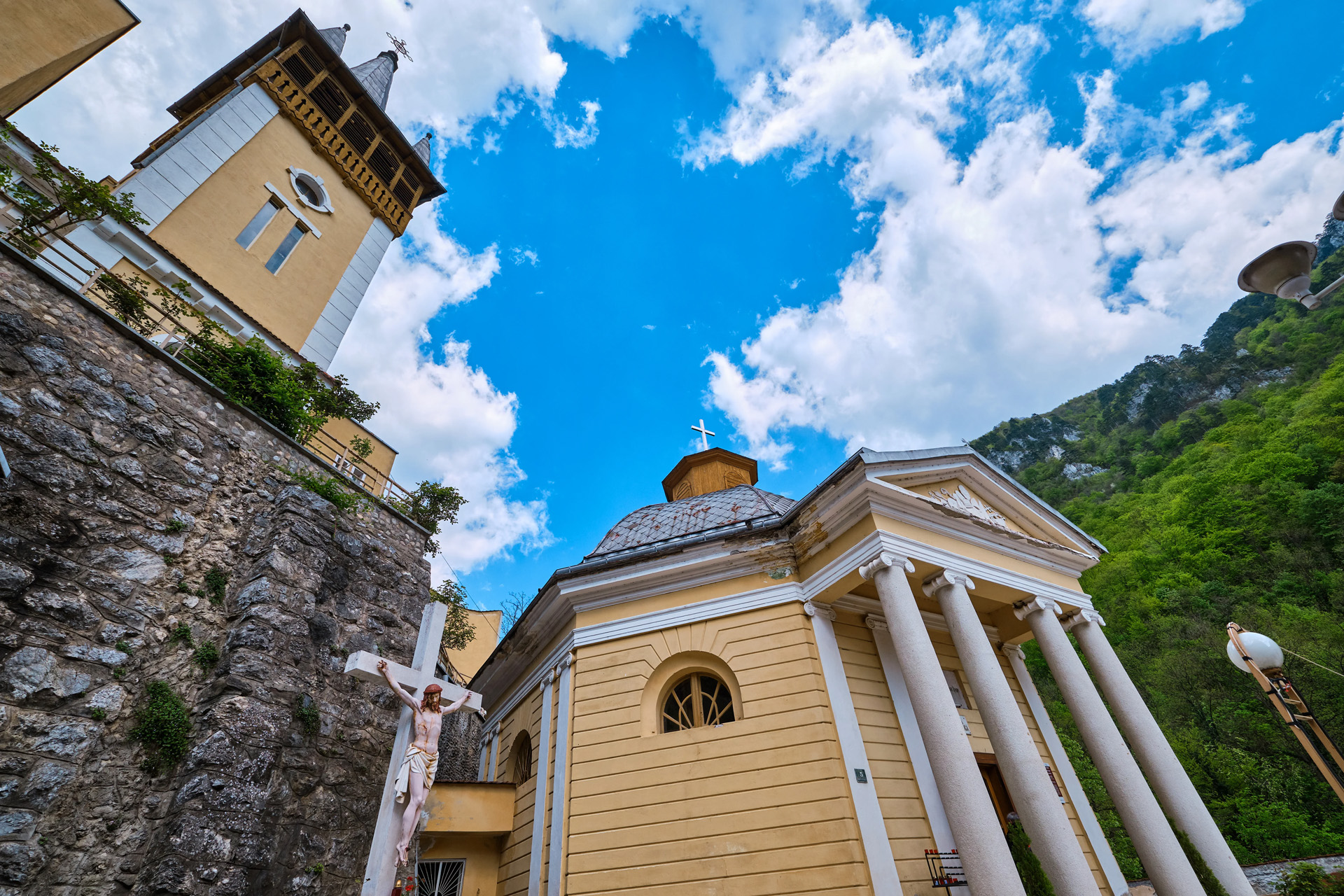
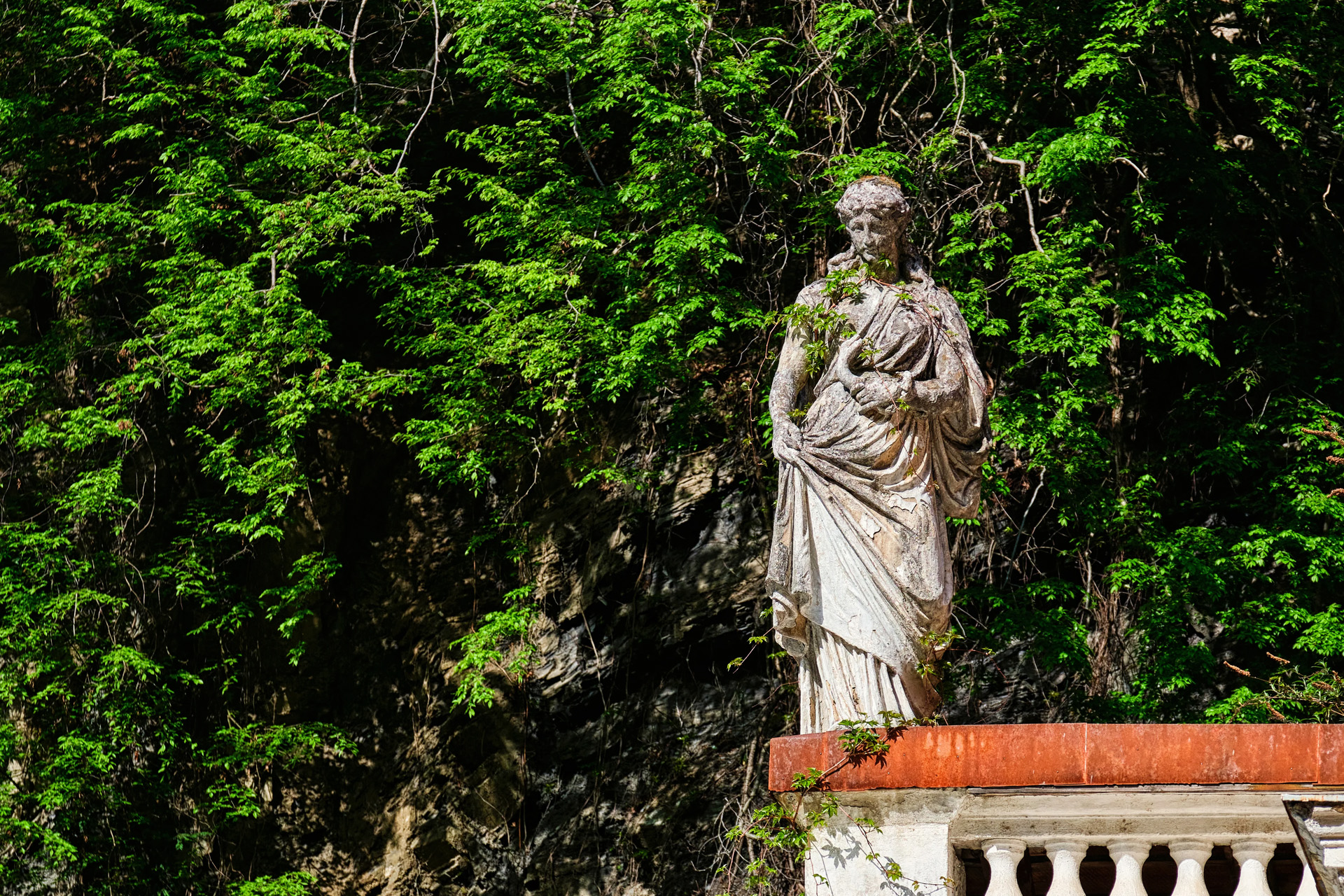
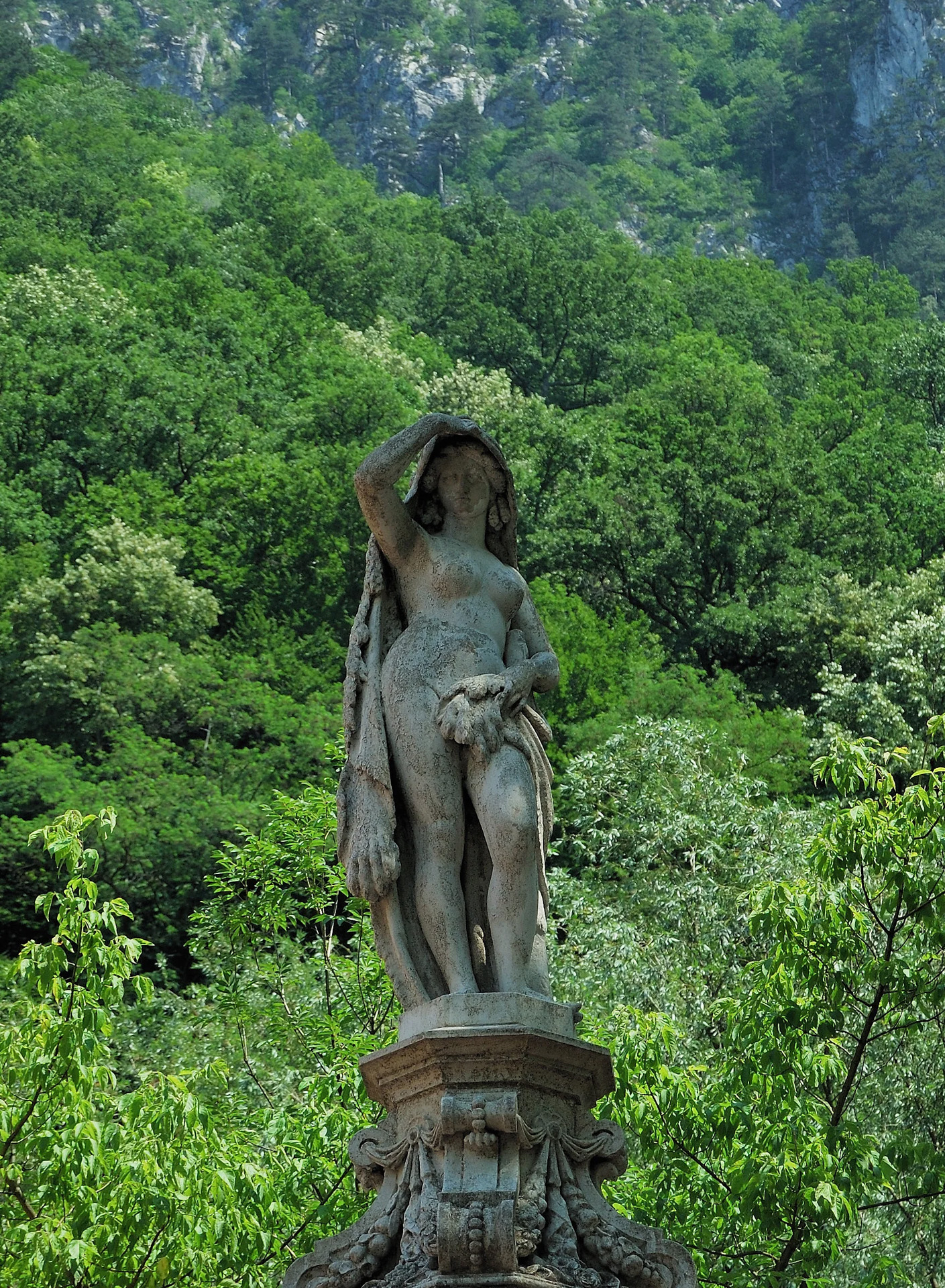
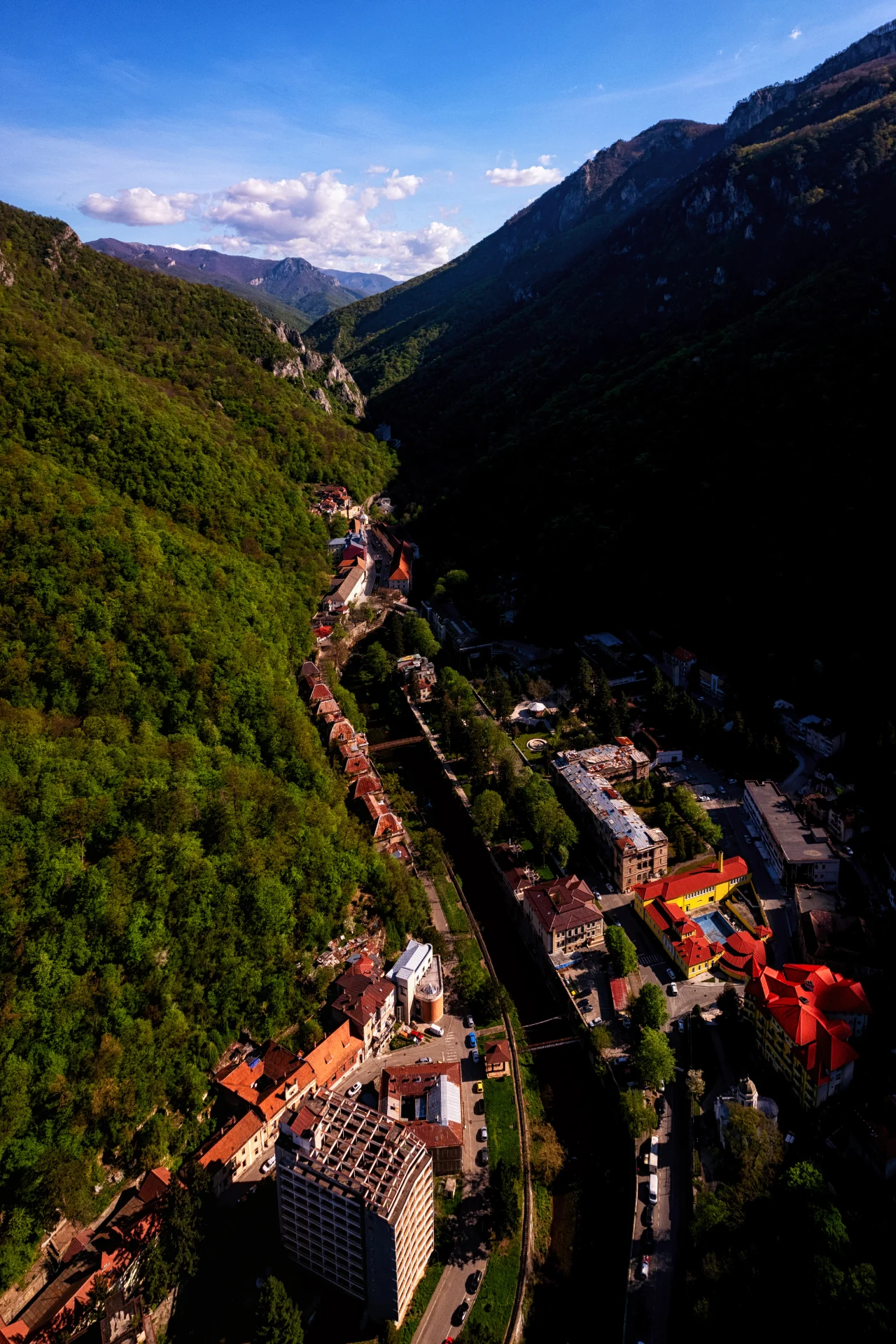
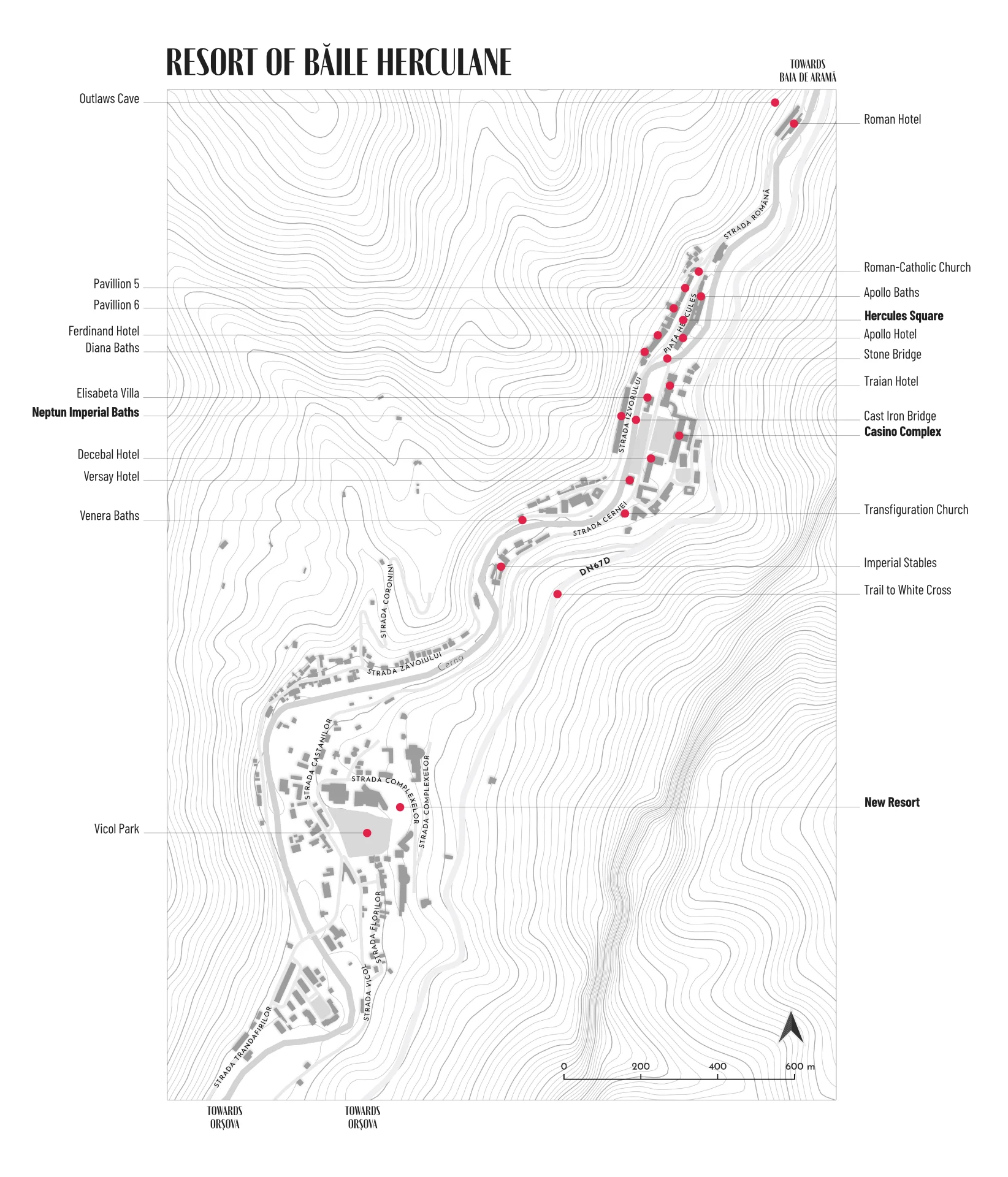
The settlement developed along the valley, on both sides of the Cerna River, with three different areas, with the historic center in the north, the new spa resort in the central part and a residential area in the south of the town. In a fairly short but memorable walk through the historic center, we discover an impressive number of architectural treasures, most of which were built in the 19th century. We start our exploration in Hercules Square, surrounded by elegant historical buildings. The Roman Catholic Church of the Assumption of the Virgin Mary is located at the top of a flight of stairs on the north side of the square, while the sides are occupied by former hotels and pavilions. Although some of these have been renovated, such as the Ferdinand Hotel, many are still waiting for the chance to regain their former glory. In the center of the square is the Statue of Hercules, the impressive symbol of the city, created in 1847 by two masters from Vienna.
Search for Lodging in Băile Herculane on Booking.com!
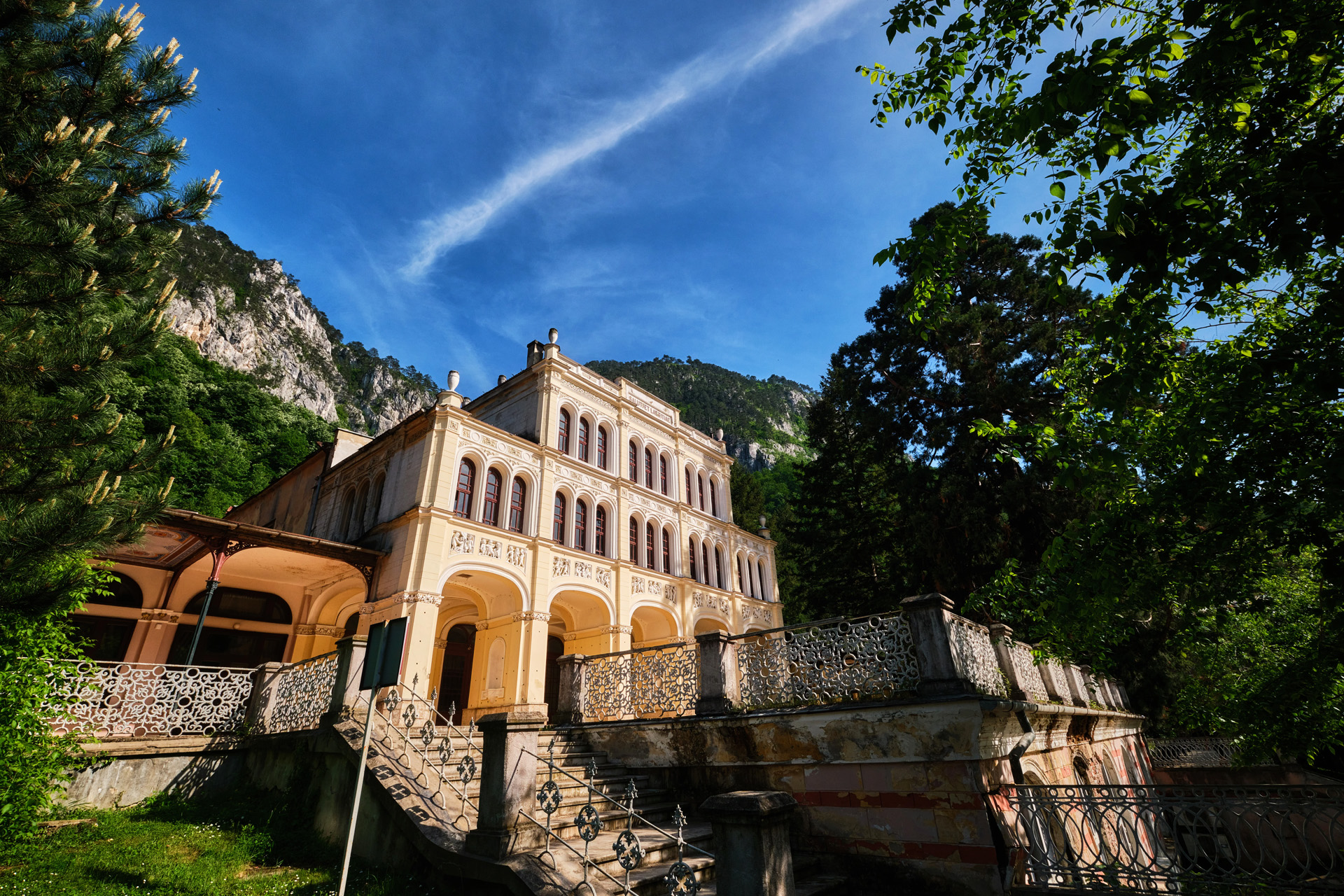
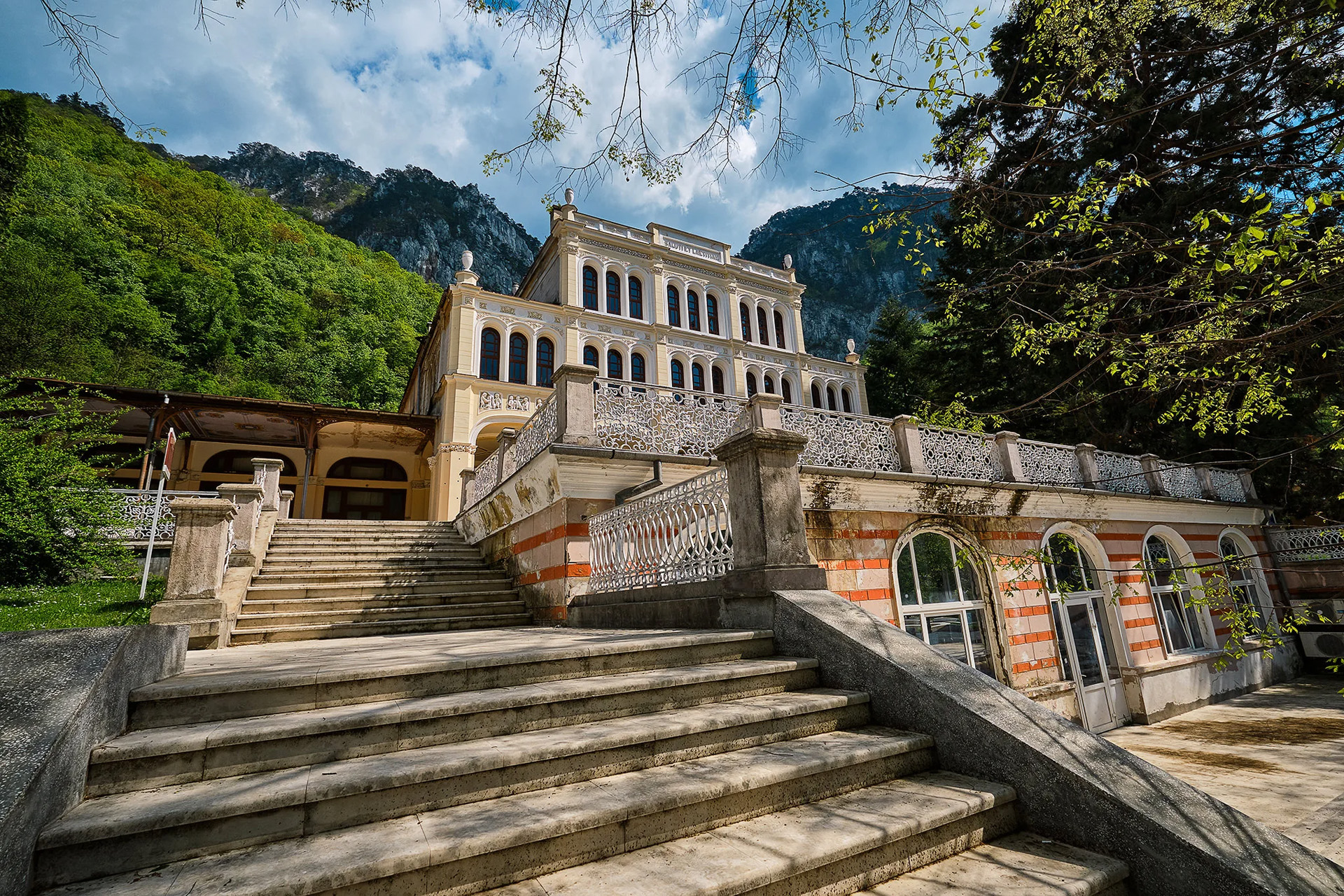
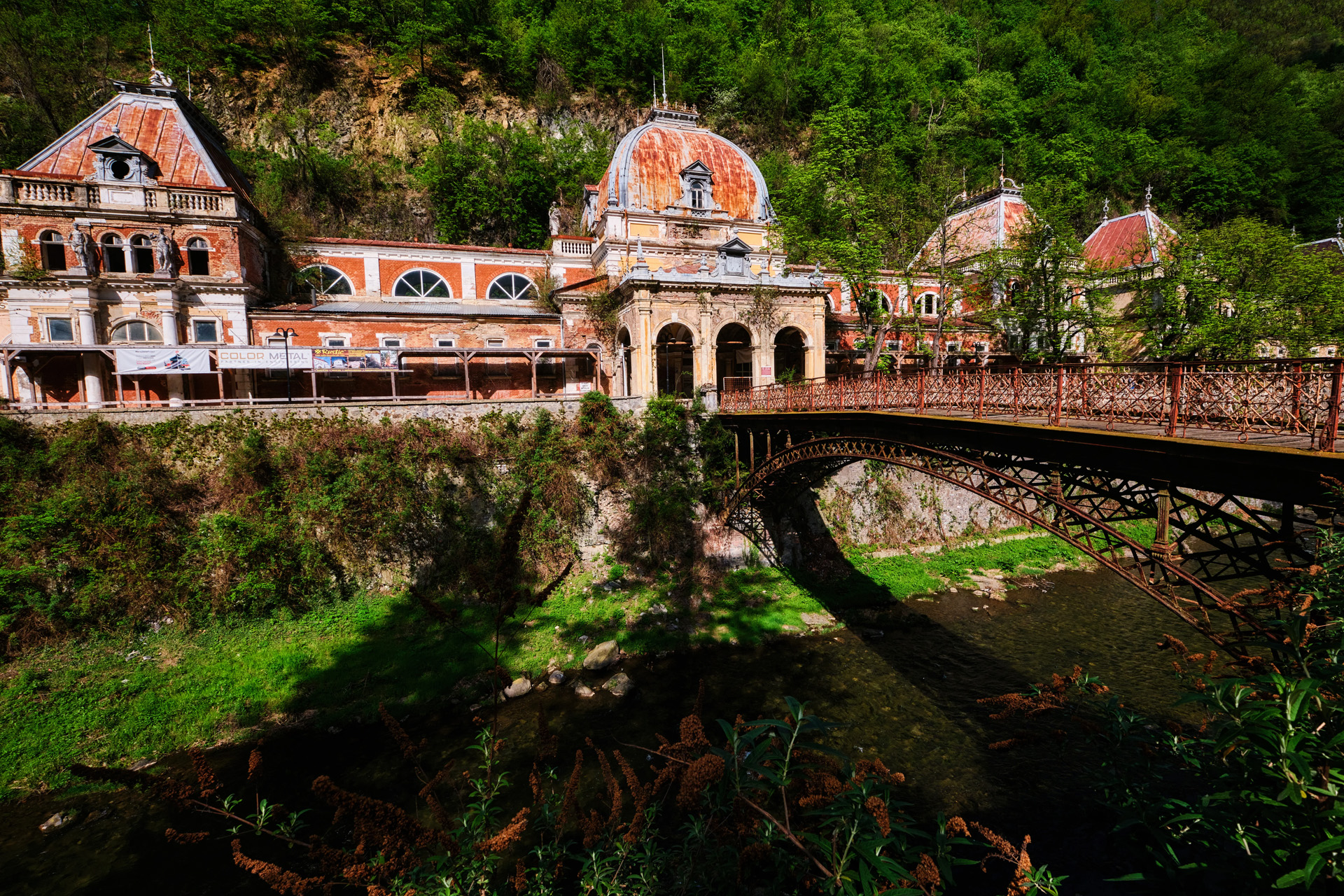
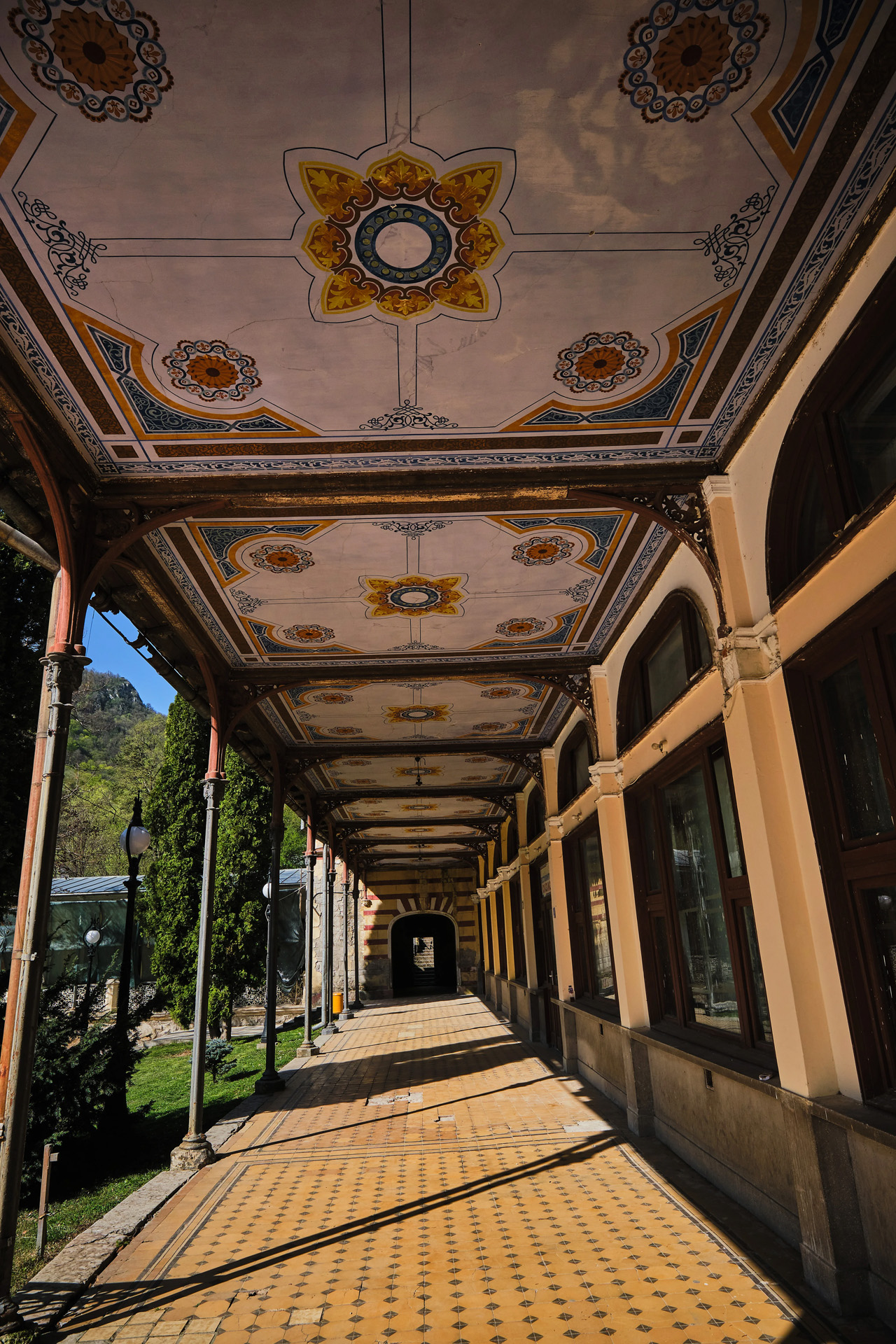
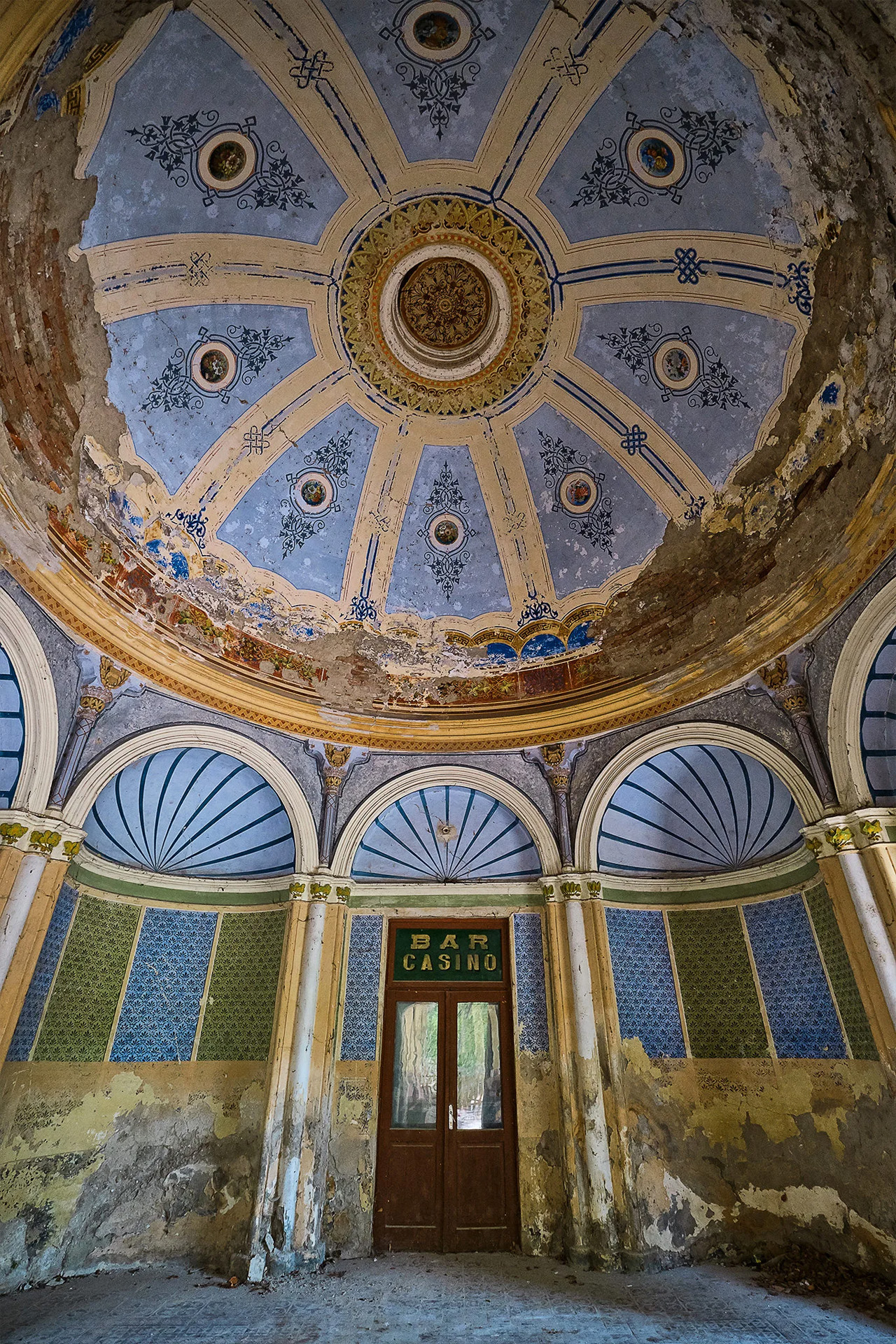
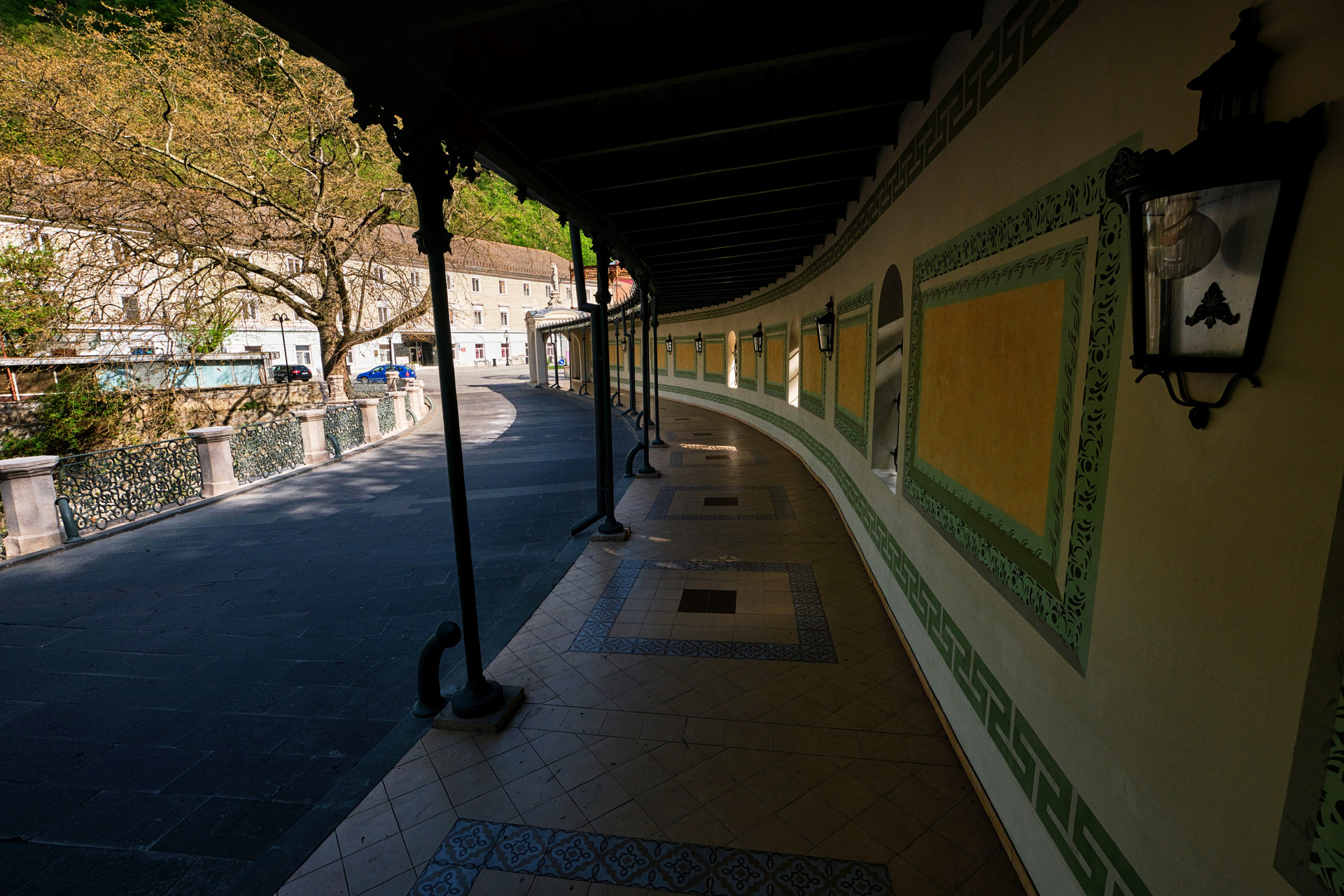
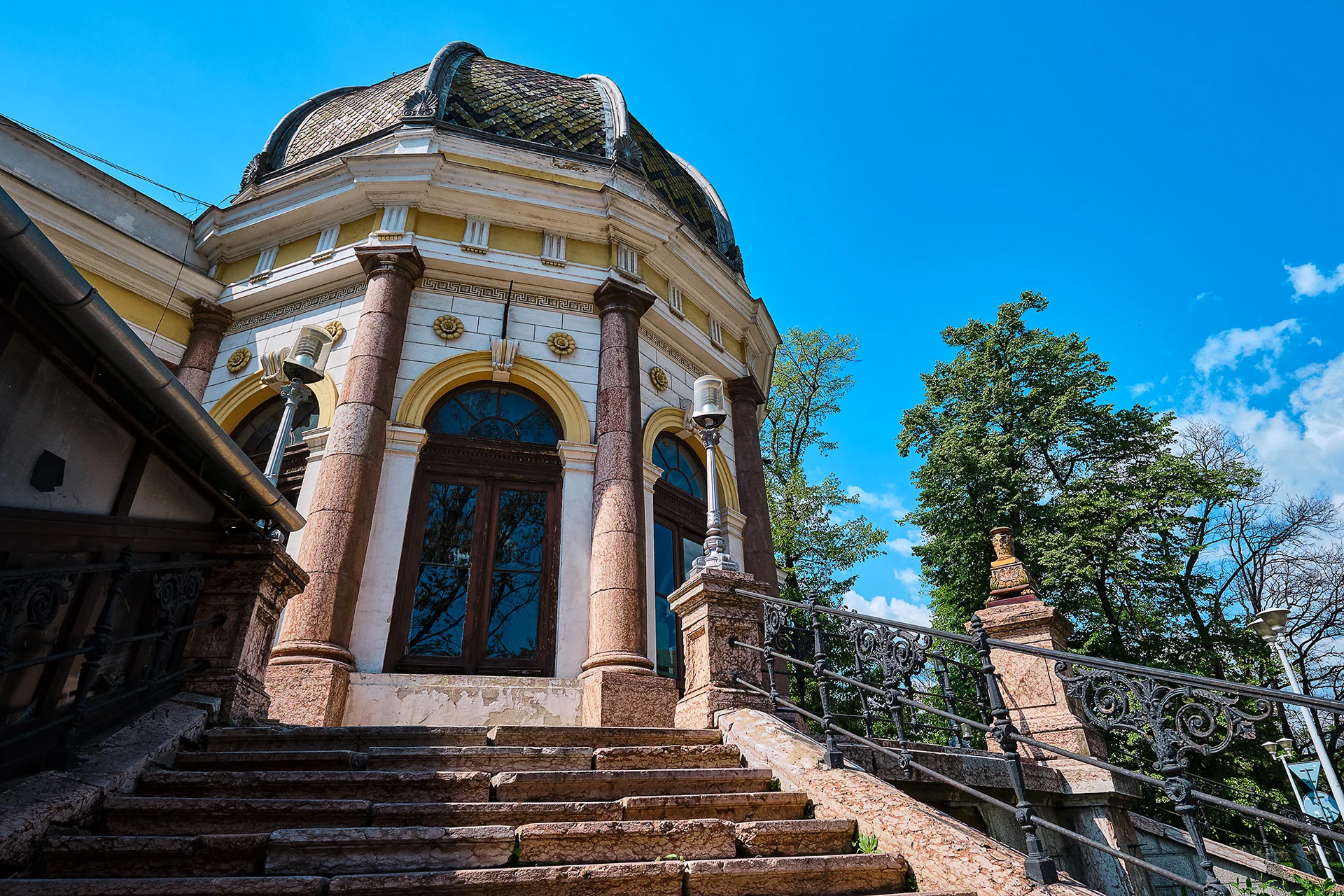
To the south, the monuments continue on both sides of the river, the right bank preserving the Diana Baths and the Neptune Baths, once spectacular examples of architecture and urban design, but unfortunately, almost ruined today. On the other side of the Cerna, crossing the old and impressive stone bridge that now shines again, the first monuments are the majestic Hotel Decebal and the elegant Villa Elisabeta, both characterized by a superb late Baroque style and almost completely renovated. They were built for the royal families of Austria, Romania and Serbia, being inaugurated by them. A little further, behind the charming Central Park, we can admire the old Casino Complex, built in the second half of the 19th century by the same architect of Peleș Castle. With exceptional architecture, the complex includes porticos and superb interior frescoes, although these also require renovation work.
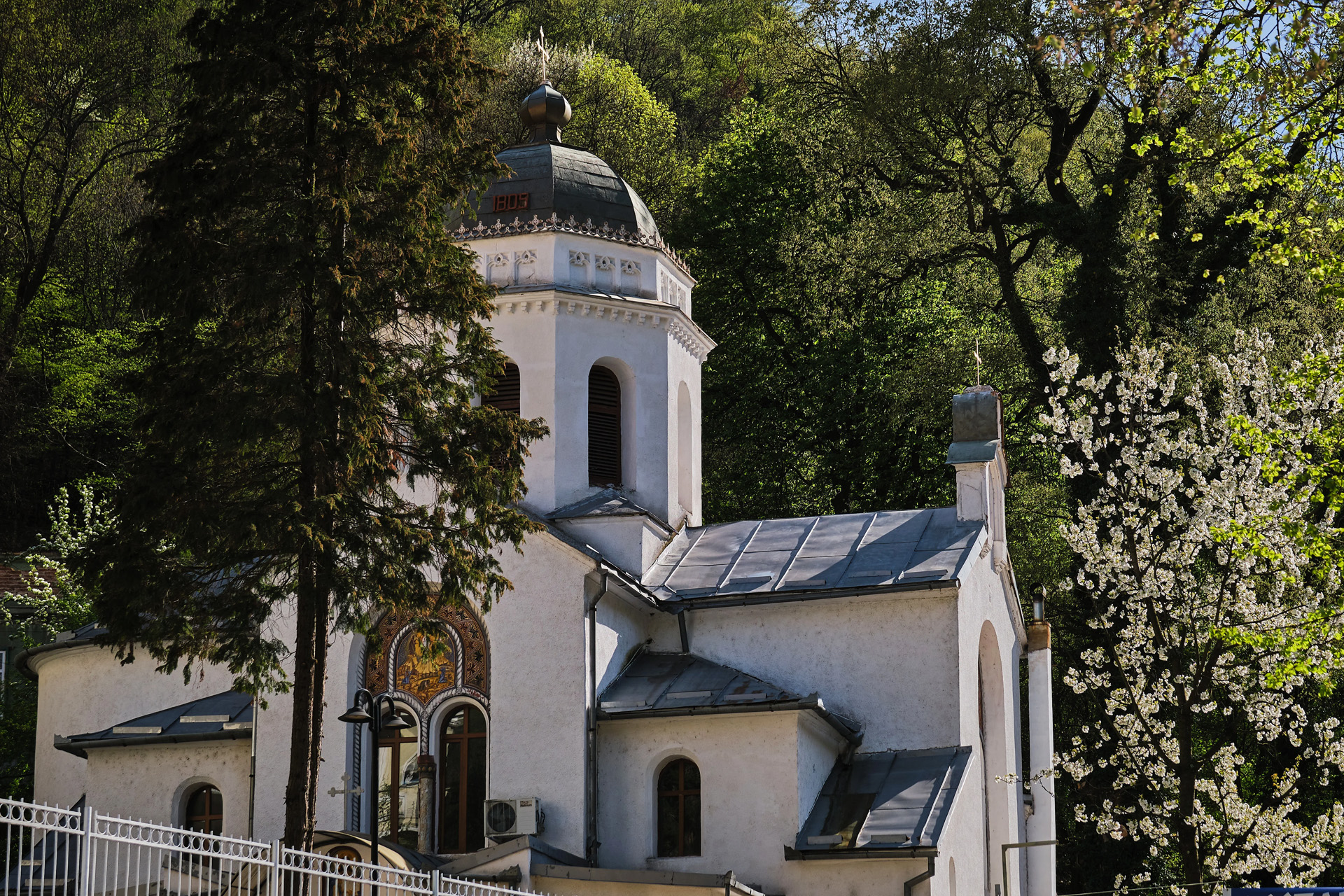
Beyond the park to the south, other historic buildings attract our attention, such as the Traian Hotel, once a magnificent building but now almost ruined, the luxurious Versay Hotel, the 200-year-old Orthodox church, but also the splendid Băile Herculane Train Station, built almost 150 years ago a few kilometers to the south. All over the old town, and even beyond it, through the forests, we discover small pavilions and arranged mineral springs. To complete the complex experience, Băile Herculane is also the starting point for a lot of tourist hiking trails, which give us the chance to admire the panorama of the city from the peaks of the surrounding mountains, included in the Domogled – Valea Cernei National Park. Leaving behind the small bohemian town and its remarkable stories, a few kilometers to the south we enter the Danube Gorge and the Iron Gates natural park, which runs along the river to the west…
Sights and Experiences
Places to See and Things to Do in Băile Herculane
Hercules Square
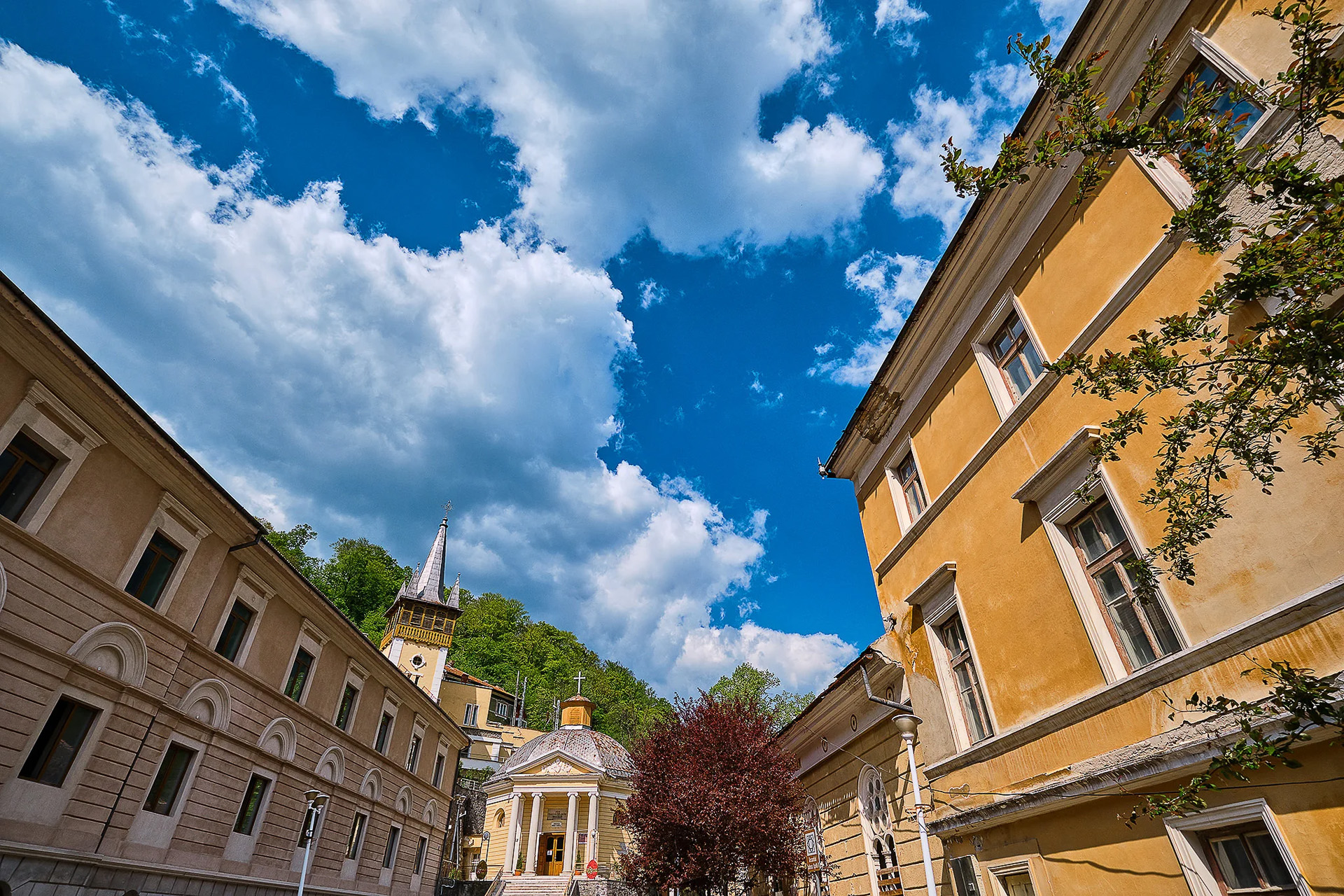
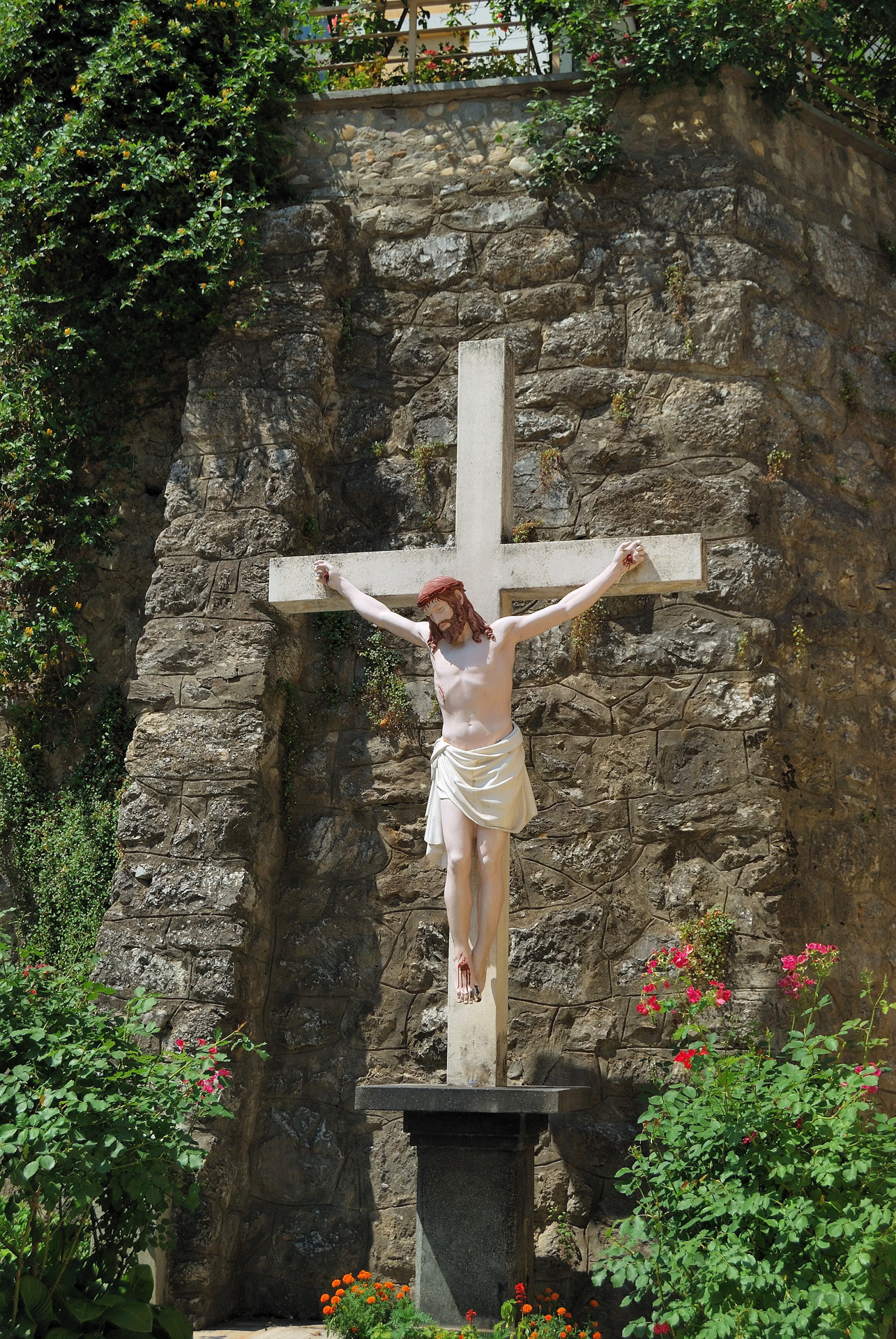
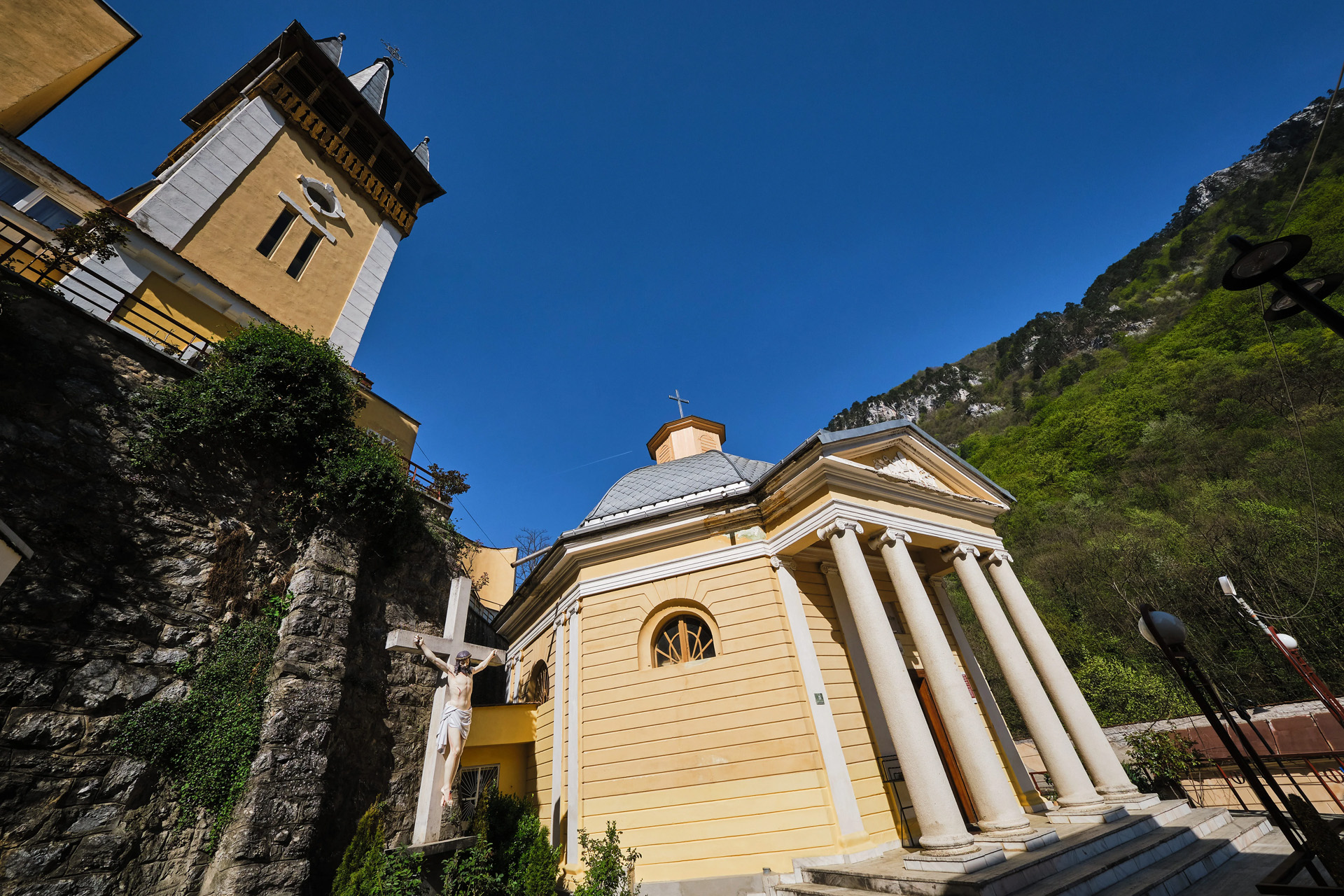
The historic center of Băile Herculane is located in the northern end of the town, consisting of an exceptional complex of historical monuments. These date largely from the early 19th century, during the period when the region was under Habsburg rule, and were built in the Baroque and Neoclassical styles. While some of them have been renovated and brought back to their former glory, there are still many monuments that are in an advanced state of decay. At the northern end of the square, on a terrace above the street, is the Roman Catholic Church of the Assumption of the Virgin Mary, built between 1836-1838, on the site of an older chapel destroyed by the Turks. During her stay in Băile Herculane, Empress Elisabeth (Sisi) attended the Easter service held in this small church with architecture reminiscent of classical temples. The symbol of the resort is certainly the Statue of Hercules in the center of the square, donated by Archduke Charles in 1847. Made in a workshop in Vienna, it impresses with its massiveness and the beauty of its details. On both sides of the square, monumental buildings line up, the old pavilions of the resort, which have since become hotels. The eastern part is occupied by the Apollo spa complex (Pavilion IV). It was built in the mid-19th century and was intended to accommodate officers and officials from the Habsburg administration. Impressive with its ornate facade, the building is now part of the Apollo Hotel, together with Pavilion III. This complex also included the Apollo Baths, among the oldest in the resort, now transformed into a small, unique museum. On the western side of Hercules Square are two interesting historical buildings, starting with Pavilion V, which was built in 1821 to house the local border guard regiment. Perhaps the most impressive monument here is Pavilion VI, built as a hotel in 1906 on the site of the resort’s “Great Hospitality”. The building’s design was chosen through a competition and is notable for its superb façade with balconies and bas-reliefs. Like many others in the resort, it is also undergoing a long process of renovation.
Casino Complex
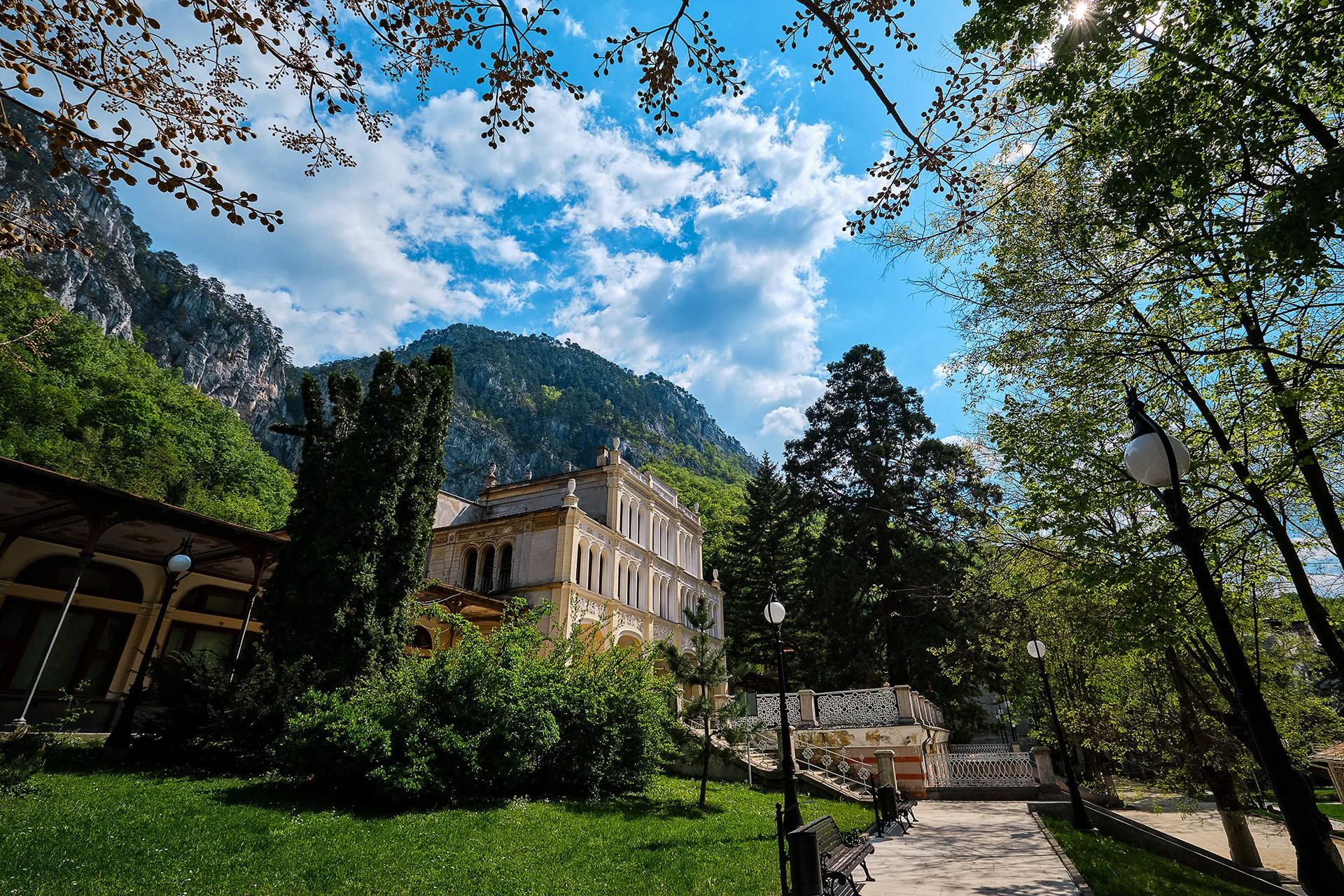
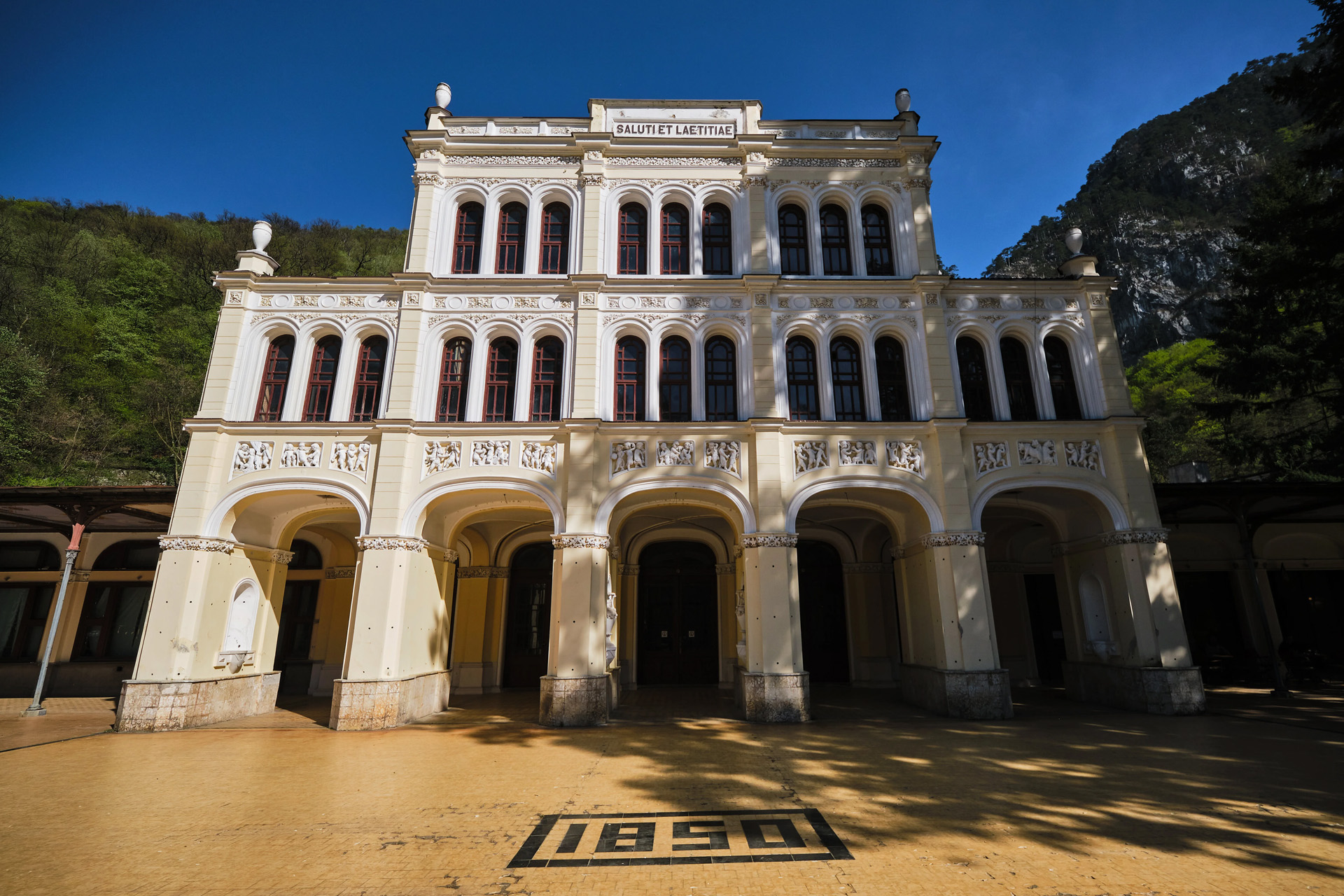
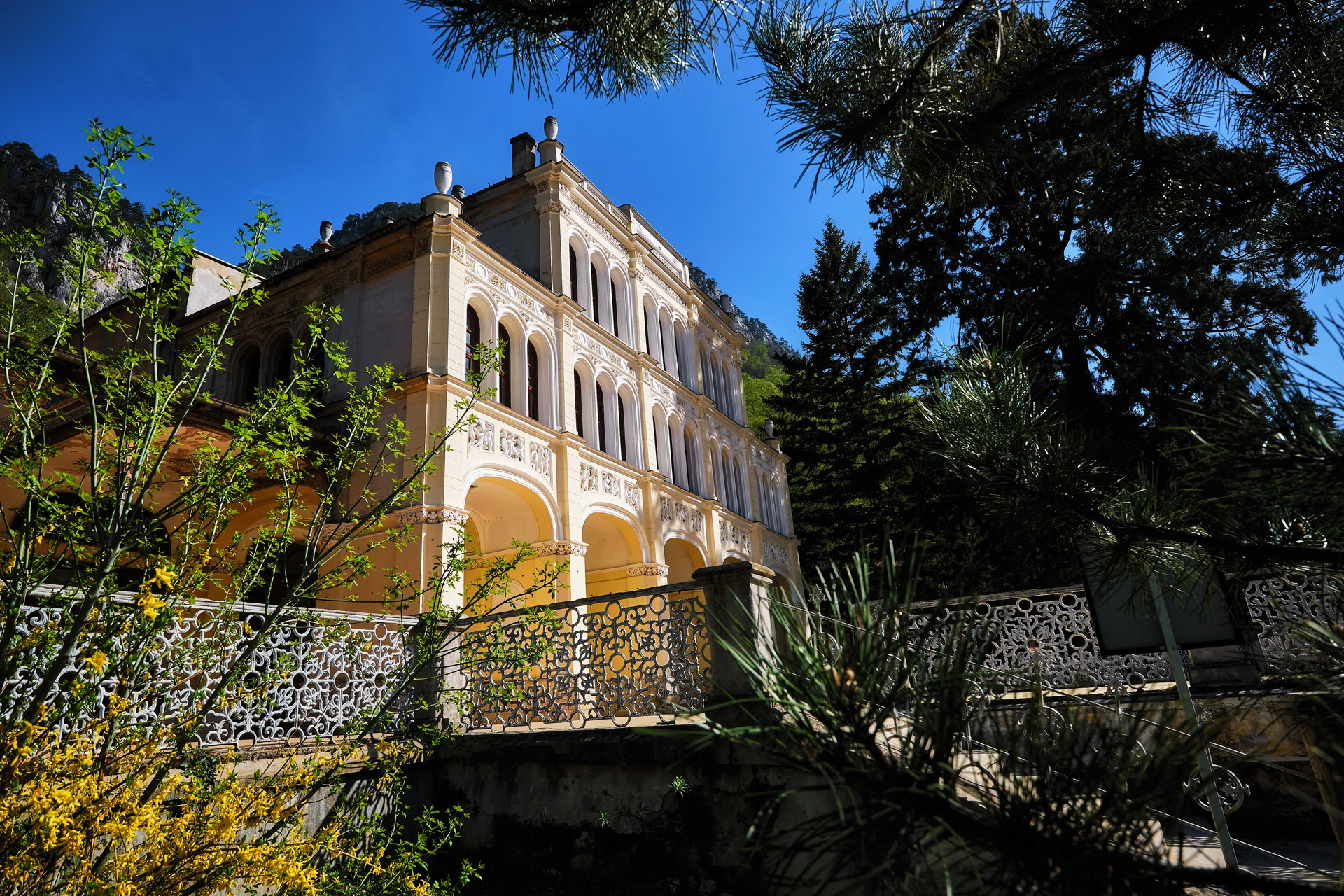
The historical and architectural ensemble is located on the left bank of the Cerna River, a few hundred meters from the historical center of the Băile Herculane resort. The complex was built in the second half of the 19th century, consisting of the Casino building, the park in front of it and the brass band pavilion. The superb eclectic-style building was built at the request of Emperor Franz Joseph I between 1862-1864, by the architect Wilhelm Christian von Doderer, who would also create the project of Peleș Castle. It included a dance hall, restaurant, casino and performance hall, and the exterior was distinguished by its richly decorated facade with colonnades. Currently, the Casino is privately owned and houses a restaurant and event hall.
Neptun Imperial Baths
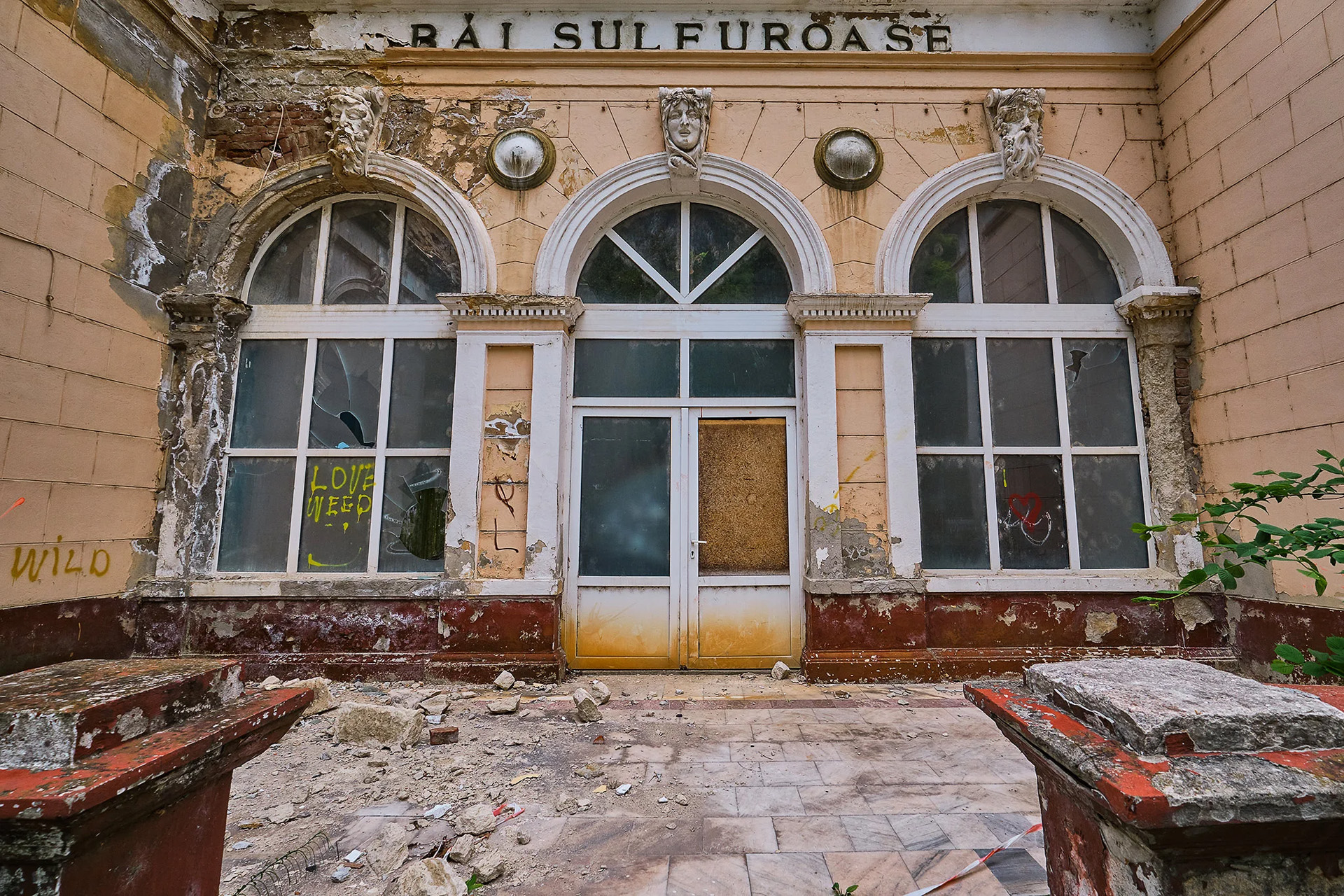
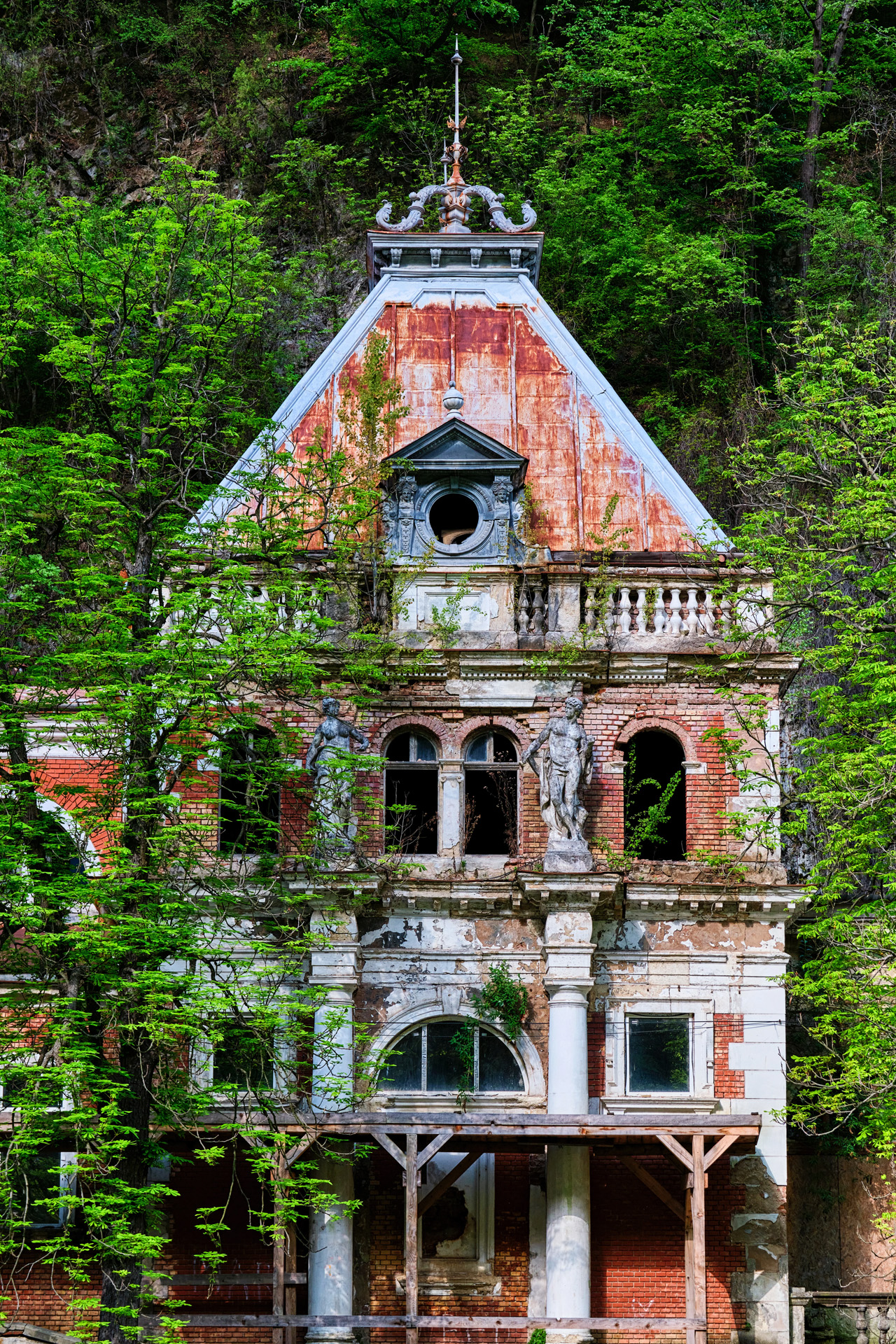
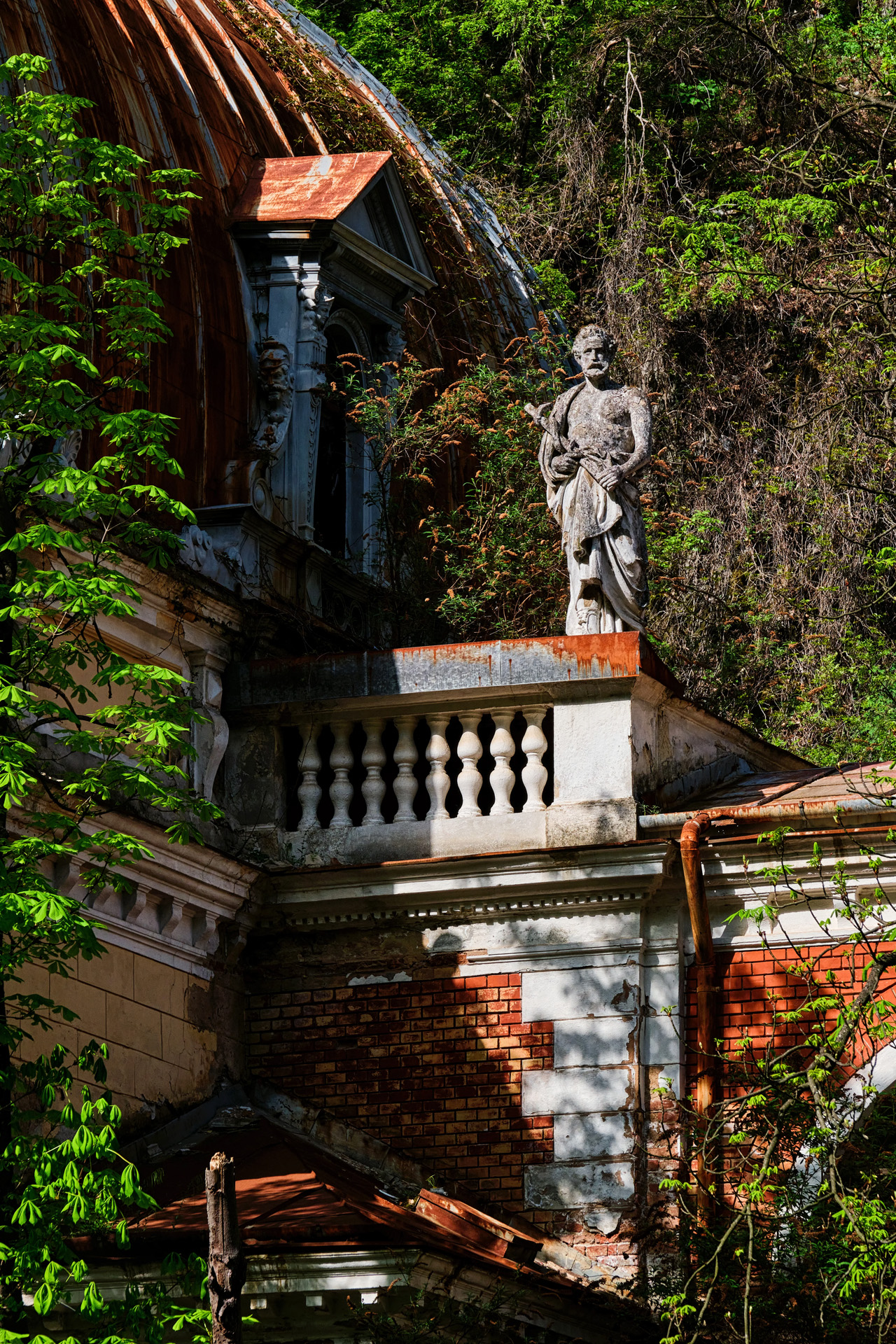
Probably the most fascinating monument in the Băile Herculane resort, but also the one with the most tragic fate, Băile Neptun is located on the right bank of the Cerna, a short distance from the historic center. Built between 1883 and 1886 after a design competition, the spa complex included numerous modern treatment facilities for the time, but also stood out for its superb eclectic-style architecture. Although it has undergone numerous attempts at renovation and rescue, this emblematic monument has lost many elements of its authenticity over time, being in danger of total destruction.
Old Bridges
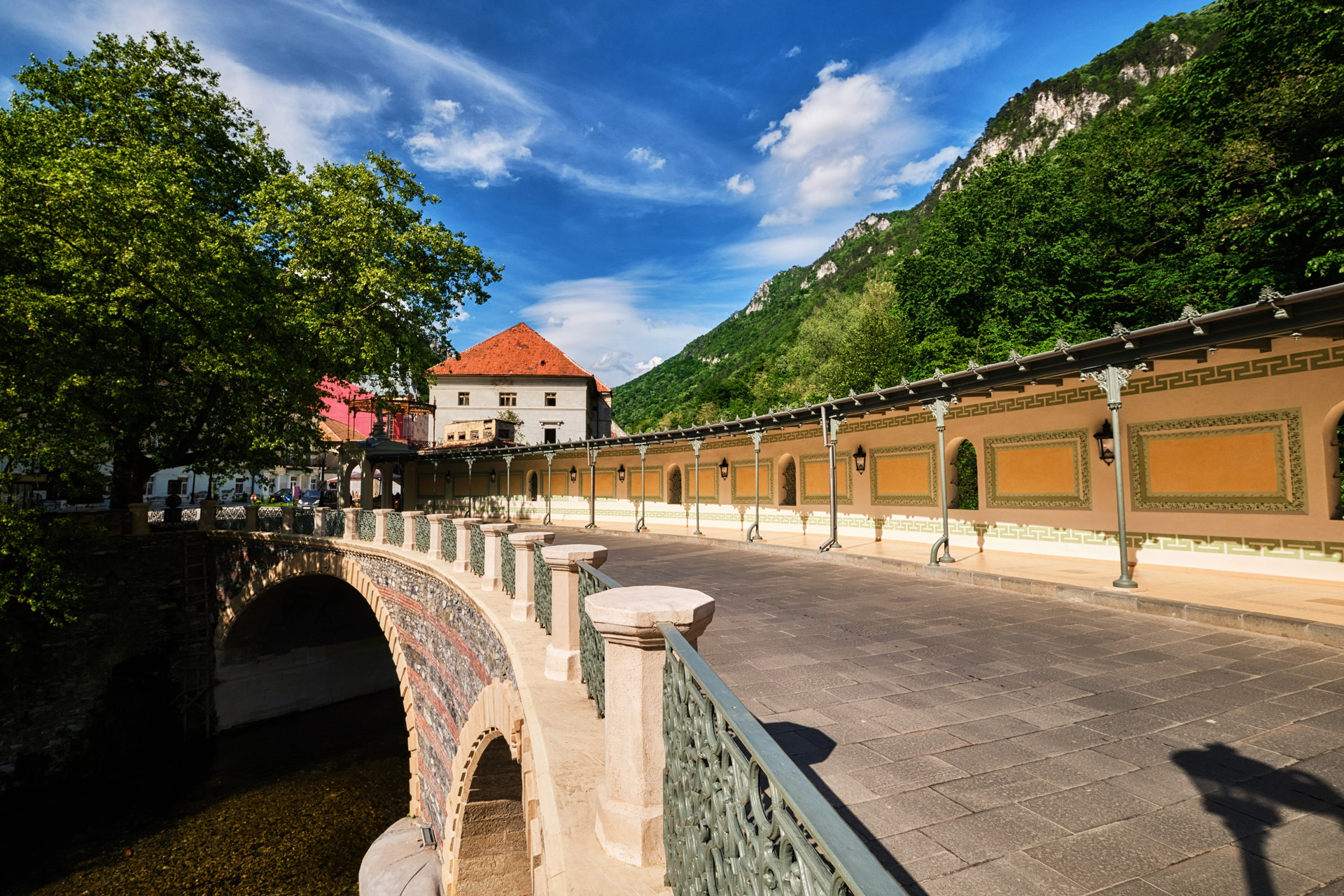
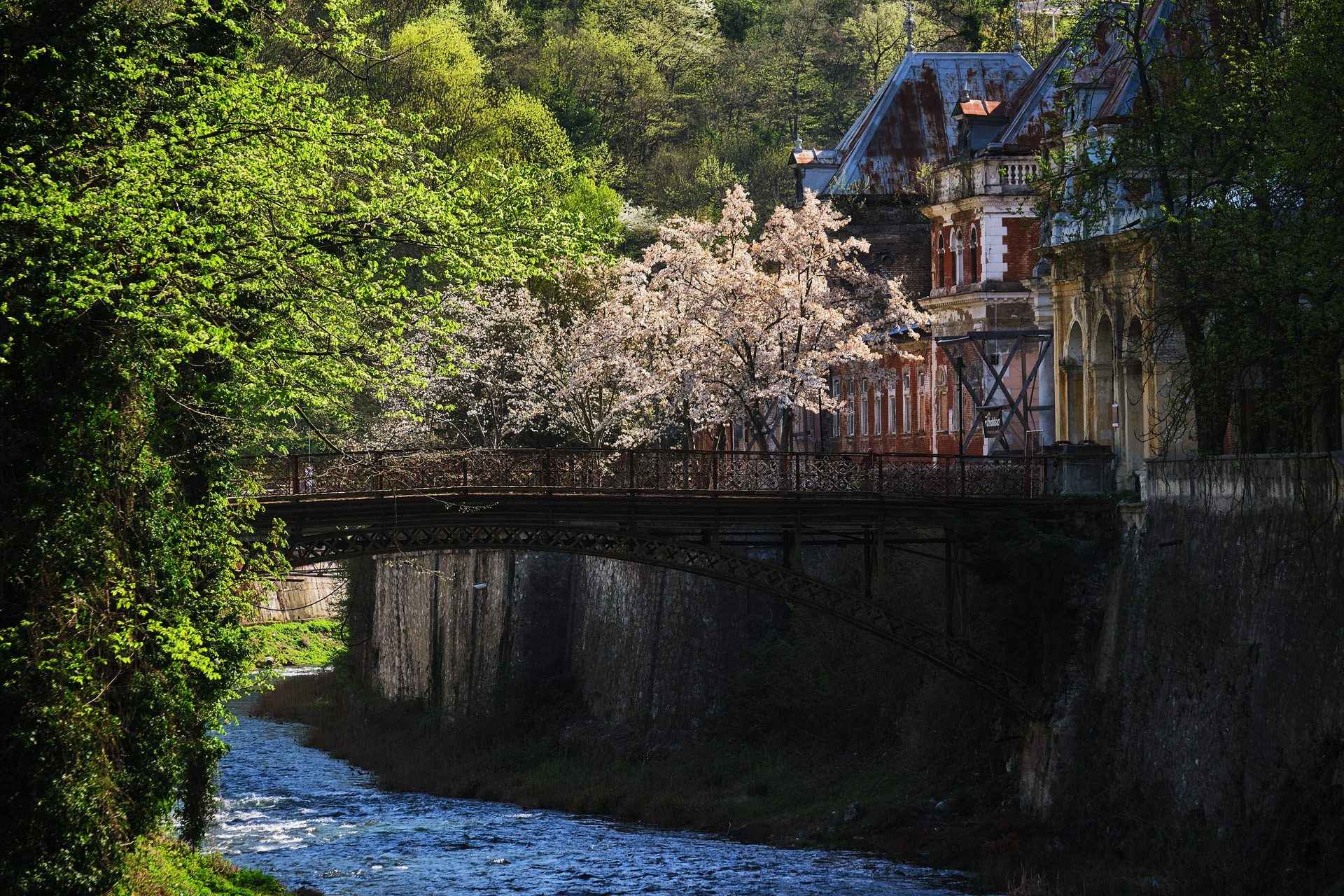
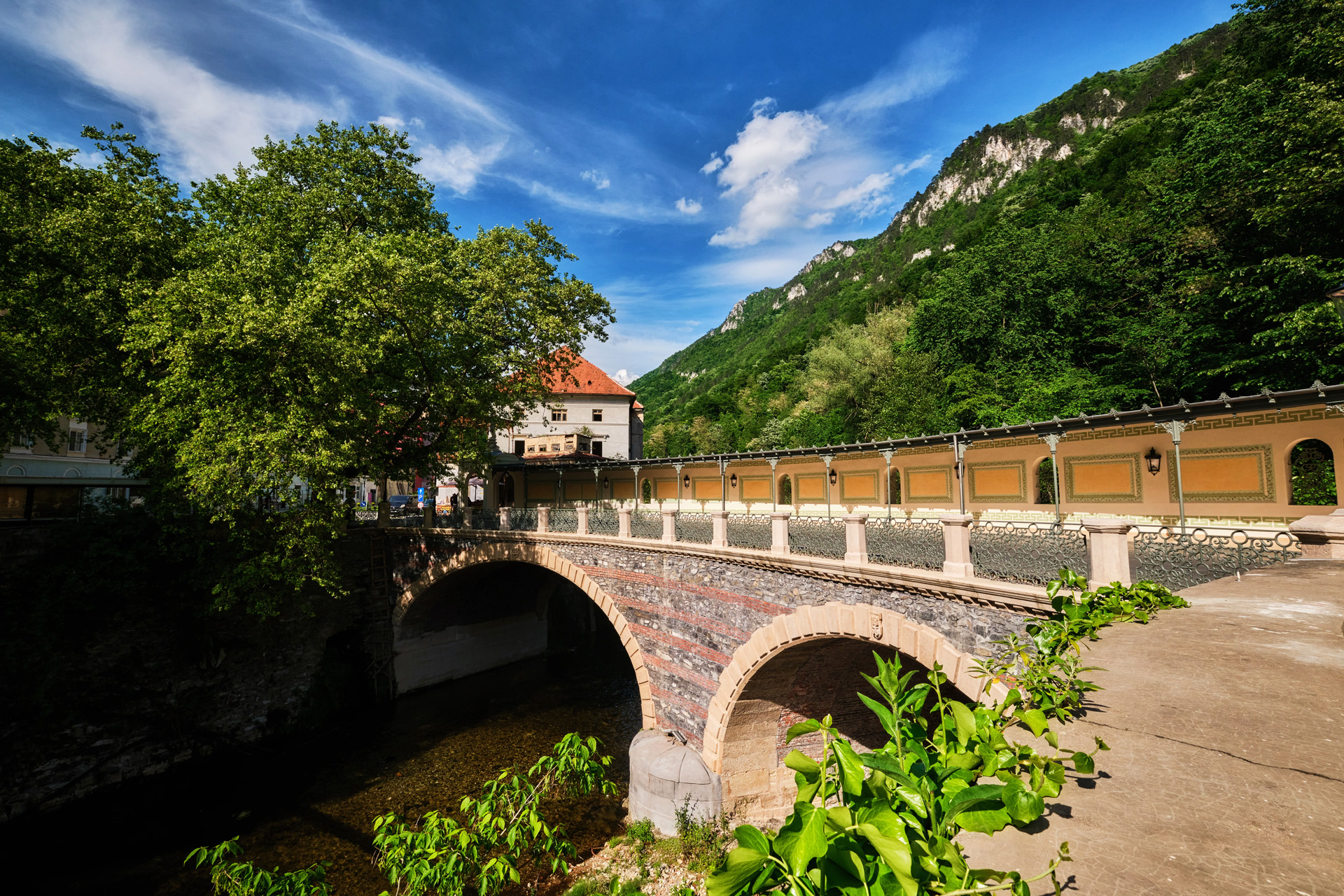
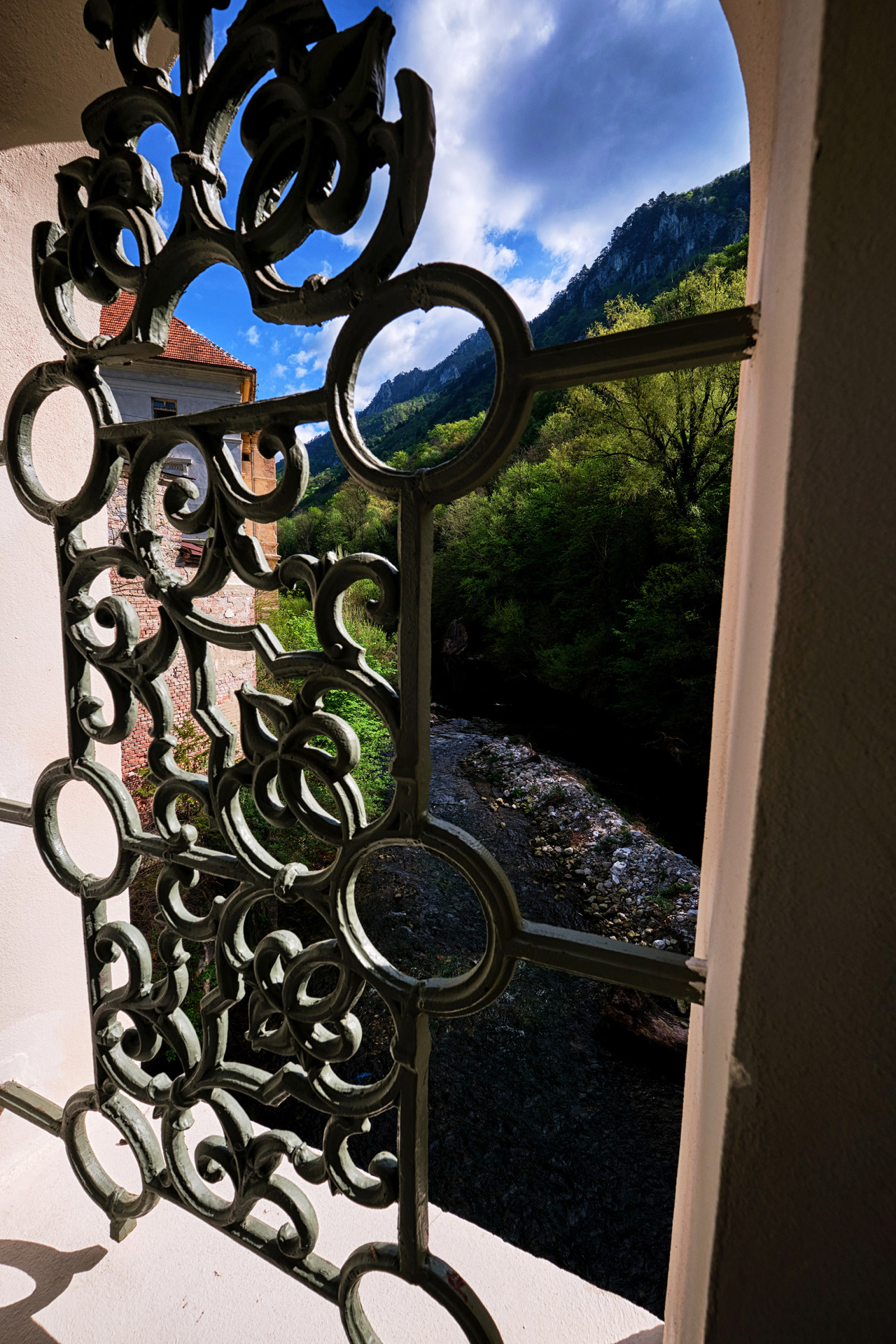
Providing a river connection between the older historic center and the area around the central park, which was built later, the Stone Bridge was built in 1865. With a length of 35 meters, it was the first curved bridge built in Europe. Recently completely renovated, it also includes a pedestrian corridor covered with superb cast iron ornaments. With two openings at river level, the bridge connected the Hebe Baths and the Franz Joseph Hotel (currently the Decebal Hotel). A short distance to the south, the Cast Iron Bridge was built at the same time as the Imperial Baths (late 19th century) to facilitate pedestrian access between the two banks of the Cerna River. A representative historical and industrial monument for that period, the bridge is notable for its refined ornamental details.
The New Resort
The modern thermal baths in the resort were mainly developed during the communist period, but also after the 1989 revolution. They include several impressive spa complexes, including hotels, restaurants, treatment centers, swimming pools and other spaces. Built on the terraces of the Cerna Valley, between the river and the slope of the Domogled massif, the new resort includes, among others, the Diana, Afrodita, Minerva, Dacia and Domogled hotel complexes, as well as Vicol Park, a summer theater and other structures. In addition to these, numerous other hotels, guesthouses and smaller villas have appeared in recent decades, located on both banks of the Cerna.
Mineral and Thermal Springs
The resort of Băile Herculane is internationally recognized since ancient times for its thermo-sulfurous and thermo-saline springs, with therapeutic indications for a multitude of ailments. Starting from the 7 Springs area, located approximately 4 kilometers upstream of the resort, 20 thermal springs have been discovered here, divided into three main groups. Many of these have different chemical properties, being used in different ways throughout the resort, either within spa complexes or through public development.
Trails from Băile Herculane
In addition to the hiking trail to the top of the Domogled massif, which offers spectacular panoramas of the resort and the Cerna valley, from Băile Herculane you can also start on other trails that explore the surrounding peaks. Near the Roman hotel, located at the northern end of the historic center, a trail starts that passes by the Grota Haiducilor, then branches off towards the Grota cu Aburi or towards Foișorul Galben and Izvorul Munk, with the option of continuing to the top of the Cerna mountains. From the historic center you can start on trails to Foișorul Verde, Izvorul Munk and other interesting places. A little further on, another trail climbs to the plateau and Coronini spring, from where you can admire the view of the resort from above. From the component locality of Pecinișca you can explore the Cheile Feregari and Cheile Săliștei.
Other Interesting Discoveries
Lesser known places and activities in Băile Herculane
Decebal Hotel
Built between 1860 and 1862, the hotel was first named Franz Joseph, the first building in the second phase of the resort’s development under Habsburg rule. Located right next to the stone bridge over the Cerna River, the Transylvanian Baroque monument stands out for its richly ornamented facade. After hosting the Romanian royal family in 1887, the hotel was renamed Ferdinand after World War I, and Hotel Decebal is currently undergoing a lengthy renovation process.
Traian Hotel
Originally named after the heir to the throne of the Habsburg Empire, Prince Rudolf, the hotel is located next to the central park on the left bank of the Cerna River. Built between 1869-1871 according to the plans of the same Viennese architect who designed the Casino and Peles Castle, the hotel was named Carol after World War I. Currently in an advanced state of decay, the monument of great historical and architectural value is at risk of collapse.
Diana Baths
Located at the southern end of the historic center, the building that housed the Diana Baths dates back to 1810, with its current appearance coming from the restoration in 1858. The monument was rehabilitated in the early 2000s along with the Ferdinand Hotel next door (former Pavilion VII), to which it is connected by a covered corridor.
Elisabeta Villa
Built in eclectic style in 1875, the building was named after Empress Elisabeth of Austria (Sisi), who stayed here several times during her visits to the resort. Located near the stone bridge, right on the banks of the Cerna River, the monument is notable for its small clock tower and neoclassical facade, but it is in a state of decay.
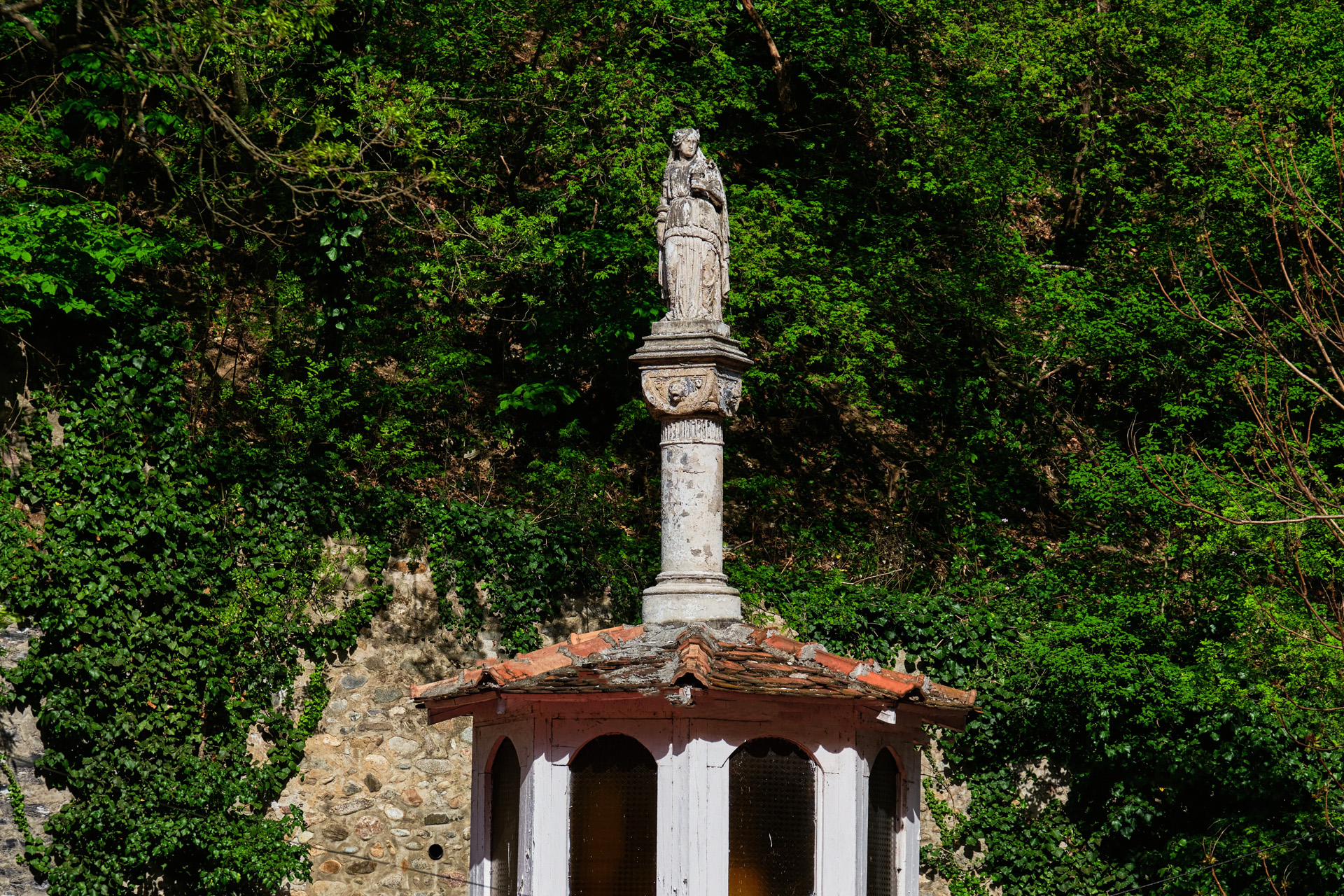
Outlaws Grotto
Officially known as the Thieves’ Cave, it is located in the northern part of the resort, a short distance from the Roman Hotel. With three openings that allow natural lighting to most of the 143-meter galleries, the cave is now notable only for the inscriptions of modern tourists. However, numerous evidences of ancient habitation have been discovered here, from cave bear bones to traces of continuous human habitation since the Paleolithic.
Băile Herculane Train Station
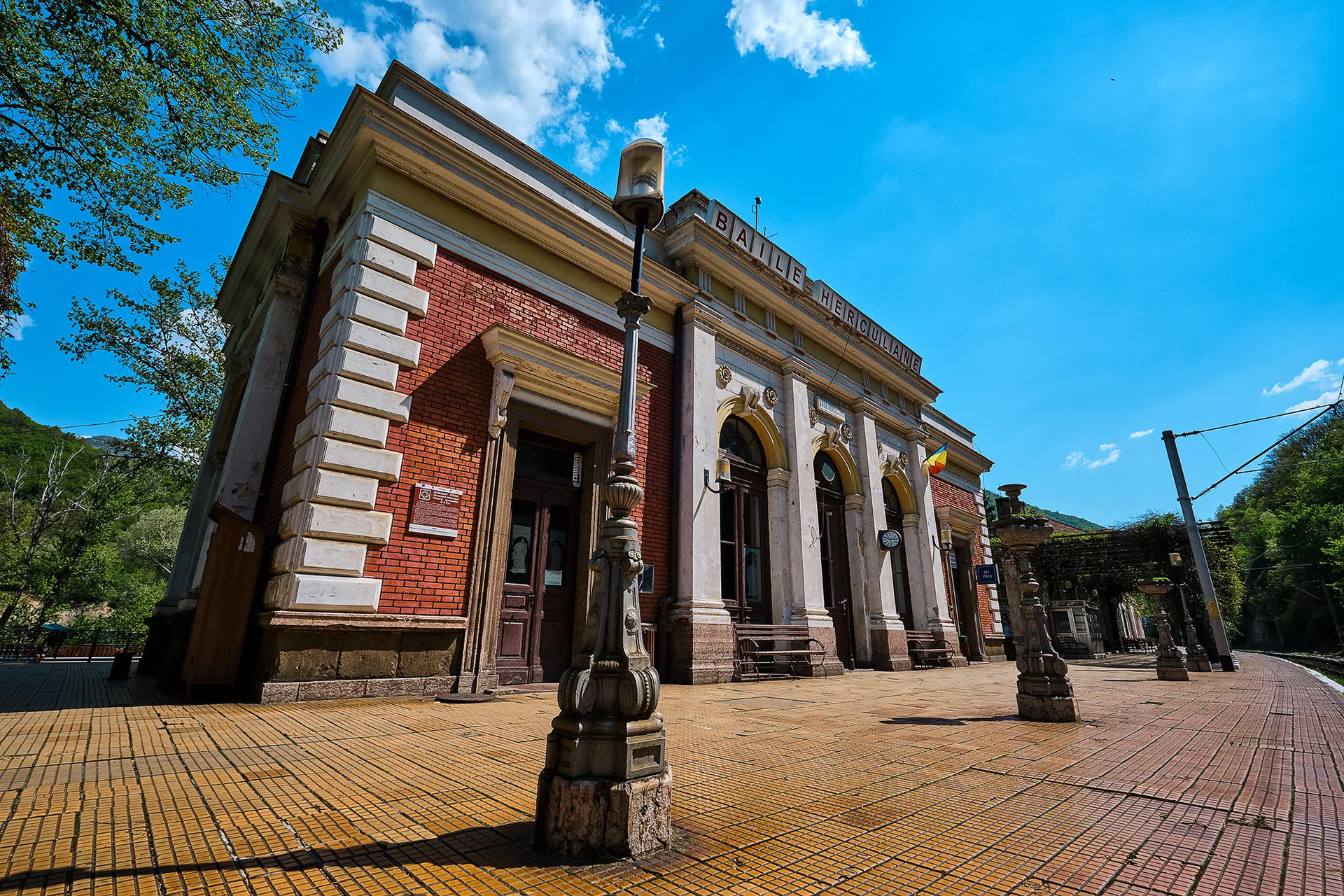
Considered one of the most beautiful train station buildings in Romania, the one in Băile Herculane is located in the southwest part of the resort, near national road 6. It was built in Baroque style, initially serving as a hunting lodge for Emperor Franz Joseph.
Other Monuments
In addition to all the monuments of great historical and architectural value, appreciated by everyone, but sometimes degraded and neglected, the Băile Herculane resort also hides many other treasures less known to visitors. Among these, the “Transfiguration” Church stands out, built in 1864, after the previous older church was demolished with the construction of the complex around the central park.
Accommodation Recommendations
The best lodging options in Băile Herculane
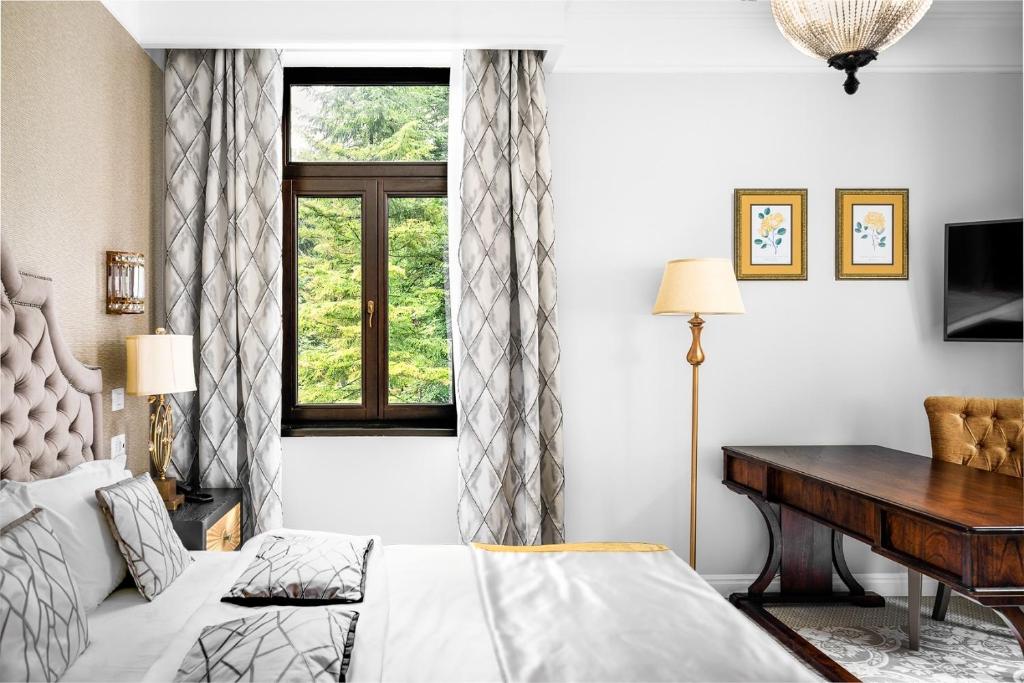
Rating 9.3 from 415 reviews!
This superb hotel is located in Baile Herculane, the old center of the resort. It impresses with its architecture and design, offering exceptional rooms and an acclaimed restaurant!
Cernei st, 1, Băile Herculane
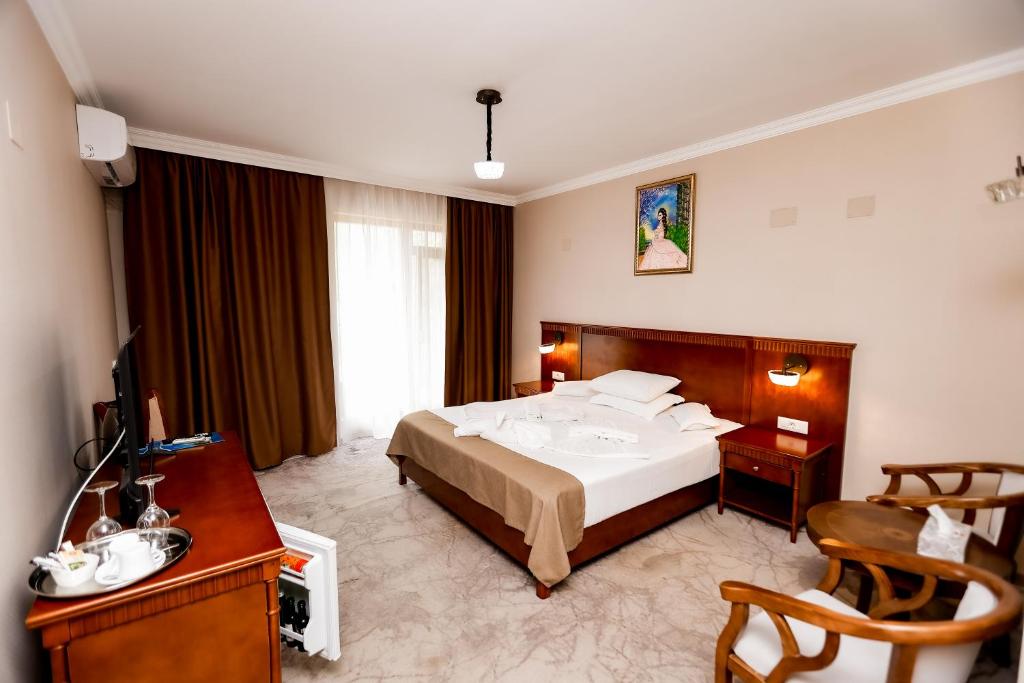
Rating 9.3 from 400 reviews!
Located near the new center of Băile Herculane, this superior guesthouse offers modern and spacious rooms, two swimming pools, a restaurant, a spa and wellness center!
Vicol st, 48, Băile Herculane
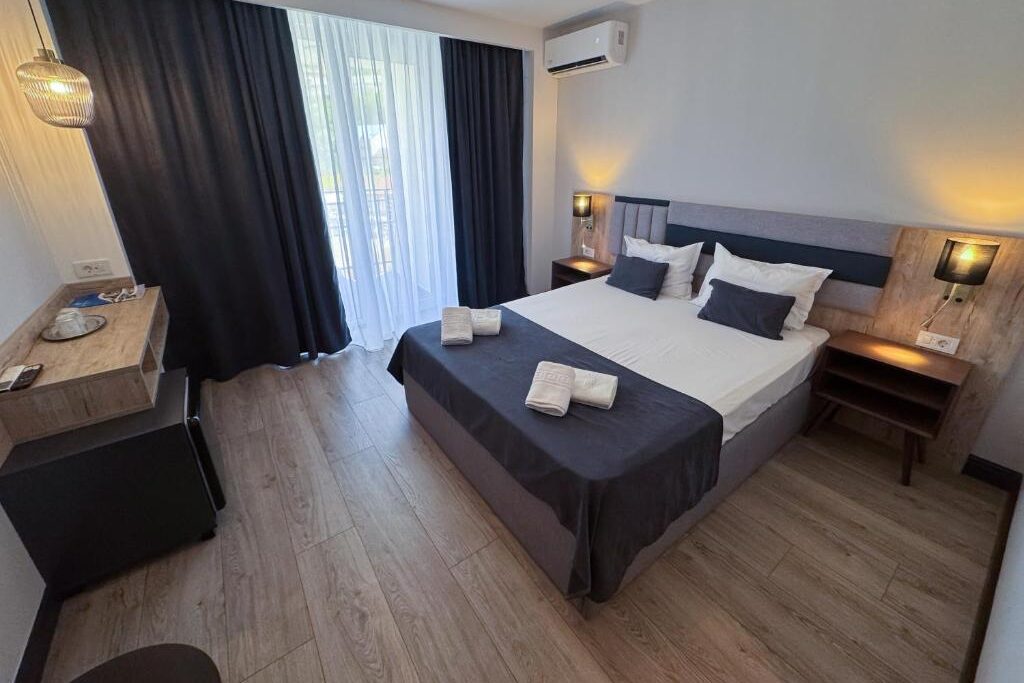
Rating 9.3 from 267 reviews!
Located right in the center of the new resort, next to the main road, this hotel offers welcoming rooms with all the necessary amenities, buffet breakfast, outdoor pool and private parking!
Castanilor st, 2, Băile Herculane