48
Iron Gates
Natural Park
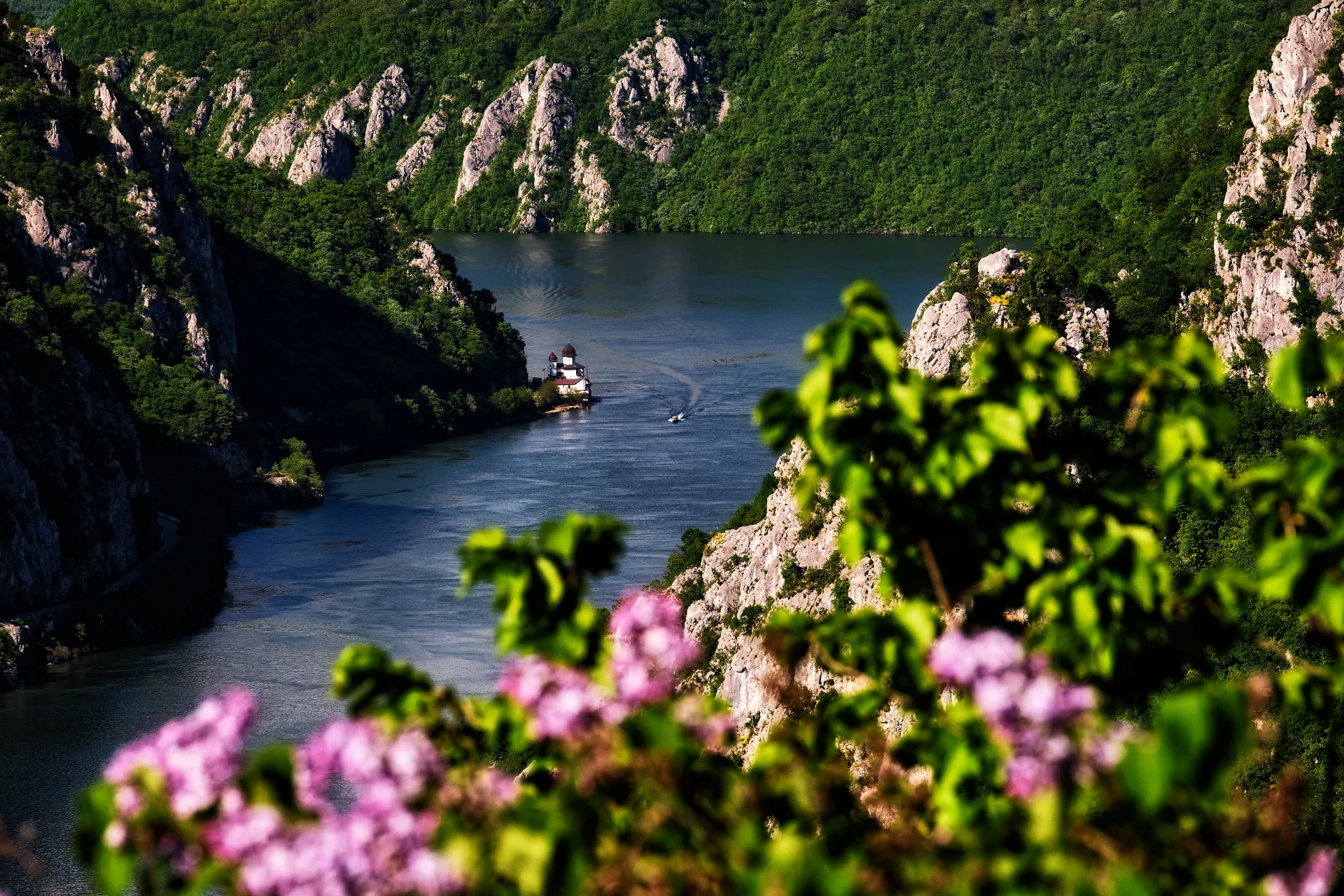
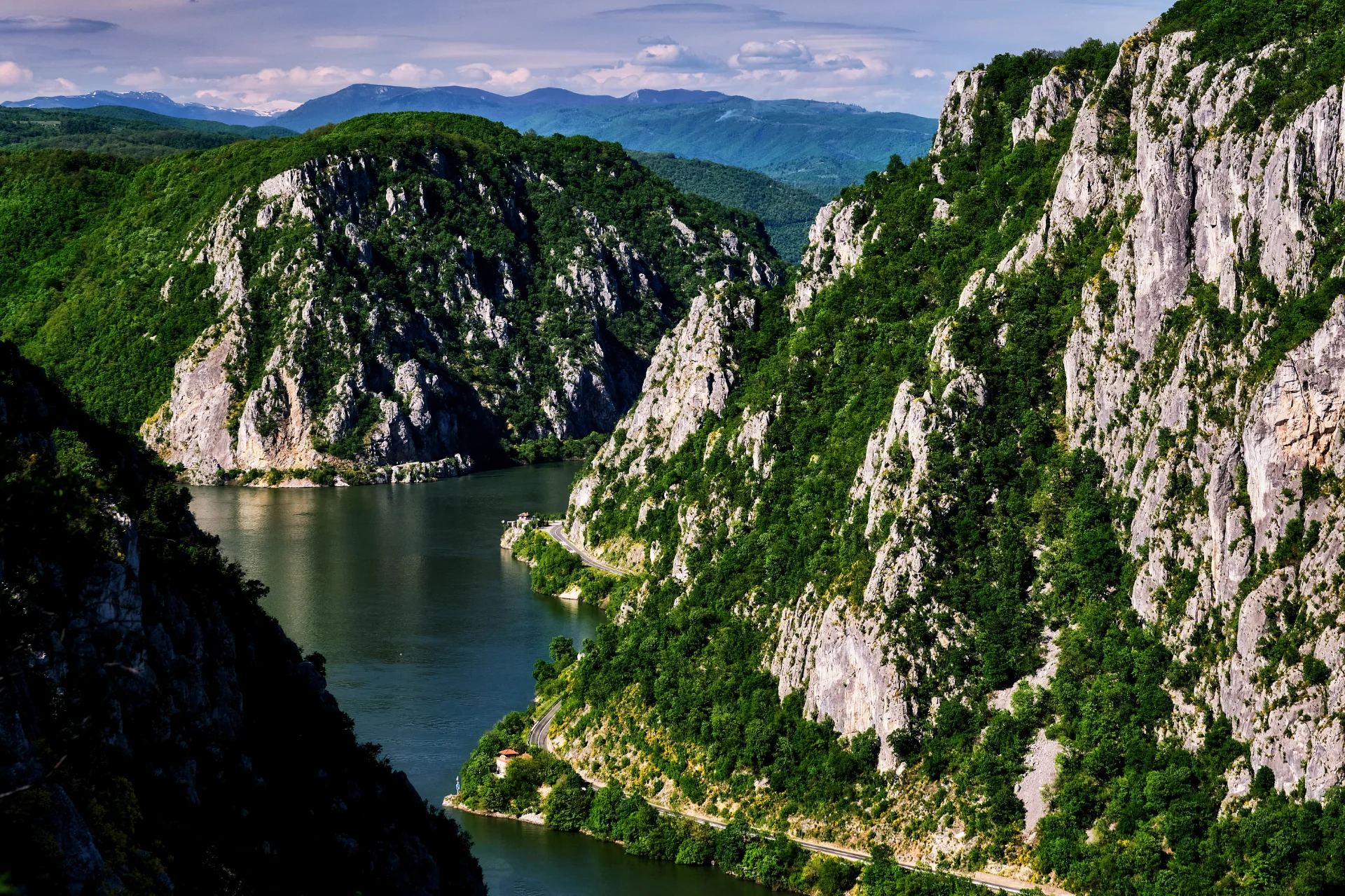
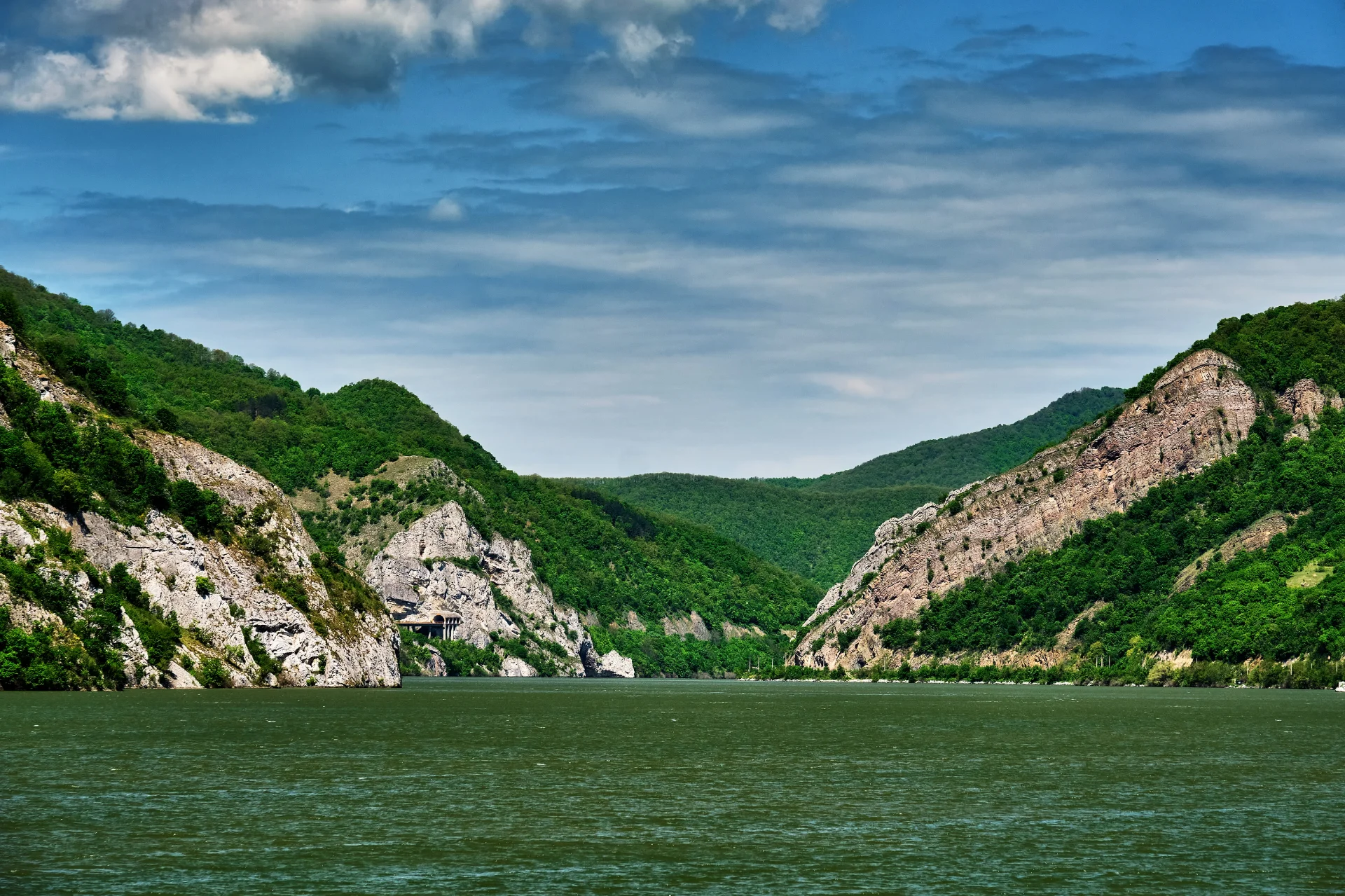
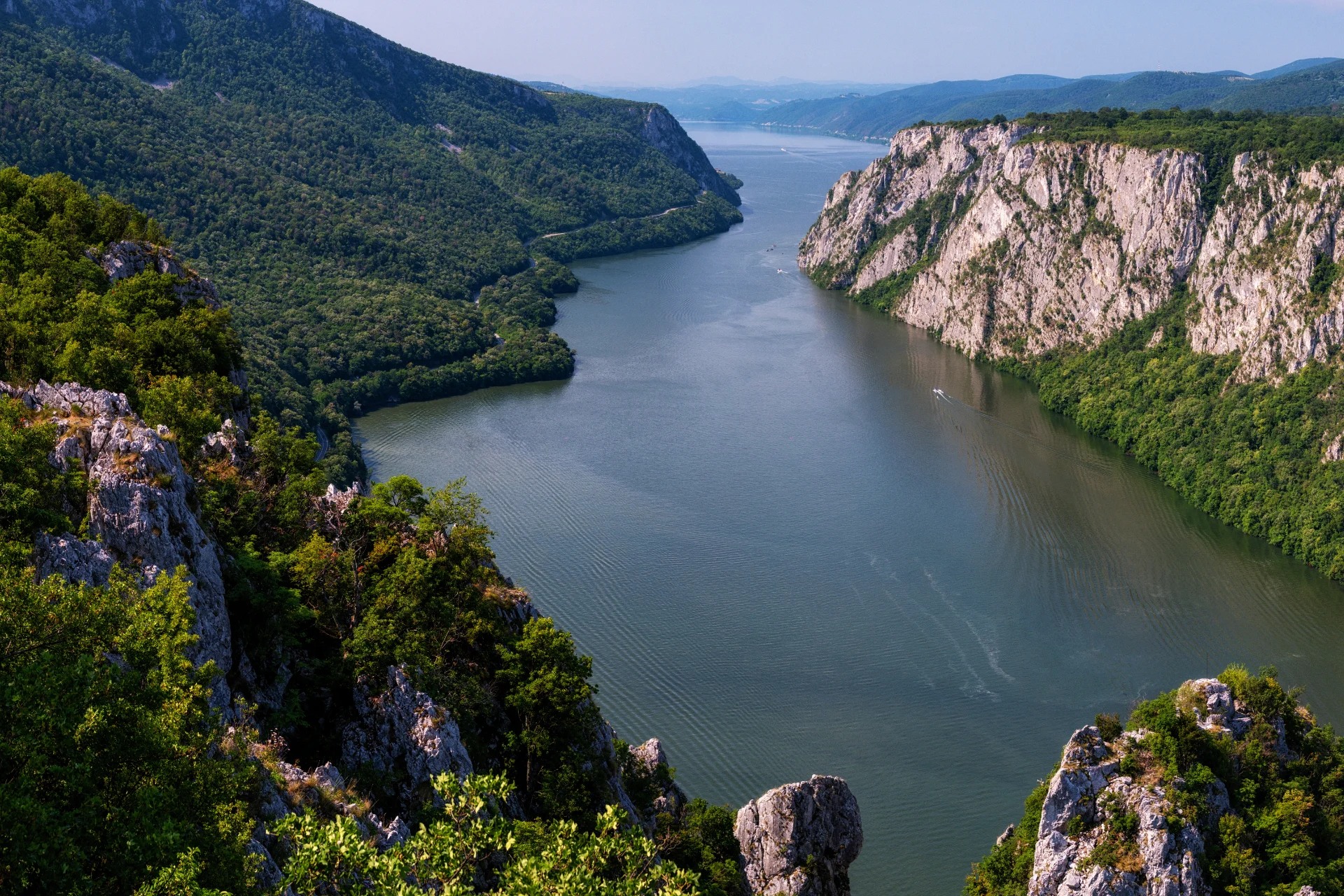
The emerald ribbon of the Danube winds through steep ridges, inviting travelers to discover its amazing secrets, with the once tumultuous waters of the river now flowing smoothly beneath rocks shrouded in ancient stories and the scent of lilac flowers!
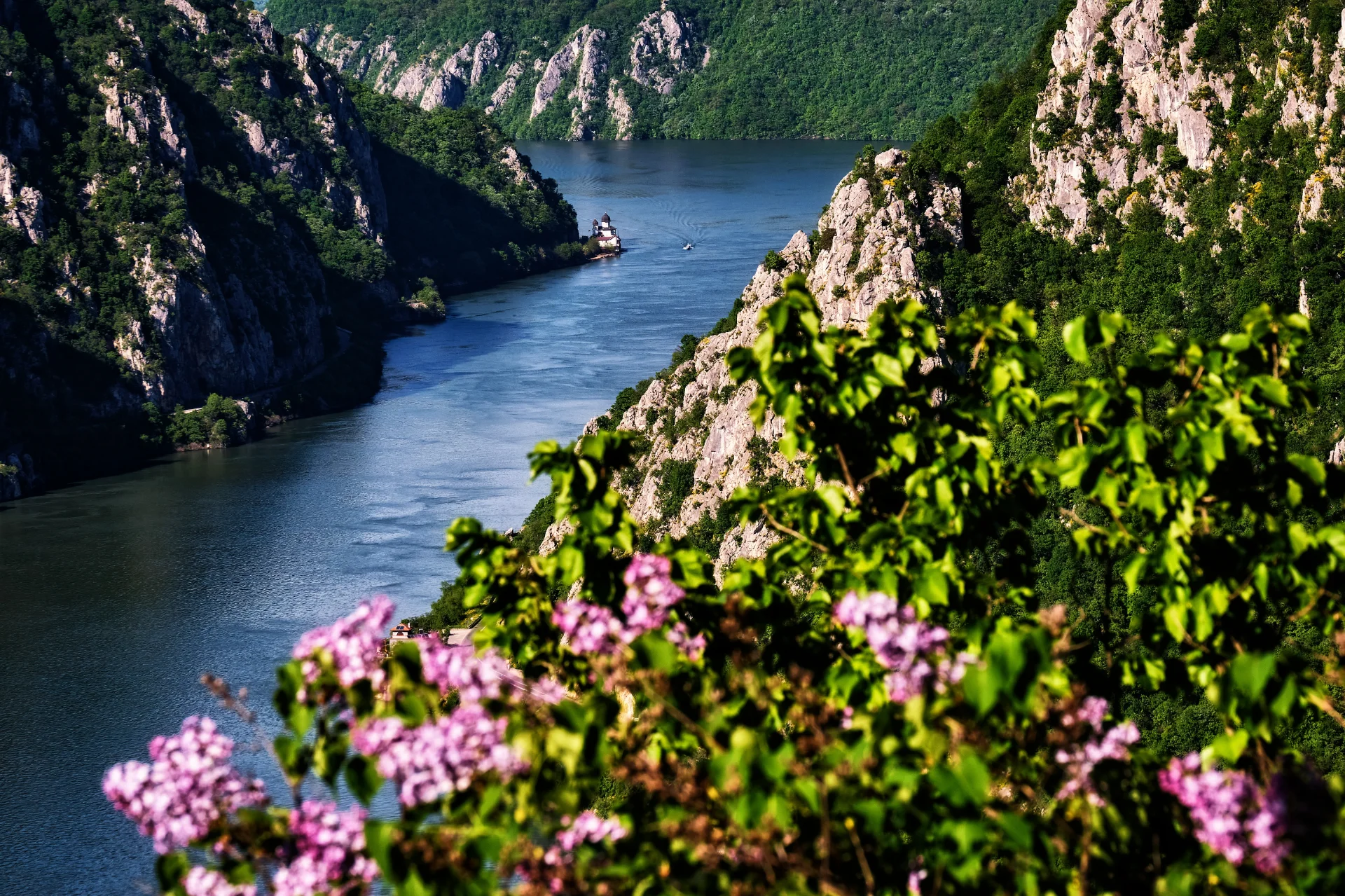
The places that still emanate ancient human epics and unique natural spectacles invite us on a memorable journey in the seductive company of the Danube, starting from the walls of the Drobeta fortress to the lands where the river caresses the Romanian land for the first time. Following a meandering path along the continent, the mighty river creates an amazing diversity of landscapes along its course, but the most spectacular ones are concentrated along the section enclosed in the grip of the mountains between Romania and Serbia. If this region was once a sailor’s nightmare, with many very dangerous places, where unseen rocks threatened the vessels beneath the water’s surface, after the development of the hydroelectric complex at the Iron Gates, the river was tamed and welcomes its guests in complete tranquility.
The Iron Gates Natural Park was created to protect the impressive landscapes, the unique biodiversity and the authentic cultural heritage of this region. It also includes the southern peaks of the Locvei and Almaju mountains, as well as small portions of the Mehedinți mountains and plateau. Inside the park, there are almost 20 fully protected areas, where all activities except hiking are prohibited. Along this impressive destination, we can also admire the rich and often unique biodiversity of the region. Approximately 80% of the park’s surface is covered by forests, and there are also many rare or endemic Mediterranean species, such as the cauldron tulip (tulipa hungarica), a splendid flower that grows only on the steep cliffs of the Ciucaru Mare massif and can only be admired from the water. Access to the park is facilitated by national road 57, which follows the Danube gorge from east to west, by several local roads that climb the mountain valleys to the north, but also by the 15 ecotourism trails that allow us to explore hidden places on the peaks and through the forests.
Search for Flights to Romania with Booking.com!
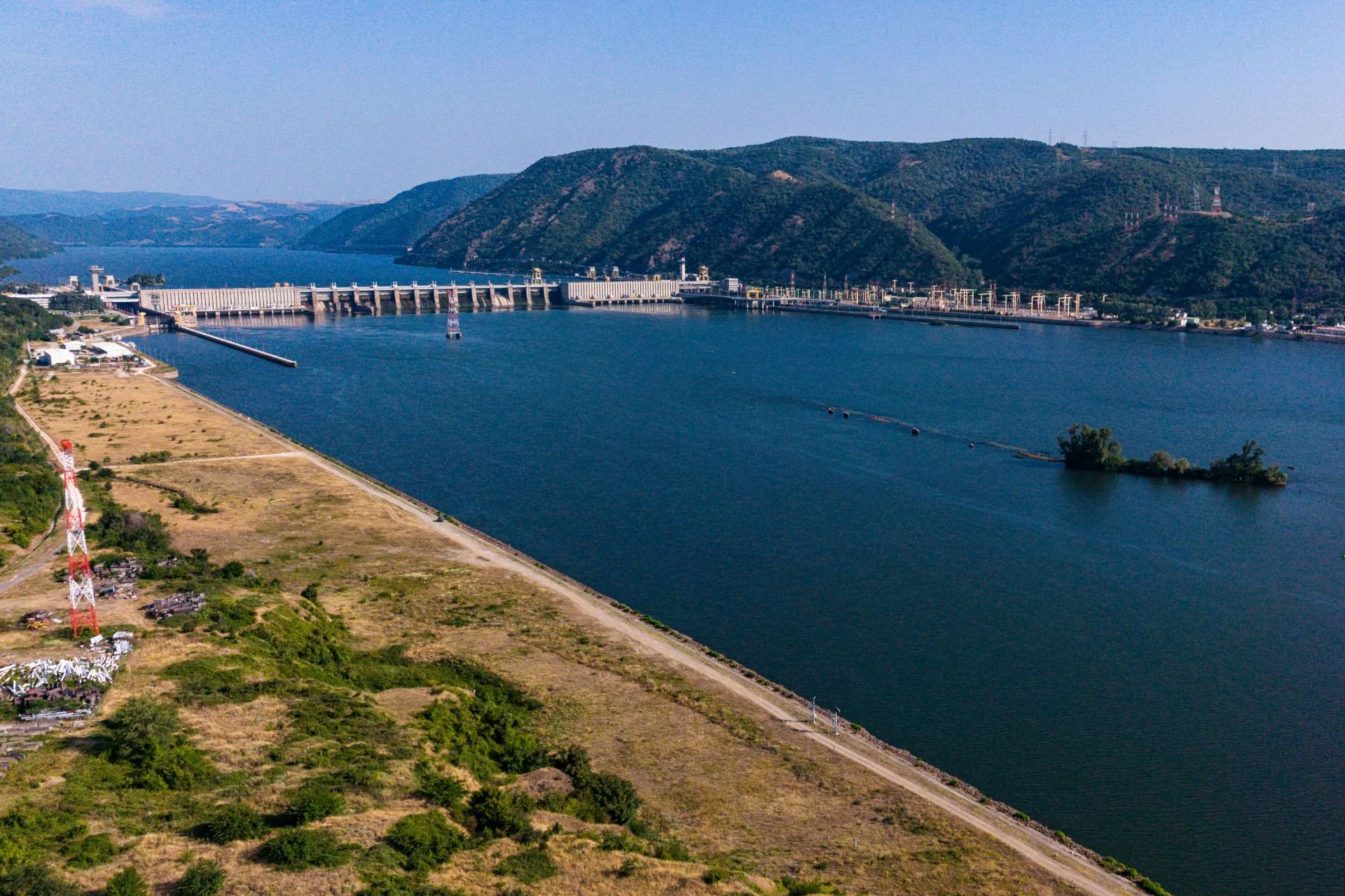
We begin to discover the park from the east, where the Iron Gates I hydroelectric system now rises just a few kilometers west of the town of Drobeta Turnu Severin and the first bridge built by the Romans over the Danube, two millennia ago. One of the largest hydroelectric power plants in Europe, it was built in partnership by Romania and Serbia between 1964 and 1972, the resulting dam raising the level of the Danube by 35 meters. The island of Ada-Kaleh and several settlements on the river banks were completely covered by the waters. We can visit the inside of the dam, where the Iron Gates Hydropower Plant Museum offers us interesting information about its construction and features, as well as the chance to admire the impressive turbines. Beyond this impressive structure, the landscape changes dramatically and the road often hangs over the waters or pierces steep cliffs. Spring is definitely the best time to explore this charming region, the scent of wild lilacs and the raw green of the peaks completing the memorable experience.
One of the tragic stories of these places is related to the island of Ada-Kaleh, a unique place near Orșova that disappeared under the waves of the Danube after the construction of the Iron Gates dam. Known since ancient times under various names and often disputed by local powers, the island was fortified by the Austro-Hungarian Empire, being on the border of the Ottoman advance. Witnessing the passage of thousands and thousands of ships for centuries, the island eventually became Romanian land, but was inhabited mainly by the descendants of the Ottomans who had conquered the city in the past. For a while, Ada Kaleh was a commercial paradise where travelers arrived by boat to enjoy the idyllic atmosphere and the exotic products here, such as Turkish delicacies, oil and rose perfume. In 1970, the inhabitants were displaced, and parts of the island’s main monuments, such as the fortress, the mosque, or the cemetery, had to be moved to the Şimian island near Turnu Severin, where the aim was to rebuild the entire community, a project that has not been realized to this day!
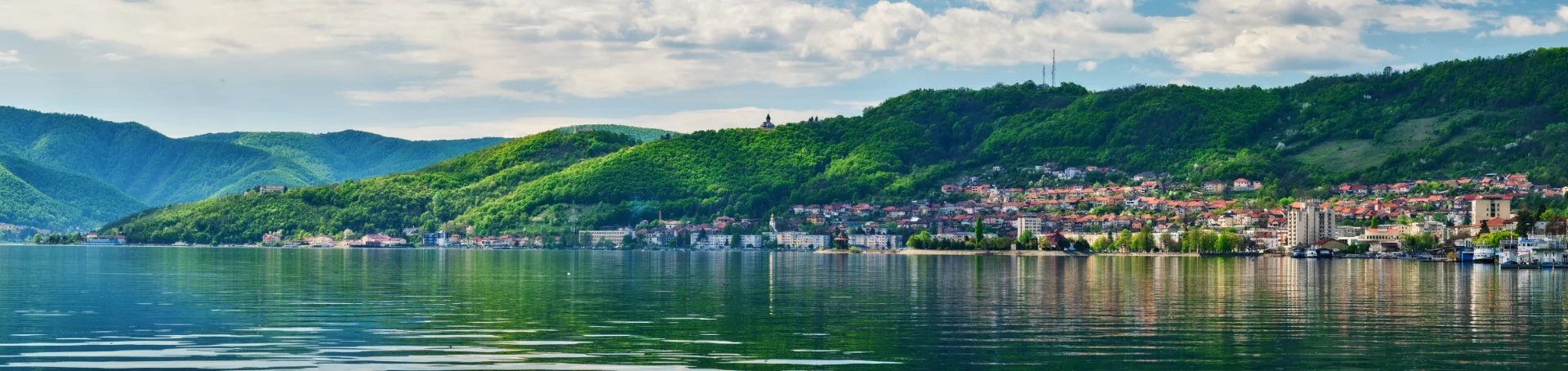
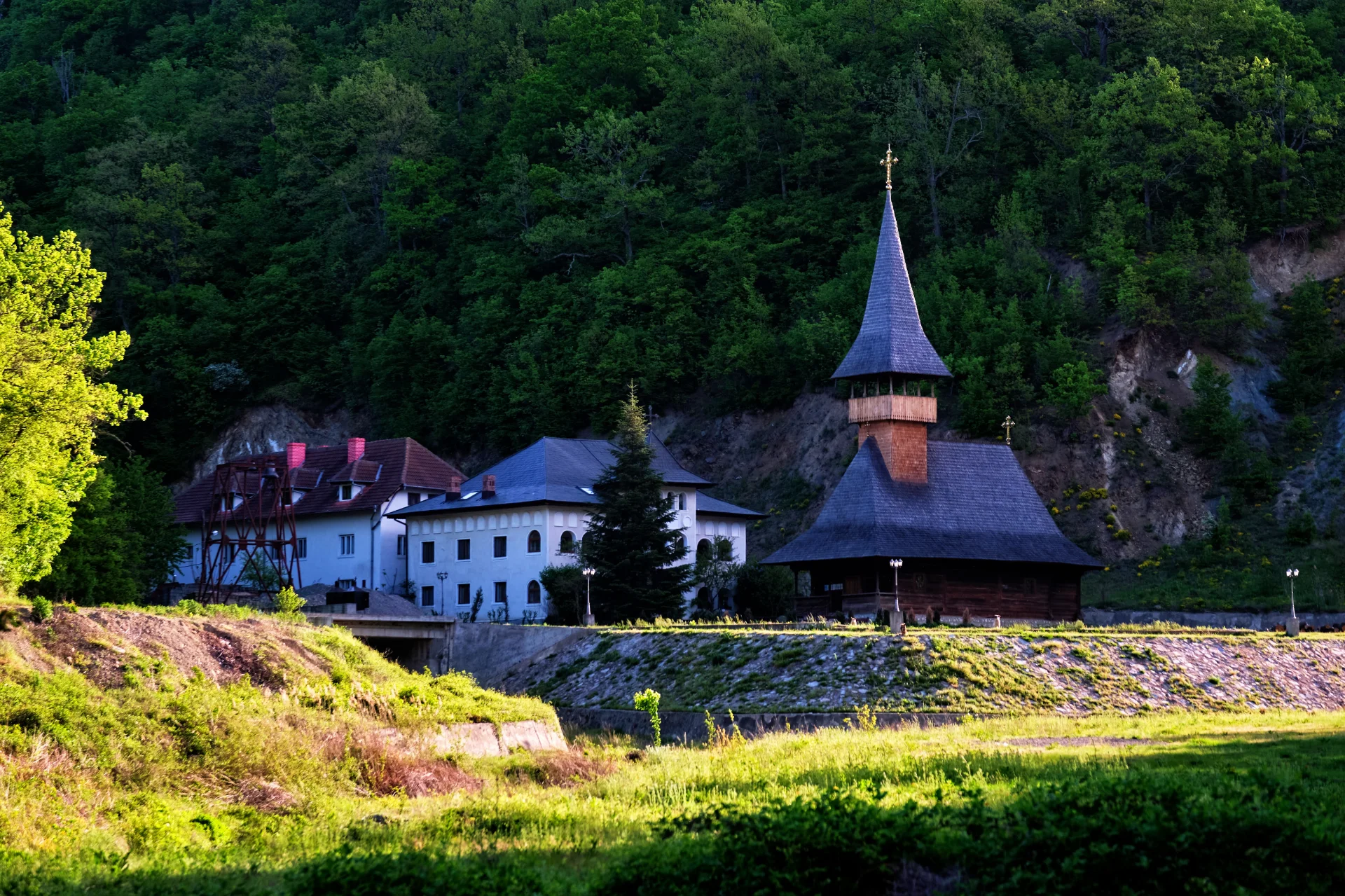
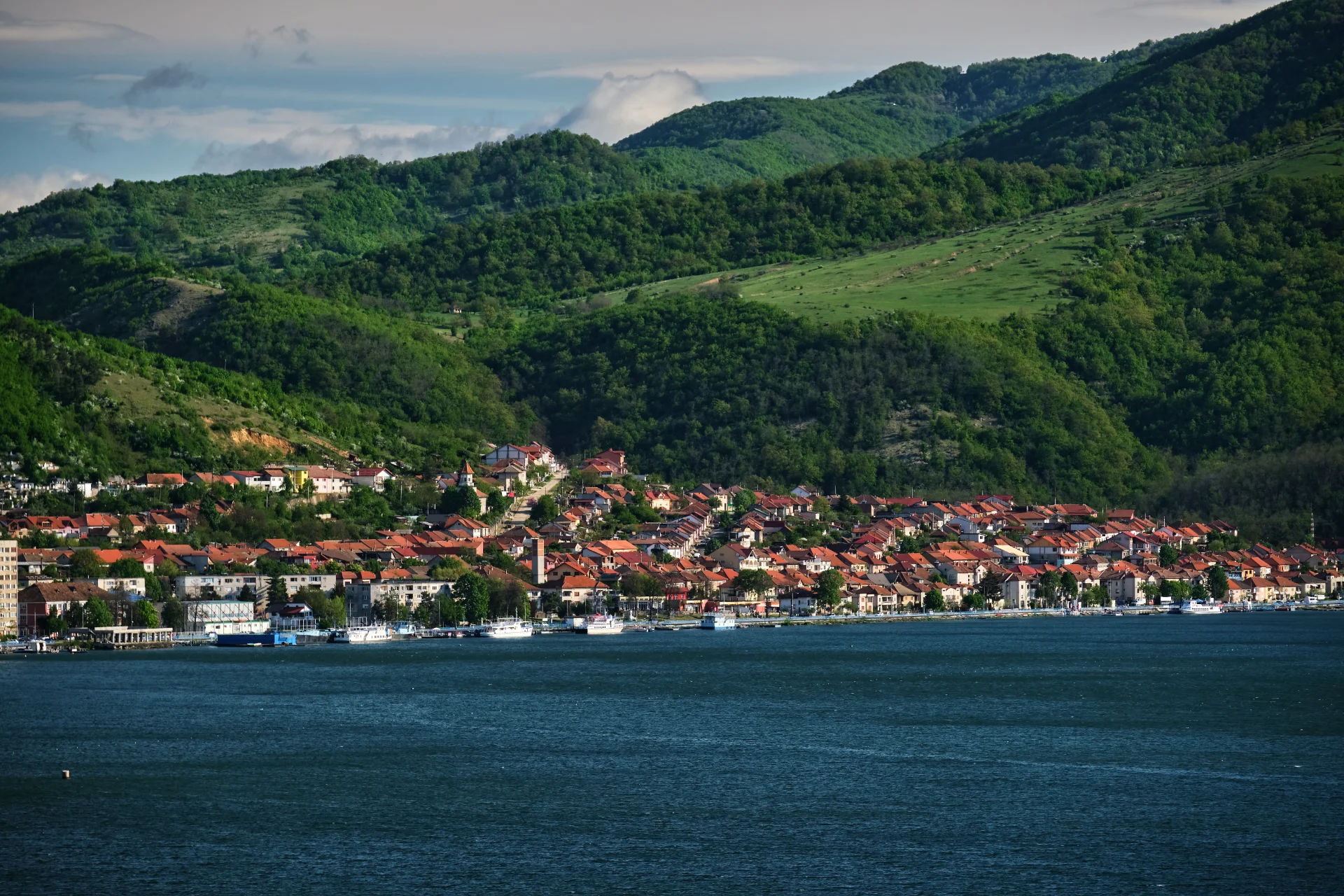
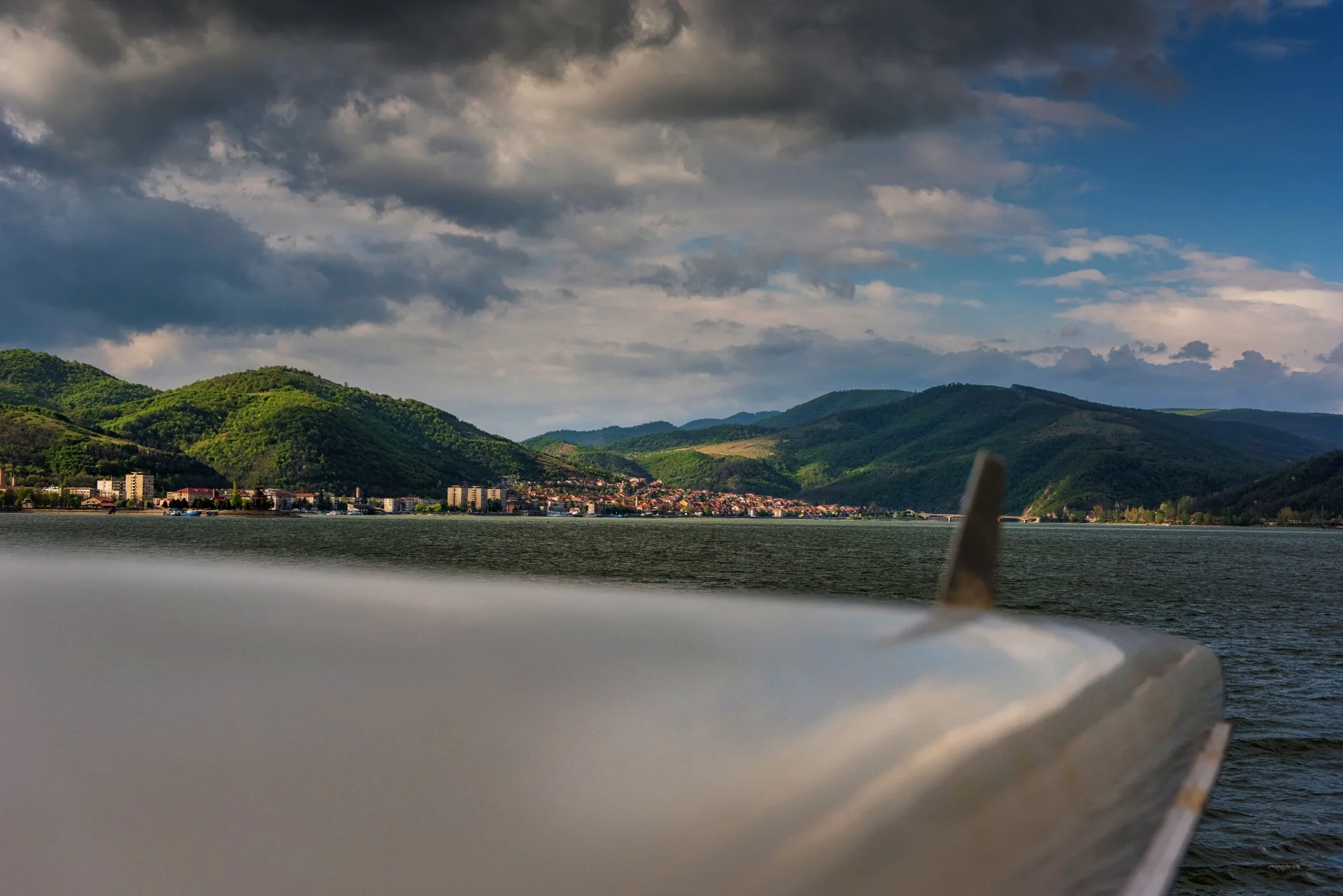
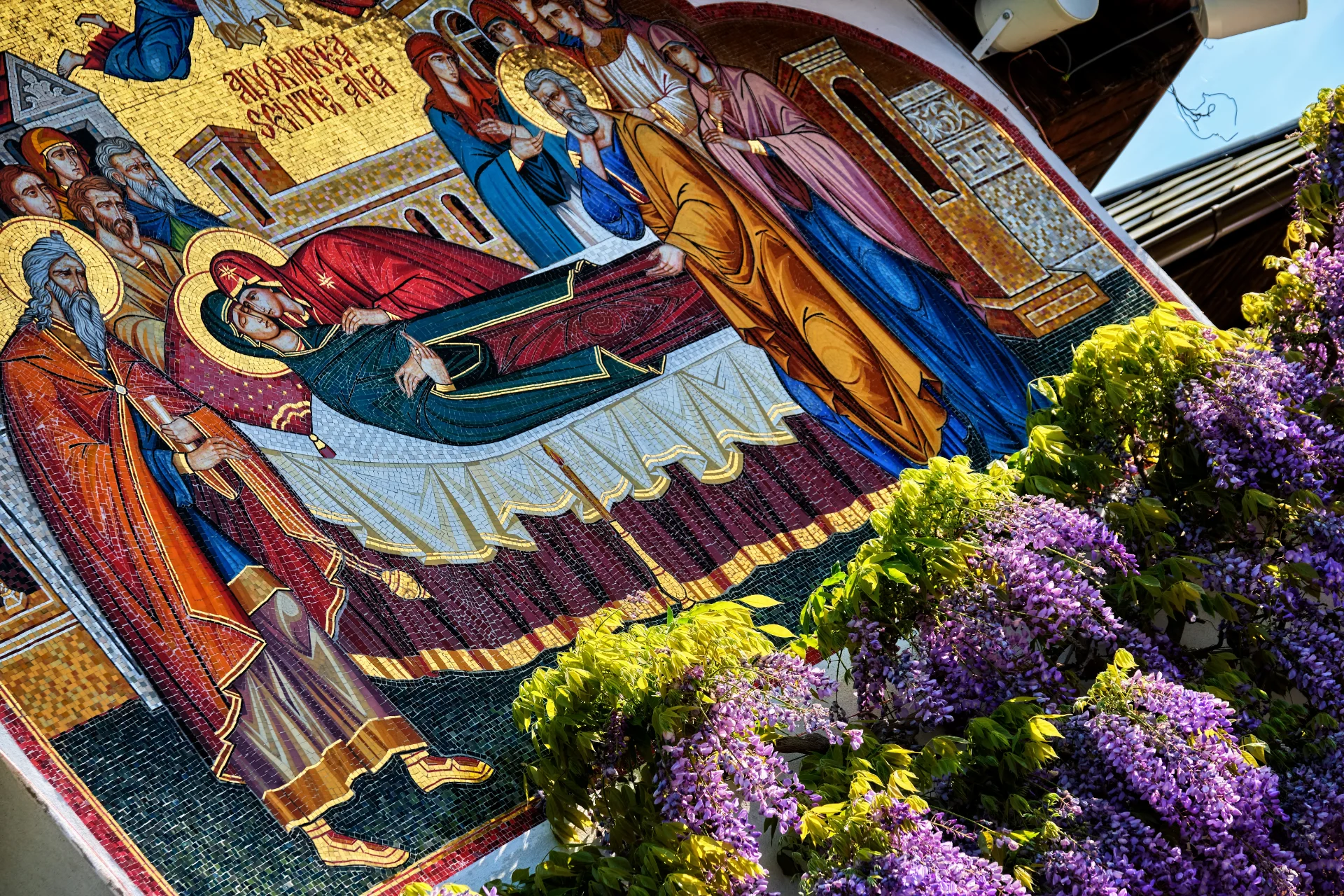
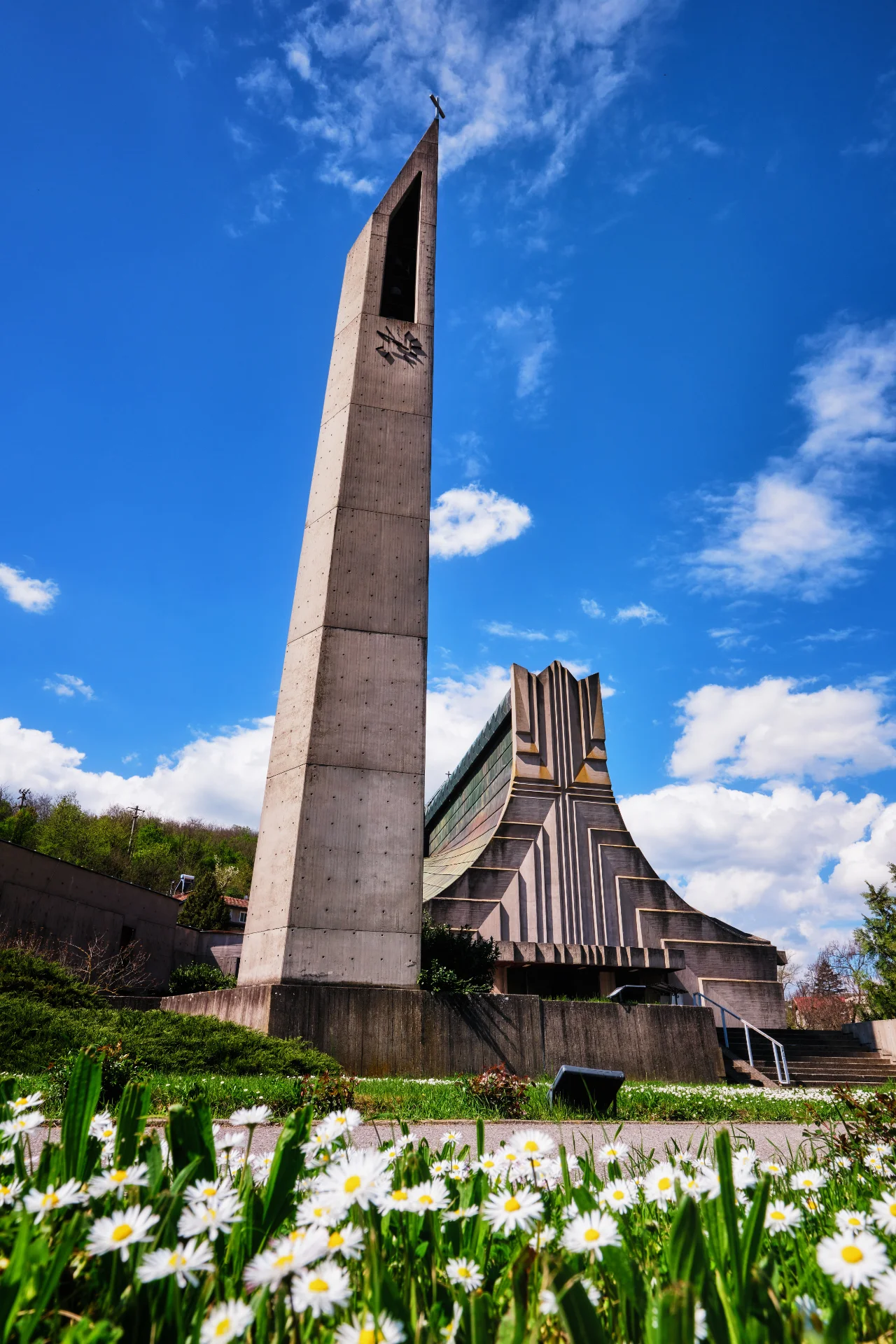
Just 8 kilometers from the dam, we discover the Vodița Monastery, hidden in a charming little bay, close to the road. Considered the oldest autonomous Orthodox monastery founded by a ruler in the country, it was built in the second half of the 14th century and welcomes us with its wooden Maramureș style church and its peaceful atmosphere. We pass through tunnels and over spectacular viaducts, and after another few kilometers we have the first view of the small town of Orșova. The morning light envelops the bay and the gentle peaks on which the relatively new houses rise as if in search of the sun and the enchanting views. More than half a century ago, the people here moved with their homes a little higher up the mountainside, once the water level rose after the construction of the Iron Gates dam. If in ancient times, Orșova was a Roman settlement known as Dierna, now it is a small quiet port with several interesting attractions, among which the new Roman Catholic cathedral, with its unique architecture, stands out. We walk along the enchanting Danube promenade, admiring the seagulls and rowers of the city’s sports center, then we climb to the top of the hill where the Monastery of Saint Anne shines, watching over the city and the bay, offering incredible views of the river.
Search for Lodging in Iron Gates Natural Park on Booking.com!
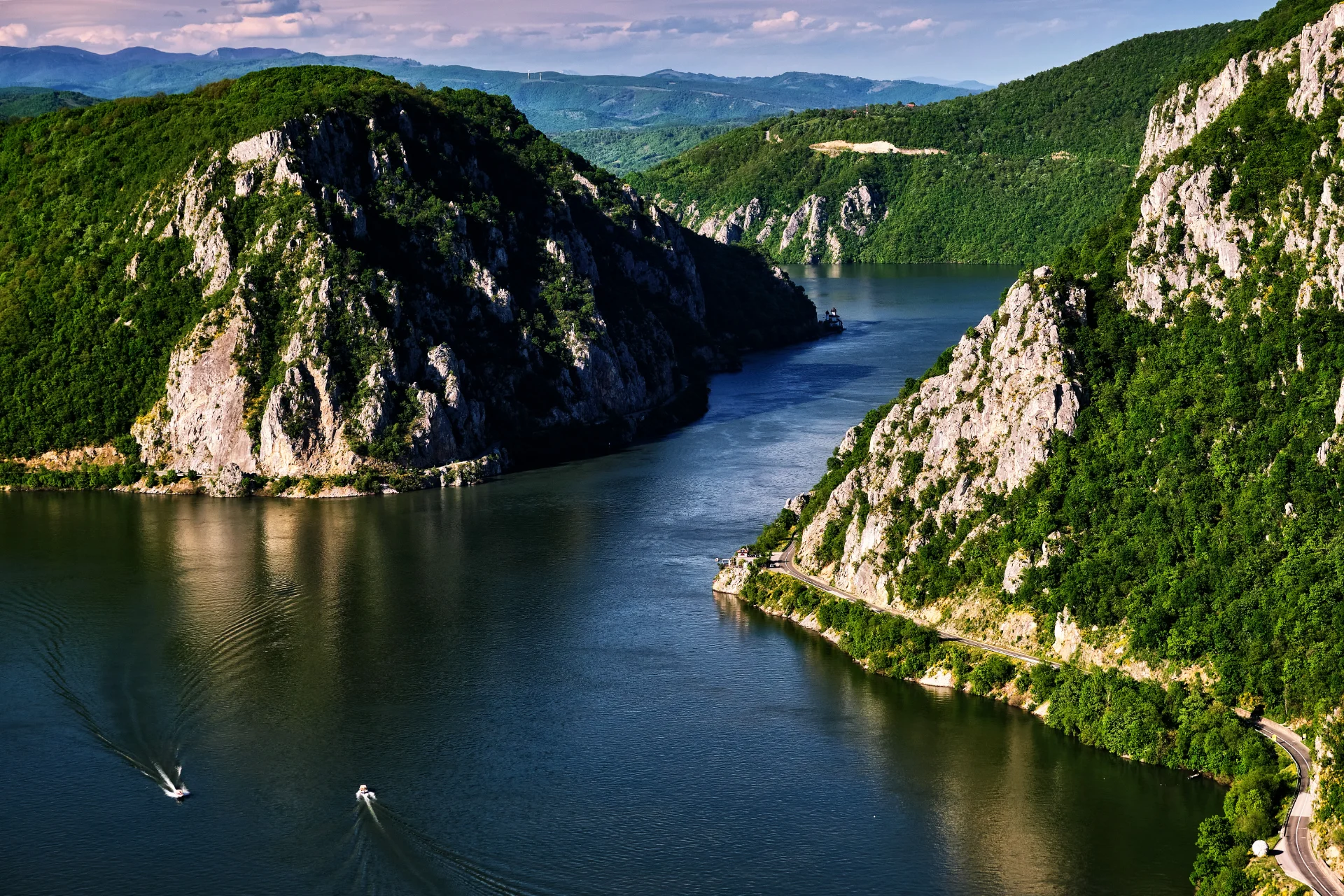
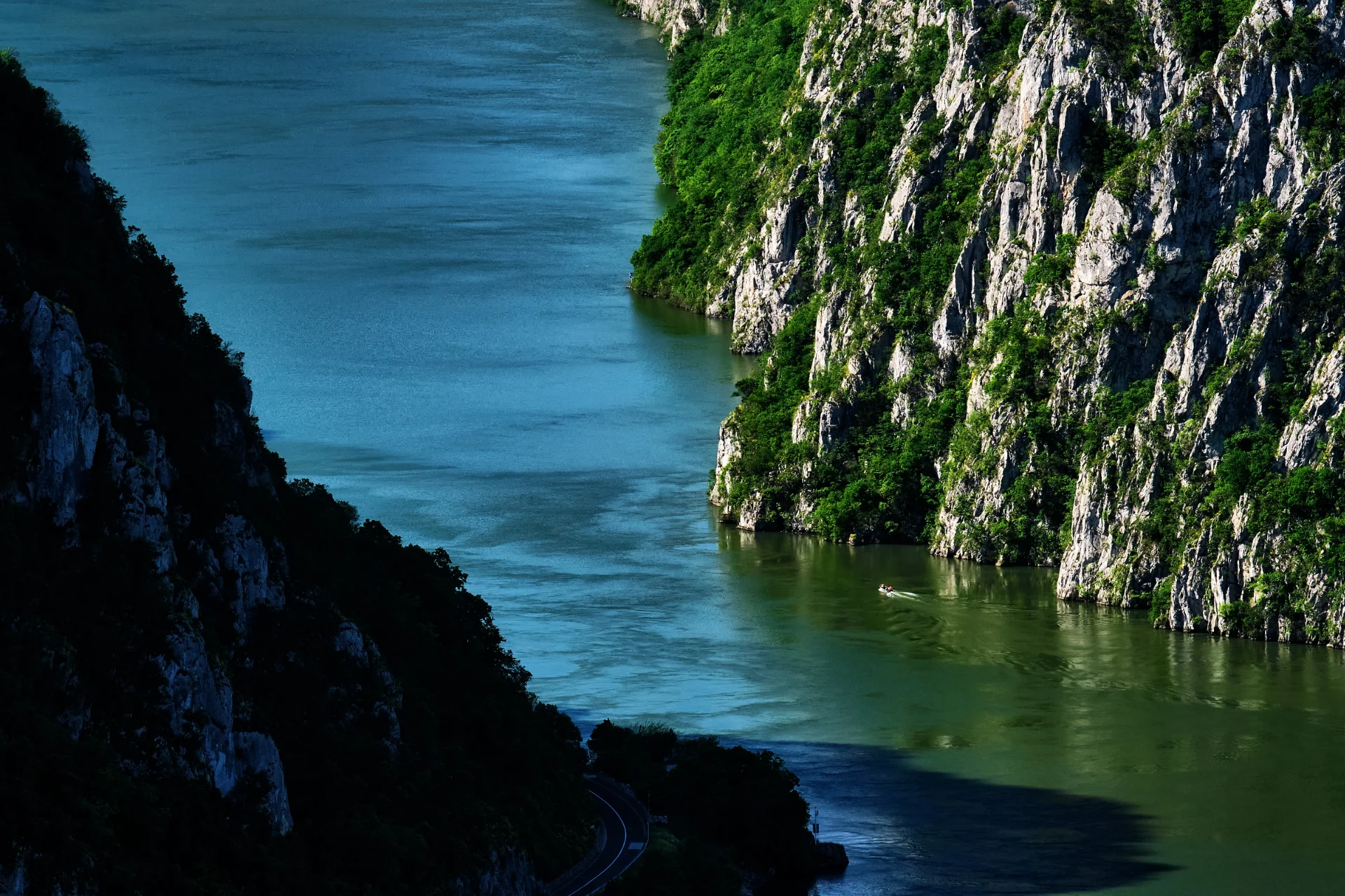
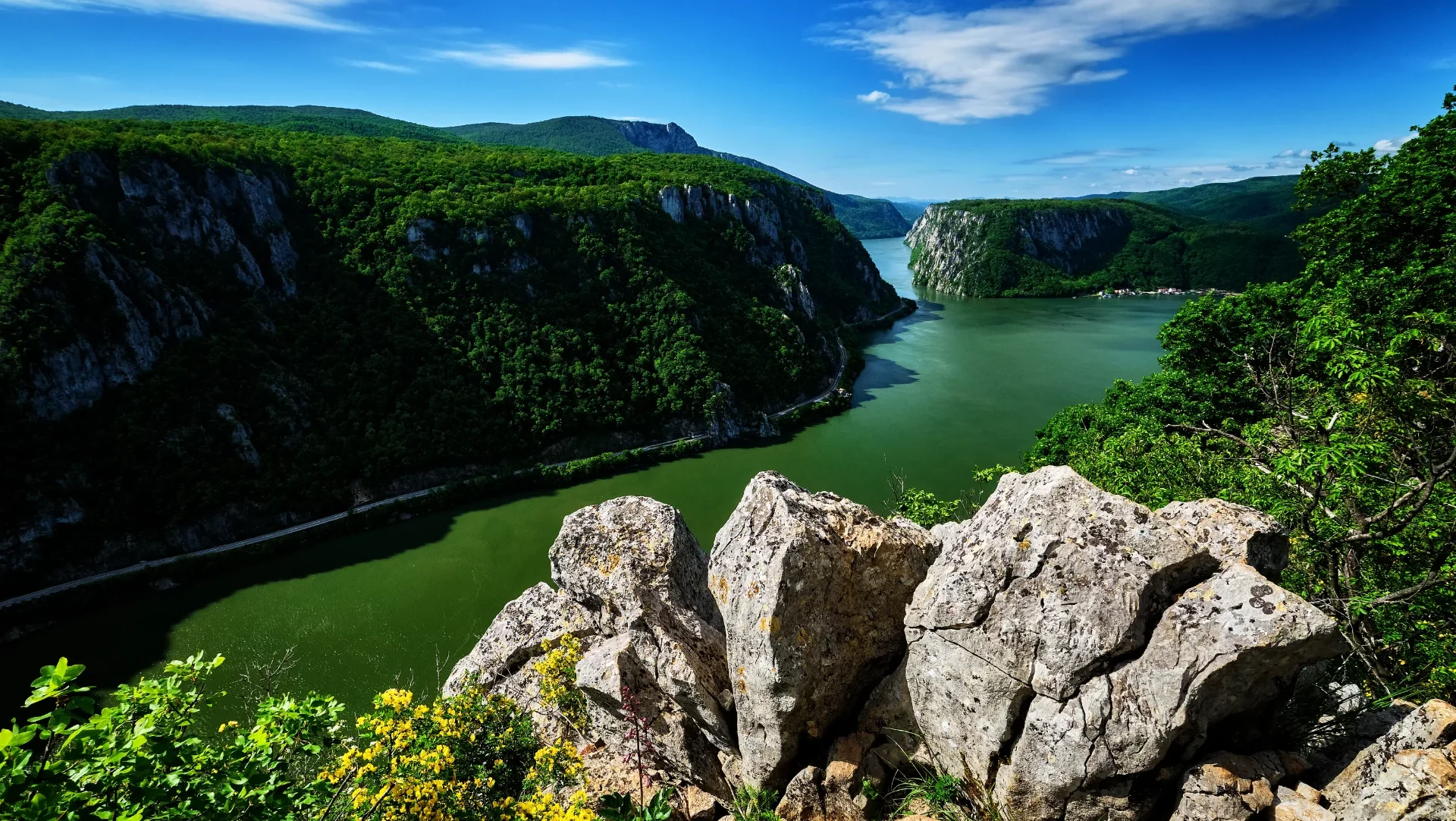
We leave Orșova and just a few kilometers further on, we encounter the first truly imposing gate that rises on our way along the river. The Danube Boilers, once the terror of sailors because of the unseen rocks that threatened ships from beneath the waves, have been tamed with the rise in water levels, today being more appreciated for the wild beauty of the landscape created. The high and steep walls on the two banks come together only a few hundred meters apart, and the waters sometimes become turbulent, still preserving the memory of past shipwrecks. We first enter the Small Boilers, sandwiched between Ciucarul Mic ridge, which rises over 300 meters, and the ridge of Mali Strbac in Serbia, which exceeds 600 meters. There is a short but demanding tourist route to the top, where we are rewarded with an unforgettable panorama of the area.
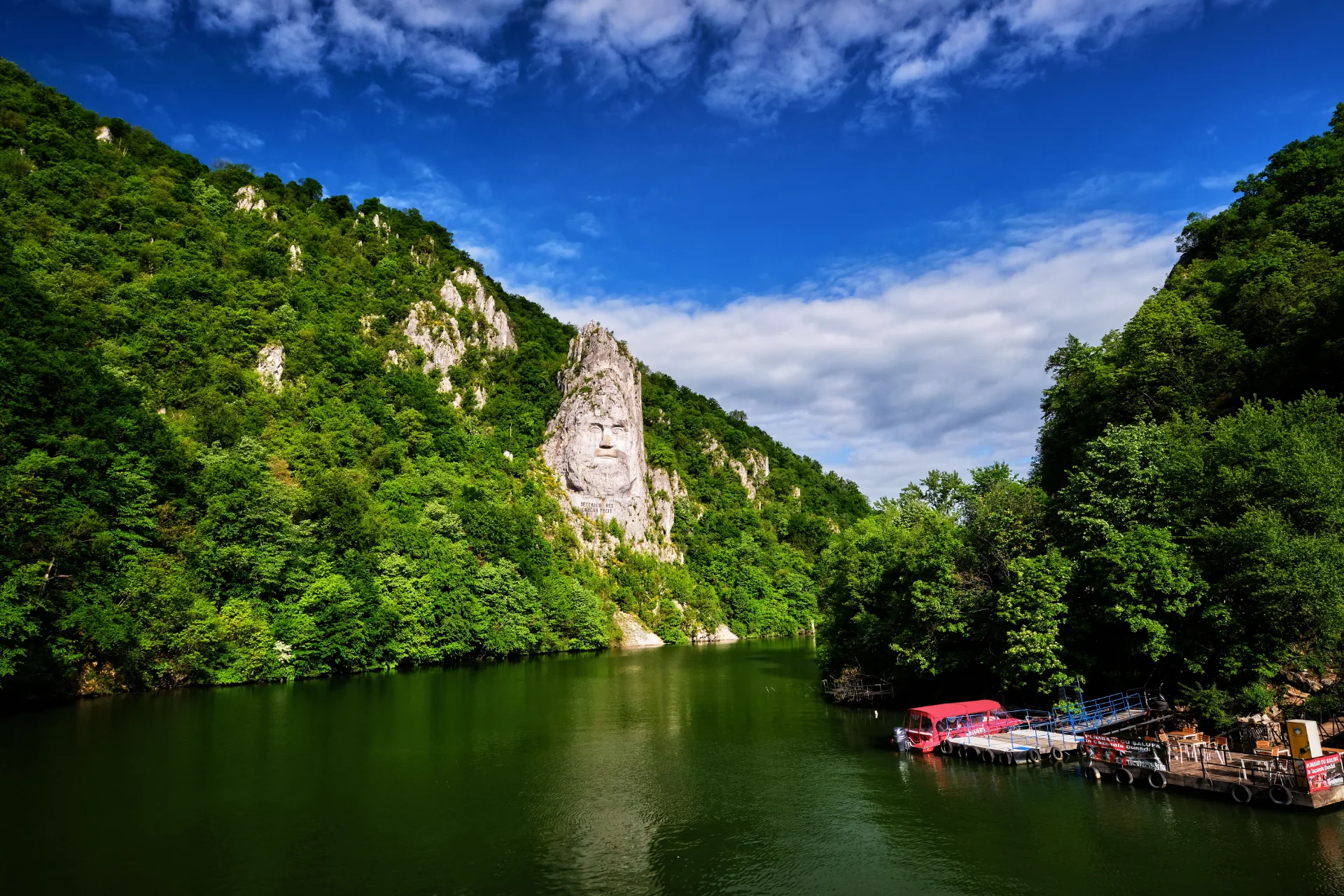
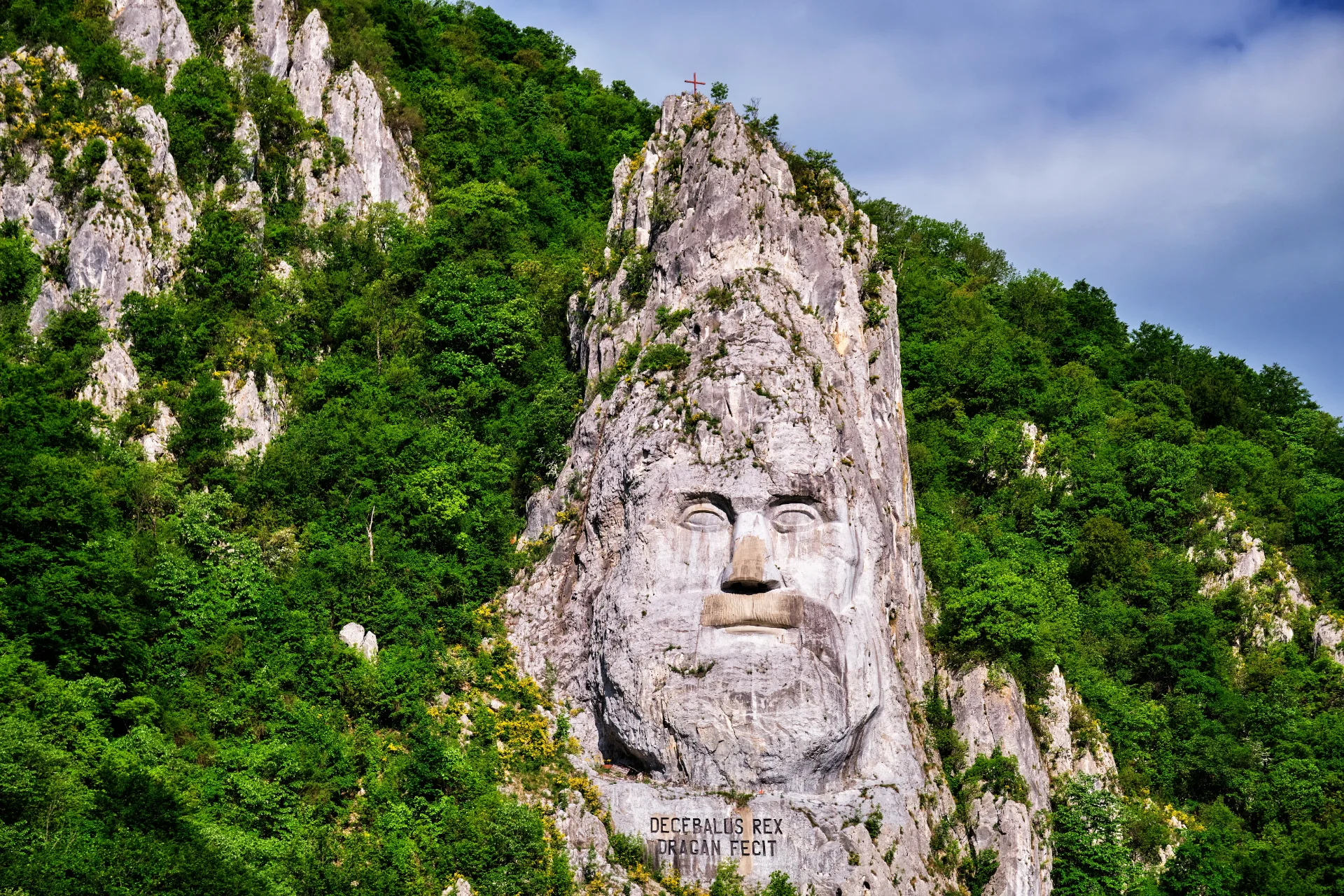
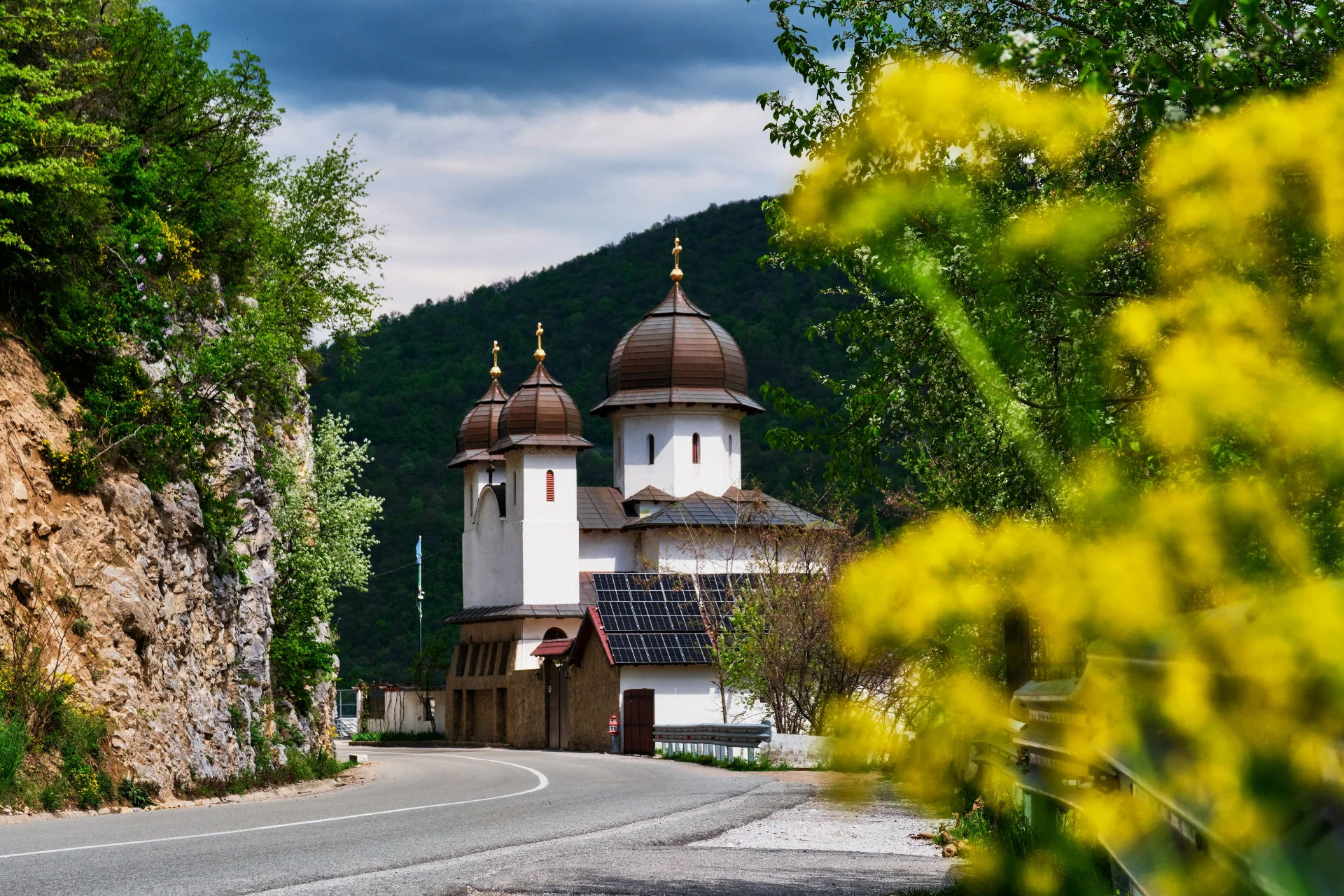
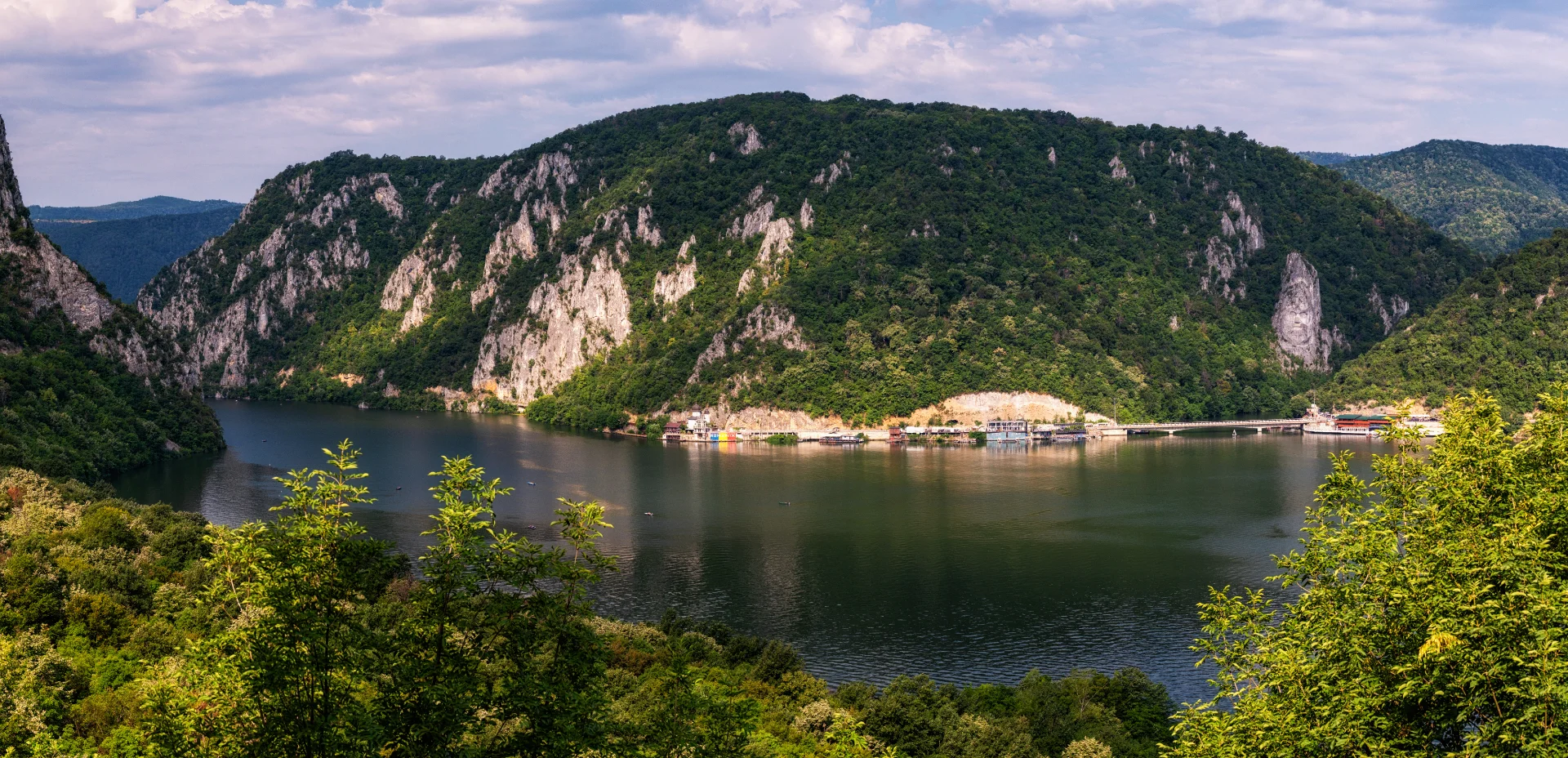
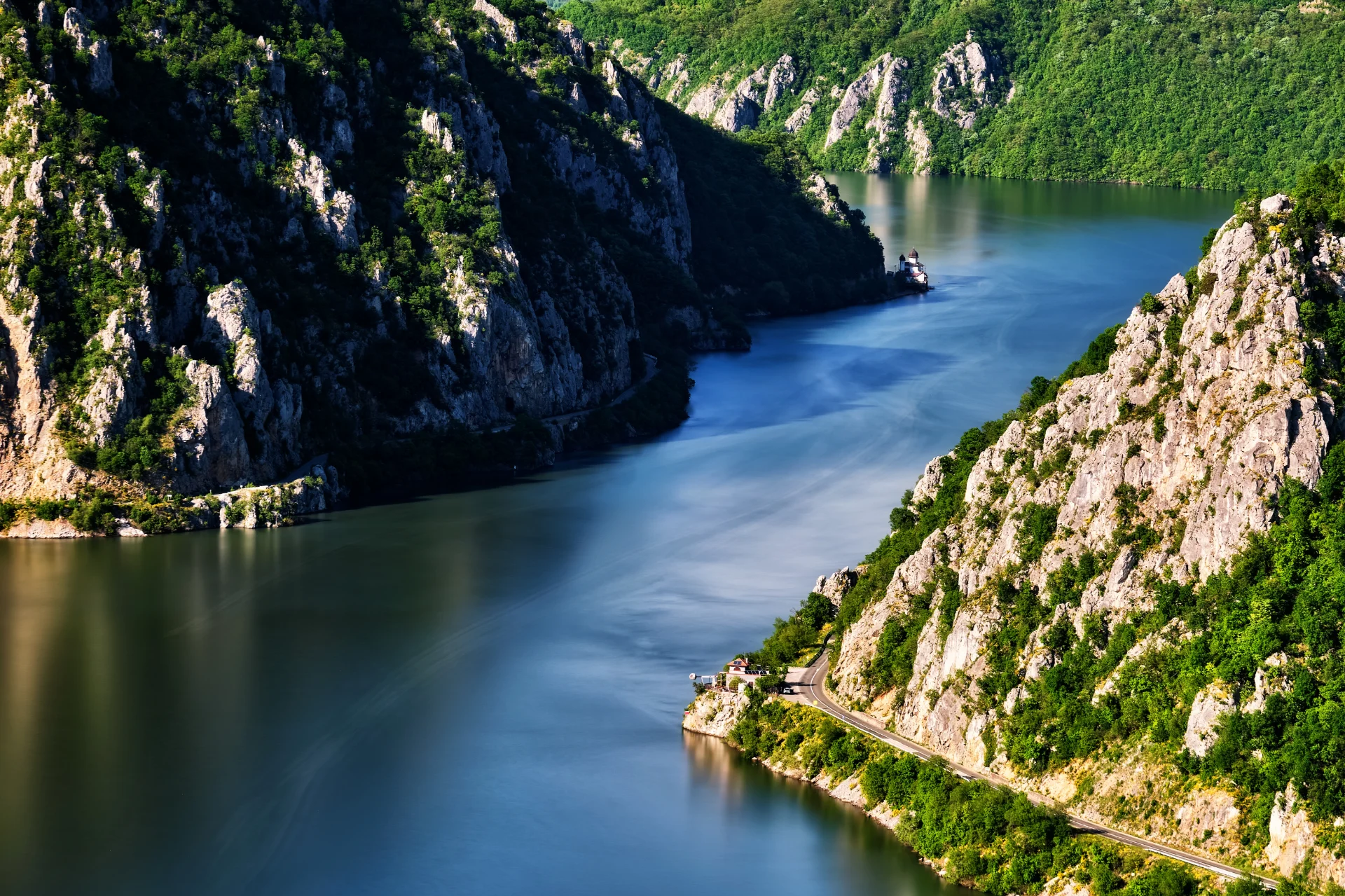
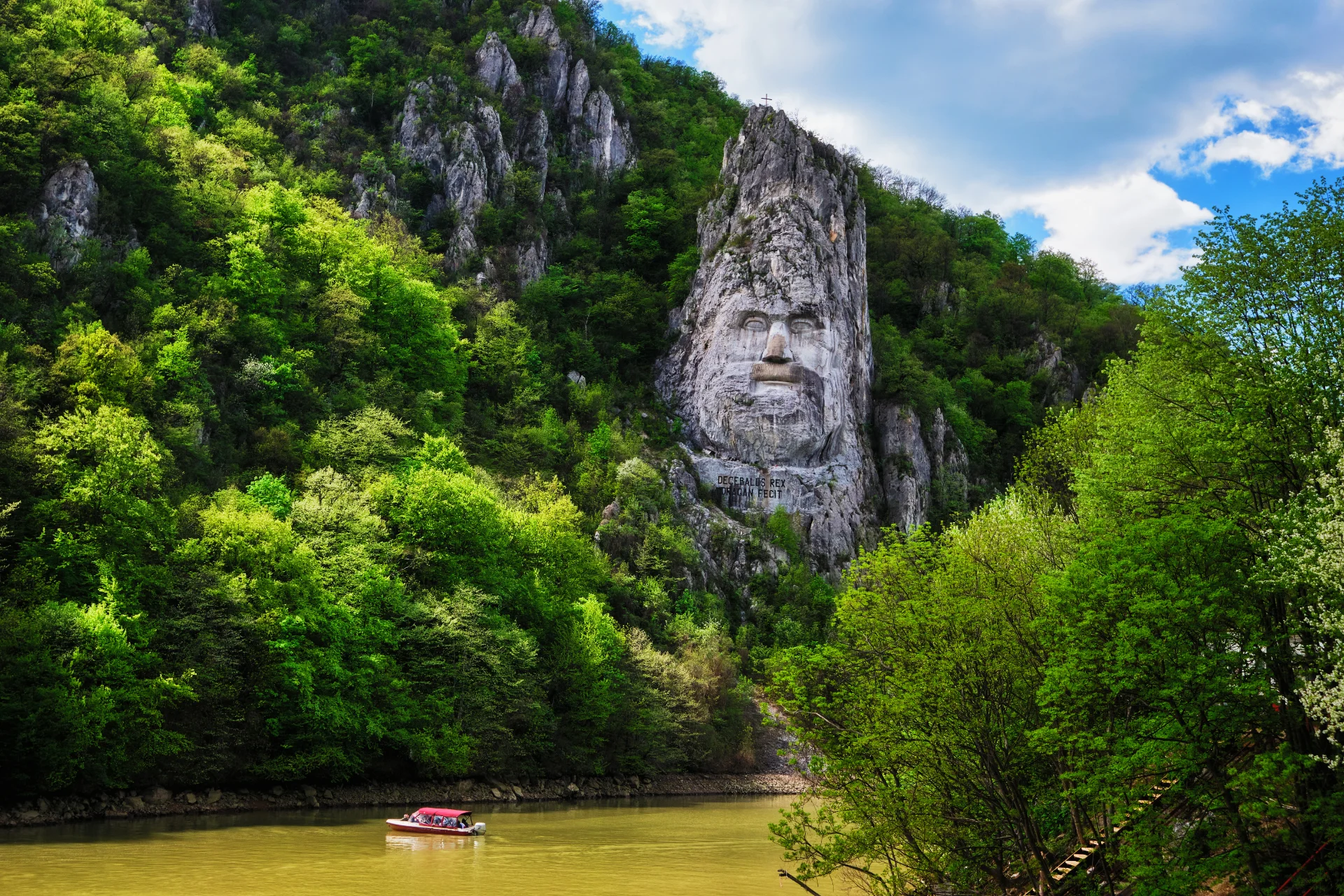
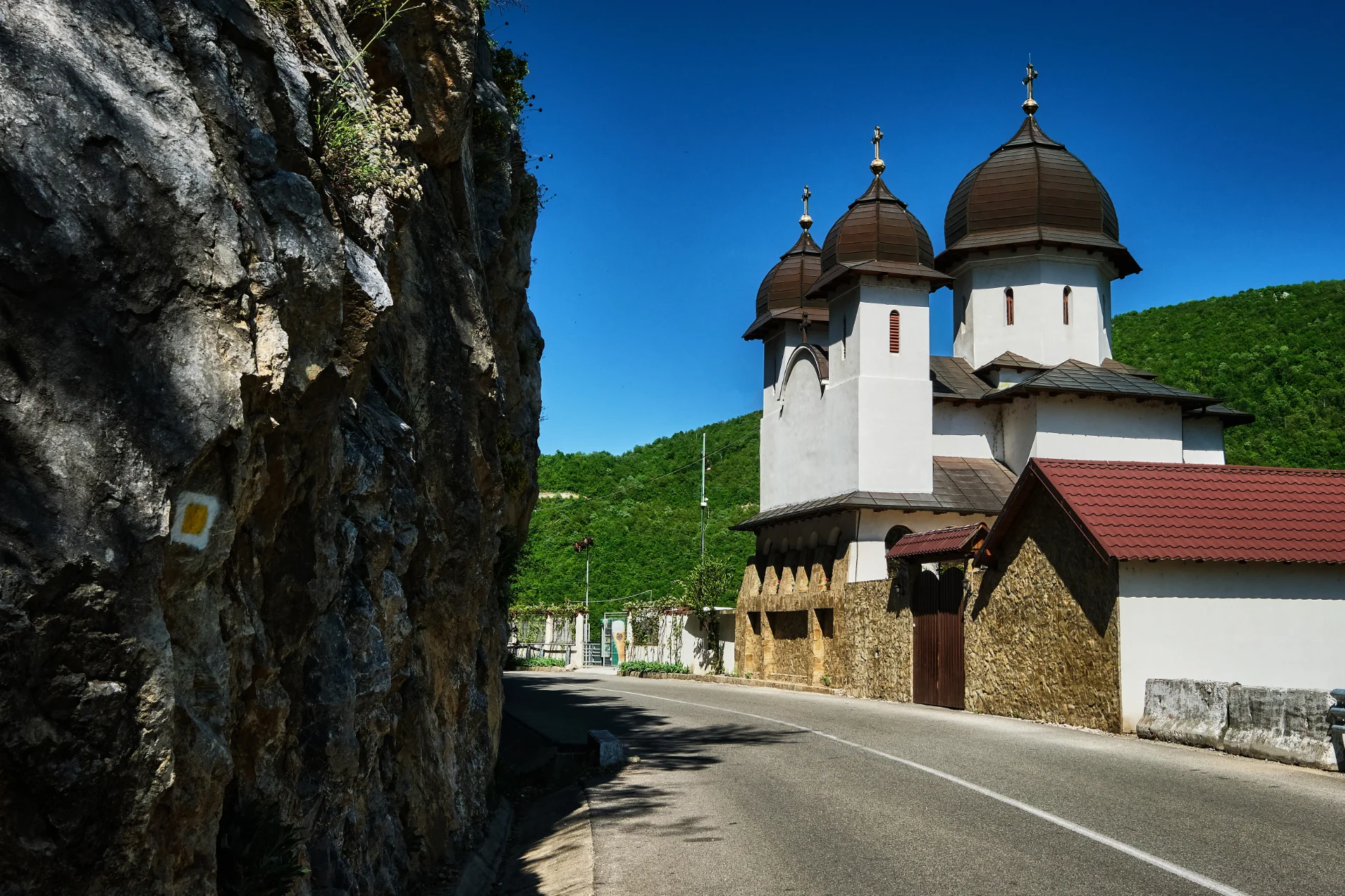
Right in the middle of the Small Boilers is the Mraconia Bay, and on the rock wall we are greeted by the Face of Decebalus, the last king of the Dacians, immortalized apparently looking towards the other bank of the Danube, from where the Roman invaders entered two millennia ago. It is considered the largest monumental stone sculpture in Europe, measuring 55 meters high and 25 meters long. On the other bank of the river there is an ancient monument known as the Tabula Traiana, a plaque commemorating the conquest of Dacia, part of a group of ten commanded by the Roman emperor and now covered by water. Just a few steps beyond the Mraconia Bay, we admire a small white church that seems to hang above the Danube and under the Ciucarul Mic peak. This is the Mraconia Monastery, built on the site of older settlements, dating back to the mid-15th century. Here was once a Danube observation point that guided ships through the dangerous waters of the boilers. The last monastery was covered by water, today’s one being built starting in 1993, in one of the most picturesque locations imaginable.
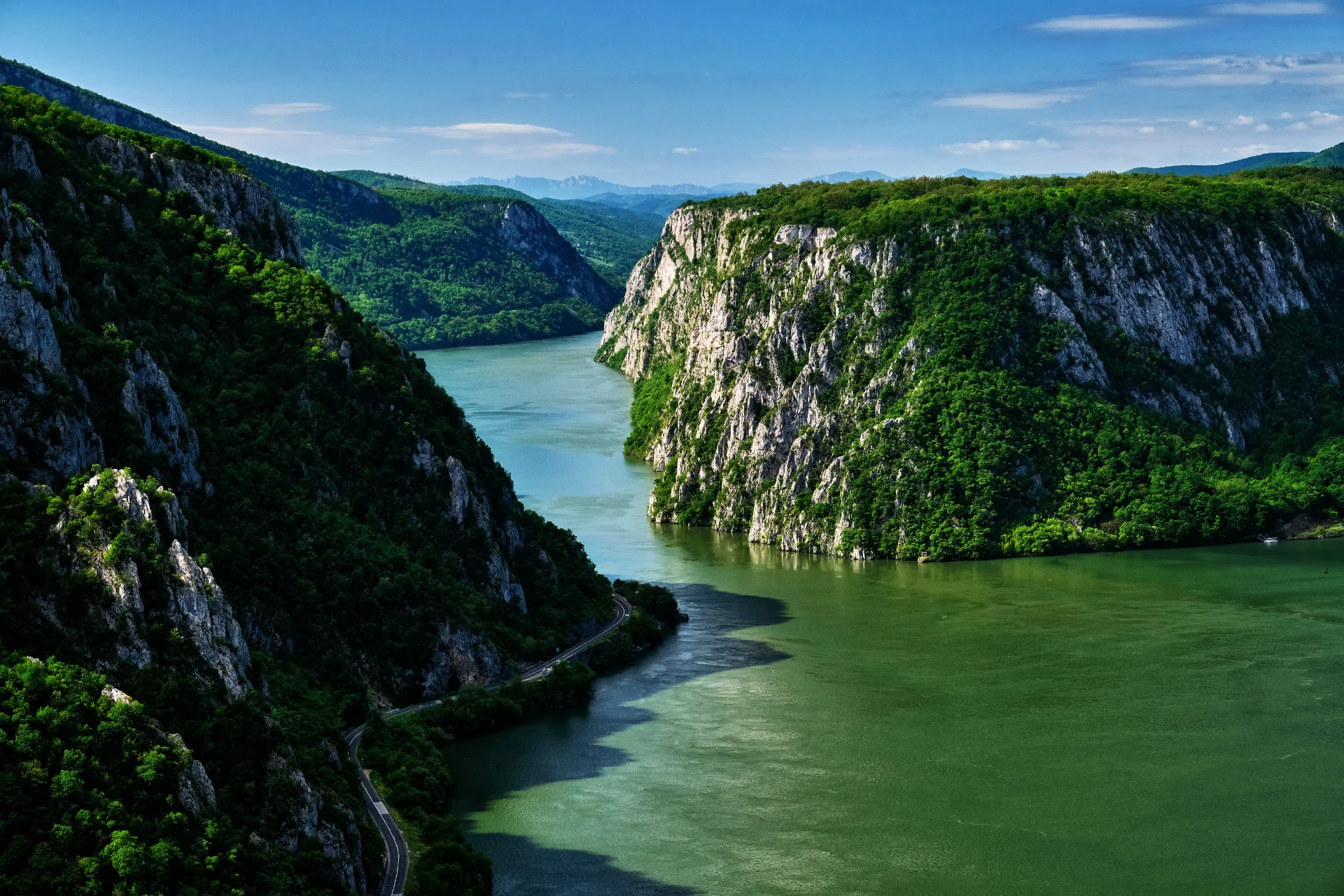
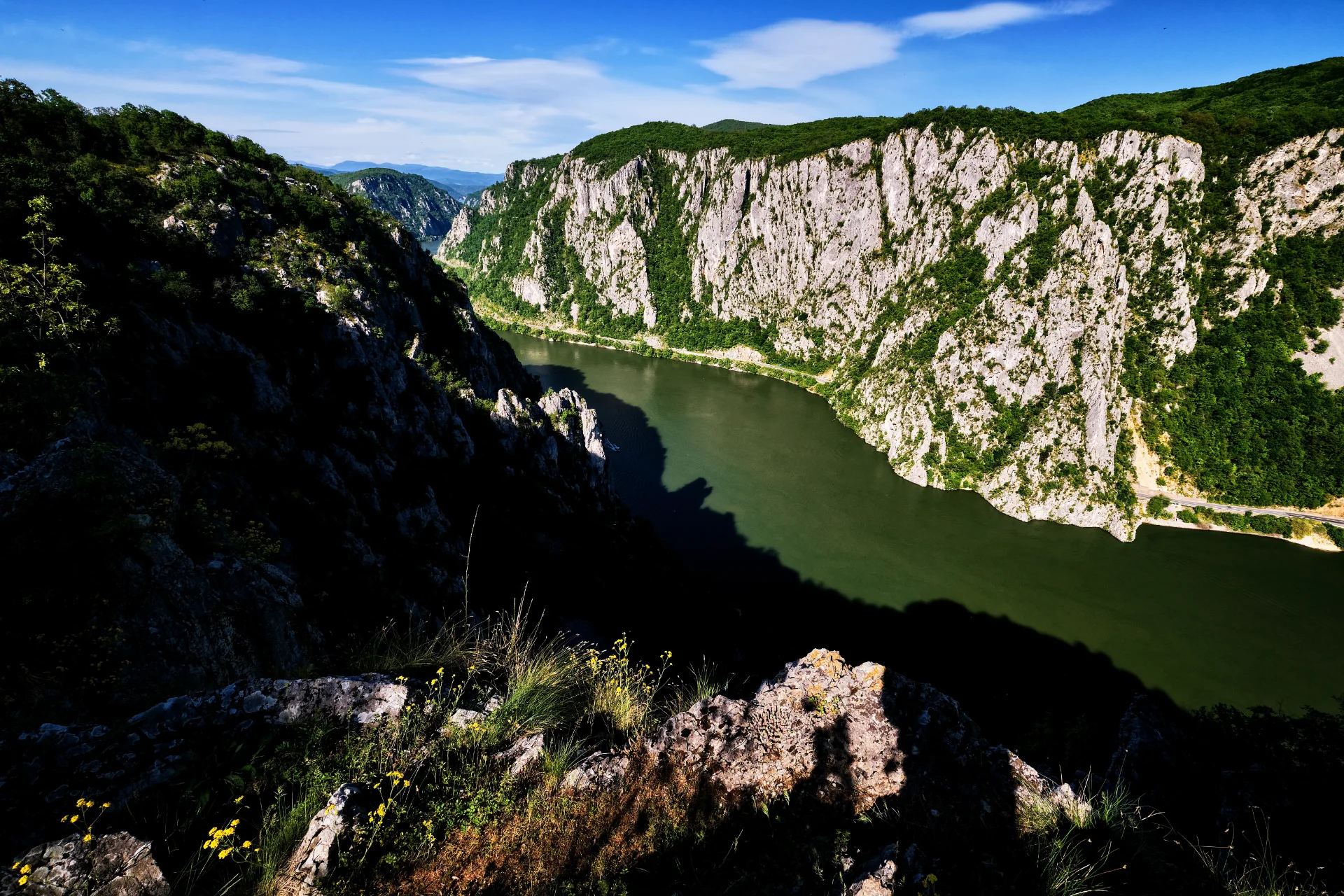
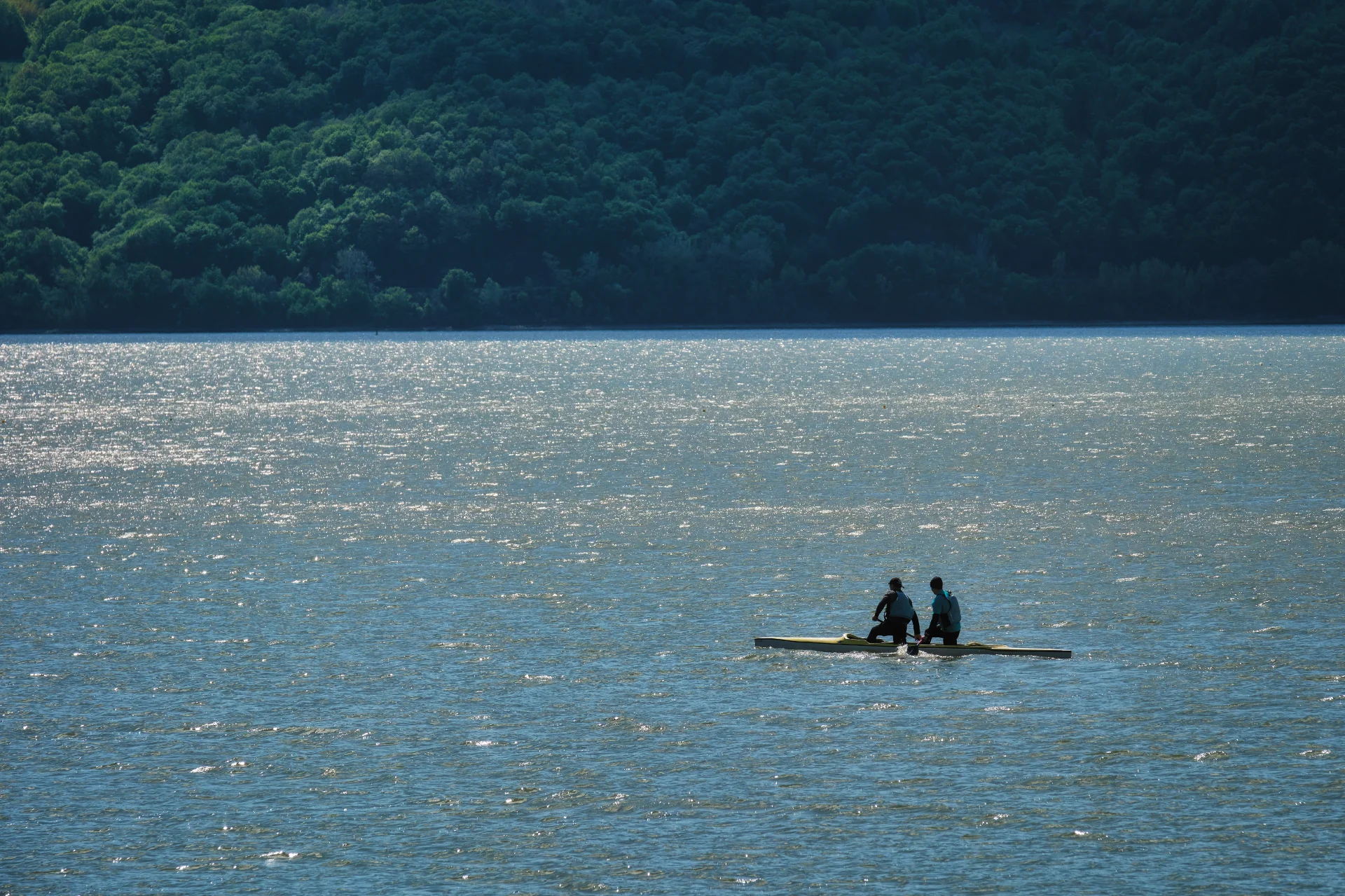
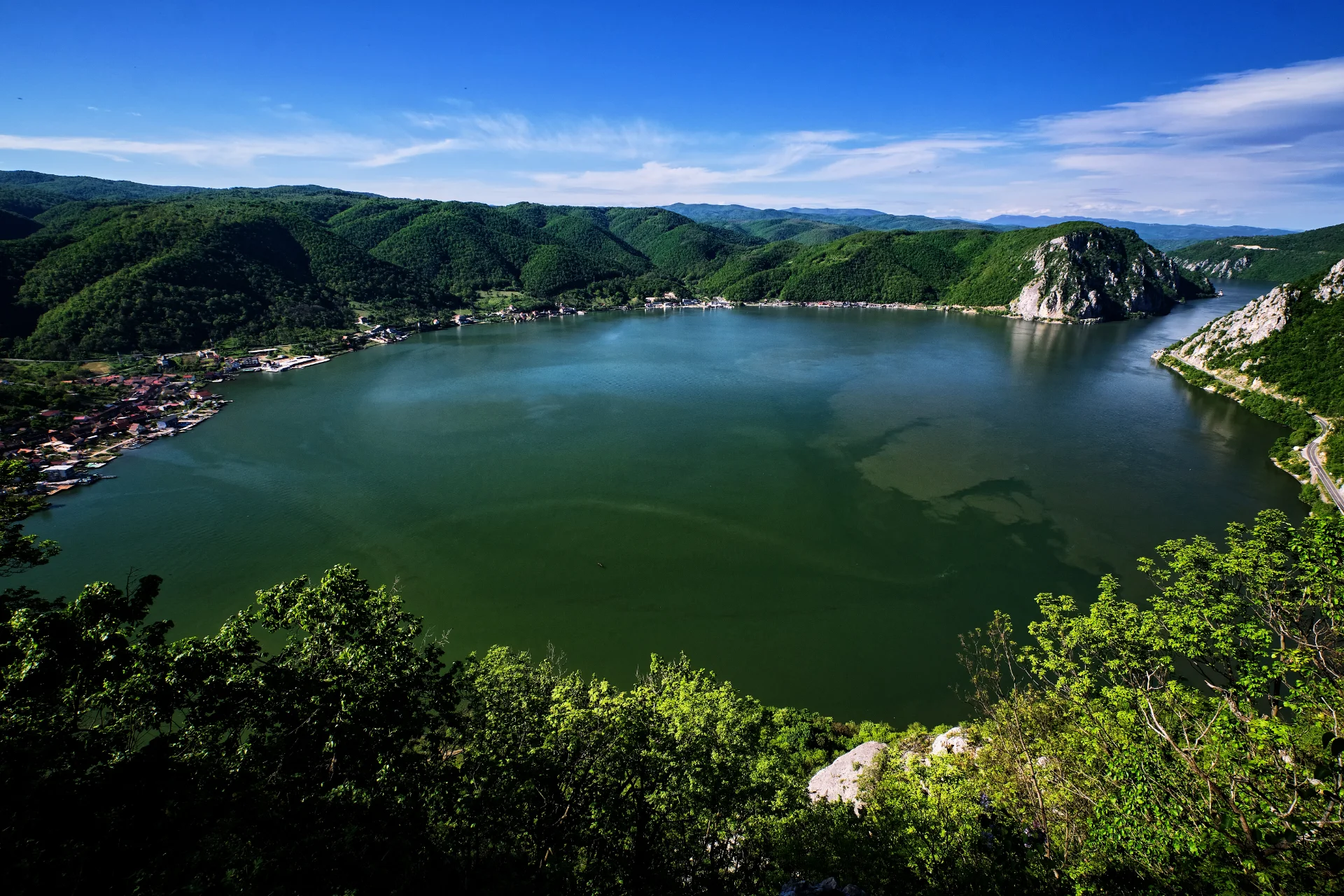
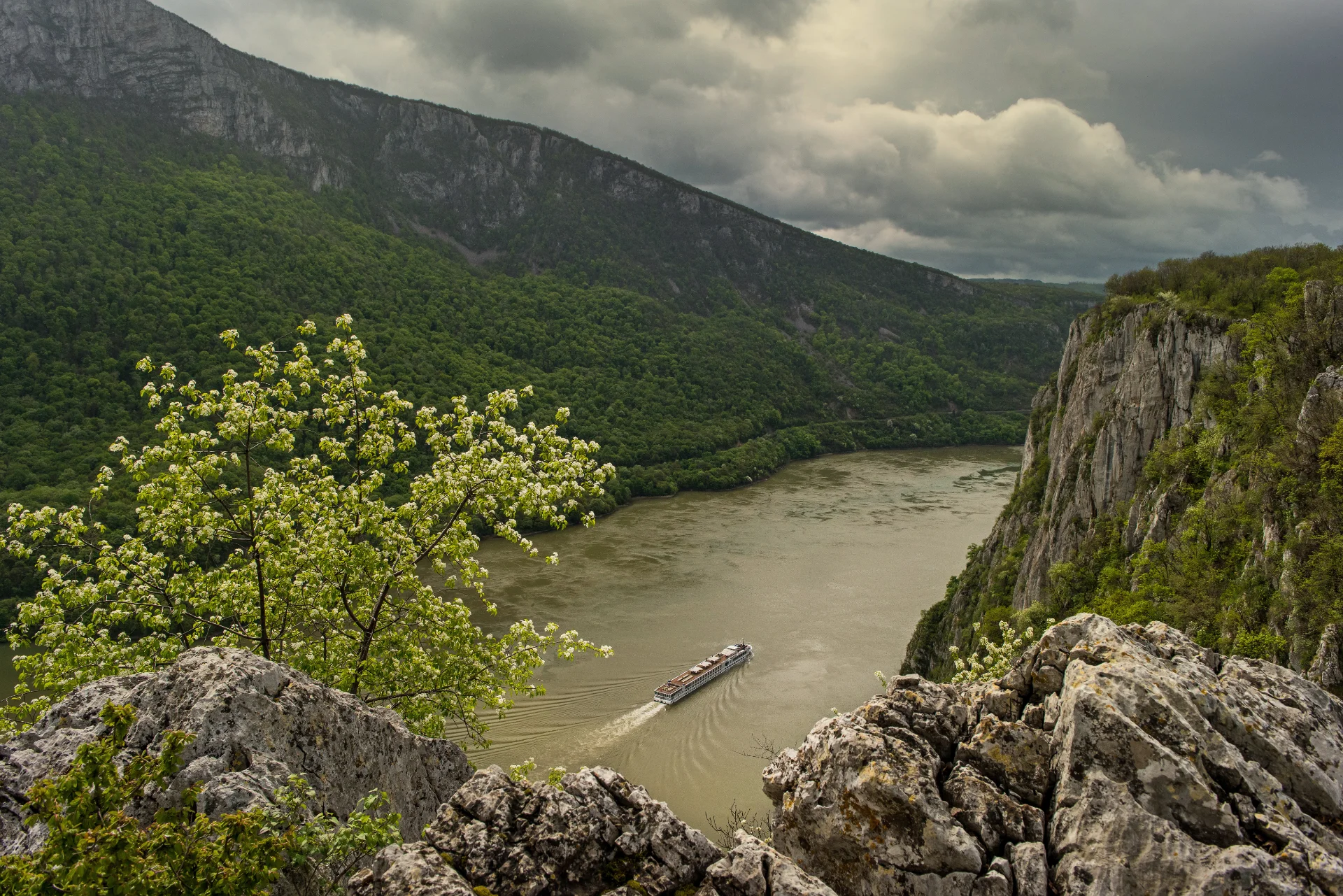
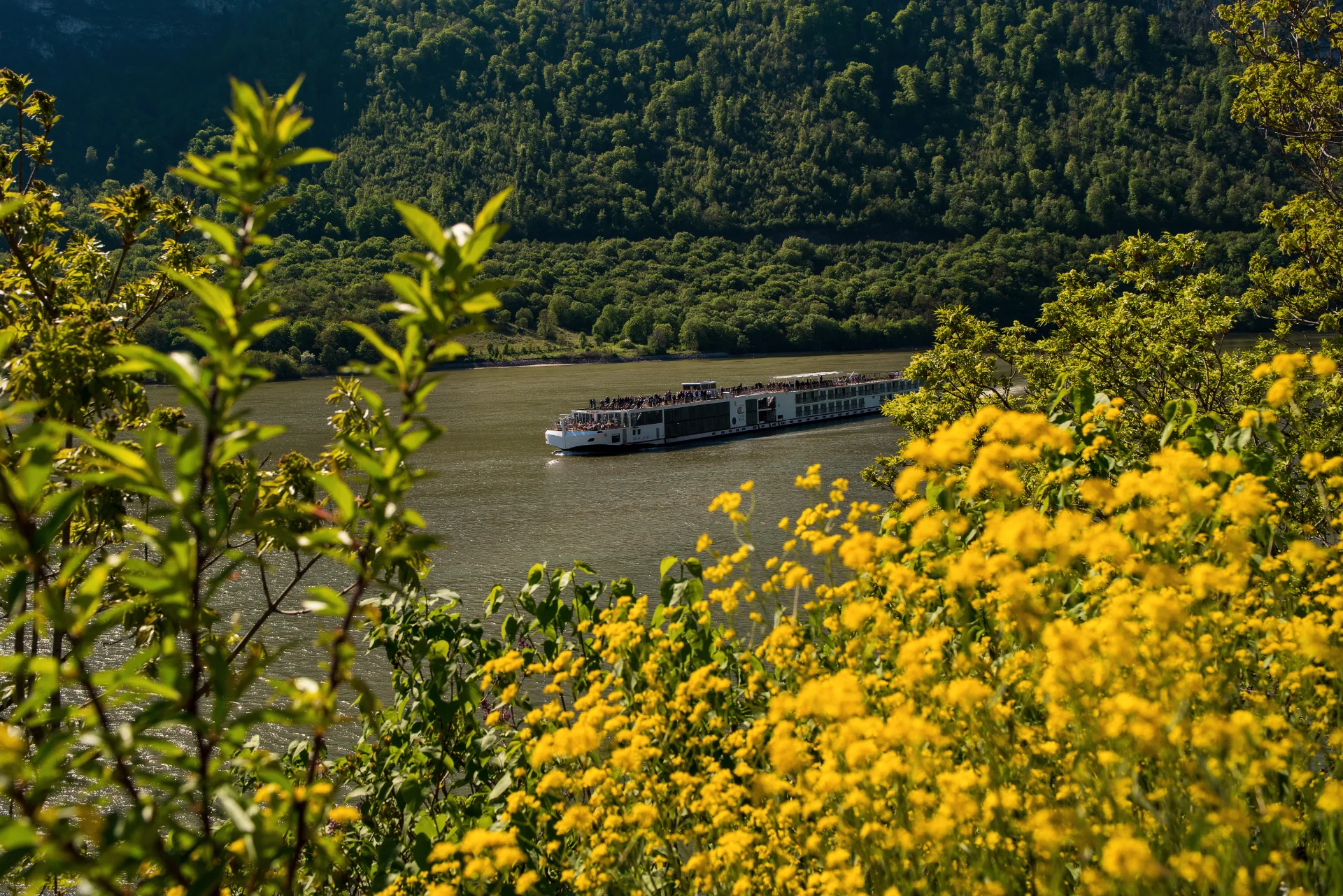
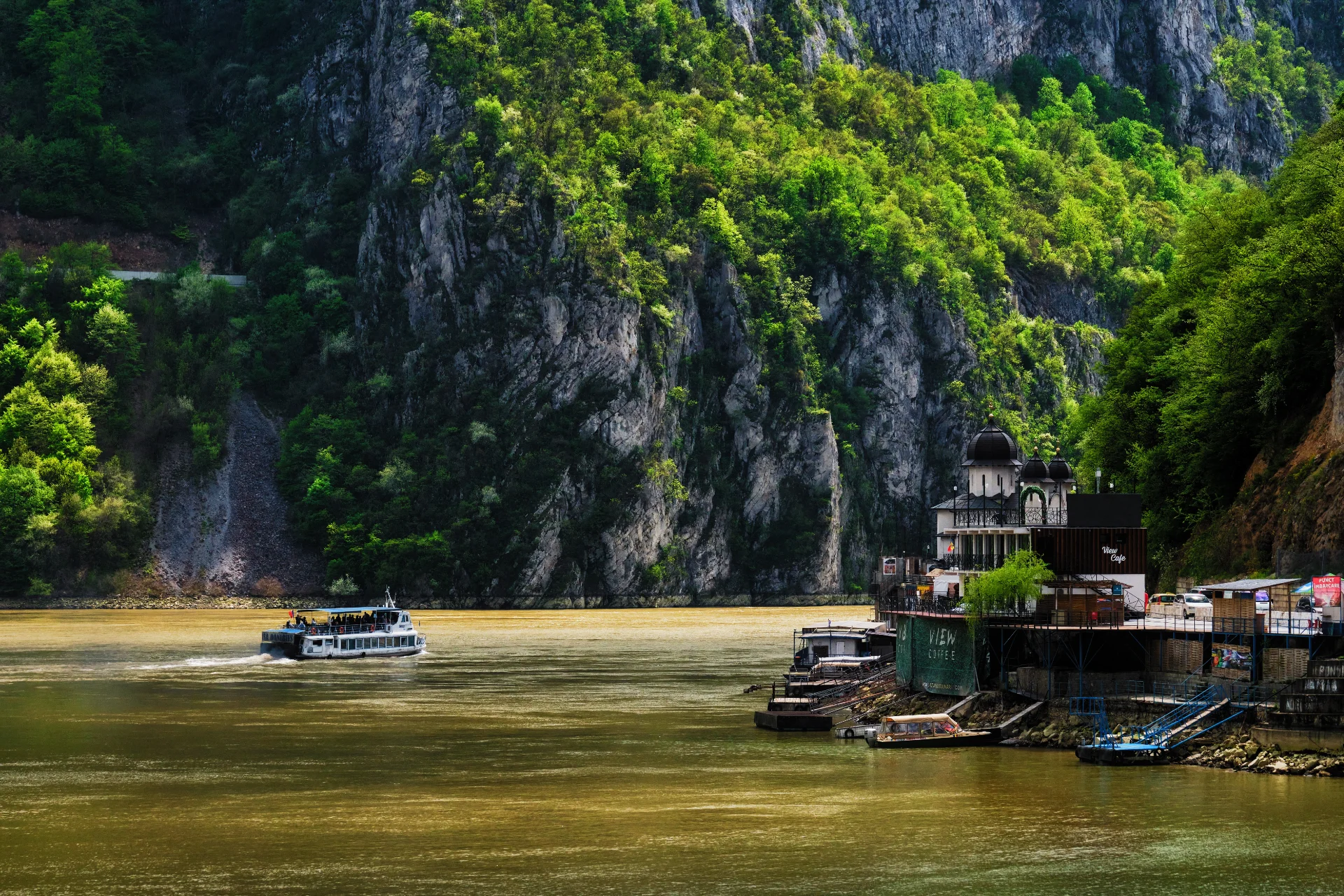
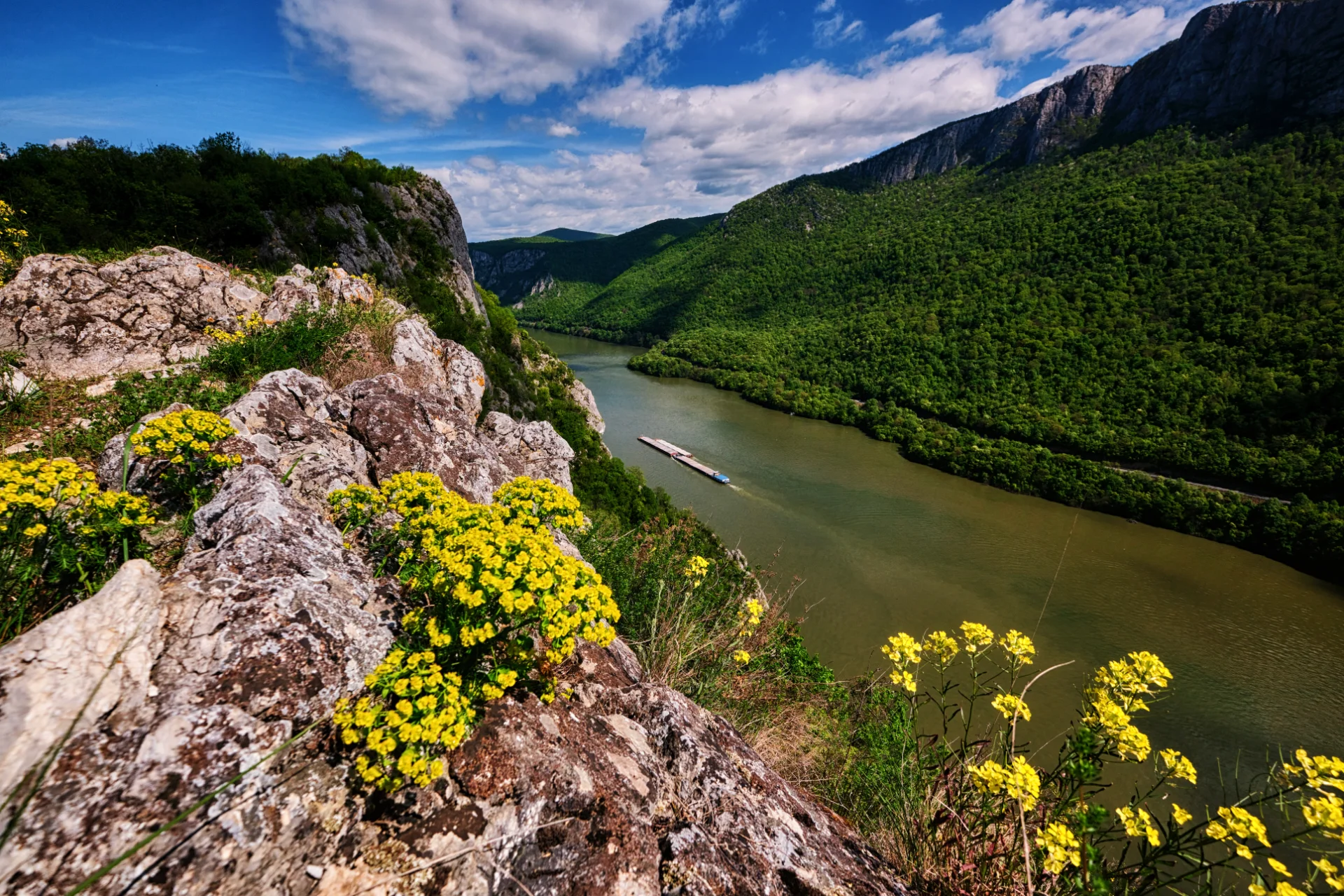
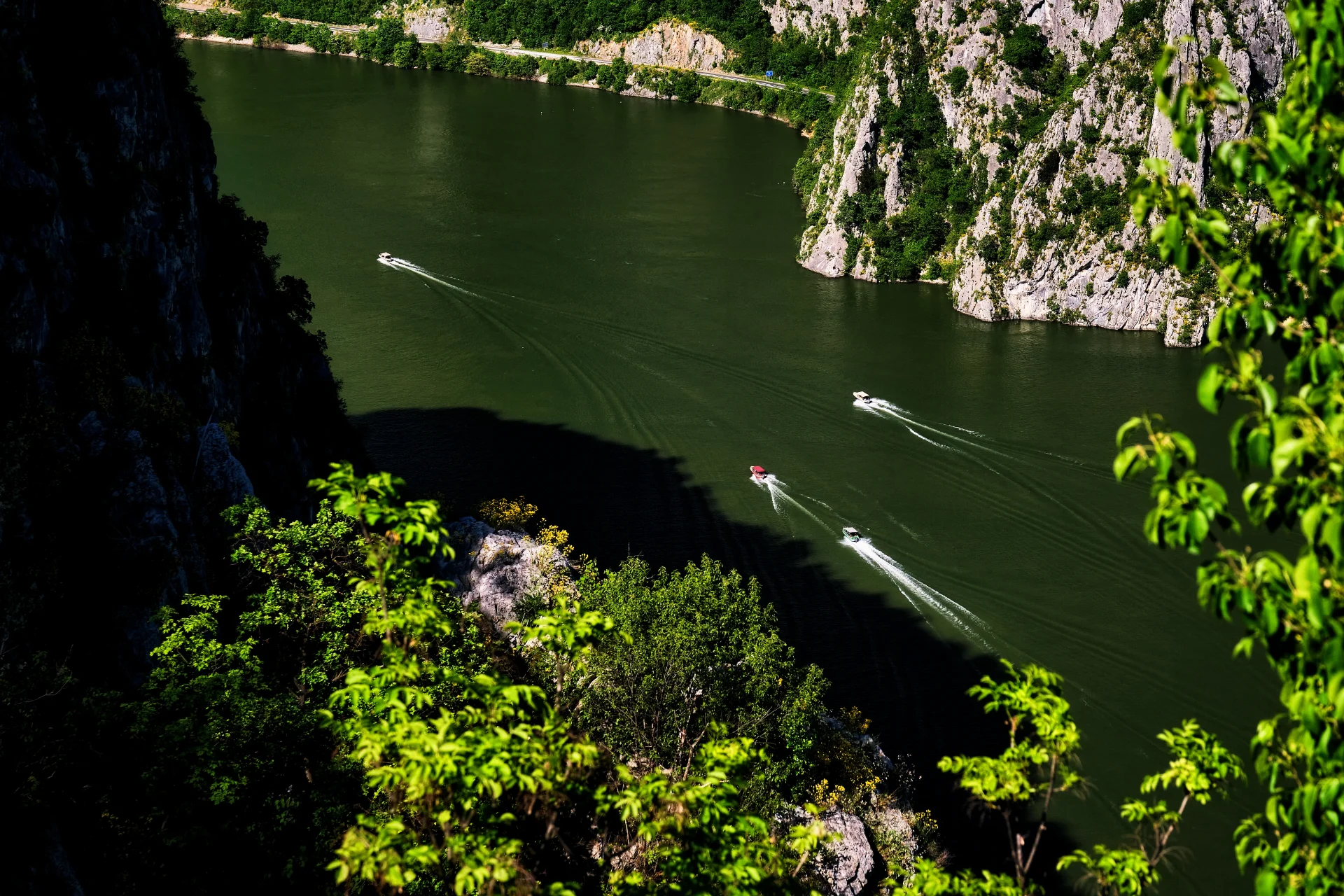
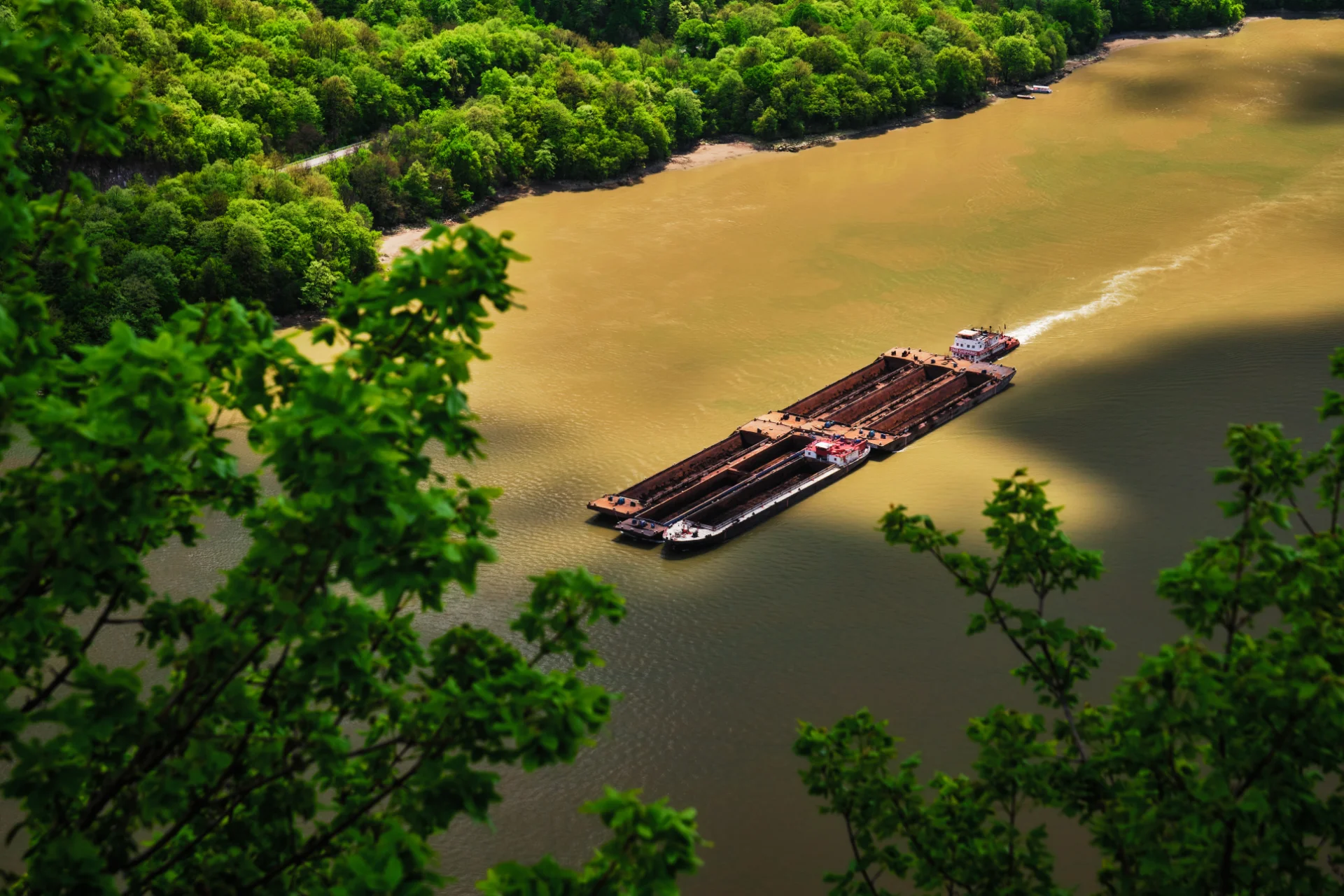
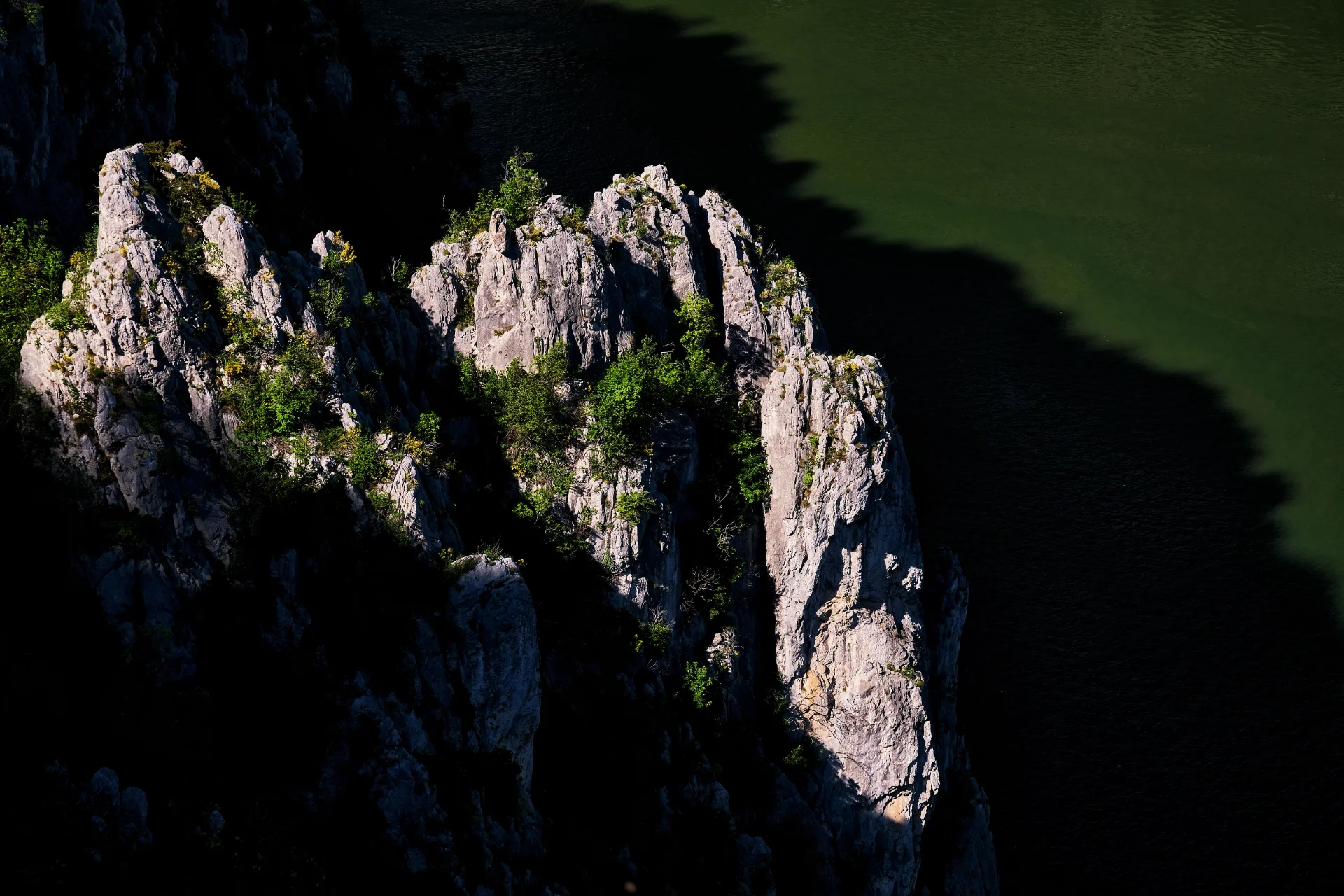
Passing through the village of Dubova, which stretches along the bay of the same name, we reach the Big Boilers of the Danube area, although the road bypasses the Ciucarul Mare massif. Here, the steep cliffs on both banks are 200-250 meters apart, while the river is up to 80 meters deep. We can discover the incredible beauty of this place if we climb the short but demanding route to the top of Ciucaru Mare, from where we have a captivating panorama of the region. The fascinating circuit allows us to explore the limestone ridge right on the edge of the abyss, always enveloped by the scent of wild lilac and the explosion of multicolored flowers. The emerald sheen of the water is often furrowed by the fast tourist boats that crowd towards the entrance to the caves below us. Every now and then, a cruise ship from other lands or long, loaded barges float slowly through the gates of the boilers, offering some clues to the overwhelming size of this natural space.
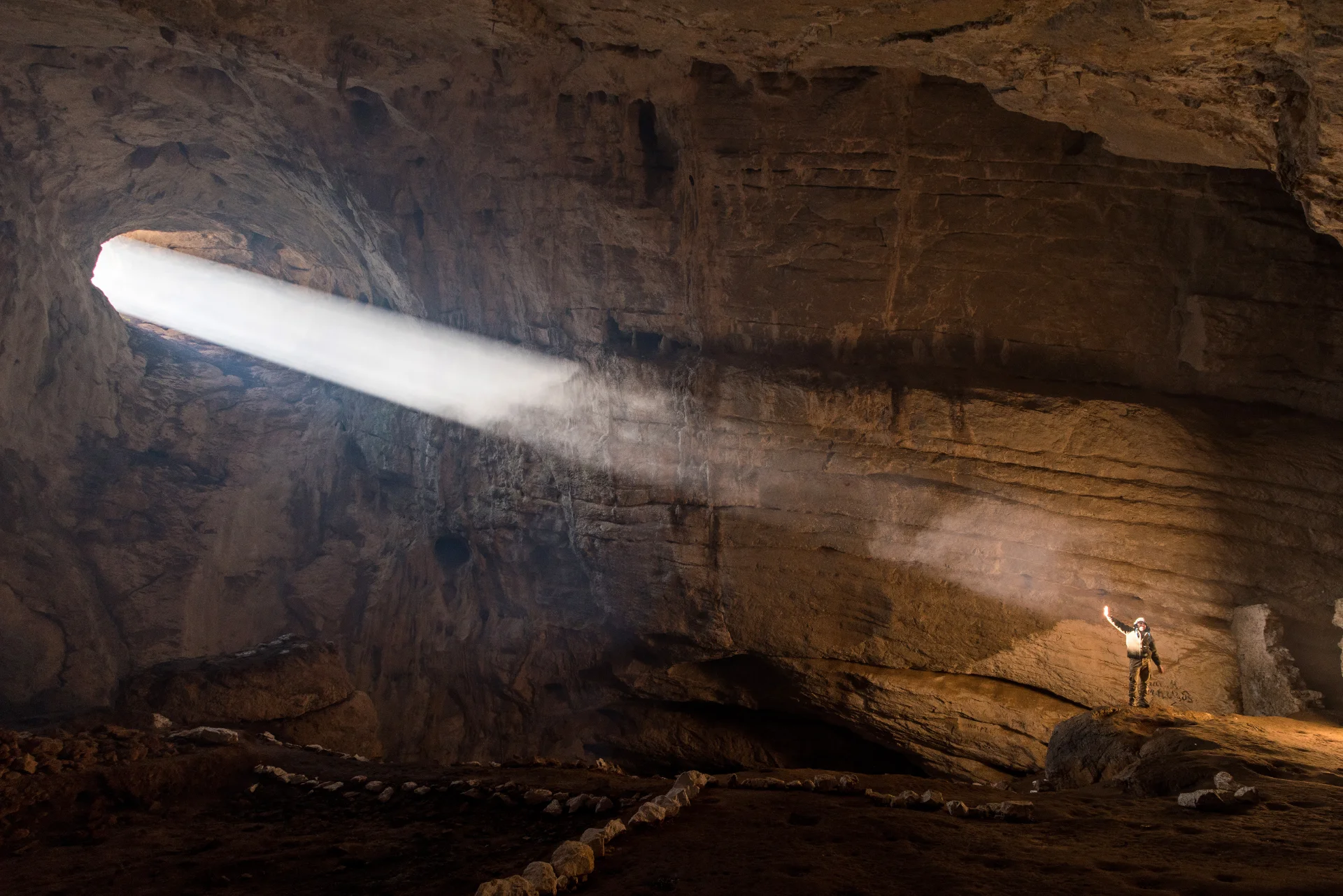
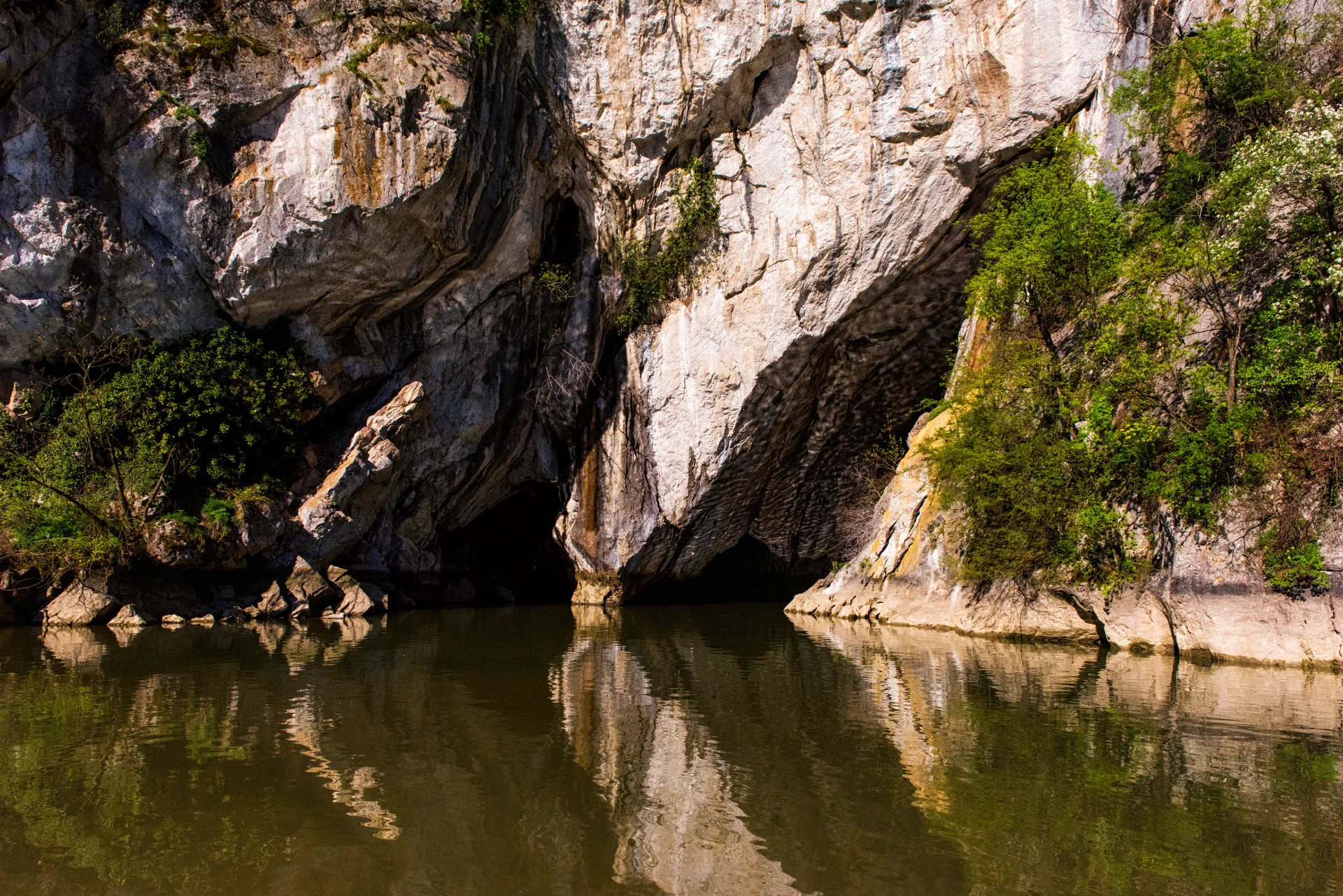
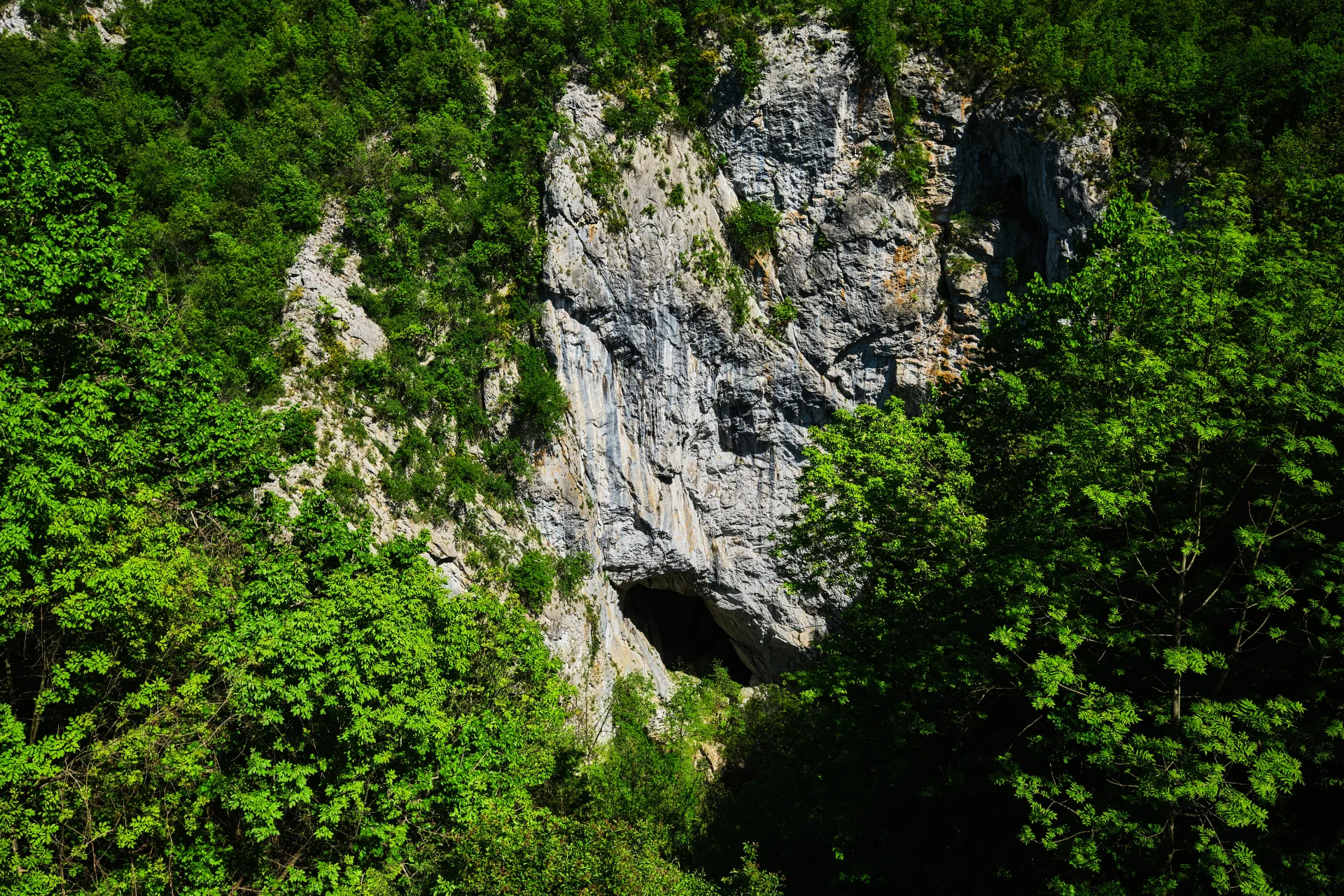
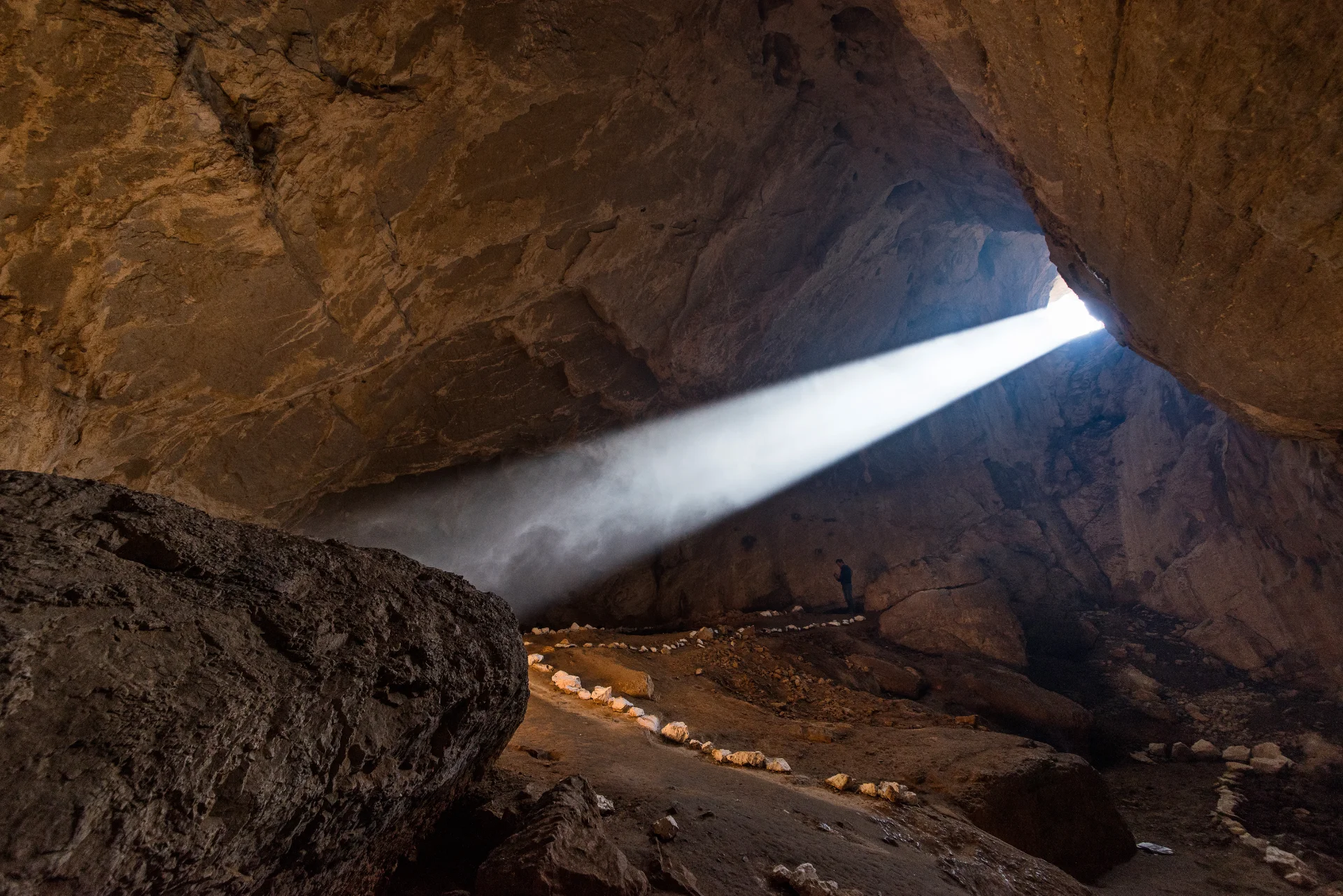
Inside the Ciucarul Mare mountain, there are also two fascinating caves that we can discover. Although quite small and accessible only by water, the Veterani Cave is one of the most spectacular in the country. A small opening in the ceiling allows the sun’s rays to penetrate inside at certain times of the day, creating an almost unreal atmosphere. The cave was known and inhabited since ancient times, being considered a sanctuary of the Dacian god Zalmoxis, after which it was used as a garrison by Austrian troops, with some ruins from those times remaining. Nearby, the Ponicova Cave has several entrances from the river and the road, but only experienced explorers can venture into its depths. There are several galleries on two levels, the lower one being underwater, and the upper one having some interesting speleological formations. From Orșova, Mraconia or Dubova we can participate in boat tours of the cauldron region, some including the entrance to these caves.
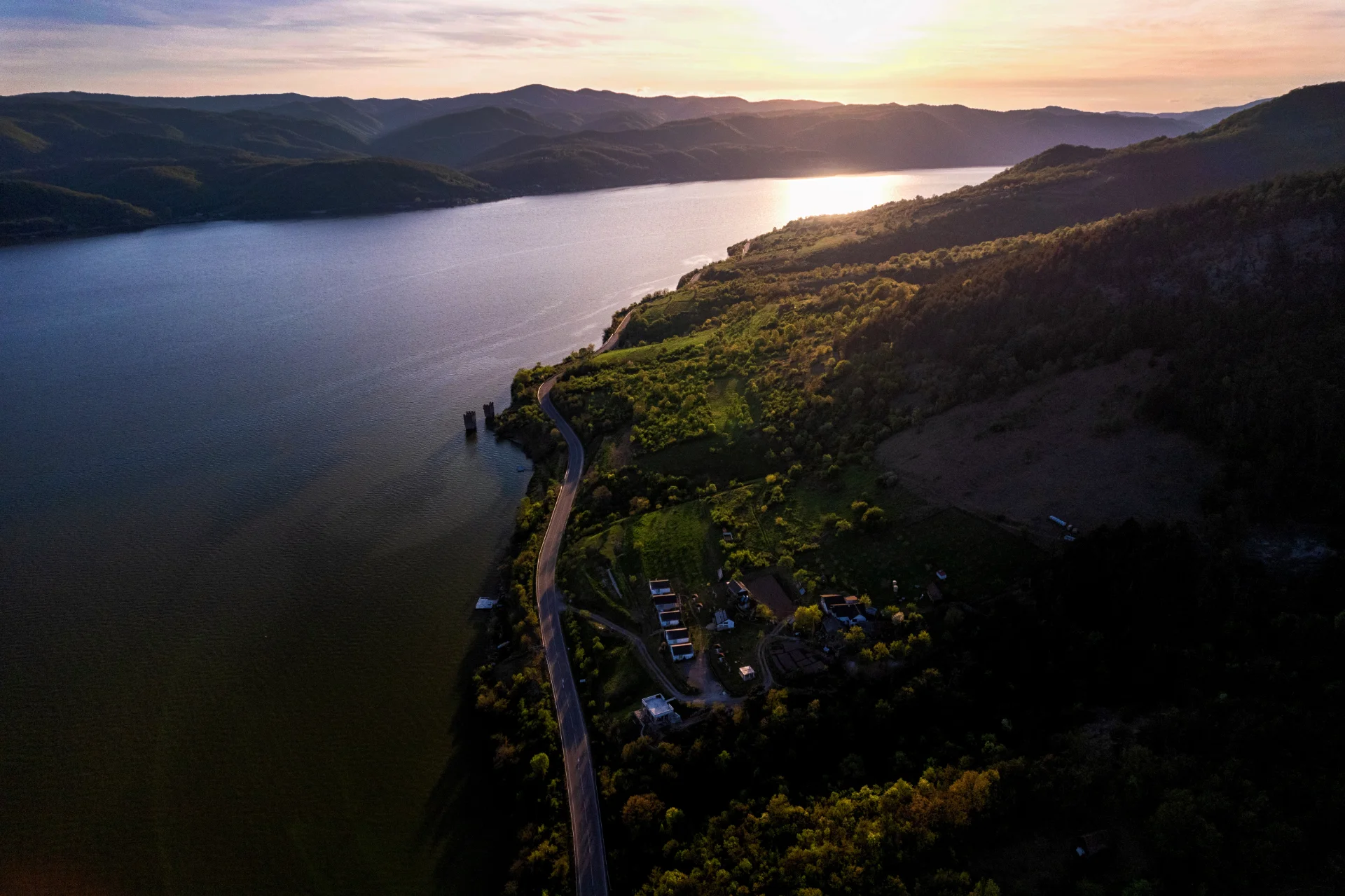
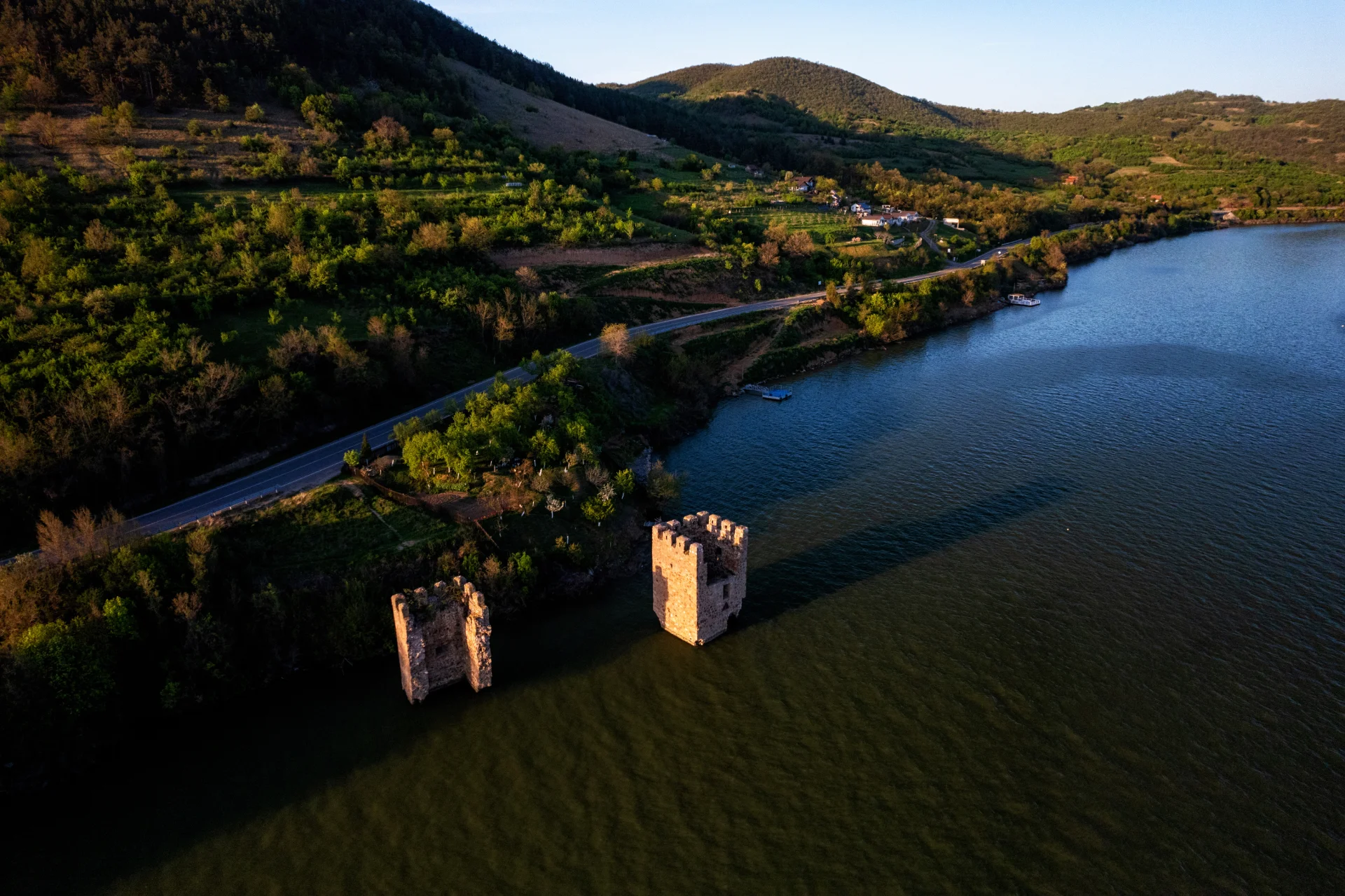
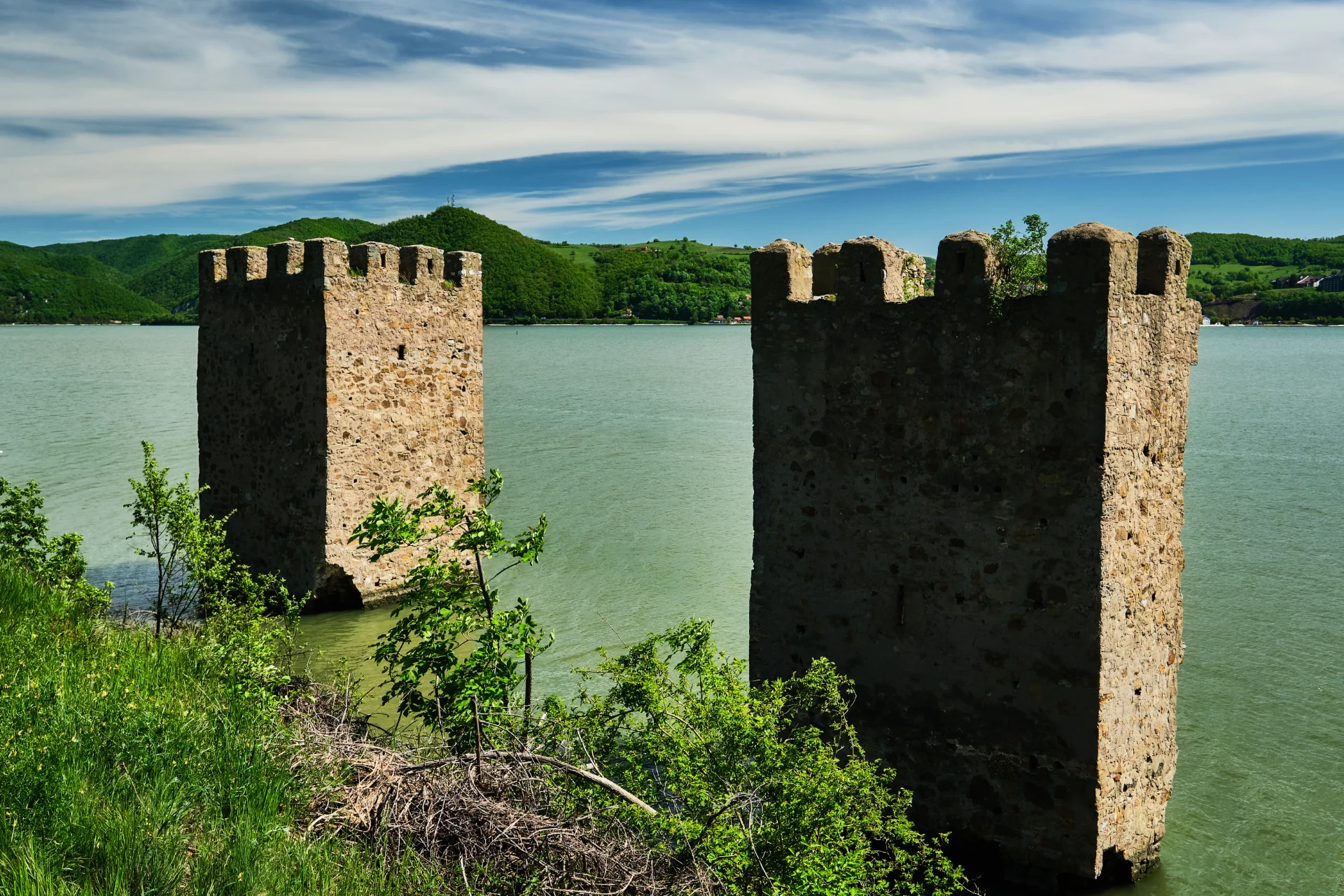
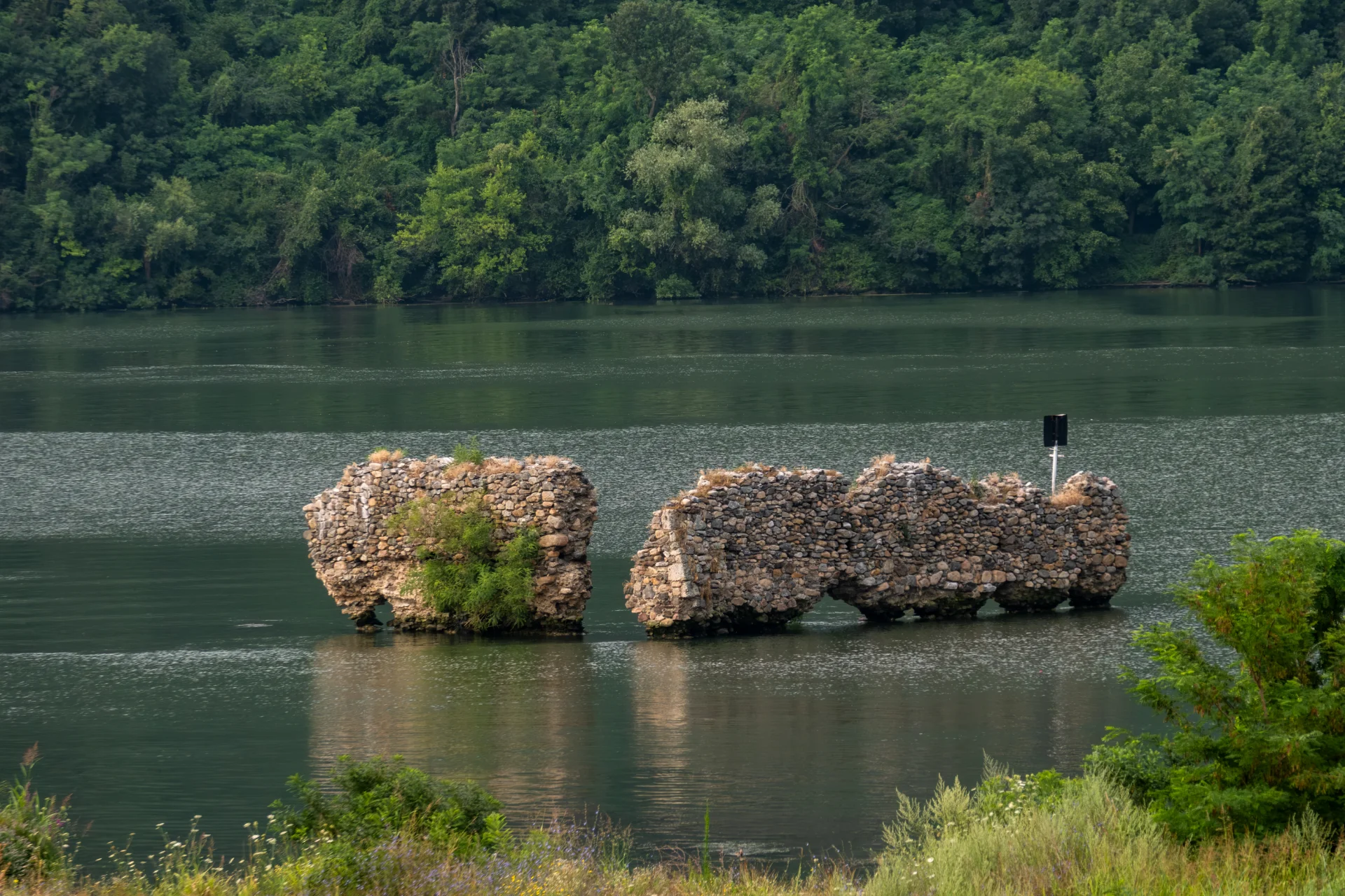
Passing beyond these spectacular places, the landscape becomes quieter and the peaks gentler, while the road leads us to other charming destinations, some rising right on the banks of the Danube, others hidden in lesser-known valleys. Almost 20 kilometers south of Dubova, we pass by an unusual monument, with two ruined towers emerging from the waters of the Danube near the road. The Trikule fortress was built in the 14th or 15th centuries to defend the strategic border area. A little further on, a massive peak that stands out in the landscape some distance from the road attracts our attention. It is actually a volcanic neck over 750 meters high and known as Trescovăț Ridge, where we can reach if we follow a fascinating hiking route, which offers unique views of the Danube defile.
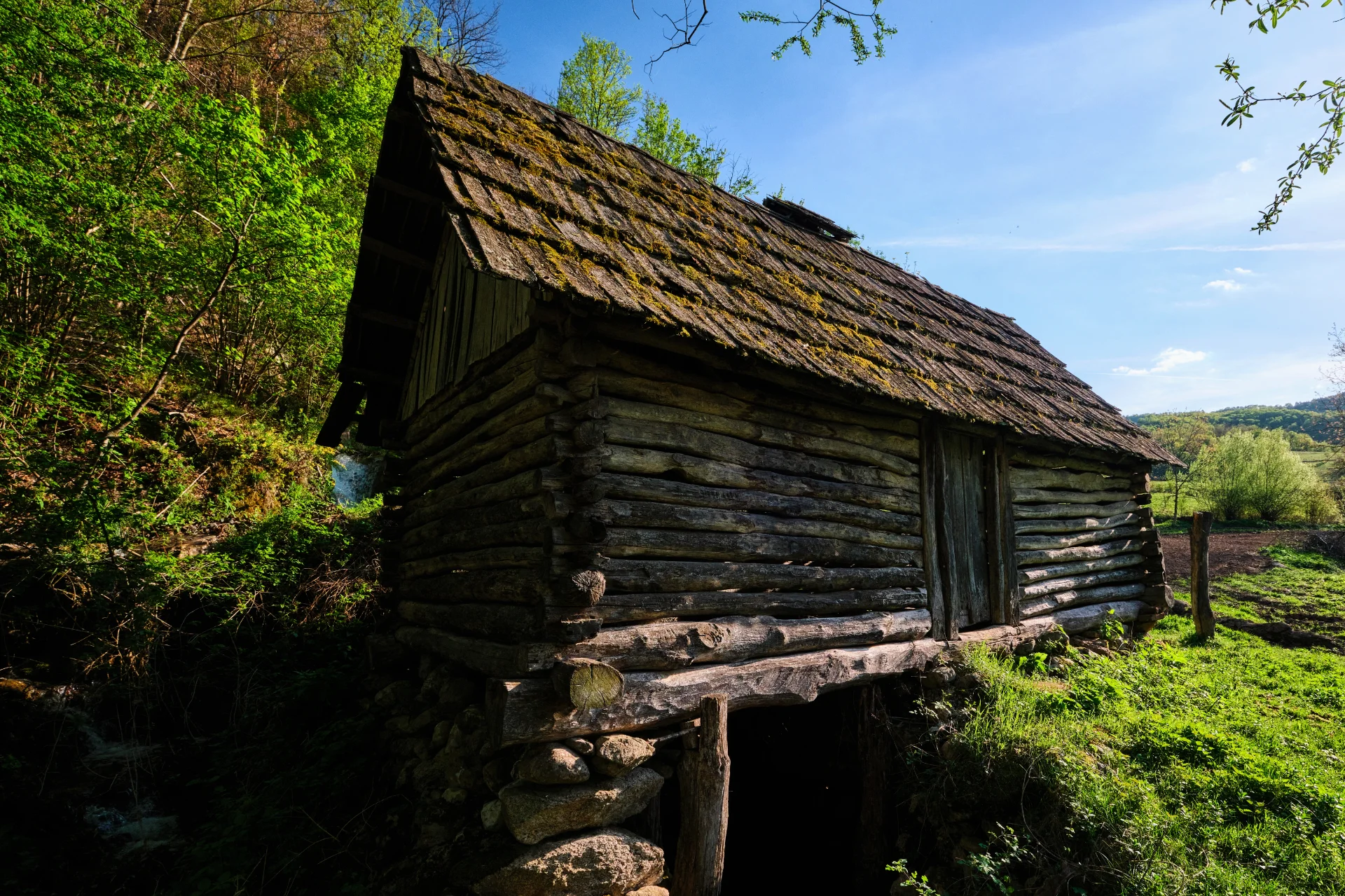
A lesser-known place in these lands is a valley hidden between low mountains and shrouded in the legends of a princess whose name it reminds us of. The Sirinia Valley welcomes us with its sublime beauty, alternating wider sections with sunny meadows, with real gorges dug by the river that sometimes forms small charming waterfalls. At the entrance to the valley, the ruins of an old Christian monastery were discovered, while at the end of the road is the small village of Bigăr. This and several others in the Locvei mountains (Eibenthal, Gârnic, Ravensca, Sfânta Elena) were founded at the beginning of the 19th century by immigrants from the Czech Republic and still preserve their authentic culture. Less known and quite difficult to find, the old water mills from Sichevița are spread along the small valleys that descend from the mountain, the villages here being considered the origin of the Romanians from the Danube Defile. If in the past there were 30 such mills, today we can only find 10 of them, forming a true open-air museum, where we can admire the ingenious mechanisms and unique traditional architecture.
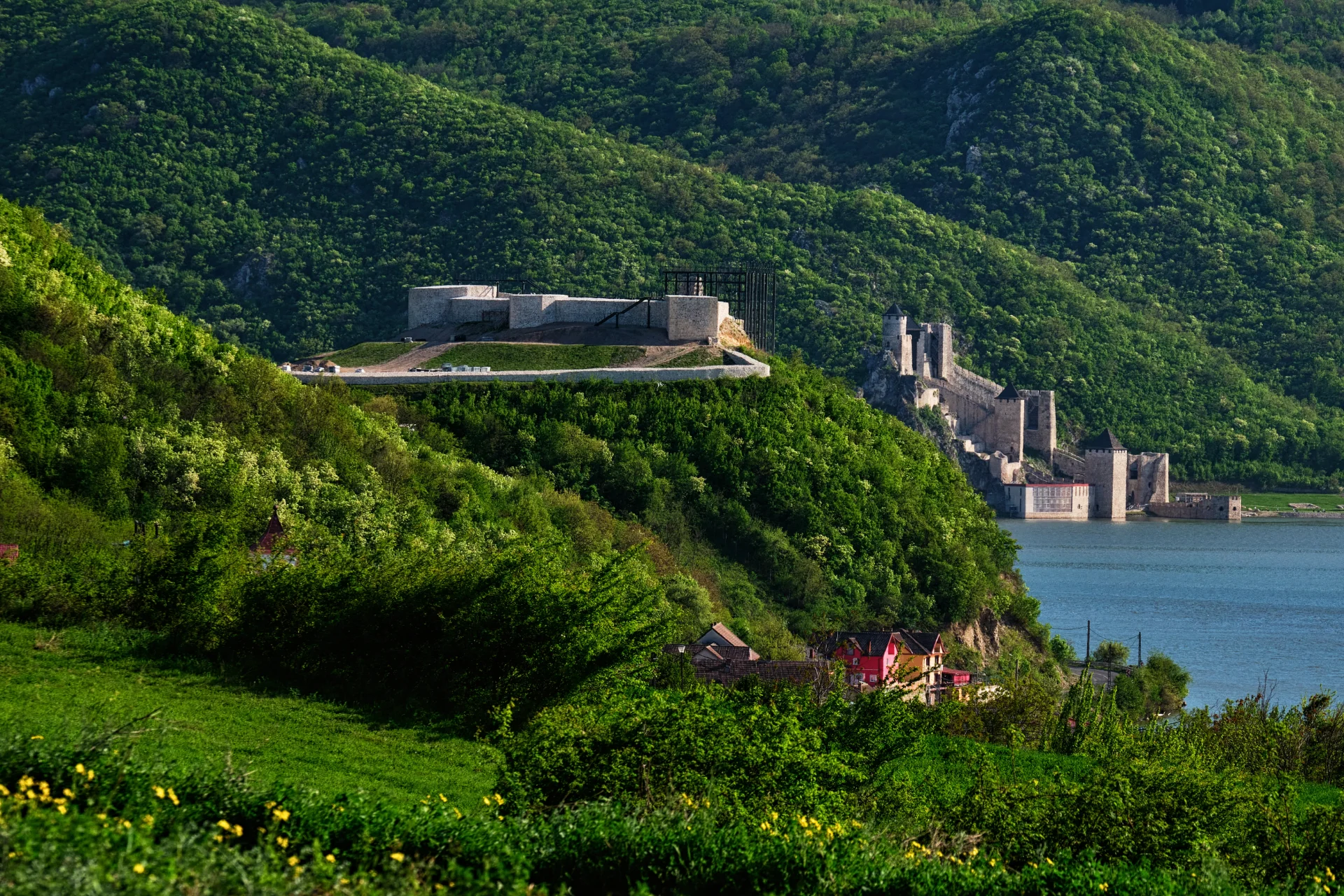
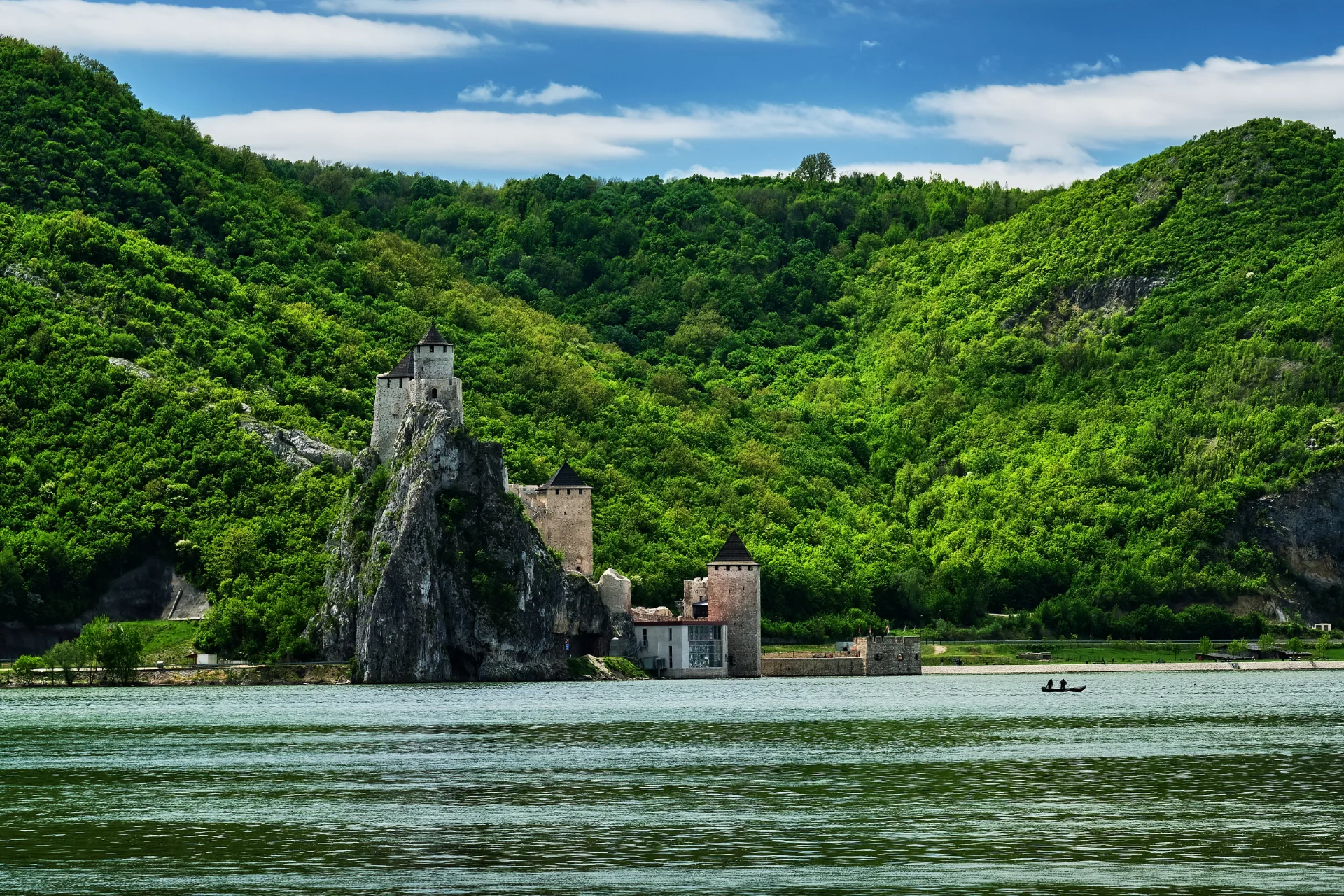
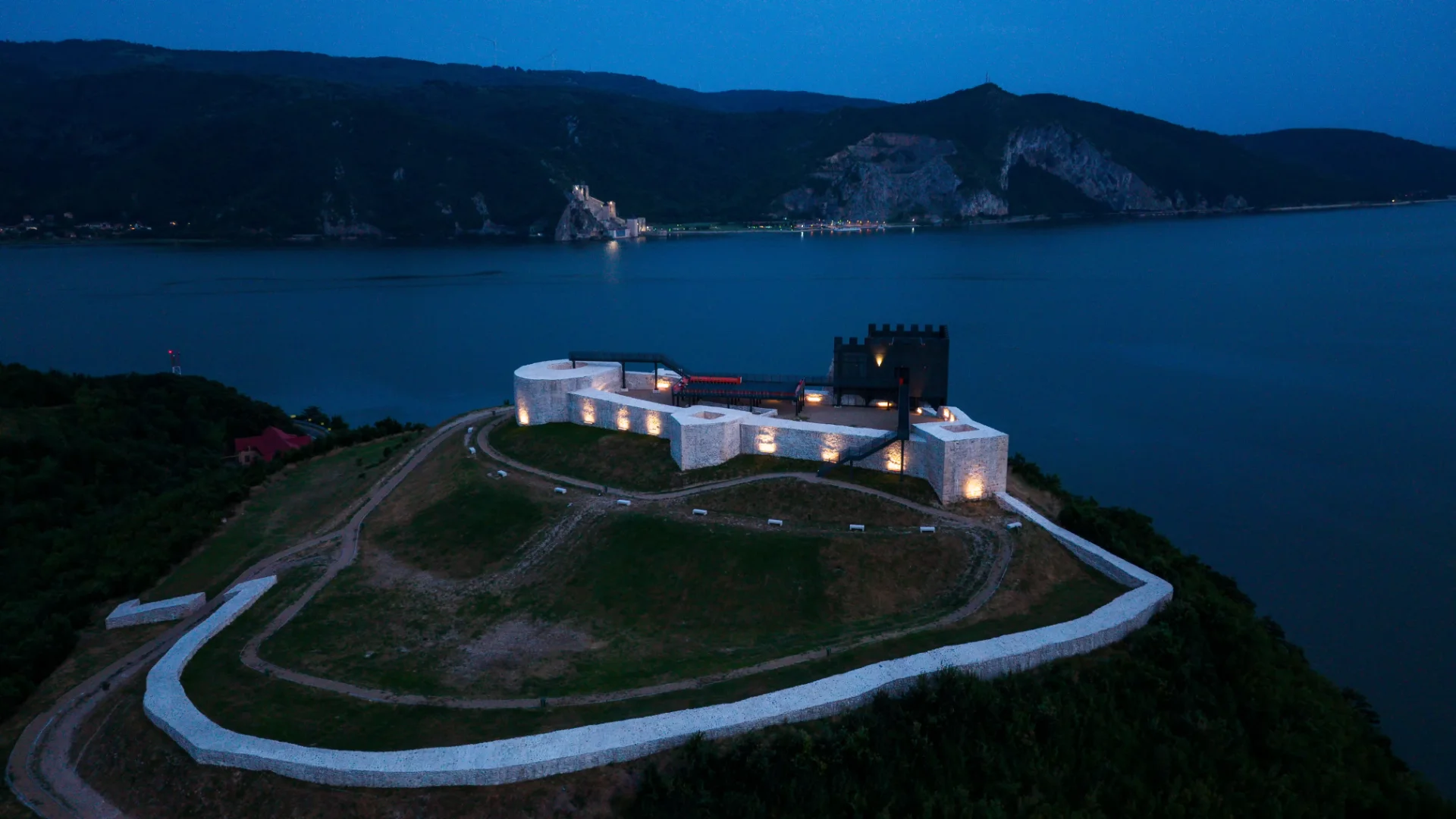
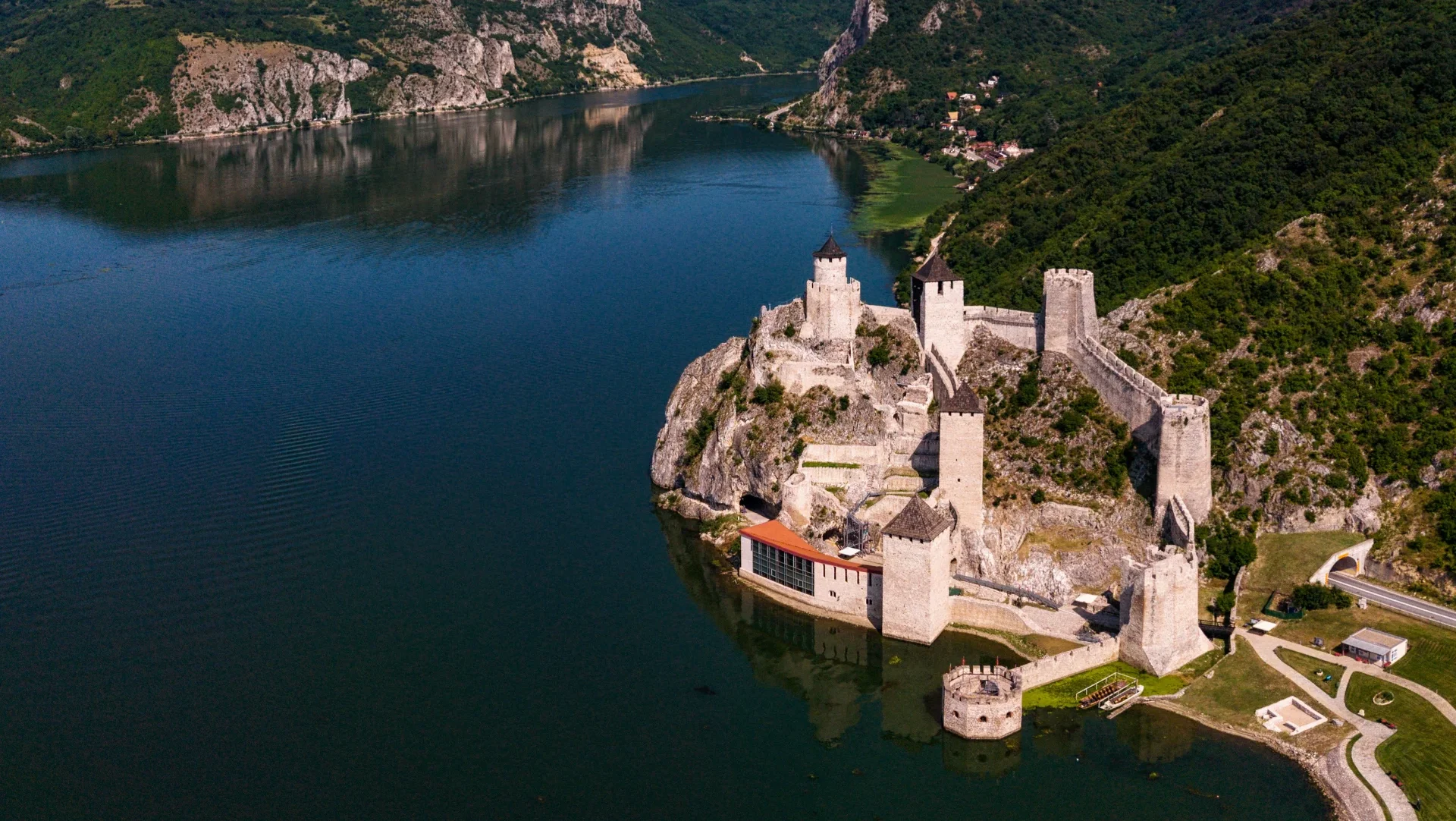
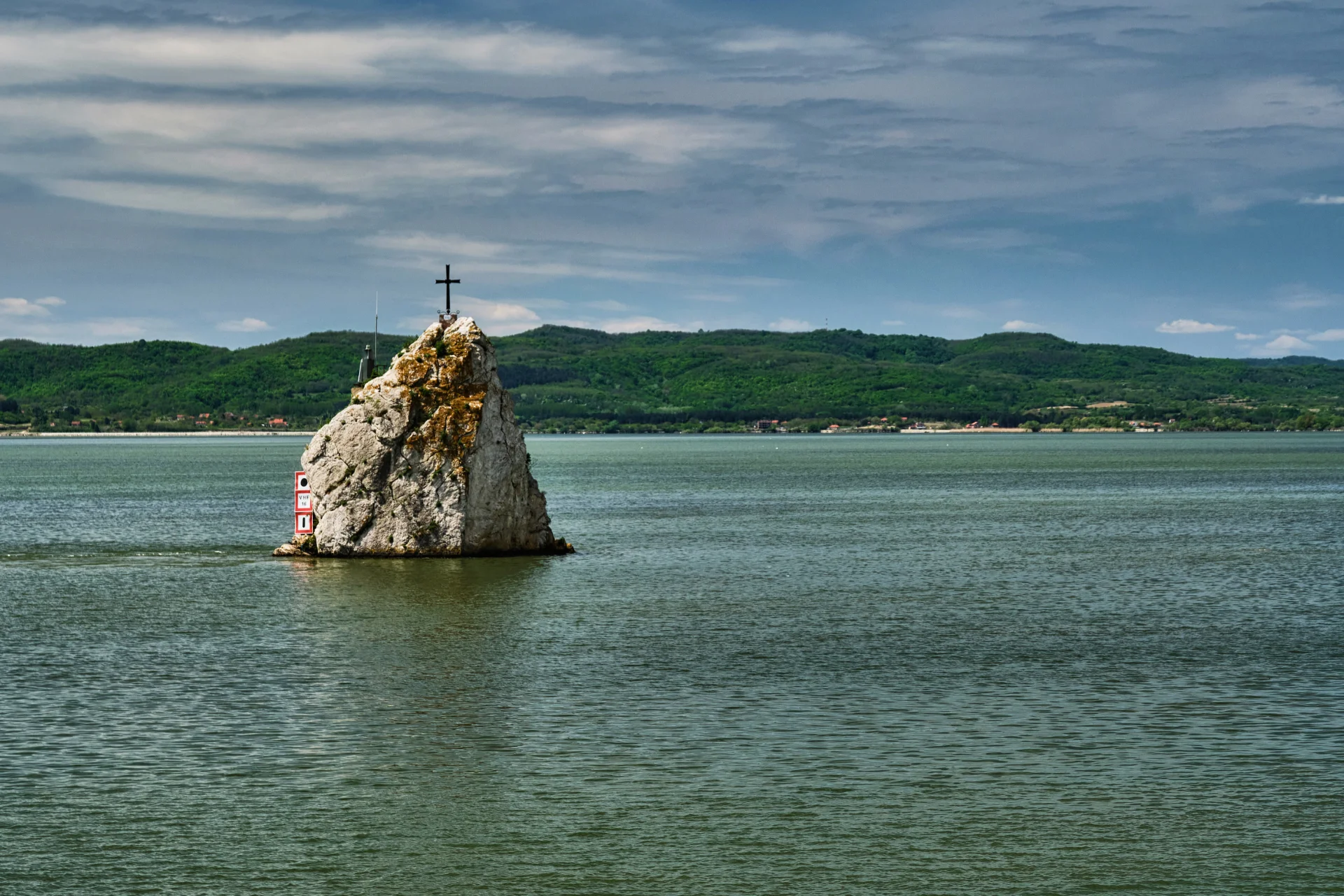
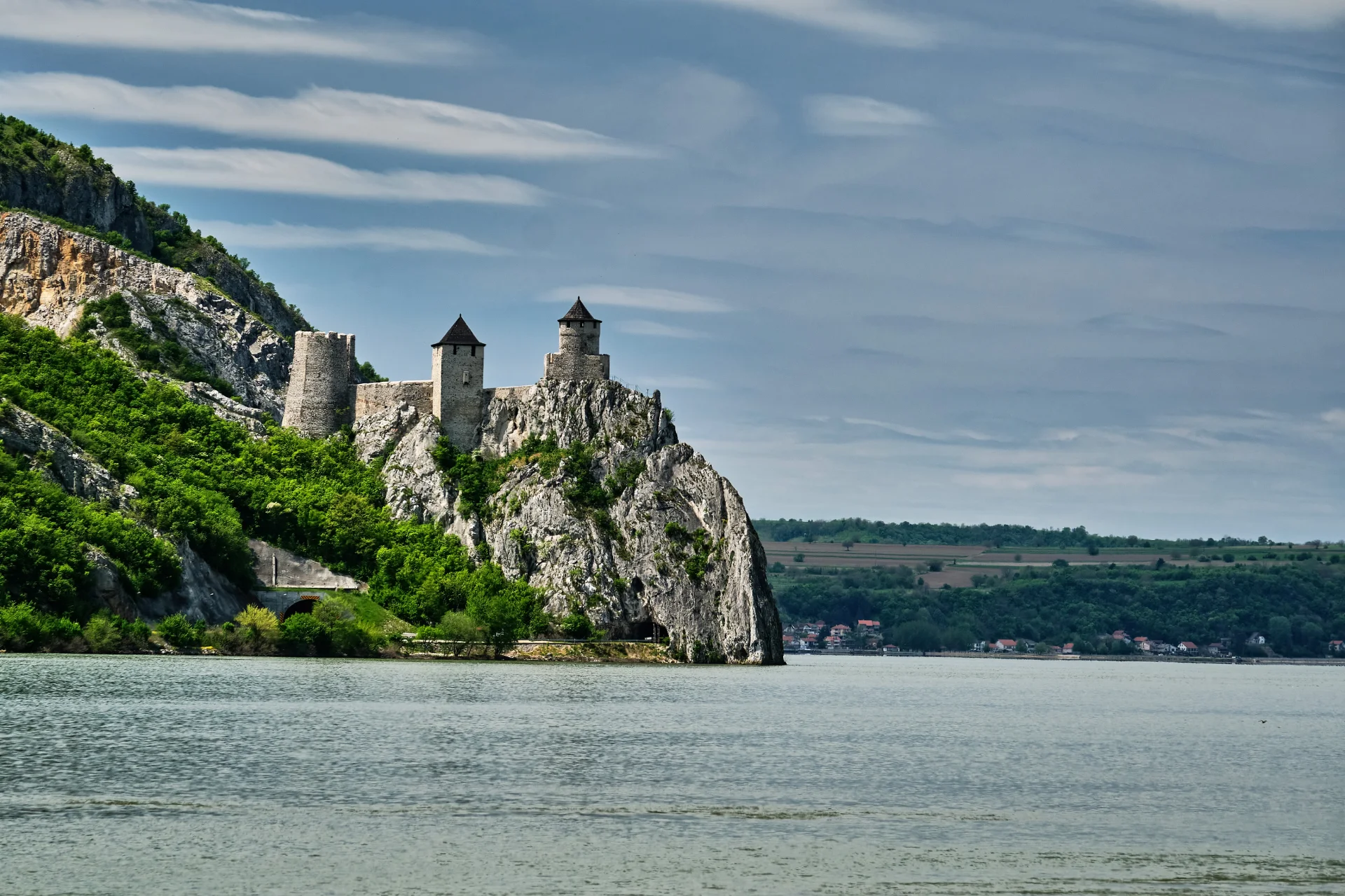
A short distance upstream, before the village of Coronini, the point where the Defile or the Danube begins is marked by two fortresses that have guarded the river banks for hundreds of years. On the Serbian bank, the imposing Golubac fortress is completely renovated today, with its ten towers rising above the rock that sometimes resembles an elephant drinking from the Danube. It had a particularly tumultuous past, withstanding over 120 attacks throughout its history. On the Romanian bank, there used to be the Ladislaus Fortress, which laied in ruins for a long time and whose grandeur has been brought back to life in recent years. Nearby, we can also admire a lonely rock that pierces the waters of the Danube, 7 meters high and known as Baba Caia. Beyond Coronini, the valley widens a lot, and in the middle of the river we see a large stretch of land. Moldova Veche Island has been declared a nature reserve and a special avifaunal protection area, and within it there are two large lakes, numerous wild horses, rare species of plants and animals, but also places surrounded by legends.
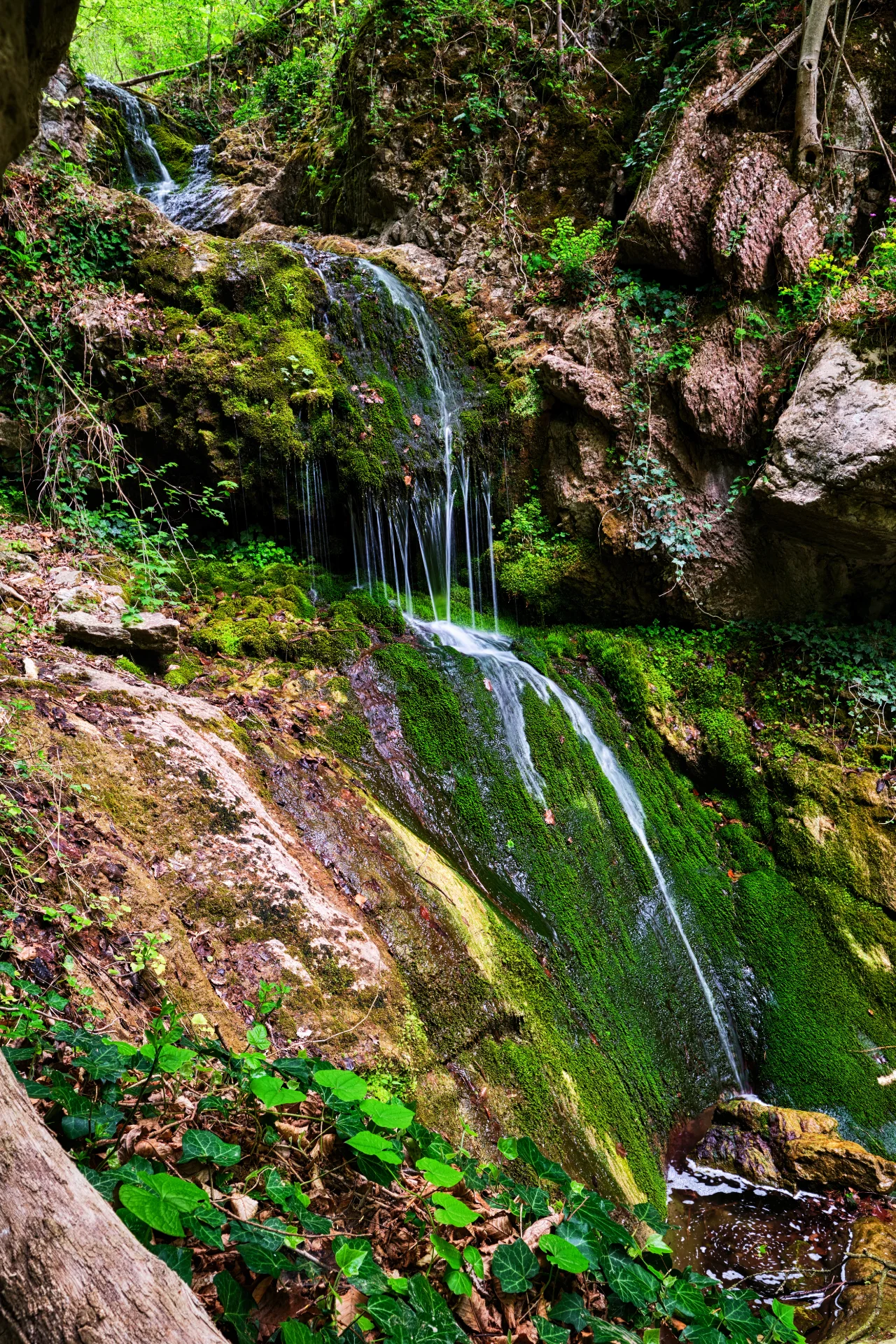
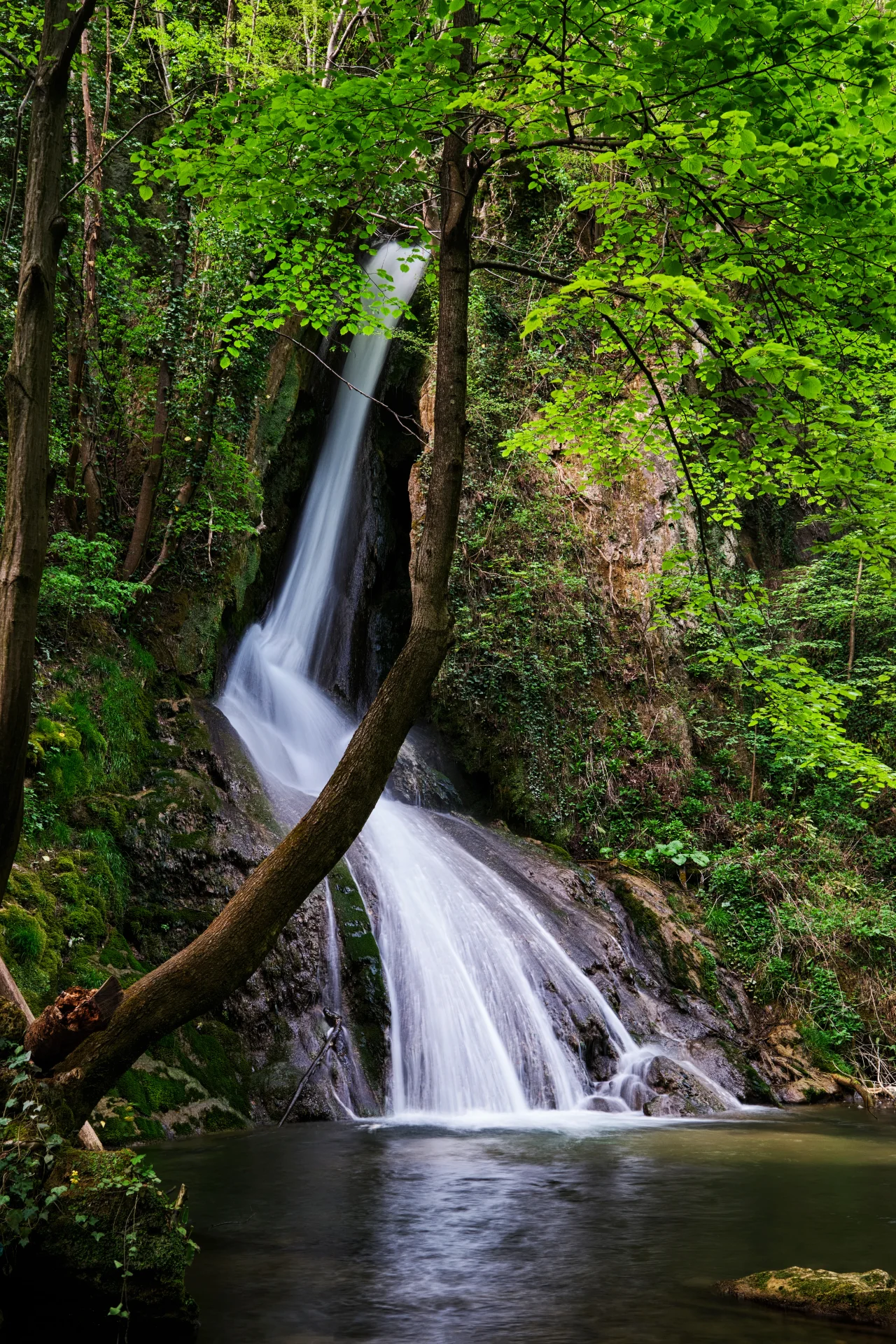
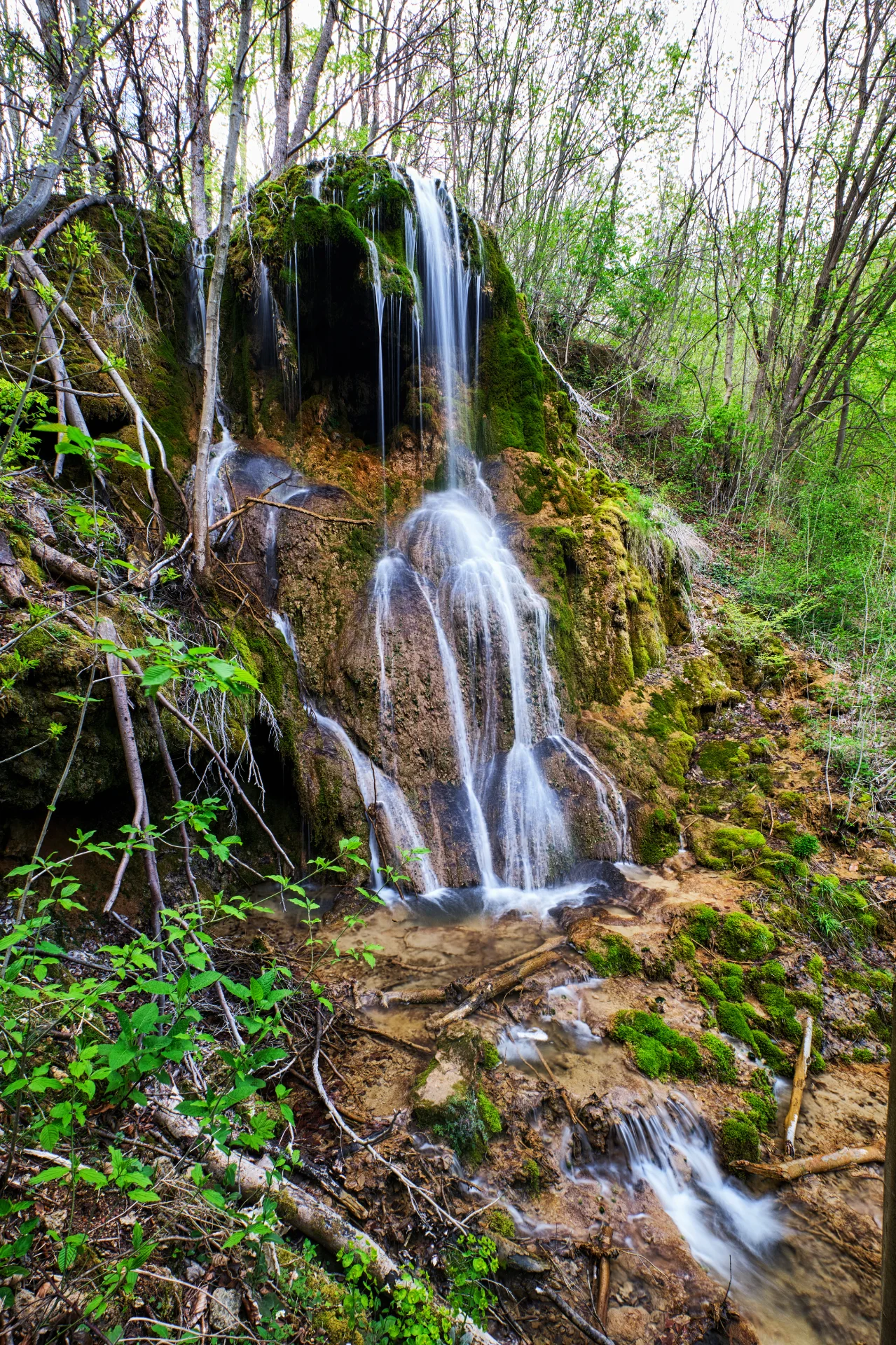
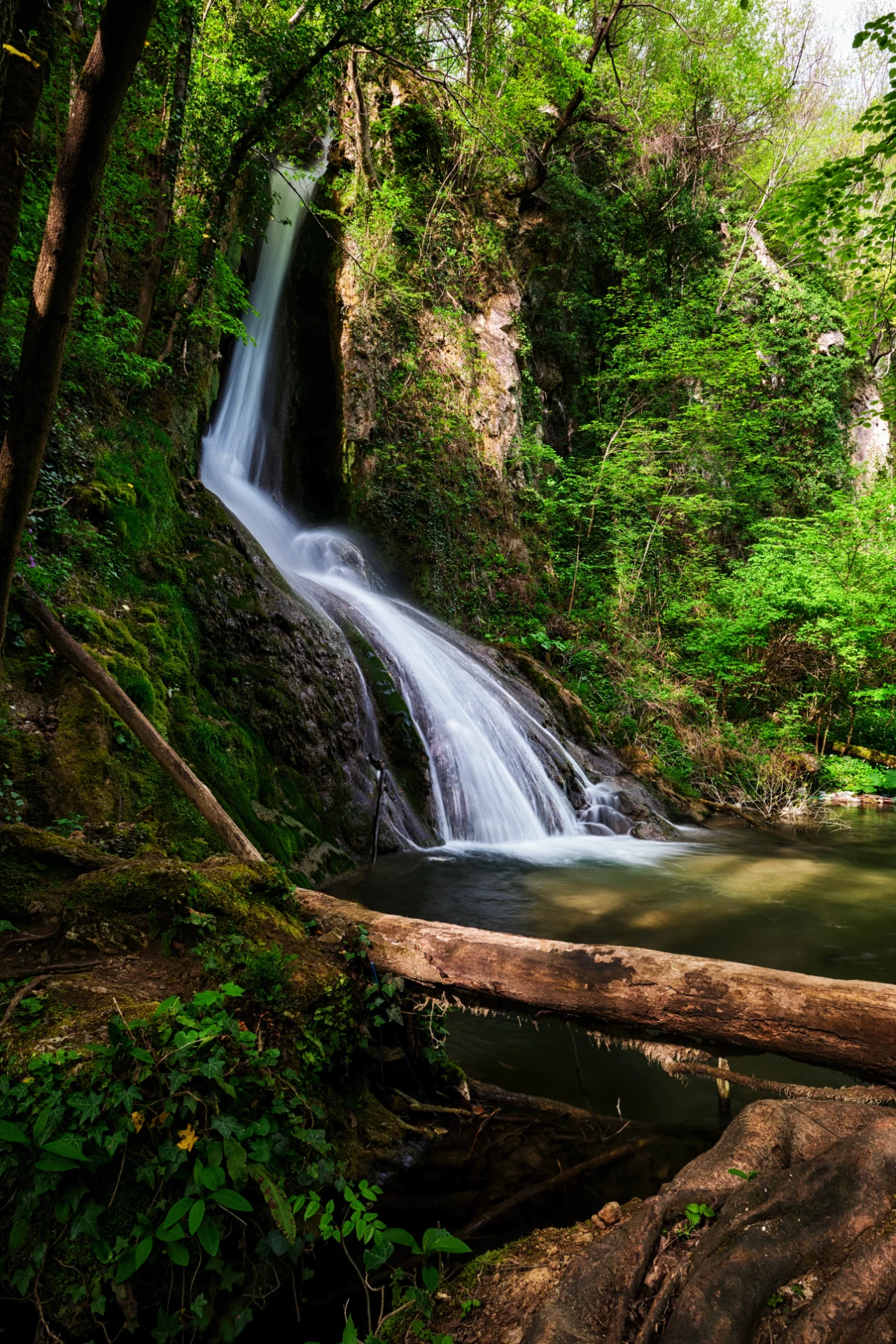
If we take a local road that starts from the small town of Moldova Nouă towards Padina Matei, we can discover two superb waterfalls formed along the Valea Mare stream. Part of a protected natural area, the Burăul Mare and Moldăvița waterfalls can be admired quite easily, impressing with the spectacular scenery they create. From the village of Coronini, the road continues for another 35 kilometers to Baziaș, considered the entry point of the Danube into Romania and the boundary of the Iron Gates natural park. In the end, looking back at all the places and people we met, the legendary iron gates no longer seem so threatening and we have the deep impression that the river unites rather than divides, creating bridges between times and civilizations. To continue our journey through Romania, we cross the mountains to the north, stopping in the Land of Almaj where we explore the Rudăriei valley, admiring the dozens of water mills from the village of Eftimie Murgu…
Sights and Experiences
Places to See and Things to Do in Iron Gates Natural Park
The Natural Park
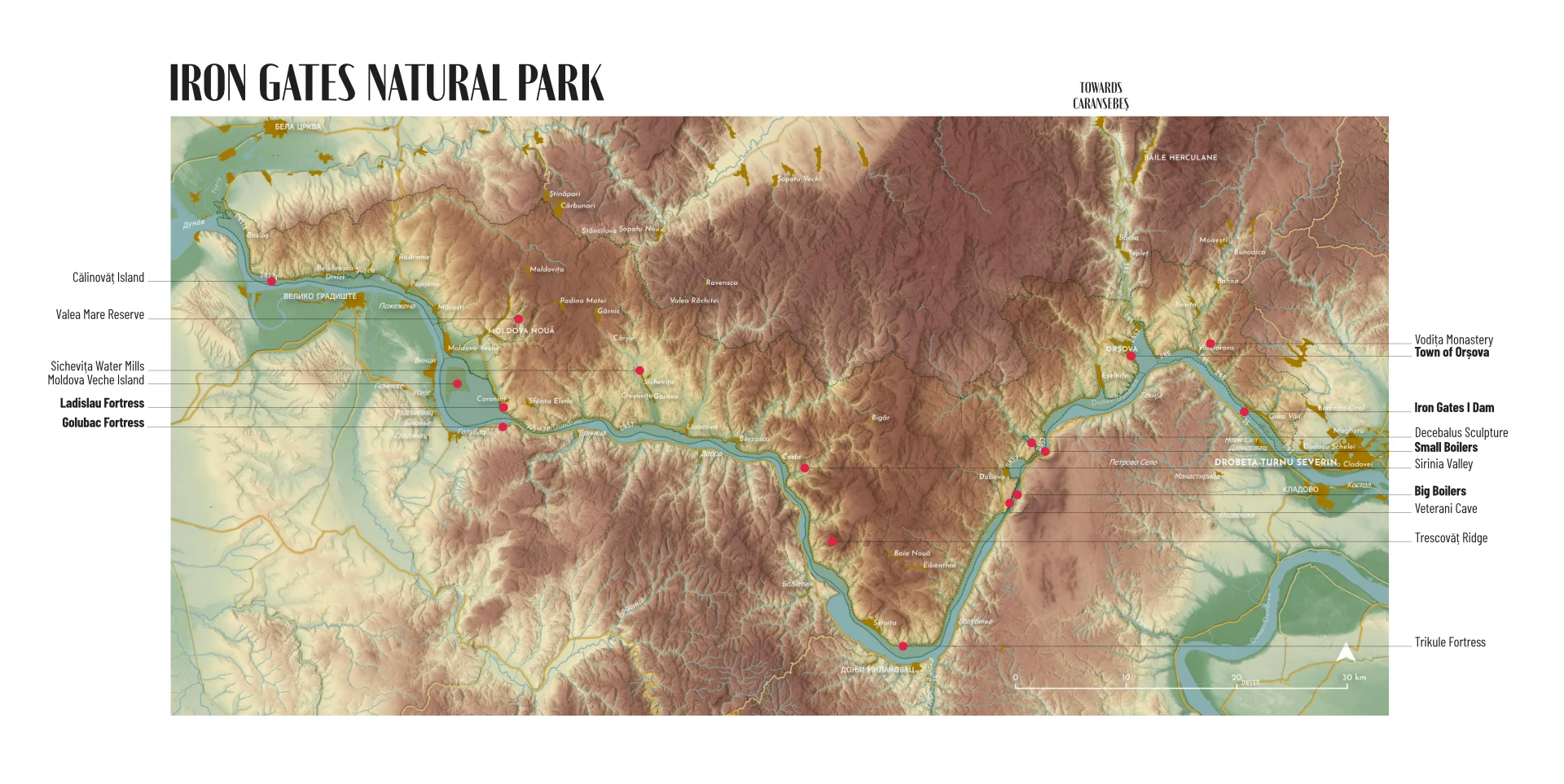
Located in the southwestern part of Romania, along the Danube Gorge between Baziaș and the Iron Gates Dam, the natural park has an area of over 115 square kilometers, being the second largest in the country. It also includes the southern peaks of the Locvei and Almaj Mountains, as well as small portions of the Mehedinți Mountains and Plateau. The largest gorge in Europe (the Danube Gorge) has changed since the 1970s, after the construction of the Iron Gates Dam and the rise in water levels. This led to the displacement or abolition of 10 localities on the Romanian side and 7 on the Serbian side. Today, the park territory includes two small towns (Orșova and Moldova Nouă), as well as several communes belonging to Mehedinți and Caraș-Severin counties. In the west of the park there are some villages where there is a large population of ethnic Serbs, while some villages in the mountains are inhabited by Czechs. The Iron Gates Natural Park was created to protect the impressive landscapes, unique biodiversity and authentic cultural heritage of this area. Inside the park there are almost 20 fully protected areas, where all activities are prohibited, except hiking. The most fascinating attractions of the destination can be discovered along 15 very well-maintained and marked ecotourism trails. Also, 18 nature reserves have been established inside the park, the best known being the Large Boilers and Small Boilers, Gura Văii – Vârciorova, Valea Mare, Ostrov Wetland – Moldova Veche, Baziaș, Divici – Pojejena, Dealul Vărănic and others.
Biodiversity
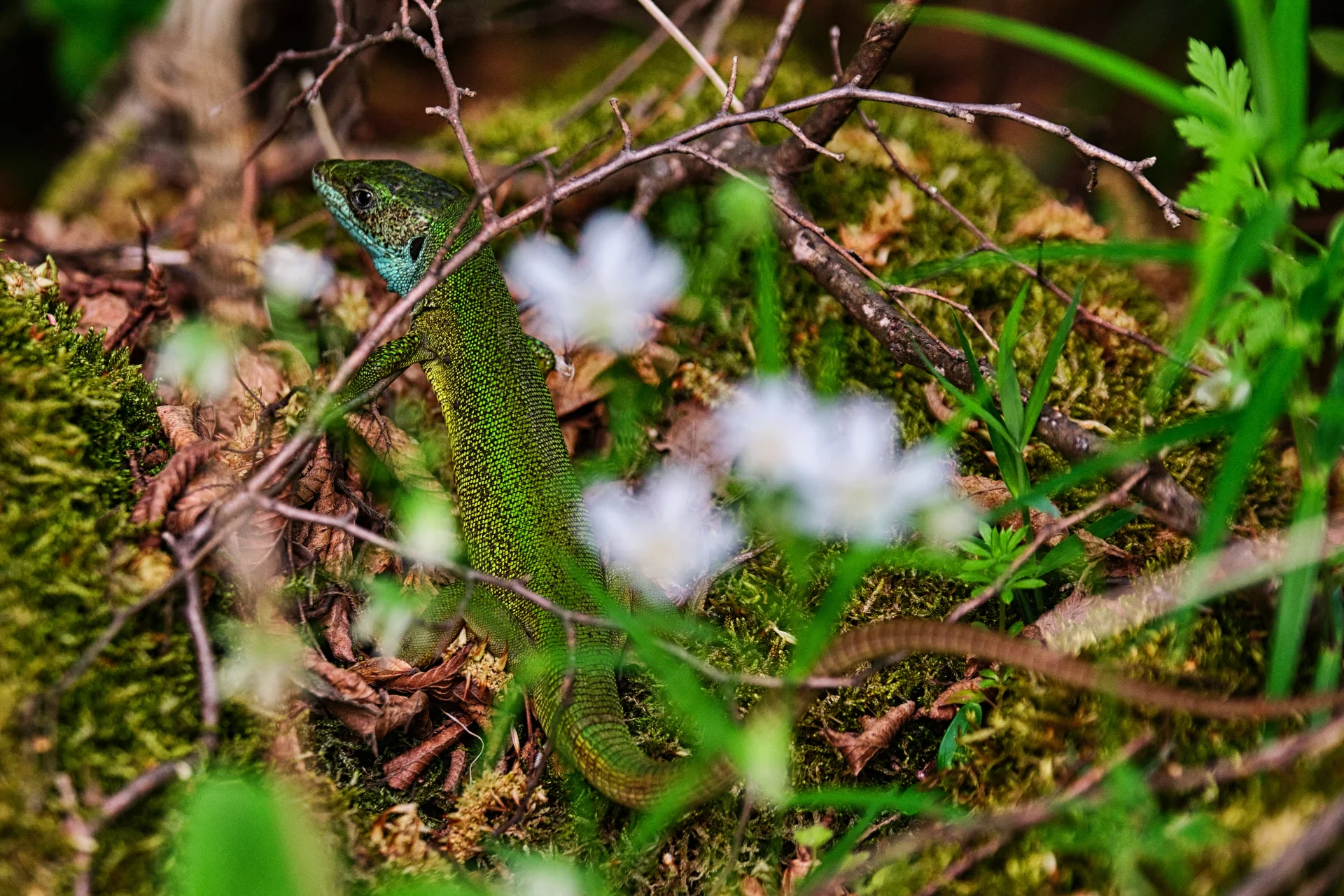
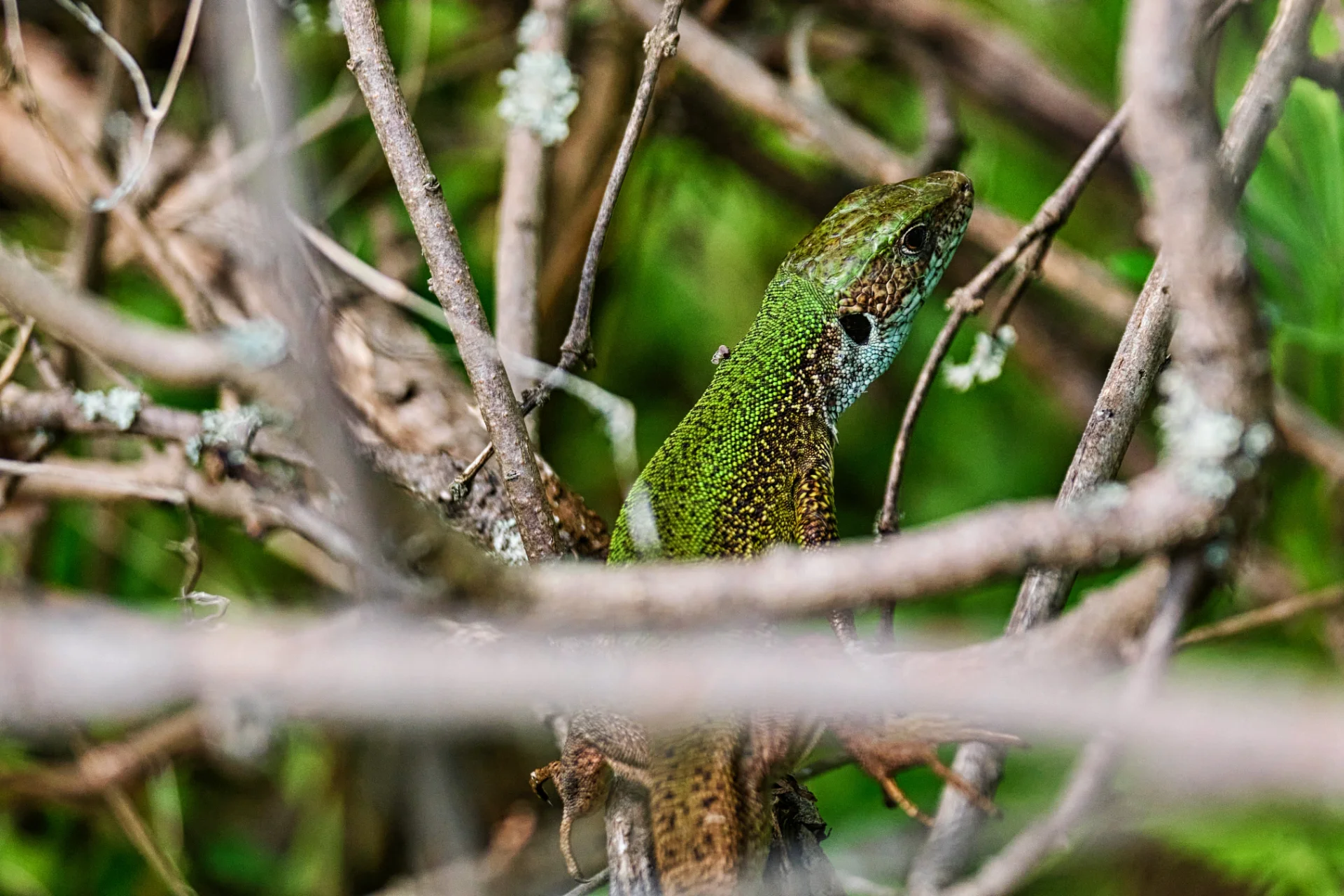
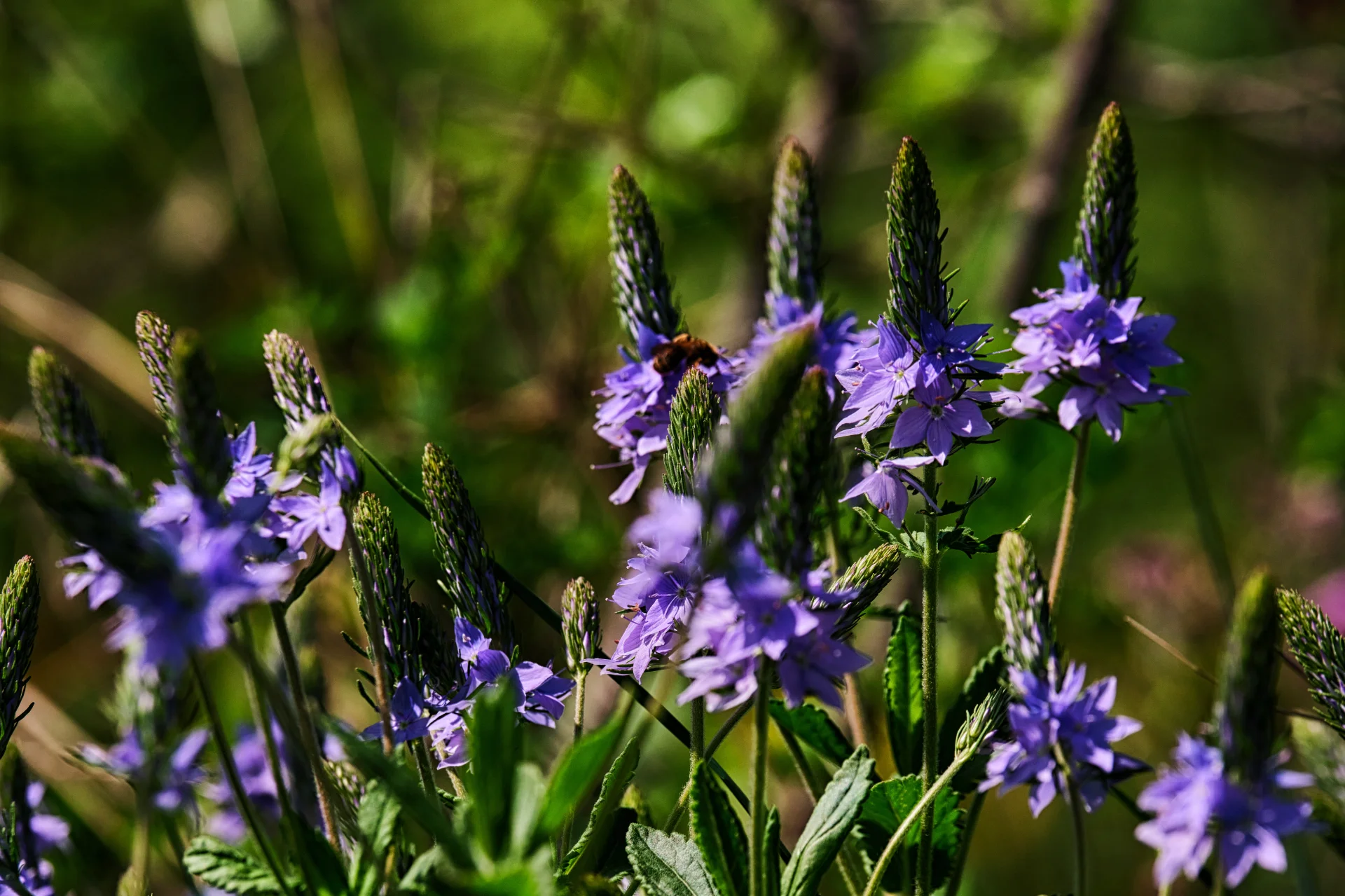
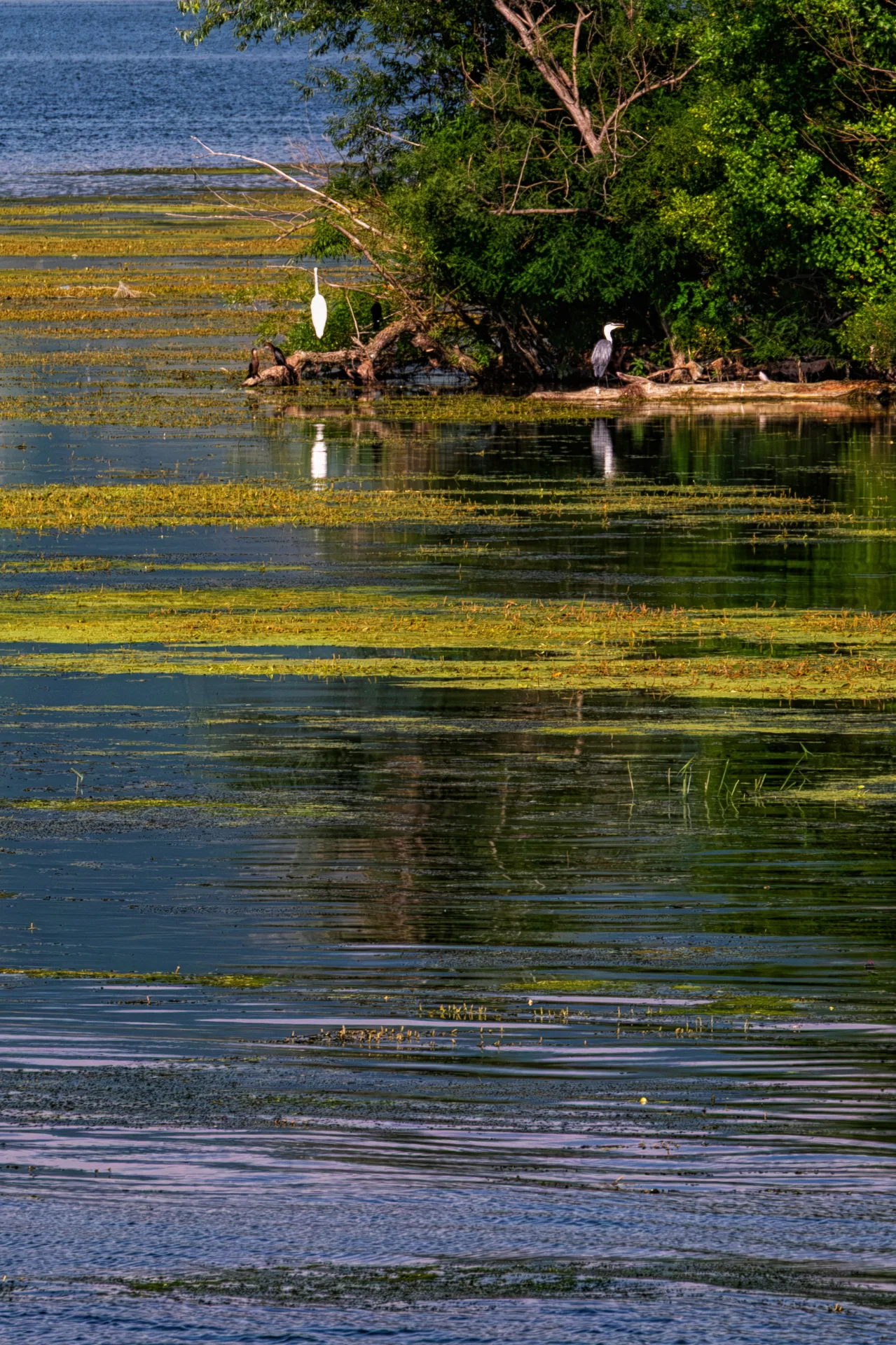
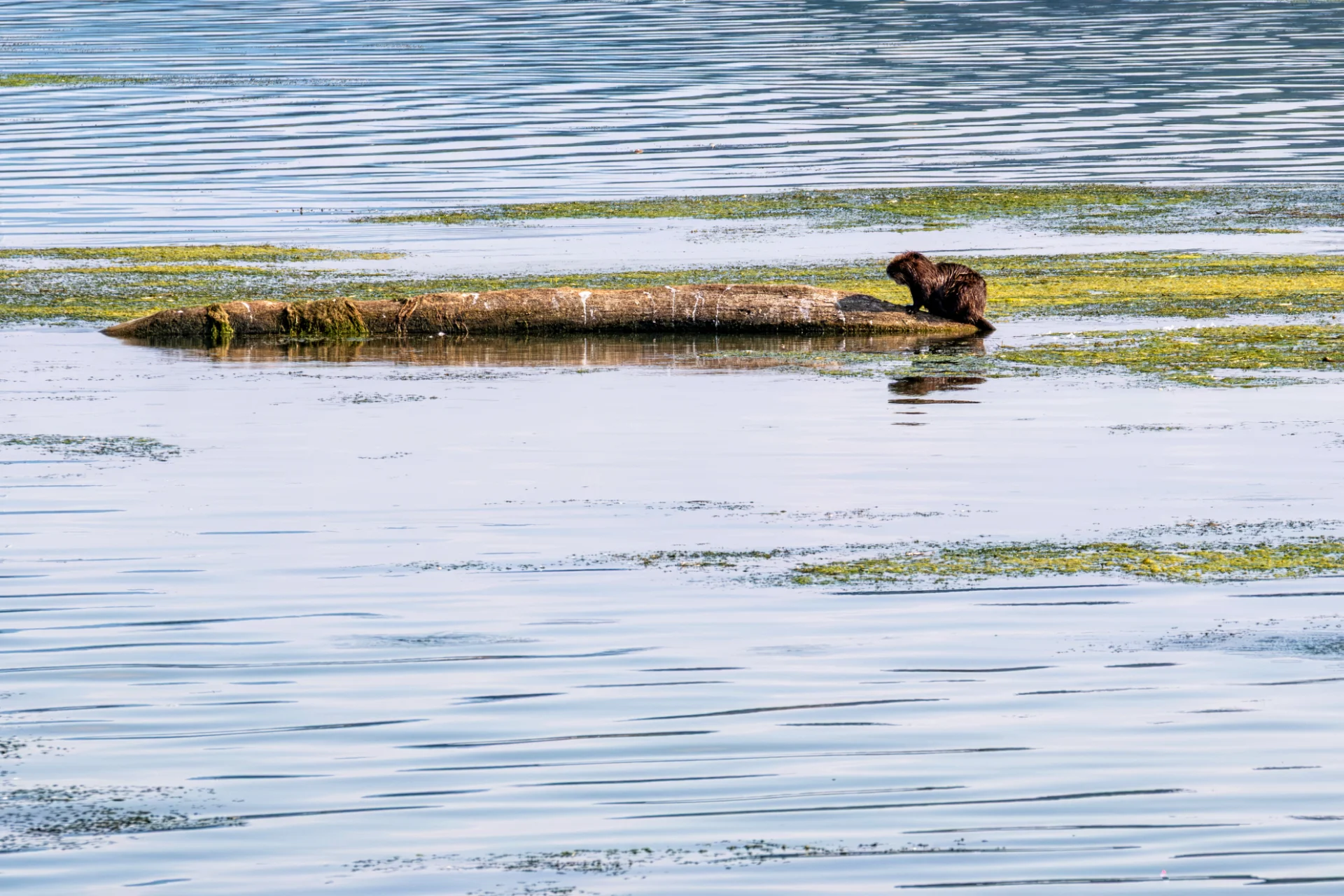
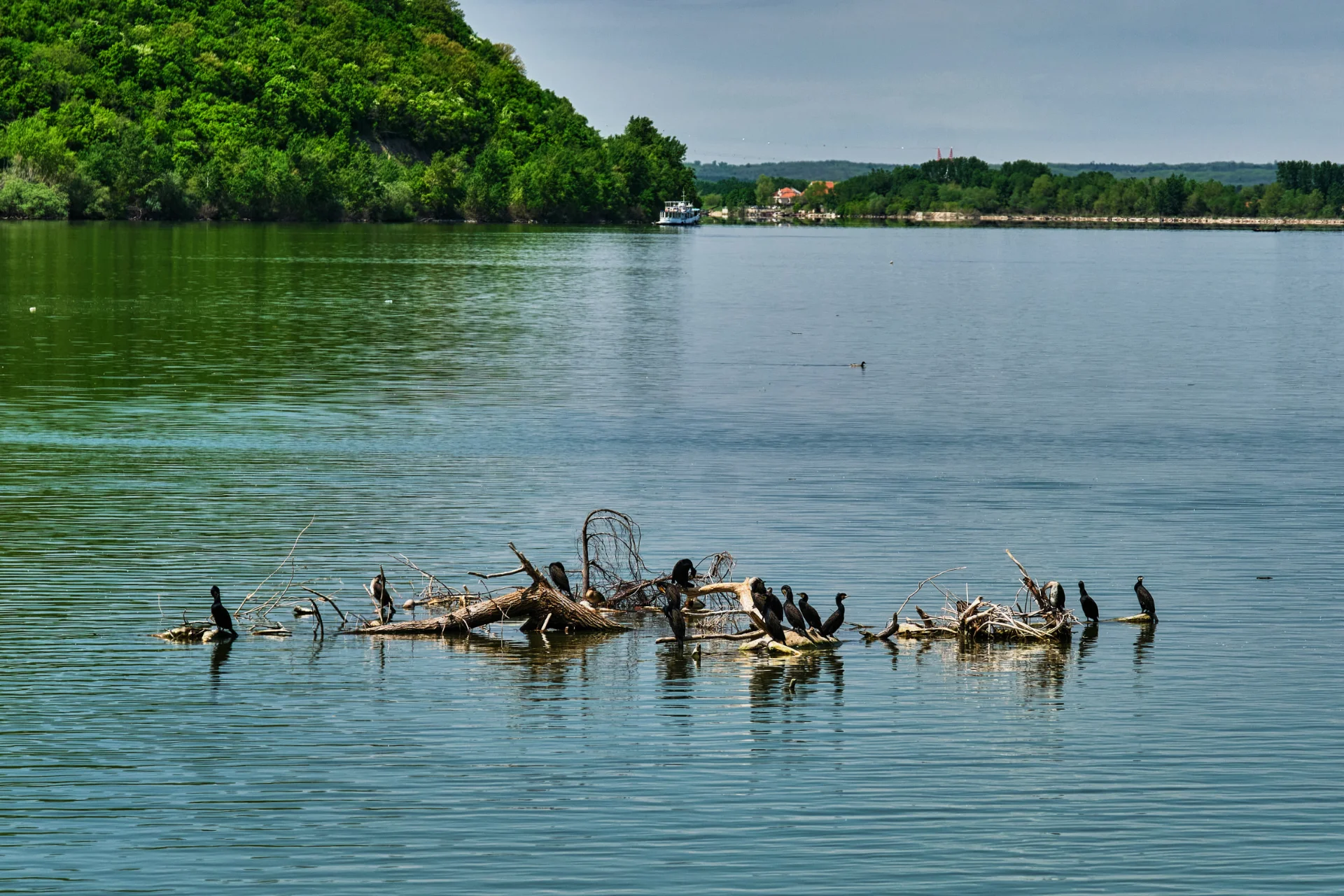
The Iron Gates Natural Park is characterized by a very rich biodiversity, often with unique features on the territory of Romania. Approximately 80% of the park’s surface is covered by forests and almost half of the country’s plant species are also found here. The very large number of endemic species is noteworthy, among which the cauldron tulip (tulipa hungarica), a tulip that grows only on the steep cliffs of the Ciucaru Mare massif, stands out. There are also species of Mediterranean influence such as the wild bat, the Turkish hazel, the skylark, the gerani, the scumpia or the mojdrean. The fauna of this region includes 34 species of mammals, 14 species of amphibians and 14 species of reptiles, many of which are protected, and some very rare. However, the true faunal wealth of the natural park lies in the over 200 species of birds here, of which over 130 are strictly protected. Among other things, in the natural park you can admire birds such as the red duck, the cormorant, the great egret, the gray heron, the spotted eagle or the coot.
Iron Gates I Dam
Visiting hours: 9 – 16 (Tuesday-Sunday) | Prices: 20 lei/adult
Located approximately 15 kilometers west of the city of Drobeta Turnu Severin, the Iron Gates I hydroelectric power plant is the largest in the country and on the entire course of the Danube. Built in partnership with Serbia, it has an installed capacity of over 1,160 MW on the Romanian side (2,160 MW in total) and a maximum installed flow of 8,700 cubic meters per second. The impressive dam also represents a border crossing point, with two locks that allow ships to navigate the river. Behind it, a huge reservoir was created, with a volume of approximately 2,200 million cubic meters and an area of over 250 square kilometers. Inside the dam there is a museum that can be visited, where both its technical characteristics are presented, including the opportunity to admire the massive turbines), but also elements of the natural and cultural setting of the Iron Gates region (archaeology, history, ethnography, natural sciences).
Town of Orșova
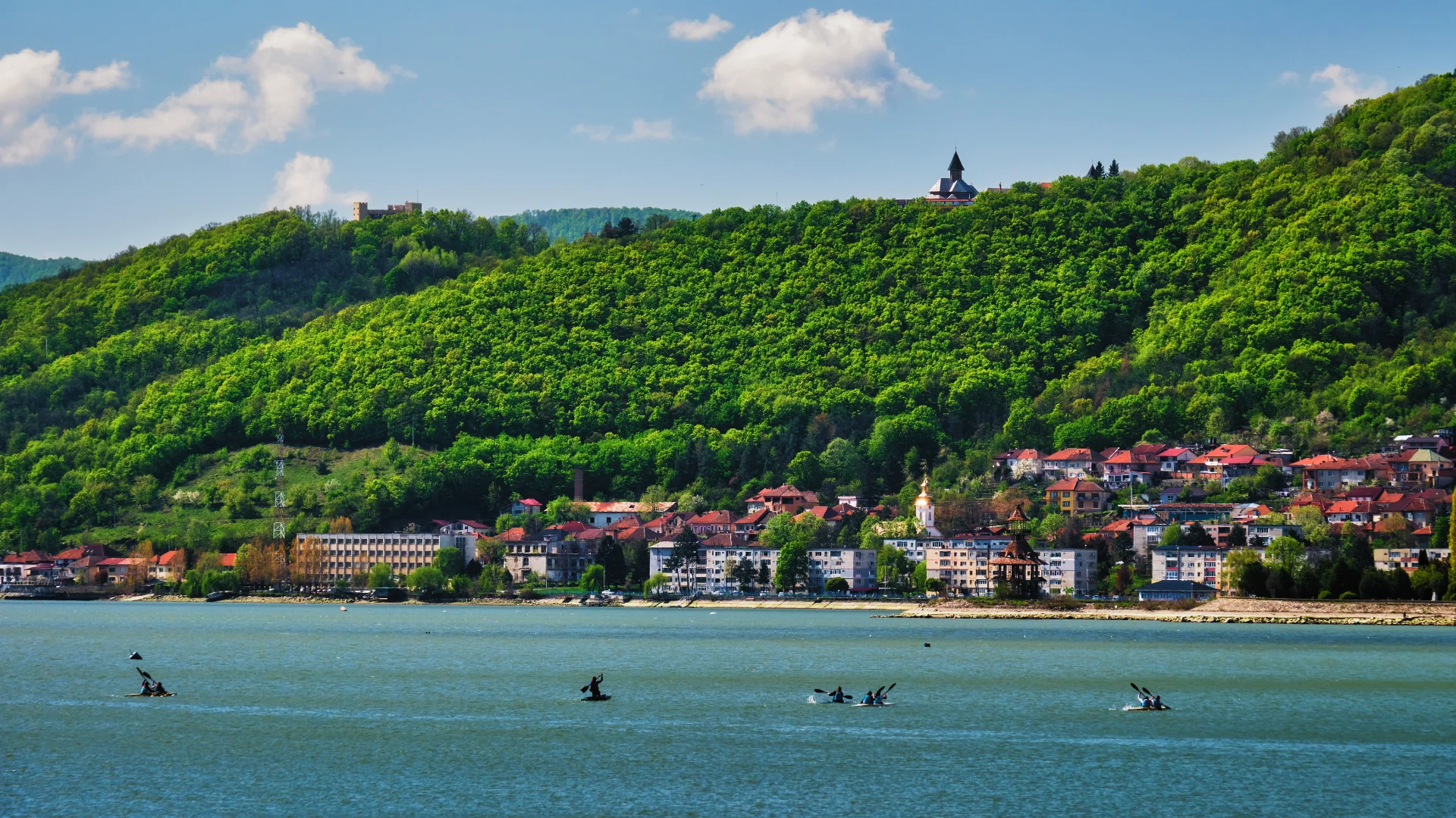
Located in a superb bay, at the confluence of the Danube and the Cerna River, the city of Orșova was built here after the old center was covered by the river’s waters with the construction of the Iron Gates dam. The first attestation of the town dates back to the Roman period, when a castrum was built here, which later became a municipium named Dierna. Over time, it has gone through numerous dominions, belonging either to Wallachia, the Severin Banat or the Ottoman and Austrian empires. With the relocation, the city lost its older monuments, but the new location is spectacular, with new buildings occupying the slopes of the hills in a picturesque bay. Among the attractions, the Danube promenade in Orșova stands out first, offering enchanting views of the river and the city, but also the opportunity to go on boat cruises to the boiler area. On a hill on the southern side of the bay stands the impressive Saint Ana Monastery, built in the interwar period by the journalist Pamfil Șeicaru, who fought in World War I in these lands. In addition to the special spiritual atmosphere, the location of the monastery is stunning, offering unique views of the Orșovei Bay. In the new city center, the Roman Catholic Cathedral “Immaculate Conception” cannot be overlooked, one of the most interesting churches in Romania, with its modern and unique architecture, in the shape of a cross from any place it is viewed and with a separate bell tower.
Danube Small Boilers
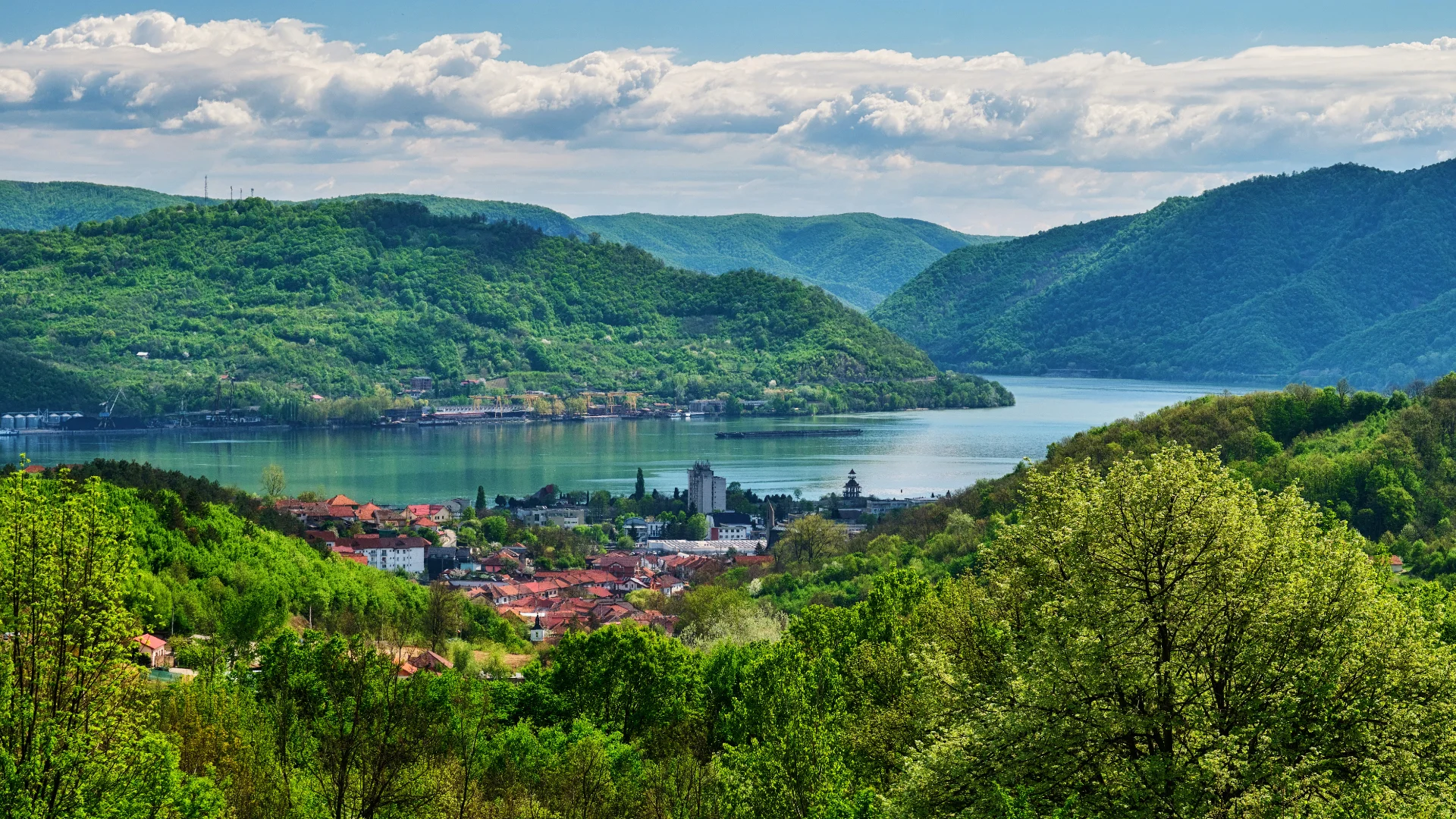
The first sector of the Danube’s cauldrons, known as the Small Boilers, begins a few kilometers west of Orșova, with the steep mountain banks approaching only 150 meters away. The peak on the Romanian side is called Ciucarul Mic (300 meters high), while the massif in Serbia (Mali Strbac) is over 600 meters high. There is an ecotourism trail (red triangle / 2 km / +240 m / 45 minutes) to the peak of Ciucaru Mic, from where travelers are rewarded with superb panoramas of the gorge, but also with other unique landforms (field of lapis lazuli). The Big and Small Boilers have been designated a mixed nature reserve on an area of 215 hectares, protecting both the spectacular landscape (karst landforms) and the specific biodiversity here. On the peaks of Ciucarul Mic and Ciucarul Mare, numerous species of rare plants and animals can be found, some of which are strictly protected (the Cauldron tulip, the yew, the rock thorn, the Cauldron bellflower, the wild bat, the mojdrean, the horned viper, the Hermann’s tortoise, bats and others).
Face of Decebalus
Located in the small bay of Mraconia in the Small Cauldrons of the Danube, it is one of the most recognized and appreciated symbols of this destination. With monumental dimensions, 55 meters high and 25 meters long, the sculpture is considered the largest of its kind in Europe and the second in the world. The project was initiated and financed by a Romanian businessman, while the realization spanned a period of 10 years (1994-2004), being created by a sculptor from Orșova and an extensive team of sculptors – climbers. The monument is only 60% completed, the works being stopped upon the death of the one who initiated and financed this project. On the Serbian bank of the river there is an ancient monument known as the Tabula Traiana, a plaque commemorating the conquest of Dacia, part of a group of ten, ordered by the Roman emperor and now covered by water.
Mraconia Monastery
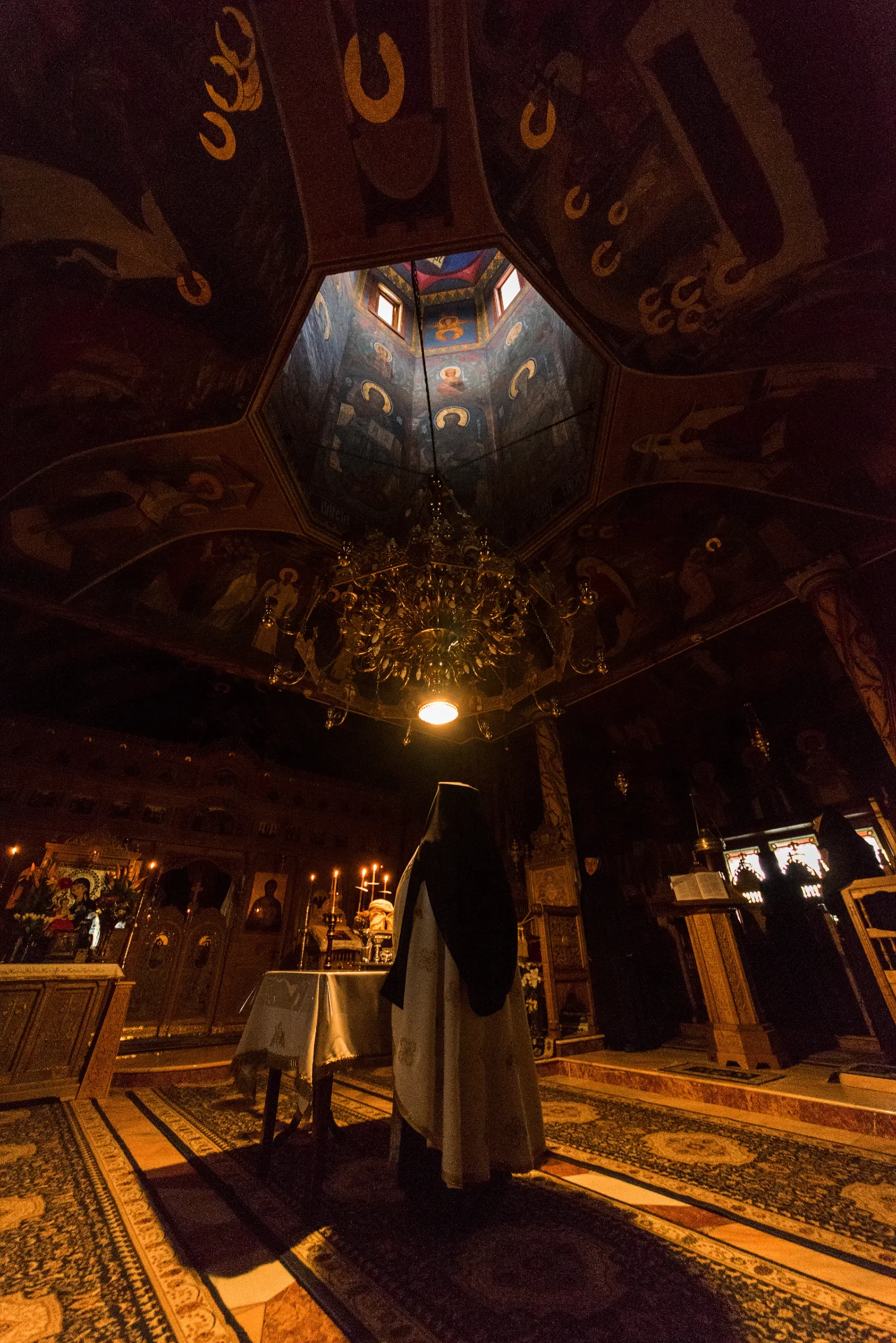
Located near the bay of the same name in the Small Cauldrons of the Danube, the monastery is the successor of other much older places of worship that existed in these places. Documentarily attested from the mid-15th century and founded again at the beginning of the following century, it was destroyed at the end of the 18th century, during the Russo-Austro-Turkish War. It was rebuilt after World War I, but was again destroyed and covered by water after the construction of the Iron Gates I dam. The current monastery was built between 1993 and 2000 right on the banks of the Danube, in the place where there used to be an observation point and guidance for ships that dared to pass through the Danube Cauldrons.
Danube Big Boilers
Located just a few kilometers south of Cazanele Mici, beyond the picturesque village and bay of Dubova, Cazanele Mari is located between the Ciucarul Mare massif (318 meters) and Veliki Strbac (768 meters), having a length of approximately 4 kilometers, while the water depth reaches 80 meters. Although the road bypasses the Ciucarul Mare peak, there is a fascinating ecotourism route (yellow triangle / 5 km / +315 m / 2 hours) that reaches the limestone peak, offering some amazing viewpoints. On the upper plateau, tourists can follow a circuit that offers spectacular views, but also the opportunity to discover the unique biodiversity of these places, with numerous rare plant and animal species.
Veterani Cave
Visiting hours: temporarily closed | Prices: 10 lei/adult
Located on the Danube side of the Ciucarul Mare massif, the cave can only be visited by boat on the river. Known over time under other names, it is of particular interest for its unique history and for the opening in the ceiling through which the sun’s rays penetrate only at certain times. The Veterani Cave contains numerous archaeological remains, some legends claiming that the Dacians had a sanctuary dedicated to Zalmoxis here. What is certain is that it has been fortified since the 13th century, after which the Austrians built new structures in the 17th century, the garrison being attacked several times by the Turks.
Ponicova Cave
Also known as the Gura Ponicovei Cave, it is the largest in the Danube Gorge, its galleries being almost 1,700 meters long. After creating a small but spectacular sector of gorges, the Ponicova stream (Valea Morilor) completely pierces the Ciucarul Mare massif, the cave having entrances both from the road and from the Danube. It is not designed for tourists, but a portion can be explored with special equipment by entering through one of the two entrances from the gorge and the road. Sometimes, boat cruises on the Danube also include the Ponicova cave, allowing the observation of the entrance from the Danube.
Ladislau Fortress
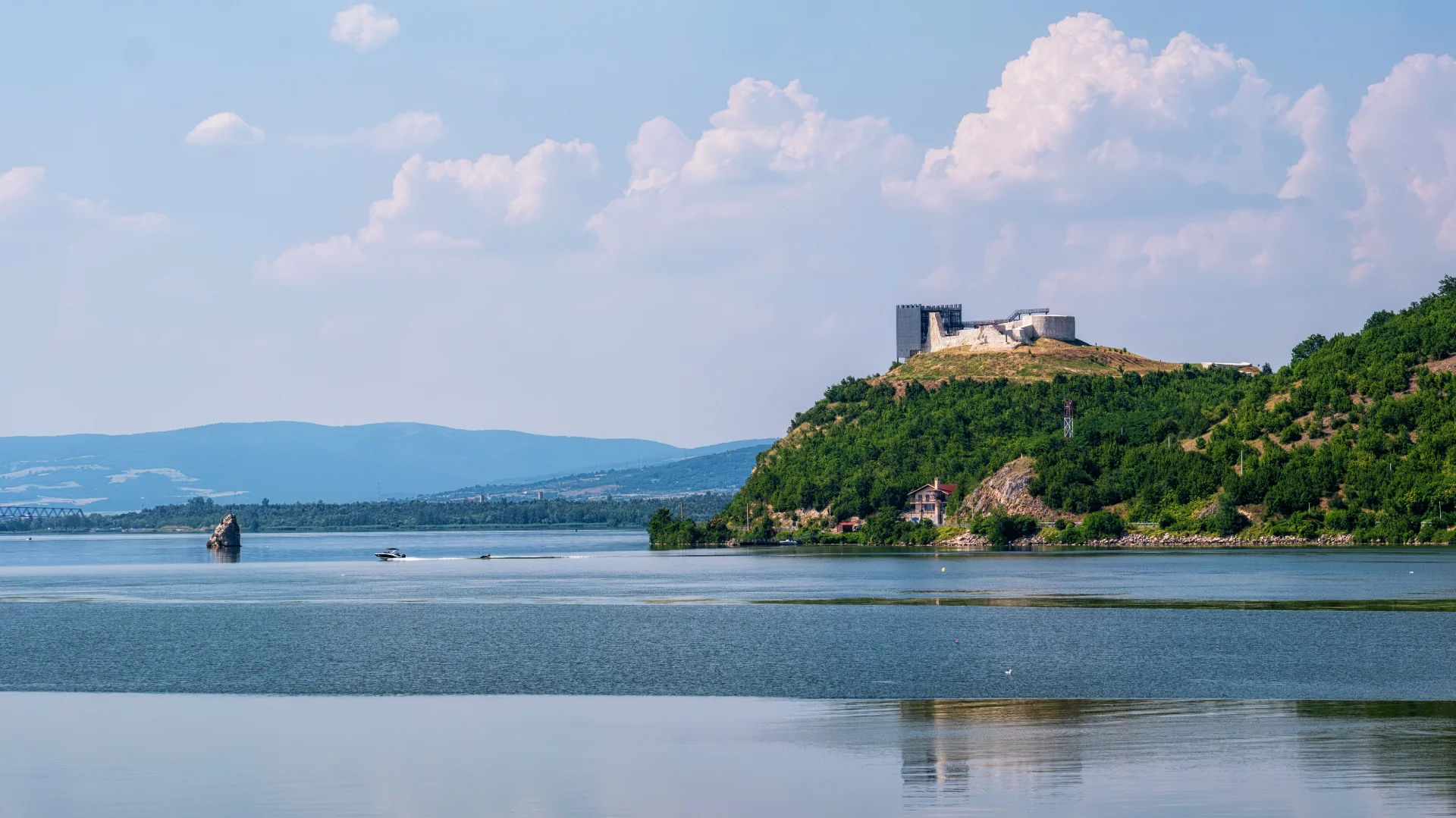
Built in the 14th century on the site of a former Dacian site, the fortress also known as Saint Ladislaus was entrusted to the Teutonic Knights for a period, being destroyed by the Ottomans in 1526. Following a long renovation process, the fortress was recently reopened and included in the tourist circuit. It is located on a hill south of the village of Coronini, and from here the Golubac fortress (Golubăț) on the Serbian bank can also be admired. Much grander, it was built in the 14th century on the site of former Roman and Byzantine settlements, being developed and expanded in several stages, usually after each change of rule. Perfectly renovated through an extensive project that brought back its former glory, it is imposing with its massive keep, surrounded by 9 towers united by strong walls. Near Coronini, tourists can also admire the Babacaia Rock, which rises from the river at a height of almost 7 meters, being unique along the Danube. Surrounded by old legends, it is said that it was once chained to the two fortresses to stop ships from passing without paying customs duties.
Trescovăț Ridge
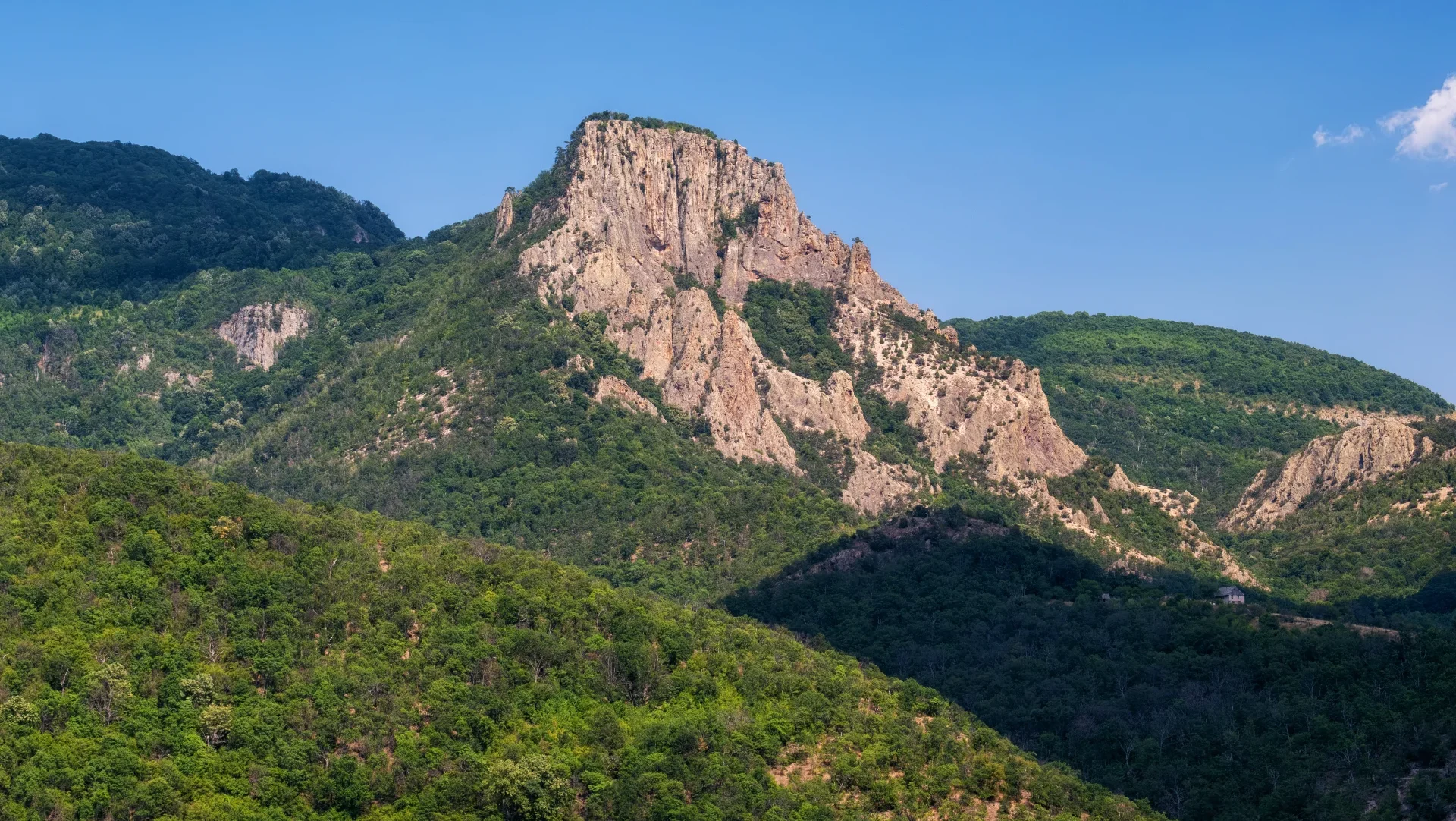
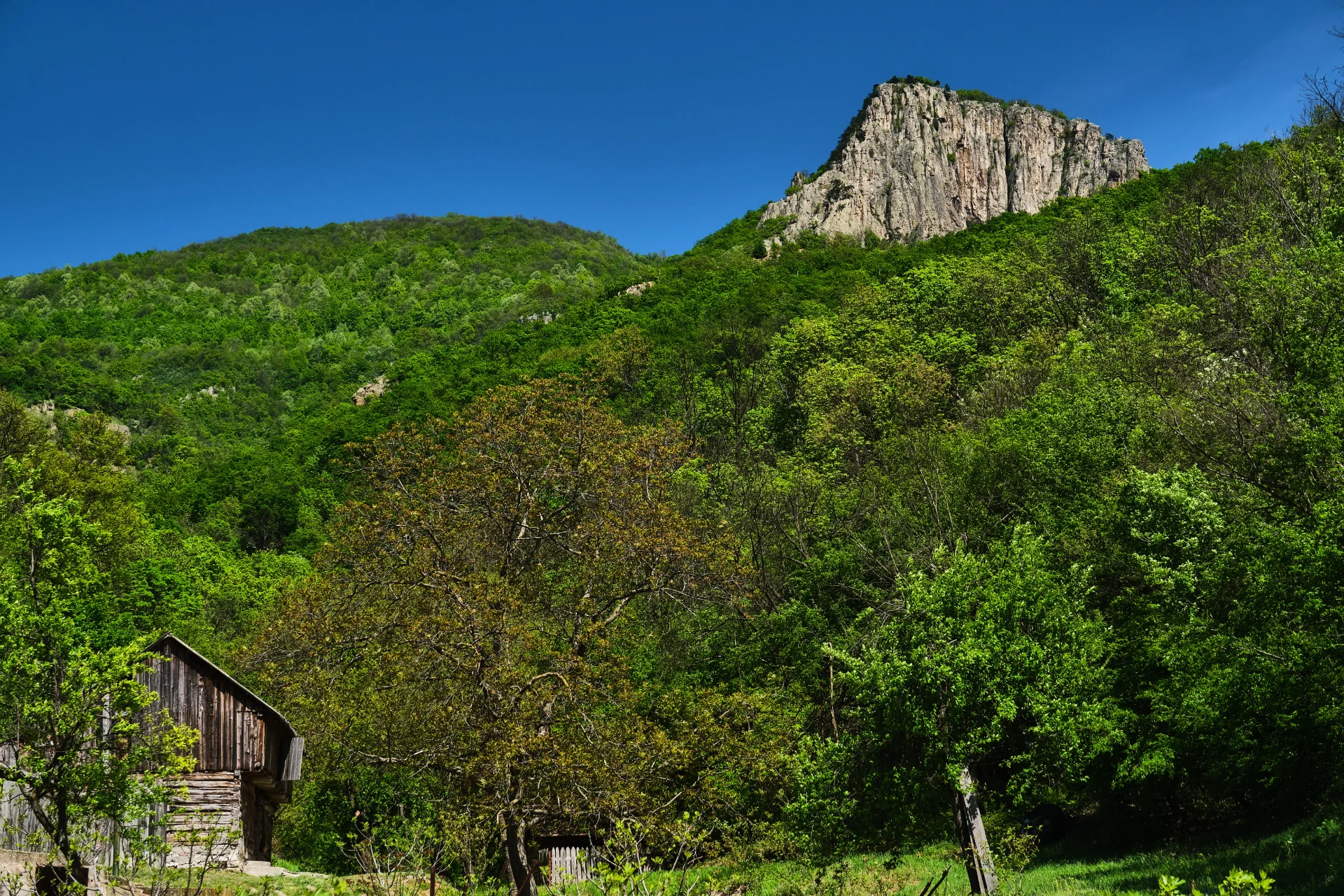
One of the most interesting hiking trails in the Iron Gates Natural Park leads tourists to Culmea Trescovăț, a volcanic neck that dominates the landscape, with a height of over 750 meters and a specific shape. The circuit trail (red triangle) begins and ends on the Danube bank, a few kilometers north of the village of Svinița, with a total length of approximately 10 kilometers and a medium level of difficulty (+570 meters / 5-6 hours). Along it, you can discover numerous plant species specific to this natural park, including solitary specimens of the Banat black pine, but also rare animal species (the tortoise, the scorpion, the horned viper). However, the real attraction comes from the specific appearance of the volcanic massif and especially from the spectacular panoramas it offers towards the dramatic Danube gorge.
Other Interesting Discoveries
Lesser known places and activities in Iron Gates Natural Park
Sichevița Water Mills
If once in the villages of Sichevița commune there were approximately 30 water mills operating, today 10 of them can still be discovered, spread across the valleys of the Camenița and Gremensca streams. Officially part of a thematic route, but quite difficult to find on the local roads here, they represent true monuments of traditional architecture. Considered the origin of the Romanians from the Danube gorge, the villages of Sichevița commune are scattered in a charming natural setting, the old wooden mills contributing to the authentic rural atmosphere. A few old water mills are also preserved in the village of Gârnic, in the Framensca valley.
Vodița Monastery
Originally built in the second half of the 14th century, the monastery was built by Saint Nicodemus of Tismana with the help of Prince Vladislav I, and is considered the oldest voivodeship foundation in the country. It is located on a small valley a few kilometers from the Iron Gates dam, once close to the border between Wallachia and the Austro-Hungarian Empire. Over time, it has experienced periods of prosperity, when it was an important religious center, but also tragic moments, when it was completely destroyed by the Ottomans. The new monastery was built starting in 1991, approximately 1 kilometer from the national road. The church was built of wood in the Maramureș style, and was consecrated in 2001.
Trikule Fortress
Also known as Tricule or Tri Kule (three towers in Turkish), the fortress once guarded the riverbank and the strategic region between the mountains. Located a few kilometers before the town of Svinița, the fortress is first attested in 1419, although it is most likely older and overlaps with the Hallstatt, Geto-Dacian, Roman and 11th-13th century habitations. Throughout its history, it also belonged to the Teutonic Knights or the Banat of Severin, functioning for a period as a customs point. After the development of the Iron Gates I reservoir, the ruined fortress was almost covered by the waters of the Danube, and currently only two of the three towers can be observed, the third appearing only during some periods of very low flow.
The Czech Villages
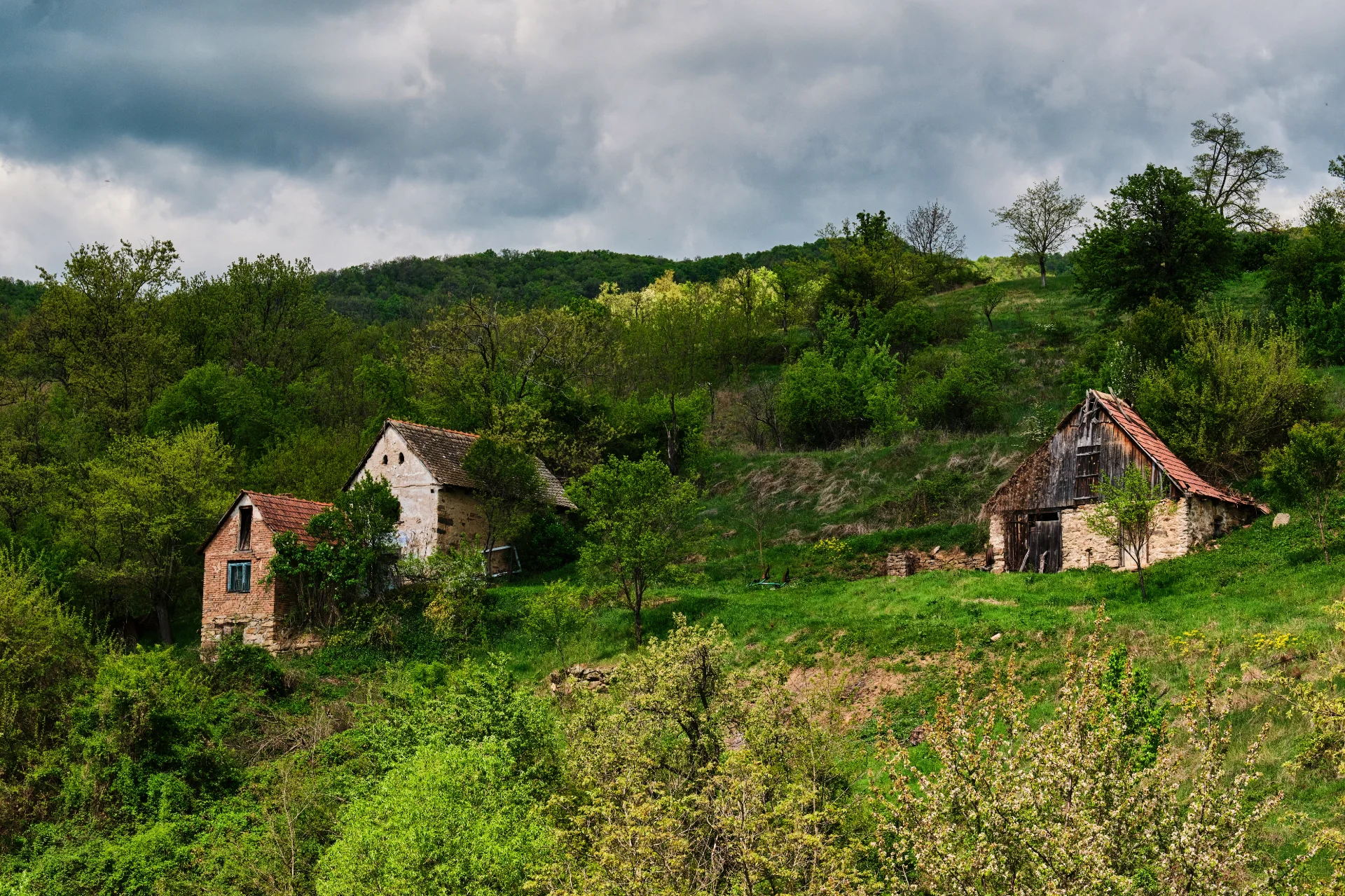
Some of the more isolated rural settlements in the mountains of the natural park were founded by Czechs who arrived here from Bohemia in the early 19th century to work in mining, woodworking or as border guards. Thus, the inhabitants of the villages of Eibenthal, Bigăr, Gârnic, Sfânta Elena or Baia Nouă were once predominantly ethnic Czechs, but they gradually left the region. However, those who remained continue authentic traditions, and the architecture of the houses sometimes reminds us of central Europe.
Moldova Veche Island
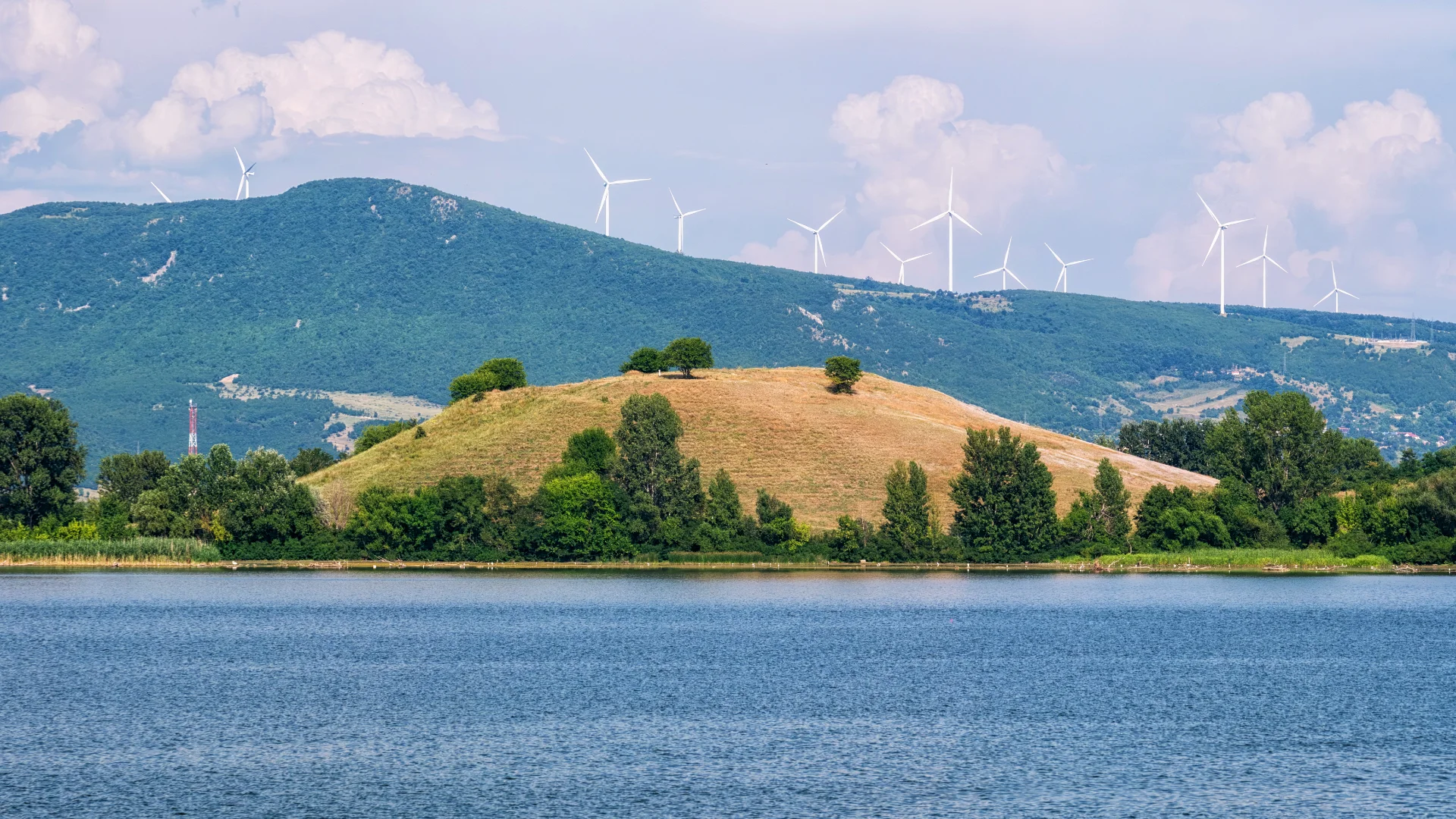
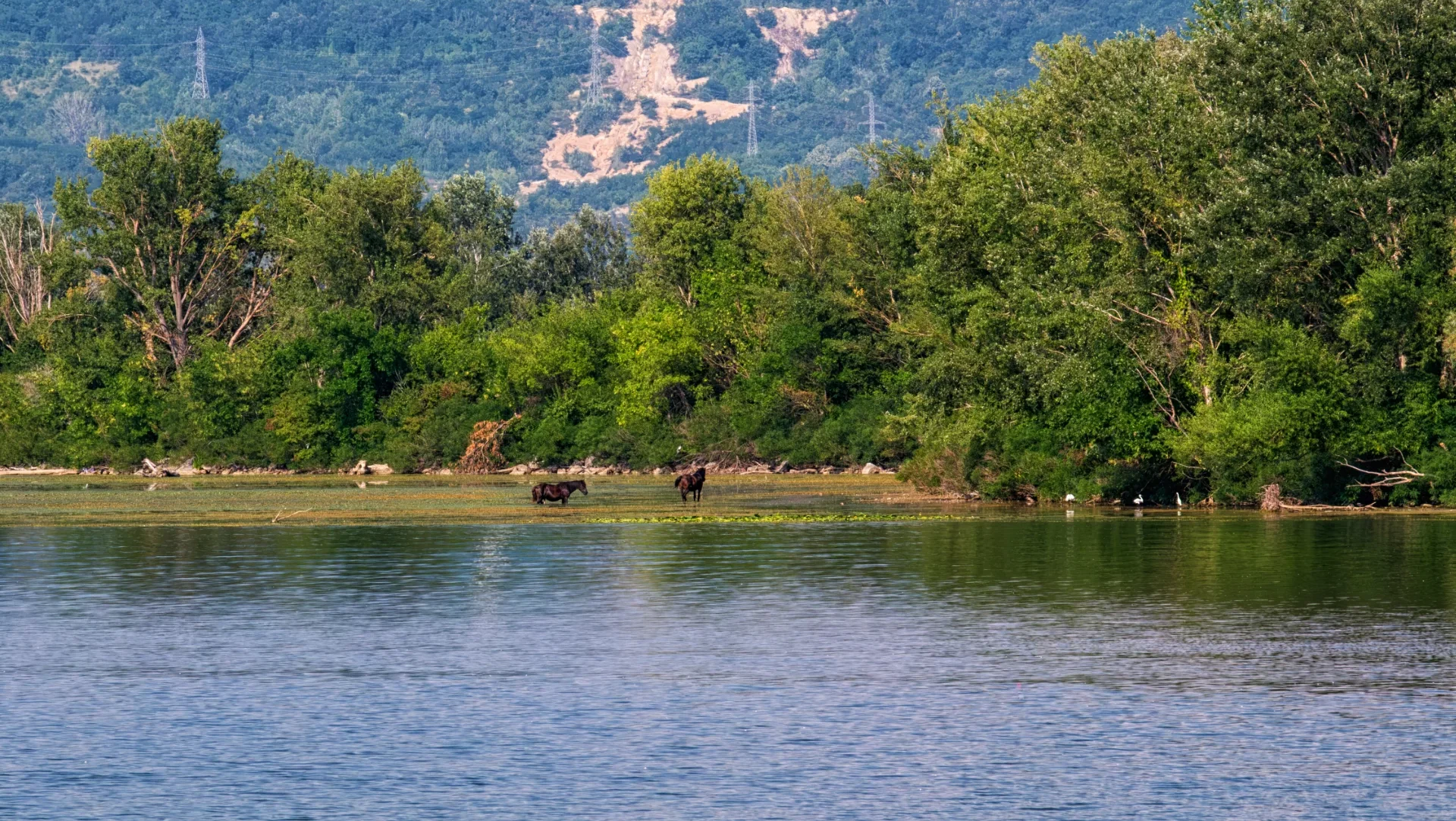
A relatively little-known place in the Danube Gorge is located right in the middle of the river, right next to the village of Moldova Veche. The island, together with the surrounding waters, is a protected natural area and a special avifaunistic protection area, with an area of over 1600 hectares. The island itself has 345 hectares, most of which is occupied by the two inner lakes. A special attraction of this place is the colony of wild free horses, descendants of the horses that the inhabitants of Moldova Veche used to bring here by ferry in the past. Also, specific plant species grow on the island (white willow, red willow, white poplar, pond lily, pond bulrush, reed), and numerous bird species find shelter here (egret, grebe, black stork, osprey and others). The highest point of the island is represented by a mound, where legends claim that the legendary Attila, leader of the Huns, was buried.
Sirinia Valley
A lesser-known destination in the Danube Gorge, the valley is hidden a few kilometers from the town of Berzasca. A narrow road follows the Sirinia Valley upstream, being the only connection to the isolated village of Bigăr. Along it, travelers can admire several surprising places, starting with the ruins of a very old monastery, recently discovered and located right at the entrance to the valley. A few kilometers higher, the Princess Sirinia waterfall recalls one of the legends surrounding this enchanting destination.
Valea Mare Reserve
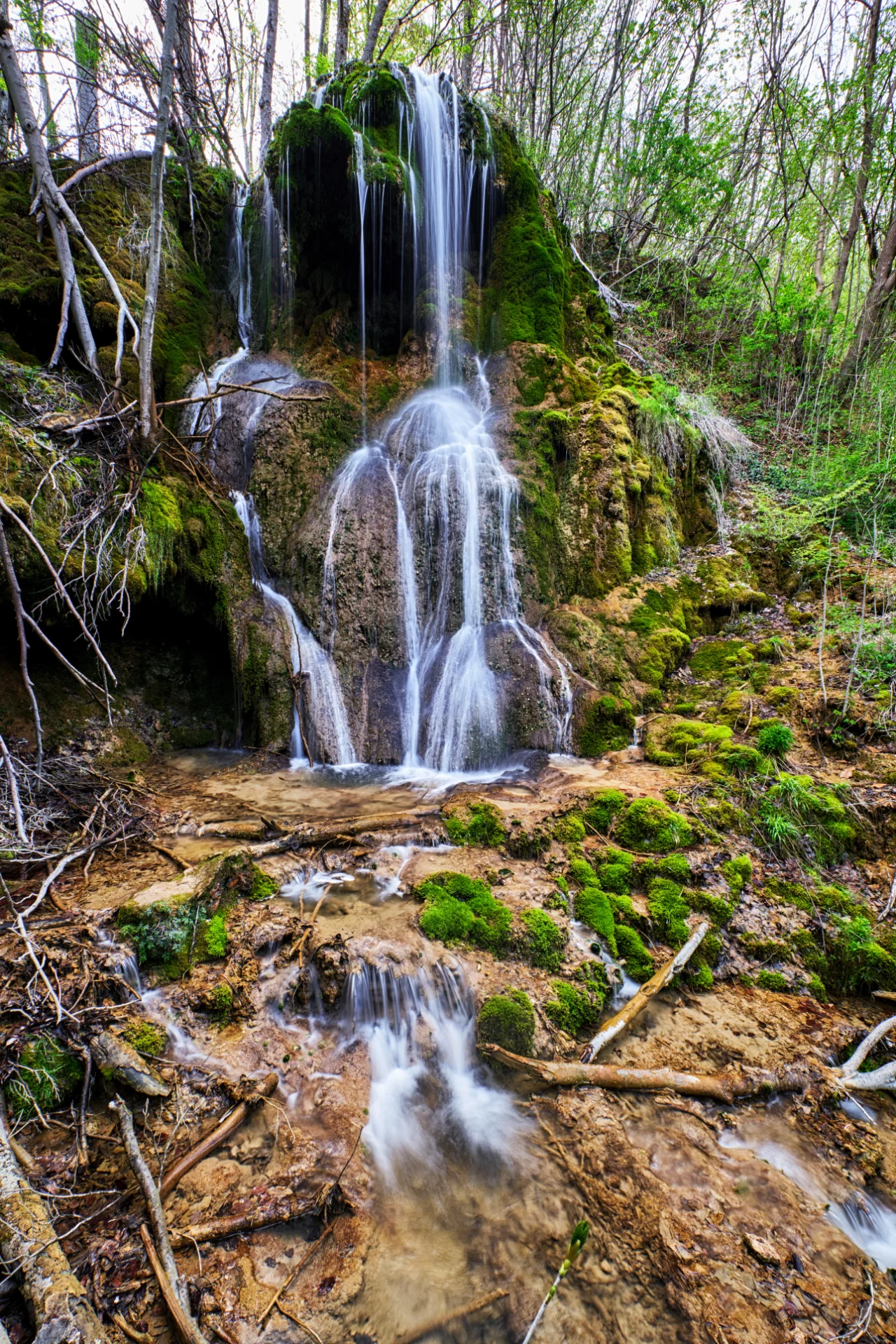
Located between the city of Moldova Noua and the village of Padina Matei, connected by a local road, the protected natural area hides several special attractions, in addition to the diverse and complex karst relief. On an area of almost 1,200 hectares, the reservation includes caves, avens, gorges, waterfalls, sinkholes, lapis lazuli and other spectacular landscapes, as well as an amazingly rich biodiversity. However, the most famous places here are two superb waterfalls, Burăul Mare Waterfall, which can be admired at the end of a pleasant and fairly short trail, and Moldăvița Waterfall, which is located right next to the road, both of which are of special beauty.
Calinovăț Island
In front of the village of Divici, which belongs to the commune of Pojejena, just a few kilometers from Baziaș, is the first island at the entrance of the Danube into Romania. Together with the surrounding water, the Calinovăț Island Wetland Zone has been designated a special avifaunistic protection area, with a total area of 24 hectares, of which 9-12 represent the island itself. Inside, it also includes two lakes, surrounded by abundant specific vegetation, where numerous species of birds, fish, reptiles and amphibians live, some of which are rare or endangered.
Gaura cu Muscă Cave
Located near the village of Coronini, right next to the national road, the cave has been a shelter for people since ancient times. In the 15th century, fortifications were built here and in the following centuries it housed a small garrison. Its name comes from an insect that, before the construction of the reservoir, caused great damage to animals in the area.
Accommodation Recommendations
The best lodging options in Iron Gates Natural Park
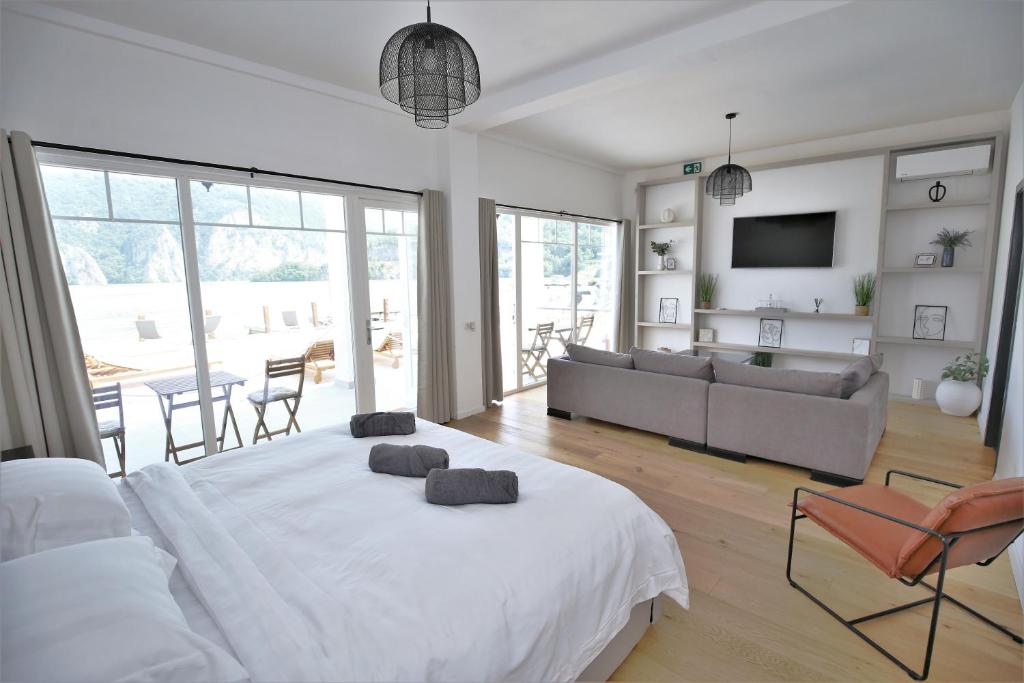
Rating 9.8 from 199 reviews!
Located right on the banks of the Danube, at the entrance to Cazanele Mici, the highly rated guesthouse offers modern and spacious rooms, an outdoor pool, a shared kitchen, a terrace and a private beach!
Dunării St, Eșelnița
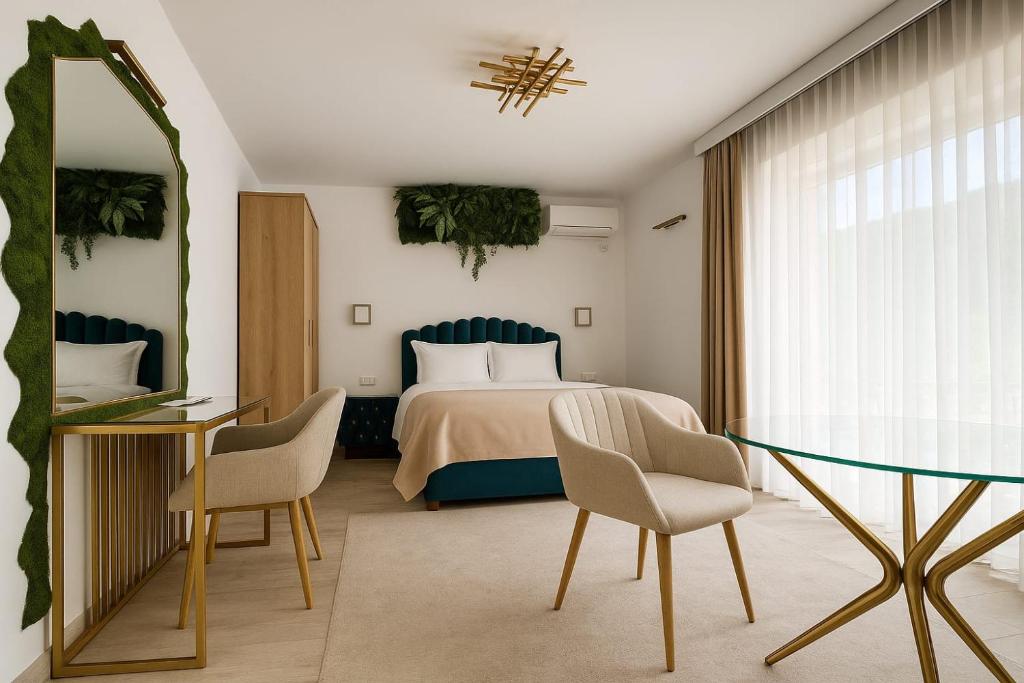
Rating 9.9 from 43 reviews!
Located in Dubova, between Cazanele Mari and Cazanele Mici, this guesthouse offers modern superior rooms, a shared lounge and kitchen, a terrace, a sports and playground!
Carasovat Valley, 7, Dubova
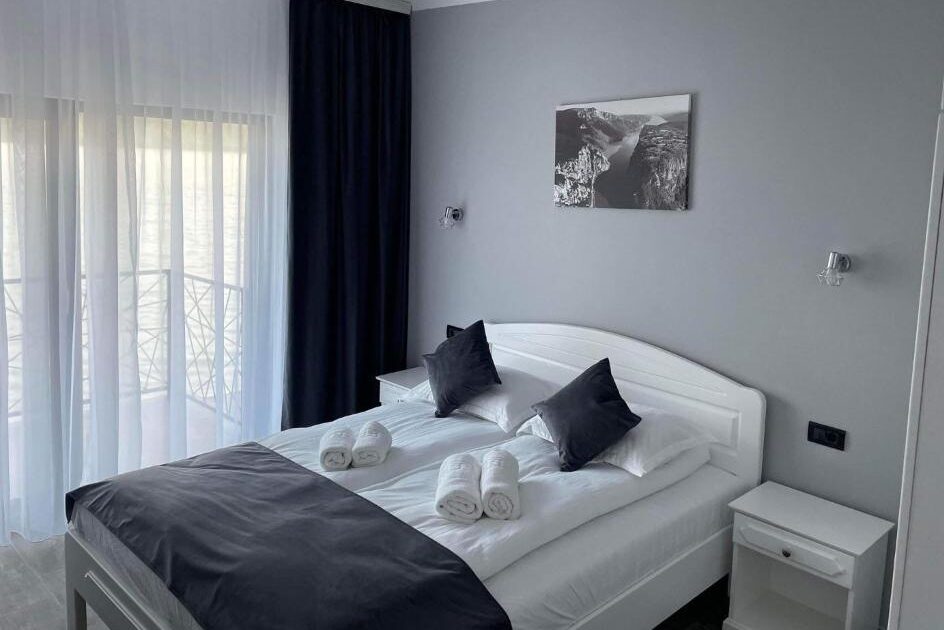
Rating 9.7 from 180 reviews!
Located on the banks of the Danube right next to the national road, the guesthouse offers welcoming rooms with all amenities, a shared lounge, an outdoor pool, a terrace and more!
Dunării St. 948B, Eșelnița
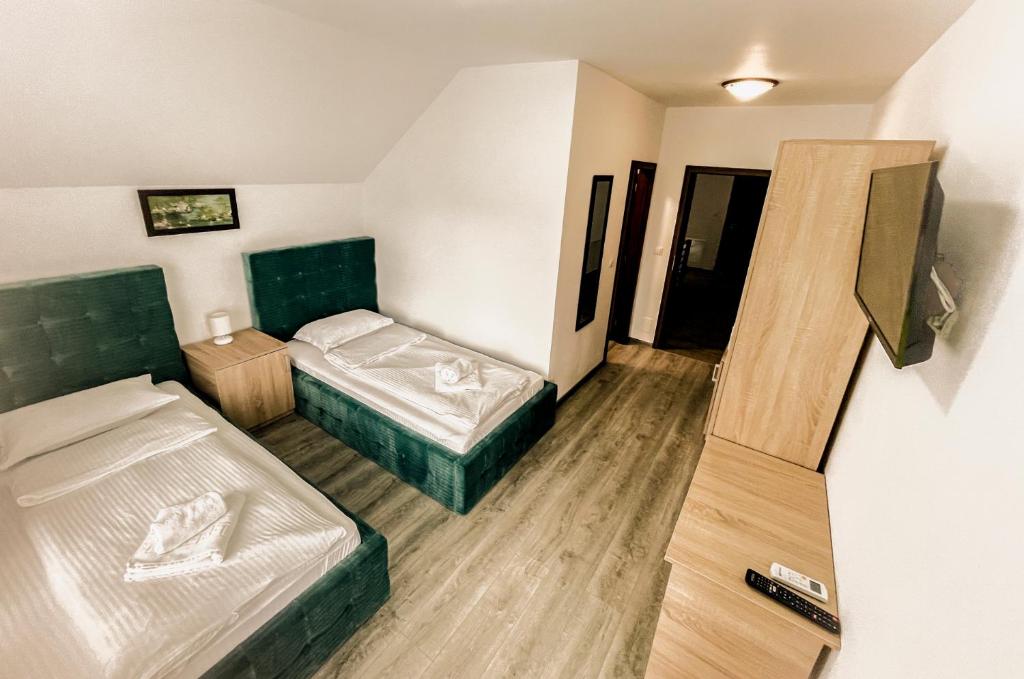
Rating 9.9 from 51 reviews!
Located right next to the national road in the Danube Gorge, the guesthouse offers accommodation in cozy rooms with a refrigerator, an outdoor pool, garden and terrace!
Village of Gornea, 309
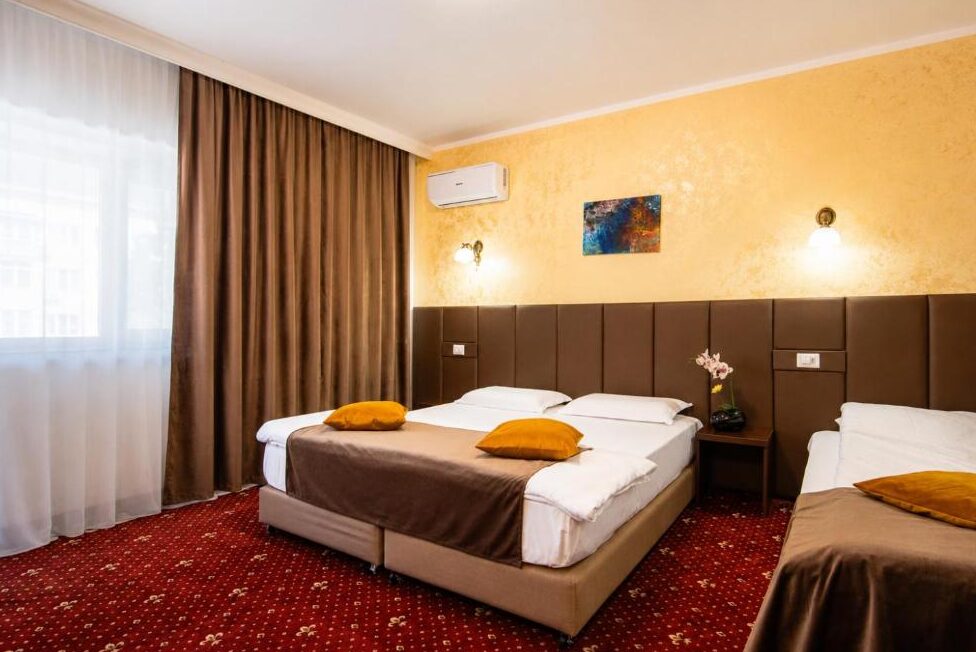
Rating 9.5 from 75 reviews!
Located on the Danube waterfront in Orșova, the modern hotel offers comfortable rooms with all amenities, as well as a restaurant, bar, terrace, garden and parking!
Bvd. 1 Decembrie 1918, 11, Orșova
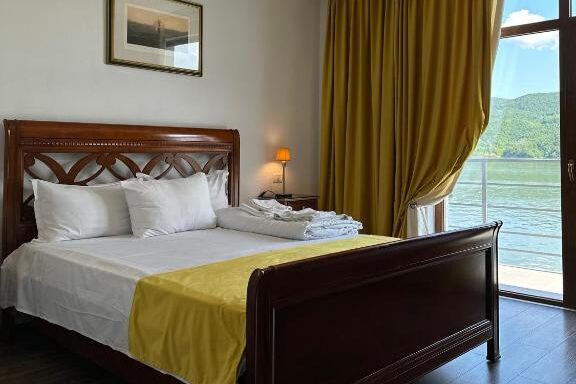
Rating 9.5 from 59 reviews!
Located on the banks of the Danube with splendid views, the complex offers accommodation in superior rooms, an acclaimed restaurant, bar, shared lounge, terrace, outdoor pool!
Dunării St. 990, Eșelnița