28
Horezu
and its Surroundings
Rising like a white fortress on the idyllic valley that descends from the mountains, the masterpiece of Brancovan architecture is just one of the spiritual refuges that guides these blessed lands at the foot of the Carpathians!
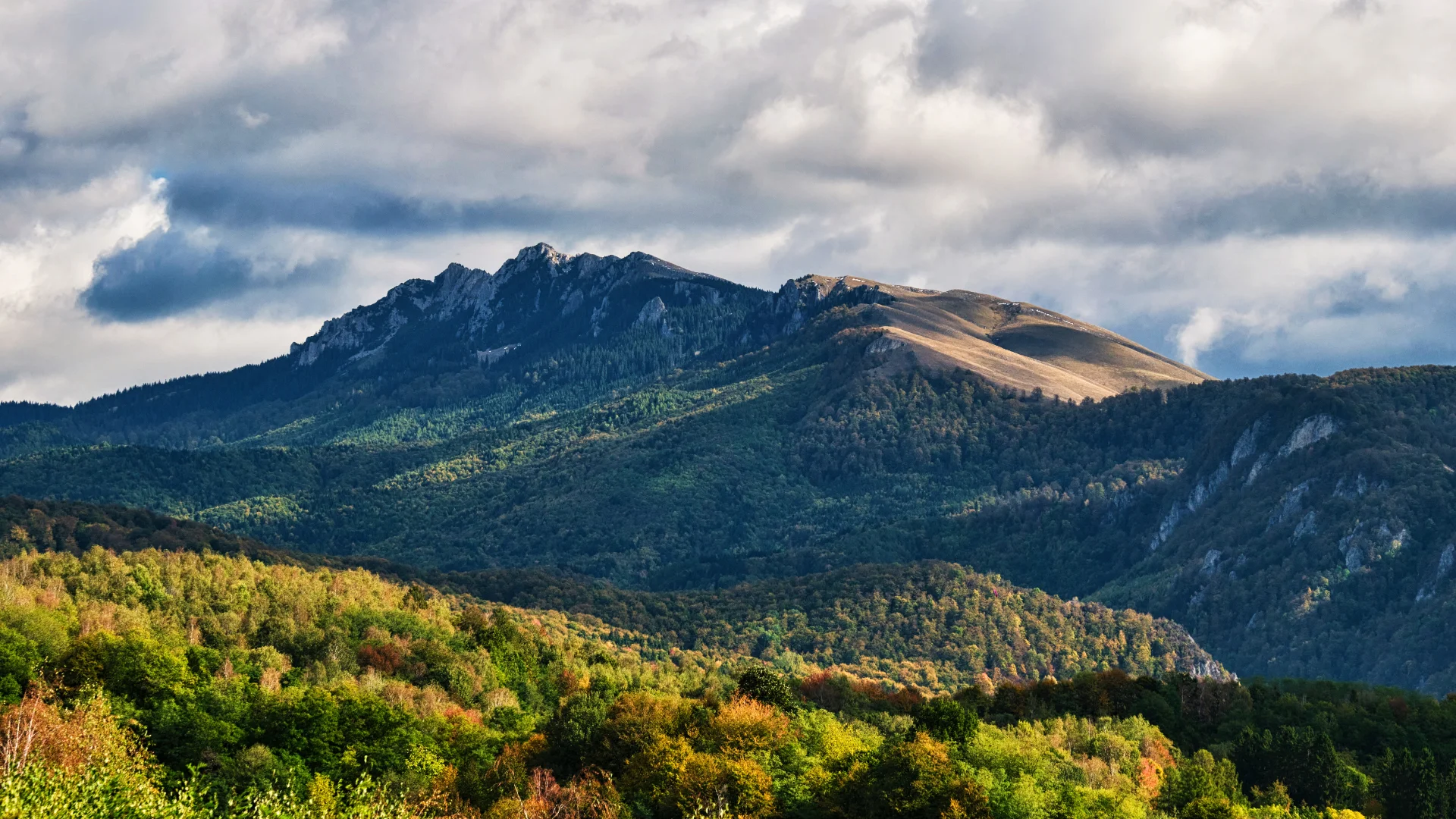
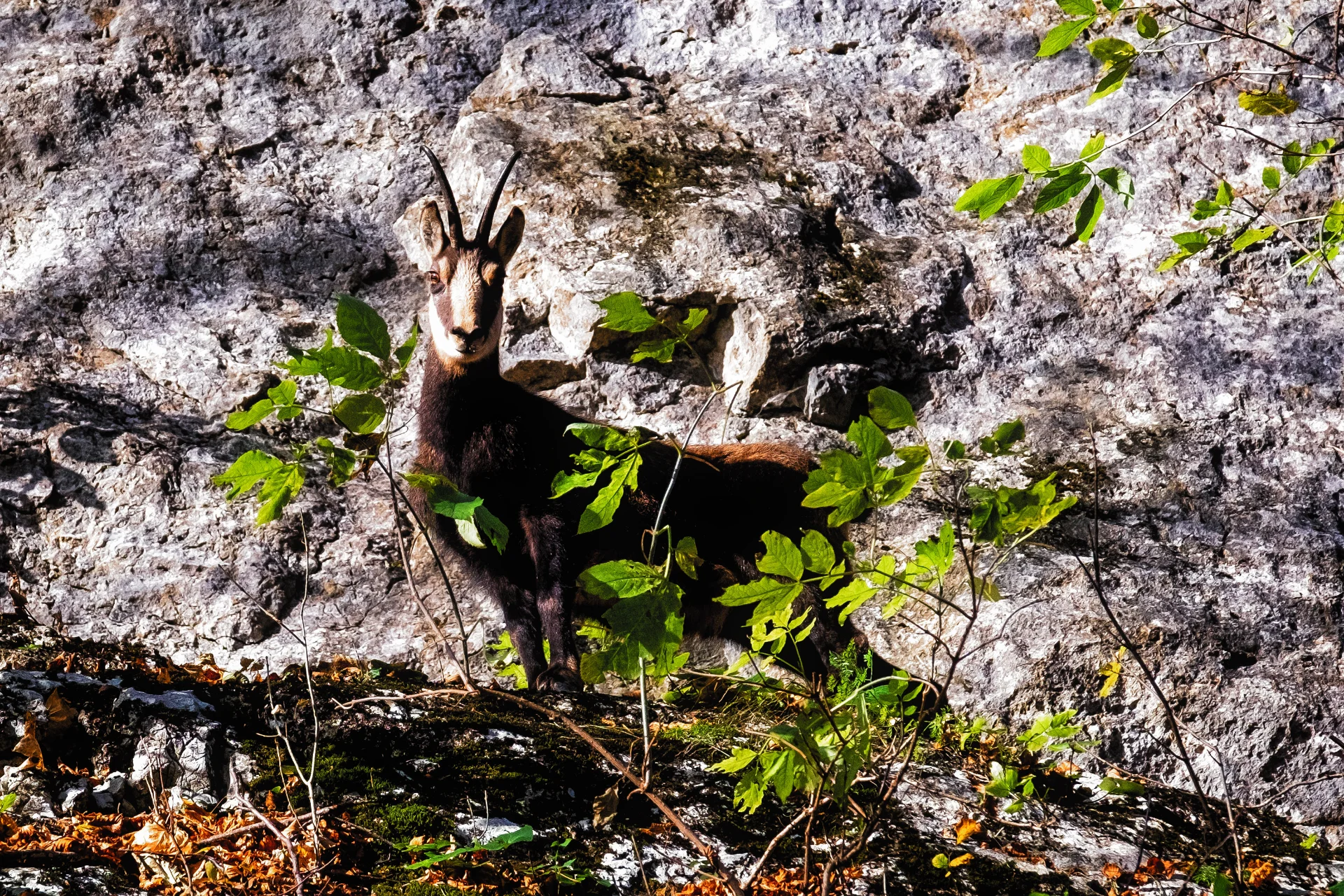
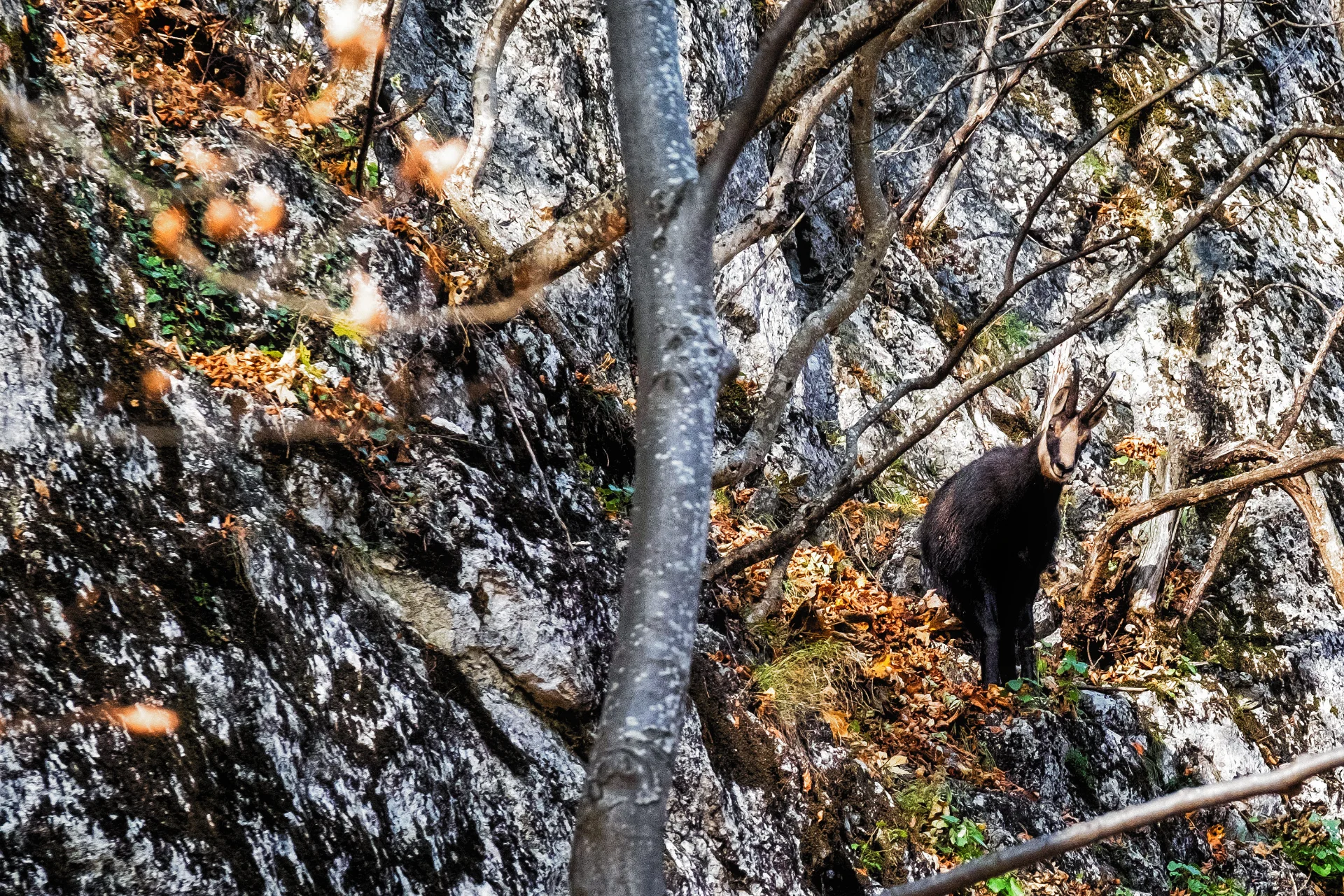
Leaving the Olt valley behind, we head west along the road below the mountains of Oltenia region, towards one of the most surprising destinations in this part of the country. Passing over the green hills, we come across old villages and monasteries, surrounded by wonderful landscapes. Soon, a high and narrow ridge rises from the gentle peaks of the Căpățănii mountains, a smaller sister of Pietra Craiului, as if lost in the green sea of the surrounding forests. The isolated and wild massif draws us to the heights, along the paths meeting hermits and black goats, but also memorable panoramas. At its foot lie picturesque villages and several legendary monasteries, none of which resemble the old monastic settlement of Hurezi.
We can reach these wonderful places along the national road 67, which connects Râmnicu Vâlcea to Târgu Jiu, while DN65C makes the connection with Craiova. At the foot of the mountains in northern Oltenia, the town of Horezu and the surrounding area have established themselves over time as an authentic destination, preserving unique traditions. Recognized as one of the most important centers of traditional ceramics in the country, the town is among the oldest in the region, first developed in the valley around the Hurezi monastery, founded by ruler Constantin Brâncoveanu at the end of the 17th century. In the following centuries, the hearth of the village moved to the nearby hill, becoming a commercial center on the transhumance route.
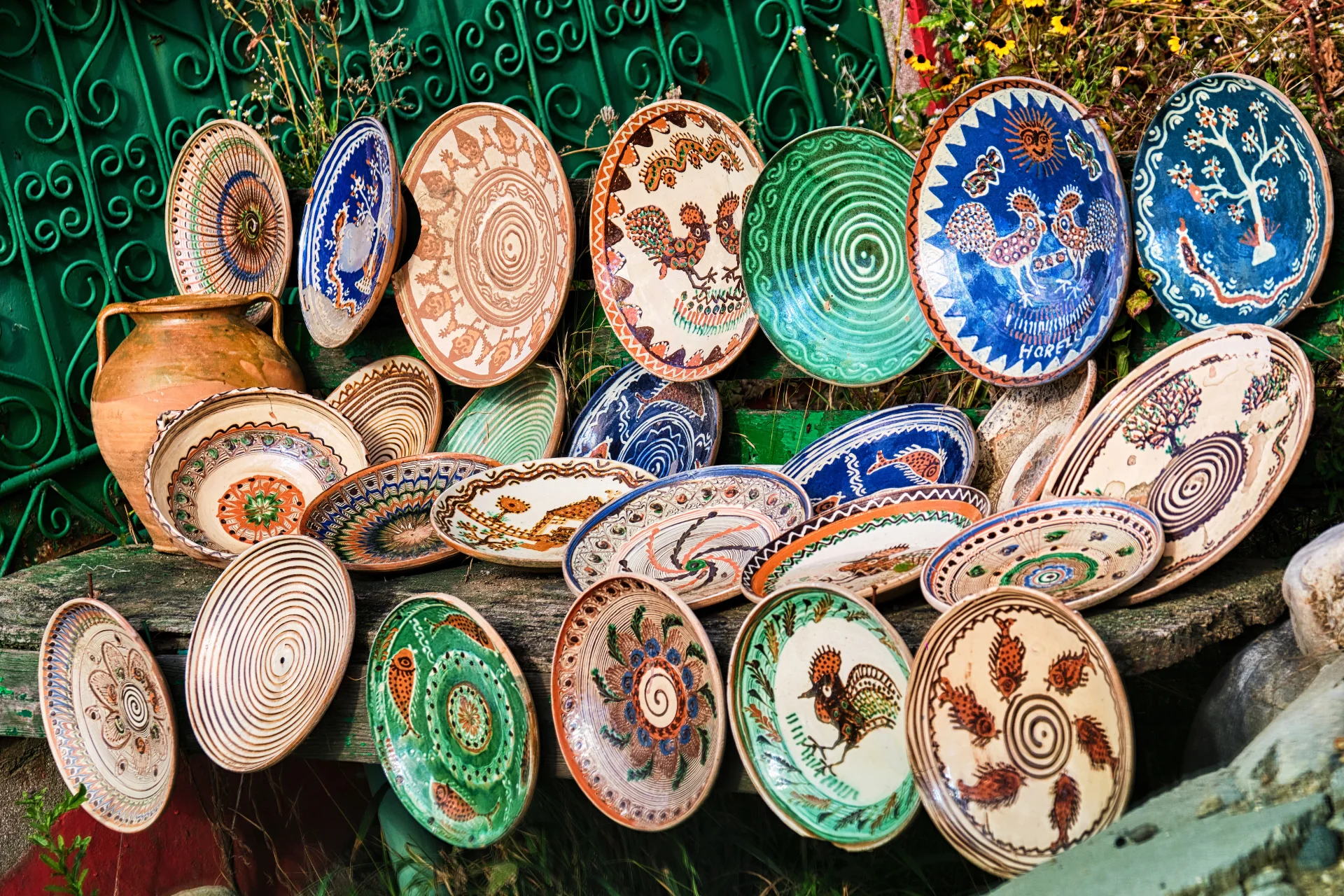
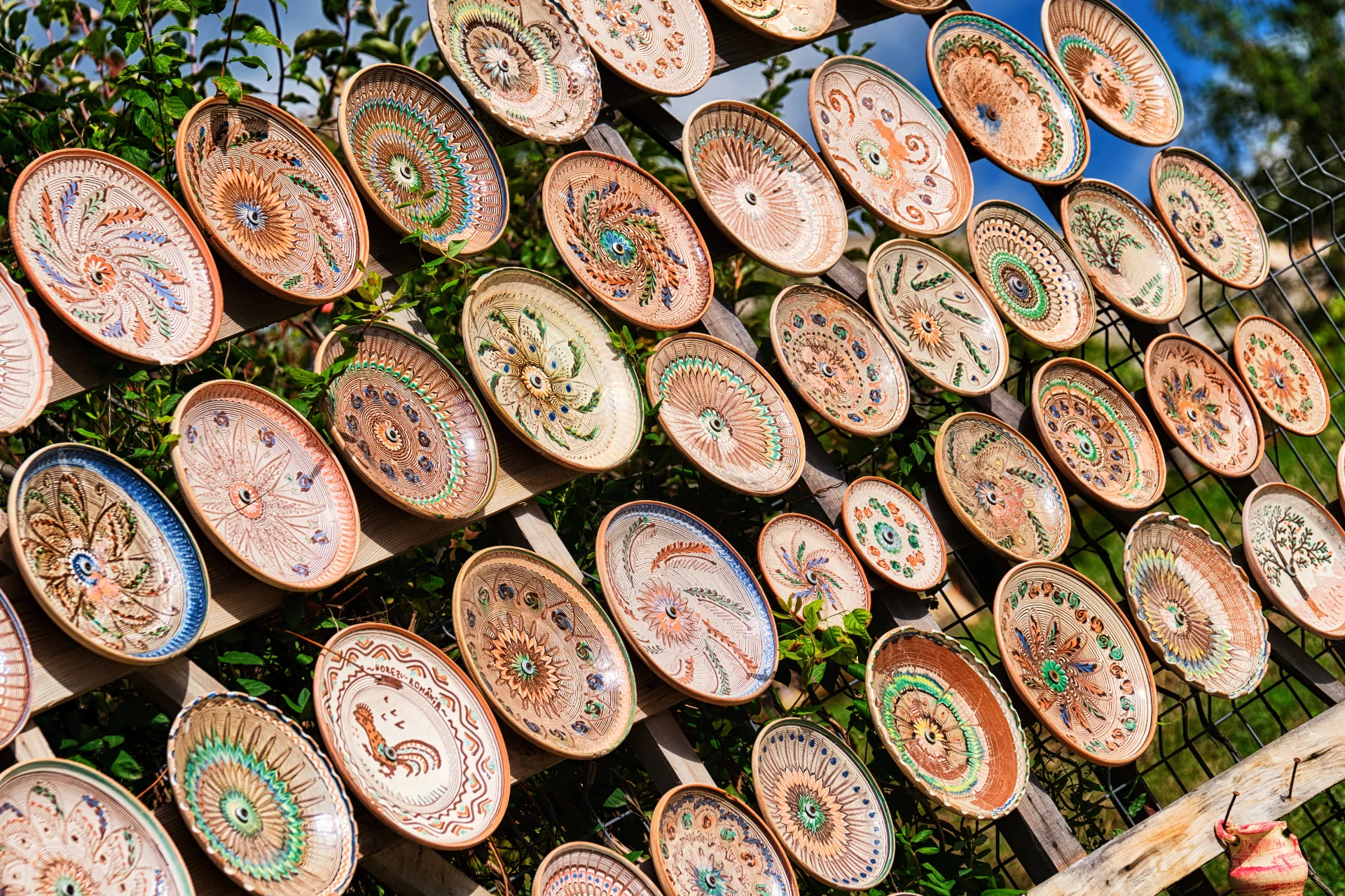
Since 2012, Horezu pottery has been included in the UNESCO list of intangible cultural heritage, being a unique traditional craft. More often than not, pottery here is a family occupation, with men and women having separate roles in producing authentic masterpieces. Characterized by the variety of shapes and vivid colors of ceramic models, many of which are unique to this area, Horezu ceramics create a special element of attraction for this destination.
The exact period of the development of the pottery craft in the villages around Horezu is not known, but most likely this tradition has existed since ancient times, as evidenced by the craftsmanship and complexity of the ceramics produced here. We can admire the specific products in various shops in Horezu, but to discover authentic Horezu ceramics we must visit the workshops of the craftsmen in the village of Olari. The symbol of this traditional destination is the Horezu Rooster, a unique element of the ceramic products here, and on the first Sunday of June, the Romanian Popular Ceramics Fair takes place.
Search for Lodging around Horezu on Booking.com!
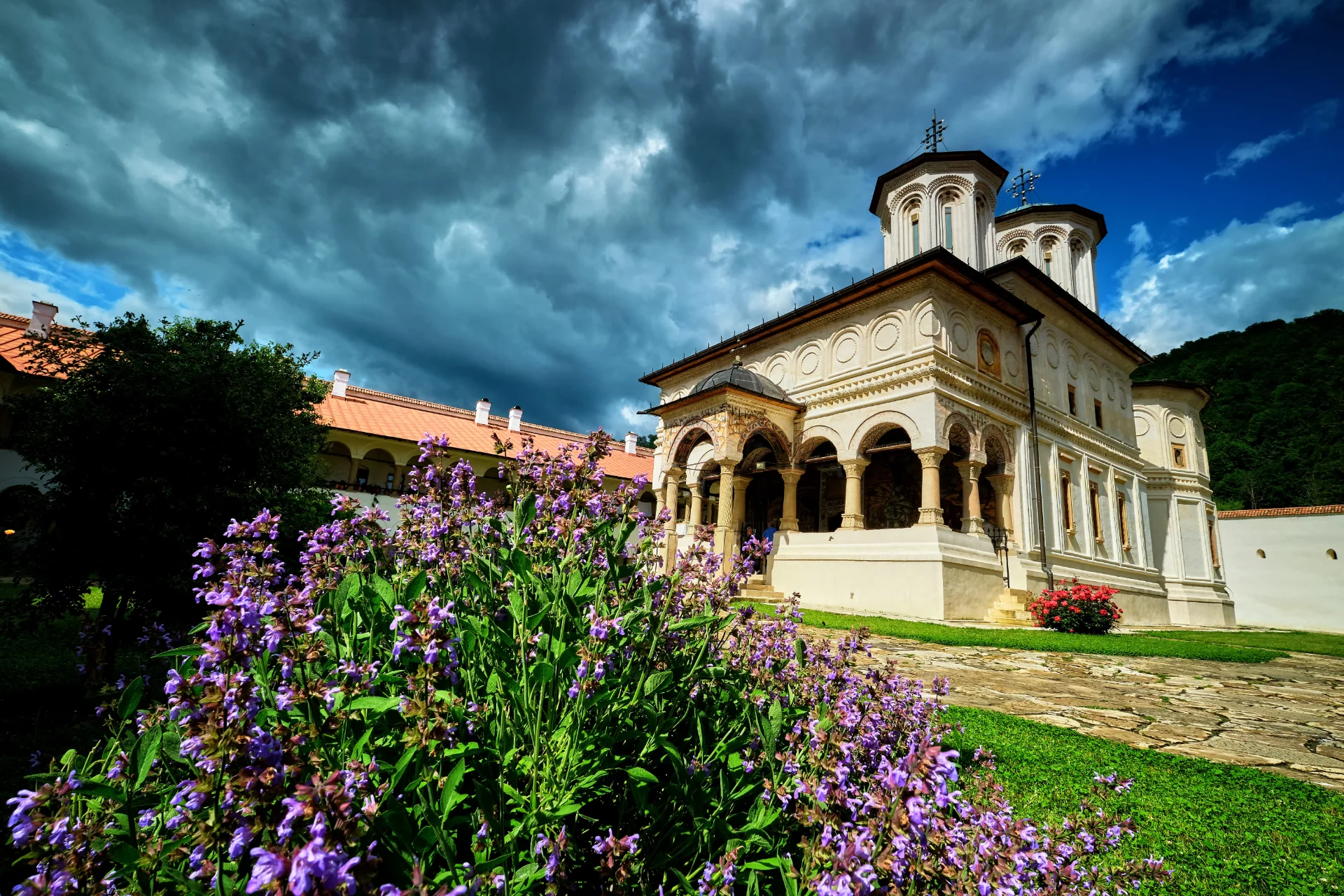
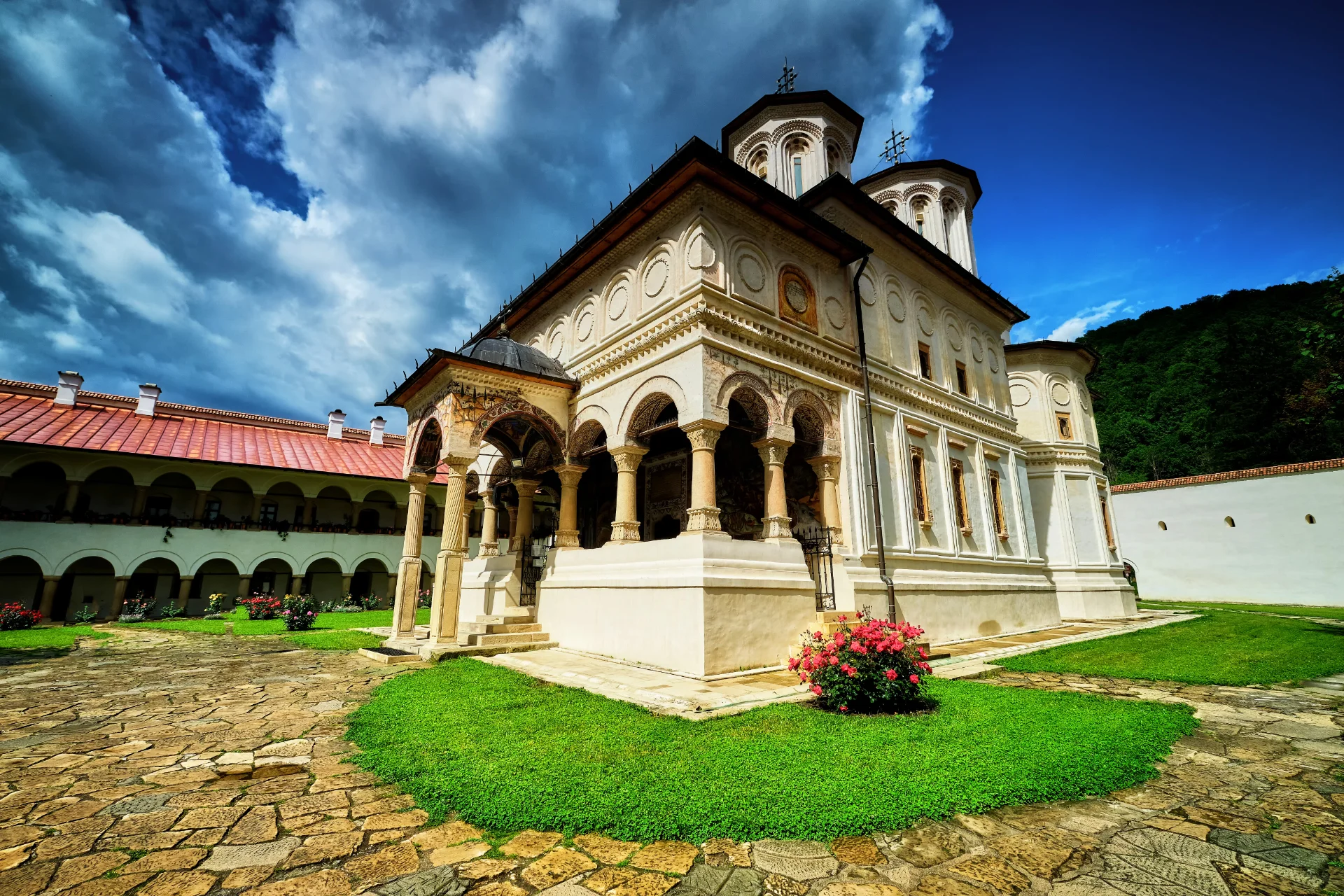
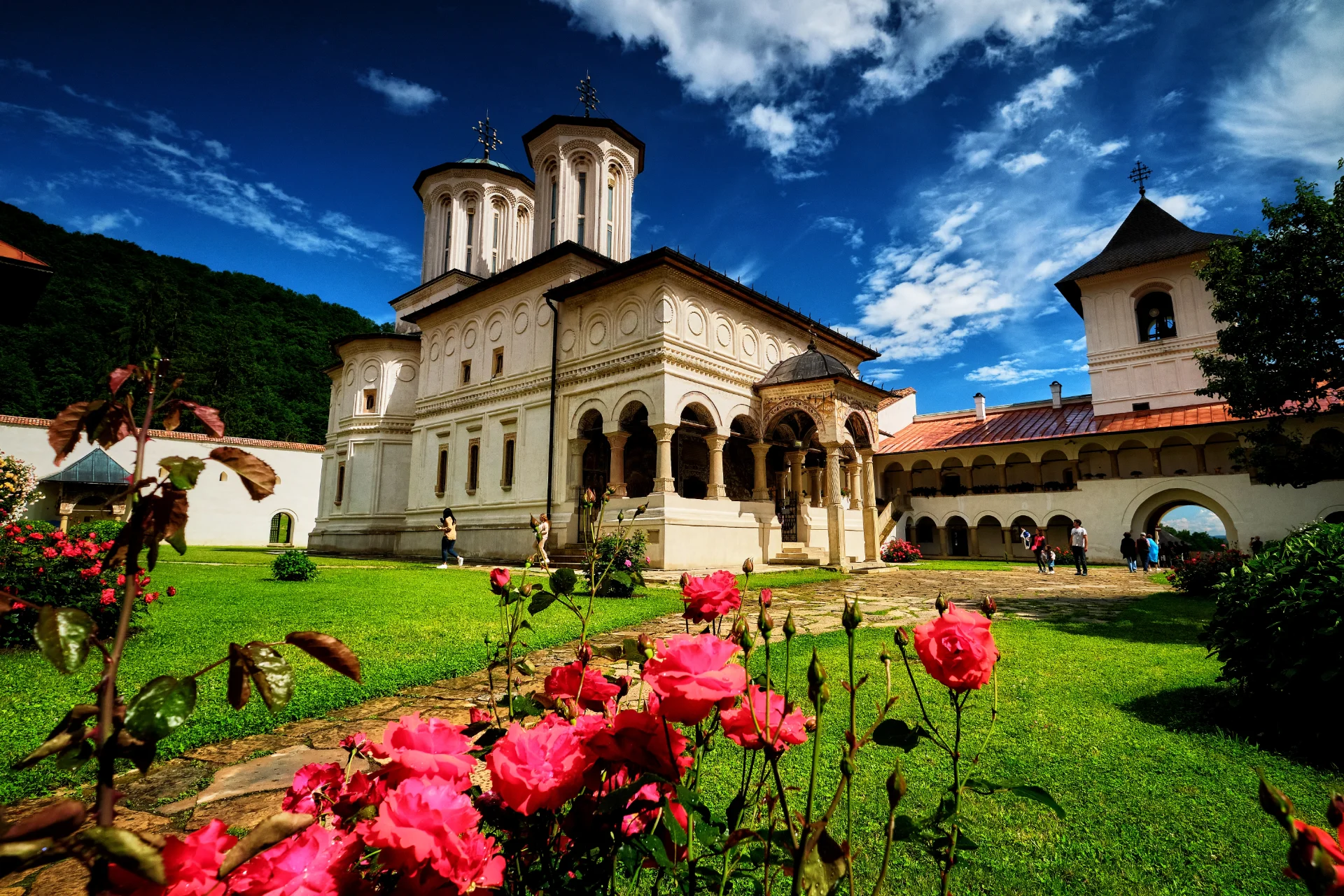
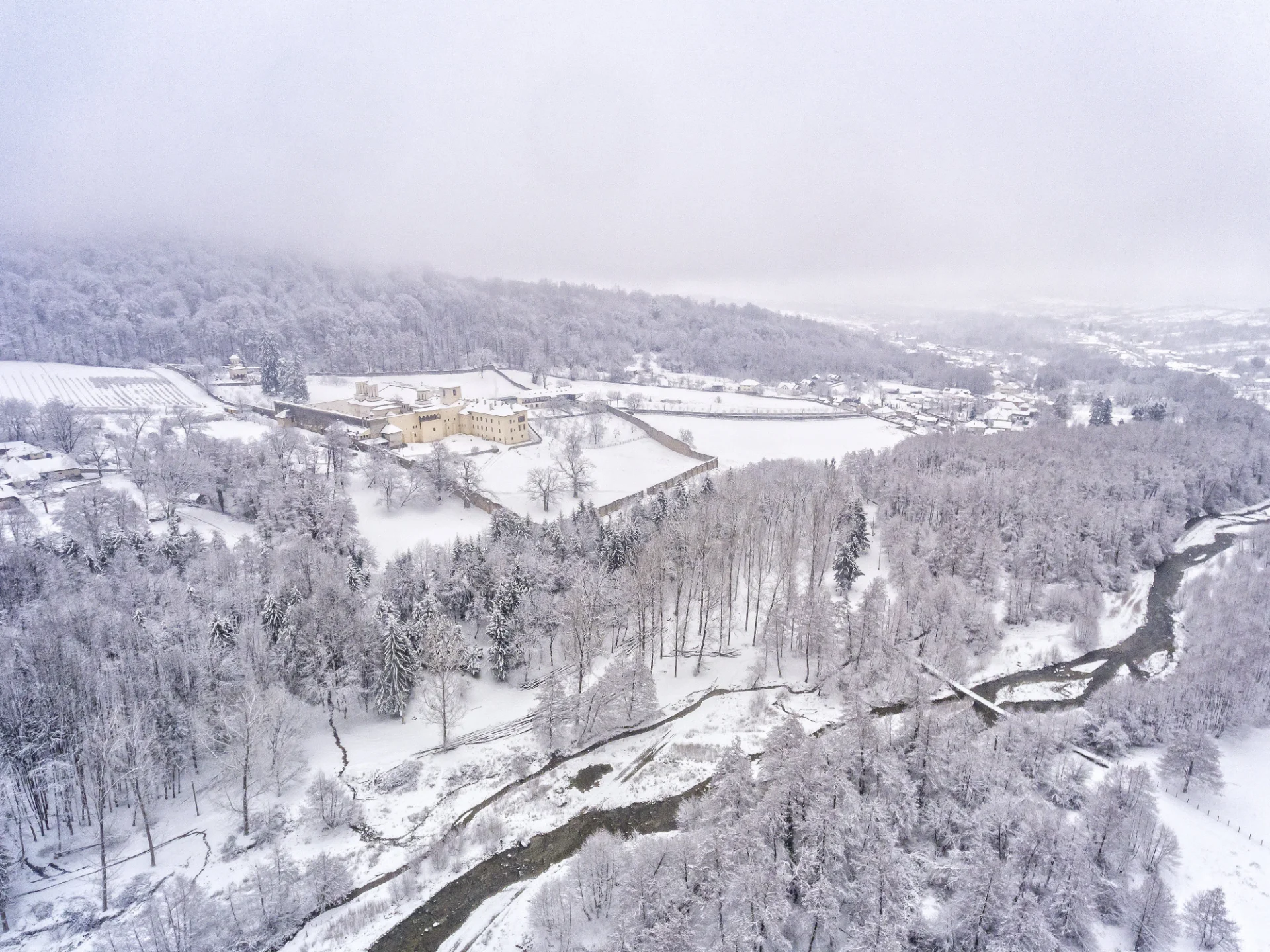
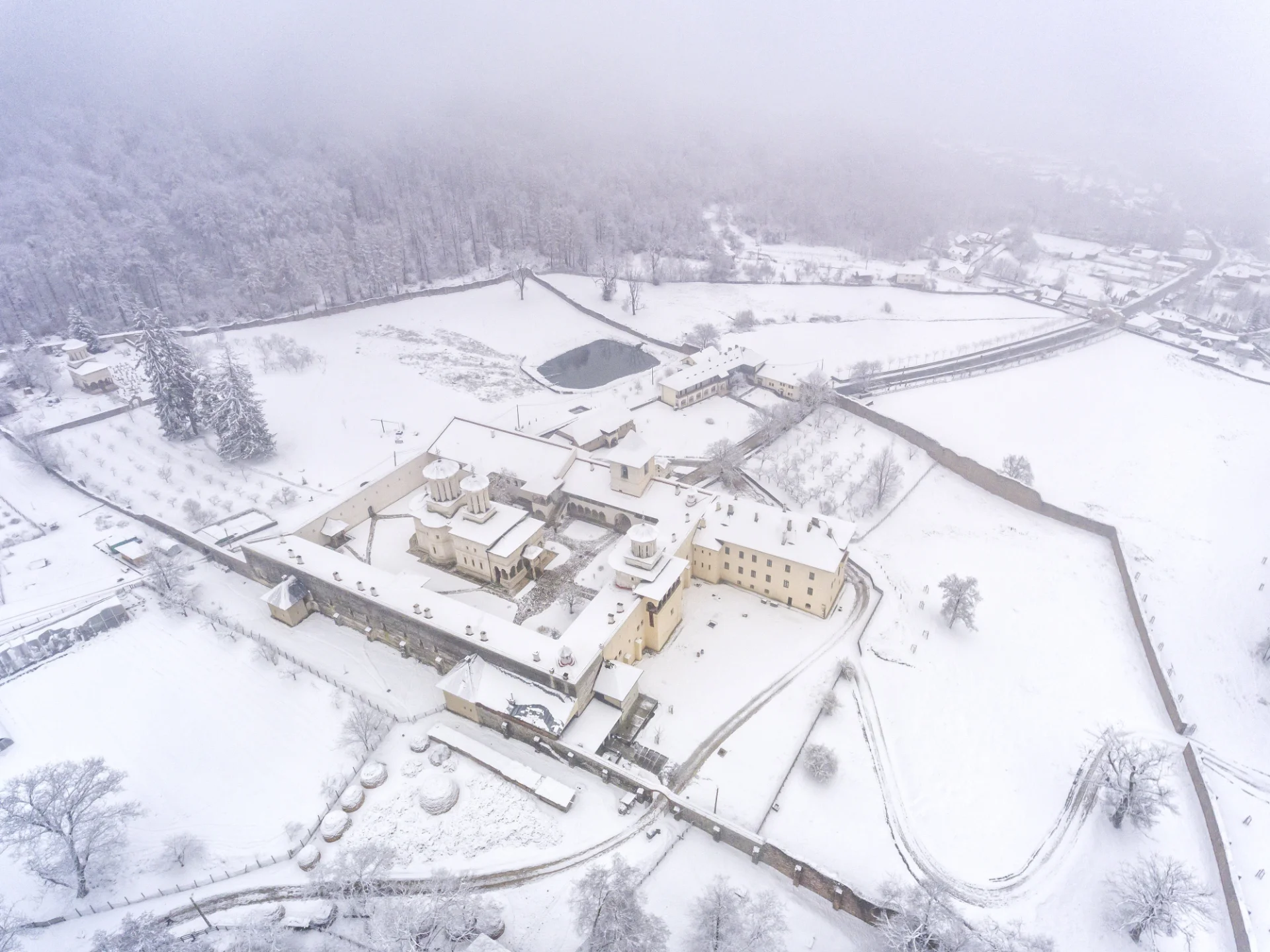
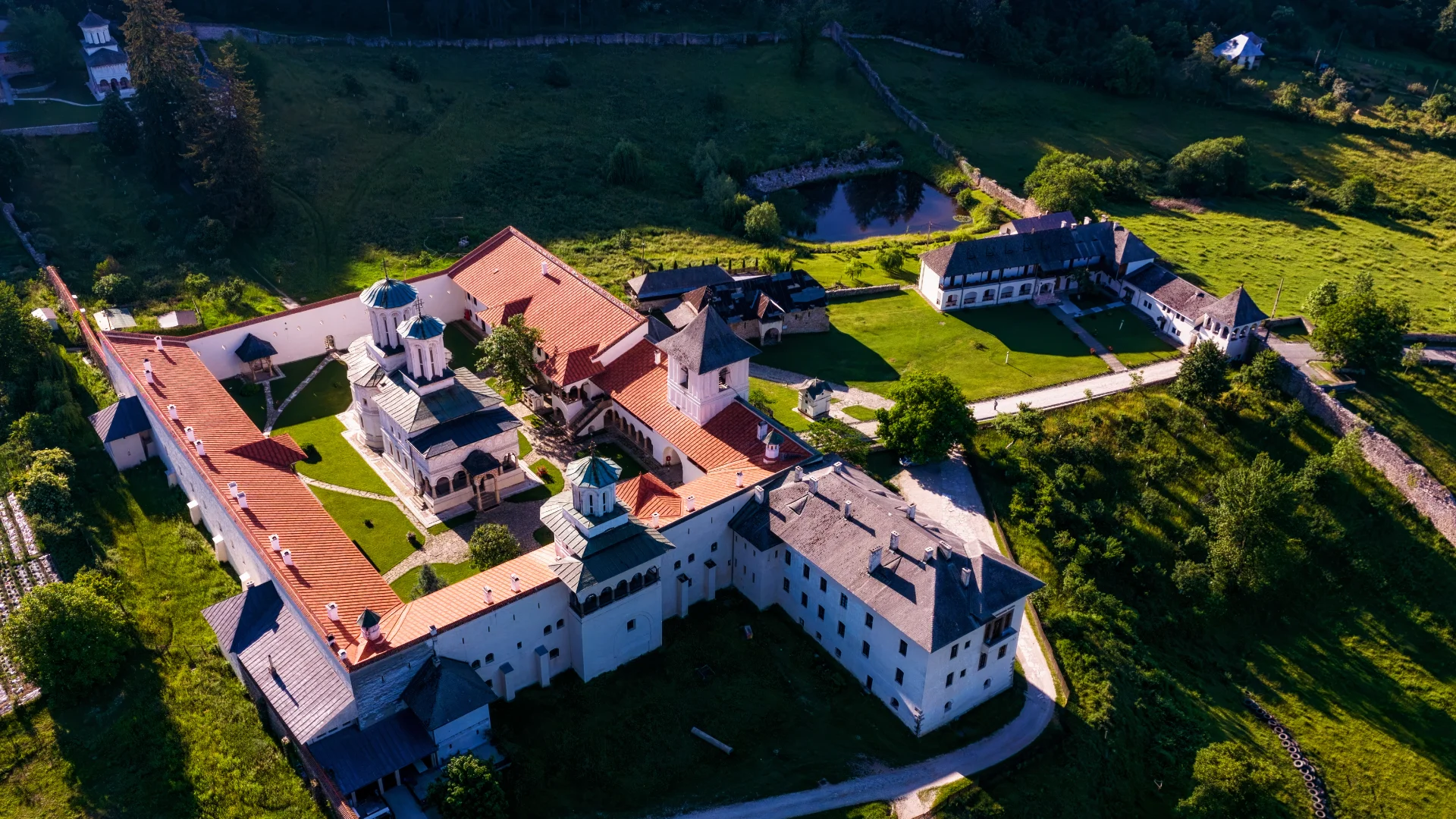
In the city we can still admire a few old churches, but the most important place nearby is the Hurezi Monastery, a unique monument included in the UNESCO world heritage list since 1995. It is located in the village of Romanii de Jos, just a few kilometers from the city. A masterpiece representative of Romanian religious art and architecture, it was built between 1690 and 1693, being founded by the ruler Constantin Brâncoveanu. The monastery is a fascinating complex of structures, having two inner courtyards that are surrounded by strong walls, like a medieval fortress, also representing the largest monastic settlement in the country.
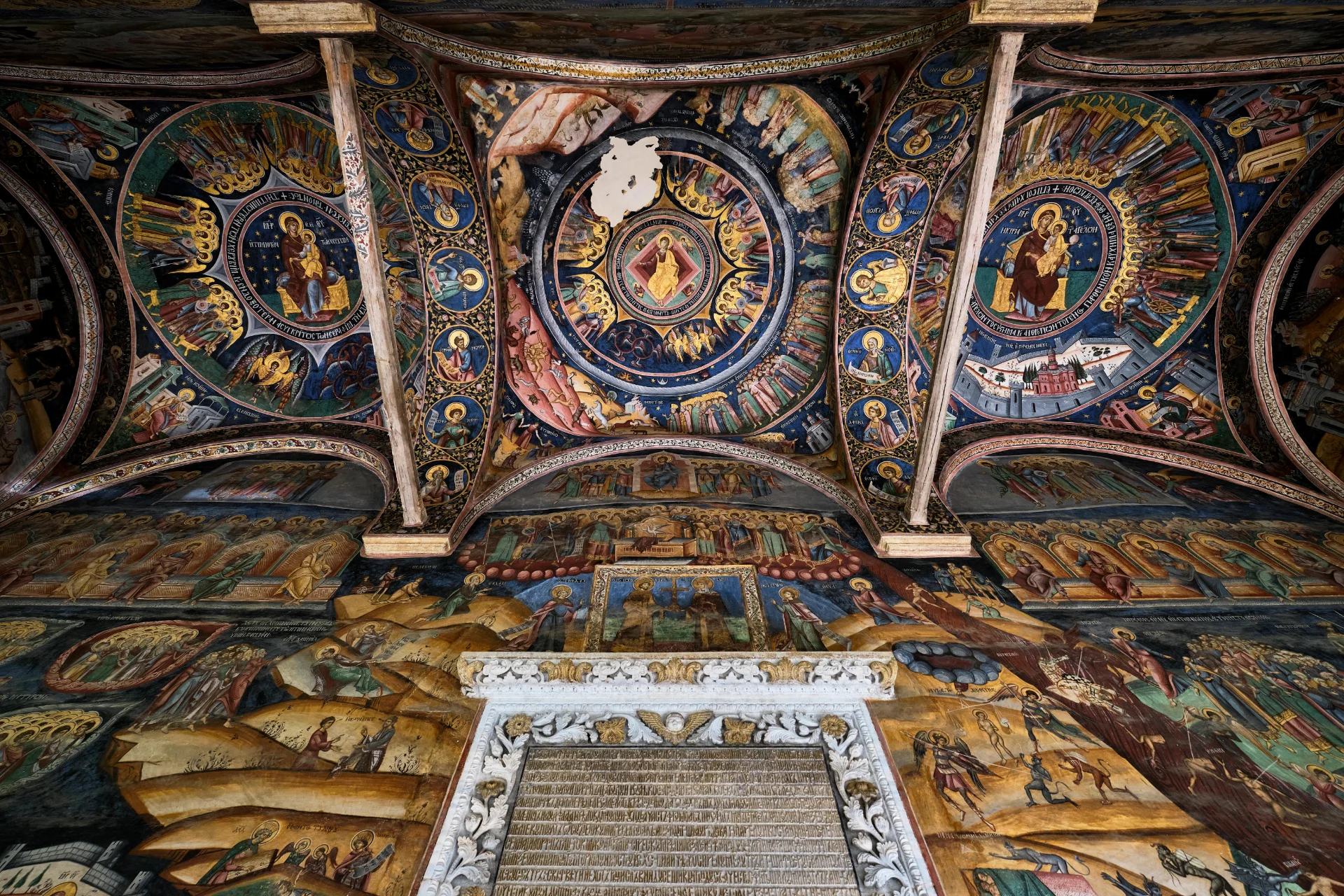
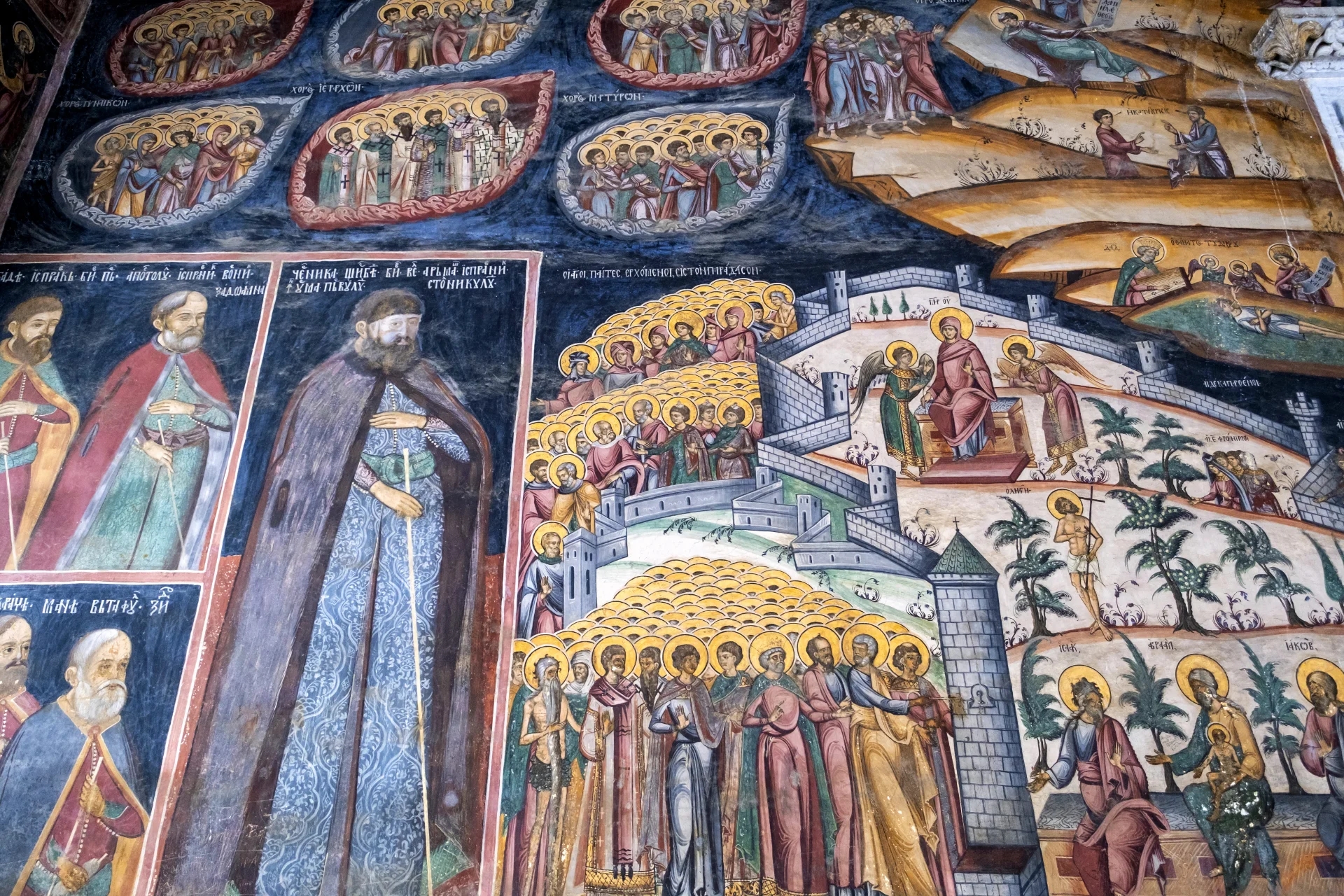
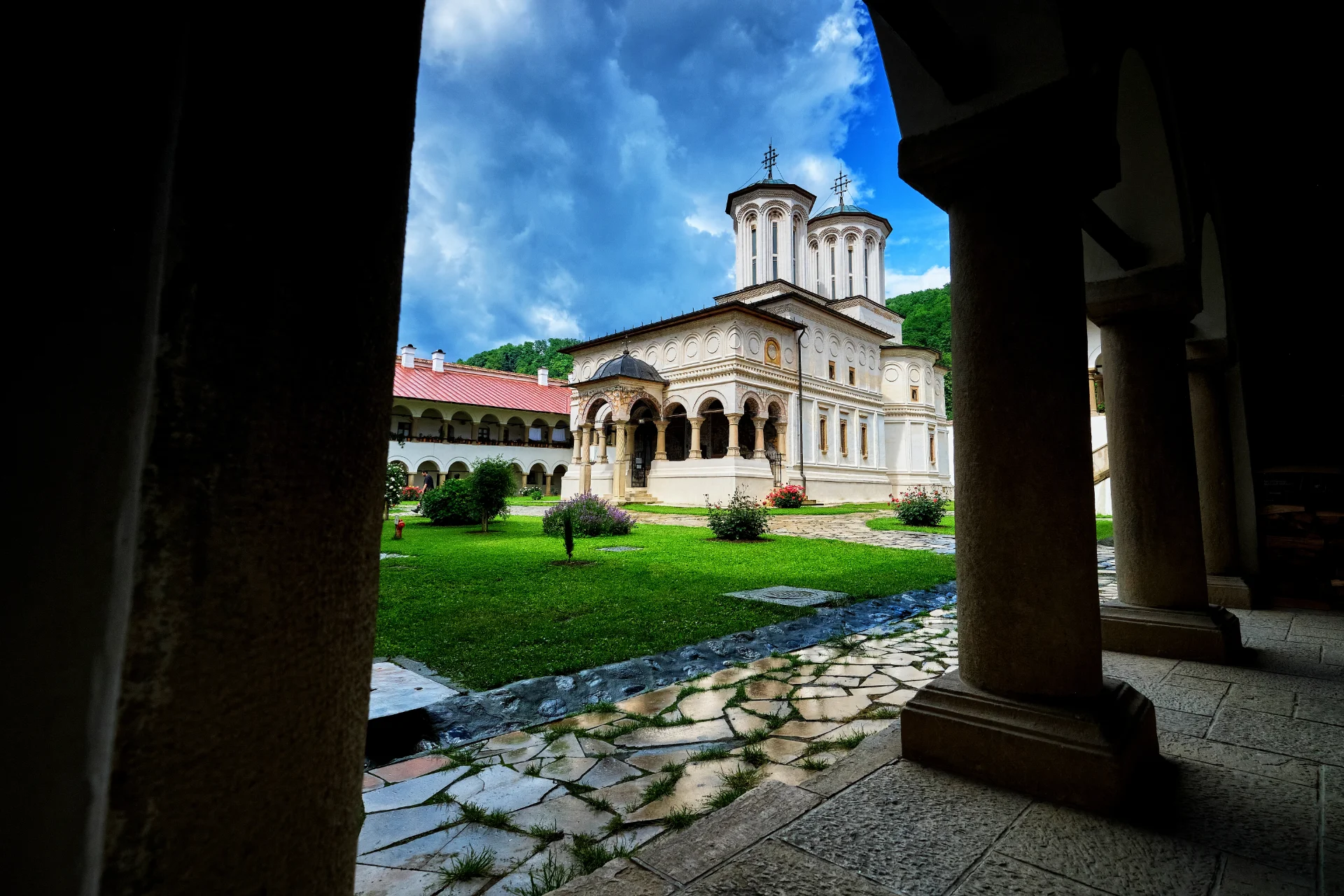
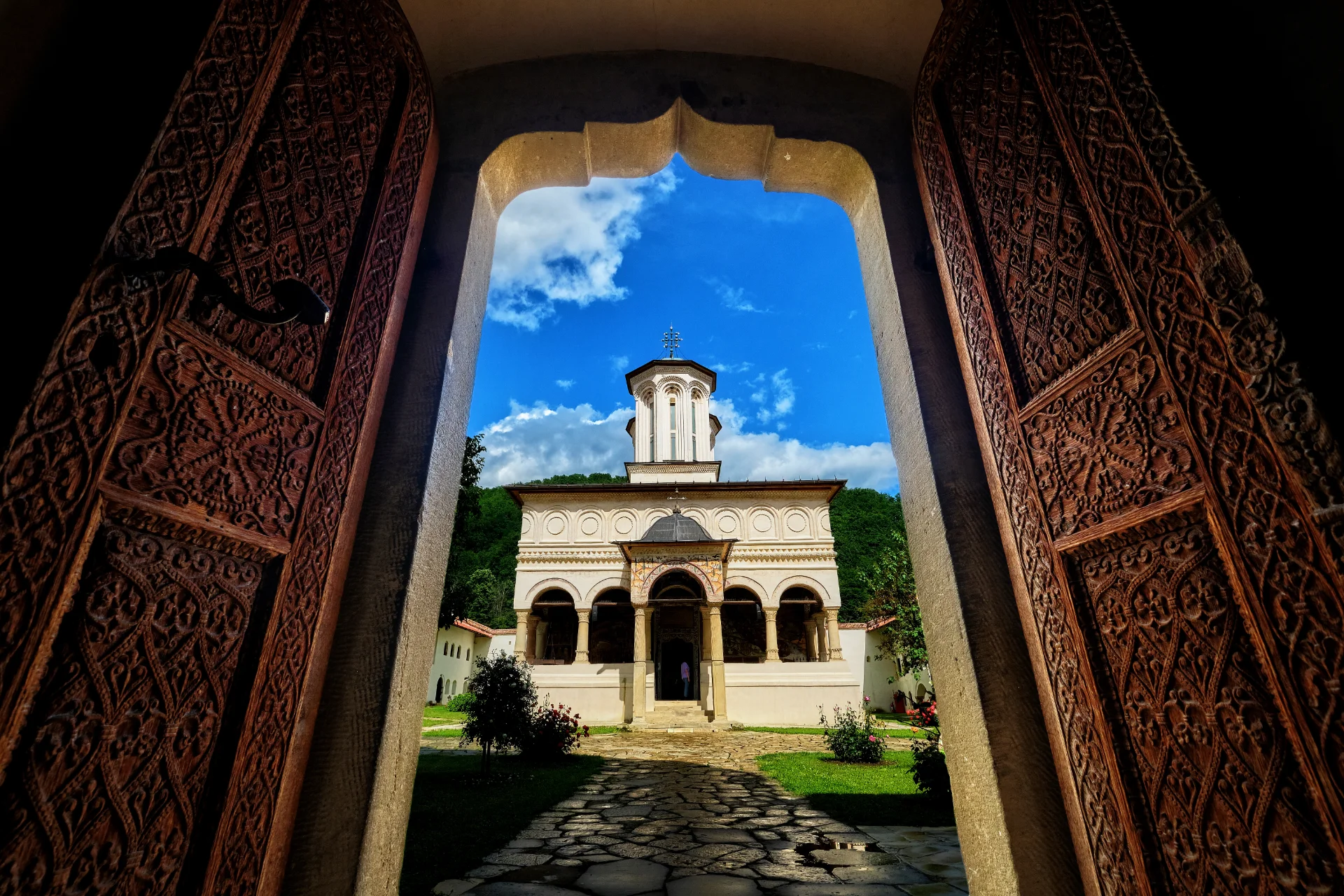
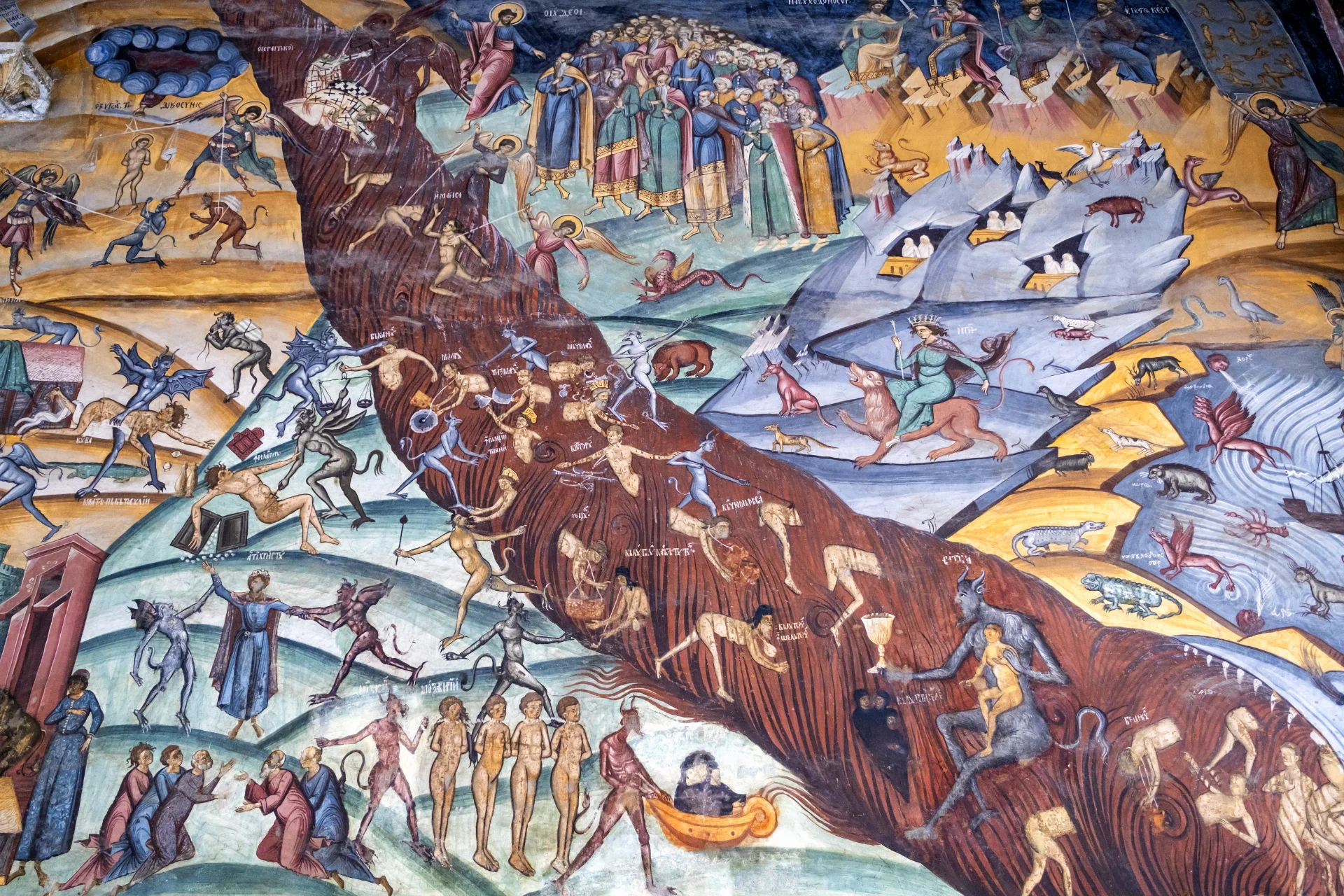
We can first admire the main church in the inner courtyard, which is inspired by the architecture of the church in Curtea de Argeș. However, it also has many unique elements, such as the Brancovan style porch supported by 10 superb columns, carved in stone. We are also impressed by the original paintings in vivid colors, the pediment carved in gold-polished linden wood or the beautiful icons inside. The church also contains the tomb of Constantin Brâncoveanu, but it is empty, the ruler being buried in a church in Bucharest.
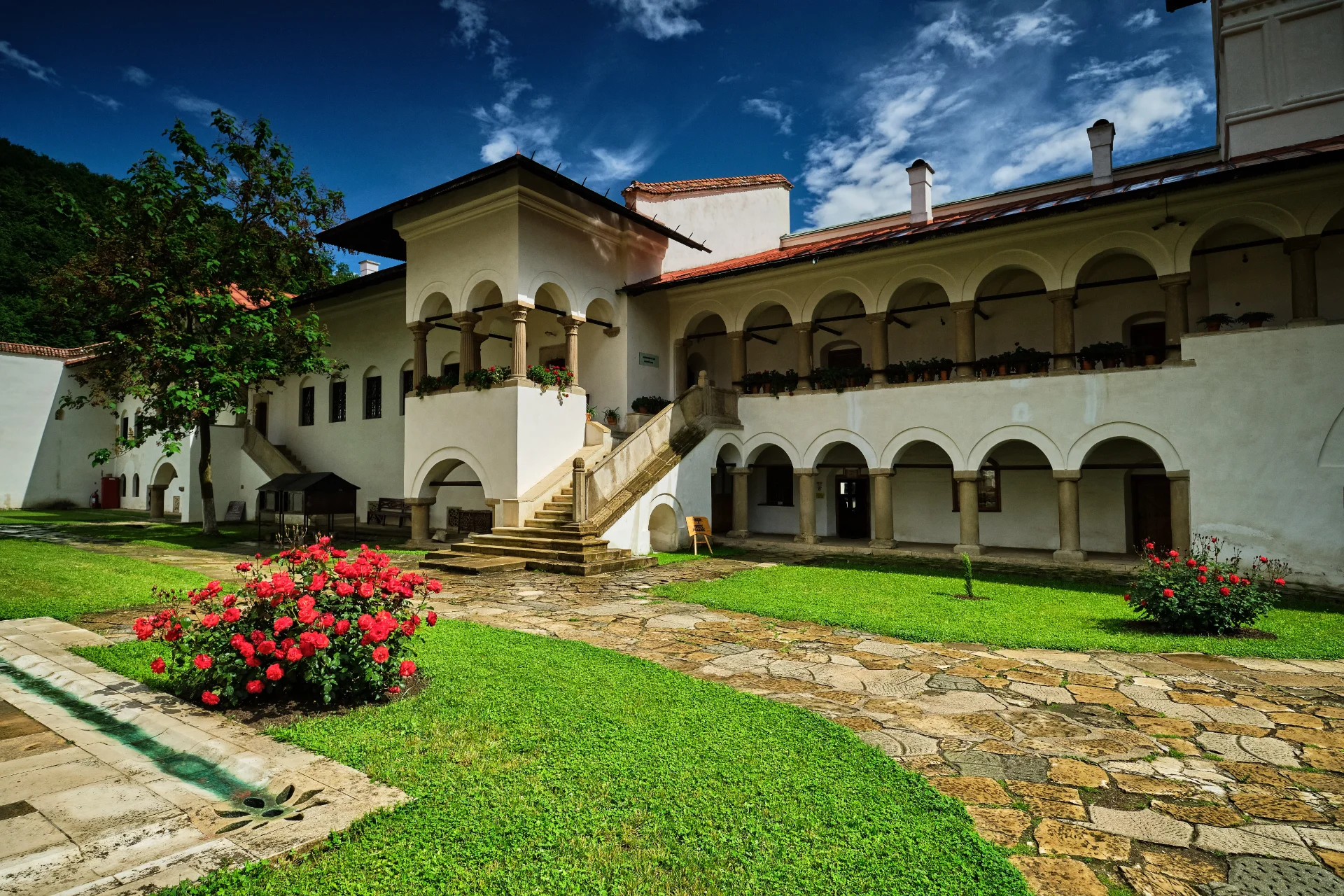
Around the church we discover a complex of buildings and spaces arranged on two levels, including the cells of the nuns, the chapel from 1697 with superb frescoes, the impressive entrance gate under the bell and others. There is also an interesting library established by the founder, with thousands of old and rare books, as well as a collection of icons and valuable church objects. Around this main courtyard, we can admire several other old churches, starting with the Hospital Church, founded by Mrs. Maria Brâncoveanu in 1696, located a short distance to the east. About 50 meters to the north, we find the “St. Apostles” Hermitage, founded by the first abbot of the monastery in 1698, while the “St. Stephen” Hermitage is a short distance to the east, across the river. Another old wooden church can be admired in the southern part, and this whole ensemble forms a cross, with the monastery in the center.
Search for Flights to Romania with Booking.com!
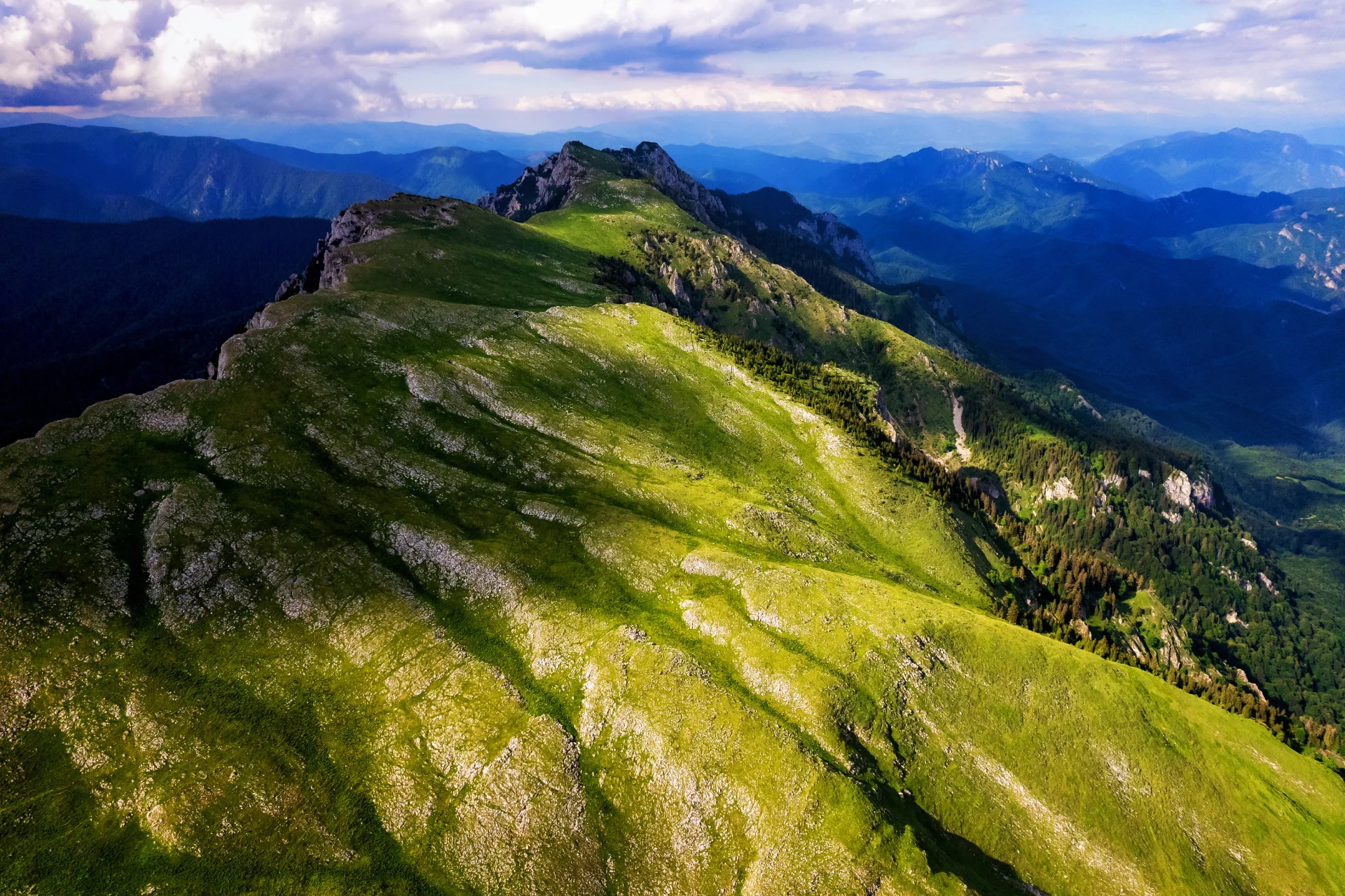
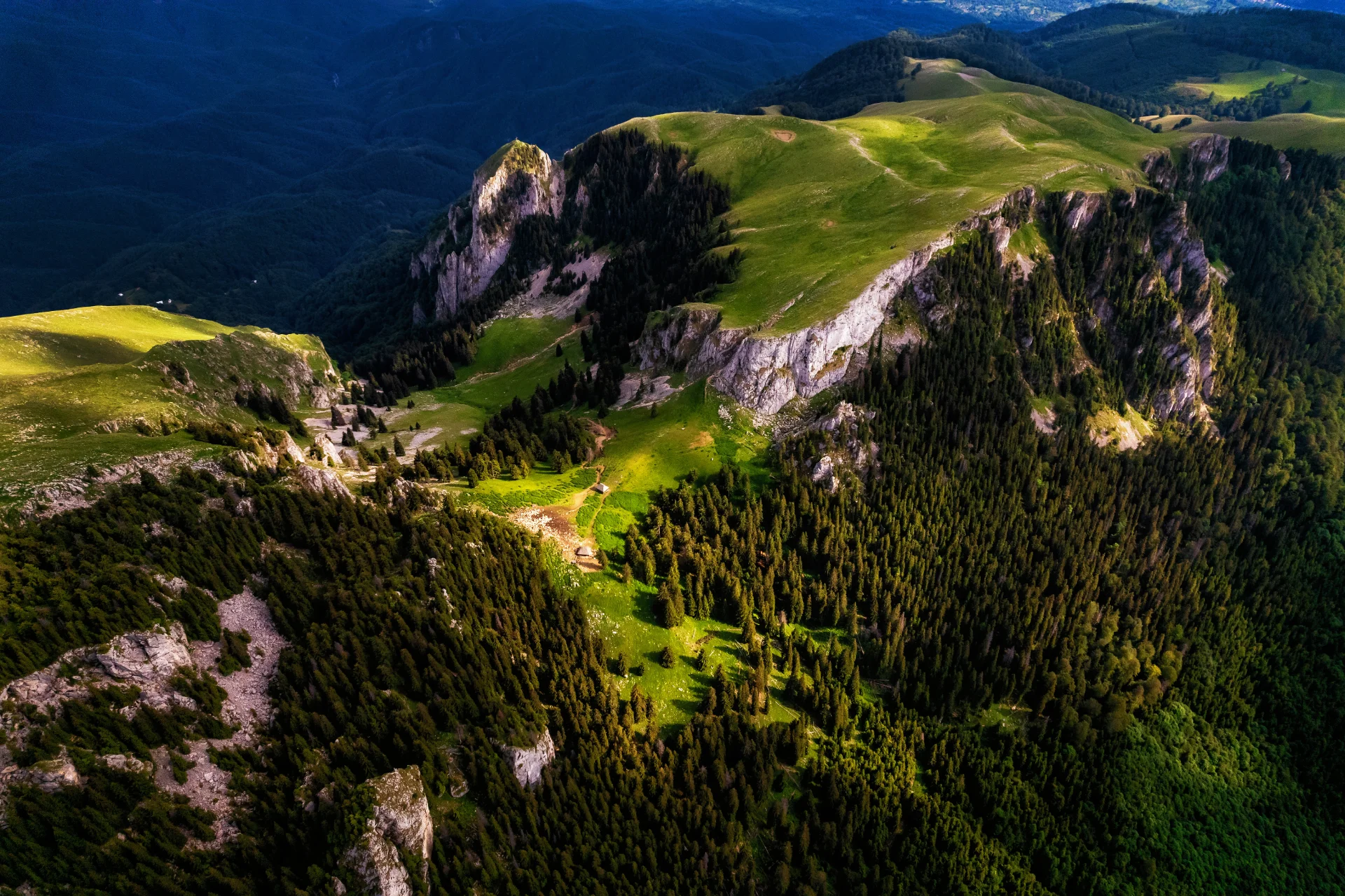
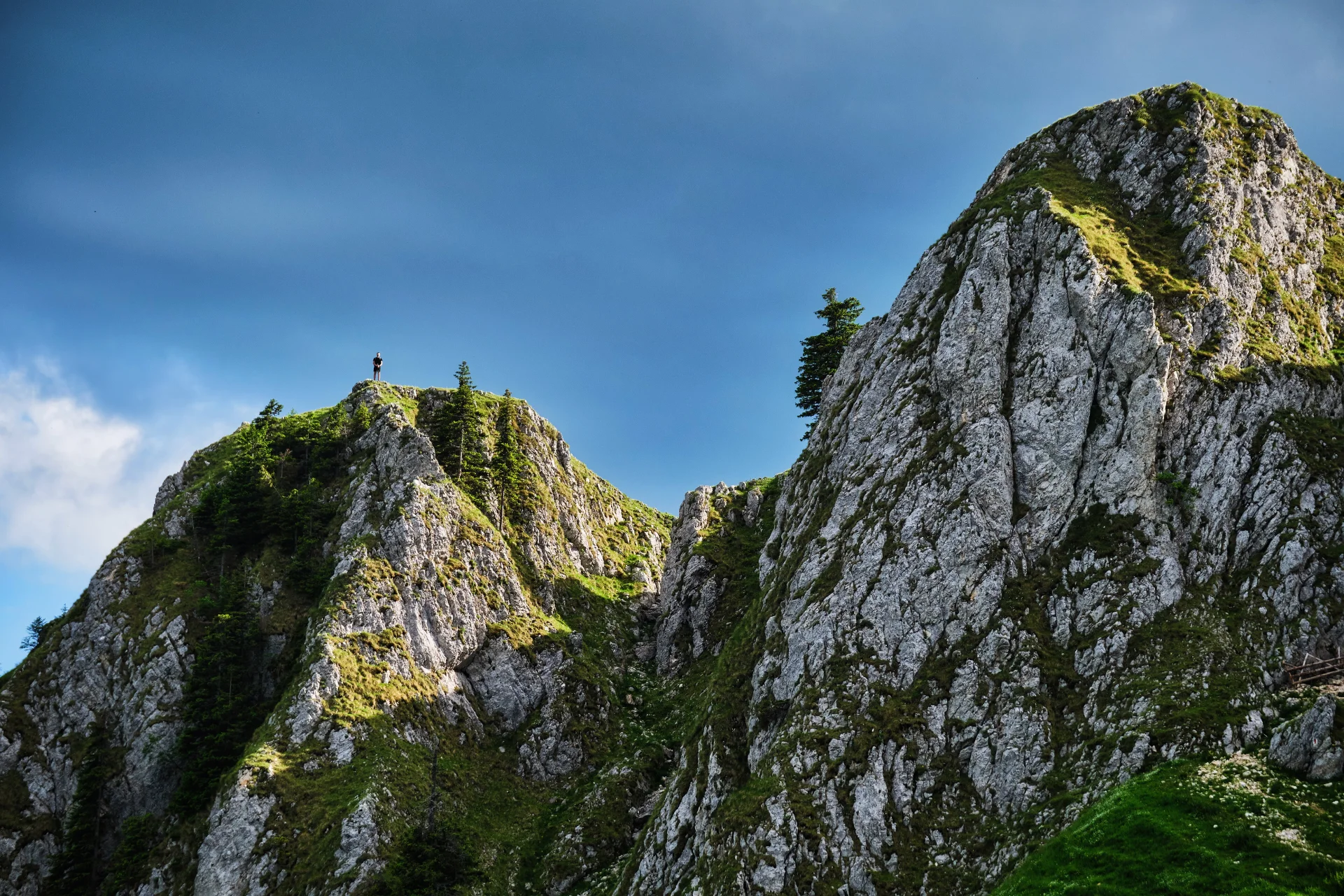
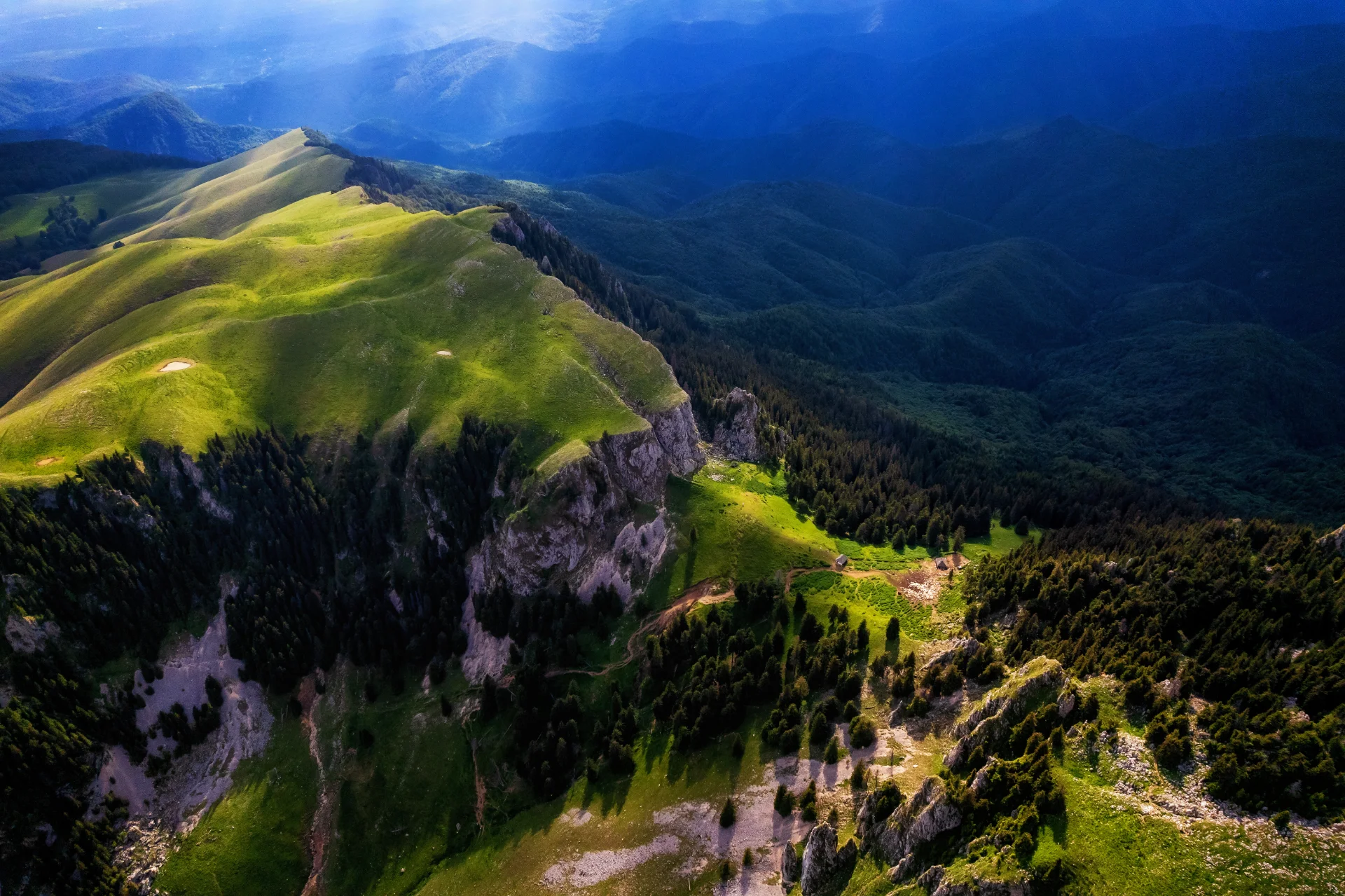
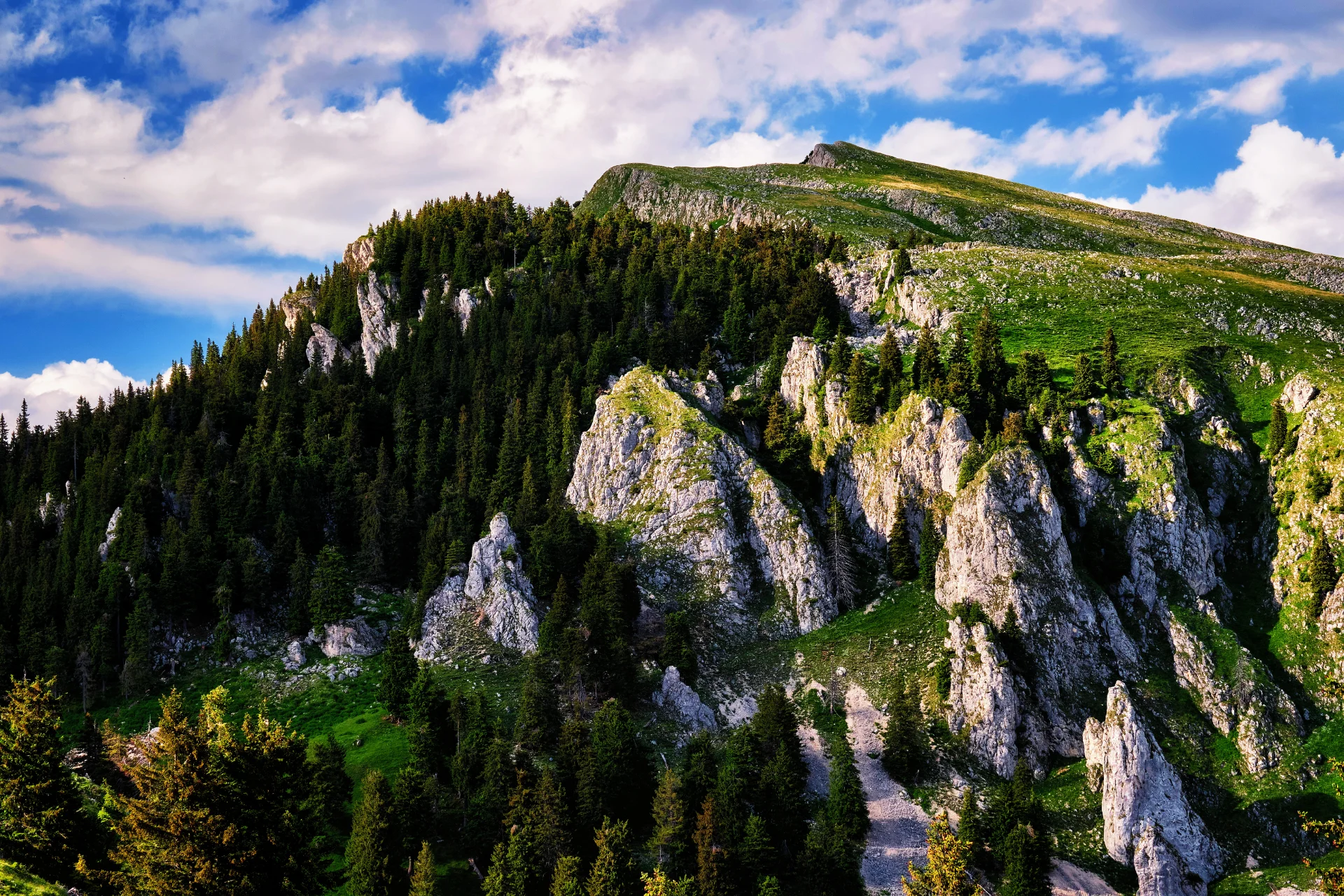
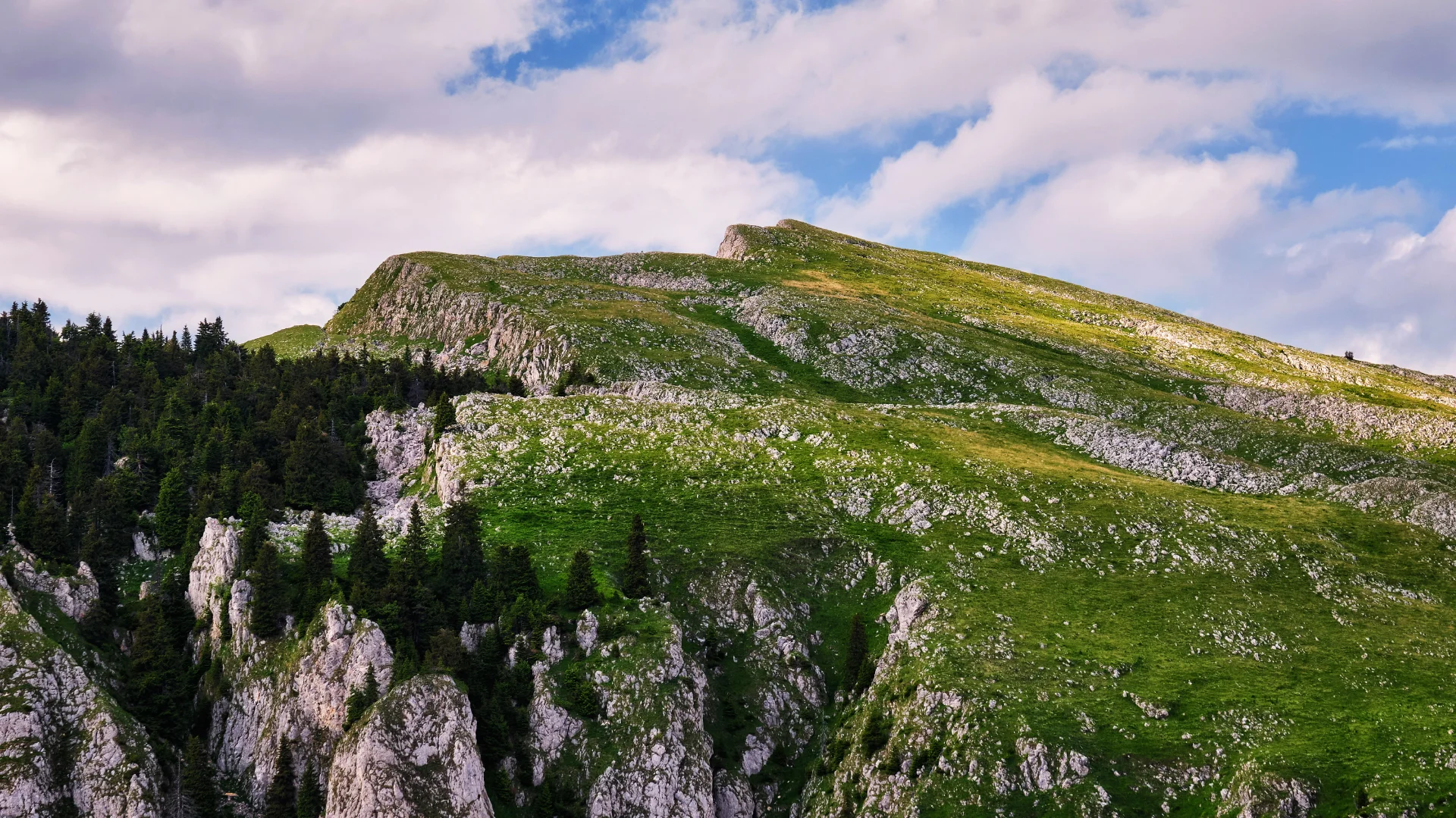
Wherever we are in these lands, we are always watched over by the lonely ridge of the Buila-Vânturarița Massif, which, although it is the smallest national park in the country, covering an area of just over 40 square kilometers, contains an amazing richness and diversity of landscapes. It thus offers us the opportunity to discover charming places in a fairly limited area, starting with the breathtaking hiking trail that follows the high and steep ridge, with views that often take our breath away. We thus have before us a task that seems intimidating, that of climbing the almost 1,000 meters difference in level compared to the surrounding valleys. To follow the most famous route, we start from the village of Bărbătești, following a forest road that goes up the valley for a few kilometers, after which it turns into a demanding tourist route.
Rising like the spine of a prehistoric dinosaur above the surrounding gentle peaks, the isolated massif draws the gaze of travelers, inspiring respect and a little trepidation, but at the same time seems to beckon the daredevils to conquer its precipitous crest. An almost hidden paradise, this mountain gathers on its steep slopes black goats and hermits alike!
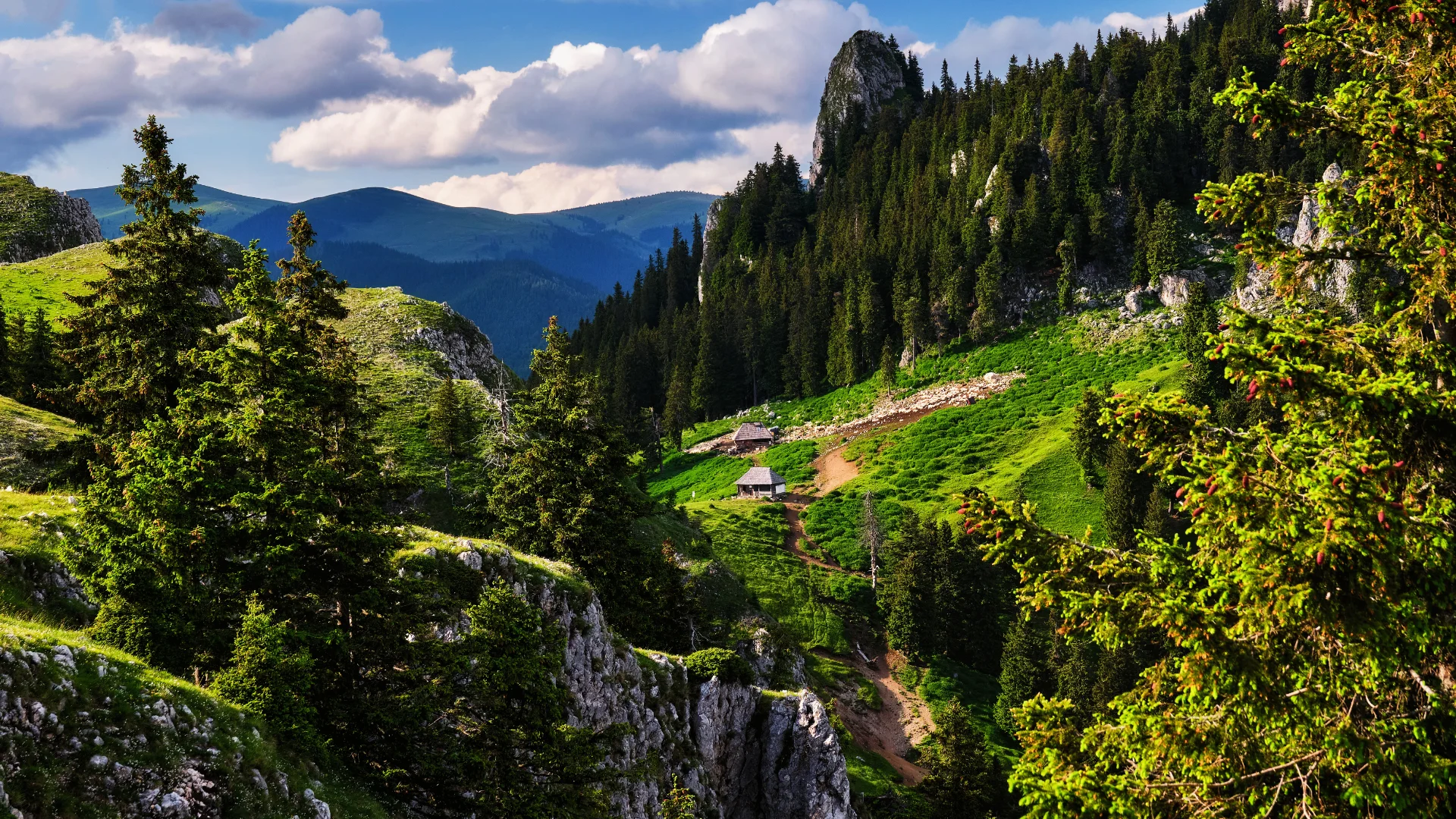
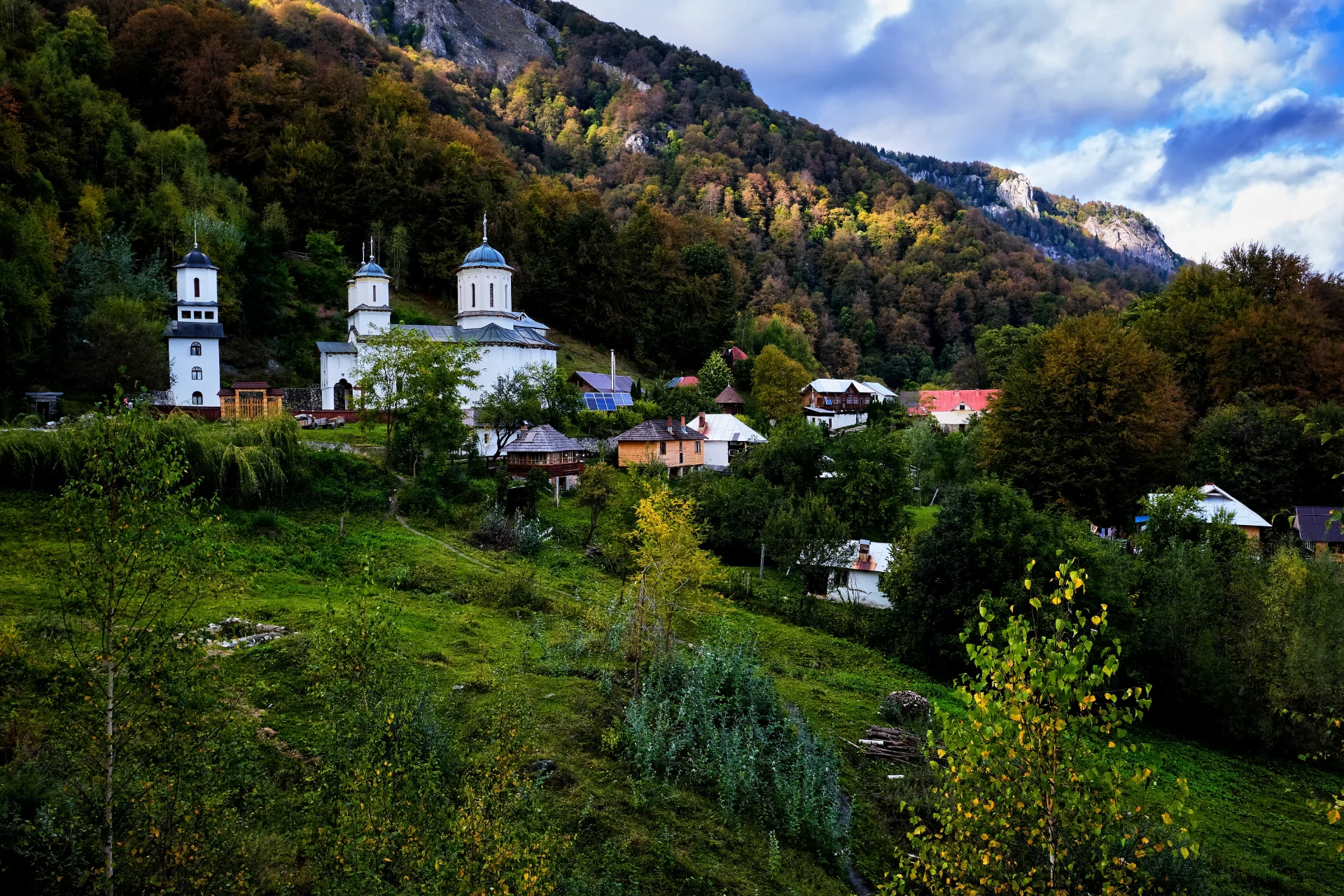
Halfway, we can rest at Pătrunsa Monastery, hidden in an idyllic meadow. The community of monks established here built in the last two centuries several isolated houses around the two churches. From the monastery, we can continue along the slope to the north to reach another isolated hermitage, or we can climb for another 1-2 hours to Curmătura Builei, an incredible saddle where we are rewarded with breathtaking panoramas of the surrounding valleys and mountains. The spectacular ridge route continues to the northeast, passing over the peaks of Buila and Vânturarița, at heights of almost 1,900 meters.
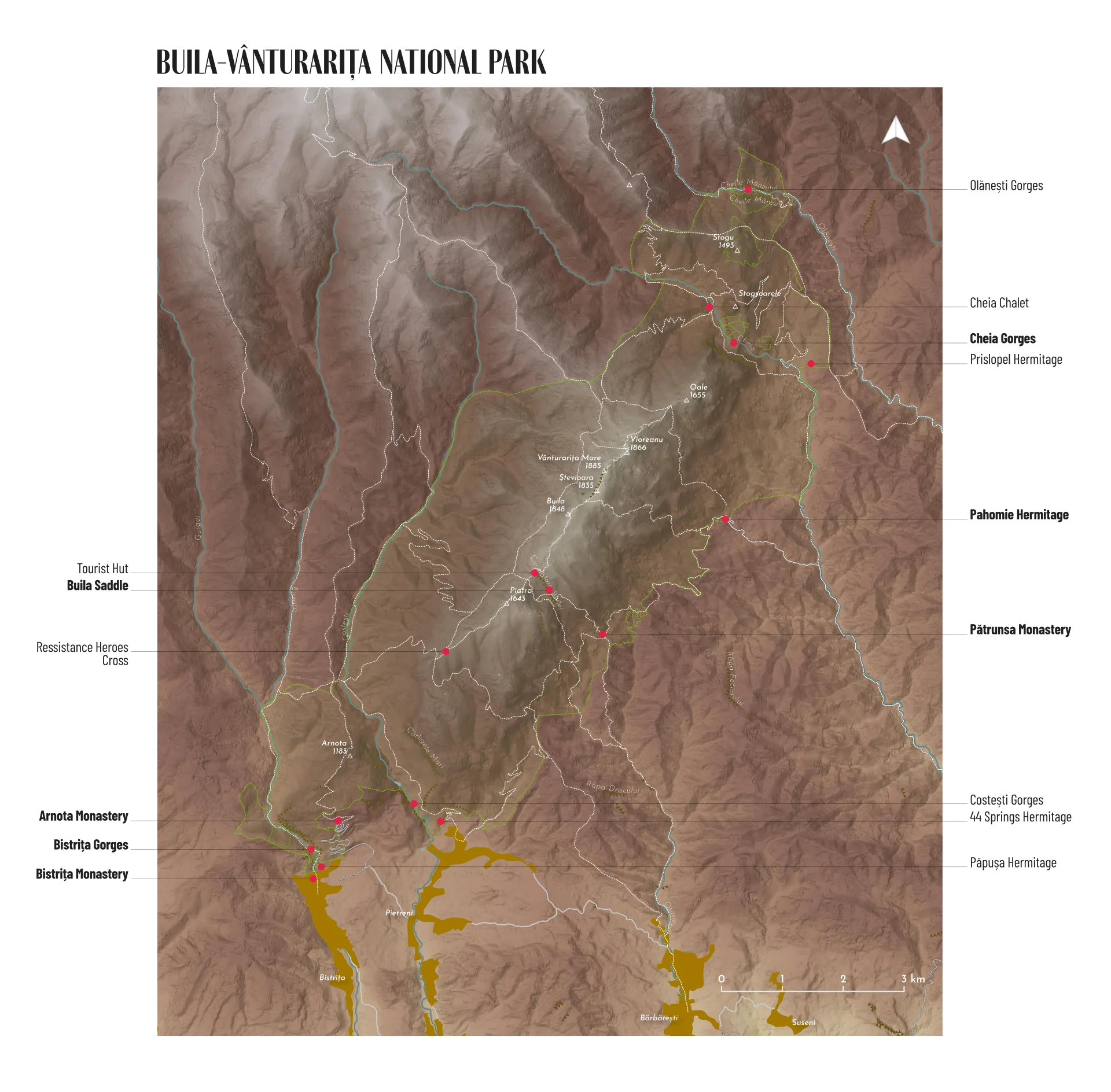
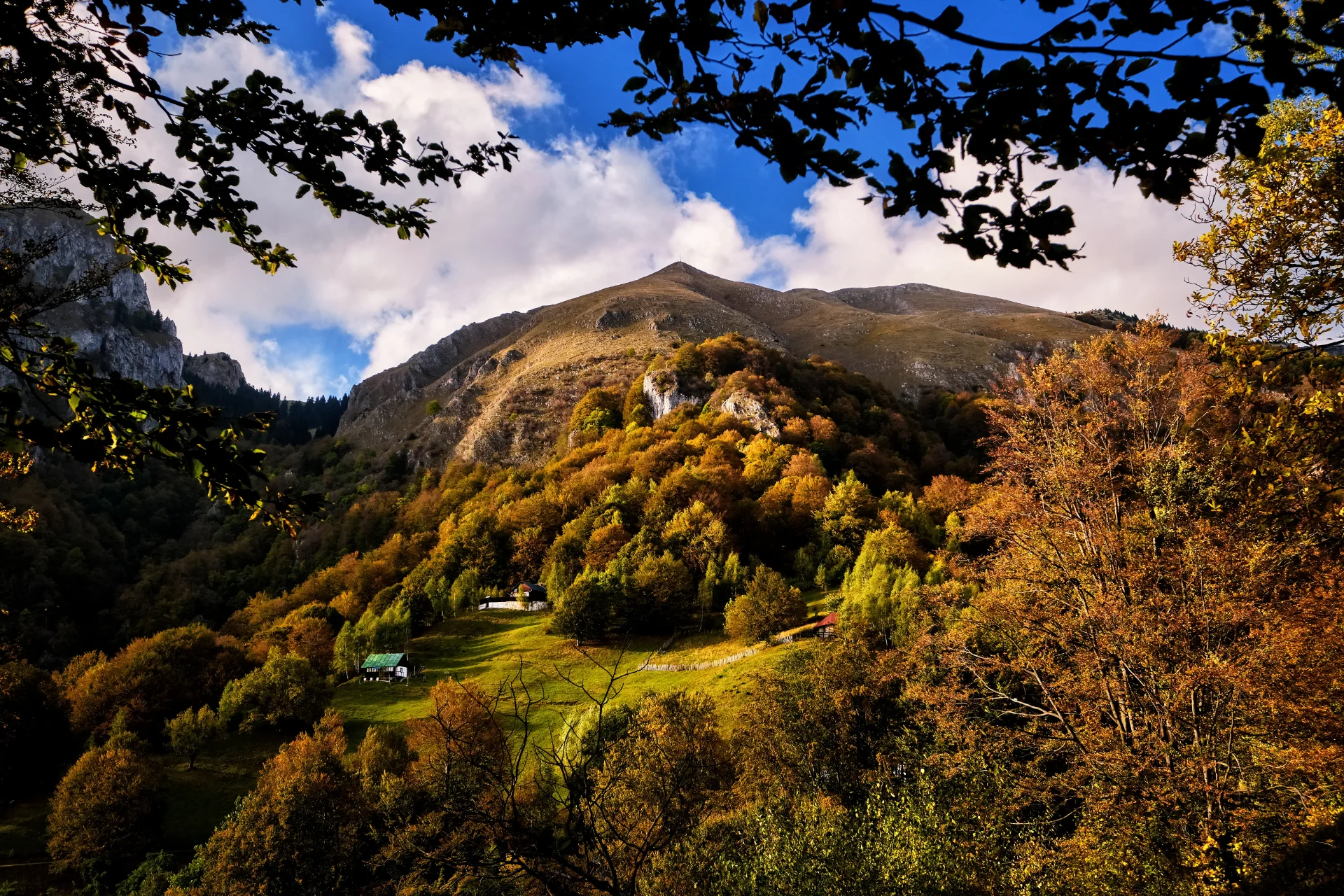
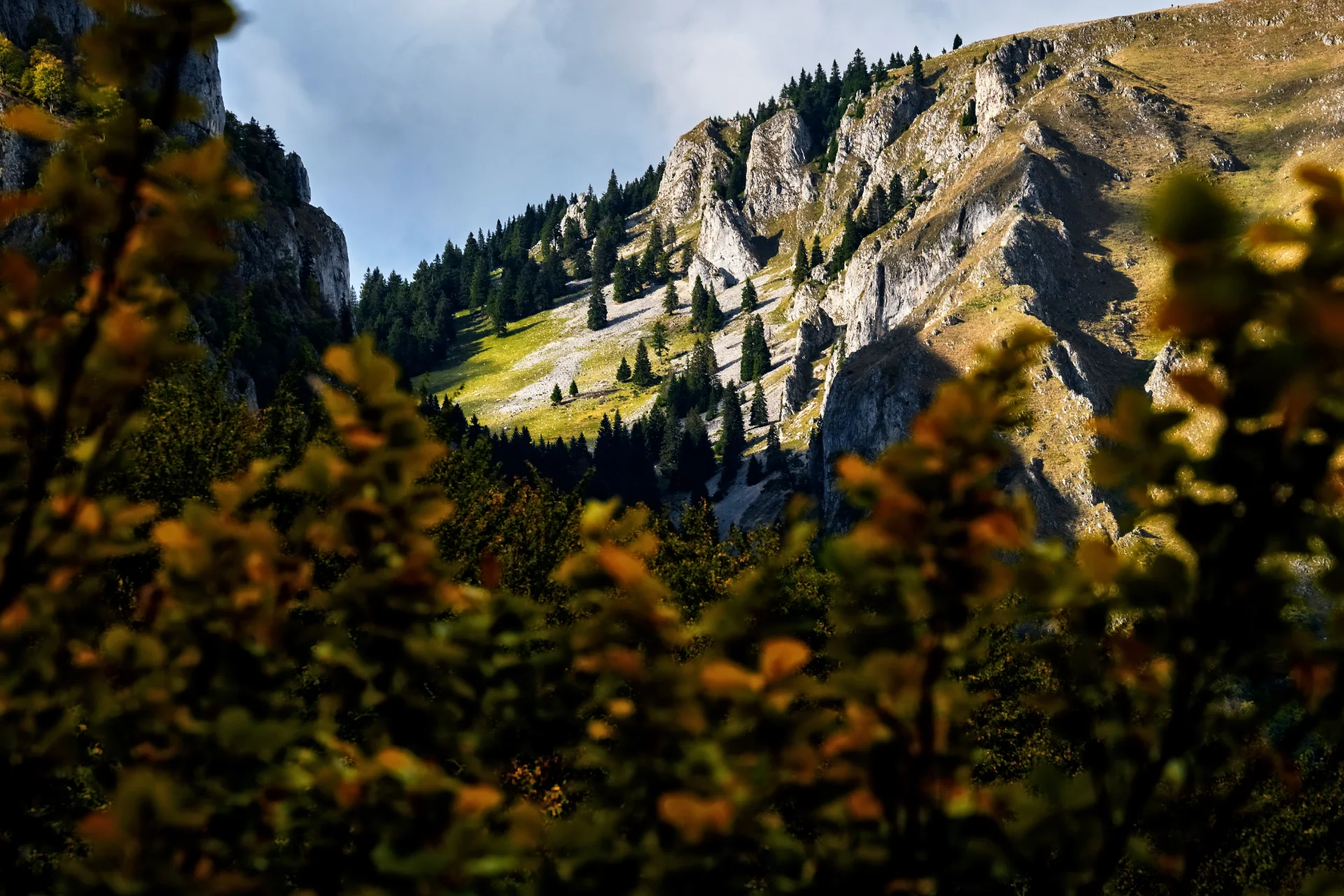
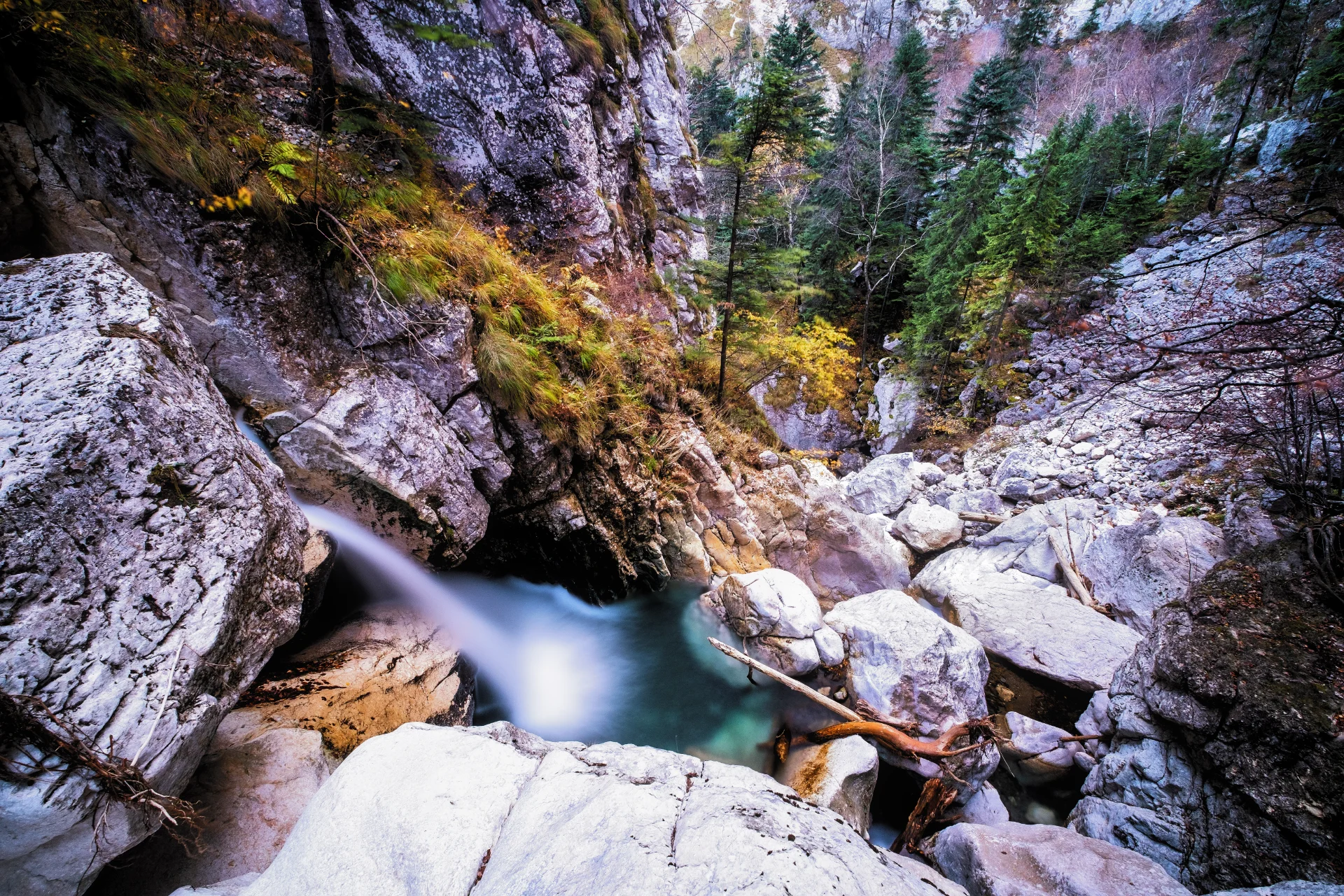
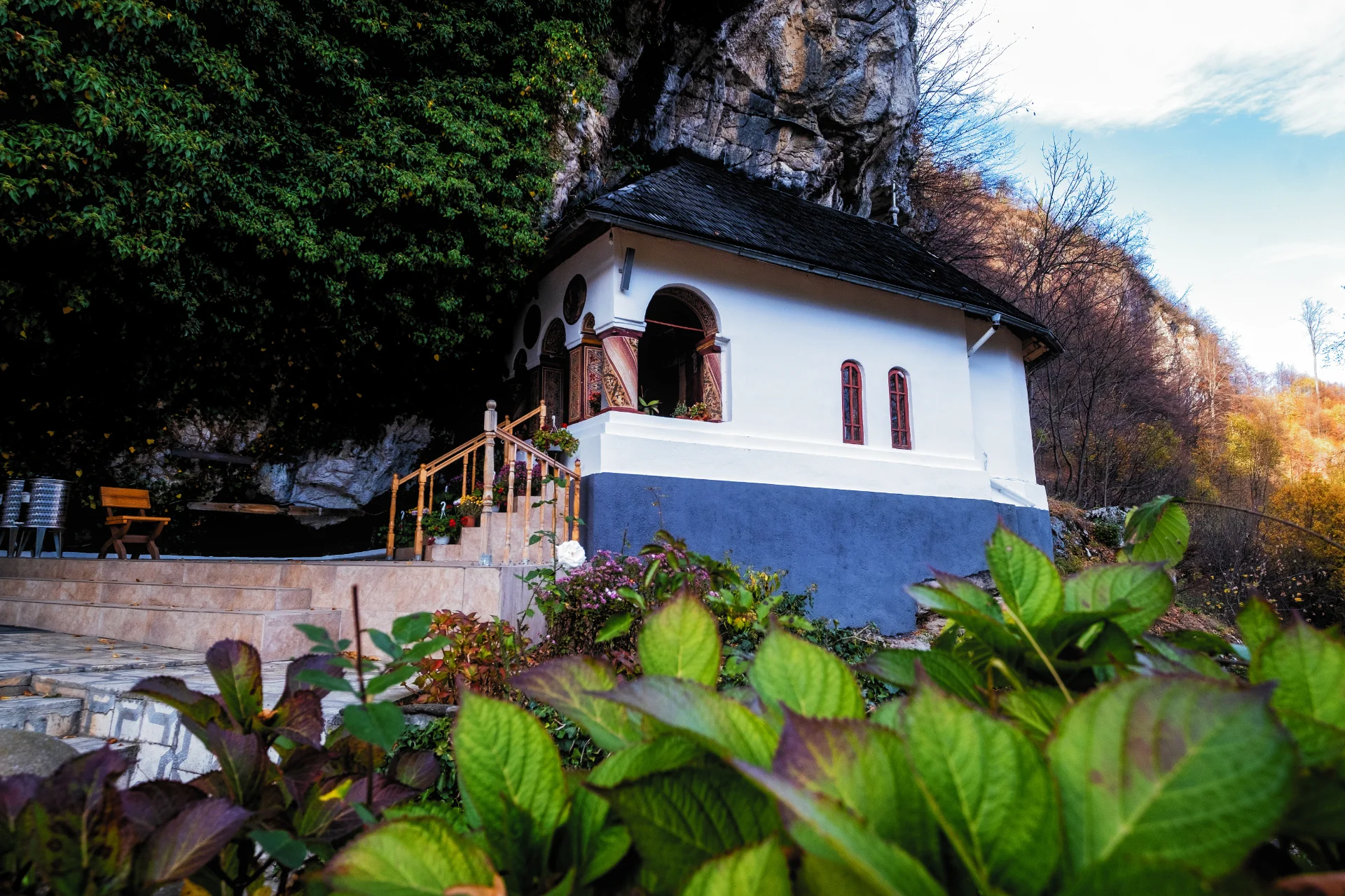
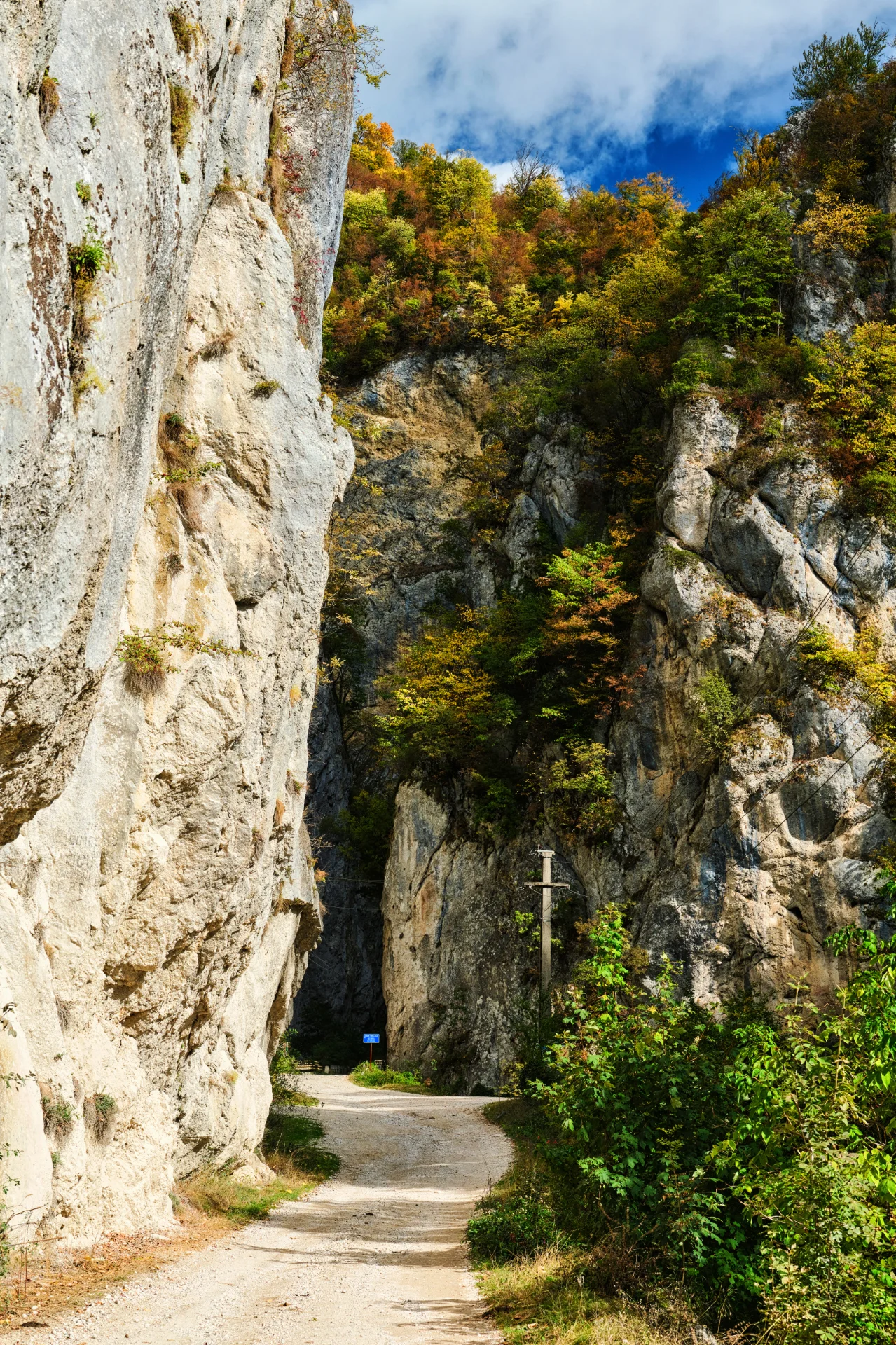
We discover another blessed place at Pahomie Hermitage, with its little church half-hidden under a rock, with a waterfall nearby. The hermitage was first founded in the 15th century, but it was abandoned for a long time, being rebuilt only in the 20th century. We can reach it by following an unpaved road that starts from the village of Cheia and offers us the opportunity to explore Cheia Gorges, one of the most beautiful and wild canyons in the country. For just a few kilometers, the tumultuous stream tumbles over huge cliffs and between rock walls over 400 meters high. We reach this isolated place by following a long road that goes over the ridge through a narrow tunnel or by following a difficult and exposed route known as Brâna Caprelor. A few kilometers further north, there is a lesser-known valley, with the spectacular Olănești or Folea gorges.
The park is very well known by rock climbers, there are 5 main climbing areas here, comprising over 150 routes of varying degrees of difficulty. The Cheia Gorges area is the most well-known and developed from the point of view of rock climbing, with 76 routes!
At the southern limit of the massif and the national park, between the Bistrița and Arnota monasteries, we can visit the Bistriţa Gorges, short and narrow but quite interesting, among the attractions being the Queen Maria bridge, several caves and small waterfalls. A little further north from here, it is also worth exploring the Costești Gorge, with a length of 4 kilometers and along which there are several small mineral springs. The Buila-Vânturarița National Park is also known for its exceptional biodiversity, with a multitude of habitats and important species, among which the large mammals (bears, wolves, lynxes, deer, black goats, martens) and the floral variety stand out.
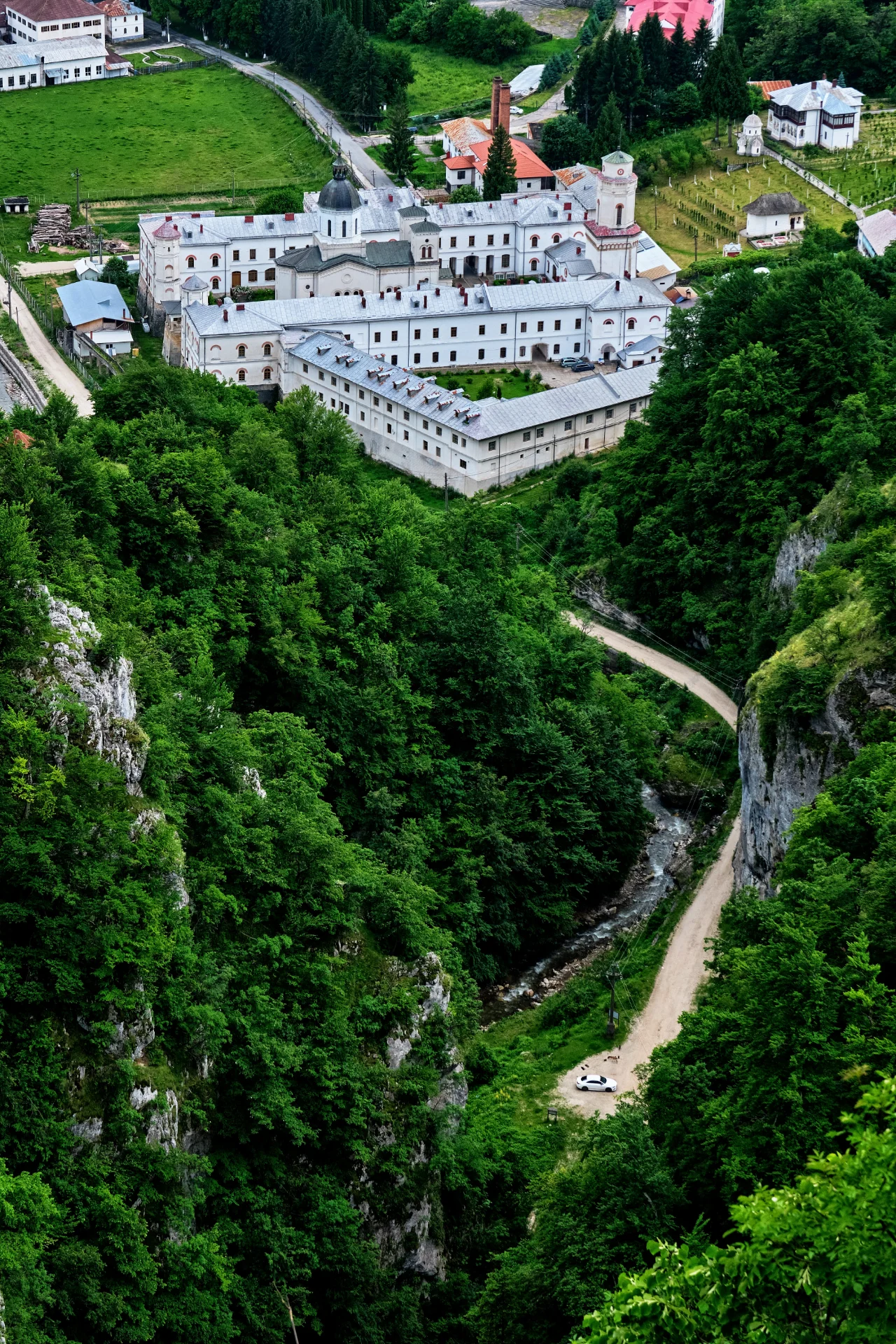
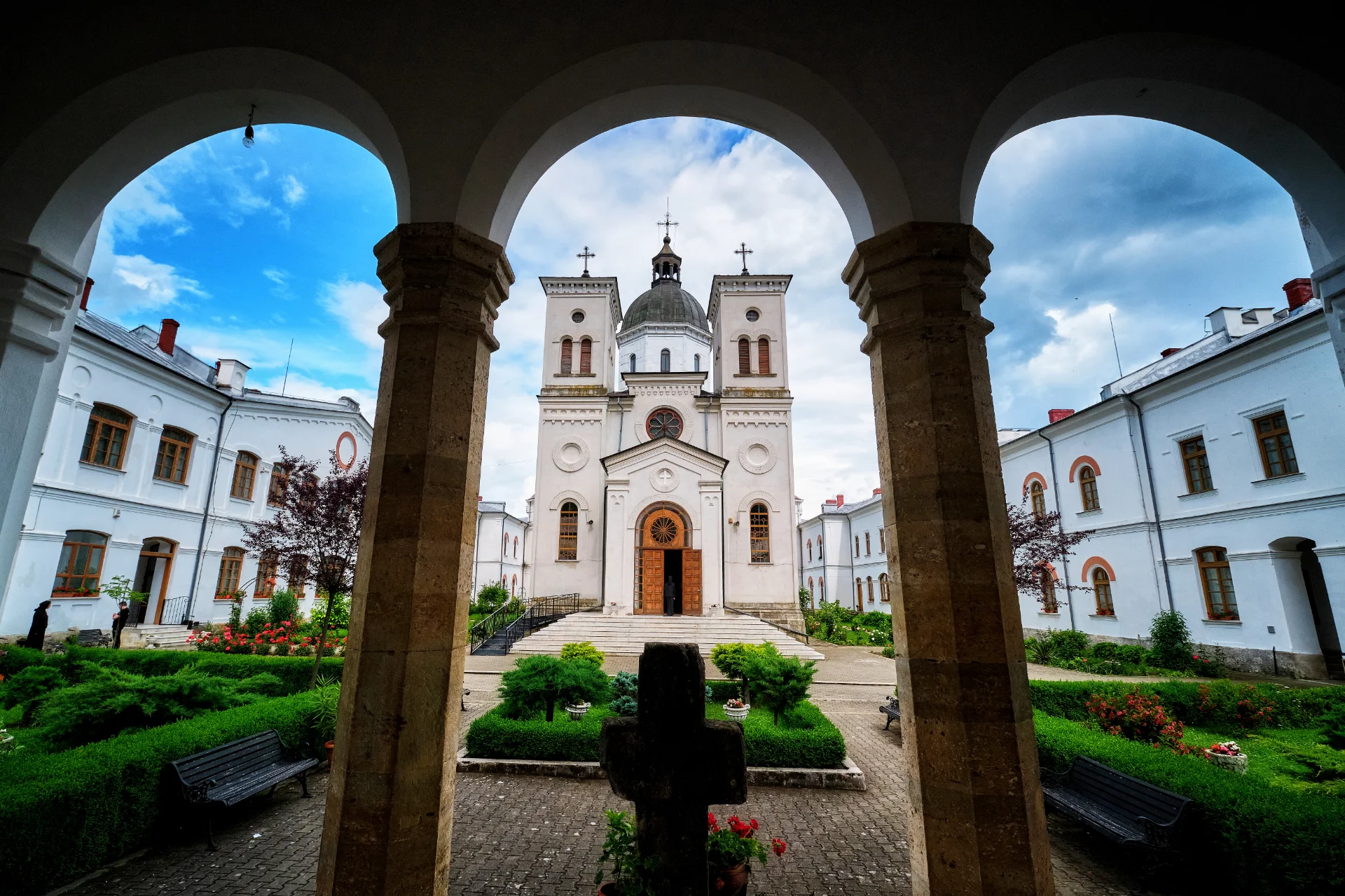
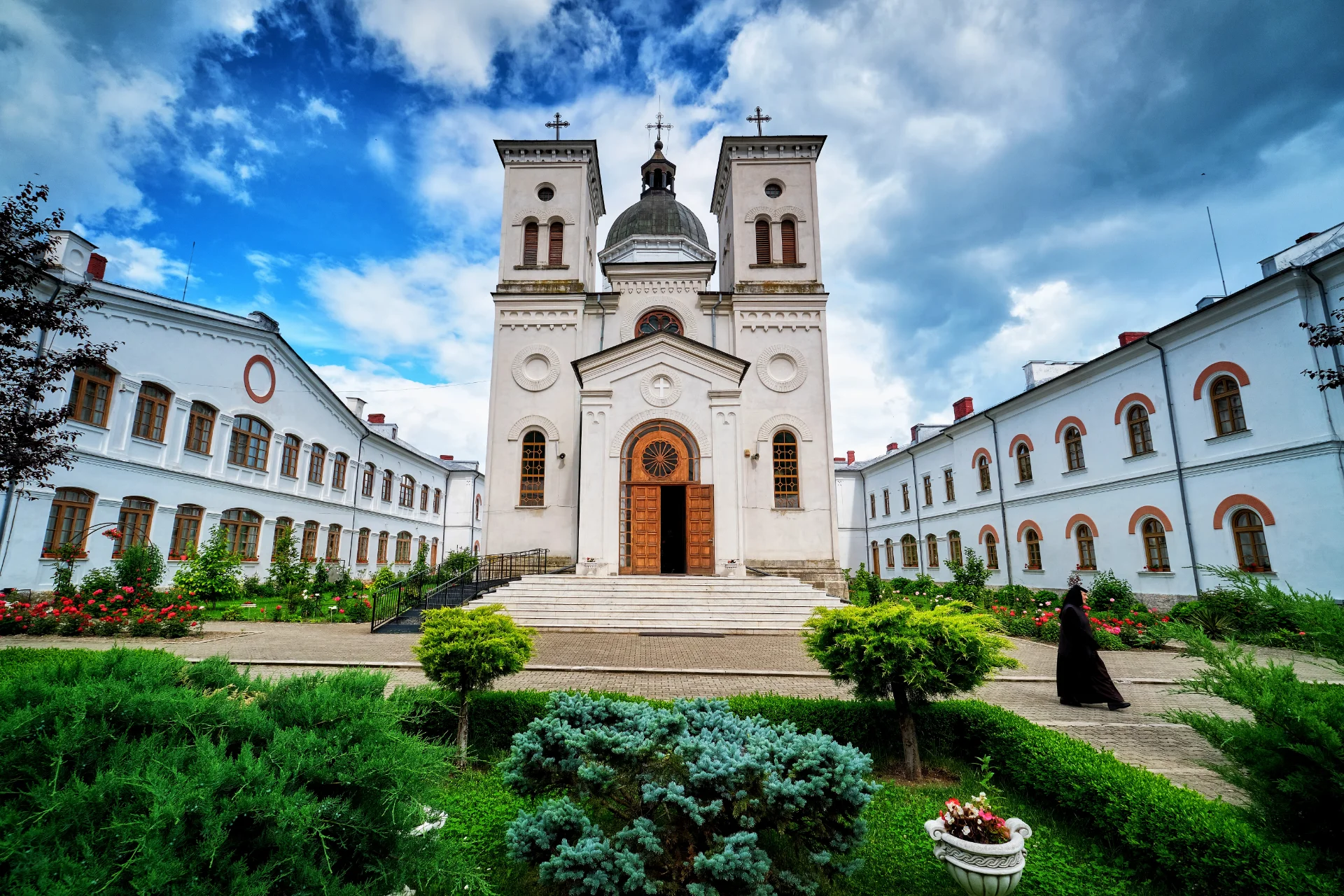
At the southern end of the imposing ridge rise two more stunning monasteries. At the exit from the quay, the Bistrita Vâlceană river passes by the old Bistrita Monastery, founded in the 15th century by a family of nobles from the region and rebuilt several times over the following centuries. Of the old structures we can still find the hospital church, the new church in neo-gothic style being built in 1855. The monastery is known as the place where the first book on Romanian territory was printed by the monk Macarie in 1508, as well as for keeping the relics of Saint Gregory the Decapolitan, brought from Constantinople. We also admire the beautiful paintings in the new church, made by Gheorghe Tattarescu, the carved pediment, the old icons and the small museum.
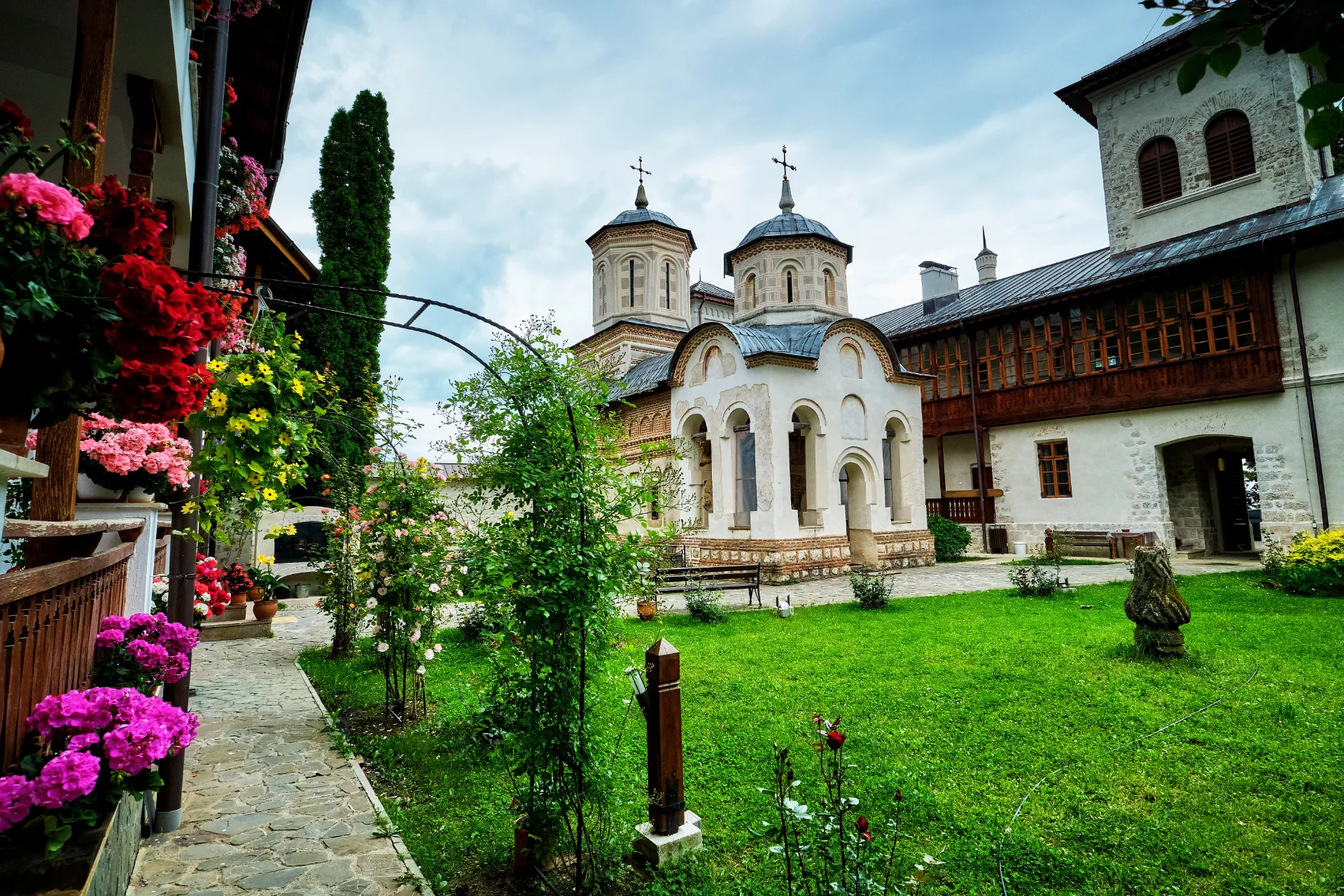
We start from the Bistrita Monastery on a local road that crosses the river and climbs the mountain slopes for a few kilometers, arriving at the Arnota Monastery. Hidden behind fortress-like walls and surrounded by captivating landscapes, it was founded by Matei Basarab between 1633-1634, who built the small church on the site of an older church. The tombs of the ruler and his father were brought from other places and placed inside the church. It was repaired and enlarged by Constantin Brâncoveanu, and the superb paintings were renovated, the ruler also donating the doors carved in chestnut wood.
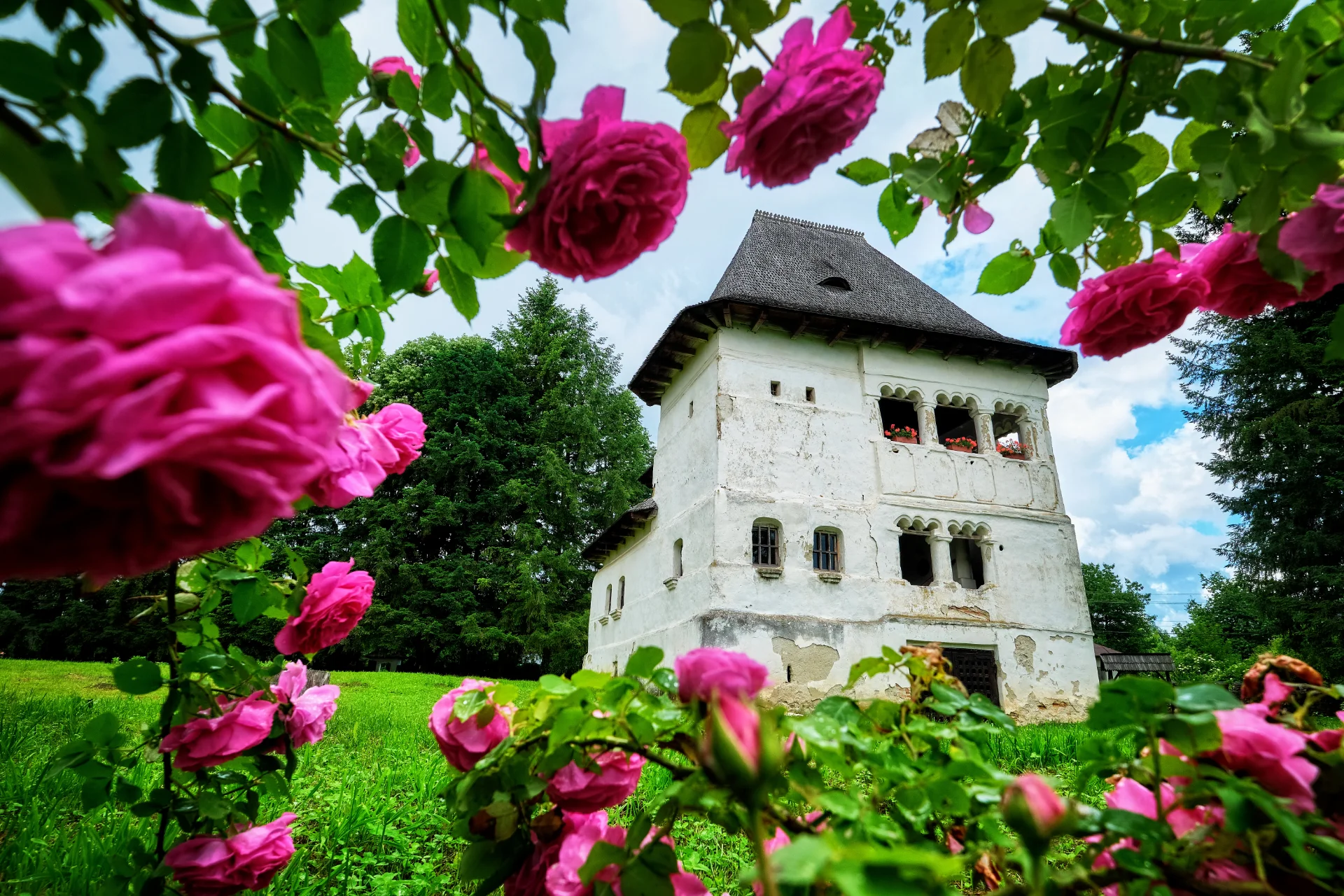
Just a few kilometers south of the town of Horezu, in the village of Măldărești we find another set of exceptional historical buildings. The tower houses known as cule are fascinating historical and architectural monuments, which appeared in Wallachia in the 18th and 19th centuries, and are also present in other countries. Some were also permanent residences for wealthier families, and in times of danger or war constituted veritable miniature fortresses, with plenty of defensive features built into the construction. Stately buildings, they usually look like real towers with three or four stories, thick walls and ramparts, massive doors and narrow windows, escalators and cellars with fountains, sometimes having separate sanitary rooms connected by covered bridges.
A long time ago, dozens of mysterious tower houses rose among the hills of southwestern Romania, created to defend their inhabitants in case of attacks. Silent witnesses of troubled times, most of them have perished over the last three centuries, leaving behind only a few ragged monuments, miraculously saved!
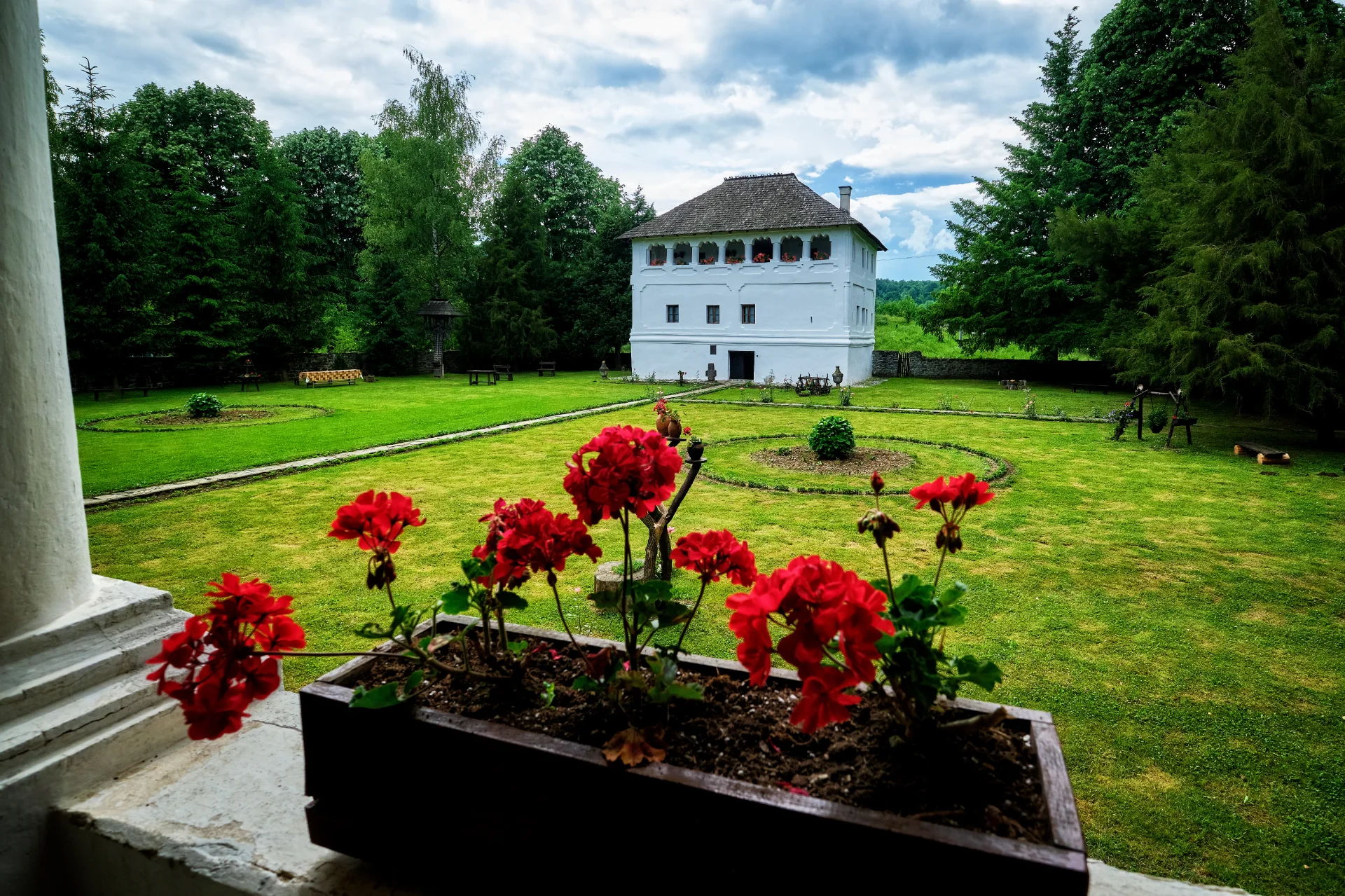
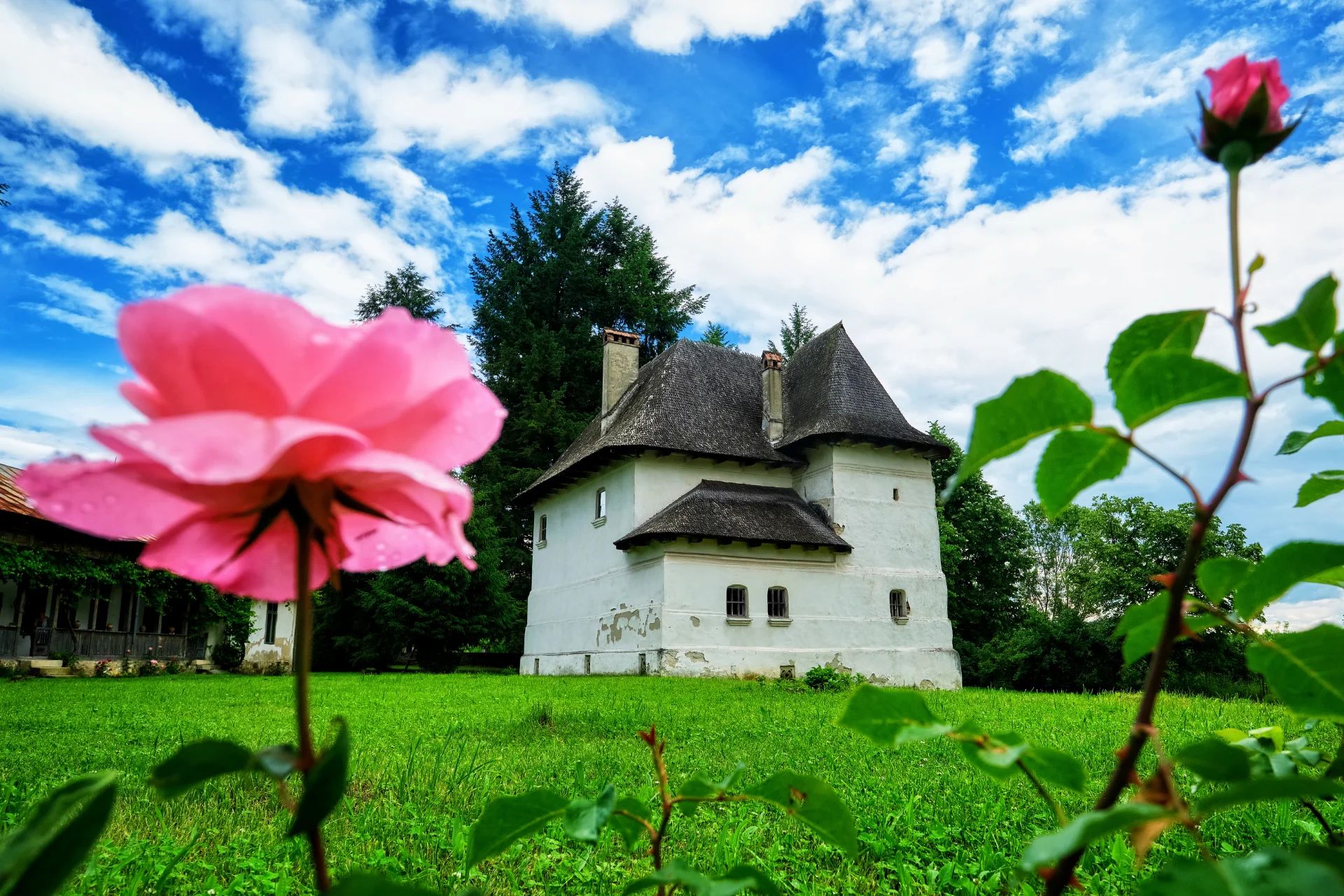
The Măldărești Museum Complex includes two of the most beautiful and well-preserved cula houses in the country. Cula Greceanu is considered the oldest in Romania, dating from the beginning of the 16th century and being built by the Măldărescu noble family, over an older foundation. Over time, it has undergone several renovations, but has largely retained its original architecture. It contains some interesting features, including elements of old furniture and decor, as well as beautiful murals painted by the owner Olga Greceanu in 1934. The cellar was used to film scenes from several popular films, and today it is part of the Măldărești museum complex, although its legal status is still unclear.
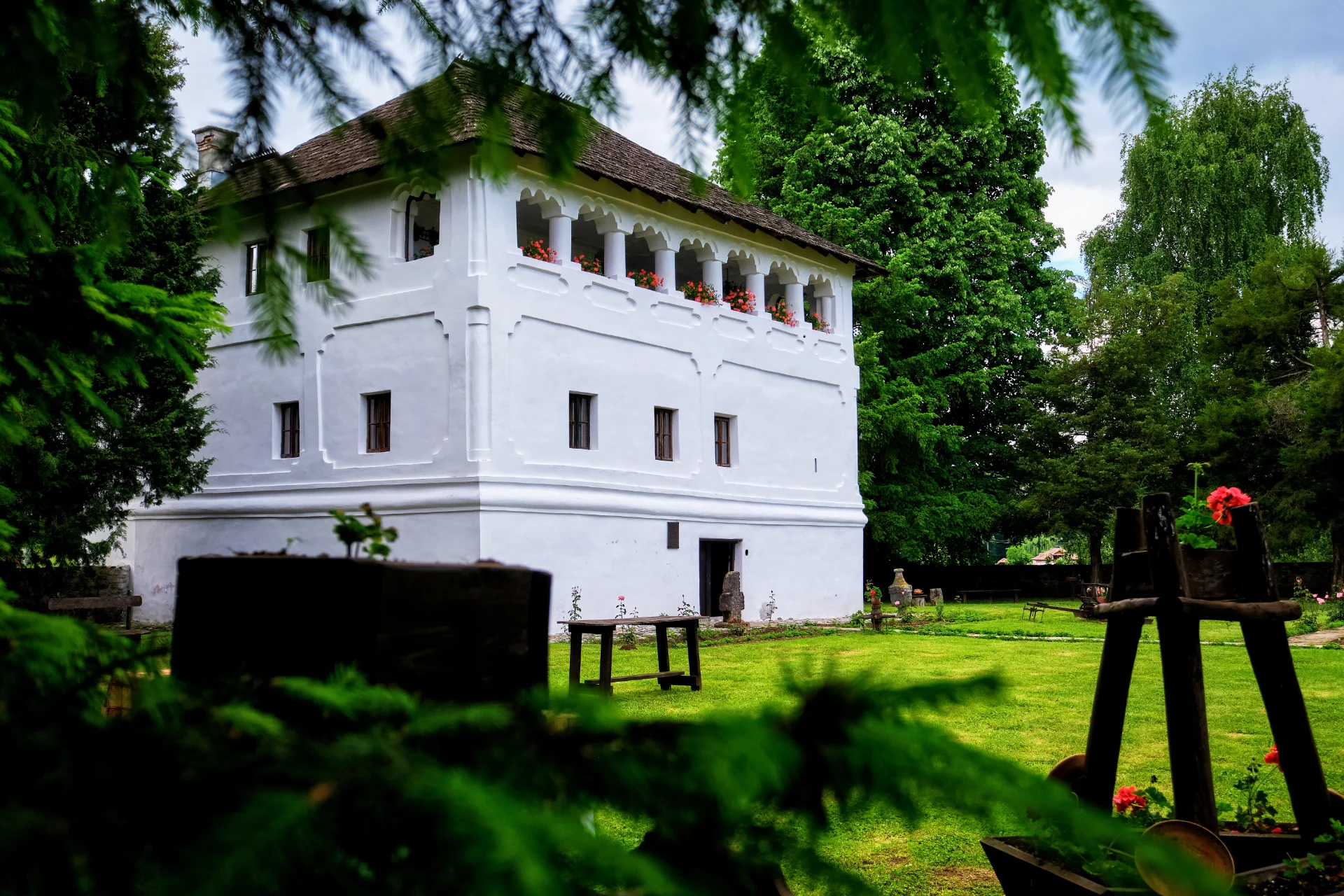
Passing into the opposite courtyard we discover Cula Duca, a newer but equally impressive construction. It was built by the same Măldărescu family in 1812, later being bought by I.G. Duca, a personality of those times. He also built the holiday home nearby, starting to organize the buildings here into a small museum. Cula Duca has three floors, each with several interesting spaces and rooms, including a porch on the top floor and a toilet annex. Near the two monuments there is also an old church with splendid paintings dating from the end of the 18th century. Other interesting attractions near Horezu include the Boulder Museum from Costești, the 44 Springs Church, the Bat Cave near the Bistrița monastery, the valleys of Cerna and Luncavăț or the Peak of Roman Roman in the Căpățănii mountains. From these delightful places we head towards the high peaks that appear towards the west, climbing into the wild and majestic land of the Parâng Mountains…
Sights and Experiences
Places to See and Things to Do around Horezu
Hurezi Monastery
Visiting hours: 8-20 (summer) / 9-17 (winter)
Being one of the most important religious settlements in the country, the Hurezi Monastery is located in the village of Romanii de Jos, just a few kilometers from the town of Horezu. It is considered one of the most beautiful examples of medieval Romanian architecture and art, as well as the most important foundation of ruler Constantin Brâncoveanu. The Hurezi monastery complex has been included in the UNESCO world heritage list since 1993, being one of the most visited sites in the southwest of the country. It was built between 1690 and 1693, but work on the rest of the structures continued in the following years. In the centuries that followed, the Hurezi Monastery also went through tragic events, the most important being the Austrian occupation or the Turkish attacks, which destroyed and desecrated the monuments. Over time, the monastery was one of the most important cultural centers of Wallachia, being recognized for its impressive translations and manuscripts for those times. The ruler’s library, with numerous humanistic works, was unique in those times and in this part of Europe. If until 1872 it was a monastery of monks, now it houses a large community of nuns, being the largest monastic settlement in the country.
The impressive complex stands out for the beauty and harmony of the architecture, being made up of the main church, surrounded by a first enclosure and other places of worship. Around them are the gardens, orchards and several other structures, surrounded in turn by a brick wall. The main enclosure consists of the body of cells, the refectory hall, the chapel, the bell tower and the royal residence. To the east can be found the Hospital Church founded by Mrs. Maria Brâncoveanu in 1696, while to the west, across the Bistricioara river, is the Hermitage “Saint Stephen”, founded by the ruler’s son in 1703. A short distance to the north is the Hermitage “Saints Apostles”, dating from 1698, and to the south an old church with the sanctuary “Holy Angels”, which preserves impressive old paintings. A very interesting museum also operates within the monastery, which, in addition to manuscripts and rare books from the collection of ruler Brâncoveanu, also exhibits icons or valuable church objects.
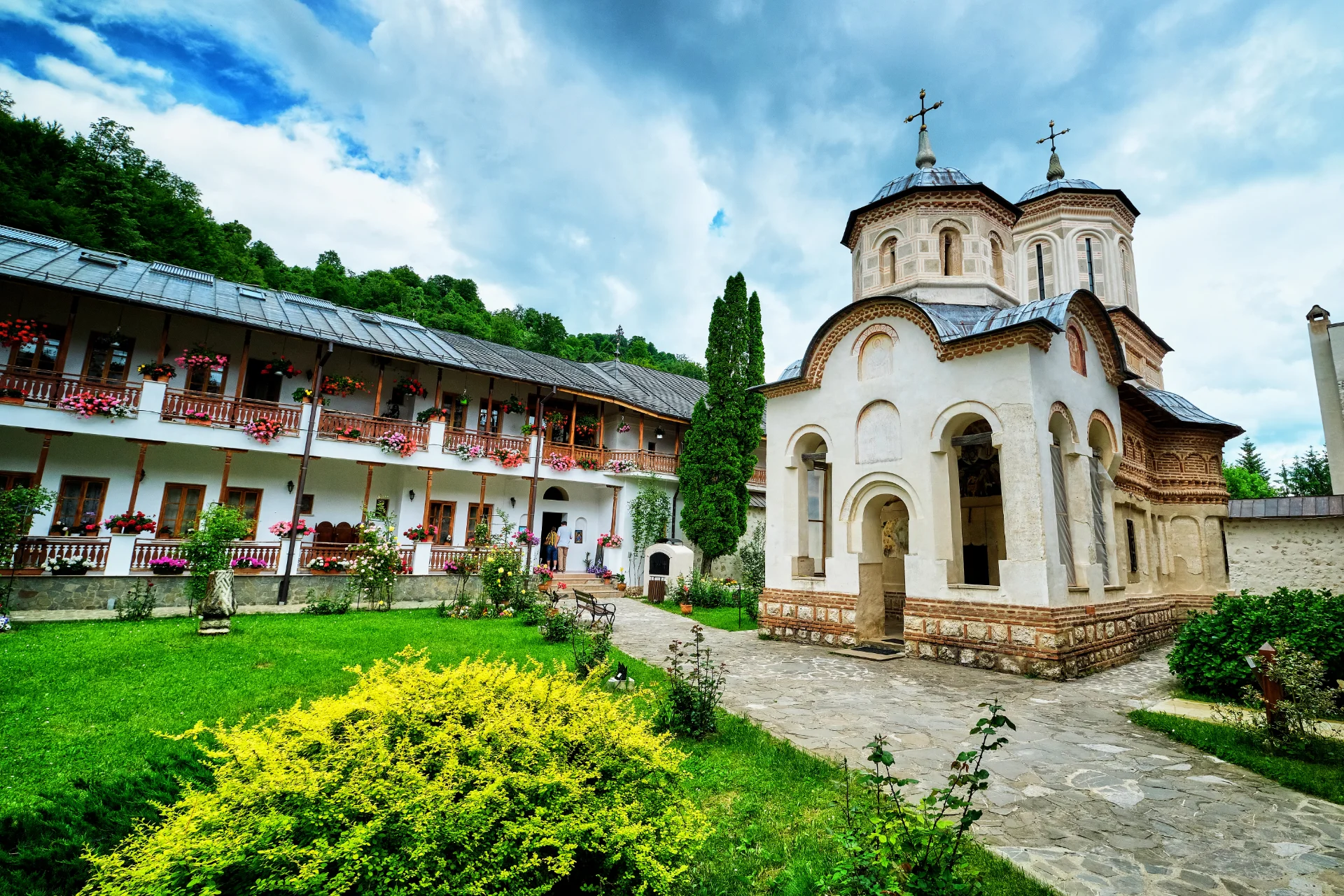
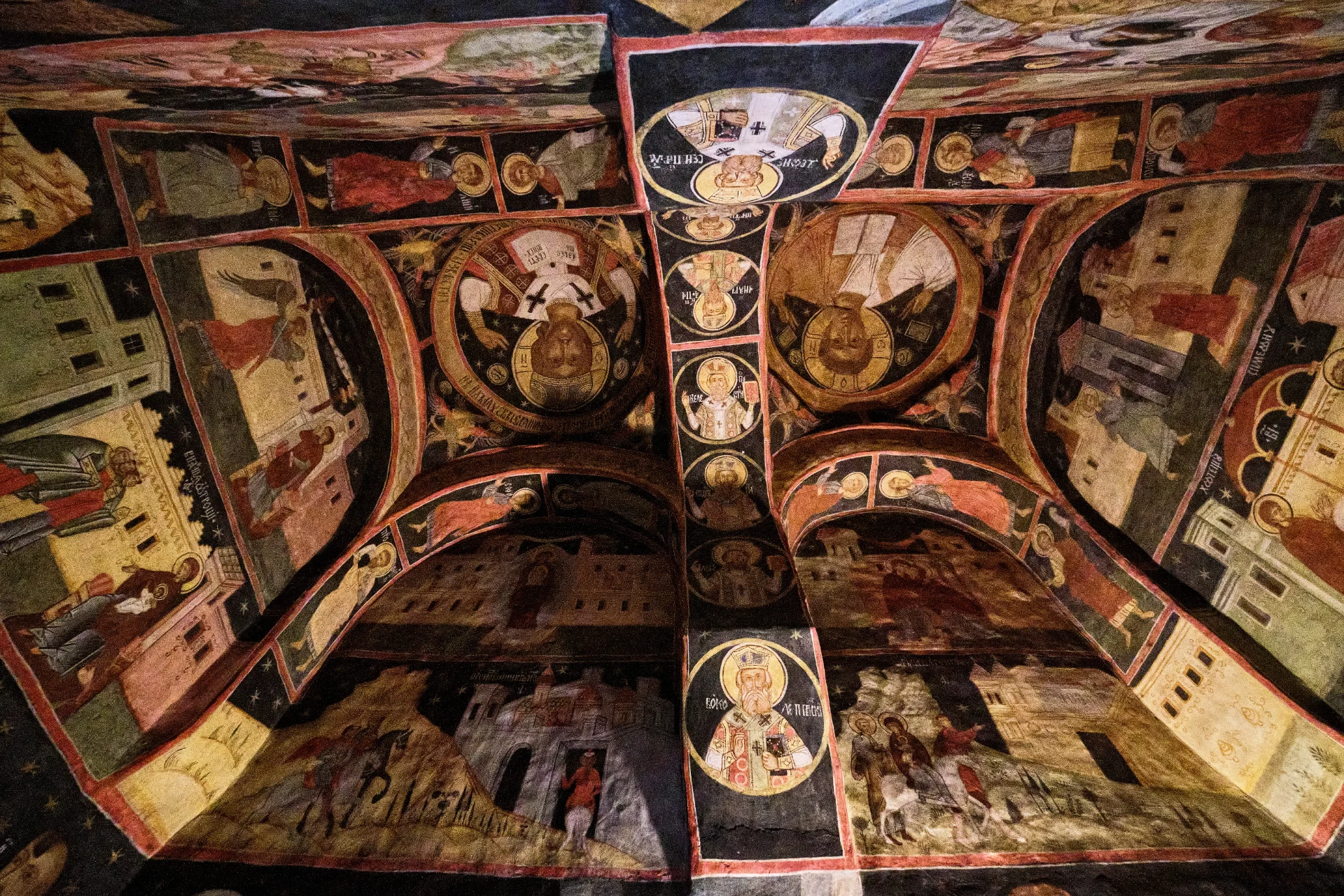
The large church of the Hurezi monastery is a masterpiece of the Brâncovenesc style, being similar to the one in Curtea de Argeș, but with many original elements. The ten columns of the richly ornamented porch, the facades with rectangular panels or the marble frame of the door make an impression on the outside. Inside, the first thing to note is the exceptional mural, executed by Greek craftsmen between 1692 and 1694. In addition to the religious scenes, portraits of the Brâncoveanu and Cantacuzino families are also painted. The artistic treasury is completed by the polished linden wood paneling, the princely chair, the polychandrous, old icons and other valuable objects. The ruler wanted this to be the place of eternal rest, but his tomb is still empty, being buried at the “St. George” church in Bucharest. Among the other structures, it is worth mentioning the Chapel built in 1697, with a harmonious octagonal spire and excellently preserved superb paintings. Within the monastery there is also the library established by Constantin Brâncoveanu, which now contains approximately 4000 volumes, including very old books and manuscripts of inestimable value.
Town of Horezu
Located in the southwest of Romania, in the western part of Vâlcea county, the small town of Horezu is known especially for the tradition of folk ceramics. Mentioned for the first time with the name Hurezi since 1487, the locality was already a market at the end of the 18th century. It became a city in 1968 and includes several surrounding villages, including Romanii de Jos, where the legendary Hurezi monastery is located. It is included in the UNESCO world heritage, together with “Horezu Traditional Pottery”, thus forming an exceptional cultural destination. In addition to these, in Horezu and especially in the surrounding region there are many other interesting tourist attractions, with numerous monasteries, old churches, historical monuments, but also fascinating natural sights.
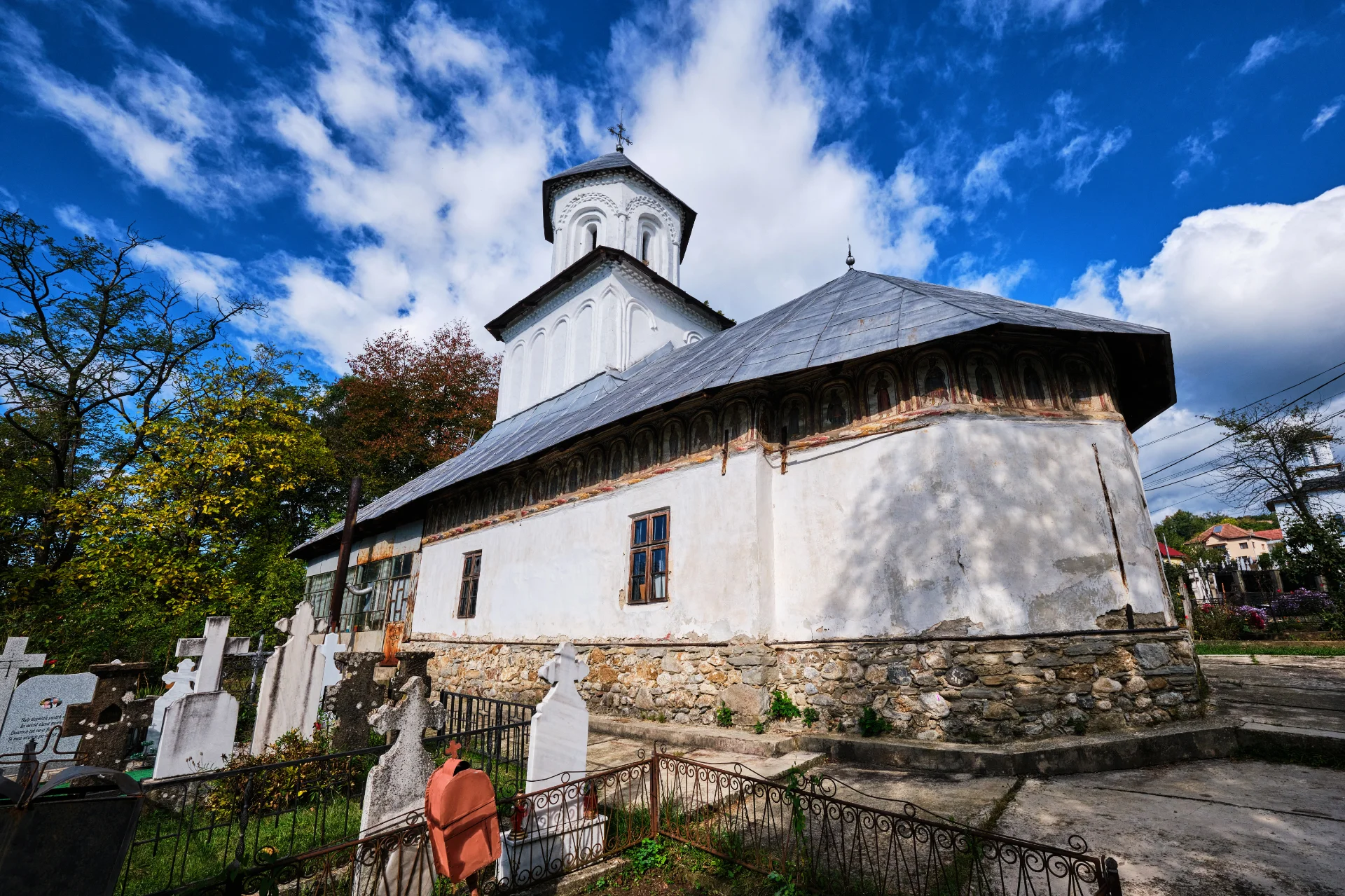
A traditional art with deep roots in the history of the area, pottery from Horezu is attested since the 15th century, being linked to the Hurezi monastery and generations of craftsmen from the village of Olari, located in the northern part of the current town. Appreciated for its authenticity and expressiveness, traditional Horezu pottery stands out for its specific shades and the multitude of symbols used, among which the “Hurez Rooster” stands out. This is also the name of the largest ceramics fair in the country, which has been held here since 1971. Travelers who want to discover the secrets of this fascinating traditional occupation can go to the village of Olari, where there are still many craftsmen recognized for their talent, many houses have real authentic workshops, but also small outdoor exhibitions. In addition to the monastery and ceramics, Horezu also has several interesting monuments, starting with the Church of Târg, built between 1800-1804 and preserving beautiful murals. Other ancient churches include the “Sfinții Voevozi” and “St. Vasile” Church – Covrești (1826), the “Duminica Tuturor Sfinților” Church (1659), the Urșani Church (1800) and others.
Buila-Vânturarița Massif
Part of the Căpățănii Mountains in the central-southern part of the Southern Carpathians, the Buila – Vânturarița massif has a special character. It stands out prominently in the landscape, both through the specific relief and the particular geology. A limestone ridge up to 1900 meters high and about 14 kilometers long, it dominates the surrounding much lower ridges. The main ridge stretches between Costești Gorges in the south and Cheia Gorges in the north, but the massif also includes the Arnota mountain between the Bistriței and the Costești gorges, respectively the Stogu mountain between the Cheia and the Olănești gorges. These valleys (Bistrita Vâlceană, Costești, Otăsău, Cheia, Olănești) are also the main access routes to the ridge and to the national park that was created to protect the unique landscapes and extraordinary biodiversity of this destination. With an area of just under 42 square kilometers, it is the smallest national park in the country, but inside it contains an impressive number and variety of attractions and stunning landscapes. In addition to the Bistrița, Cheii, Olănești and Costești gorges or the Bistrița, Arnota, Pătrunsa and Pahomie monasteries, in the Buila – Vânturarița massif you can discover a lot of caves (Liliecilor, Ursilor, Pagodor, Arnăuților, Lacul Verde), avenues, natural arches, waterfalls, chimneys, sharp rocks and others. With dozens of different habitats and an extraordinary variety of plant and animal species, the national park is an exceptional natural destination. Among the plants, the rare species of yew, mountain lily, cornflower, lady’s slipper, mountain bell, as well as several endemic species or the 28 species of orchids stand out. The fauna of the national park is primarily represented by mammals such as brown bear, wolf, lynx, black goat, deer, marten, badger and others. The large number of bats and birds is also noteworthy, many species being protected.
Hiking Trails
In the Buila-Vânturarița national park, there are several spectacular hiking trails, starting with the Creast Trail (red band – not approved), a fascinating but very difficult and sometimes dangerous adventure. The section between Ștevioara Pass and Curmătura Oale (northern ridge) is considered among the most difficult ridge sectors in the Romanian Carpathians, with several technical passages and possible orientation problems. Another charming route (red rectangle) connects the Bistrita monastery to the Pahomie hermitage at the foot of the massif, with several options for climbing to the ridge. Among these, the most famous and interesting is the route (yellow dot) that starts from the Pătrunsa monastery towards Curmătura Builei, where there is a tourist refuge. Other less frequented routes connect the surrounding villages with the most important destinations in the Buila Vânturarița national park (Pătrunsa Monastery, Pahomie Monastery, Builei Curmătura, Cheia Lodge).
Bistrița Monastery
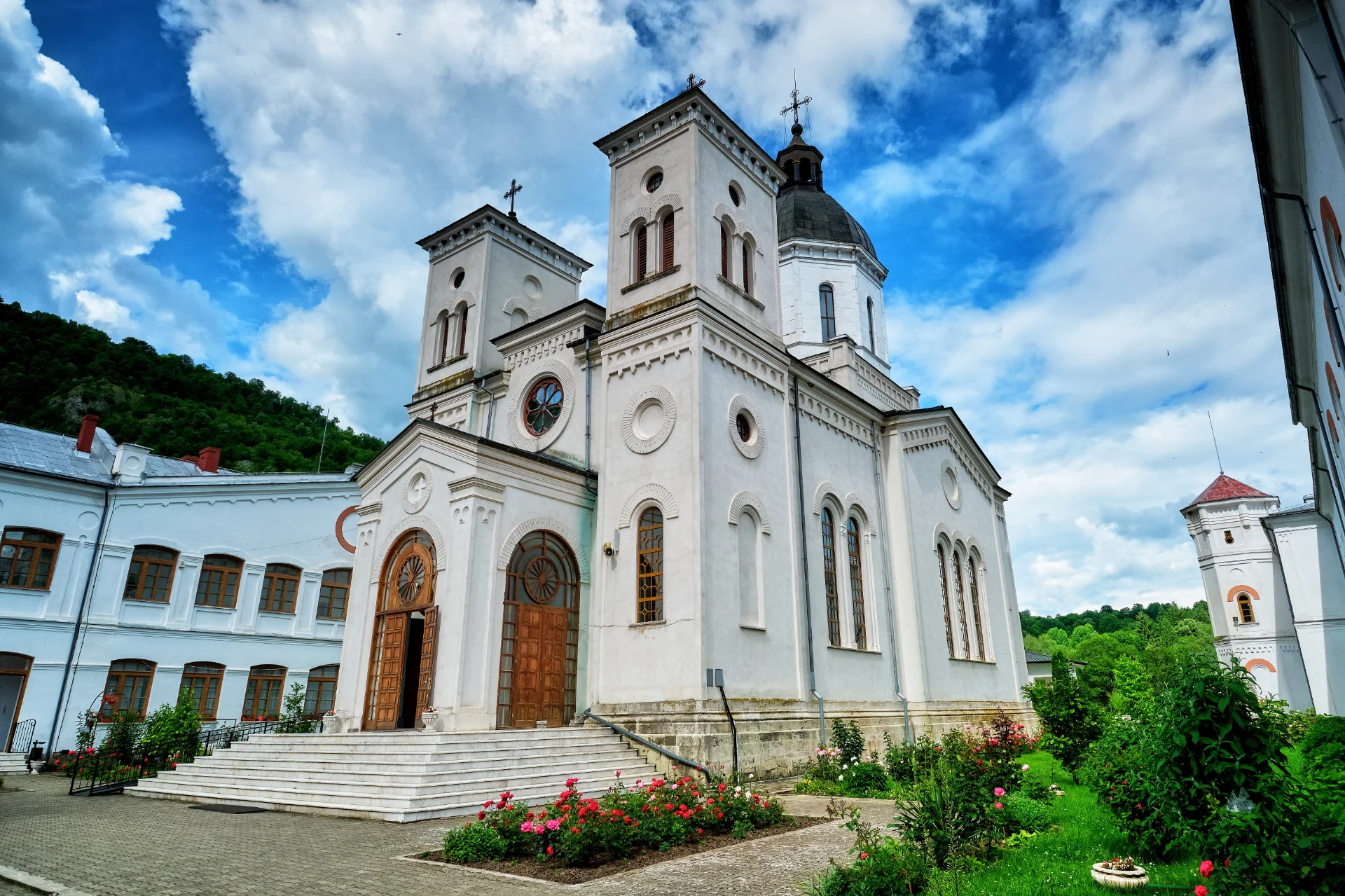
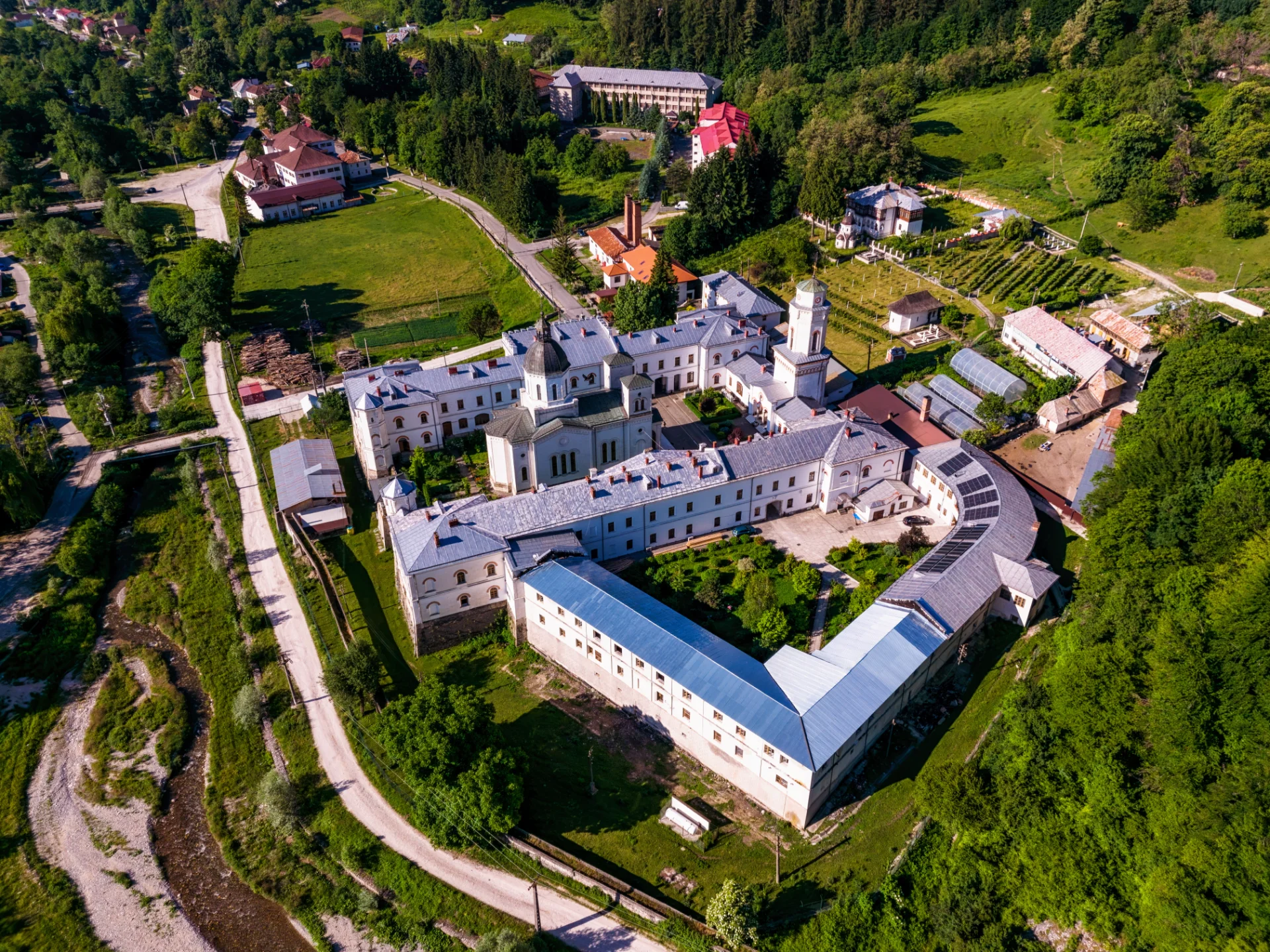
Mentioned in documents since 1494, the monastery was founded by the Craiovești boyars and is one of the oldest and most important in Wallachia. A few years later, the great ban Barbu Craiovescu brings here the relics of Saint Gregory the Decapolitan from Constantinople. He rebuilt the settlement after 1509 with the support of Neagoe Basarab, and the Hospital Church (1520) is still preserved from those early times, with superb interior frescoes and later Brancovan elements. Ruler Constantin Brâncoveanu repairs the monastery and gives it many valuable objects, including the big bell and icons. The Bistrita Monastery was for many centuries an important cultural center in Wallachia, according to some historians, it was the place where the first book in the country was printed (the Slavonic Liturgy of the monk Macarie), but also the well-known work “Teachings of Neagoe Basarab to his son Teodosie”. Affected by an earthquake and the passage of time, the monastery was rebuilt by Gheorghe Bibescu and Știrbei Vodă, the large church being consecrated in 1855. Dedicated to the “Assumption of the Virgin”, this is a monumental structure, with impressive interior paintings, made by Gheorghe Tattarescu. Starting in 1948, it became a nunnery, and a few years later it was abolished, reviving only after the Revolution of 1989.
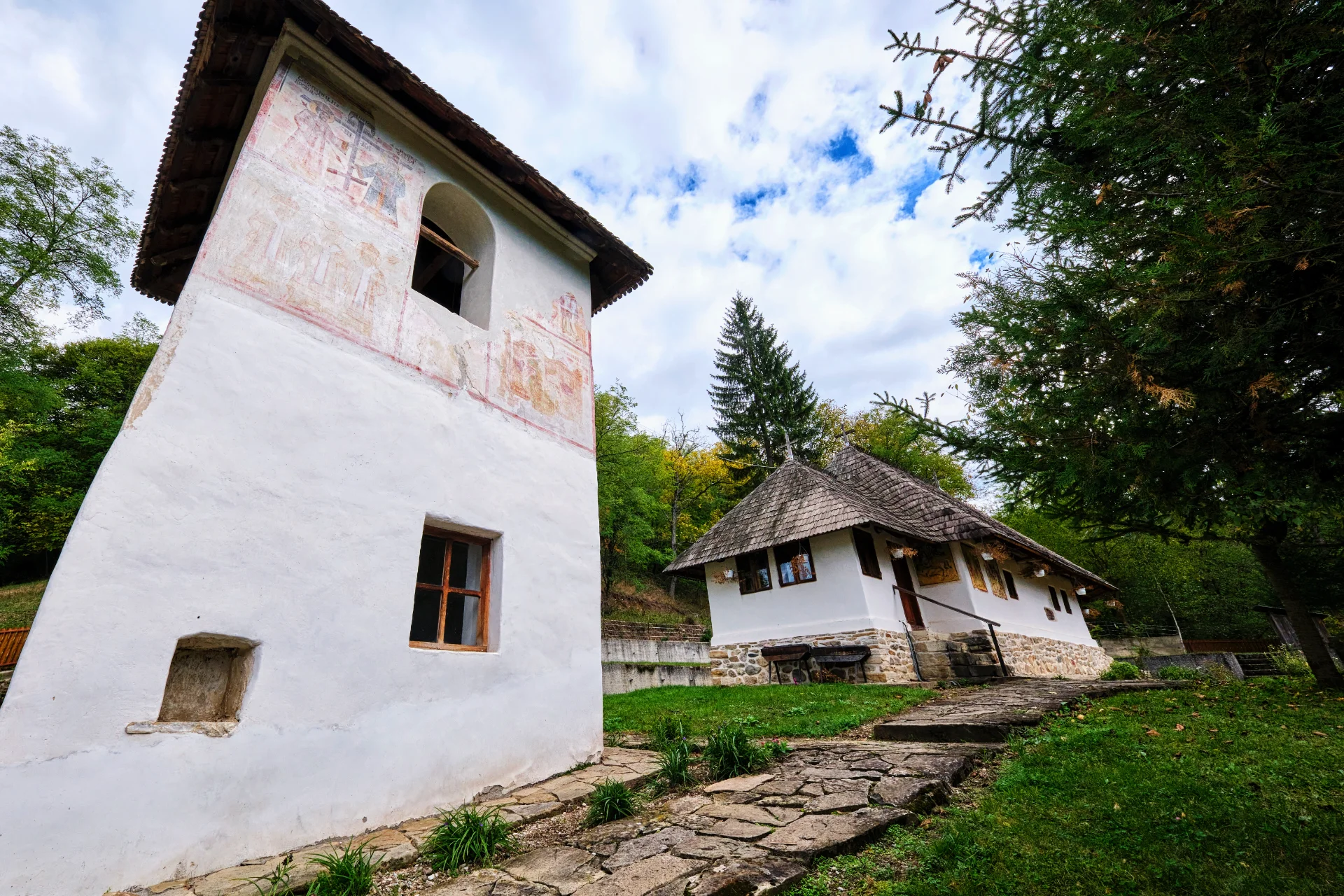
Around it, several old churches of former hermitages are preserved, the first of which can be easily seen on a rock on the other side of the river. Păpușa Hermitage was founded in the 17th century, but considering the inscriptions in Slavonic in the painting of the church, it is likely that it was built on the foundations of an older place. Once surrounded by cells, the small church with harmonious architecture preserves the old painting and the tapestry of great artistic value. A short distance to the south, you can also discover the church of the former Peri Hermitage, which has largely preserved its original appearance from 1689. Nearby is the cemetery, but also the place where the anti-communist fighters from Costești killed in 1949 were buried. A few kilometers away, in the village of Pietreni, you can discover the church of the Subpiatră Hermitage, now known as the 44 Springs Hermitage. Built in 1710 on the site of an older place, it preserves the church in almost original condition, the old paintings, the bell tower and part of the former walls. Equally interesting are the small cave churches in the Cave of St. Grigorie the Decapolite (Bat Cave), located in the rock above the Bistrita monastery. The “Ovidenia” and “Sfinții Archangeli” churches were arranged by monks from the monastery in the past centuries (15th-17th centuries), preserving old paintings and icons.
Arnota Monastery
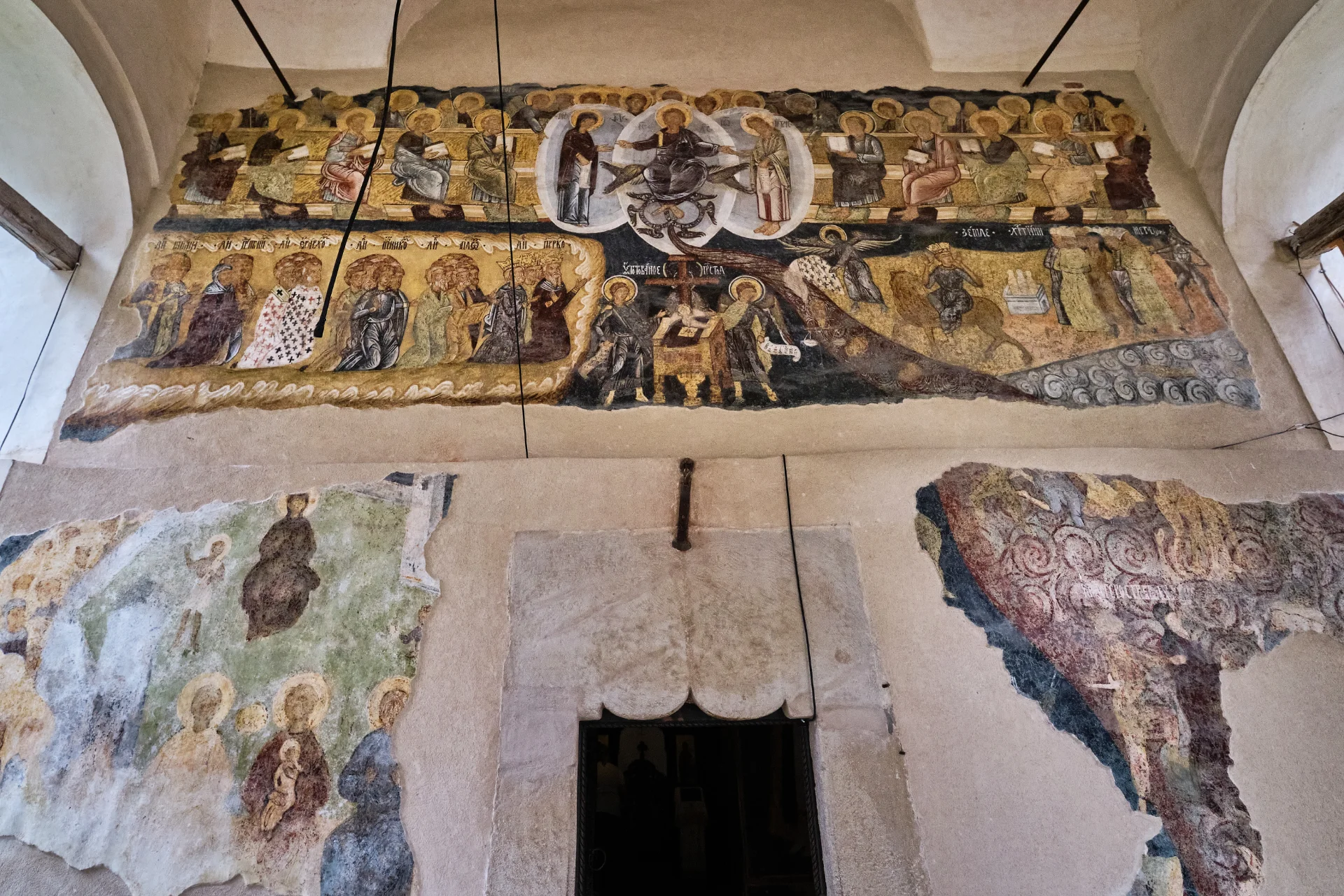
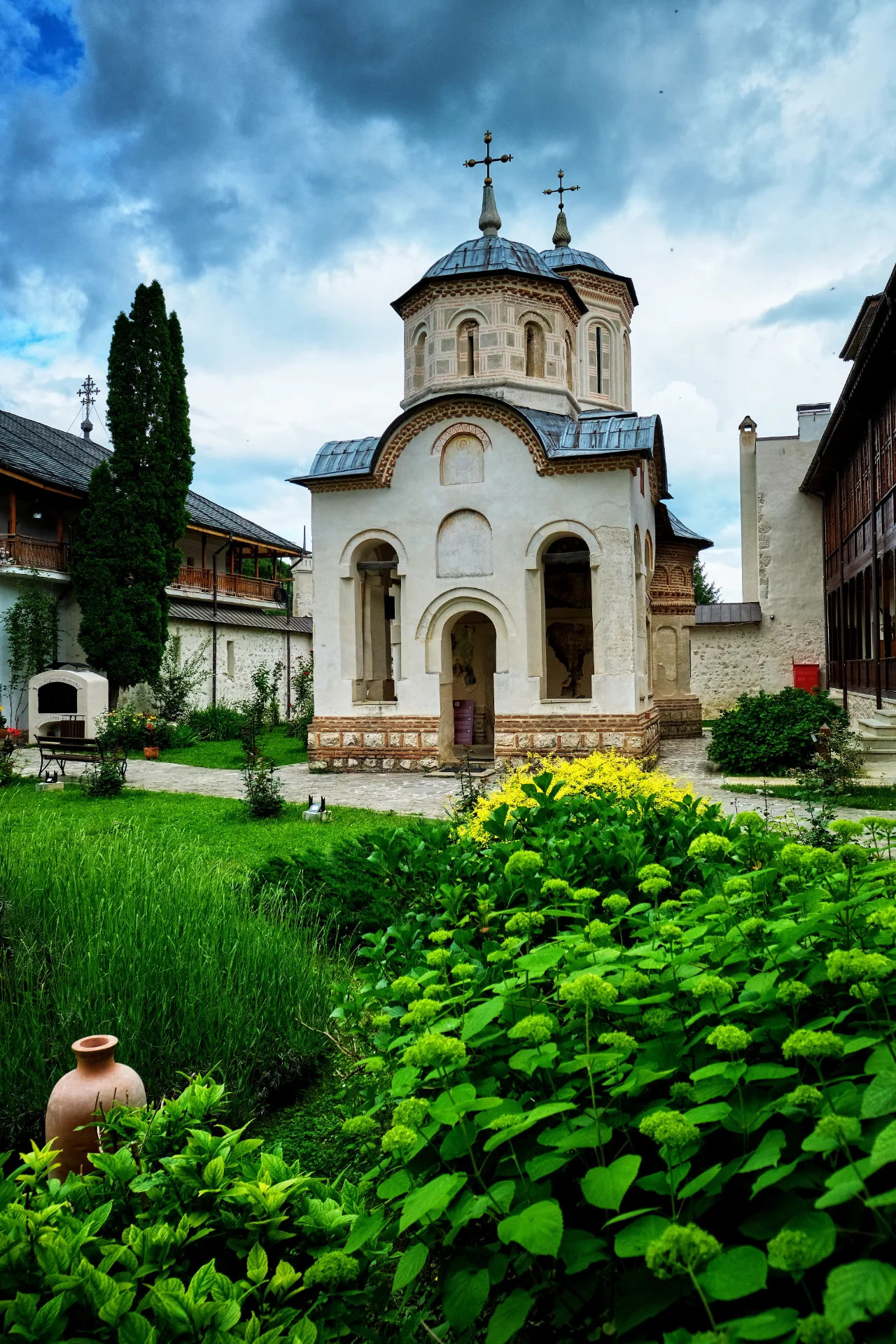
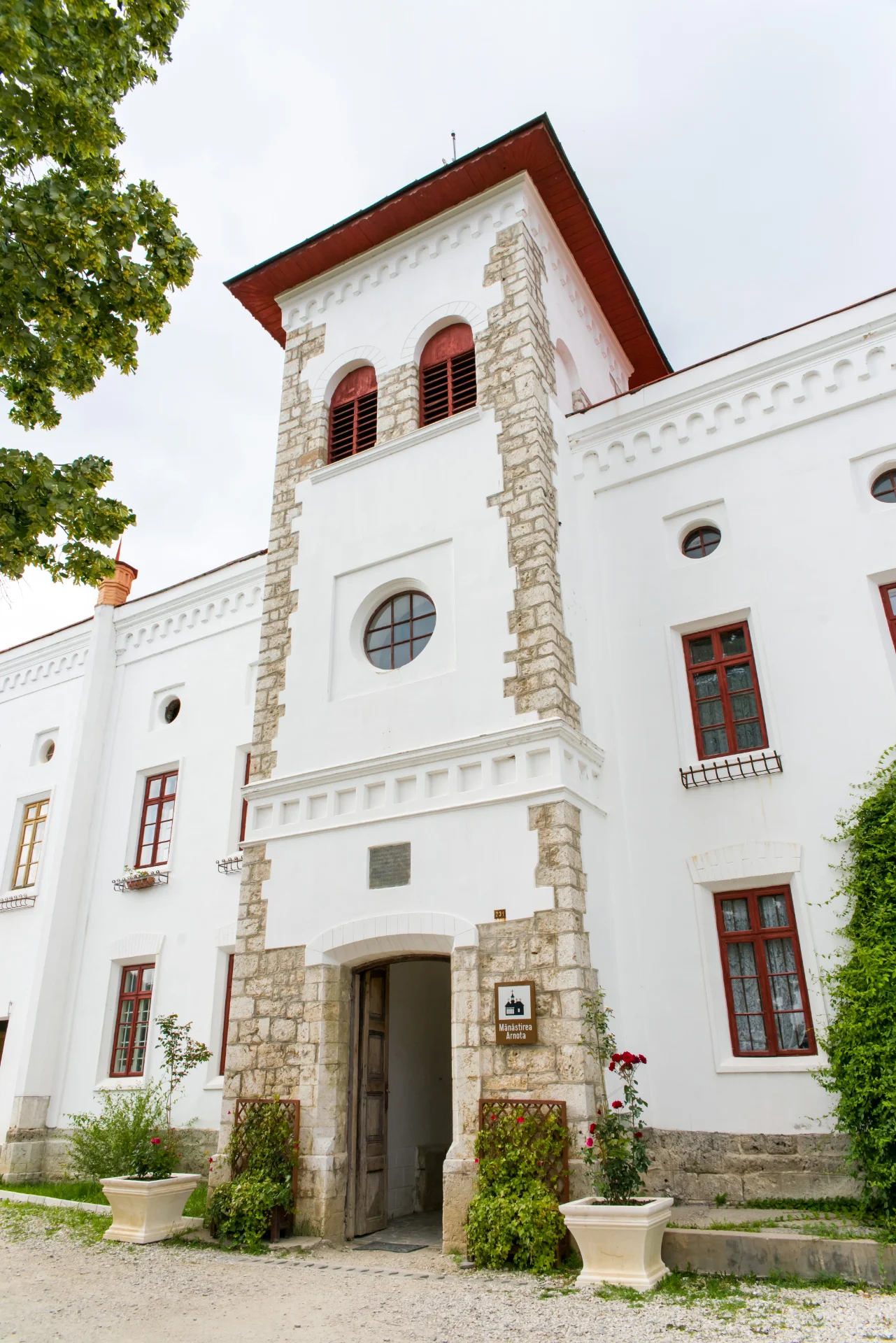
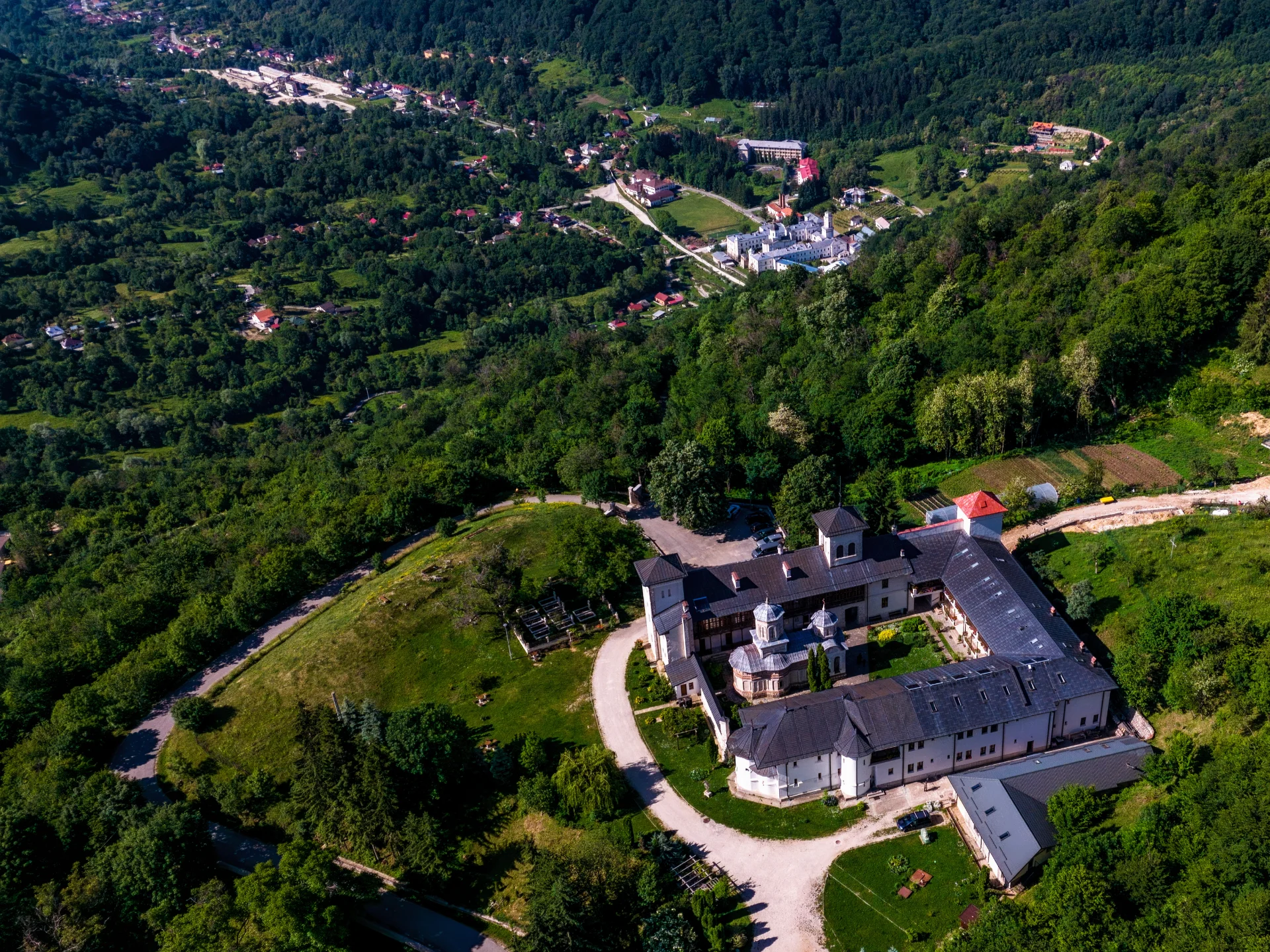
Even if it is considered that ruler Matei Basarab and his wife were the founders of the Arnota settlement in 1637, there are also researchers’ opinions that the church here predates his rule. According to some documentary reports, there was already a wooden hermitage here attributed to the Craiovești boyars, their descendants being possible founders of the wall church, which was then repaired, painted and endowed by the ruler and his descendants. Whatever the historical truth and legends surrounding this blessed place, the Arnota monastery is a fascinating destination and among the most beautiful religious settlements in the country. It is located in a picturesque natural setting, on the southern heights of the Buila-Vânturarița massif (840 meters altitude), approximately 5 kilometers from the village and the Bistrita monastery. The importance of the monastery is given both by the fact that the tombs of ruler Matei Basarab and his father Danciu are located here, as well as by the holy relics given to the place by his family. Amazingly modest for a princely necropolis, the church has the typical shape of a Serbian triconch, the porch being most likely a later extension that would be due to the Preda boyar or Constantin Brâncoveanu. The fresco painting at Arnota is considered a masterpiece of religious art, being mostly attributed to Stroe from Târgoviște and dating from the middle of the 17th century. In addition to the religious scenes, the votive painting of the family of ruler Matei Basarab is noteworthy. These are not the only treasures that the Arnota monastery had or still keeps, a very old icon and the catapeteasma are now at the Bucharest Art Museum. Visitors can also admire the carved doors from the time of Constantin Brâncoveanu and the tombs of the governor Danciu and ruler Matei Basarab, with the superb white marble slab. Around the church there are other structures, constructions made in the centuries that followed the foundation.
Măldărești museum Complex
Visiting hours: 10-18 (summer) / 9-17 (winter) / Monday Closed | Tickets: 10 lei/adult
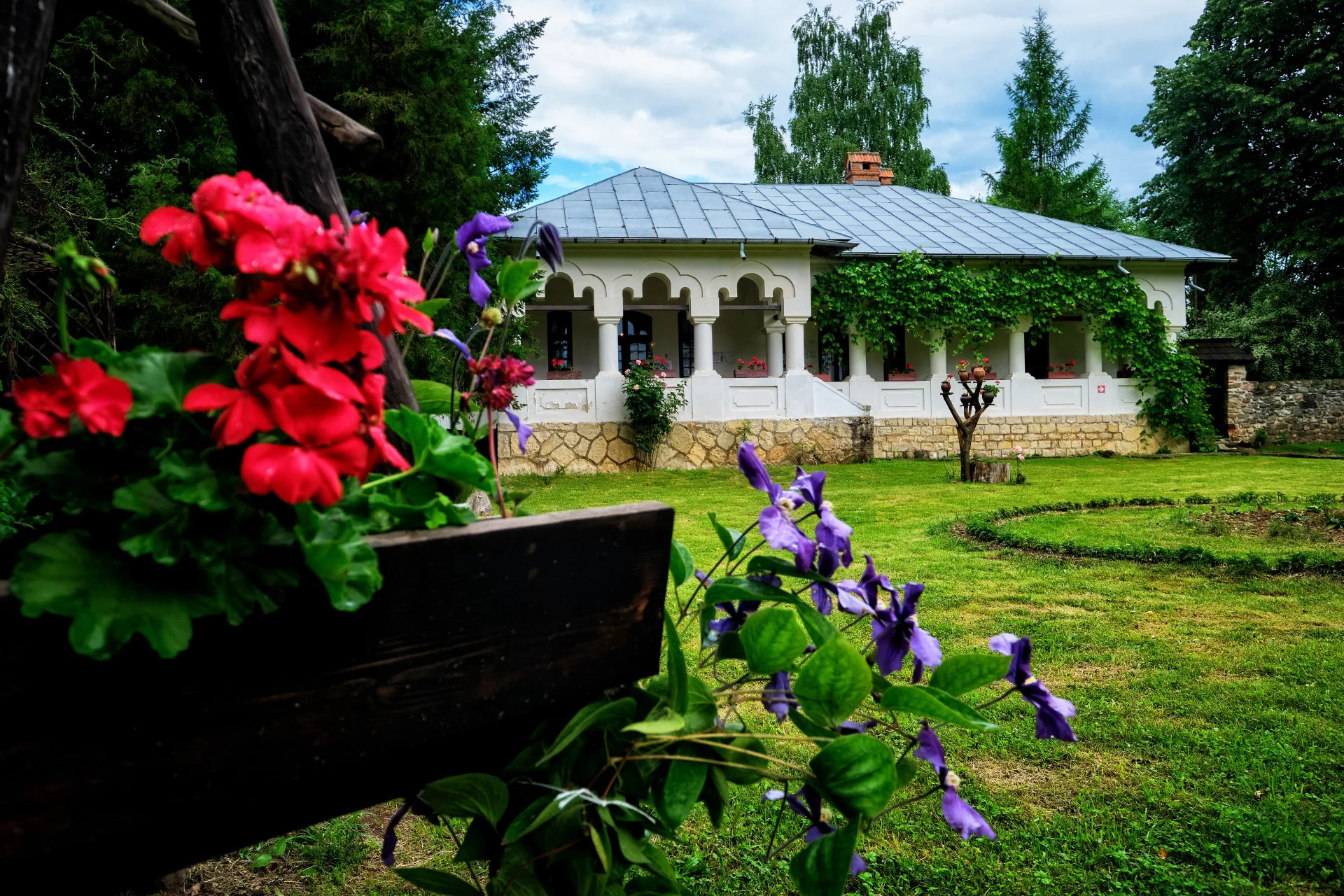
Located just a few kilometers south of the city of Horezu, the village of Măldărești preserves a real historical and architectural treasure, gathered today in a fascinating museum complex. Composed of Cula Greceanu, Cula Duca and the memorial house I.G. Duca, the ensemble offers a memorable travel experience. Amazing monuments of past centuries, the tower houses are representative constructions of Oltenia and western Muntenia, specific to the Balkan area. They combine the wealthier dwellings of local nobles with the defensive needs of the times, often resembling true defense towers. Cula Greceanu was most likely built in the 16th century, being expanded two centuries later. Originally owned by the Măldărescu family, it then became the property of the Greceanu family. The construction with Brancovenese influences has two floors, the cellar on the ground floor being slightly deepened and having no communication with the rest of the construction. Protected by a wooden door and staircase, the first floor comprises the wide porch and several small rooms, one of which was a hiding place in case of danger. The former reception room here was decorated with interesting frescoes by the painter Olga Greceanu. The next floor also features a porch and two more recently fitted rooms instead of a loft. Nearby, Cula Măldărescu, which is now known as Cula Duca, dates from 1812 and was built by Gheorghiță Măldărescu. The imposing building has a rectangular shape and two floors, on the ground floor there is an entrance with a massive wooden door. On the upper floors there are some rooms that preserve the atmosphere of the era in which they were built, with authentic traditional furniture and decorations. The monument was bought in 1910 by Ion Gheorghe Duca, prime minister of Romania during the interwar period. He started the organization of an ethnographic museum collection inside the building, building nearby a holiday house in traditional style that today functions as a memorial house for the politician. The complex was also used as a filming set for several well-known Romanian films.
Other Interesting Discoveries
Lesser known places and activities in Horezu and its Surroundings
Bistrița Gorges
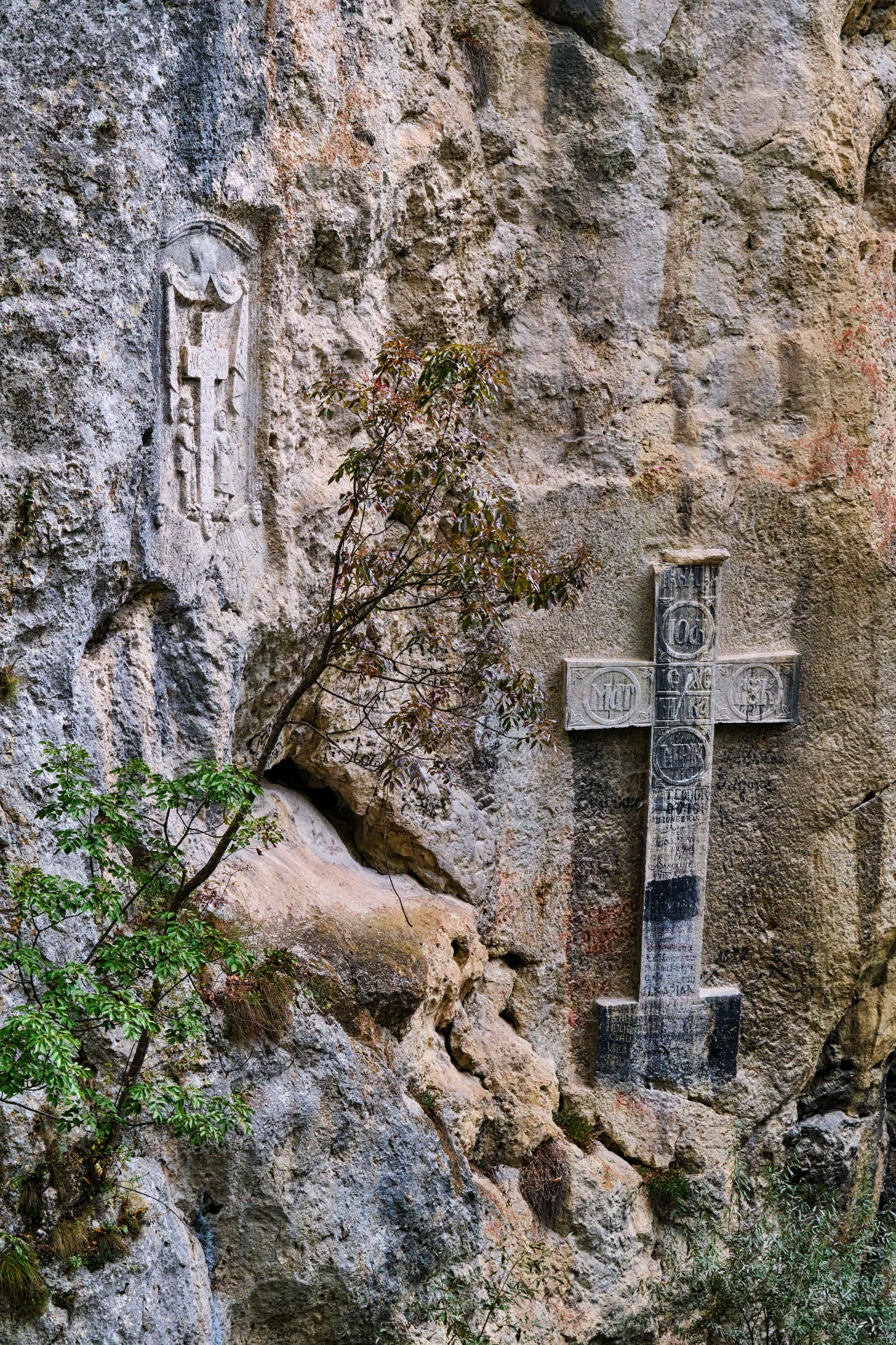
Starting right next to the Bistrita Monastery, the gorges are about 2 kilometers long and encompass spectacular landscapes, with vertical slopes that sometimes approach only a few meters above the tumultuous river. Right at the entrance to the quay is the Queen Maria Bridge and several stone crosses, the most impressive of which is 5 meters high, carved right into the rock. Also, in this area there are dozens of caves, some of which are more interesting for tourists. The Cave of the Bats is also known as the Cave of St. Gregory the Decapolitan, being located on the slope at the entrance to the quays. Inside it are two small churches set up by hermits since the 16th century. Besides these, the cave has a length of about 250 meters and a rich cave fauna, consisting mainly of bats, hence the name. About 1 kilometer away through the gorge you can also reach the Bear Cave, notable for its monumental entrance and the cave bear fossils discovered here, in addition to traces of its habitation from ancient times.
Pătrunsa Monastery
Located at the foot of the Buila – Vânturarița massif, approximately 7 kilometers from the village of Bărbăți, the monastery dedicated to “Cuvioasa Paraschiva” can be visited by following the forest road from the village to the north, then continuing on a hiking trail. The settlement was first organized in 1740 by Bishop Clement of Râmnicui, then rebuilt in the 18th century and abandoned again at the beginning of the 20th century. The current structures mostly date from the 19th and 20th centuries, the old church retaining paintings in the Brancove style with popular influences, while the new church was built recently. The monks’ dwellings are spread throughout the charming meadows around.
Pahomie Hermitage
Among the most isolated but also charming religious settlements in the country, the monastery is located at the base of the impressive rocky wall of the Buila-Vânturarița massif, being surrounded by the wild nature of the national park. You can reach this place either by following the forest road that starts from the village of Cheia and follows the valley of the same name, or along a hiking trail that starts from Bărbăți and passes by Pătrunsa Monastery. The beginnings of the hermitage at Izvorul Frumos seem to be around the beginning of the 16th century, being linked to the name of a Pahomie monk and Sava Haiducul. Abandoned and dilapidated for many decades, the hermitage was restored to its original form only in 1952. The church, built partly into a rock and near a charming waterfall, is truly impressive due to its unique location.
Cheia Gorges
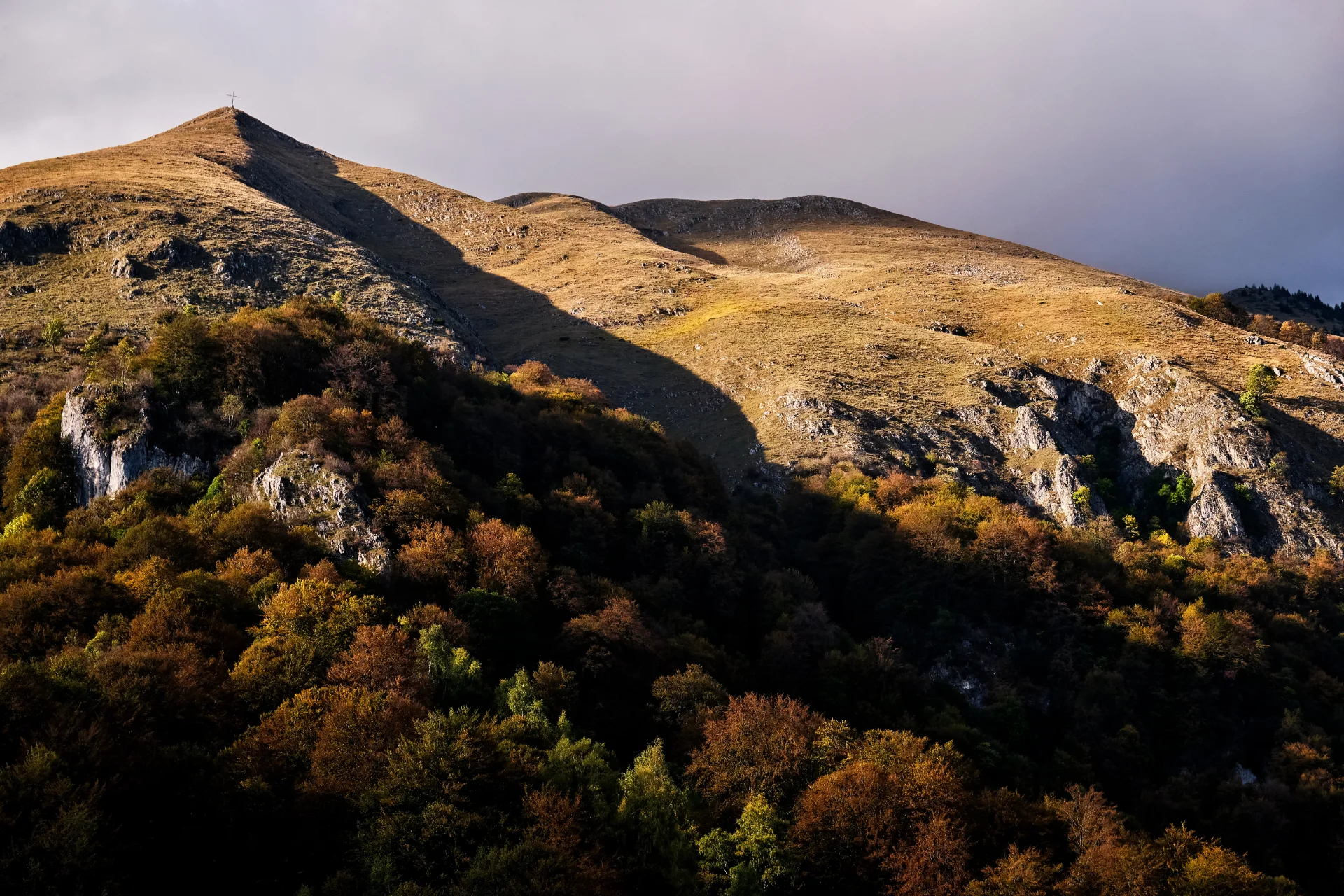
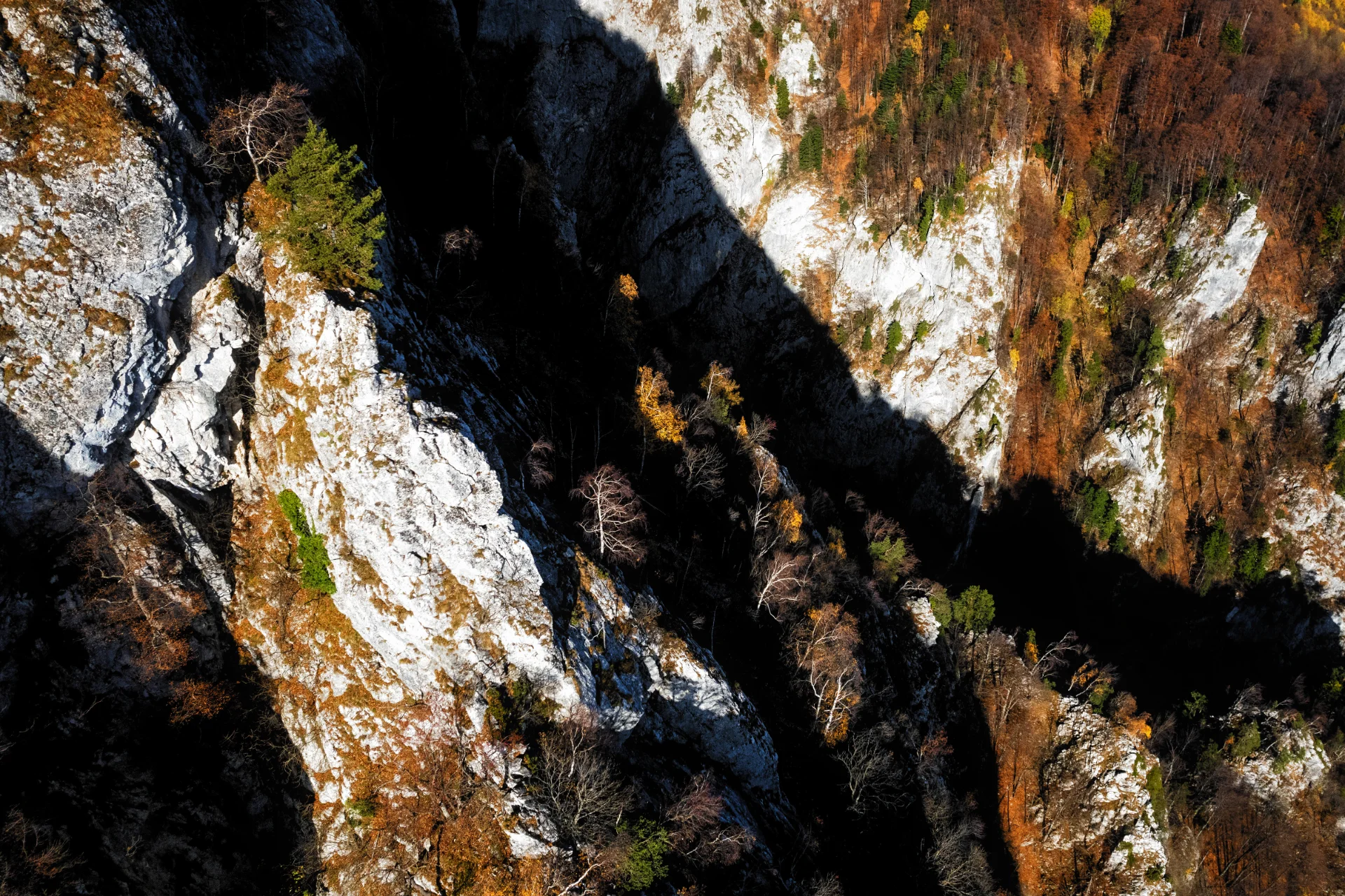
One of the most spectacular places in the Romanian Carpathians is hidden in the northern extremity of the Buila Vânturarița massif. Splitting the imposing calcareous ridge, the Cheia stream has created a sector of extremely wild, albeit rather short (1 kilometer) gorges. Quite difficult to reach, the Cheile Cheii can be admired either from the south following a difficult aerial route, known as Brâna Caprelor, or from the north, along a long forest road that reaches near Cabana Cheia. A fascinating and complex destination, the gorges are characterized by high and steep slopes, by the stormy torrent that sometimes creates splendid waterfalls, by several caves that hide unsuspected treasures (Pagodas Cave, Lake Cave), by climbing routes, but also by the frequent presence of black goats.
Peak of Roman
A real mountain resort in the making, Vârful lui Roman is a fascinating destination in the Căpățănii mountains. Access to this area is achieved by two local roads starting from the villages of Romanii de Sus or Vaideeni, the distance from Horezu being approximately 20 kilometers. Located at an altitude of approximately 1700 meters, the destination includes several cabins and guesthouses, a seasonal ski slope with a chairlift, but also spectacular panoramas of the surrounding peaks and valleys. Travelers can also visit the Alina Maria Monastery, built between 2011 and 2014 by a businessman from Sibiu in memory of his daughter.
Costești Boulders Museum
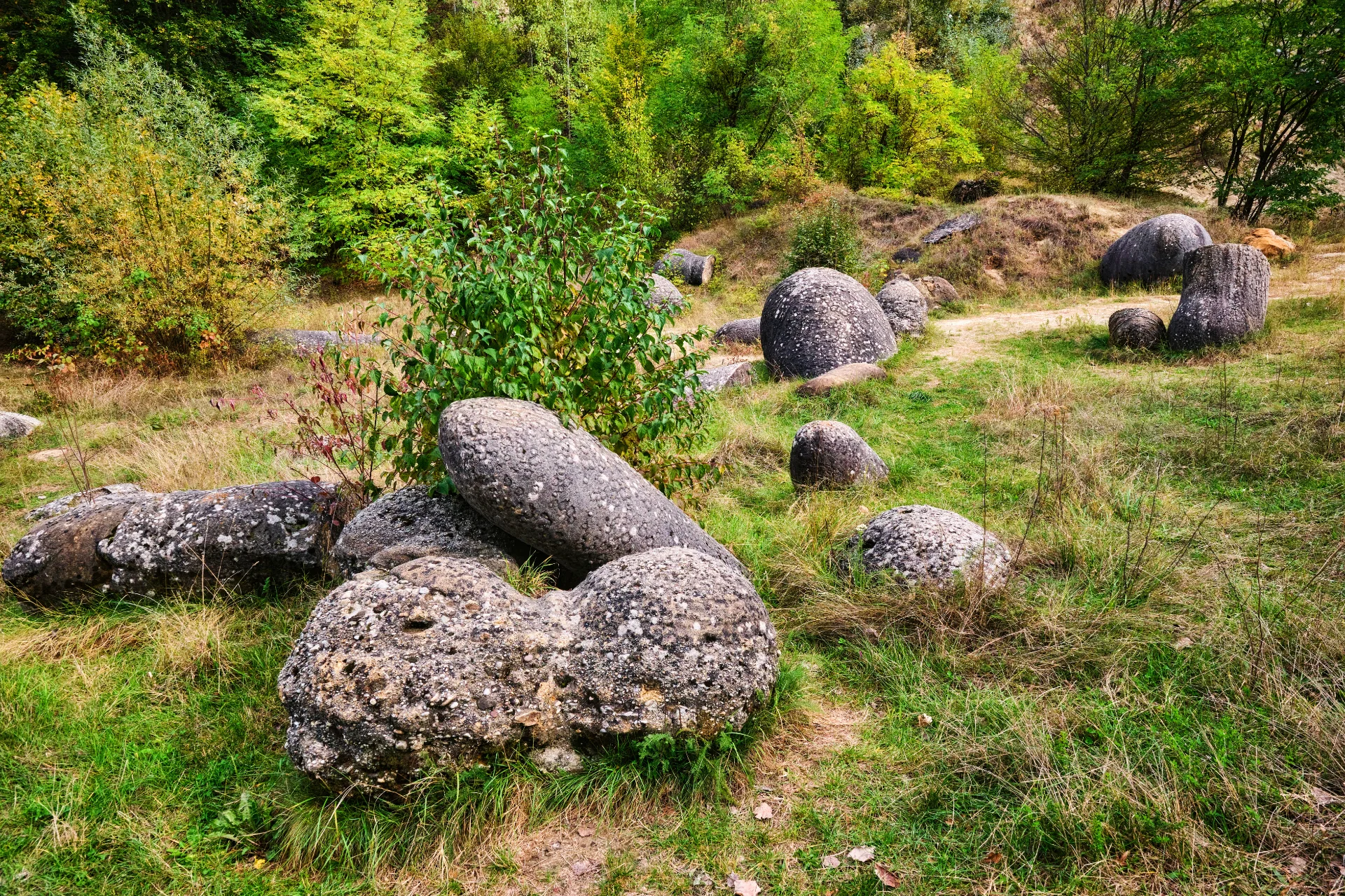
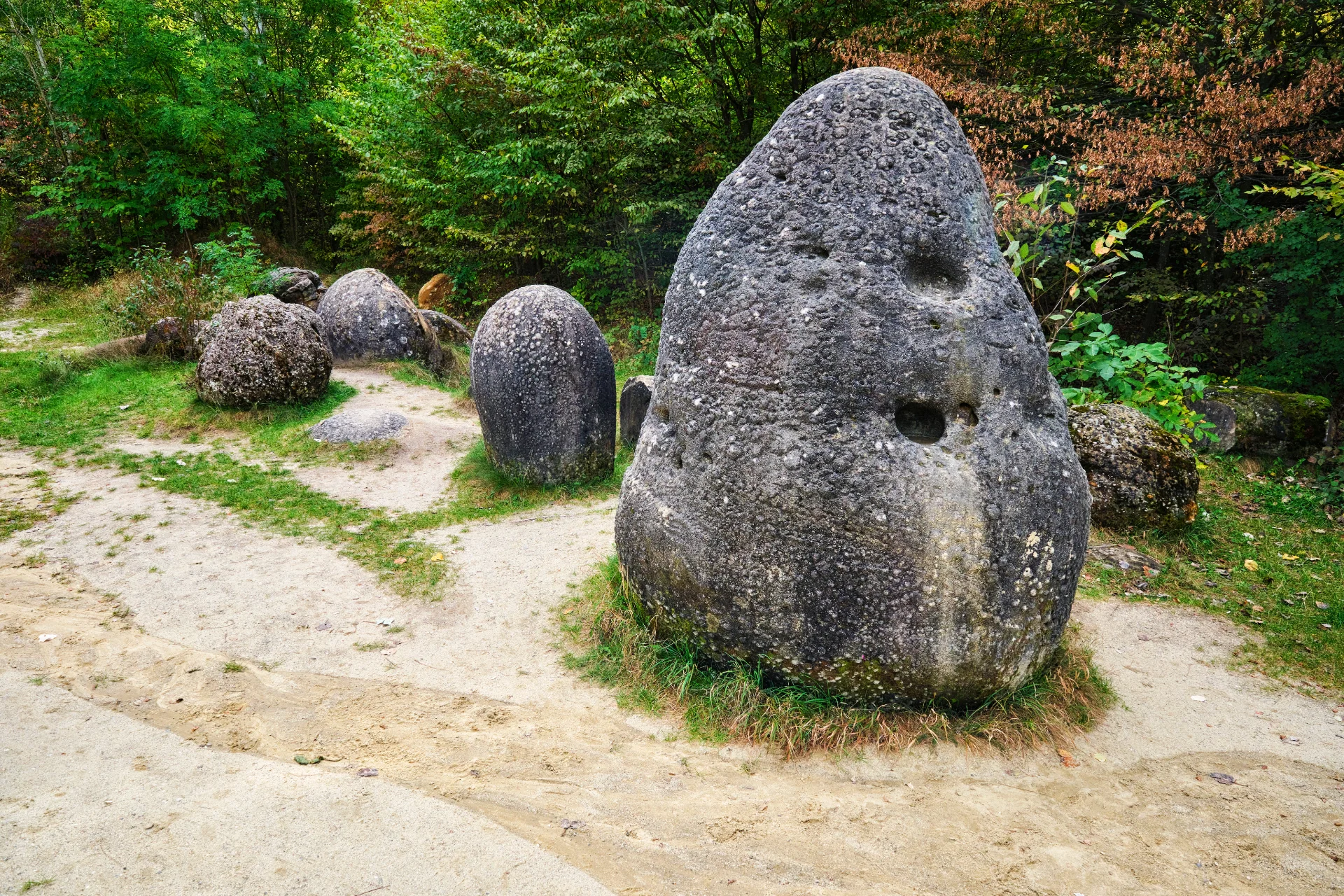
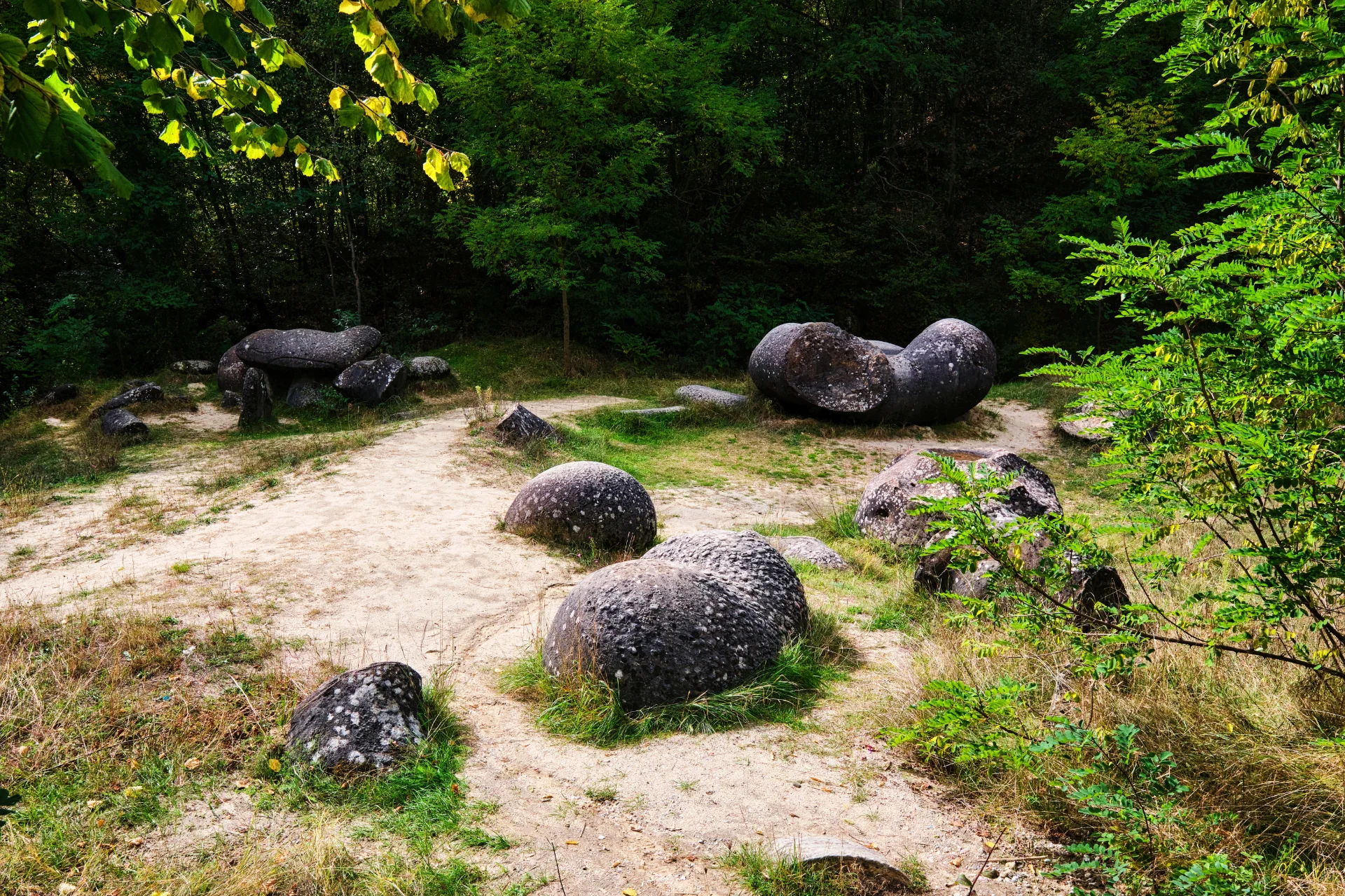
A real open-air museum, this amazing place is located in the village of Costești, right next to the national road 67, which connects Horezu to Râmnicu Vâlcea. Even though it has an area of just over 1 hectare, the geological reserve contains an extraordinary number and variety of trovants, unique formations formed by specific processes over thousands of years. With various shapes and sizes, the trovants from Costești appeared on the surface through the exploitation of the sand quarry here, others are still buried in the cliff on the northern side, sometimes the rains or landslides give birth to new ones.
Rădița - Mânzu Reserve
A very isolated and wild natural area, the mixed reserve is located in the upper basin of the Olănești River, belonging to the Căpățănii mountains, east of the Buila-Vânturarița peak. With an area of 10 hectares, the Rădița – Mânzu reserve is characterized by a specific and spectacular relief, but also by a rich biodiversity.
Luncavăț Valley
A particularly wild area, but less known to travelers, the Luncavațului Valley can be explored along a delightful forest road that starts from the village of Vaideeni. After more than 15 kilometers along the valley, admiring waterfalls, high cliffs and increasingly dense forests, you can reach the small artificial lake Balota, in memory of which there is also a charming area of gorges.
Cerna Valley
Another destination of wild beauty that is relatively little known by travelers is the Cerna valley in the north-western extremity of Vâlcea county. Starting from the village of Cerna, you can explore the valley by first following a forest road, after which you can continue on the paths to the top of the Căpățănii mountains. Spectacular waterfalls, interesting rock formations and several caves can be admired along the way, all surrounded by enchanting forests.
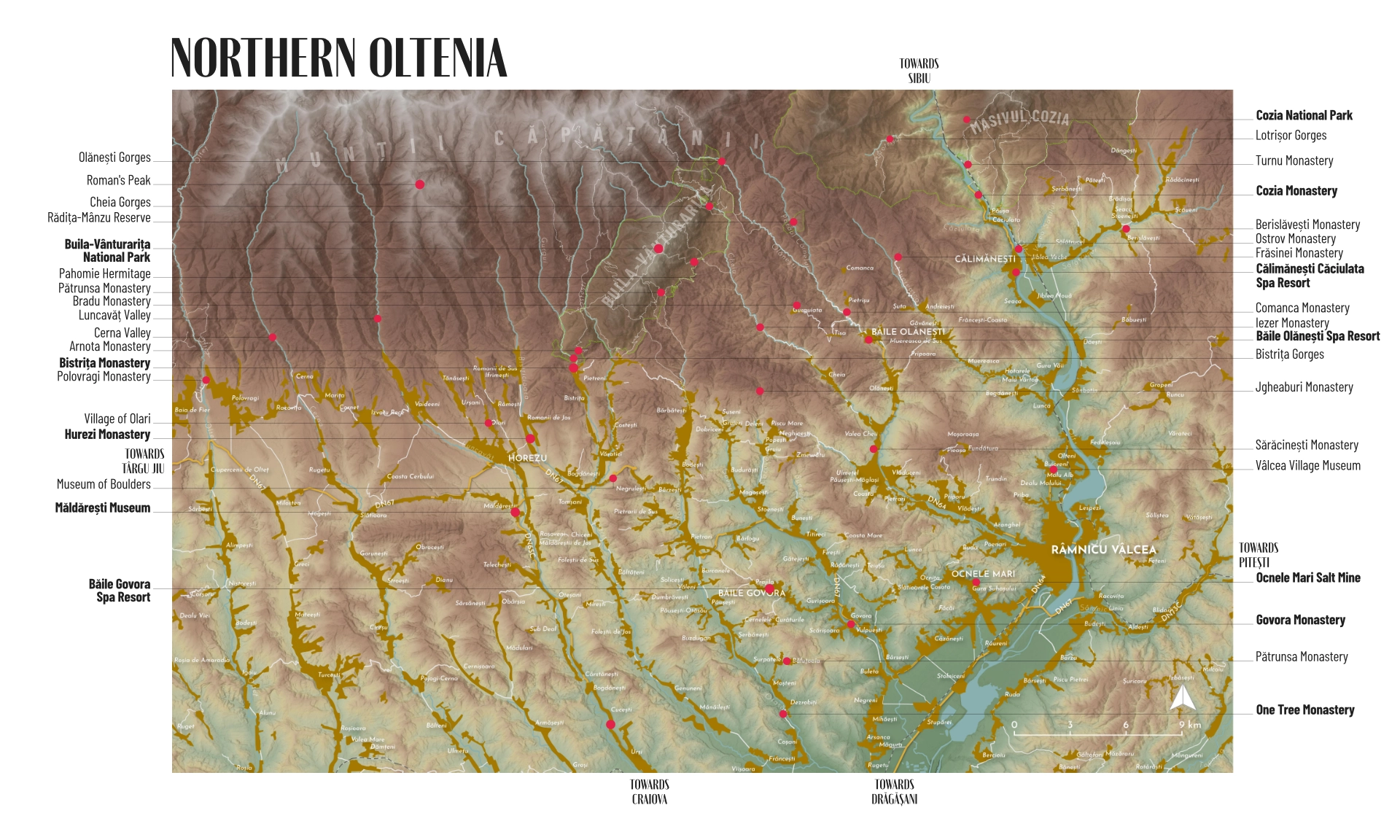
Accommodation Recommendations
The best lodging options in Horezu and its Surroundings
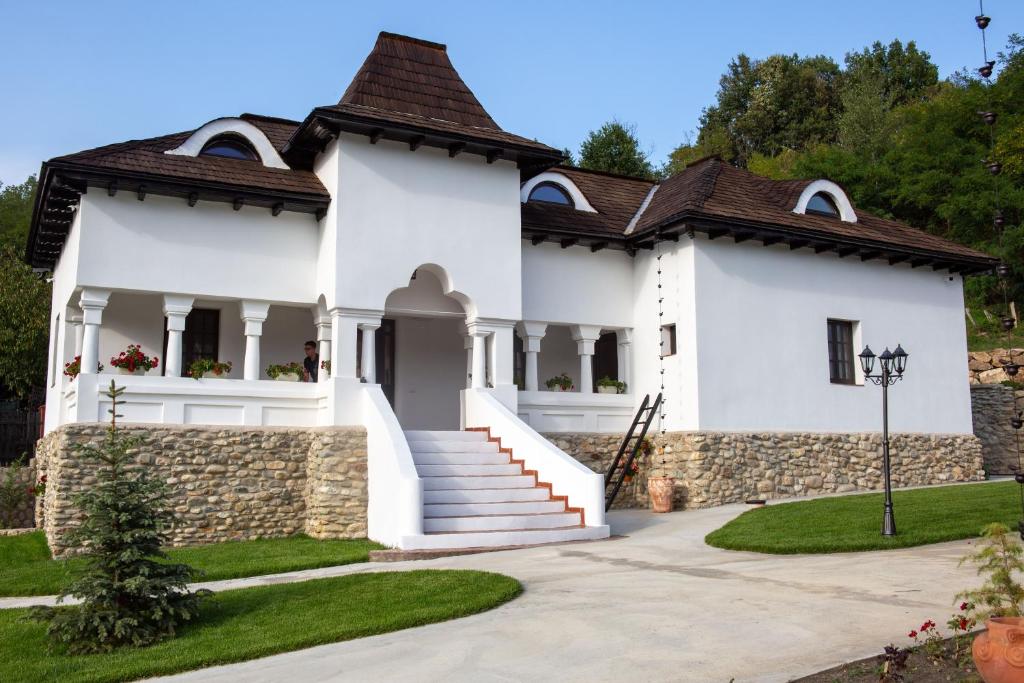
Rating 9.9 from 14 reviews!
Located in the village of Măldărești, close to the culer complex, this guesthouse offers rustic rooms with all amenities, shared lounge, terrace and extensive garden, but also the option of breakfast!
Ciupa St. 10, Măldărești
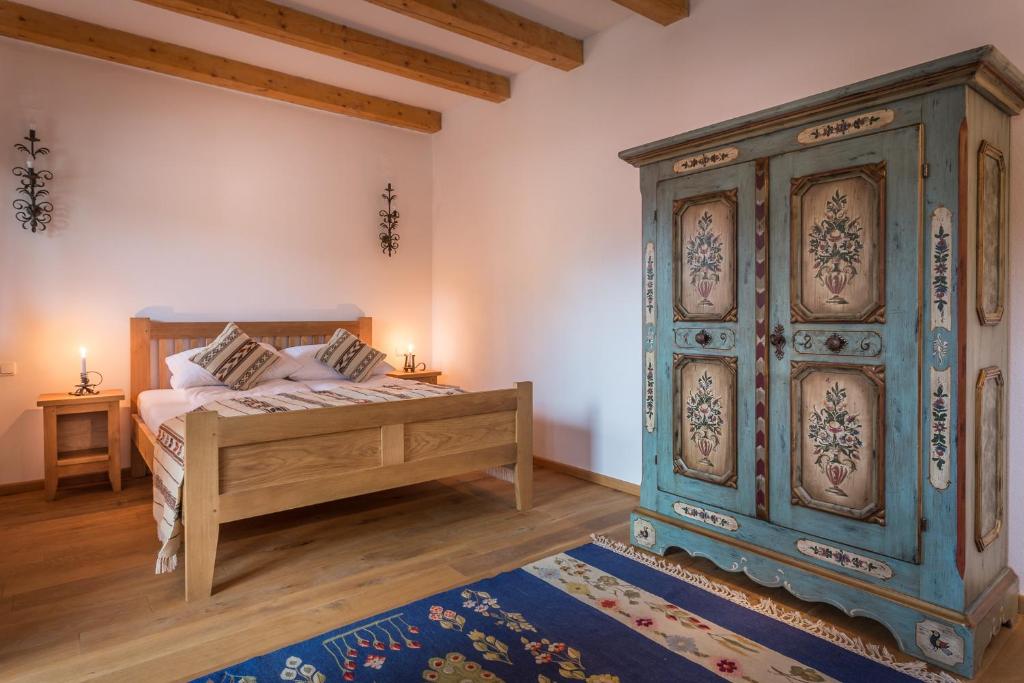
Rating 9.8 from 121 reviews!
Located in the center of Costești village, a few kilometers from Horezu, this traditional guesthouse offers accommodation in rooms with charming rustic decor, an acclaimed restaurant, shared lounge and garden!
Brazilor St. 26, Satul Costești
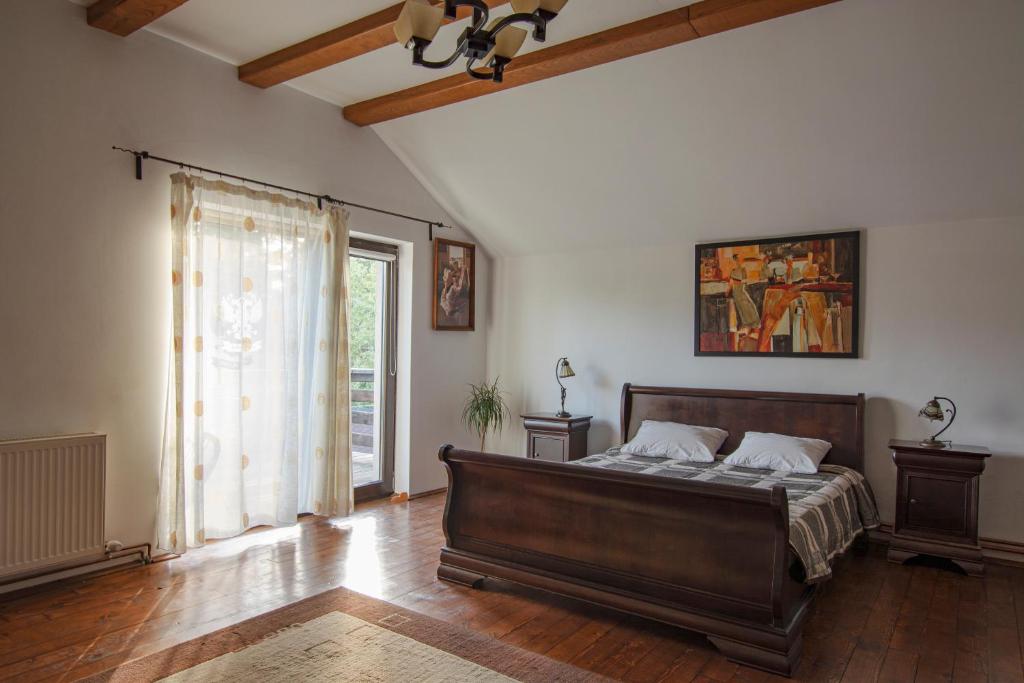
Rating 9.1 from 286 reviews!
Located in a quiet area of Horezu town, this guest house offers spacious and welcoming rooms, shared lounge and kitchen, terrace, bar and playground!
N. Bălcescu St. 29, Horezu