22
Sighișoara
Medieval Citadel
Countless stories and legends hide on the cobblestone streets, through the colorful houses and among the towers of the old fortress, a magical place that provokes deep emotions, existing somewhere beyond time, while modern civilization seems to stop in front of the citadel walls!
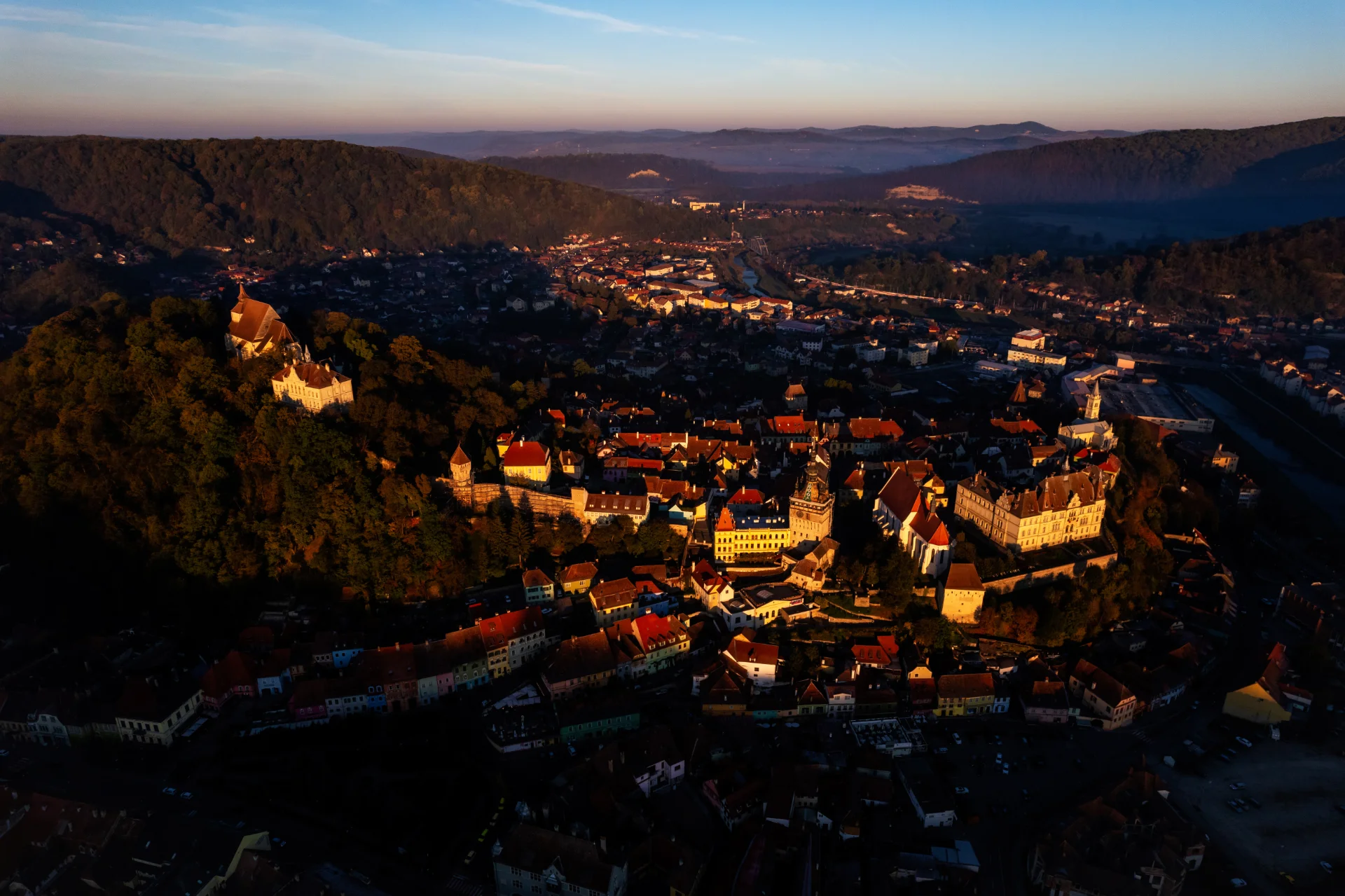
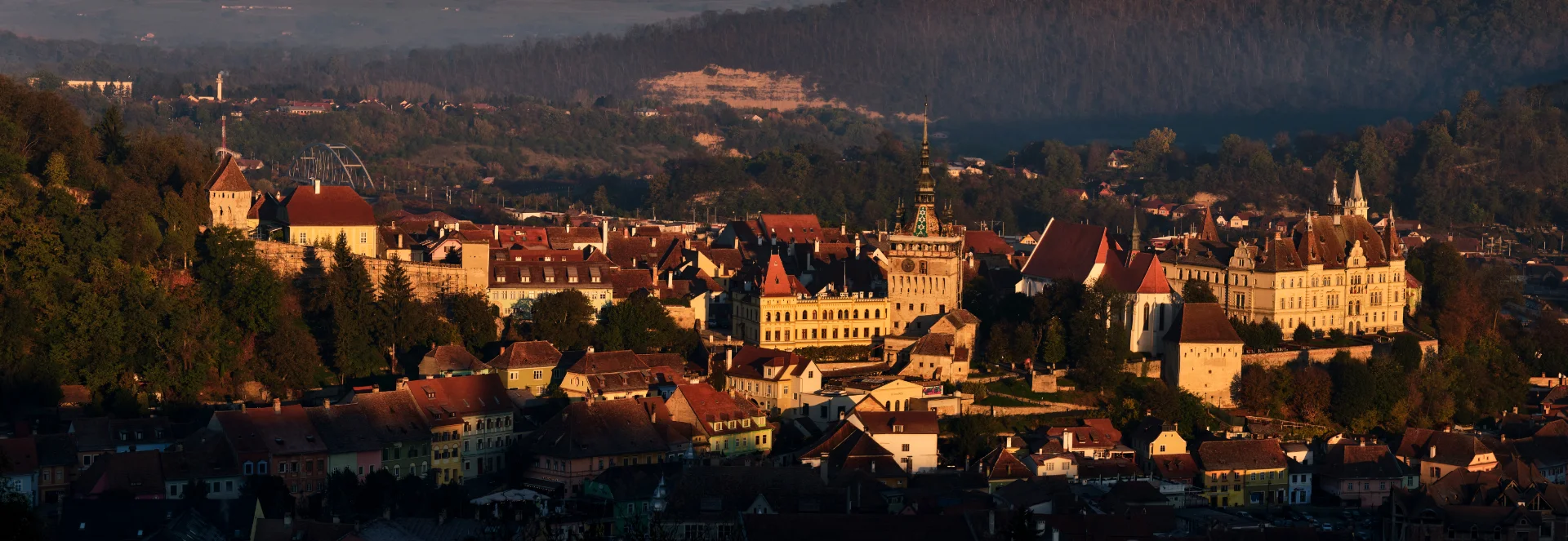
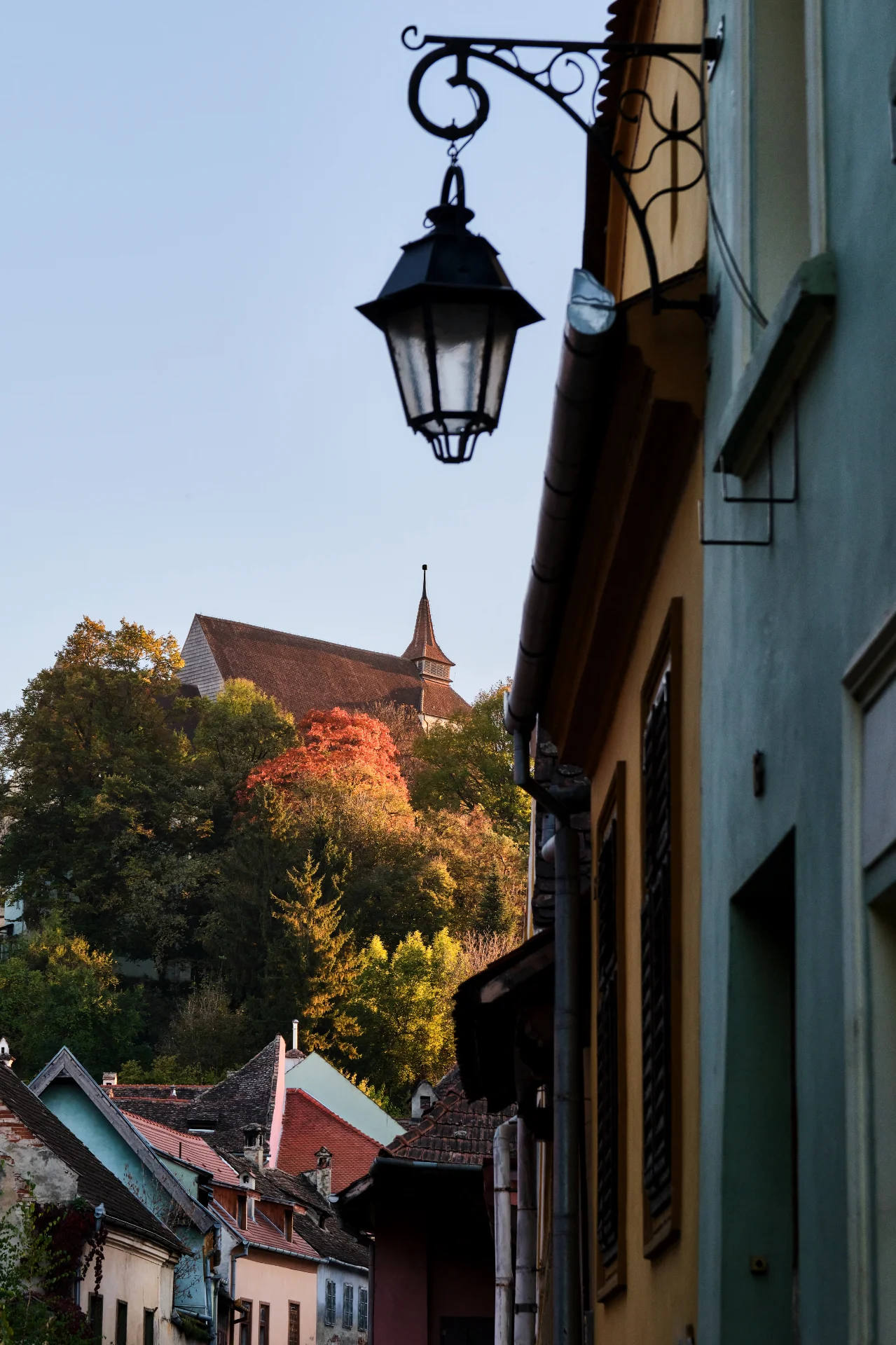
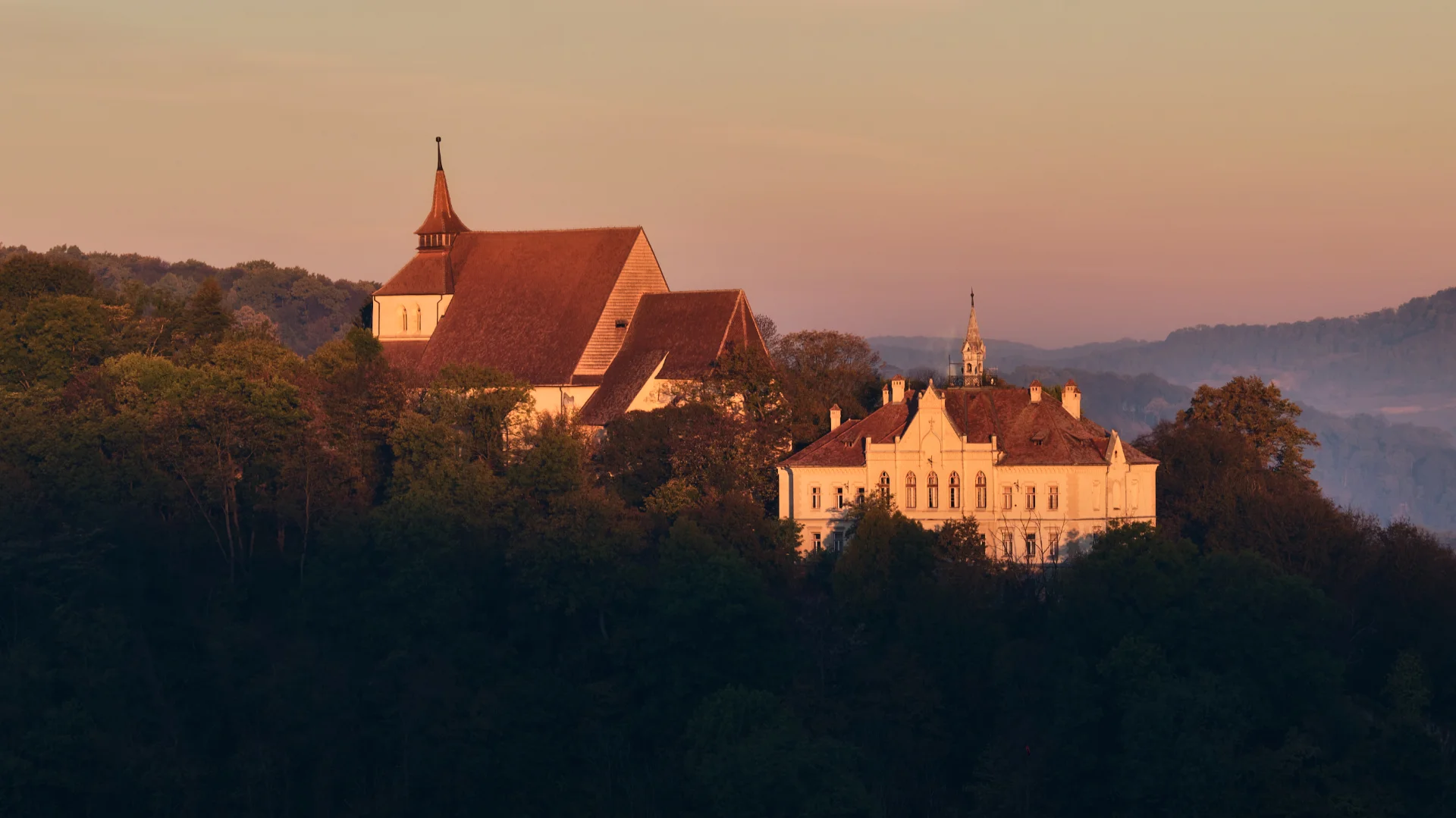
Exploring this vibrant and charming corner of the world is more of a spiritual experience, a journey through centuries of history, following generations of people who have called the small town home or found refuge behind its sturdy walls. Every new day, the first rays of the sun first touch the tower of the old church on the hill, then slowly descend and envelop the citadel hill. The city below seems still asleep, surrounded by the hills so specific to central Transylvania. Witnesses of this unique and memorable spectacle, we climb the steps leading to the old fortress, following the warm light that has already enveloped the towers and old houses. A day in this amazing place takes us several times along the same streets and alleys, looking for new ways to enter the story of Sighișoara, to imprint each picturesque corner we discover in our souls.
Besides a few small museums and the view of the fortress from the old clock tower, the most enjoyable thing we can do here is to wander aimlessly and find out the stories of each stone on which the fortress was built. Although modernity has slowly begun to penetrate here, sometimes tarnishing the authentic spirit of the place, there are still many moments when we can feel the atmosphere of the past. Part of the UNESCO World Heritage Site, the medieval fortress of Sighișoara offers a fascinating and complex travel experience, with an invaluable heritage of historical buildings and monuments, but also a completely authentic atmosphere. Sighișoara represents an extraordinary testimony to the heritage of the Saxons in Transylvania, a culture that is beginning to disappear after more than 800 years, often existing only through architectural monuments.
Search for Flights to Romania with Booking.com!
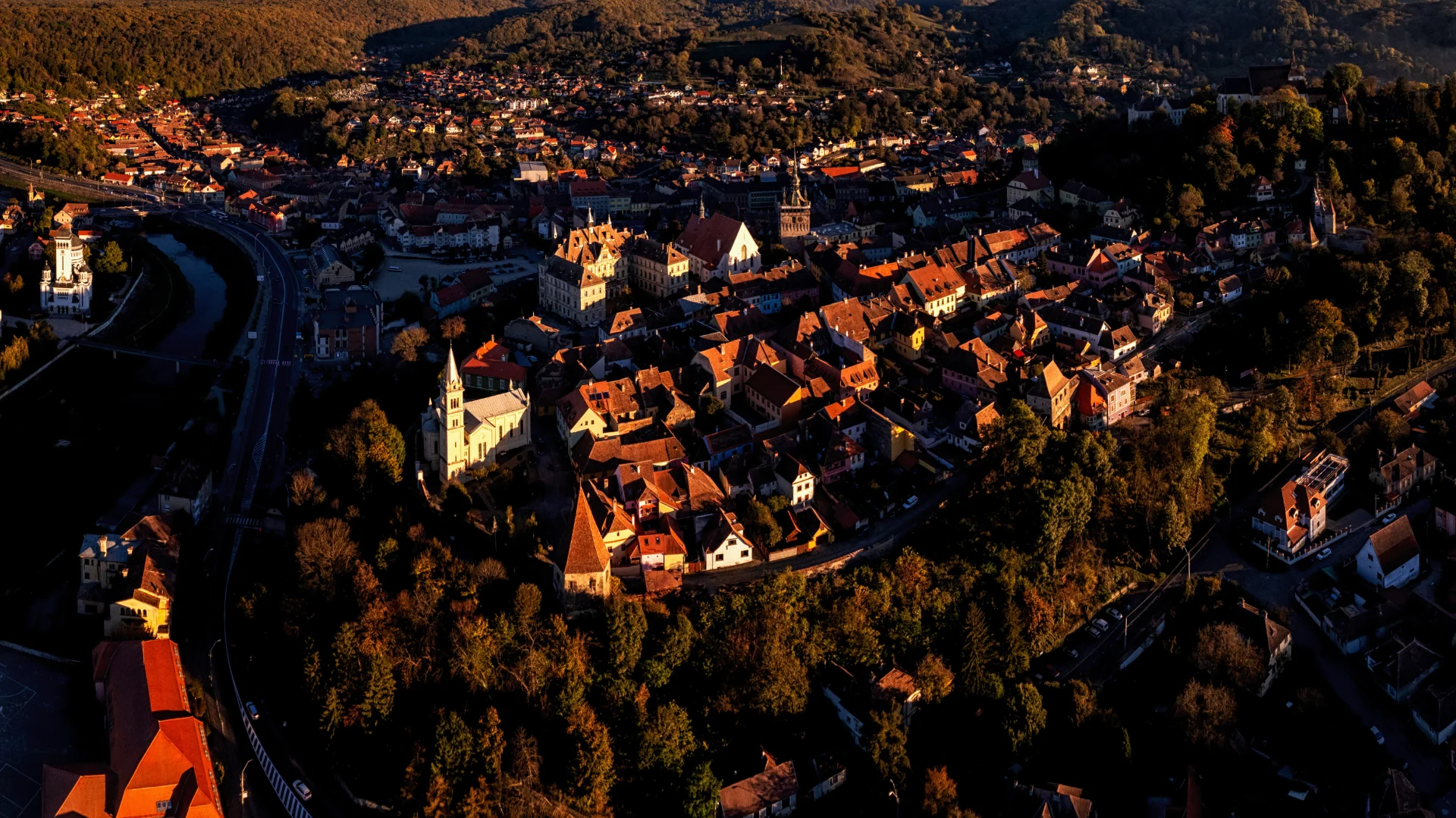
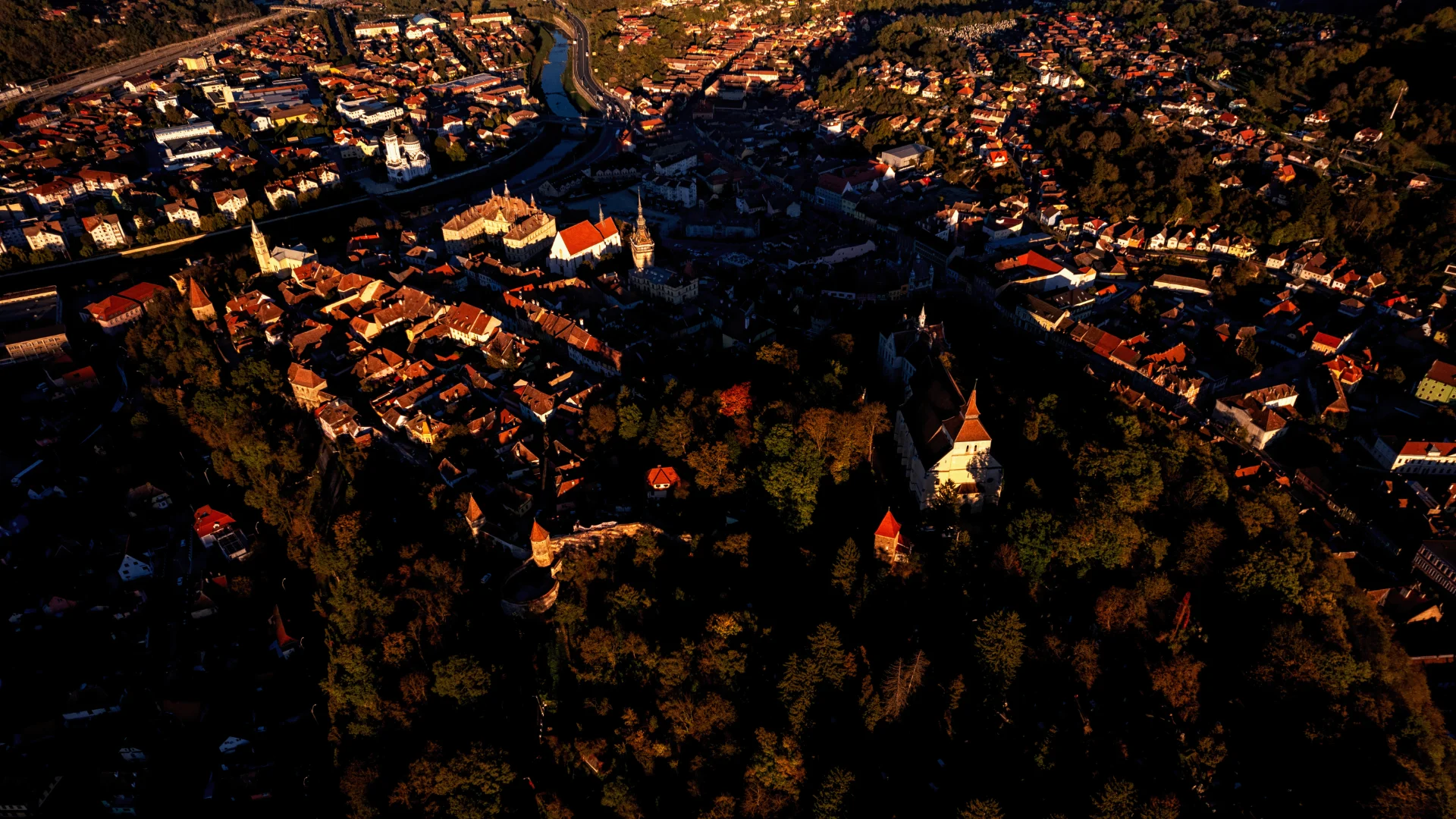
The history of the Sighișoara fortress seems to begin with the arrival of the Saxons from Germany, at the invitation of the King of Hungary, to defend the eastern border of the kingdom. The first attestations of a settlement in this place date back to the end of the 12th century, while a century later, documents illustrate a small town built on top of a former Roman fort. Over the years, the fortress has been known by several names, Sighișoara appearing for the first time in a document of Vlad Dracul, the father of Vlad Țepeș, who lived here in exile. During the period of maximum development of the fortress, it was one of the most important commercial and craft centers in Transylvania, with 15 recognized guilds, most of which belonged to the Saxons. They also built the impressive fortifications that surround the old town, a symbol of the fortress being the towers that still bear the names of the old guilds.
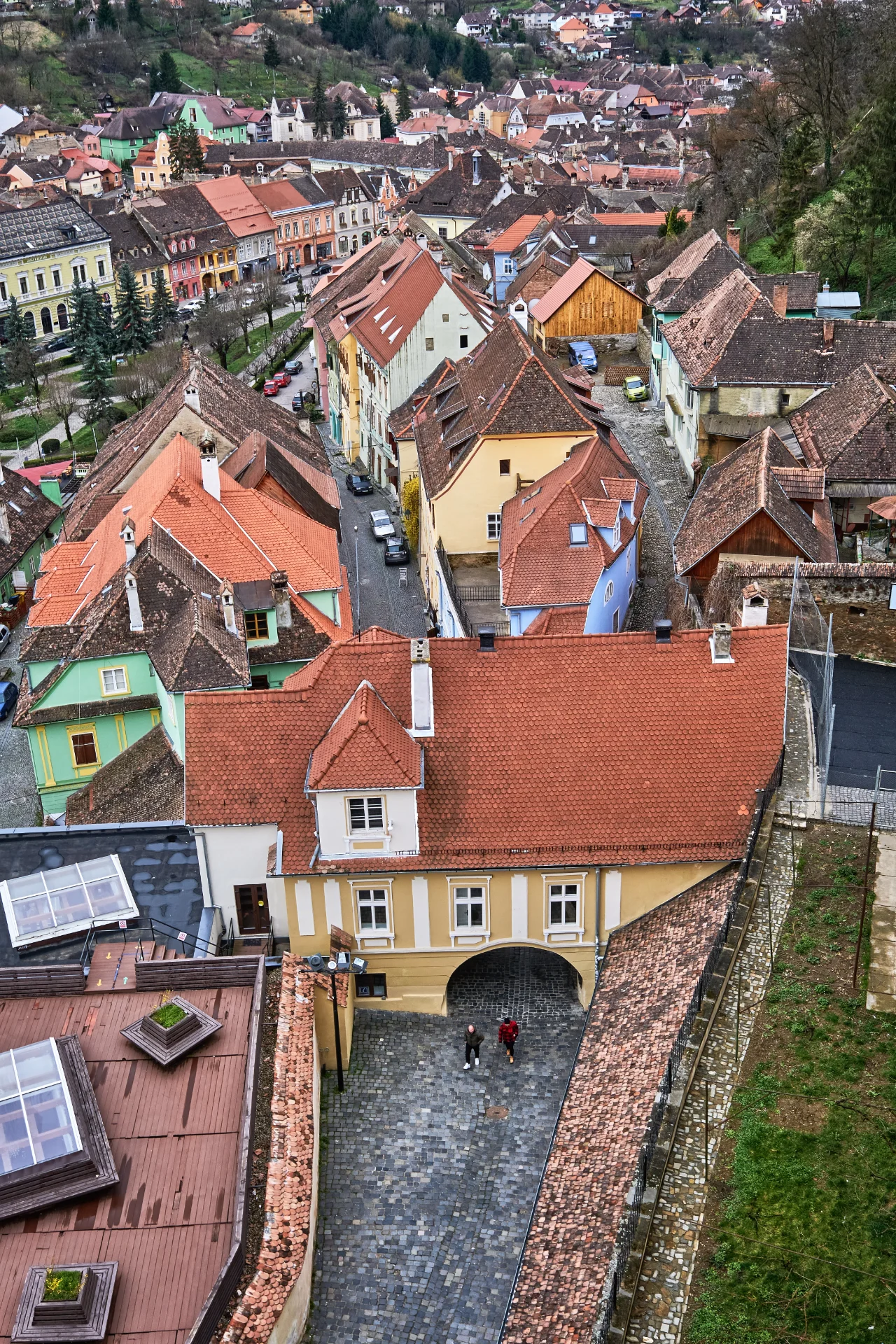
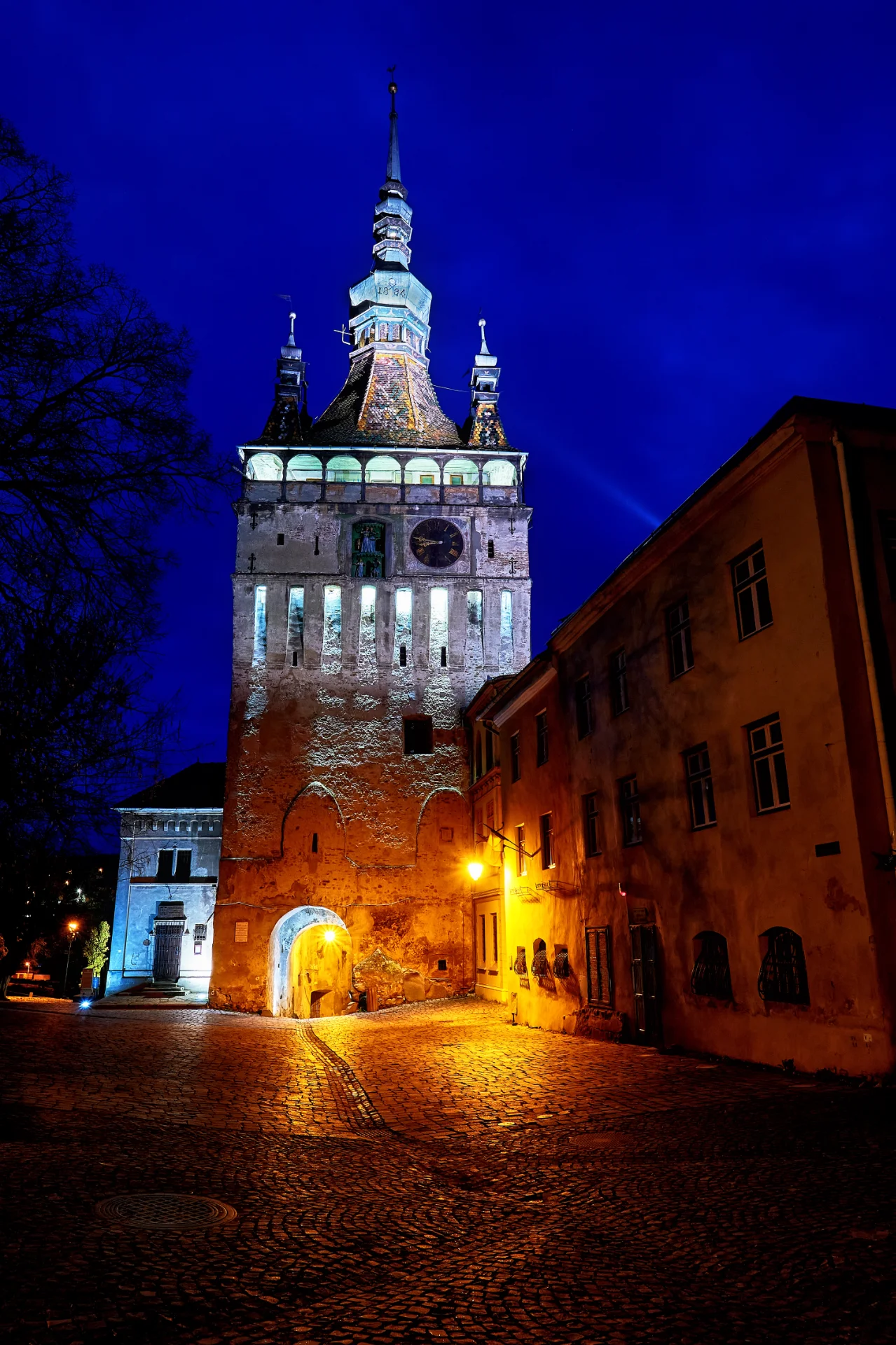
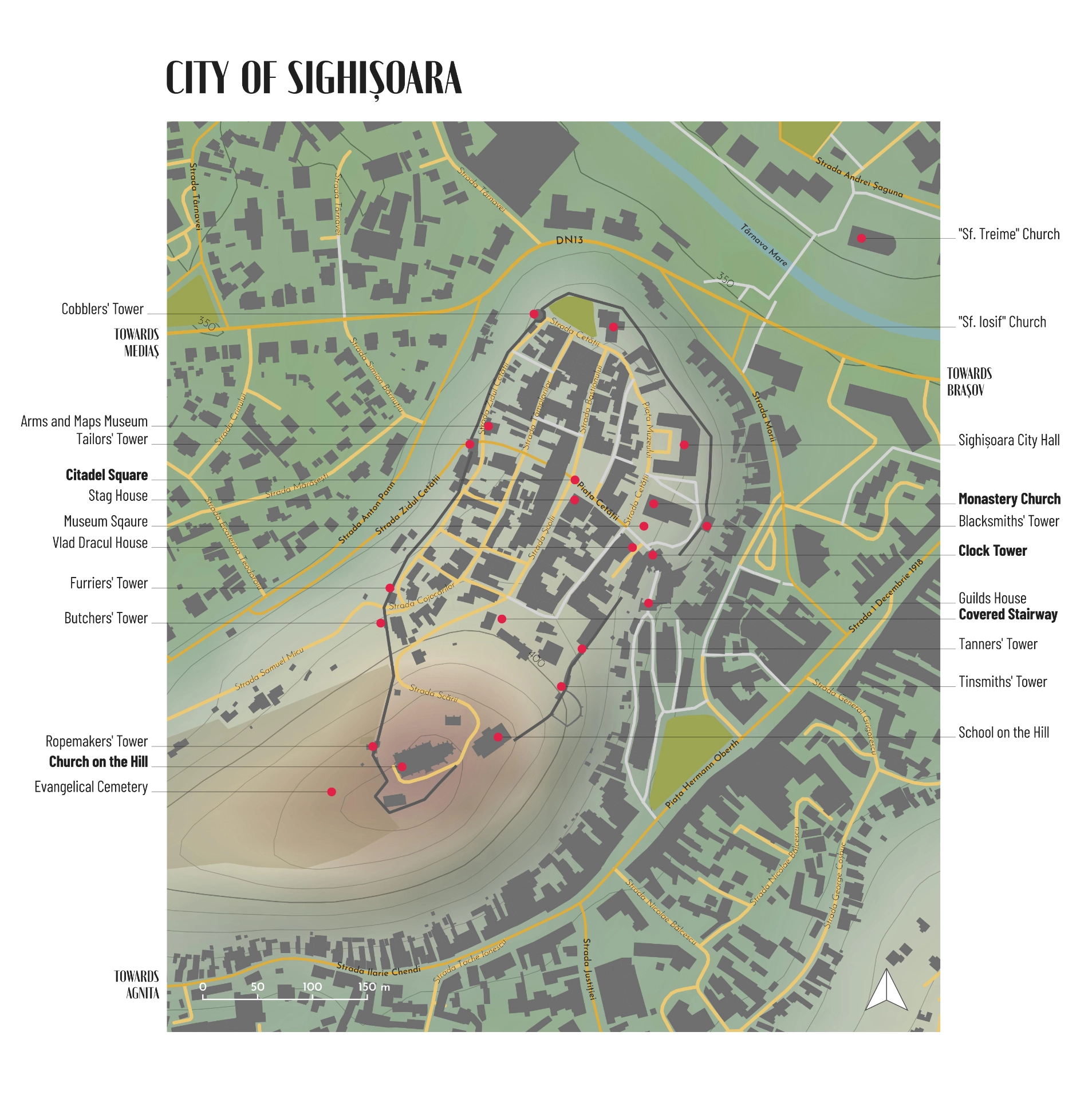
We find the city of Sighișoara and its legendary fortress in the heart of Transylvania, on the Târnava Mara valley and along the European road E60 (DN13), with quick connections to Brașov, Târgu Mureș and Sibiu (DN14). We start exploring Sighișoara from the lower town located under the fortress walls to the west, first climbing a few stairs that lead to the first important monument and one of the symbols of the city. Of the 14 original towers of the fortress, only 9 have been preserved to this day, and the largest and most imposing is the Clock Tower. Rising to 64 meters, it dominates the surrounding area and can be observed from afar, while the views we are rewarded with from the balcony above are spectacular. Perhaps the most fascinating element of the tower is the large clock itself, created in 1648, the mechanism inside being replaced in 1906 with a new Swiss one. Next to the clock, we can admire a series of linden wood figurines illustrating the days of the week and other unique characters.
Search for Lodging in Sighișoara with Booking.com!
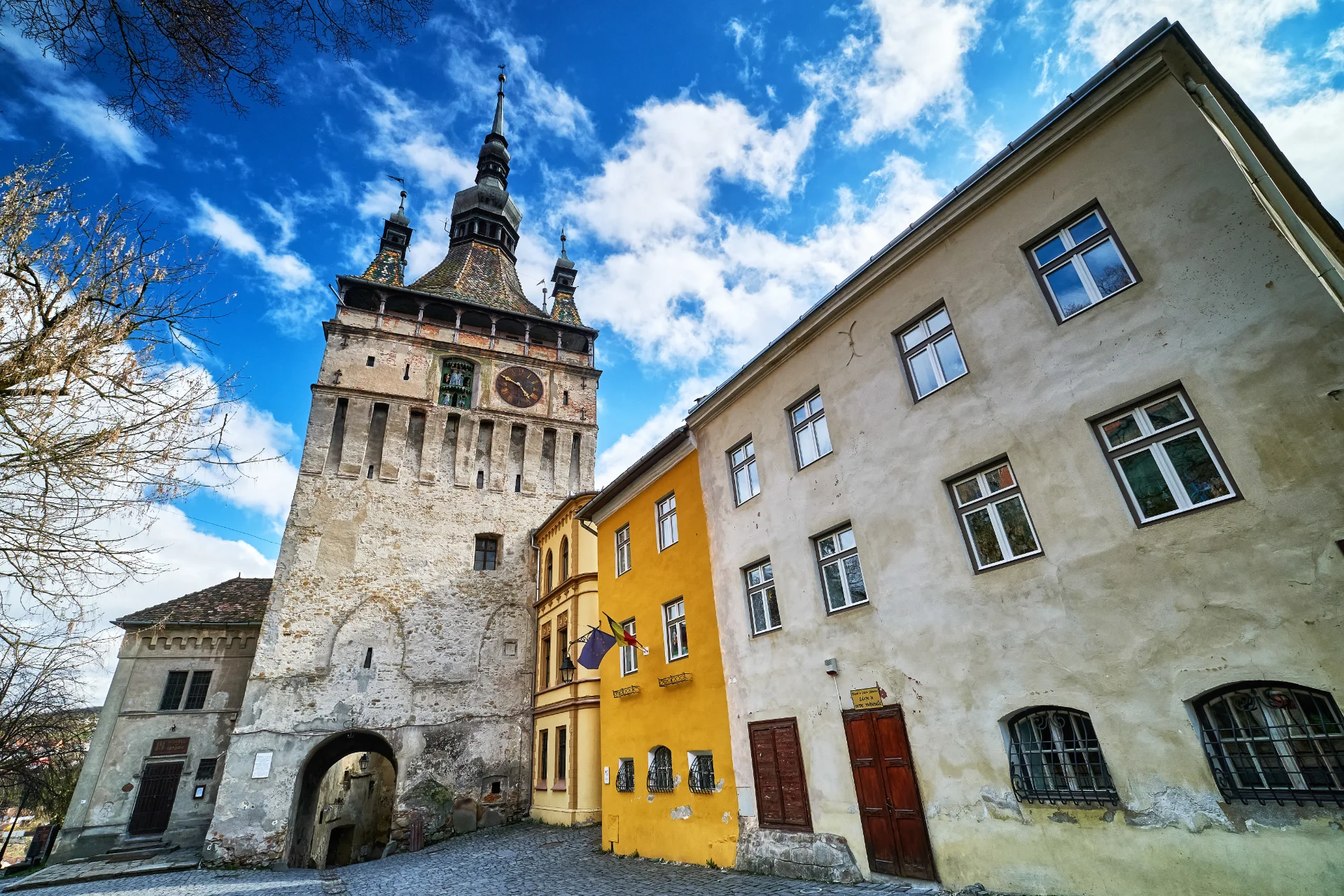
Since the early 19th century, the tower has also housed the History Museum of Sighisoara, with a series of very interesting collections that occupy all its levels. These include exhibits of archaeology, art, pharmacy, ethnography, weapons and others, while the last level contains a horology collection and allows us to admire the clock mechanism and figurines up close. Nearby we also discover the medieval ambiance of the Tower Street, with the covered passage known as the Old Ladies’ Corridor, as well as two fascinating exhibitions hosted by the Guilds’ House and the Torture Chamber. The charming square behind the tower is known as the Museum Square, surrounded by some superb medieval monuments.
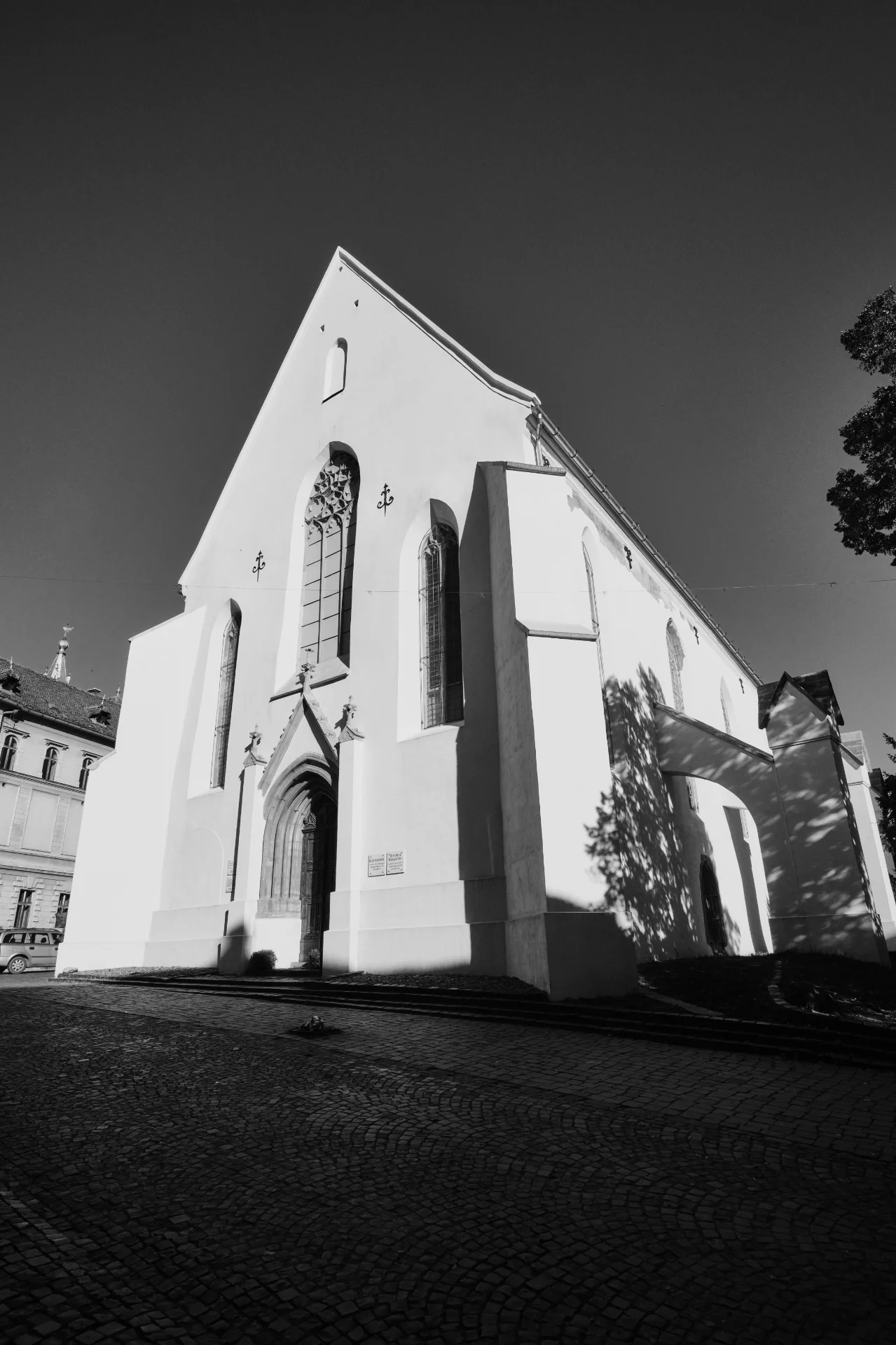
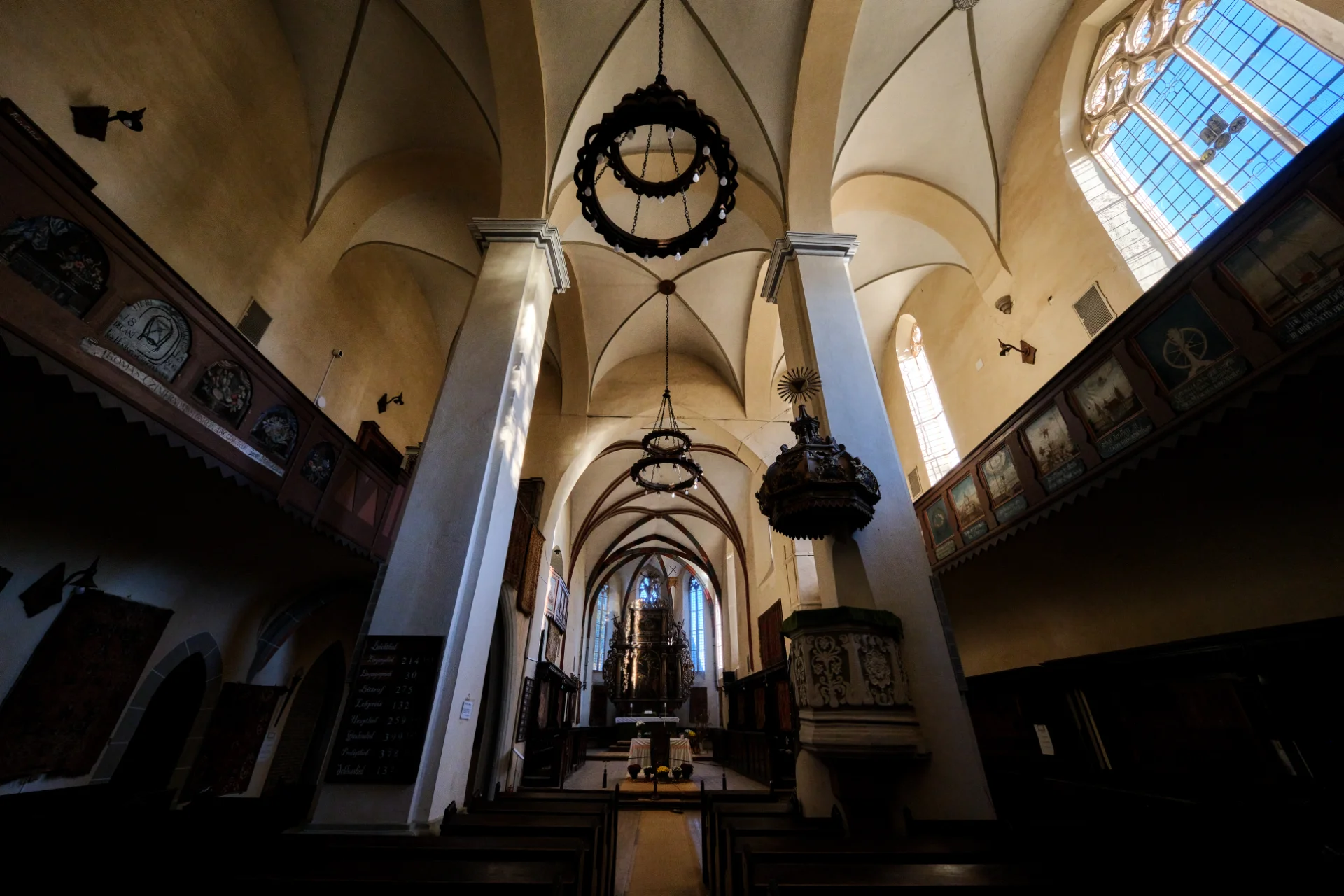
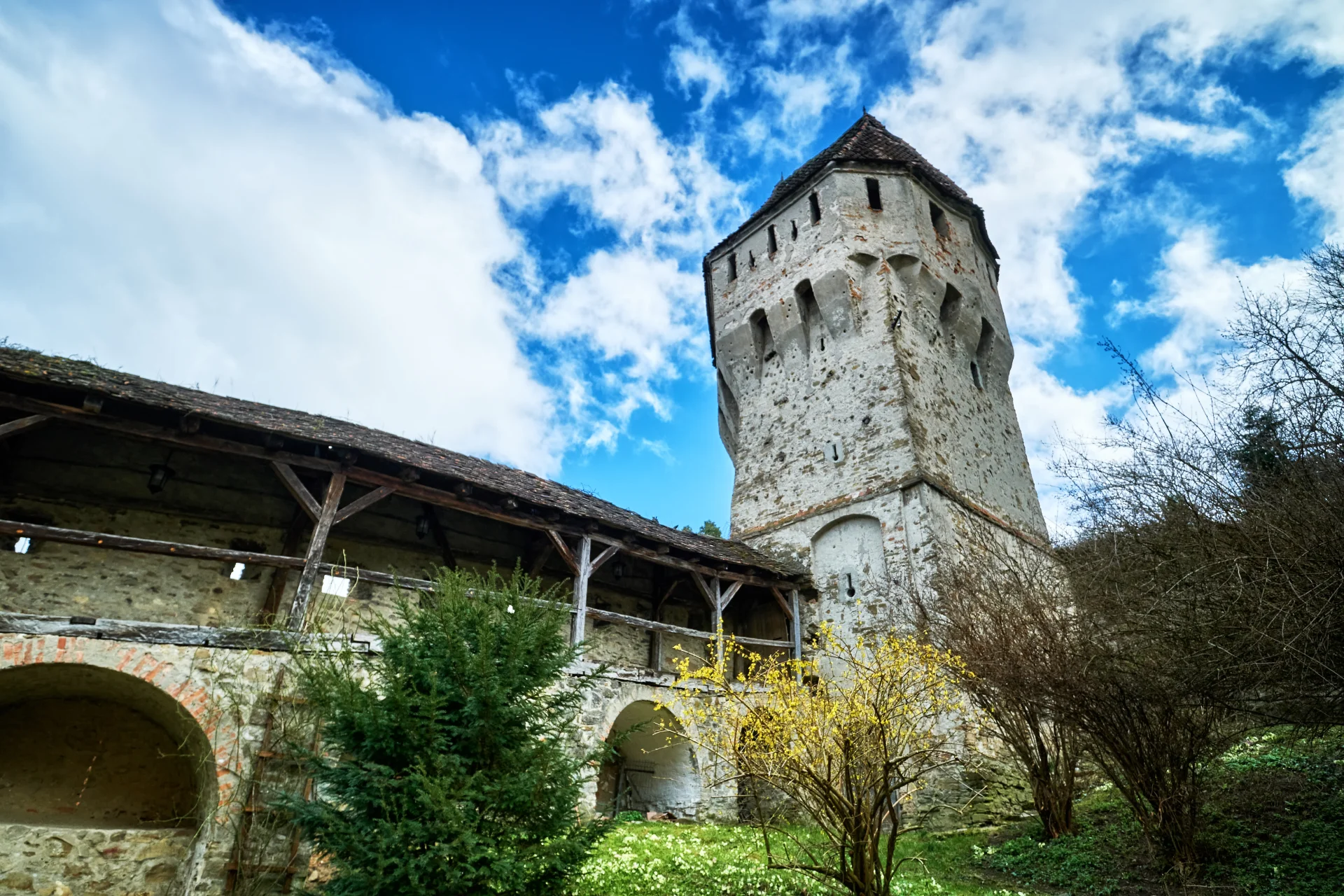
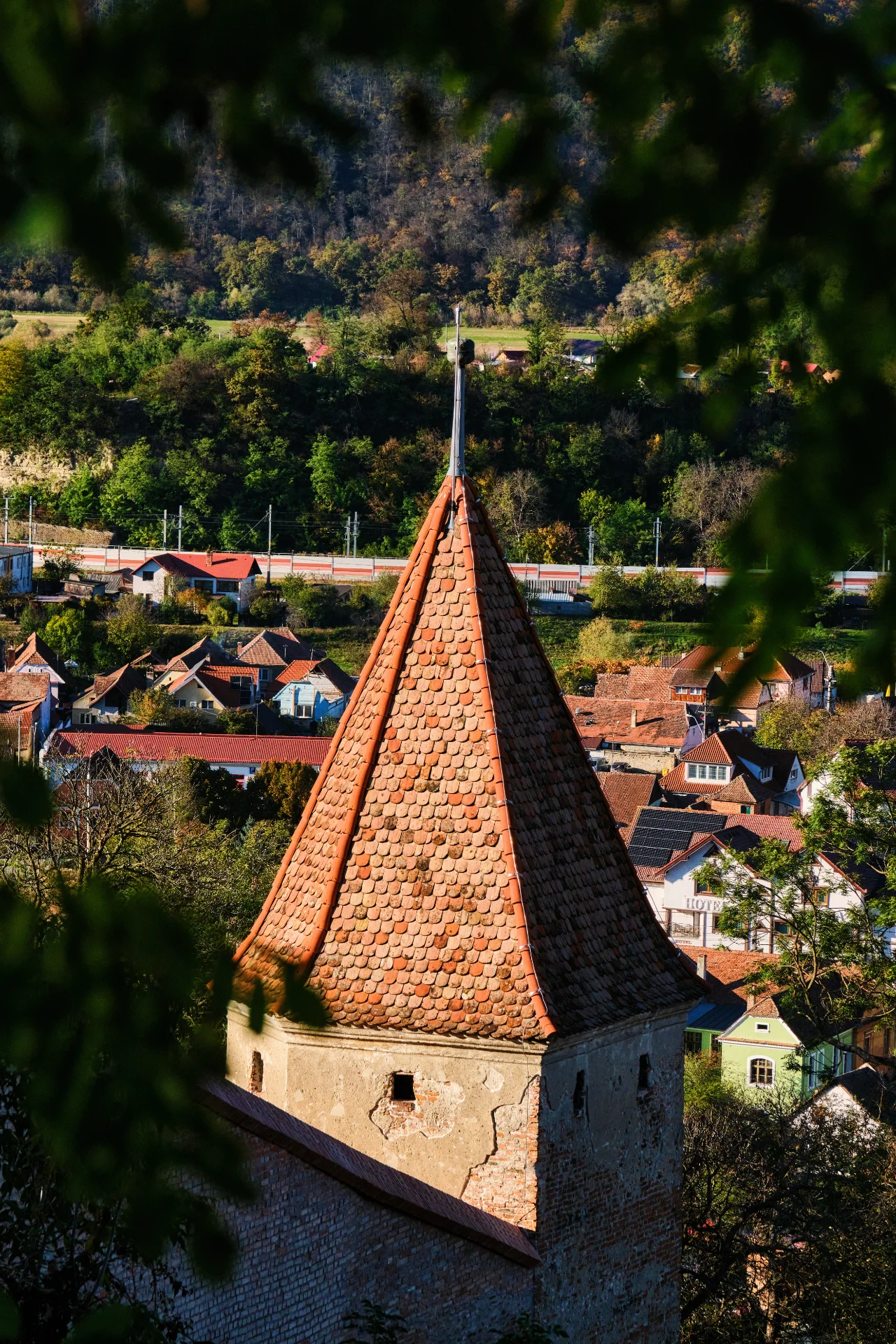
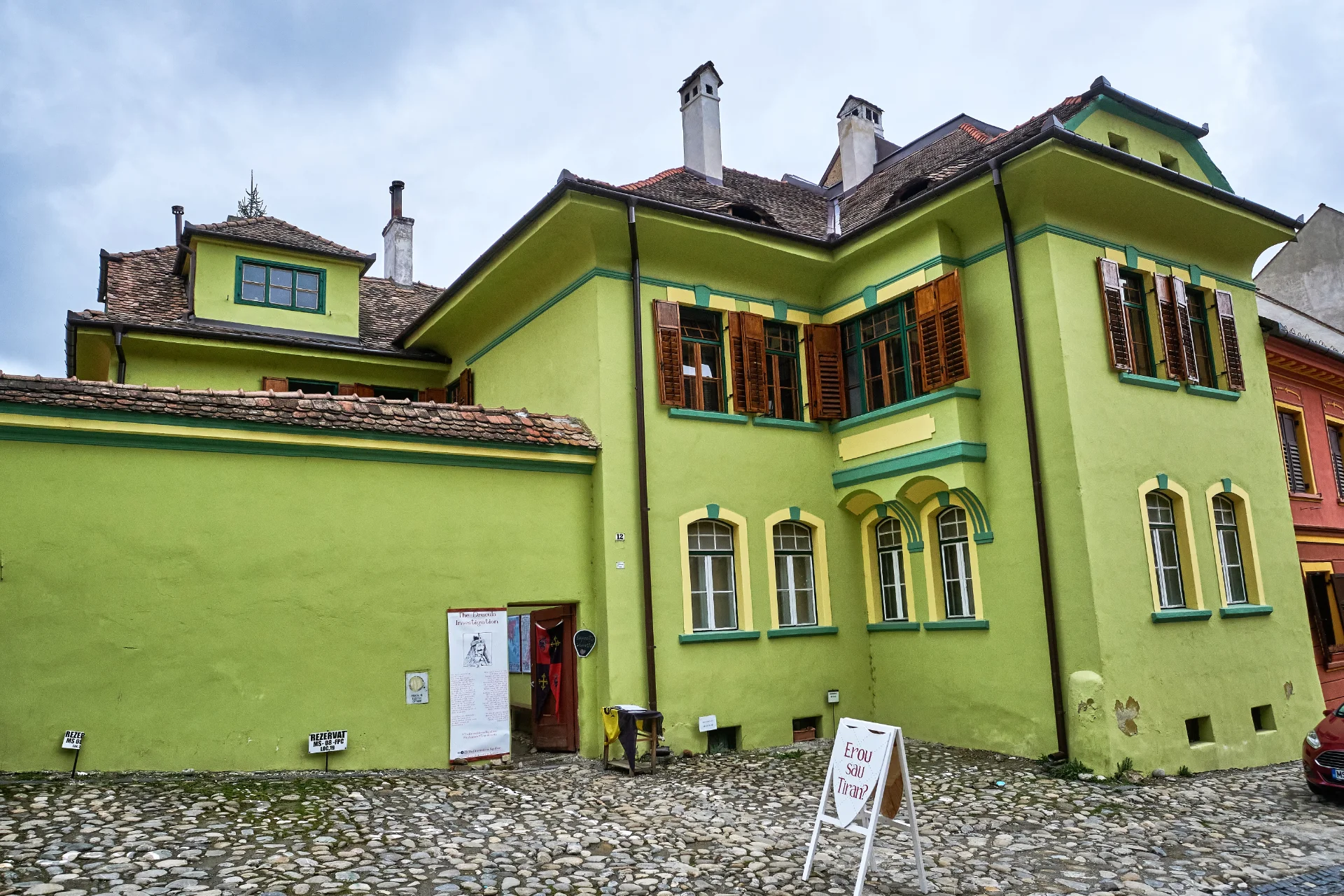
At its center, the Monastery Church attracts our attention, which was part of a Dominican monastery dissolved in 1556. The imposing and superb Gothic church was built between 1492 and 1515, on the site of an older Dominican church, and contains many old and valuable elements, the most impressive being the altar dating from 1680. Behind the church we find the Blacksmiths’ Tower, built in 1631 on the site of the former Barbers’ Tower. Although it seems small from the fortress, it actually extends down along the walls. Before continuing to the nearby Citadel Square, we also admire the Venetian House with its splendid neo-Gothic architecture, as well as the Vlad Dracul House, where it is believed that the ruler lived until the age of four, currently hosting a restaurant and a small museum.
For a truly unique experience, the fortress is also a must-see during the Sighisoara Medieval Festival, which usually takes place at the end of July. During this special event, the streets and squares come alive with medieval music and dance, medieval costume parades, reenactments of battles, theater and art workshops, traditional craftsmen and local producers, but also crowds of tourists who arrive especially for this event!
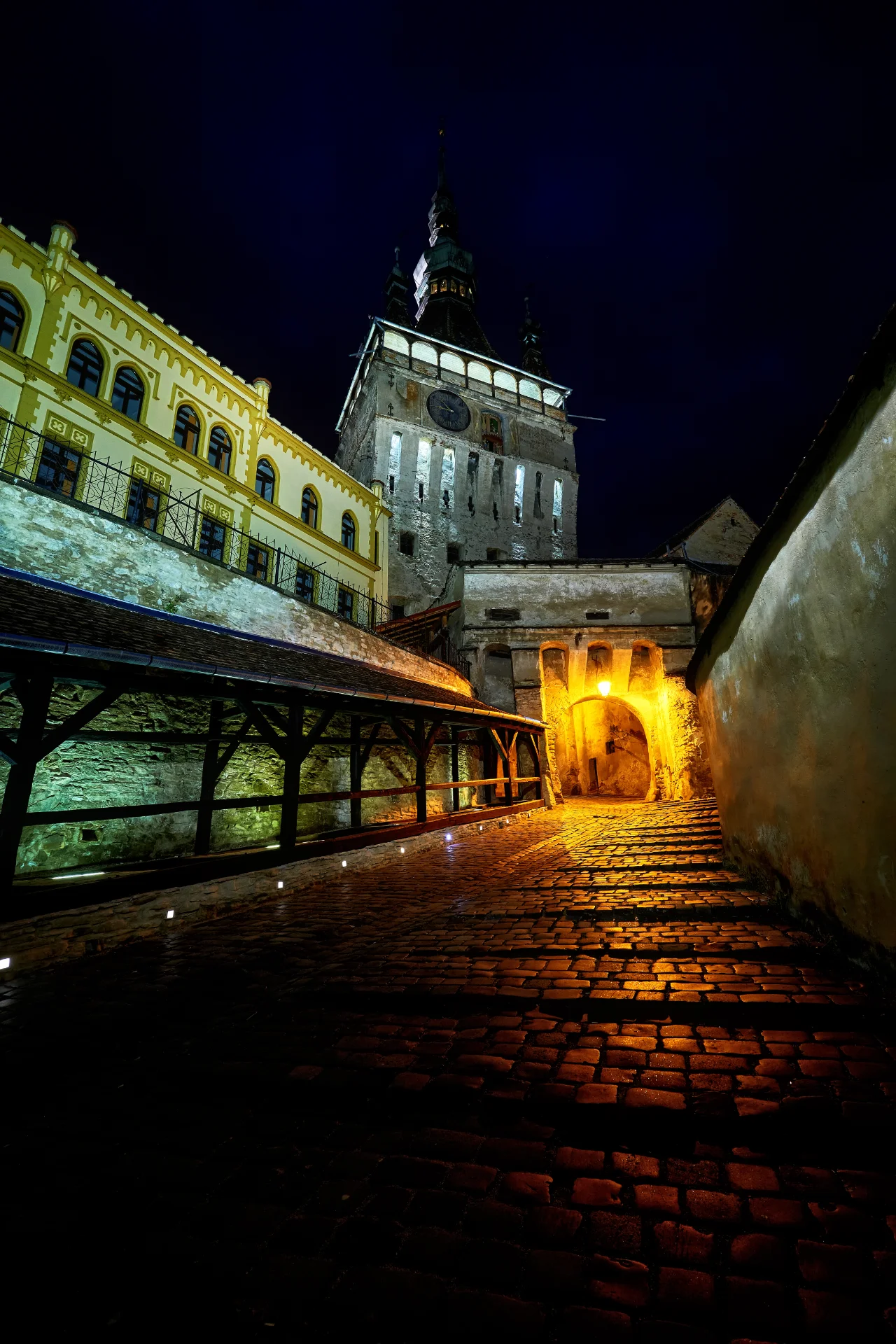
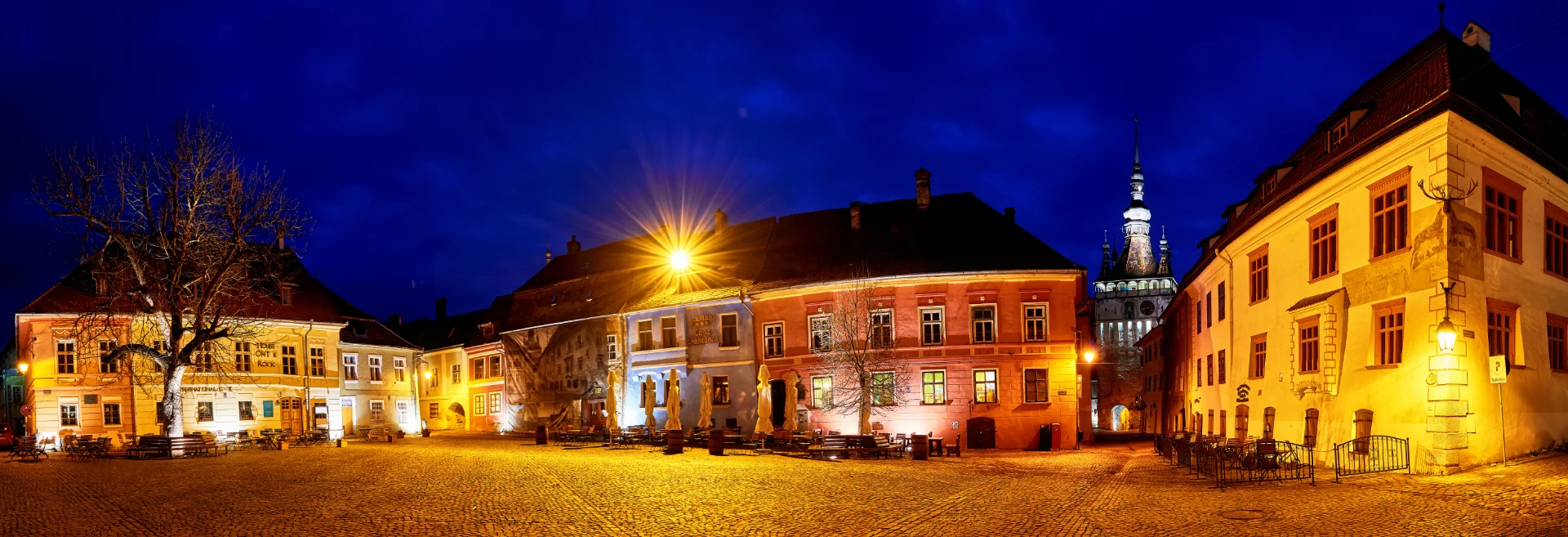
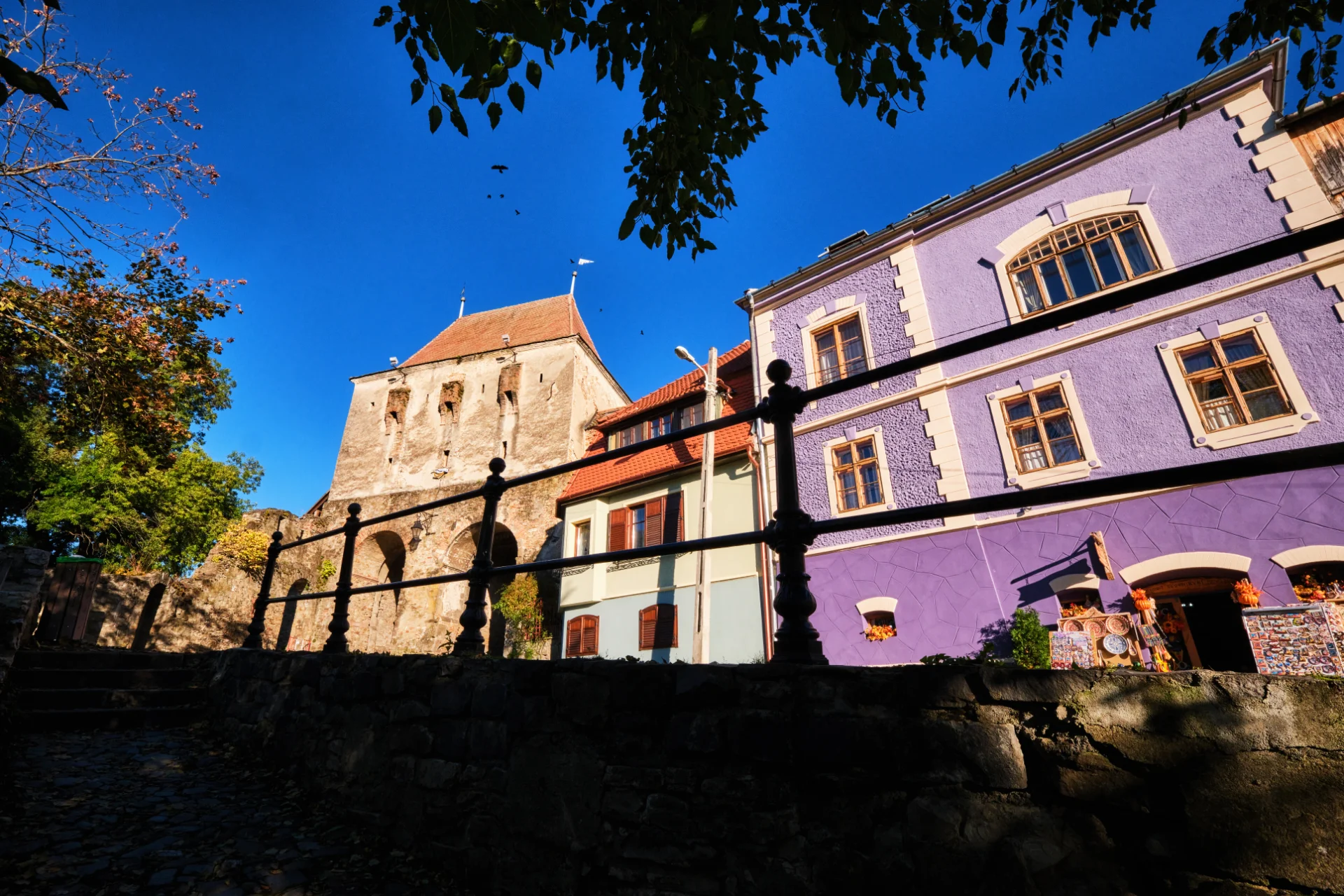
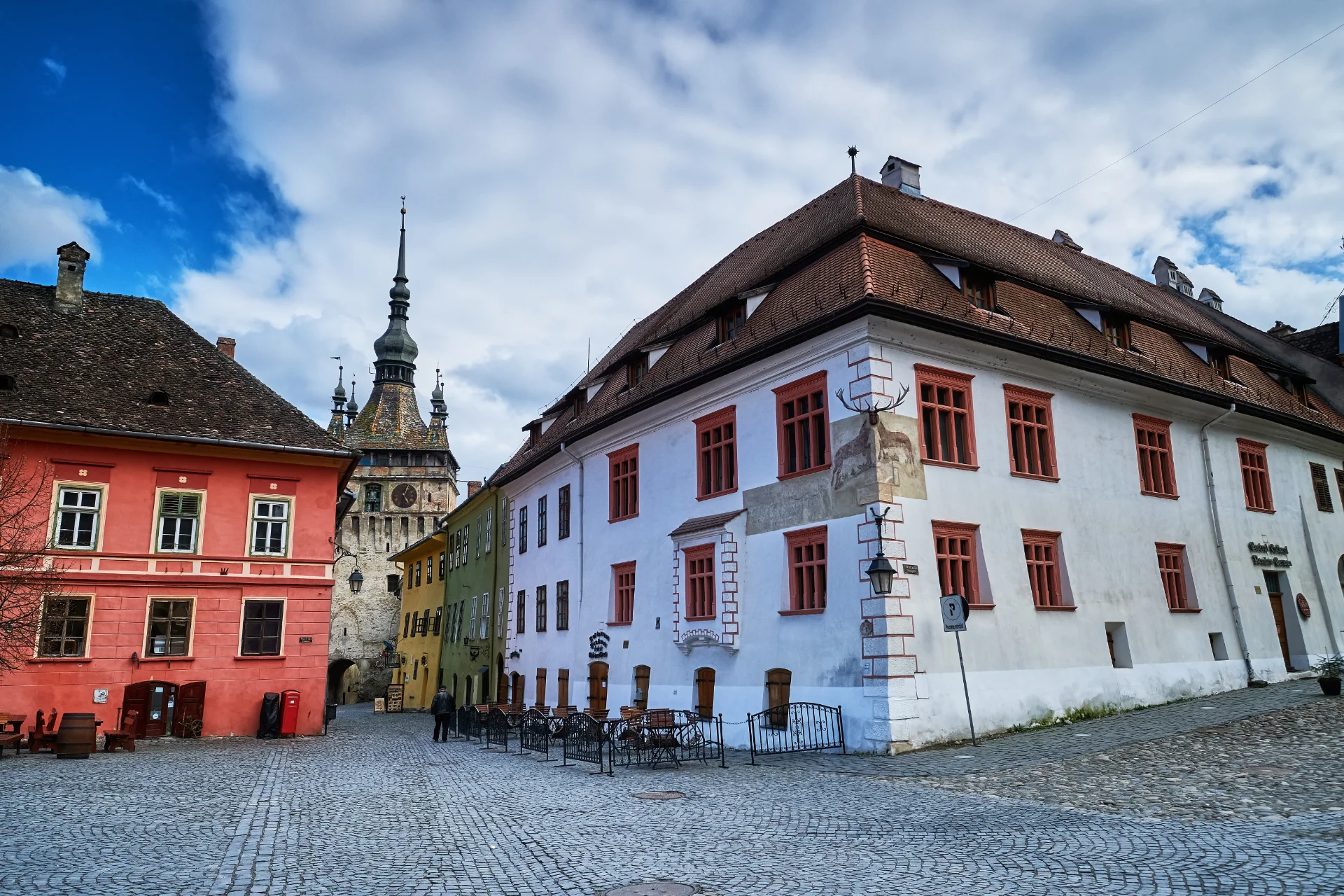
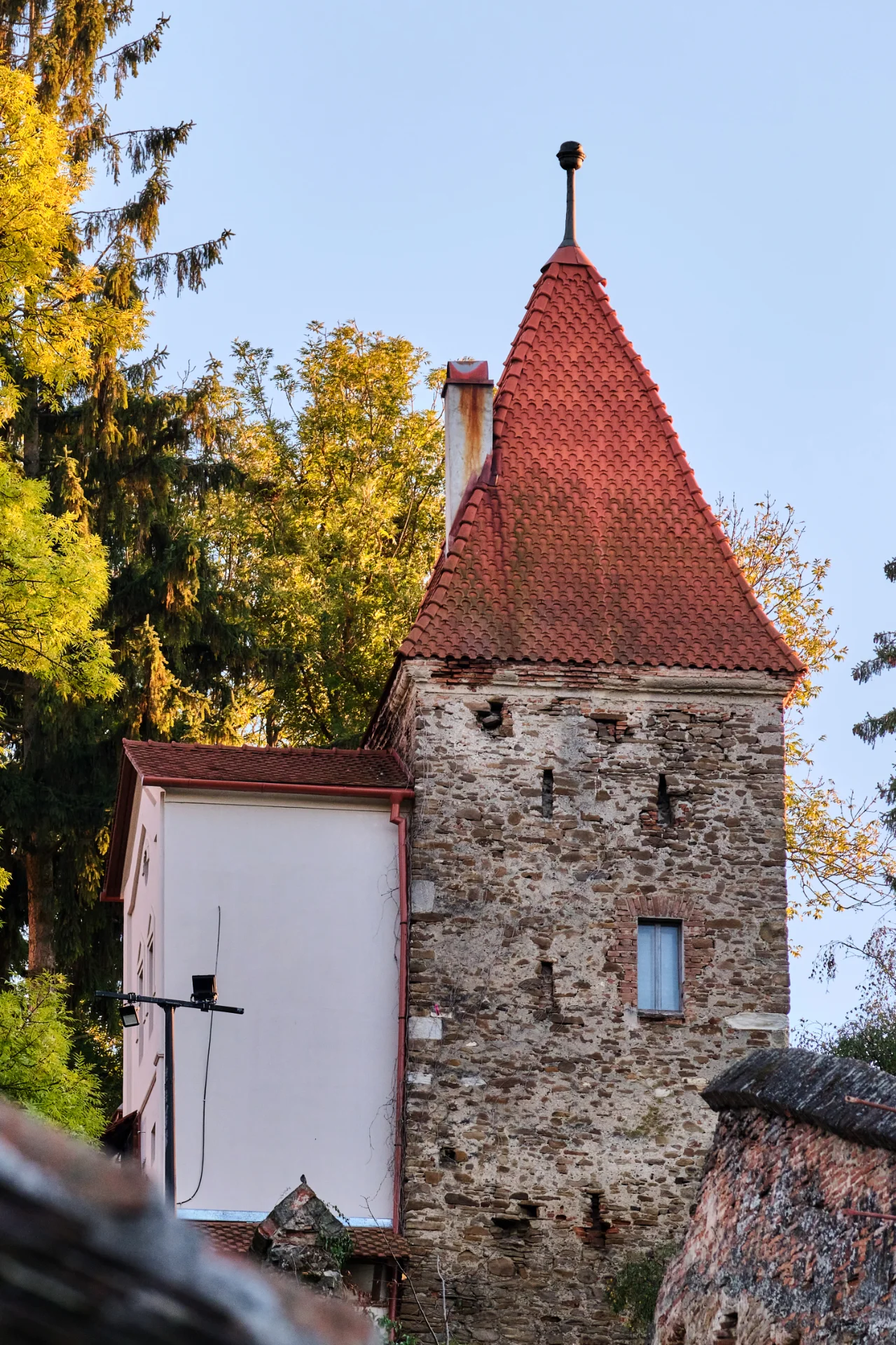
The small and elegant Citadel Square can be considered the heart of the town, being surrounded by medieval buildings that now house hotels and souvenir shops. One of the most interesting is the Stag House, named after the mural painting and the deer trophy on the facade. Over the centuries, the house was inhabited by the most important families of the citadel, and is currently a guesthouse with a traditional restaurant. From the square, we continue our exploration along Școlii Street to the south, the view being dominated by the imposing Church of the Hill. Two other medieval monuments can be discovered a little further south, hidden in Rățuștelor Square, with the Tanners’ Tower and the Tinsmiths’ Tower, dating from the same period as the walls.
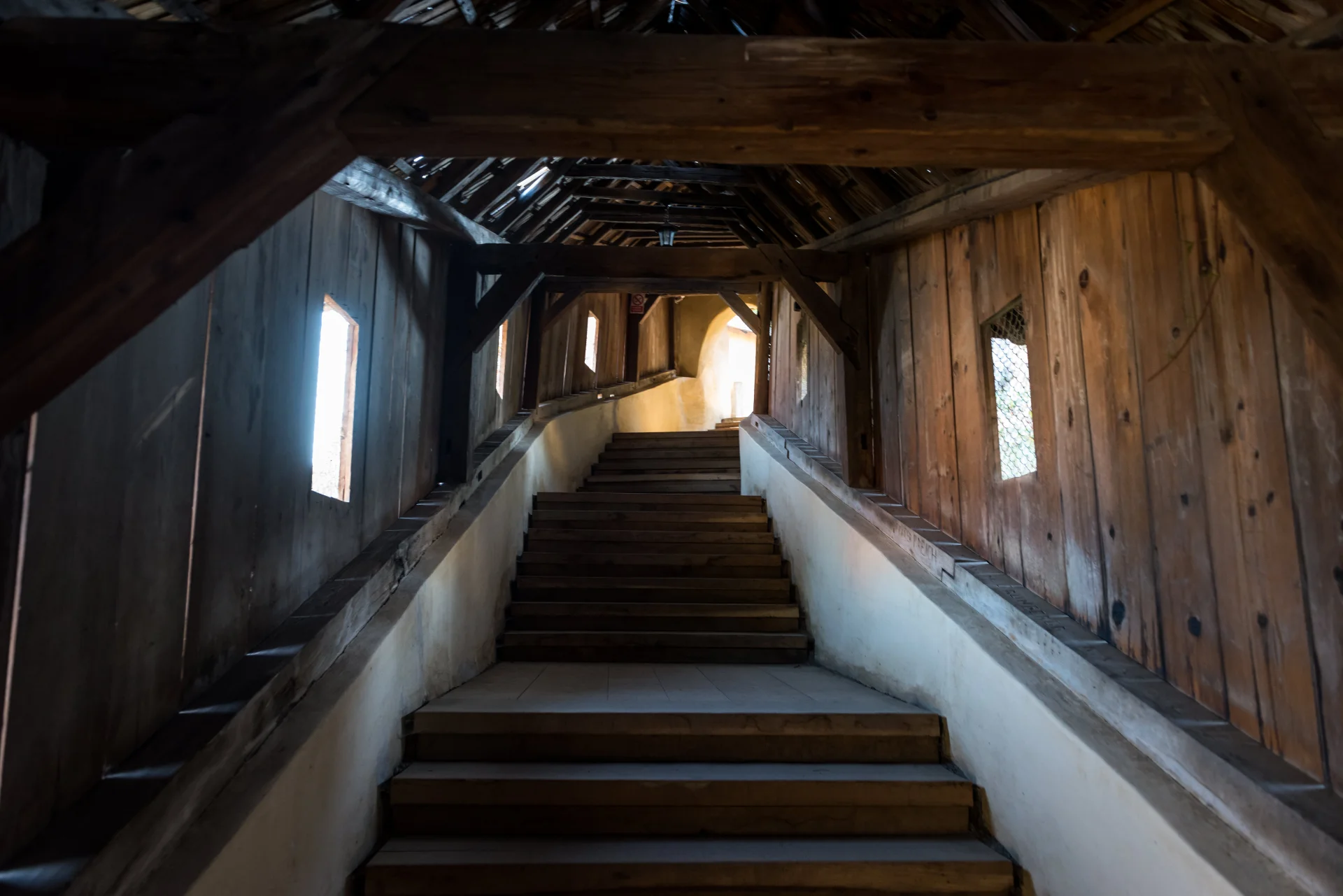
To climb to the church, we follow the dark tunnel of the Covered Stairs, a unique monument also known as the Schoolchildren’s Stairs. The wooden stairs were covered at the end of the 19th century, to protect children who climbed to the school on the hill on rainy days. The 176 steps create the feeling of a journey through time, and at the exit we are greeted by an almost surreal atmosphere, with old monuments that bear the mark of time. Arriving at the top of the small hill to the west of the fortress, we first pass by the old Hill School, now known as the Joseph Haltrich Highschool. First mentioned in 1522, it is one of the oldest schools in Transylvania, going through several transformations over the centuries.
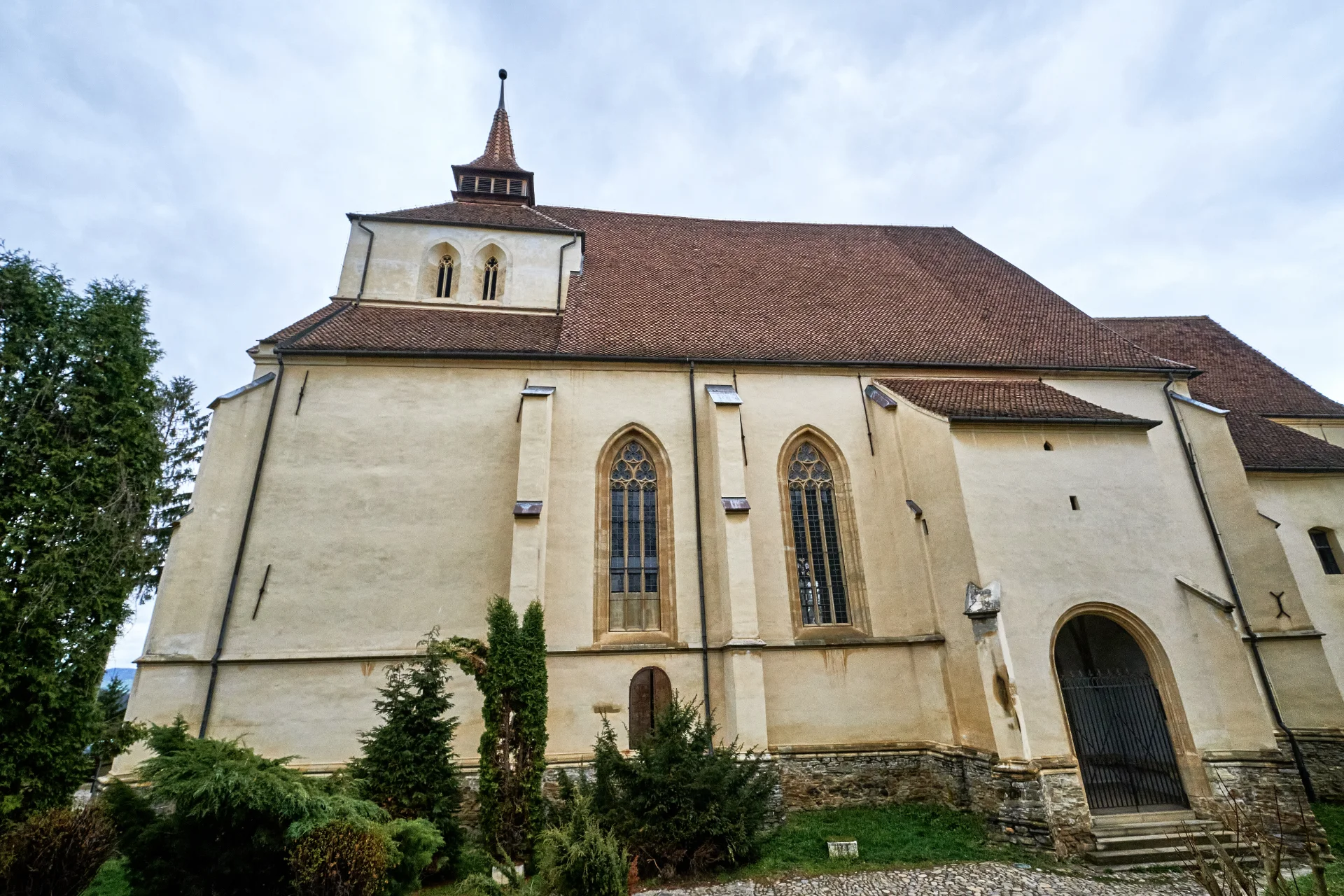
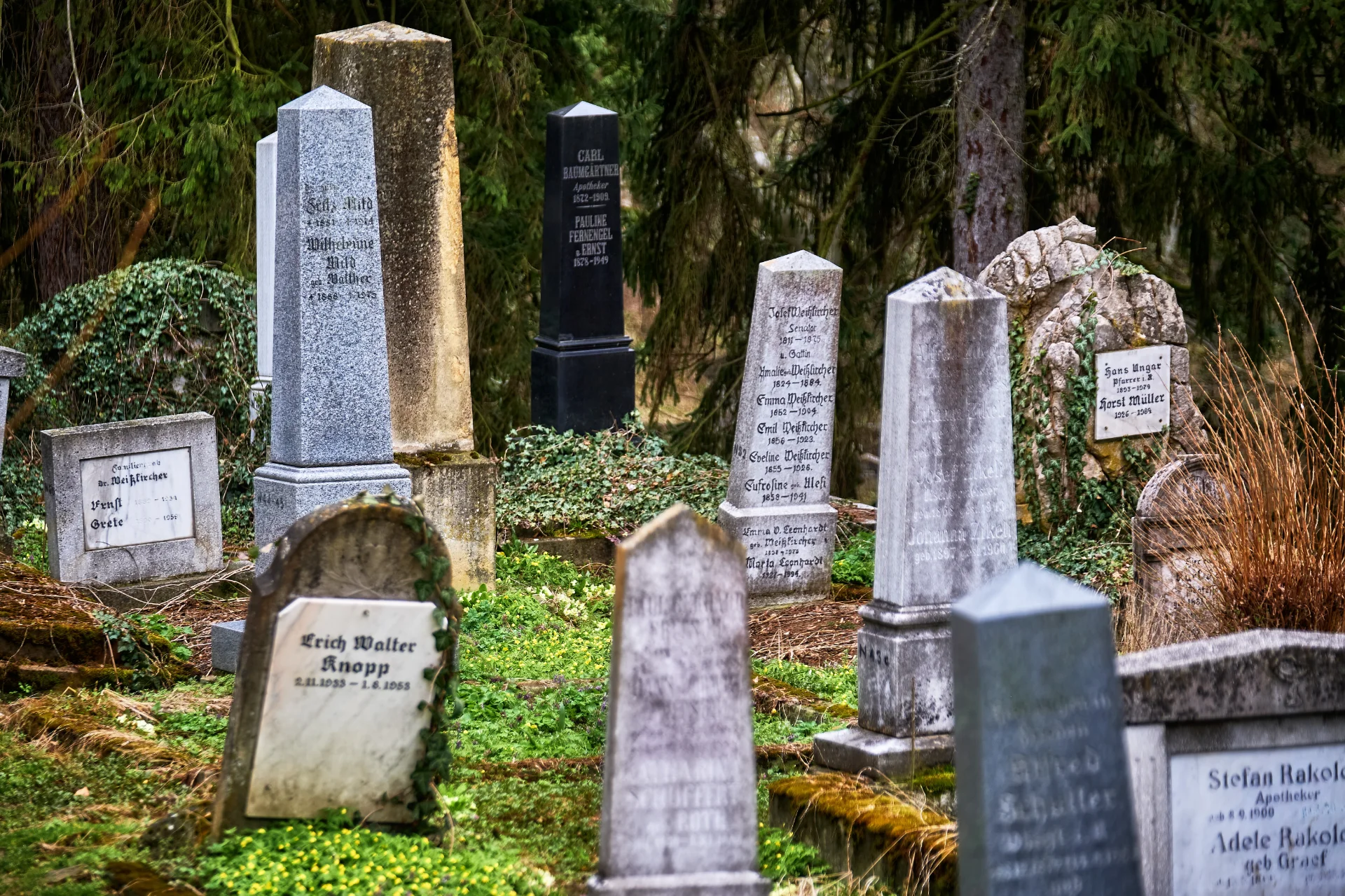
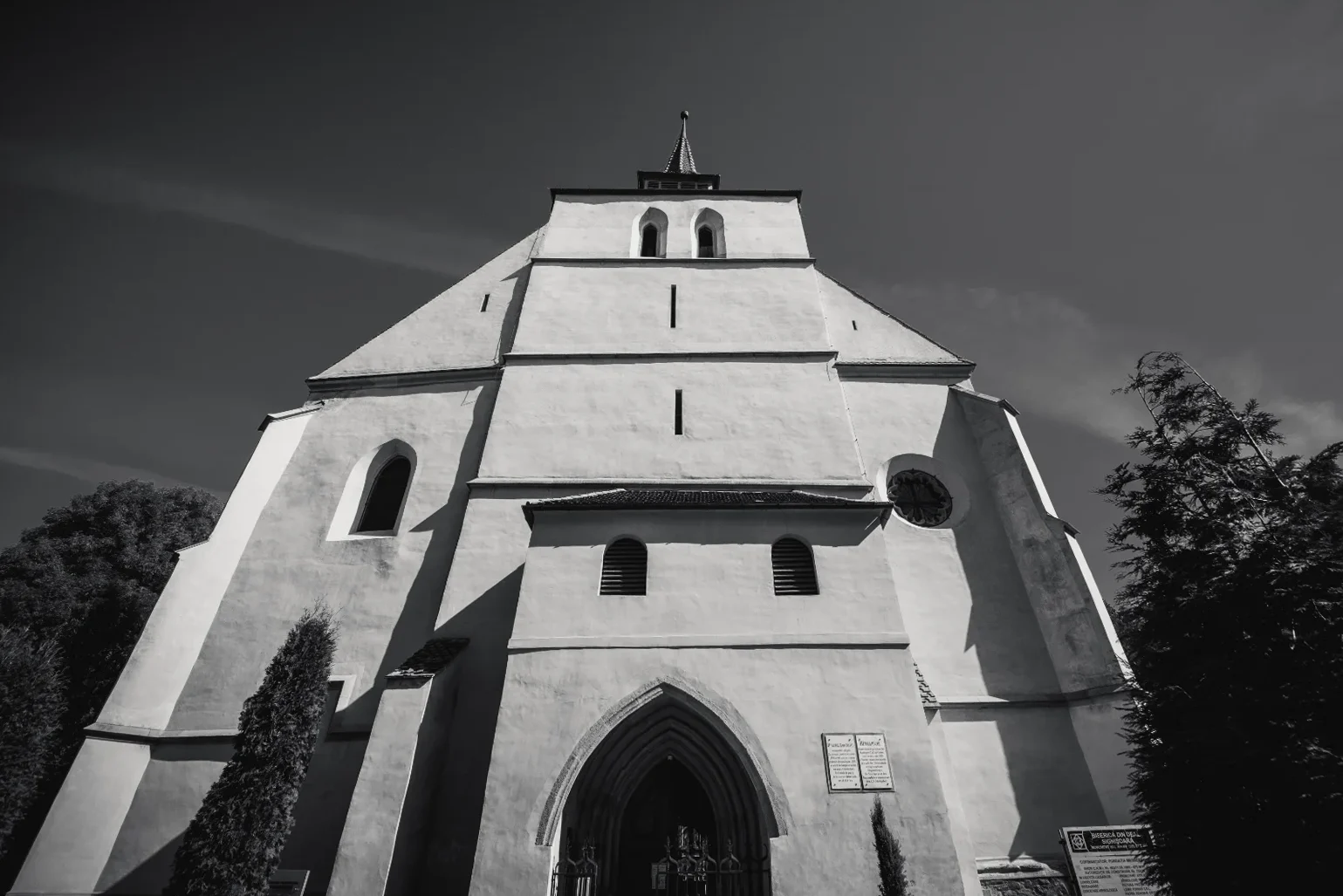
The hill is dominated by the massive silhouette of the Church of “Saint Nicholas”, also known as the Church on the Hill. It was built in Gothic style, over several stages between 1345 and 1525, containing a Romanesque chapel and a keep, while the crooked tower rises to over 40 meters. Among the most interesting elements, the church is the only one in Transylvania that includes an underground crypt, also containing beautiful paintings from the 15th century, discovered during the latest renovations. Close to the church we can also see another defense tower, known as the Ropemakers’ Tower and dating from the same period as the fortress walls, being rebuilt in 1350 and the last one still inhabited. The western side of the small hill is occupied by the old Saxon cemetery, a space with a special atmosphere, surrounded by trees and covered by the patina of time. The funerary monuments reveal the true age of this place and the customs of those times, some with symbols illustrating the occupations of the departed.
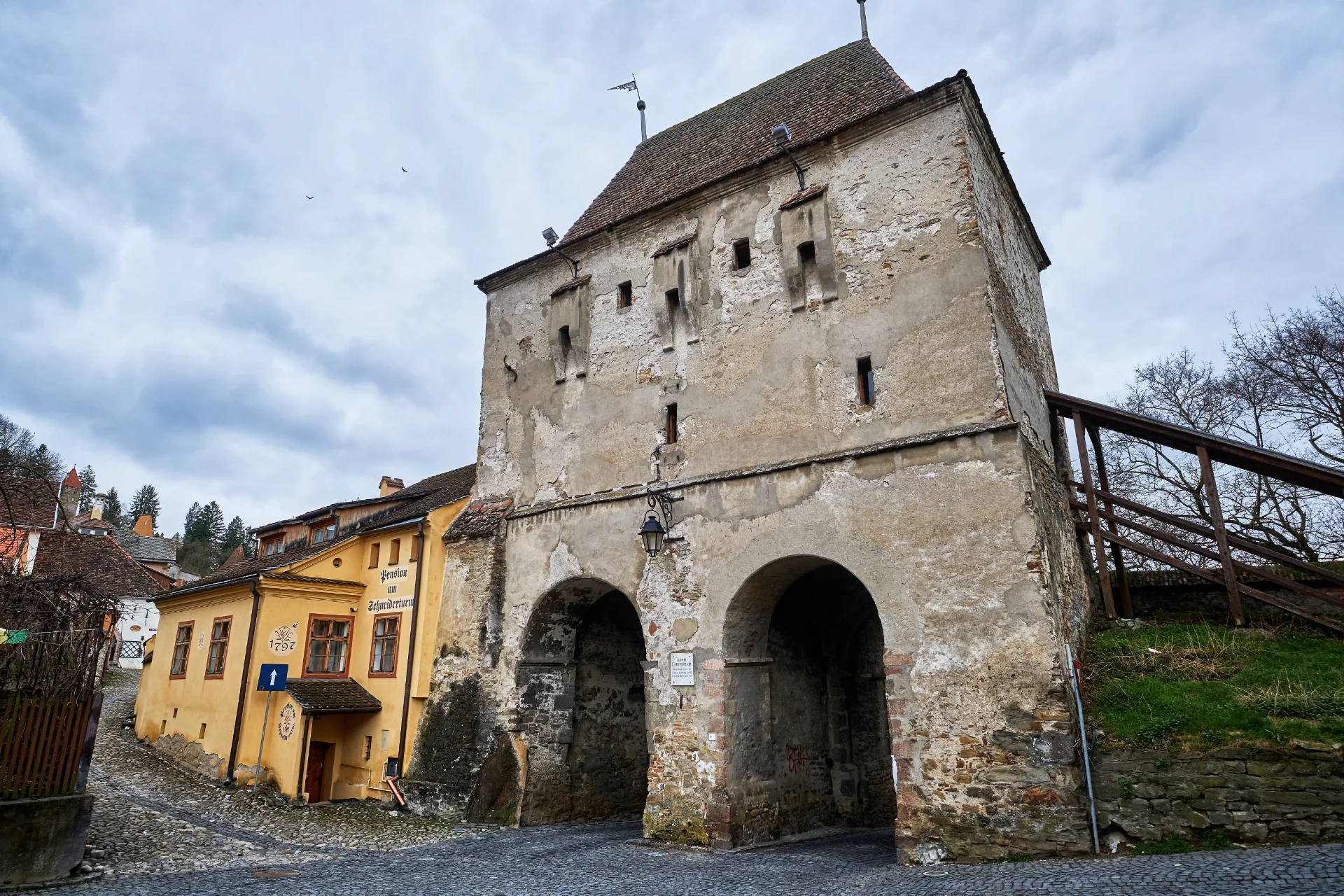
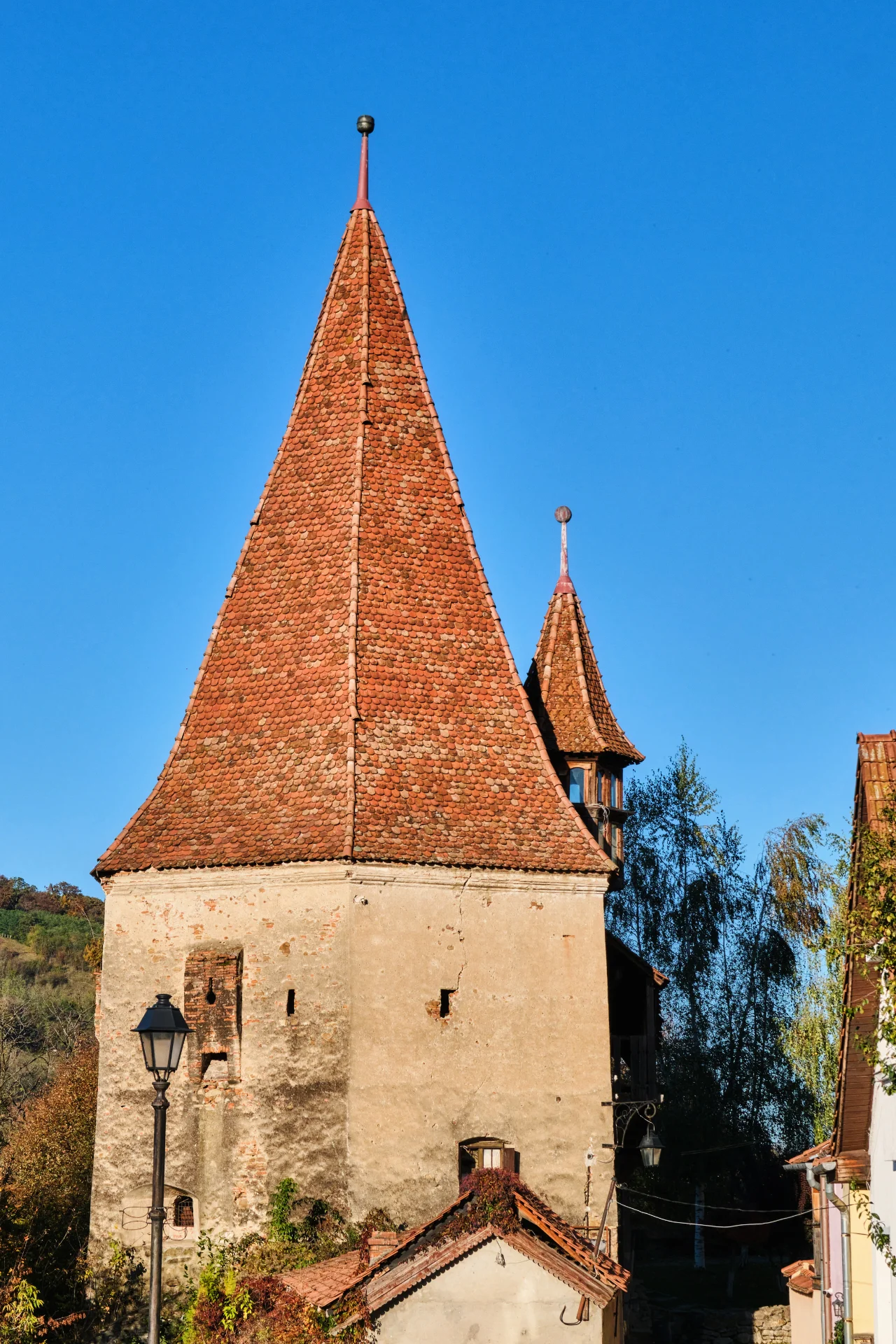
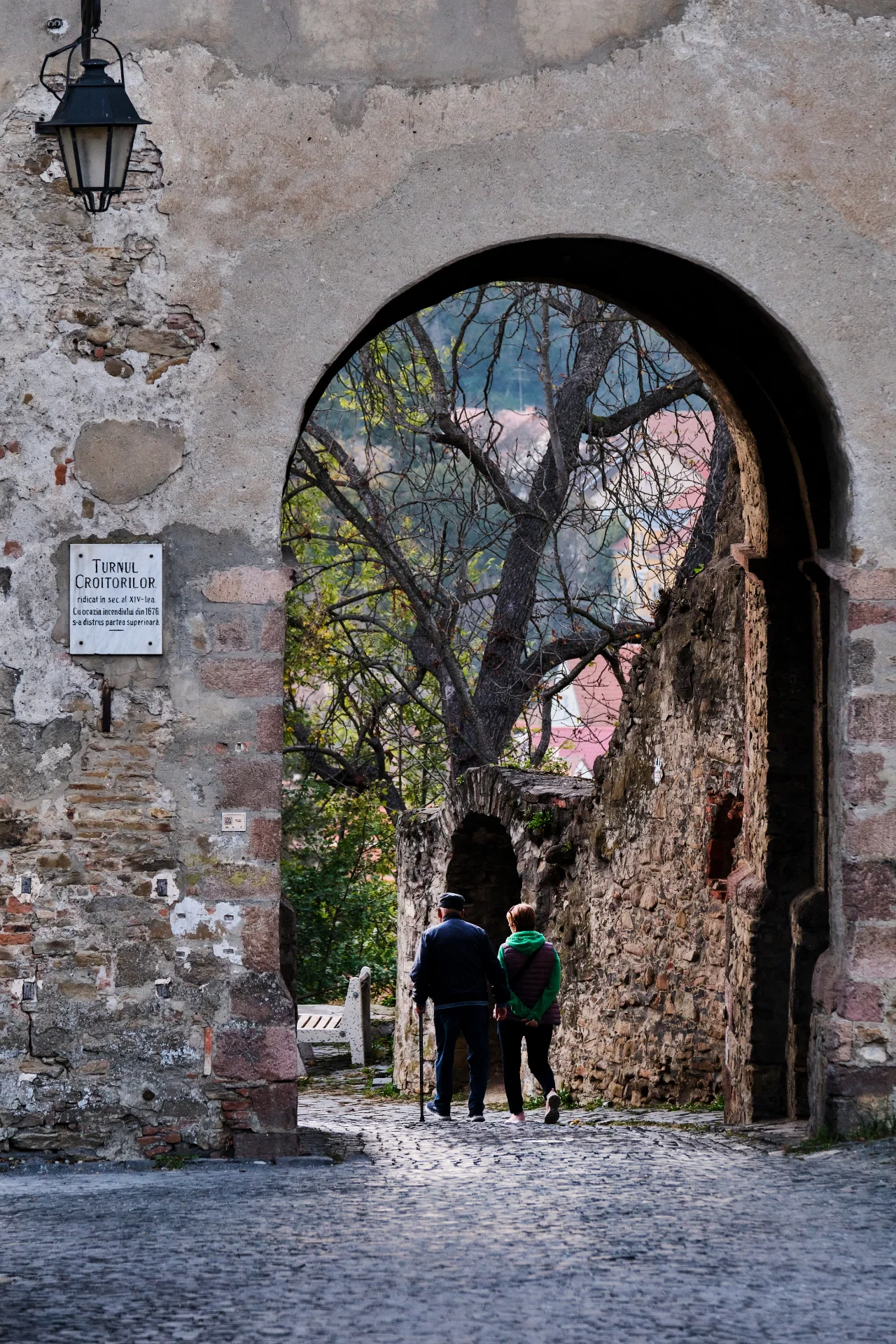
To descend back to the fortress, we follow another route along the Alley of Stairs and continue to the Butchers’ Tower, partially hidden and dating from the 15th century. This and the nearby Furriers’ Tower once defended the Torle Gate, where the inhabitants used to divide their flocks. Walking along the streets of Zidul Cetății or Tâmplarilor, we can reach another old and very interesting monument, the Tailors’ Tower, built in the 14th century and rebuilt after it exploded during the great fire of 1676. Nearby, we can also enter for a few moments inside a small museum known as the House of Arms and Maps. From here, continuing north, we reach the small square with the Petofi Sandor memorial, located between the Shoemakers’ Tower and the Roman Catholic church. The tower is quite short compared to the others, but it has some unique features, the current appearance dating back to 1681 and now housing the local radio station.
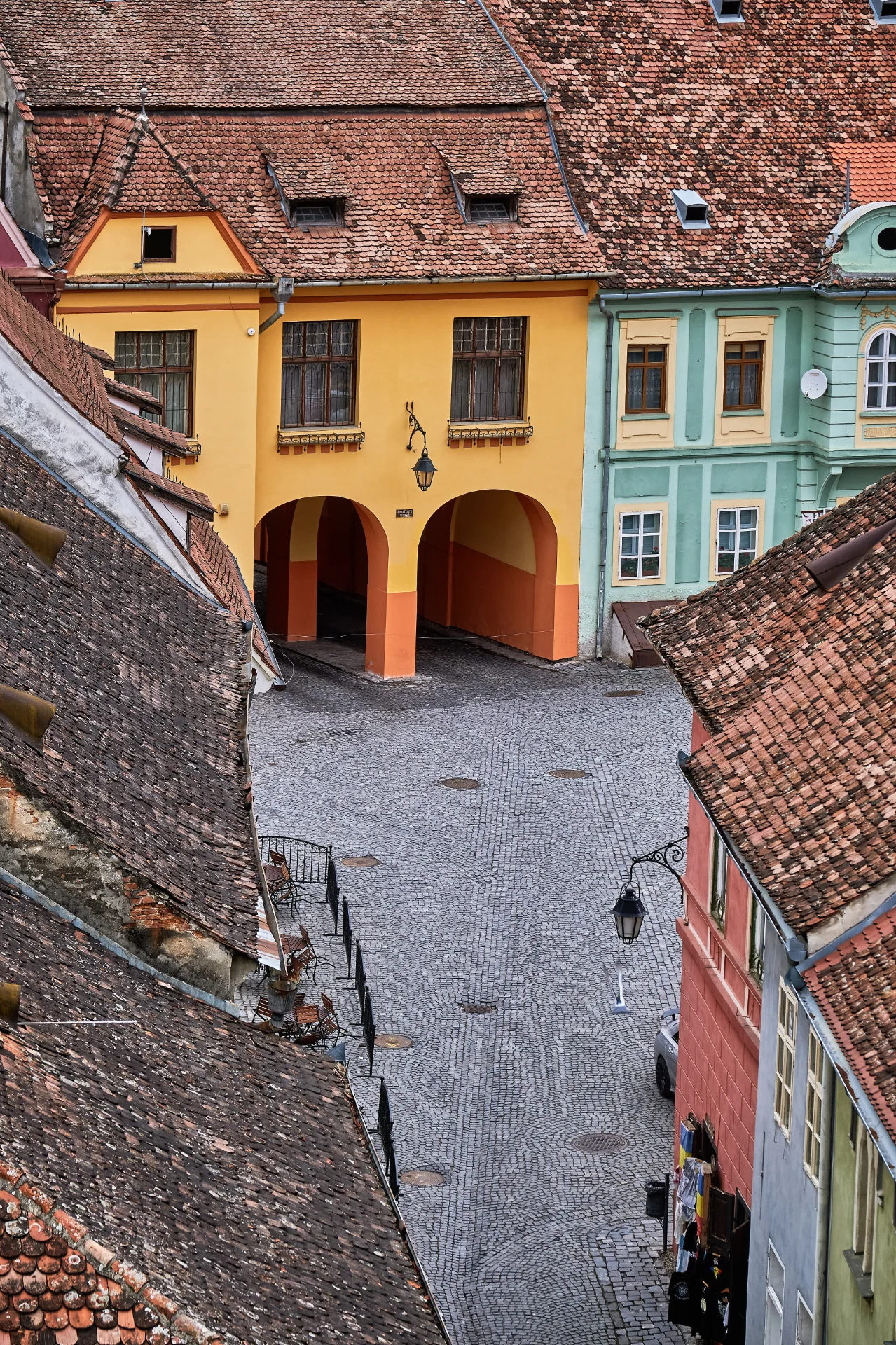
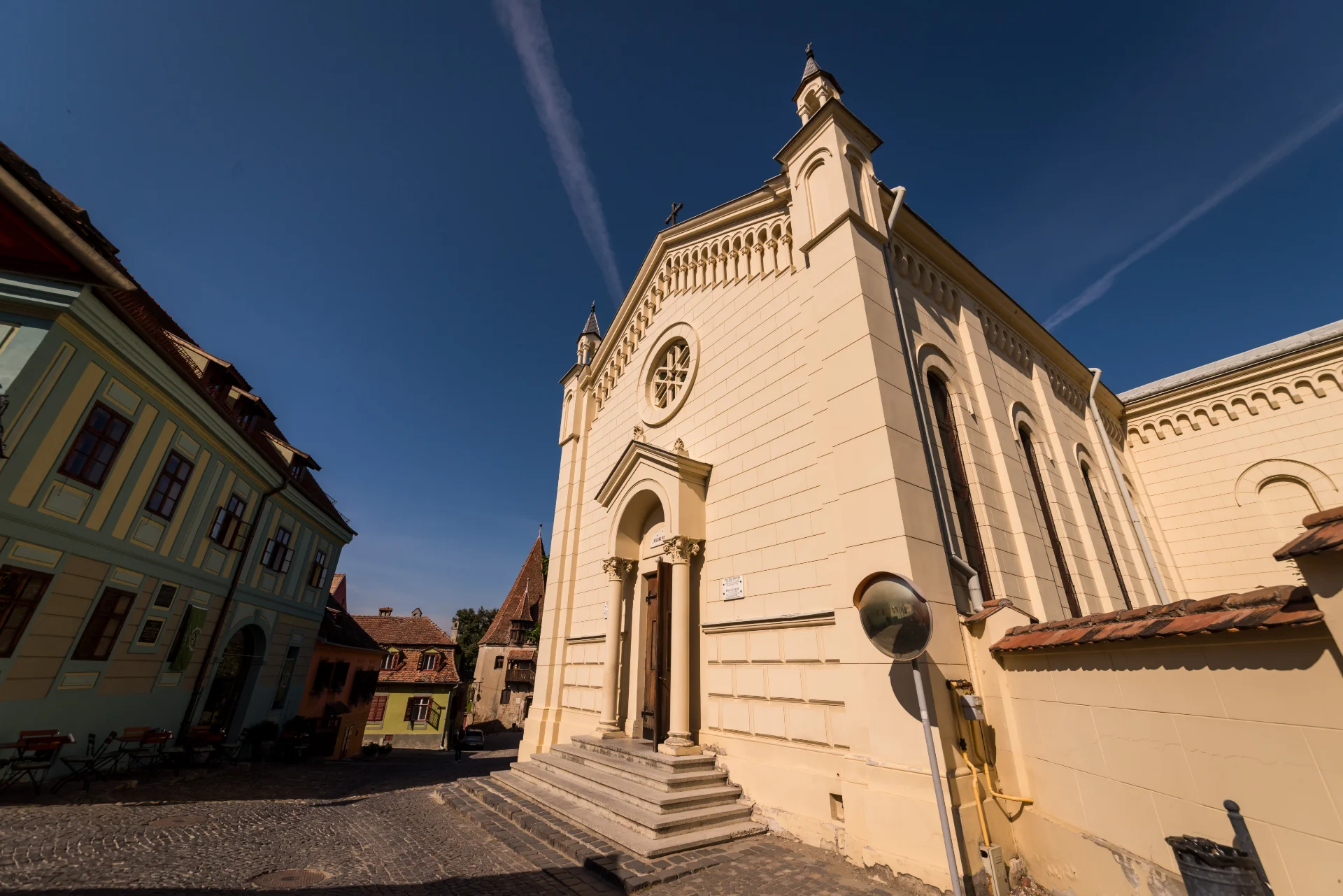
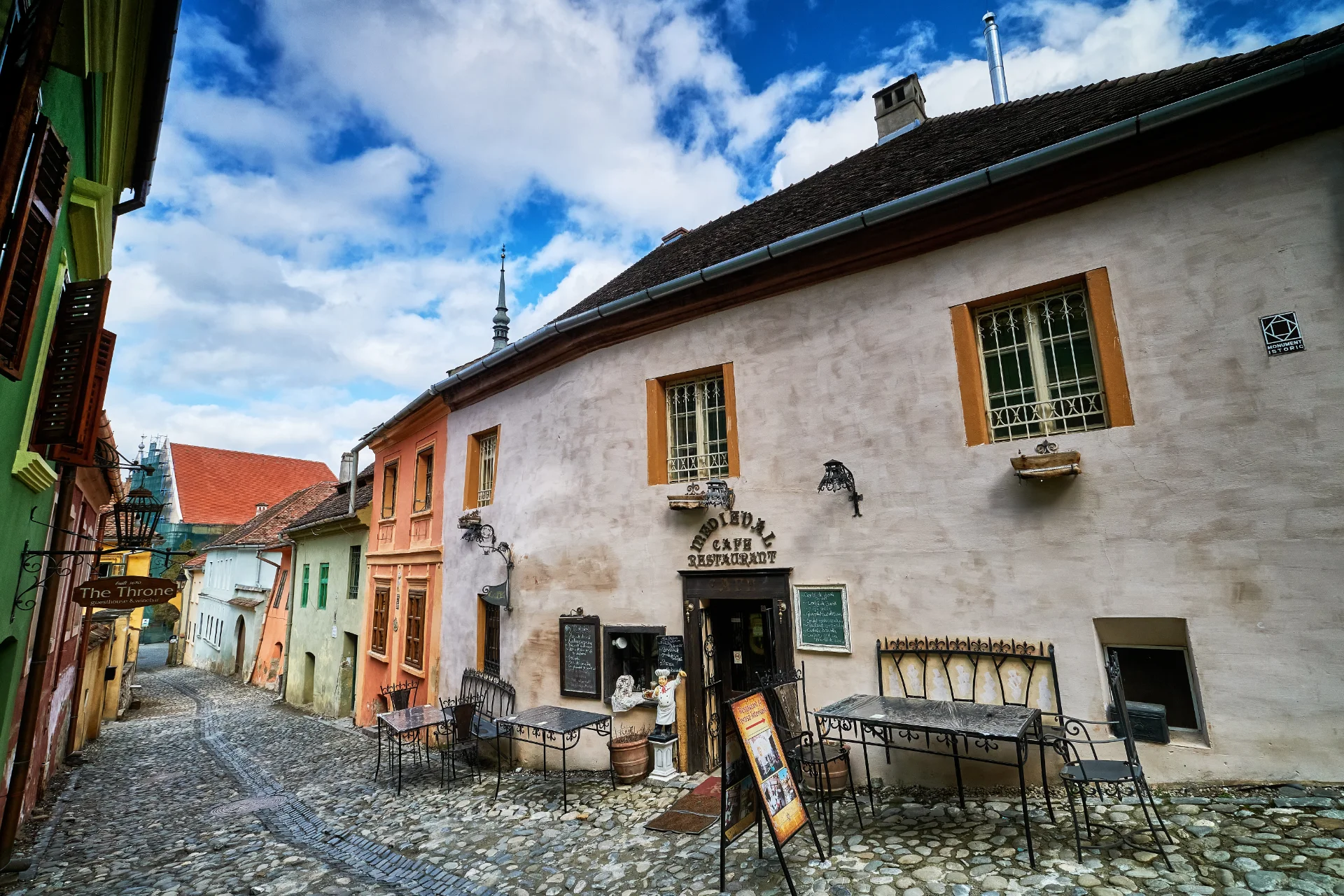
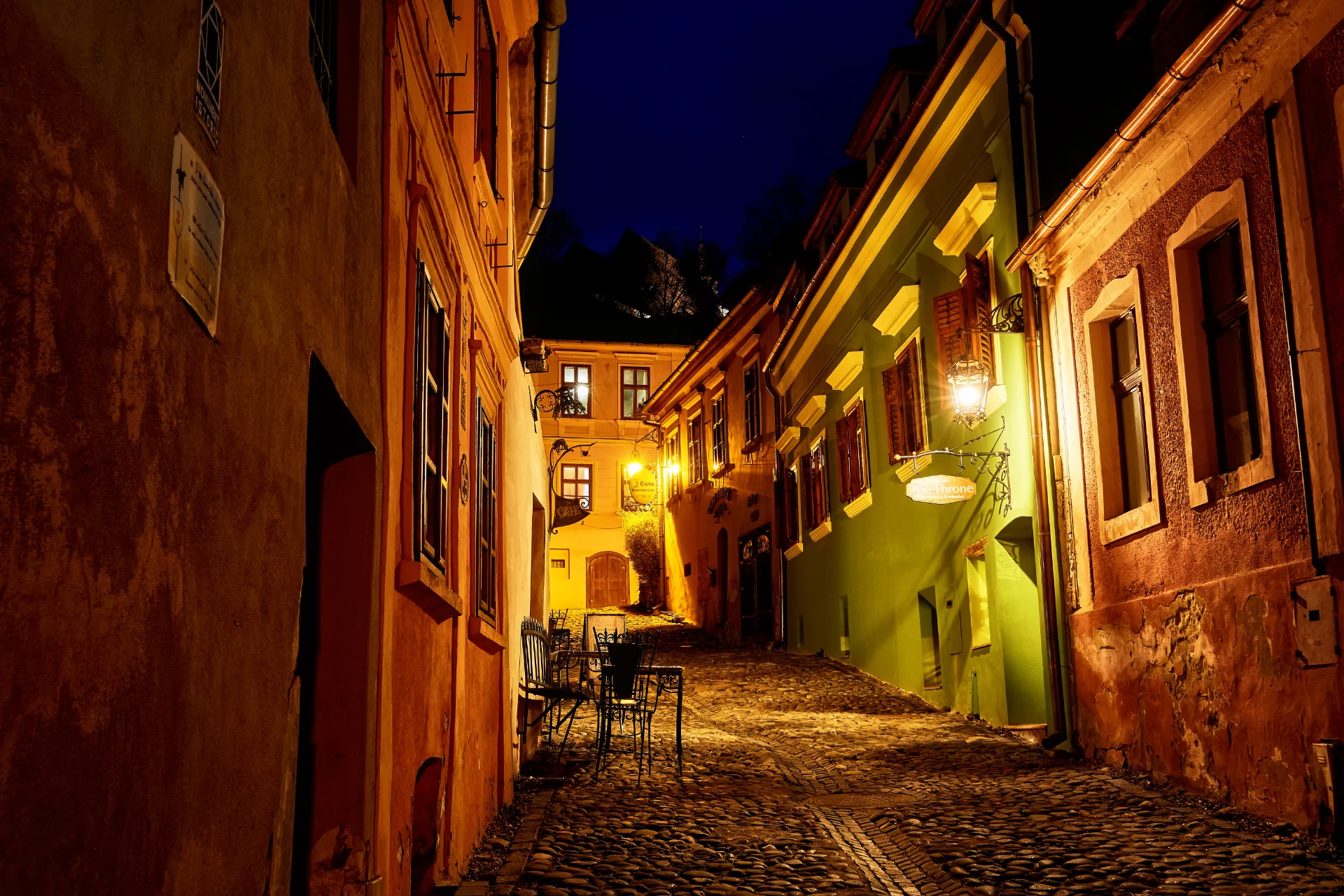
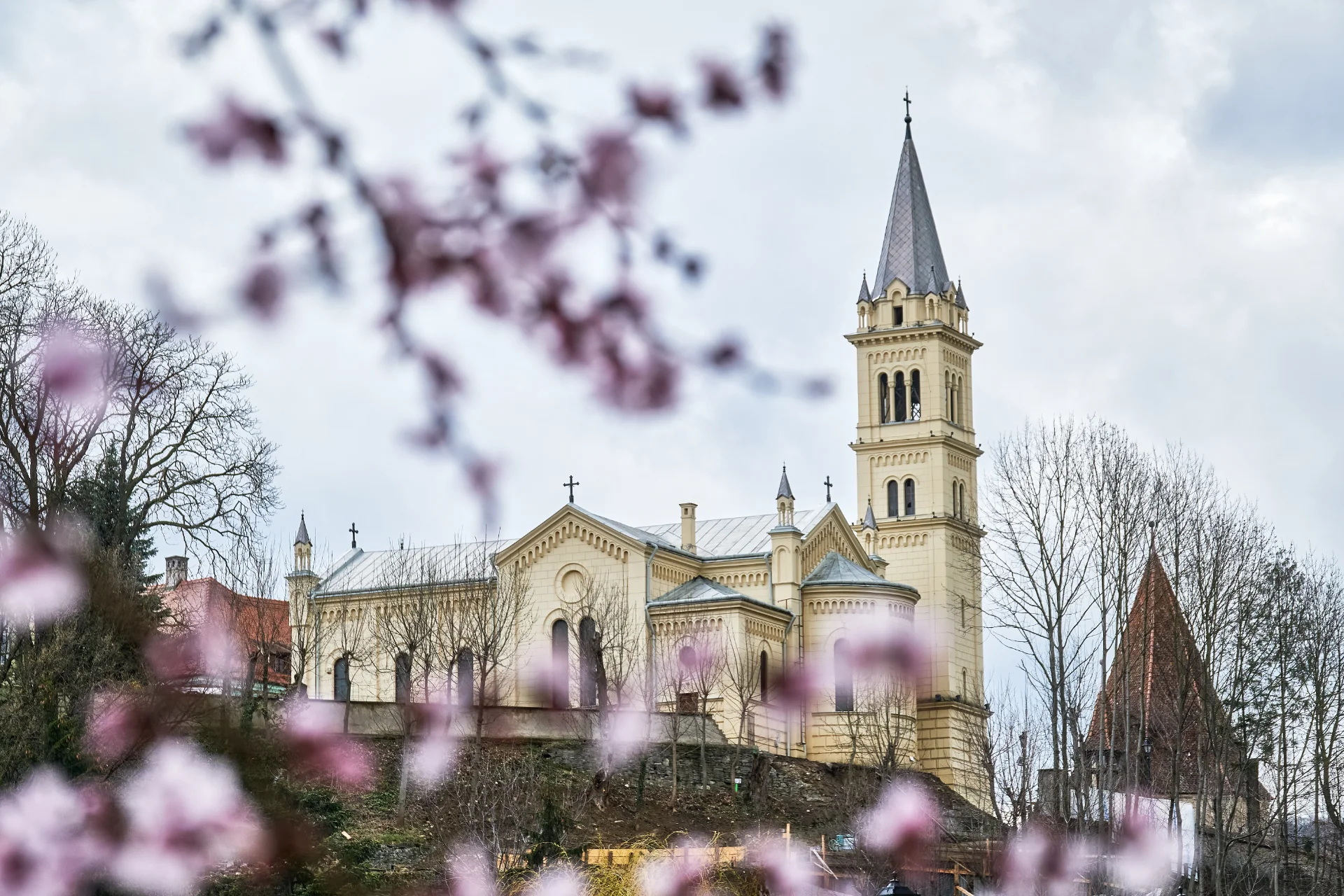
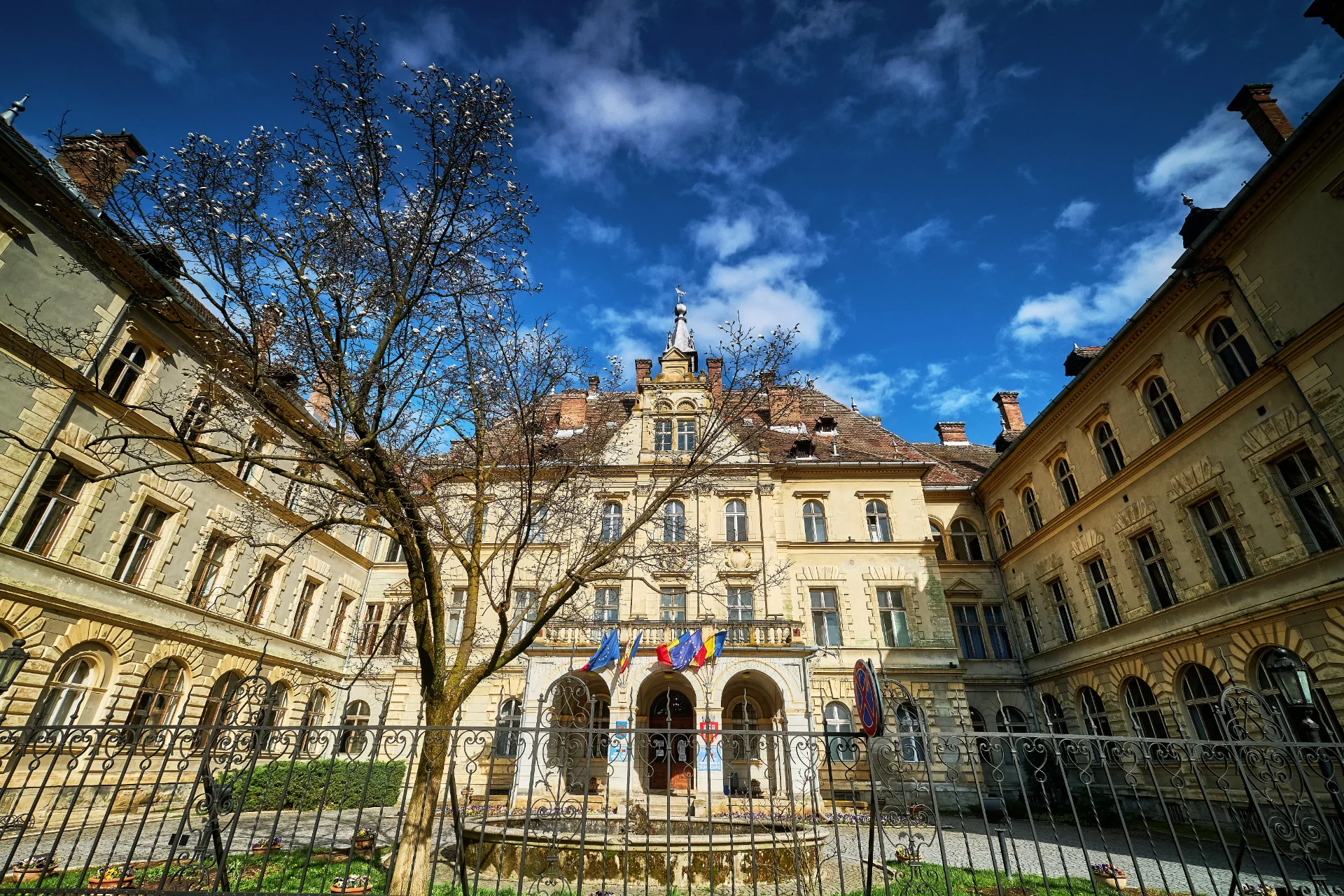
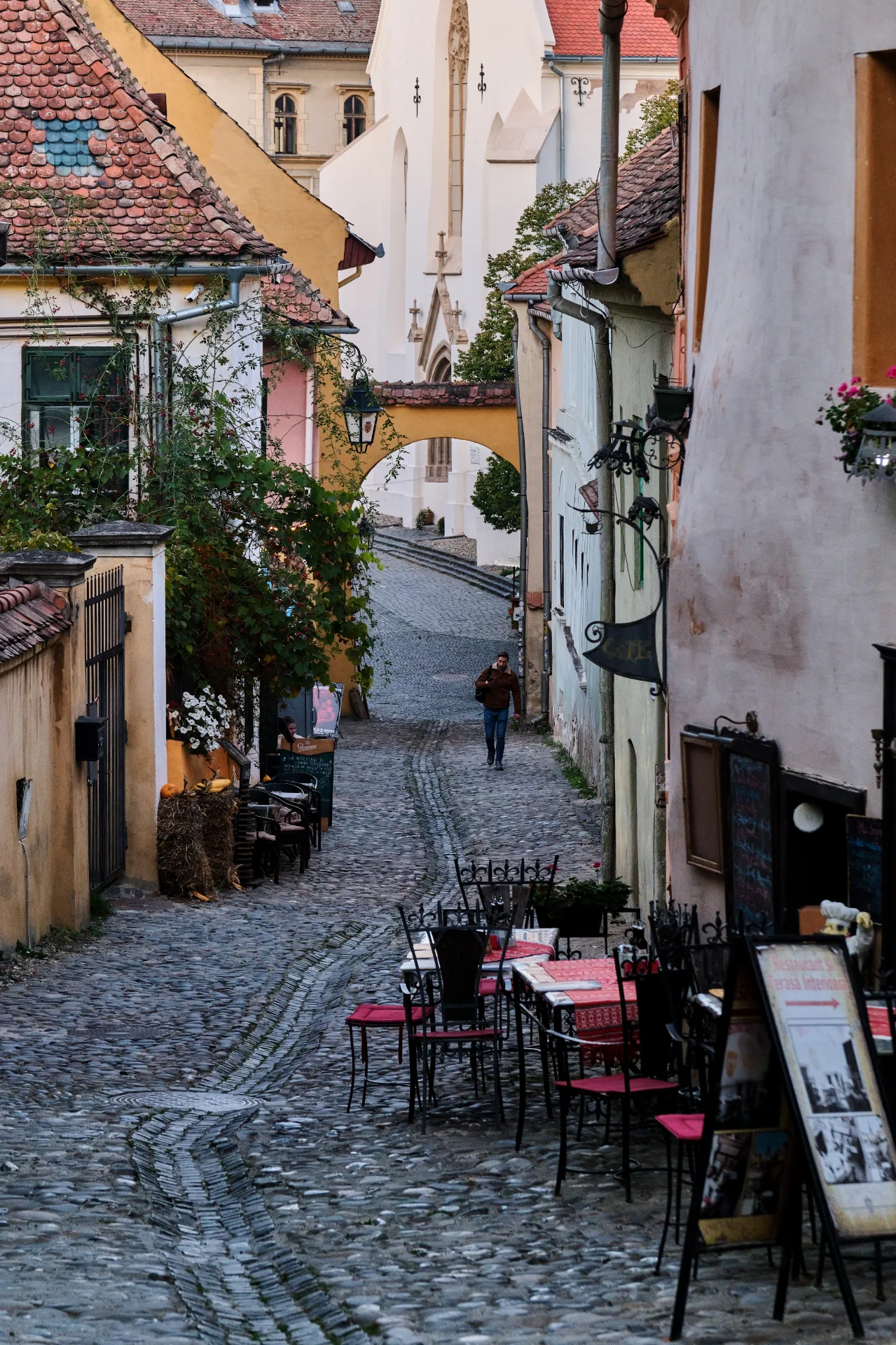
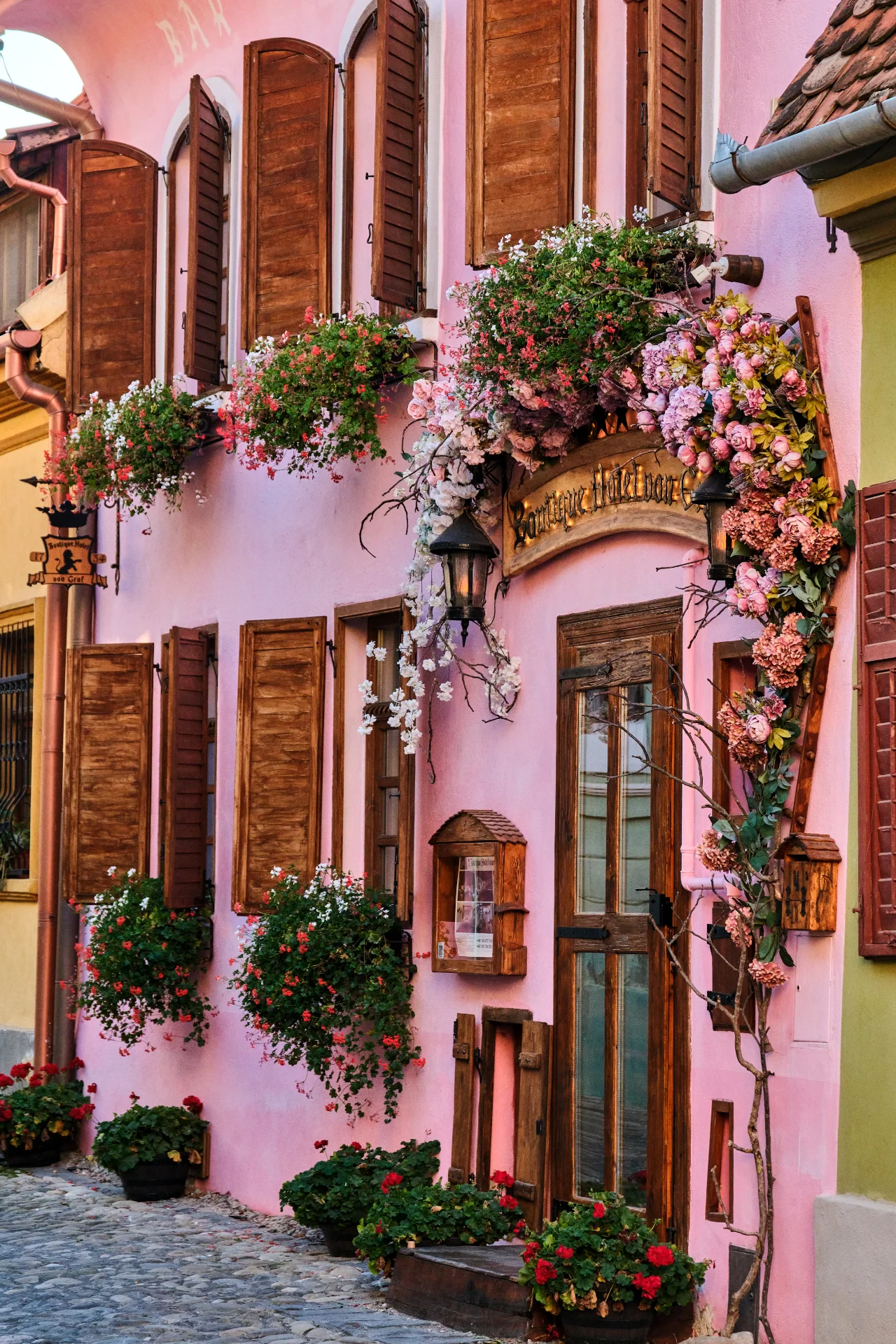
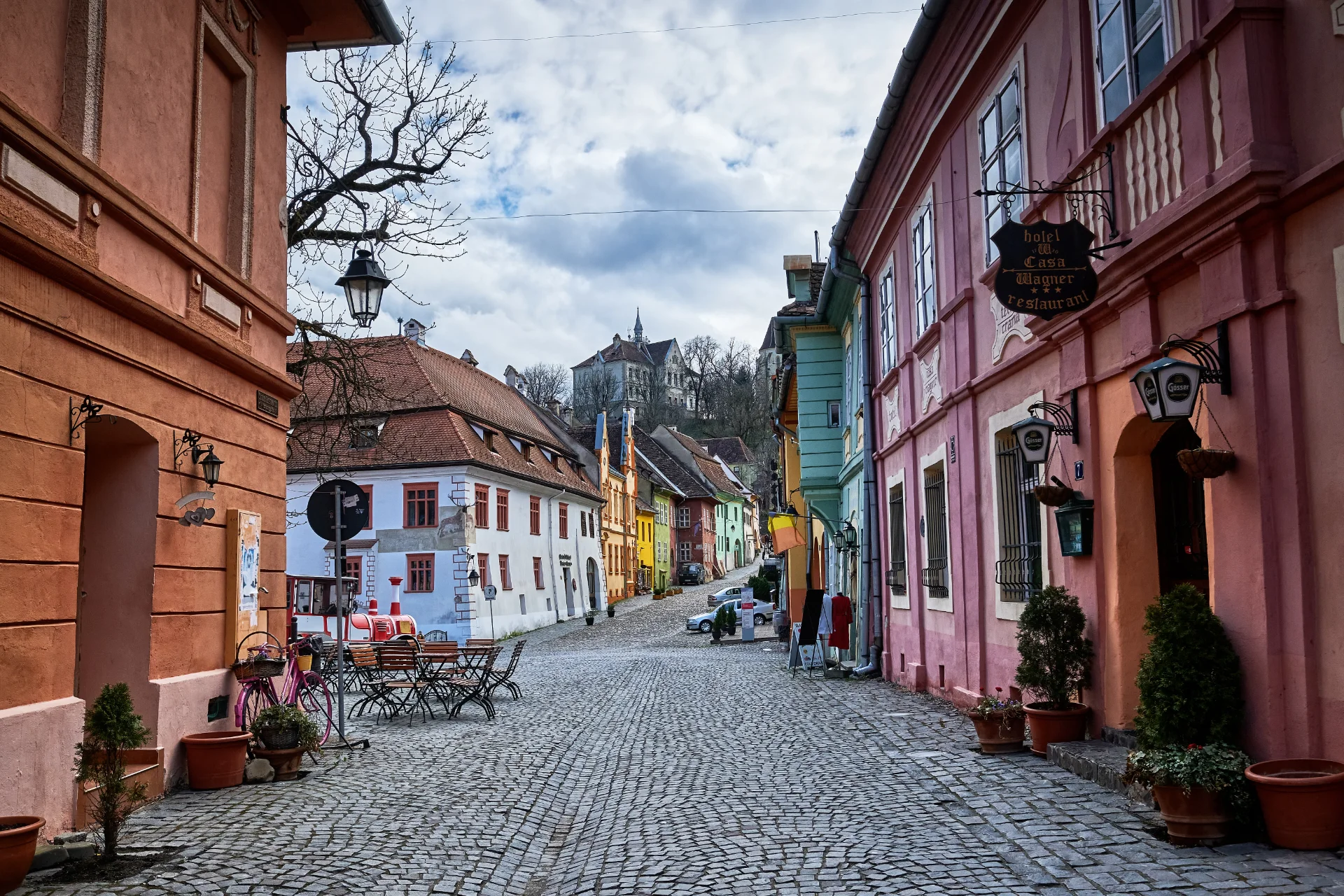
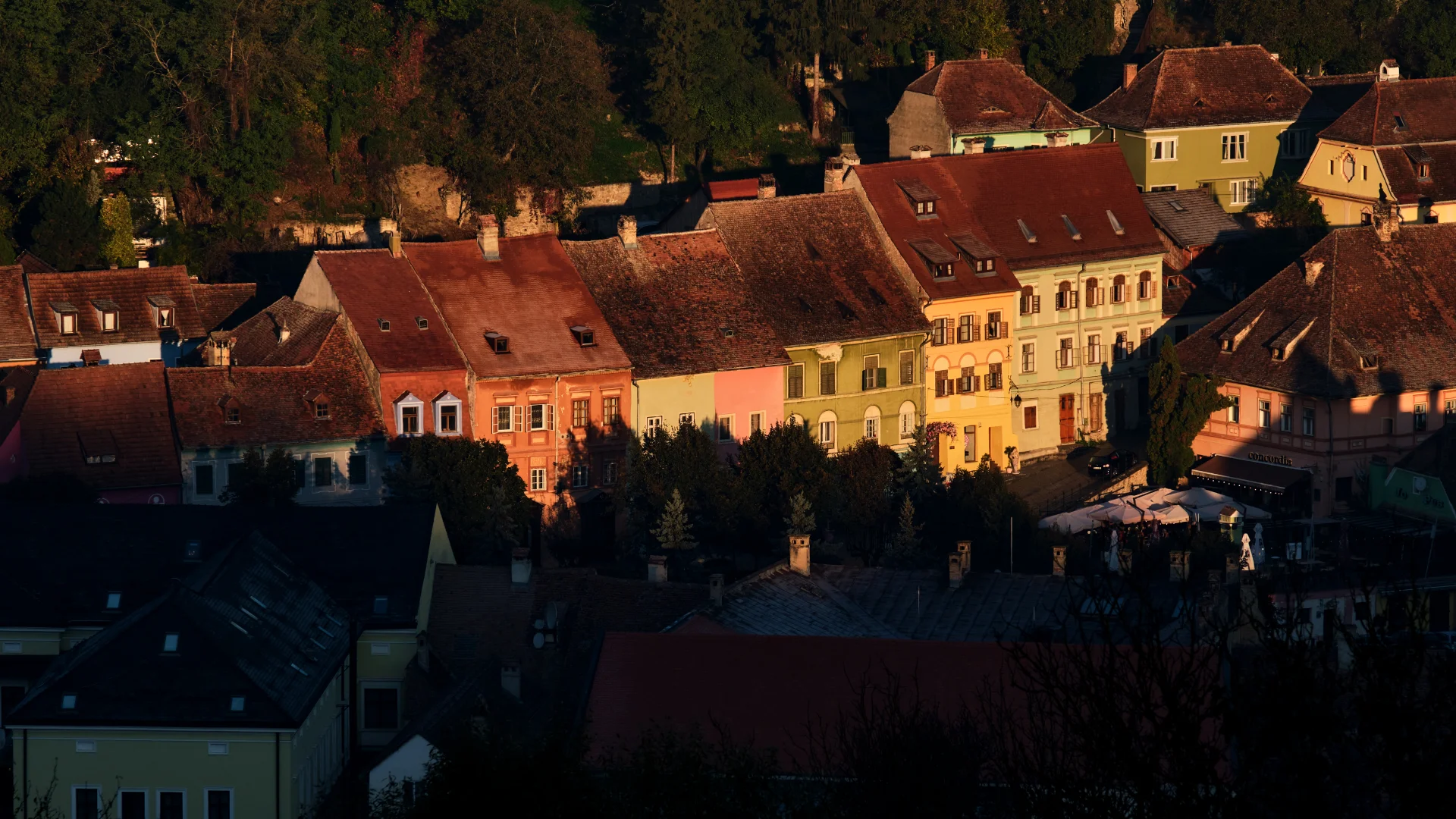
The “Saint Joseph” Cathedral is a newer and particularly harmonious monument, built in 1894, after the demolition of the old Franciscan monastery and the Locksmiths’ Tower. On the way back to the Clock Tower, we stop to admire the building that houses the Sighișoara City Hall, built at the end of the 19th century, on the site of the former Dominican monastery and a defense tower. In addition to these impressive monuments, it is also worth admiring the old authentic medieval houses spread throughout the fortress, along the picturesque cobblestone streets. Inhabited in the past by craftsmen and their families, they include a special diversity of architectural styles and decorative elements. The pastel colors and windows full of flowers enhance the magical ambiance of the fortress, many of them still inhabited, while others have been transformed into guesthouses, restaurants, workshops or souvenir shops.
We can also find other old and interesting buildings in the Lower Town, which runs at the foot of the hill, especially in the south and east. On the other side of the river we can also admire the majestic silhouette of the “Holy Trinity” Church, which was built between 1934-1937 and includes superb interior paintings. Nearby is the old Reformed church built around 1888. For incredible panoramas of the citadel, we can climb the hill that rises to the east, following the Via Transilvanica route, while another hill to the south offers us the chance to admire the secular oak trees up to 600 years old, protected within a nature reserve. From the cobblestone streets of the medieval citadel, we head towards the old fortress of Mediaș, where we try to discover the stories and secrets of a captivating place…
Sights and Experiences
Places to See and Things to Do in Sighișoara
Citadel Square
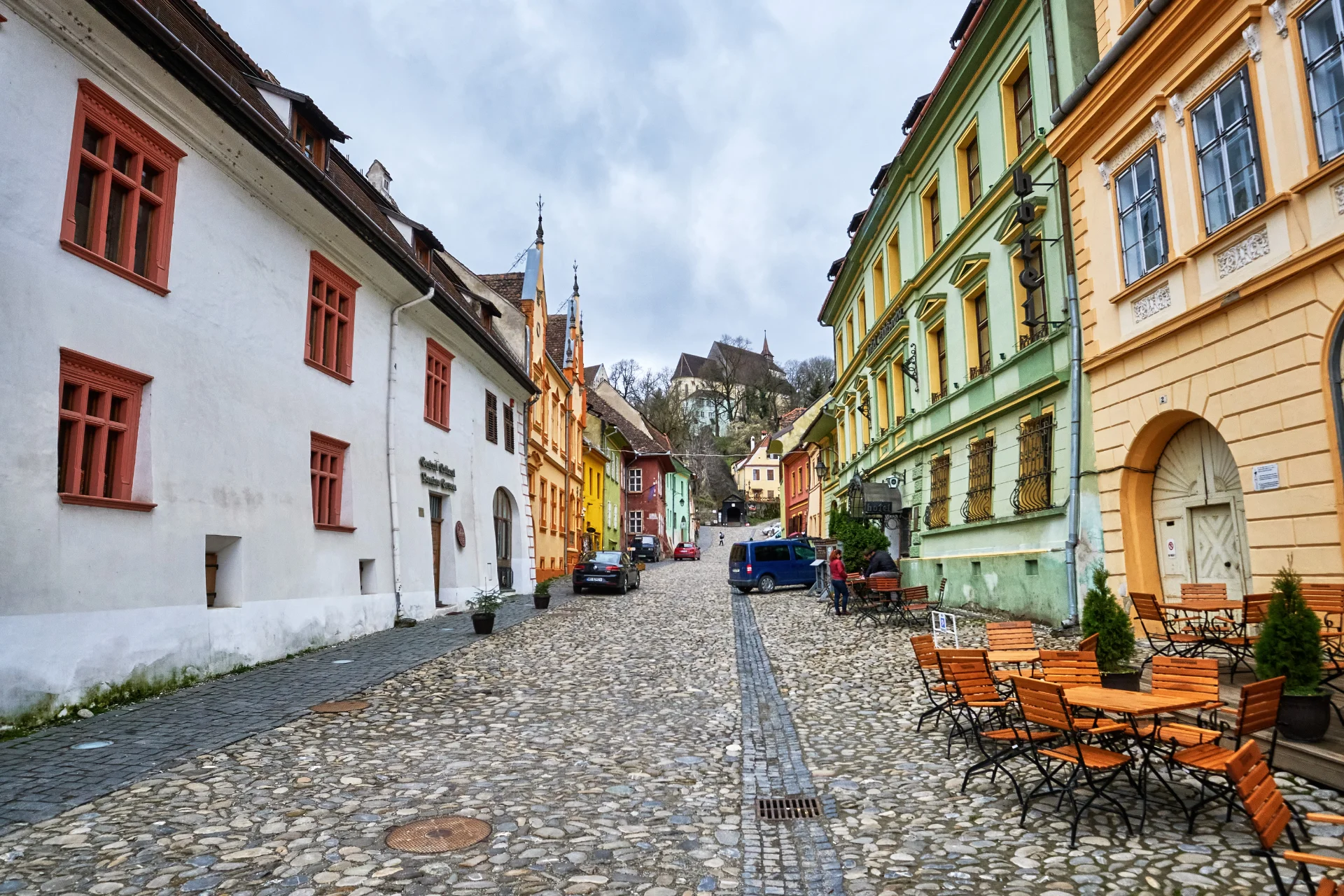
Together with the nearby Museum Square, the Citadel Square represents the soul of the Sighișoara citadel and the central starting point for discovering this destination. In the past, all the commercial activity in the fortress took place here, with merchants and craftsmen arriving from all over Transylvania and beyond. Today, the square has retained much of its charm of past centuries and many of the magnificent historical buildings that have appeared around it over time. Most of the these are now hotels, restaurants or souvenir shops, but some of them stand out for their history or special architecture. The Stag House dates back to the 17th century and is representative of the city’s architecture and unique for its surprising ornamental detail, while the Venetian House dates back to the 16th century and owes its name to the architectural details added in the 19th century. The Vlad Dracul House is considered the oldest in the citadel, with elements from the 14th century and is probably the birthplace of Vlad the Impaler. A short distance away in the Museum Square is the impressive building of the Sighișoara City Hall, a newer construction from the end of the 19th century.
Clock Tower / History Museum
Visiting hours: 9/10 – 17.30 (summer/Tuesday-Sunday) / 9/10 – 15.30 (winter/Tuesday-Sunday) | Prices: 12 lei (3€)/adult
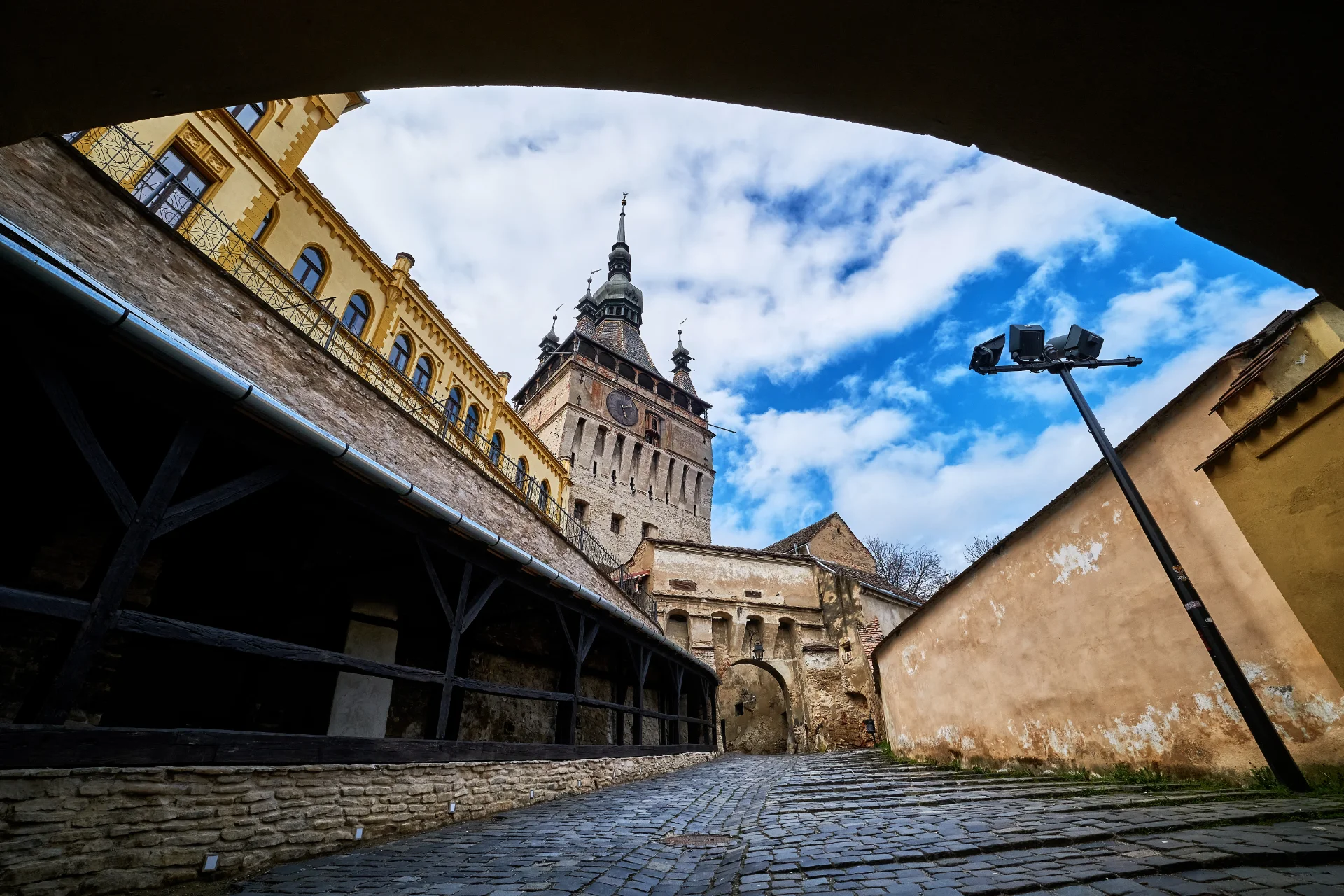
The largest and most impressive of the defensive towers of the medieval fortress of Sighișoara, it is probably the best-known symbol of the city today. Used in the past as the headquarters of the city hall, the tower has an appreciable height of 64 meters and was built in the 14th century to defend the main entrance gate to the fortress. Starting with the 16th century, the tower received a superb clock, equipped with a unique system of puppets representing the Roman gods personifying the days of the week. The current mechanism is newer, but the old one can still be admired in the museum inside. Over time, the tower has been renovated several times, but the basic structure has remained authentically medieval. Inside it now operates the Sighișoara History Museum, which includes fascinating exhibitions presented in a unique vertical way, passing through the six overlapping levels of the history of the fortress. On the top level of the tower, tourists can admire the spectacular panorama of the city from above.
Medieval Towers
In addition to the imposing Clock Tower, the medieval fortress of Sighișoara still preserves 9 of the original 14 defense towers, spread along the outer walls that surround the citadel for almost 1 kilometer. The towers have names related to the guilds that were in charge of maintaining and defending their respective ones in the past. The Blacksmiths’ Tower is located behind the Monastery Church, having been built in 1631 on the site of the former Barbers’ Tower. Although it seems small from the fortress, it actually extends down, along the walls. A little further south, right at the base of the hill, are the Tanners’ and Tinsmiths’ Towers, united by the Riflemen’s Gallery and dating from the same period as the walls (15th-16th centuries). Near the Hill Church is the Ropemakers’ Tower, rebuilt in 1350 and the only one in the fortress still inhabited. The north-eastern corner of the fortress was guarded by the Butchers’ and Furriers’ Towers (15th century), which frame the Torle Gate, where the division of the flocks used to take place in the past. A little further north, the Tailors’ Tower is perhaps the most interesting, with the second gate of the fortress passing under it. It was built in the 14th century and rebuilt after it exploded during the great fire of 1676. Further along the walls is the Cobblers’ Tower, the shorter version of which dates from 1681 and now houses the local radio station. The other towers of the medieval fortress have been demolished over time to make way for other buildings.
Monastery Church
Visiting hours: 10 – 17 (Wednesday-Sunday) | Prices: 15 lei (3€)/adult
The impressive church of the former Dominican monastery in Sighișoara was built between 1492 and 1515, on the site of a much older church dedicated to the Virgin Mary. Although the monastery was dissolved in 1556, the imposing late Gothic church has been remarkably preserved, later becoming the parish church of the Lutheran community in the city. Over time, the monument has also received Baroque elements, preserving a lot of very valuable treasures inside. The superb altar and organ date from the late 17th century, being the work of the masters Joann West and Jeremias Stranovius. Added to these is a bronze baptismal font from 1440, extraordinary frescoes, colorful stained glass windows, Baroque sculptures and oriental carpets.
Church on the Hill
Visiting hours: 10 – 18 | Prices: 10 lei (2€)/adult
One of the largest Gothic churches in Transylvania, the Hill Church is dedicated to “Saint Nicholas” and was built starting in the mid-14th century, and was modified in the following centuries. Built above other older medieval structures, including a Romanesque chapel and a tower that may have been part of a forgotten fortress, the church stands out for several exceptional and even unique features. It is the only church in Transylvania with a crypt under the choir and has a 42-meter-high bell tower that is slightly tilted. In addition to valuable frescoes from the late 15th century, rediscovered during recent renovations, the Evangelical church also preserves several extraordinary pieces, including the carved pulpit, the tabernacle in the north of the choir, the baptismal font or wooden pews, but also other treasures brought here from other churches in the region.
Other Interesting Discoveries
Lesser known places and activities in Sighișoara
Guild House
Located right next to the Clock Tower, the private exhibition presents the fascinating traditions of the Saxon community of Sighișoara and the 9 guilds that existed during the medieval fortress. The interesting collection includes a lot of authentic objects and information about the history of craftsmen in Sighișoara and the surrounding area.
Visiting hours: 10 – 17 | Prices: 30 lei (6€)/adult
St. Josef Catholic Church
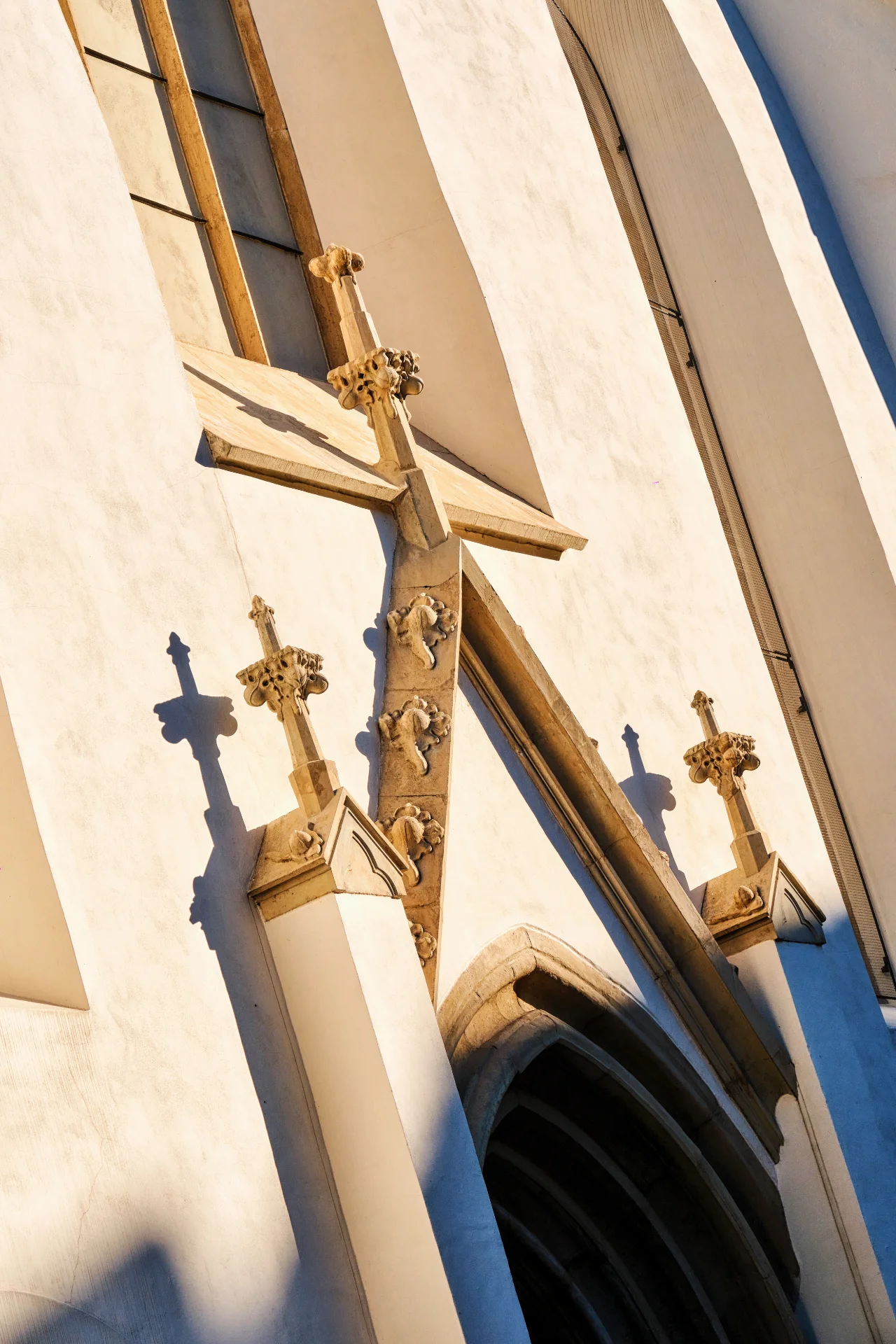
Although not as old as the historical monuments in the medieval fortress, the Roman Catholic Cathedral dedicated to Saint Joseph stands out for the special beauty of its eclectic architecture with neoclassical elements. It was built at the end of the 19th century on the site of the former Franciscan monastery and the Locksmiths’ Tower, which were demolished. Designed by the local architect Letz, it was seriously damaged by the fire of 1983, and has been recently restored and renovated.
Covered Stairway
A true symbol of the Sighisoara fortress, the staircase connecting the medieval city with the church on the hill was originally built in 1642, with the aim of protecting children climbing to the school on the hill. Also known as the Schoolchildren’s Staircase, this is unique in Transylvania and has been modified over time, the number of steps being reduced to 175.
Evangelical Cemetery
Also known to locals as the Saxon Cemetery, it is located on the western side of the hill on which the medieval fortress is built. A timeless space with a special atmosphere, it preserves many old funerary monuments, some even from the 18th century. Surrounded by abundant vegetation, they bear the traces of the passage of time, but also many stories about the past of this place, some stones containing symbols that recall the occupations of the inhabitants of long ago.
House of Weapons and Maps
Representing a private collection of fascinating objects, this small and new museum in Sighișoara is located on Zidul Cetății Street, near the Tailors’ Tower. Tourists can discover here a considerable number of weapons, maps, drawings, old books, coins and other historical objects, some of which are very rare or unique.
Visiting hours: 10 – 18 | Prices: 25 lei (5€)/adult (combined with the Casa Breslelor museum)
Medieval Weapons Museum
Amenajată în patru camere fascinante, această expoziție aparține de muzeul de istorie din Sighișoara, împreună cu expoziția principală din Turnul cu Ceas și Camera de Tortură. Colecția impresionantă de arme și armuri medievale, unele piese fiind deosebit de rare și valoroase.
Program vizitare: 9 – 17 (vara/marți-duminică) / 9 – 15 (iarna/marți-duminică) | Tarife: 10 lei (2€)/adult
Torture CHamber
Part of the Sighișoara History Museum experience, this unique location is located in a space that previously served as the entrance gate under the Clock Tower and later as the fortress’ prison. Inside, visitors can see a collection of objects used in the past as instruments of imprisonment and torture of those convicted during public trials in the Sighișoara fortress.
Visiting hours: 9 – 17 (summer/Tuesday-Sunday) / 9 – 15 (winter/Tuesday-Sunday) | Prices: 10 lei (2€)/adult
Secular Oak Reserve
Located just a few kilometers south of Sighisoara and covering an area of approximately 70 hectares, the protected natural area includes secular specimens of oaks and holm oaks. With ages of over 400 and sometimes over 600 years, these venerable trees have witnessed almost the entire life of the medieval fortress of Sighisoara. The plateau known as Breite has been used by the city’s inhabitants as pastures for centuries, and today it has become a favorite recreational destination for visitors to Sighisoara, where both the secular trees and other species of plants and animals can be admired.
Accommodation Recommendations
The best lodging options in Sighișoara
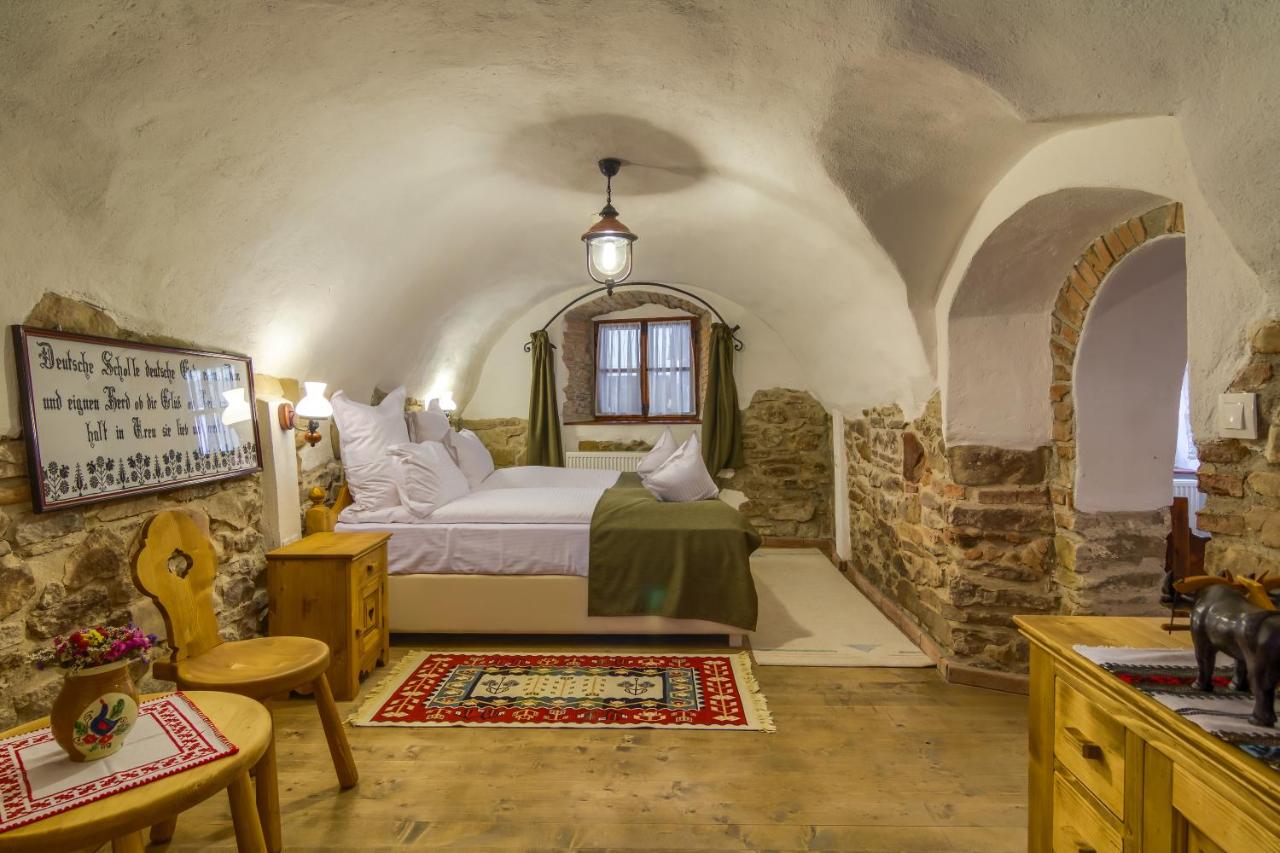
Rating 9.6 from 684 reviews!
One of the most prestigious accommodation units in Sighisoara, this guesthouse offers rooms with a unique ambiance and excellent facilities, being highly appreciated by customers!
Herman Oberth Sq. 4
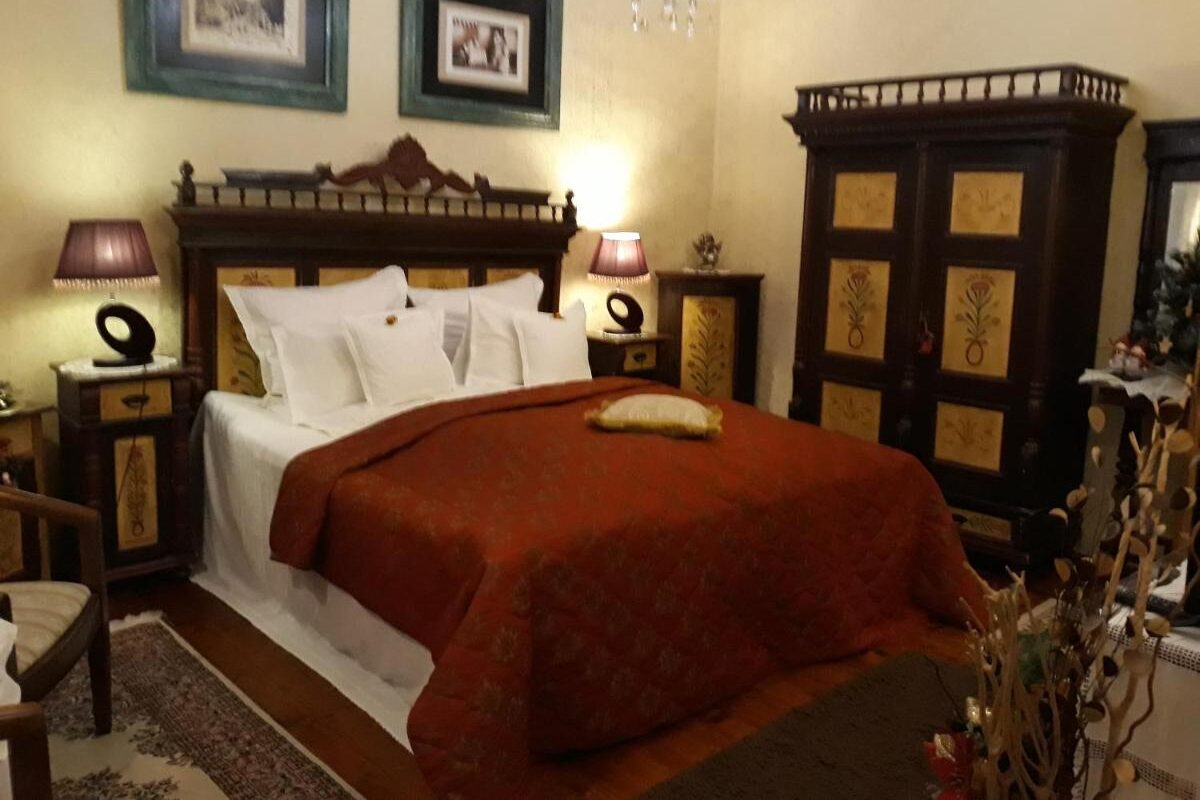
Rating 9.4 from 814 reviews!
Excellently located in the heart of Sighisoara’s citadel, this stunning guesthouse offers exquisite rooms with unique medieval design, a charming restaurant, a café and lounge, as well as an outdoor terrace!
Cositorarului St. 8-9
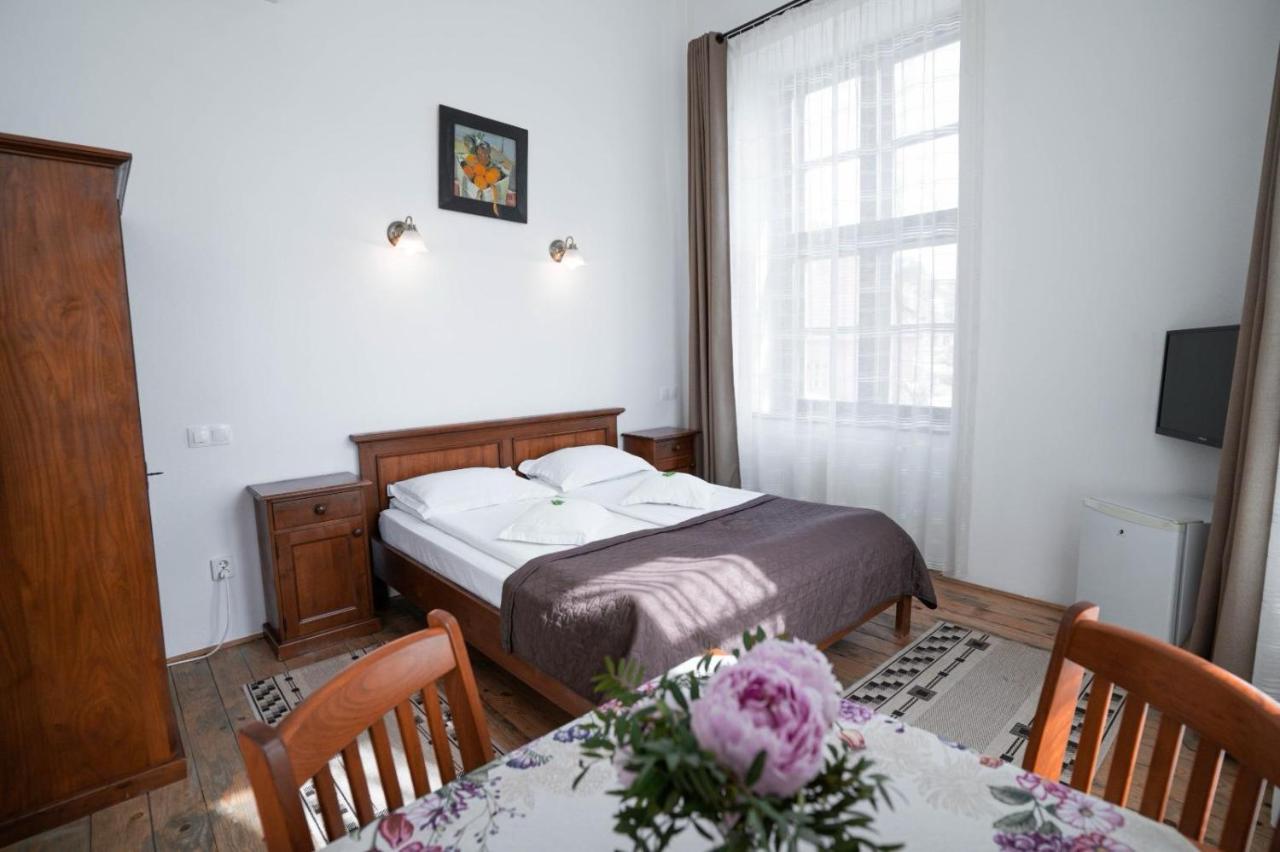
Rating 9.0 from 1.034 reviews!
This splendid guesthouse is located right in the heart of the medieval fortress, offering excellent rooms, an appreciated traditional restaurant, a terrace, garden and a wine cellar!
Herman Oberth Sq. 38