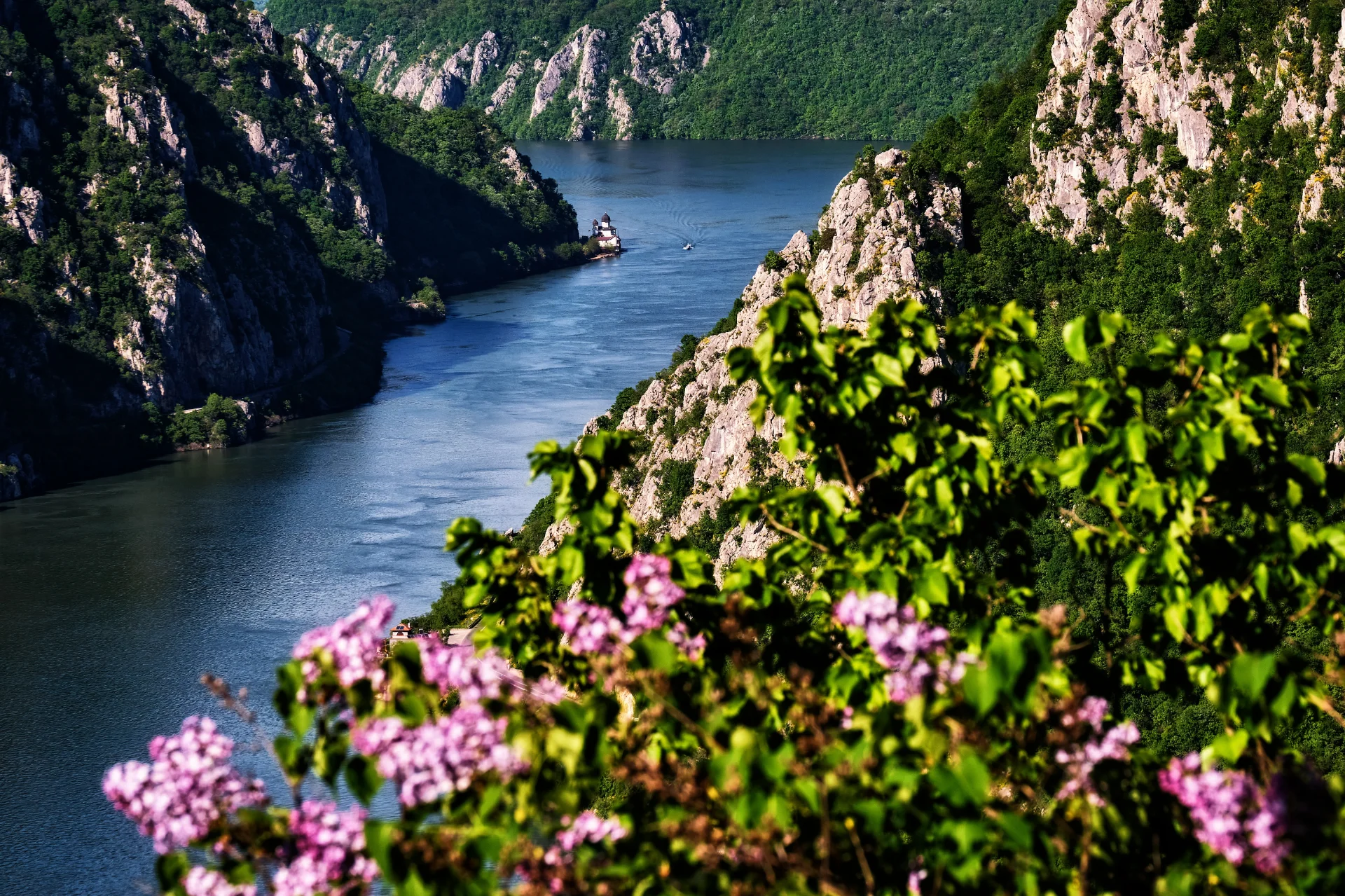
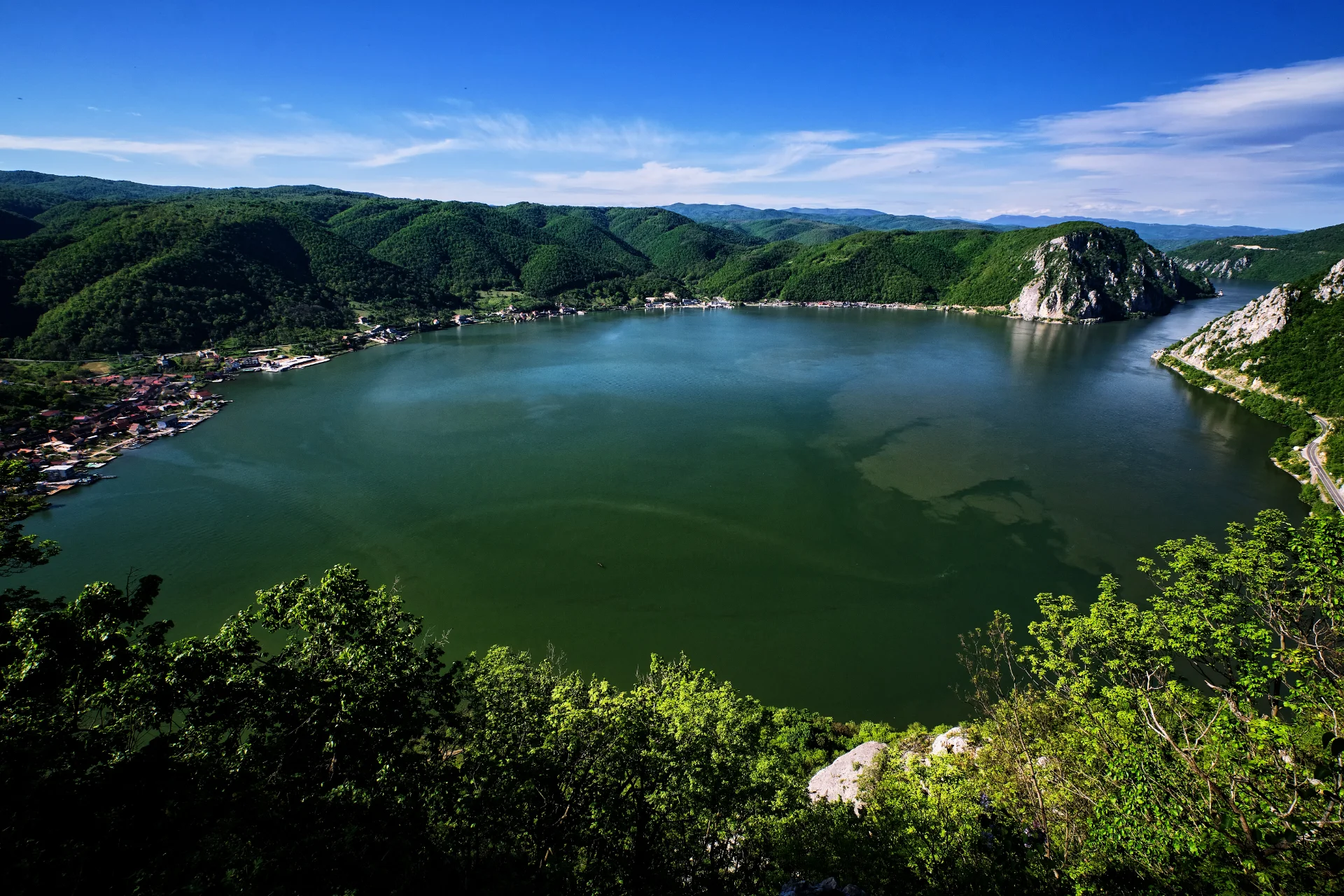
Flowing mostly quietly through central and southeastern Europe, the Danube River creates a multitude of landscapes, but nowhere is it more spectacular and impressive than the small stretch between the mountains of Romania and Serbia. Enclosed by the Carpathians and the Balkans, the Danube used to be turbulent and unpredictable here, for centuries a nightmare for sailors trying their luck passing the most dangerous sections of this region. The river was finally tamed after the creation of the hydroelectric complex at the Iron Gates. Driving or walking through this fascinating natural area, travelers are always accompanied by the emerald ribbon of the Danube, while the ridges on both banks are covered in lush vegetation. The extreme diversity of flowers and wild birds that can be encountered through the Danube Gorge is amazing and anyone can feel overwhelmed looking at the river from above, surrounded by the sound of birds and the divine smell of wild lilac.
The Iron Gates Natural Park covers the area known as the Danube Gorge (or Danube Gorge), in the southwestern tip of Romania, along the border with Serbia. A region of outstanding natural beauty and cultural importance, it includes the spectacular gorge created by the Danube between the Carpathian and Balkan Mountains. On the Romanian side, the park includes the gorge and the southern peaks of the Locvei and Almaju mountains, as well as small areas of the Mehedinti mountains and plateau. The main attraction of the natural park is the impressive sections known as the Danube Boilers, an area that was extremely difficult to cross before the construction of the Iron Gates I dam, with the rocky walls on both banks approaching very threateningly. The natural park was created to protect and preserve the splendid landscapes, unique biodiversity and cultural heritage of this fascinating region of Romania.
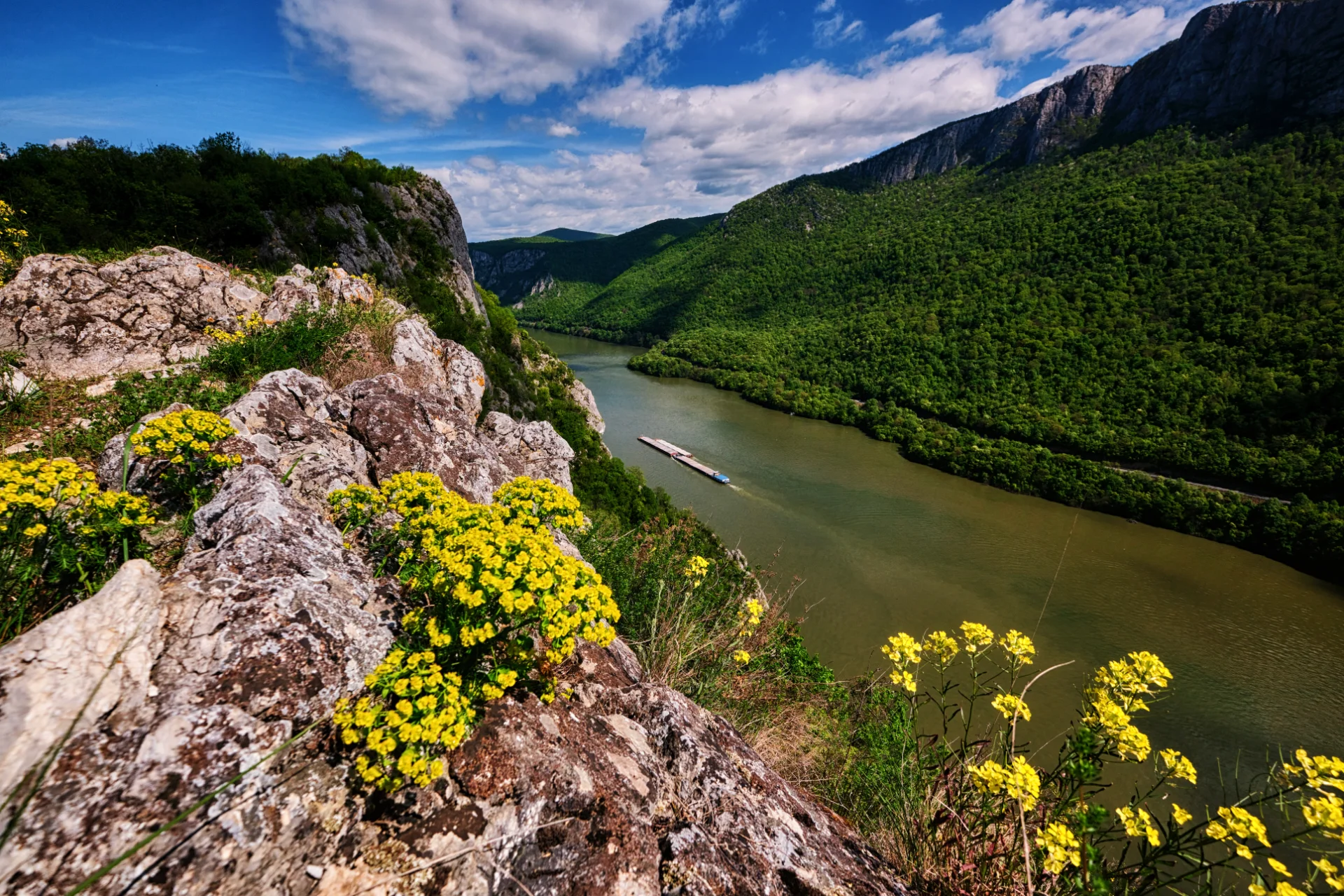
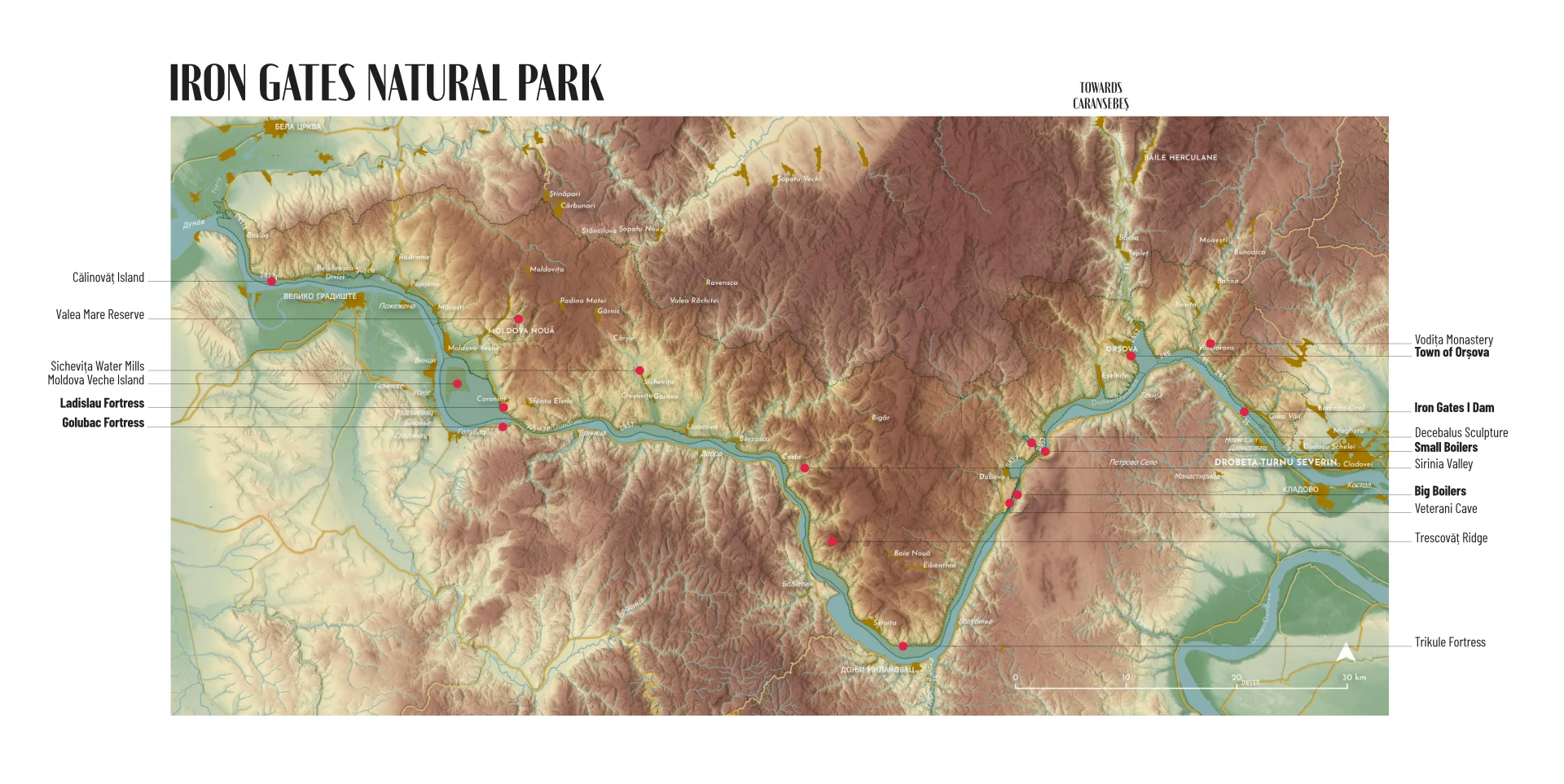
There is an extraordinary number and diversity of tourist attractions and experiences along the Danube Gorge and in the Iron Gates Natural Park. First of all, the main attraction is represented by the majestic landscape created by the contrast between the river flowing quietly through the mountain peaks between the two countries. The main route into and through the natural park is along the national road 57, which largely follows the gorge, with a series of local roads and tourist trails following the smaller valleys and climbing into the mountains. The distance between Bucharest and Drobeta Turnu Severin is approximately 350 km (5 hours by car, 6 hours by train). In addition to the tourist attractions and experiences presented below, travelers have at their disposal a multitude of very well-organized and signposted ecotourism routes, most of which reach places of almost unreal beauty, with unforgettable views of the Danube Gorge and the nearby mountains. Also worth mentioning is the rich and unique biodiversity of this region, with numerous species and habitats rare for Romania.
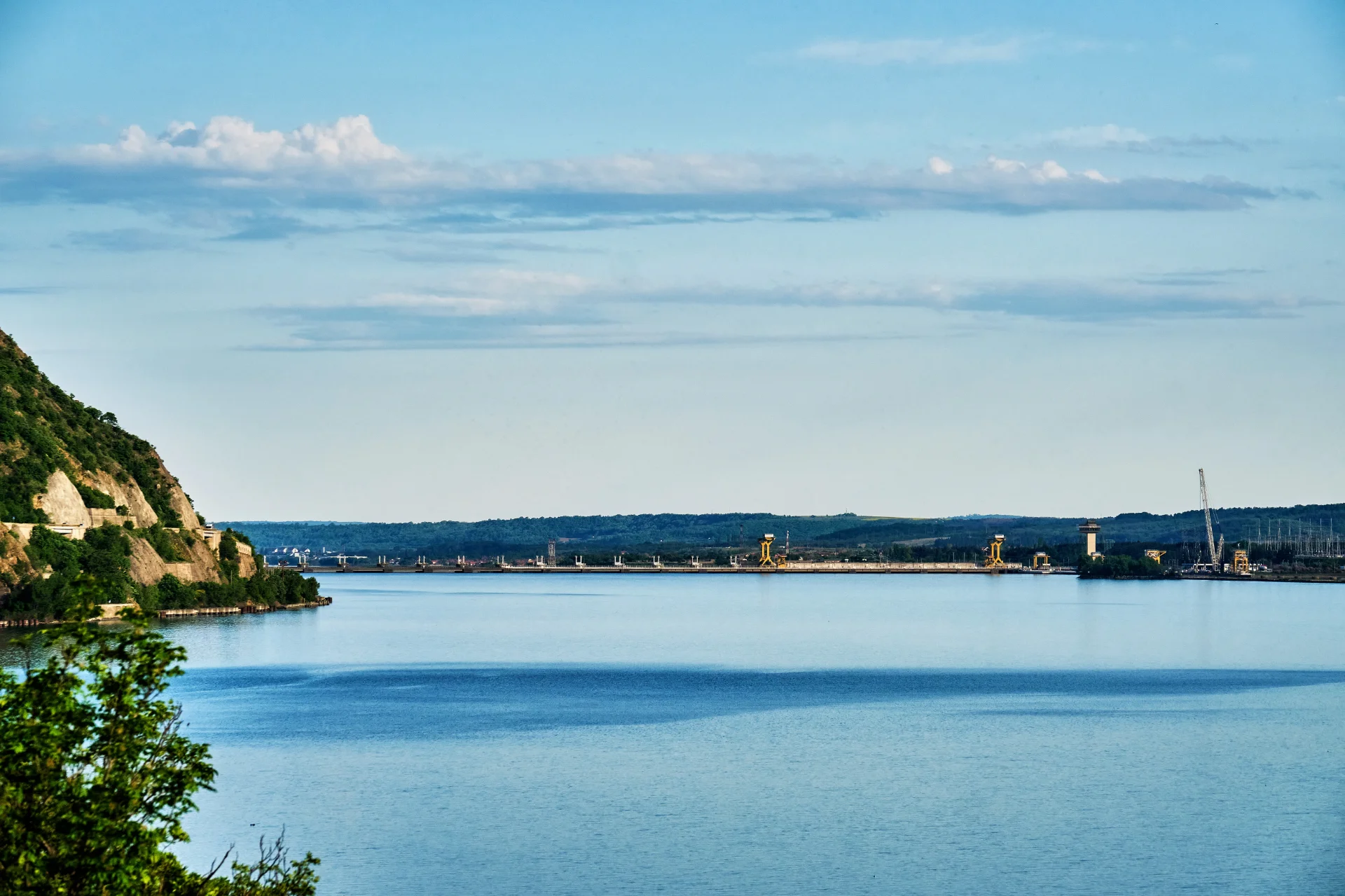
Iron Gates I Dam
Just a few kilometers from the town of Drobeta Turnu Severin, where the Romans once built the first bridge over the Danube, travelers can now admire the impressive Iron Gates I hydroelectric power plant, the largest on the Danube and one of the largest in Europe. It was built by Romania and Serbia between 1964 and 1972, raising the level of the Danube upstream by about 35 meters, completely covering the island of Ada Kaleh and many other settlements on both banks, some of which were rebuilt at higher altitudes.
The dam itself is an engineering marvel, almost 1.3 kilometers long and with locks on both sides to allow ships to pass. It is even more spectacular seen from downstream, and visitors can enter the museum inside to admire the huge turbines and discover other fascinating details about the Iron Gates region. The installed capacity of the plant was approximately 2050 MW, with 12 turbines divided equally between the two countries, and was then increased after modernizations in recent decades. The lake created by the construction of the dam is also impressive, covering an area of over 100 square km, up to the entrance of the Danube into Romania at Baziaș.
Vodița Monastery
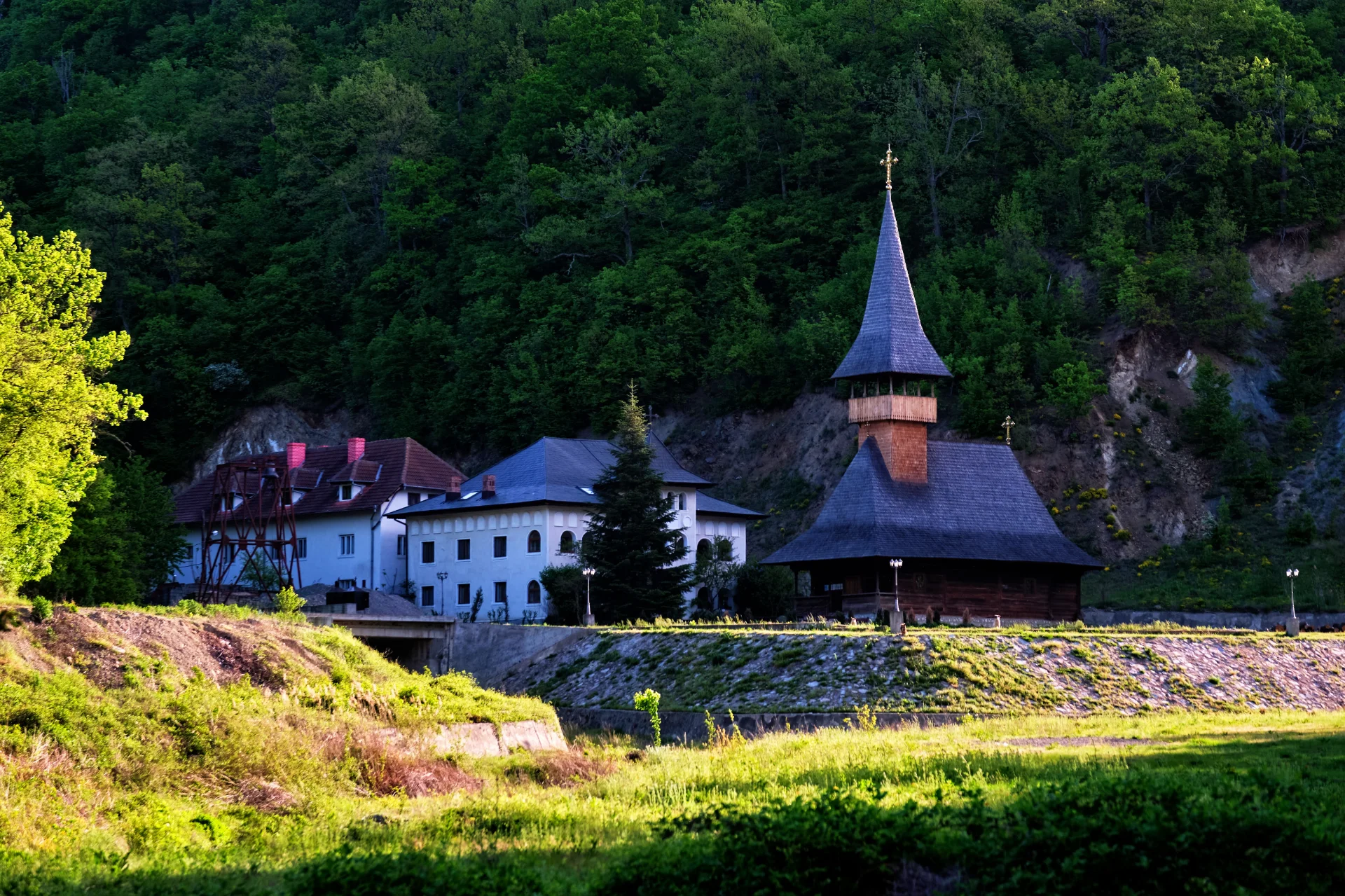
Considered the oldest monastery in Romania founded by a ruler and the oldest autonomous Orthodox monastery in the country, Vodița is a fascinating destination, located in a splendid hidden valley in the Iron Gates Natural Park, along the Danube Gorge. It was originally built in the second half of the 14th century by Saint Nicodim of Tismana with the help of ruler Vladislav I. At that time, it was located close to the border with the Austro-Hungarian Empire.
Over the centuries, the monastery has gone through flourishing times, when it became an important monastic and cultural center in the region, but also through tragic periods, when it was completely destroyed by the Ottomans. A few ruins of the old monastery are still preserved and can be seen on the way to the new location. The new Vodița Monastery was built starting in 1991, with a wooden church similar to those in Maramureș. It can be visited about 1 km from the main road through the gorge, about 12 km before Orșova.
Town of ORșova
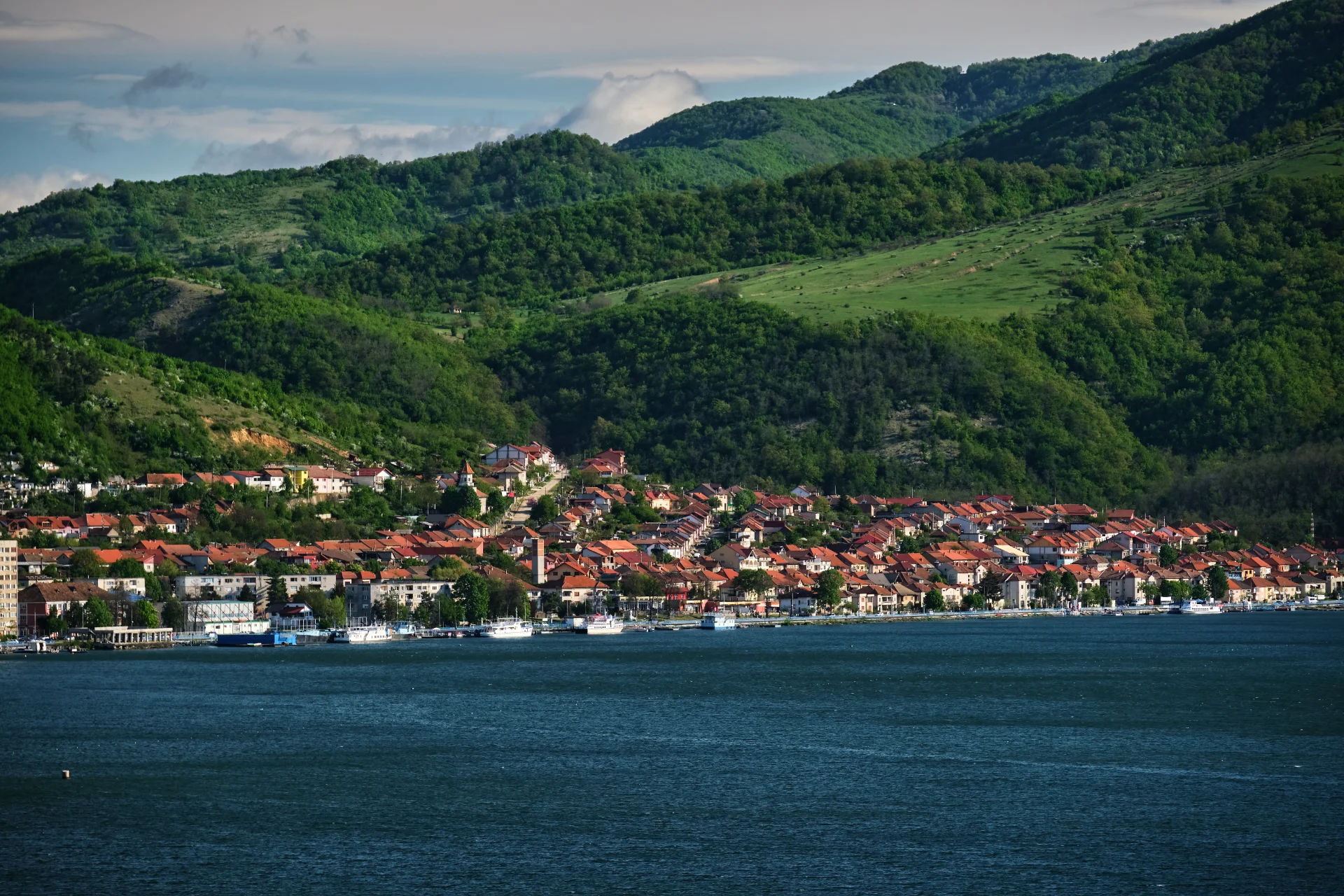
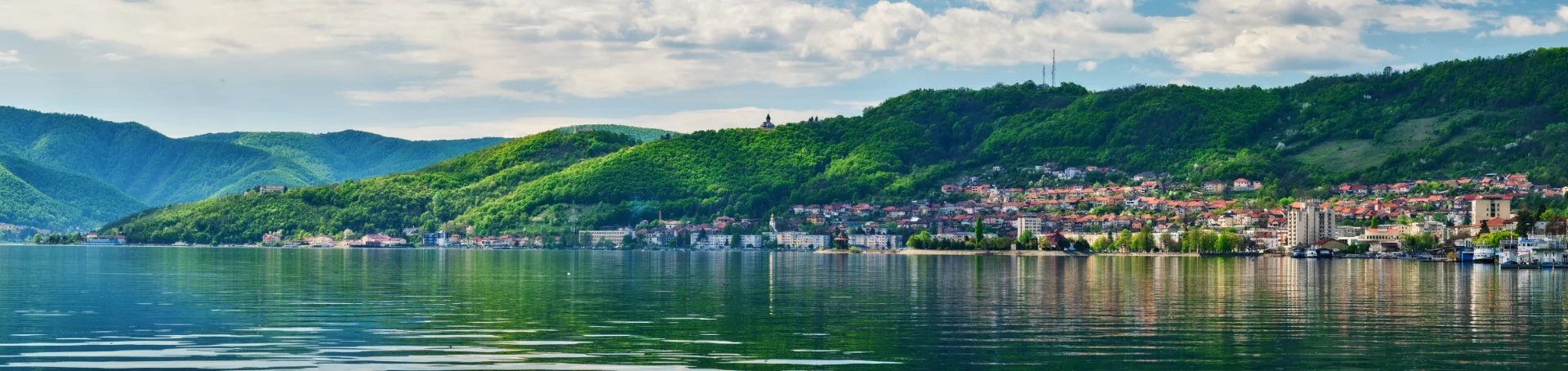
One of the most picturesque towns in Romania, it is located along the Danube Gorge, hidden on the gentle slopes of the mountains, in a charming bay. The new town of Orșova was created during the development of the hydroelectric complex at Portile de Fier in the 1970s, when the level of the Danube rose by over 30 meters, and the old town was completely moved to its current location. Orșova was known in antiquity as the Roman settlement Dierna, being disputed for centuries between local powers. Today, the city is a quiet destination and a charming place, known especially for its small port and shipyard. One of the most interesting attractions in Orșova is the Sfânta Ana Monastery, located on a hill in the south of the city, being built in the interwar period and offering an incredible panorama over the bay.
In the city center, travelers can admire one of the most interesting and unusual churches in Romania. The Roman Catholic Cathedral of Orșova was built in the 1970s, being the only Catholic rite built during the communist regime. It has a completely unique architecture, with a cross-shaped roof and a separate tower, and inside there are interesting paintings depicting the Way of the Cross, including modern figures such as Nadia Comăneci or John Lennon. Visitors can also stroll along the Danube promenade, take boat tours to the Danube Boilers, or admire the athletes at the national rowing complex.
Face of Decebalus and Mraconia Monastery
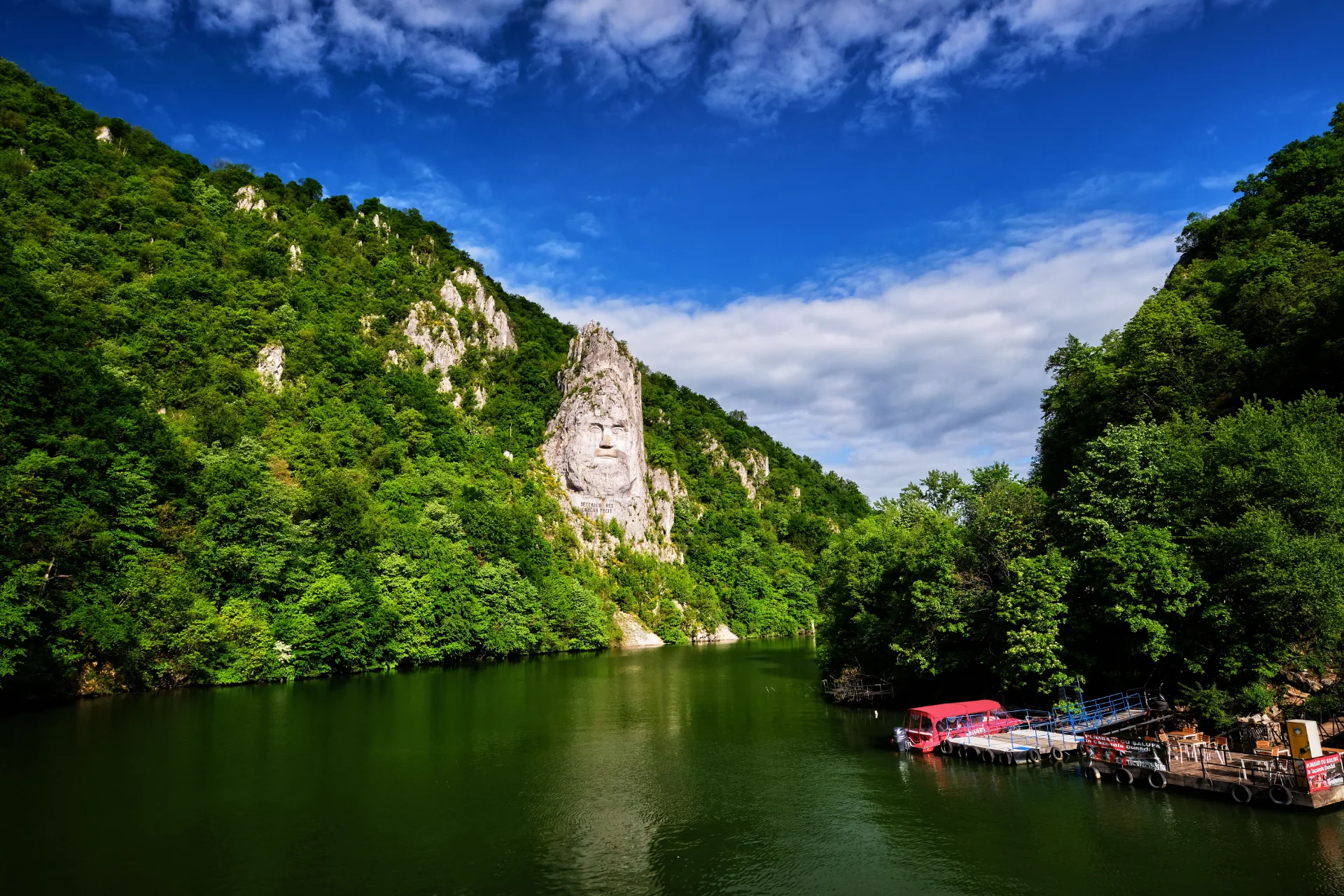
At the entrance to the small bay of Mraconia, travelers are greeted by the imposing statue of Decebalus, the Dacian king whose face was carved into the rock looking towards the other bank of the Danube, from where the Roman invaders arrived two millennia ago. The largest stone sculpture in Europe was created between 1994 and 2004, measuring an impressive 55 by 25 meters. It was created at the initiative of businessman Iosif Dragan and twelve sculptors worked on it over the course of ten years, and is still not finished. On the other bank of the Danube, an older site can be admired at river level. The Tabula Traiana was commissioned by Emperor Trajan after the conquest of Dacia, and is the only surviving tablet of the 10 that existed at that site.
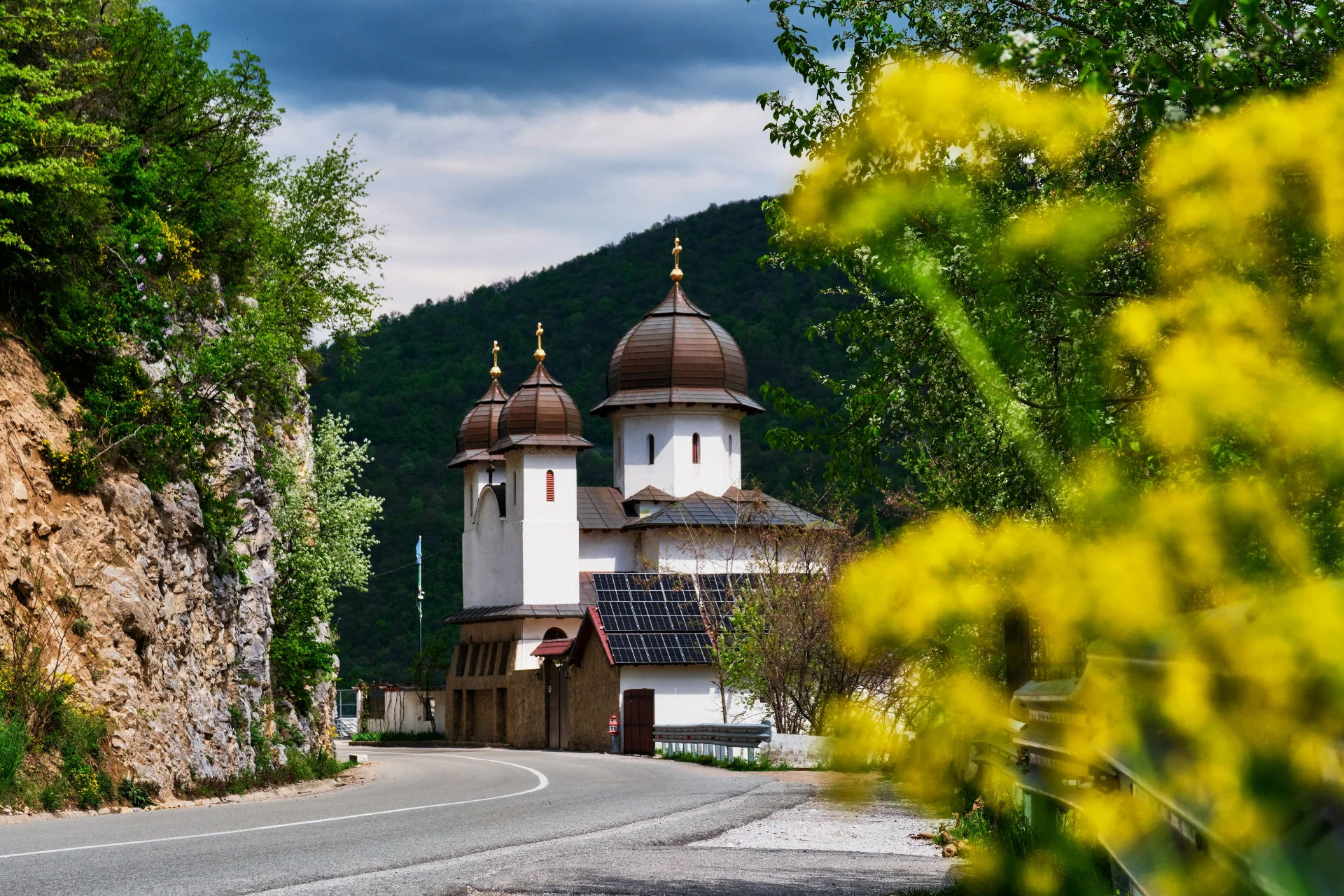
Just a few hundred meters from the monumental sculpture of Decebalus, a small white church appears hanging on the steep bank of the Danube. Known as the Mraconia Monastery, it actually stands above other older monasteries that existed in this place. The oldest was built in the mid-15th century on the site of a former observation point on the Danube, used to guide ships through the dangerous waters of the Cauldrons. This was followed by other places that were destroyed during the wars often fought in these places. The last monastery at Mraconia was covered by the waters of the Danube after the construction of the dam downstream. The current one was built starting in 1993 and is dedicated to Saints Michael and Gabriel, as well as the Holy Trinity. Considering its stunning location amidst a spectacular landscape of the Small Cauldrons of the Danube, this has truly become one of the most beautiful monasteries in this part of Romania.
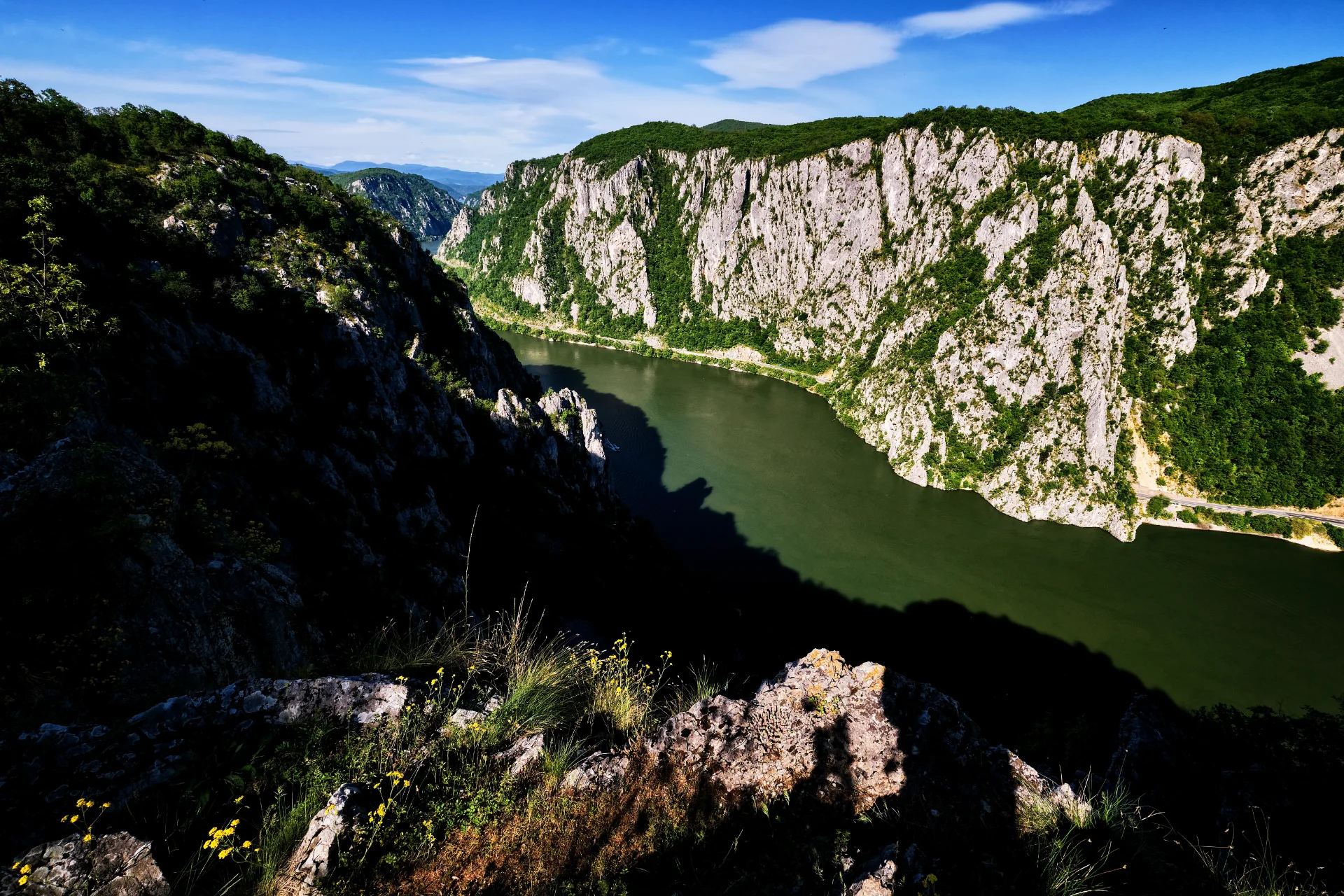
Panorama from Ciucarul Mic Ridge
A lesser-known route climbs the summit of Ciucaru Mic (313 meters), right next to the Small Boilers of the Danube. Between Ciucaru Mic and Ciucaru Mare lies Dubova Bay, and the route offers unique panoramas of it, but also of the Large Boilers or the higher peak on the other bank. The entrance to the tourist trail is marked a few kilometers from the Mraconia Monastery, being a relatively easy route, with a steeper climb of about 30 minutes, followed by a leisurely walk of another 20 minutes through the forest, finally reaching the ridge, from where an unforgettable panorama opens up over the Danube Gorge and the peaks on the Serbian bank. On the ecotourism routes in the Iron Gates natural park, only hiking and admiring the beauties of nature are practiced, other tourist activities being prohibited, many passing through fully protected areas.
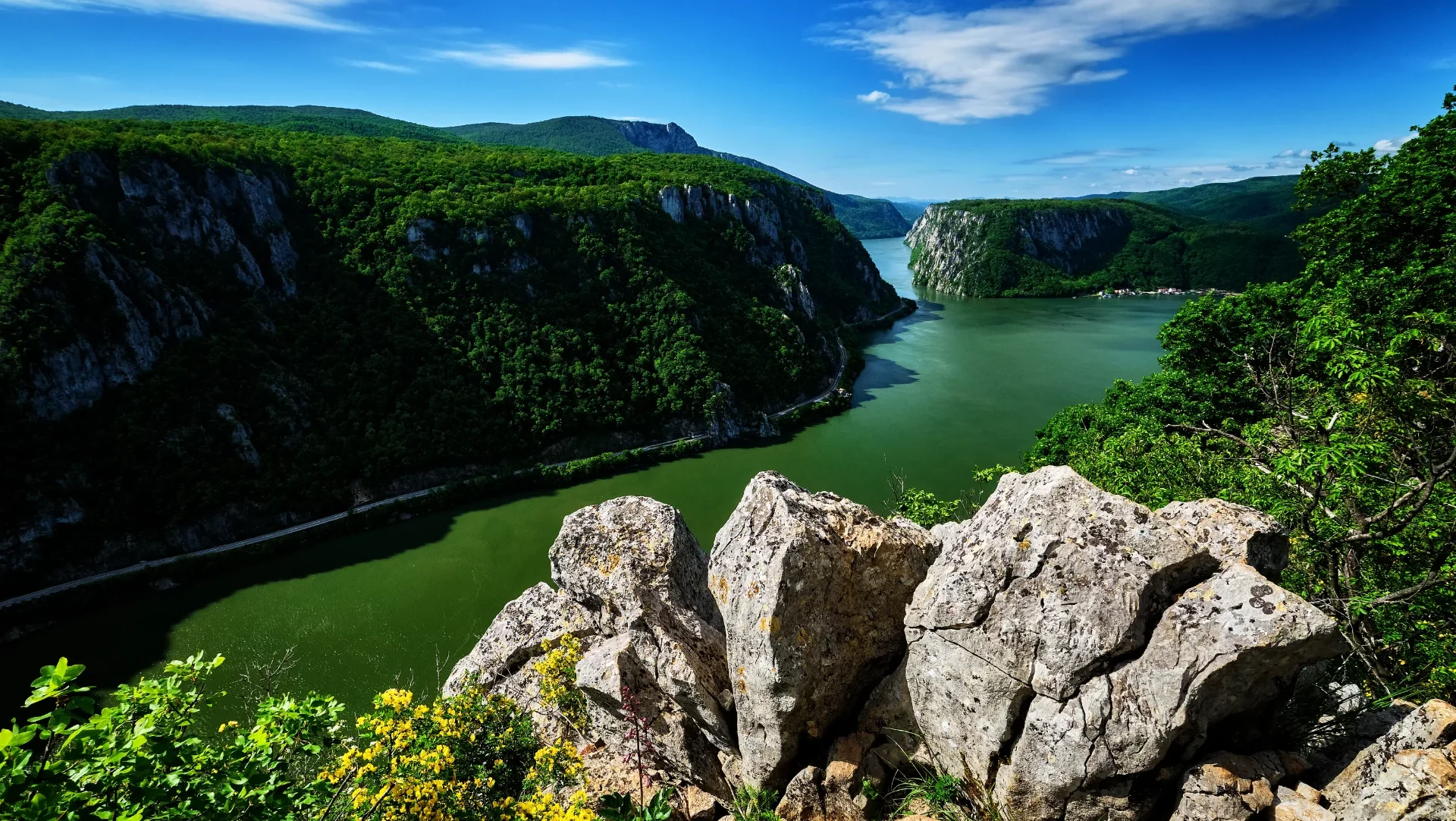
Panorama from Ciucarul Mare Ridge
In the Iron Gates Natural Park there are 15 ecotourism and thematic trails, all of which are excellently maintained. Among the most popular is the one that climbs Ciucaru Mare, above the Great Cauldrons of the Danube, which becomes almost crowded during the summer and weekends. Being very easy to follow, with a steeper slope for only 15-20 minutes, followed by a circuit that reaches several splendid viewpoints. The route can be completed in approximately 1-2 hours, but most tourists stay longer to admire the unique and spectacular panoramas. Located at a height of over 300 meters above the level of the Danube, the Ciucaru Mare peak closes the Great Cauldrons, while offering the most beautiful view of the Small Cauldrons and the Mraconia Monastery. Along these trails, the exceptional biodiversity of this region can also be discovered, with numerous species of rare plants and animals, but also with the feared horned viper, which sometimes hides on the sunny rocks of the Danube Gorge.
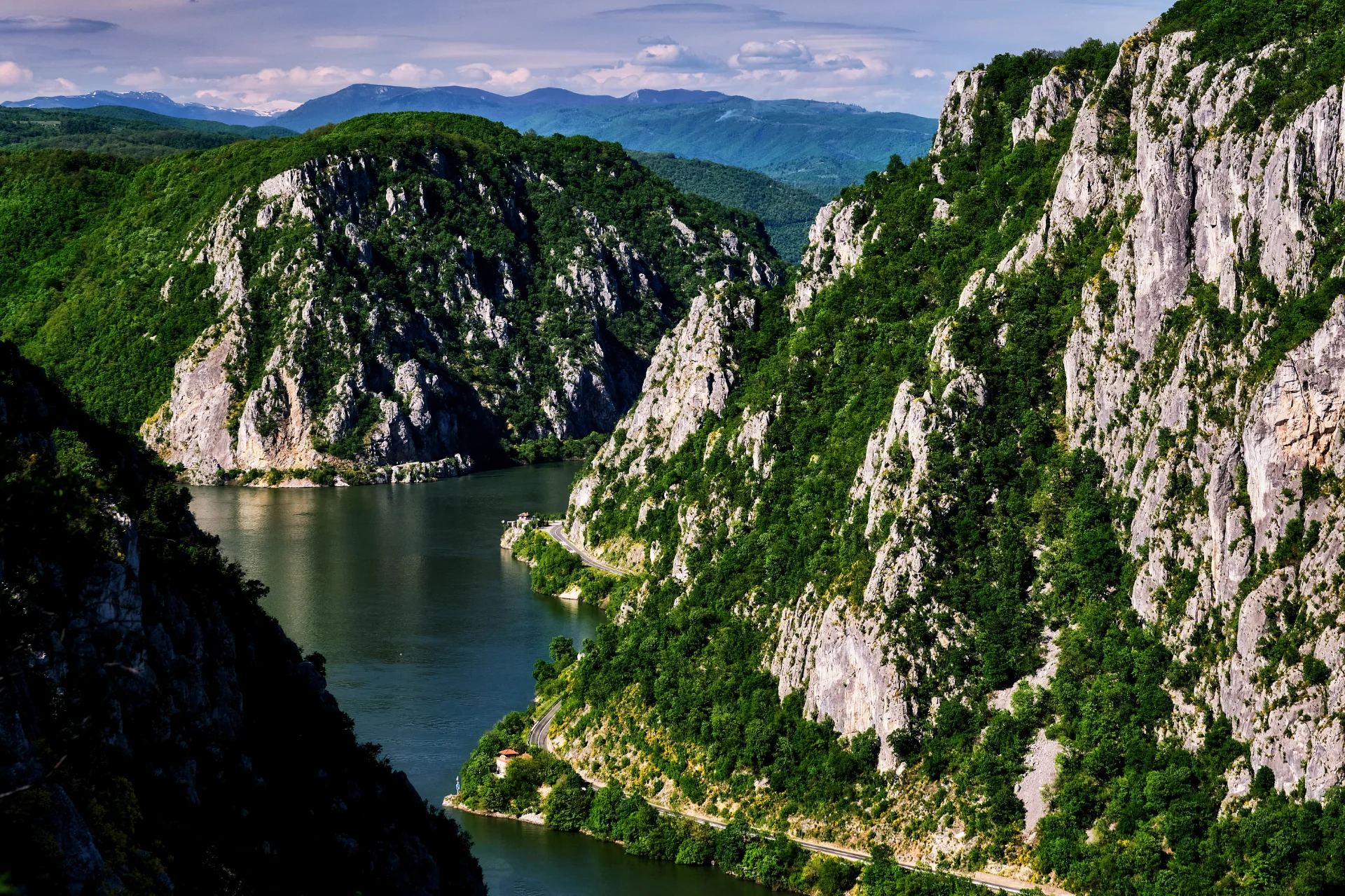
Veterani and Ponicova Caves
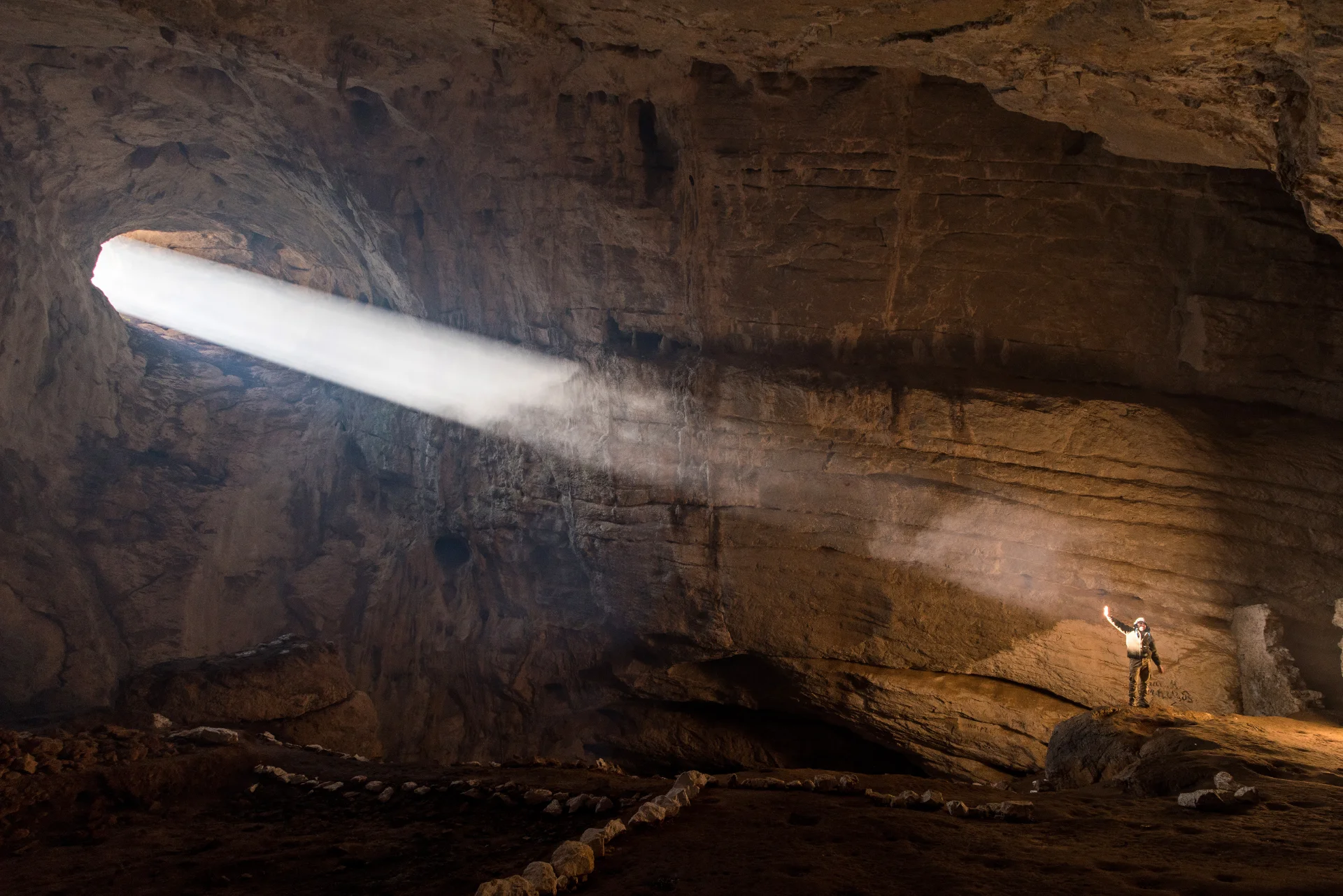
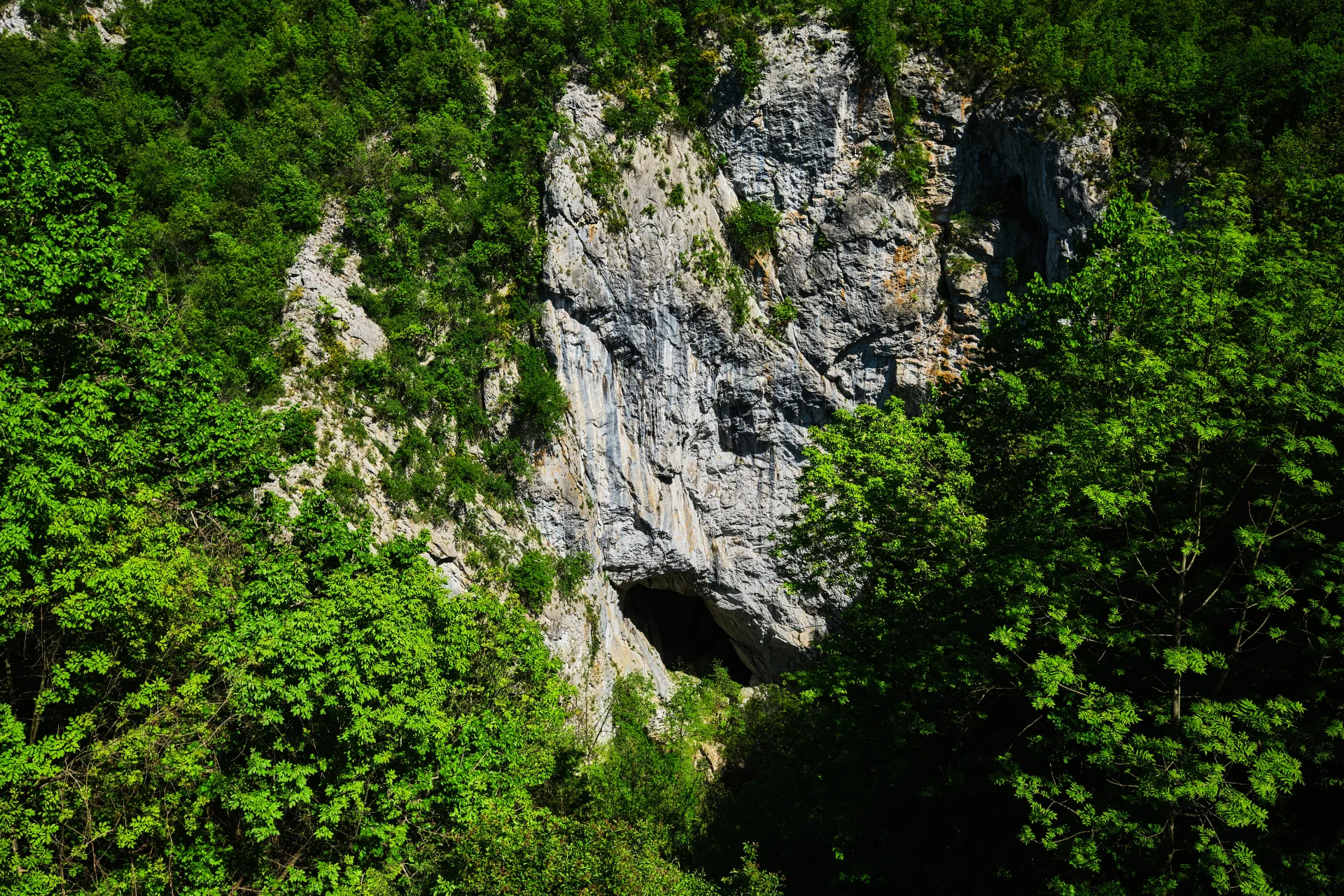
One of the most enjoyable ways to discover the wonders of the Danube Gorge is by taking a boat tour, which is offered from several locations (Orșova, Eșelnța, Dubova). These tours take tourists on short, fascinating journeys through the Danube Gorge, admiring this spectacular area from an exciting and unique perspective. Among the exceptional places that can only be visited from the river, the Veterani Cave is certainly unique. Although small, it is one of the most impressive caves in Romania, and its main feature is the opening in its ceiling through which the sun’s rays pass at certain times of the day, creating an almost surreal scene.
The cave was known and inhabited since prehistoric times, being considered by some to be a sanctuary of the Dacian god. It was also used as a garrison by Austrian troops, with some fortification ruins still visible. Currently (2026) the cave is temporarily closed because there is a danger of falling rocks. A short distance away, some smaller boats take tourists to the entrance to the Ponicova Cave, which is at water level. Much more extensive, it has galleries that are more than a mile long, with two other entrances on the other side of the Ciucaru Mare peak. From the national road, it is quite easy to reach the small gorges that the stream creates before entering the rock. From here, with protective equipment and light sources, you can explore a portion of the cave during periods when the water is low enough.
Hiking Route to Trescovăț Ridge
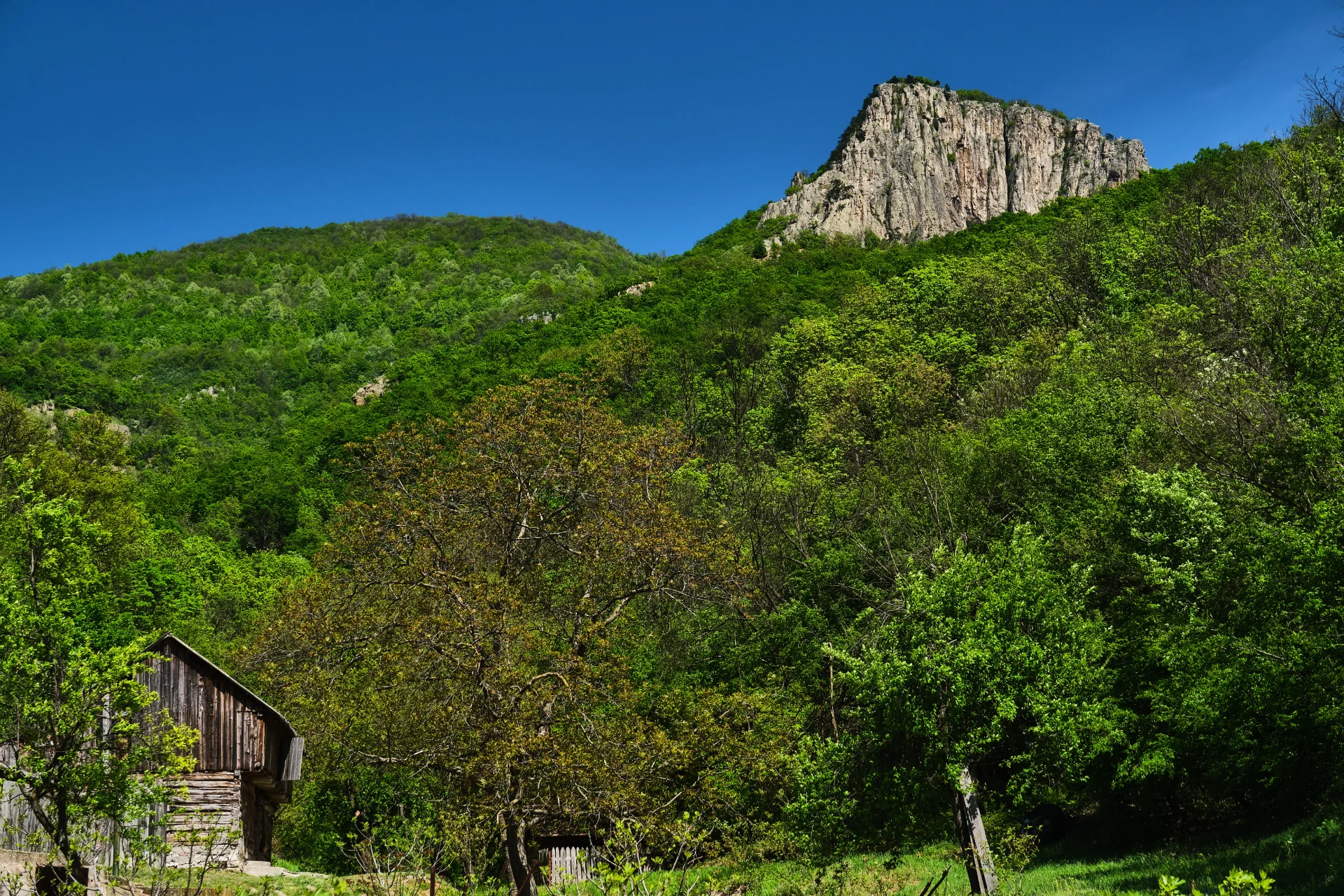
There are many places from which to admire the winding Danube gorge among the mountains, better known or more hidden viewpoints. A route that has become increasingly popular lately is the circuit to Culmea Trescovăț, a unique appearance among the gentle and forested peaks of the Iron Gates Natural Park. About halfway between Svinița and Berzasca, hikers can dare to climb the steep slopes of this unique volcanic neck, the solitary peak offering memorable views of the gorge, but also other fascinating experiences. The route is neither short nor very easy, requiring half a day (10 kilometers / 5-6 hours), and in places the orientation is more problematic. Along the circuit, both lonely dwellings and the extraordinary biodiversity of the region can be admired.
Water Mills of Sichevița
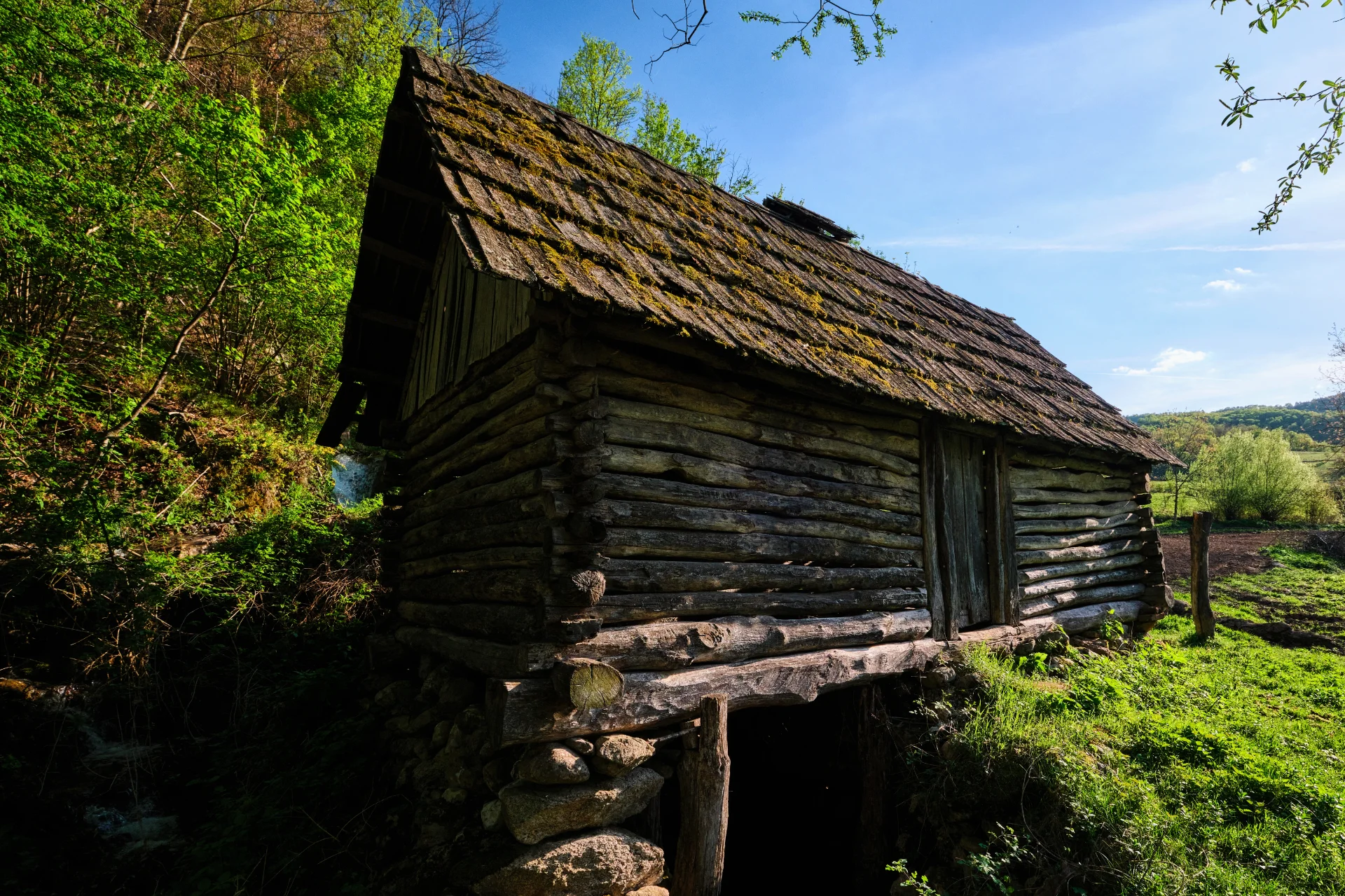
Approximately 85 kilometers from Orșova, from the national road you can enter through the village of Gornea to the villages of Sichevita commune, spread over the valleys of the Camenița, Ravensca and Gravensca streams. In these fascinating places between the Locvei and Almaju mountains, you can find a series of old water mills, true monuments of rural architecture. The mills of Sichevita stretch for approximately 10 kilometers along the valleys and there are only 10 of the 30 that once operated here. Some of these are still used by the locals and are very interesting, using unique mechanisms with a scythe and buttons, having a unique traditional architecture. The villages of Sichevita commune are considered the place of origin of all Romanians who now live in the Danube Gorge. A few more old mills can be admired a little further north, in the village of Gârnic.
Ladislau and Golubac FOrtresses
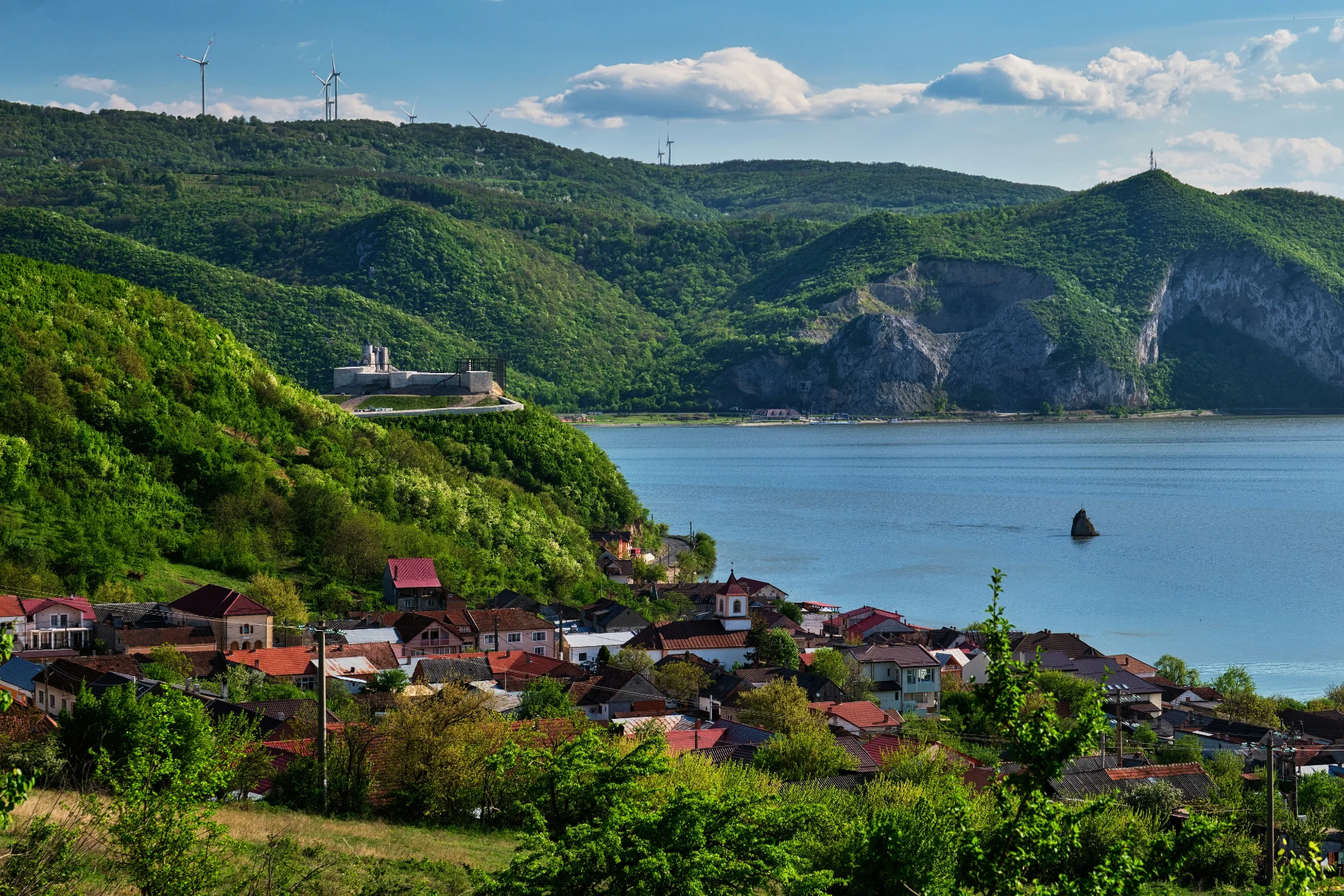
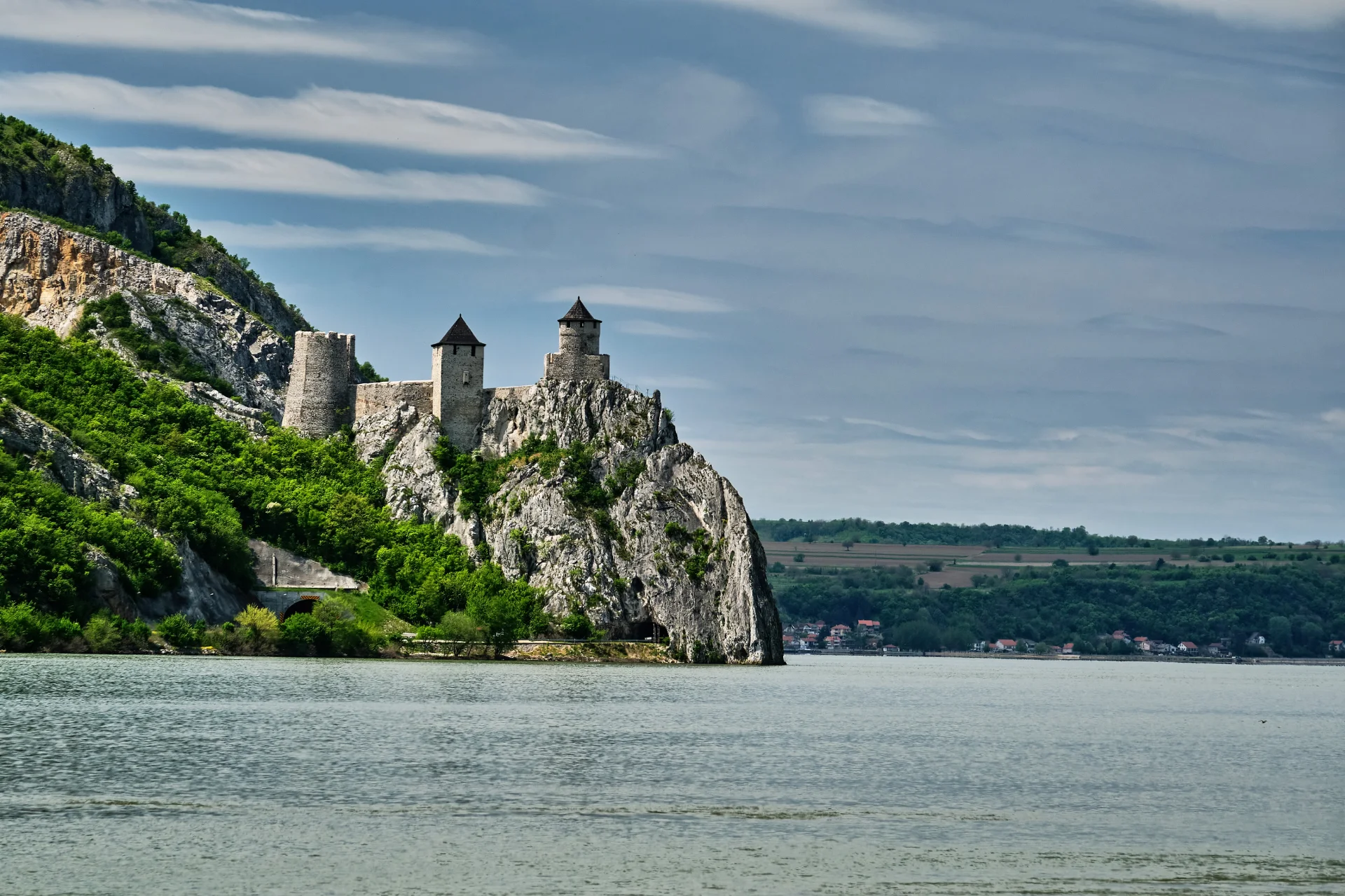
Probably the most spectacular historical monument in the Danube Gorge rises on the Serbian bank of the Danube, but it can be admired in all its splendor especially from the Romanian bank, near the town of Coronini. The imposing Golubăț (Golubac) fortress is currently completely renovated, with its ten towers rising above the rock that sometimes resembles an elephant. It had a particularly tumultuous past, withstanding over 120 attacks throughout history, being owned by the Ottomans, Bulgarians, Hungarians, Serbs or Austrians over time. It was built in the 14th century on the site of former Roman and Byzantine settlements, being developed and expanded in several stages, usually after each change of rule. On the Romanian bank there used to be the Ladislaus Fortress (Saint Ladislaus), located on a hill south of the village of Coronini. Built in the 14th century on the site of a former Dacian site, the fortress was entrusted to the Teutonic Knights for a period, being destroyed by the Ottomans in 1526. Following a long renovation process, the fortress was recently reopened and included in the tourist circuit. Near Coronini, tourists can also admire the Babacaia Rock, which emerges from the waters of the river, as well as the Fly Cave, both surrounded by local legends.
Valea Mare Nature Reserve
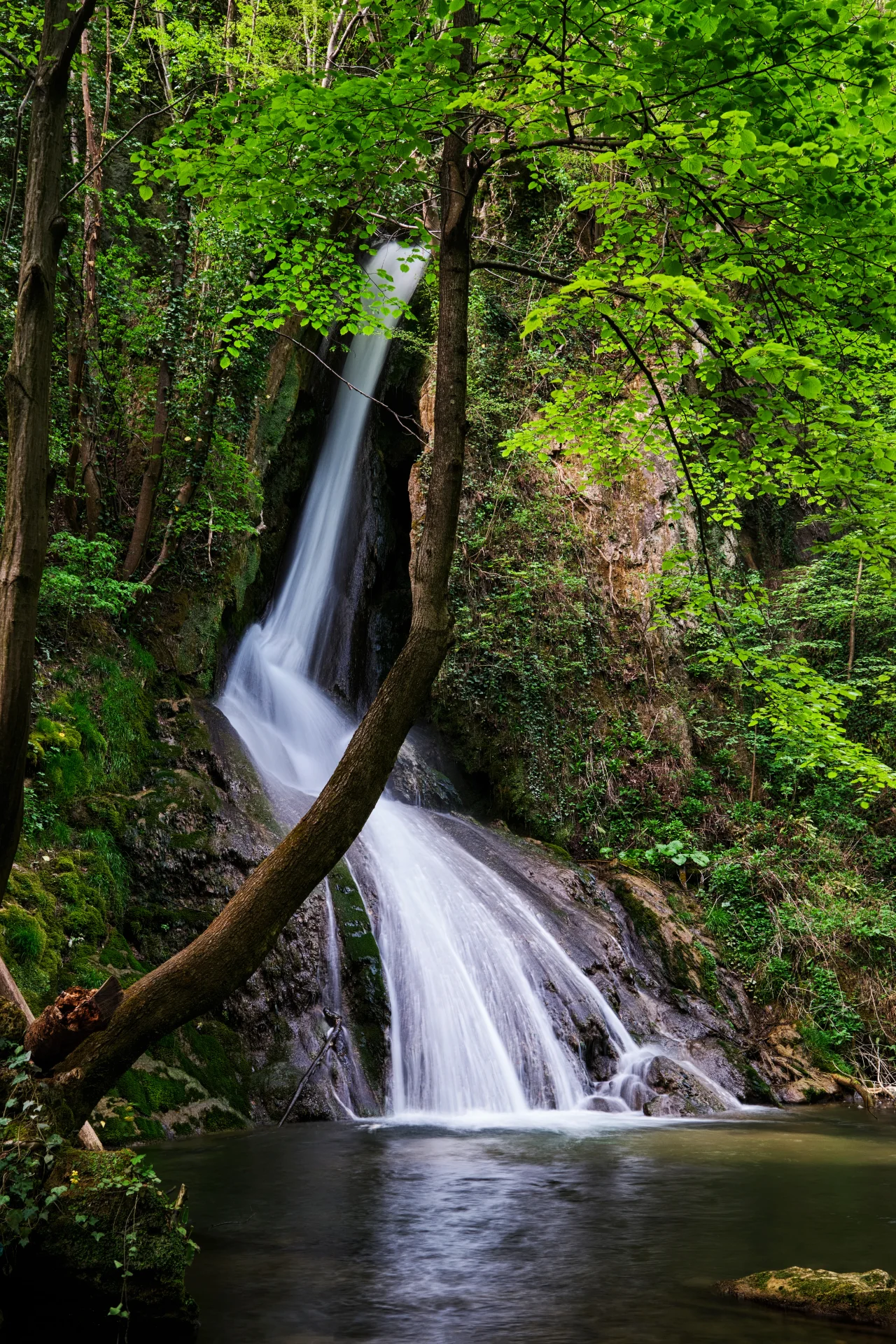
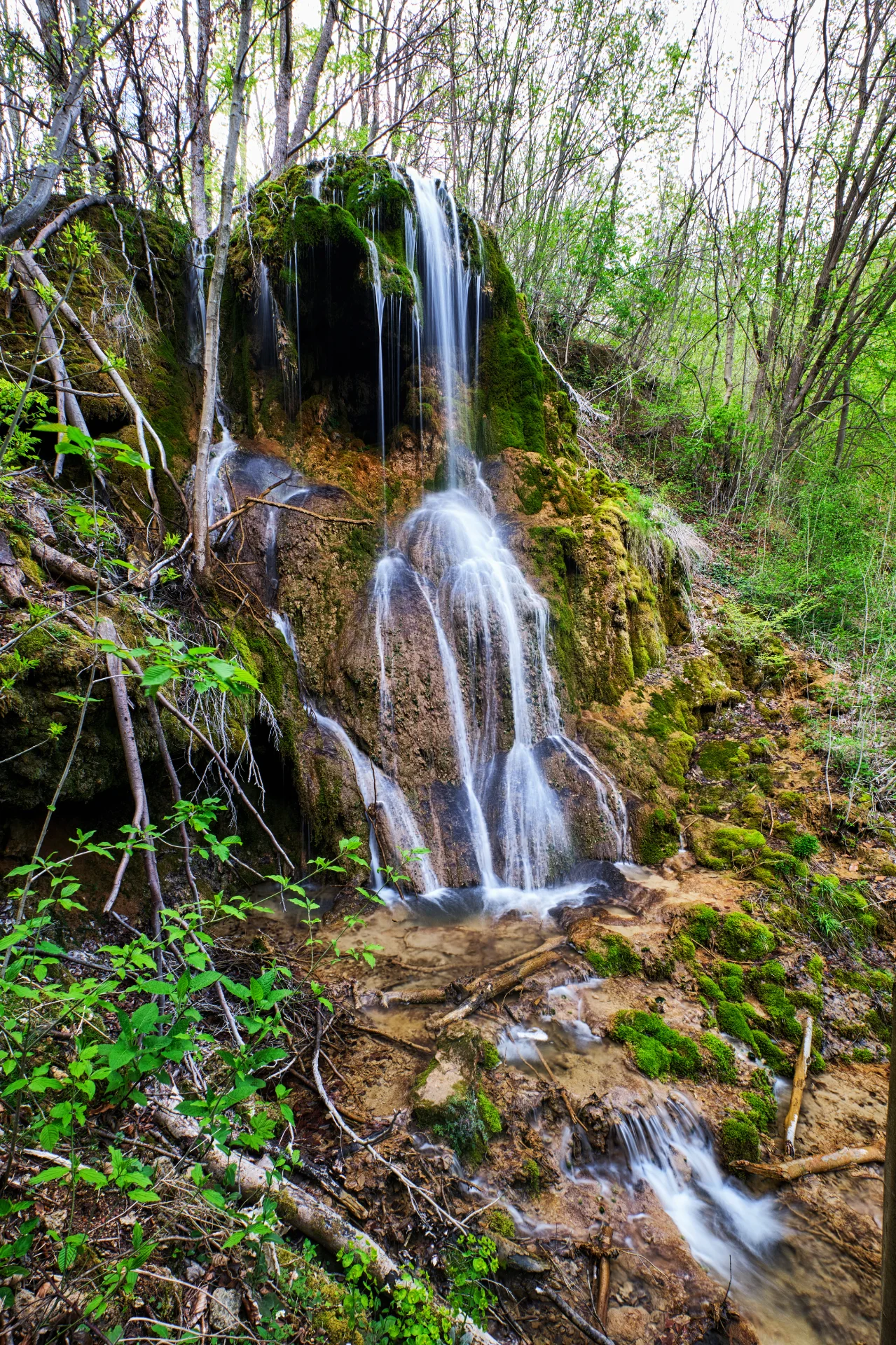
Travelers who have reached the small town of Moldova Nouă, near the end of the journey through the Danube gorge and the Iron Gates natural park, must linger a few hours in this place. Just a few kilometers from the city, on a local road leading to the isolated village of Padina Matei, you can enter the Valea Mare nature reserve. This, in addition to the spectacular karst landscape, with sinkholes, caves, ravines, cliffs or gorges, also hides two amazing waterfalls, less known to tourists. The Burăul Mare waterfall can be admired at the end of a short path through the forest, while the Moldăvița waterfall is a few kilometers higher, right next to the road. If the first is an impressive waterfall, the second reminds of the Bigăr waterfall, with dozens of small streams of water flowing over a rock covered with abundant vegetation.
Other Interesting Places
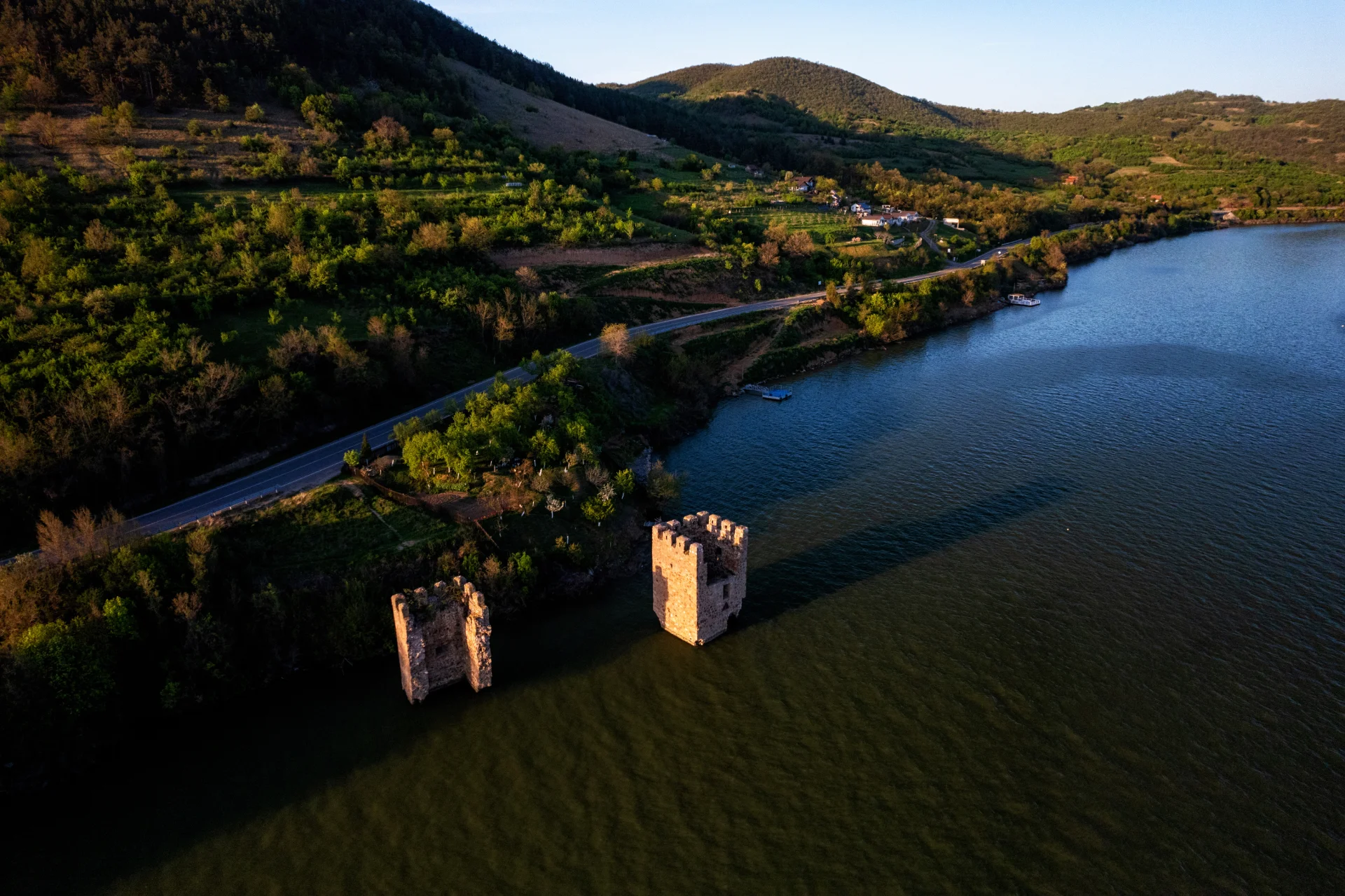
In addition to all this, the Danube Gorge and the Iron Gates Natural Park offer many other unsuspected treasures, some easier to discover, while others are hidden from the eyes of explorers. A few kilometers before the village of Svinița, the towers of the Trikule fortress now rise from the waters of the Danube, once accompanied by a third that is now underwater. A little further north, before reaching the village of Berzasca, you can enter a charming secondary road that goes to the isolated village of Bigăr. The Sirinia Valley, in addition to the surprising beauty of the landscape, also hides some fascinating legends. The village of Bigăr, along with several others (Eibenthal, Sfânta Elena, Baia Nouă, Gârnic) in the mountains that stretch along the gorge were once founded by Czechs who came here to work in mining, woodworking and as border guards. While most have left, the culture and architecture specific to the Czech Republic can still be discovered by exploring these interesting destinations. Finally, right next to the town of Moldova Veche lies a fairly large island, in the middle of which there are two lakes, surrounded by abundant vegetation. Containing a colony of wild horses, numerous protected birds, but also the alleged tomb of Attila, the legendary leader of the Huns, Ostrovul Moldova Veche is a fascinating protected area. Unfortunately, access to this place is quite difficult, but it is possible to find locals who can take you by boat.
Acommodation Options in the Danube Defile
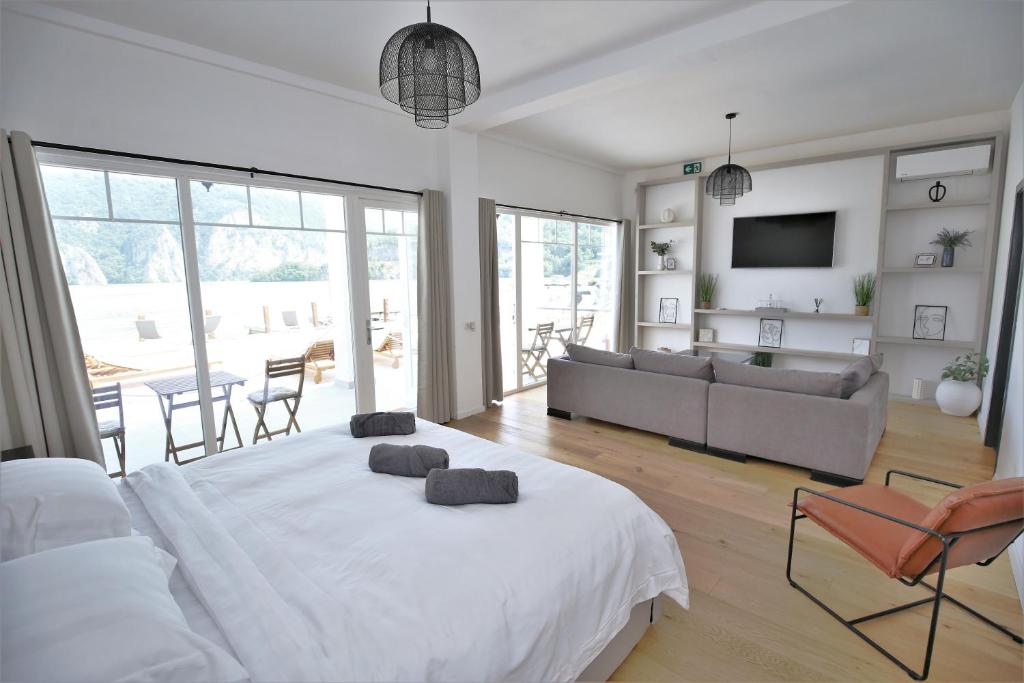
Rating 9.8 from 199 reviews!
Located right on the banks of the Danube, at the entrance to Cazanele Mici, the highly rated guesthouse offers modern and spacious rooms, an outdoor pool, a shared kitchen, a terrace and a private beach!
Dunării St, Eșelnița
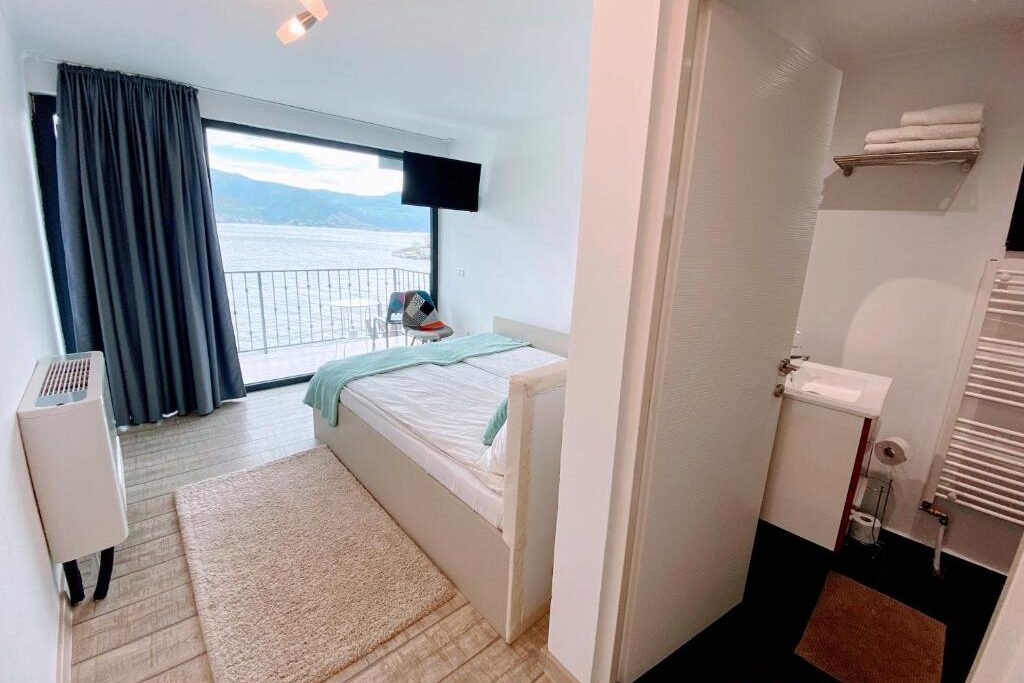
Rating 9.6 from 276 reviews!
Located in a quiet area of Orsova, right on the banks of the Danube, this excellent guesthouse offers family rooms with water views, a shared kitchen and an outdoor jacuzzi!
Grațca St, 65, Orșova
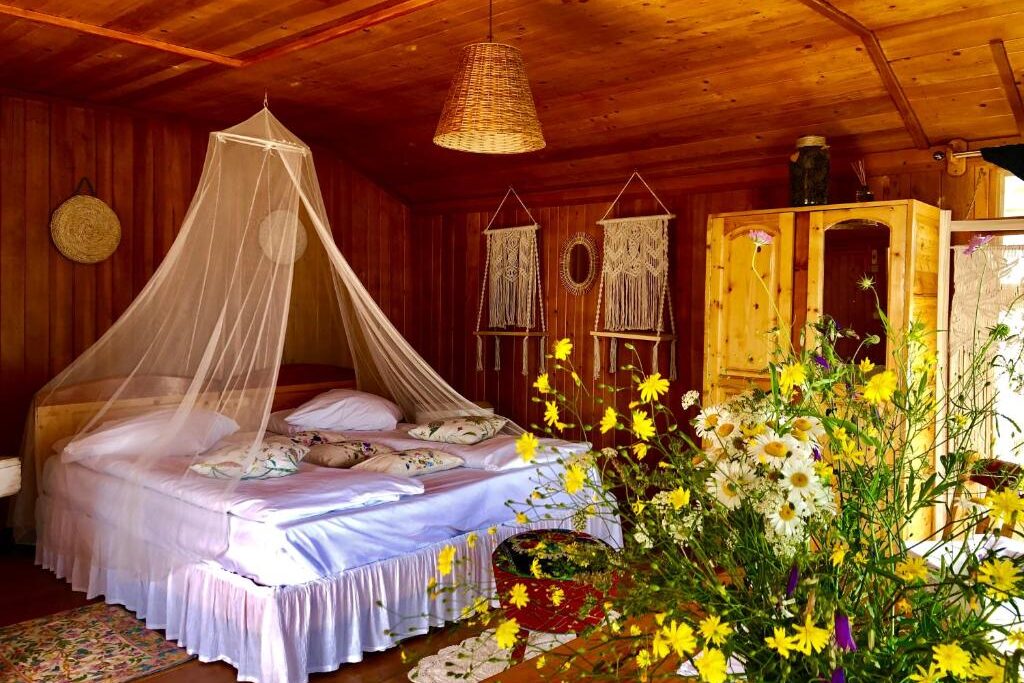
Rating 9.9 from 101 reviews!
This spectacular cottage is located in the village of Svinita, close to the Tricule fortress and with a view of the Danube. It offers beautifully designed rooms, a kitchenette and an outdoor pool!
DN57, Tricule