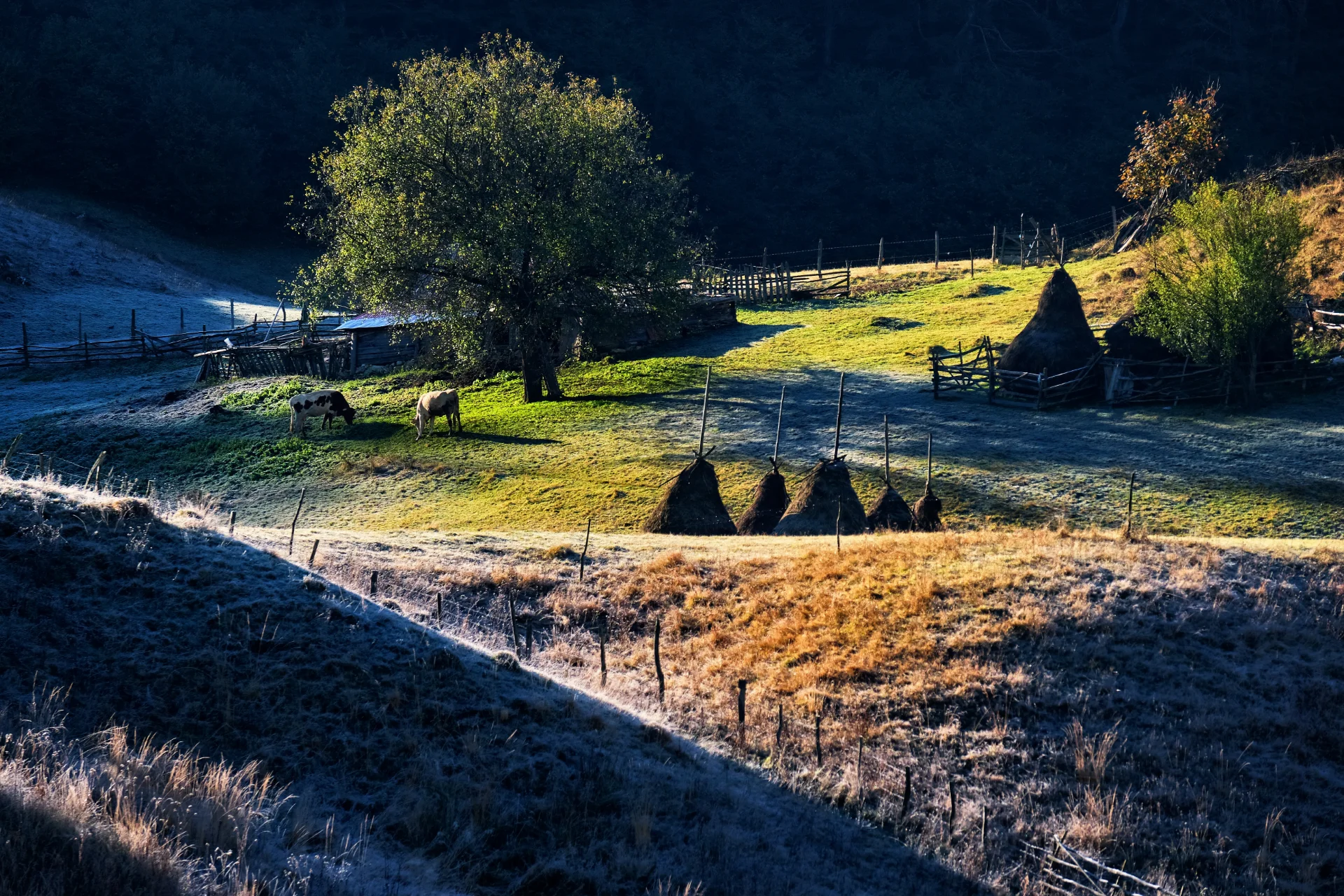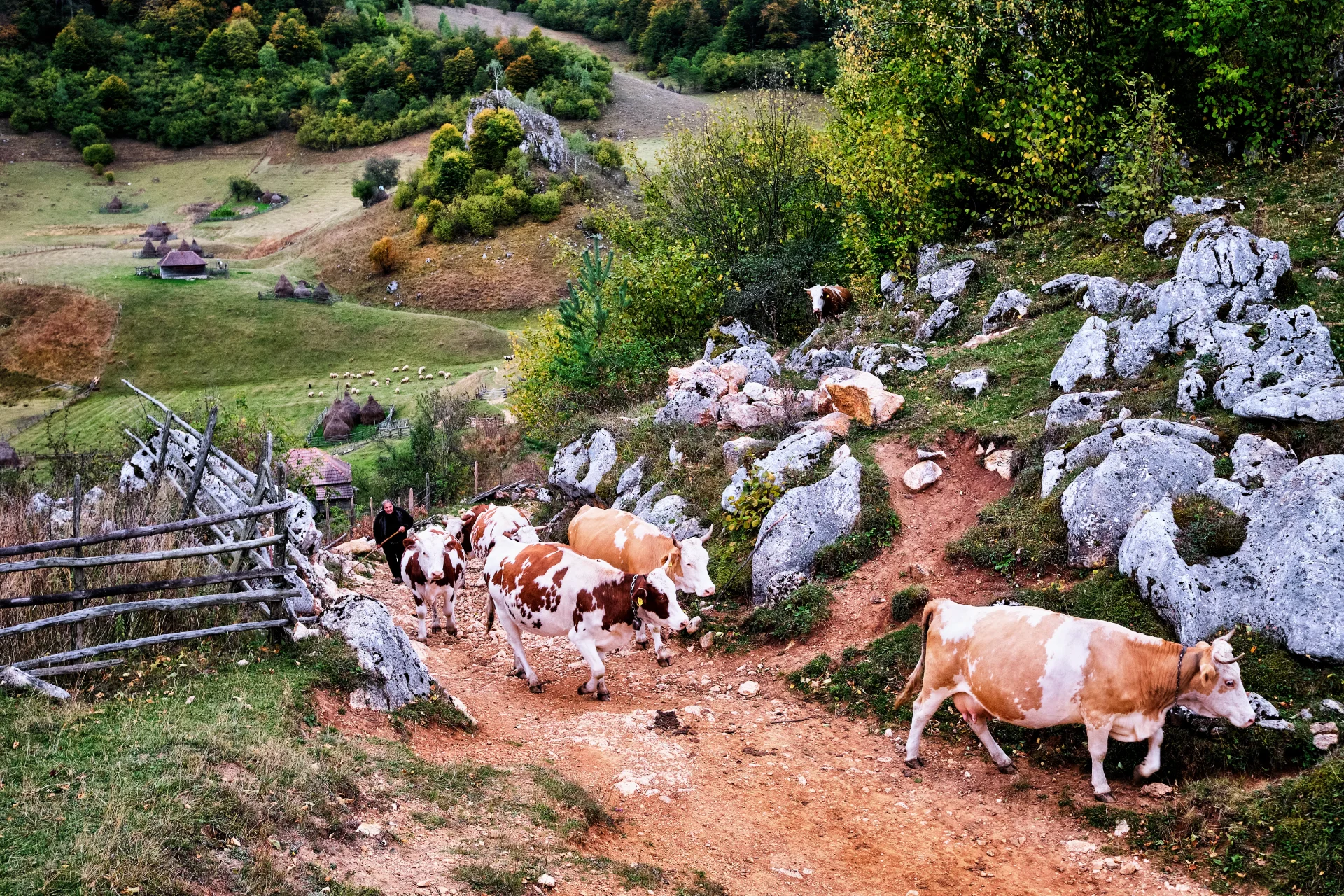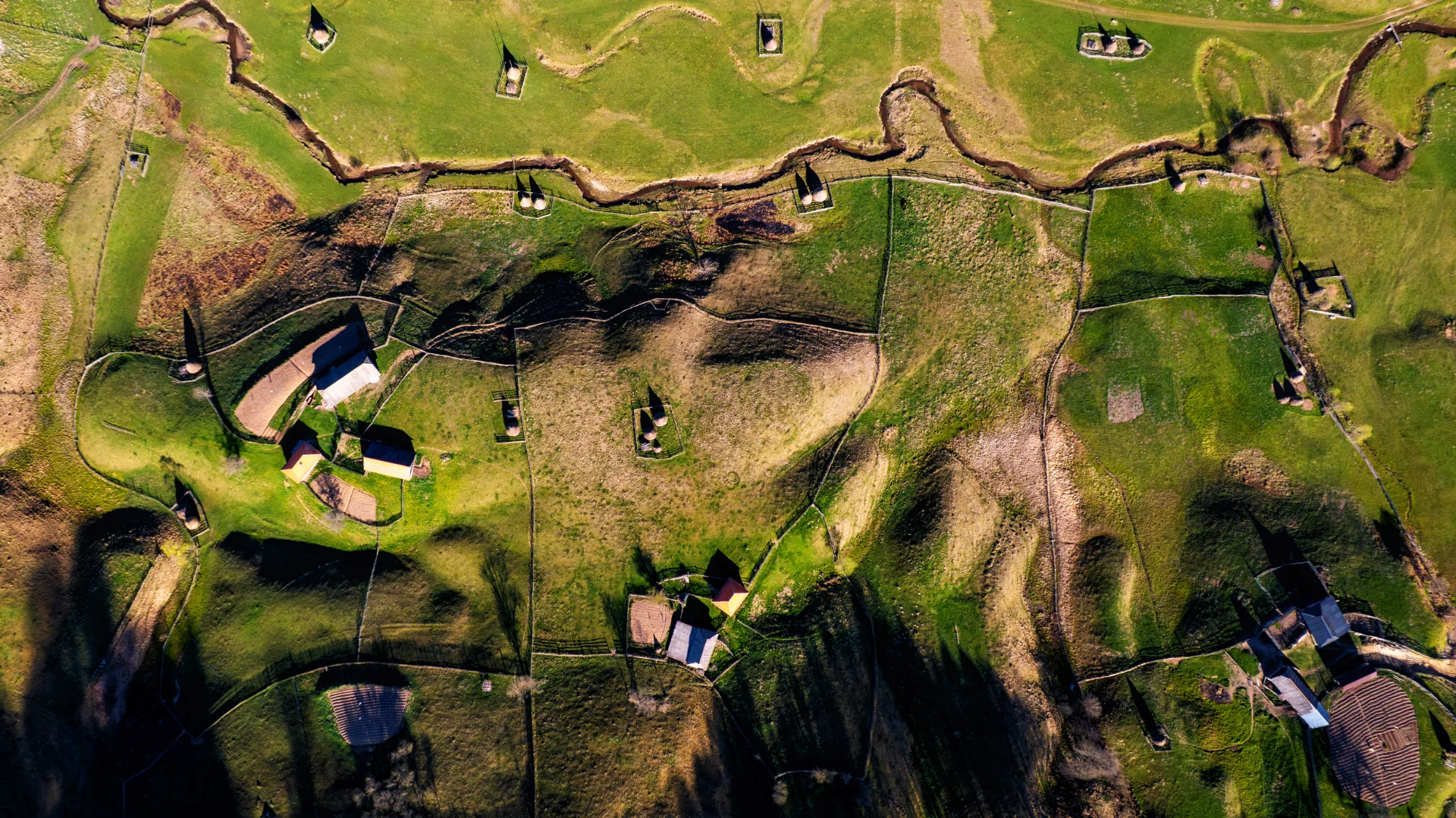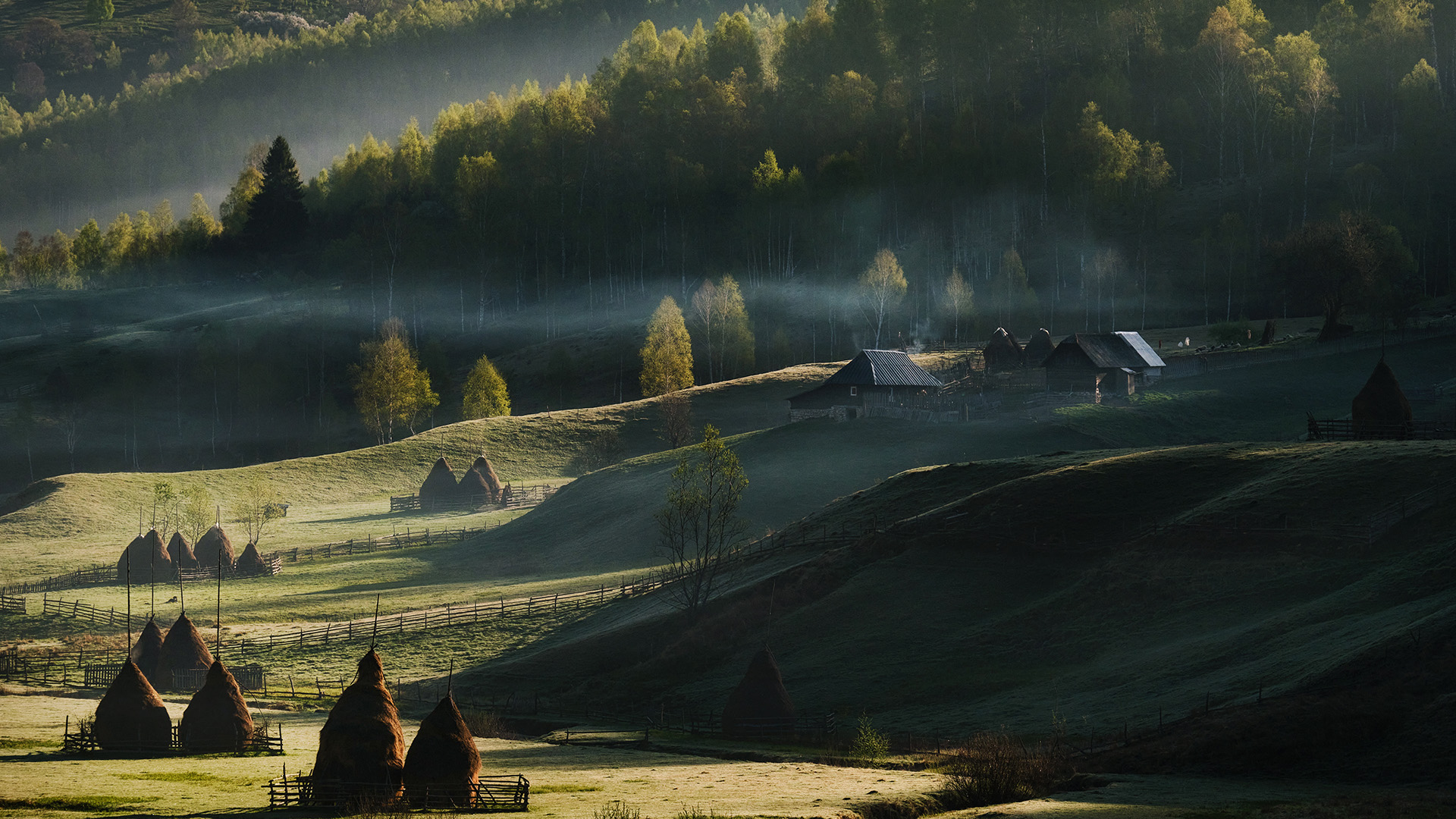
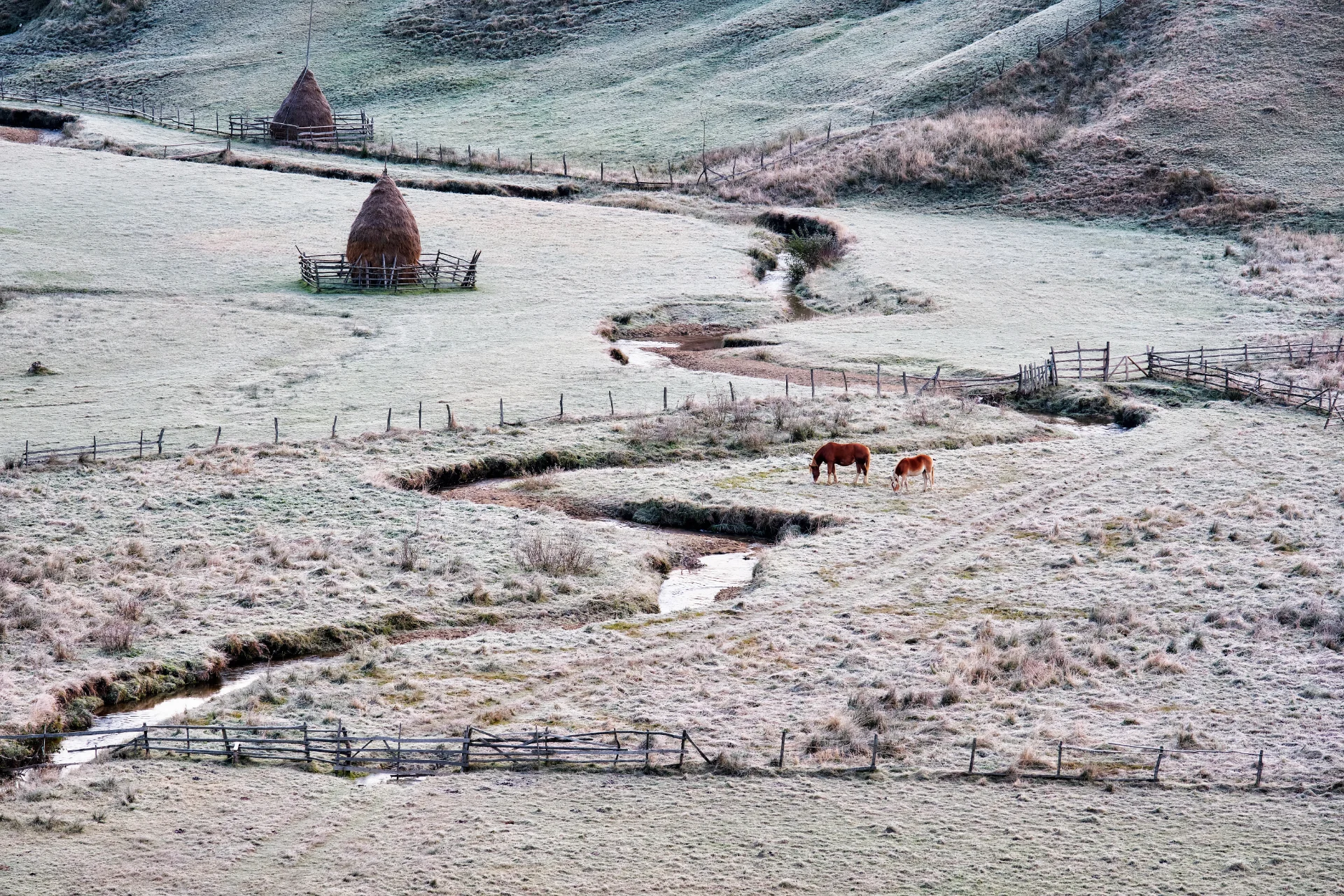
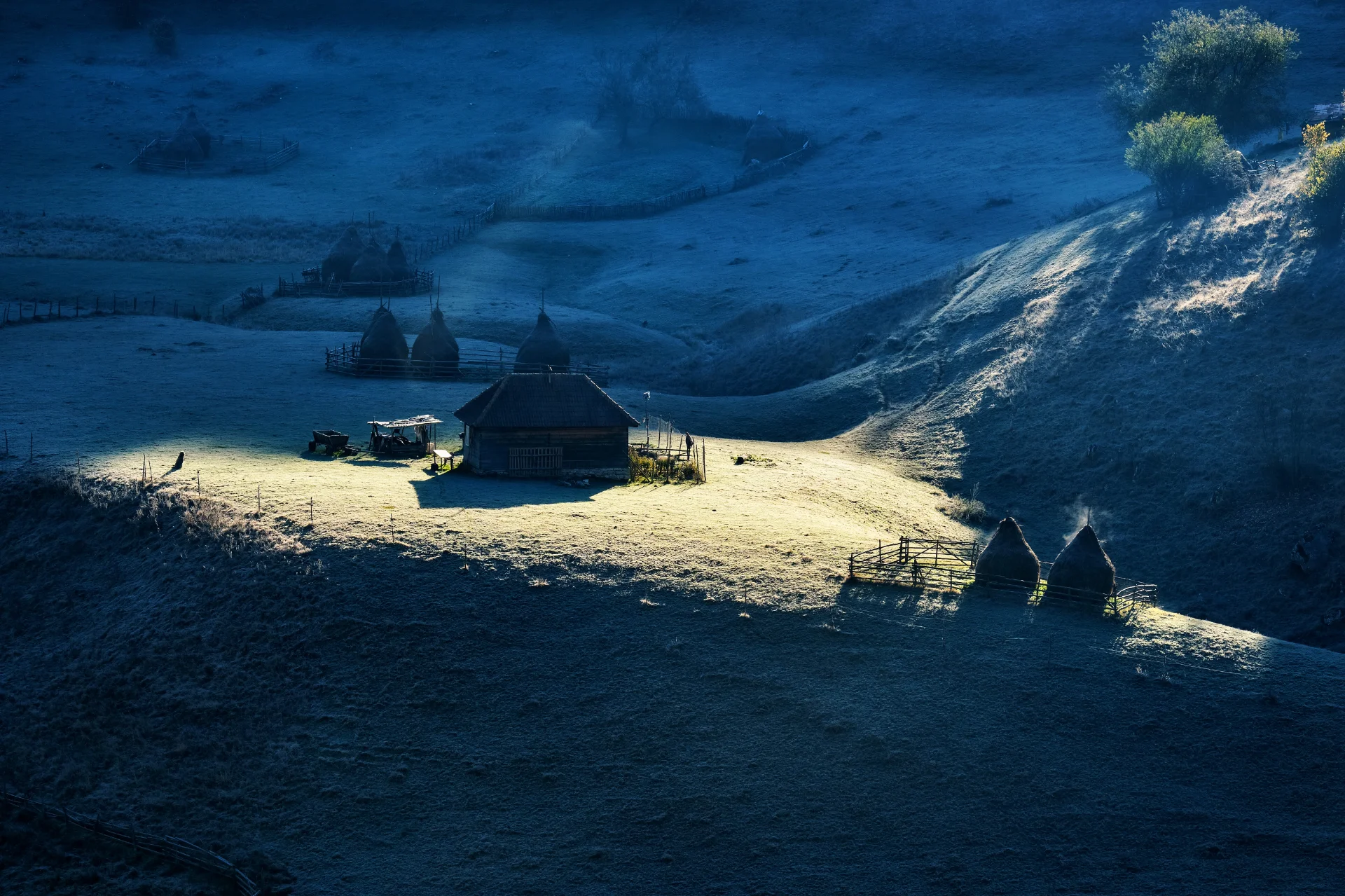
On the gentle ridges and through the shady valleys of the Șureanu Mountains, we can still discover places untouched by modern civilization, where the whispers of the ancestors can still be heard in the breeze, where people still live in perfect harmony with nature. One such place is Fundătura Ponorului, a remote hamlet of almost surreal beauty. Nicknamed the “Palm of God”, it was discovered relatively recently by travelers and has quickly become a popular destination, maybe even hurting its authentic and peaceful atmosphere. A lazy creek flows along a lush long valley, passing through pastures and courtyards, before finally disappearing in the depths of the Earth, under a tall rock. On the surrounding hills, we find remote houses or lonely shelters, some of them long deserted. Proudly called manors by the locals, these seasonal homes are usually inhabited from early spring to late autumn by old people from faraway villages that still respect these ancestral traditions. Sometimes, on the idyllic pathways, we encounter villagers on horseback, following an oxen cart or leading a flock of sheep or cows. The sublime charm of these places is hard to put into words and life here is certainly tough, but so pure and beautiful, worthy of the last descendants of the Dacians…
1 Day Photo Discovery Tour of Fundătura Ponorului
DETAILS
Fundătura Ponorului
Location & Access
Fundătura Ponorului is a hamlet in the Șureanu Mountains, located in the heart of the Grădiștea Muncelului-Cioclovina Natural Park. Access is quite difficult and is usually achieved on foot, following a hiking trail. The primary starting point is the village of Ohaba-Ponor, which belongs to the Pui commune in Hunedoara County. From National Road 66, between the localities of Livadia and Pui, a local road branches off; it passes first through the village of Ponor, then through Ohaba-Ponor, and climbs the hillside until the asphalt ends near some wooden garages belonging to the locals. Here (GOOGLE MAPS LINK), those wishing to continue on foot can leave their cars. The route continues along the road for a few kilometers, after which a hiking path leads up through the forest, eventually crossing over the ridge and rejoining the same forest track.
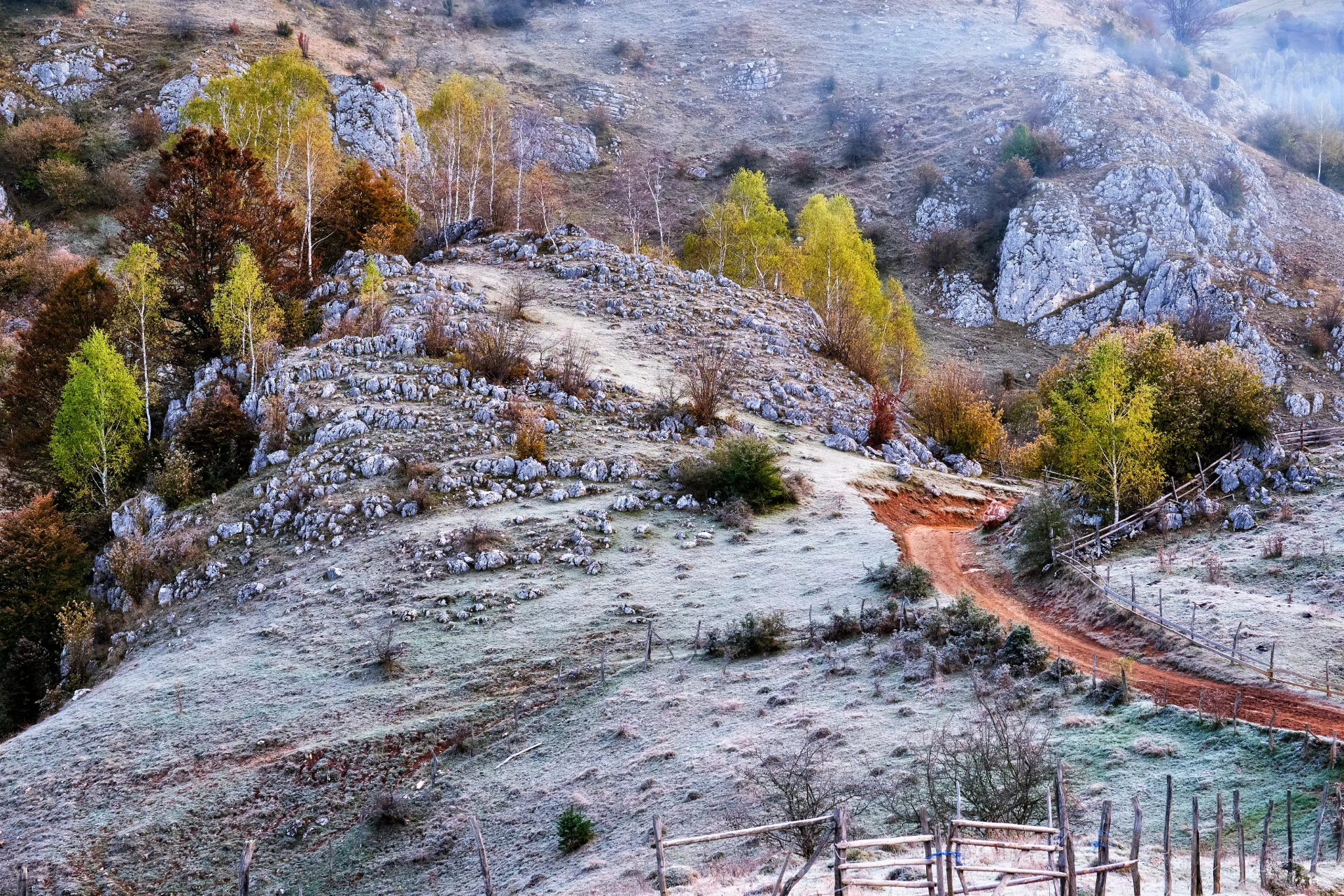
The hiking trail is marked with a red dot and, more recently, with the Via Transilvanica symbol; it is approximately 5 kilometers long, with an elevation gain of over 400 meters. Nevertheless, it is not particularly difficult and can be completed by anyone in about 2 hours. Alternatively, if you have a vehicle with high ground clearance—and don’t mind the risk of potential damage—you can continue along the forest road, descending toward the hamlet of Scărișoara, from where the route climbs back up to the ridge and through the forest, reaching a point quite close to Fundătura Ponorului. The road is covered in many stones and rocks, making the drive take over an hour, even while moving only in second gear. Under no circumstances should you attempt to drive all the way down to Fundătura, as the final descent is extremely challenging. You can leave your car here, leaving you with just a 10-minute descent on foot!
Search for Lodging in Romania with Booking.com!
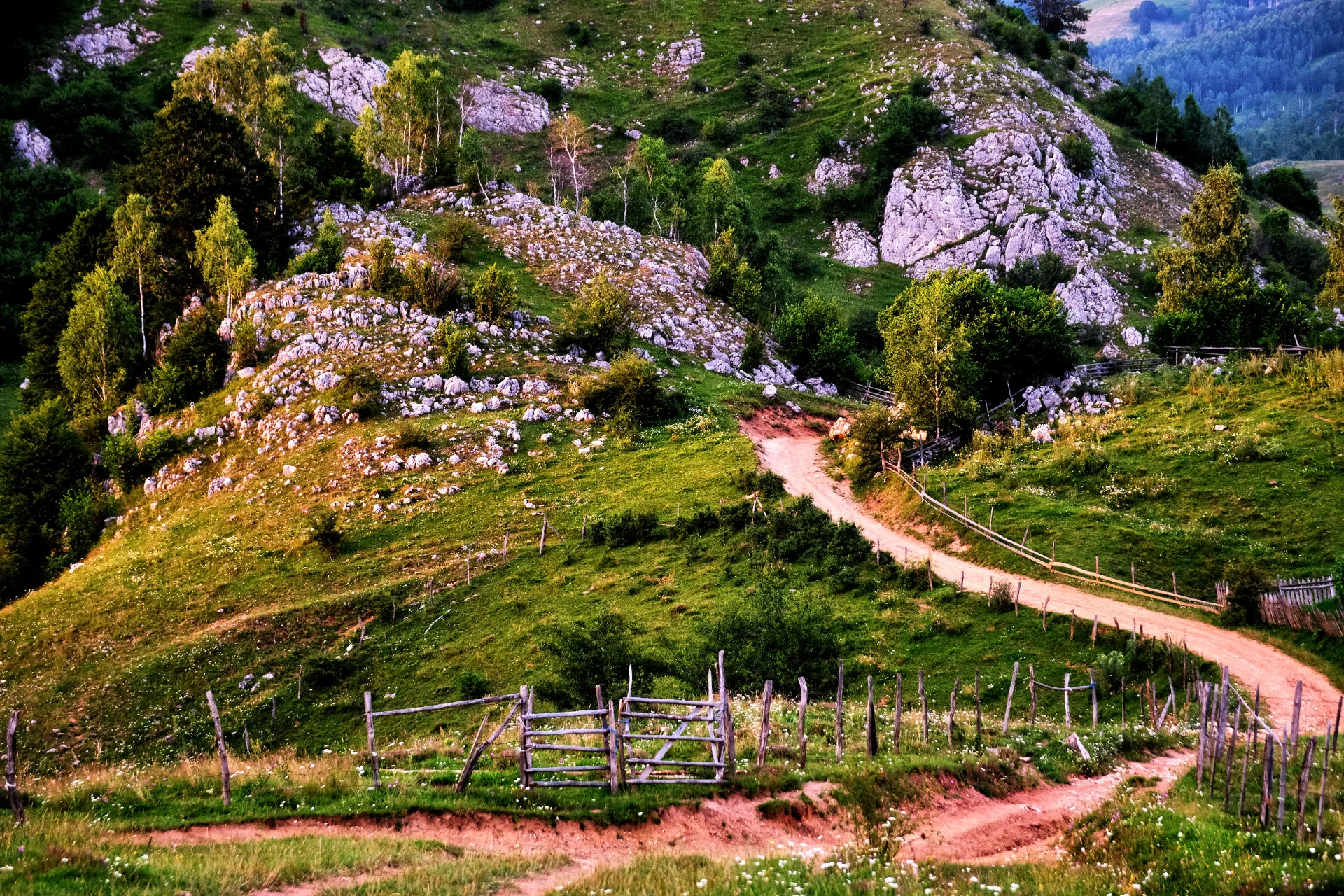
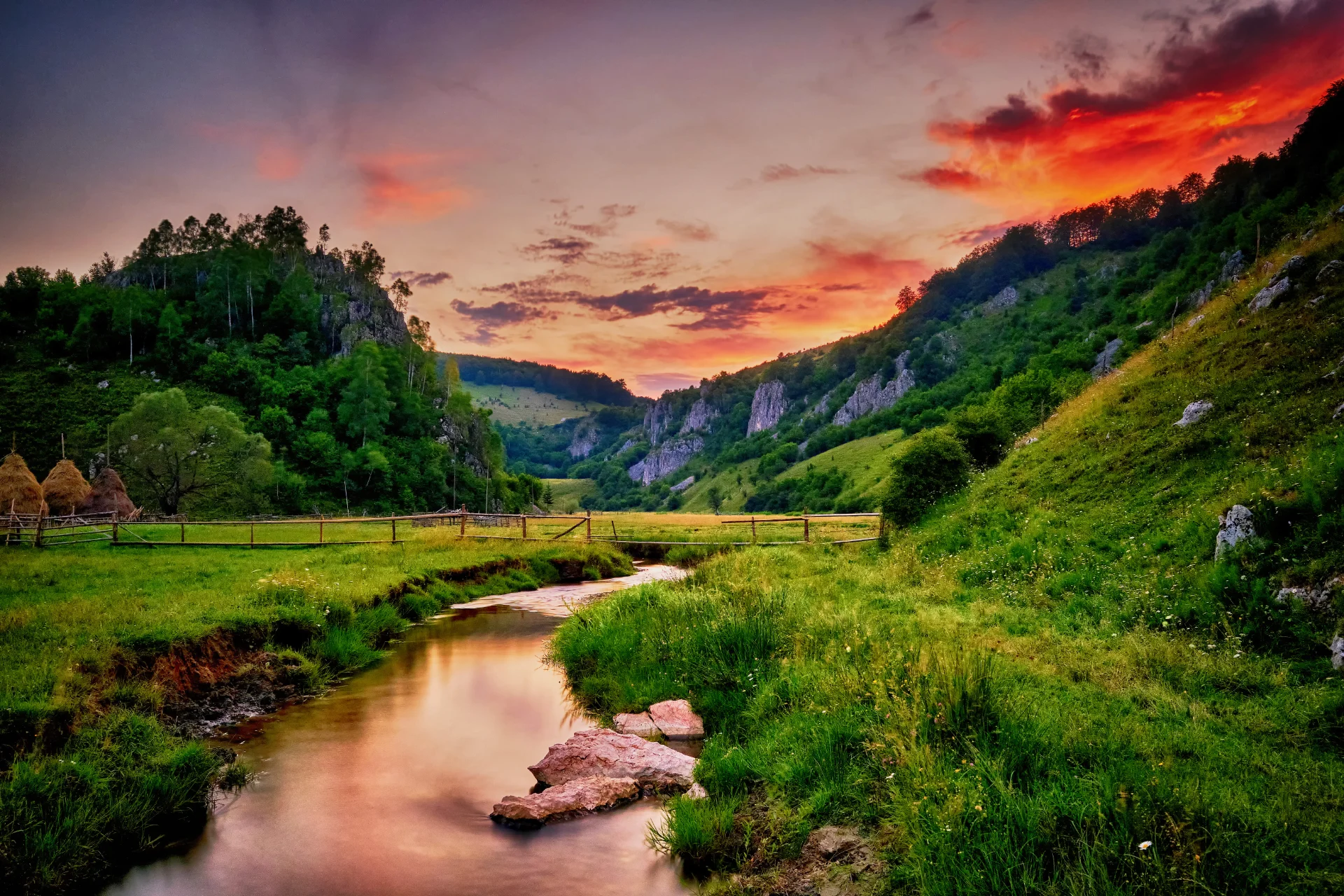
Fundătura Ponorului
Nearby Sights & Experiences
Covering the majority of the Șureanu Mountains and the central-eastern part of Hunedoara County, the Grădiștea Muncelului-Cioclovina Natural Park was established in 2000, spanning an area of over 380 square kilometers. Since 2007, this territory has also been designated as a Natura 2000 site, thereby protecting both the rich biodiversity of the natural environment and the complexity of its unique cultural heritage. The natural park encompasses six exceptional nature reserves: the Ponorici-Cioclovina karst complex, Șura Mare Cave, the Crivadia Gorges, Bolii Cave, Tecuri Cave, and the Ohaba-Ponor fossil site. Furthermore, the area contains over 400 caves and chasms, some of which are of extraordinary scientific significance. These mountains also house the majority of the Dacian fortresses of the Orăștie Mountains, which are inscribed on the UNESCO World Heritage List. In terms of biodiversity, the natural park comprises a multitude of habitats, consisting primarily of beech forests, grasslands, and hay meadows.
Ponorici - Cioclovina Karst Complex
Located near the village of Cioclovina, this karst system is a nature reserve of great speleological and paleontological value. The complex consists of several caves, the most well-known being Cioclovina Uscată (“Dry Cioclovina”) and Cioclovina cu Apă (“Wet Cioclovina”), each with its own distinct characteristics and points of interest. Cioclovina cu Apă derives its name from the stream that flows through it, originating in the small Ponorici depression and continuing until it emerges on the northern side of the ridge. With a total gallery length reaching 8 kilometers and sections that are extremely challenging to navigate, it can only be explored by experienced speleologists.
Upon exiting the cave, the stream forms a series of charming small waterfalls. Part of the same speleological system—though much more difficult to access—is the Cioclovina Uscată cave; it was one of the first sites in the world where rich guano-phosphate deposits were mined. During these operations, fossils of cave bears were discovered, as well as a *Homo sapiens* skull, dated to over 30,000 years ago. Furthermore, one of the most impressive archaeological treasures in Romania was unearthed within the Cioclovina cu Apă cave, consisting of thousands of artifacts made from bronze, amber, glass, and other materials—a hoard dating back approximately 3,000 years.
Fundătura Ponorici
This isolated, almost surreal place can be reached from Fundătura Ponorului by following the Via Transilvanica trail. Along the way—a journey of about an hour—one can admire other remote shelters and small, traditional farms that seem frozen in a bygone era, long since vanished elsewhere. Before reaching Fundătura Ponorici, we leave the trail—which veers to the right at this point—and continue to the left, following the crystal-clear stream. There are fewer shelters here, most having long since been reclaimed by nature, and the bucolic landscape is disturbed only by horses left to roam freely. The stream, which winds through the valley before suddenly disappearing beneath some rocks, reappears a few kilometers to the north—beyond the ridge—where it bursts forth tempestuously from a cave, forming the splendid waterfalls of Cioclovina. One could reach that spot by following unmarked paths over the ridge, or from the north, along the valley that begins near the village of Boșorod.
Strei Valley și Șipot Waterfalls
One of the most enchanting valleys in the Șureanu Mountains was carved by the Strei River (known as the Petros in its mountain stretch) as it descends from the heights toward the Hațeg region. Steeped in legends about Dacian treasures, the Strei Valley is graced with magnificent scenery, dominated by sheer, forested slopes. Beyond its many hidden caves, perhaps the valley’s most impressive attraction lies just a few kilometers from the village of Petros. Here, the Șipotului Stream emerges at the base of a towering limestone cliff as a trio of springs; as it makes its way down into the valley below, it creates dozens of delightful waterfalls and cascades, tumbling over rocks and tufa formations amidst the forest.
Șura Mare Cave
Located right at the edge of the village of Ohaba-Ponor, a few kilometers from the national road, Șura Mare Cave ranks among the most interesting caves in Romania. It features one of the tallest cave entrances in the country (40 meters) and hosts the second-largest bat colony, comprising several species—some of which are under strict protection. It is an active cave, carved by the same stream that flows through Fundătura Ponorului; it has a total length of over 10 kilometers, of which only about 3 kilometers can be explored by experienced speleologists. Inside, the watercourse forms lakes, waterfalls, and potholes (sculpted rock basins). Perhaps the most impressive part of the cave is the “Sala Mare” (Great Hall), which stands over 30 meters high and contains numerous fascinating formations—canopies, flowstone, stalactites, stalagmites, and arguably the most beautiful terraced rimstone pools in the country.

Fundătura Ponorului
Accommodation Recommendation
Rating 10 from 80 reviews!
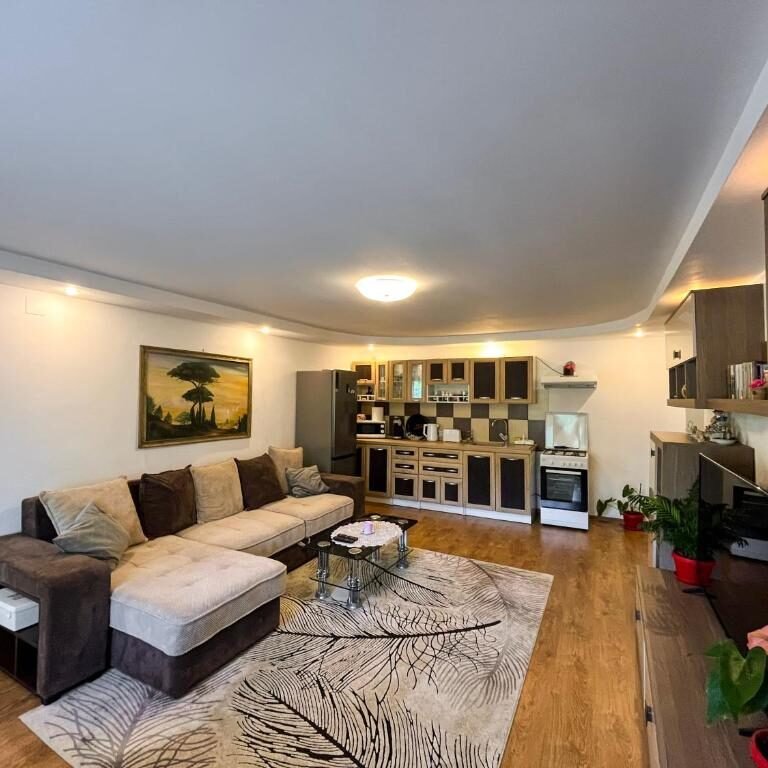
Located in the village of Fizești, just a few kilometers from Fizești and Fundătura Ponorului, this holiday home includes a bedroom, a living room, a kitchenette, a garden, a small sauna, and a swimming pool!