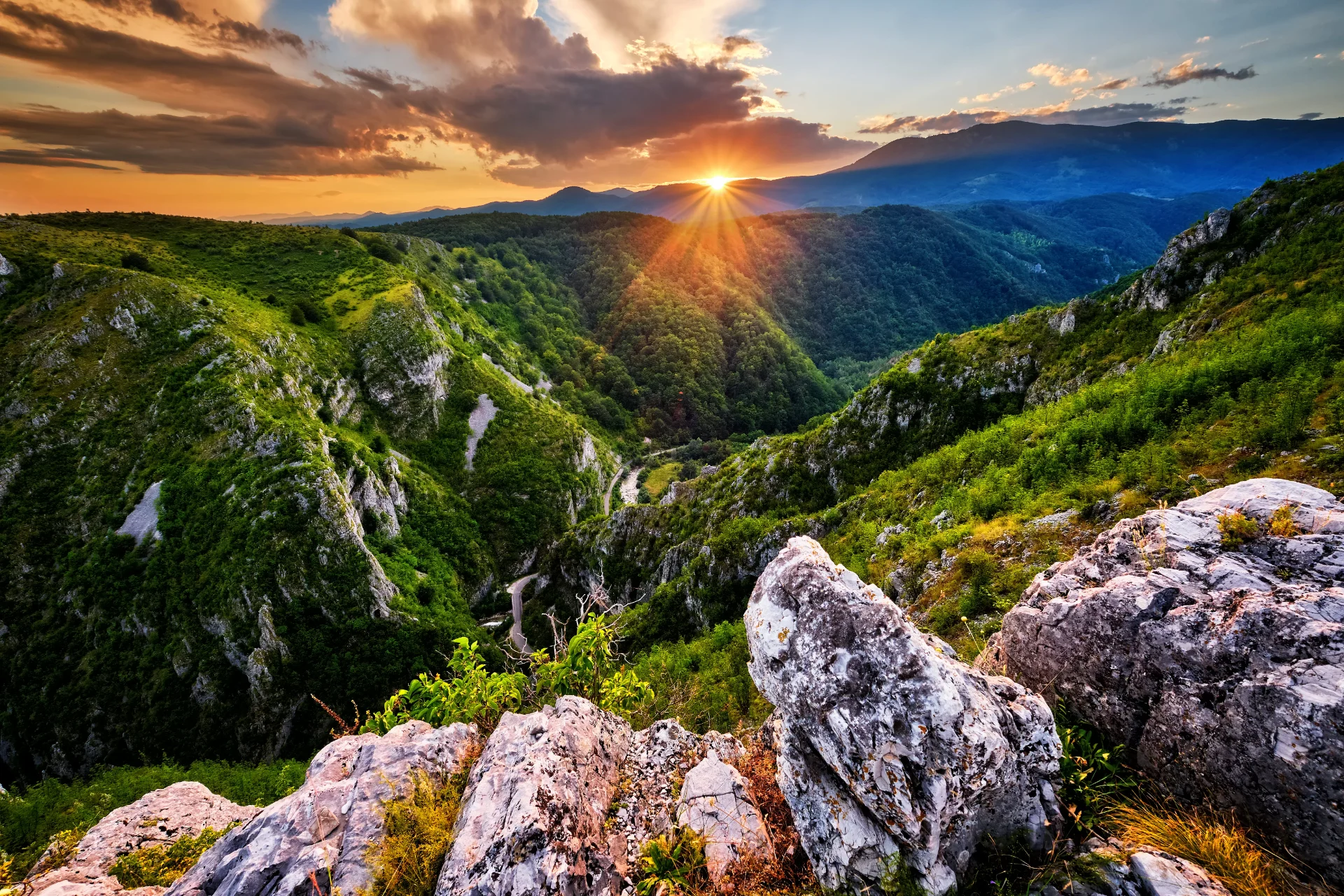
One of the most interesting and spectacular natural destinations in southwestern Romania can be found in the northern part of Gorj County, within a valley in the Vâlcan Mountains. The Sohodol Gorges are a realm apart—a place that, regardless of how many times one visits, never fails to charm and amaze. Serving as a true open-air geological and biological museum, the gorges are located just past the village of Runcu, approximately 20 kilometers northwest of Târgu Jiu. You can reach this wild valley by following the DN67D road as far as the village of Răchiți, then turning right onto the local road that runs through the village. At the end of this road—past the Runcu town hall—you cross a bridge over the river, where you are immediately confronted by towering rocky slopes that seem to almost blot out the sky. A fascinating hiking trail also begins near the bridge, leading up to the ridge above; we will share more about that later.
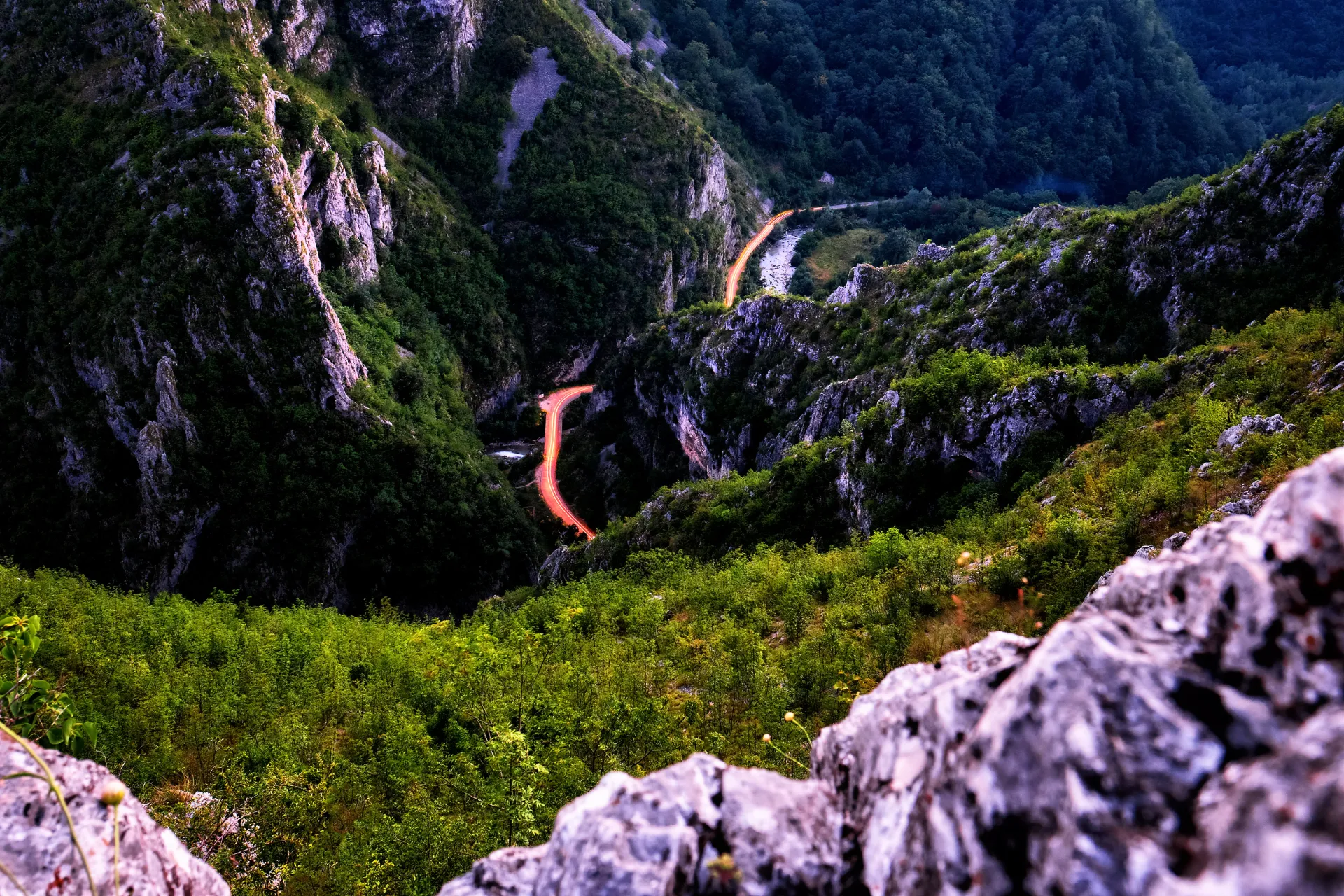
Continuing along the paved—though quite narrow—road, you pass a succession of truly stunning sights. The formation of these gorges is described in a highly artistic manner by Ion Conea (1931): “Once upon a time—long ago—from the spot where we now stand (at the entrance to the gorges) all the way to the enchanted spring at the mouth of the defile, the Sohodol stream flowed entirely underground, through a vast tunnel that the water had carved out bit by bit, like an auger boring beneath the mountain… Its roof gradually collapsed, piece by piece, eroded by rainwater from above and by the waters of the Sohodol from below.” The entire valley features a series of spectacular karst formations; however, the Sohodol Gorges themselves are divided into three successive sections: the Runcu Gorges, the Vidra Gorges, and the Pătrunsa Gorges.
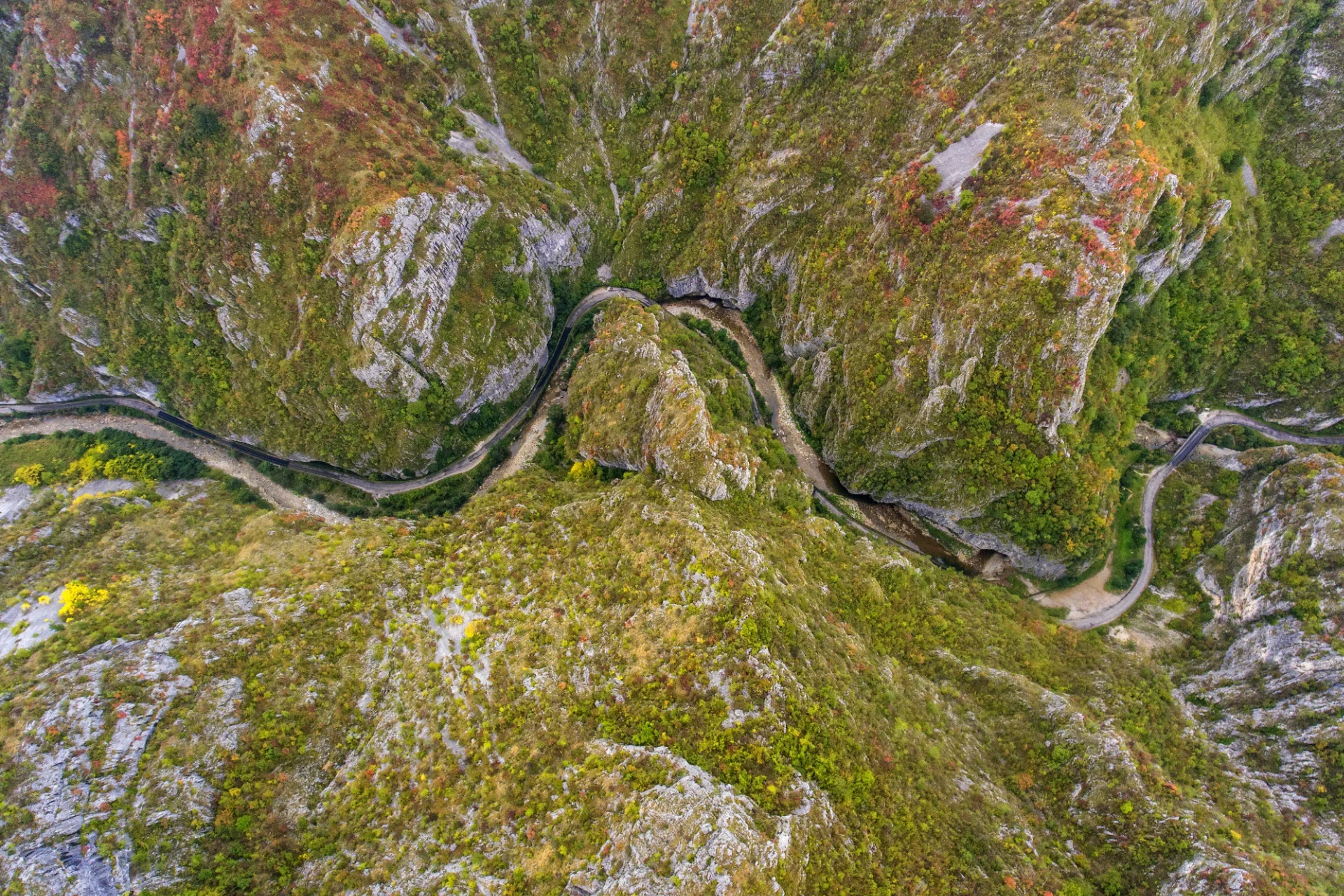
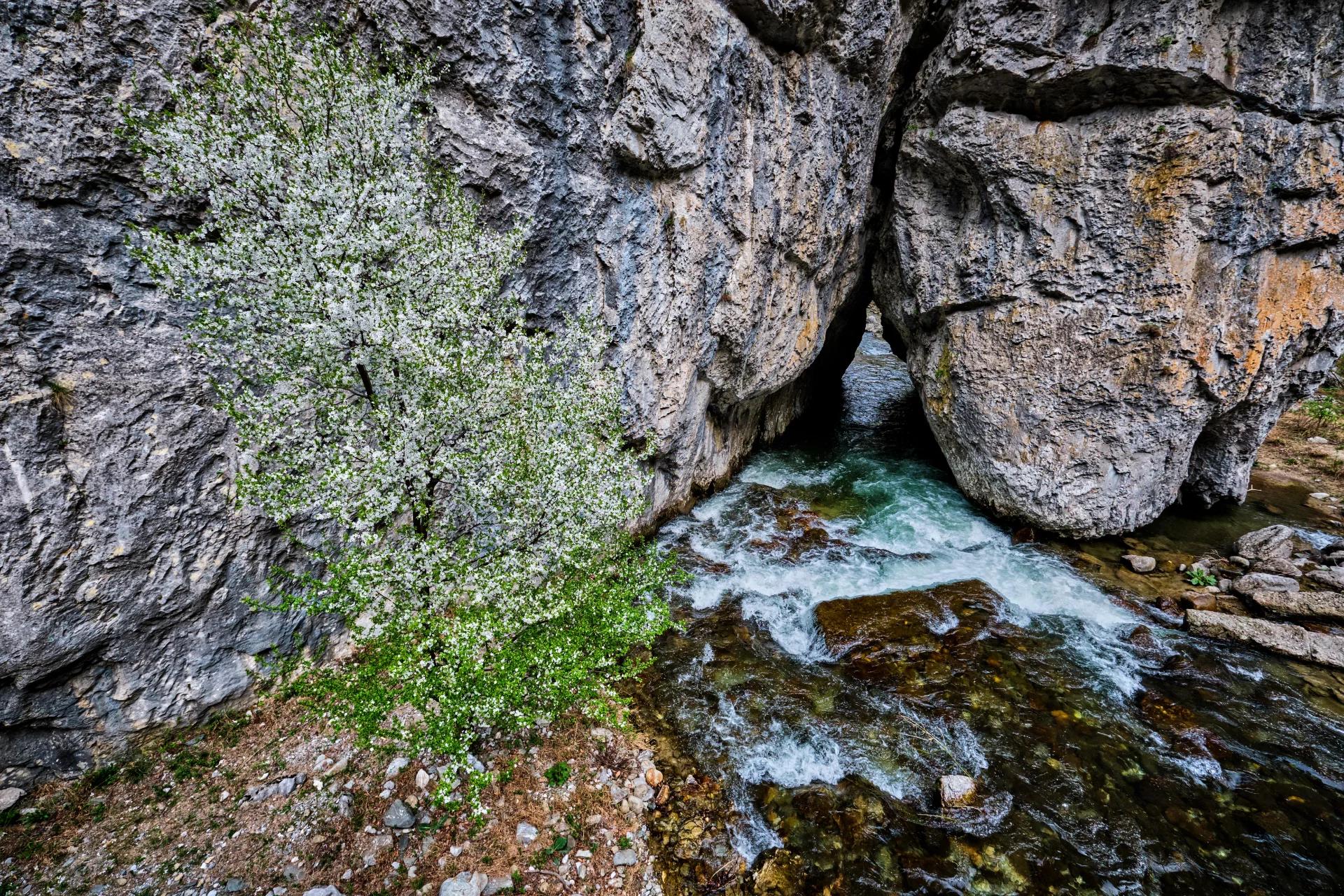
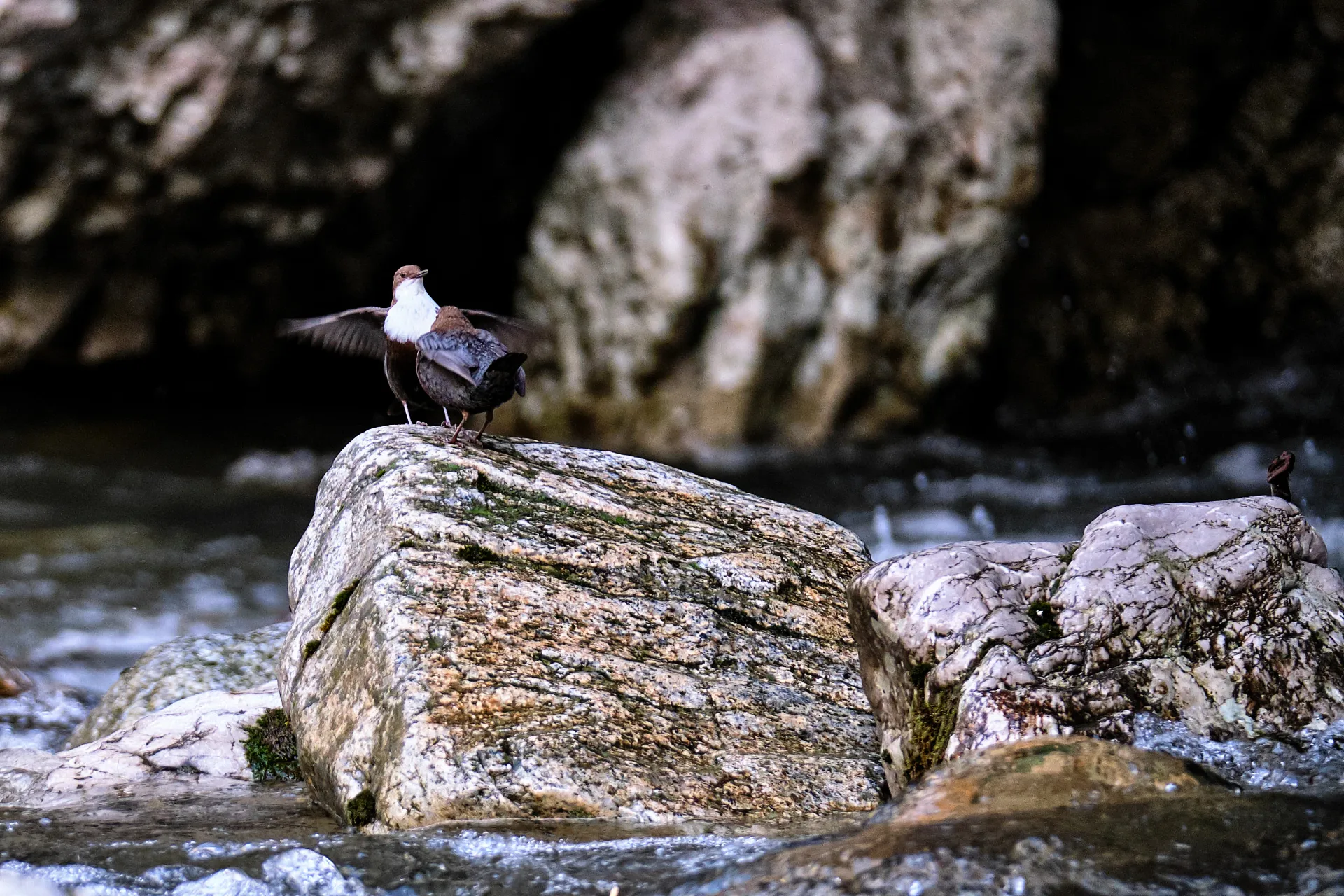
From the very entrance, the landscape is impressive; the gorge reveals its full grandeur amidst sheer limestone walls. Cave mouths and vertical shafts dot the cliffs, which rise like the towers of a fortress. From this point on, a series of unique natural phenomena unfolds in rapid succession. In one spot, the waters of the Sohodol stream vanish beneath the mountain, only to reappear shortly after at a place called Gârla Vacii. Elsewhere, one can spot prehistoric rock art on a cliff face (at Lunca cu Pruni), while a few hundred meters further—at a site known as La Cuptor—a magnificent formation comes into view: the water has carved its way through the mountain, isolating a limestone column and creating a natural tunnel several meters long, through which the stream rushes turbulently.
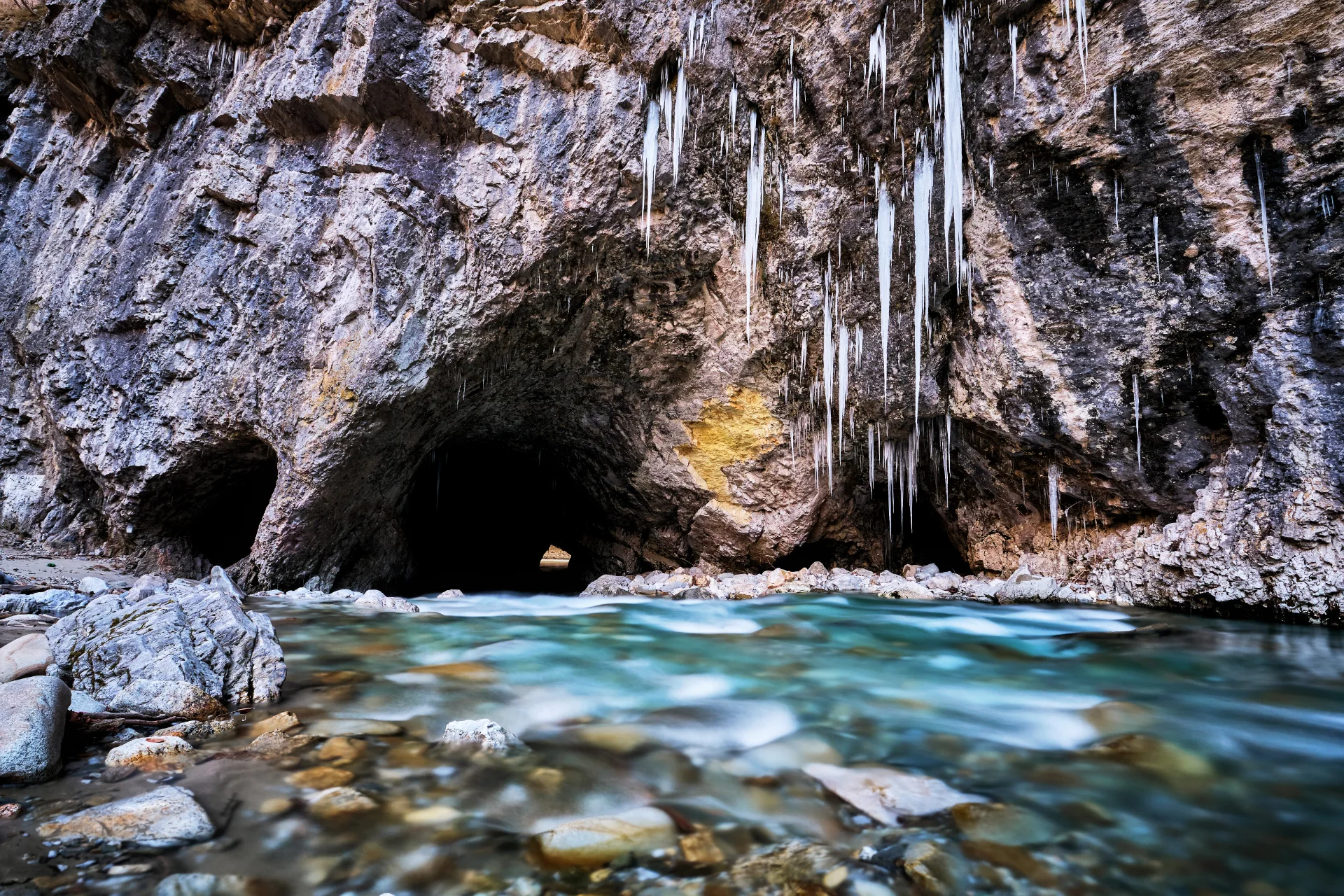
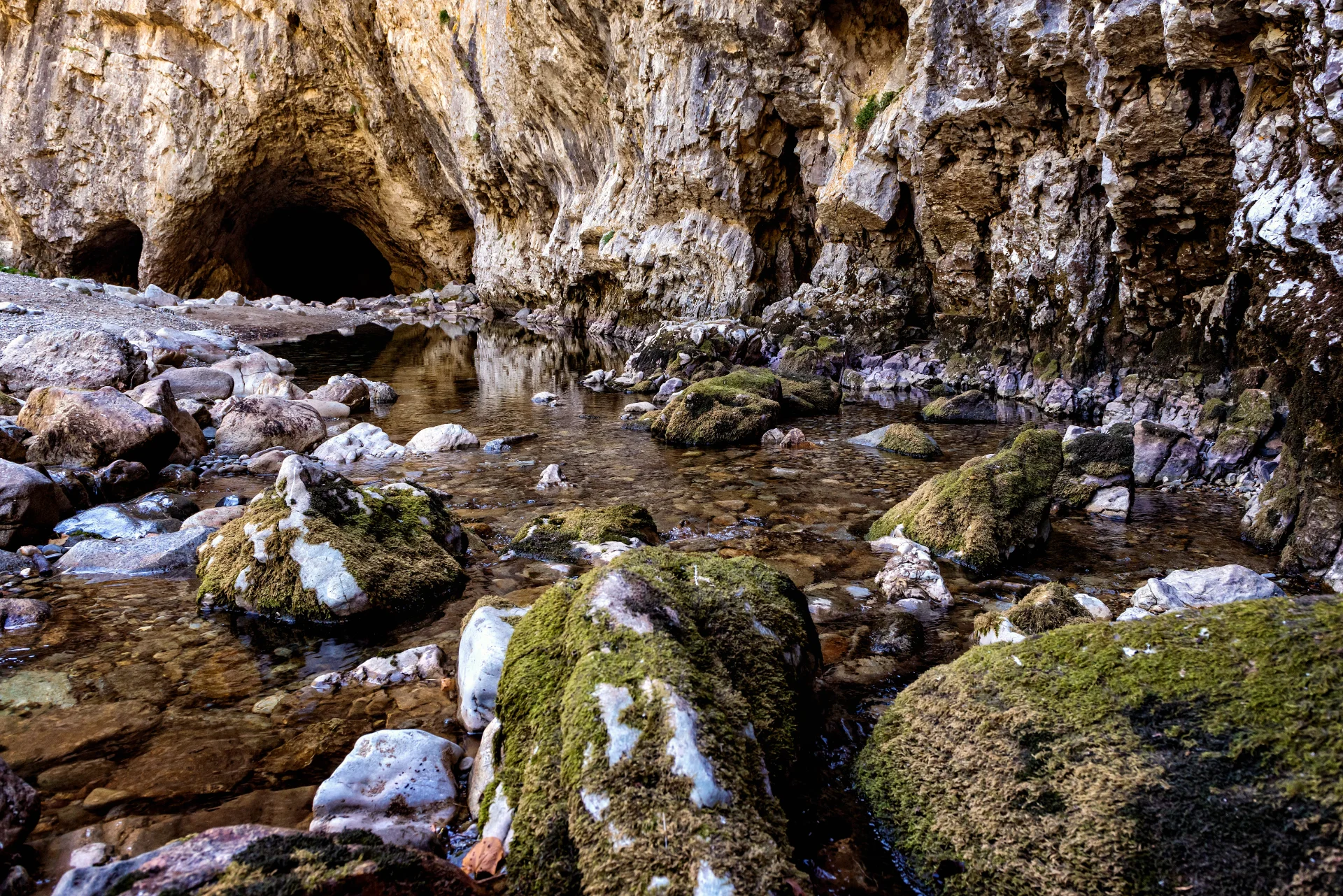
Another remarkable site is Peștera Popii (the Priest’s Cave), which contains further evidence of prehistoric human habitation. Just a few hundred meters away lies one of the most spectacular attractions in the Sohodol Gorge: a spot known as Nările (“The Nostrils”), where the water pierces the rock along an extended passage. When water levels are low, the entrance is wide enough to allow entry. Two smaller openings nearby give rise to this evocative name. As for the stream itself, it is highly unpredictable; during dry summers, it may vanish entirely—likely continuing its course through unknown subterranean tunnels. From this same vantage point, one can also admire a striking rock formation atop the ridge above, known as Inelul Doamnei (“The Lady’s Ring”).
Continuing past the first section of the gorge, the valley gradually opens up, and the slopes become covered in lush vegetation. Along the river, one can admire charming small waterfalls before crossing the Vidra Gorge—a short, steep stretch. Beyond this point, we reach the site of the former Bucium Complex; from here, the road is no longer paved. In dry weather, it is possible to continue along the valley for a few more kilometers in any type of vehicle. For the more adventurous, the route eventually emerges onto the ridge of the Vâlcan Mountains, offering the option to descend toward Lake Valea cu Pești, near the village of Câmpu lui Neag in the West Jiu Valley. However, the route is quite long and challenging, requiring vehicles with high ground clearance and all-wheel drive.
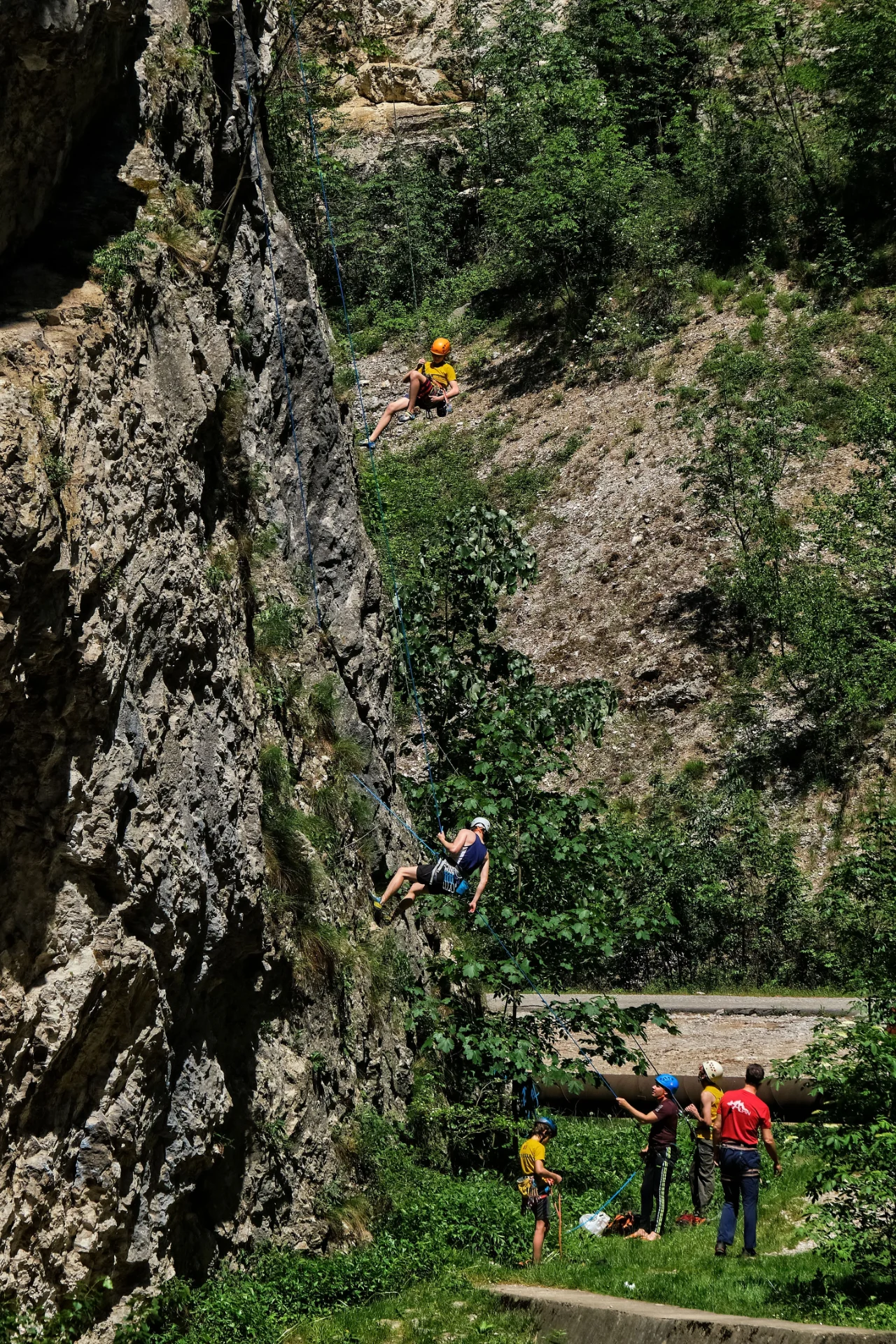
About 2 kilometers past the Bucium Complex, we enter the Pătrunsa Gorge, characterized by its wild, precipitous terrain. From this point on, the landscape alternates between very narrow passages, forests, and wider clearings, while the river shifts between calm stretches and turbulent sections featuring small waterfalls or cascades. To the right of the river lies Mount Pleșa—often referred to in specialized literature as the “Mountain of Great Verticals”—due to its abundance of striking karst features, including vertical shafts (*avene*), caves, canyons, karst springs, and other natural wonders. Indeed, the Sohodol Valley is considered one of the most significant karst areas in the country, holding exceptional scientific importance. In addition to hiking through the gorges and along the valley, other exciting tourist activities can be experienced here. The Sohodol Gorges feature some of the finest rock-climbing routes in the country (over 100 routes), while the hidden side valleys offer opportunities for canyoning (at Gropul Sec).
Hiking to the Lady's Ring
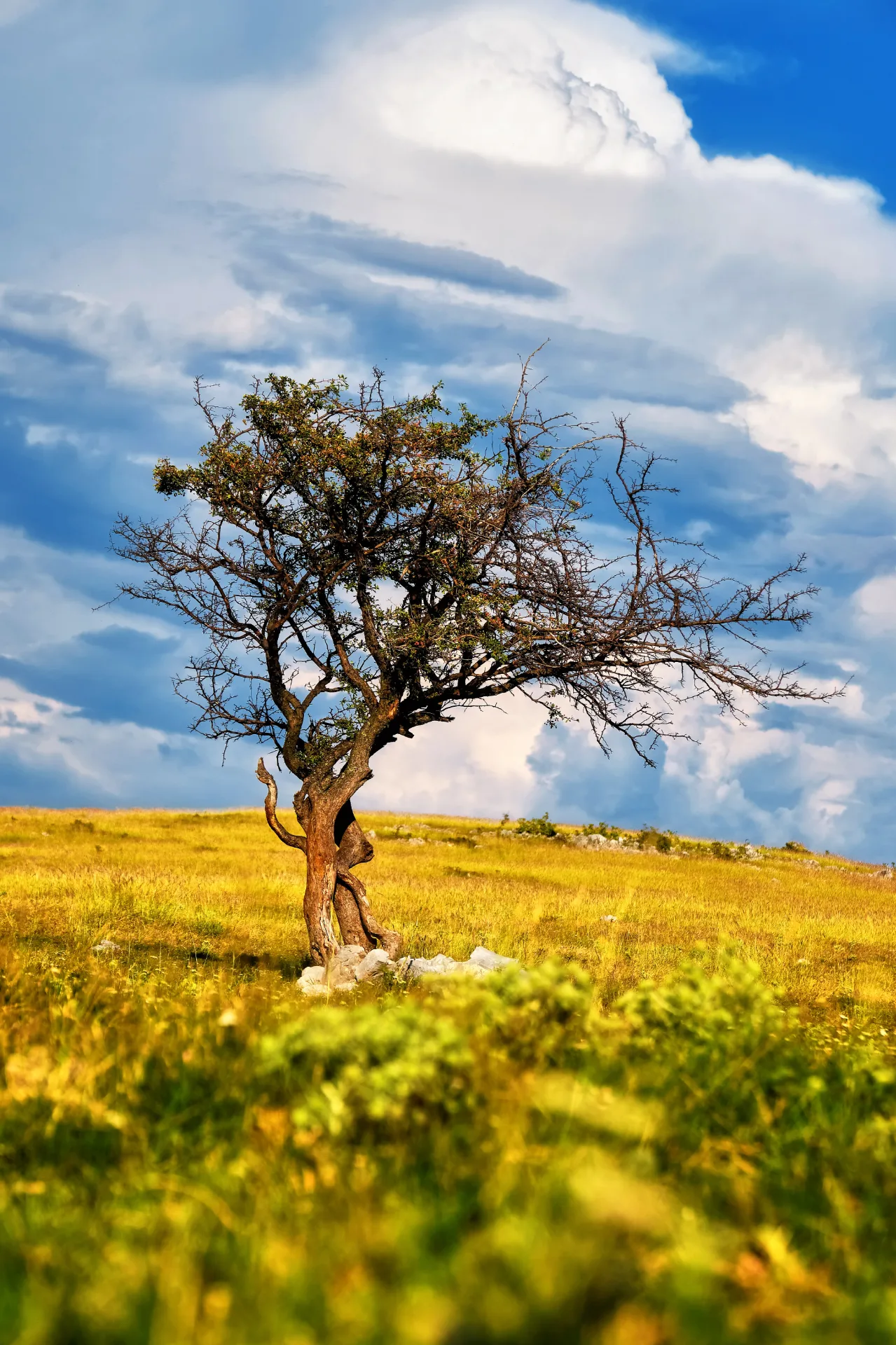
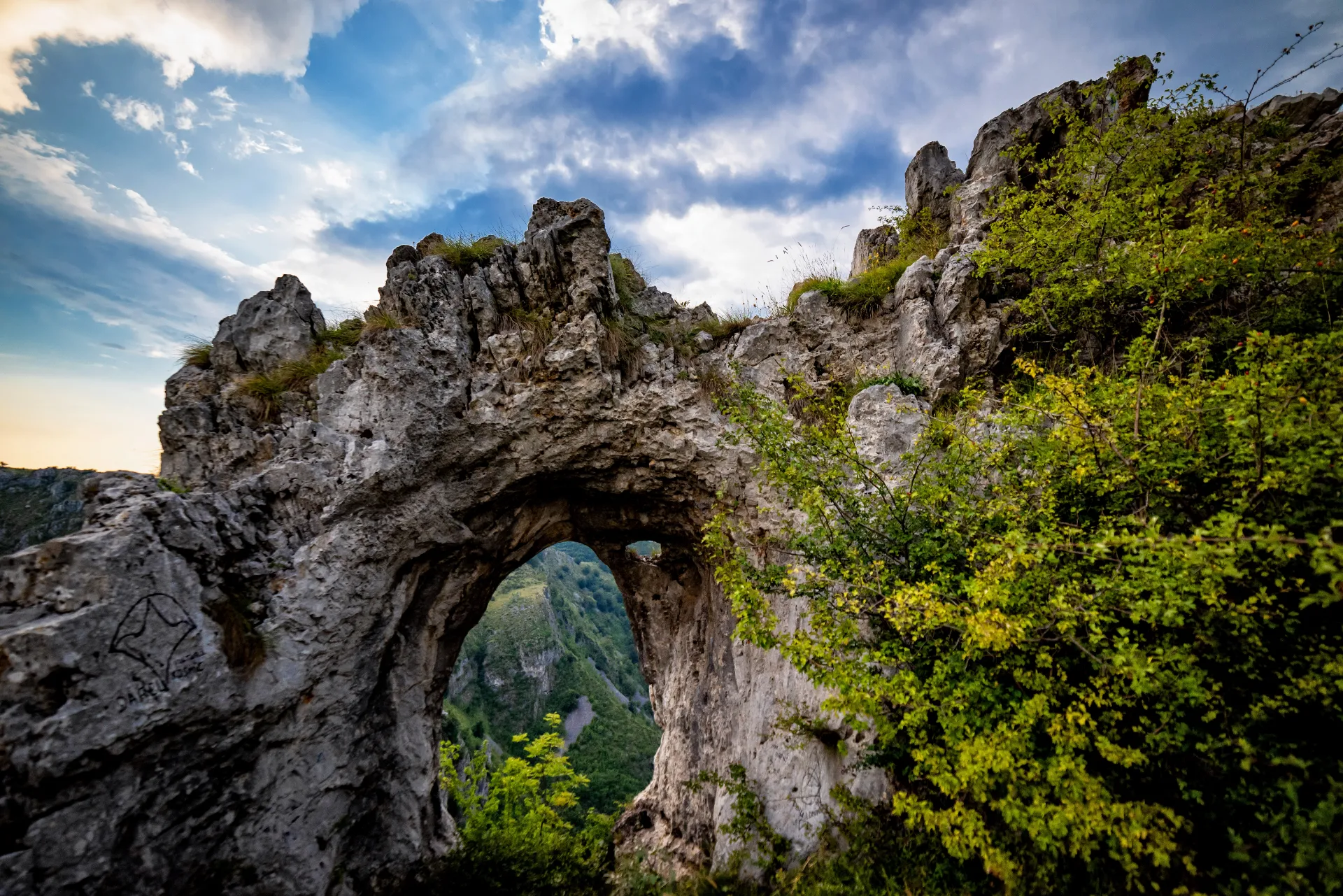
Among the unique experiences to be had in the Sohodol Gorges, the opportunity to admire this spectacular area from above is truly unforgettable. The views from the ridge are impressive—all the more so because the trail leads to a geological formation known as “Inelul Doamnei” (The Lady’s Ring), a natural arch that likely once served as the entrance to a cave. It is hard to imagine that the river flowing far below once ran through this spot, 300 meters above the valley floor. The hiking trail, marked with a blue dot, begins right next to the bridge at the entrance to the Sohodol Gorges, and the path is quite easy to follow.
There is also an alternative starting point near the Runcu town hall, which joins the main trail after a few hundred meters. Spanning just over 2 kilometers with an elevation gain of less than 300 meters, the ascent should take no more than an hour and involves no particularly difficult sections. Nevertheless, you should remain attentive to the trail markers and watch out for horned vipers in rocky areas; furthermore, there is a risk of falling from the ridge. Although smaller than other natural arches found elsewhere in the country, “Inelul Doamnei” is spectacular due to its position high above the valley—its opening frames the gorges and the distant mountain peaks, offering a stunning vantage point.
Adventures on Gropul Sec Valley
One of the most incredible places in Gorj County remains hidden from the eyes of travelers, being quite difficult to locate and visit. It is a mysterious valley that branches off from the Sohodol Valley—on its right side—approximately 4–5 km past the abandoned Bucium complex. While the initial section of this narrow valley is dry for most of the year—featuring only the occasional trickle of water that vanishes beneath the rocks—you should avoid the area during spring or following heavy rainfall, when powerful torrents can form. Venturing through this narrow gorge, tightly enclosed between two limestone slopes, is a true adventure; it is recommended only for those with a good level of physical fitness and the proper equipment.
There are no marked tourist trails or detailed directions to guide you here; the only available references are an old article and a hand-drawn map. About 4 kilometers beyond the Bucium complex (where the asphalt ends), you reach another gorge section, which boasts a magnificent series of waterfalls. At one point, across the river, you can spot a valley that flows into the Sohodol. The more daring may choose to cross the ice-cold waters of the Sohodol to enter the Gropul Sec Valley, though this is not the standard route.
Continuing for another 2 km upstream along the Sohodol Valley, one reaches the area near the Dragomanu stream and mountain hut. The hut is located on the right side of the ascending path, while across the river lies a clearing bordered by fir trees; a footbridge made of large logs provides a way to cross the Sohodol. Travelers can replenish their water supply at a spring situated between the hut and the river, after which they should cross the stream and continue for a few hundred meters downstream. At a certain point, the trail begins to climb very steeply up the mountainside. Following about half an hour of a strenuous ascent, one arrives at a saddle where the path forks.
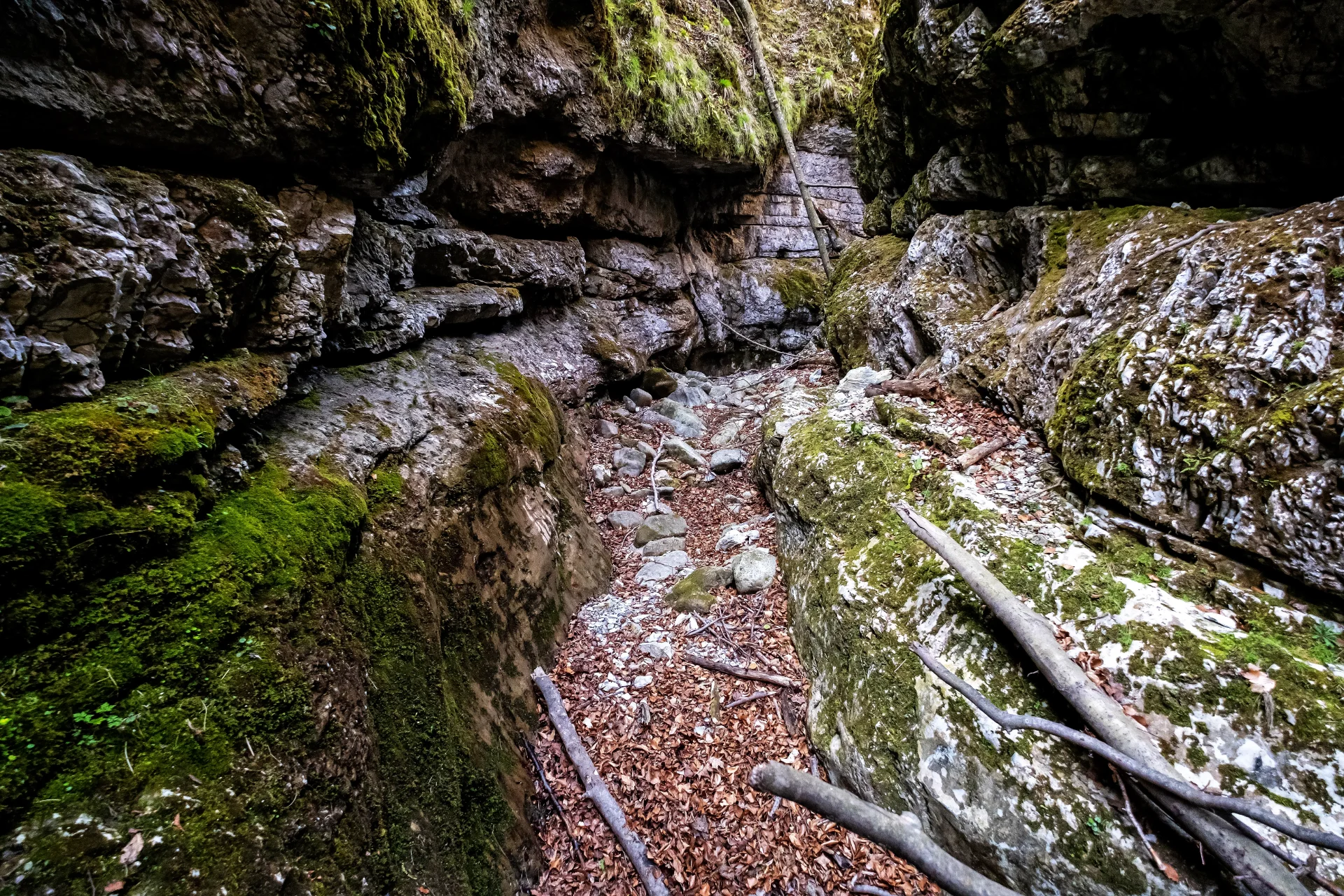
While the well-defined trails continue upward and to the right, a barely visible path begins to descend through the forest. Eventually, this path fades away, and one must continue downward along the steep slope toward the valley floor. This route is quite challenging, requiring extra caution during the descent through the woods. Upon reaching the dry valley of Gropul, the landscape becomes almost surreal: vertical rock walls rise for tens of meters on both sides, and the slopes bear the weight of ancient trees—many of which have fallen into the valley over the decades. Navigating upstream along this dry valley tests all one’s senses and reflexes; picking a path among river boulders or over fallen trees proves to be an exhausting adventure.


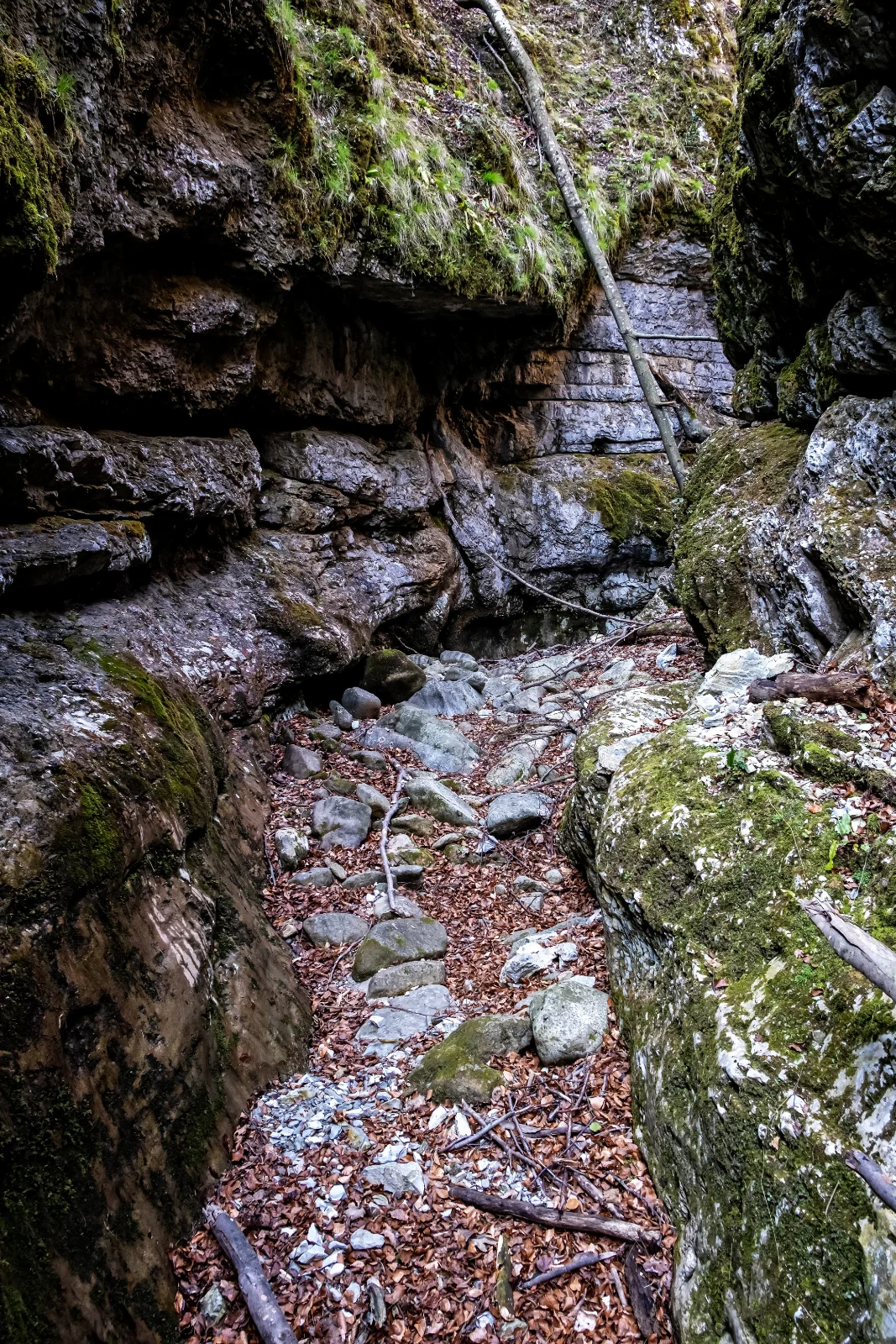
In many places, the valley narrows into canyons featuring high rock ledges and logjams—obstacles that must be climbed and crossed with great care. The sky is reduced to a distant sliver between limestone walls, which are adorned with the most incredible karst formations. The entire experience is fascinating, creating an ever-present sensation of having traveled to another world. After nearly 3 kilometers of challenging navigation—maneuvering through rocks, boulders, and fallen trees—you reach a spot where the river, having just emerged, vanishes beneath the mountain with a deafening roar. If the riverbed is dry in this section as well, it is possible to continue for a few hundred meters more to reach the valley’s climax.
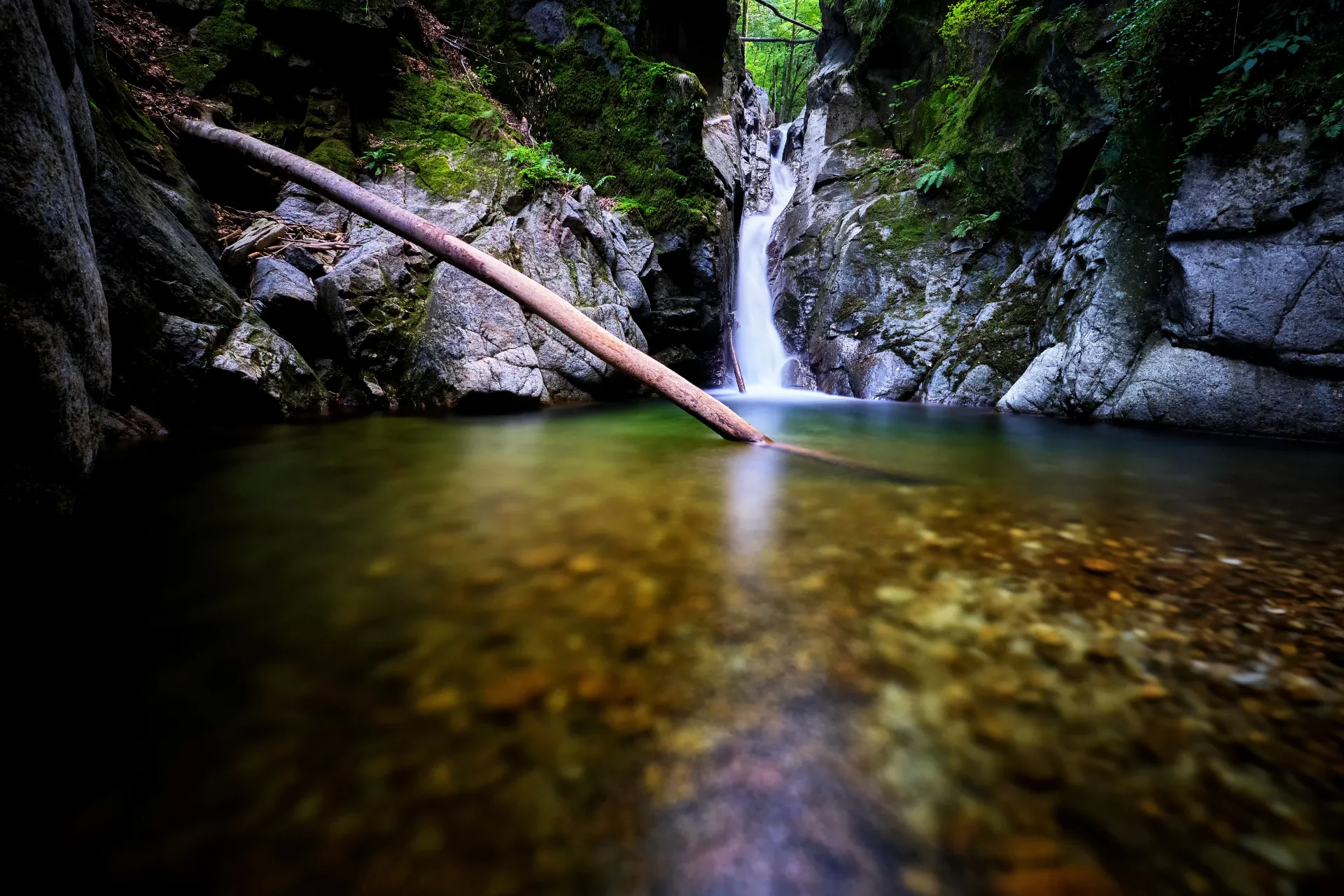
The impressive Toaia Dracilor waterfall is a place steeped in legend, hidden deep within the wilderness of the Vâlcan Mountains. Known only to the shepherds who graze their flocks on the surrounding ridges, the waterfall is extremely difficult to access—and, consequently, virtually unknown to the outside world. It is, in fact, merely the lowest tier of a series of seven interconnected waterfalls, some reaching heights of up to 40 meters. Tucked away in the rugged terrain at the foot of Mount Pleșa, these falls are highly prized by canyoning enthusiasts, who can reach them by following other arduous routes. An adventure in the Gropului Valley should begin early in the morning; you should also set aside at least 2–3 hours for the return journey toward the Sohodol Valley before nightfall.
Lodging Options in Runcu - Gorj
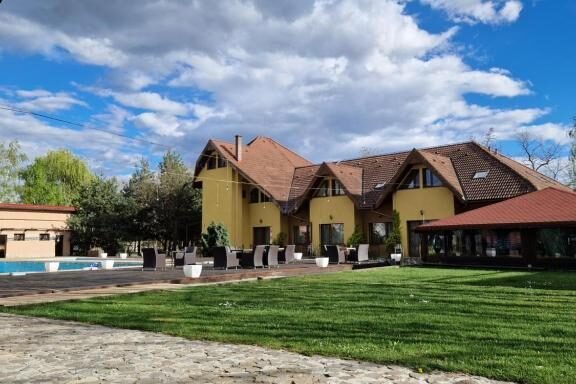
Rating 9.8 from 4 reviews!
Located just a few minutes’ walk from the entrance to Cheile Sohodolului, the guesthouse offers exceptional accommodation in spacious rooms and breakfast!
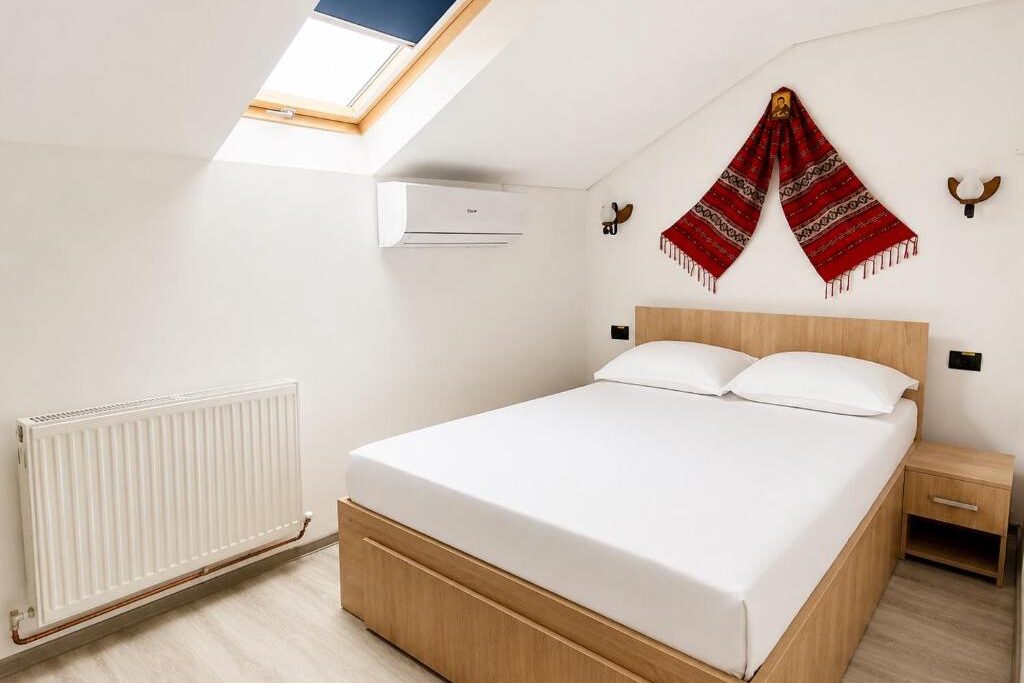
Rating 9.9 from 52 reviews!
Located just a few kilometers from the Sohodol Gorges, this guesthouse offers comfortable rooms, a shared lounge, a terrace, and a garden!
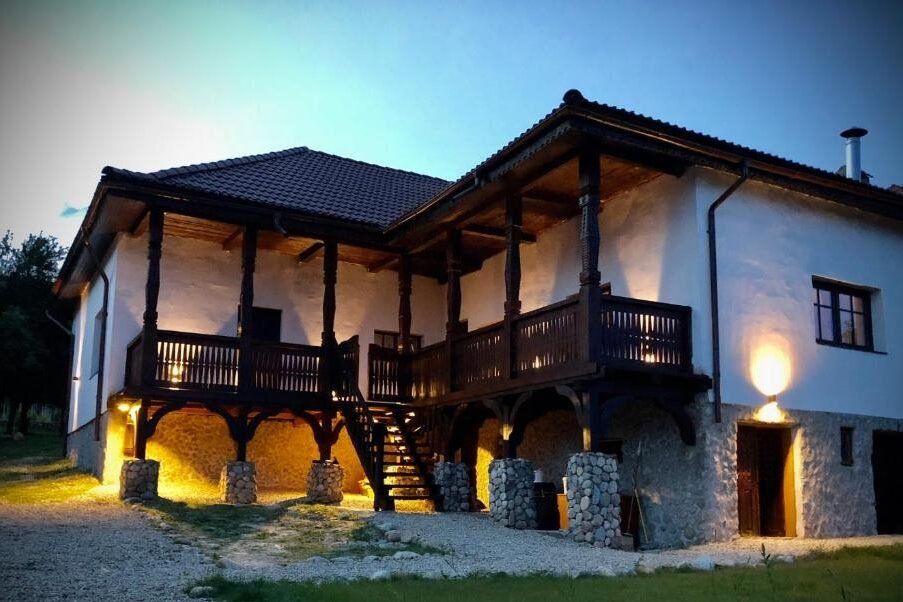
Rating 9.8 from 32 reviews!
Located just a few steps from the entrance to the Sohodol Gorges, this small family-run guesthouse offers accommodation in welcoming, traditional rooms!